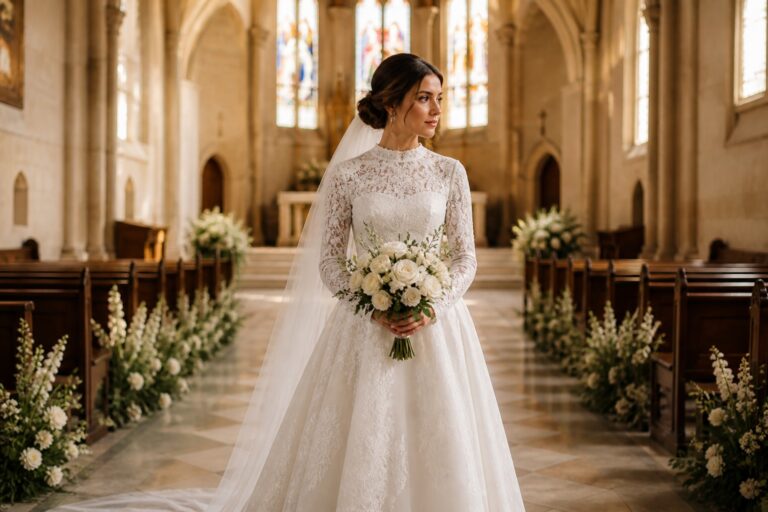
Traditional Bridal Dresses: What Still Feels Right in 2026
Walk into a bridal salon and the word traditional can seem to point to one familiar picture: a white gown, a full skirt, a long veil, and a formal aisle. That picture still has power, but it is no longer the whole conversation. Today, brides are asking a more useful question: which parts of tradition make me feel beautiful, connected, and completely myself?
The best traditional bridal dresses are not costumes chosen to satisfy a rule. They are thoughtful combinations of established shape, meaningful detail, and present-day comfort. A bride may choose an A-line skirt because it balances ceremony and movement, long sleeves because they feel elegant, or a family textile because it carries a story. Another bride may keep the white gown but update it with a removable bow, a sharper neckline, or shoes she can dance in.
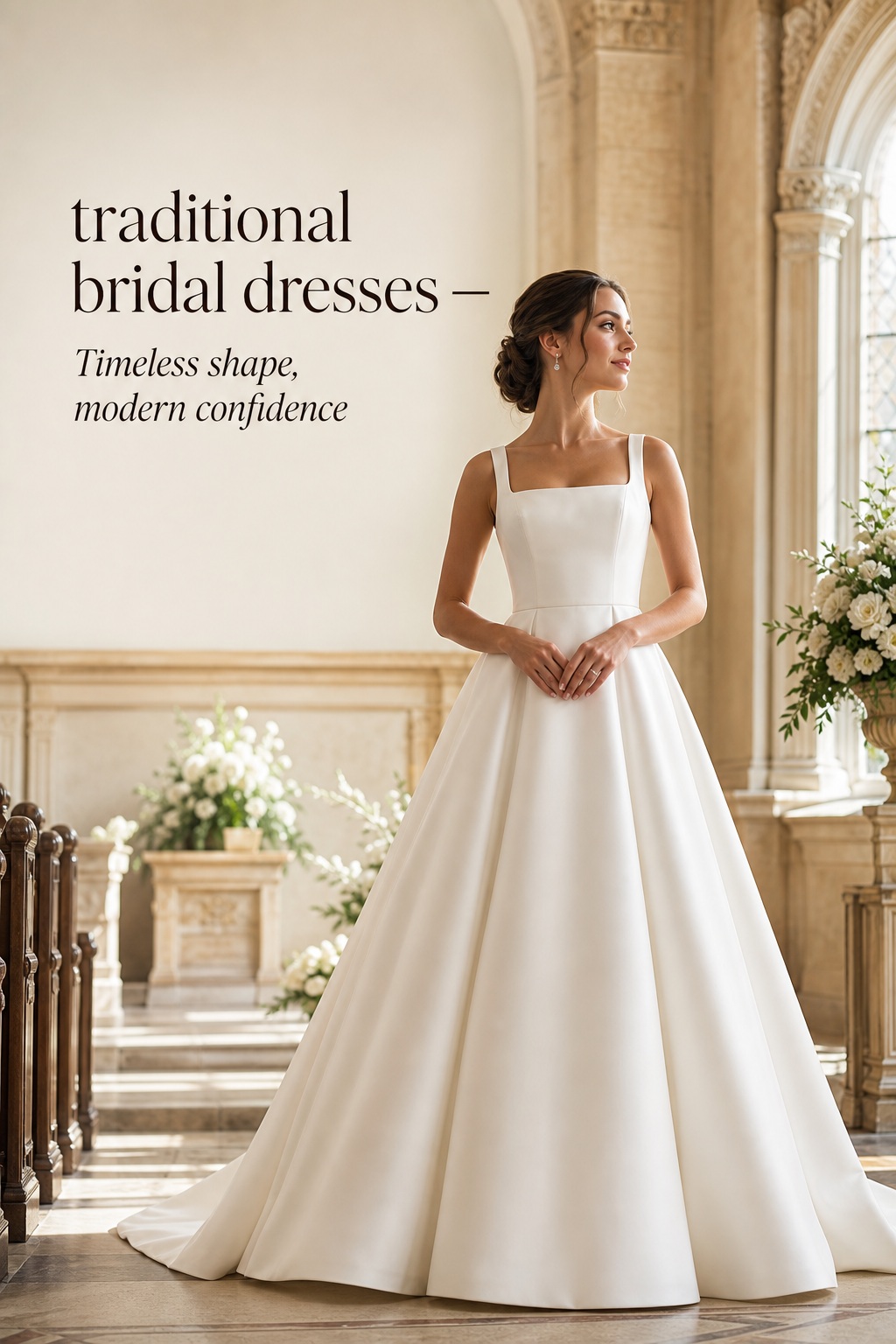
What is changing in traditional bridal dresses?
Traditional bridal style is moving from a single visual formula toward a set of design decisions. That is an important shift because it gives brides more room to honor convention without losing individuality. The familiar foundation remains visible in the gown’s formality, length, fabric, and ceremony-ready finish, yet the final look can reflect a location, a family, a faith, a season, or a very specific personal wardrobe.
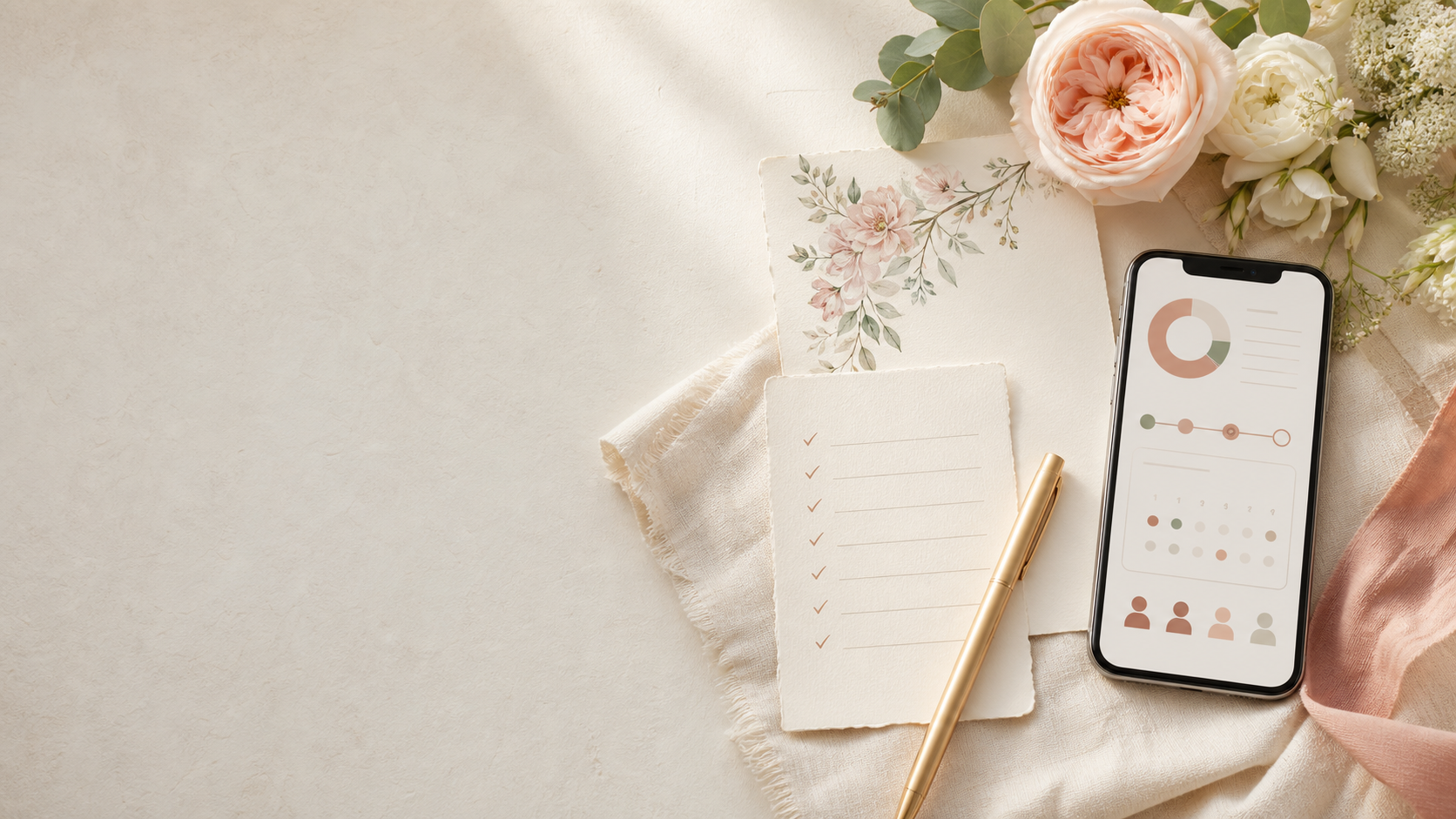
Turn wedding inspiration into a plan you can actually follow.
Zarellea brings your guest list, budget, vendors, and day-of details into one shared space — so no beautiful idea gets lost in the shuffle.
One change is the rise of the hybrid gown. A classic A-line may be cut in clean crepe instead of ornate lace. A ball gown can have a square neckline, a detachable overskirt, or a pared-back bodice. A long-sleeve dress can use sheer embroidered tulle for lightness rather than heavy coverage. These choices do not erase the traditional character. They edit it.
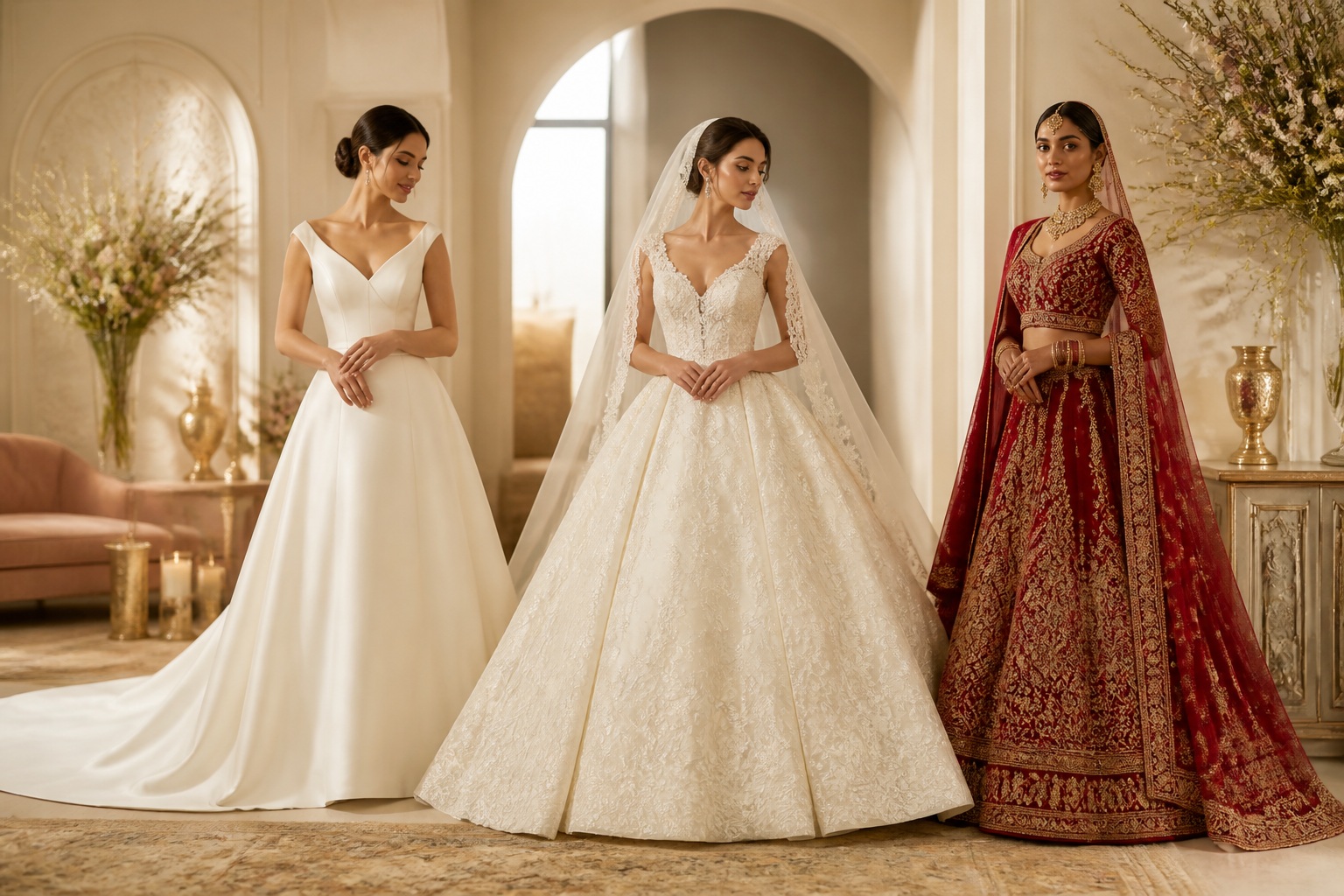
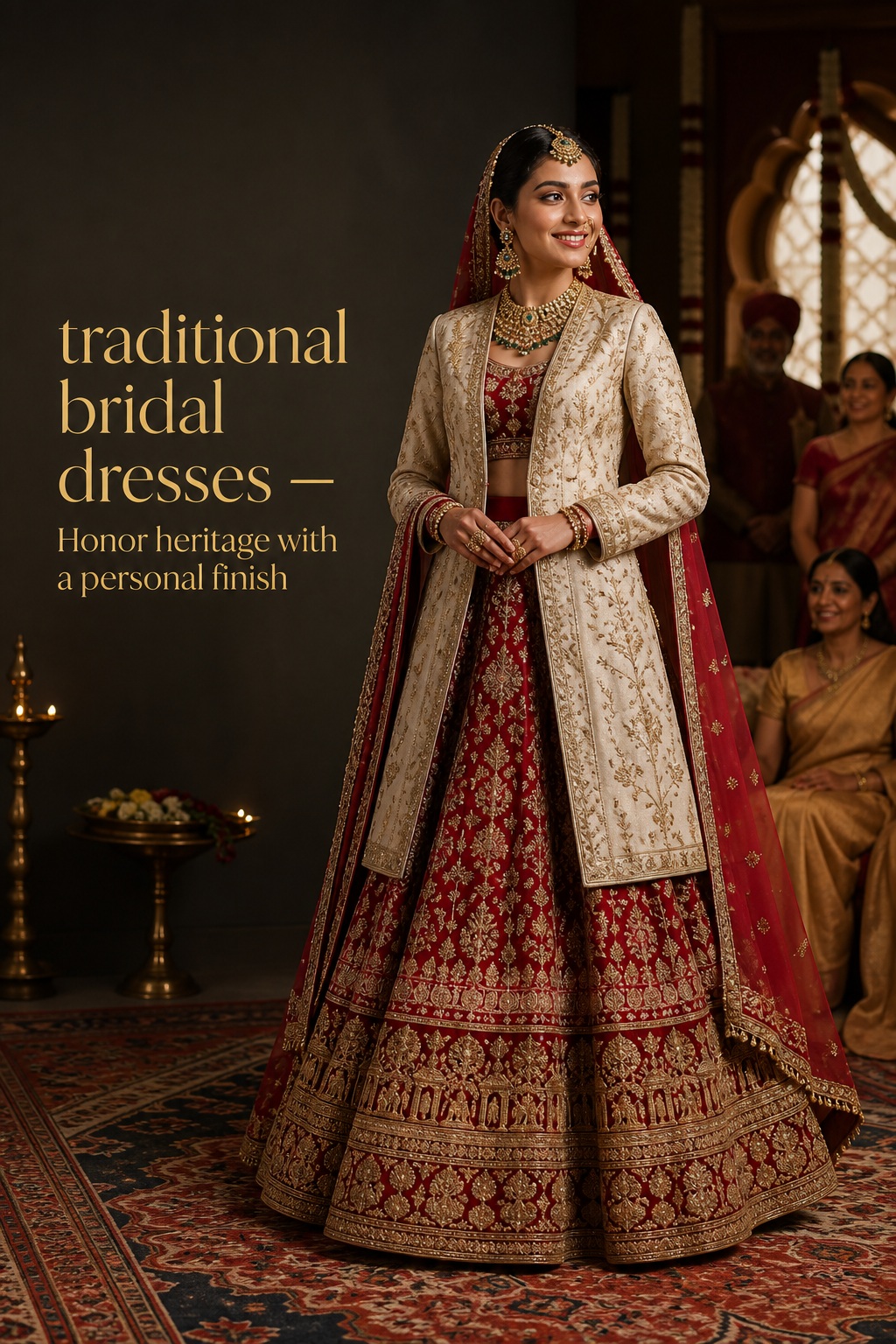
Another change is a more honest conversation about the word traditional. A Western white wedding gown is one tradition, not a universal definition. Traditional Greek bridal clothing, for example, has varied by region, climate, available textiles, color, and local custom. Across the world, bridal dress can include saris, lehengas, ao dai, hanbok, embroidered robes, structured jackets, and ceremonial layers. Each has its own history and meaning.
That distinction matters when you are styling a heritage-inspired look. It is more respectful to learn the significance of a garment, pattern, color, or accessory than to borrow a decorative symbol simply because it photographs well. If a family tradition is part of your wedding, ask relatives, cultural specialists, or the maker about what can be adapted and what should remain intact.
Why the traditional foundation still works
Traditional bridal dresses endure because their strongest features solve real visual and practical problems. A defined waist gives the outfit a clear center. A long skirt creates ceremony in photographs. A train marks the movement from entrance to altar. A veil frames the face and changes the scale of a look. Refined fabric gives the gown presence even when the decoration is restrained.
Silhouette creates the first impression
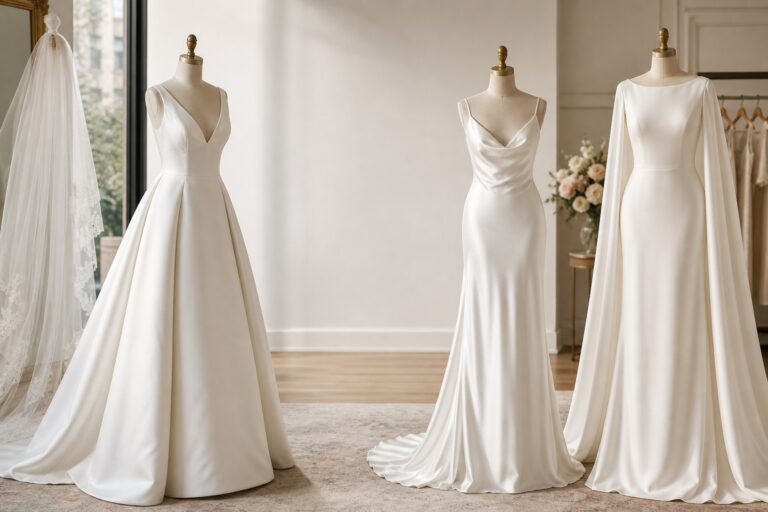
A-line and ball gown shapes remain the most recognizable traditional choices. An A-line is fitted through the bodice and waist, then widens gradually toward the hem. It works in a church, ballroom, garden, or courthouse because it has enough formality without demanding an enormous amount of space. It is also a useful starting point when you want to compare fabrics or necklines without changing the basic proportion.
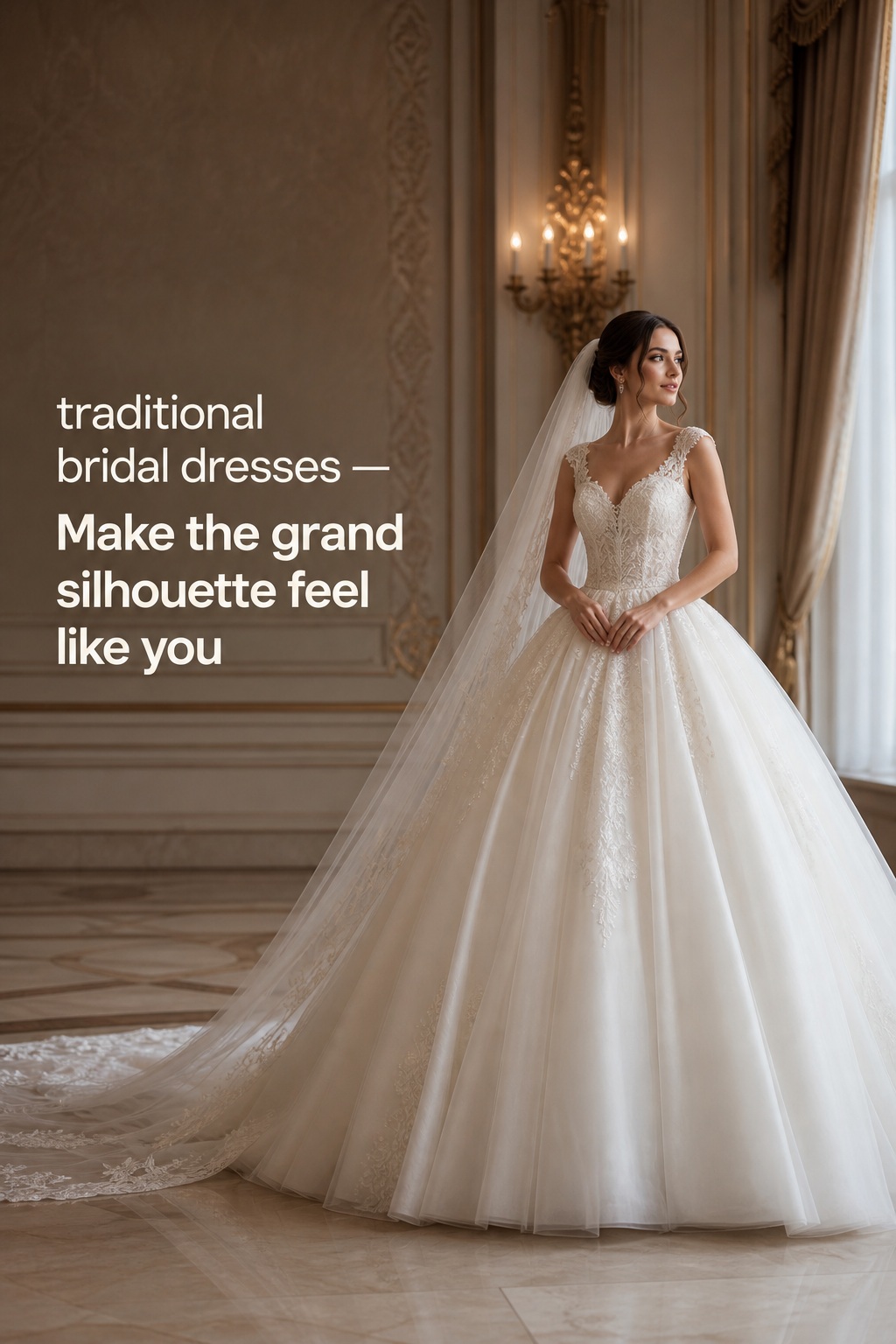
A ball gown makes a more theatrical promise. Its fitted bodice and generous skirt create a clear princess proportion, especially when paired with a cathedral train or full veil. That volume can be wonderful for a grand venue, but it needs a practical check. Can you sit, turn, climb stairs, and move between ceremony and reception? A beautiful traditional gown should support the day rather than make every transition difficult.
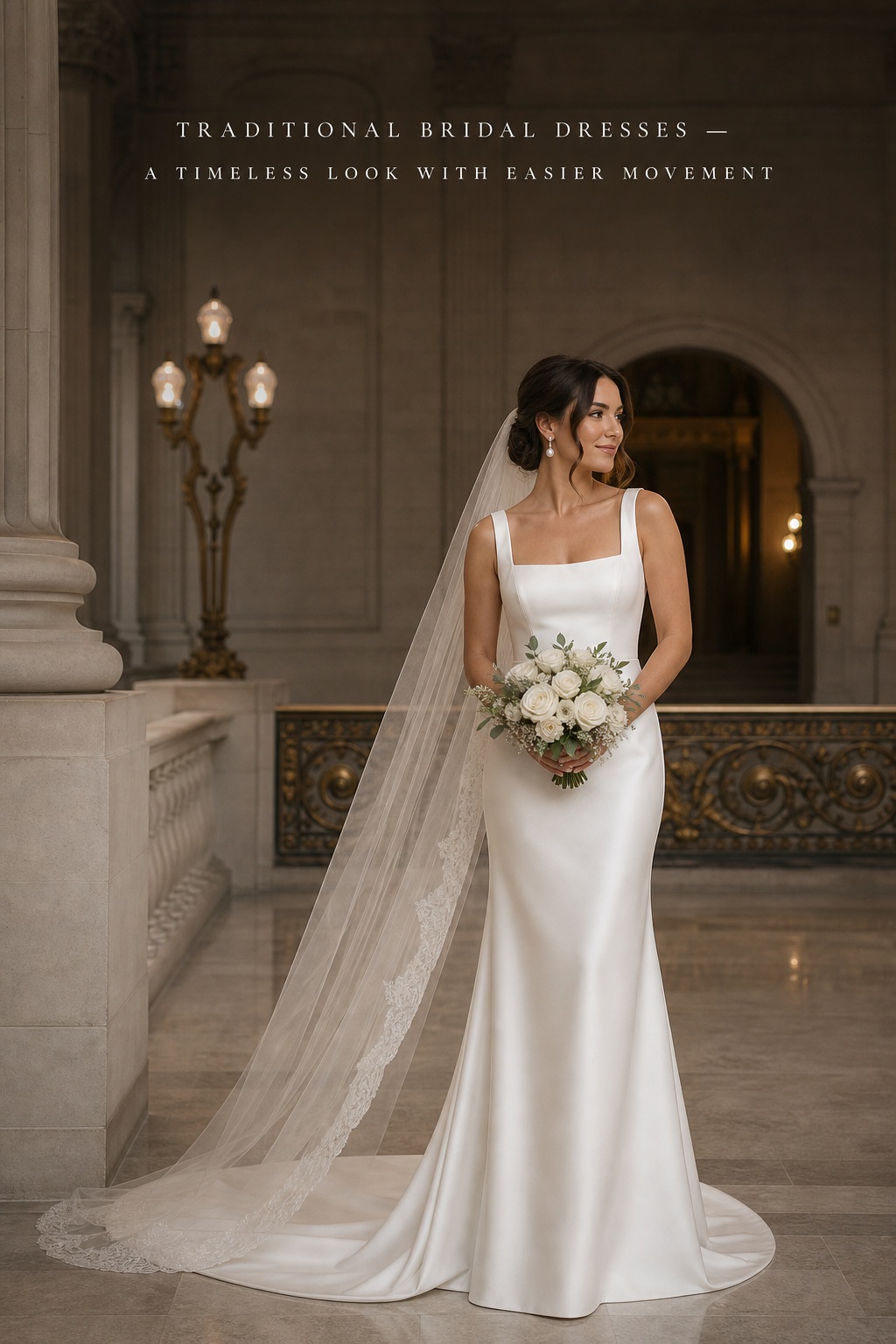
Sheath and fit-and-flare silhouettes show that tradition does not require a wide skirt. A narrow gown can feel formal when the fabric, neckline, train, or veil is intentional. This is often the right direction for a bride who wants a polished, recognizable bridal look with less volume. It also gives accessories more visual space, so a substantial veil, heirloom jewelry, or embroidered overskirt can become the main statement.
Fabric carries more influence than decoration
Mikado, satin, silk, organza, tulle, and lace each tell a different traditional story. Structured satin or mikado makes a gown look crisp and architectural. Tulle creates air and volume, particularly in a ball gown or veil. Lace adds history and texture, but its effect depends on scale and placement. A quiet lace can look almost architectural, while dense all-over lace feels romantic and vintage.
When comparing fabrics, look beyond the fitting-room mirror. Step into daylight, stand under the venue’s likely lighting, and ask how the surface will appear in photographs. Glossy fabric can catch flash and window light beautifully, while a matte crepe may show the gown’s cut more clearly. A heavy textile may hold a train beautifully but feel warm at a summer ceremony. The most traditional-looking fabric is not always the most suitable one for your schedule.
Neckline, sleeves, and coverage set the tone
Boat, scoop, square, bateau, sweetheart, and V-necklines can all belong to the traditional vocabulary. A boat or bateau neckline feels refined and covered. A square neckline gives a structured, almost portrait-like frame to the face and collarbone. A sweetheart neckline brings softness, while a V-neck can look elegant when the depth and fabric support the rest of the gown.
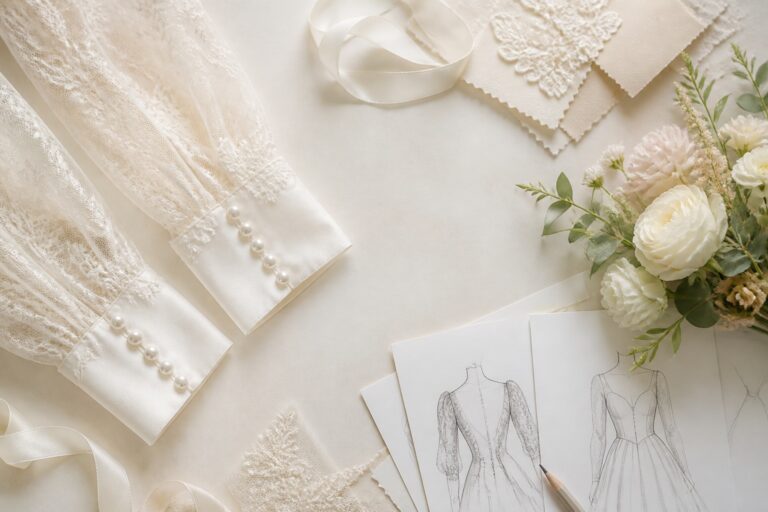
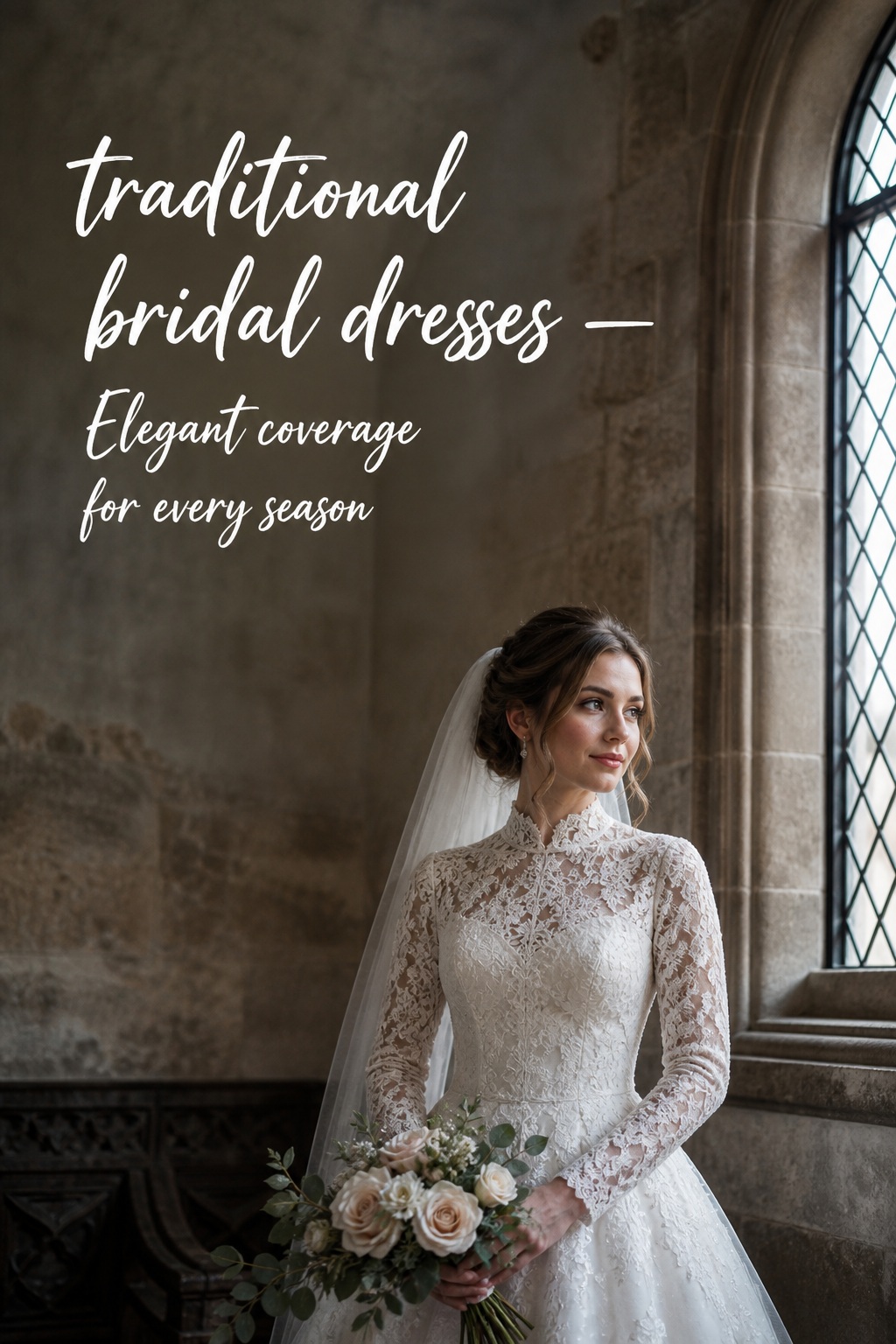
Long sleeves are another powerful way to establish formality without adding sparkle. Opaque sleeves create a clean, modest line. Sheer sleeves with embroidery feel lighter and can reference lace without covering the entire gown. For a cold-weather wedding, sleeves may be practical as well as aesthetic. For a warm celebration, consider removable sleeves, a matching bolero, or a lighter layer that can be taken off after portraits.
How to interpret traditional style now
The easiest way to make traditional bridal dresses feel current is to choose one strong historic cue and let the rest of the look breathe. Do not add a cathedral veil, elaborate lace, dramatic jewelry, a huge bow, and a full skirt simply because each item is traditional. Instead, decide what you want guests to notice first, then use supporting details with restraint.
1. The polished A-line with one modern interruption
Start with an A-line in mikado, satin, or quiet lace. Keep the waist defined and the skirt clean so the shape reads immediately from the back of the room. Then add one contemporary interruption: an asymmetric bow, an open back with a covered front, a detachable sleeve, or a subtle pocket. The contrast works because the base remains familiar.
This formula is especially useful for a bride who wants a dress that will look timeless in family photographs but still feel like a current purchase. Pair it with a cathedral or chapel veil for the ceremony, then remove the veil and reveal the modern detail at the reception. If the gown is plain, choose texture in the accessories rather than more embellishment on the bodice.
2. The statement ball gown with edited accessories
Let the skirt be the tradition in this look. A full ball gown in tulle, organza, or structured jacquard already creates drama, so keep the jewelry simple and make the neckline legible. A short veil, sleek bun, or small earrings can look more modern than a collection of competing details. For movement, ask whether the overskirt can be removed or whether a bustle has been designed for dancing.
A dramatic gown also needs scale awareness. In a small venue, excessive volume can overwhelm both the room and the bride. In a large space, a narrow train or tiny veil may disappear. Think about the distance between you and your guests, the width of the aisle, the shape of the stairs, and how the photographer will frame the entrance.
3. The refined sheath with a ceremonial veil
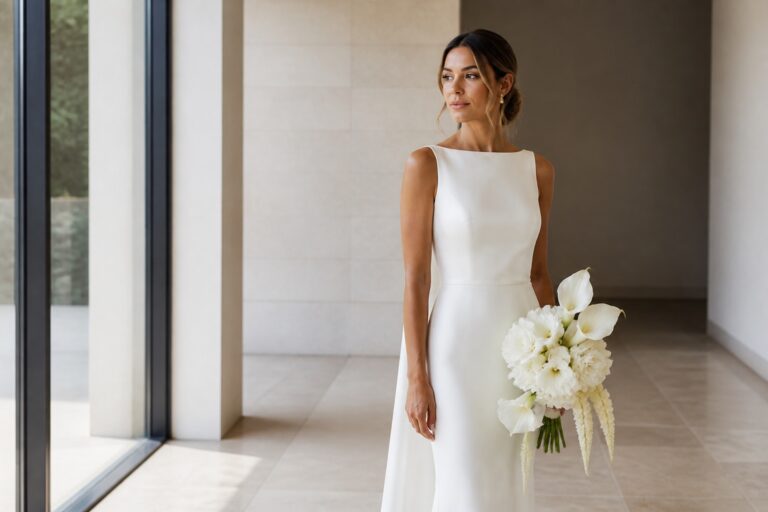
A sheath gown in crepe, satin, or silk can look unmistakably bridal when it is cut with precision. Add a long veil, a detachable train, or a structured cape to create the ceremony moment, then remove that layer for a reception look that is easier to walk and dance in. This is a strong choice for city weddings, intimate ceremonies, and brides who prefer a close-to-the-body silhouette.
Pay close attention to undergarments and alterations. A narrow gown reveals the quality of the fit, so the right foundation, clean seams, and hem length matter more than extra decoration. Bring your actual shoes to fittings. If you plan to wear a long veil, test how it sits when you turn, hug relatives, and move through the reception space.
4. The sleeve-led traditional look
Build the outfit around sleeves if coverage, season, or personal style is central to your decision. A high-neck gown with long lace sleeves can feel romantic and historic. A square-neck dress with fitted sleeves feels cleaner. A sheer detachable sleeve can transform a strapless dress between ceremony and reception without requiring a second gown.
Keep the rest of the styling intentional. Hair pulled away from the neckline helps the sleeve detail read clearly. Pearl earrings, a simple comb, or a narrow ribbon can reinforce the look without making it feel dated. If the sleeve has dense embroidery, choose a simpler veil edge so the face and hands remain visually open.
5. The heritage-rooted look with a clear point of origin
If your traditional bridal dress comes from a specific culture or family, begin with the garment’s meaning rather than a trend board. Identify which elements are essential: perhaps a color, textile technique, layer, headpiece, jewelry set, or order of dressing. Then decide where contemporary tailoring can help with movement, climate, or the length of your ceremony.
Work with a maker who understands the tradition and can explain the choices. A respectful adaptation may preserve the original textile while adjusting the lining, closure, sleeve length, or bustle. It may also mean wearing the heritage garment for one ceremony and a Western-style gown for another part of the day. There is no need to flatten a complex tradition into a generic “traditional” aesthetic.
How to make the choice last beyond the fitting room
A traditional bridal gown earns its place when it works in real conditions. Before you fall in love with a mirror image, imagine the entire day in it. Walk at your natural pace. Sit without holding the skirt. Raise your arms as if greeting guests. Turn to see whether the train follows you. If you cannot do these things in the sample, ask what alterations or bustle options can realistically change.
Match the gown to the ceremony and the venue
Formality should feel connected to the setting. A cathedral train can look natural in a grand church or ballroom, but it may be awkward on a narrow beach path. A tea-length gown can still feel traditional when the venue, shoes, and accessories create a coherent vintage or city-hall story. A veil with a lace edge may be more important to the overall impression than adding another layer of lace to the dress.
Consider weather, flooring, stairs, transportation, and the distance between locations. Outdoor photographs may catch grass or sand in a train. A summer reception may make a heavy bodice uncomfortable. A winter ceremony may call for sleeves, a cape, or a lined veil. These are not compromises. They are design information.
Spend first on fit, then on decoration
Good tailoring is one of the quietest signals of a traditional gown. The shoulder seam should sit where it belongs, the waist should be supported rather than squeezed, and the hem should work with the shoes you will actually wear. Ask the salon to explain the alteration plan before you place an order. Some changes are simple; others affect boning, lace placement, sleeves, or the balance of a train.
When the budget is limited, a strong silhouette and excellent fit usually create more impact than layers of added sparkle. You can change the mood with a veil, gloves, earrings, belt, shoes, or heirloom piece. Those accessories can also be reused after the wedding, which makes them meaningful beyond a single photograph.
Use accessories as the flexible layer
A veil is the most traditional way to change the scale of a bridal look, but it is not the only option. A structured bow, silk scarf, cape, pillbox hat, gloves, brooch, or colorful shoe can add personality without changing the gown itself. If you want a classic foundation with a fashion-forward finish, keep the dress simple and choose one accessory that feels unmistakably yours.
Think about removal as part of the design. The ceremony look can be formal, while the reception look can be lighter. A detachable train or overskirt gives you that transition without buying an entirely separate outfit. A second pair of shoes is sensible if the ceremony pair is delicate or high. Traditional style is at its best when it leaves room for the bride to move through the day.
Final review: the traditional dress test
Before you say yes, describe the gown without using the word beautiful. Name its silhouette, fabric, neckline, sleeve or coverage choice, train, and the one detail that makes it personal. If those decisions make sense together, you probably have a strong foundation. If the only explanation is that the dress is what a bride is supposed to wear, keep looking.
- The silhouette suits your proportions, venue, and movement needs.
- The fabric behaves well in the light and season of your wedding.
- The neckline and coverage feel comfortable for your ceremony and your personality.
- The train, veil, and accessories are balanced rather than competing.
- Any cultural or family reference has a clear, respectful point of origin.
- The alteration plan, bustle, shoes, and undergarments have been discussed.
- You can imagine wearing the gown for photographs, dinner, dancing, and the final goodbye.
Traditional bridal dresses do not have to look frozen in time. Their lasting quality comes from proportion, craftsmanship, and meaning. Choose the convention that supports you, update the part that does not, and let the finished look tell the truth about the bride who is wearing it.
FAQ
What makes a bridal dress traditional?
A traditional bridal dress usually uses an established formal silhouette, a floor-length skirt, refined fabric, and ceremony-ready details such as sleeves, a train, a veil, lace, satin, or a defined waist. The exact meaning depends on the culture and family context, so traditional does not automatically mean white or Western.
Are A-line dresses considered traditional bridal dresses?
Yes. The A-line is one of the most recognizable traditional silhouettes because it has a fitted bodice and a gradual flare that feels formal without being excessively voluminous. It can look classic in lace or satin and more current in crepe, with a modern neckline or detachable detail.
Can a sheath gown look traditional?
A sheath gown can look traditional when its fabric, neckline, length, and accessories create enough ceremony. A long veil, train, sleeves, heirloom jewelry, or structured satin can give a narrow silhouette a formal bridal presence while keeping it easier to move in than a very full skirt.
Which fabrics work best for a classic bridal gown?
Mikado, satin, silk, organza, tulle, and lace all work well, but they create different effects. Mikado and satin hold a clean shape, tulle adds airy volume, organza creates structure with lightness, and lace adds texture and romance. Choose based on the silhouette, season, lighting, and how you want the gown to move.
How can I modernize a traditional wedding dress?
Keep one strong traditional element and update another. Try a classic A-line with a contemporary crepe fabric, a ball gown with a square neckline, a long-sleeve dress with removable sleeves, or a simple gown with a statement bow. Modern shoes, jewelry, a scarf, or a shorter reception layer can also change the mood without replacing the gown.
How do I include cultural tradition respectfully?
Start by learning the garment’s history and asking family members, cultural specialists, or an experienced maker which elements carry specific meaning. Preserve important construction, textile, color, or dressing customs when appropriate, and adapt only what can be changed without misrepresenting the tradition. A clear point of origin is more meaningful than a generic borrowed motif.
Should I choose the veil before the dress?
Usually, choose the gown first, then test veil length, edge, volume, and texture with it. The exception is an heirloom veil or a culturally significant headpiece that must guide the outfit. In either case, bring the accessory to a fitting so you can judge the complete proportion, face framing, and practical movement.