Turkish Bridal Dresses: A Modern Planning Checklist
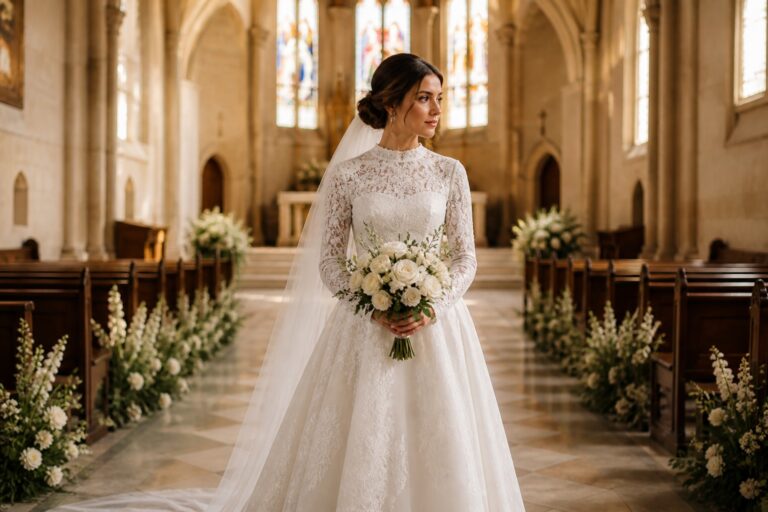
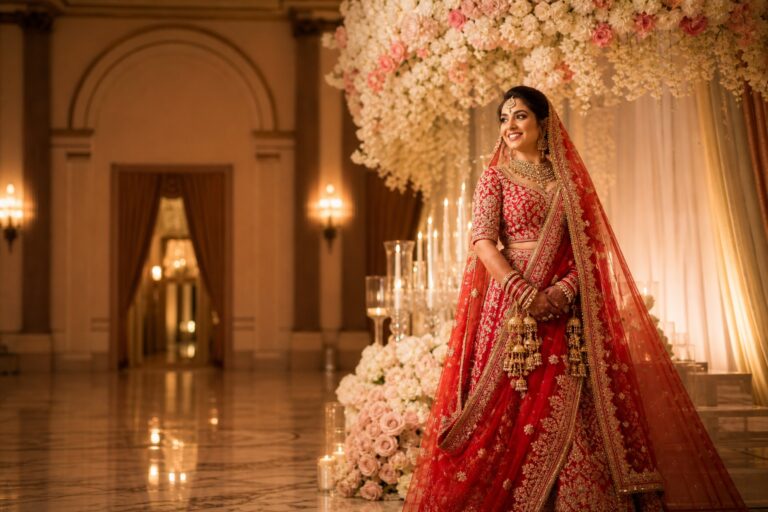
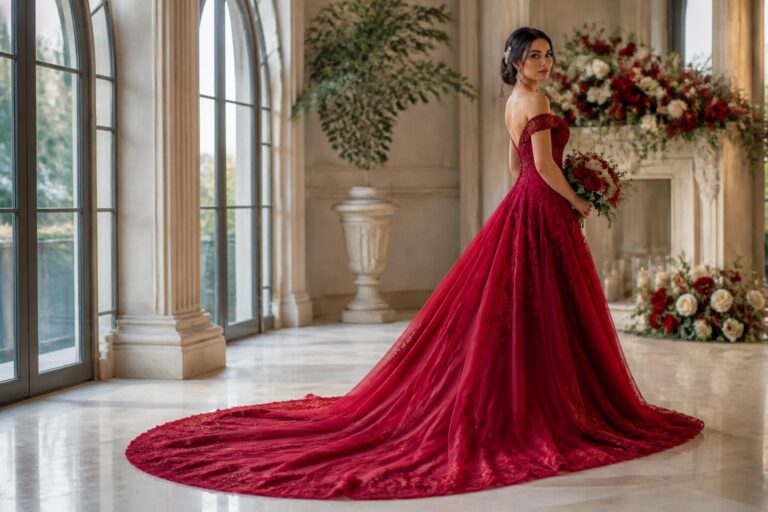
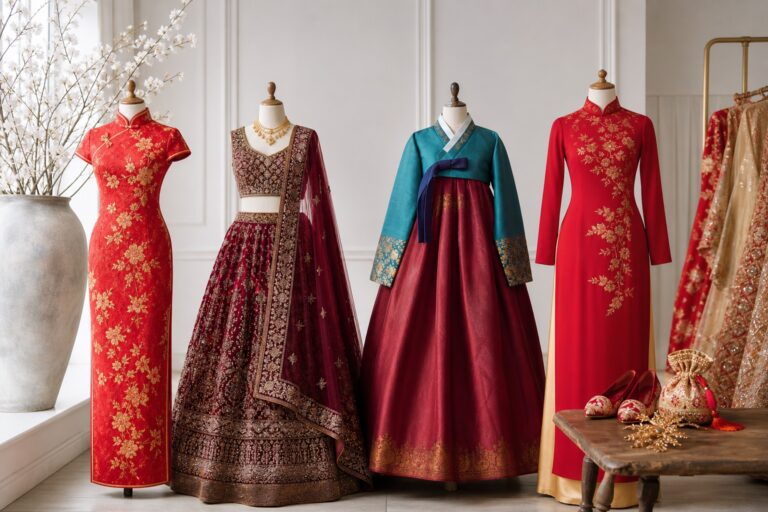
Turkish bridal dresses can mean more than one beautiful gown. For some brides, the phrase points to a white gelinlik with lace, satin, a long train, or a dramatic veil. For others, it brings to mind a red or jewel-toned bindalli or kaftan worn during henna night, also called Kina Gecesi. A modern Turkish-inspired bridal wardrobe may include both, plus a lighter reception look or a detachable overskirt.
The easiest way to choose well is to plan by event before shopping by image. This checklist helps you decide how traditional you want to be, what silhouette will work in your venue, which details deserve your budget, and how to make a Turkish bridal look comfortable for a wedding in the United States. The goal is not to copy one fixed costume. It is to build a respectful, personal wardrobe that feels right for your family, celebration, and body.
1. Preparation: Set the Bridal Brief Before You Shop
Start with the wedding calendar. Write down every event in which you may want a dedicated outfit: engagement party, henna night, civil ceremony, religious ceremony, main reception, and after-party. Turkish bridal traditions vary by family and region, so there is no requirement to dress the same way as another Turkish bride. The useful question is simply, “Which moments do I want my clothes to honor?”

Turn wedding inspiration into a plan you can actually follow.
Zarellea brings your guest list, budget, vendors, and day-of details into one shared space — so no beautiful idea gets lost in the shuffle.
Choose one look, two looks, or a complete wardrobe
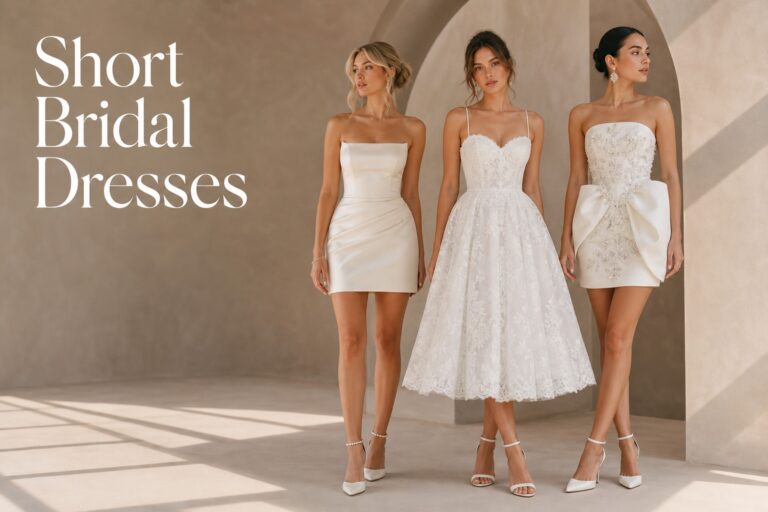
A single white gown can work beautifully when your celebration is intimate or your budget is focused. A two-look plan pairs a red, burgundy, or jewel-toned henna outfit with a white wedding gown. A three-look plan may add a reception change, such as a slim satin dress, a shorter hem, or a detachable train. More outfits can create variety, but they also add tailoring, steaming, transportation, and dressing time. Put a realistic number beside each event before you fall in love with a design.
- One look: prioritize a versatile white gelinlik, comfortable lining, and accessories that can change the mood.
- Two looks: let the henna outfit carry color and heritage details while the white gown carries the ceremony.
- Three looks: make each change solve a practical problem, such as dancing, heat, or a second venue.
- Custom wardrobe: confirm who is designing, fitting, shipping, and altering each piece before paying a deposit.
Write down your non-negotiables
List the details that affect the entire search. You may want a high neckline, full sleeves, a covered back, a specific train length, a detachable cape, a natural waist, a particular color, or enough room to dance. Also record the details that are not negotiable for comfort, including a supportive bust fit, breathable lining, low shoes, a bustle, or pockets in a reception outfit. Sharing this list with a designer is more useful than sending dozens of unrelated screenshots.
Set a budget that includes the invisible costs
Turkish bridal fashion is often recognized for detailed embroidery, lace, beadwork, satin, velvet, and structured construction. The dress price is only one part of the budget. Add shipping, customs or duties when applicable, local alterations, pressing, garment bags, undergarments, shoes, jewelry, headpieces, and emergency repairs. If you are ordering internationally, allow a fitting buffer rather than assuming an online size chart will be enough.
2. Decision Checklist: Compare the Main Turkish Bridal Dress Routes
There are three useful routes to compare: a traditional-inspired henna outfit, a Turkish designer gown, and a modern hybrid assembled around one or two signature details. Each can be meaningful. The right choice depends on the event, the level of cultural specificity you want, your timeline, and how much construction you are willing to manage.
Route one: Bindalli or kaftan for henna night
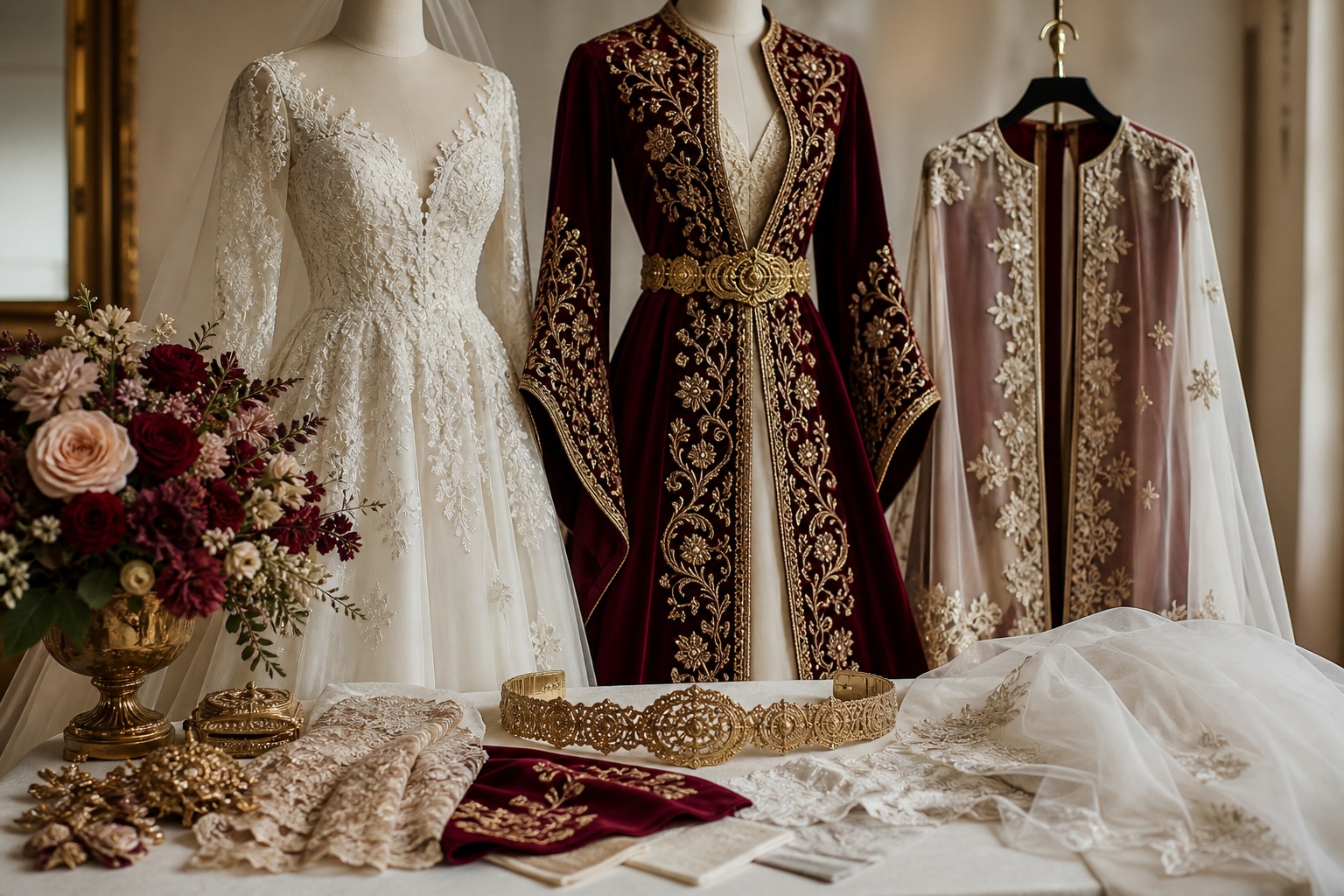
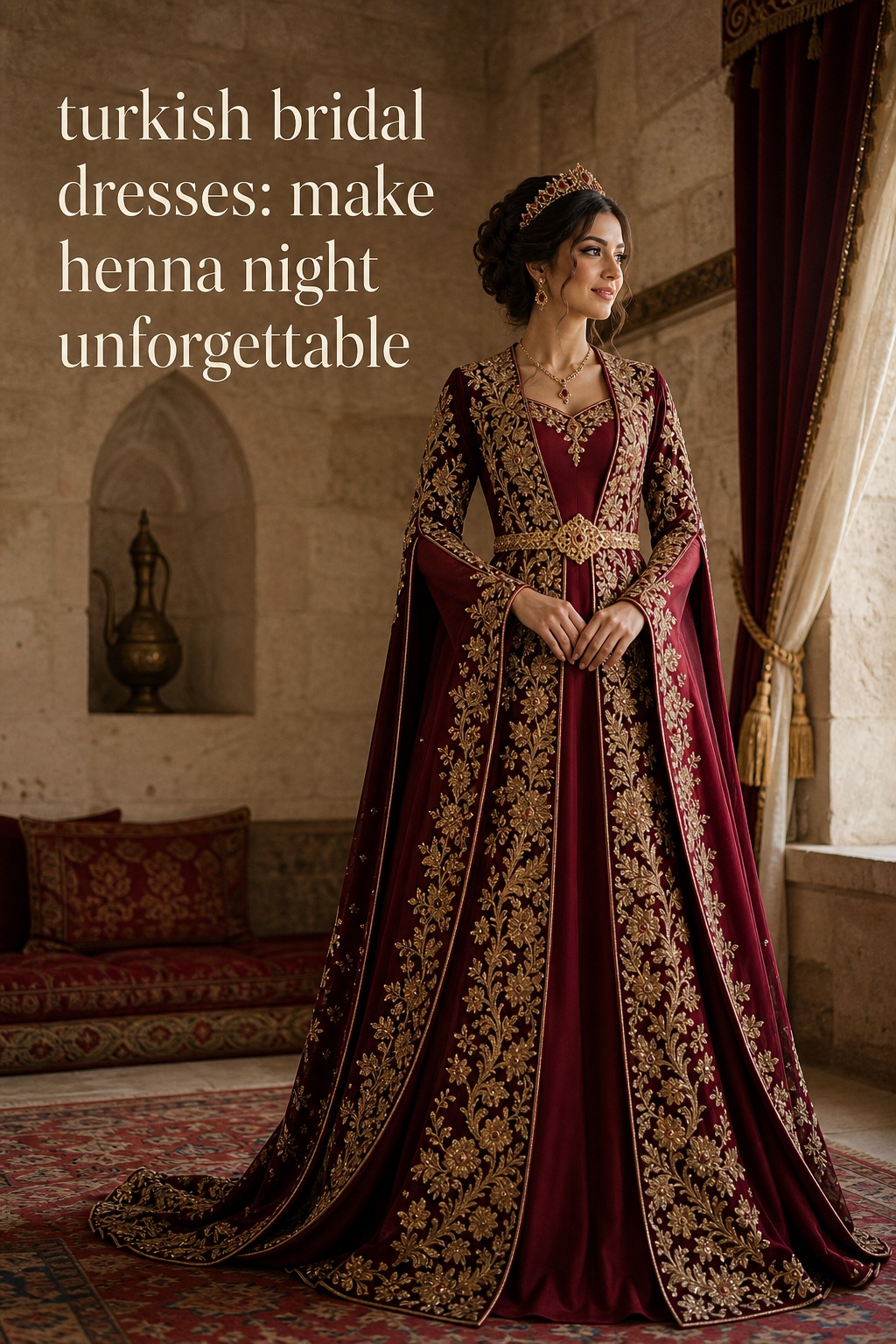
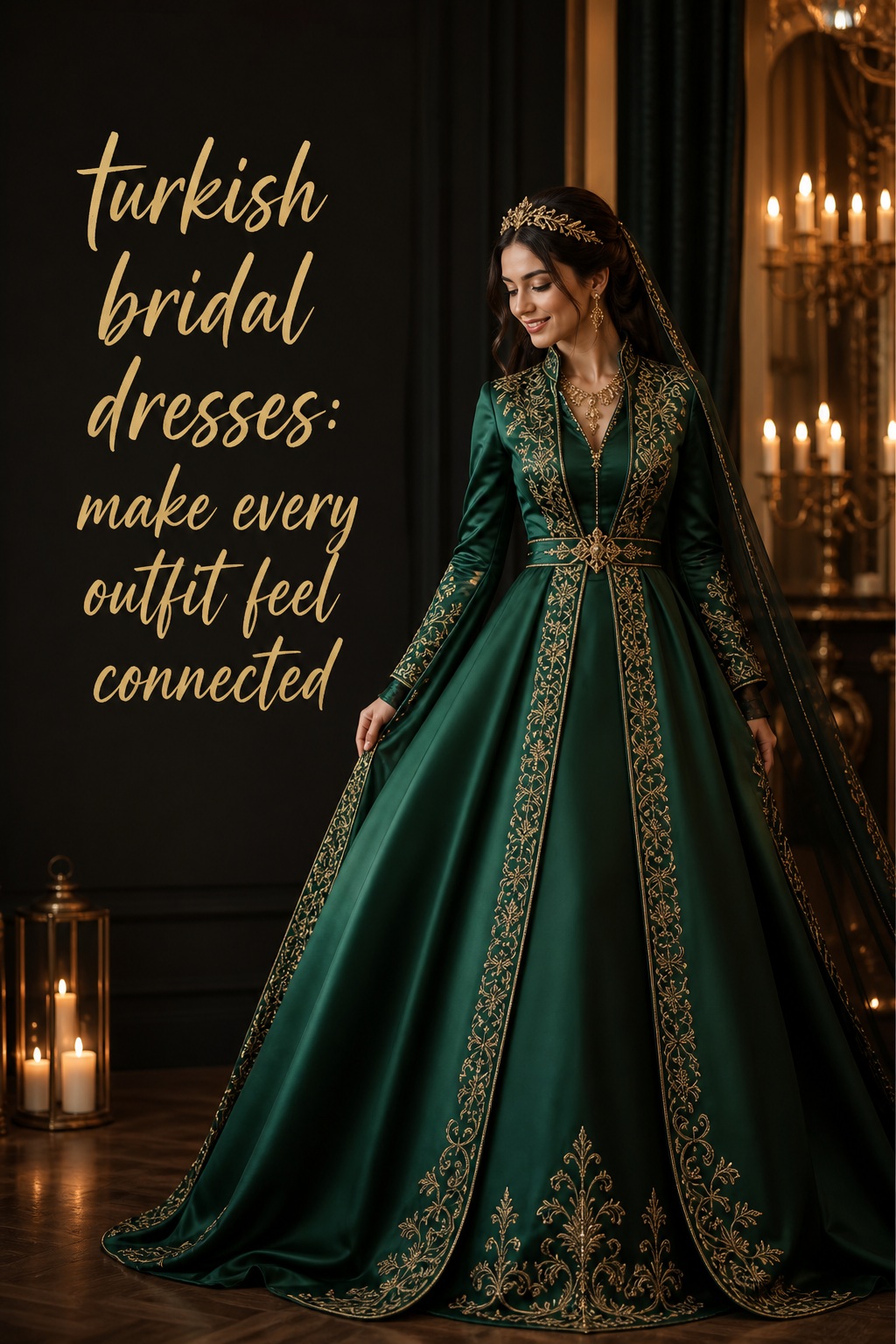
A bindalli or kaftan-inspired outfit is usually the strongest choice when the henna celebration is the place where you want color, ceremony, and visual tradition. Deep red, burgundy, ruby, emerald, or navy can create a rich base for metallic embroidery. Velvet feels historic and opulent, while satin creates a smoother, lighter effect. Look for a clear waistline, sleeves that allow arm movement, and a hem that will not catch under your shoes.
Keep the rest of the outfit intentional. A gold belt can define a layered shape, but it should not pinch when you sit. A headpiece, veil, or crown can make the look feel ceremonial, while drop earrings may be enough jewelry if the fabric is already heavily decorated. If you expect dancing, test the weight of the garment with your arms raised. Heavy embroidery feels different after three hours than it does in a fitting-room mirror.
Route two: A Turkish designer gelinlik
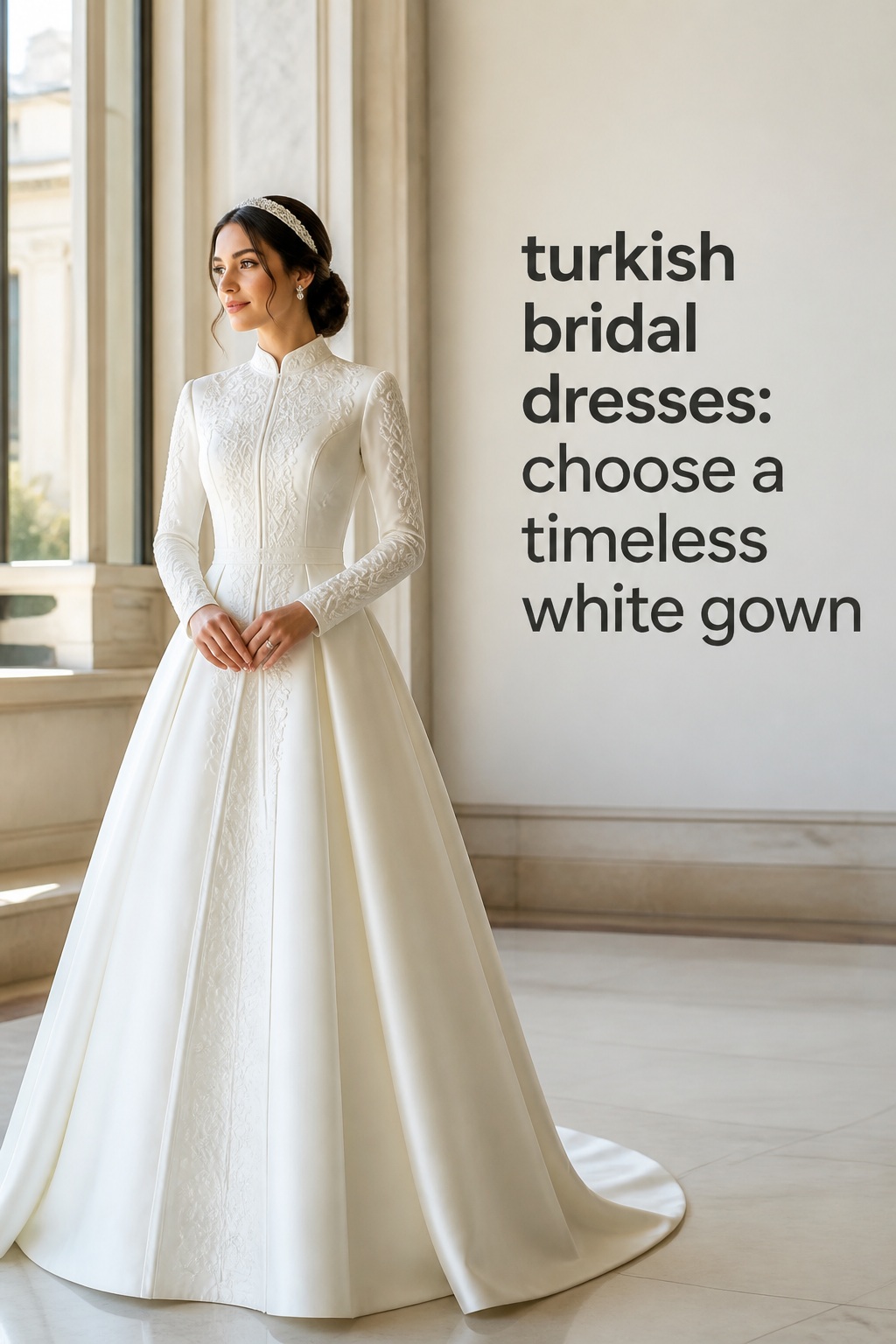
A Turkish designer gown may be the best match if you want distinctive construction without a fully traditional outfit. Look for the details that make the gown feel specific: architectural corsetry, embroidered lace, long sleeves, illusion panels, sculptural overskirts, a cape, or an unusually shaped train. The silhouette can still be familiar, such as an A-line, ball gown, mermaid, or clean sheath.
Ask what is built into the price. Does it include a made-to-measure service, one fitting, a veil, a bustle, shipping, or only the sample garment? Request photos of the interior construction, lining, closures, and hem. A gown can look luxurious on the outside and still need substantial work to support a larger bust, shorten a sleeve, or secure a train. A clear production schedule matters as much as a beautiful sketch.
Route three: A modern Turkish-inspired hybrid
A hybrid look takes the feeling you love and translates it into a more flexible wardrobe. You might choose a white satin gown with an Ottoman-inspired belt, a clean crepe dress with embroidered sleeves, a detachable cape over a simple sheath, or a modern white gown for the ceremony with a red velvet jacket for the reception. This route is useful when you want a respectful reference rather than a head-to-toe historical interpretation.
Use one visual anchor at a time. If the gown has dense gold embroidery, keep the veil and jewelry quieter. If the silhouette is simple, let the belt, sleeves, or headpiece provide the cultural signal. This balance protects the bride from looking over-styled and makes the outfit easier to wear again in edited parts.
Score each option against the same criteria
- Meaning: does the outfit connect to the event and your family story?
- Movement: can you walk, sit, lift your arms, greet guests, and dance?
- Coverage: does the neckline, sleeve, lining, and back meet your preferences?
- Photographs: will the texture and shape read well in both close-ups and full-length images?
- Timeline: can the garment be made, shipped, altered, steamed, and tested before the wedding?
- Cost: does the total price include all the extras you will actually need?
- Reuse: can you wear the cape, belt, jacket, or jewelry after the wedding?
3. Worked Examples: Build Turkish Bridal Dresses Around Real Wedding Scenarios
Inspiration becomes easier to use when it is attached to a real schedule. These examples are not rules. They show how the same Turkish bridal vocabulary can lead to different decisions depending on venue, climate, family expectations, and the bride’s preferred level of tradition.
Scenario A: A traditional henna night and formal ballroom wedding
For the henna night, choose a red or burgundy bindalli-inspired kaftan with controlled volume, a metallic belt, and a veil or headpiece. Keep the hem just clear of the floor if the celebration includes dancing. For the wedding, move to a white ball gown or formal A-line with a defined bodice and a train that can be bustled. Repeat one detail, such as gold embroidery or a floral motif, so the two looks feel related without matching.
The key fitting test is stamina. Sit in the henna outfit for ten minutes, walk a full lap, and practice the planned entrance. In the white gown, attach the bustle and rehearse stairs. If the henna garment is heavy, plan a trusted dresser and a private place to change rather than relying on a rushed restroom.
Scenario B: An outdoor summer wedding with a small family henna gathering
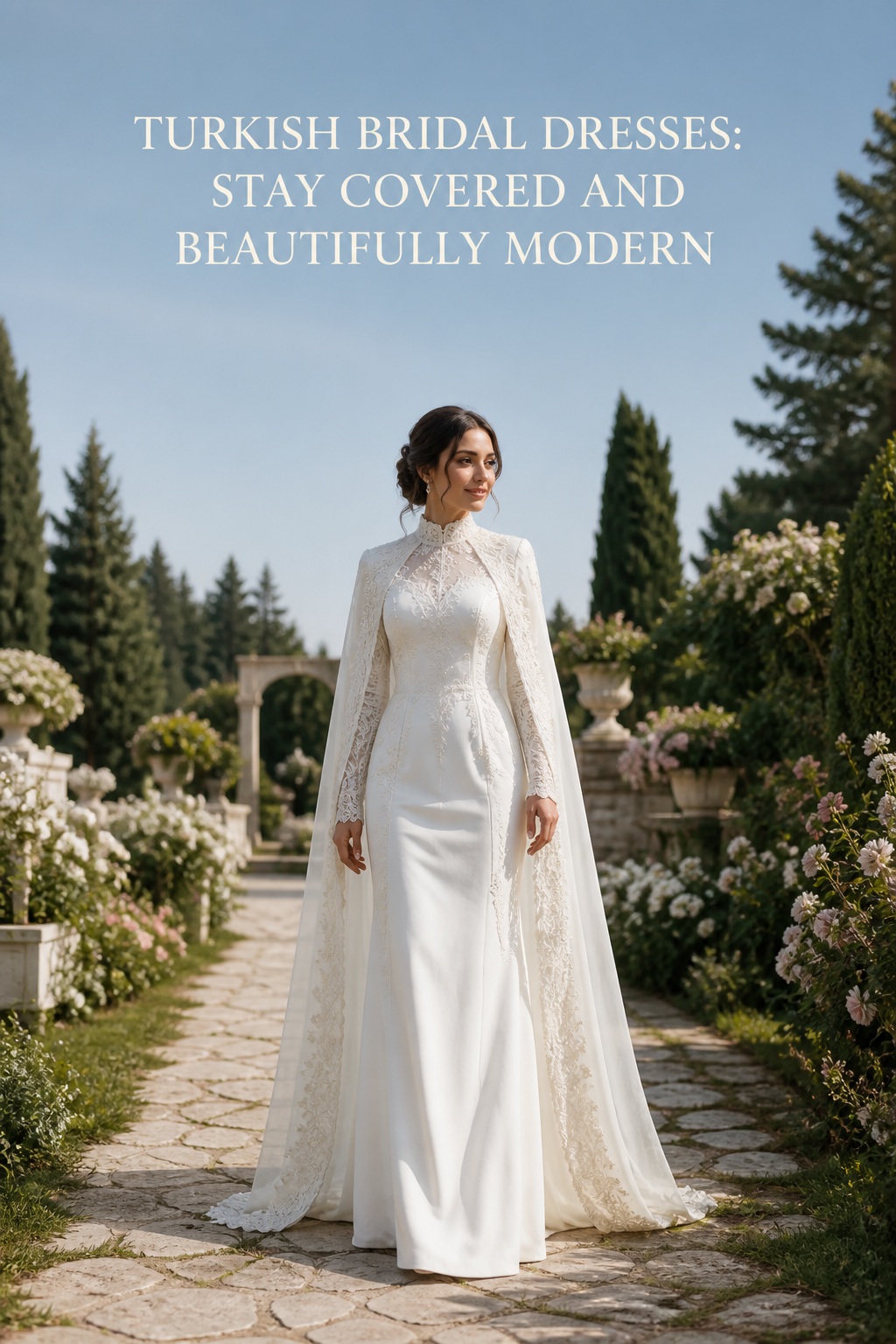
For a warm-weather celebration, choose a lighter henna look, such as a lined satin dress, a breathable velvet accent, or an embroidered jacket over a simple base. Avoid thick layers that trap heat. The main gown can be a clean A-line, sheath, or soft ball gown with covered shoulders if that is important to you. A detachable sleeve or cape can provide ceremony coverage and be removed for dinner.
Prioritize fabric behavior. Ask whether the lining clings, whether beadwork scratches, and whether the train can be lifted over grass or gravel. Bring the exact shoes to every fitting. Outdoor ground changes the effective hem length, and a dress that is perfect on a salon floor may drag at the ceremony.
Scenario C: A modern city wedding with a modest bridal brief
A high-neck crepe gown with long sleeves, an embroidered overskirt, or a satin dress with a detachable cape can provide a polished Turkish-inspired direction without excessive ornament. For henna night, consider a jewel-toned long-sleeve dress with a shorter train and one strong embroidered panel. The result can feel modern, covered, and connected to tradition.
For modesty, specify the opacity of every panel. Illusion mesh is not automatically private, especially under bright lighting or flash photography. Request a fabric swatch, test the garment under the venue’s lighting, and discuss whether the neckline will stay in place when you move. A well-fitted high neck is comfortable; a tight one that rubs or pulls will distract you all day.
Scenario D: A destination wedding with a limited luggage plan
Choose a gown that folds or travels safely, then add one compact statement piece. A detachable overskirt, cape, belt, or embroidered jacket can change the look without requiring a second full garment. Pack the dress in a breathable garment bag, carry it in the cabin when possible, and identify a local specialist who can steam or repair it at the destination.
Do not assume a destination hotel can handle intricate beadwork or velvet. Ask about pressing equipment in advance. Photograph the packed dress, accessories, and closures before travel so you can check that every piece arrived. Bring a small emergency kit with thread, fashion tape, hooks, safety pins, stain-removal tools, and a spare bustle loop.
4. Final Review: Fittings, Shopping Questions, and Mistakes to Avoid
Once you have a preferred route, slow down before placing the final order. Turkish bridal dresses often contain construction details that are difficult to change later, especially embroidery placement, sleeve openings, corsetry, and train proportions. A thoughtful review protects both the look and the wedding-day experience.
Ask the designer or boutique these questions
- Is this sample ready to ship, made to order, or fully custom?
- What measurements do you need, and who checks them?
- How many fittings are included, and where will they happen?
- What is the delivery date, and what happens if production is delayed?
- Which alterations are realistic without disturbing the embroidery or beading?
- Is the train designed for a bustle, and is the bustle included?
- What are the shipping, customs, return, cancellation, and repair policies?
- Can you provide fabric and color swatches before final approval?
- How should the garment be stored, transported, steamed, and cleaned?
Use a three-stage fitting review
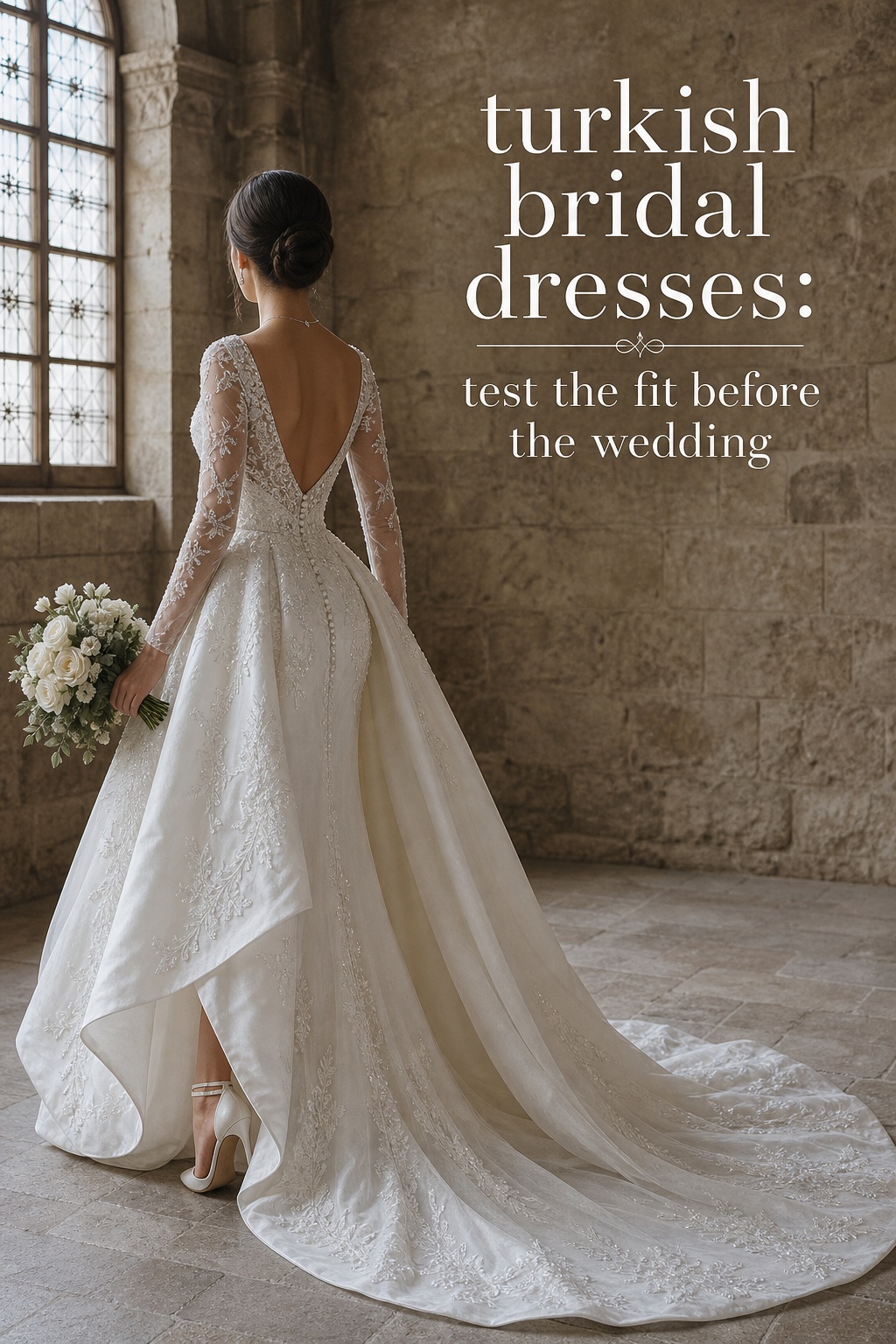
At the first fitting, check the foundation. The bust, waist, shoulder, neckline, and sleeve opening should feel secure without forcing your posture. At the second fitting, test activity. Walk, sit, lift your arms, hold your bouquet, hug someone, and rehearse your entrance. At the final fitting, wear the exact undergarments and shoes, attach every accessory, and practice the bustle or change with the person who will help you.
Take short videos during the movement test. A mirror can hide a train that catches, a sleeve that twists, or a belt that shifts when you dance. Check the front, side, back, and seated view. If the gown will be photographed in direct sunlight, test its opacity and shine before the wedding day.
Avoid these common mistakes
- Shopping only by ornament: beautiful embroidery cannot fix an uncomfortable foundation.
- Leaving alterations until the last month: international orders need a longer safety margin.
- Ignoring the event schedule: a heavy kaftan may be perfect for portraits but difficult for hours of dancing.
- Mixing references without a plan: choose one main color story and repeat one or two details.
- Assuming modesty from a photograph: confirm opacity, neckline depth, lining, and movement in person.
- Treating tradition as a costume: learn the meaning of the event and use references with care, especially when adapting a family look.
- Forgetting the people who will help: assign a dresser, steamer contact, and bustle helper before the wedding.
The strongest Turkish bridal dresses plan is the one that gives every outfit a job. Let the henna look carry color and ceremony. Let the white gown express your bridal silhouette. Let a cape, belt, overskirt, or jacket create continuity where it helps. With a clear brief, realistic timeline, and honest movement tests, Turkish bridal fashion can feel both deeply personal and beautifully practical.
FAQ
What are Turkish bridal dresses usually like?
Turkish bridal dresses range from white Western-style wedding gowns to richly decorated henna-night outfits, including bindalli and kaftan-inspired designs. Common visual details include lace, satin, embroidery, beadwork, long sleeves, structured bodices, dramatic skirts, belts, capes, and long veils. The right choice depends on the event and the bride’s own family and style preferences.
What is a bindalli bridal dress?
A bindalli is a richly embroidered traditional garment associated with important celebrations, including Turkish henna nights. It is often imagined in red, burgundy, or another saturated color with metallic floral decoration. Contemporary versions may combine a fitted inner dress with a kaftan-like layer, belt, veil, or headpiece.
Do Turkish brides wear white wedding dresses?
Many Turkish brides wear a white wedding gown for the main ceremony or reception, while some also choose a separate colorful outfit for henna night. Practices vary by family, region, religion, venue, and personal preference. A bride can honor Turkish heritage with one white gown, multiple looks, or selected details such as embroidery, a belt, a cape, or jewelry.
Can I buy Turkish bridal dresses in the United States?
Yes. Some Turkish designers and bridal houses work with international retailers, while boutiques and online sellers may offer ready-to-wear or made-to-order options. Before ordering, confirm measurements, production time, shipping, duties, return terms, alteration support, and the exact fabric and color. A local bridal tailor should review the garment before you commit if the fit is complex.
How far in advance should I order a Turkish wedding dress?
Begin research as early as possible, especially for custom or international work. Your timeline should include design approval, measurements, production, shipping, customs, at least two local fittings, steaming, and a buffer for corrections. The more embroidery, structural support, or multiple outfits you need, the more important it is to avoid a last-minute order.
What should I wear for a Turkish henna night?
Many brides choose a colorful, decorated look such as a red bindalli or kaftan-inspired dress, but there is no single required outfit. Consider the formality, family expectations, venue temperature, and how much dancing is planned. Choose secure closures, comfortable shoes, a manageable hem, and enough room to sit and move.
How can I make a Turkish bridal look feel modern?
Start with a clean silhouette and select one or two heritage-inspired details. A satin gown with an embroidered belt, a crepe dress with a detachable cape, or a simple white look paired with a jewel-toned henna jacket can feel current without losing its reference point. Repeating one motif or color across events creates a more polished wardrobe.
What should I check during a Turkish bridal dress fitting?
Check the bust, waist, shoulders, neckline, sleeve openings, lining, opacity, hem, train, closures, and bustle. Then test real movement: walk, sit, lift your arms, hold a bouquet, hug someone, and dance. Wear the exact undergarments and shoes you will use. For a heavy or layered look, also rehearse the outfit change and assign a helper before the wedding day.