Bridal Dresses With Sleeves: Which Style Is Right?
Bridal dresses with sleeves can look romantic, modern, modest, relaxed or dramatically fashion-forward. That range is exactly what makes them appealing, and also what can make shopping feel confusing. A fitted lace sleeve and a soft flutter sleeve may both offer coverage, but they create very different proportions, temperatures and movement throughout the day.
The easiest way to choose is to compare the sleeve with the rest of the gown instead of judging it as a separate detail. Think about four things at once: how much coverage you want, how you need to move, what the venue and season demand, and which silhouette makes you feel most like yourself. This comparison guide breaks down the main options, the trade-offs to test in the fitting room, and the situations where each style tends to work best.
Decision Context: Compare the Feeling Before the Details
Before saving dozens of gown photos, decide what you want the sleeves to do. They may be a practical layer for a cool ceremony, a way to feel more covered, a visual frame for your shoulders, or the statement detail that makes a simple dress feel finished. Your answer will help a bridal stylist show you useful options instead of every sleeved gown in the store.
Start with your preferred level of coverage
Coverage is not a single scale from strapless to fully covered. A sheer illusion sleeve covers the arm visually while leaving the skin tone visible. A lace sleeve adds pattern and texture without necessarily feeling heavy. A lined satin or crepe sleeve gives more visual coverage and may feel warmer. A cap sleeve covers the shoulder but leaves most of the upper arm open. Decide whether you want coverage at the shoulder, upper arm, elbow, wrist or across the neckline too.
Turn wedding inspiration into a plan you can actually follow.
Zarellea brings your guest list, budget, vendors, and day-of details into one shared space — so no beautiful idea gets lost in the shuffle.
Be specific about why you want coverage. If you want to feel comfortable during a religious ceremony, you may care more about the shoulder and neckline than the wrist. If you want warmth for an outdoor November ceremony, a long sleeve and a removable wrap may be more useful. If you simply prefer the look of covered arms, compare sheer, lace and lightweight fabric before assuming you need a fully lined sleeve.
Separate the visual mood from the practical function
The same sleeve length can communicate several moods. A close-fitting lace sleeve often reads classic and romantic. A transparent fitted sleeve can feel delicate and contemporary. A soft bishop sleeve introduces movement and a little bohemian drama. A clean cap sleeve can make a satin A-line feel polished and understated. A puff sleeve creates volume and fashion impact, especially when the rest of the gown is simple.
Make a short list of three words for your desired look, such as graceful, modern and comfortable. Use the list while trying on gowns. A sleeve may be beautiful but still wrong for the balance you want. If your words are clean, architectural and unfussy, heavily embellished lace may create too much visual noise. If your words are soft, nostalgic and garden-inspired, a plain fitted jersey sleeve may feel too severe.
- Coverage: Which areas do you want covered, and which can remain open?
- Movement: Do you need to lift your arms, hug guests, dance and hold a bouquet comfortably?
- Temperature: Will you spend time in direct sun, a heated room, air conditioning or cold outdoor weather?
- Proportion: Should the sleeve soften your shoulders, lengthen your arms or add volume?
- Transition: Do you want one ceremony look, or a sleeve you can remove for the reception?
Side-by-Side Criteria: Five Sleeve Families to Try
Use these families as a fitting-room shortcut. They are broad categories rather than rigid rules, because designers combine details in many ways. A gown can have a cap sleeve made from lace, an illusion long sleeve with beaded appliques, or a detachable puff sleeve over a strapless bodice. The important question is how the sleeve behaves on your body and with the gown’s neckline and skirt.
1. Cap and short sleeves: light coverage with a clean outline
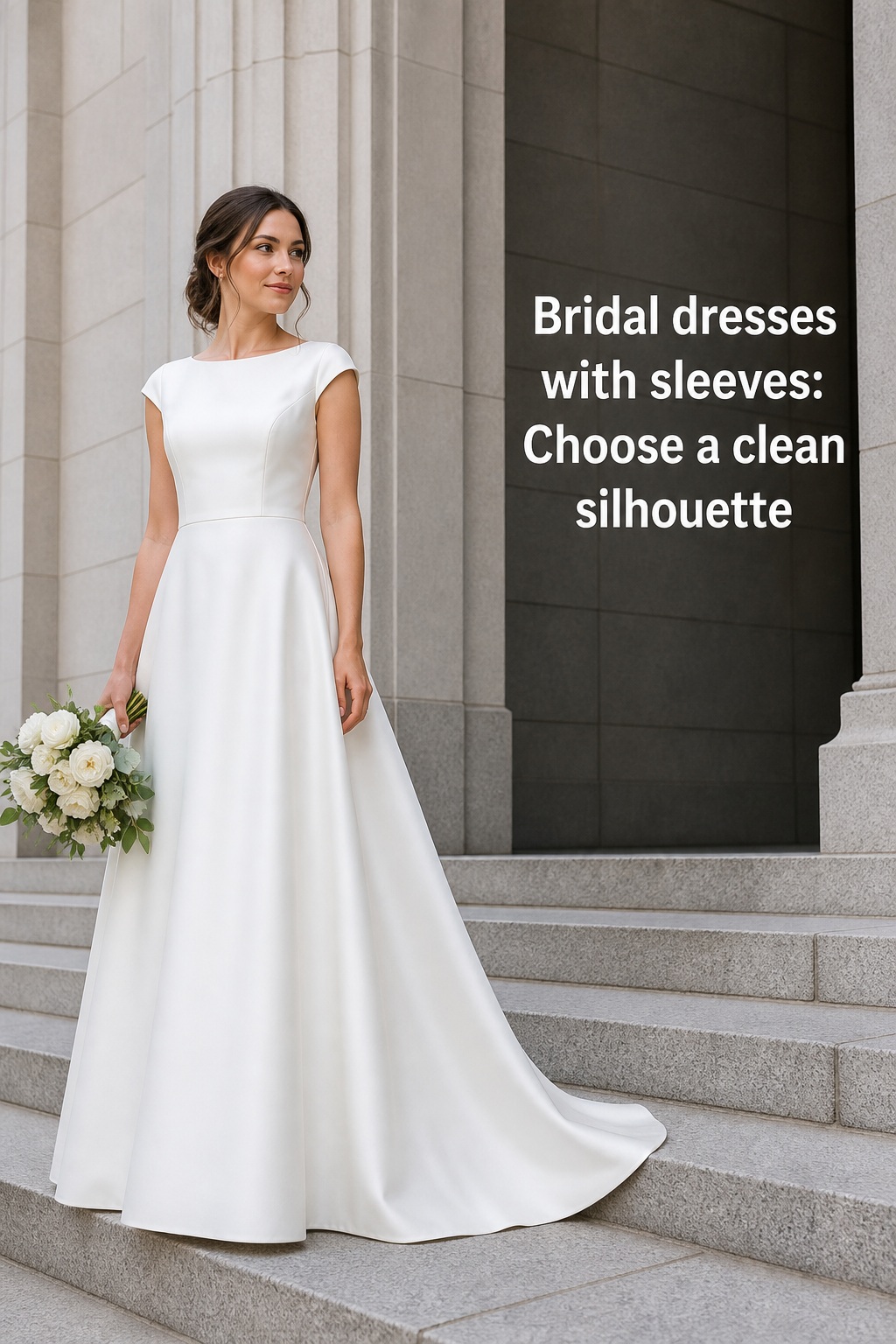
Cap sleeves are small, close to the shoulder and often ideal for a bride who wants a little structure without committing to a full arm covering. Short sleeves can extend toward the bicep and create a stronger horizontal line. They work especially well with A-line, sheath and fit-and-flare gowns when you want the upper body to feel finished but not heavily styled.
Choose this family when you want a classic shape, light support or a comfortable summer option. Lace cap sleeves can soften a square or bateau neckline, while clean fabric sleeves can make a minimalist gown feel tailored. Check that the sleeve edge does not pinch when you raise your arms. A narrow band may feel fine while standing and become distracting during dancing or photographs.
2. Illusion and fitted long sleeves: coverage without visual weight
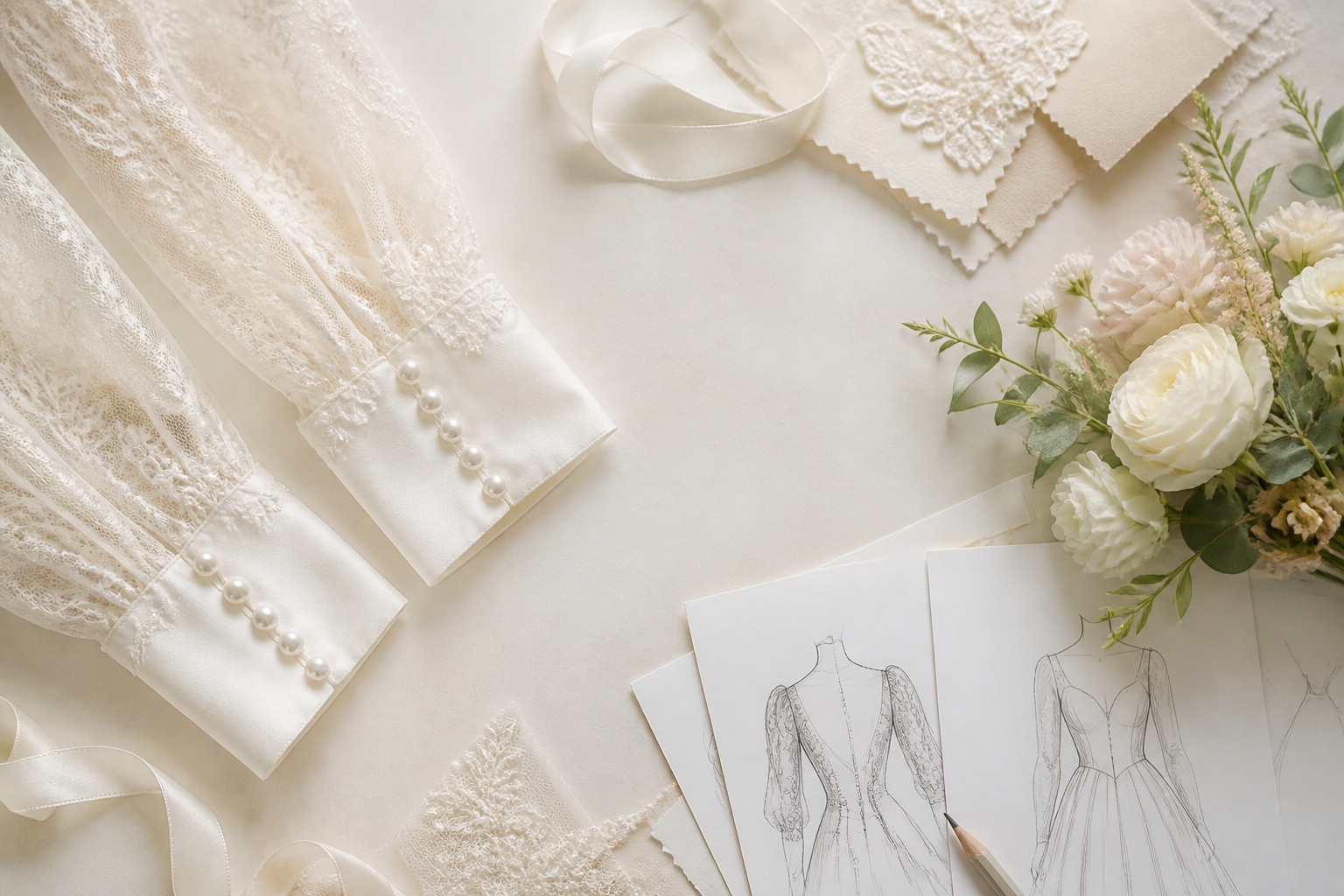
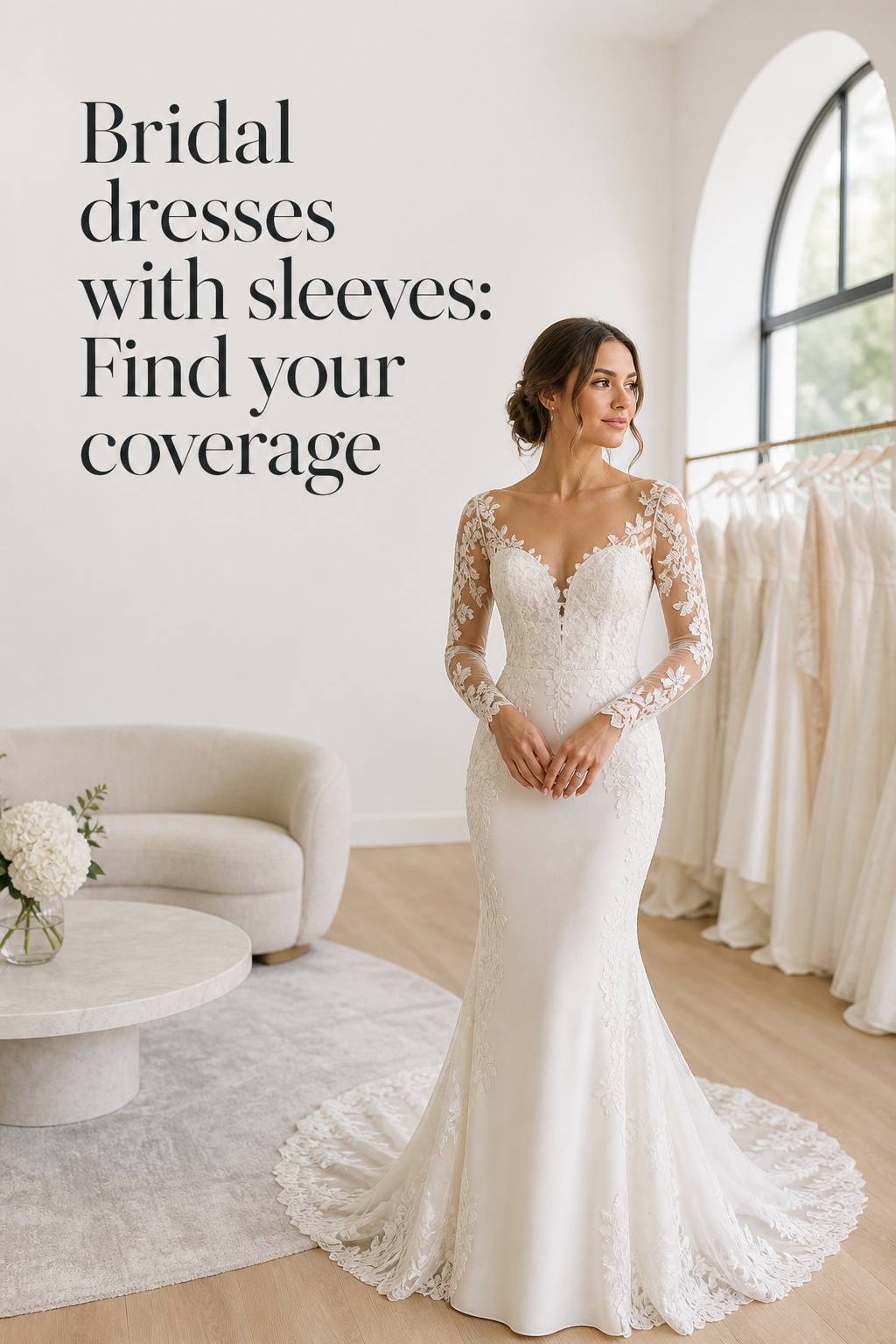
Illusion sleeves use sheer mesh or net to create a barely-there layer. They are useful when you want the line of a long sleeve without the visual density of opaque fabric. Designers may add lace motifs, beading or tiny buttons to make the sleeve part of the dress’s surface detail. A plain illusion sleeve can also support a detailed bodice without competing with it.
Fitted long sleeves in lace, crepe or satin feel more defined. They can lengthen the arm visually and give a column, sheath or fit-and-flare gown a sleek finish. For a petite bride, a close sleeve can keep the line streamlined when a large puff or bishop sleeve feels overwhelming. For a taller bride, the sleeve can become a place to introduce texture, pattern or a strong cuff.
Test the fabric at the elbow and wrist. You should be able to bend your arms, hold your bouquet and sit without pulling across the seam. Ask whether the sleeve can be altered at the wrist, whether the buttons are functional, and whether the mesh matches your skin tone in the venue’s lighting. A sleeve that looks invisible in a bright salon may appear more defined under flash photography.
3. Flutter and off-shoulder sleeves: softness around the shoulder line
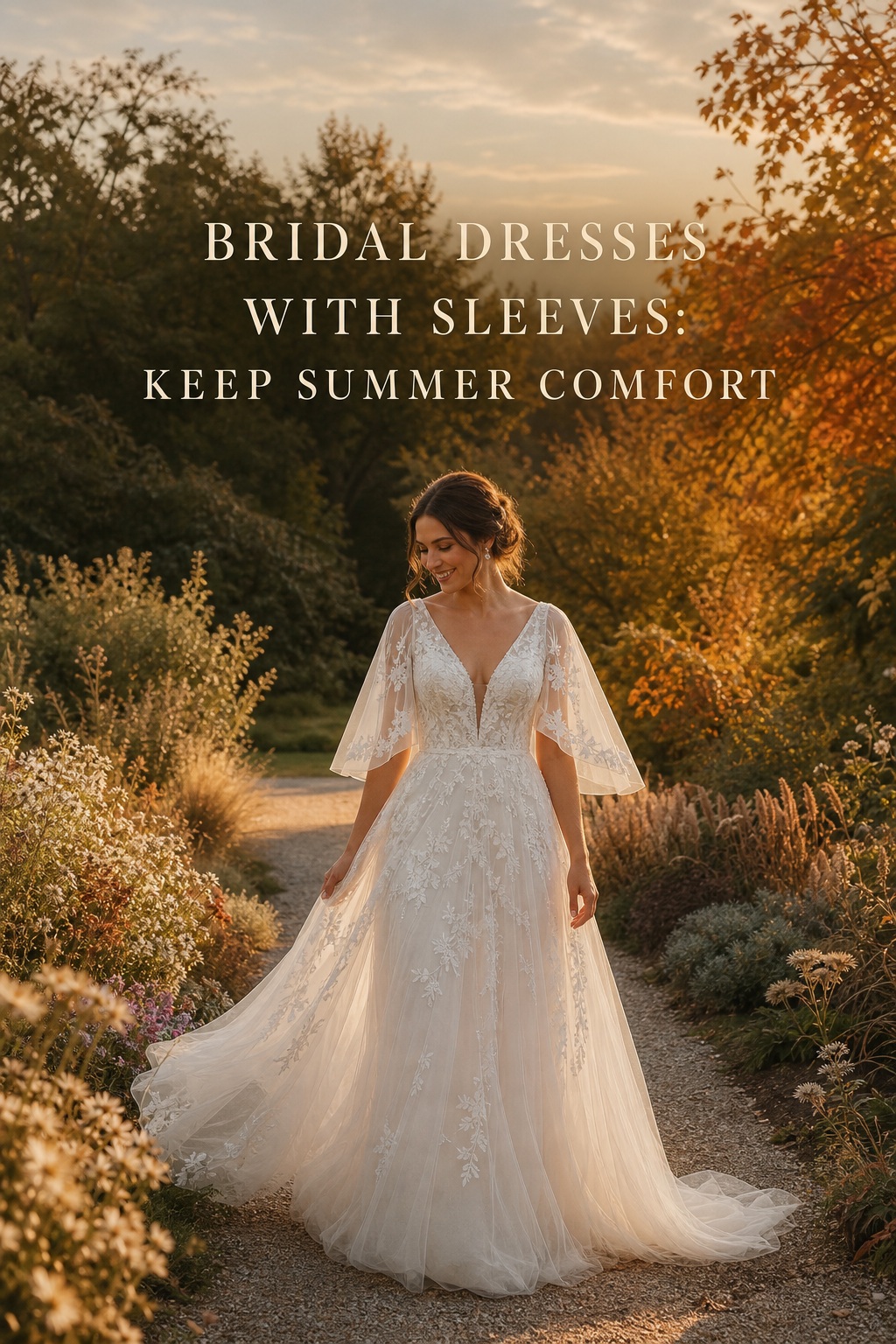
Flutter sleeves are light pieces that fall away from the shoulder or upper arm. They add movement and a soft romantic edge without the heat of a fitted long sleeve. They can work beautifully on outdoor, garden and summer gowns, particularly when the dress has a simple bodice and the sleeve supplies the movement.
Off-shoulder sleeves sit below the shoulder and draw attention to the collarbone. They are elegant and fashion-forward, but they require a careful mobility check. Try reaching forward, lifting your arms and turning your upper body. If the sleeve slides upward or cuts into the arm, ask whether the gown can be stabilized with elastic, clear support or a tailored adjustment.
These sleeves pair well with sweetheart, straight-across and portrait necklines, but they can compete with a very ornate necklace or elaborate veil. If the shoulder line is the main detail, keep the rest of the accessories edited. A long veil with simple edging often supports the look better than multiple pieces of lace competing for attention.
4. Bishop, bell and puff sleeves: volume as the main statement
Voluminous sleeves change the silhouette before the skirt even enters the conversation. A bishop sleeve gathers at the upper arm and wrist, a bell sleeve widens toward the hem, and a puff sleeve creates fullness closer to the shoulder. These styles can make a simple gown feel editorial, vintage-inspired or relaxed, depending on the fabric and finish.
If you choose volume, give it room to be the focal point. A clean satin gown, a simple crepe sheath or an unembellished A-line can make a sculptural sleeve look intentional. Too many competing details can make the upper body feel crowded. Consider the scale of your bouquet as well. A small, edited bouquet may balance a large sleeve more gracefully than a wide, heavily textured arrangement.
Check the sleeve around chairs, doorways and your partner’s jacket. Volume can be comfortable when it is light, but a stiff or heavily gathered sleeve may catch during a hug or make it difficult to hold hands. If you love the look but not the all-day commitment, look for a detachable version.
5. Detachable sleeves: one gown with two deliberate moods
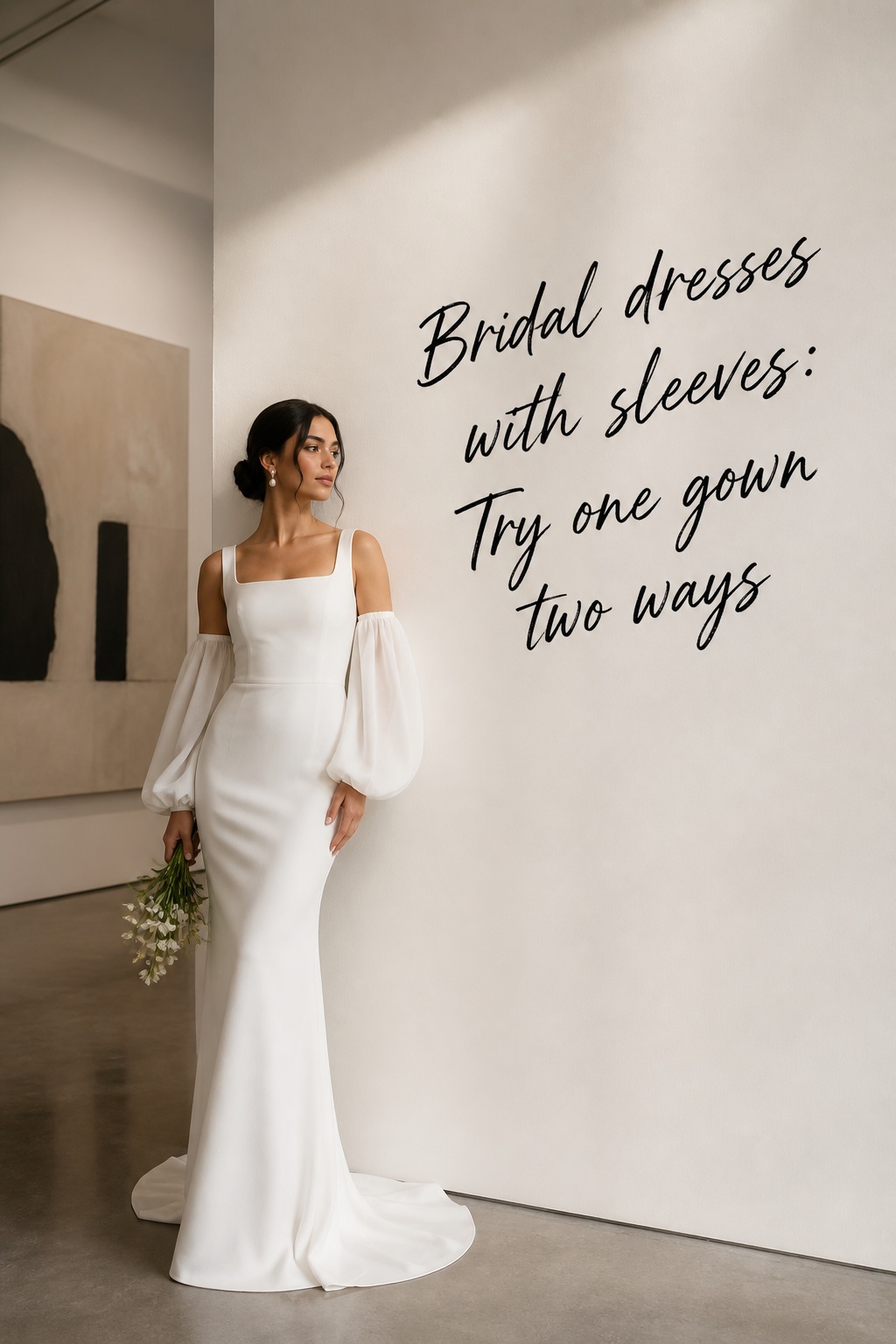
Detachable sleeves are one of the most useful options for a bride who wants flexibility. They can create more coverage for the ceremony, add drama for portraits or provide warmth outdoors, then come off for dinner and dancing. Some attach with hidden snaps, loops or buttons. Others are part of a bolero, sheer top or oversleeve that changes the entire neckline.
Do not treat detachable sleeves as an automatic solution. The removed version should still look complete, and the attachment should not leave visible gaps or awkward seams. Ask to see both versions from the front, side and back. Walk, sit, raise your arms and hold your bouquet in both looks. Confirm who will remove the sleeves, where they will be stored and whether the alteration team can reinforce the connection points.
Best Choices by Situation: Match Sleeves to the Wedding You Are Planning
There is no universally flattering sleeve. The best option depends on the conditions around the gown. Use the situations below to narrow your shortlist, then let your fitting experience make the final decision.
For a warm outdoor or summer wedding
Choose lightweight illusion mesh, a small cap sleeve, a flutter sleeve or a detachable layer you can remove after the ceremony. Breathable lace and unlined tulle may feel cooler than a fitted synthetic sleeve. Consider how much time you will spend in direct sun, especially if the ceremony, portraits and cocktail hour are outside.
Ask the stylist to show you the dress with your intended undergarments and veil. A sheer sleeve may be comfortable, but a high neckline plus a heavy veil plus a warm lining can make the whole look feel hotter than expected. Try the gown under bright lights and walk for several minutes before deciding that a long sleeve is practical for the day.
For a cool fall or winter celebration
Long sleeves in lace, crepe, satin or lined illusion can add warmth and a polished seasonal feeling. A high neckline, covered back or removable oversleeve may provide more warmth than relying on the arm alone. If you will move between a heated venue and cold outdoor portraits, plan a tailored cape, wrap or coat that works with the sleeve rather than hiding it awkwardly.
Be careful with heavy fabric if your reception is warm or crowded. A dress that feels cozy during a five-minute fitting can feel restrictive after hours of dancing. Look for breathable lining, stretch at the elbow and a sleeve opening that allows air to move. Ask your stylist whether the gown can be ordered in a lighter lining while keeping the same surface appearance.
For a formal or religious ceremony
Illusion, lace, long fitted sleeves and high necklines can provide a formal appearance without making the gown feel old-fashioned. Confirm the ceremony’s actual dress expectations before shopping. Some venues may require shoulders covered, while others may have guidance about neckline depth, back exposure or the length of a veil.
A detachable sleeve or matching jacket can give you a respectful ceremony layer and a lighter reception look. Make sure the second look is included in your alteration plan and budget. Small changes in sleeve placement can affect the neckline, bust fit and way the veil attaches.
For petite, tall, curvy or plus-size proportions
Use sleeves to support the proportions you already like, not to hide your body. A close fitted sleeve can create a long vertical line. A cap sleeve can frame the shoulder and keep a petite gown from feeling visually heavy. A carefully placed flutter or bishop sleeve can add movement around the arm without adding bulk at the waist. For a fuller bust, test how the sleeve and neckline work together from the side, because extra detail near the shoulder can change the perceived width of the upper body.
For curvier and plus-size brides, pay attention to the sleeve seam, upper-arm comfort and the relationship between sleeve volume and the skirt. A well-fitted sleeve can look more polished than a very loose one, but it should never dig into the arm. Ask whether the designer offers proportionate grading, not just a larger version of the same sample. A specialist can adjust the sleeve cap, cuff and underarm area so movement remains easy.
For a modern, minimalist or civil ceremony
Clean cap sleeves, structured short sleeves, fitted crepe sleeves and detachable sculptural sleeves can all support a modern bridal look. Pair a simple sleeve with a square, bateau or high neckline and let the cut of the gown carry the design. If the ceremony is at a courthouse or city venue, a shorter gown with a refined sleeve can feel intentional rather than like a shortened formal dress.
Minimal does not mean plain. Use fabric contrast, a strong shoulder line, covered buttons, an architectural cuff or a removable sleeve to create interest. Keep the accessories deliberate. One graphic earring or a clean veil may have more effect than a collection of delicate details that compete with the sleeve.
Trade-Offs and Mistakes: Test the Gown for the Whole Day
A sleeve can look perfect in a photograph and still be wrong for your wedding day. Use the appointment to test the mechanics, not just the mirror image. The goal is a gown that feels beautiful while you walk, sit, greet guests, eat, dance and pose.
Do a movement test before you fall in love with the detail
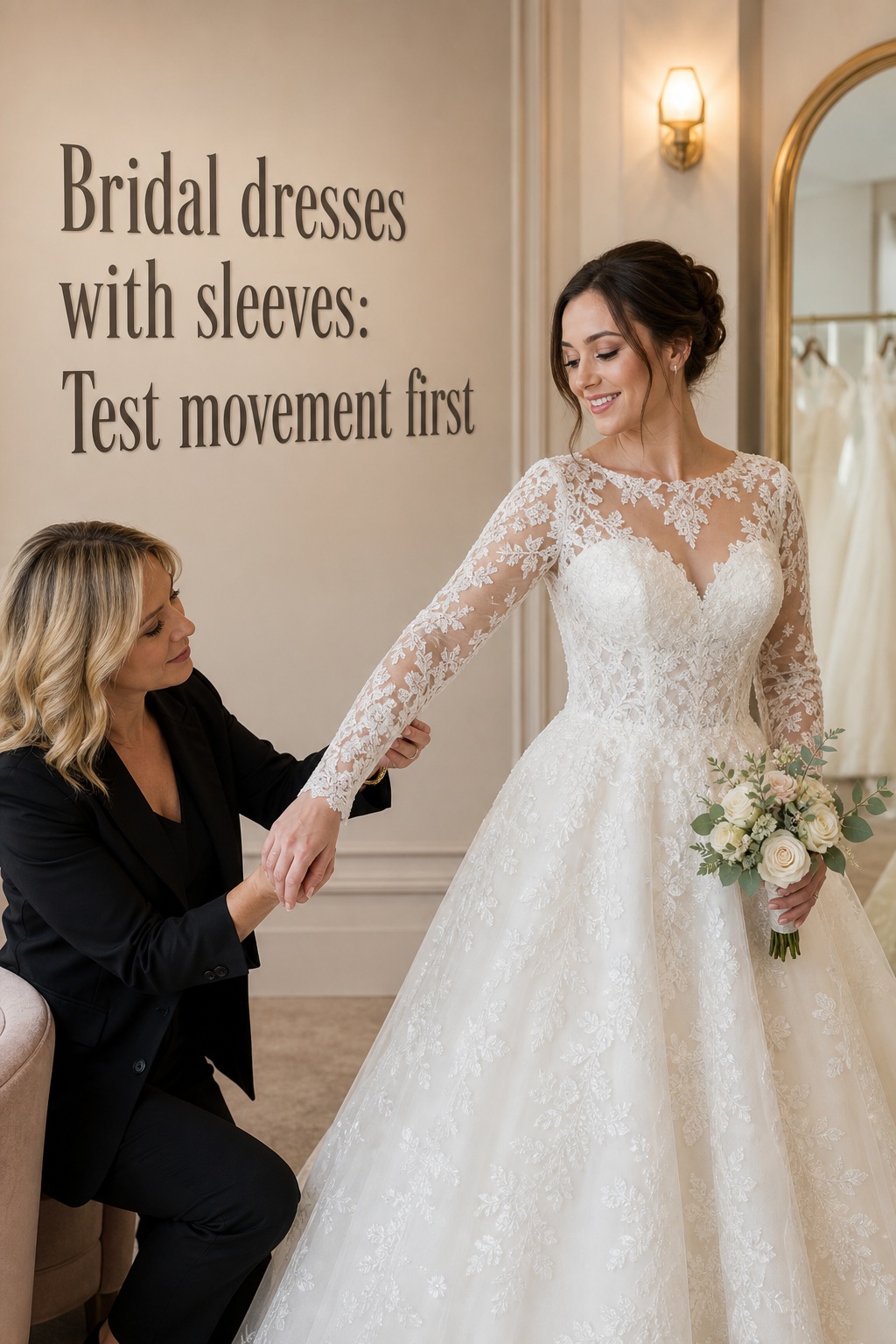
Raise both arms, reach toward the front, clasp your hands, hold a bouquet, sit in a chair and turn your upper body. Practice the small movements you expect to repeat all day. If the sleeve pulls across the elbow or underarm, do not assume you will forget it once the wedding begins. Ask whether the problem is the size, the seam placement, the fabric or the pattern of the sleeve.
Balance embellishment across the sleeve and bodice
Lace appliques and beading can make a sleeve feel custom, but they also add weight and visual density. If the bodice, sleeve and veil all use a similar lace motif, check the look from several distances. The details should read as a connected design, not a crowded surface. A simpler sleeve may let an intricate train or veil become the focal point.
Ask about alterations, lining and color matching
Sleeves are highly sensitive to fit. Ask where the seam can be adjusted, whether the cuff can be widened, how much length can be changed and whether the sleeve can be made more or less sheer. For illusion mesh, request a swatch against your skin in daylight and indoor light. For lace, ask how the pattern will be matched if the sleeve is altered.
Do not forget photography and accessories
Photographs show sleeves from the back, side and close up, especially when you hold a bouquet or embrace your partner. Check whether the sleeve detail is visible from the back and whether it works with the veil attachment. Try the intended jewelry, shoes and hair direction if possible. A high sleeve or ornate cuff may need a simpler bracelet, while an open shoulder can be beautifully balanced by a clean necklace.
Use a short fitting checklist
- Can I lift my arms high enough to hug, dance and hold the bouquet?
- Does the sleeve stay in place when I walk and turn?
- Will I be comfortable in the expected temperature for several hours?
- Does the sleeve work with my neckline, veil and jewelry?
- Can the gown be altered at the wrist, upper arm and underarm if needed?
- If the sleeve is detachable, does the gown look finished with and without it?
- Does the sleeve detail support the silhouette, or does it compete with the skirt and train?
- What is the full cost of the gown, alterations, sleeve changes and any second look?
Bring the answers to your final appointment. A sleeve is a small part of the gown, but it touches comfort, proportions, photographs and the way you experience the day. Choosing it with those connections in mind will give you a more dependable result than choosing from a single front-facing image.
FAQ
What are the most popular bridal dresses with sleeves?
Popular options include illusion long sleeves, lace fitted sleeves, cap sleeves, flutter sleeves, off-shoulder sleeves and detachable sleeves. The best choice depends on your desired coverage, season, venue, silhouette and comfort. A bridal stylist can show several sleeve families on the same dress shape so you can compare the effect more clearly.
Can I wear bridal dresses with sleeves for a summer wedding?
Yes. Choose lightweight illusion mesh, unlined lace, a cap sleeve, a flutter sleeve or a removable layer. Consider the time spent outdoors and the venue’s temperature. Test the dress while moving under bright lights, and ask whether a lighter lining or breathable fabric is available.
Are detachable sleeves worth the extra cost?
They can be worthwhile when you want a covered ceremony look and a lighter reception look, or when your wedding includes different temperatures and settings. They are most successful when the gown looks complete in both versions. Include the attachment, storage, alterations and removal plan in your budget and timeline.
Which sleeve style is most comfortable for dancing?
A light cap, flutter or flexible fitted sleeve can be comfortable for dancing when the armhole and elbow have enough ease. A structured or heavily gathered sleeve may restrict movement. Raise your arms, turn and practice a few dance movements during the fitting instead of judging comfort while standing still.
Do sleeves make a wedding dress look more modest?
Sleeves can add coverage, but modesty also depends on the neckline, back, lining, skirt and transparency of the fabric. An illusion sleeve may cover the arm while remaining sheer. Discuss the exact coverage you need with your stylist and the ceremony venue, then check the gown from the front, side and back.
Can sleeves be added to a strapless wedding dress?
Sometimes. A designer or experienced bridal alterations specialist can assess the bodice structure, fabric, seams and support before recommending sleeves. Detachable sleeves, a bolero or a sheer top may be safer than permanently changing the gown. Ask to see a sketch, fabric sample and attachment plan before approving the alteration.