Western Bridal Dresses: Find Your Perfect Country Look
Finding western bridal dresses is exciting until every option seems to pull you in a different direction. One gown feels romantic and lace-covered, another looks like a modern city dress with boots, and a third has fringe, embroidery or a dramatic skirt that makes the western idea unmistakable. The challenge is not finding a western detail. It is combining the right details so your outfit feels like a bride who loves the country, not a costume built around a theme.
The most useful way to shop is to start with the friction you need to solve. Maybe you want your dress to work with cowboy boots, move easily on grass, feel comfortable in hot weather, or look formal enough for an evening reception. Maybe you love ranch style but want a quiet reference instead of a full cowgirl statement. This guide helps you diagnose the problem, choose a dress for your actual wedding conditions, and finish the look with accessories that feel intentional.
Diagnose the western bridal dress problem before you shop
Western bridal style is not one silhouette. It is a visual language made from texture, movement, setting and attitude. Lace can suggest a romantic ranch wedding, while clean crepe with pointed boots can feel modern and confident. A prairie neckline can look soft and nostalgic, while a sculpted corset and leather belt can feel fashion-forward. Before saving dresses, identify what you want the western influence to do.
Turn wedding inspiration into a plan you can actually follow.
Zarellea brings your guest list, budget, vendors, and day-of details into one shared space — so no beautiful idea gets lost in the shuffle.
Decide whether you want a subtle signal or a statement
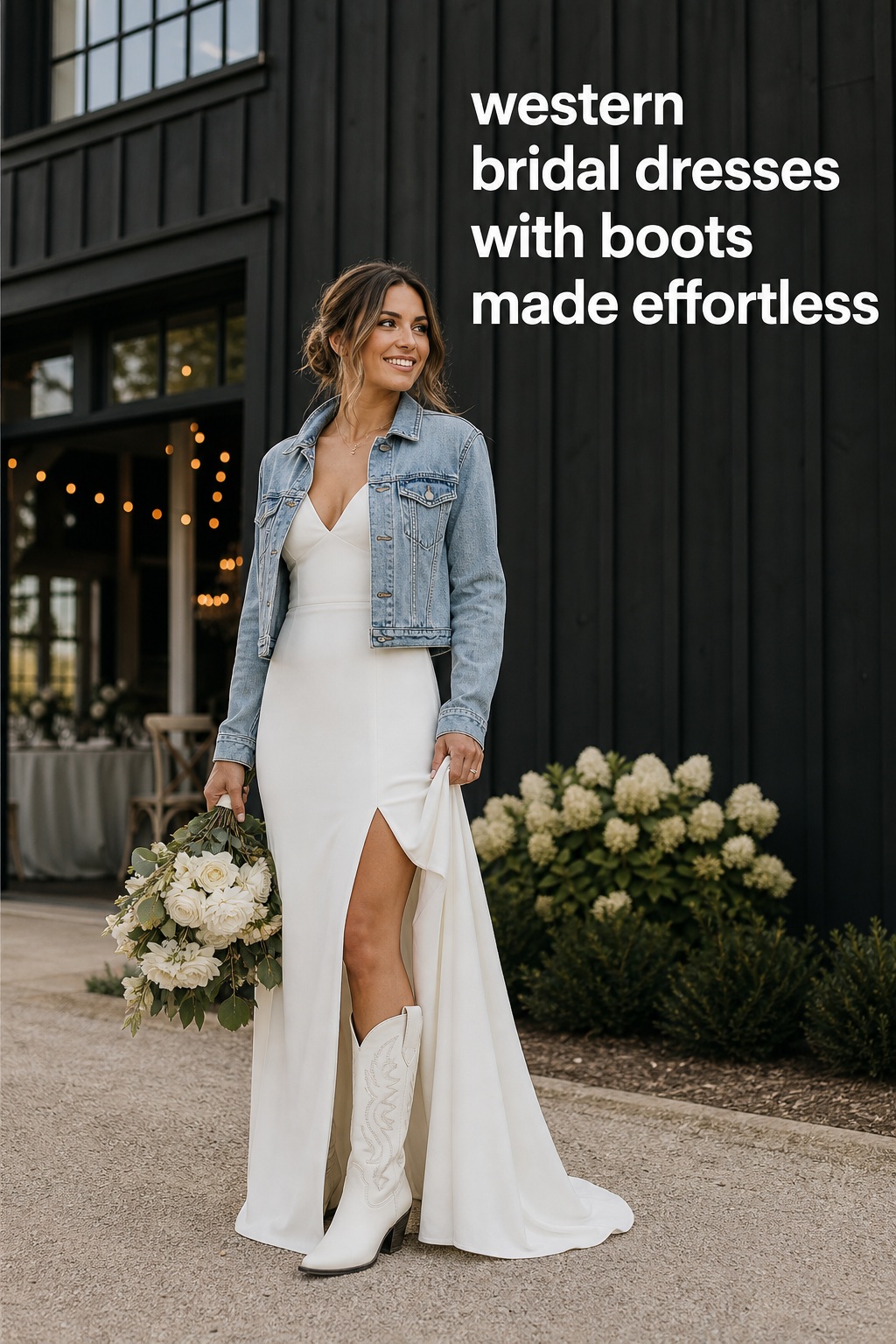
A subtle western look may use an ivory gown with cowboy boots, a denim jacket for portraits, a tooled leather belt, turquoise earrings or a low-key embroidered veil. The dress itself can remain classic. A statement look might include fringe, a high-low hem, a dramatic sleeve, floral embroidery, a structured corset or a hat worn with confidence. Both approaches are valid, but they need different styling discipline.
Choose one hero signal first. If the gown has extensive fringe, you may not need a large hat and a heavily embellished belt. If the boots are colorful or personalized, let them be visible through a shorter hem or a reception change. If the dress is simple, you can give more attention to a jacket, veil or jewelry. The goal is a clear focal point, not a checklist of every western reference.
Match the dress to the venue and the ground
A ranch ceremony, a barn reception and an elegant ballroom with western music can all support the style, but they create different dress requirements. On uneven grass or gravel, a very long train needs a bustle plan and careful handling. In a barn, a full skirt can look beautiful, but narrow aisles and wooden steps may make a slim A-line easier. At a formal indoor venue, refined lace, satin or crepe can carry the western mood without relying on rustic props.
Take a photograph of the ceremony path, reception floor, entrance and portrait locations when you shop. Look for stairs, gravel, mud, low branches, exposed nails, heat and wind. Your dress should suit the place where you will actually wear it. A gown that only works in a studio pose will become a source of stress once the day begins.
Define your comfort requirements honestly
Comfort does not mean choosing a plain dress. It means understanding what your body and schedule need. If you will spend hours outdoors in August, heavy lining and dense beading may feel overwhelming. If you are getting married in a cool mountain location, long sleeves or a removable layer can be more useful than a delicate strapless gown. If you plan to dance, test the armholes, waist, skirt volume and bustle before you fall in love with the mirror view.
- Movement: Can you walk, sit, hug, lift your arms and dance without pulling?
- Temperature: Will the fabric work in sun, wind, cold or a heated reception room?
- Ground: Can the hem and train survive grass, gravel, dirt or wooden floors?
- Footwear: Does the skirt allow your boots to show when you want them visible?
- Transition: Can a jacket, overskirt or detachable sleeve change the look later?
Choose solutions for your wedding situation
Once you know the problem, shopping becomes much easier. Instead of asking which western bridal dresses are most popular, ask which construction solves your venue, season, formality and movement needs. The following situations cover the most common western wedding plans.
For a ranch or barn ceremony
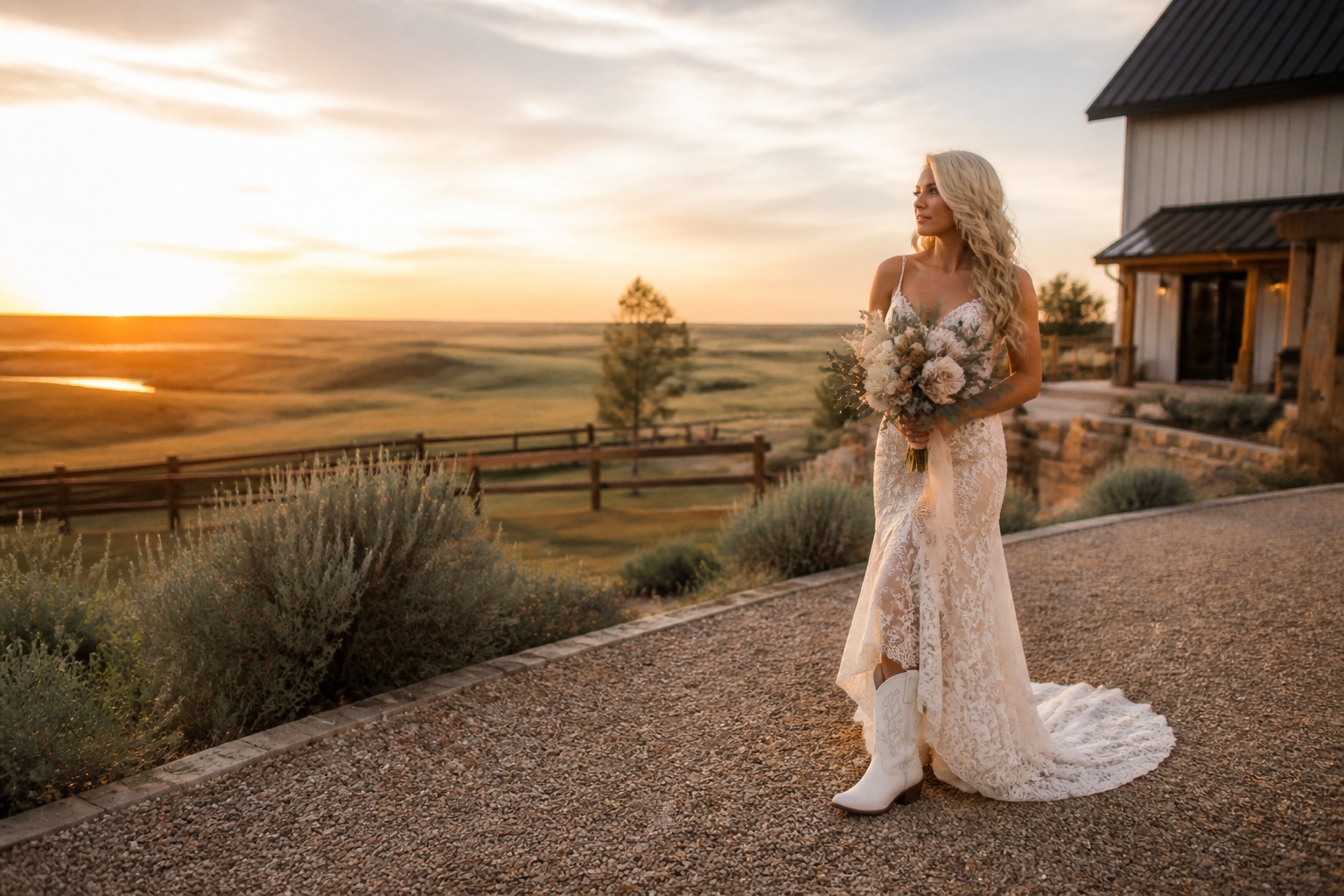
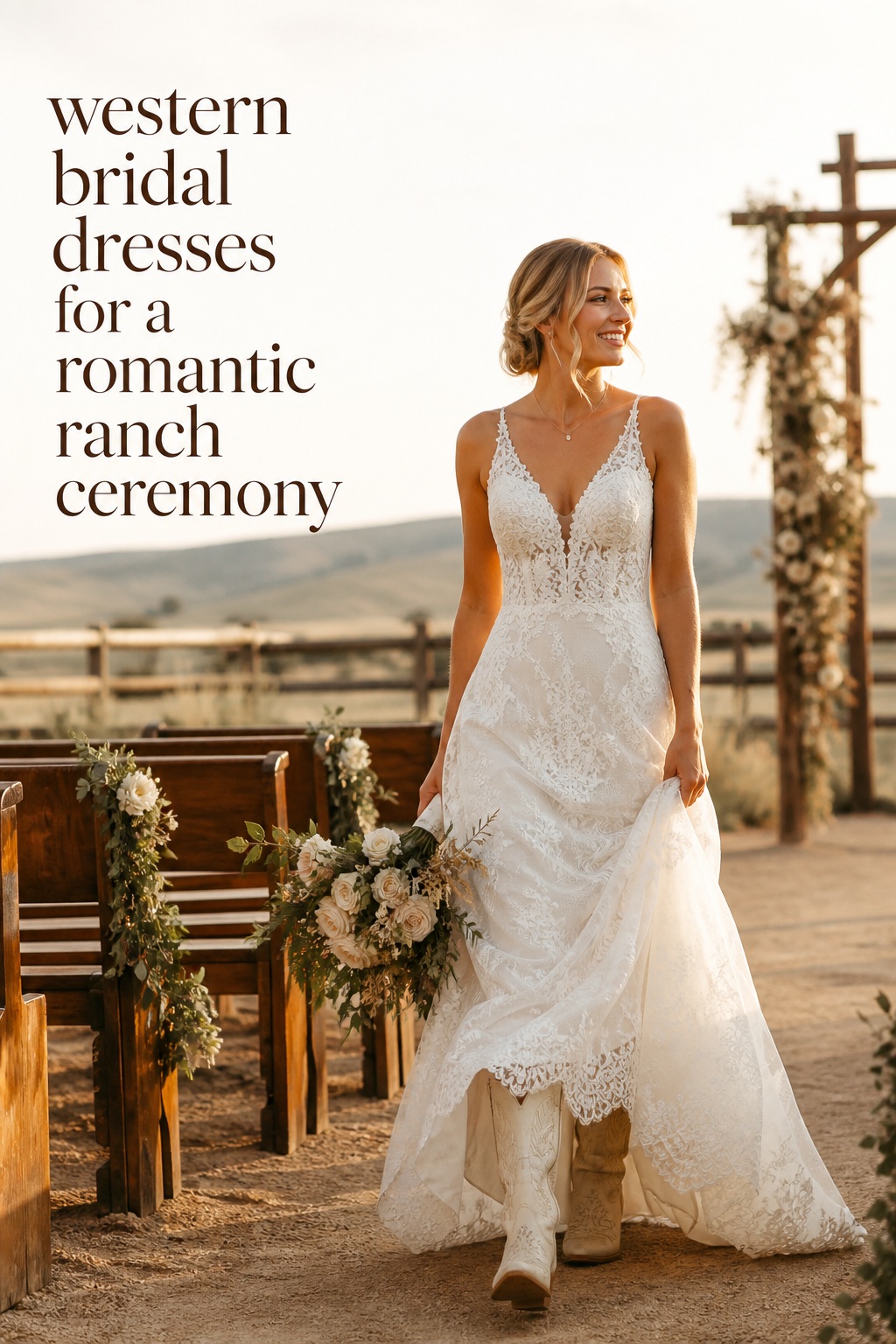
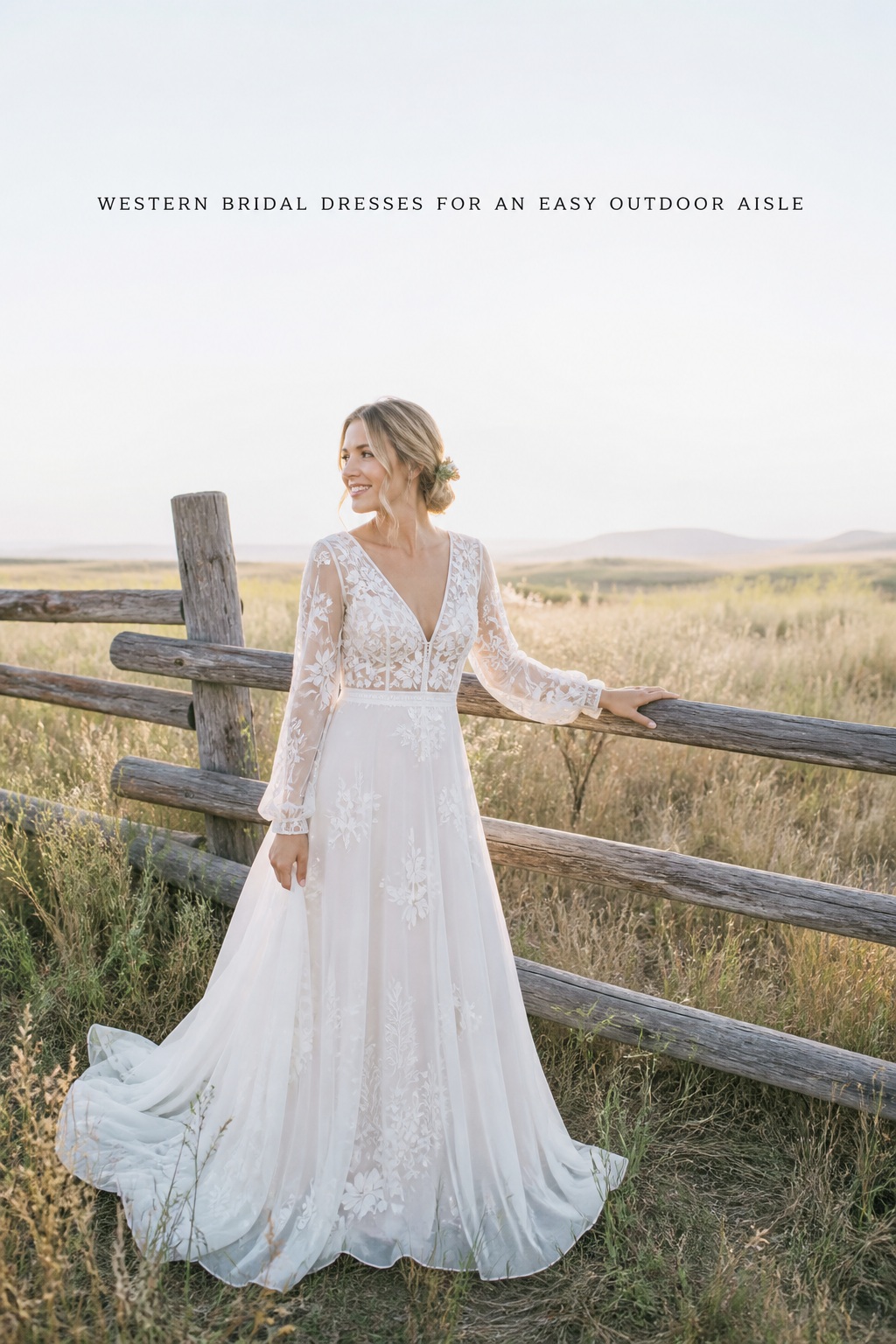
A lace A-line is a dependable starting point because it combines a defined waist with enough skirt movement for an outdoor aisle. Look for lace with a visible pattern rather than a high-shine finish if you want a natural ranch feeling. A fit-and-flare gown can also work well, especially with boots, but check how easily you can walk on uneven ground and whether the train can be bustled quickly.
For a barn, texture often does more than decoration. Matte lace, embroidered flowers, crochet-inspired details, soft tulle and simple buttons feel connected to the setting. You can keep the neckline and silhouette polished so the final look remains bridal. A veil with a plain edge, a small floral comb or a worn-in denim jacket for portraits can complete the story without making the ceremony feel like a costume party.
For a hot outdoor wedding
Choose breathable construction and avoid assuming that a sleeveless dress is automatically cool. A lightweight skirt, an open back, illusion panels and unlined lace may help, while multiple layers of synthetic tulle can trap heat. A short sleeve, flutter sleeve or narrow strap can offer shape without adding much weight. Ask your stylist which lining can be removed or replaced during alterations.
Boots can be practical on grass, but they still need to be broken in. Wear the exact pair to at least one fitting and walk for twenty minutes. If you prefer sandals for the ceremony, plan a boot change for portraits or dancing. Keep an emergency kit with blister pads, a small towel, fashion tape and a second pair of shoes. Practical preparation protects the relaxed feeling you want the outfit to communicate.
For a cool-weather or mountain celebration
Long sleeves, a higher neckline, a velvet ribbon or a removable cape can make a western gown feel seasonal without turning it into a holiday outfit. Fitted lace sleeves suit a clean silhouette, while bishop or poet sleeves create more movement around a simple bodice. If the ceremony is outdoors, consider a tailored jacket, faux fur wrap or lined duster that can be removed for indoor portraits.
Cold weather changes how you should plan the hem. Thick socks and boots may require a slightly different length from delicate shoes. Try the complete outfit, including underlayers, before final alterations. If your venue has snow or wet ground, keep the train protected until the ceremony and designate someone to manage the bustle between locations.
For a formal western wedding
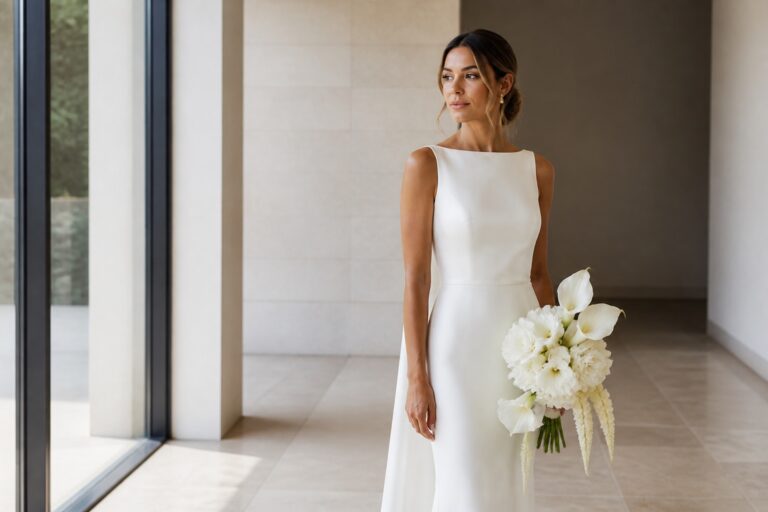
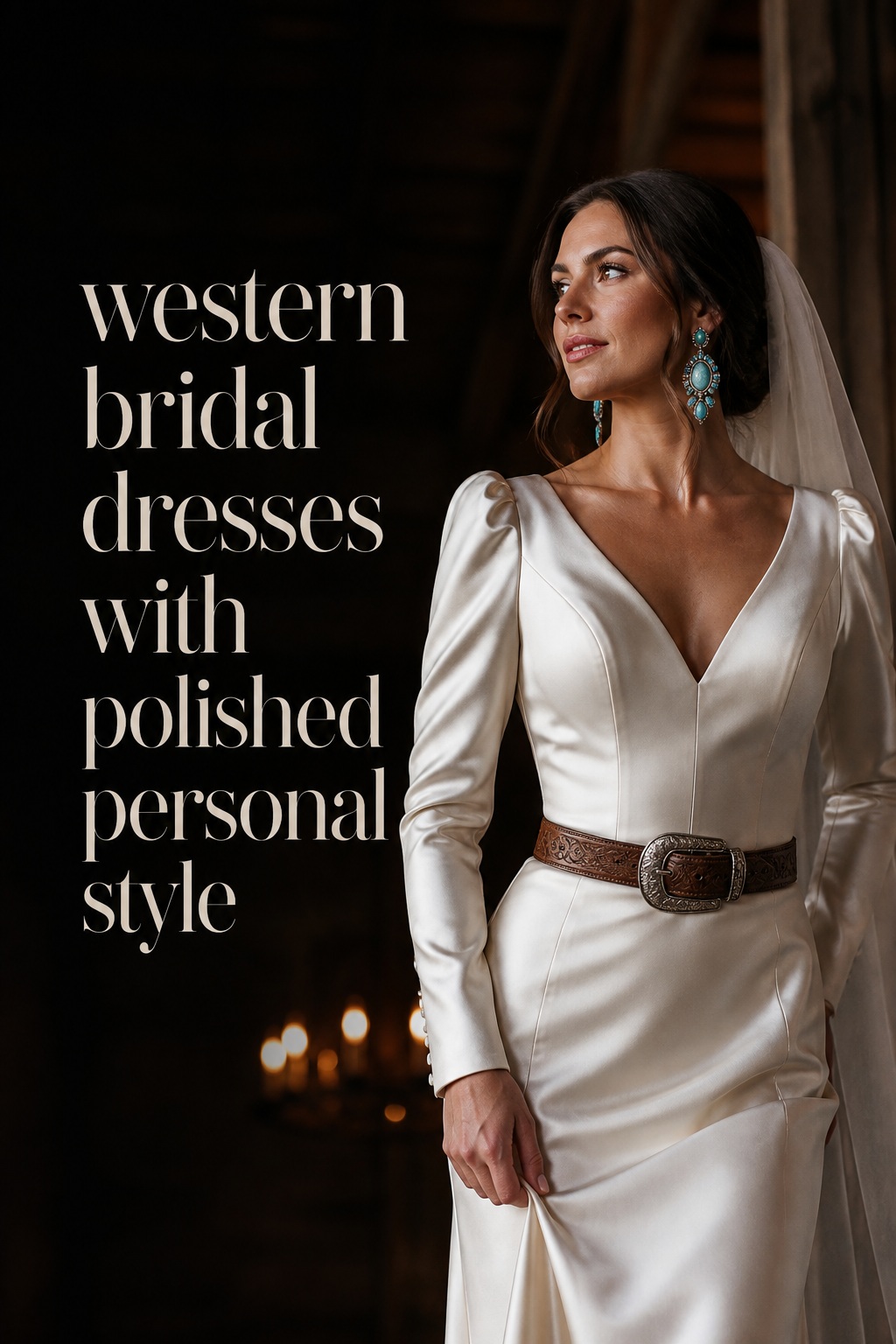
Formal western style works best when the materials become more refined and the accessories become more edited. Consider silk satin, polished crepe, architectural mikado, clean lace or a fitted gown with a dramatic back. Add western identity through pointed boots, a sculptural hat for the reception, turquoise jewelry or a leather detail that is beautifully finished rather than distressed.
A formal dress does not need to look rustic. Let the setting, music and guest experience carry some of the country character. A sleek gown with a custom boot, a simple veil and a tailored jacket may feel more convincing than a dress covered in fringe and appliques. Formality comes from proportion, fabric quality, fit and restraint.
For a subtle city-country celebration
If your wedding is in a city venue but your personal style is western, start with a classic gown and choose one or two clear references. A square-neck crepe dress with ivory boots can look modern. A bias-cut satin dress with a cropped denim jacket can feel relaxed but deliberate. A simple sheath with a tooled belt or turquoise studs may be enough.
Think about what will still look natural in the venue’s architecture. A full prairie skirt may feel disconnected from a minimalist gallery, while a clean column with a western boot can bridge both worlds. You do not have to make the entire wedding rustic to make your outfit personal.
Build the outfit around the dress
The dress creates the foundation, but the styling determines whether the final look feels balanced. Western accessories work best when they relate to the gown’s shape, fabric and level of formality. Start with the practical pieces, then add personality.
Use silhouettes to control the mood
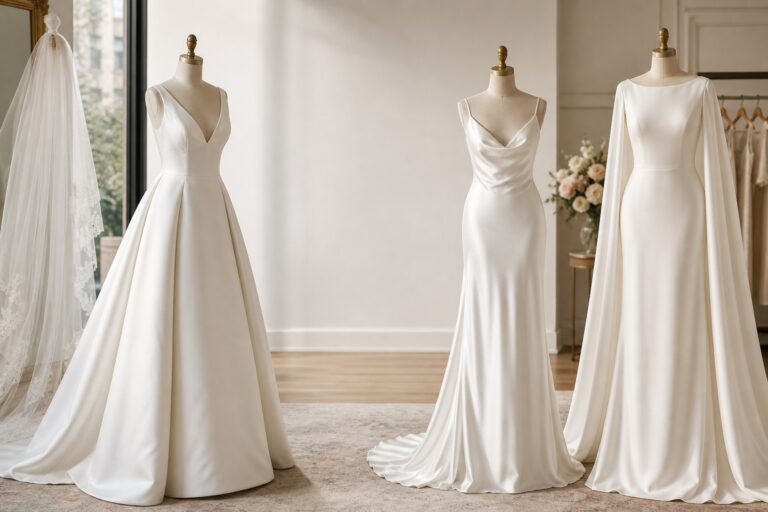
An A-line is versatile, easy to move in and naturally compatible with boots. A fit-and-flare emphasizes the waist and creates a confident, glamorous line. A sheath or column feels modern and works well with a jacket. A ball gown can be beautiful for a grand barn or formal ranch wedding, especially when the bodice has western-inspired embroidery or a strong neckline.
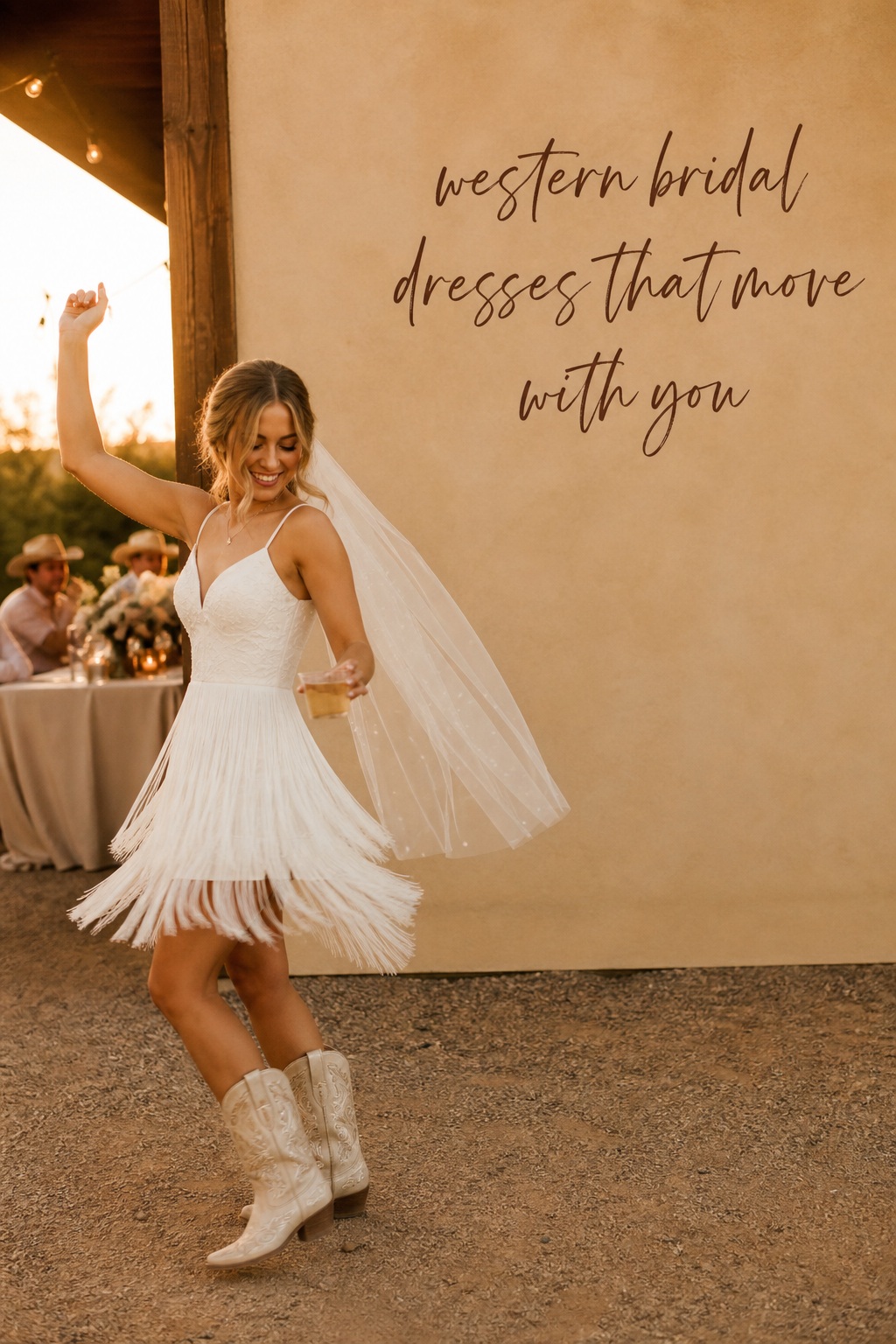
Short and tea-length gowns make footwear part of the outfit instead of a hidden detail. They are useful for a courthouse ceremony, rehearsal dinner, reception change or casual outdoor wedding. If you choose a shorter hem, pay extra attention to the boot shape, color and shaft height. The footwear will be visible in almost every full-length photograph.
Let fabric carry the western feeling
Lace is the most familiar bridge between bridal romance and country style, but it is not the only option. Chiffon and soft tulle create movement for an outdoor ceremony. Crepe offers a clean base for boots and jewelry. Satin can look elevated with a western belt or jacket. Embroidery can introduce flowers, stars or botanical shapes without requiring a rustic silhouette.
Be careful with overly thin fabric if you will be photographed in bright sun. Check whether the dress becomes transparent, whether the lace catches on brush, and whether the skirt holds its shape in wind. Ask the boutique how the fabric photographs under direct light and flash. A sample can look different indoors than it does in golden-hour portraits.
Choose cowboy boots with the hem in mind
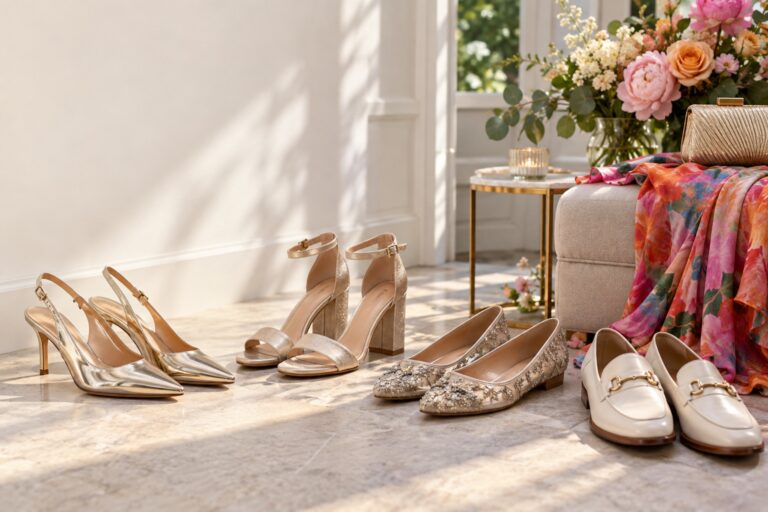
Wedding boots can be ivory, white, tan, brown, metallic, embroidered or colorful. The best pair is the one that supports your outfit and your feet. Pointed toes create a longer line, while a rounded toe can feel more relaxed. A traditional shaft may disappear under a full skirt, while ankle boots are easier to reveal with a shorter hem.
Bring your boots to every fitting. The heel height affects the gown’s final length, and the boot shaft can change how a shorter skirt falls. Add a cushioned insole only after checking that it does not make the boot too tight. Break in the boots gradually, and consider a second comfortable pair for dancing. Your wedding day is long enough that style should not depend on enduring pain.
Choose one strong accessory layer
A denim jacket is a useful portrait layer because it adds western character and can protect you from a cool evening. Keep the fit intentional. A cropped jacket defines the waist, while an oversized layer feels more casual. You can personalize the back with embroidery, a date, initials or a small motif, but make sure it does not compete with a detailed gown.
A hat can be striking, especially for portraits or the reception, but it needs a plan. Choose a shape that allows your face and hairstyle to remain visible. Decide when it comes off, where it will be stored and whether it works with the veil. A hat worn for every photograph can become visually repetitive, while a deliberate portrait moment can feel memorable.
Use turquoise, leather and metal with restraint
Turquoise jewelry can add color and personal meaning, especially when it is connected to family, travel or a favorite place. One statement necklace, a pair of earrings or a bracelet may be enough. Leather works through a belt, boot detail, bouquet wrap or jacket trim. Choose a finish that matches the dress. A refined gown may need smooth leather and polished metal, while a boho lace dress can support a softer, worn-in texture.
Repeat a color rather than repeating every material. If your boots have turquoise stitching, echo the color in earrings or a bouquet ribbon. If the belt is brown leather, use a similar tone in the jacket or groom’s accessories. Repetition creates a connection without making the outfit look overplanned.
Quick fixes, fitting checks and mistakes to avoid
The final decision should happen in the complete outfit, not in a single mirror pose. Bring your boots, undergarments, jewelry, veil ideas and any jacket to the final fittings. Take photographs from the front, side and back. Look at the dress in natural light if possible, then test the movements you will make on the wedding day.
Fix a dress that feels too traditional
Start with footwear or a removable layer before changing the gown. Boots, a leather belt, turquoise earrings, a western-inspired veil or an embroidered jacket can shift a classic dress quickly. You can also ask about adding buttons, a detachable overskirt, a slit or a custom sash. Make one change at a time so you can see what actually solves the problem.
Fix a dress that feels too themed
Remove one category of detail. If the dress has fringe, skip the hat. If the gown has strong embroidery, choose quiet jewelry. If the boots are highly decorated, use a simple veil and bouquet. A western look becomes more sophisticated when there is negative space around its signature detail.
Run the full movement test
Walk up steps, sit in a chair, hold a bouquet, hug someone, raise both arms and dance for a few minutes. Try the bustle with the person who will help you on the day. Check whether the sleeves pull, the neckline shifts, the train catches or the boots rub. These tests reveal more than standing still in front of a mirror.
- Bring the exact boots and wear the intended undergarments.
- Confirm the hem for both indoor and outdoor surfaces.
- Ask how the train will be protected before the ceremony.
- Decide who will handle the bustle and any wardrobe change.
- Photograph the completed look in natural light.
- Pack a second shoe option, blister care and fashion tape.
- Choose one accessory to remove if the look feels busy.
Western bridal dresses should help you feel recognizable to yourself. The strongest outfit may be a lace A-line and boots, a sleek gown with a denim jacket, a short dress with a dramatic hat, or a formal column with one turquoise heirloom. What matters is that the silhouette, materials and accessories support the wedding you are actually planning. When the practical details are solved, the western character can feel effortless.
FAQ
What makes a wedding dress western?
A western wedding dress usually combines bridal elements with details associated with country style, such as lace, embroidery, fringe, prairie shapes, boots, denim, leather or turquoise. The influence can be subtle or dramatic. A traditional gown can become western through styling, so the dress does not need every detail at once.
Can I wear cowboy boots with a full-length wedding dress?
Yes. Cowboy boots can stay mostly hidden under a full skirt or appear when you walk, dance or lift the hem. Bring them to fittings because their heel height affects the hem. If you want the boots visible, consider a slit, shorter front hem, tea-length skirt or reception dress.
Are western bridal dresses only suitable for ranch weddings?
No. Western styling can work at a barn, garden, mountain, courthouse or city wedding. Match the strength of the details to the venue. A clean gown with boots or a small turquoise accent can feel appropriate in an urban setting, while lace, fringe and a hat may suit a more rustic celebration.
How do I avoid looking costume-like in a western wedding dress?
Choose one hero western detail and keep the supporting pieces edited. Balance fringe with simple jewelry, pair decorated boots with a quiet gown, or wear a hat only for selected portraits. Fit, quality fabric and a deliberate color palette also make the look feel like bridal fashion instead of a costume.
What accessories work with western bridal dresses?
Useful options include cowboy boots, a denim jacket, a leather belt, turquoise jewelry, a western hat, floral embroidery and a veil with a simple edge. Choose accessories based on the gown’s formality and your venue. You do not need all of them, and repeating one color often creates more polish than mixing every western material.
What fabric is best for an outdoor western wedding?
Lightweight lace, chiffon, soft tulle and breathable crepe can work well outdoors, but the best choice depends on temperature, wind and the ground. Ask about lining, transparency and snag resistance. A bustle, hem treatment and protective plan matter as much as the fabric itself when the ceremony is outside.
Should I buy a separate reception dress for a western wedding?
A second look is useful if you want to dance freely, show statement boots or change from a formal gown into a shorter style. It is not necessary if your ceremony dress is comfortable and easy to bustle. A detachable overskirt, jacket or sleeve can create a meaningful change without requiring a completely separate outfit.