Black Bridal Dresses: The 2026 Style Guide
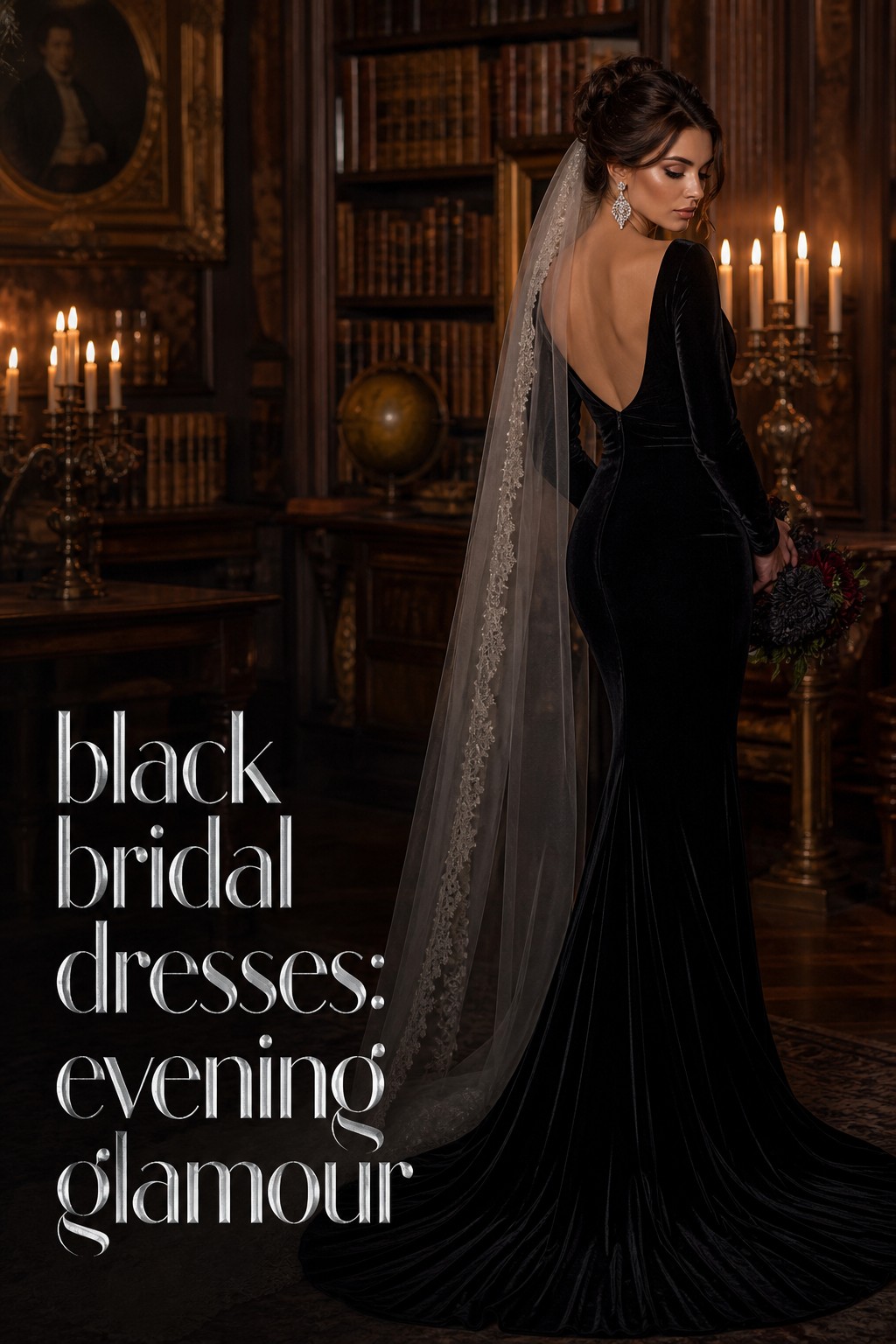
Black bridal dresses have moved from the edge of bridal fashion into a confident choice for brides who want their wedding clothes to feel personal, dramatic, and beautifully considered. The color can look minimalist in a clean crepe column, romantic in layered tulle, historic in lace, or theatrical in a sculptural ballgown. It does not automatically mean gothic, and it does not require a dark wedding theme.
The best black bridal dresses are chosen with the same care as any other gown. Start with the ceremony setting, your comfort, the level of formality, and the details that make you feel like yourself. Then decide how much contrast, texture, shine, and movement you want. This guide explains what is changing in black bridal fashion, how to compare fabrics and silhouettes, and how to style the look so it feels bridal rather than simply black.
What Is Changing in Black Bridal Fashion
Bridal fashion is making more room for personal color choices. Brides are still choosing ivory, white, and champagne, but they are also considering red, blue, metallics, prints, separates, jumpsuits, and black. That wider palette reflects a useful change in the way a wedding outfit is understood. It can honor tradition without copying a single visual formula.
Black works especially well because it has a strong point of view. It sharpens a simple silhouette, gives lace a graphic quality, makes crystals and pearls more visible, and photographs with a rich sense of depth. A black gown can also connect to an intimate city ceremony, an evening celebration, a vintage venue, a modern gallery, or a moody garden without needing a themed backdrop.
Turn wedding inspiration into a plan you can actually follow.
Zarellea brings your guest list, budget, vendors, and day-of details into one shared space — so no beautiful idea gets lost in the shuffle.
There is also a practical reason to consider the color. A shorter dress, tailored suit, or simple black gown may be easier to wear again than a heavily embellished ivory dress. Rewearability should not be the only reason to choose a wedding outfit, but it can make a bold purchase feel more useful. The important question is whether the garment still gives you the emotional lift you want on the wedding day.
Black does not have to mean gothic
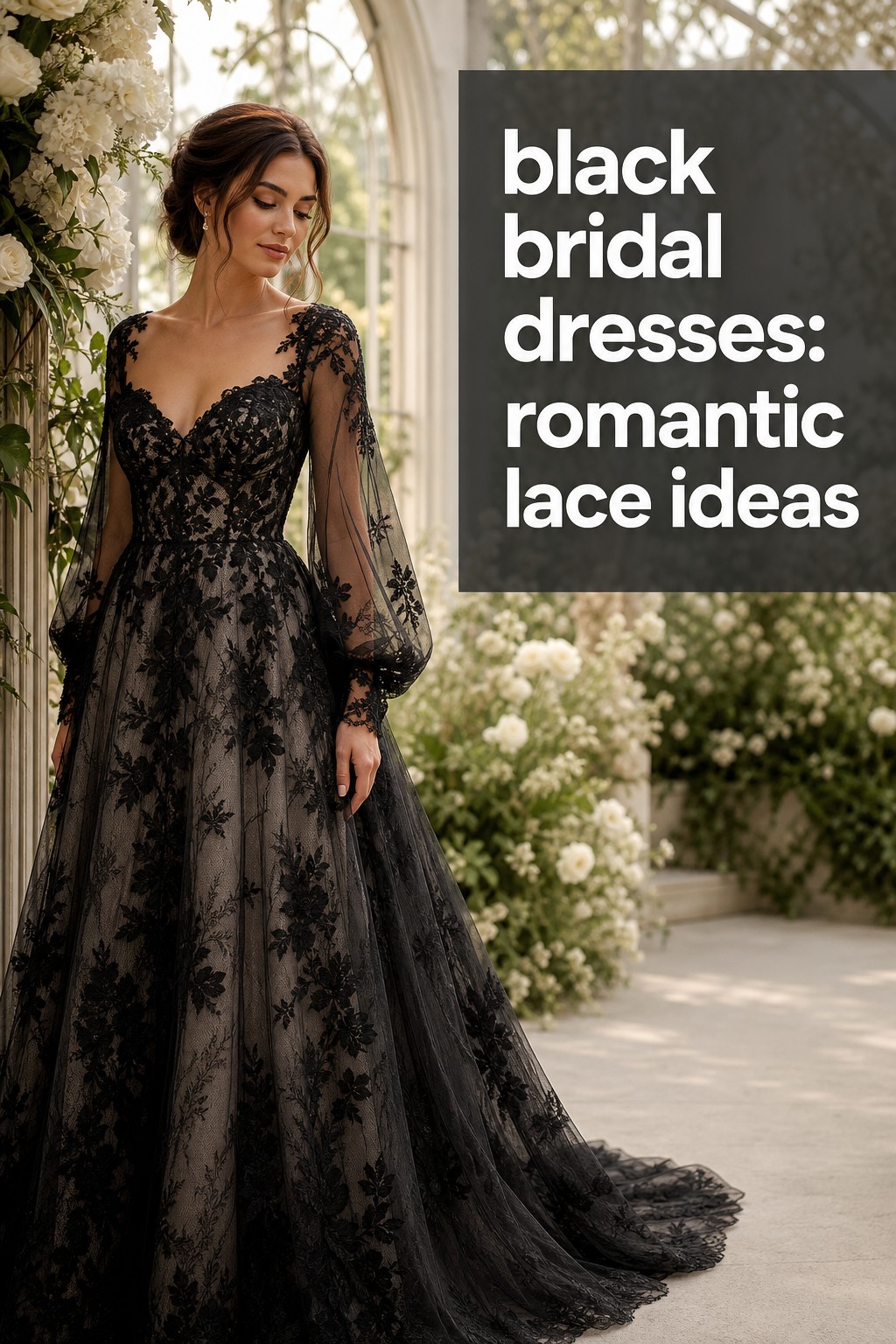
Gothic bridal style is one possible interpretation, not the definition of black bridal fashion. If you prefer a clean modern look, choose a matte column gown, architectural neckline, minimal jewelry, and a compact bouquet. For romance, look at floral lace, soft tulle, a sweetheart neckline, or delicate sleeves. For vintage influence, consider a tea-length hem, satin gloves, a bias cut, or a sculpted waist.
Think of black as the base color and your fabric, proportion, and accessories as the style language. The same color can communicate quiet luxury, old Hollywood glamour, alternative fashion, or garden romance. This flexibility is why black bridal dresses can work for many different weddings.
Choose Black Bridal Dresses by Fabric and Silhouette
Color is only the first decision. Fabric determines how the gown catches light, moves through the venue, feels against your skin, and appears in close photographs. Silhouette determines the overall proportion and how easily you can walk, sit, dance, and move through the day. Compare both before falling in love with a single image.
Satin and silk for shine
Satin and silk give black a liquid, reflective surface. A bias-cut slip dress can feel sensual and understated, while a structured satin ballgown can look formal and spectacular. The trade-off is that shine can reveal wrinkles, pulling, and fit issues. Try the dress under daylight and indoor lighting, and check the back and seated view before committing.
Lace for texture and romance
Black lace can look soft, graphic, antique, or rebellious depending on its scale and lining. A fine floral pattern creates a romantic impression, while a larger motif has more visual authority. Consider whether you want black lace over a black lining, black lace over a skin-tone lining, or a combination of black and ivory. The lining changes the contrast and should be judged in photographs, not only in the fitting room.
Tulle and organza for movement
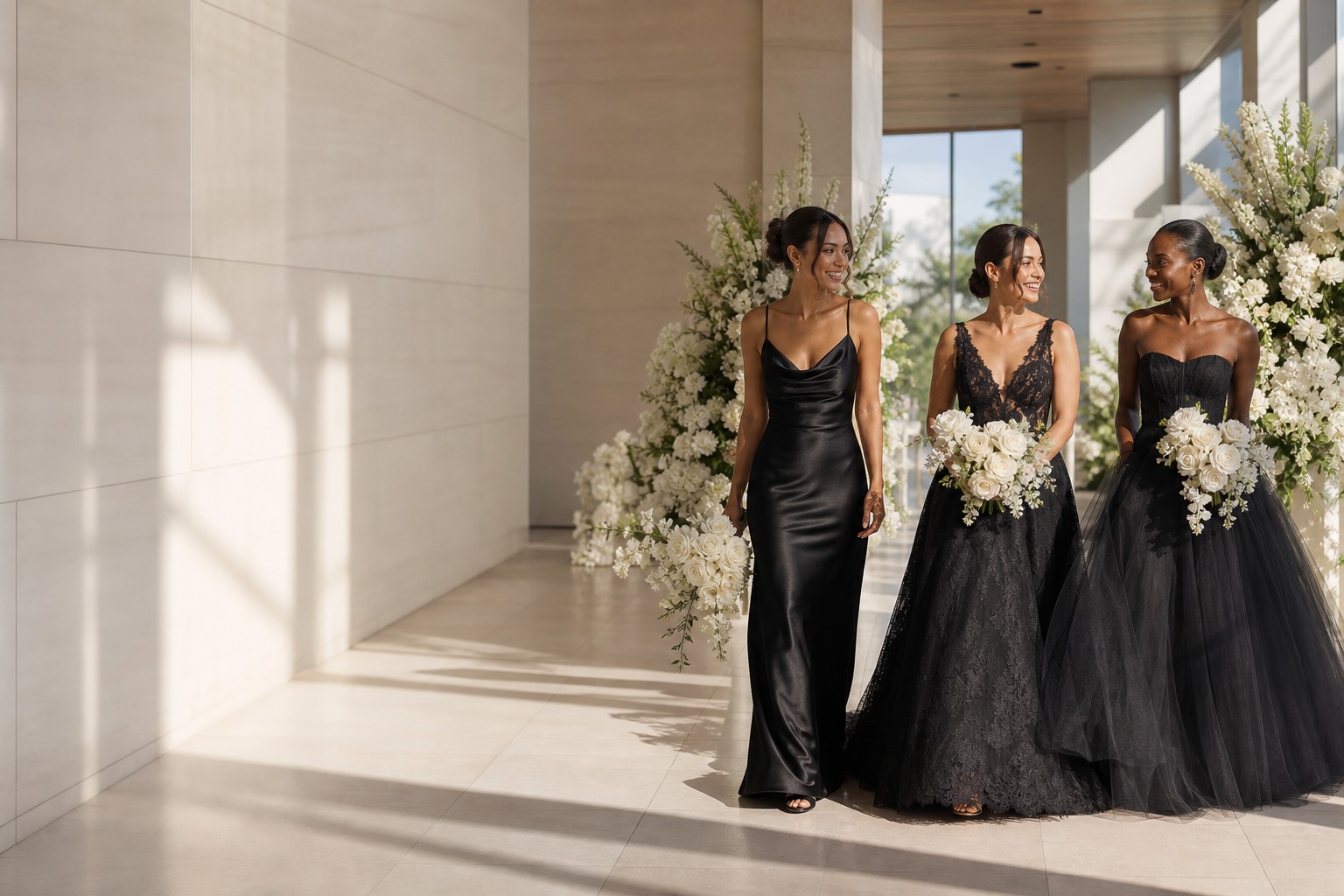
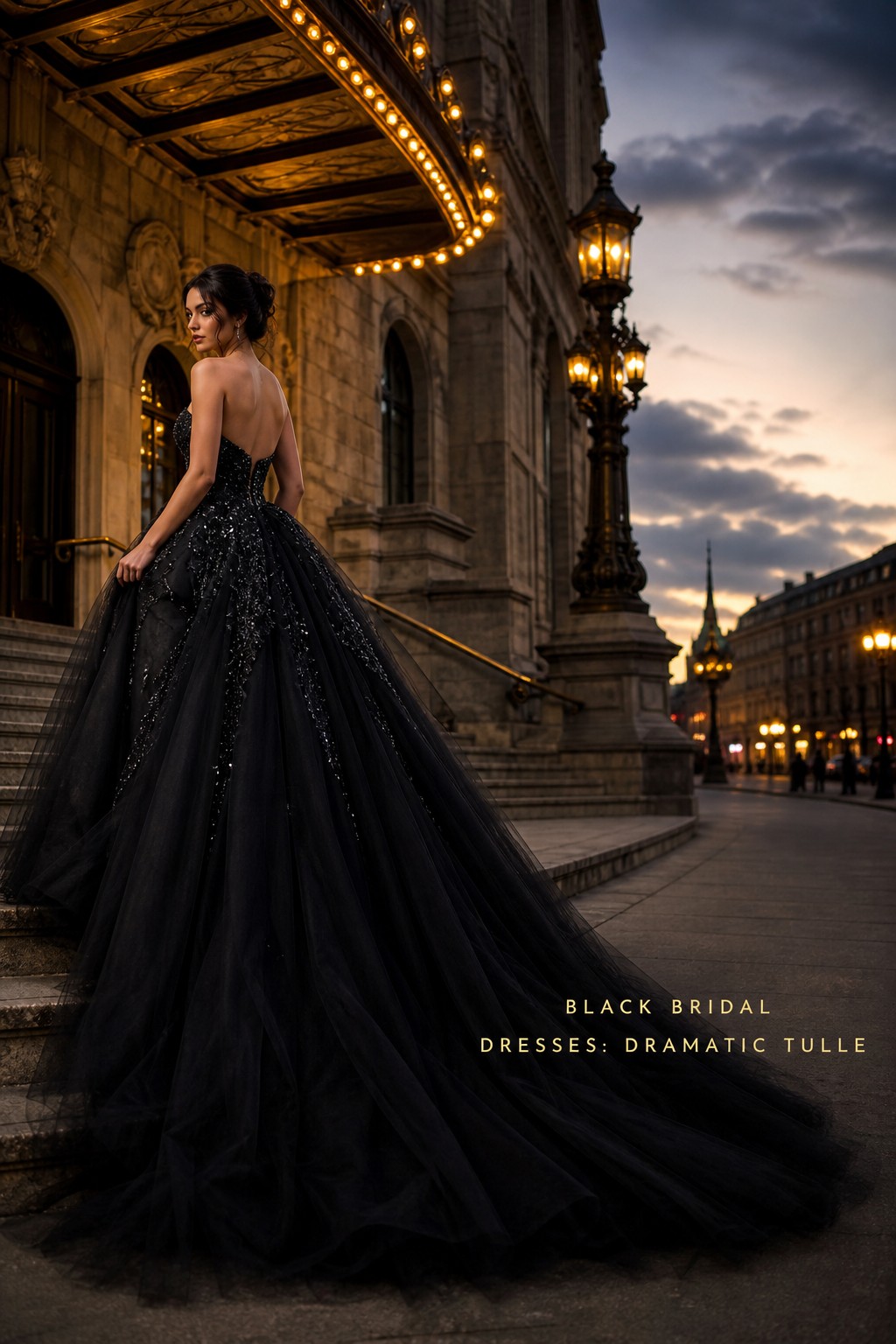
Layered tulle gives black bridal dresses air and movement. It is useful when you want a full skirt without dense weight, especially for portraits and a lively reception. Organza is crisper and can support a sculptural shape, a dramatic sleeve, or a detachable overskirt. Ask how many layers are used and whether the skirt is easy to lift on stairs or outdoors.
Mikado, crepe, and suiting fabrics for structure
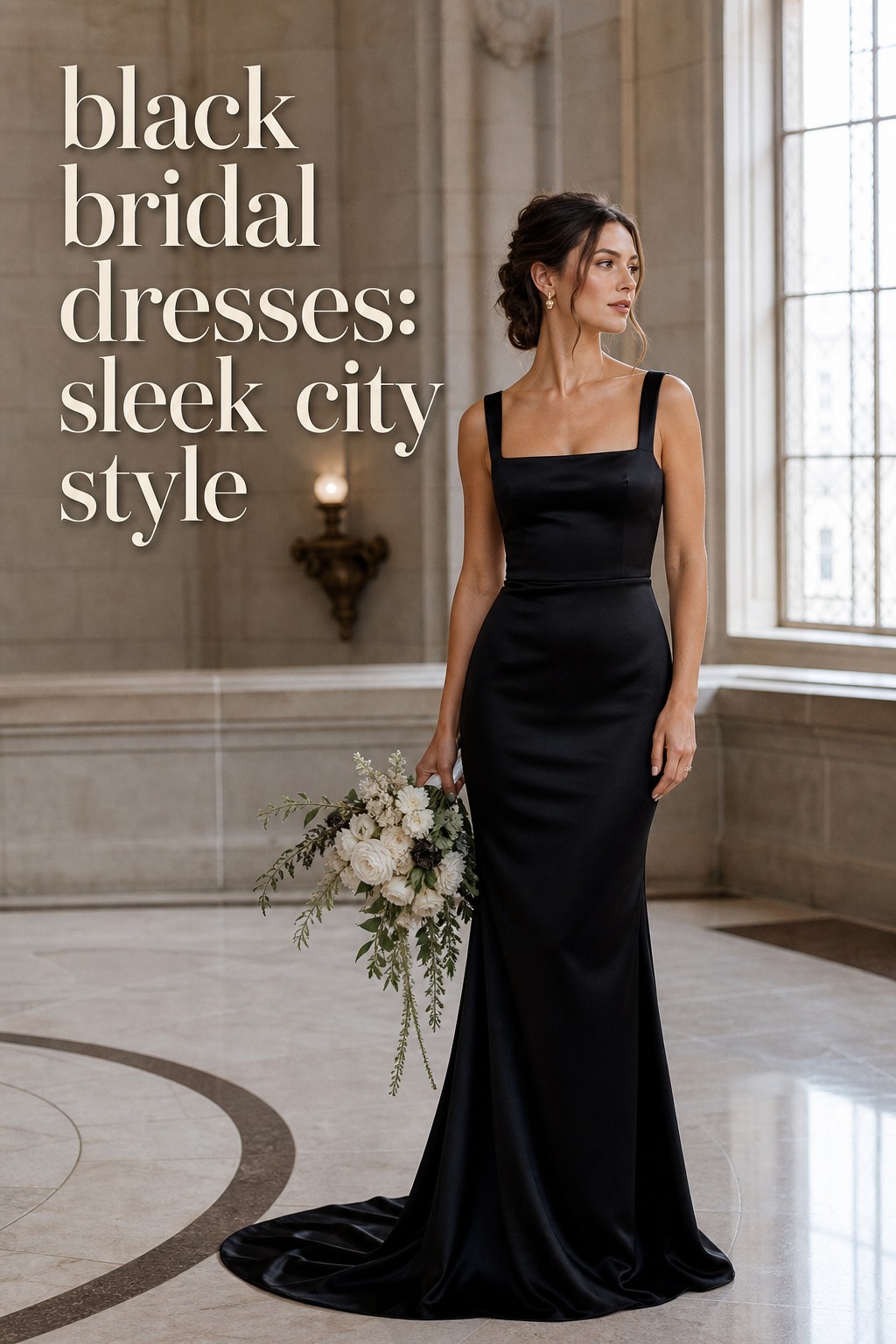
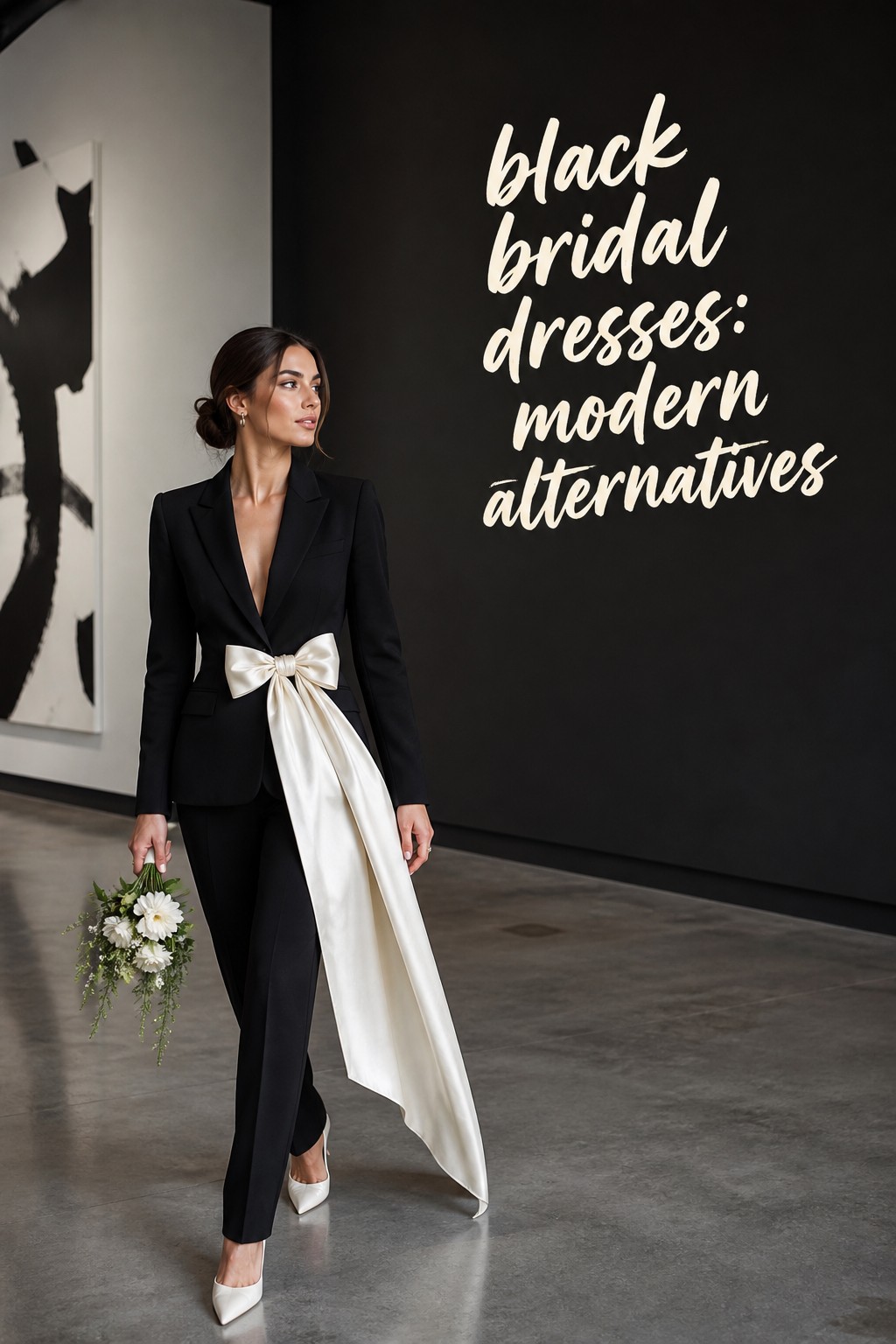
Mikado creates a polished architectural finish and holds a defined shape. Crepe is quieter, smoother, and often ideal for a modern column or fit-and-flare gown. Black suiting can make a wedding suit, vest, or wide-leg trouser look intentional and ceremonial. These fabrics suit a bride who wants strong lines rather than extensive sparkle.
Match the silhouette to the kind of drama you want
An A-line dress offers movement and balance. A column gown feels sleek and lets the color carry the impact. A mermaid or fit-and-flare silhouette emphasizes the shape of the body and can look especially striking in lace or stretch crepe. A ballgown creates unmistakable ceremony drama, while a mini or tea-length dress feels modern, playful, and easier to rewear.
- Choose an A-line if you want room to move, a defined waist, and a shape that works in many venues.
- Choose a column if you prefer clean lines, close portraits, and a minimalist point of view.
- Choose mermaid or fit-and-flare if you want a dramatic outline and are willing to test walking and sitting carefully.
- Choose a ballgown if volume is central to your bridal vision and the venue can handle the skirt.
- Choose a short dress if you want movement, visible shoes, a civil ceremony look, or a strong second outfit.
Four Ways to Interpret Black Bridal Dresses
Once you know the fabric and silhouette you like, choose the mood. A clear style direction helps you edit accessories and prevents the outfit from becoming a collection of unrelated dark details. The following four approaches are flexible starting points, not rules.
Minimalist and modern
Build the look around one excellent line. A square neckline, halter back, long sleeve, clean strap, or sculptural shoulder can be enough detail. Add pointed shoes, a compact bouquet, and one strong piece of jewelry. Keep the veil short or choose a sleek bow, headband, or simple comb. This direction works especially well in a city hall, gallery, restaurant, or contemporary venue.
Romantic and soft
Use texture instead of visual heaviness. Floral lace, sheer sleeves, gathered tulle, a soft overskirt, pearls, and a loose bouquet can make black feel tender. Keep the flowers pale, tonal, or softly colored if you want contrast. A fingertip veil with a narrow edge can add bridal clarity without overpowering the dress.
Gothic and dramatic
Drama can come from a high neckline, corset construction, cathedral veil, long sleeves, pointed shoes, velvet, or a shaped train. It does not require every accessory to be black. A deep red bouquet, silver jewelry, smoky makeup, or a pale floral arrangement can create dimension. Choose one focal point and let the other elements support it.
Fashion-forward and editorial
Try a tailored suit, jumpsuit, two-piece set, dramatic bow, asymmetrical hem, cape, or detachable sleeve. Editorial does not mean uncomfortable. Prioritize strong construction and test every closure, layer, and movement. A black bridal outfit can look directional while remaining easy to wear if the base layer fits beautifully.
For any of these directions, decide what should read first in the photograph. It might be the neckline, the skirt, the back, the veil, or the texture. If every part competes for attention, the outfit can look busy. A black foundation is already visually confident, so editing usually makes it stronger.
Make the Dress Work for Your Ceremony
The right black bridal dress should support the actual wedding you are having. Consider the venue, time of day, season, weather, photography, and how much walking your schedule requires. A gown that looks perfect in a studio can feel wrong if the skirt catches on outdoor paths or the fabric is too warm for the climate.
Match the level of formality
A black mini can be formal with excellent tailoring, satin, a veil, and refined accessories. A floor-length gown can feel relaxed when it has a simple shape and minimal embellishment. Use the invitation, venue, ceremony time, and reception plan as your guide. If you are unsure, ask the planner or venue for the expected dress code and photograph your finalists beside the setting.
Plan for photography and contrast
Black absorbs light, so texture and shape matter. Lace, pleats, satin, beading, and a clear neckline help the gown remain readable in photographs. Work with your photographer on backgrounds and lighting rather than assuming a dark dress will disappear. Pale flowers, a light veil, stone architecture, or a bright bouquet can create separation without changing your personal style.
Choose accessories that make the look bridal
A veil is optional, but it is one of the simplest ways to make a nontraditional color feel ceremonial. Try a black veil for tonal drama, ivory for contrast, or a lightly embellished style that connects to the gown. A bouquet, special earrings, gloves, a hair bow, or a formal shoe can also signal the occasion. You do not need all of them.
Do not skip alterations and movement tests
Bring your shoes, undergarments, jewelry, and outer layer to the final fitting. Walk on the surfaces you expect at the venue, sit in a firm chair, lift the skirt, raise your arms, hug someone, and practice using the restroom. Check whether the neckline stays secure, whether the train can be bustled, and whether lint or pet hair shows easily on the fabric. These details are especially important with black because small fit problems can create strong shadows.
Lasting Choices and Mistakes to Avoid
A black gown can be timeless, but timeless does not mean plain. It means the main decisions are supported by fit, quality, and your own point of view. Spend more attention on the shoulder, bust, waist, hem, lining, and closures than on a long list of decorative details. A beautifully altered simple gown will photograph better than an elaborate gown that restricts your movement.
- Do not assume black will hide a poor fit. It can emphasize pulling, folds, and uneven hems.
- Do not force a gothic theme if you simply love clean black clothing. Let your actual taste lead.
- Do not choose heavy velvet, dense beading, or many layers without considering the season and venue.
- Do not forget undergarments, shapewear, and lint control. Test them under the exact fabric.
- Do not wait until the final week to learn the bustle or confirm your shoes.
- Do not let other people’s expectations decide whether the color is bridal enough. The ceremony styling, bouquet, and your confidence will communicate the occasion.
When shopping, save photographs that show the whole garment, the back, the fabric close-up, and the model in motion. Ask the boutique about sample colors, lead times, alterations, and steaming. If you are ordering online, read the size chart and return terms before paying. A black formal gown may be a strong alternative, but it still needs the construction and support expected from a wedding outfit.
The most lasting choice is often the one with a recognizable personal detail. That might be a dramatic back, an inherited brooch, a veil you have imagined for years, a modern suit, a tiny pearl button, or a skirt that makes you want to dance. Black gives that detail a clear frame. Choose the shape and texture that let you feel present, comfortable, and unmistakably yourself.
FAQ
Are black bridal dresses appropriate for a wedding?
Yes. Black bridal dresses are appropriate when they fit your personal style and the formality of the celebration. Use fabric, silhouette, accessories, and a bouquet to make the outfit feel intentional and ceremonial.
Do black bridal dresses have to look gothic?
No. Black can look minimalist, romantic, vintage, glamorous, fashion-forward, or gothic. The mood comes from the cut, fabric, texture, accessories, and styling rather than from the color alone.
What fabrics look best in a black wedding dress?
Satin, silk, lace, tulle, organza, Mikado, crepe, velvet, and suiting fabrics can all work. Choose based on the amount of shine, movement, structure, texture, and warmth you want for the venue and season.
What veil should I wear with a black bridal dress?
Try a black veil for a tonal look, an ivory veil for contrast, or a lightly embellished veil that connects to the dress. Shorter veils, bows, birdcages, and fingertip styles are easy to control, while a cathedral veil creates more drama.
How do I make a black wedding dress feel more bridal?
Add one or two clearly ceremonial details, such as a veil, bouquet, formal jewelry, bridal shoes, gloves, a train, or a special hair accessory. Strong tailoring and a thoughtful silhouette also make the color feel deliberate and wedding-ready.
Will a black wedding dress photograph well?
Yes, especially when the gown has visible texture or a clear shape. Discuss backgrounds and lighting with your photographer, and use flowers, architecture, or a veil to create contrast where needed.
Can I wear a short black bridal dress?
Absolutely. A mini, tea-length, or midi black dress can suit a city hall ceremony, elopement, reception change, or modern wedding. Choose polished fabric and excellent fit, then use accessories to set the level of formality.