Quiet Luxury at the Cake Table: Simple Elegant Wedding Cake
Simple elegant wedding cake: why “less” can feel like everything
There’s a particular quiet moment at a reception—after the vows, after the first hugs—when the room settles and eyes drift toward the cake table. A simple elegant wedding cake doesn’t ask for attention with excess. It earns it with proportion, finish, and just enough detail to feel intentional. That’s why so many couples searching for cakes for weddings end up circling back to the same idea: clean design that still feels undeniably special.
The challenge is that “simple” and “elegant” are often used as if they’re identical. In practice, they’re two aesthetics that overlap but don’t always lead to the same choices. A cake for wedding simple can mean minimal decoration and straightforward structure. Wedding cakes elegant simple might still be restrained—but they’re often elevated by refined textures, thoughtful white-on-white styling, or a single motif like bows, ribbons, or subtle geometric details.
This comparison-style breakdown will help you distinguish the most common approaches—minimalist white cakes, floral-and-botanical accents, textured finishes, subtle motifs (like bows), and modern geometric details—so you can choose a direction that matches your wedding atmosphere, your venue, and how you want the day to feel when the cake is finally wheeled into the room.
Style overview: minimalist white (the purest “basic wedding cakes,” elevated)
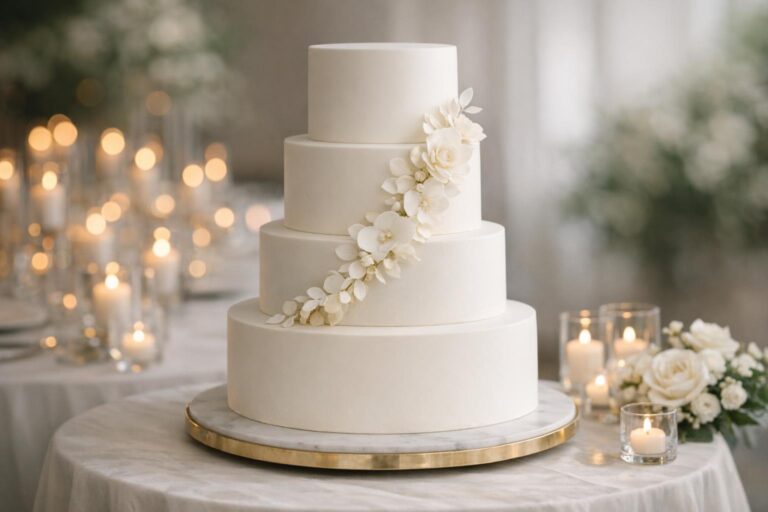
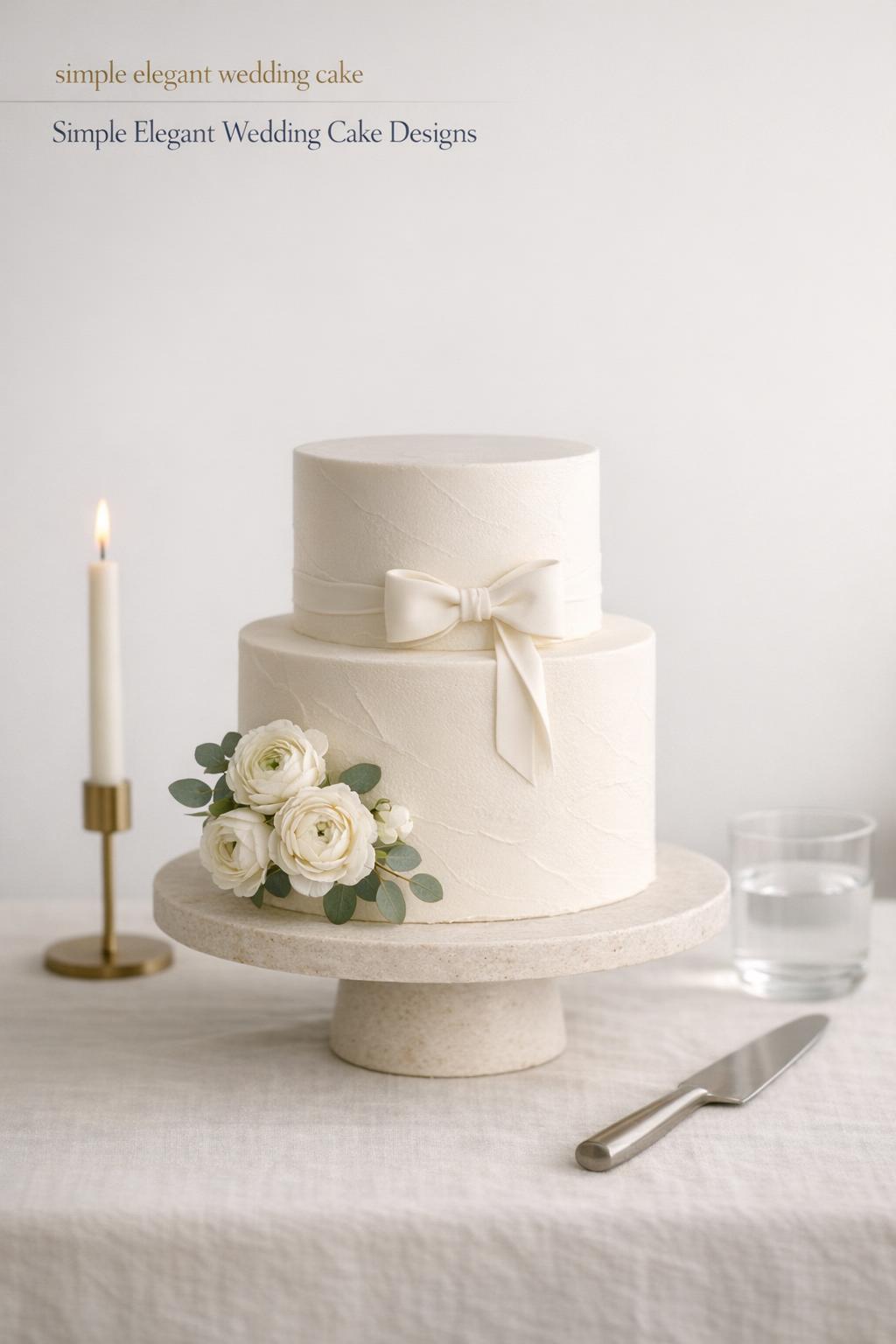
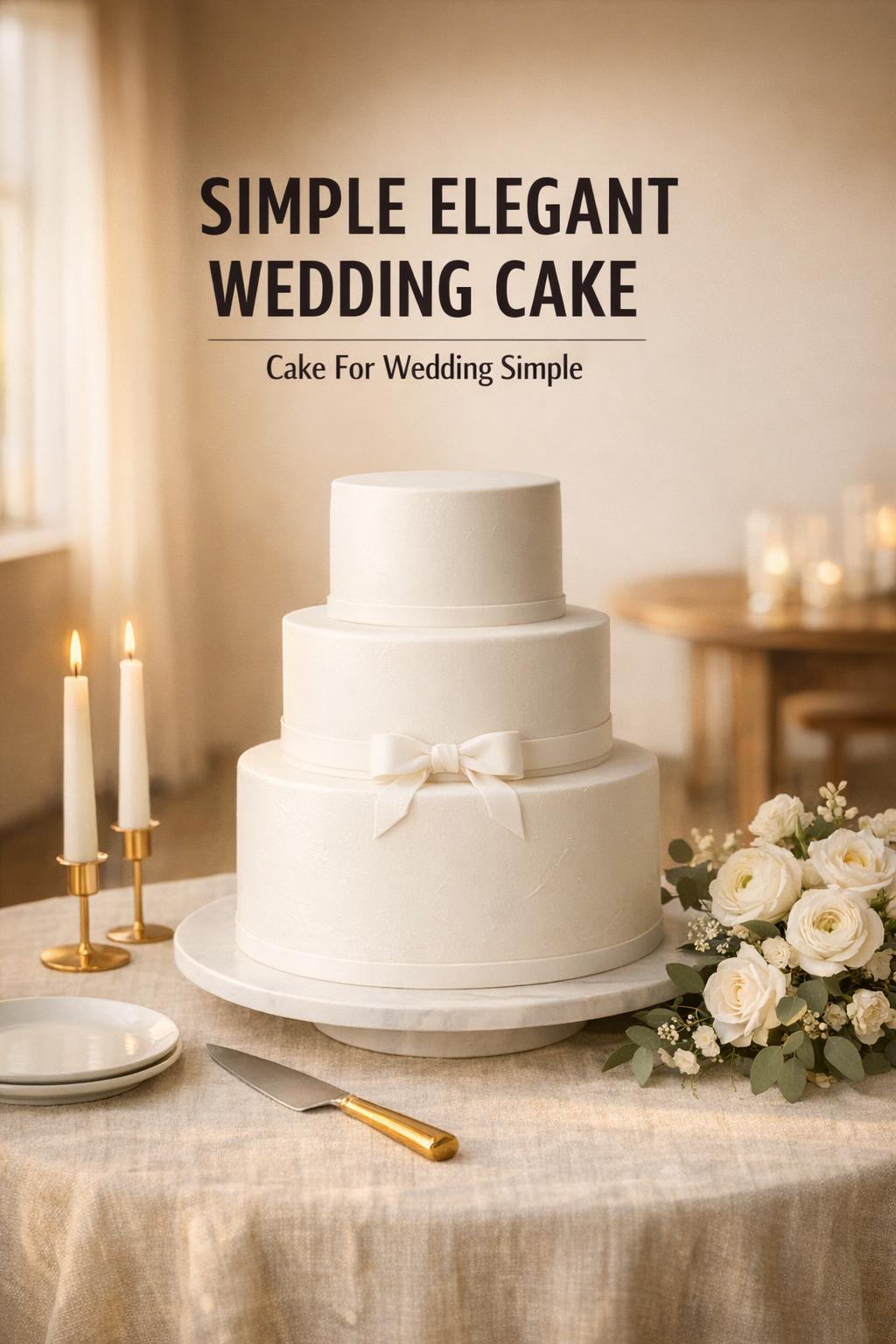
Minimalist white cakes are the backbone of simple elegant wedding cake designs. Their defining characteristic is restraint: clean lines, a white or neutral palette, and minimal adornment. The aesthetic mood is calm, modern, and timeless—often “white-on-white,” where the beauty comes from the silhouette and the smoothness of the finish rather than color contrast.
In practice, this style often relies on immaculate surfaces: smooth buttercream, smooth fondant, or matte finishes that photograph softly. The shape is typically classic and tiered, but the “statement” is the proportion—how tall it is, how the tiers relate, and how uncluttered the table styling feels around it.
Style overview: botanical simplicity (floral accents and natural elements)
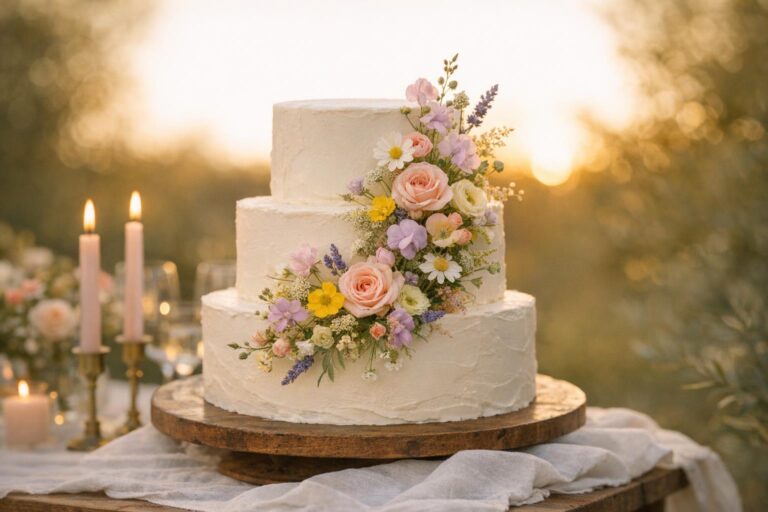
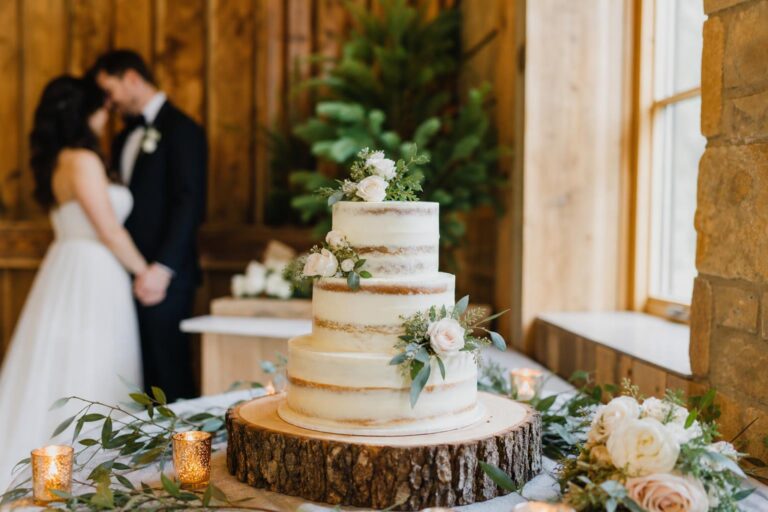
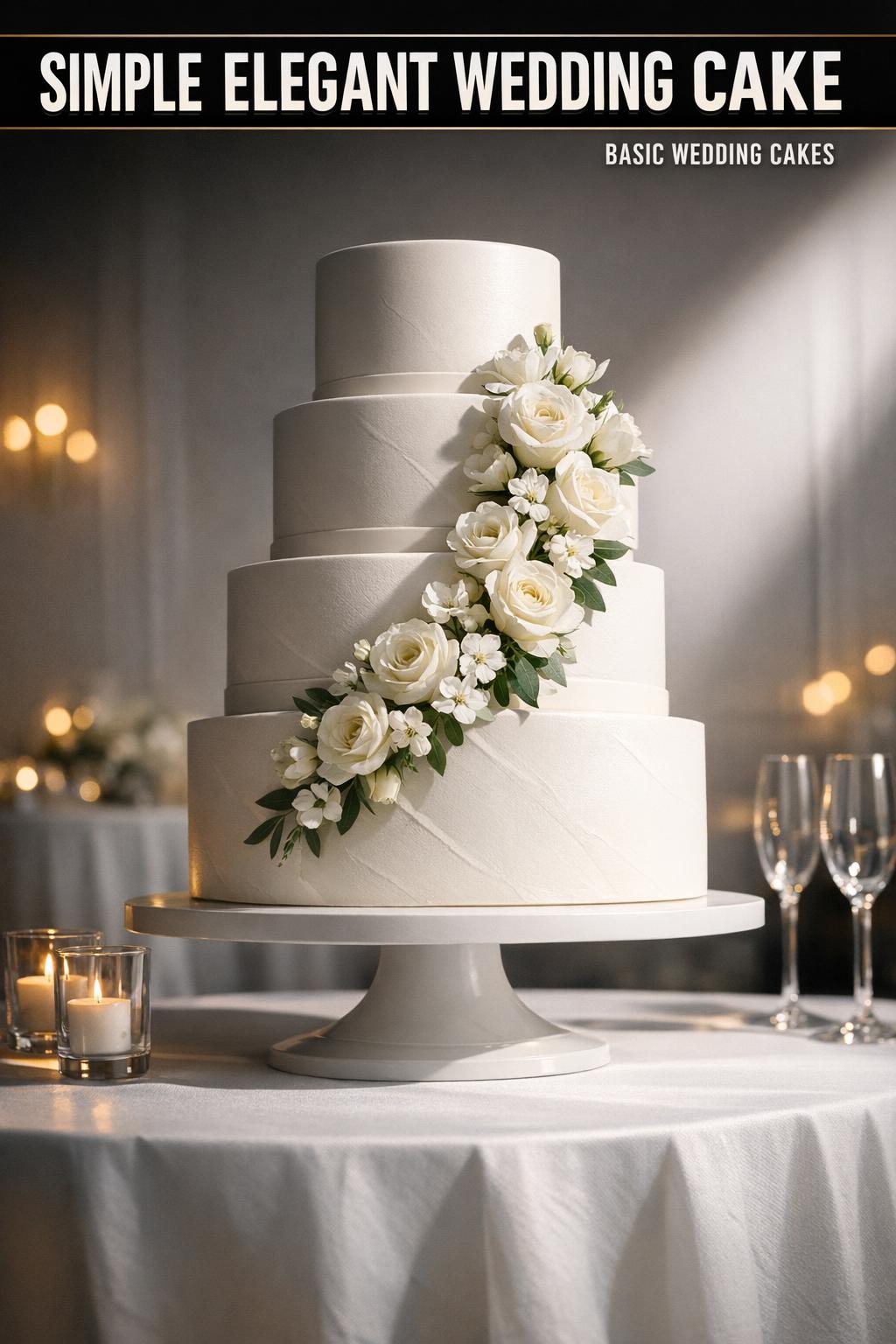
Botanical simplicity starts with the same minimalist foundation—often white tiers—but introduces floral accents and natural elements in a controlled way. Think fresh flowers placed with intention, airy greenery, or a small cascade that looks like it was gathered moments before the ceremony. The mood is romantic and organic, often associated with softer palettes and a sense of effortless beauty.
This approach is especially popular because it bridges aesthetics: it can read classic, modern minimalist, or gently vintage depending on the type and placement of florals. The key is balance. The cake stays simple; the botanicals do the storytelling.
Style overview: textured white-on-white (buttercream and finish as the “decor”)
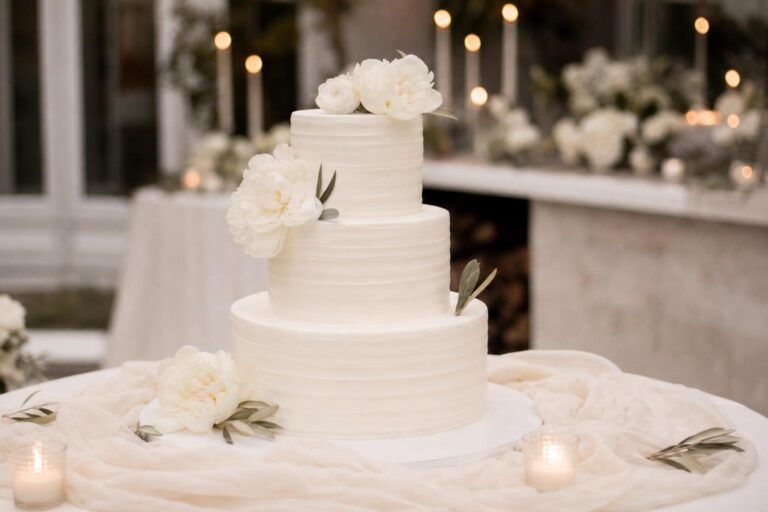
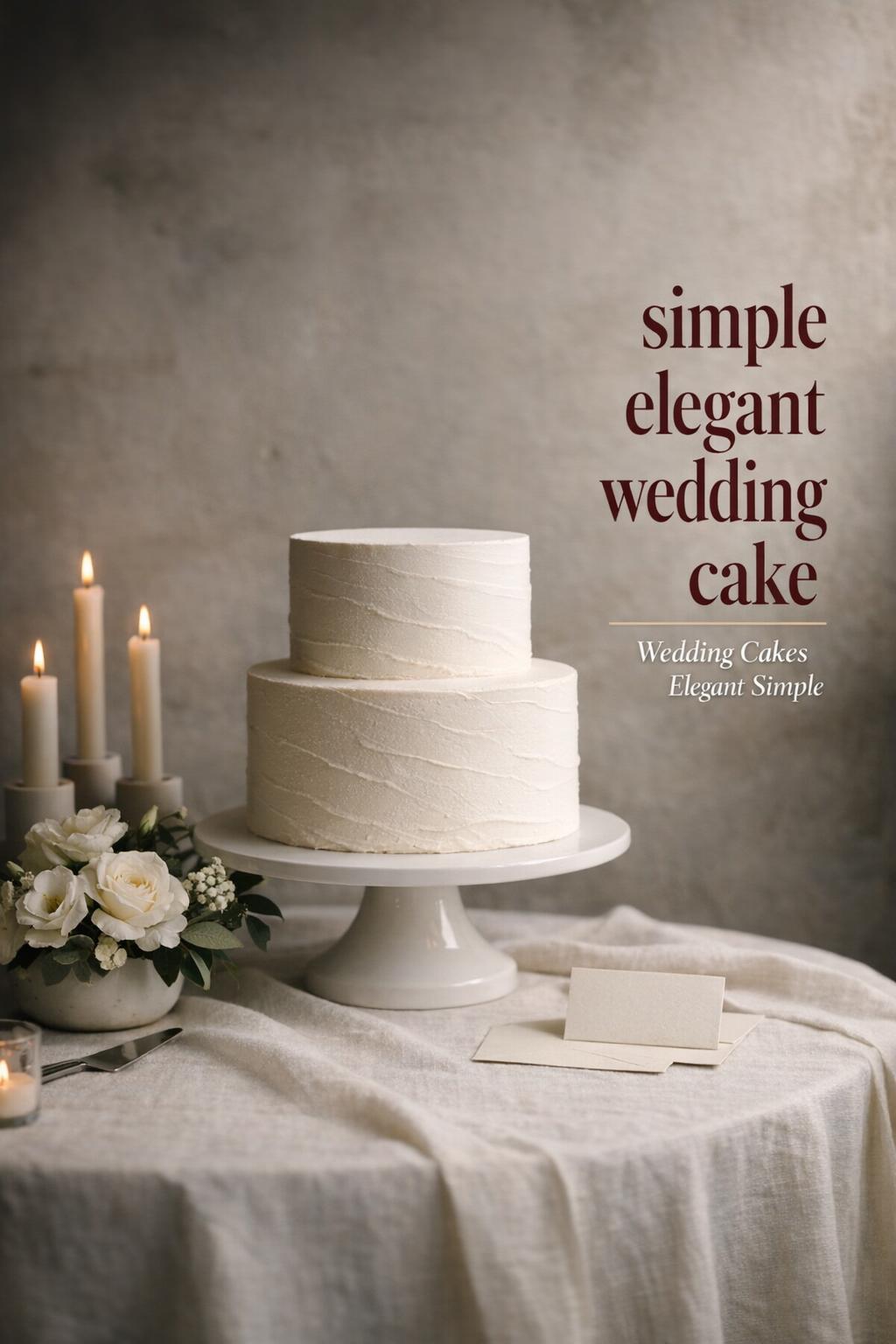
Textured white-on-white cakes trade bold decoration for tactile detail. They still live in the same neutral color family—white, ivory, and soft neutrals—but introduce visual interest through the finish: sculpted buttercream, subtle patterning, or restrained dimensional work that catches light.
This is one of the most reliable ways to make a cake feel elegant without adding extra elements. Texture reads as craftsmanship. It also gives you a design you can appreciate up close while still photographing as clean and modern from across the room.
Style overview: subtle motifs (bows, ribbons, and gentle detailing)
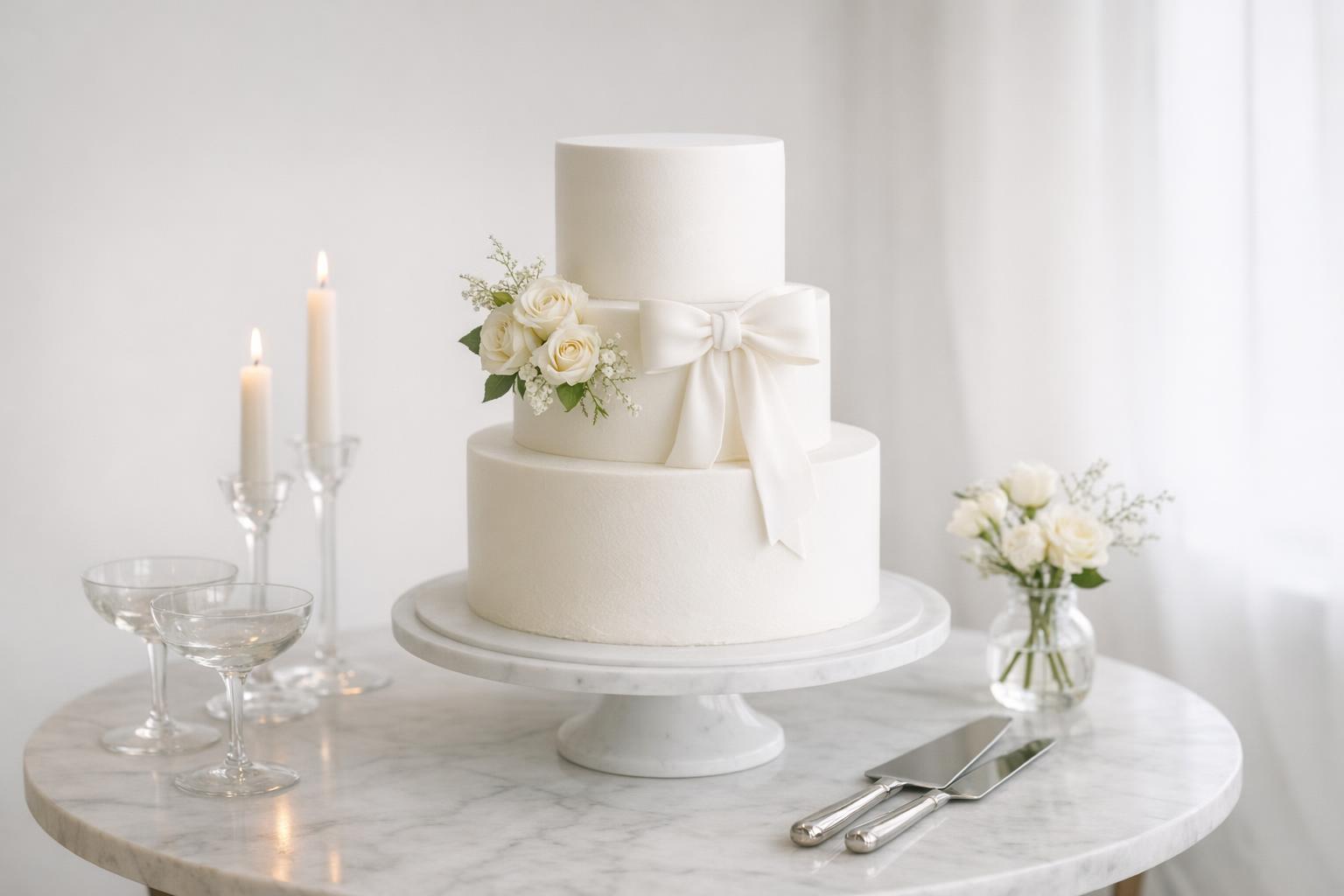
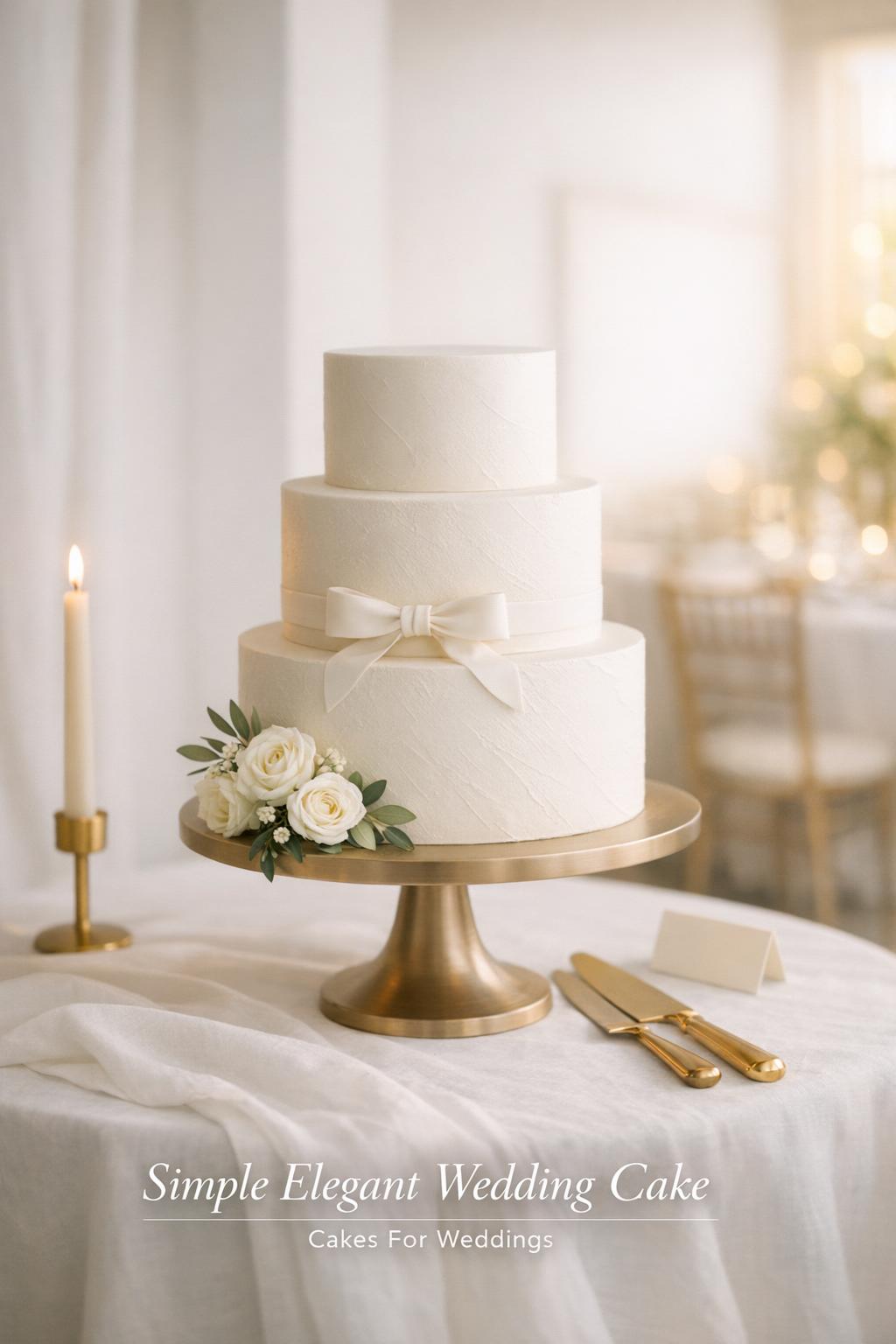
Motif-driven simplicity is for couples who want a “signature” detail without moving into ornate territory. The most recognizable version is the simple white wedding cake with bows: the structure stays classic and minimal, and the bow accents provide a delicate focal point that feels romantic rather than busy.
This style sits in the sweet spot between minimalist and vintage-inspired simplicity. Bows, fondant ribbons, and subtle detailing can feel traditional, playful, or modern depending on scale and placement—one bow can whisper; multiple bows can become a design language.
Style overview: modern geometry (clean edges, geometric and modern details)
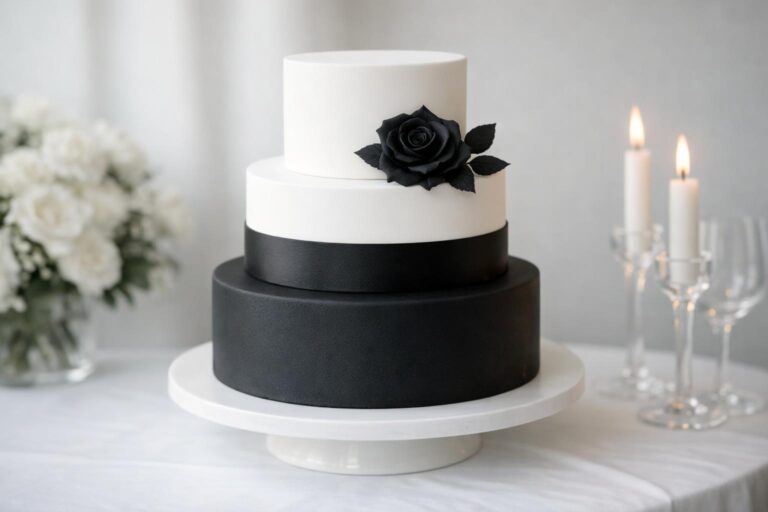
Modern geometric cakes interpret simplicity through structure. They may feature crisp lines, clean edges, and geometric accents that feel architectural rather than floral. The palette often stays neutral, because geometry already provides a strong visual cue.
This style is often discussed alongside minimalism because both emphasize clean design. The difference is that geometric details are a deliberate statement—still restrained, but more graphic than purely minimalist white tiers.
Key differences: how these “simple elegant” styles separate in real choices
Silhouette and structure: quiet tiers vs statement form
Minimalist white cakes tend to keep the silhouette classic and let the height and tier proportions do the work. Geometric cakes may keep the same tiered structure, but the visual impact comes from clean edges and modern details that feel intentional from across the room. Motif cakes remain classic in form, yet direct the eye to a focal detail (like bows), while botanical cakes soften structure with organic placement of flowers and greenery.
Palette: white-on-white vs soft natural accents
Across these styles, white is the shared foundation—white wedding cake is practically the common language of “elegant simple.” The split happens in how you use it. Minimalist and textured white-on-white usually stay firmly within whites and neutrals. Botanical cakes add color through fresh flowers and natural elements, but ideally in a restrained way that doesn’t overpower the clean base.
Decoration philosophy: fewer elements, higher intention
Minimalist designs remove decoration; textured designs replace decoration with finish; botanical designs add living elements; motif designs add one repeated detail; geometric designs add a structured modern accent. All can fit under wedding cakes elegant simple, but they deliver elegance through different “design logic.” Understanding that logic helps you avoid a cake that looks simple in theory but feels unfinished in photos.
Finish and texture: buttercream vs fondant as a style decision
Buttercream and fondant show up again and again because they’re foundational to the look. Smooth buttercream can feel soft and romantic, especially for textured white-on-white styles. Smooth fondant can feel ultra-clean and modern—particularly strong for minimalist and geometric cakes. Ribbons and bows are often linked to fondant work, while floral accents pair naturally with either finish when kept light and intentional.
Visual style breakdown: what guests notice first at the cake table
In a reception space, your cake is rarely seen from inches away first—it’s seen from across the room, beside florals, lighting, and table linens. That’s why simple elegant wedding cake designs benefit from clarity: one strong idea, expressed cleanly.
Minimalist white: the “gallery” look
Minimalist white cakes read like a sculpture: smooth sides, clean tiers, and a calm presence. Even as basic wedding cakes, they can feel luxurious if the proportions are right and the surface is flawless. The visual impact is often the negative space—the absence of clutter—and how well the cake sits within the décor instead of competing with it.
Botanical simplicity: romantic movement without messiness
Fresh flowers and greenery introduce motion and softness. The visual risk is over-application: too many blooms can shift the cake from “simple elegant” into “busy centerpiece.” The strongest botanical cakes keep the placement editorial—one cluster, a light cascade, or a few stems that echo the wedding florals without duplicating the entire bouquet.
Textured white-on-white: detail that appears as the light changes
Texture reveals itself gradually. In photographs, it adds dimension without adding color. In person, it feels tactile and artisanal—especially when the buttercream finish is intentionally styled rather than merely “frosted.” This is a beautiful option for couples who love minimalism but worry a plain smooth cake could feel flat under evening lighting.
Motifs like bows: a single romantic cue that frames the moment
Bows are a language of celebration. On a simple white wedding cake, they signal romance and a hint of vintage-inspired sweetness without demanding a complex design. Guests understand the intention immediately: this is classic, thoughtful, and styled. The bow detail also photographs well because it creates a focal point that doesn’t rely on color contrast.
Modern geometry: clean lines that feel contemporary
Geometric and modern details create crispness. This style reads particularly well in modern wedding aesthetics where the rest of the décor is intentional and uncluttered. If your venue leans contemporary, a geometric accent can keep a cake for wedding simple from feeling too traditional.
The finish conversation: buttercream, fondant, and the “naked” question
Most couples start by searching designs, but the more helpful question is often: what finish supports the look you want to live with for an entire wedding day—through setup, photos, and the final slice? In wedding planning, the finish is not a footnote. It’s the surface that communicates “simple” or “polished.”
Buttercream finish: softness and texture potential
Buttercream is closely associated with subtle texture techniques: smooth buttercream, gently sculpted surfaces, and white-on-white dimension. If your vision is romantic, botanical, or softly minimalist, buttercream can reinforce that mood. It also pairs naturally with floral accents because both feel organic.
Fondant finish: crisp minimalism and ribbon-ready detailing
Fondant is often chosen when the priority is clean edges and a sleek, modern look. It’s also a natural partner for motifs like fondant ribbons and bow accents, where precision matters to keep the detail looking intentional rather than handmade in a rushed way. If you love minimalist white cakes and want the surface to look impeccably smooth in photos, fondant is one of the clearest style signals available.
Naked or naked-with-accents: simplicity that must be deliberate
Naked styles (or nearly naked, with accents) can align with minimal wedding cake ideas, but they require careful styling to read as “simple elegant” rather than unfinished. The most successful approach is to keep the structure tidy and use small floral accents or minimal greenery so the cake still feels like a planned part of the reception design—not an afterthought.
Tips: how to keep “simple” from looking plain
In real weddings, the line between simple and underwhelming is usually not the number of decorations—it’s whether the design has a clear point of view. A minimalist cake needs immaculate smoothness or a confident silhouette. A floral cake needs editing. A textured cake needs intentional patterning.
- Choose one hero element: a smooth white finish, a single floral cluster, a bow motif, or a modern geometric detail—then keep everything else quiet.
- Commit to white-on-white when you want timeless elegance; add botanical color only if it supports your broader wedding palette.
- Use texture to replace extra décor: if you’re resisting florals or toppers, a buttercream texture can give dimension without clutter.
- Scale matters: a small bow can feel delicate; an oversized bow becomes a statement. Decide which mood you want before you repeat the detail.
When you’re deciding between basic wedding cakes and wedding cakes elegant simple, remember that elegance is often the result of refinement. A simple design becomes elevated when the finish, proportions, and styling choices look considered from every angle guests will see.
Comparison in context: matching cake style to wedding atmosphere
Most couples don’t want their cake to exist in isolation. They want it to feel like part of the story—the walk down the aisle, the toasts, the way the room looks at sunset. Here’s how each style tends to “behave” in a real wedding environment, especially when you’re aiming for that simple elegant wedding cake feeling.
Modern minimalist wedding aesthetics
If your day leans modern—clean tablescapes, intentional negative space, and a focus on calm styling—minimalist white cakes and modern geometry feel like the natural extension. Smooth fondant or a matte finish supports the crisp mood. Texture can work here too, as long as it stays subtle and white-on-white.
Romantic garden and botanical styling
If your wedding is emotionally rooted in florals—ceremony arrangements, greenery woven into the reception—botanical simplicity feels seamless. Buttercream finishes often complement this mood because they read soft and romantic. The most convincing floral accents echo the wedding blooms without recreating an entire centerpiece on the cake.
Vintage-inspired simplicity (without going ornate)
Vintage-inspired simplicity often appears through motifs: bows, ribbons, and subtle detailing that nods to tradition while staying clean. A simple white wedding cake with bows can feel like a love letter to classic weddings—especially when paired with a restrained palette and a classic tiered structure.
A location note: how real weddings make simple cakes feel personal
One reason simple elegant cakes stay popular across the U.S. is their flexibility. A real wedding example can anchor the idea: imagine a couple in Austin, TX choosing a simple white wedding cake with bows—clean tiers, subtle detailing, and just enough romance to echo the day’s styling without overpowering it. That same concept can feel just as at home in a different setting, because the design language is timeless.
Regional wedding editorials sometimes bring a local sensibility—California weddings, for example, often highlight simplicity and sweetness with minimalist white cakes and fresh florals. The point isn’t that one location owns the style; it’s that minimalist design and natural elements translate beautifully across venues, seasons, and guest lists because they don’t rely on heavy theme-work to feel complete.
Outfit-style comparisons, but for cake: the same “event,” two different design logics
To make the distinctions feel tangible, it helps to imagine the cake as part of a styling decision—like choosing between two interpretations of the same dress code. Below are a few side-by-side comparisons showing how different simple elegant wedding cake designs approach the same wedding moment.
Example comparison: intimate ceremony with a small reception
A minimalist white approach would choose a small tiered white cake with a flawless smooth finish—quiet, modern, and designed to feel “enough” without extra décor. A botanical approach would keep the same simple structure but add a restrained floral accent—perhaps a small cluster that ties into the ceremony flowers—so the cake feels romantic and integrated into the room.
Example comparison: evening reception with dramatic lighting
Textured white-on-white shines in this scenario because the finish catches light and creates dimension even when the palette stays neutral. By contrast, a smooth fondant minimalist cake can look strikingly clean under lighting, but it may rely more on silhouette and table styling to avoid appearing flat; adding a subtle motif like a bow can provide a focal point without adding color.
Example comparison: modern venue, contemporary styling
A geometric and modern details approach would emphasize clean edges and a graphic accent—still simple, but intentionally modern. A classic minimalist approach would keep the tiers smooth and unadorned, focusing on proportion and a pristine white finish. Both read as wedding cakes elegant simple; the difference is whether you want the cake to whisper (minimalist) or speak in a clear modern tone (geometric).
Serving and scale: aligning tier count with the kind of simplicity you want
Even though many inspiration galleries focus on design, real planning requires scale decisions—especially when you’re choosing between cake structures and how “grand” the cake moment should feel. Proportions and scale are part of the core principles of simple elegance: too small can feel accidental, too large can demand ornamentation to look balanced.
In practical terms, tier count becomes a design tool. A single tier can look incredibly chic when the finish is flawless and the styling around it is intentional. Multiple tiers naturally read more formal, even with minimal décor. The goal is to match the visual weight of the cake to the visual weight of the reception: a calm minimalist room can support a taller white cake; a flower-filled room may call for a simpler silhouette with botanical accents to avoid competing focal points.
Budget perspective: what “simple” does (and doesn’t) change
Couples sometimes assume a cake for wedding simple automatically means lower cost. In reality, simple elegant cakes can be cost-effective when the design is straightforward—but they can also require high craftsmanship. A perfectly smooth white finish or crisp fondant edges can be as demanding as more decorative styles. Texture work, precise bows, and clean geometric details all depend on careful execution.
The most helpful mindset is to budget for the elements that create refinement: a high-quality finish, clean tiers, and a controlled design plan. If you’re deciding where to simplify, reducing the number of decorative elements is often easier than compromising on the finish that makes the cake look elegant in photos.
Common style mistakes couples make with simple elegant wedding cake designs
Simple design is unforgiving—in the best way. It reveals what’s intentional and what’s accidental. If you’re aiming for wedding cakes elegant simple, avoiding a few common pitfalls can make the difference between “minimalist editorial” and “unfinished.”
- Mixing too many style signals: combining bold florals, heavy texture, and geometric accents can cancel out the simplicity.
- Choosing “plain” instead of “minimal”: a smooth white cake can look stunning, but only when the surface looks deliberate and the proportions feel balanced.
- Over-scaling the décor: large floral cascades on every tier can overwhelm a simple base and turn a restrained cake into a crowded one.
- Ignoring the table setting: minimalist cakes rely on context—cake stand, linens, and surrounding styling—so the overall vignette feels curated rather than empty.
When in doubt, return to the core relationship that defines this category: simplicity becomes elegant when it’s connected to refined finishes, careful textures, and either floral/natural accents or a single motif used with restraint.
Tips: how to choose your final direction (a decision framework for couples)
If you’re torn between minimal, botanical, textured, motif, or geometric, try choosing based on what you want guests to feel during the cake moment. The cake is more than dessert; it’s a design anchor and a photo moment woven into your wedding timeline.
Start with your non-negotiable mood
If you want calm and modern, lean minimalist or geometric. If you want romance and softness, lean botanical or bows. If you want “quiet luxury” without extra décor, choose textured white-on-white. This one decision prevents you from adding detail later that conflicts with the original intent.
Then pick the finish that tells the truth in photos
Buttercream can read soft and dimensional, especially with subtle texture techniques. Fondant can read sleek and crisp, supporting clean lines and ribbon details. Either can be used for simple elegant wedding cake designs, but they communicate different personalities even when both are white.
Finally, choose your “one detail”
Give yourself permission to keep it singular: one floral accent placement, one motif (like bows), one texture approach, or one geometric cue. That’s how basic wedding cakes become memorable without feeling over-designed.
Pulling it all together: a curated cheat sheet of styles (without overcomplicating it)
Simple elegant wedding cake designs can be understood as variations on the same promise: a wedding cake that feels timeless, refined, and intentional. The quickest way to choose is to decide which visual language you want your cake to speak.
- Choose minimalist white if you want clean lines, a white-on-white palette, and a modern wedding aesthetic that feels calm and classic.
- Choose botanical simplicity if you want natural elements—fresh flowers and greenery—adding romance without heavy decoration.
- Choose textured white-on-white if you love the minimal palette but want dimension through buttercream texture and subtle finish work.
- Choose motifs like bows if you want a sweet, classic focal point that feels romantic and polished on a simple white wedding cake.
- Choose modern geometry if you want a contemporary edge—still simple, but more graphic and structured.
Whichever direction you choose, remember the most consistent hallmark across cakes for weddings in this category: elegance comes from editing. When every element earns its place—finish, texture, florals, or detailing—the cake feels not just “simple,” but deeply considered.
FAQ
What makes a simple elegant wedding cake different from a plain cake?
A simple elegant wedding cake is defined by intentional design choices—clean proportions, a refined finish (such as smooth buttercream or smooth fondant), and restrained accents like florals, subtle texture, or a single motif (like bows). A plain cake often lacks that deliberate finish or focal detail, so it can read as unfinished rather than minimalist.
Is a white wedding cake always the best choice for an elegant simple look?
White is the most common foundation because it supports a timeless, white-on-white look and pairs naturally with minimalism, texture, and fresh flowers. It isn’t the only way to be simple and elegant, but it’s the clearest and most versatile palette for keeping the design restrained and polished.
Should I choose buttercream or fondant for simple elegant wedding cake designs?
Choose buttercream if you want softness, subtle texture, and a romantic feel, especially with floral accents or white-on-white texture. Choose fondant if you want crisp, ultra-smooth surfaces, clean edges, or precise detailing like ribbons and bow accents; both finishes can look elegant, but they communicate slightly different styles.
How do I add florals without making the cake look too busy?
Use floral accents and natural elements as a single, edited focal point—such as a small cluster or a light cascade—rather than spreading flowers across every tier. The most successful botanical simple cakes keep the base design clean and let the florals echo the wedding décor without taking over the entire cake.
Are bows too trendy, or do they work for a timeless cake?
Bows can feel timeless when they’re used as subtle detailing on a simple white wedding cake, especially when the overall design stays clean and classic. The key is scale and restraint: a few well-placed bow accents can read romantic and refined, while too many can shift the cake away from minimal elegance.
Can a “cake for wedding simple” still feel special in photos?
Yes—simple cakes often photograph beautifully when the finish is immaculate and the silhouette is well-proportioned. Adding one intentional element—white-on-white texture, a small floral accent, a bow motif, or a clean geometric detail—creates a focal point while keeping the overall look restrained.
How do I pick a style that matches my venue and overall wedding aesthetic?
Match the cake’s “design language” to the room: minimalist white and geometric details suit modern wedding aesthetics and clean styling; botanical simplicity pairs naturally with floral-forward, romantic settings; textured white-on-white works when you want elegance without added décor; and bows support a classic or vintage-inspired simplicity without becoming ornate.
What’s the biggest mistake couples make with wedding cakes elegant simple?
The most common mistake is mixing too many ideas—heavy florals plus strong texture plus modern geometric accents—until the cake loses its clarity. Simple elegance works best when there’s one dominant concept, supported by refined finishes and carefully edited details.