White Wedding Cake Styles for a Modern Romantic Reception
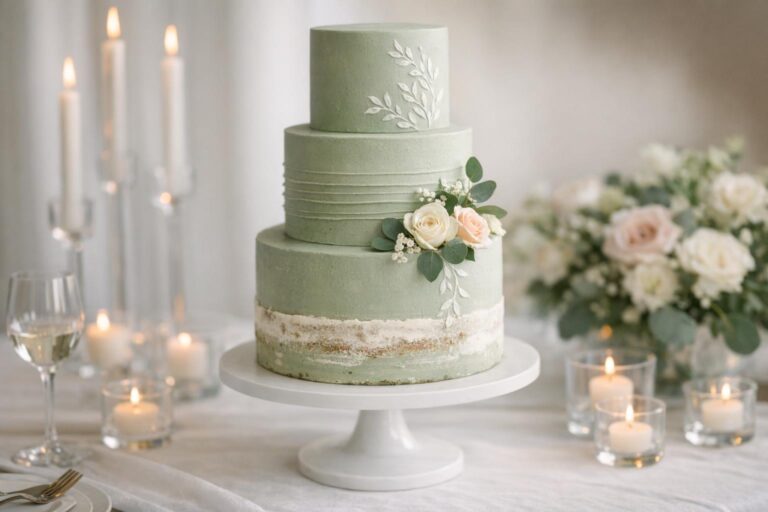
There is something quietly powerful about a white wedding cake. In a room filled with flowers, candlelight, tailored attire, and carefully chosen details, an all-white cake never competes for attention, yet it always holds it. Its beauty comes from restraint: soft ruffles, clean piping, sugar flowers, pleated fondant, and tiers that feel sculptural against the atmosphere of the day.
The mood can lean traditional, minimalist, romantic, vintage, or modern depending on the finish. That flexibility is exactly why the white wedding cake remains such an enduring part of weddings across the U.S. It suits a grand ballroom moment, a garden reception, a polished city celebration, or a boho cake table styled with florals and layered textures. It feels timeless, but it never has to feel predictable.
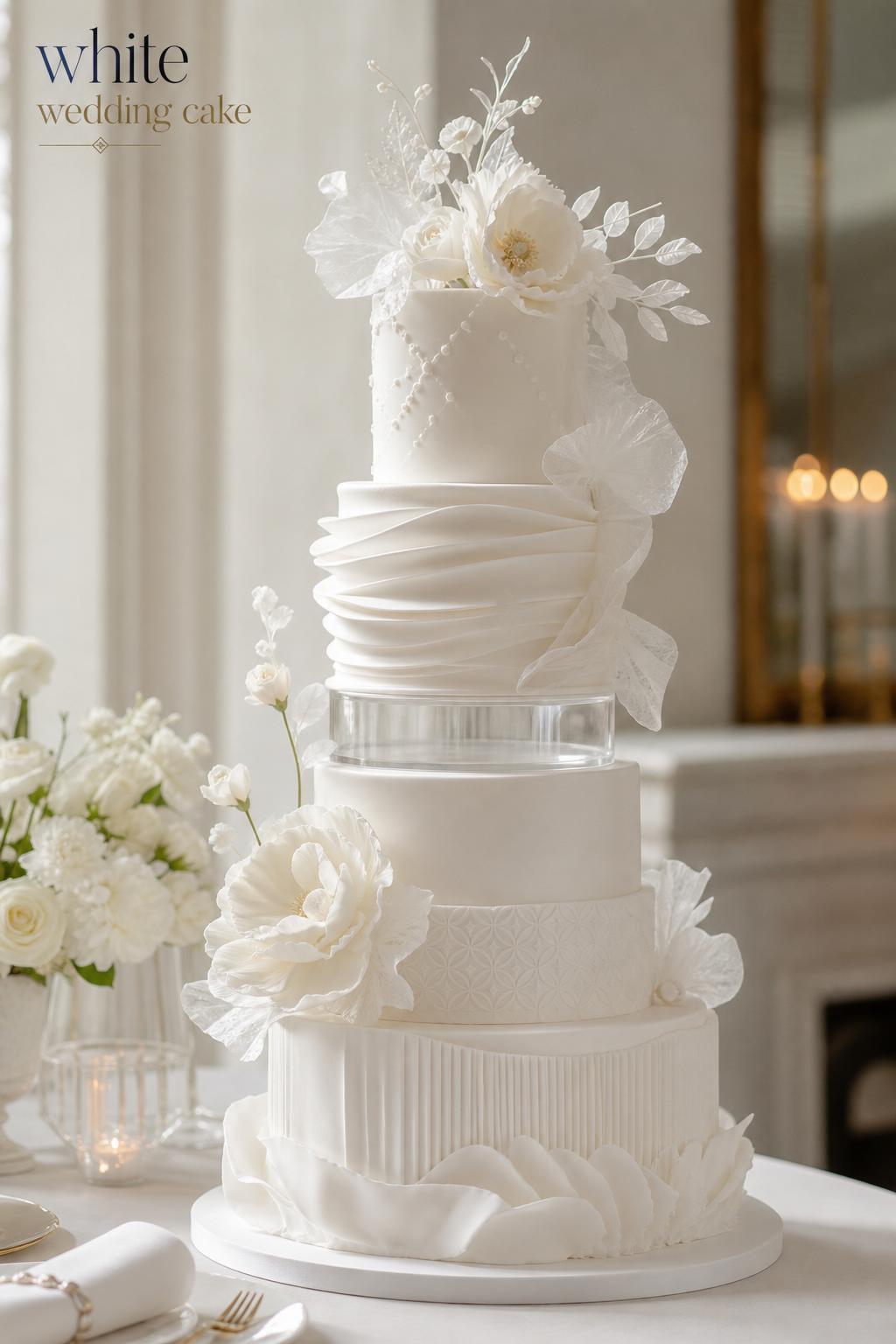
For couples, the appeal is both emotional and practical. White reflects the symbolism long associated with the white wedding tradition, while also giving bakers, planners, and designers a clean canvas for texture, shape, and display. Whether you are dreaming of a hexagonal tiered centerpiece, a traditional piped design, or an all-white cake with sugar flowers and acrylic dividers, the look can be tailored to your wedding story with remarkable ease.
Why the white wedding cake still feels fresh
Part of the white wedding cake’s staying power comes from its connection to wedding history. The symbolism of white within the broader white wedding tradition gives the cake an immediate sense of ceremony, and the older idea of the bride’s cake still lingers in how many couples view the dessert table as more than a food moment. It is a visual marker of the celebration itself, often photographed as closely as the florals or the tablescape.
Turn wedding inspiration into a plan you can actually follow.
Zarellea brings your guest list, budget, vendors, and day-of details into one shared space — so no beautiful idea gets lost in the shuffle.
Yet the modern appeal is different from pure tradition. Today, many couples are drawn to monochrome styling because it photographs beautifully, pairs well with nearly any venue palette, and allows detail to emerge through craftsmanship rather than color. A white cake can feel soft and romantic with sugar flowers, crisp and architectural with square or hexagonal tiers, or fashion-forward with wafer paper and minimalist accents. In each version, the mood shifts while the core identity remains elegant.
This balance between heritage and reinvention is why editorial wedding platforms and bakeries continue to return to the all-white cake. It speaks to couples who love classic style, but it also gives room for contemporary interpretation. In practical terms, that means you do not have to choose between timeless and current. A white wedding cake can be both.
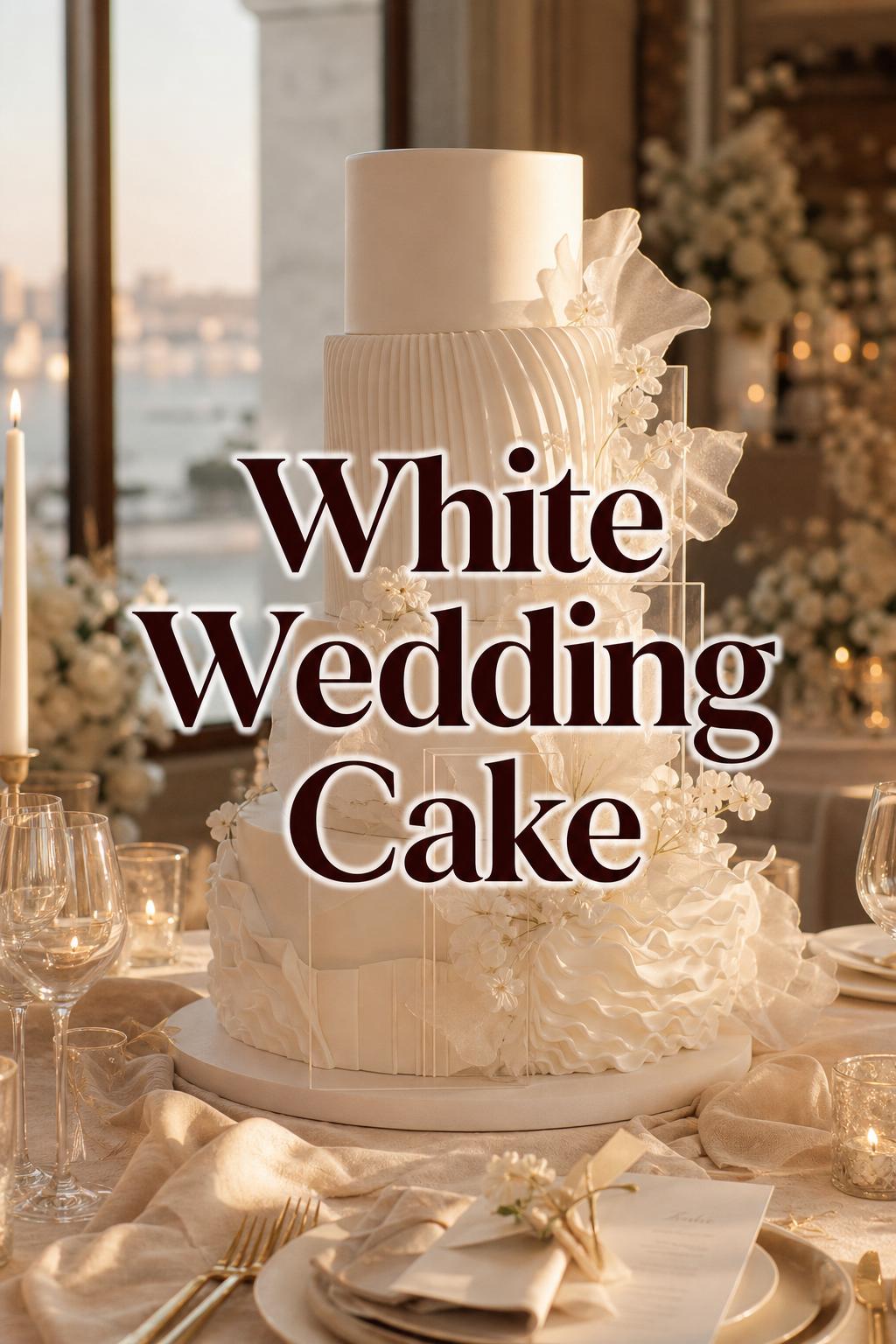
Look: classic ceremony elegance
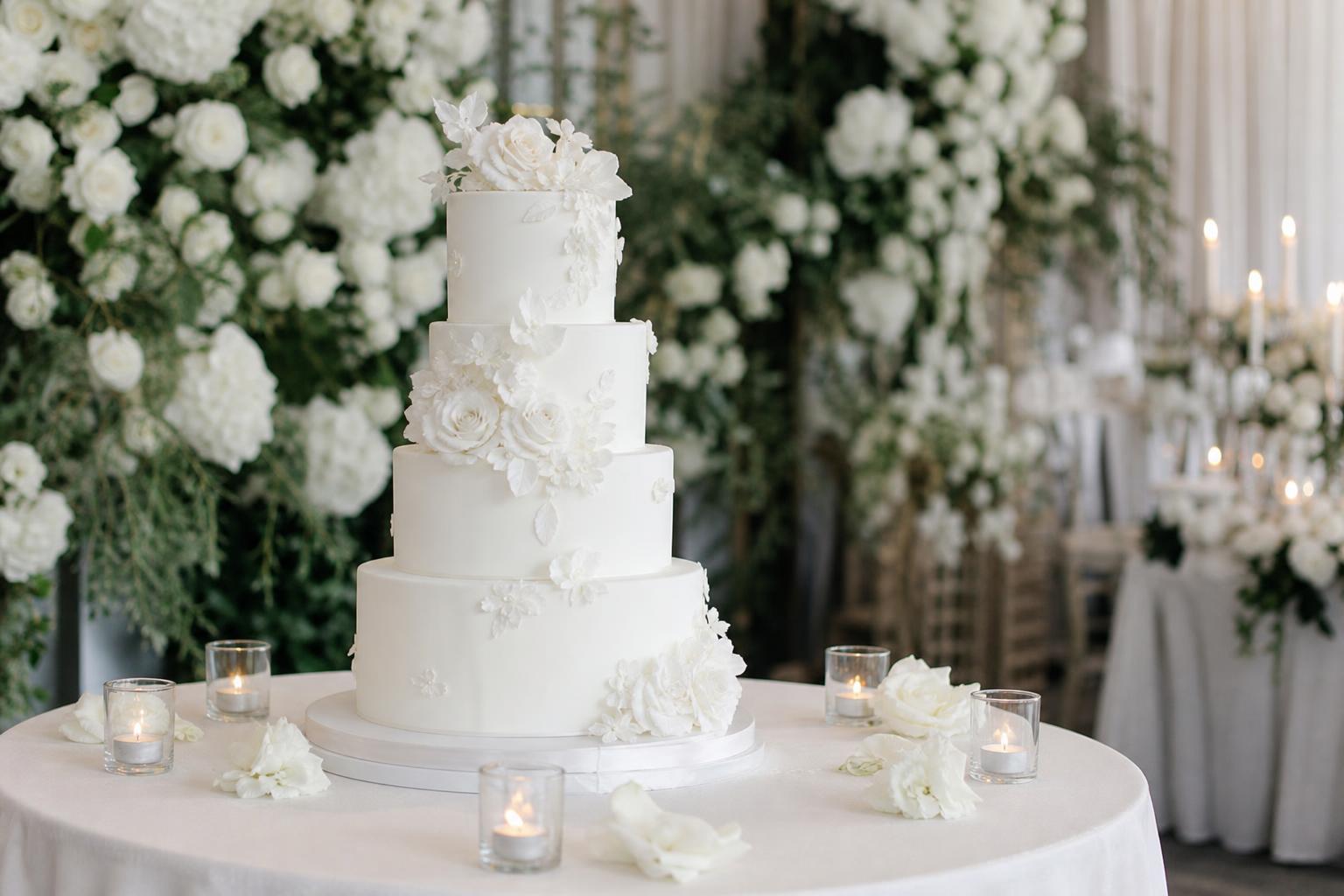
This interpretation is for the couple who wants the cake to feel immediately recognizable as a wedding icon. The mood is refined, symmetrical, and softly formal, with stacked tiers that create presence without unnecessary excess. Think of the kind of cake that looks right beside taper candles, polished table linens, and an aisle lined with white blooms.
The visual language here often comes from traditional white wedding cake designs: smooth fondant, clean piping, delicate detailing, and sugar flowers used with restraint rather than abundance. Round tiers usually support this mood best, though square tiers can also feel formal when the lines are kept neat. The palette stays entirely white or white-on-white so that shadows, height, and craftsmanship become the decoration.
- Key features: smooth fondant, piped borders, balanced tier proportions
- Best pairing: traditional wedding settings or formal receptions
- Decor accents: sugar flowers, subtle floral placement, understated cake stand styling
This look fits couples who want a cake that will never feel dated in photographs. It also works beautifully when the overall wedding aesthetic is classic rather than trend-driven. If you are drawn to the kind of inspiration often featured by Bridal Guide, this is the direction that preserves tradition while still looking polished today.
Look: textured romance in white-on-white layers
Not every white wedding cake has to rely on a perfectly smooth finish. One of the most compelling all-white directions is texture-first design, where the romance comes from movement across the surface rather than color. This creates a softer, more atmospheric silhouette, especially in venues where candlelight and natural shadows can emphasize every fold and ridge.
Ruffles, pleats, and fondant textures are central to this mood. A textured cake can feel almost couture, as though the tiers are wearing fabric rather than icing. In some settings, piped details give a more classic softness; in others, pleated fondant or layered ruffles make the design feel fashion-inspired. The result is especially striking on medium or tall tiered cakes where there is enough vertical space for the finish to unfold.
This look is ideal for romantic receptions where the cake should echo the softness of a bridal gown, the movement of draped linens, or the layered petals of floral arrangements. It proves that a pure white cake does not need metallics or bold color to feel dimensional. Texture alone can carry the entire visual story.
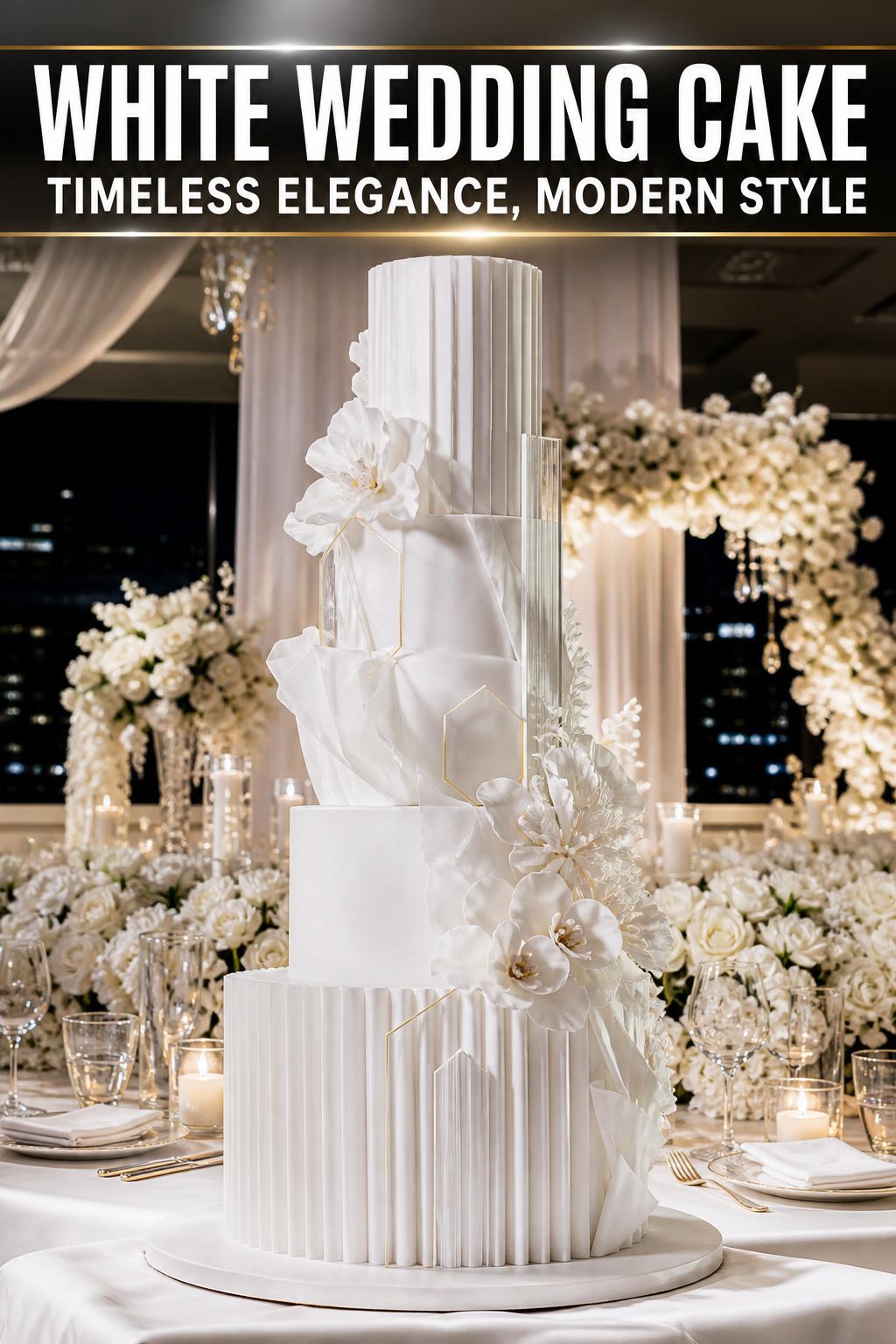
Style tip: let one texture lead
When couples combine too many decorative techniques on one all-white cake, the design can lose clarity. A cleaner result usually comes from choosing one dominant finish, such as ruffles, piping, or pleated fondant, then supporting it with a secondary accent. This allows the craftsmanship to remain visible and keeps the cake feeling composed rather than crowded.
Look: sugar flower couture
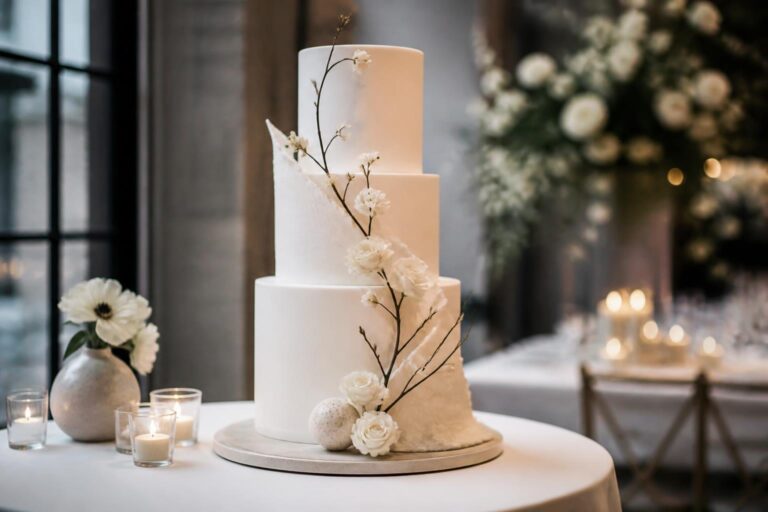
For many couples, the dream white wedding cake is defined by flowers. Sugar flowers create a particularly luxurious interpretation because they preserve the all-white story from top to bottom. Instead of introducing contrasting tones, they continue the monochrome effect, giving the cake the feeling of a sculpted arrangement rather than a separate dessert placed in a decorated room.
An all-white wedding cake with sugar flowers can feel dramatic or delicate depending on scale. A single cascade down one side of the tiers looks refined and editorial. Fuller placements around the base or between layers feel more romantic and abundant. This design direction appears often in inspiration coverage because it bridges old-world elegance and modern presentation so gracefully.
Compared with real flowers, sugar flowers keep the palette more controlled and preserve visual continuity. Real flowers may suit couples who want their cake to tie directly into the floral plan, but sugar flowers often make more sense when the goal is a true white-on-white statement. They also allow the baker to tailor the placement precisely to the cake’s shape and texture, which can matter greatly on formal tiered designs.
- Best for: romantic, luxury, and classic weddings
- Works especially well with: smooth fondant, subtle piping, tall tier structures
- Visual effect: sculptural, soft, and highly cohesive
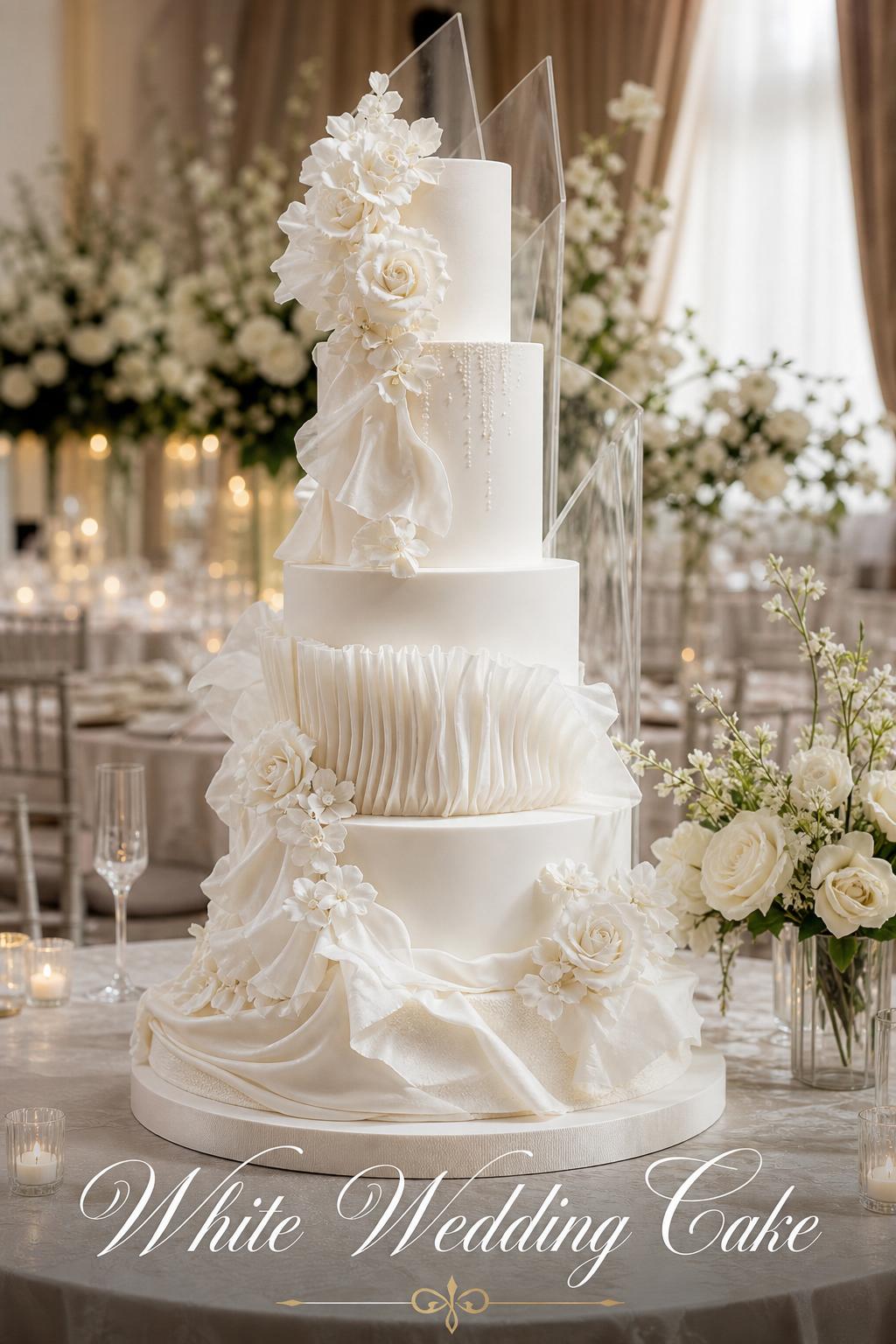
Look: minimalist wafer paper and quiet detail
Some of the most modern white wedding cake ideas rely on lightness rather than ornament. Wafer paper decorations, delicate accents, and restrained asymmetry create a look that feels airy and contemporary. This is the white cake at its most distilled: clean, thoughtful, and slightly artistic without becoming severe.
The palette remains monochrome, but the finish is less formal than classic fondant perfection. Wafer paper can introduce movement, edge, and a subtle handmade quality that changes the way the cake interacts with light. Minimalist accents work especially well when the venue styling is already strong, because the cake does not need to compete with abundant florals, layered rentals, or dramatic architecture.
This approach often suits couples planning modern weddings, gallery-like receptions, or intentionally pared-back celebrations. It can also be an elegant answer for those who want a white cake design that feels current but not trend-chasing. The beauty comes from editing. Every line matters, every surface matters, and the restraint itself becomes memorable.
Look: geometric tiers for a fashion-forward reception
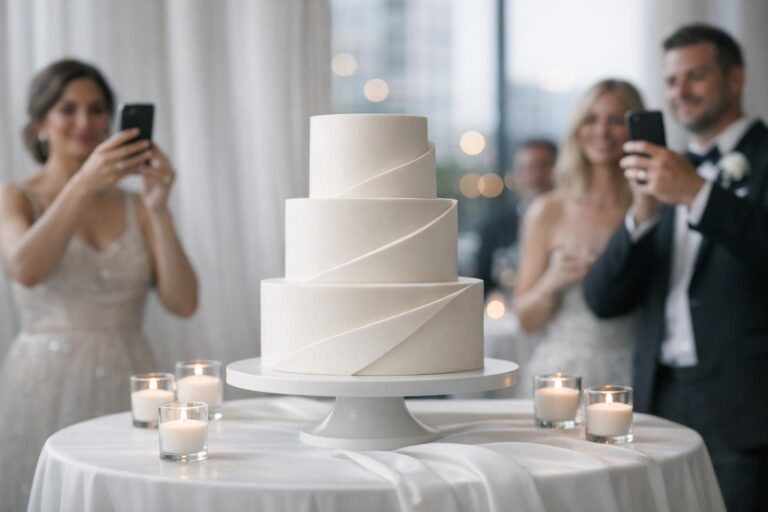
Shape can completely change the mood of a white wedding cake. While classic round tiers remain beloved, modern geometries such as hexagonal and square forms bring architectural presence to the dessert table. These silhouettes feel crisp, intentional, and slightly unexpected, which is why they appear in more contemporary inspiration galleries.
A hexagonal white wedding cake, in particular, creates a strong line from every angle. It suits couples who want the cake to feel like a designed object rather than a purely traditional symbol. Square tiers also work beautifully for modern city weddings or minimalist receptions where the décor language already favors structure and clean edges. In both cases, white keeps the look refined rather than harsh.
There is also a practical side to choosing geometric tiers. Distinct edges and sharper lines place more visual emphasis on precision, so the finish needs to be exceptionally neat. For that reason, this style works best with experienced bakers and clear communication during the planning process. When executed well, the result is striking and highly editorial.
How to recreate the look
If you love modern shapes, keep the rest of the design relatively focused. Pair hexagonal or square tiers with one major decorative idea, such as sugar flowers, subtle piping, or a textural finish. Too many competing details can reduce the power of the silhouette, while a disciplined approach allows the geometry to remain the centerpiece.
Look: acrylic dividers and stand-alone display drama
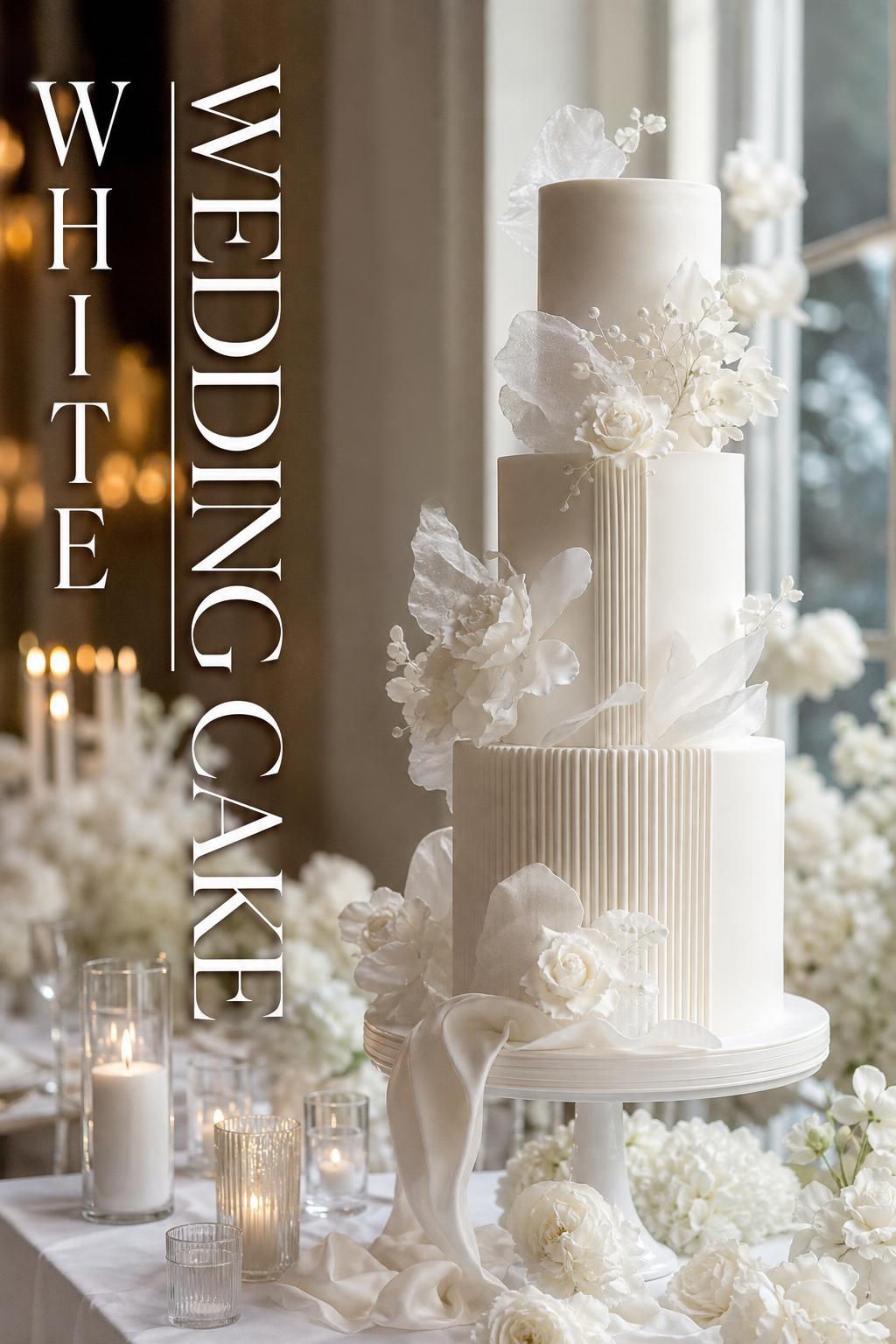
One of the most contemporary ways to style a white wedding cake is by introducing space between the tiers. Acrylic dividers create a floating effect that turns the cake into a display piece, not just a dessert. The silhouette feels lighter, taller, and more sculptural, especially in reception rooms where the cake is expected to make a visual statement.
This design direction is often most effective when the cake itself remains simple. White tiers with restrained decoration allow the transparency of the acrylic to stand out without visual confusion. Sugar flowers can be placed around the separated levels, or the open space can remain mostly clear for a cleaner, more modern impression. Either way, the display becomes part of the design language.
Couples considering this style should think beyond the cake alone and focus on the full presentation. Acrylic dividers naturally draw attention to the cake table, the surrounding florals, and the viewing angle from the room. In a well-styled setting, this can be unforgettable. In a cramped or overly busy corner, the effect is less successful. Placement matters as much as decoration here.
Where the cake lives: styling the cake table as part of the wedding mood
A white wedding cake rarely exists in isolation. It is seen through its surroundings: the table beneath it, the florals around it, the light in the room, and the way photographers frame it. That is why cake-table styling deserves the same level of intention as the cake design itself. A beautiful cake can feel underwhelming if the setting does not support it.
For classic weddings, a composed cake table with symmetrical florals and polished linens often reinforces the elegance of an all-white cake. For boho or softer celebrations, the display can be looser, with layered textures and a more organic arrangement. The Knot’s inspiration approach often reflects this broader styling view: the cake is not only a dessert choice but part of the total wedding aesthetic.
- Consider the table height and surrounding space so the cake has visual presence
- Coordinate florals with the cake’s texture rather than duplicating every detail
- Think about how photographers will capture the cake from different angles
- Keep the backdrop calm enough that white details remain visible
If your reception palette includes many light tones, add contrast through shape and layering rather than introducing unrelated colors. A white cake on a thoughtfully styled table can feel rich and dimensional without losing its monochrome identity.
Look: traditional at heart, but softly updated
Many couples want a cake that honors tradition without feeling stiff. This middle ground is one of the most successful interpretations of the white wedding cake because it blends familiar details with cleaner execution. The mood is warm, composed, and deeply wedding-centered, but not overly ornate.
In practice, that might mean a classic tiered shape with more refined piping, a smoother finish, fewer floral placements, or a slightly pared-back decorative border. It could also mean using a timeless motif while keeping the display contemporary. This kind of cake feels especially at home in venues that balance formality and comfort, where the wedding vision is elegant but still personal.
Couples who feel unsure whether they want a white cake to read as traditional or modern often land here, and for good reason. The style is forgiving. It respects the visual memory of weddings past while still feeling right for a current celebration. If your décor, attire, and reception design combine classic and modern elements, this cake direction usually follows naturally.
Inside the tiers: flavor profiles that support a white exterior
The exterior may be all about visual purity, but the interior still deserves personality. Across white wedding cake content, a few flavor directions appear repeatedly because they naturally support the look: vanilla, almond, and white chocolate, with citrus accents sometimes adding brightness. These choices make sense because they feel aligned with the softness and elegance of the exterior rather than fighting it.
Vanilla remains the most universally appealing option and fits nearly every wedding mood, from traditional to minimalist. Almond often adds a slightly more distinctive character while still preserving that classic white cake feeling mentioned in recipe-based guidance. White chocolate can lean richer and more indulgent, making it useful for couples who want a white cake that feels especially luxurious. Citrus accents offer contrast and freshness without taking the flavor profile too far from the overall aesthetic.
When planning fillings, many couples prefer combinations that keep the outside presentation pristine. That does not mean the interior needs to be bland. It simply means the flavor choices should support structure, clean slicing, and a cohesive experience from first look to first bite. A beautiful white cake is most successful when the inside feels as considered as the finish.
Key pieces for this aesthetic
- Vanilla or vanilla-forward sponge for a classic profile
- Almond notes for a traditional, bakery-inspired character
- White chocolate for a richer interpretation of an all-white cake
- Citrus accents when the wedding style calls for a brighter finish
Practical planning that couples often overlook
Design inspiration is only part of choosing a white wedding cake. Once the visual direction is set, practical planning becomes essential. Tiers, delivery, storage, and venue logistics all shape what is realistic. A cake with dramatic height or acrylic dividers may be visually stunning, but it also requires strong coordination between the baker, the transport process, and the venue setup timeline.
Texture can also affect planning. A heavily textured finish may create beautiful dimension, but it can demand more precision during handling and setup. Geometric cakes with sharp edges need especially careful execution because even small imperfections tend to show more clearly on white surfaces. Likewise, minimalist cakes can be deceptively demanding. The simpler the design looks, the more visible every detail becomes.
Budget conversations should happen early, particularly if the design includes handcrafted sugar flowers, complex tier shapes, or stand-alone display styling. Couples sometimes assume white means simple, but an all-white cake can be among the most labor-intensive styles precisely because the impact depends on detail. Clarity about priorities helps. If shape matters most, you may simplify floral work. If sugar flowers are the dream, a more classic silhouette might balance the investment.
Tips for smoother execution
- Share venue details early so the baker understands access, setup time, and display conditions
- Decide whether the cake should be a room focal point or a quieter supporting detail
- Prioritize one or two signature design elements instead of trying to include every trend
- Discuss stability and transport if you love separated tiers, sharp edges, or unusual shapes
Vendor perspective: why collaboration shapes the final result
A memorable white wedding cake often reflects more than one professional eye. Bakers bring structure, flavor, and finishing technique. Planners shape how the cake fits the event flow and display. Florists influence how real flowers or surrounding arrangements interact with the design. Photographers capture whether the details actually read in the space. The strongest results usually come from that collaboration rather than from one isolated decision.
This is why editorial wedding sources so often include planners and creative teams in their white cake inspiration. Stephanie Sadowski of SRS Events, Melissa Wilmot of WedBrilliant, Ashley Lachney of Alston Mayger Events, and the Joyfully Gathered team are examples of how wedding professionals shape the broader aesthetic context in which a cake appears. Their role is not simply decorative. They help translate the cake from a standalone object into part of a coherent wedding experience.
Bakery and studio examples reinforce that same idea from the product side. The Hummingbird Bakery’s Forever White Cake leans into classic elegance, while ECBG Cake Studio emphasizes customization and texture in its White Wedding offerings. Recipe-focused sources such as RecipeGirl add another angle by showing how flavor, frosting, fillings, and DIY thinking can influence the final concept. Together, these perspectives remind couples that the best white cake decisions are aesthetic and practical at the same time.
Look: the bakery-inspired white cake with a personal touch
Not every couple wants an elaborate editorial centerpiece. Some want a white wedding cake that feels heartfelt, approachable, and still undeniably special. This look draws from recipe-style inspiration and bakery simplicity, where the emotional appeal comes from flavor, familiarity, and thoughtful finishing rather than scale alone.
The silhouette is usually more straightforward: classic tiers, soft frosting, or a cleaner finish without excessive embellishment. Vanilla and almond are especially at home here, echoing the kind of white cake many guests instantly associate with weddings. Decorative details can still matter, but they tend to be gentler, perhaps a little piping or a restrained floral element rather than a fully sculptural statement.
This interpretation suits intimate receptions, couples working within a tighter budget, or anyone who wants the cake to feel emotionally familiar. It also speaks to a different kind of beauty: one rooted in comfort and celebration rather than spectacle. When done well, it can feel every bit as meaningful as a highly elaborate design.
A note on choosing between real flowers and sugar flowers
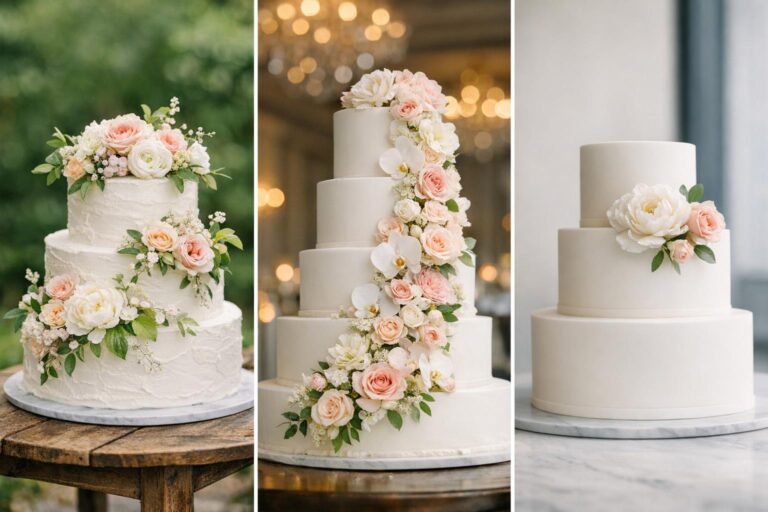
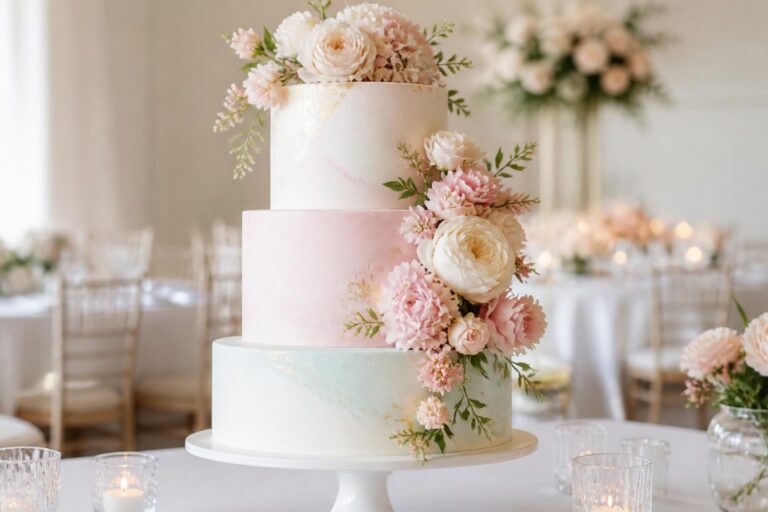
This decision often shapes the final mood more than couples expect. Sugar flowers are ideal when you want the cake itself to carry the decorative story and remain fully within a white-on-white palette. They tend to feel more sculptural, more controlled, and more integrated into the baker’s design plan. For couples chasing that couture, monochrome effect, sugar flowers are often the strongest choice.
Real flowers bring a different beauty. They can make the cake feel more connected to the event florals and more organic within the room. That can be especially lovely on a garden reception or a softer boho cake table. The trade-off is that they may introduce variation in tone, shape, and placement that changes the purity of the all-white look. Neither choice is universally better. It depends on whether your priority is cohesion with the wedding florals or a fully controlled monochrome design.
Common mistake to avoid
Couples sometimes choose a highly detailed cake and then add equally detailed florals, linens, and backdrop styling around it. The result can feel visually crowded, especially with an all-white palette where texture is doing so much of the work. If the cake has intricate piping, ruffles, or sugar flowers, let the display breathe. White needs shadow and space to show its depth.
Making the cake feel right for your venue and reception style
A white wedding cake should not only match your taste; it should also suit the setting where it will be seen. In a formal ballroom, taller tiers, refined piping, and symmetrical floral styling often feel natural. In a modern city venue, geometric shapes, acrylic dividers, and minimalist detail may look more at home. In a softer outdoor setting, textured finishes and floral-led styling tend to blend more gracefully with the environment.
Think about the wedding as a full composition. If your reception has strong architecture, the cake can be cleaner because the room is already providing visual drama. If the venue is simpler, the cake may need more texture or shape to create presence. This is one reason cake-table display matters so much. A white cake reads differently depending on the background, the lighting, and the scale of the space around it.
For couples planning with a stylist’s eye, the most successful choice usually comes from repeating one or two visual ideas from elsewhere in the wedding. A pleated gown may inspire a pleated fondant finish. Soft florals may suggest sugar flowers. A minimalist invitation suite may point toward sharp-edged tiers and a cleaner display. That kind of continuity helps the cake feel woven into the day rather than added at the end.
The white cake narrative: building a design that feels personal
The most beautiful white wedding cake is not always the tallest, the most ornate, or the most photographed. It is the one that understands the mood of the celebration and expresses it clearly. For some couples, that means a traditional white cake with classic piping and soft florals. For others, it means a pure white, texture-driven centerpiece with acrylic dividers and sculptural restraint.
What matters is intention. White is never empty when used well. It can tell a story about elegance, calm, romance, heritage, or modernity. It can mirror the softness of the ceremony, the polish of the reception, or the simplicity of a wedding that values thoughtful detail over visual noise. That is why the all-white cake remains one of the most adaptable and emotionally resonant choices in wedding design.
If you approach it as both a design object and a celebration piece, your cake will feel far more meaningful. Start with the mood you want guests to remember, then let texture, shape, flavor, and display support that vision. A white wedding cake may look serene, but behind that serenity is a wonderfully rich range of possibilities.
FAQ
Does a white wedding cake have to look traditional?
No. A white wedding cake can feel traditional, minimalist, romantic, or highly modern depending on the shape, texture, and display. Classic piping and smooth fondant lean more formal, while hexagonal tiers, wafer paper, and acrylic dividers create a more contemporary look.
What flavors work best for a white wedding cake?
Vanilla, almond, and white chocolate are among the most natural choices because they support the elegant identity of a white cake. Citrus accents can also work well when couples want a brighter flavor profile without moving too far away from the soft, classic mood.
Are sugar flowers better than real flowers on an all-white cake?
It depends on the result you want. Sugar flowers are often better for a fully monochrome look because they keep the cake visually consistent and sculptural. Real flowers can be beautiful when you want the cake to connect more directly to your wedding florals and overall décor.
What is the difference between a classic white cake and a modern white cake design?
A classic white cake usually emphasizes traditional tiering, piping, fondant, and balanced decoration. A modern white cake design often focuses on shape, negative space, texture, minimal accents, or architectural features such as square tiers, hexagonal forms, or acrylic dividers.
Can a white wedding cake still stand out without color?
Yes. White cakes stand out through texture, silhouette, craftsmanship, and presentation. Ruffles, pleats, sugar flowers, wafer paper, sharp edges, and strong cake-table styling can create just as much visual impact as color when used intentionally.
How do I choose the right cake shape for my wedding?
Start with the mood of your celebration. Round tiers feel timeless and soft, square tiers feel tailored and polished, and hexagonal tiers feel more fashion-forward and architectural. The best choice is the one that fits both your wedding aesthetic and the level of precision your baker can deliver.
Why does cake-table styling matter so much for a white cake?
Because a white cake relies on shadow, texture, and contrast to be fully appreciated. The table, backdrop, florals, and lighting all affect how clearly the details are seen. A thoughtful display helps the cake feel intentional and ensures it photographs well during the reception.
Is a white wedding cake always the simplest option for budget and planning?
Not necessarily. Although the palette is simple, all-white cakes can be highly labor-intensive, especially when they include sugar flowers, complex textures, geometric shapes, or acrylic dividers. The clean look often depends on precision, which can increase both planning demands and cost.
What should I ask my baker before ordering a white wedding cake?
Ask about design feasibility, flavor options, texture choices, delivery logistics, setup needs, and how the cake will be displayed at your venue. If you want separated tiers, sharp edges, or detailed sugar flowers, it is especially important to discuss stability and transport early.