Gothic Wedding Cake Styling for a Candlelit, Luxe Look
Gothic wedding cake dreams: where dark romance meets sugar art
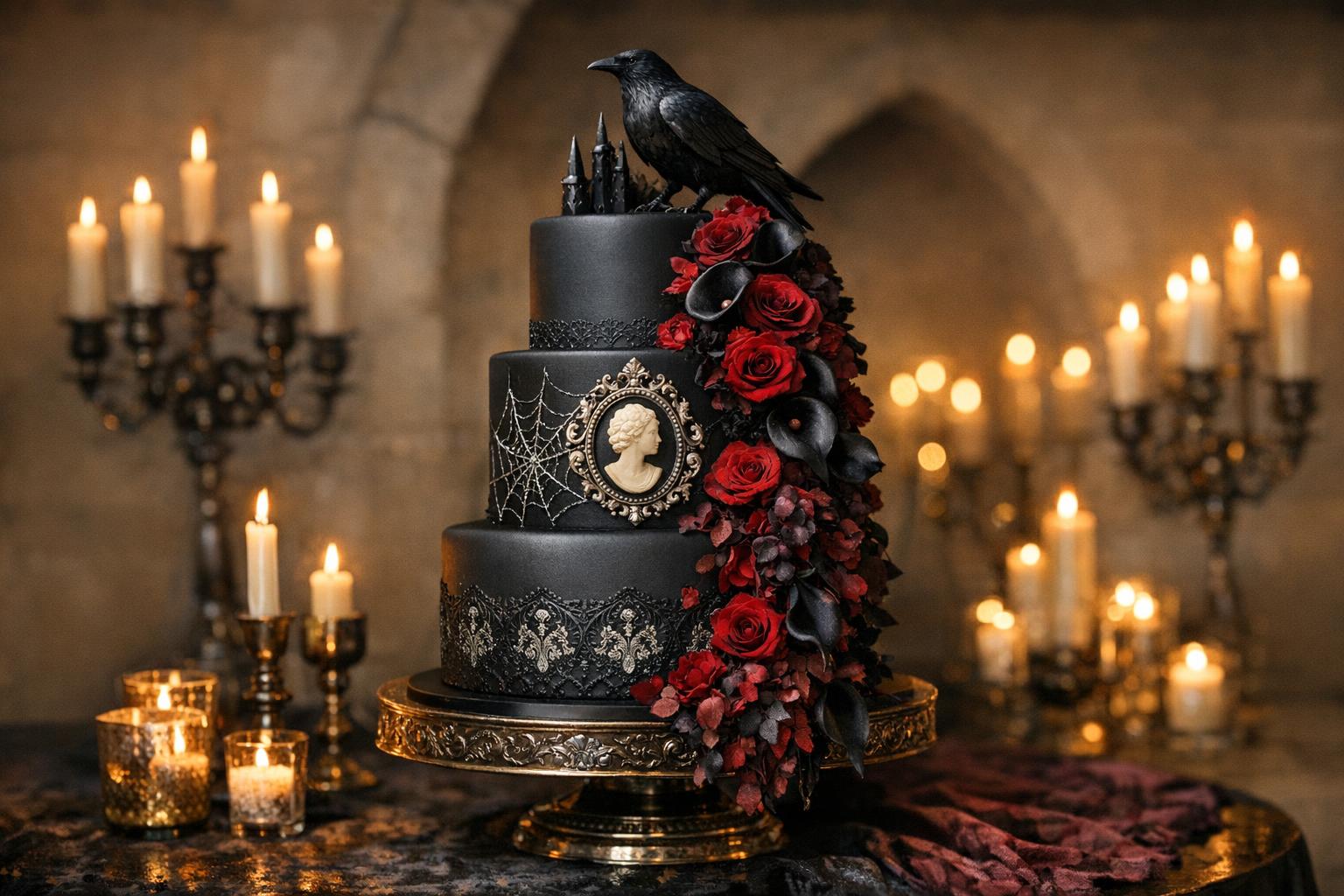
A gothic wedding cake doesn’t arrive quietly. It owns the room the way candlelight changes a stone hallway—soft at the edges, dramatic at the center, and unforgettable in photographs. The look is moody but intentional: deep blacks and charcoal tones, shadowy florals, lace-like patterns, and metallic accents that catch the light like jewelry.
This style lives comfortably in modern weddings and classic venues alike because it’s less about “being dark” and more about curating a visual identity: dark romance with a refined hand. You’ll see it at Halloween-themed weddings, literature-inspired celebrations, and ceremonies that nod to Victorian aesthetics—cameo details, ornate filigree, and a sense of story.
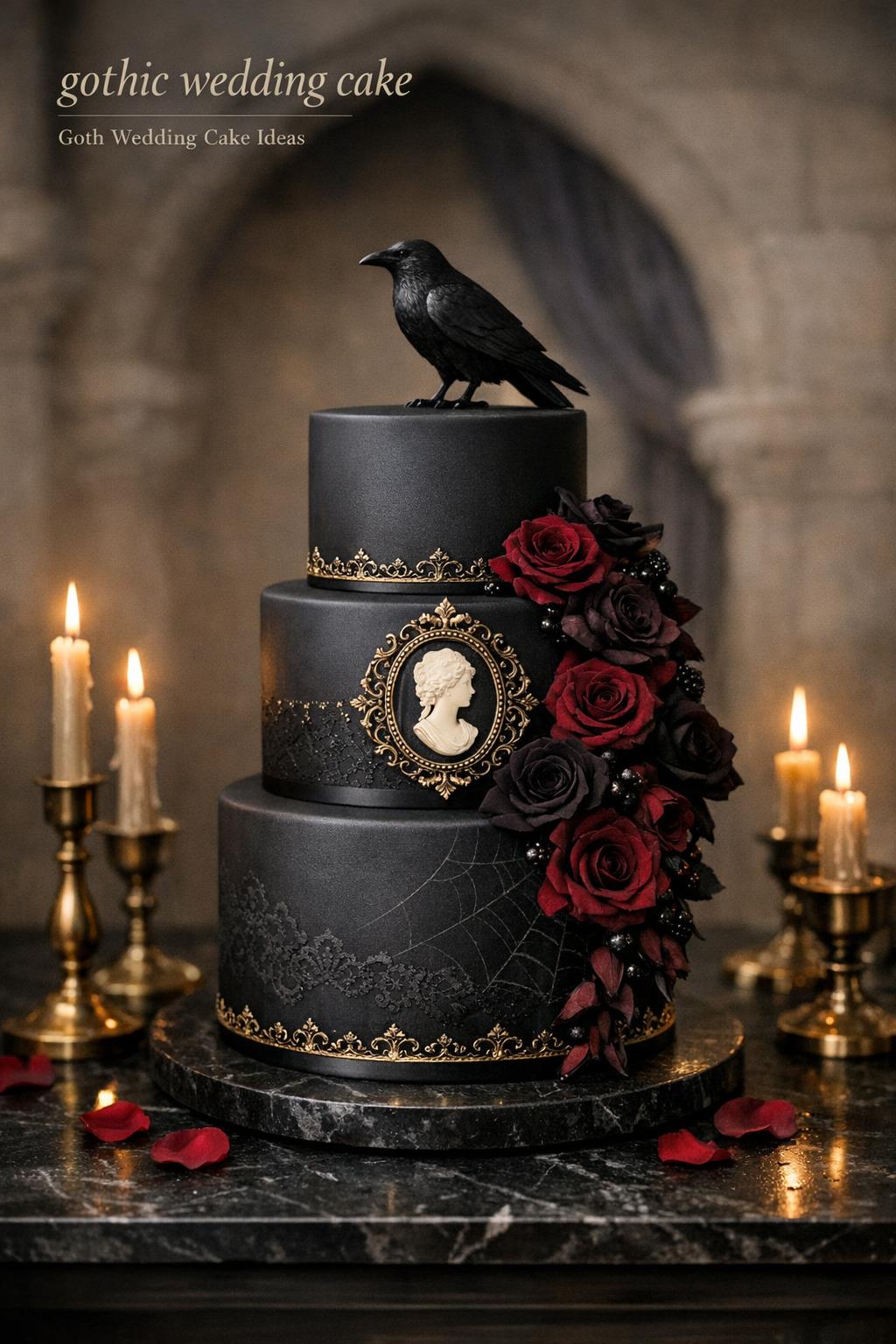
What makes gothic wedding cakes so appealing is how flexible the aesthetic can be. It can be minimal and sleek or wildly decadent. It can lean velvety and matte or glow with gilded edges. And whether you’re commissioning a custom cake from a specialized shop like Party Cakes NYC in New York or collecting goth wedding cake ideas to share with your own bakery, the best results come from treating the cake like an outfit: silhouette, texture, and accessories working together in one cohesive mood.
What defines a gothic wedding cake (and what doesn’t)
In wedding styling terms, a gothic cake is defined by mood, motif, and finish—not by a single color. Yes, black wedding cake designs are common, but the true signature is contrast: delicate lace beside bold slabs of dark fondant, soft moonlit florals against sharp metallic accents, and romantic Victorian echoes paired with modern clean tiers. When people search for gothic wedding cake ideas, they’re often looking for this balance—dramatic without feeling heavy, ornate without becoming chaotic.
Turn wedding inspiration into a plan you can actually follow.
Zarellea brings your guest list, budget, vendors, and day-of details into one shared space — so no beautiful idea gets lost in the shuffle.
“Wedding cake gothic” also doesn’t have to mean a Halloween-only aesthetic. Halloween-themed weddings naturally welcome spider web patterns and raven imagery, but gothic cake wedding styling can be just as elegant for a formal ballroom or an intimate evening reception. Think of gothic as an umbrella mood: dark romance, vintage influence, and bold flair—then choose the motifs that feel true to your story.
A helpful way to evaluate a design is to ask whether the details feel intentional and repeatable across the day. If your invitations, attire, or décor lean ornate and moody, the cake can echo those shapes (lace, filigree, cameo frames). If your overall wedding is modern, the cake can be sleek—black tiers with a single gilded edge or a controlled floral cascade in deep burgundy.
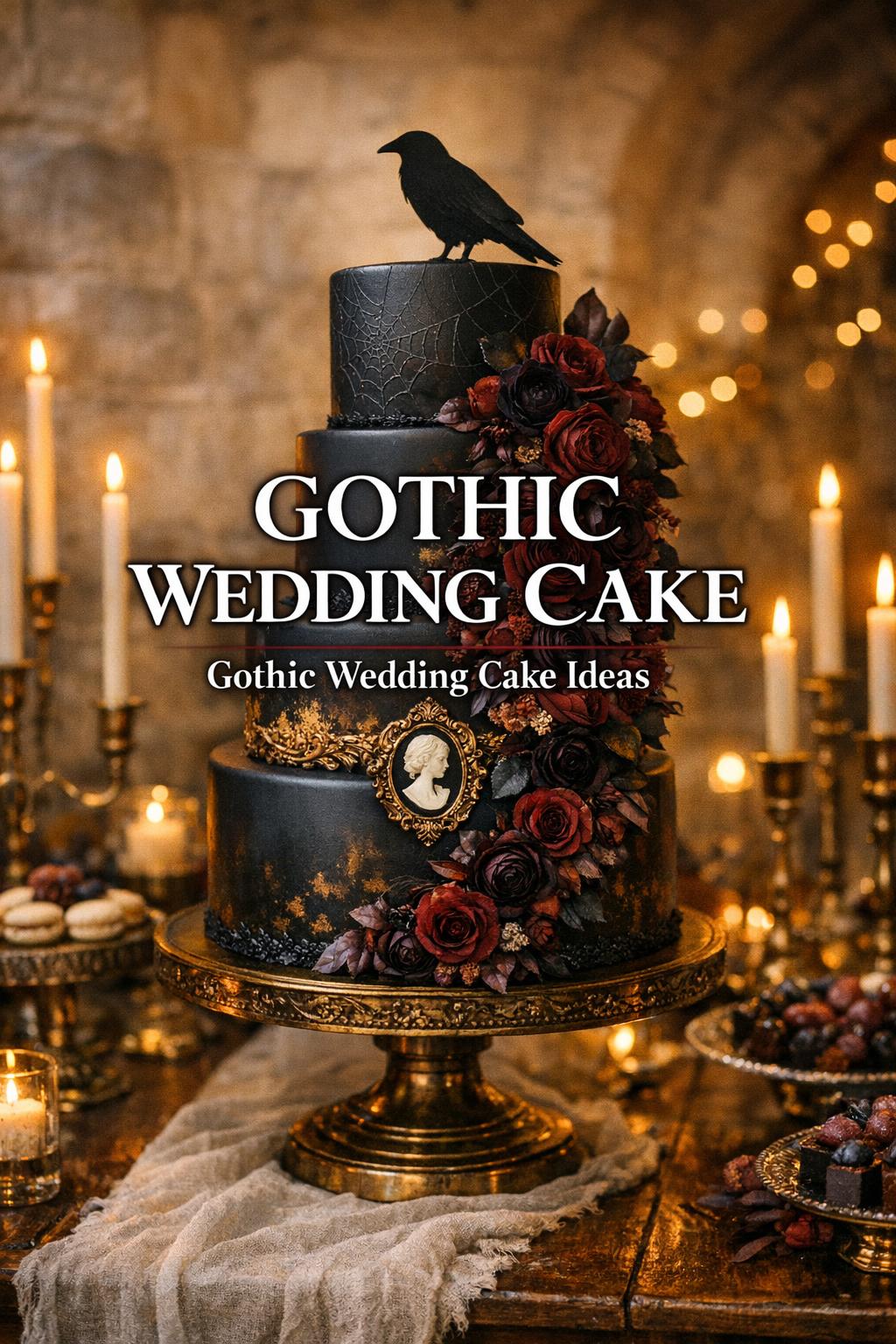
Motif wardrobe: the “key pieces” that make gothic wedding cakes feel authentic
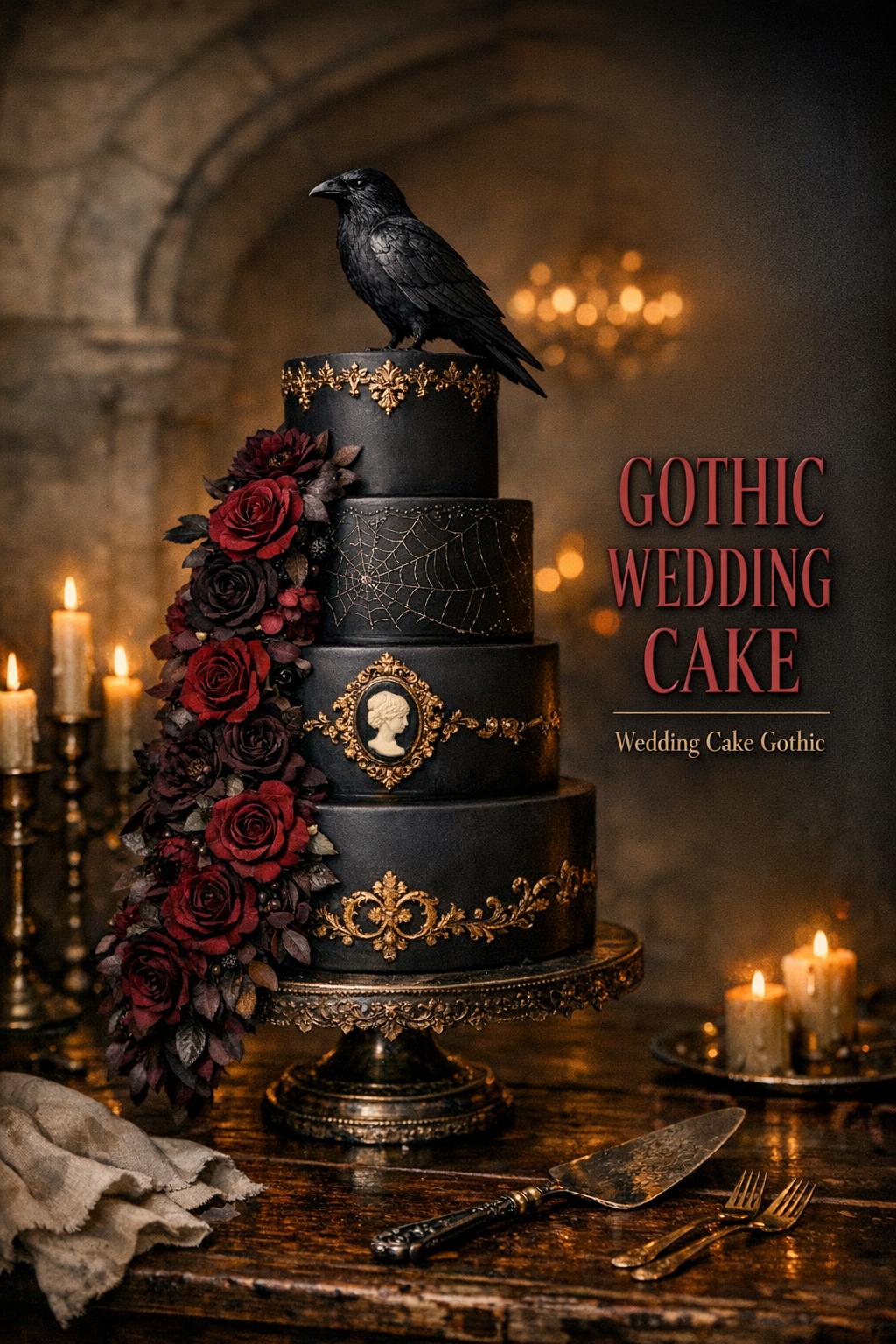
Just like a signature outfit is built from foundational pieces, gothic wedding cakes are built from motif clusters that can be mixed and repeated. Florals, lace, webs, cameos, and ravens appear again and again across gothic wedding cake ideas because they read clearly at a distance and still reward close-up photos with texture and craft.
- Core motifs: florals, lace, spider web patterns, cameos, ravens
- Core palette: black, charcoal, deep burgundy
- Finishing accents: metallic accents in gold, copper, or silver
- Texture cues: velvet fondant texture, matte vs gloss contrast, ornate detailing
The most successful gothic cake designs usually choose one “hero” motif (like a cameo portrait or a black rose cascade) and support it with one or two secondary textures (lace, metallic edges, subtle filigree). This keeps the cake visually dramatic but not overcrowded, which matters when the cake is displayed for hours and photographed from multiple angles.
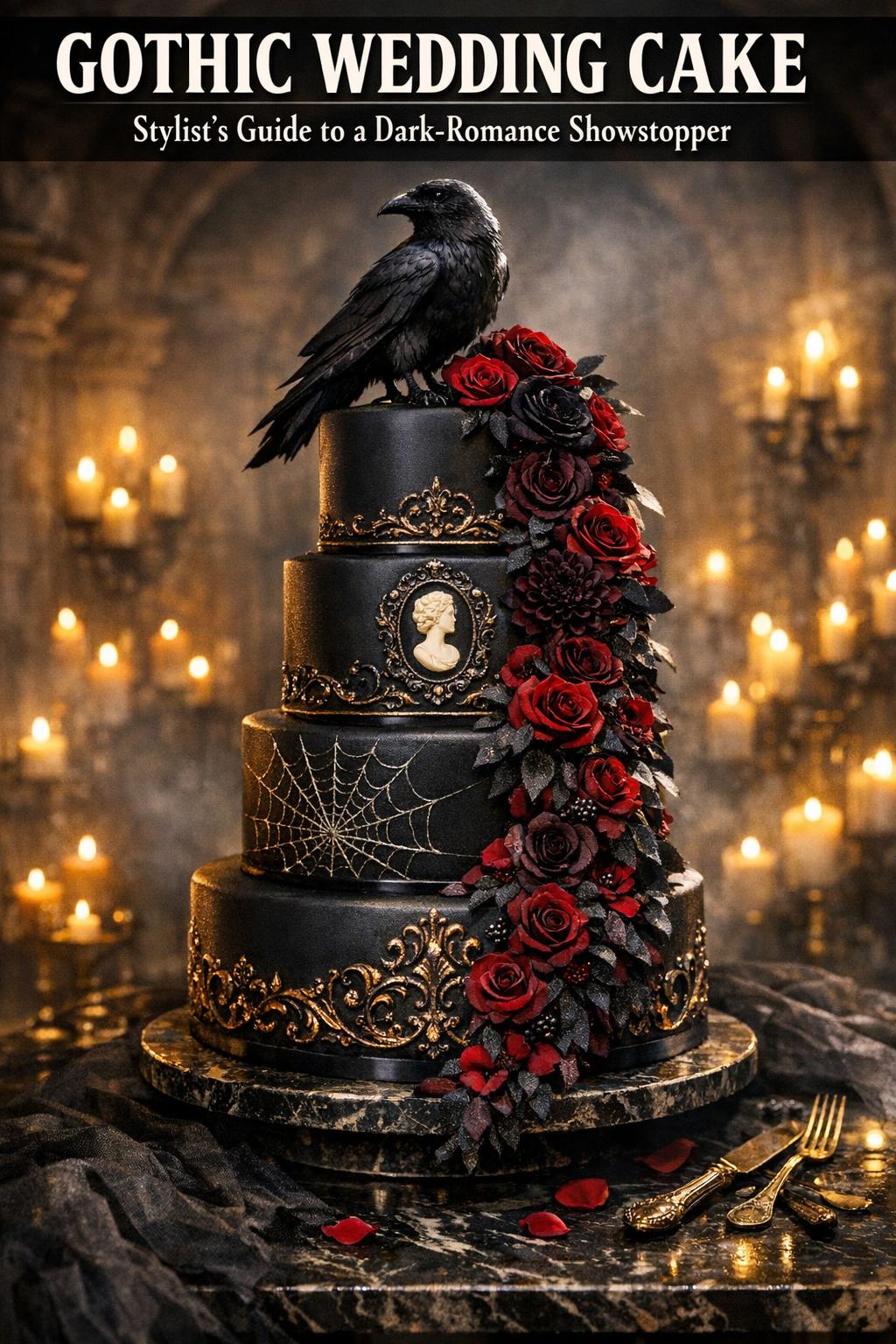
Look: velvet-black minimalism with a single gilded edge
This look is for couples who love the gothic aesthetic but want it tailored—like a perfectly fitted black suit with one piece of heirloom jewelry. The silhouette stays clean and architectural, letting the darkness feel modern rather than theatrical. It’s especially striking in candlelit receptions where the cake reads as a sculptural centerpiece.
Picture smooth black fondant (or a black finish that reads matte and velvety), paired with metallic accents that trace just one seam: a gilded edge, a thin gold line, or a subtle metallic band. The palette stays tight—black, charcoal, and a controlled flash of gold or copper—so the design feels deliberate.
- Key garments (cake equivalent): smooth black tiers, velvet fondant texture, minimalist silhouette
- Accessories: metallic accents (gold/copper/silver), a restrained ornate border
- Best for: formal evenings, modern venues, couples who want “dark romance” without heavy ornament
The styling logic is simple: let texture do the talking. When you keep the motif count low, every finish matters—especially the contrast between matte darkness and reflective metallics. This is where “gothic wedding cakes” can feel both bold and incredibly refined.
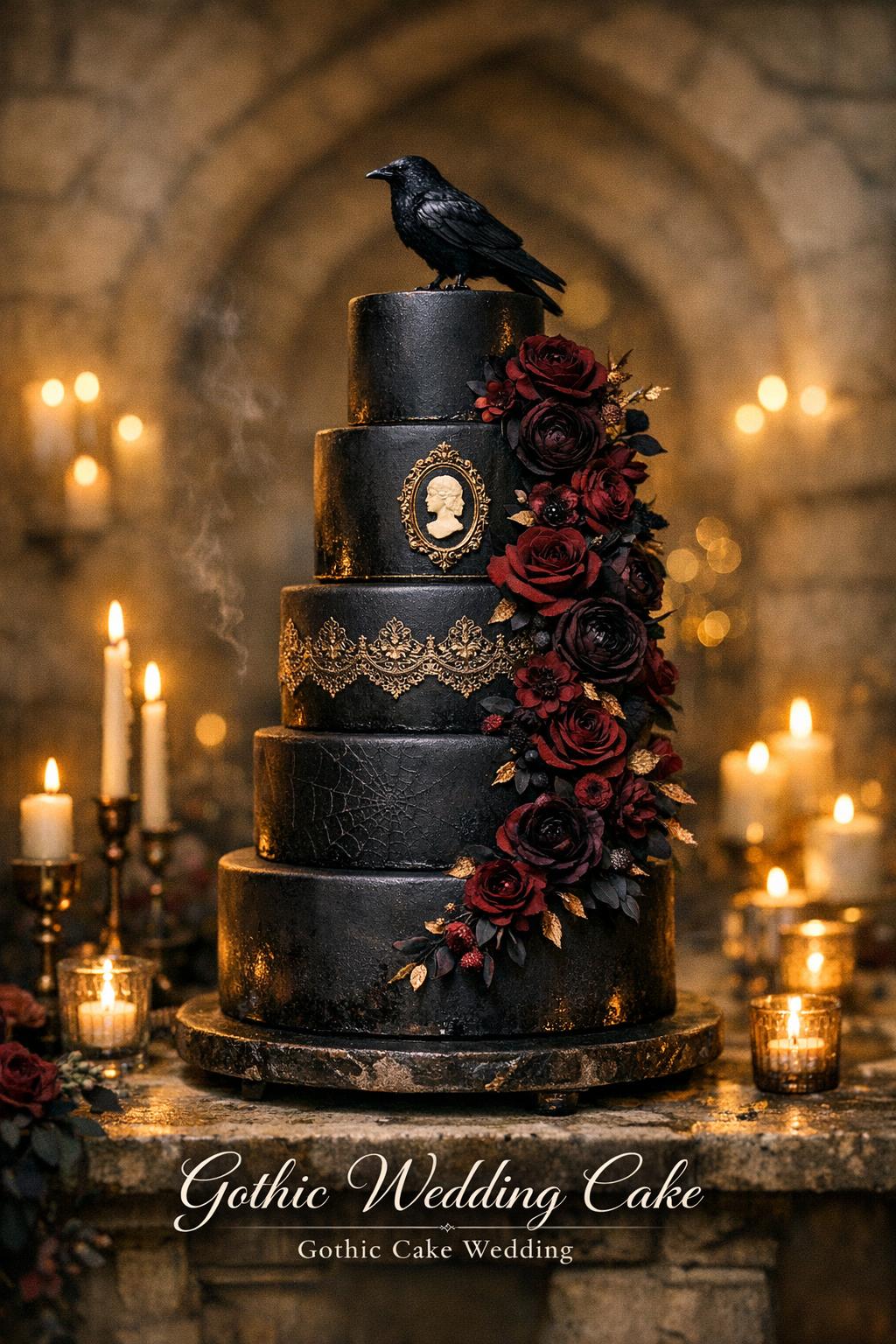
Look: black rose cascade for moonlit garden drama
Some receptions are made for florals: dim lighting, deep bouquets, and that moment when the cake is wheeled in and everyone leans forward. A black rose cascade is a romantic statement that reads instantly as gothic, yet still feels like a wedding—lush, celebratory, and soft around the edges.
In this interpretation, the cake’s silhouette can be classic tiers, but the movement comes from florals spilling downward in a “dark floral cascade.” Deep burgundy blooms, black roses, and moonlit tones create a gradient against a black or charcoal base. The flowers can be sugar florals for a polished, consistent look, and the cascade becomes the focal point rather than adding multiple competing motifs.
- Key garments: dark color palette, floral cascade, classic tier silhouette
- Accessories: subtle metallic accents tucked into floral centers or along edges
- Best for: romantic venues, garden-inspired styling with a gothic twist, evening receptions
This look works because florals naturally soften the intensity of black. If you’re worried a black wedding cake will feel too stark, florals are the most wedding-forward way to keep the mood dark while still feeling inviting.
Style tip: how to keep dark florals from looking flat in photos
When florals are all deep tones, the camera can compress the detail. The fix is contrast through finish: pair matte petals with a slightly reflective base, or add a controlled metallic accent (gold, copper, or silver) sparingly so the cascade has points of light. You’re not adding “sparkle”—you’re creating dimension so the florals read clearly from across the room.
Look: Victorian cameo elegance for a literature-leaning wedding
If your wedding mood feels like a love story with a shadowy chapter—vintage frames, handwritten vows, candlelight, and velvet details—a cameo-inspired cake can feel like a family heirloom made edible. Cameos bring instant Victorian aesthetics: romantic profiles, framed medallions, and ornate borders that echo antique jewelry motifs.
The palette here can stay dark (black or charcoal tiers) while the cameo detail becomes the centerpiece. Victorian cameo details can be repeated once per tier or placed as a single statement on the front, surrounded by filigree or lace-like piping. The overall effect is “dark romance” with a distinctly classic voice—perfect for couples collecting gothic wedding cake ideas for a literary-theme wedding.
- Key garments: cameo portrait detail, ornate framing, vintage-inspired symmetry
- Accessories: lace or filigree patterns, subtle metallic accents for the frame
- Best for: literature-themed weddings, vintage décor, couples drawn to Victorian echoes
This is also one of the most versatile looks to coordinate with the rest of the day. Cameo shapes can be mirrored in stationery, table numbers, or even a reception backdrop, creating a cohesive aesthetic that feels curated rather than themed.
Look: spider web patterns and lace for a Halloween-inspired aisle moment
For couples who want to lean into a Halloween wedding vibe without losing elegance, spider web patterns can be surprisingly delicate. Think of it like lace: an airy pattern that reads romantic when it’s fine-lined, symmetrical, and intentionally placed. In the right execution, web detailing becomes a whisper of the macabre rather than a loud costume note.
A strong approach is to pair one “webbed” tier with a smoother tier above and below, creating a rhythm of texture. Spider web patterns, lace, and filigree sit in the same design family—intricate lines on a dark base. Keep the palette in the gothic classics (black, charcoal, deep burgundy accents), and consider a metallic accent only at the edges so the webwork remains the star.
- Key garments: spider web patterns, lace-like linework, contrast tiers
- Accessories: minimal metallic accents, dark florals used as a single cluster
- Best for: Halloween-themed weddings, evening receptions, dramatic photo styling
This look fits the gothic cake wedding mood because it turns a recognizable motif into texture. It’s less about novelty and more about craftsmanship—fine detail that rewards a close look.
Look: raven-adorned romance for a bold ceremonial centerpiece
Raven imagery is one of the most iconic gothic motifs because it’s instantly symbolic and visually strong. A raven-adorned cake feels like a scene from a romantic story: dark wings, dramatic silhouette, and an atmosphere that suits candlelit vows and late-night dancing. It’s also a natural fit for couples who want their cake to feel like a statement piece, not just dessert.
To keep the design elegant, treat the raven as a single focal sculpture or topper detail rather than repeating it everywhere. Pair raven styling with a restrained supporting cast—perhaps a few dark florals, a subtle lace tier, or metallic accents that echo the sheen of feathers. This approach protects the cake from looking cluttered while still delivering the drama people expect when searching for goth wedding cake ideas with ravens.
- Key garments: raven motif as focal point, dark palette foundation
- Accessories: lace or filigree tier, metallic accents used sparingly
- Best for: dramatic ceremonies, literature-themed weddings, couples who want a strong motif identity
The styling insight: give the raven “space” on the cake. Negative space—clean frosting or fondant around the centerpiece—makes the motif look more intentional and more premium in photos.
Look: ornate metallic accents for decadent, dramatic grandeur
Metallic accents are the quickest way to take a dark cake from moody to regal. This look is pure decadence—like candlelight reflected in antique mirrors. A gilded gothic wedding cake can feel ceremonial in the best way, especially when the reception styling includes warm lighting and deep florals.
Gold, copper, or silver detailing can appear as gilded edges, ornate baroque-style framing around a cameo, or thin metallic lines that highlight tier shapes. The key is intention: metallics should guide the eye to the design’s structure, not compete with it. Pair metallic accents with a dark color palette so the shine feels like jewelry on a black outfit—noticeable, but not noisy.
- Key garments: dark base tiers, structured silhouette, ornate detailing
- Accessories: metallic accents (gold/copper/silver), gilded edges
- Best for: formal receptions, dramatic lighting, couples who love opulence
This is also a flexible look for wedding cake gothic styling because you can scale it. A minimalist cake can carry one gilded edge; a maximalist cake can layer metallic accents with lace, filigree, and florals—so long as one motif remains the “lead.”
How to choose your gothic wedding cake motifs like a stylist
Most decision stress comes from trying to include every beautiful detail at once: ravens, webs, florals, cameos, metallics, velvet textures. The result can feel visually crowded, especially across multiple tiers. A calmer approach is to treat your cake like a complete outfit: one main statement, one texture, one accent.
Start with your “statement piece”—the element guests will remember from across the room. That might be a black rose cascade, a cameo portrait, spider web patterns, or a raven-adorned silhouette. Then choose your supporting elements based on what you want the cake to feel like: romantic (florals), vintage (cameos and filigree), delicate (lace), or grand (metallic accents).
- Pick 1 hero motif: raven imagery, cameo details, spider web patterns, or florals
- Add 1 primary texture: lace, filigree, velvet fondant texture, or smooth matte tiers
- Finish with 1 accent: metallic accents in gold/copper/silver or a deep burgundy color note
This framework makes gothic wedding cake ideas easier to execute with real bakeries and real timelines. It also makes your inspiration clearer when you share references with a cake designer: you’re explaining priorities, not presenting a collage of unrelated details.
Techniques that create “gothic wow” (even when the design is simple)
Behind every memorable gothic wedding cake is the quiet work of texture and finish. Many top ideas lean on sugar craft techniques—lace effects, filigree linework, sculpted motifs, and carefully controlled color palettes. Even if you’re not doing a DIY cake, knowing the technique language helps you communicate with your bakery and understand what drives cost and complexity.
Sugar craft techniques: lace, filigree, and sculpted motifs
Lace and filigree details bring drama without bulk; they read as delicate, romantic, and gothic all at once. Sculpted motifs—like a raven-adorned focal piece or dimensional cameo framing—add narrative weight. These are the techniques that elevate “goth wedding cake ideas” from a color choice into a true design direction.
In practical terms, intricate linework requires time and a steady hand, which is why it’s smart to place these details strategically. One statement tier with spider web patterns or lace can have more impact than repeating the same detailed work across every tier.
Color and finish: matte, gloss, and the power of a dark palette
Dark palettes—black, charcoal, deep burgundy—carry the gothic identity instantly, but finish determines whether the cake feels modern or vintage. Matte surfaces can feel velvety and editorial; glossier finishes read more dramatic and theatrical under lighting. Pairing the two creates depth, especially when you add metallic accents as a final layer.
One experienced planning note: dark finishes show fingerprints and handling marks more easily than light ones. If your venue is warm or the cake will be moved multiple times (from prep area to display to cutting), it’s worth discussing handling and placement with your bakery so the finish stays pristine through the reception timeline.
Real-world inspiration sources: galleries, list-style ideas, and client portfolios
When you’re collecting gothic wedding cake ideas, you’ll notice most inspiration is presented in one of three ways: gallery-style collections of gothic cake designs, listicles that break down individual motifs (raven-adorned cake, Victorian cameo details, spider web patterns, dark floral cascade), and client portfolios from cake shops that specialize in themed work.
Each format serves a different planning need. Galleries are perfect when you’re still discovering your style identity. Motif-first lists help you name what you like—“I want lace and metallic accents, but no webs.” Portfolios (like the themed gothic wedding cake category from Party Cakes NYC in New York) help you evaluate execution and customization options, which matters if you’re ready to commission rather than just browse.
If you’re building a mood board, try grouping images by motif instead of saving everything into one folder. That small organization step makes it easier to communicate with your bakery: you can show a cameo example, a floral example, and a finish example, and ask for one cohesive design that blends them.
Commissioning a gothic wedding cake: a calm, practical guide
Commissioning gothic wedding cakes is both creative and logistical. You’re asking for a centerpiece that must look perfect, travel safely, hold up through your event, and still taste like a celebration. The more intricate your motifs—lace, filigree, sculpted ravens, layered metallic accents—the more important it is to discuss constraints early.
Questions to ask your bakery (so your inspiration becomes a real design)
Bring your goth wedding cake ideas to life by asking clear, design-forward questions. You’re not just buying a cake—you’re commissioning an art piece with a timeline.
- Which motif will be the focal point: ravens, cameos, spider web patterns, lace, or florals?
- Can you create a velvet fondant texture or a matte finish that reads “soft” rather than shiny black?
- How will metallic accents be applied—thin lines, gilded edges, or framed details—and how will they photograph in warm lighting?
- What parts of the design are most time-intensive (ornate detailing, sugar florals, sculpted motifs), and where can we simplify if needed?
- Do you offer custom options and can you show client favorites in this theme so we can align on style?
These questions also protect your aesthetic. If your venue styling is romantic and refined, you can steer away from anything that reads too novelty and keep the “gothic cake wedding” mood elegant and intentional.
Budgeting for dark romance: what drives cost in gothic designs
In real-world pricing conversations, the biggest cost drivers tend to be labor and detail. Intricate lace or filigree work across multiple tiers, sculpted motifs like ravens, and large sugar floral cascades require time and expertise. Metallic accents can also increase complexity when they’re applied in ornate patterns rather than as a single edge. If you need to manage budget, keep your hero motif bold and your supporting details selective—one statement tier with heavy detail often looks more high-end than spreading small details everywhere.
Tips for making gothic wedding cake ideas feel cohesive with the rest of your wedding
Because a gothic wedding cake is such a visual anchor, it can either elevate the entire design story—or feel disconnected if the rest of the day is styled differently. Cohesion doesn’t mean everything must be black; it means the shapes, finishes, and mood repeat gently across the day.
- Match shapes, not just colors: echo cameo frames, lace patterns, or filigree motifs in stationery or décor details.
- Choose one metallic family: gold, copper, or silver; consistency reads intentional in photos.
- Plan your lighting moment: dark palettes love candlelight and warm reception lighting; position the cake where metallic accents will catch the glow.
- Decide how “themed” you want to go: Halloween weddings can carry webs and ravens easily, while modern venues may prefer minimal black tiers with subtle gilding.
And don’t forget the emotional side: your cake-cutting moment will be photographed closely. If the design includes intricate spider web patterns or Victorian cameo details, ask your photographer (or your planner) to ensure the cake is staged so those details face the camera—small planning, big payoff.
A quick decoder: choosing the right gothic cake wedding look for your setting
One of the most helpful ways to choose between gothic wedding cake ideas is to think about where the cake will live during the day: bright daylight, indoor ambient light, or deep evening candlelight. Dark palettes read differently in each situation, and certain motifs show up better depending on distance and lighting.
In bright spaces, matte black tiers can look editorial but may appear visually flat without texture—this is where lace, filigree, or velvet fondant texture adds dimension. In low light, metallic accents become powerful; gilded edges and ornate detailing catch the glow and keep the cake from disappearing into the background. For intimate venues, a single cameo or raven focal point can feel personal and story-driven, while large spaces often benefit from bold florals or cascading shapes that read from across the room.
Common styling mistakes to avoid with wedding cake gothic designs
Gothic wedding cakes are visually rich, which means it’s easy to over-style. The goal is to create drama with clarity—guests should understand the design at a glance and discover details up close. When the design gets muddy, it’s usually because too many motifs are competing for attention, or because the finishes don’t have enough contrast.
- Using every motif at once: ravens, webs, lace, florals, cameos, and metallics all together can overwhelm the silhouette.
- No hierarchy: without a hero motif, the cake reads like a collage instead of a curated concept.
- Too much shine: if the entire cake is glossy and metallic, details can blur under lighting; mix matte and reflective finishes.
- Ignoring the display environment: dark palettes need thoughtful placement, especially for photos and candlelit ambiance.
A reliable fix is to simplify: choose one signature motif, then repeat one supporting texture across the design. That’s how “gothic wedding cakes” keep their romance and remain readable in every photo—from wide room shots to close-ups of the cake-cutting.
How to recreate the look when you’re starting from inspiration only
If you’ve saved a dozen gothic cake designs but can’t describe what you want, focus on three decisions and write them down before you talk to a bakery: your palette (black/charcoal/deep burgundy), your hero motif (raven, cameo, spider web patterns, or florals), and your finish (matte/velvet texture vs glossier drama). This turns vague inspiration into an actionable brief—something any professional can respond to with a sketch or proposal.
It also helps to be honest about your comfort level with “spooky.” Some couples want a nod to Halloween; others want pure dark romance with no literal references. There’s no wrong answer—only a mismatch between expectation and execution. Naming your boundary early ensures your gothic cake wedding feels like you, not like a theme you’re borrowing.
FAQ
What makes a gothic wedding cake different from a black wedding cake?
A gothic wedding cake is defined by mood, motifs, and finishes—often combining a dark color palette with details like lace, filigree, spider web patterns, cameo styling, ravens, florals, and metallic accents—while a black wedding cake can be simply a color choice without the broader dark romance or Victorian-inspired design language.
How do I choose between ravens, cameos, webs, and florals for my gothic cake wedding style?
Pick one hero motif based on the story you want to tell (raven imagery for bold symbolism, Victorian cameo details for vintage romance, spider web patterns for Halloween-inspired delicacy, or a dark floral cascade for lush romance), then support it with one primary texture (like lace or velvet fondant texture) and a restrained metallic accent so the design stays cohesive.
Are gothic wedding cake ideas only appropriate for Halloween weddings?
No—Halloween-themed weddings are a natural fit for webs and macabre elegance, but gothic wedding cake ideas can be styled for many settings by emphasizing dark romance, Victorian echoes, ornate detailing, and controlled metallic accents rather than overtly seasonal symbols.
What metallic accents work best on gothic wedding cakes?
Gold, copper, and silver are the most common metallic accents, and they work best when used intentionally—such as gilded edges, a framed cameo detail, or thin highlight lines—because the contrast against black or charcoal tiers creates dimension without overwhelming intricate lace, filigree, or floral motifs.
How can I keep wedding cake gothic designs from looking too busy?
Create hierarchy by choosing a single focal point (like a raven-adorned centerpiece, cameo portrait, or black rose cascade) and limiting the rest of the cake to one supporting texture and one accent; this approach keeps details readable at a distance and more elegant in photos.
What should I ask a bakery when commissioning gothic wedding cakes?
Ask which motif will be the focal point, whether they can achieve your preferred finish (matte, velvet-like texture, or gloss), how they apply metallic accents, what custom options they recommend based on client favorites, and which elements are most labor-intensive so you can scale the design up or down while keeping the gothic aesthetic intact.
Is it better to use lace or spider web patterns on a gothic wedding cake?
Lace and spider web patterns can create a similarly delicate effect, but lace tends to read more classic-romantic while webs feel more Halloween-leaning; many couples choose one statement tier with the chosen pattern and keep other tiers smoother so the overall silhouette stays refined.
How do I make dark florals work on a gothic wedding cake without losing detail?
Use finish contrast and selective highlights: pairing matte petals with a slightly different base finish and adding small metallic accents can prevent deep burgundy and black roses from blending together, helping the floral cascade look dimensional under reception lighting and in photographs.
Can a cake shop like Party Cakes NYC handle a themed gothic wedding cake?
Specialized shops that present themed categories—such as Party Cakes NYC in New York—often emphasize custom options, client favorites, and portfolio-style examples, which can be especially helpful when you want a gothic wedding cake that feels tailored to your motifs, color palette, and overall wedding mood.