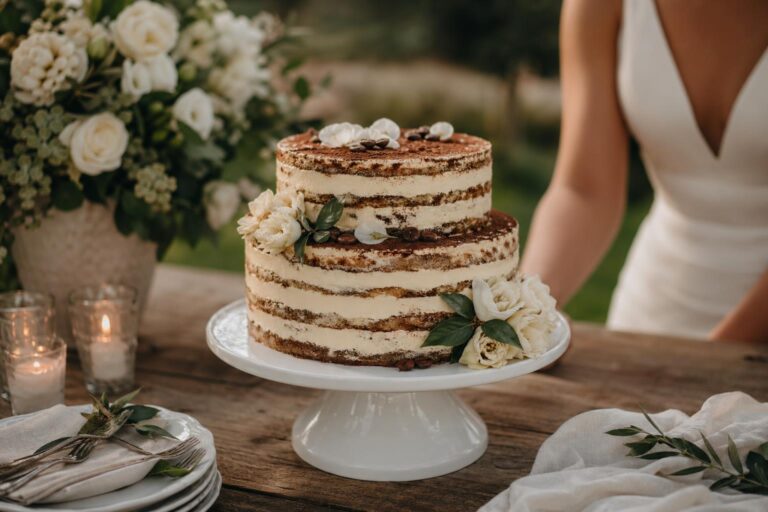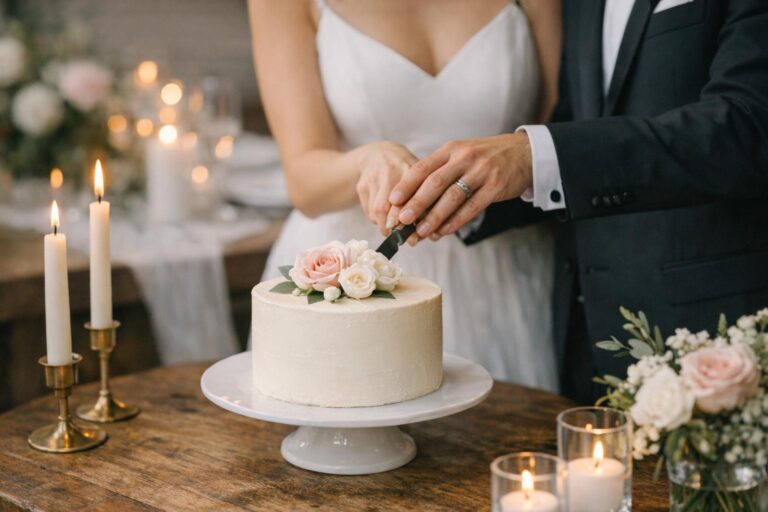
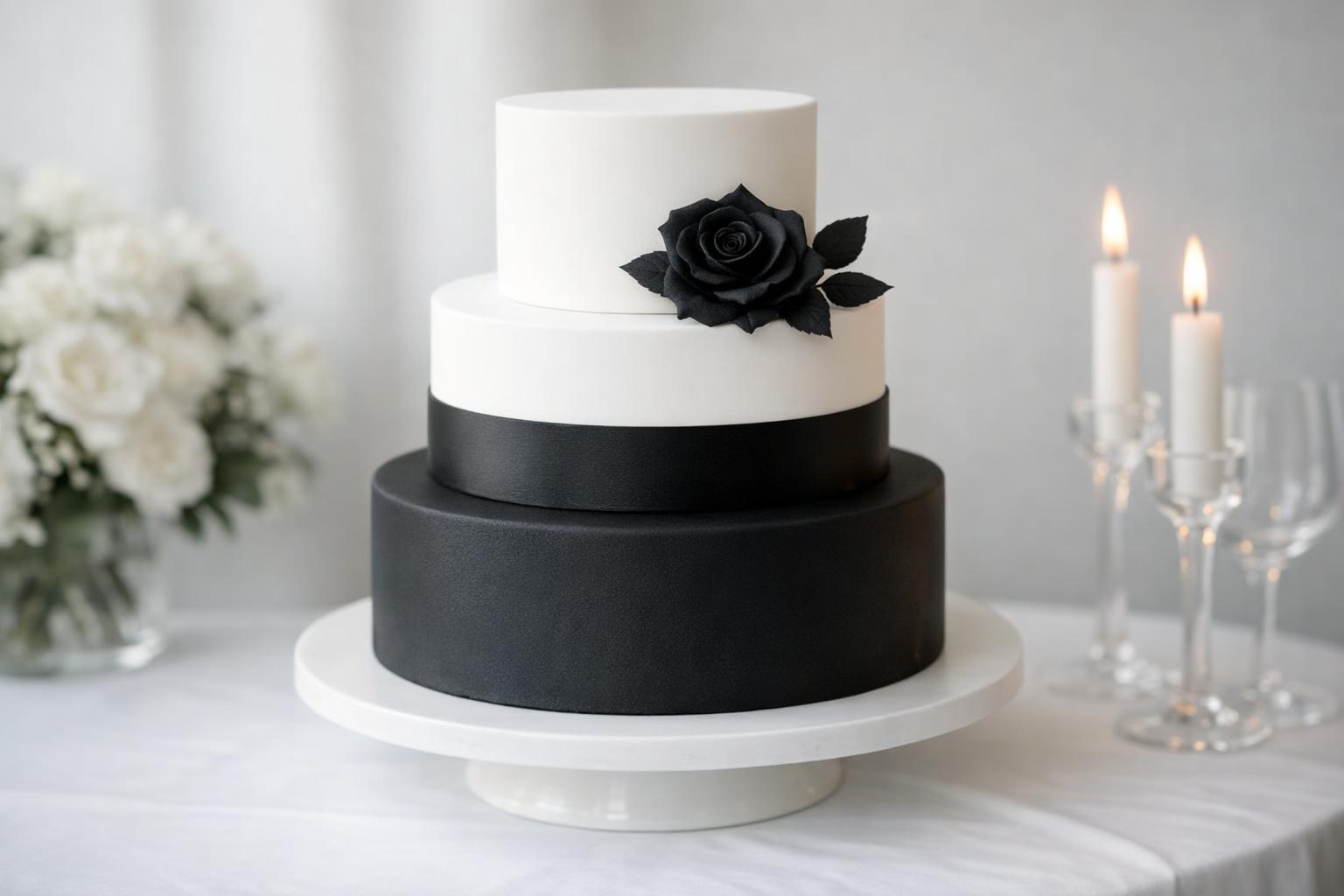
Black and White Wedding Cake: Sleek, Romantic, Camera-Ready Style
A black and white wedding cake sounds simple—until you have to make it feel like you
There’s a moment in wedding planning when you realize the cake isn’t “just dessert.” It sits in the room like a centerpiece, it appears in photos, and it quietly tells guests what kind of celebration they’re in. That’s why a black and white wedding cake can feel both thrilling and intimidating: the palette is iconic, but the line between timeless and too stark can be surprisingly thin.
Couples often choose black and white because it feels instantly elevated—especially for formal receptions, modern venues, and evenings that lean into a black-tie mood. Yet the styling challenge is real: How do you make something so high-contrast look romantic? How do you keep it cohesive with florals, linens, attire, and lighting without turning the cake into a graphic statement that overwhelms everything else?
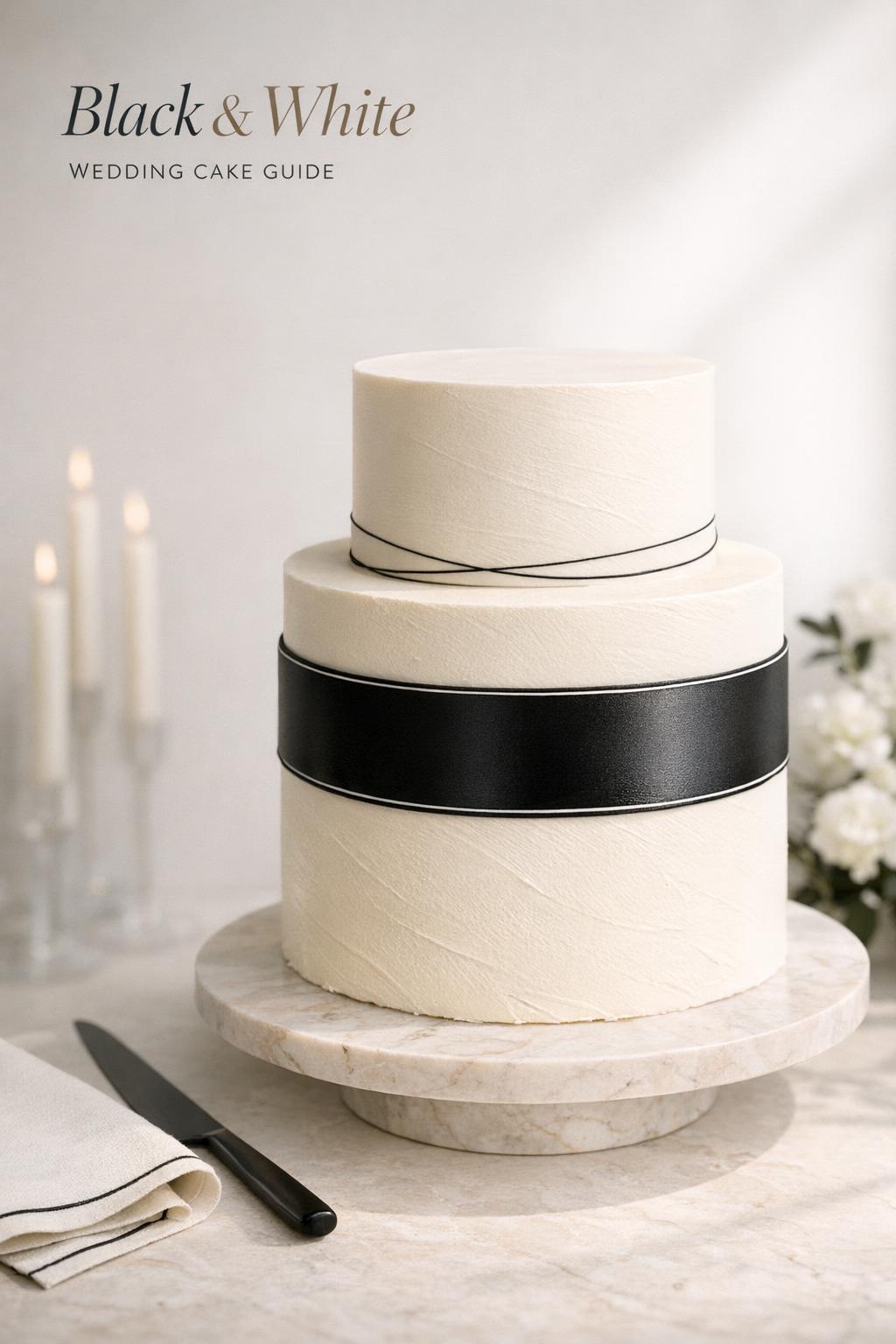
This problem-solving fashion guide approaches the cake the way a stylist approaches an outfit: by balancing contrast, texture, proportion, and “occasion-appropriateness.” You’ll get clear principles and practical “wedding cake ideas black and white” couples can actually use, whether you’re dreaming of a black tie wedding cake moment or simply want black and white wedding cake ideas that feel warm, celebratory, and unmistakably yours.
Understanding the styling challenge: high contrast, high expectations
Black and white is a visual power couple. It reads clean and confident, but it also magnifies every decision—edges, symmetry, and placement become more noticeable than they would in softer palettes. If a white-on-white cake can hide a slightly uneven detail in soft light, black against white does the opposite: it spotlights the design.
Turn wedding inspiration into a plan you can actually follow.
Zarellea brings your guest list, budget, vendors, and day-of details into one shared space — so no beautiful idea gets lost in the shuffle.
There’s also the “room relationship” to consider. A black and white wedding cake doesn’t live in isolation; it lives on a cake table, under venue lighting, surrounded by décor. In bright daylight it can feel crisp and editorial; in dim reception lighting it can look dramatic and moody. Neither outcome is wrong, but it’s easy to accidentally pick a design that feels out of sync with the atmosphere you’re trying to create.
Finally, there’s practicality. High-contrast finishes often rely on smooth surfaces, sharp lines, and deliberate negative space. That can require careful handling, thoughtful placement, and an understanding of how your cake will be cut and served without the design looking “disturbed” too early in the evening.
Key dressing principles—applied to cakes: the style logic that keeps black and white elegant
Principle 1: Decide whether white or black is the “base”
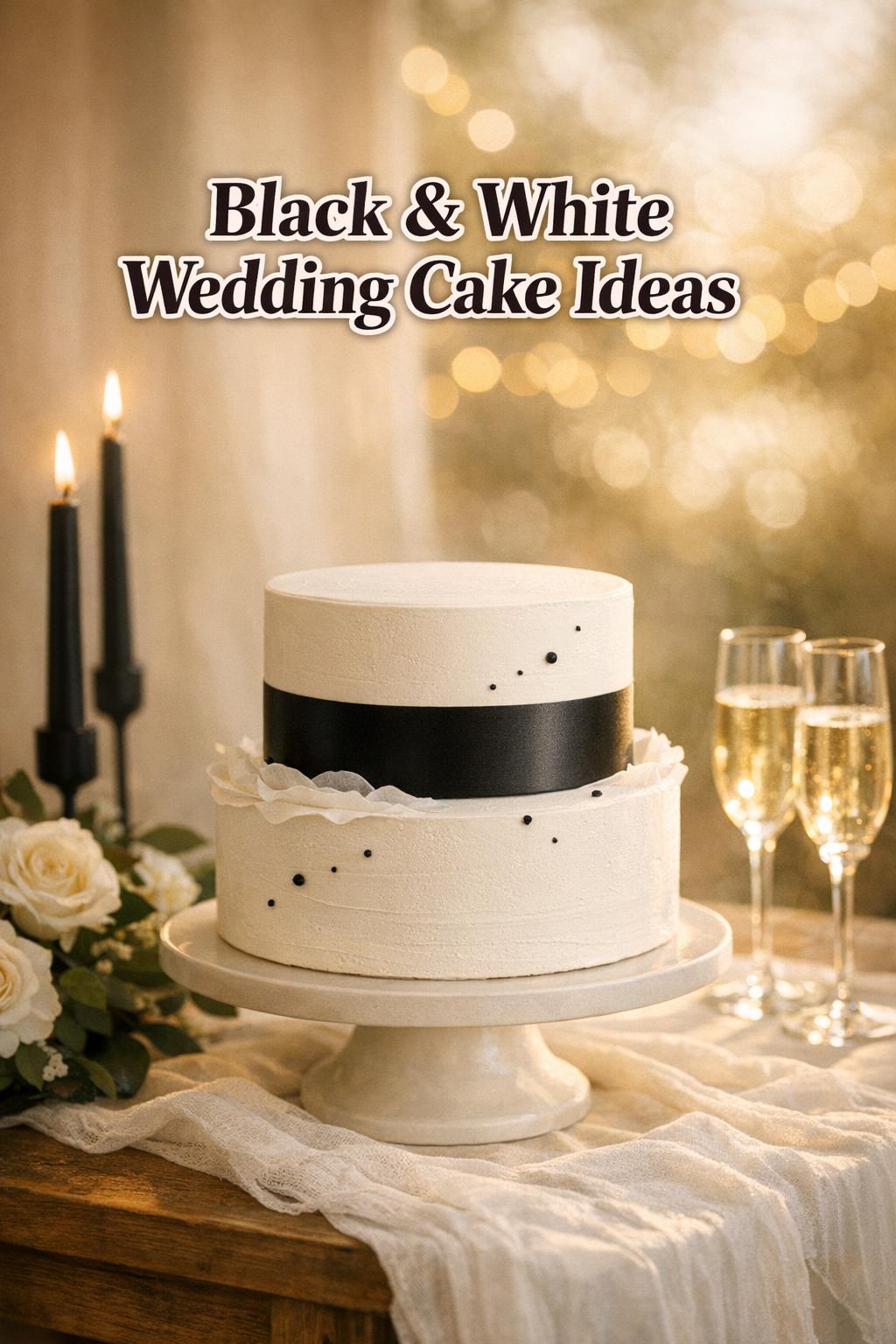
In styling, your base color determines the mood. The same is true here. A white-forward cake with black accents tends to feel airy, classic, and romantic. A black-forward cake with white accents leans modern, evening-ready, and fashion-forward. Neither is “more correct”—but choosing your base early prevents the design from becoming a 50/50 checkerboard when what you wanted was refined contrast.
Principle 2: Use texture to soften the contrast
Black and white can be visually “loud” without texture. Think of texture as the equivalent of a fabric choice: satin feels different than lace, even in the same color. On a cake, texture helps black feel less harsh and white feel less flat, creating dimension that reads romantic rather than rigid.
Principle 3: Keep the focal point intentional (and photo-friendly)
Every great look has a focal point: a neckline, a sleeve, a silhouette. A black and white wedding cake needs the same clarity. Decide where the eye should land—an accent tier, a bold pattern, a dramatic top detail—and let the rest support it. This is especially important if your cake will be photographed from multiple angles throughout the night.
Principle 4: Match formality to the celebration
A black tie wedding cake isn’t just about adding black; it’s about the overall polish. Crisp lines, controlled contrast, and restrained details tend to read formal. Softer shapes and more organic placement read relaxed. If your wedding is black-tie optional, a design that nods to formality without feeling “museum perfect” often strikes the most comfortable balance for guests and for the vibe.
Outfit solutions—translated into black and white wedding cake ideas that actually work
Below are “outfit solutions” for your cake—each one a practical design direction that helps you solve a specific styling tension. Think of them as wearable formulas: easy to visualize, easy to communicate, and flexible enough to adapt to your venue and your planning constraints.
Outfit solution: the classic black-tie balance (white base, black punctuation)
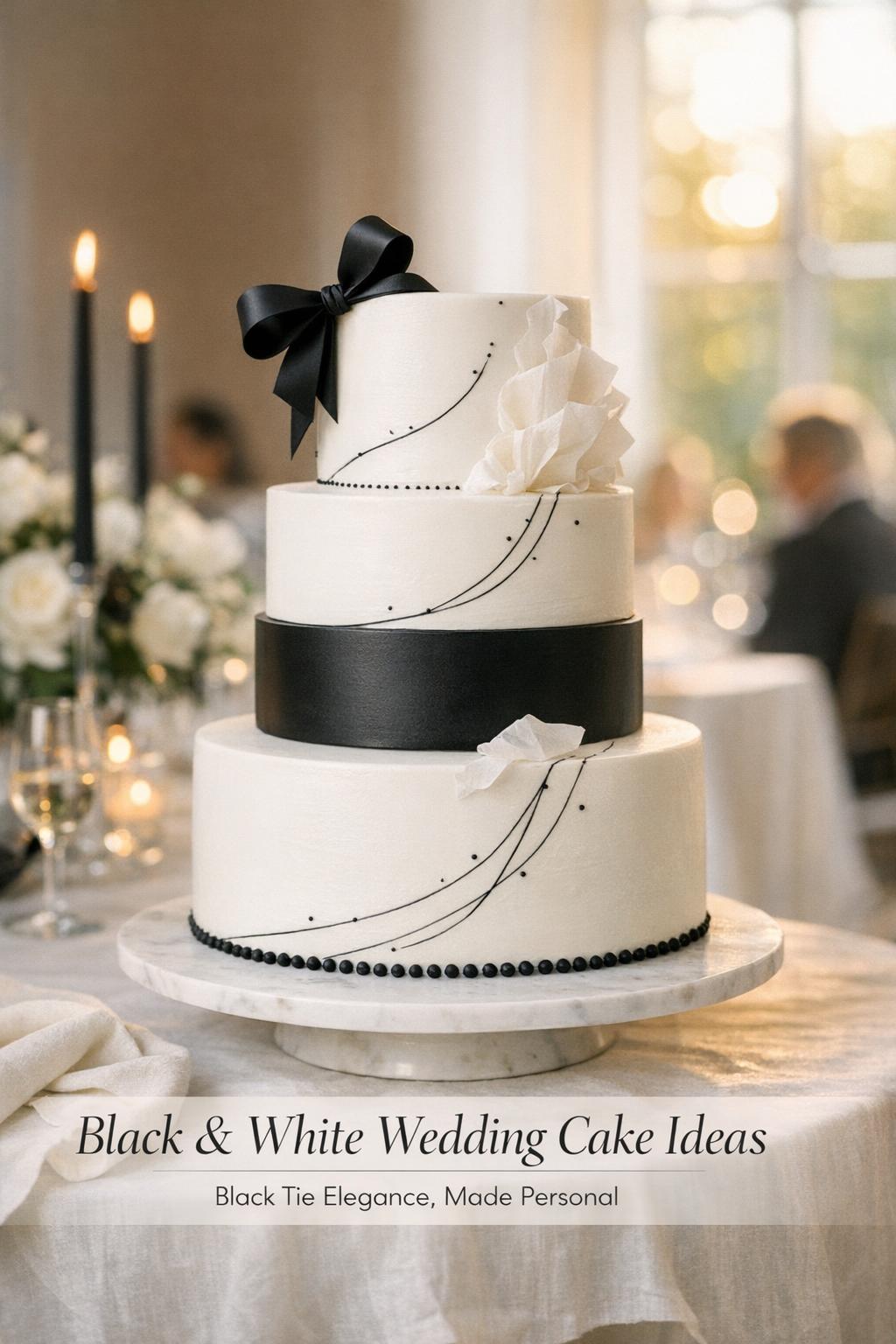
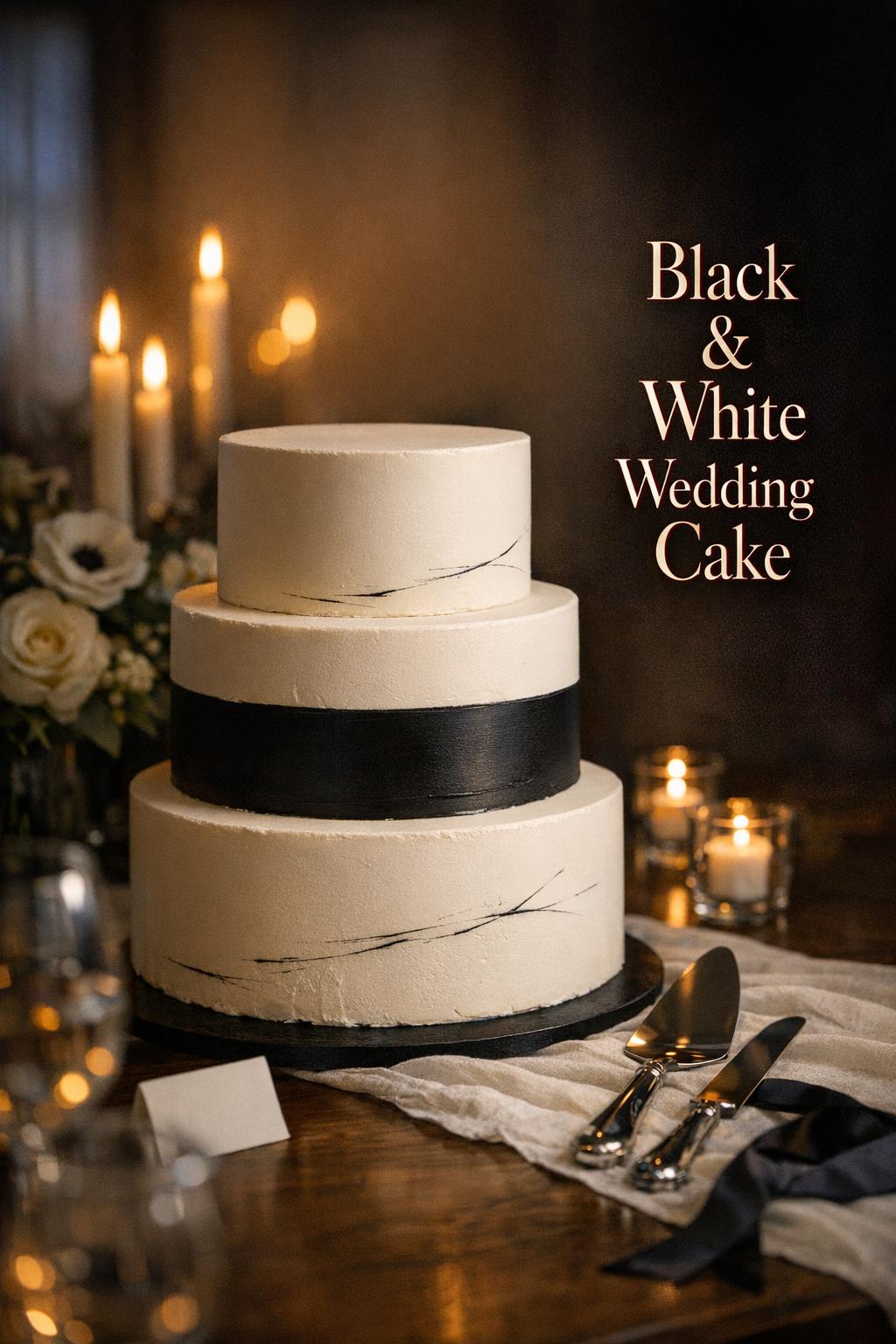
If you want the elegance of black and white without the risk of it feeling severe, start with a white-forward cake and add black as punctuation—like a tuxedo bow tie rather than a full black suit. This approach is especially helpful when the rest of your wedding design is romantic (soft florals, candlelight, airy textiles) but you still want a confident, formal statement on the cake table.
Styling logic: the white base keeps the cake bright in photos and cohesive with traditional wedding elements, while black accents communicate intention and sophistication. It’s also more forgiving if the room lighting is warm or dim, because the cake still reads clearly.
- Best for: black-tie receptions, formal ballrooms, evening ceremonies, classic bridal styling
- What to prioritize: clean placement of black details, negative space, and symmetry
- Watch-out: too many small black elements can look busy; fewer, stronger accents read more formal
Outfit solution: the fashion-editorial statement (black base, white contrast)
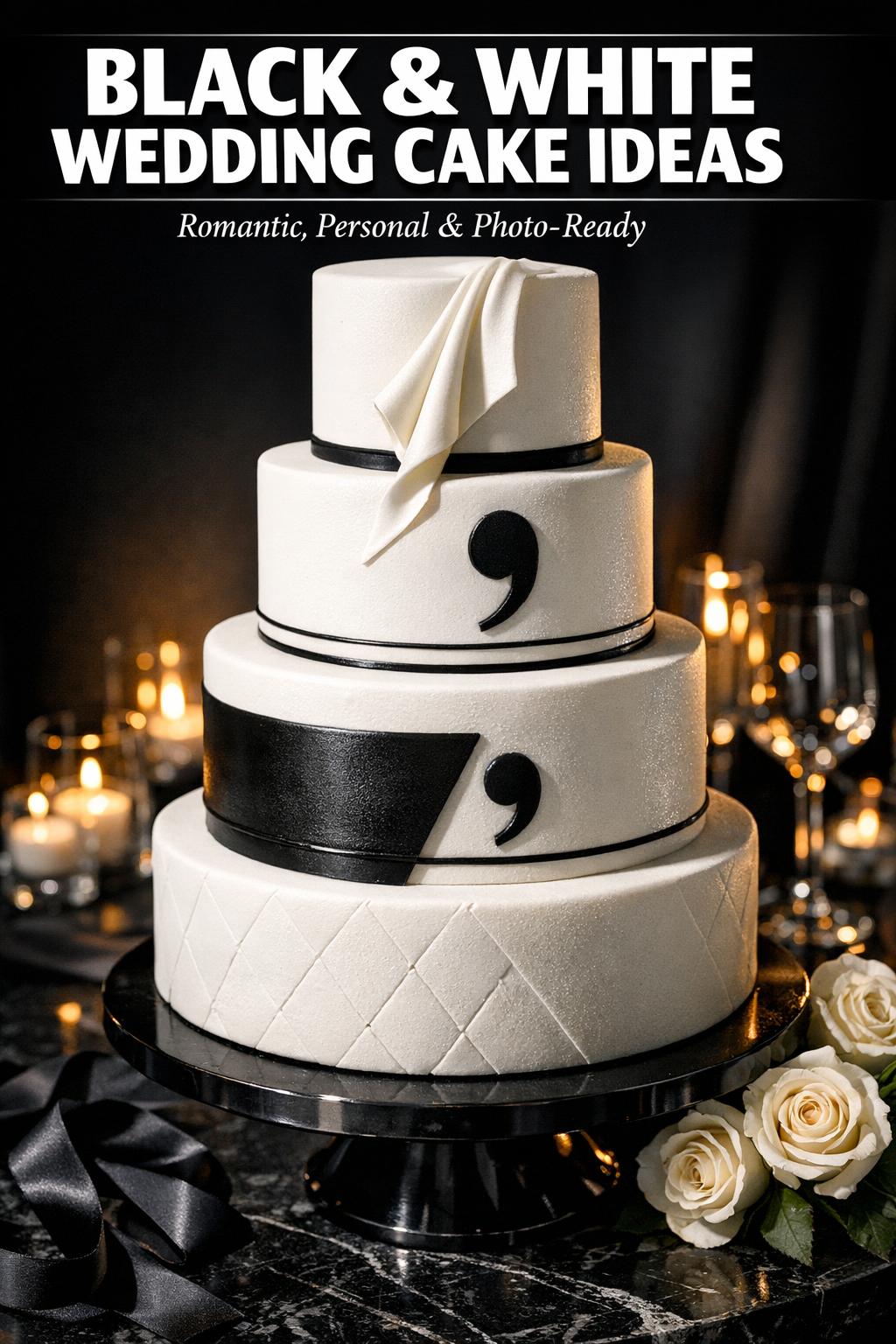
When you want your black and white wedding cake to feel like a design moment—modern, sleek, and unmistakably “evening”—a black base with controlled white details delivers. This is the cake equivalent of a perfectly tailored black gown: dramatic, confident, and made for candlelit rooms.
Styling logic: using black as the dominant color creates instant mood and pairs naturally with a black tie wedding cake concept. White becomes the highlight, so each white detail needs to be intentional and well-placed. This direction can be stunning in photos, but it depends on lighting; you’ll want the cake table to be thoughtfully lit so the details don’t disappear into shadow.
- Best for: modern venues, night weddings, minimalist décor, couples who want a bold focal point
- What to prioritize: contrast that reads from a distance, not just up close
- Watch-out: in very dark reception spaces, an all-black-forward cake may need extra lighting to photograph well
Outfit solution: the romantic soft-contrast approach (black as a whisper, not a headline)
Some couples love the idea of black and white wedding cakes but worry the look will feel too sharp for a sentimental ceremony or a warm, intimate reception. If that’s your concern, the solution is soft contrast: keep the cake predominantly white and use black in delicate, minimal placements so the palette feels like a gentle frame around the romance.
Styling logic: soft contrast keeps the theme intact while reducing visual intensity. It also blends more naturally with classic bridal elements—especially if your overall aesthetic leans garden-romantic, vintage-inspired, or understated.
This approach is also a helpful planning choice when you’re trying to coordinate multiple visual elements—like attire, table settings, and stationery—without making the reception feel overly graphic.
Outfit solution: the clean minimalist design (one statement detail, everything else quiet)
Minimalism is not “less effort.” Done well, it’s disciplined. If you want wedding cake ideas black and white that feel modern and intentional, choose one statement detail—one band, one tier treatment, one bold placement—and keep the rest calm. This prevents the cake from competing with your florals or venue architecture and makes it easier for your cake to look cohesive across close-up photos and wide reception shots.
Styling logic: one statement detail gives the eye a place to rest. It also makes the design easier to execute consistently—an underrated benefit when timing and handling are real-world constraints.
- Best for: modern minimalist weddings, architectural venues, couples who prefer “quiet luxury” energy
- What to prioritize: proportion—make the statement detail large enough to read at a distance
- Watch-out: tiny details can disappear in photos; minimalism needs scale, not just restraint
Outfit solution: the pattern-controlled look (graphic, but still wedding-appropriate)
Pattern is where black and white can go from timeless to intense in seconds. If you love the drama of graphic design, the key is control: choose a pattern style that feels intentional and repeat it with discipline. A single patterned tier with solid tiers above and below can feel elevated without tipping into “theme party.”
Styling logic: pattern becomes the focal point, so everything else should support it. When couples struggle with black and white wedding cake ideas, it’s often because there are too many competing motifs. One motif, carefully placed, looks designed rather than improvised.
Where your cake “lives” matters: aligning the design with venue, lighting, and the cake table
A black and white wedding cake is sensitive to its surroundings. The same design can feel romantic in one room and stark in another, simply based on lighting temperature and how close guests can get to the cake table.
Think like a stylist planning an outfit for a location: you wouldn’t wear the same shoes to a beach ceremony and a grand ballroom. Similarly, your cake design should respond to the environment it will be displayed in—especially because black and white relies on clarity and contrast.
- If your reception lighting is warm and dim: prioritize larger, bolder contrast so details don’t disappear.
- If your venue is bright with natural light: you can lean into finer lines and cleaner minimalism because the camera will capture detail more easily.
- If the cake table is placed near bold décor: simplify the cake so it doesn’t visually compete; let one element be the star.
- If guests will gather tightly around the cake: consider how the design looks up close—crisp edges and intentional placement matter more.
Practical planning note: ask where the cake will be placed before finalizing the design. A black-forward cake may need more intentional lighting to photograph well; a white-forward cake may need a stronger base or backdrop to keep it from blending into white linens.
Making it feel romantic, not rigid: the secret is contrast with softness
Couples sometimes fear that black and white wedding cakes will look too “graphic” for a wedding. That’s usually not a color problem—it’s a softness problem. Romance comes from gentle transitions: curved shapes, light-catching finishes, and breathing room in the design.
If your wedding vision includes tender moments—quiet vows, a first dance that feels like the room disappears, candlelight catching on glassware—your cake should echo that softness. That doesn’t mean avoiding contrast; it means shaping it. Black can outline, frame, or accent rather than dominate.
When evaluating black and white wedding cake ideas, ask yourself one question: “Does this feel like it belongs at a wedding, or does it feel like a design poster?” If the answer leans toward poster, soften the approach by reducing pattern density, increasing negative space, or making the contrast more deliberate and less scattered.
Tips: how to brief your baker so the result matches your vision
Most “cake regret” doesn’t come from choosing the wrong idea—it comes from describing the right idea too loosely. Black and white is especially sensitive to interpretation. A small shift in the shade of black, the thickness of a line, or the placement of details can change the entire mood.
Tip: describe your cake like you’d describe a formal outfit. Instead of saying “black and white,” specify the feeling: “black-tie,” “modern minimalist,” “classic with a fashion edge,” or “romantic with a clean finish.” That single decision gives your baker a design compass.
Tip: agree on what should read from across the room. A cake needs a distance-view design (what guests notice walking in) and a close-up design (what looks beautiful in photos). If everything is delicate, it may vanish at a distance. If everything is bold, it can feel heavy up close.
Tip: ask how the cake will look after cutting begins. With high-contrast designs, the first slice can change the silhouette quickly. If the cake will be displayed for hours, consider a design that stays elegant even as portions are removed, or plan for a display strategy that keeps the “photo side” intact longer.
Common mistakes couples make with black and white wedding cakes (and what to do instead)
Mistake: trying to include every black and white wedding cake idea at once
Because black and white is versatile, it’s tempting to combine multiple styles—bold pattern, heavy contrast, multiple focal points. The result can look busy rather than elevated. Instead, choose one hero concept (pattern, accent placement, or dramatic base) and let everything else support it.
Mistake: not matching the cake’s formality to the wedding’s dress code
A black tie wedding cake can be breathtaking, but if your wedding is casual or outdoorsy, the look may feel out of place—like wearing a tuxedo to a picnic. Instead, soften the execution: keep the palette but reduce sharp edges and bold graphics so the cake still feels celebratory and appropriate.
Mistake: letting contrast overpower the room
High contrast draws the eye. If your venue already has strong visual features, an equally bold cake can compete with the space. Instead, choose a design where the contrast is concentrated in one area, so the cake feels curated rather than confrontational.
Mistake: forgetting how lighting changes black and white
Black can lose detail in dim light, and white can blow out under harsh lighting. Instead, plan the cake table placement with lighting in mind so your design reads clearly during key moments—especially the cake cutting and any formal photography.
How to choose the right direction: a quick decision guide for real couples
When you’re stuck between multiple black and white wedding cake ideas, the fastest way forward is to anchor your decision to the feeling you want during the reception. Picture the moment guests turn toward the cake table—what do you want them to sense first: timelessness, drama, softness, or sleek modernity?
- If your wedding vision is timeless and classic: choose a white base with black accents and keep details restrained.
- If your wedding is evening-forward and formal: lean into a black-forward design with purposeful white contrast.
- If romance is your top priority: soften the contrast and focus on gentle, airy composition.
- If you love modern minimalism: commit to one bold detail and let negative space do the work.
- If you want graphic style without chaos: keep pattern limited to one tier or one area.
This is also where “wedding cake ideas black and white” becomes less about searching endlessly and more about selecting a strategy. Once you choose a strategy, everything else—table styling, lighting, even the cake-cutting photos—becomes easier to coordinate.
Pulling the whole wedding look together: treat the cake like an accessory
In fashion, accessories don’t compete with the outfit—they complete it. Your black and white wedding cake should behave the same way within your wedding design. It should feel connected to the moment: the attire, the room, the invitation tone, and the level of formality.
If you’re planning a black tie wedding cake experience, consider how the cake “talks” to the rest of the black-tie cues. If your celebration is softer and more intimate, let the cake echo that mood by keeping black as a refined accent rather than the dominant voice. The most beautiful black and white wedding cakes don’t just look good—they look like they belong.
And if you’re feeling torn between safe and bold, remember: black and white is already a statement. You don’t need to add complexity to make it feel special. You need clarity, cohesion, and a design that holds its elegance from the first photo to the last slice.
FAQ
How do I keep a black and white wedding cake from looking too harsh?
Choose a white-forward base and treat black as a controlled accent, then rely on softness through composition—more negative space, fewer competing details, and an intentional focal point—so the contrast feels elegant rather than severe.
What makes a cake feel like a true black tie wedding cake?
A black tie wedding cake typically reads formal through restraint and polish: crisp contrast, deliberate symmetry, and a design that looks intentional from across the room, rather than a mix of multiple patterns and scattered accents.
Should black or white be the main color for black and white wedding cakes?
Use white as the main color if you want a lighter, more traditional feel and easier photo clarity; use black as the main color if your reception is evening-focused and you want a bolder, fashion-forward statement, especially in modern venues.
How do I choose between minimalist and patterned black and white wedding cake ideas?
Pick minimalist if your venue or décor already has visual texture or if you want the cake to feel “quietly luxurious”; choose a patterned approach if you want the cake to be a centerpiece, but keep the pattern controlled—ideally concentrated in one area so it doesn’t overwhelm.
What’s the biggest planning mistake couples make with wedding cake ideas black and white?
The most common issue is trying to combine too many design ideas at once, which can make the cake look busy; a clearer strategy—one hero detail with supporting simplicity—usually produces a more elegant result.
How can I make sure my black and white wedding cake photographs well?
Plan for lighting and distance-readability: ensure the cake table isn’t in a dark corner, use contrast elements large enough to be visible in wide shots, and avoid overly tiny details that disappear under warm reception lighting.
How do I describe black and white wedding cake ideas clearly when talking to a baker?
Describe the mood first (for example, black-tie, modern minimalist, or romantic with clean contrast), then specify which color should be dominant, where you want the focal point to be, and what should stand out from across the room versus in close-up photos.
Will a black-forward cake feel too dramatic for a romantic wedding?
It can if the contrast is heavy and the design is busy, but it can still feel romantic if the design is restrained, the placement is intentional, and the cake is styled in a way that supports the overall atmosphere rather than competing with it.