Wedding Cake Simple Elegant for a Quiet Luxury Reception
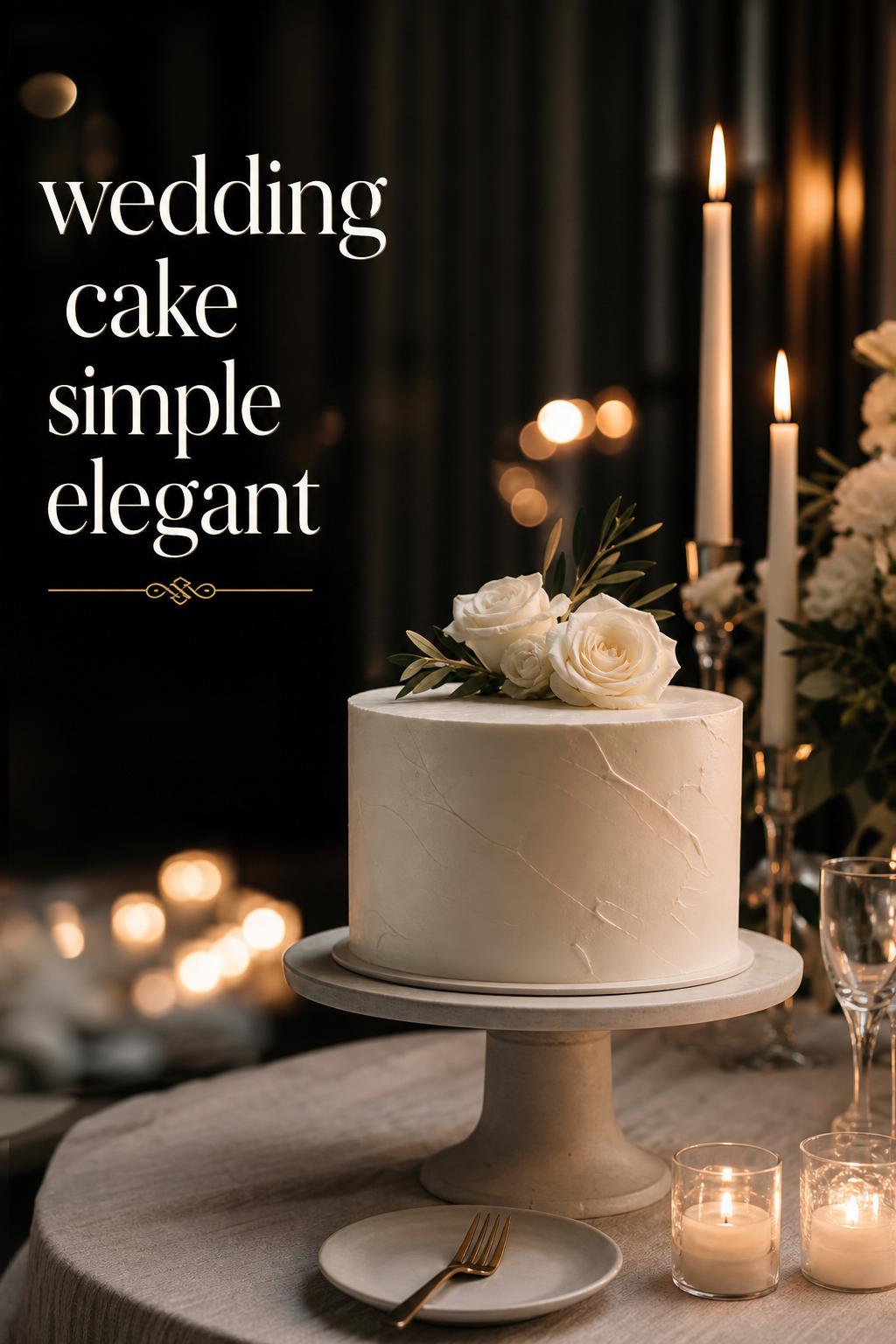
There is a particular kind of beauty that only a wedding cake simple elegant in spirit can create. In a reception room filled with flowers, candlelight, linen, and quiet anticipation, a cake with clean lines, a soft buttercream finish, and just one thoughtful accent can feel more memorable than something overly ornate. Its charm comes from restraint: a white silhouette, a refined texture, a few fresh blooms or greenery accents, and the confidence to let simplicity lead.
This aesthetic belongs naturally in modern weddings, classic ballroom celebrations, intimate garden ceremonies, and formal evenings alike. It is popular because it feels timeless rather than trend-dependent, polished without looking stiff, and romantic without excess. For couples planning a celebration that feels considered and deeply personal, a simple elegant wedding cake often becomes the perfect visual centerpiece for the dessert table and one of the most photographed details of the day.
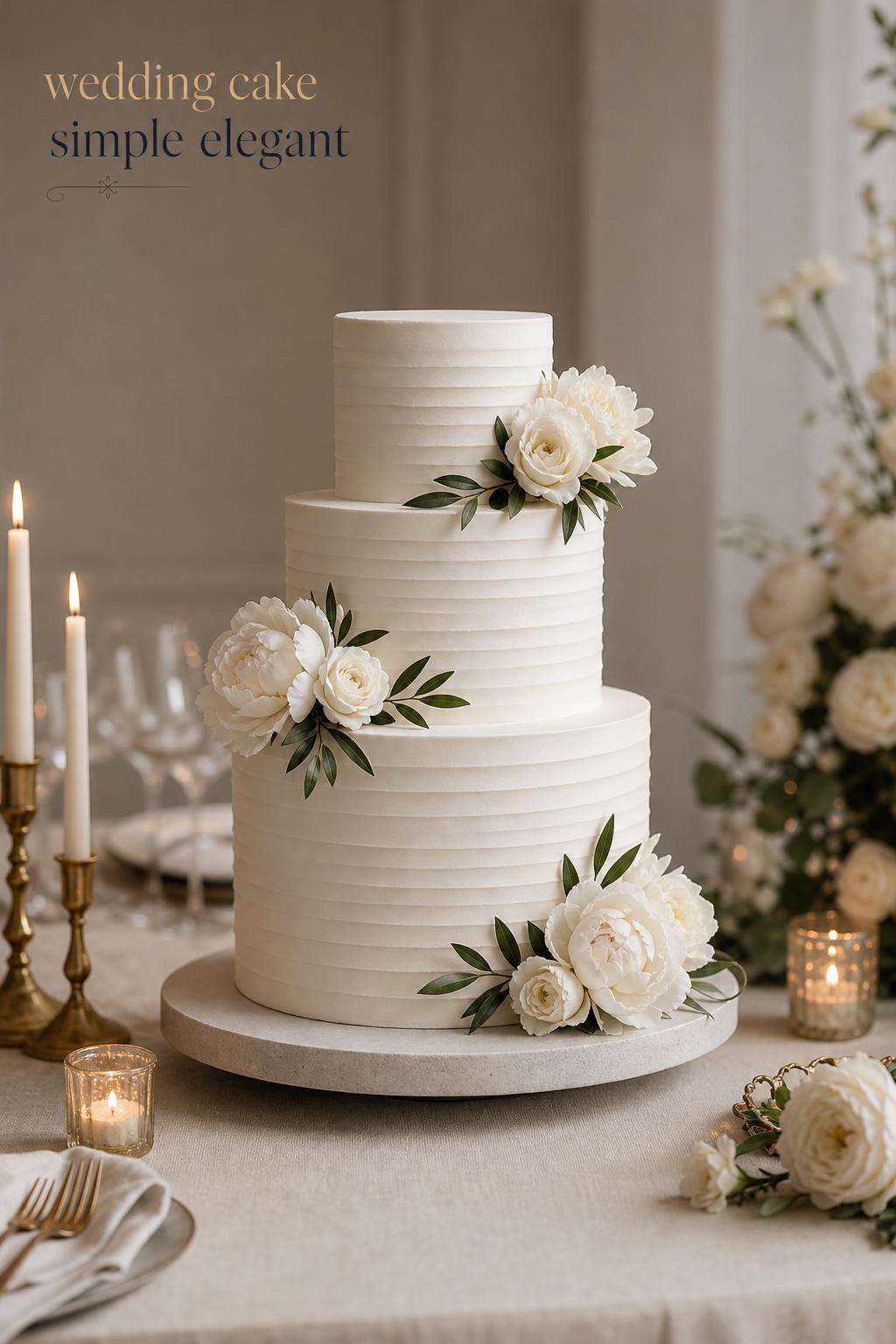
What makes this style especially appealing is its versatility. It can lean minimalist, romantic, classic, or even gently modern depending on the finish, floral accents, color palette, and display. Whether you imagine a small two-tier buttercream cake or a more formal four-tier design inspired by real-wedding galleries from The Knot, Inside Weddings, PureWow, CL Weddings, Hitched UK, or Weddings Online Ireland, the mood remains the same: understated, refined, and quietly unforgettable.
The visual language of simple elegance
In wedding design, “simple elegant” does not mean plain. It means every decision has intention. The silhouette is usually clean, the palette restrained, and the decoration limited to elements that genuinely enhance the cake rather than distract from it. A smooth fondant finish, a softly textured buttercream coat, a single olive branch, or a cluster of roses can all express the same idea: beauty through careful editing.
Turn wedding inspiration into a plan you can actually follow.
Zarellea brings your guest list, budget, vendors, and day-of details into one shared space — so no beautiful idea gets lost in the shuffle.
This is why so many wedding cake ideas in galleries and editorial features return to the same core motifs. White and ivory remain central because they photograph beautifully and coordinate with nearly every wedding style. Buttercream and fondant continue to define the look because both can create a polished surface. Floral accents and greenery appear again and again because they add life, softness, and movement without overwhelming the design.
A simple elegant wedding cake also works emotionally. During a long wedding day, couples are often drawn to details that feel calm and cohesive rather than visually busy. The cake becomes part of the larger atmosphere: the venue, the table styling, the flowers, the lighting, and the rhythm of the reception. That is why the strongest designs feel connected to the wedding as a whole, not chosen in isolation.
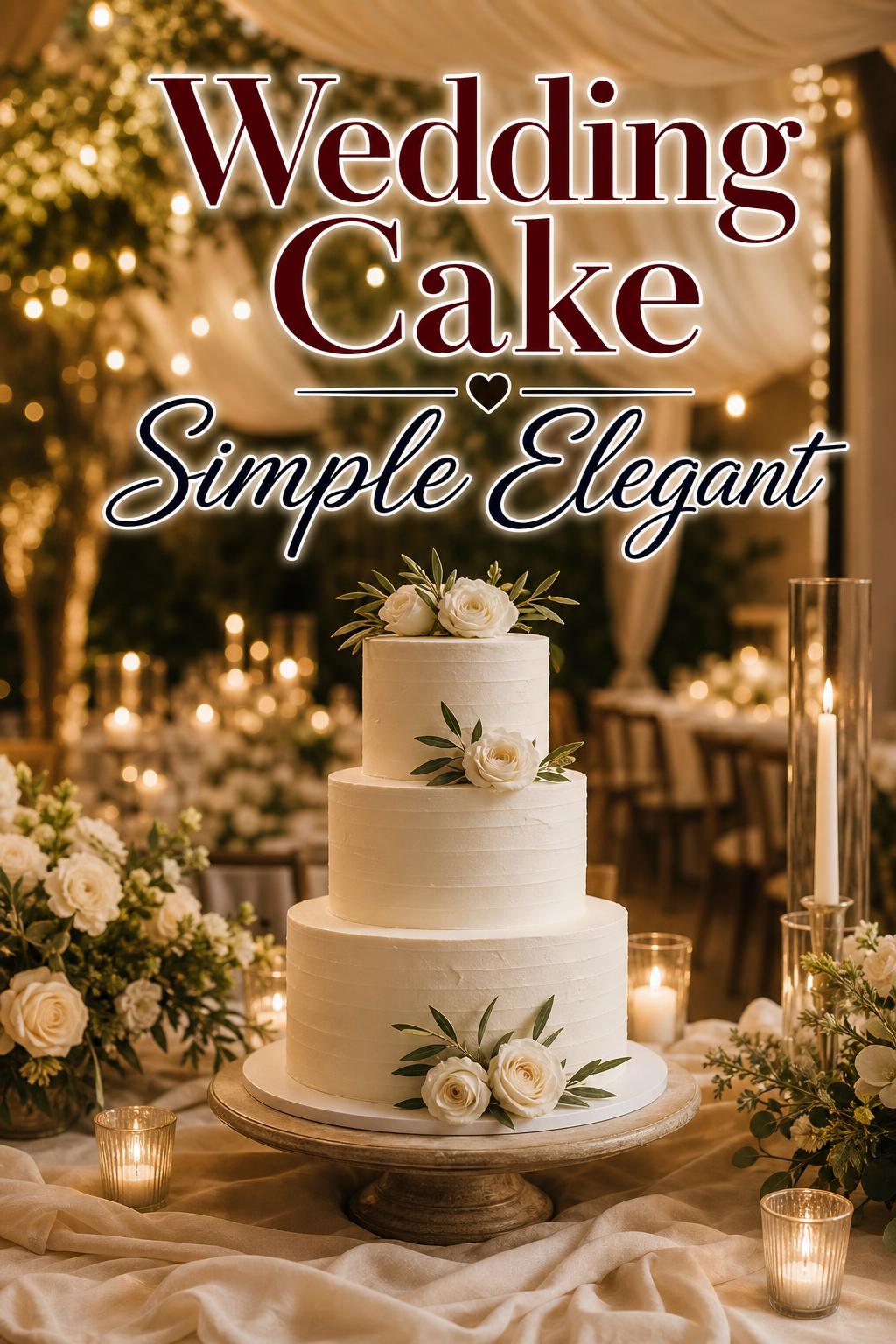
Look: smooth buttercream romance
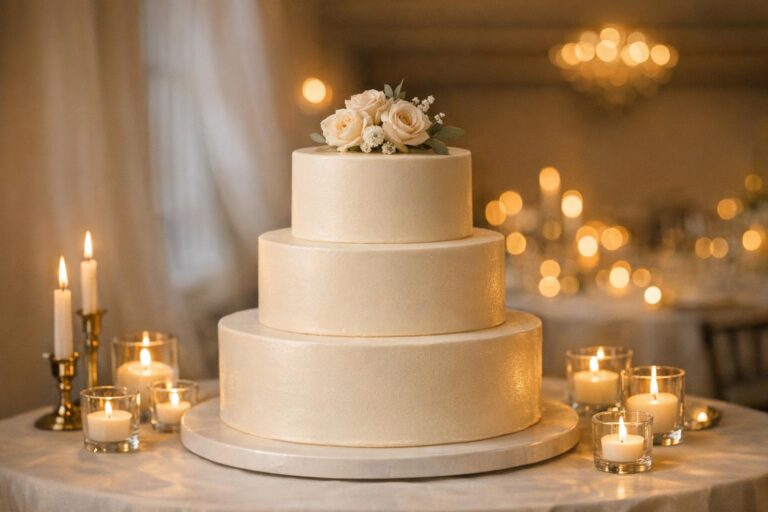
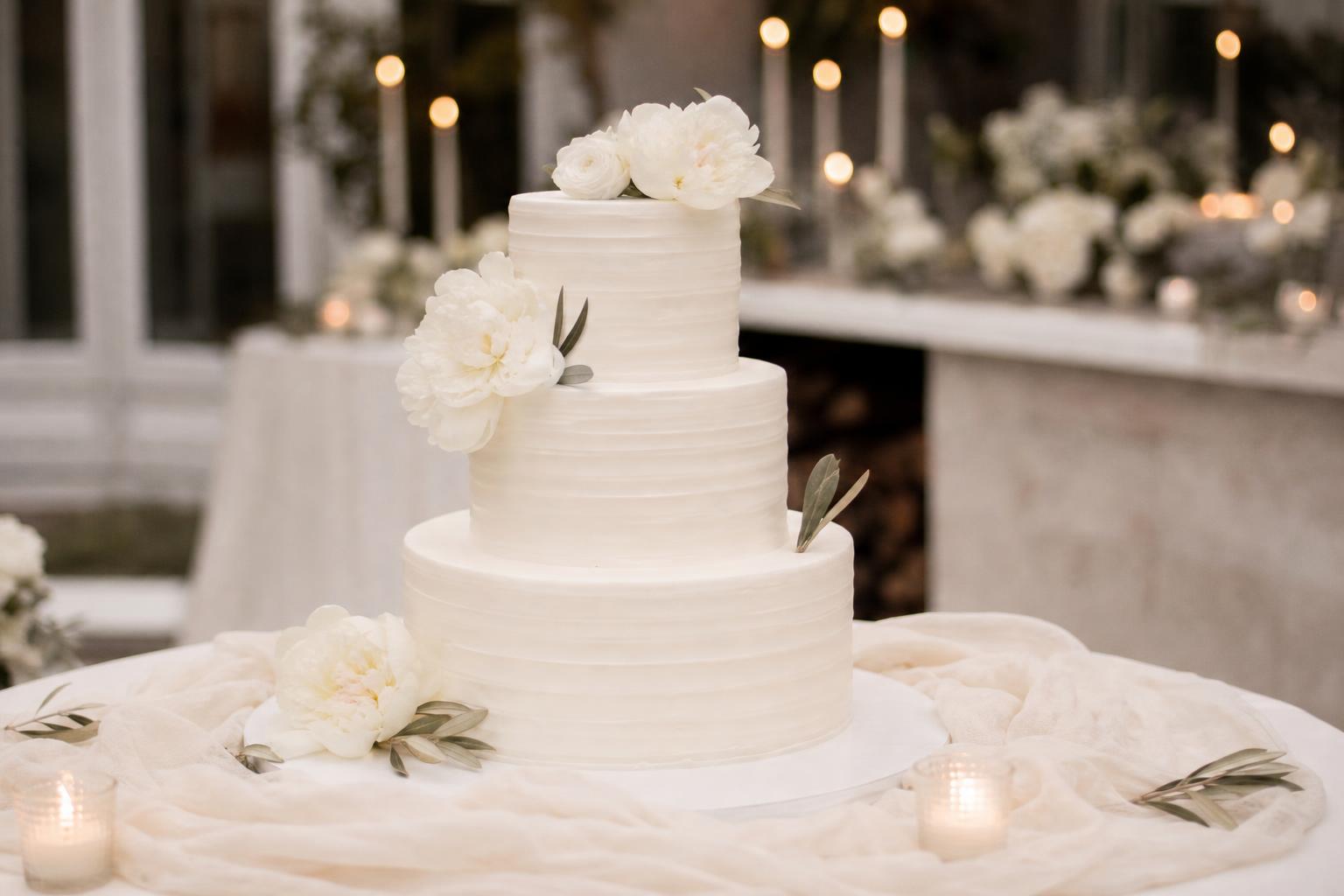
This interpretation of the aesthetic feels soft, welcoming, and quietly luxurious. The silhouette is classic, usually round tiers with balanced proportions, but the mood comes from the finish: a smooth white or ivory buttercream coating that catches light gently rather than sharply. It is especially beautiful for couples who want a romantic atmosphere without heavy ornamentation.
The palette stays almost monochrome, with white-on-white details or a barely-there shift between ivory frosting and pale blooms. A few peonies or roses placed low on one side, or arranged between tiers, create movement without clutter. Because buttercream has a more tactile quality than fondant, it can make a reception feel warmer and more intimate while still looking refined in photographs.
- Best mood: romantic, classic, intimate
- Core finish: smooth buttercream
- Accents: peonies, roses, soft greenery
- Palette: white, ivory, neutral tones
This look fits the aesthetic because it balances polish with softness. In real wedding settings, especially garden receptions or candlelit indoor spaces, buttercream can feel less formal than fondant while still delivering the elegant wedding cake effect couples want. It also allows the flavor-first side of cake design to shine, which matters for celebrations where guests truly look forward to dessert.
Look: fondant minimalism with formal poise
For a more structured and architectural version of simple elegance, fondant creates a different mood entirely. The cake appears crisp, composed, and exceptionally clean. This style often suits modern weddings, black-tie receptions, or venue settings where the overall design language is sleek and deliberate.
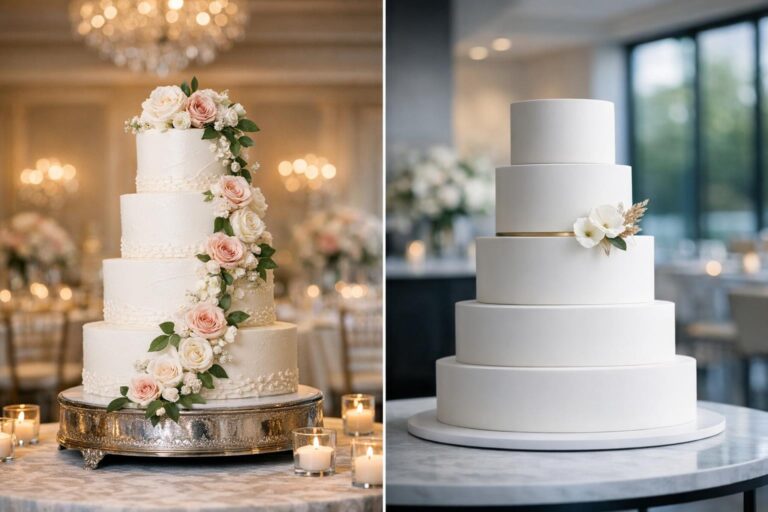
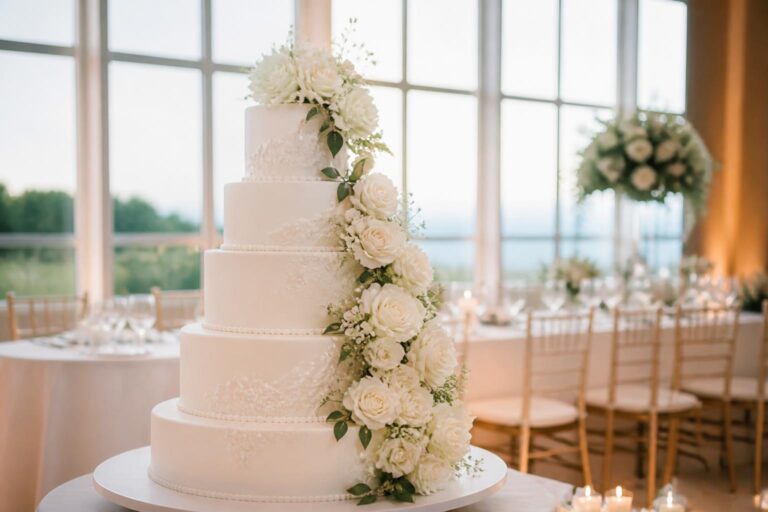
A fondant cake usually relies on the beauty of its surface. Instead of multiple decorations, the interest may come from perfect symmetry, smooth matte planes, or one restrained embellishment such as delicate piping, a single floral placement, or a touch of gold leaf. A four-tier silhouette, like those often admired in real-wedding imagery, can feel especially elegant when the design remains disciplined and uncluttered.
This version of a minimal wedding cake works because it understands proportion. A taller cake with little decoration can look more sophisticated than a smaller cake overloaded with detail. If your reception is formal and your décor already includes statement florals or a dramatic venue, a fondant design often keeps the cake aligned with the room instead of competing with it.
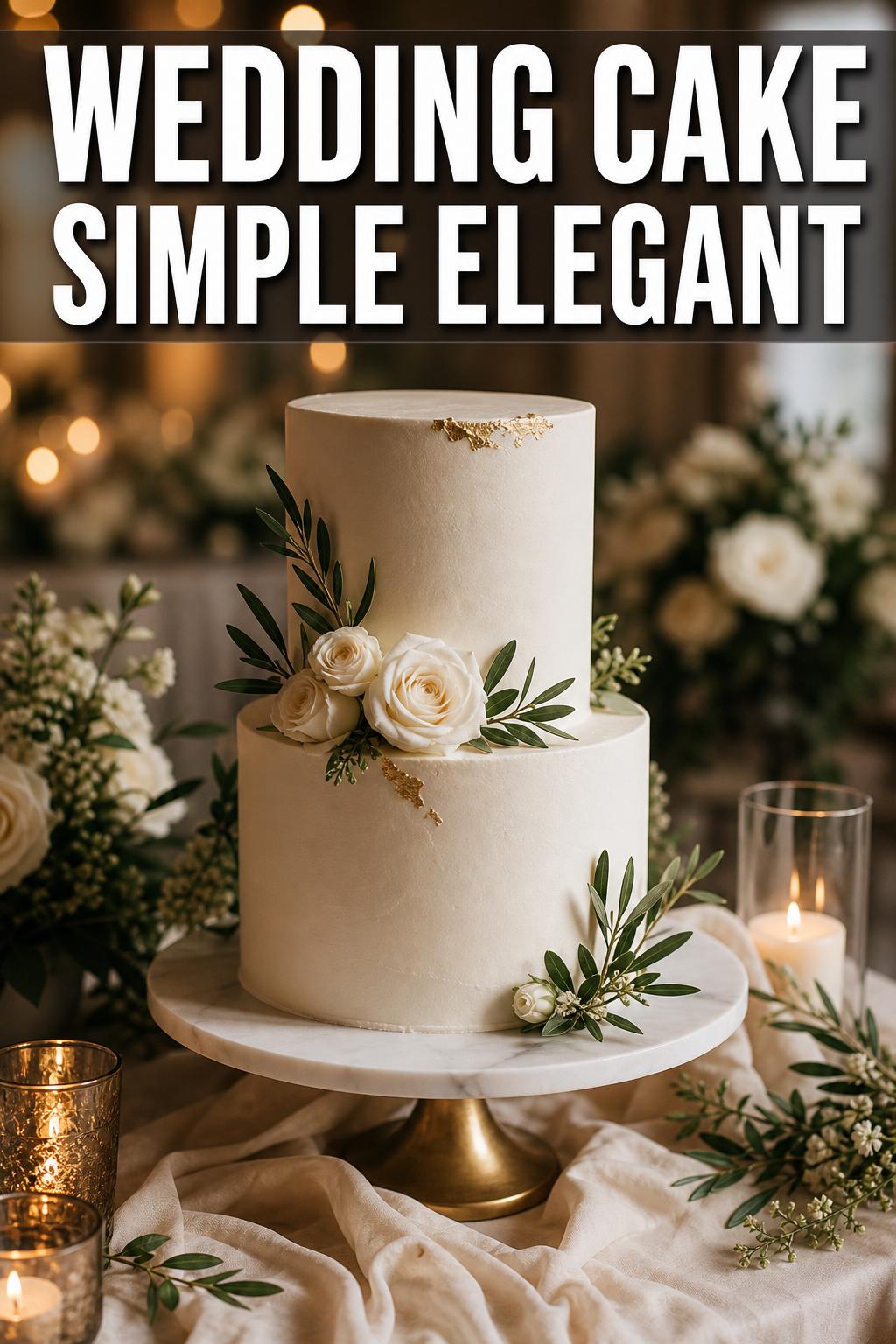
Buttercream or fondant: which feels more elegant?
Both can feel elegant, but they communicate elegance differently. Buttercream tends to read softer, more romantic, and more tactile. Fondant often feels cleaner, more precise, and more formal. The right choice depends less on which finish is “better” and more on the atmosphere you want around the cake table. Couples planning a refined but warm celebration may prefer buttercream, while those drawn to modern minimalism or a stricter silhouette may lean toward fondant.
Look: botanical restraint with greenery accents
There is something effortlessly graceful about a cake that seems almost untouched, except for one botanical gesture. This look captures the understated wedding cake mood perfectly. The base remains simple, often white buttercream or fondant, while olive branches, eucalyptus, or a few subtle blooms introduce natural shape and softness.
Greenery accents are especially effective because they create contrast without heaviness. On a white cake, a trailing olive branch or a carefully placed eucalyptus stem feels fresh and modern. If flowers are added, they are usually few in number and chosen for their softness rather than extravagance. This is the kind of design that works beautifully in outdoor weddings, vineyard-inspired settings, and celebrations where the florals already have an organic, gathered quality.
The reason this style endures is that it never asks too much of the eye. It lets texture, color contrast, and negative space do the work. In a room filled with layered décor, this kind of calm focal point can be incredibly effective. It feels elevated, but still deeply natural.
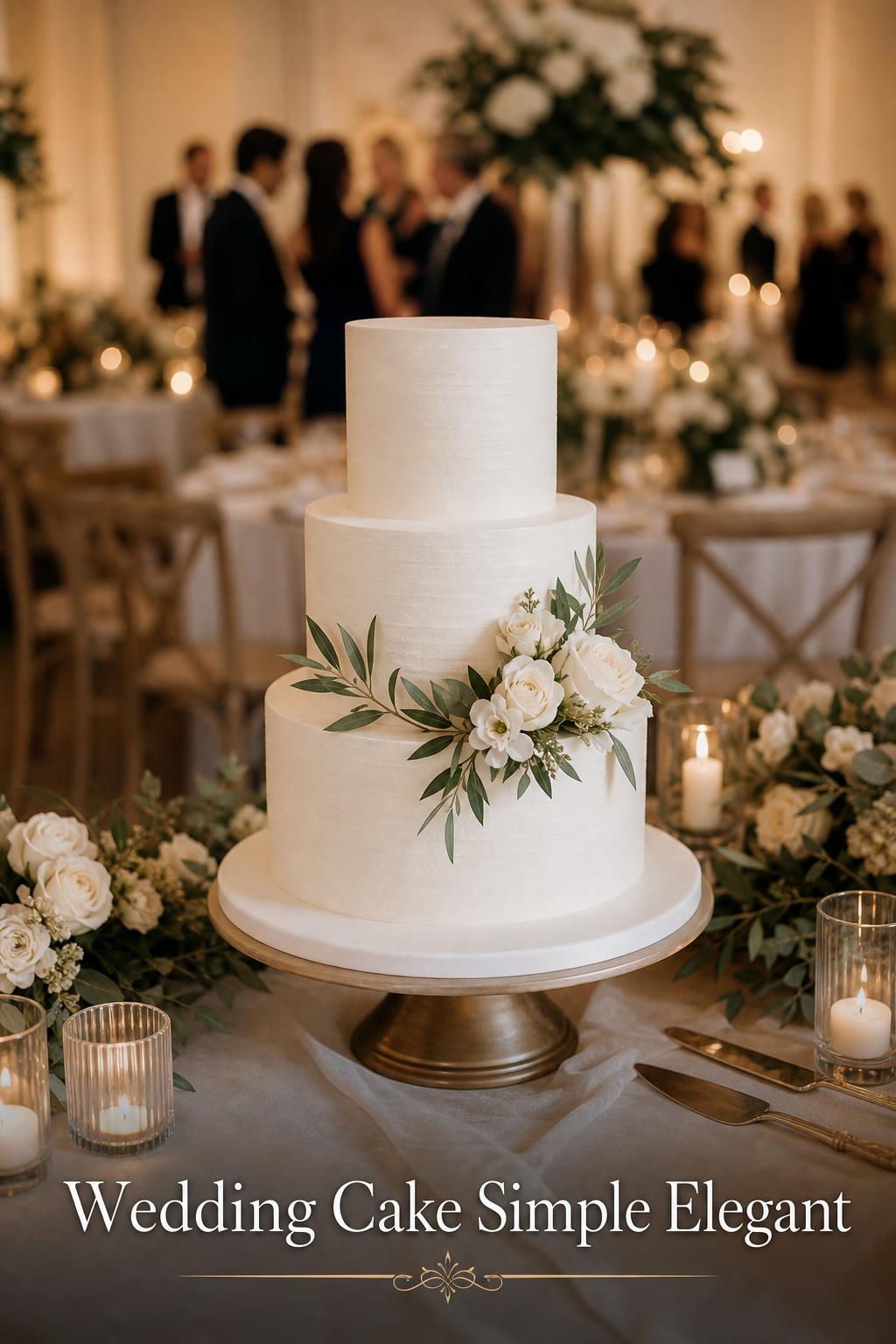
Fresh flowers vs. sugar flowers
Both approaches can suit a simple elegant cake. Fresh flowers often feel more organic and relaxed, especially when the wedding includes natural floral styling elsewhere. Sugar flowers can create a more controlled and polished finish, which may suit a formal reception or a cake where precision matters most. The important point is restraint. Whether the flowers are fresh or crafted, the design remains strongest when blooms are used as accents rather than the main event.
Look: monochrome white-on-white sophistication
Among the most timeless wedding cake ideas is the white-on-white design. It has a serene, almost bridal purity that feels appropriate in nearly any setting, from a city hotel ballroom to an intimate estate dinner. The mood is quiet and polished, with elegance built through tone, texture, and proportion rather than color.
The palette may seem simple at first glance, but the beauty lies in subtle variation. Clean white fondant paired with ivory buttercream flowers, or smooth frosting with barely-there piped lines, can create depth without breaking the monochrome effect. This look can also include delicate details such as subtle floral motifs or minimal piping that reveal themselves more closely, adding richness while maintaining a restrained appearance.
For couples who want their cake to feel timeless wedding cake rather than trend-led, monochrome is often the surest path. It also pairs beautifully with virtually any wedding colors in the room, which makes planning easier when the cake needs to sit within an already established palette.
Look: a touch of metallic for lift, not excess
Simple elegance does not require eliminating every decorative note. Sometimes one thoughtful accent gives a cake exactly the right amount of presence. A restrained touch of gold leaf or silver detailing can add refinement to a white cake without changing its overall minimalist identity.
This look works best when metallics are used sparingly: a fine edge, a scattered accent, or a single highlighted area where flowers or greenery meet the tiers. On a cake already defined by clean lines and a neutral palette, metallic details can echo the formality of the reception and add a subtle sense of celebration. The effect should feel luminous, not flashy.
When couples worry that a plain cake may disappear in a larger venue, this is often the answer. A little gold can create visual definition, especially under evening lighting, while preserving the no-fuss cake quality that makes the design feel enduring rather than overworked.
A style note on size, scale, and tier count
One of the most practical decisions in creating a simple elegant wedding cake is scale. The same aesthetic can be expressed in a petite two-tier cake for a smaller reception or a four-tier design for a formal wedding day. The difference is not only guest count. It is also about how the cake relates to the venue, the dessert table, and the overall event design.
A smaller cake can feel incredibly special when displayed with intention, especially in intimate weddings where every element is close to the guest experience. A taller cake may be more appropriate in a large ballroom or venue where the cake needs visual presence. In both cases, simplicity often becomes more powerful as the silhouette becomes more confident. Instead of adding more decorations to increase drama, couples can often achieve a more elegant result by choosing the right height and proportion.
- Two tiers often suit intimate celebrations and smaller dessert tables.
- Three tiers create a balanced, classic wedding presence.
- Four tiers can feel formal and dramatic without losing simplicity if decoration stays restrained.
- The larger the venue, the more important proportion and display become.
This is where many couples make the best decision for their budget too. A cake does not need heavy embellishment to feel significant. Scale, placement, and finish often do far more for the overall effect than added décor.
Flavor-first elegance: when the inside matters as much as the finish
The most successful simple wedding cakes do not rely only on appearance. They also feel thoughtful when cut and served. A minimalist exterior naturally creates high expectations for what is inside, which is why flavor deserves as much attention as frosting. Elegant design and strong flavor pairings are not separate decisions; together, they shape how guests remember the cake.
Within this aesthetic, flavors often feel most aligned when they are classic, clean, and balanced. Vanilla, citrus, and almond are especially fitting because they complement the refined look rather than fighting against it. A delicate exterior suggests a cake that tastes polished too, with fillings and layers that feel intentional rather than overly busy. This is where the phrase refined dessert table centerpiece becomes real: the cake should look graceful and taste equally considered.
Look: classic vanilla with a soft buttercream finish
This is the timeless choice for couples who want a universal crowd-pleaser wrapped in understated style. The visual mood is traditional but never dated, especially when paired with monochrome frosting and minimal floral accents. Vanilla supports the elegance of the exterior because it feels familiar, polished, and celebratory.
It works particularly well in weddings where the décor leans classic, formal, or romantic. Because the exterior is simple, guests often appreciate a flavor that feels comforting and recognizably festive. In this way, the cake feels cohesive from first look to first bite.
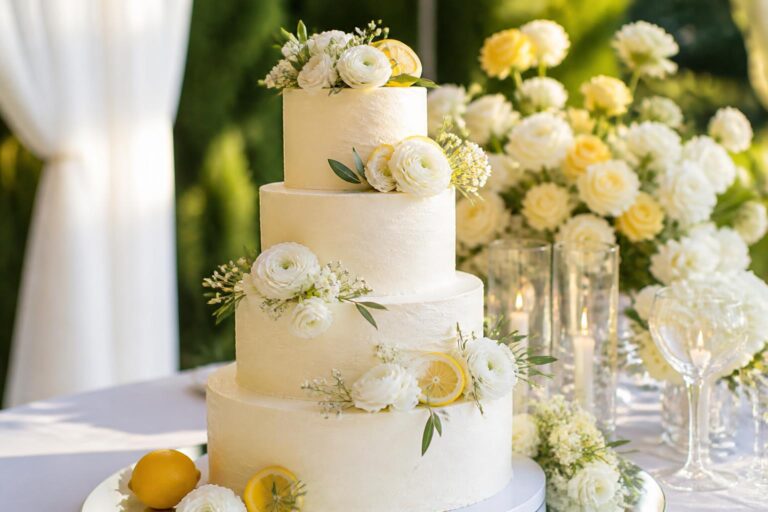
Look: citrus brightness with greenery accents
For weddings with a fresher, lighter mood, citrus flavors pair beautifully with a white cake decorated in greenery. The visual identity remains minimal, but the flavor introduces liveliness and a sense of seasonality. This can feel especially appropriate in warm-weather celebrations or receptions with an airy, natural atmosphere.
The reason this pairing works is emotional as much as visual. A cake dressed with olive branches or eucalyptus already feels crisp and natural, and a citrus interior supports that same impression. The result is a design that feels coherent rather than simply pretty on the outside.
Look: almond and ivory for a quietly luxurious mood
Almond often suits a more formal or softly luxurious interpretation of simple elegance. Imagine an ivory-toned cake with a smooth finish, maybe a touch of subtle piping or metallic detail, displayed under warm reception lighting. The visual atmosphere is restrained, but there is richness beneath the surface.
This kind of flavor choice can be especially appealing for couples who want their cake to feel elevated without becoming elaborate. It remains minimal in presentation, yet it offers a distinctive quality that guests notice and remember.
Look: the cake table as part of the aesthetic
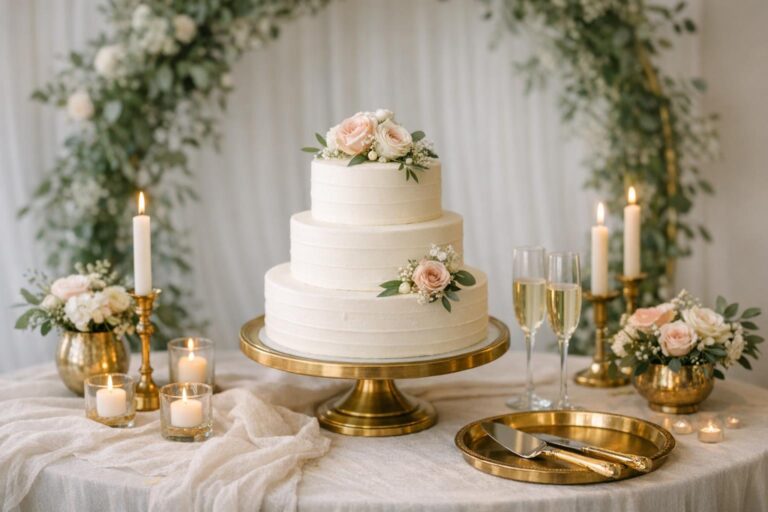
A simple elegant wedding cake can lose some of its impact if it is displayed without intention. Because the design itself is restrained, presentation matters even more. The stand, the surrounding space, the lighting, and the relationship to the venue all help the cake read as refined instead of merely plain.
Minimal cakes often benefit from breathing room. A cluttered dessert table can diminish their elegance, while a thoughtfully styled setup allows the shape and finish to stand out. This might mean placing the cake on a mirror stand, selecting a clean stand design that echoes the venue style, or ensuring there is enough negative space around it for photographs. Even a relatively modest cake can feel luxurious when its presentation is calm and deliberate.
- Choose a stand that supports the cake’s style rather than competing with it.
- Allow open space around the cake for a cleaner silhouette in photos.
- Use lighting that softens the finish and highlights texture.
- Coordinate the cake area with the rest of the wedding aesthetic, including florals and table styling.
This is also where modern display ideas can support minimalism rather than distract from it. Clean reflective surfaces, carefully chosen backdrops, and a simple dessert table arrangement can make a white buttercream cake look more intentional and elevated. The cake should feel like it belongs to the room, not like it was placed there as an afterthought.
Style tip: photograph the cake as a scene, not an object
Couples often focus entirely on the cake design and forget how it will be seen in photos. A simple cake looks strongest when photographed within context: the venue, the florals, the candles, the stand, and the surrounding space. This is one reason real-wedding galleries feel so persuasive. They show that simplicity becomes most elegant when supported by atmosphere.
Real-wedding mood boards that translate beautifully to the cake table
Across magazine and gallery-style wedding coverage, a few recurring moods continue to define simple elegant cake inspiration. These are not rigid formulas, but they do help couples picture how the cake will live within the larger celebration. Looking at the cake as part of a wedding world rather than a standalone dessert often leads to more confident decisions.
Look: modern ballroom refinement
In a formal reception setting, a smooth fondant or buttercream cake with minimal decoration can feel especially striking. Think three or four tiers, clean lines, white-on-white detail, and perhaps a subtle metallic edge. This is the type of elegant wedding cake that complements polished linens, soft lighting, and a composed room design.
It works because the room already carries visual weight. Instead of adding busyness to the cake, restraint allows it to read as sophisticated. This is often the setting where a simple four-tier silhouette feels most at home.
Look: garden softness with peonies and roses
For outdoor or flower-forward weddings, a white buttercream cake with roses or peonies feels naturally romantic. The silhouette remains clean, but the floral accents tie the cake to the ceremony flowers and reception styling. This is one of the easiest ways to make a simple wedding cake with flowers feel integrated into the day.
Because gardens and floral venues already create atmosphere, the cake does not need much else. One floral cluster, a trailing stem, or a few carefully placed blooms are often enough to make it feel complete.
Look: organic greenery for a natural celebration
Where the wedding style leans more relaxed or nature-led, greenery can replace larger floral statements. Olive branches or eucalyptus against a smooth white finish create an understated but highly styled effect. This is the version of minimalism that feels especially effortless.
Its appeal lies in how little it requires. The pairing of a clean cake and botanical detail creates a complete visual sentence with very few elements, which is often the hallmark of true simple elegance.
Planning the look with your baker: what actually matters
One of the most useful realities to understand is that “simple” still requires clarity. A minimalist cake can be harder to get right than a heavily decorated one because there is nowhere to hide uneven choices. Finish quality, proportion, floral placement, and overall balance become more visible. When talking with your baker, it helps to describe not only what you want the cake to look like, but also what you want it to feel like within the wedding.
Words like classic, romantic, modern, understated, formal, and soft can be surprisingly helpful. They guide decisions about buttercream versus fondant, smooth versus textured finish, white versus ivory tones, and the amount of decoration needed. If your venue is formal, say so. If you want the cake to feel like part of a garden story, mention that. The strongest results usually happen when the baker understands the larger visual identity of the day.
- Discuss the venue and overall wedding style, not just the cake alone.
- Clarify whether you want the finish to feel soft and romantic or crisp and formal.
- Decide early if flowers or greenery will be part of the final design.
- Ask how flavor choices will support the visual style.
- Consider how the cake will be displayed and photographed at the reception.
This is also the stage where personalization can happen quietly. A meaningful topper, a favorite flavor, or a subtle motif can make the cake feel deeply personal without breaking its minimalist character. Personalization in this style is strongest when it is integrated gently rather than announced loudly.
Budget elegance without losing the mood
Couples are often drawn to simple wedding cakes because they assume they will always cost less. Sometimes that is true, but not automatically. A clean finish, well-balanced tiers, and polished presentation still require skill. The value of a simple cake comes from thoughtful decisions, not just fewer decorations.
That said, this aesthetic can be especially budget-friendly when approached wisely. Instead of paying for extensive ornamentation, couples can focus on one strong finish, one restrained accent style, and a display that elevates the final look. In many cases, a simple cake feels more expensive than it is because it communicates confidence and refinement. Clean design often reads as premium when executed well.
How to keep costs controlled while preserving elegance
Prioritize what guests and photographs will notice most: finish quality, proportion, and presentation. If the budget is limited, it is often better to choose a more modest tier count with a beautiful smooth buttercream or fondant finish than a larger cake with too many decorative compromises. Floral accents and greenery can also do a great deal of visual work when placed carefully, allowing the design to feel rich without becoming overcomplicated.
This is where simple elegant styling can be reassuring. It rewards discipline. You do not need every decorative technique to create something memorable. You need a clear point of view and careful execution.
Context matters: matching the cake to season, venue, and wedding mood
The same cake can look entirely different depending on where it appears. A white buttercream cake with roses may feel soft and romantic in a garden setting, but more classic and formal in a ballroom. A smooth fondant cake with greenery may read modern in a city venue and organic in an outdoor reception. This is why the best wedding cake ideas always connect style to context.
Seasonal flavor pairings can support this sense of harmony too. A citrus profile with greenery feels especially fresh in a lighter, warmer celebration, while almond can feel more luxurious in a formal evening setting. The goal is not to follow rigid rules, but to make sure the cake feels like it belongs to the wedding story unfolding around it.
Publications and galleries across the U.S., the UK, and Ireland have all shown how adaptable simple elegance can be. Whether a couple is inspired by the editorial approach of Inside Weddings and PureWow, the real-wedding perspective of The Knot, or the regional style notes found in Hitched UK and Weddings Online Ireland, the lesson remains consistent: simplicity works best when it reflects the actual atmosphere of the day.
Common mistakes that can make a simple cake feel unfinished
The line between minimal and incomplete can be surprisingly fine. Because a simple elegant wedding cake depends on restraint, every detail becomes more visible. A cake with the right concept but weak execution can feel underdesigned rather than refined. Knowing where couples often go wrong helps preserve the mood they are trying to create.
- Choosing a cake that is too small for the scale of the venue.
- Adding too many competing accents, such as florals, toppers, metallics, and texture all at once.
- Ignoring display, so the cake looks disconnected from the reception design.
- Selecting a finish that does not match the wedding mood, such as ultra-formal fondant for a very soft organic setting.
- Focusing only on the exterior and overlooking flavor and guest experience.
What stylists and planners often recommend, especially for a minimal wedding cake, is editing one more time before the final decision. If a design already has beautiful proportions and a lovely finish, it may only need one accent family to feel complete. That could be flowers, greenery, delicate piping, or a metallic note, but rarely all of them together.
A final styling perspective for couples choosing this aesthetic
A simple elegant wedding cake succeeds because it mirrors what many couples want their wedding to feel like: intentional, graceful, and personal without unnecessary noise. It invites guests to notice texture, atmosphere, and small thoughtful choices. It works in classic weddings, modern receptions, flower-filled celebrations, and intimate gatherings because it is not bound to one trend or one venue type.
If you are drawn to this style, trust that simplicity can still feel deeply special. Start with the mood you want, decide whether buttercream or fondant supports that vision best, use flowers or greenery with restraint, and give the cake the display it deserves. The most memorable designs are rarely the busiest. They are the ones that feel beautifully at home in the moment they were made for.
FAQ
What makes a wedding cake look simple and elegant instead of plain?
A simple elegant cake relies on strong finish quality, balanced proportions, and one or two intentional accents rather than many decorative elements. Smooth buttercream or fondant, a restrained palette such as white or ivory, and thoughtful floral or greenery placement usually create the refined look couples want.
Is buttercream or fondant better for a simple elegant wedding cake?
Neither is universally better; they create different moods. Buttercream tends to feel softer, warmer, and more romantic, while fondant usually looks cleaner, crisper, and more formal. The best choice depends on your venue, wedding style, and the atmosphere you want around the cake table.
What flowers work best on a simple wedding cake with flowers?
Roses and peonies are especially fitting because they add softness without disrupting the clean silhouette of the cake. Many couples also choose greenery such as olive branches or eucalyptus when they want a more organic, understated look with less floral volume.
Can a four-tier cake still feel minimal?
Yes, a four-tier cake can feel very minimal when the design emphasizes clean lines, a smooth finish, and restrained decoration. In fact, a taller silhouette often adds elegance on its own, especially in formal venues where the cake needs enough scale to feel visually appropriate.
What flavors suit a simple elegant wedding cake?
Classic flavors such as vanilla, citrus, and almond fit this style especially well because they feel polished and balanced. They complement the refined exterior rather than competing with it, which helps the cake feel cohesive from presentation to taste.
How can I make a simple cake feel more luxurious?
Focus on finish, scale, and presentation rather than adding many decorations. A beautifully smooth white buttercream or fondant surface, a well-chosen stand, soft lighting, and a little breathing room around the cake can make even a modest design feel elevated and special.
Are greenery accents enough without flowers?
Yes, greenery alone can be enough, especially on a white cake with a clean silhouette. Olive branches or eucalyptus create natural contrast and movement while preserving the understated quality that defines this aesthetic.
Do simple wedding cakes usually cost less?
They can, but not always. A simple design may use fewer decorative elements, yet polished finishes and elegant proportions still require skill. Cost is often best controlled by keeping the design focused, choosing accents carefully, and investing in the details guests and photographs will notice most.
How early should we finalize the cake design and tasting?
It helps to discuss your cake once your broader wedding style, venue feel, and floral direction are reasonably clear. That way, decisions about finish, color palette, accents, and flavor can all align with the rest of the celebration rather than being made in isolation.
What is the best way to personalize a minimalist wedding cake?
Personalization works best in subtle forms, such as a meaningful topper, a favorite flavor, or a gentle motif that does not overwhelm the clean design. In this style, the most elegant personal details are usually the quietest ones.