Pre Wedding Shoot Ideas That Tell a Small Story
Pre wedding shoot ideas can pull you in several directions at once. A carefully posed studio portrait, a breakfast at home and a dramatic destination photograph may all appeal, yet putting them on the same inspiration board does not explain what your own session should contain. The challenge is deciding which pictures belong together.
I would start with a small story you can comfortably take part in. That might be exchanging books at your kitchen table, revisiting a familiar courtyard or getting dressed for an evening together. A sequence gives you something to do and a reason for each photograph. You can still include a formal portrait without turning the entire session into a performance.
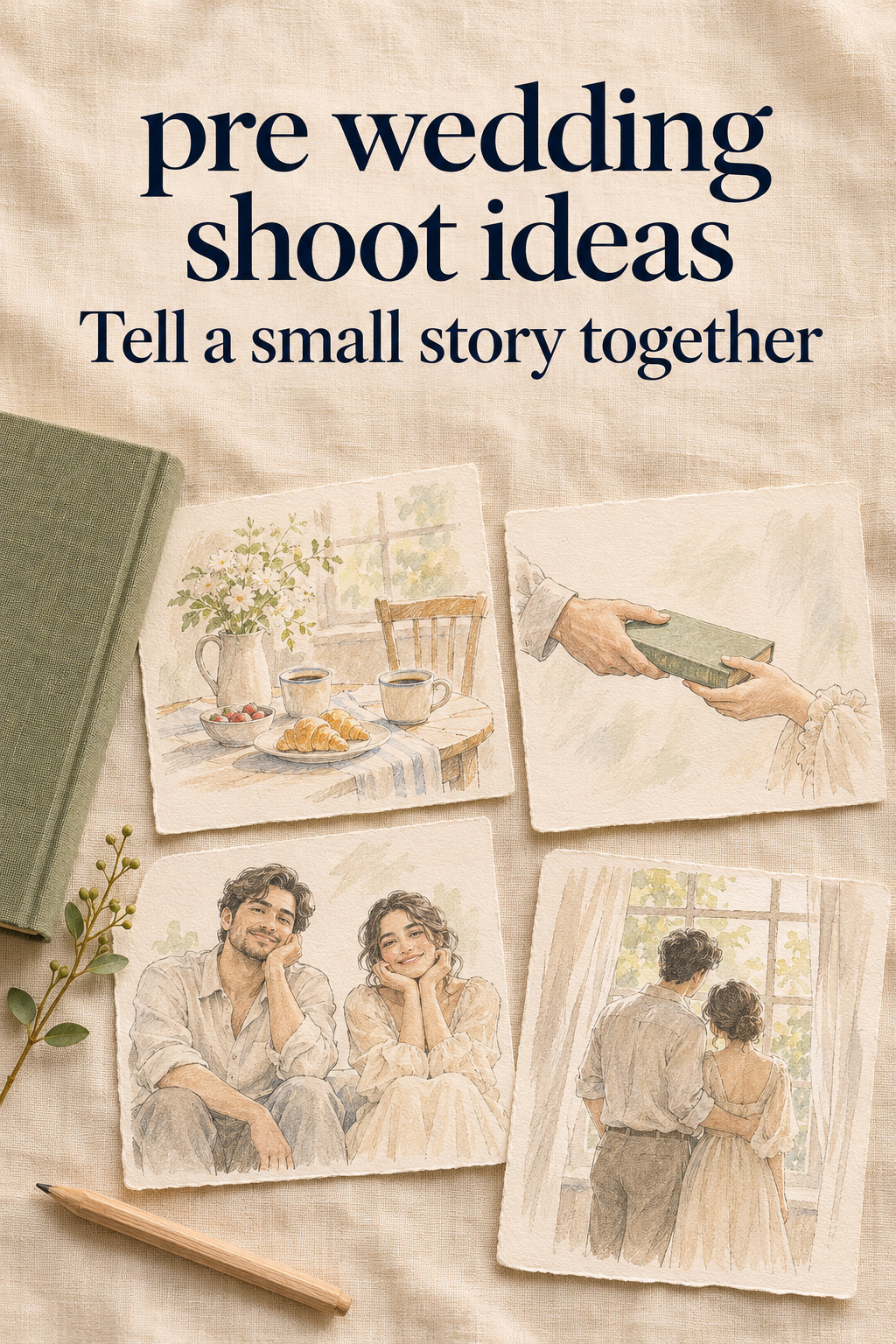
Use the visual directions in photographer guides to develop a sequence you can recognize yourselves in. Consider how you want to use the photographs before or after the wedding. Popularity labels offer little help with those decisions.
Read the inspiration without chasing a ranking
The guides reviewed for this article contain both elaborate scenery and familiar everyday settings. Studios, cultural clothing, cafes and shared hobbies appear beside destination concepts. The publication dates differ, and none of these pages supplies a count of couples choosing the suggested looks. Treat their trend labels as editorial descriptions.
Turn wedding inspiration into a plan you can actually follow.
Zarellea brings your guest list, budget, vendors, and day-of details into one shared space — so no beautiful idea gets lost in the shuffle.
Use a carefully arranged portrait as a reference for framing. It cannot tell you whether the couple enjoyed making it, how much direction they received or what was outside the frame. Use the image to identify a choice you like, then ask how that choice could fit your circumstances.
For example, Mystic Studios’ pre-wedding ideas include a cafe and a home setting alongside more elaborate locations. Those examples support considering familiar places as creative starting points. They do not establish that home sessions are newly fashionable or automatically more meaningful for everyone. If your home feels too private to photograph, choose somewhere else.
I would use a connected action to decide which of these ideas belong in your session. You might like the intimacy of a table scene, the formality of a composed portrait and the openness of an outdoor ending. Each can occupy a different place in a short story without needing a separate theme or costume.
Keep a small reference set and explain what each image contributes. Write “hands passing a book,” “both of us looking toward the camera” or “a wide frame with room for an invitation heading.” Add those notes beside the references so the photographer can see the specific requests. Remove a reference if you cannot explain what you want to borrow from it.
Turn a familiar activity into a short sequence
Choose an activity that gives the session a beginning and a natural place to finish. The activity does not need a dramatic history. It needs to be something both of you are willing to do while a photographer is present. Keep it simple enough that you can pause, repeat a movement if asked and talk to each other without managing a complicated task.
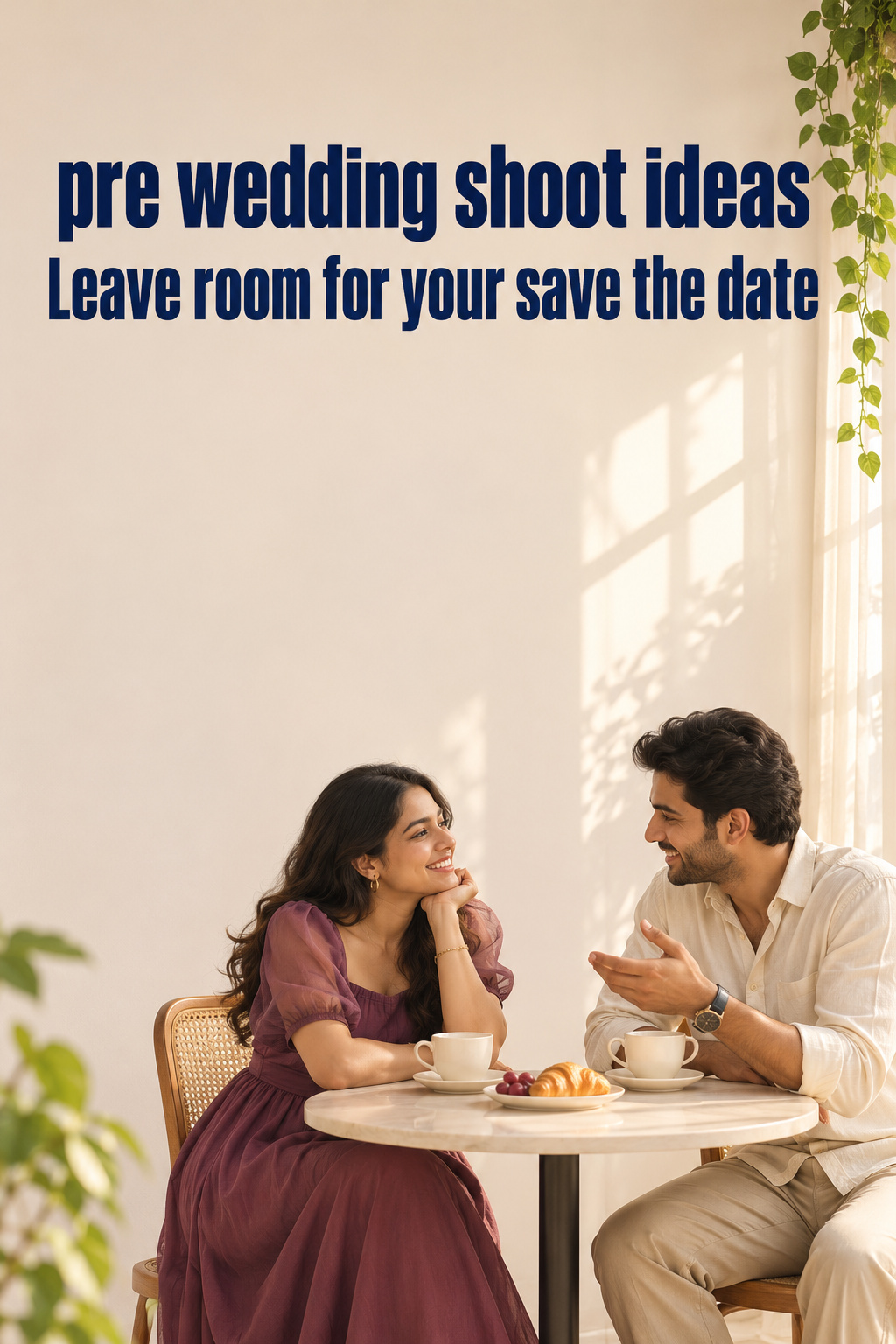
A weekend breakfast is one possible concept. Begin with a wider photograph showing the table and the two of you arriving with cups. Continue with a small action, such as one person passing a plate or pouring a drink. Add a closer frame of your hands beside an object that belongs in the scene. End with a seated portrait after the action has settled. This is a suggested sequence, not a record of an actual couple’s session.
Give that idea a realistic scope. You might set out a breakfast you already enjoy, using the table and cups you own. Avoid preparing an elaborate meal just because it looks impressive in a reference. If food preparation would make you anxious, start with everything ready. Passing a plate and settling into your seats may give you the variation you want.
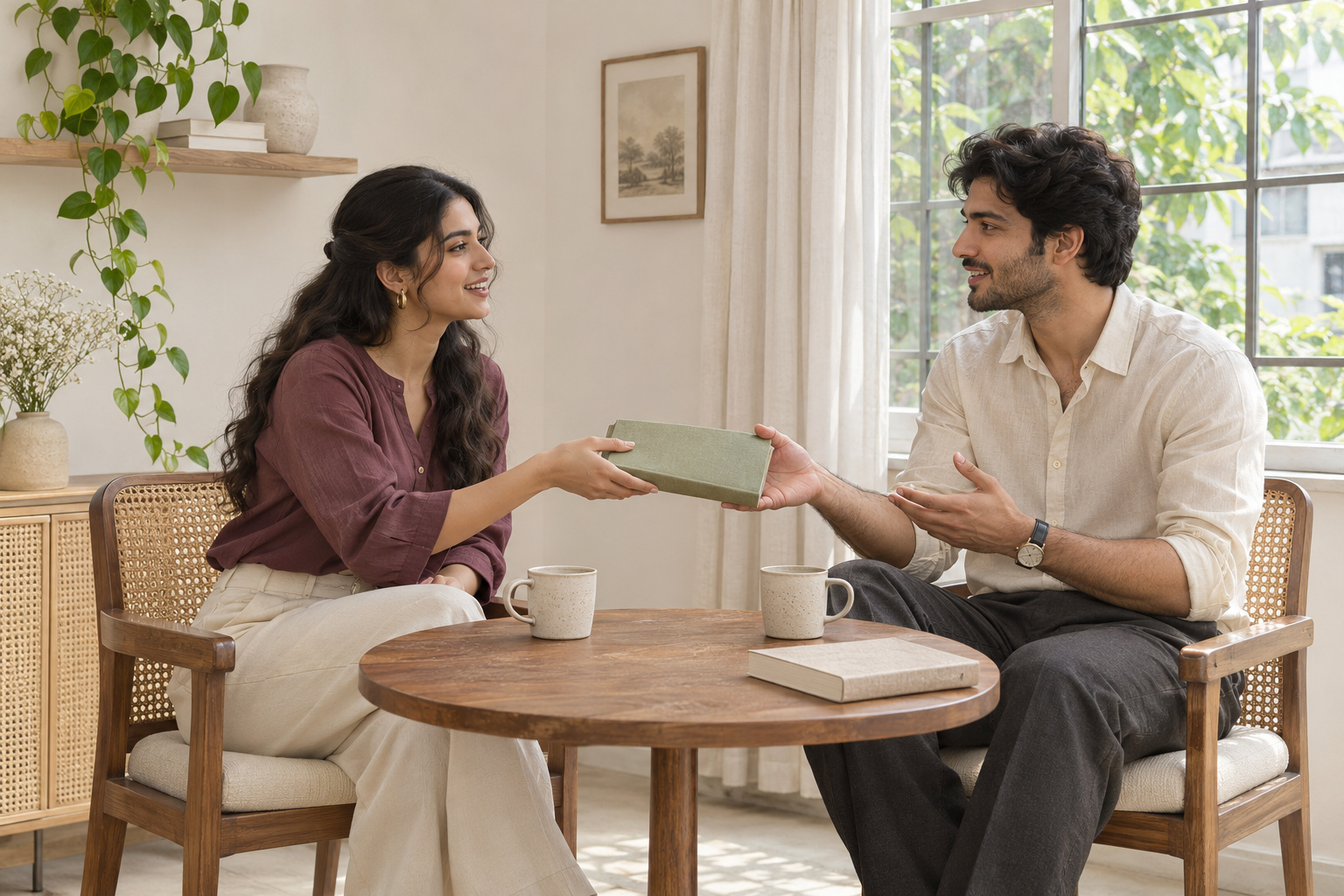
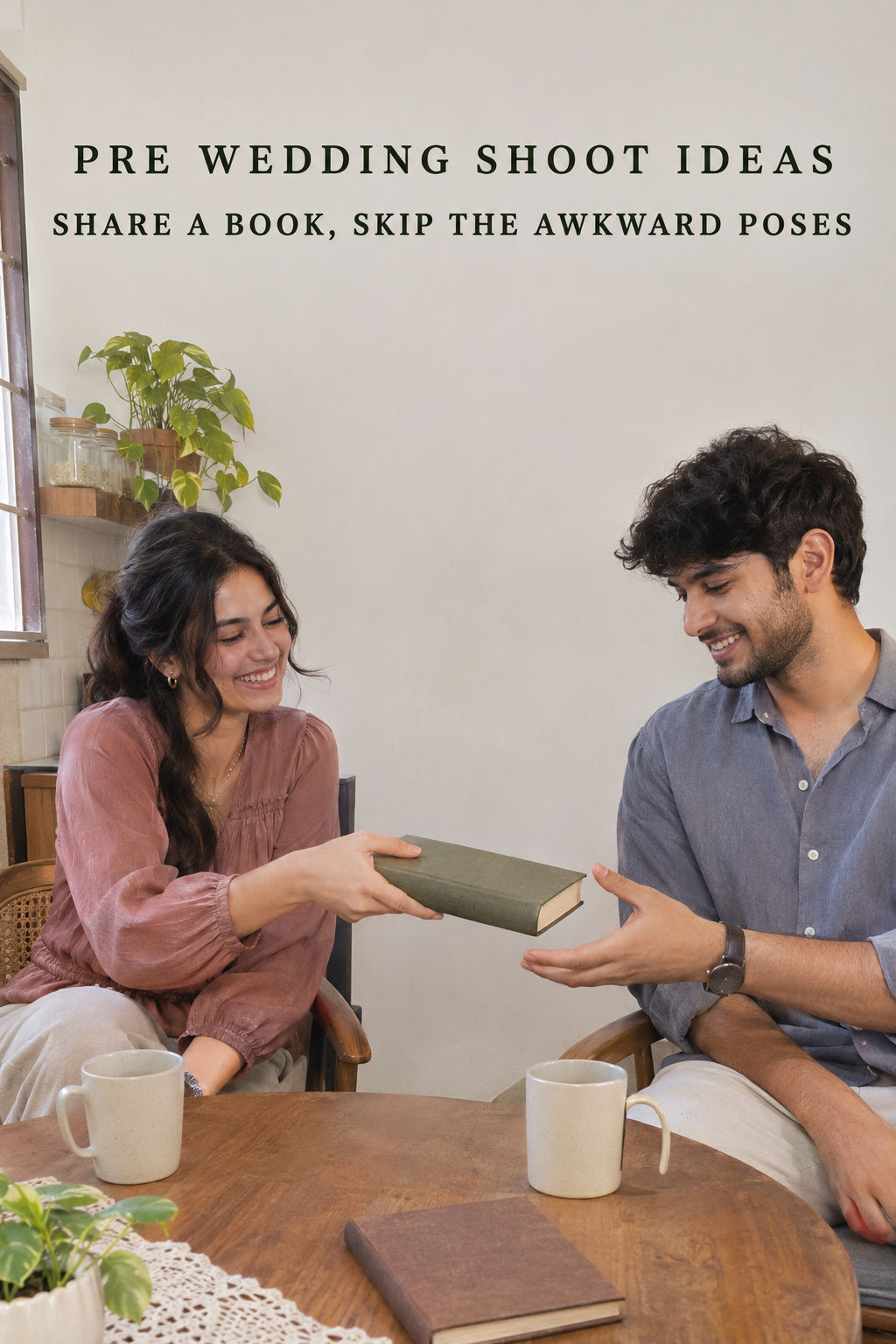
A book exchange offers a quieter alternative. Each partner chooses a book they would genuinely recommend to the other. The opening photograph shows you seated with the books closed. The middle pictures could capture passing them across the table, opening a marked page and listening while one person explains the choice. For the ending, put the books down and make a portrait together. No staged kiss or invented love letter is needed.
This concept also works when you prefer little physical contact in the pictures. Sit in separate chairs, exchange an object or look toward the same page. Ask the photographer for direction about posture and hands within the boundaries you have agreed. Looking at the same page gives you a shared focus without requiring physical contact.
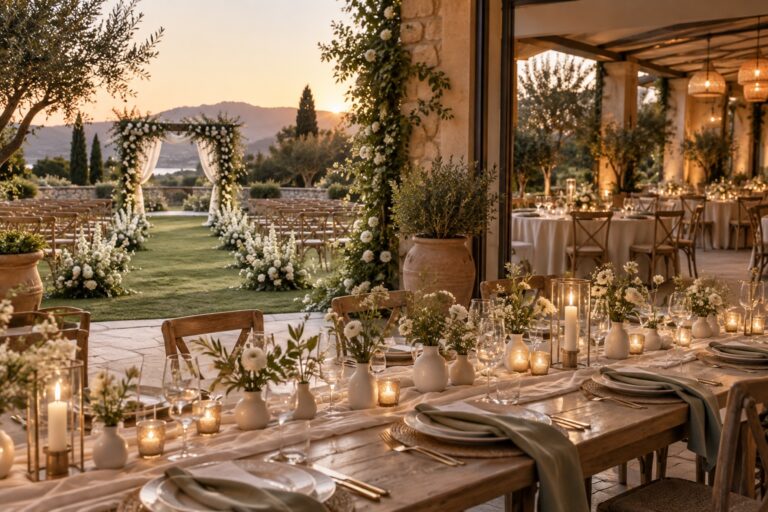
If you prefer being outside, adapt the sequence to an ordinary visit to a permitted courtyard or garden. Start at the entrance, choose one place to pause and finish with a portrait that shows something of the setting. Let the photographer assess the actual route and light. Avoid turning a short session into a tour of every attractive corner you can find.
The sequence should be loose enough to accommodate what happens. If a conversation produces a good expression, let it continue. If an action feels awkward, replace it with something simpler. Ask the photographer which transitions are useful and where a pause would help. Keep the sequence available as a starting point, and adjust it with the photographer.
Let one composed portrait mark the occasion
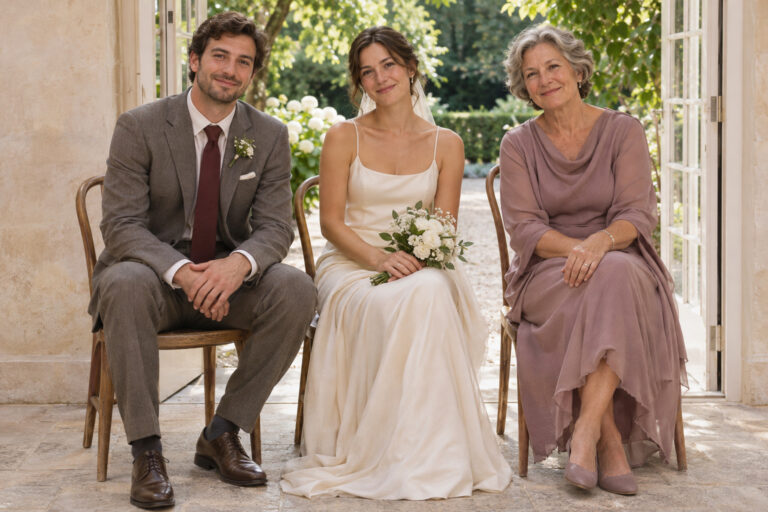
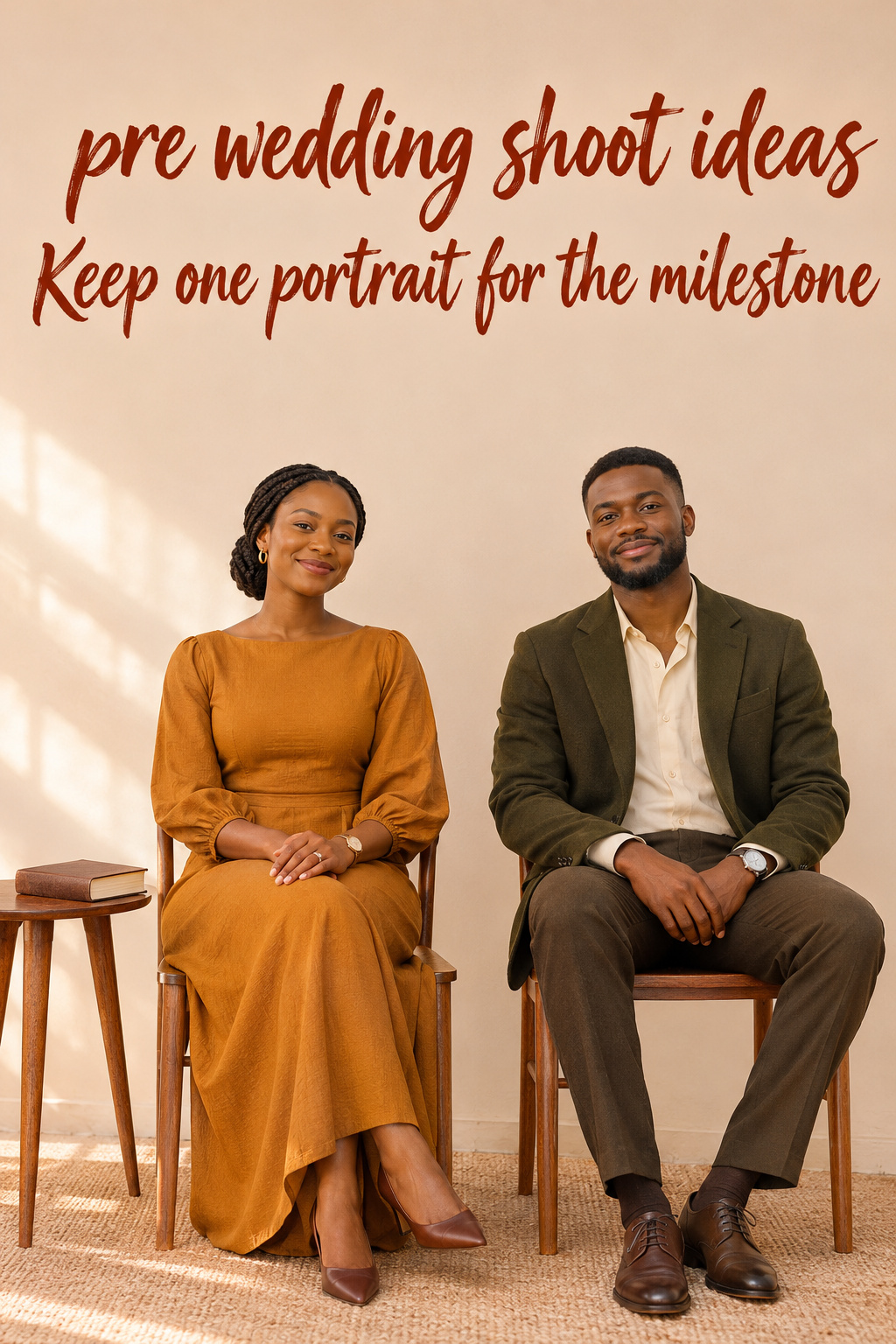
A pre-wedding session can include an intentional milestone portrait even when most of the photographs show an activity. Decide what you want that frame to communicate. You may want both faces clearly visible, your complete outfits shown or a calm image that relatives can enjoy. Explain that purpose before discussing a pose.
For the breakfast or book sequence, the composed portrait could happen at the end. Clear away only the objects that distract from the picture you intend to make, then sit or stand as the photographer directs. Keeping one recognizable element of the scene can connect this frame to the preceding photographs. You do not have to remove every sign that the setting is a home.
If dressing up is important to you, make the outfit part of the session’s premise. A photograph of you ready for an evening out can justify more formal clothes in an otherwise familiar room. Begin with a small preparation detail, make the full-length portrait, then end together near a doorway or window. Confirm that the space permits the framing before relying on that plan.
Agree on expressions as well as body position. You can ask for a direct look toward the camera, a small smile or a quieter expression. Tell the photographer if a particular gesture is off limits. A portrait with space between your bodies is a valid choice. There is no need to accept lifts, embraces or exaggerated reactions simply because a reference includes them.
I would protect time for the one portrait you most want before adding another location. Ask what is feasible within the session you have booked and identify the priority if time becomes short. A recognizable photograph together may matter more to you than a complicated transition between settings. If the landscape is your main reason for the session, make that your priority instead.
Discuss how deliberately arranged photographs will sit beside the activity pictures. Ask to see a complete relevant gallery so you can assess the sequence, including quieter frames between the strongest images. A small social-media selection cannot show you that whole progression. Look for the transitions you would like in your own gallery.
Give meaningful clothes and objects a clear role
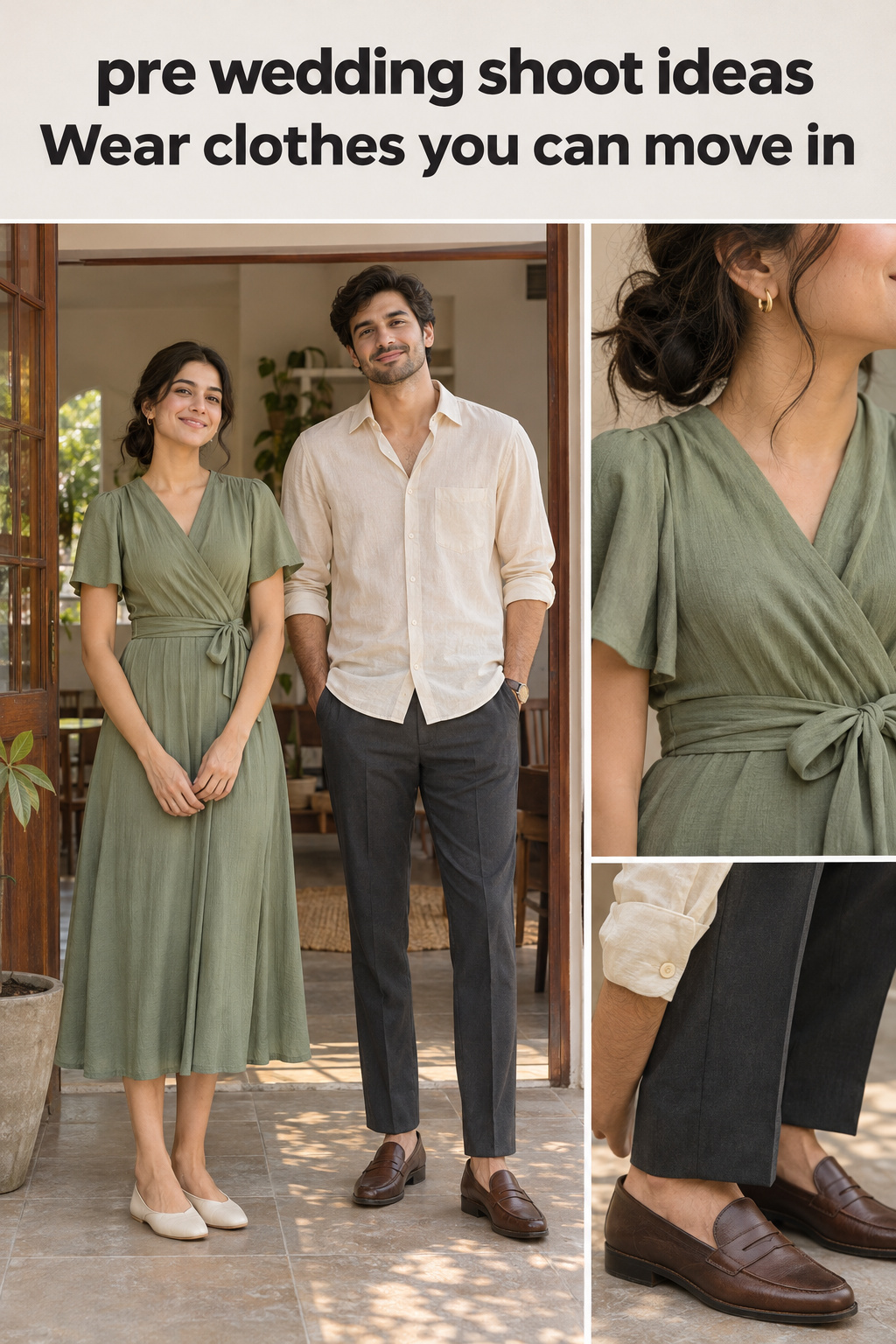
Personal clothing can carry part of the story when it has a connection you want to record. You might wear a garment associated with your family, a favorite piece you often choose for dates or something bought specifically to mark this stage of your relationship. You decide which connection matters. The clothes do not need to reproduce the wedding outfit.
If you include cultural or family clothing, explain its significance in your own terms. Ask how you want it represented and which details deserve a photograph. Do not add a ceremonial action merely to decorate the session. If someone else owns a garment or keepsake, get their permission before using it and discuss any handling limits with the photographer.
Plan an actual frame for an important detail. An embroidered cuff might appear while you hold a book; a favorite pair of shoes might be shown in the full-length portrait. This gives the detail a place in the sequence. Leave an accessory at home if you cannot identify a photograph where you want it included.
The same test applies to props. In Sam Wyper’s pre-wedding session advice, props are a considered choice because they can contribute to a story or distract from the interaction. For your plan, name the action an object makes possible. A book can be exchanged. A cup can be passed. A suitcase needs a stronger reason than appearing in a travel-themed reference.
Try the intended action in your clothes before the session. Sit at the proposed table, reach across it and stand again. Check whether you can move as planned without repeatedly adjusting the garment. If the action does not suit the outfit, change one of them. You do not have to preserve a concept that requires you to spend the session managing your clothes.
Keep genuinely private material out of the prop collection. A meaningful letter can remain closed; a book can stand in for a shared interest without revealing personal notes inside. Tell the photographer if an object has information that should stay out of the frame. Decide what you want the final images to show before anything is photographed closely.
Keep the choices that matter beyond a visual trend
Once the concept is taking shape, imagine removing its most conspicuous treatment. Would the session still mean something if the photographs were presented without an elaborate effect or a fashionable color treatment? That question helps separate the shared activity from a finish you happen to like at the moment. You can enjoy both while knowing which one you would preserve.
Your preferences may change, and a highly styled image can still hold personal value. Decide which records you would miss if the session focused entirely on the look: your faces, a familiar room, a garment or an ordinary interaction. Ask for those photographs alongside any more experimental work you have agreed.
Confirm access to the cafe, studio or garden you want to use. Ask the actual owner or operator about photography arrangements, equipment and any conditions that apply. Confirm these details before buying clothes or building the concept around the place. Use the answer you receive for that location.
For an outdoor idea, agree on an alternative that preserves the action you care about. The courtyard book exchange could move to a permitted indoor table; a planned full-length portrait might use another confirmed space. Ask the photographer how a change would affect the session and any charges. Do not assume a backup is available until it has been discussed.
Comfort and privacy also deserve a place in the concept. One partner may enjoy a public setting while the other would prefer a private room. Talk about that before choosing the location. A good compromise might reduce the audience or change the activity. It should not depend on persuading someone to accept a gesture or exposure they have already declined.
When the plan feels crowded, remove the least meaningful transfer, prop or outfit change. Keep the action and the portrait that best explain why you wanted the session. Ask the photographer to assess the revised version. Ask how the revised plan affects the agreed service, price and timing.
Plan how the photographs will be used
The intended use can change which photographs you ask for. If you want a save-the-date design, show the photographer the proposed layout or describe where text will sit. Ask for a suitable composition with clear space in that area. A close portrait that fills the frame may still be lovely, but it might not suit that particular design.
For a printed sequence or album, ask for variety that serves the story. A wider setting image can introduce the scene, a closer action can develop it and a portrait can bring it to a pause. Tell the photographer which details you care about without prescribing every camera decision. Select the photographs that work together in the finished album, and leave out a planned frame if it does not fit.
If you intend to share pictures online, discuss vertical and horizontal options as part of the brief. Ask what is included in delivery and whether different crops can be provided. Check the actual agreement for editing, retouching, resolution and printing arrangements. Avoid assuming that a particular look, file type or additional version comes with every session.
Keep your personal sharing choices separate from the photographer’s portfolio permissions. Discuss whether images may appear on their website or social accounts and record the agreement. You may want some photographs for your own album and a smaller selection for public use. Raise that distinction before the session so it can inform both the pictures and the delivery process.
Finally, work backward from any date when you need the finished photographs. Ask about the photographer’s delivery schedule, your design work and any printing time that applies. Leave the exact timetable to the providers involved. If the images are for your own keepsake, you may have more flexibility than a couple using them for invitations that have yet to be sent.
Editor’s take: Choose the action you want to remember
I would choose the shared action before the backdrop. Exchanging books or sitting down for breakfast gives a pre-wedding session a subject you can return to even when individual styling preferences change. Then I would add one composed portrait that clearly marks the occasion. My reservation is that an everyday setting can feel too exposed for some couples, especially when a home or private possessions are involved. A controlled studio scene or a permitted public location may suit you better. Start by naming one thing you enjoy doing together and one photograph you want to keep from this period. Take those two ideas to the photographer and ask what a manageable sequence could look like.
Sources and methodology
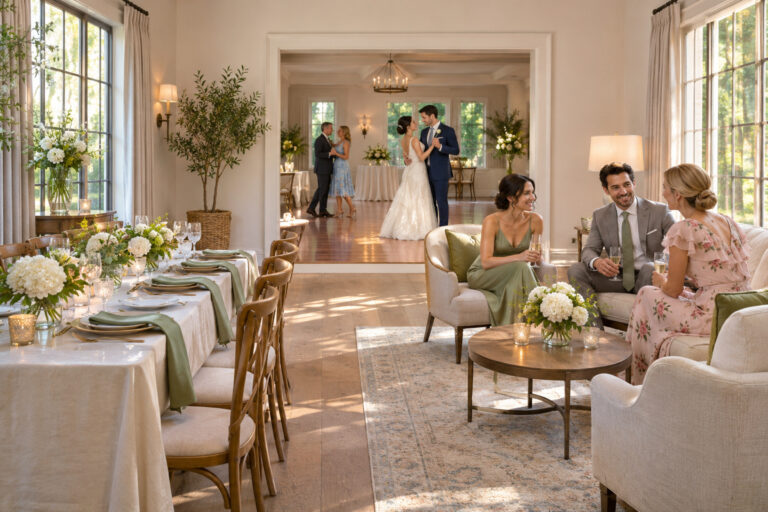
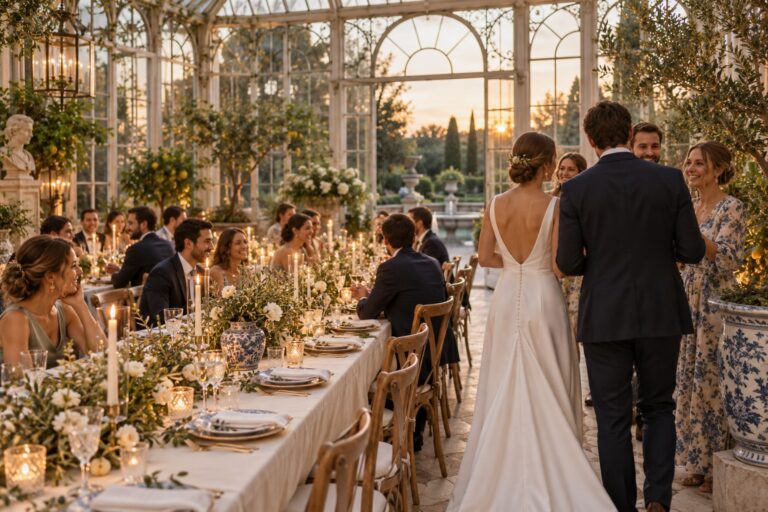
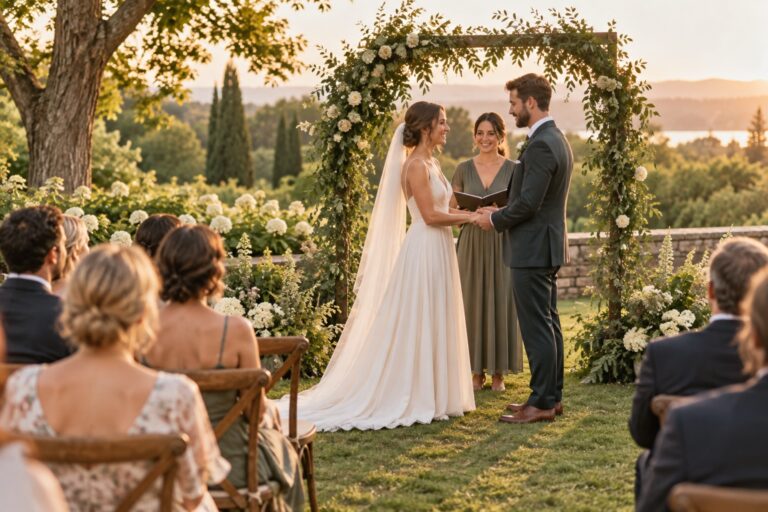
This article reviews ten page-verified organic destinations from a Google US English search, including photographer guides, visual collections and a public discussion. An inaccessible gallery was recorded and replaced with another verified organic destination. The dated guides show a range of concepts; they do not establish measured growth or a ranking of current trends. The sequences proposed here are research-based editorial suggestions, without firsthand session planning or photography experience. No actual couple’s story has been adopted. The accompanying generated artwork depicts fictional sessions and styling examples.
FAQ
What are simple pre wedding shoot ideas that still feel personal?
Choose a shared activity and develop a few related photographs around it. Breakfast at home, exchanging books or visiting a permitted courtyard can provide a beginning, a small action and an ending portrait. Use details you actually want to record. You can keep the setup modest without asking every photograph to look spontaneous.
Can we have a pre-wedding shoot without kissing or close contact?
Yes. Explain your boundaries before the session and choose references that reflect them. You can sit in separate chairs, pass an object or look toward the same page. Ask for direction about posture and expressions within those limits. Shared attention gives the photographer something to work with without requiring an intimate gesture.
Do we need a different outfit for every location?
You can keep one outfit if it suits the photographs you want. Discuss any change with the photographer and consider where it would happen and what it adds. A meaningful garment or a formal milestone portrait may justify another look. Changing only to imitate the number of looks in someone else’s gallery adds work without a clear purpose.
Is a home session always better than a studio?
Choose according to the setting you want to record and the privacy you need. A home can support a familiar activity, while a studio can provide an agreed scene without including your private rooms. Ask the photographer about the actual space, available setup and relevant gallery examples. Neither choice guarantees a particular mood or lower price.
How do we avoid copying another couple’s photographs?
Identify what appeals in a reference, such as a seated composition or an object being passed, then connect it to your own activity and clothes. Avoid recreating a personal detail simply because it looked meaningful for someone else. Explain the reference to your photographer and ask how it could be adapted to your session.
What should we confirm if we want the photos for save-the-dates?
Explain the layout, where the text needs space and when the finished images are required. Confirm delivery arrangements and any printing or design requirements with the relevant providers. Ask for suitable compositions during the session. Check the agreed usage terms before sending photographs to a designer or print service.