Wedding Food Ideas for a Reception Guests Remember
A reception can serve a perfectly good dinner and still leave the food feeling like a sequence guests simply wait through. A more memorable experience often comes from a few small moments: something inviting as people arrive, one point where they can choose or watch a dish come together, and a final bite that sends them back to the party smiling. You do not need a dozen stations to create that feeling.
These wedding food ideas use a simple capsule system. Choose one idea for the welcome, one shared or interactive moment, and one sweet or portable finish. Each should have a clear purpose, fit the space, and be easy to understand at a glance. Think of the ideas as conversation starters for your caterer, not a required menu or a promise that every setup works in every venue.
The approach is different from planning a complete reception menu. It helps you decide where one distinctive detail can make the evening feel personal, then gives the rest of the meal room to be straightforward. Start with the guest experience you want, and let the food support it.
Build wedding food ideas around three guest moments
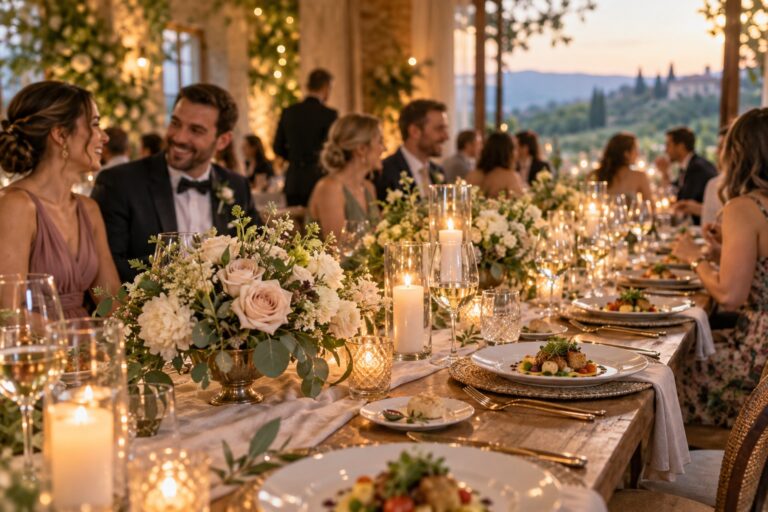
Before selecting dishes, picture the celebration from a guest’s point of view. They arrive, find a drink, reconnect with people, sit down or move through the room, and eventually return to dancing or head home. Food can make one of those transitions feel especially warm. The most useful wedding food ideas have a job beyond looking good in a photograph.
Turn wedding inspiration into a plan you can actually follow.
Zarellea brings your guest list, budget, vendors, and day-of details into one shared space — so no beautiful idea gets lost in the shuffle.
Welcome: give guests an easy first choice
An arrival bite can bridge the time between ceremony and the next part of the reception. Think of a small, easy-to-carry snack, a passed savory bite, or a compact display people can approach without needing a plate and both hands. It should be visible, convenient to reach, and sized for the actual transition. If guests are walking from another space or carrying drinks, a fiddly appetizer may be less useful than a one-bite option.
Use the welcome moment to introduce a flavor, color, or family connection. A familiar snack from a place that matters to you can feel more personal than a long explanation on a sign. A small note can name the dish and its inspiration, while letting guests decide whether they want to try it. Keep the detail short enough to read while standing.
Share: create one point of discovery
The middle moment can invite people to talk or make a small choice. It might be a bread and flavored-butter display, a finishing station where a chef adds toppings, or a coffee bar that opens when the room needs a reset. One well-chosen interaction is often easier to enjoy than several stations competing for attention. Ask what guests will actually do there, how long the interaction takes, and whether it interrupts conversation or creates a queue.
Interactive does not have to mean complicated. A choice between two finishing touches can make a familiar food feel participatory without asking guests to assemble an elaborate dish. Watching a vendor prepare a small treat can also become a shared moment, especially when people can see what is happening and collect their portion without blocking a walkway.
Close: offer a final taste at the right time
A sweet cart, coffee service, or take-away snack can close the food story. It need not be a second dessert program. A few individually served treats may be enough, especially if guests will continue dancing. If people are leaving in waves, a small packaged bite can be easier to collect on the way out than a display that requires them to stop and serve themselves.
Put the three moments on a simple timeline and remove any one that does not solve a real need. If the ceremony-to-reception transition is brief, a separate welcome display may be unnecessary. If the dinner already has a showpiece, another interactive station could feel repetitive. The capsule system works because it gives each idea a role and makes it easy to say no to extras.
Make the first food display feel like a welcome
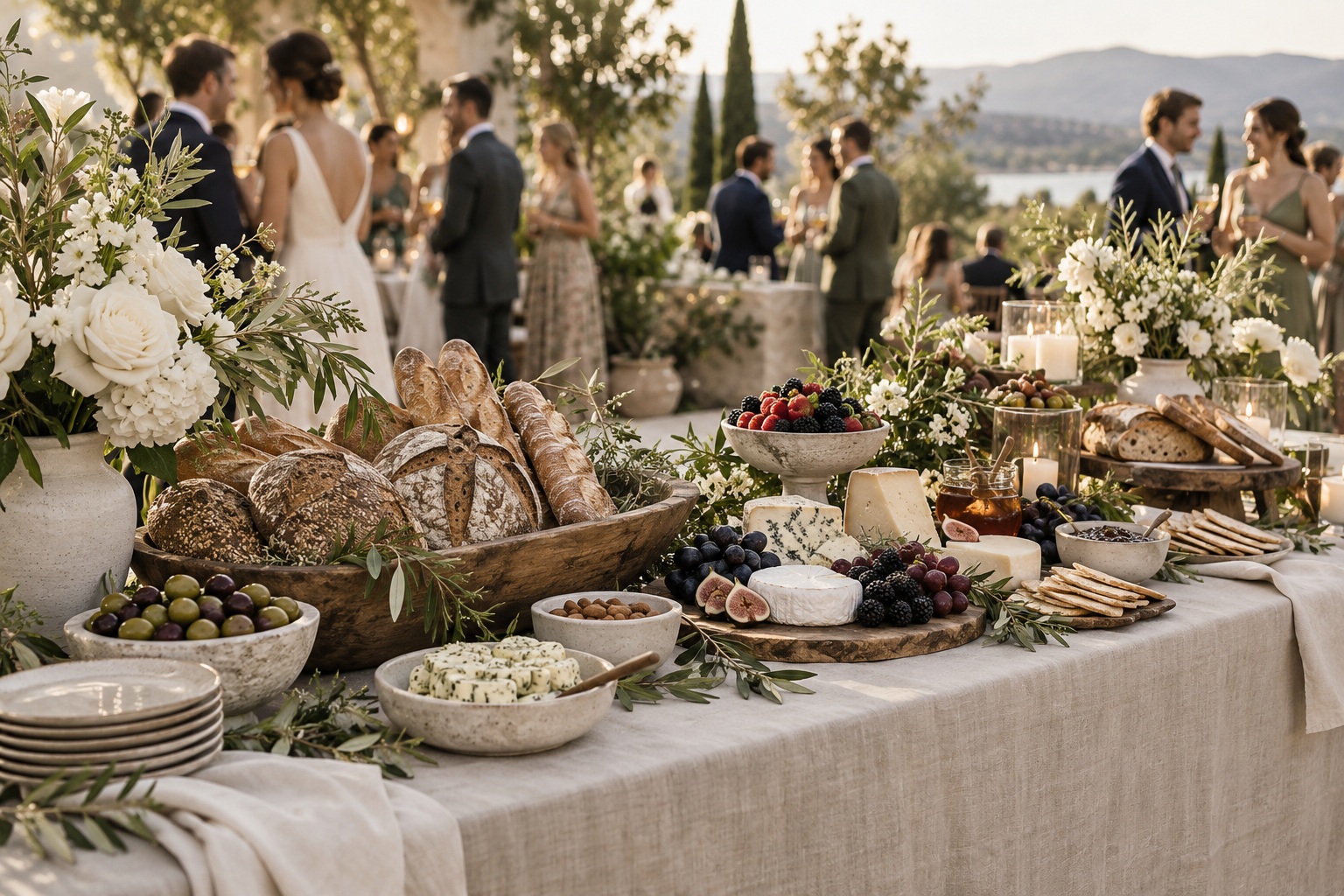
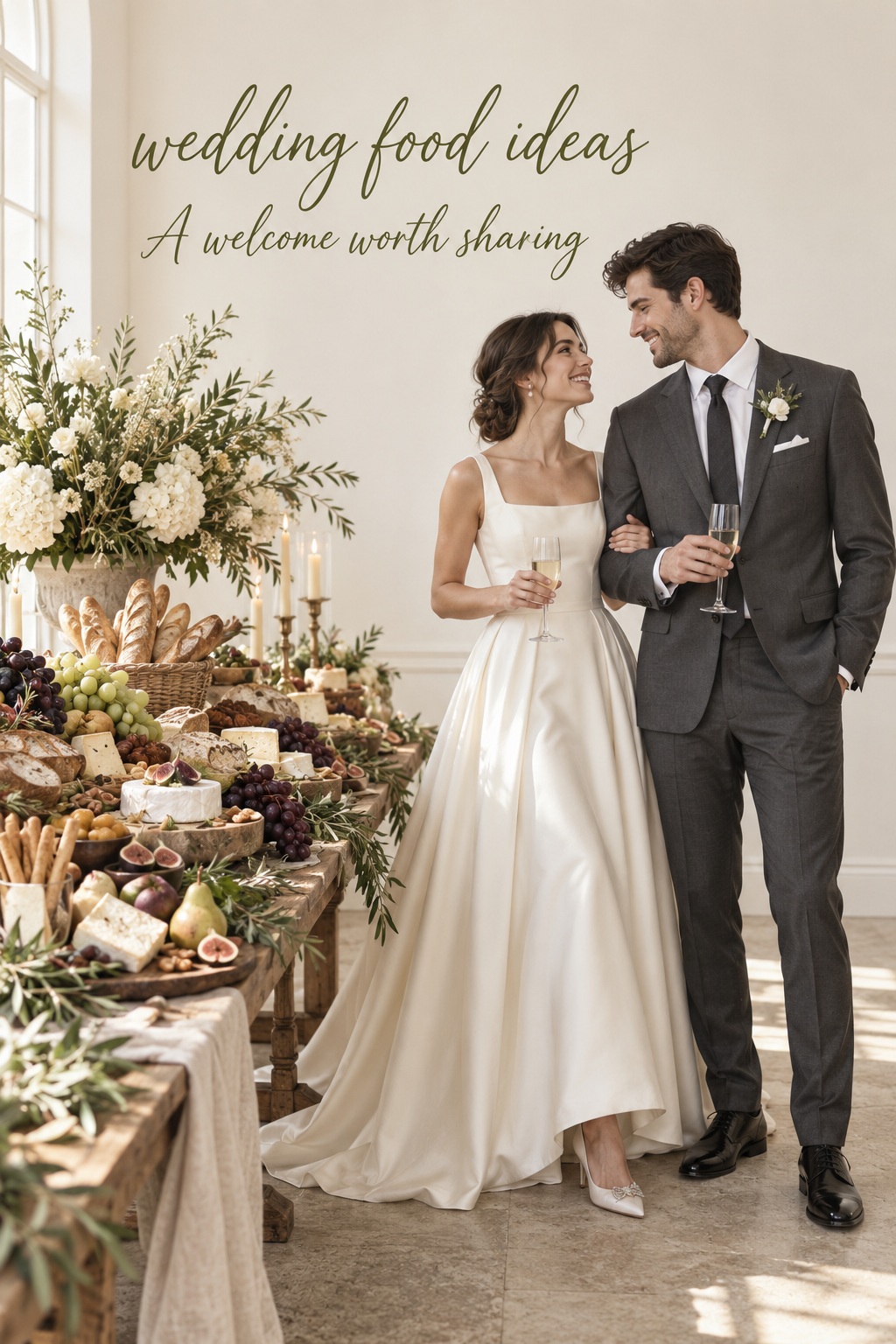
A food display can set the tone before guests sit down, but abundance alone does not make it welcoming. People need to see what is offered, reach it without crowding, and understand how to take a portion. Wedding food ideas for this moment work best when visual styling and simple access are planned together.
Shape a grazing display around a clear idea
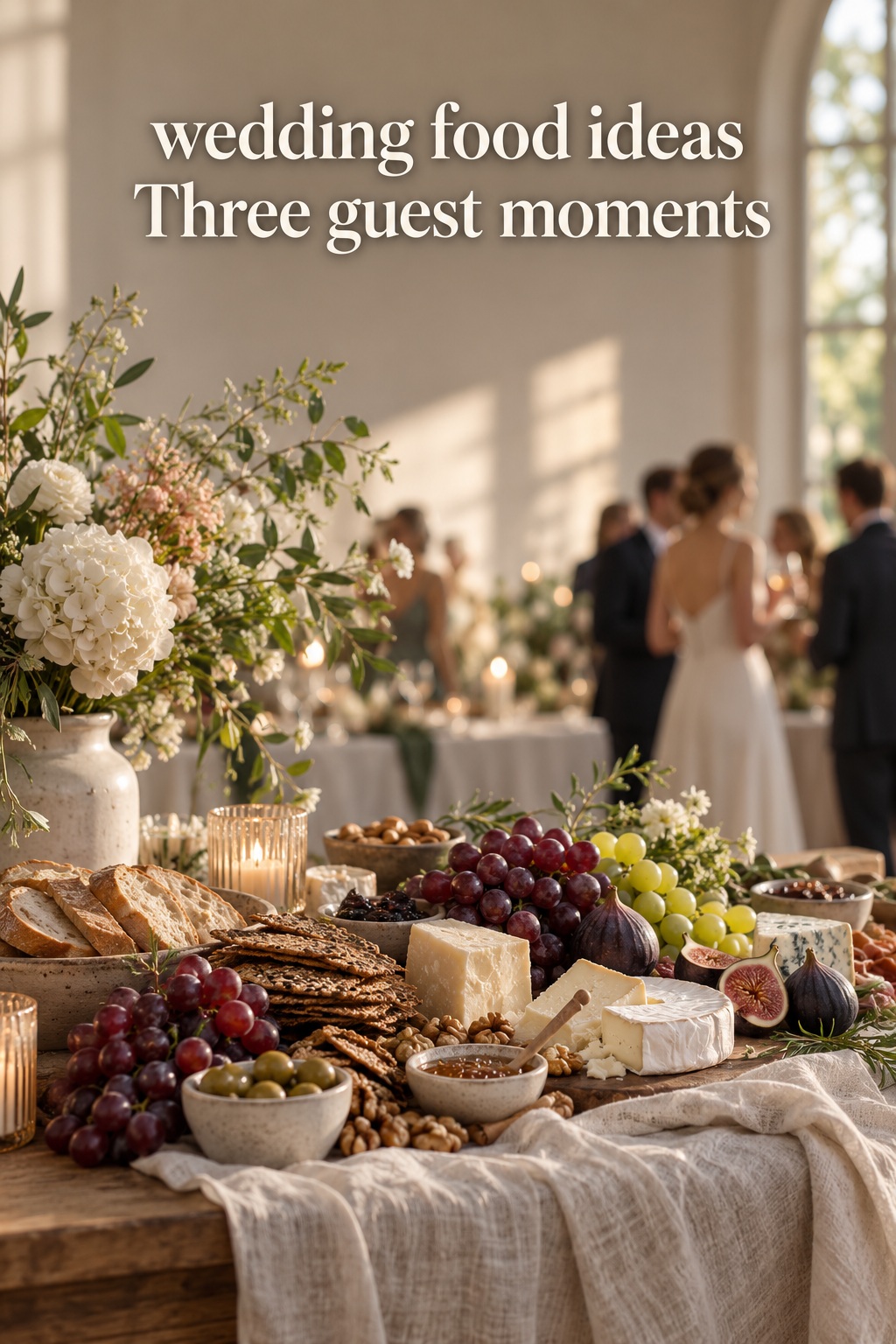
A grazing table can feel more coherent when it has a point of view. Instead of filling every open space with unrelated bites, choose a direction such as savory-and-crisp, fruit-and-cheese, or a small collection of regional favorites. Use height sparingly so guests can see the food and reach it. Separate items that need their own serving tools, and let the caterer decide which ingredients and display conditions suit the event.
For a more edited look, leave visible breathing room between groups. Place crackers beside a spread rather than hiding it underneath, and keep small bowls stable and easy to identify. A few labeled components are more useful than a decorative sign that does not tell guests what they are selecting. If a dish has a meaningful story, add one concise line near it rather than turning the entire display into a themed installation.
Grazing tables are already a familiar reception idea, so the personal detail can come from the combination, serving pieces, or the way the display connects to the event. Treat the table as a staffed food service, not just decor that can be assembled and forgotten.
Try a portable welcome bite
If people will be moving between spaces, consider a tray-passed bite or a small grab-and-go portion. Mini savory pastries, a small fruit cup, or a bite-sized version of a familiar family dish can be easier to enjoy than a large plate. These are prompts for a caterer to adapt to the event, not recipes or dietary assurances. Ask how the item will be served and whether guests can eat it comfortably while standing.
Think about where the bite appears. Guests may be arriving with coats, bags, or a drink in hand. A server can offer the food directly, while a low display may be easy to miss in a busy room. If you choose a self-serve arrangement, leave a clear approach and a place for used napkins or picks. Keep it away from the entrance pinch point and from anything that would make the food hard to notice.
Let the display echo the celebration quietly
Food can contribute to the room’s visual story without needing to match every table detail. A bowl of citrus, a simple linen, a wood board, or a small menu card may be enough to make the display feel considered. Avoid putting flowers, signs, or decorative objects where they make the food difficult to reach. If you want a color connection, use it in a serving piece or napkin rather than changing ingredients to fit a palette.
One of the ideas described by wedding planners in the Los Angeles Times coverage of food styling is to treat presentation as part of the experience. You can borrow that principle at any scale: give one bite a clear focal point, then keep the rest of the setup easy to use. The visual moment should help guests notice the food, not make them wonder whether it is meant to be touched.
Choose one interactive wedding food idea with a purpose
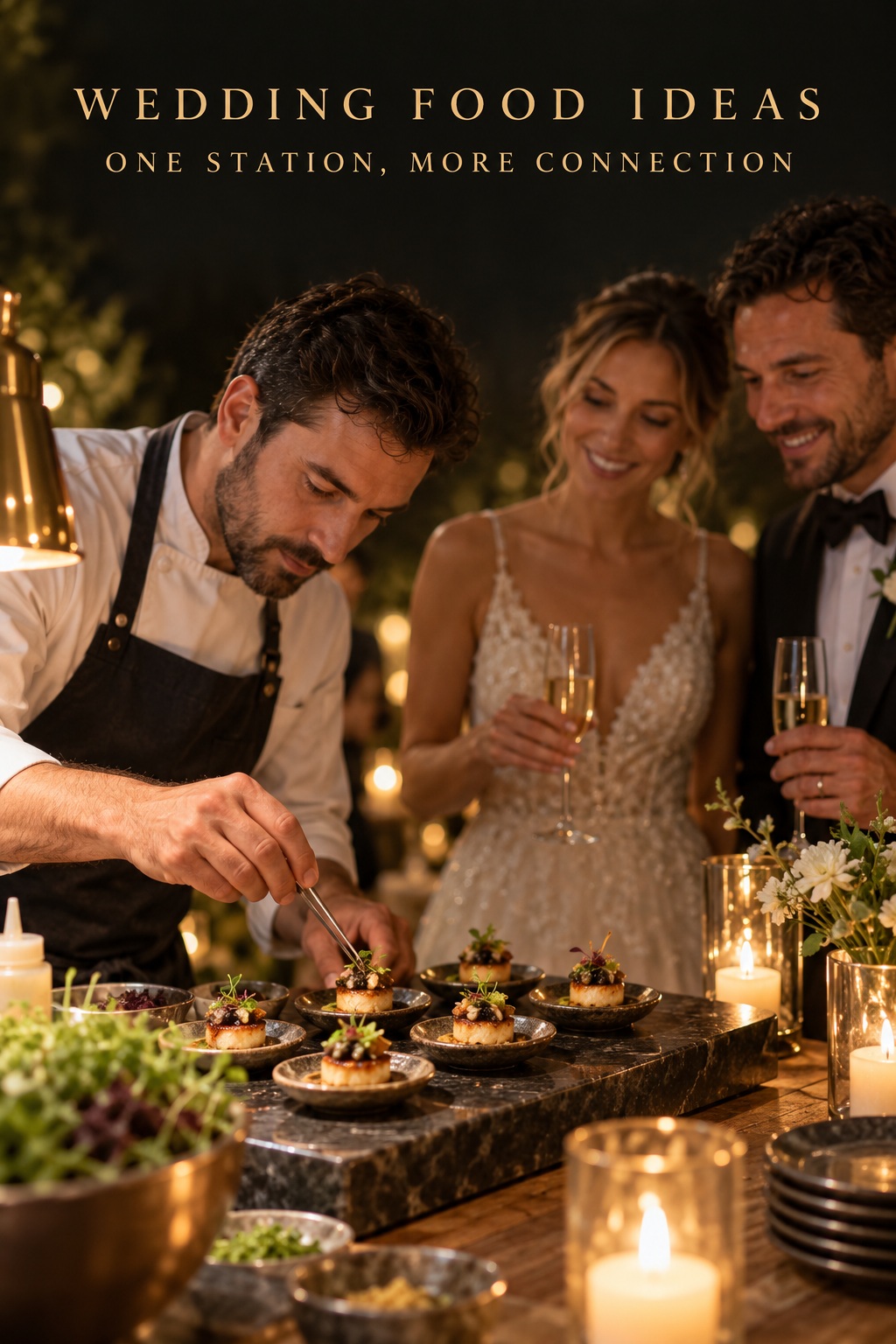
Interactive wedding food can create a natural pause in the reception. Choose the kind of interaction that suits your guests and the room. A station should answer a simple question: does it help people mingle, make a favorite food feel special, or provide a useful refreshment at a particular point in the evening?
Offer a finishing touch, not a complicated build-your-own meal
A compact finishing station can add choice without asking guests to design a whole plate. Consider a bread moment with a couple of spreads, a warm snack with two toppings, or a dessert where guests choose one sauce. The base item should already be enjoyable on its own. That way, the station still works for someone who wants a quick serving or does not want to make several decisions.
Limit the choices to a small set that makes sense together. Long lists can slow down the line and create more containers to manage. A clear sign can name the options, and a server can help keep utensils in place. If you want to reflect a family or regional food tradition, ask the caterer how to preserve its defining flavor while serving it in a format that works for the reception.
Make coffee or a warm drink an evening reset
A coffee or tea moment can give guests a reason to pause between dinner and dancing, or to warm up at an outdoor event. Keep the offer purposeful: a well-run coffee station with milk and a few accompaniments may be more useful than a large collection of syrups and toppings. Consider whether the line can sit away from the dance floor and whether guests have somewhere to place a cup.
A mobile coffee cart or staffed service can provide atmosphere, but it should be placed where its queue will not block a doorway, bar, or path to the restrooms. Ask the venue about power, counter space, cleanup, cups, and the time the service can remain open. These details are not glamorous, but they determine whether guests can actually enjoy the idea.
Use a live finishing moment when guests can see it
A chef finishing a dish, a vendor scooping gelato, or a cart preparing a small treat can turn service into a brief show. The best version is visible without turning into an audience bottleneck. Place the action where a few people can watch while others collect their portion and move on. If the preparation area is hidden or the line takes over a small room, the interaction may add friction instead of energy.
Keep the food choice tied to the actual event. A mobile vendor might serve a favorite dessert or a late-evening snack that feels connected to your story. Examples of mobile wedding food and drink vendors show several ways this can look. The particular vendors and dishes are inspiration, not a guarantee of availability, fit, or cost. Ask about access, setup time, power, weather plans, and the service window before booking.
One station is enough for most celebrations. If you are tempted to add another, check whether it provides a different experience or simply repeats the same interaction in another form. Choose a station that is easy to explain, has a clear start and finish, and does not require every guest to participate for the event to feel complete.
Give dessert or a take-away bite a memorable finish
The closing food moment can be playful, comforting, or quietly practical. It does not have to compete with the cake or become a second full dessert table. Think about when guests will encounter it and whether they will be seated, dancing, or leaving. The best wedding food ideas for the end of the night fit the way people are already moving.
Style a small dessert selection with room to choose
A dessert display can feel abundant without offering every sweet in miniature. Choose a few contrasts, such as one chocolate option, one fruit-forward bite, and one nostalgic favorite. Present them at a height that is easy to see and reach, with serving pieces that suit the size of each treat. If guests will take items themselves, make portions individual or provide a clear serving tool for each choice.
Use the display to reflect a shared memory in a light way. Childhood cookies, a treat from a favorite local bakery, or a flavor associated with a trip can make the table personal. You do not need a long story card. A small label and a simple explanation are enough. If you are serving cake too, think about whether the other sweets add a different texture or choice rather than simply duplicating the same dessert moment.
Bring a sweet cart or passed treat to the dance floor
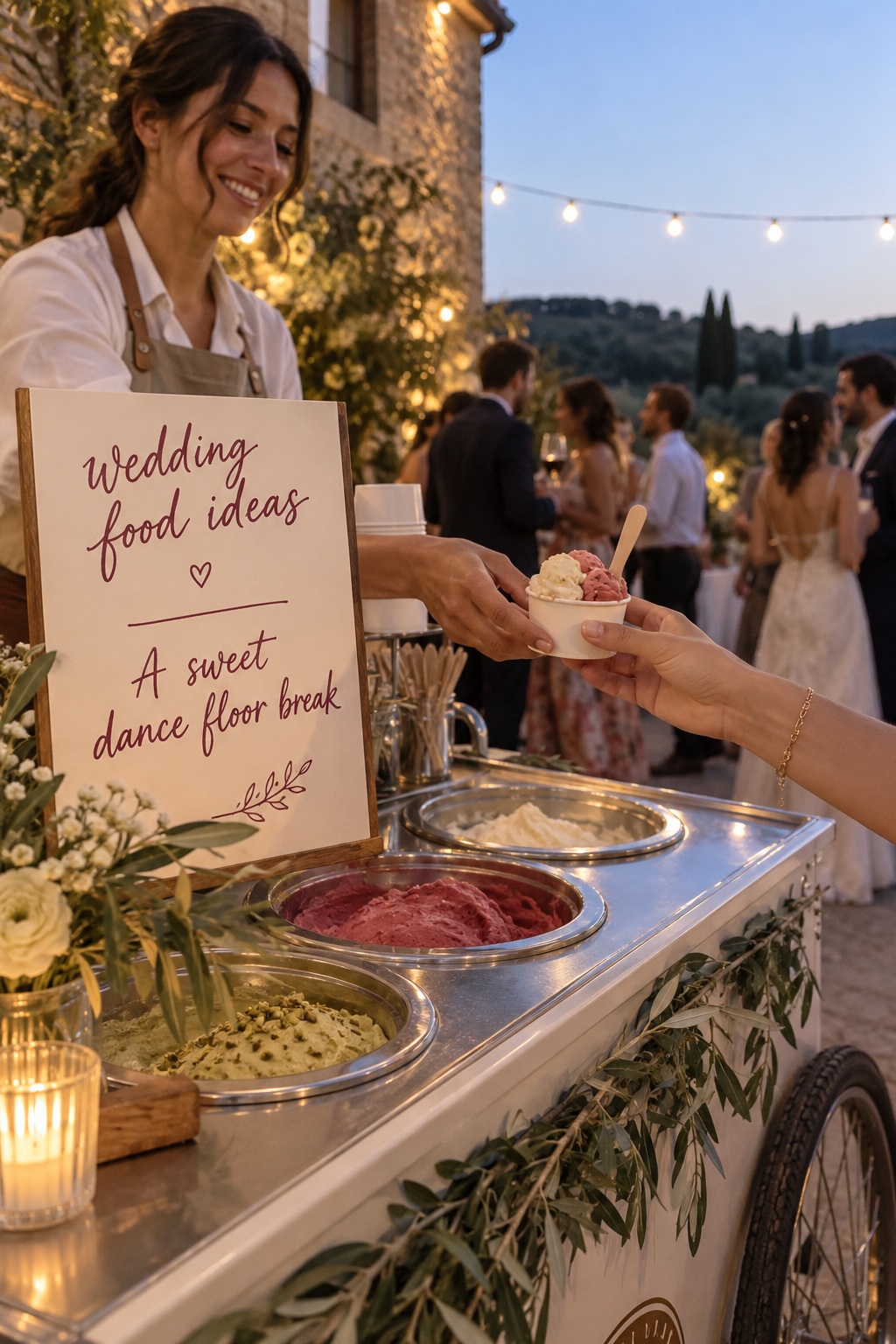
A roaming dessert can meet guests where they are instead of asking them to leave the dance floor. Small cookies, a single-serving frozen dessert, or a warm pastry can feel like a surprise when it appears after the formal dessert. The Knot’s wedding food trend coverage describes mobile late-night desserts as one way to add energy to the later part of a reception. Treat that as an inspiration, and decide whether the timing suits your own schedule.
Before selecting a roaming treat, check what the venue permits and how it will be served. A chilled item may need specific equipment and a short service window. A warm item needs a safe, practical path from preparation to guest. Ask the vendor how they plan to keep the serving area tidy and how they will accommodate a guest who cannot eat a particular ingredient. Do not rely on a decorative label as a substitute for direct confirmation.
A passed dessert can be offered in a few rounds rather than to every guest at once. That keeps the moment relaxed and avoids interrupting a speech or dance. If the event is ending soon after dinner, there may be no need for a late snack. A well-timed cake or dessert can already provide a satisfying close.
Send guests away with a useful little snack
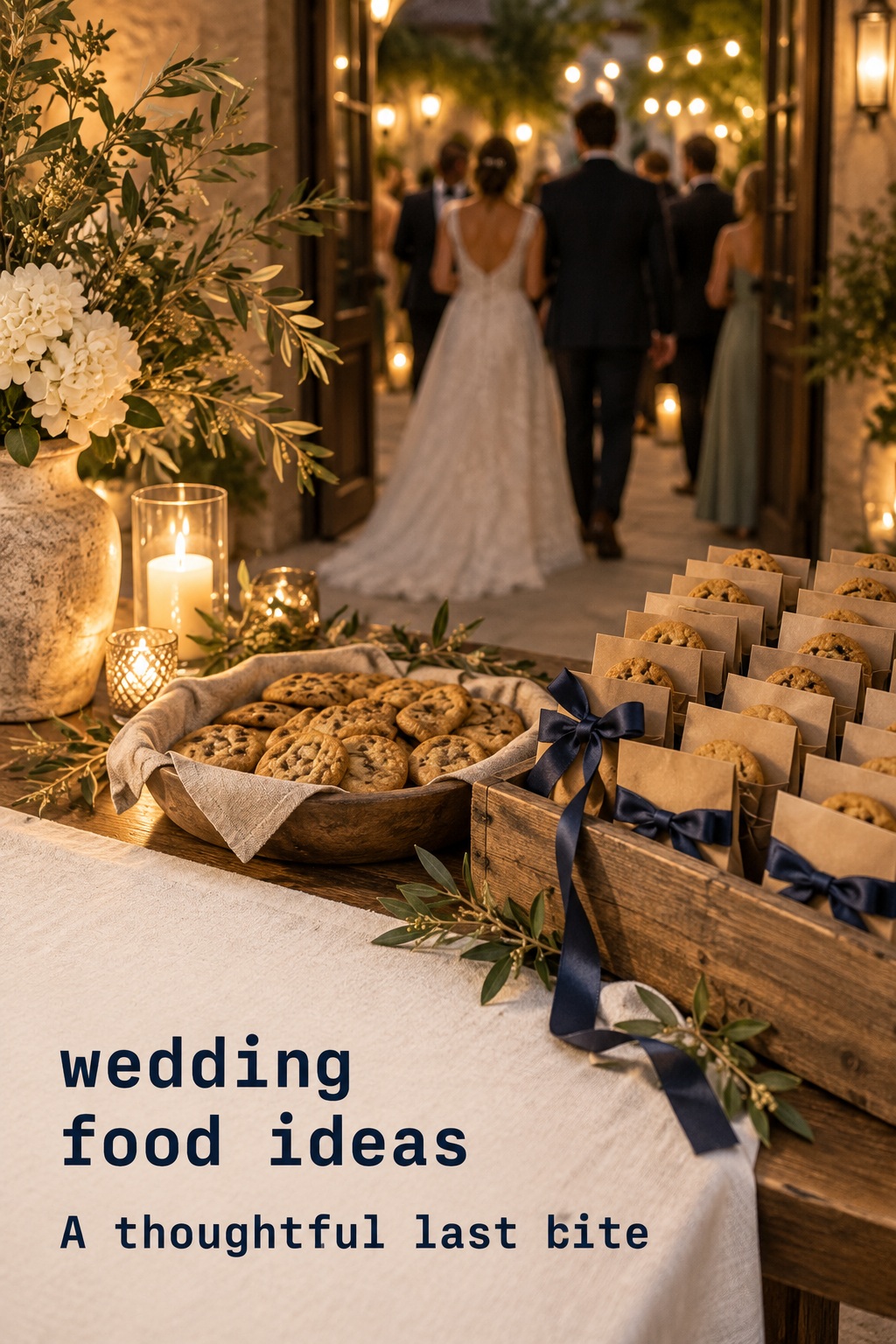
Take-away food works best when it is easy to carry and still appealing at the time guests leave. A small bag of popcorn, a wrapped cookie, or a simple baked treat can be a practical end-of-night favor. Choose packaging that opens easily and will not leak or crumble in a coat pocket. If guests are traveling a distance, consider whether the food is suitable to carry and how long it can remain packed.
Decide whether the favor belongs at each place setting, near the exit, or in a staffed handoff. A treat on the table may be noticed early and eaten with dessert. An exit display feels like a goodbye gift but can be missed when several people leave together. A staff member can offer it as guests go, provided there is enough space to avoid slowing the exit.
Keep the packaging message warm and brief. A thank-you note, a small label with the flavor, or a reference to the food’s connection can be enough. Favors should be easy to accept and optional to take. A snack is a pleasant extra, not an obligation guests need to carry home.
Finish with a quick review: does every chosen moment have a purpose, a clear point of access, and an owner responsible for replenishing or clearing it? Are there too many stops competing with the meal, bar, or dance floor? Is the idea possible in the room you have booked? A short conversation with your caterer and venue can turn inspiration into a plan that fits the actual celebration.
FAQ
What are the best wedding food ideas for a reception?
Start with one food moment that welcomes guests, one interactive or shared idea, and one sweet or portable finish. Choose ideas that suit your venue, reception schedule, and the way guests will move through the space. A few well-placed details can feel more intentional than many unrelated stations.
How many food stations should a wedding have?
There is no fixed number. For an idea-led reception, consider whether each station has a different purpose and whether the room can support its line, setup, and service. One interactive station can be enough if the rest of the meal is already planned and guests have other places to gather.
What food can we serve during cocktail hour?
Consider easy-to-carry bites, a compact grazing display, or a portable snack guests can enjoy while standing. Ask your caterer to adapt the choices to the timing, venue, and confirmed guest needs. Make sure the setup has clear access and does not block an entrance or walkway.
How can wedding food feel personal without a themed menu?
Choose one flavor, snack, or dessert with a genuine connection to you, then let it appear in a natural place. A short sign can explain the detail. The rest of the food can stay simple and coherent without every course carrying a story.
Are food trucks a good idea for a wedding?
A food truck may suit a relaxed event or provide a focused dessert or snack moment. Confirm the venue’s access rules, setup needs, weather plan, service time, and how guests will order or collect food. The truck should fit the space and schedule rather than become a bottleneck.
What can we offer instead of a traditional wedding cake?
You could serve a small dessert selection, pies, cookies, donuts, a favorite family sweet, or a mobile dessert. Choose an option guests can recognize and access easily. If a cake-cutting tradition matters to you, it can also sit alongside another sweet rather than being replaced.
How do we keep an interactive food station easy to use?
Limit choices, label them clearly, provide the right serving tools, and place the station where a queue will not block guest movement. Ask the caterer who will replenish and tidy it. A server can keep an interactive moment moving and answer questions about ingredients.
Should we offer a late-night wedding snack?
Consider one if the schedule leaves a meaningful stretch between dinner and the end of the reception, or if a portable treat would make leaving easier. Check timing with your caterer and venue. If dinner and dessert already fit the event, an extra snack may not add much.