Wedding Theme Ideas for a Day That Feels Like You
The folder is open on the kitchen table: a candlelit library, a bright garden ceremony, blue-and-white plates, a photograph of a favorite seaside town. Each image feels right on its own. Together, they seem to describe four different weddings. That is a familiar place to begin. The useful question is not which saved picture should win. It is what the pictures have in common, and how that shared feeling can guide choices your guests will actually see and experience.
The most useful wedding theme ideas are flexible enough to make a celebration feel connected without turning it into a set. Start with a feeling, a place, or a shared reference; then let your venue, priorities, and the way you want guests to spend the day shape the details. A theme can be a quiet design thread, not a costume or a strict rulebook.
The folder of inspiration is not a plan yet
Imagine a couple who have saved images for months. One loves the warmth of a restaurant dinner. The other is drawn to a garden full of loose flowers. Their shared album also includes a coastal palette, a handwritten invitation, and a vintage brass lamp. If they try to reproduce every photograph, the result may feel crowded. If they look for the qualities repeated across the images, they may find the beginning of a direction: intimate, welcoming, a little nostalgic, and connected to places they love.
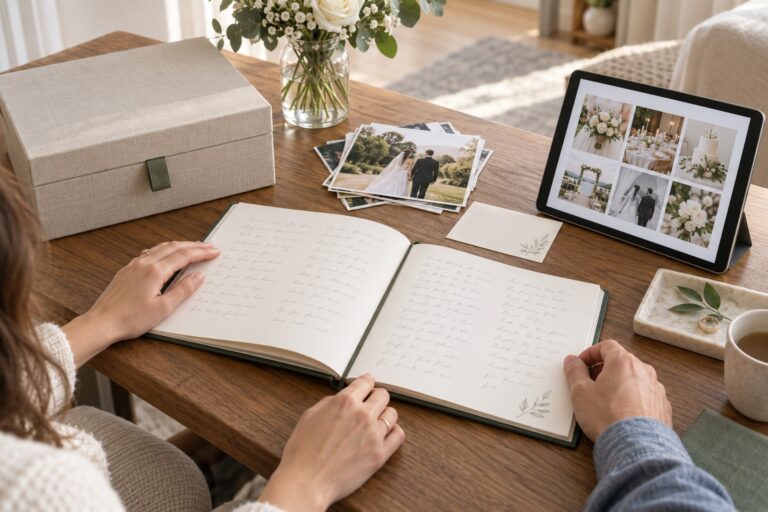
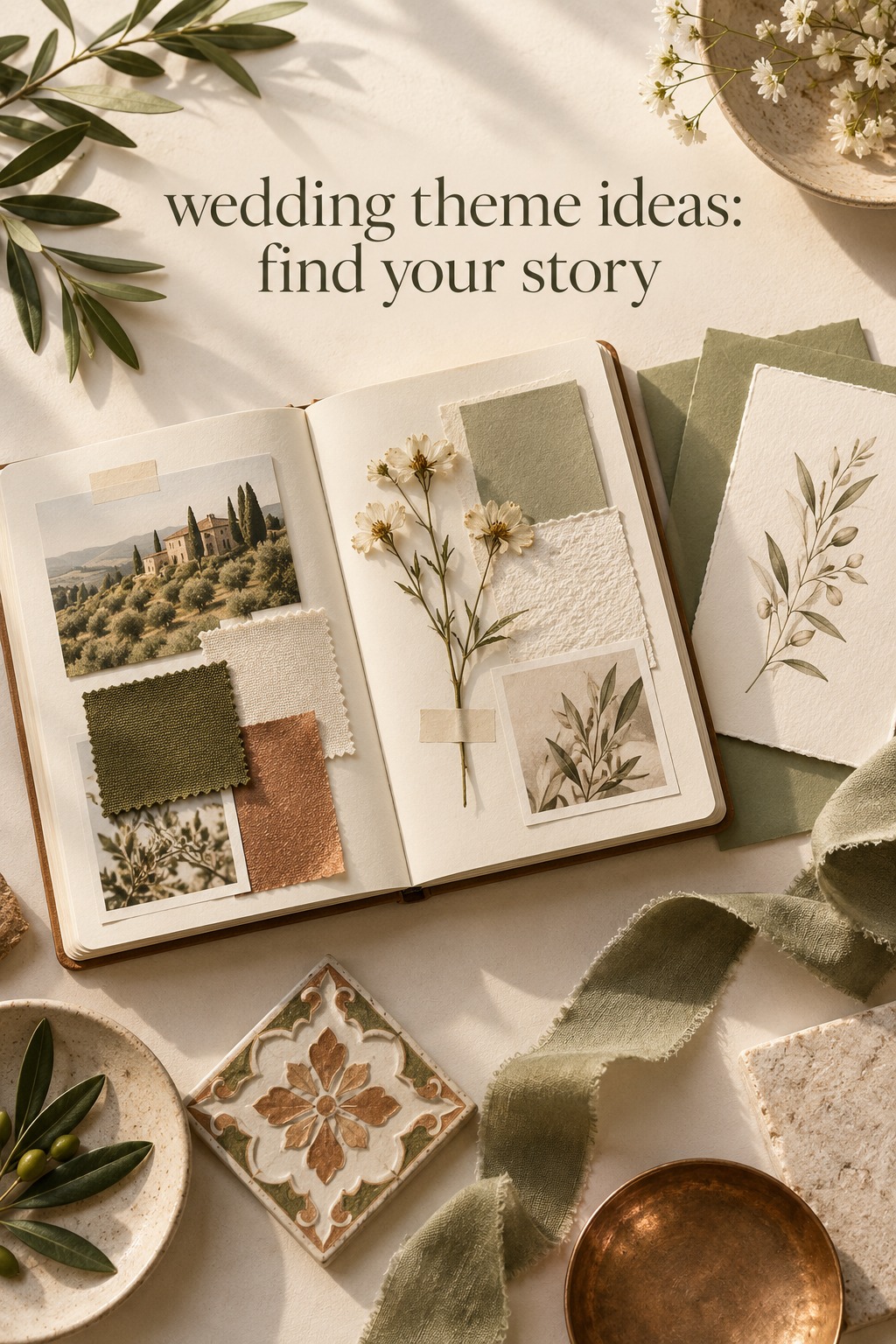
This is the editorial step that makes a collection useful. Keep the images for a moment, but add a note beside each one: What caught your eye? It might be the light, the sense of movement, the contrast between polished and handmade surfaces, or the way people are gathered around one table. The answer is more informative than the label attached to the picture. A saved image called “boho” might appeal because it feels relaxed, not because you want macramé at every turn.
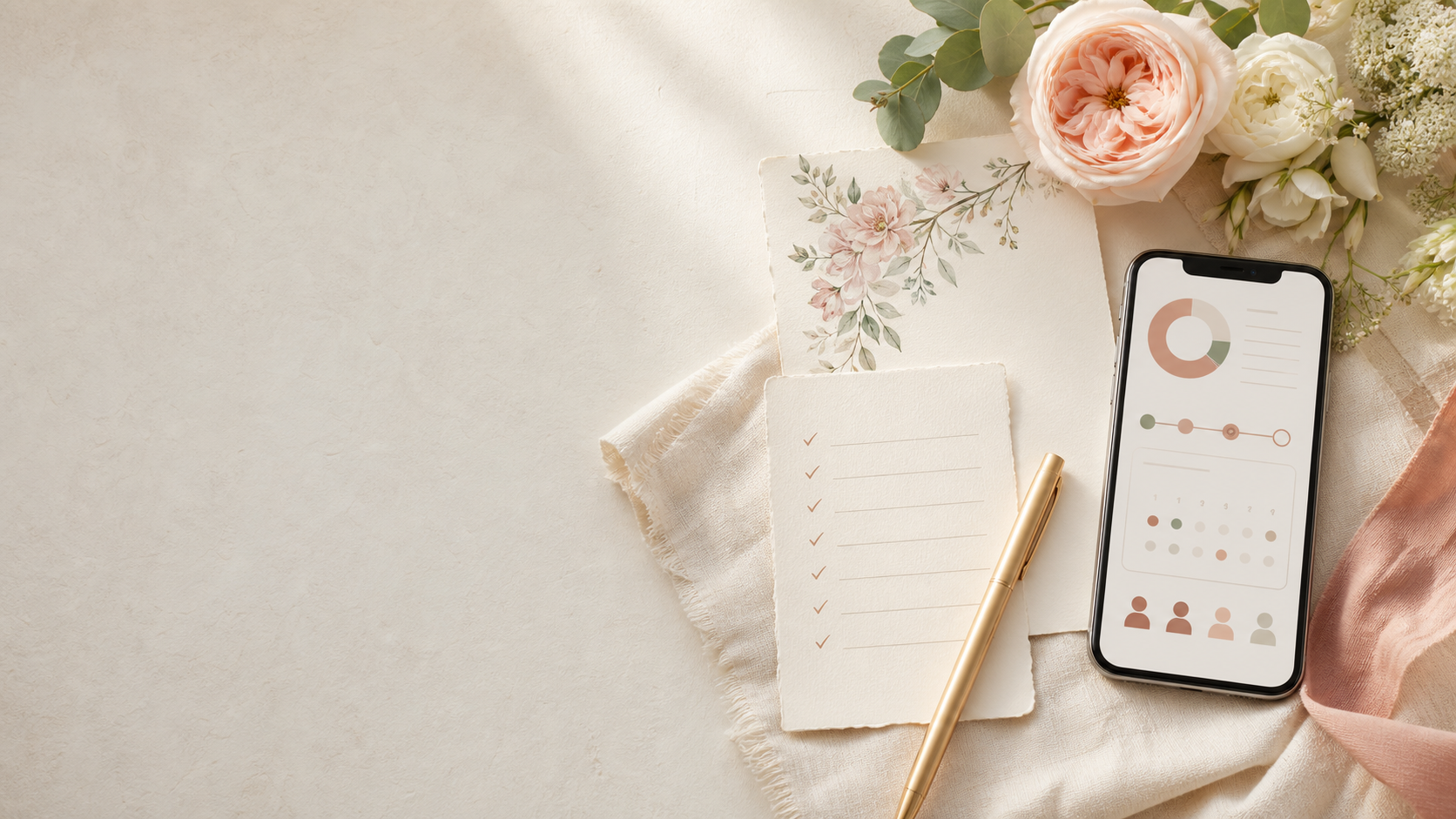
Turn wedding inspiration into a plan you can actually follow.
Zarellea brings your guest list, budget, vendors, and day-of details into one shared space — so no beautiful idea gets lost in the shuffle.
Now circle the words that recur. Choose three that you can both picture, such as “warm,” “open,” and “collected.” Those words are not yet a design plan, but they give you a way to judge future ideas. Does a detail strengthen one of them? Does it make the day feel more like the celebration you want, or is it present only because it looked striking online?
Give yourselves permission to remove attractive images. A wedding vision becomes clearer through editing as much as collecting. If a photo has no connection to your place, story, or preferred guest experience, it can leave the board without becoming a missed opportunity. The aim is not to use every reference. It is to recognize the small number of ideas that keep feeling like yours.
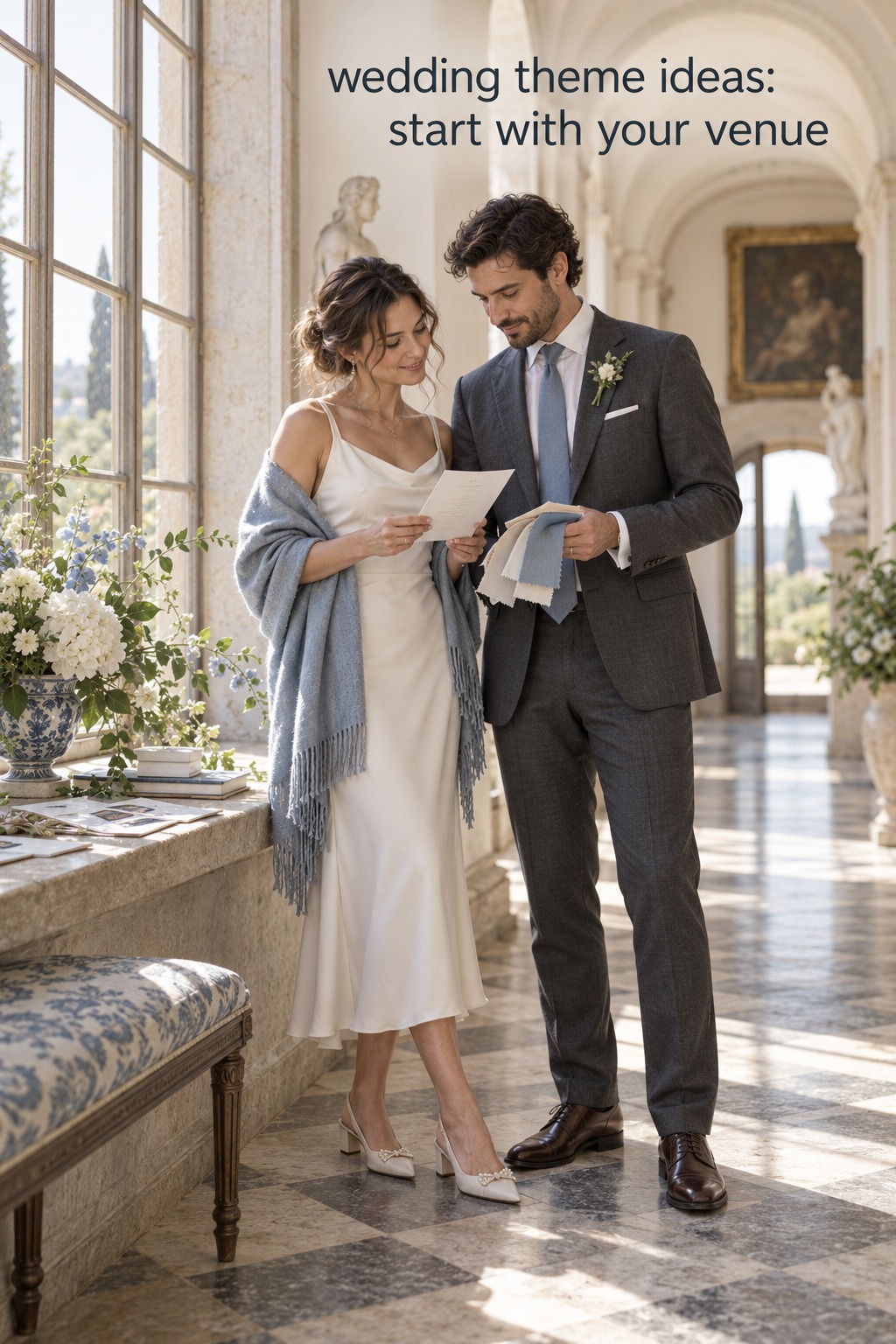
Give the theme a job before giving it a name
People use “theme,” “style,” “aesthetic,” and “vibe” interchangeably, but each word can help with a different planning question. A style describes the broad visual character or formality: classic, modern, relaxed, or formal. A theme offers a subject or design thread, such as a garden, a favorite era, or a shared love of travel. An aesthetic is the more specific visual world you build from it. A vibe describes the feeling and energy guests experience as the day unfolds. These distinctions are useful, not mandatory. You do not need to announce all four in a vendor meeting.
A theme earns its place when it helps you make decisions. It might guide the language on your invitations, the shape of the ceremony space, or the transition from dinner into dancing. If the label only gives you more decorating tasks, it may be too literal. “A summer at the lake” could mean a calm palette, a relaxed dinner, and a few references to a place you return to together. It does not require oars, anchors, and miniature sailboats on every table.
Try a one-sentence brief before choosing a familiar theme name. Complete this sentence together: “We want our guests to feel ___ as they move from ___ to ___, and we want the day to remind us of ___.” The blanks focus the conversation on a feeling, a sequence, and something personal. A draft might read: “We want our guests to feel welcomed and unhurried as they move from an outdoor ceremony to a long dinner, and we want the day to remind us of evenings at our favorite neighborhood restaurant.”
That sentence can hold more nuance than a single label. It also gives you a useful response when a new idea arrives. If a dramatic entrance installation does not help guests feel welcomed or support an unhurried dinner, it may not belong, even if it fits the word “romantic.” The broad menu of wedding theme categories can help you name possibilities, but your brief should decide which ones are worth developing.
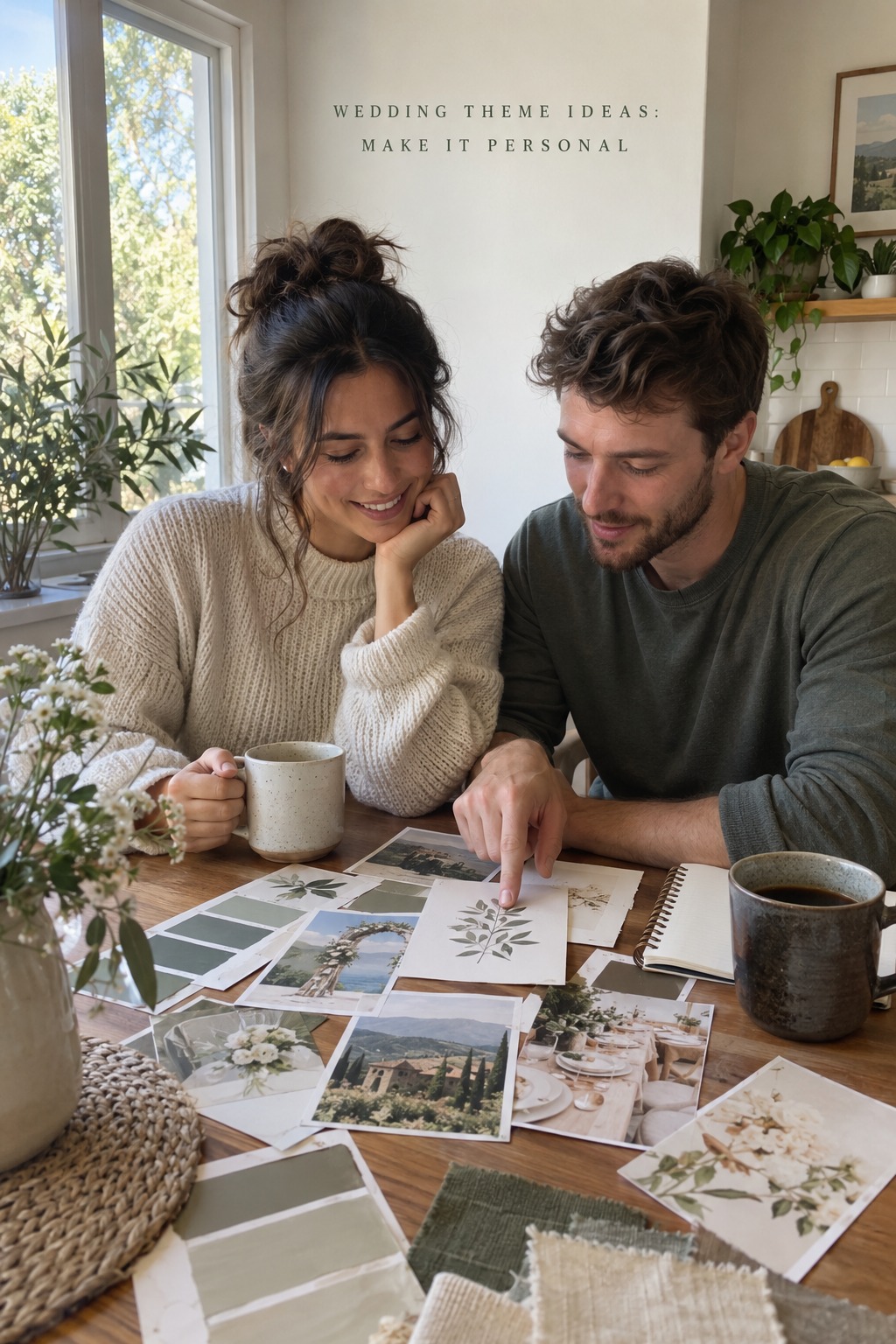
Let the venue edit the idea, not erase it
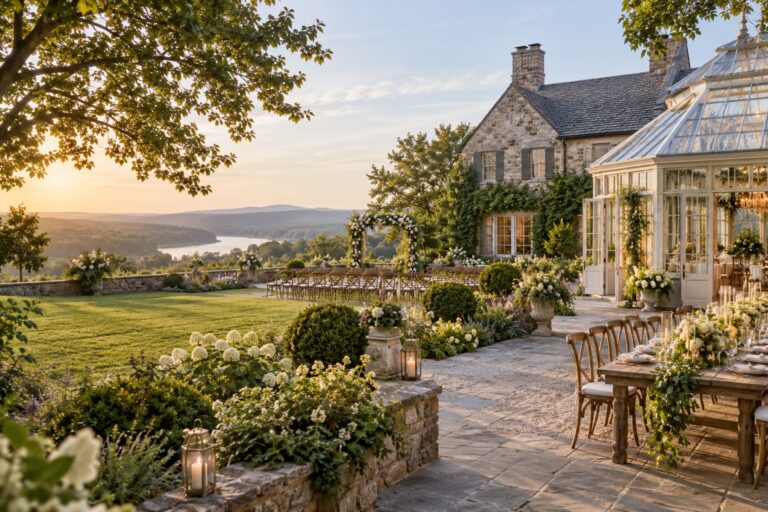
The venue is not a blank page. It already has a point of view: ceiling height, window light, colors, architecture, landscaping, existing furniture, and the way guests enter and move through the space. A theme that works with those details tends to feel at home. One that asks the venue to become something entirely different can require more styling while making the place less recognizable.
Before you commit to a concept, describe the fixed features you are unlikely to change. Note the strongest colors in the room, the most memorable architectural detail, where daylight falls, and which parts of the ceremony or reception guests will see first. Then consider practical boundaries: where sound is allowed, how much room a dinner layout needs, what can be attached to walls, and how a ceremony setup could be reused or removed. Confirm venue rules directly with the venue rather than assuming that a pictured installation is permitted.
Picture a couple who have booked a light-filled art museum with a striking stone staircase. Their first mood board is full of outdoor meadow weddings. They do not have to abandon the soft, natural quality they love. They could carry it through loose seasonal flowers, textured paper, and a gentle green-and-cream palette, while leaving the architectural lines visible. The setting changes the expression of the idea, not the feeling that attracted them in the first place.
Do the same exercise with the schedule and the guest list. A theme built around a leisurely dinner should leave room for conversation. A lively dance-focused celebration needs a layout and sound plan that support movement. If many guests will move between indoor and outdoor spaces, the design should help those transitions feel understandable. The event’s practical shape is part of its character. Inspiration becomes more useful when it acknowledges what the day can actually hold.
If you have not booked a location, make a short venue wish list before you settle on a very specific visual world. Write down the experiences that matter most, then identify the settings that can support them. A priority-first wedding style exercise can help clarify what you want from the guest count, location, and celebration before decor choices multiply. Keep the theme broad enough to travel between your real options.
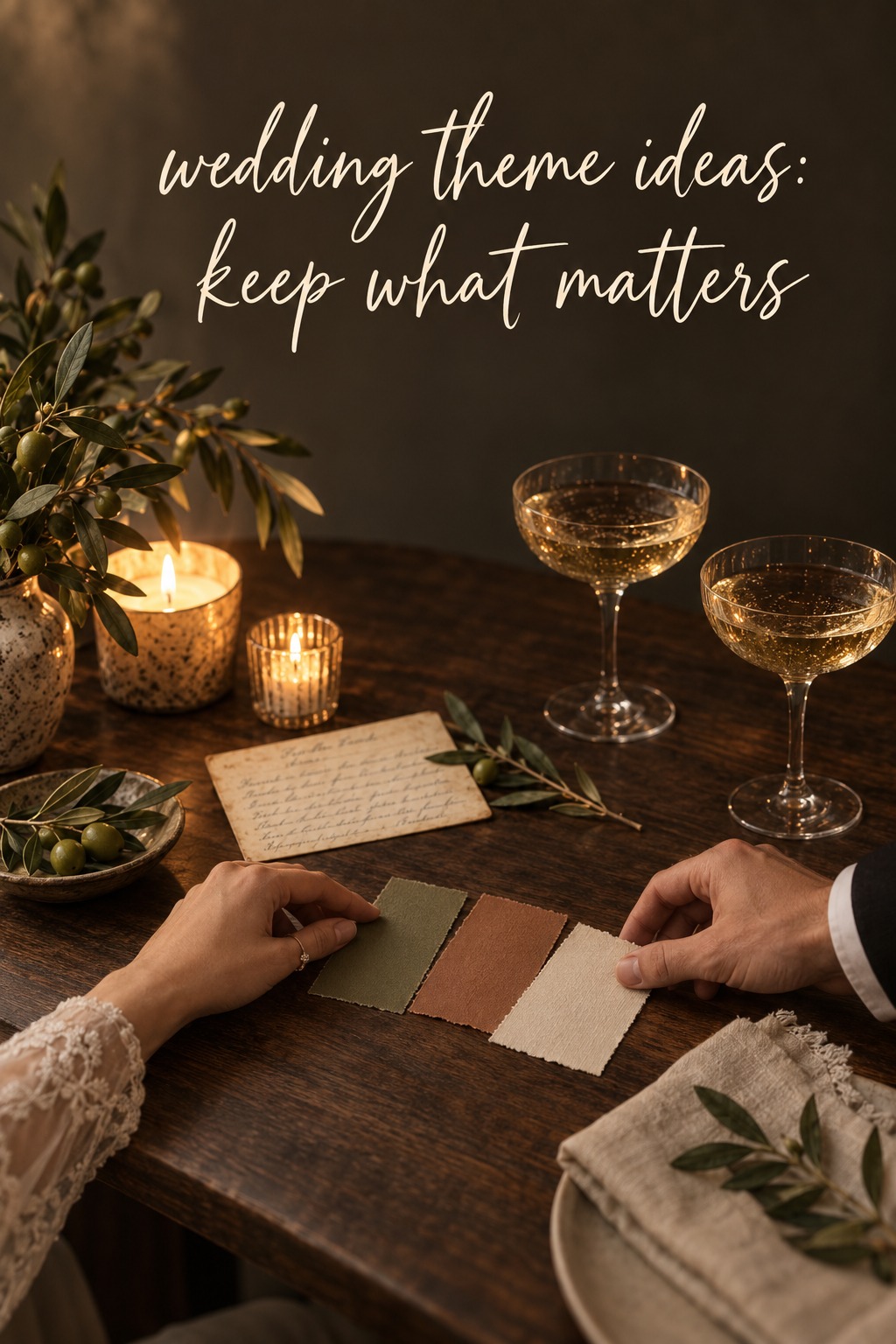
Build a small visual vocabulary from your story
Personal details do not need to be grand or obvious to give a theme meaning. A familiar place, a family recipe, a shared hobby, a favorite kind of evening, or an object you both keep can suggest a palette, a texture, or a small ritual. The goal is to translate the reference into a design cue rather than reproduce it literally.
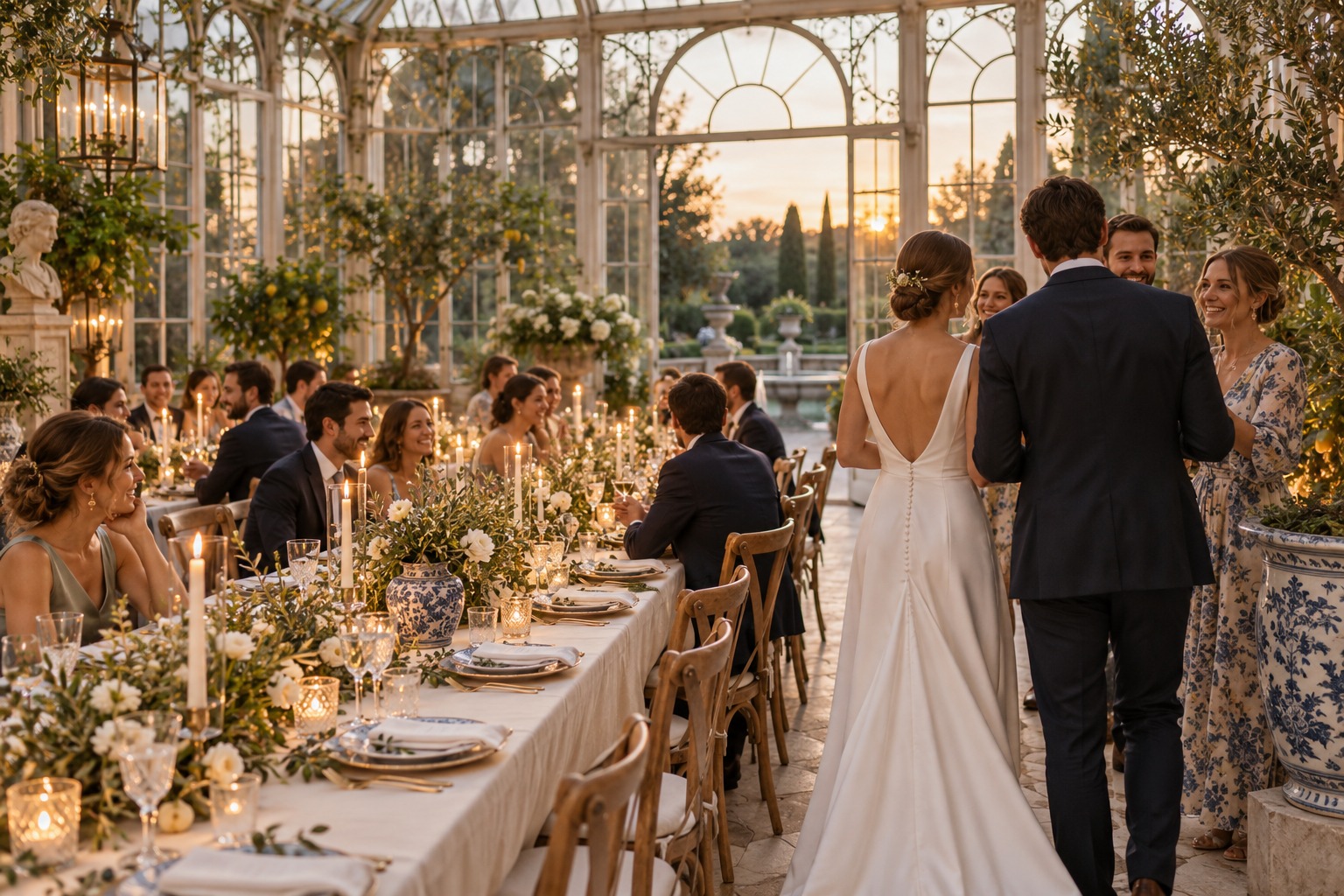
Return to the imagined restaurant-loving couple. They could choose a long dinner table because gathering around food is important to them. They might use warm ivory, soft olive, and a restrained copper accent because those shades recall the room where they first met. A printed menu could share a line about that place. The flowers could be low enough to keep conversation easy. The restaurant does not need to become a replica, and the couple does not need to turn the reception into a themed supper club. Their story informs the atmosphere while leaving room for a wedding to feel like itself.
Use four kinds of cues to develop a visual vocabulary:
- Color: Choose a few shades that describe the mood, then decide where each belongs. A leading color can appear in a larger area, while a smaller accent can return in paper, glass, or a ribbon.
- Material: Name the surfaces that fit the feeling, such as natural linen, glossy paper, brushed metal, clear glass, or a handmade ceramic. A repeated material can connect separate spaces without making them identical.
- Shape and pattern: Look for one recurring form, such as rounded arrangements, fine stripes, an arch, or a simple botanical drawing. Keep it recognizable but give it room to breathe.
- Atmosphere: Describe the light, sound, and pace you imagine. “Bright and conversational” points toward different choices than “quiet and candlelit,” even when both use the same flowers.
Keep a working board with a limited number of images for each cue. Add a note explaining why each image belongs. If you cannot name the detail you want to borrow, the image may be serving as general inspiration rather than direction. That is fine at the start, but it should not become an instruction for a florist, stationer, or venue stylist.
Color can be a useful bridge between unlike references. A coastal photograph and a historic dining room may seem unrelated, but both might share deep blue, warm cream, and reflective glass. Alternatively, a couple can keep different colors while repeating a texture or shape. A cohesive theme does not depend on one universal color palette. It depends on a few deliberate relationships that appear often enough to feel connected.
Ask each other which reference has a personal story and which one is simply beautiful. Keep both kinds if they serve the direction, but give them different weight. A meaningful keepsake might inspire one small moment. A visually useful photo might suggest a broader color or lighting decision. That balance helps the celebration feel personal without asking every detail to carry a message.
Carry one direction through four wedding moments
Once you have a sentence and a handful of cues, test them against the main moments guests will encounter. The same idea should not appear in exactly the same way everywhere. Instead, let the thread change form so each part of the day feels appropriate while still belonging to the same story.
Start with the invitation and first impression
The invitation is a preview, not a full costume. It can introduce one color, an illustration, a paper texture, or a tone of language. For the restaurant-inspired example, that might be a restrained menu-like layout, a warm neutral paper, or a small line that nods to the couple’s favorite neighborhood. A garden direction could begin with a botanical drawing or a relaxed typeface. Guests do not need to know every design decision before they arrive. They need a clear first hint.
Let the ceremony focus on people and place
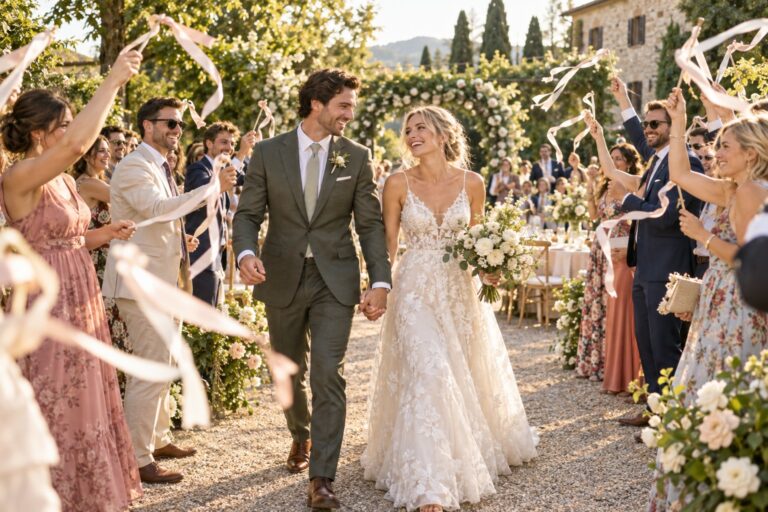
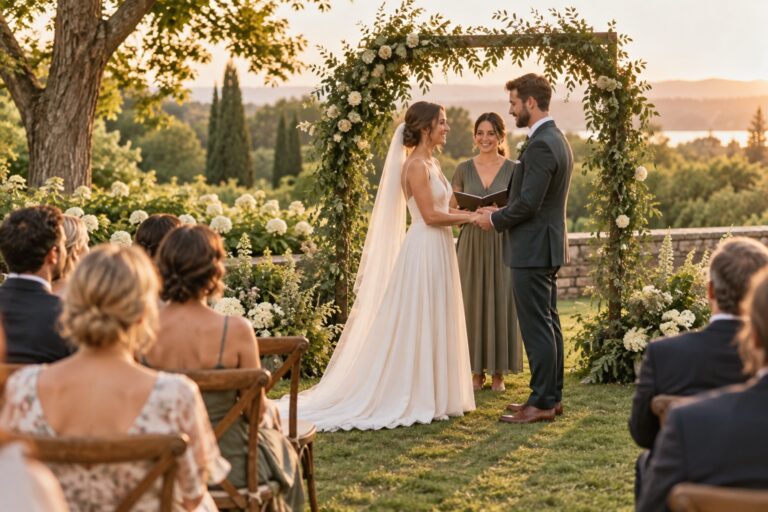
At the ceremony, the strongest theme cue may be the setting itself. Use flowers, fabric, or a simple focal shape to frame the moment without obscuring the people and architecture guests came to see. A couple whose brief is “welcoming and unhurried” might favor comfortable seating, a clear route, and a short reading with personal significance. Their design story is present in the experience, not just in what appears behind them.
Make the reception feel like the next chapter
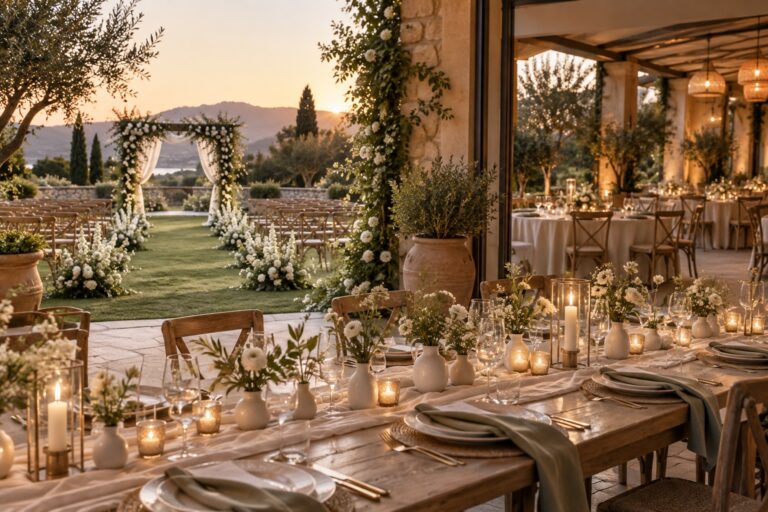
Use the reception to deepen the mood. Repeat one or two cues from the ceremony, then add elements that suit dinner, toasts, and dancing. The same palette might shift from light paper and airy flowers to richer linens and warmer light after sunset. A recurring shape can move from an invitation border to a menu detail, while the table arrangement changes in scale. Repetition creates recognition; variation keeps the room from feeling like a set decorated with copies.
Choose guest experiences that belong to the story
Consider what guests will do, not only what they will look at. Is there time to linger over dinner? Will a welcome drink connect to a place you love? Would a family recipe, a favorite song, a handwritten note, or an informal late-night snack add something that feels natural? Choose only the experience that fits your priorities and logistics. A personal detail feels generous when it helps guests feel included, not when it asks them to solve a puzzle or perform a role.
This is also where the word “vibe” becomes more than a visual label. Music volume, room transitions, meal pacing, seating, and the tone of a welcome all affect how the day feels. The Knot’s overview of wedding vibe and guest experience similarly treats mood as a combination of visual and situational choices. You can use that idea without adopting a trend or adding another decor category to your list.
Before adding another visual element, ask which moment it serves. A welcome sign helps orient arrivals. Table numbers help guests find their seats. A dramatic backdrop may create a photo location. If a detail has no clear role and competes with something more meaningful, remove it. The design usually becomes more legible when each object has a reason to be there.
Keep the story, loosen the literal theme
A clear direction can still evolve. The first version of a theme often includes details that are exciting in theory but awkward once the venue, budget, schedule, or guest needs become real. Editing those details does not mean the concept failed. It means the idea is becoming specific to your celebration.
Use a simple distinction: keep the emotional cue, reconsider the object. If the important idea is a relaxed coastal evening, you may not need shells, rope, and a blue motif at every turn. You might keep the open-air feeling, soft blue-gray tones, natural textures, and a generous dinner. If the important idea is a historic library, perhaps the qualities you love are quiet, layered, and literary. Those qualities could appear in a reading, a paper choice, or a warm room, even if book stacks and quills would feel forced.
For every literal symbol on the board, write down what it represents. A citrus illustration might stand for summer abundance. A map might stand for the places you have explored together. A favorite film could be about color and pacing rather than costumes or recognizable props. Once you know the underlying quality, you can find a subtler expression that fits the venue and your own comfort level.
It is sensible to check cultural and personal references with care. If a theme draws on a culture, faith, community, or history that is not yours, do not treat meaningful clothing, symbols, or ceremonial practices as decoration. Ask people with relevant knowledge when appropriate, and choose a different visual reference if you cannot use it respectfully. A personal story can inspire a design without turning another community’s traditions into a prop.
Likewise, a named aesthetic should not become a test of whether every choice is “on theme.” A couple can love vintage glassware and modern stationery. They can prefer a formal ceremony and a relaxed meal. They can mix family traditions with new rituals. The connecting thread may be hospitality, color, a shared place, or simply the way the day is paced. Cohesion has room for contrast when the choices are intentional.
A final cohesion check before you book details
Put your one-sentence brief beside the current mood board and review the choices as a group. This is not a test of taste. It is a short editorial pass to make sure the theme is helping you plan rather than multiplying decisions.
- Recognition: Can you name the few cues that make the day feel like yours without pointing to every individual item?
- Place: Does the direction work with the venue’s architecture, light, layout, and rules?
- Experience: Does the plan support the kind of gathering you want guests to have?
- Personal meaning: Is there at least one reference that matters to you beyond its appearance in a saved photo?
- Room to breathe: Can you remove a detail and keep the story intact?
- Communication: Could you describe the direction to a vendor in a few clear sentences, with examples of what to include and what to avoid?
If the board still feels split, do not force a decision by adding more images. Try sorting the pictures into “must feel,” “could include,” and “beautiful but not ours.” Then set aside the last group. If two directions remain, write a short brief for each and imagine the actual day: arrival, ceremony, meal, and dancing. The option that supports more of your priorities is often the better starting point, even if the other looks more dramatic in a single photograph.
Share the brief with your partner and the vendors responsible for the areas it touches. Ask each person to interpret the same few cues within their own specialty. A florist may translate them through shape and color. A stationer may work through paper and typography. A venue coordinator may help identify what can be reused or where guest flow needs attention. You are not asking everyone to duplicate one reference image. You are giving them a common direction and enough room to make it work.
Keep a record of decisions as they are made. A simple note can say: “Our direction is a relaxed evening inspired by our favorite restaurant. We want warm neutrals, a hint of olive, low table arrangements, and room for conversation. Please avoid overt food illustrations or a formal supper-club dress-up theme.” Clear examples and boundaries save time when new ideas arrive. They also help you recognize when a polished suggestion belongs to another couple’s wedding, not yours.
Most of all, let the theme serve the day. The best wedding theme ideas do not require guests to decode a concept before they can enjoy themselves. They create a sense of connection between place, people, and choices. When the details feel coherent but not over-explained, guests can notice the flowers, enjoy the meal, move comfortably through the room, and understand the celebration in the way that matters most: as a gathering that feels unmistakably yours.
FAQ
How do we choose a wedding theme?
Start with the feeling you want guests to have and the parts of your story you want to carry into the day. Write a one-sentence brief, review your venue and priorities, then choose a few visual cues that support them. Use a theme name only if it makes decisions easier.
Do we need a wedding theme?
No. You can plan around a shared palette, a feeling, a venue, or a few repeated design details without naming a theme. A theme is useful when it helps you communicate and edit ideas, but it is optional.
What is the difference between a wedding theme and a wedding style?
Style usually describes a broad look or level of formality, such as modern, classic, relaxed, or formal. A theme adds a subject or design thread, such as a garden, a particular era, or a place that matters to you. The words overlap, so use whichever one helps you explain the plan.
Should we choose a wedding theme before booking a venue?
You can begin with a broad direction, but keep it flexible until you understand the venue options. Architecture, light, layout, and rules may change how the idea works. If a particular guest experience matters most, use that priority to guide both venue and theme decisions.
Can we combine two wedding themes?
Yes, if you can explain the connection between them. Look for a shared feeling, color, material, or story, then give each influence a clear role. If the ideas have no common thread, choose one as the main direction and keep the other as a small personal reference.
How do we make a wedding theme feel personal rather than generic?
Translate a real preference or memory into a subtle design cue or guest experience. A meaningful place might influence the palette or menu; a shared habit might suggest a relaxed schedule. A small detail with a genuine connection usually feels more personal than many decorative symbols chosen only to announce the theme.
How many colors should a wedding theme have?
There is no required number. Start with one or two leading colors and add supporting neutrals or accents only when they help the overall direction. Decide where each color will appear, and consider the venue’s existing colors before committing to a palette.
How can we keep wedding theme ideas from taking over the budget?
Choose a few high-visibility or high-meaning moments and let the rest stay simple. Reuse a design cue across paper, ceremony details, or reception elements instead of buying a separate themed object for every surface. Confirm costs and venue rules with your vendors before adding installations or rentals.