Wedding Photo Ideas: A Shortlist You Can Hand Over
A useful wedding photo plan tells the photographer which people and details have meaning that would otherwise be easy to miss. It also leaves enough freedom to photograph the celebration as it happens. Agree on the brief before the wedding so you can leave the photographer to use it on the day.
I would start by naming the photographs you would most regret leaving to chance. That might be a portrait with the aunt who raised you, a clear picture of both complete outfits or a family keepsake being worn. Use those priorities to choose which wedding photo ideas to keep when another reference would require extra time or travel.
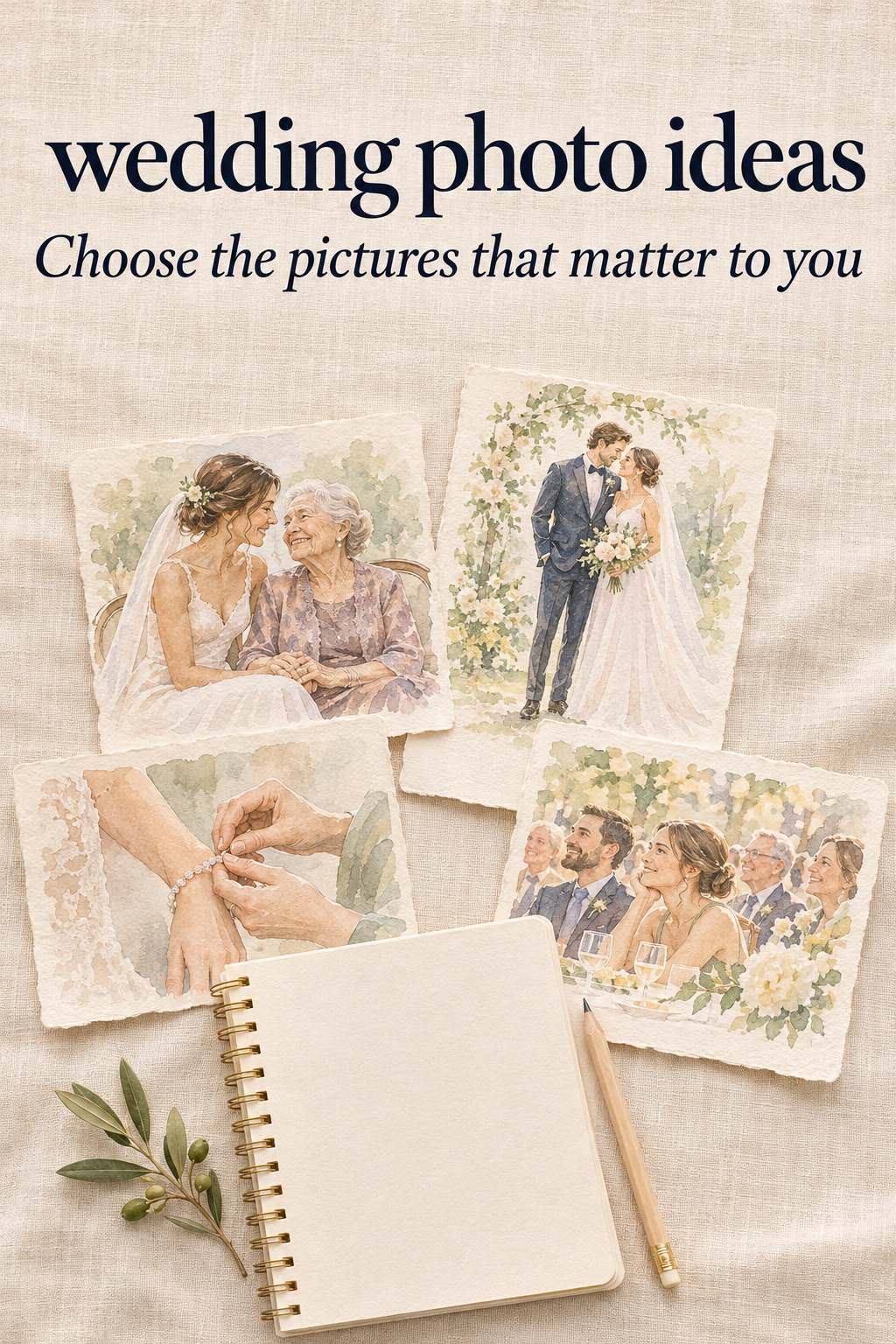
Review the requests against your actual schedule with the photographer. The hypothetical examples later in this playbook illustrate choices about coverage and competing requests.
Prepare the information only you can supply
Open your photography agreement and the latest wedding schedule before making a picture list. Identify the agreed coverage window and the places where you expect the photographer to work. If the two partners are getting ready separately, include both addresses. If you want the final dance photographed, check whether it falls within the coverage you have arranged.
Turn wedding inspiration into a plan you can actually follow.
Zarellea brings your guest list, budget, vendors, and day-of details into one shared space — so no beautiful idea gets lost in the shuffle.
Do not assume that an important photograph is possible simply because it appears on a popular checklist. A room photographed before guests enter needs access at the relevant time. A portrait with someone leaving early needs an earlier opportunity. Write down the circumstance behind each request so the photographer can judge it with the rest of the schedule.
Each partner can make a private first draft. Name the people you want a deliberate photograph with, any meaningful object you are bringing and any part of the celebration that needs advance explanation. Then compare the drafts. You may discover that one person cares about family portraits while the other particularly wants time for photographs together. Resolve that difference before sending a combined brief.
For an object, explain the meaning in a sentence. A small pin could be inherited, borrowed or simply something you enjoy wearing. The photographer cannot reliably infer that significance from its appearance. Say where it will be and whether you want it shown in use, photographed separately or included only if an opportunity arises.
Keep sensitive information limited to what the photographer needs to act considerately. You can explain that two relatives should be photographed separately without providing the history of their relationship. Tell the photographer about relevant preferences privately. Do not put personal explanations on a group list that will be passed around the reception.
Finally, identify decisions still waiting for an answer. You might not yet know which preparation room will be available or whether a relative will attend. Mark those items as unresolved and give yourself a way to confirm them. Label the note provisional until you have that answer.
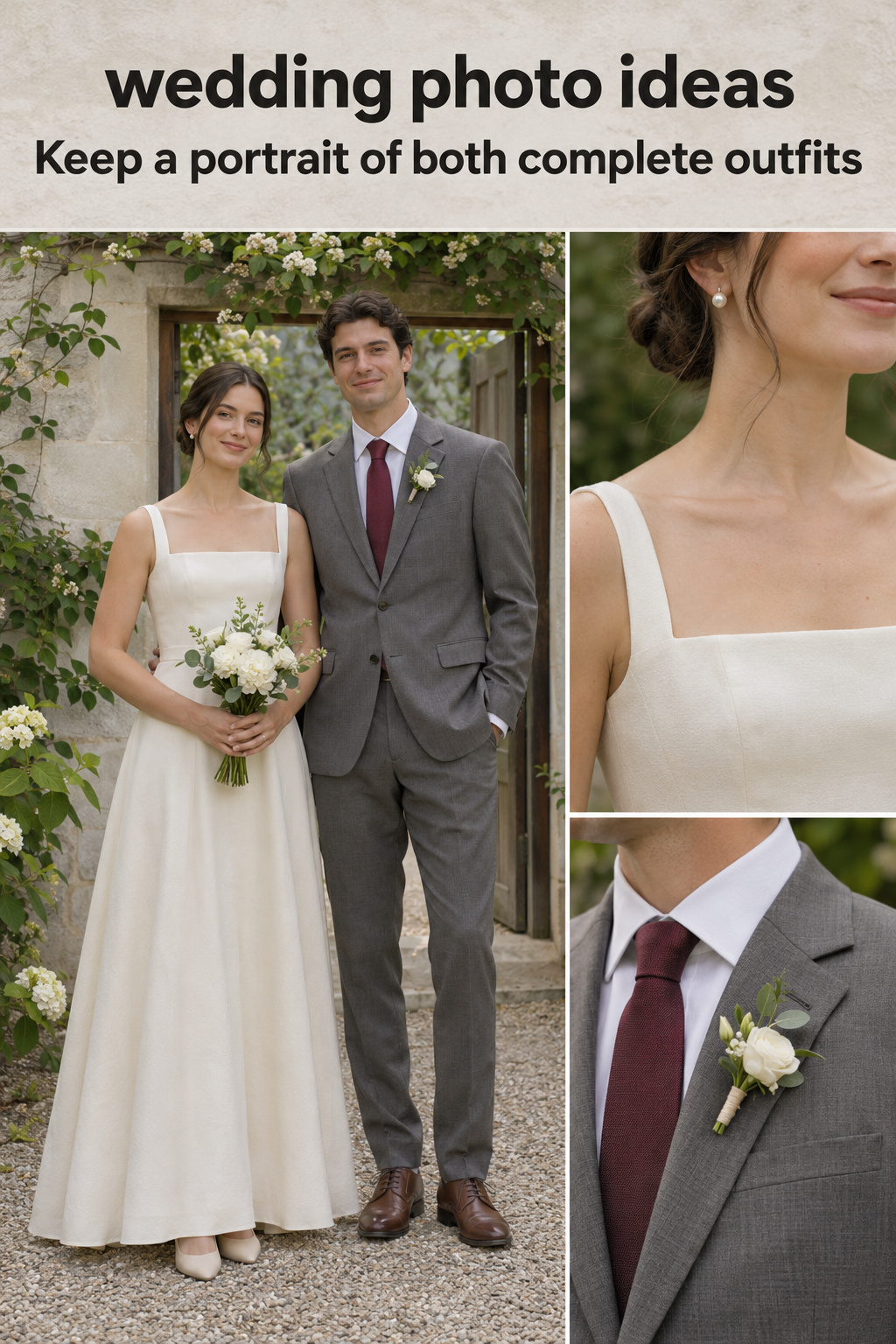
Use this wedding photo ideas checklist
Check the people behind the formal roles
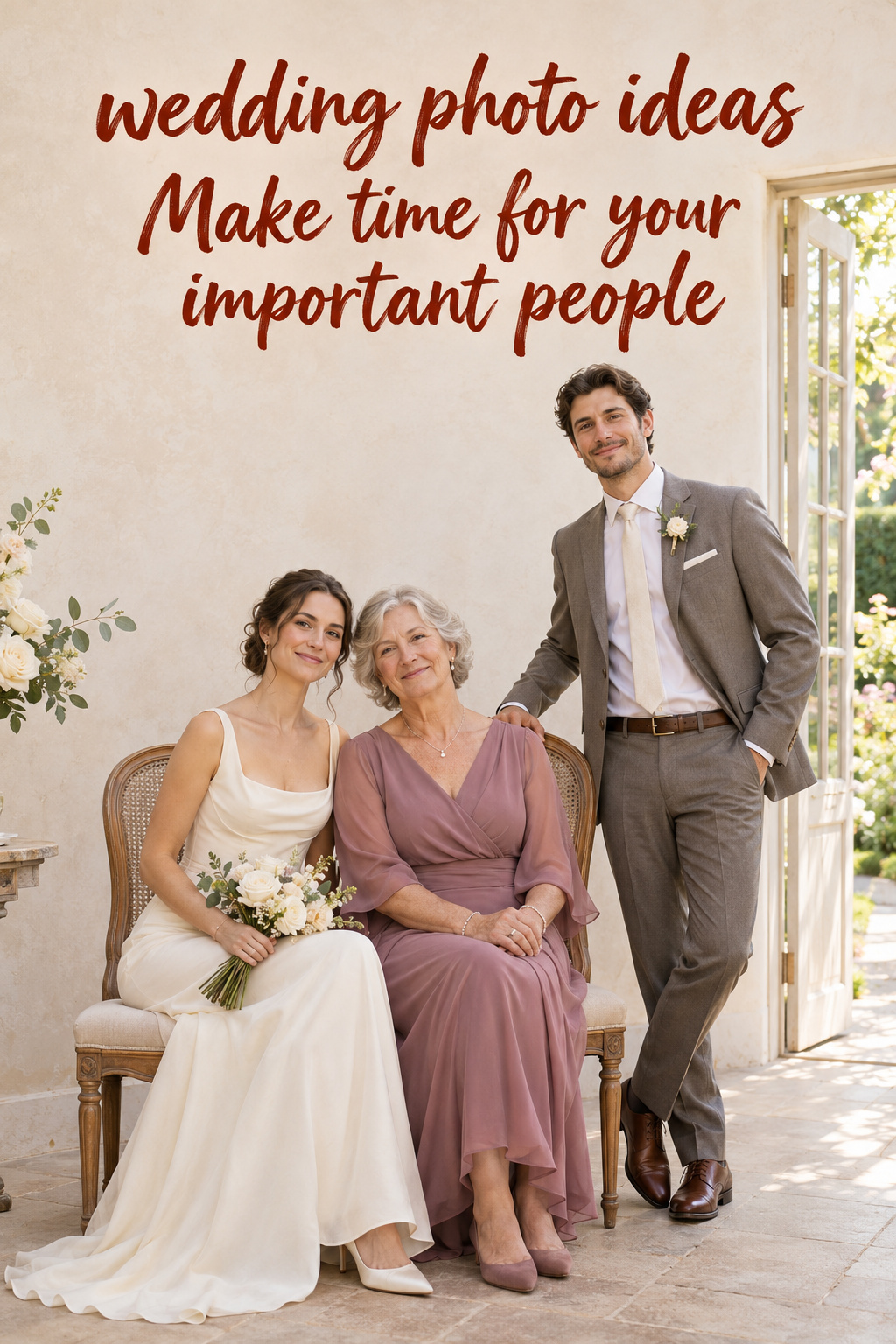
Start with names before using labels such as family or wedding party. A close friend may have no formal role, and an important relative may not be in the group someone else assumes is immediate family. Choose deliberate portraits for the relationships you most want recorded. You can also tell the photographer whom you hope to see in the candid coverage.
Consider an individual photograph with a sibling, a portrait of the couple with a grandparent or a small group of longtime friends. Keep the combinations you actually want, and omit variations you would not miss. Ask the photographer to help assess the group requests alongside the available portrait time.
Check which details deserve a specific request
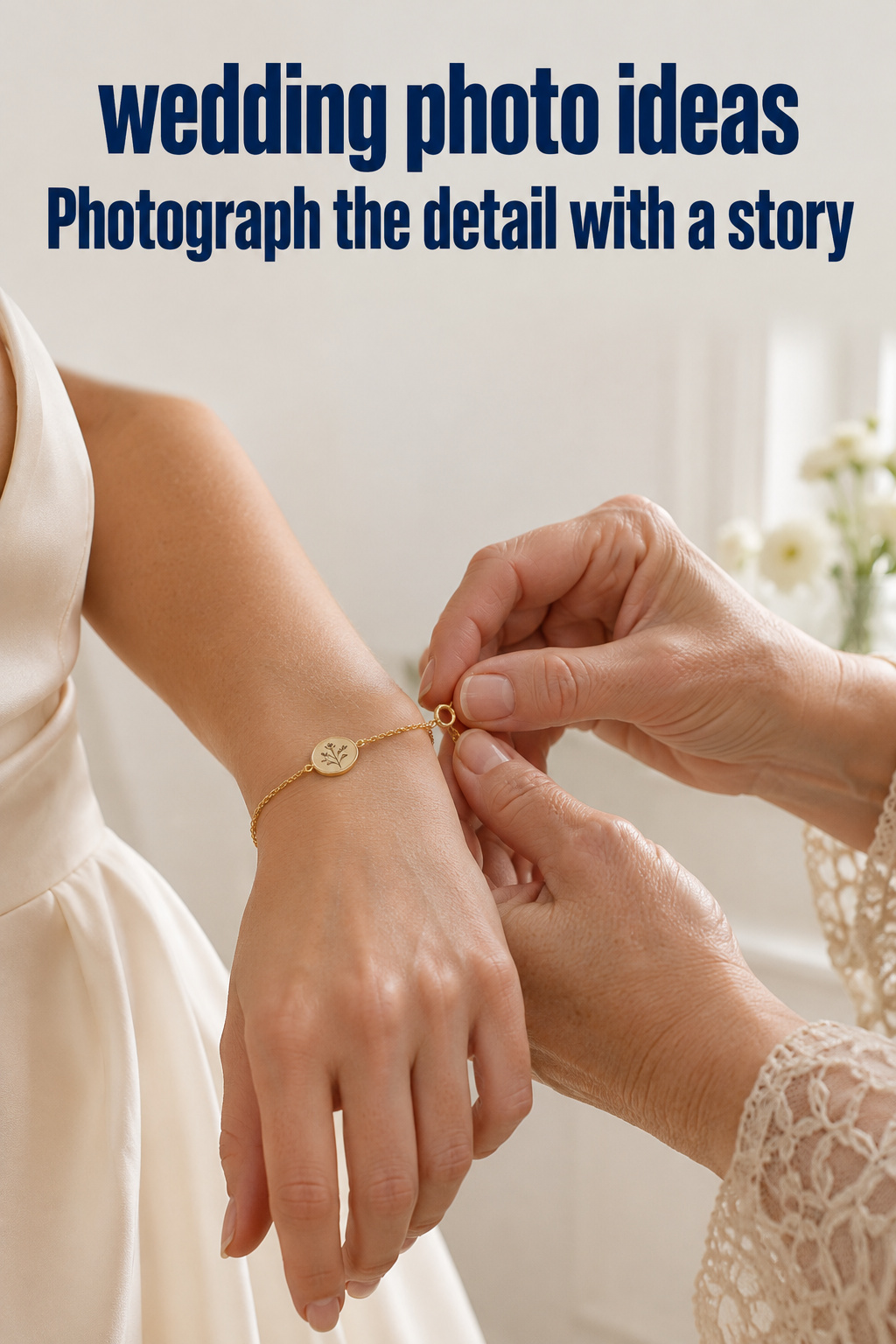
The objects you choose can appear as part of the day. A close photograph of a partner fastening a sentimental bracelet may mean more to you than a separate arrangement of every accessory. Alternatively, a complete stationery suite may be something you particularly want to preserve. Decide which treatment suits the object and the record you want.
Gather the requested items in an agreed place and identify who is responsible for them. Ask before handing over an object needed shortly for the ceremony. Tell the photographer when the rings or garment need to be back with the person responsible. Include a return arrangement if the item will move away from its usual keeper.
Check the portraits you want to keep
A full-length photograph can show both outfits, while a closer portrait can give your expressions more of the frame. You can request both if they matter to you. Explain any intended use, such as a framed portrait, without prescribing every pose or camera angle. Let the photographer suggest suitable places within the plan you have agreed.
Decide whether individual portraits are also a priority. One partner may want a clear photograph of a jacket or dress that is easy to miss in a group. Tell the photographer if a particular movement or gesture feels uncomfortable. You can ask for clear direction and still set limits on what you are willing to do.
Check the ceremony information
Describe any parts of the ceremony that need explanation, including who is participating and the order in which things are expected to happen. Confirm photography arrangements with the relevant venue or ceremony leader. Pass the actual guidance to the photographer instead of relying on what was allowed at a different wedding.
If a particular view matters to you, discuss it before the day. You may care about the entrance, a parent’s reaction or a moment involving a reader. Ask how that request fits the photographer’s position and other responsibilities. Avoid introducing a new instruction during the ceremony or assuming that simultaneous reactions can all be captured by one person.
Check the moments you want room to enjoy
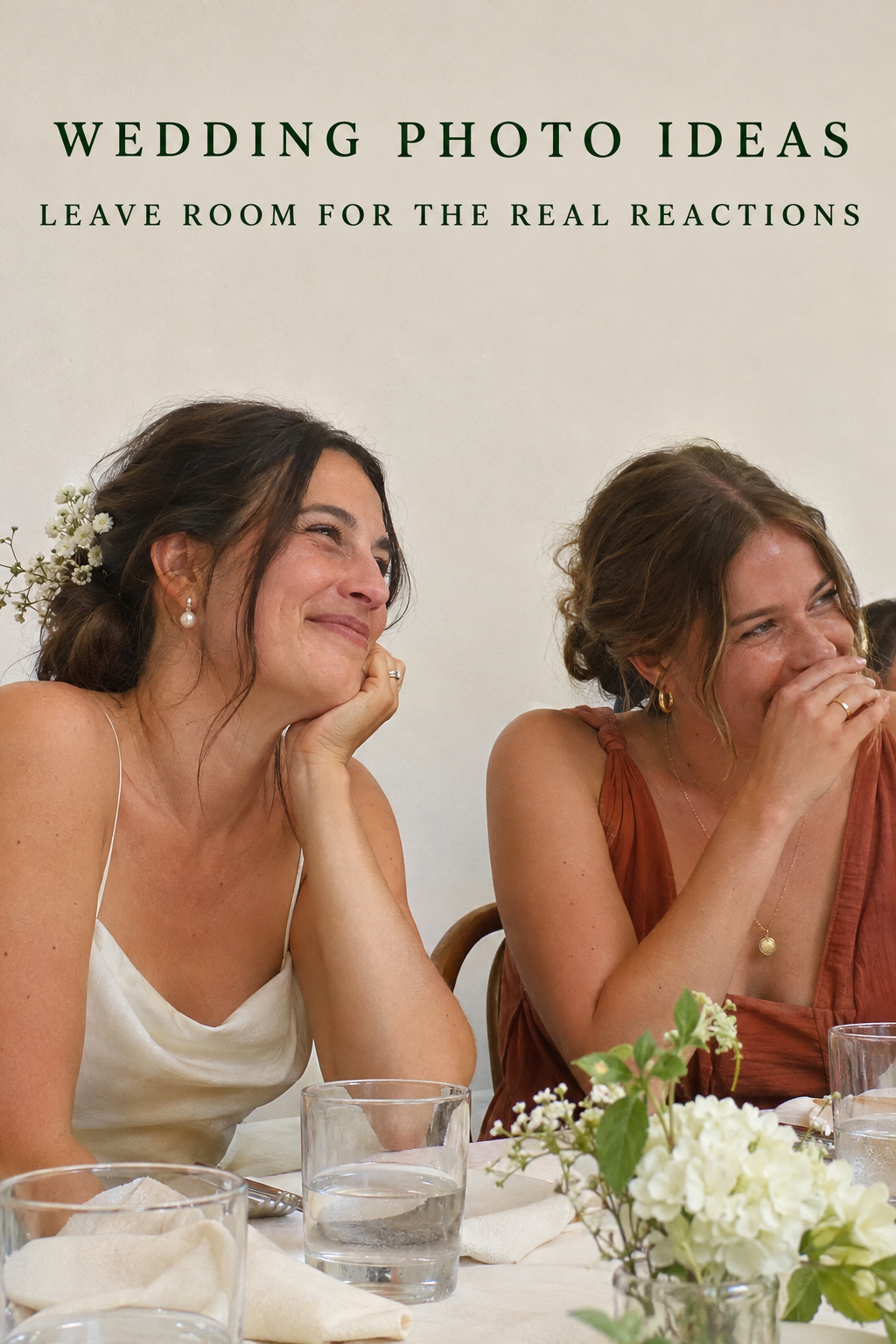
Choose the scheduled events you want covered, then explain any personal context that might be less obvious. A short speech by a friend, a musical contribution or a greeting with a relative may matter to you. Give the photographer the planned timing and a way to recognize the person involved. Leave room for reactions that cannot be scripted.
I would resist a request for a specific emotional response. You can ask the photographer to watch a parent’s reaction without asking that person to cry or repeat a greeting. Ask for a record of how the person responds, including a quiet expression if that is what happens.
Check the setting before adding another setup
Consider whether you want a picture of the ceremony space or reception room before people enter. Explain why it matters and ask whether access and timing allow it. You might want the room as a whole, a handmade table detail or the view from the place where you will stand. Name the priority so the request stays manageable.
For any optional creative portrait, ask what it would require. A separate backdrop, a journey to another building or an elaborate arrangement may interrupt another part of the coverage. Choose one only when you understand the tradeoff. Ask which parts of the reference can be adapted to the conditions at your wedding.
Turn group ideas into named requests
Once you have chosen the important group portraits, make each request unambiguous. Fiona Kelly’s group-photo guidance recommends naming the people in each photograph and arranging help with gathering them. Apply that idea to your own relationships rather than copying a standard family structure.
Write a complete line for each combination. For example, “the couple with Alex and Morgan” is clearer than “parents” if those are the people you mean. Add a brief identification note where useful, such as which partner they are related to. Confirm the spelling and whether any named person is still awaiting an attendance decision.
Put names and relevant arrangements on the working list. The photographer may need a private note about a relationship, but the helper collecting guests usually does not. Make the document suitable for the people who will actually read it.
If someone needs a seated portrait or a shorter wait, ask them what would be comfortable and discuss the arrangement with the photographer. Do not infer what they can manage from age or appearance. Consider the actual meeting point and how they would reach it. A convenient location for one group may be unsuitable for another.
Choose a helper who knows the relevant people and agrees to the responsibility. Explain which list they will use and where the group should meet. Make sure the helper will not be needed in every photograph while also being expected to find the next group. A second willing person may help when the two families do not know one another, but confirm the plan with them.
Keep optional additions clearly identified. A new group requested on the day may be welcome if it fits, but it should not automatically displace a priority portrait. Agree with your partner how to respond if relatives propose more combinations. You can thank them for the idea and ask the photographer whether there is a suitable opportunity later.
Before sending the list, read it as someone who does not know your guests. Could you identify the people, understand who belongs in each photograph and tell which requests take precedence? Resolve vague labels now. The finished version should help the photographer and helper work together without asking the couple to explain every line again.
Test the plan against two wedding days
Consider a hypothetical wedding where preparations, ceremony and dinner all happen at one venue. The couple particularly wants a portrait with a relative who will leave after the meal, a full-length picture together and an image of a handmade place setting. They also like an optional portrait in a distant corner of the grounds.
The next step is to ask the photographer where those priorities fit the actual schedule. The relative’s departure is a specific constraint. The place setting needs to be identified while it is available to photograph. The full-length portrait needs an agreed opportunity. The distant corner remains optional until the photographer has considered the walk and what coverage would be missed.
If the ceremony runs later than expected, this couple already has a basis for deciding. They can keep the relative’s portrait and ask whether the other priorities can happen nearby. The extra walk can be dropped. This does not guarantee a particular result, but it avoids treating every saved image as equally urgent.
Now consider a hypothetical wedding with preparations in two different locations and one photographer. Each partner wants preparation pictures, while the couple also wants coverage of guests arriving at the ceremony venue. Place those requests beside the real travel route and coverage window, and ask what is feasible. Do not assume that a camera can be in all three places at once.
The couple might choose one preparation location, adjust the sequence if the team agrees or ask about the scope and cost of another photographer. Those are decisions to discuss before changing the agreement. If they prefer to retain their existing coverage, they need to choose which parts take priority rather than expecting the original schedule to absorb every request.
In either example, the practical test is the same: identify the people and objects that must be present, the place where the picture would happen and what else is occurring then. Resolve any conflict with the photographer before deciding whether to change the service.
Use the examples to test your own unusual requests. An all-guest photograph, a room photographed before dinner or an evening portrait may depend on different conditions. Ask what would need to change for the idea to work. Keep the version you have actually discussed, including the option to leave something out.
Run a final review with your photographer
Bring the current schedule, named group list and short priority brief to the final review. Ask the photographer to explain any conflicts or assumptions they see. Stephen Walker’s wedding photo ideas span personal details, portraits and unposed moments. Use that range as a reminder to discuss the balance you want, without turning every possible category into a compulsory request.
Check the coverage boundary in plain language. Which preparation location is included? Which reception events fall within the agreed hours? What happens to a planned portrait if the schedule changes? Record the answers that affect your arrangements, and confirm any service changes through the provider’s normal process.
Agree on a suitable alternative for planned portraits if the chosen area cannot be used. Ask the venue and photographer about the actual space and conditions. Avoid assuming that a room will be empty or an outdoor area will remain available. The alternative can be simpler if it still serves the photograph you care about.
Keep the final information together in one document. You might send a short document containing the priority requests, names, relevant times and the contact who can answer practical questions. Identify which version replaces an earlier draft. If an important change occurs, tell the people who need to act on it rather than editing a document and assuming they will notice.
Guest photographs can provide another perspective, but treat any collection arrangement as a separate choice. Decide whether you want guests to share images, how they can do so and who will manage the collection. Do not assign a guest responsibility for a priority professional portrait without first agreeing on that change and understanding what you are asking.
End the review by removing requests that you no longer want or that depend on unresolved assumptions. Confirm any remaining decision and who will supply the answer. Then let the working plan be used. Leave the agreed brief with the photographer before you join the reception.
Editor’s take: Explain who matters to you
I would spend the most care on the information the photographer cannot discover from the wedding schedule: the person who matters to you, the object with a history and the guest whose availability is limited. Those details make a short brief worthwhile. I would be more flexible about an exact backdrop or a copied pose, especially if it competes with the photographs you have already named as priorities. A couple planning a strongly styled portrait may reasonably choose differently, provided the time and coverage have been discussed. Start by comparing your two personal shortlists and circling the requests that need advance information. Give those your attention before adding more pictures from an inspiration board.
Sources and methodology
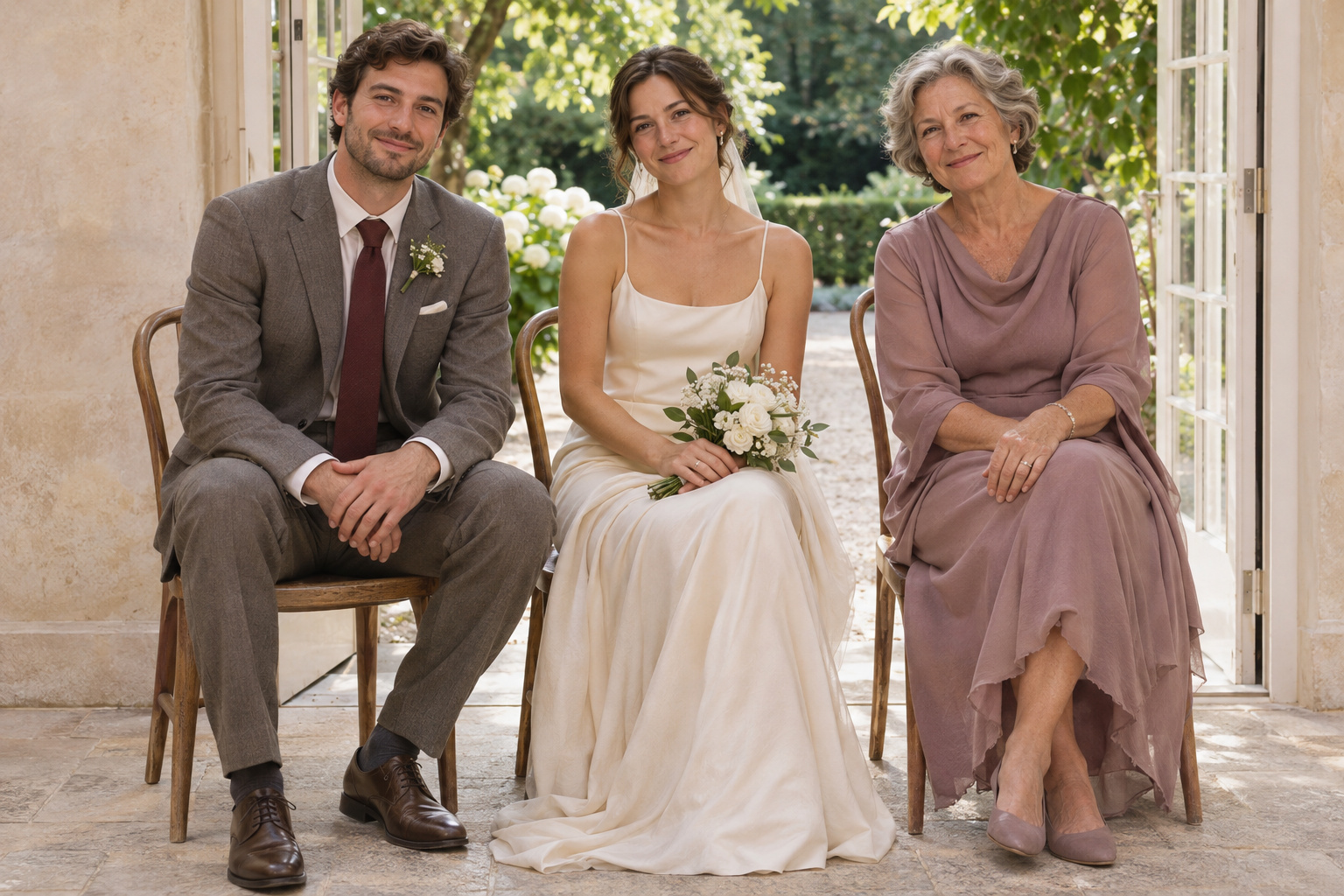
This playbook draws on ten verified organic destinations from a Google US English search, including photographer guides, editorial collections, a retailer checklist and public discussions. One inaccessible forum was logged and replaced with another accessible organic destination. Personal accounts helped identify questions without being treated as universal outcomes. The recommendations and worked examples are research-based editorial judgments, without firsthand wedding-photography or planning experience. The accompanying artwork shows fictional situations and styling ideas, not actual clients or documented weddings.
FAQ
Which wedding photo ideas should go on our priority list?
Choose requests that have particular meaning or require information the photographer would not otherwise know. Named people, a sentimental object and a guest leaving early are useful starting points. Discuss the important portraits and scheduled moments too. Keep optional creative ideas separate so the photographer can understand what takes precedence if time changes.
Should we give our photographer a complete list of every photograph?
Ask how they prefer to work and what information they need from you. A concise priority brief and clear group combinations can be useful. A long list of routine moments may duplicate their planning while obscuring the requests that are personal to you. Review the proposed approach together before deciding what to send.
How many family group combinations should we request?
Choose the combinations you care about, then ask the photographer to assess them against the actual time and setting. There is no useful single number for every wedding. Write names, account for any comfort requirements and identify optional additions. Remove variations you would not miss instead of making every possible group a priority.
Can one photographer cover both partners getting ready?
It depends on the locations, timing and coverage you have arranged. Provide the addresses and the current schedule so the photographer can assess the request. If events overlap, discuss which coverage matters most or whether a different service is appropriate. Do not assume that travel and simultaneous moments will fit without reviewing them.
What if we want natural photographs but also family portraits?
You can discuss both in the same plan. Identify the deliberate group photographs you want and leave space for the celebration to unfold. Tell the photographer about meaningful people and scheduled contributions. You do not need to ask guests to manufacture reactions for the candid part of the gallery.
What should we do if the wedding schedule changes?
Tell the photographer and the person coordinating the day, and refer to the agreed priority requests. Ask which portraits can move, which can happen nearby and which optional ideas should be dropped. Keep any changes practical and consistent with the remaining coverage. A clear update is more useful than expecting everyone to infer the new plan.