Pakistani Bridal Look: A Complete Wedding-Day Guide
On a Pakistani wedding morning, the final look rarely arrives in one dramatic moment. It appears layer by layer: the embroidered outfit is fastened, the dupatta is placed, jewelry finds its position, mehendi catches the light, and makeup settles into the expression your family will remember. The most beautiful result is not always the heaviest look in the room. It is the one in which every element seems to belong to the same bride.
A Pakistani bridal look can be traditional, contemporary, understated, maximalist, or a thoughtful combination of all four. Your Nikkah may call for a soft ivory or pastel outfit, your Mehndi may invite color and movement, your Baraat may carry the most ceremonial detail, and your Walima may feel lighter and more modern. This guide will help you shape that visual story while leaving room for family customs, regional traditions, religious preferences, climate, budget, and your own sense of self.
Start With the Story You Want Your Look to Tell
Before choosing a color or saving another inspiration image, name the feeling you want each event to carry. Words such as regal, luminous, joyful, intimate, romantic, or modern are more useful than a vague request for something bridal. They give your designer, tailor, makeup artist, and hairstylist a shared direction. They also help you decide when two beautiful ideas do not belong in the same outfit.
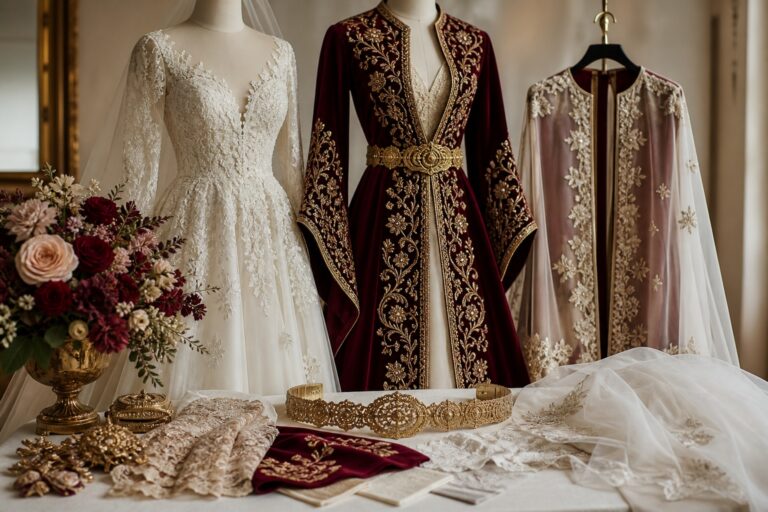
Think of the wedding wardrobe as a sequence rather than a collection of unrelated costumes. The outfits can change dramatically while still sharing one thread. That thread might be antique gold, a particular shade of red, a love of delicate handwork, a preference for covered silhouettes, a recurring floral motif, or a certain softness in your makeup. Repeating one small idea across events often creates more polish than repeating every detail.
Turn wedding inspiration into a plan you can actually follow.
Zarellea brings your guest list, budget, vendors, and day-of details into one shared space — so no beautiful idea gets lost in the shuffle.
Separate tradition from pressure
Many brides hear strong opinions about red, heavy jewelry, full sleeves, a particular dupatta drape, or the amount of skin an outfit should show. These conversations can be meaningful, but customs vary by family, region, faith practice, and personal preference. Ask what is important for your ceremony and relatives, then decide which details genuinely make you feel beautiful. A respectful look does not require you to erase your personality.
Choose the visual lead
Every complete look needs a visual lead. It may be a richly embroidered lehenga, a dramatic farshi gharara, a luminous pishwas, an architectural dupatta, an ornate jhoomer, or a striking eye makeup shape. Once you know the lead, keep the supporting elements quieter. If the outfit is dense with zardozi, dabka, sequins, and stones, jewelry can be edited. If the outfit is relatively clean, your necklace or headpiece can become the moment.
Nikkah and Mehndi: Personal Looks With Movement and Meaning
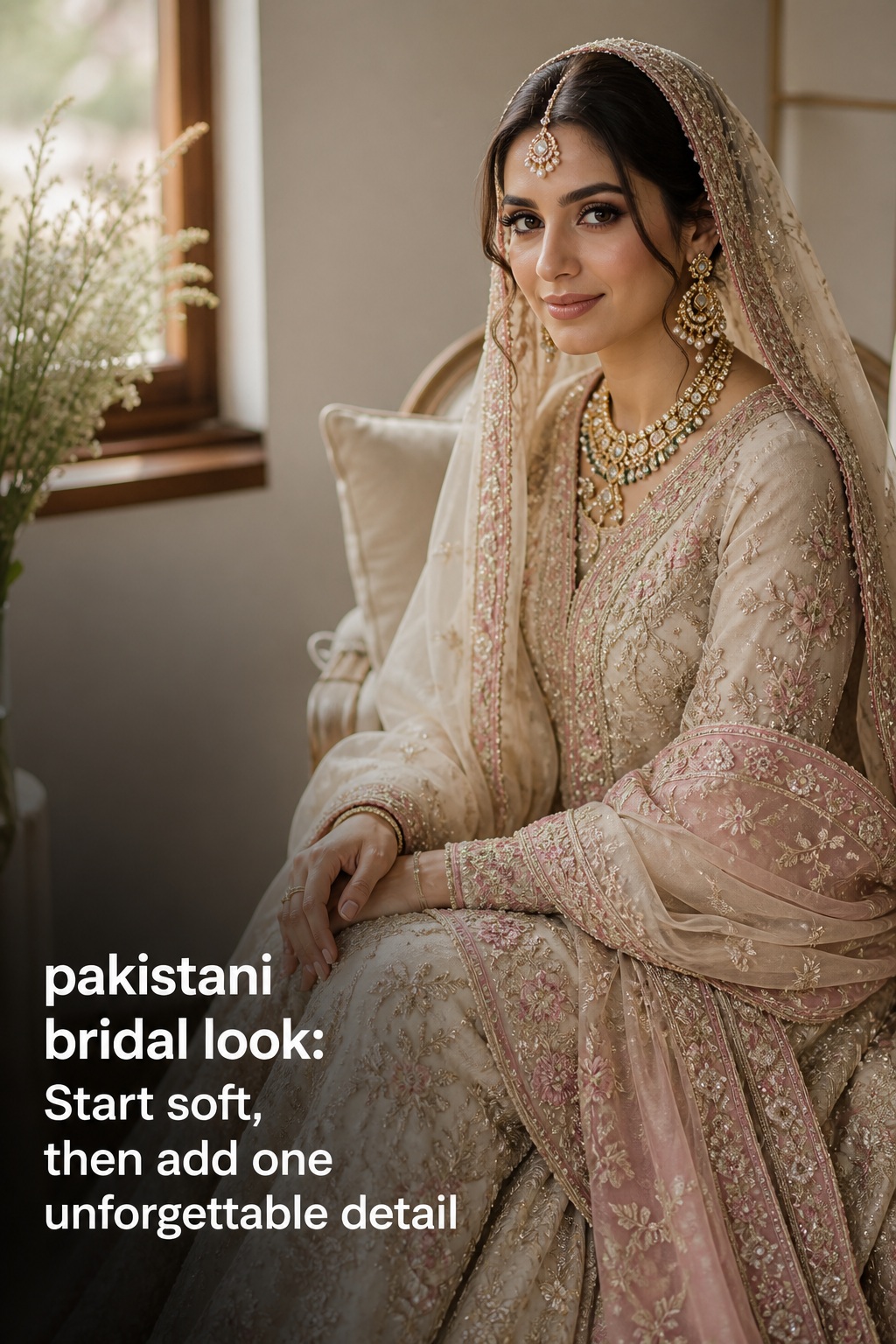
The Nikkah and Mehndi often show two different sides of a bride. A Nikkah look may feel intimate and composed, especially when the ceremony includes a dupatta over the head. Ivory, white, blush, dusty pink, champagne, mint, and soft blue can all create a graceful foundation. A maxi, anarkali, sharara, or lightly embellished lehenga can feel bridal without competing with the ceremony itself.
For the Nikkah, let the fabric and finish do quiet work. Pearl details, fine dabka, restrained sequins, or a delicate border can read beautifully in close photographs. Jewelry does not have to be absent, but it can be edited to a polki choker, chand baali earrings, a maang tikka, or a small coordinated set. Soft smoky eyes, visible skin texture, nude or rose lips, and a neat bun can complete the feeling without making the bride look over-styled.
Use Mehndi for color and movement
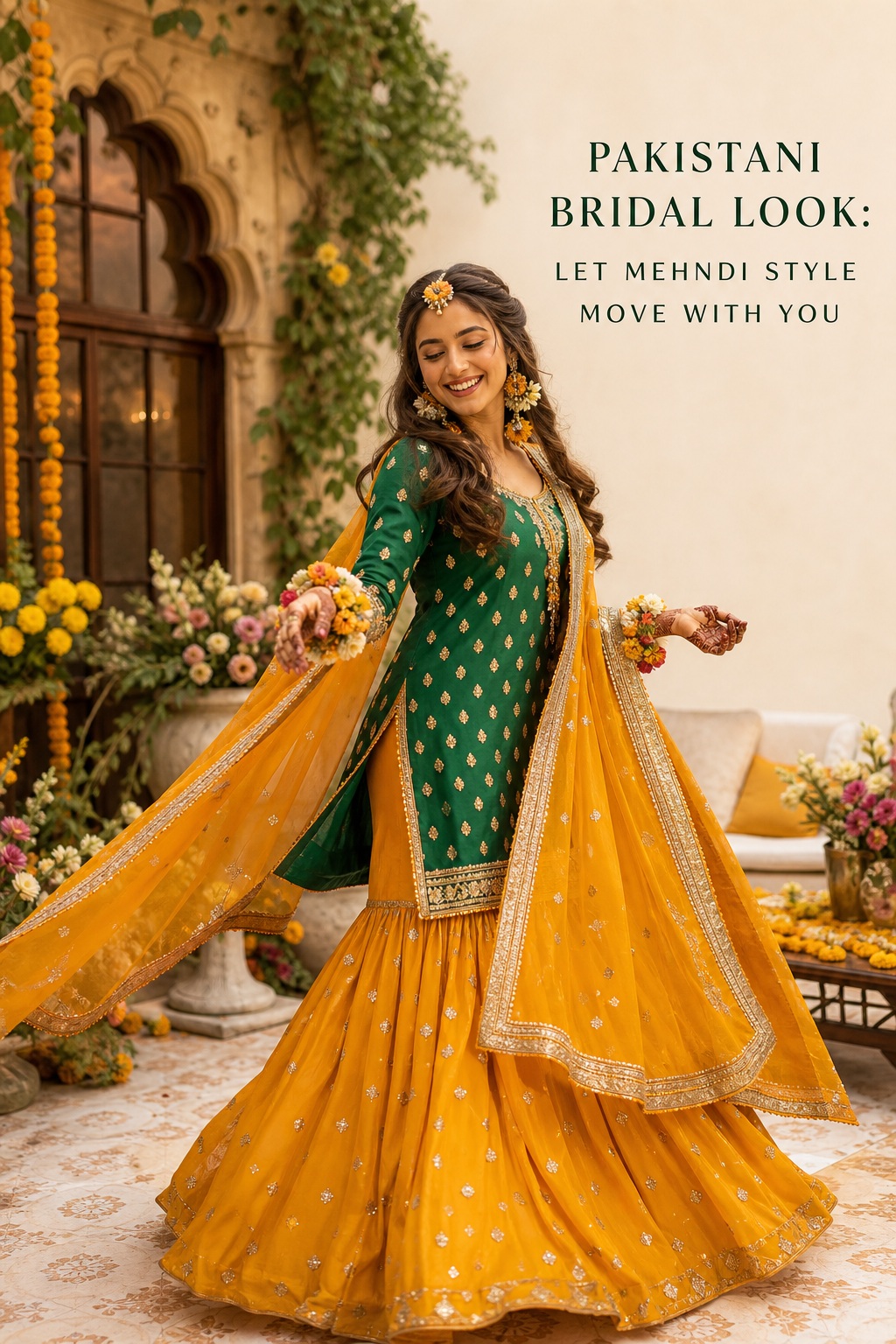
Mehndi, Mayun, and Dholki celebrations usually reward an outfit that can move. Gota, mirror work, floral prints, bright embroidery, chiffon, organza, a shorter shirt, a gharara, or a sharara can all support dancing and photographs in motion. Yellow, green, orange, pink, and multicolored combinations are common starting points, but you can make the palette more personal by choosing one dominant shade and allowing the rest to act as accents.
Keep the accessories secure and practical. A lightweight jhoomer or tikka should be pinned so it does not shift during dancing. Choose earrings that will not pull at the end of a long evening, and test bangles with your sleeves before the event. If your outfit already has a lively surface, let the mehendi provide a controlled point of detail on the hands rather than adding embellishment to every accessory.
Let the dupatta change the mood
A dupatta can make the same outfit feel ceremonial, youthful, modest, or fashion-forward. A light veil over the head creates a different portrait from a dupatta draped over one shoulder or held at the elbows. Consider the border, the weight, the transparency, and the way it will be secured. If you want movement in photographs, ask for enough length to create shape while keeping the weight manageable for your shoulders.
Baraat: Build Ceremonial Drama With Proportion
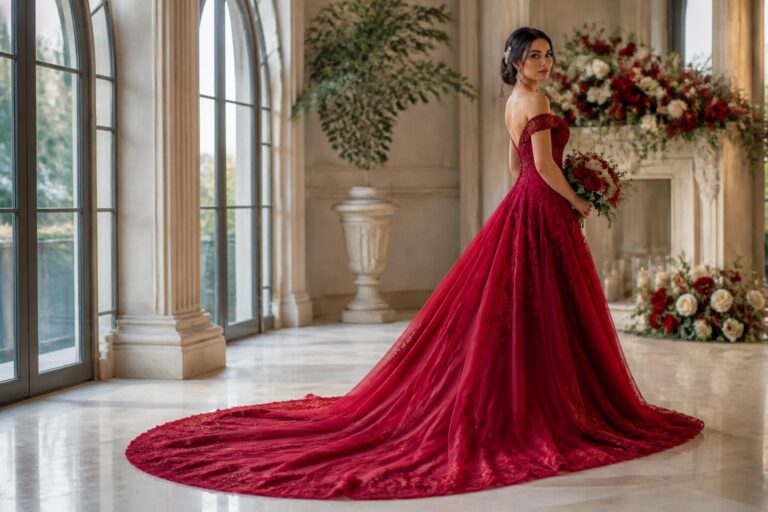
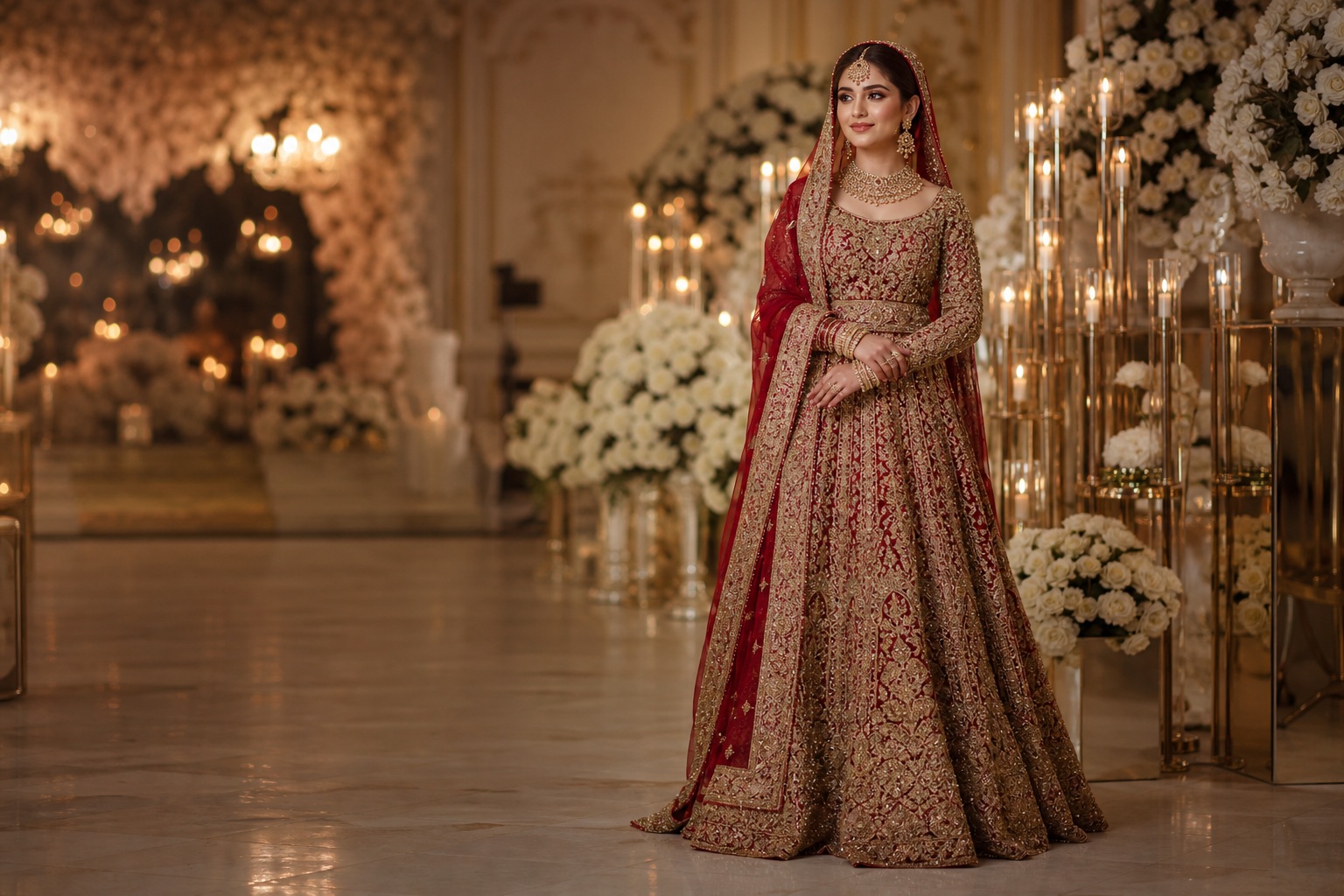
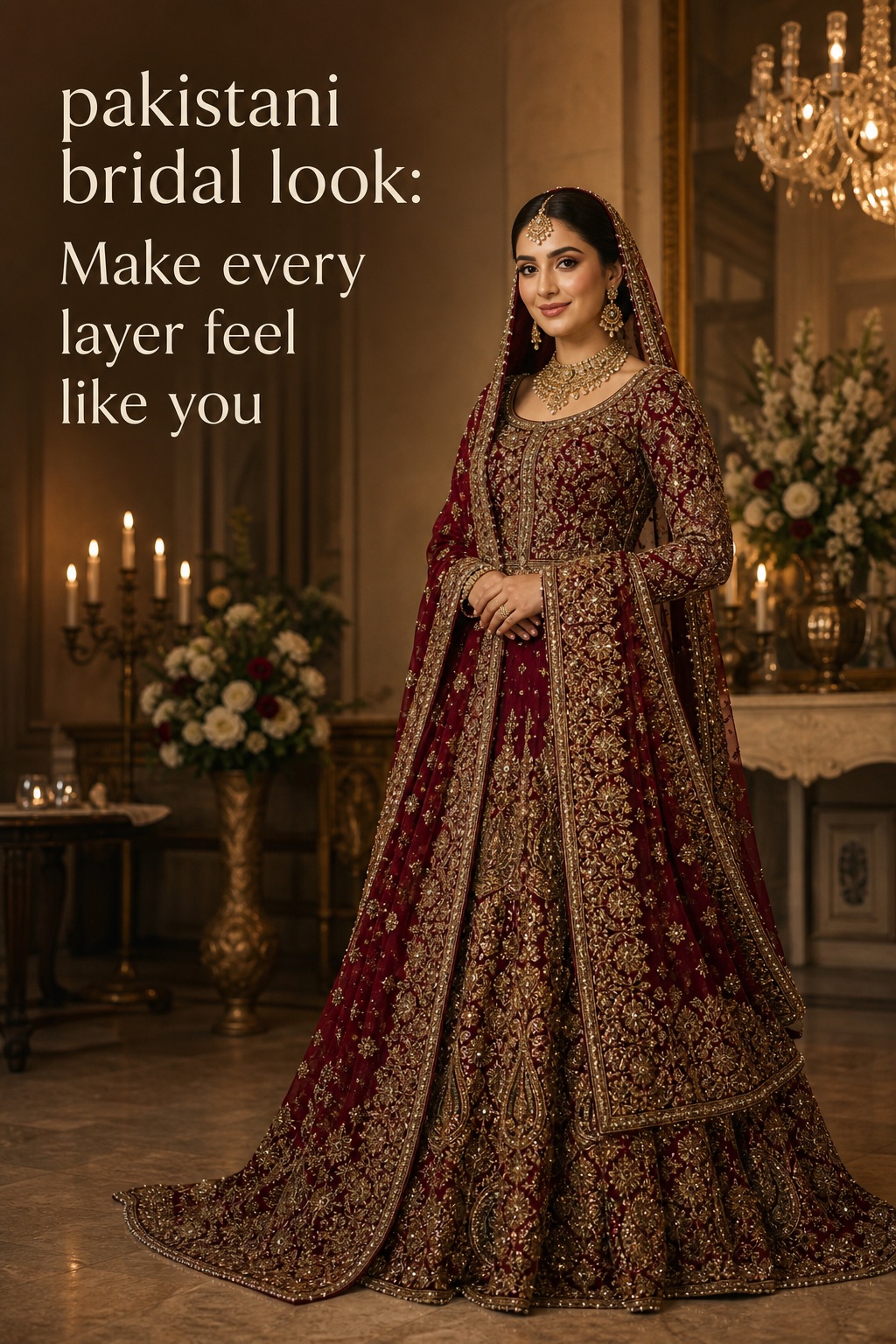
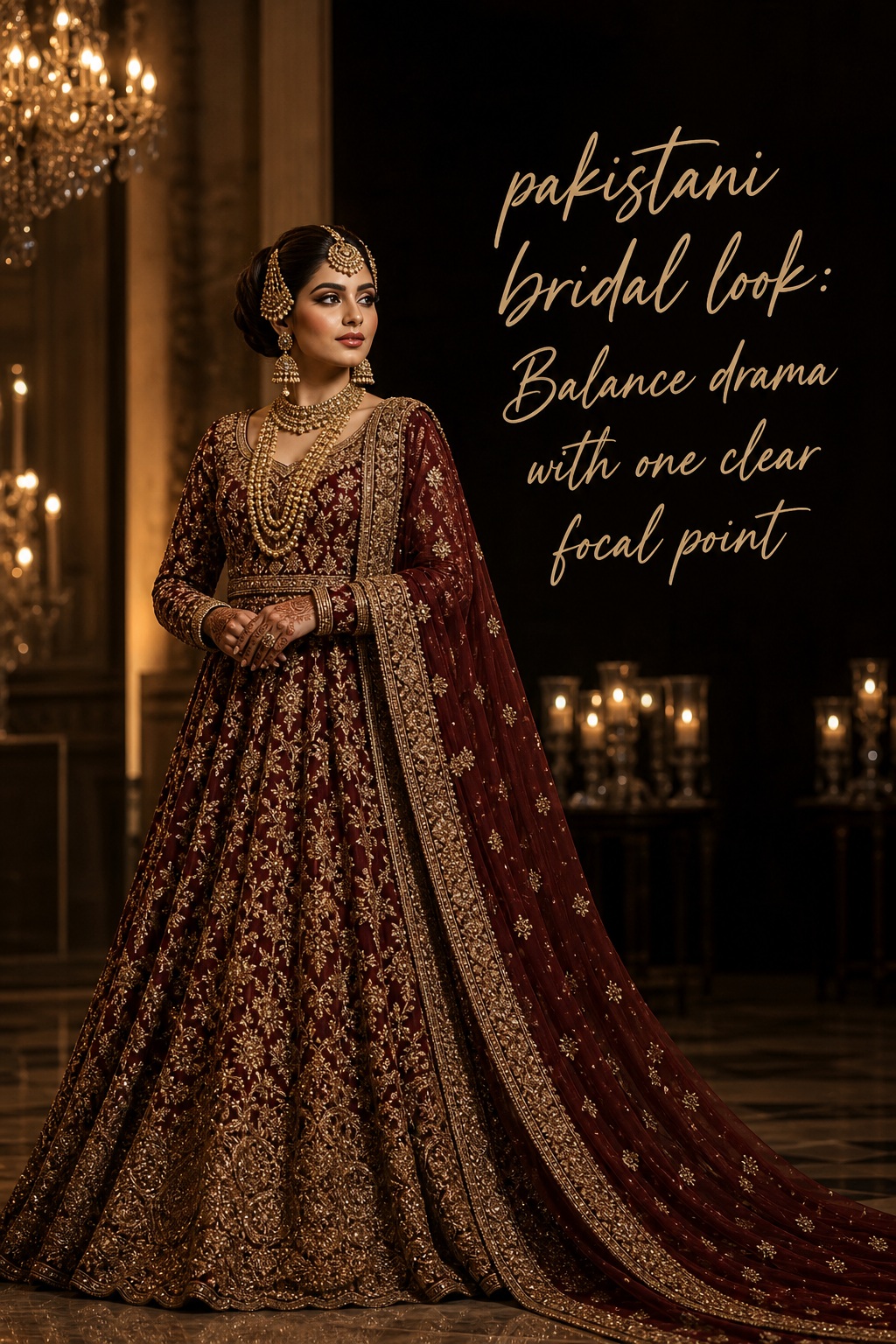
The Baraat is often the most photographed and ceremonial part of the bridal wardrobe, so it deserves a deliberate plan. Traditional red, crimson, maroon, deep wine, and gold remain powerful choices, but they are not the only route. Black and gold, rich jewel tones, blush with antique gold, or a deep shade softened by ivory can create a distinctive Pakistani bridal look. The question is not whether the color is traditional enough. It is whether the color, embroidery, silhouette, and styling express the kind of bride you want to be.
Start with silhouette. A lehenga choli creates a familiar bridal rhythm with a fitted bodice, full skirt, and dupatta. A farshi gharara brings a long, sweeping line that feels especially dramatic in a grand entrance, although it needs careful planning for movement. A pishwas can create vertical length and softness, while an anarkali offers a more fluid shape. Try the full outfit with the actual jewelry and dupatta before final alterations because volume behaves differently once every layer is added.
Use embroidery as architecture
Dense handwork becomes more effective when it has a clear structure. Borders can lengthen the eye, a central motif can frame the torso, and a balanced spread of zardozi or dabka can keep a large skirt from looking visually heavy at the hem. Discuss where you want the eye to go in portraits. If your blouse, skirt, and dupatta all have equally intense decoration, the look may lose its focal point.
Texture also changes under different lighting. Sequins can sparkle in a ballroom, matte threadwork can look refined in daylight, and antique metallic work can photograph warmly beside candlelight. Ask your designer or photographer for examples under the lighting you expect. A sample viewed in a showroom may not tell you how the outfit will read in outdoor portraits, flash photography, or a dim reception.
Match jewelry to the outfit’s visual weight
Pakistani bridal jewelry can include a choker, long haar, earrings, jhumkas, maang tikka, jhoomer, nath, bangles, rings, and hand ornaments. You do not need every category to look complete. A heavily embellished neckline may need only earrings and a headpiece. A simpler neckline can support a layered necklace. If you wear a nath, test how it interacts with your smile, veil, and hair before the wedding day.
Think in shapes as well as materials. Polki, Kundan, pearls, emeralds, rubies, and gold each create a different relationship with embroidery. Matching every stone exactly can look formal, while one repeated color can create a more relaxed cohesion. Lay the jewelry on a photograph of the outfit if possible. This makes it easier to spot a crowded neckline, a competing border, or a headpiece that disappears against the dupatta.
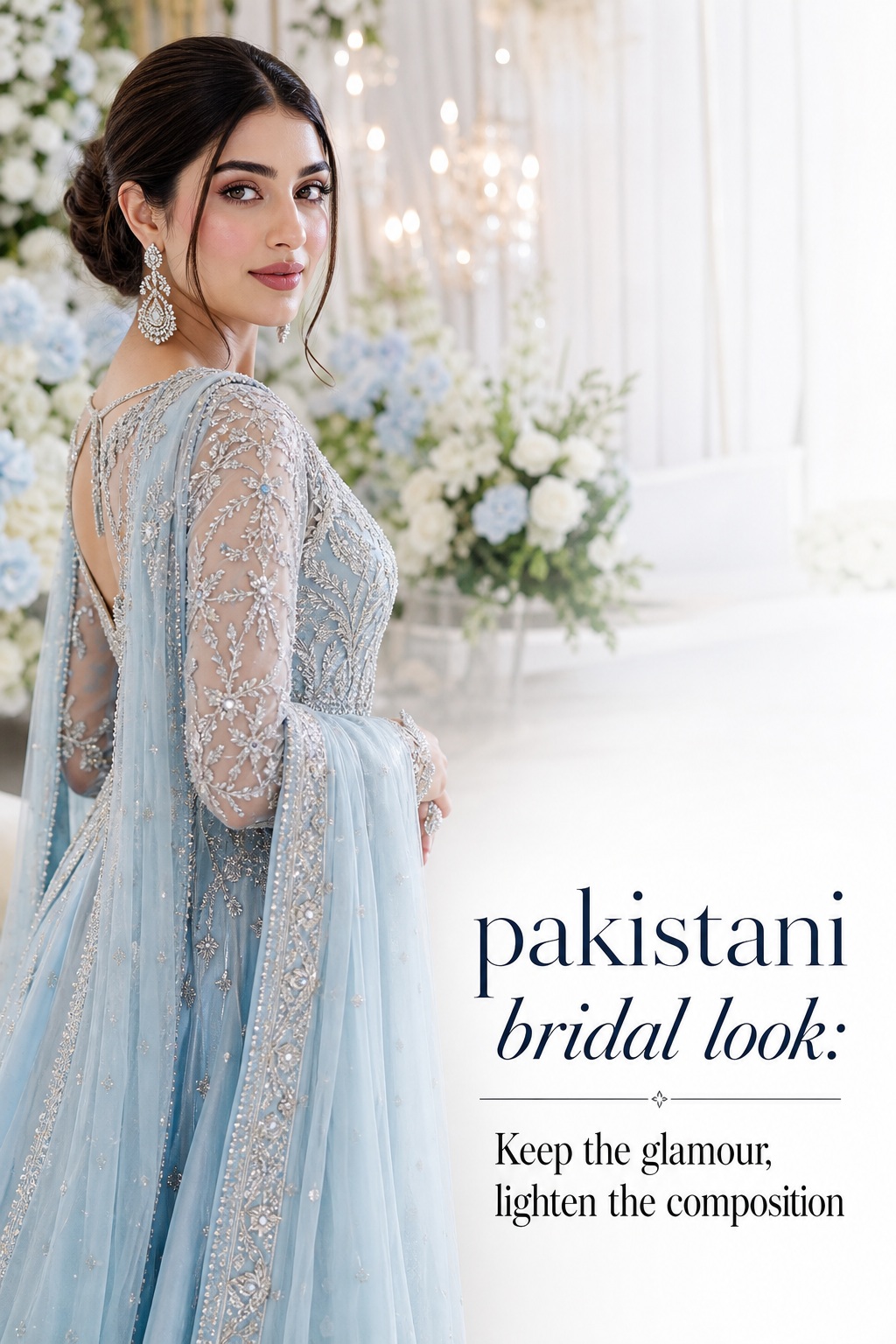
Walima: Keep the Glamour, Lighten the Composition
The Walima often gives a bride permission to explore a different kind of elegance. Flowing gowns, pastel lehengas, ivory, champagne, powder blue, blush, silver, and soft metallics can feel luminous without repeating the intensity of the Baraat. A clean silhouette with refined embellishment may make a stronger impression than another heavily worked outfit.
Choose one modern shift. You might move from a traditional lehenga to a gown, from saturated red to pale blue, from layered jewelry to sculptural earrings, or from a covered head to a simpler drape. The shift will feel intentional if one element remains familiar, such as the same lip family, a repeated embroidery motif, or a shared metal tone.
Keep makeup connected but not identical
Makeup can evolve with the event. A Mehndi look might use fresh skin, warm blush, and a brighter lip. A Baraat look may support stronger brows, defined eyes, fuller lashes, and a richer lip if that feels like you. A Walima look can return to softer radiance, a diffused eye, and a rose or nude lip. Take photographs during the trial so you can check how the makeup works beside your outfit color and jewelry.
Do not let the phrase bridal makeup force you into a face you do not recognize. Pakistani bridal beauty often celebrates definition and glamour, but the level can be adjusted. Ask for real skin to remain visible if that matters to you, and communicate how you normally wear eyeliner, lashes, contour, and lipstick. Your comfort will show in the photographs more than an extra layer of product.
Choose hair that supports the headpiece
Voluminous hair, a polished bun, a braid, or a softly textured style can all work with a Pakistani bridal look. The best choice depends on the shape of your dupatta, jhoomer, tikka, earrings, neckline, and the way you want your face framed. A high-volume style can support a regal headpiece, while a low bun can make ornate jewelry feel cleaner. Secure the style in a trial and move your head, sit down, and practice the veil placement.
Make the Look Work in the Real World
A beautiful Pakistani bridal look still has to survive hours of sitting, standing, greeting, dancing, travel, heat, and photography. If you are getting married in the United States or traveling there with an outfit made abroad, build in time for a local fitting. Your body may change slightly, the climate may feel different, and the venue may have stairs, narrow aisles, or a long route between rooms.
- Wear the complete outfit during at least one fitting, including the correct underlayers.
- Practice walking, sitting, climbing a step, turning, and lifting the skirt.
- Check that the dupatta can be secured without pulling the neckline or hair.
- Confirm that jewelry does not pinch, snag, or become too heavy after an hour.
- Ask for a bustle, hidden loops, or a manageable train if the skirt needs help moving.
- Photograph the outfit in daylight, indoor light, and flash if possible.
- Keep fashion tape, safety pins, a sewing kit, blotting papers, and backup hair pins with your bridal party.
- Pack the outfit in a breathable garment bag and carry it with you when travel policies allow.
Give each vendor the same reference language. Your designer needs the mood and proportion. Your makeup artist needs the outfit color, jewelry scale, and photography conditions. Your hairstylist needs the headpiece and dupatta plan. Your photographer needs to know which details matter to you, such as handwork, mehendi, heirloom jewelry, or a family veil. Coordination is not about making every supplier produce the same image. It is about helping them protect the same story.
A final proportion check
Stand in the full look and ask three questions. What do I notice first? What do I notice second? Can I still see the bride’s face? If every answer points to the same dense area, edit one layer. You might simplify the necklace, move the dupatta border, reduce the sleeve embellishment, soften the lip, or choose smaller earrings. Editing is not taking away bridal presence. It is making the important details easier to see.
The strongest Pakistani bridal look is not a checklist of borrowed symbols. It is a considered arrangement of clothing, craft, beauty, family meaning, and personal taste. Let the Nikkah be as gentle or grand as it needs to be. Let the Mehndi move. Let the Baraat carry its ceremony. Let the Walima reveal another side of you. When each event has its own point of view, the complete wedding story feels generous, memorable, and unmistakably yours.
FAQ
What is included in a Pakistani bridal look?
A complete Pakistani bridal look can include an outfit, dupatta, jewelry, makeup, hairstyle, mehendi, footwear, and sometimes a nath or hand ornaments. The exact combination varies by event, family tradition, region, faith practice, and personal preference. The goal is a balanced whole rather than wearing every possible accessory.
Does a Pakistani bride have to wear red?
No. Red, crimson, maroon, and deep wine are important traditional choices for many Baraat looks, but Pakistani brides also wear ivory, pink, mint, champagne, blue, black and gold, peach, and other colors. Choose a shade that respects your setting and feels like you, especially if your family has no specific color expectation.
How should jewelry be chosen for a Pakistani bridal outfit?
Choose jewelry according to the neckline, embroidery density, dupatta placement, face framing, and the outfit’s main visual lead. A heavily worked neckline may need simpler jewelry, while a clean neckline can support a layered set. Try the pieces with the full outfit so you can check weight, comfort, and whether details remain visible in photographs.
What makeup works with a Pakistani bridal look?
Defined eyes, shaped brows, luminous skin, blush, and a neutral, rose, or deeper lip can all work. Adjust the intensity to the event, outfit, jewelry, lighting, and your comfort. Schedule a trial, photograph it in the expected light, and tell the artist which parts of your natural features you want to remain visible.
How can I make my bridal look feel modern?
Keep one traditional anchor, then modernize the proportion or styling. You could pair detailed handwork with a cleaner silhouette, choose a contemporary color, edit the jewelry, use a sculptural earring, or style a classic dupatta in a simpler way. Modern does not mean abandoning tradition. It means choosing which traditional elements deserve the most attention.
How early should I plan a Pakistani bridal outfit?
Start as early as your date, designer, travel plan, and level of customization require. Bespoke handwork, international shipping, multiple fittings, jewelry sourcing, and alterations can all take time. Build a schedule that includes a complete try-on, a final fitting close to the wedding, and a backup plan for small repairs or fit changes.
How do I keep a heavy Pakistani bridal outfit comfortable?
Test the outfit for movement before the wedding, use supportive underlayers, secure the dupatta carefully, and ask for hidden loops or a bustle if needed. Keep the ceremony route in mind, schedule sitting breaks when possible, and have a trusted person carry emergency pins, tape, and water. Comfort is part of looking confident, not a separate concern.