Bridal Party Dresses: How to Choose the Right Look
Choosing bridal party dresses is really a choice between two goals: creating a beautiful visual line in your wedding photos and helping every person in your party feel comfortable, confident, and included. You do not have to choose between those goals. The right coordination system gives the group a clear connection while leaving room for different bodies, budgets, personalities, and practical needs.
This guide compares the three most useful approaches: identical dresses, coordinated dresses with controlled variation, and individually chosen dresses inside a defined brief. You will learn when each option works best, how to set color and fabric boundaries, and how to avoid the last-minute group-chat confusion that happens when everyone shops without a shared plan.
Start with the decision that affects every dress
Before you save a single dress, decide how much sameness and how much freedom you want. “Bridal party dresses” can mean one exact gown for everyone, or it can mean several silhouettes that share a color family. Both can look polished. The mistake is allowing the level of variation to happen accidentally.
Option one: identical dresses
Identical dresses create the strongest visual repetition. The color, fabric, length, and silhouette do most of the styling work, which can make planning straightforward. This approach suits a very formal wedding, a small party, or a couple with a precise, classic vision. It also works well when the group is shopping with the same retailer and can attend fittings together.
Turn wedding inspiration into a plan you can actually follow.
Zarellea brings your guest list, budget, vendors, and day-of details into one shared space — so no beautiful idea gets lost in the shuffle.
The limitation is that one neckline, waist placement, hemline, and fabric may not serve everyone equally. If you choose this route, pay attention to the range of sizes, bust support, available lengths, and alteration options before falling in love with a sample. A dress that looks elegant on a model may be unnecessarily difficult for a pregnant attendant, someone who prefers more coverage, or someone who needs a petite or tall adjustment.
Option two: coordinated dresses
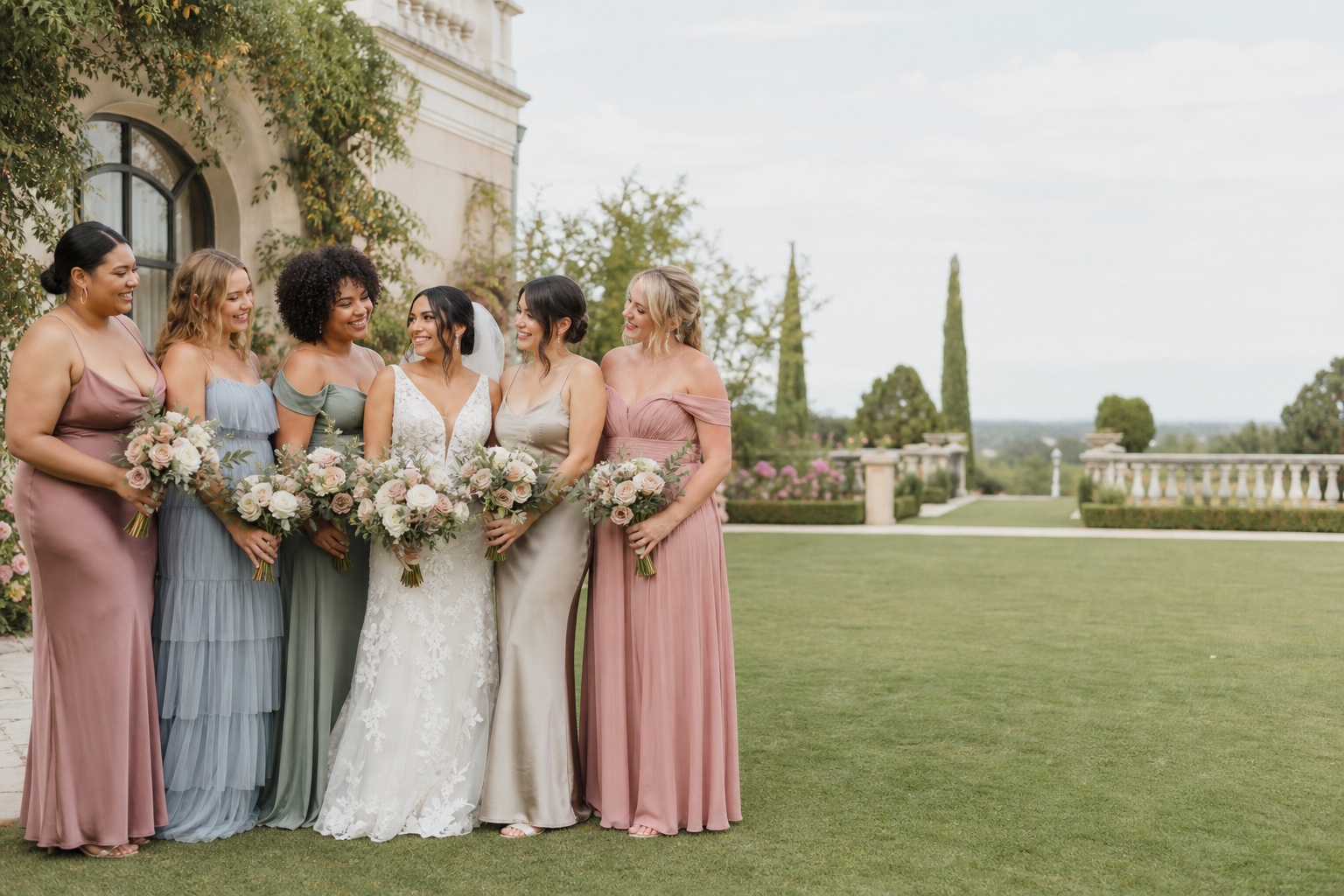
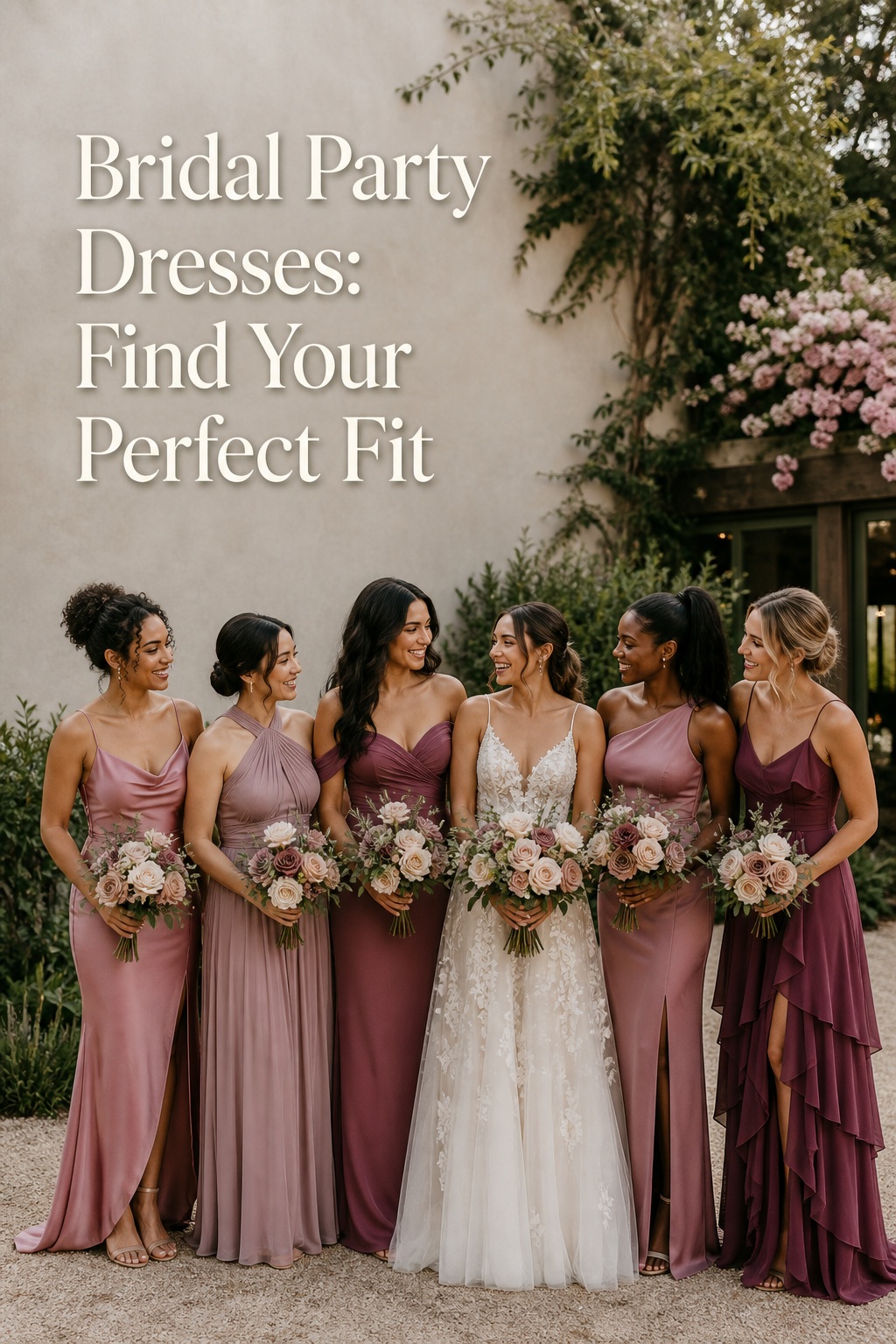
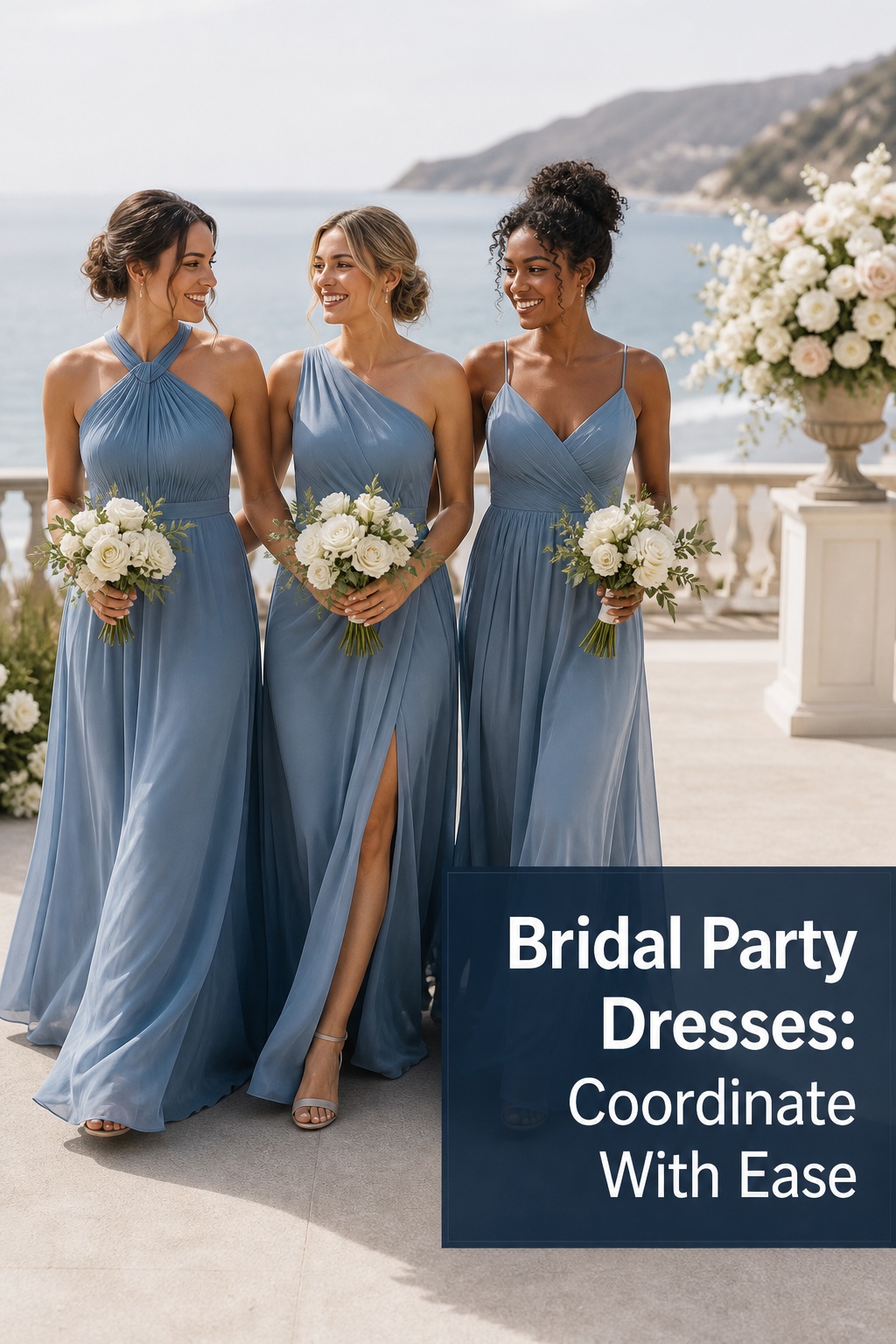
Coordinated dresses share one or two anchors while allowing controlled variation. The anchor might be a color, a fabric, a designer, a hemline, or a formality level. For example, everyone could wear floor-length satin in a family of rose shades, or everyone could wear the same dusty blue while choosing a neckline that feels right. This is usually the most balanced choice for a mixed group.
Coordination still requires decisions. Tell the group exactly what is fixed and what is flexible. “Choose something in a neutral” is broad enough to produce ivory, beige, gray, and metallic dresses that may not belong together. “Choose champagne, latte, or warm taupe in a floor-length satin gown from this collection” gives freedom inside a usable frame.
Option three: individually chosen dresses
Individually chosen dresses can feel personal and modern, especially for a small wedding, a creative venue, or a party made up of attendants with very different styles. This option can also improve rewear because each person selects a dress she genuinely likes. It is the least controlled approach, however, so it needs the clearest written brief.
- Set the color palette or a narrow color family.
- Set the dress code and minimum level of formality.
- Specify the hemline range, such as all midi or floor length.
- Name fabrics or textures to include and avoid.
- Share three to five example dresses that show the intended mood.
- Require a photo or link for approval before purchase.
A useful test is to imagine the party standing together from a distance. If the eye sees one wedding party before it sees six unrelated outfits, your brief is doing its job. If every dress tells a different story, add one more shared rule.
Compare the three strongest coordination systems
Once you know how much variation you want, choose the system that will hold the look together. You need only one strong anchor. Trying to vary color, fabric, length, silhouette, and retailer at the same time makes the result much harder to predict.
Same color, different silhouettes
This is the easiest coordinated system to explain. Everyone wears the same approved color, while each attendant chooses a neckline, sleeve, or silhouette that suits her. It is especially useful when body shapes and comfort preferences vary. A-line, column, wrap, one-shoulder, and long-sleeve versions can look like a deliberate collection when the color and formality stay consistent.
Buy physical swatches and check the actual dresses in daylight. A color name is not a universal standard, and the same shade can read differently in chiffon, satin, crepe, velvet, or a printed fabric. If attendants are buying from different designers, matching a color name alone is risky. One designer and one fabric family make this system more reliable.
Same silhouette, different colors
Using one dress in several colors gives you strong shape repetition with more visual energy. It works beautifully for a garden, coastal, sunset, or jewel-tone wedding. The silhouette should be genuinely wearable for the whole group, because the identical cut leaves less room to solve individual fit concerns.
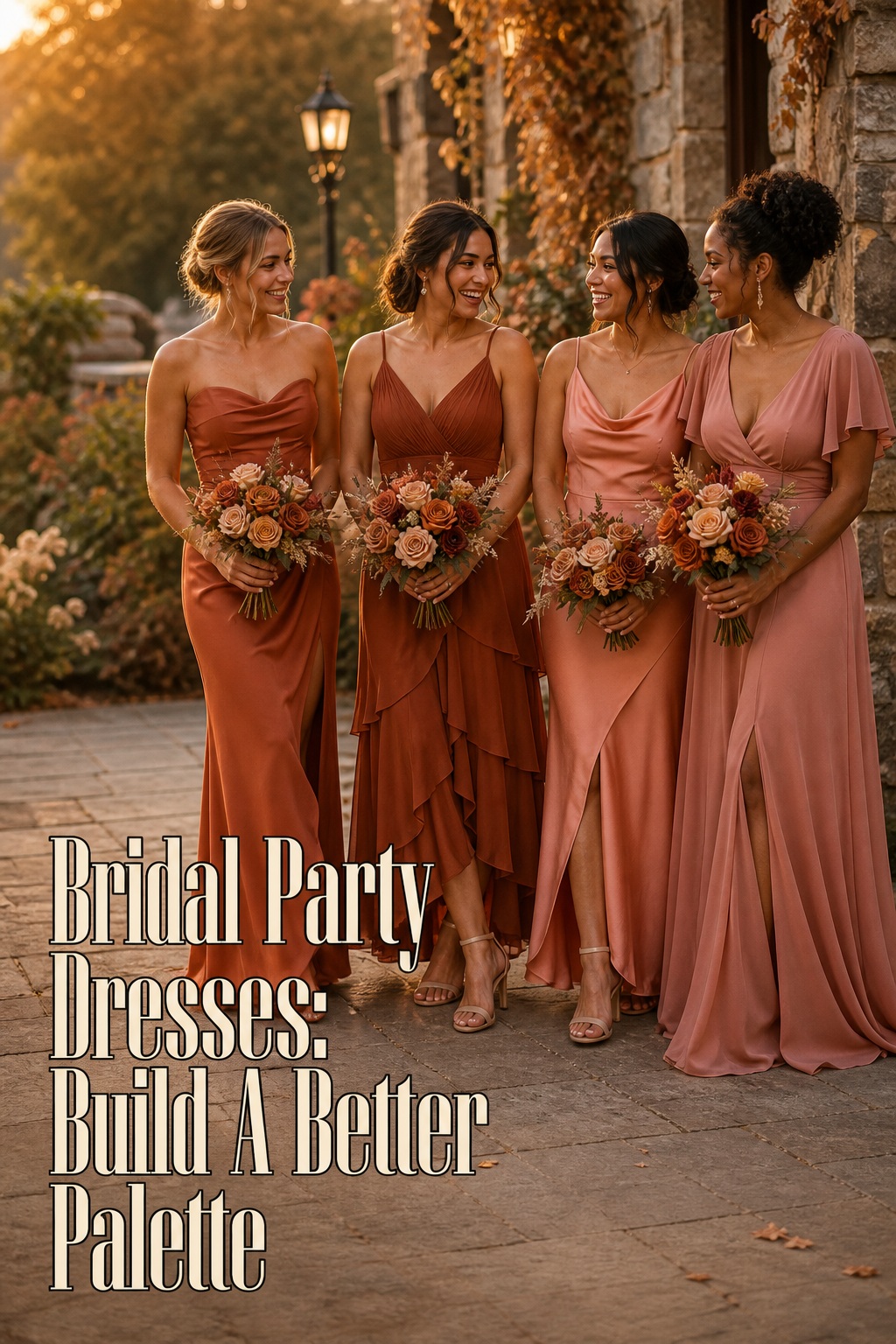
Limit the palette. Two or three closely related colors are easier to photograph than six unrelated shades. You can create depth with light, medium, and dark versions of one family, such as blush, rose, and berry. You can also use neighboring hues, such as sage, olive, and eucalyptus, but decide who wears which shade rather than letting the ordering calendar decide.
Same palette, different dresses
This is the most expressive option. The attendants may choose different styles, colors, or even prints inside a palette. It can feel relaxed and editorial, but it is not the same as giving everyone unlimited choice. Define the edges of the palette, the approved formality, and the details that must repeat.
For a warm palette, you might allow terracotta, cinnamon, muted peach, and soft rose, all in midi or floor-length dresses. For a cool palette, you might allow dusty blue, slate, soft teal, and lavender. Ask everyone to send a photo before ordering and place the selected images in one shared board. Seeing the full group together catches a clash that is easy to miss one dress at a time.
Fabric as the anchor
When you want more color variety, a shared fabric can create cohesion. All matte crepe looks quiet and modern. All chiffon feels soft and romantic. All satin gives a more polished, reflective finish. This approach is strongest when the fabric rule is specific. “Formal fabric” is not enough; say satin, chiffon, or matte crepe and decide whether prints are allowed.
Remember that fabric changes the color you see. Satin reflects light and may look brighter in photographs, while chiffon can appear lighter or more transparent. Velvet absorbs light and adds weight. If one person wears a glossy satin while the rest wear matte crepe, the difference may be more noticeable than a small color variation. Use the fabric anchor only when the group can realistically shop from compatible collections.
Choose bridal party dresses by wedding situation
The best choice is not only about taste. Venue, season, ceremony time, weather, guest dress code, and the amount of movement expected on the day all affect the answer. Start with the situation, then choose the styling system that supports it.
For a black-tie or formal evening wedding
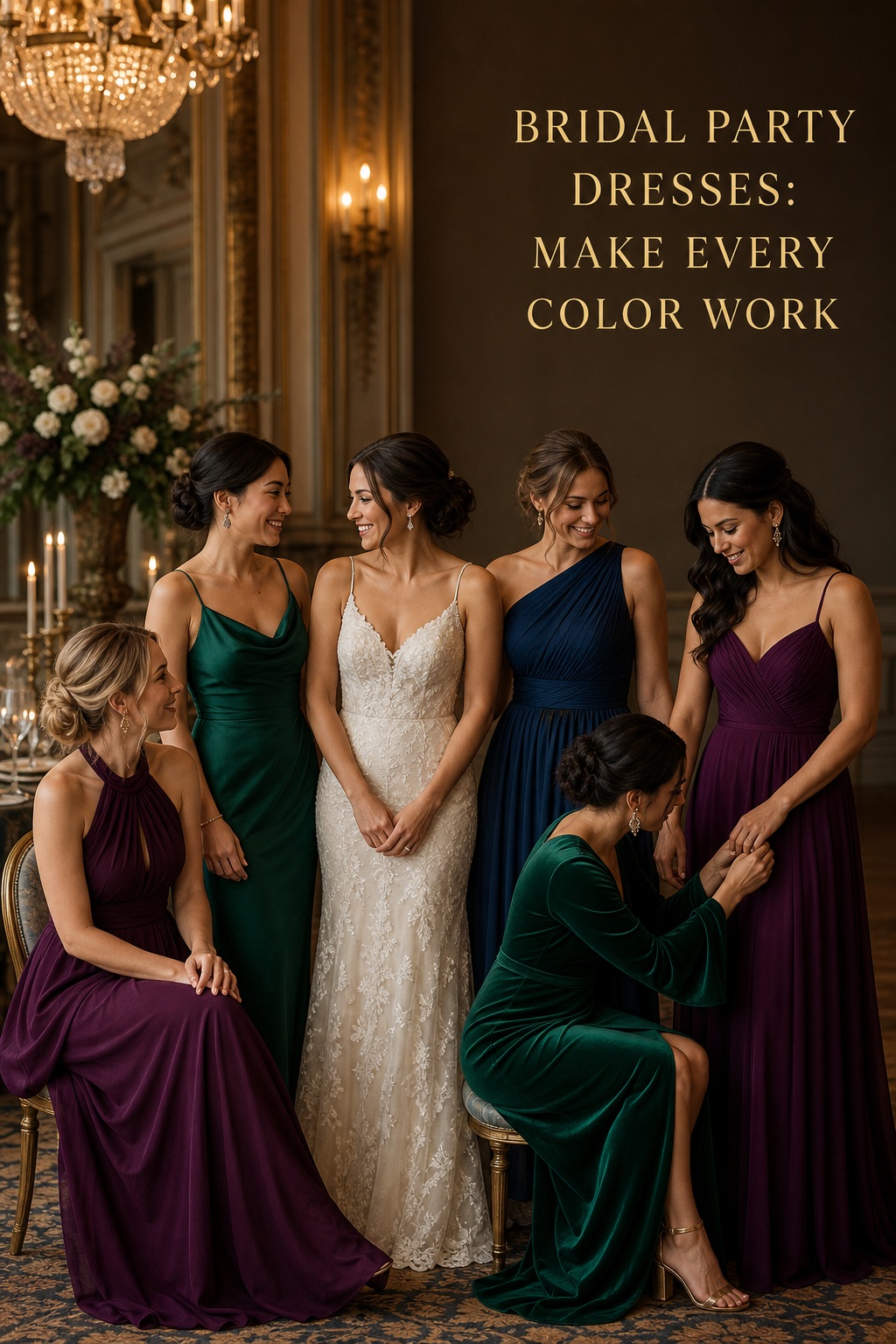
Floor-length dresses in a consistent fabric usually feel most natural for black-tie celebrations. You can keep the silhouettes identical for a formal column, choose different necklines in the same color, or use a tightly controlled jewel-tone palette. Dark emerald, sapphire, wine, deep plum, and black can photograph with depth, especially when bouquets and suits are kept simple.
Do not make the party look formal only through color. Check the fabric weight, lining, footwear, and outer layers. An attendant who must walk across gravel or stand outside for an hour may need a stable shoe and a wrap. A dress code can be elevated while still allowing movement and weather-appropriate comfort.
For a garden or outdoor wedding
Outdoor weddings give you room to use softer colors, floral prints, shorter hemlines, and lighter fabrics, but the venue still determines how dressed up the group should feel. A formal garden estate may call for floor-length chiffon, while a daytime backyard celebration may suit midi dresses in a shared palette.
Prints work best when one visual element repeats. You could allow one or two floral dresses and pull their background or flower colors into the solid dresses. Keep print scale in mind: several tiny prints can look busy, while one large print beside plain dresses can become the accidental focal point. Use bouquets to repeat two or three colors from the dresses without copying every shade exactly.
For a beach or destination wedding
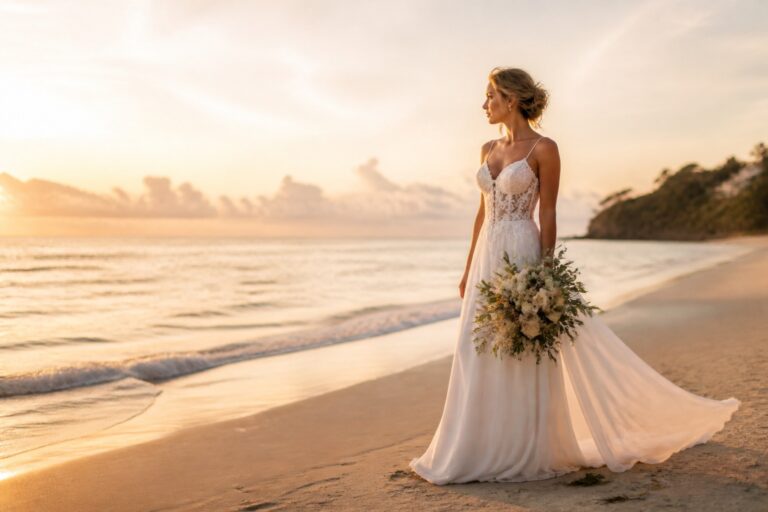
At the beach, comfort is part of the visual plan. Lightweight chiffon, crepe, linen blends, and breathable satin can move better than heavy, structured fabric. Consider how the dresses will handle wind, humidity, sand, stairs, and travel. A floor-length gown may look lovely in a still photograph but become difficult if the ceremony requires a long walk on an uneven path.
Use the destination as a color cue without turning the party into a theme costume. Sea glass, dusty blue, sand, soft coral, or sunset tones can feel connected to the setting. Give attendants the exact color references and a realistic packing deadline. Destination shopping is stressful when a dress must be ordered, altered, and packed across time zones.
For a courthouse or city wedding
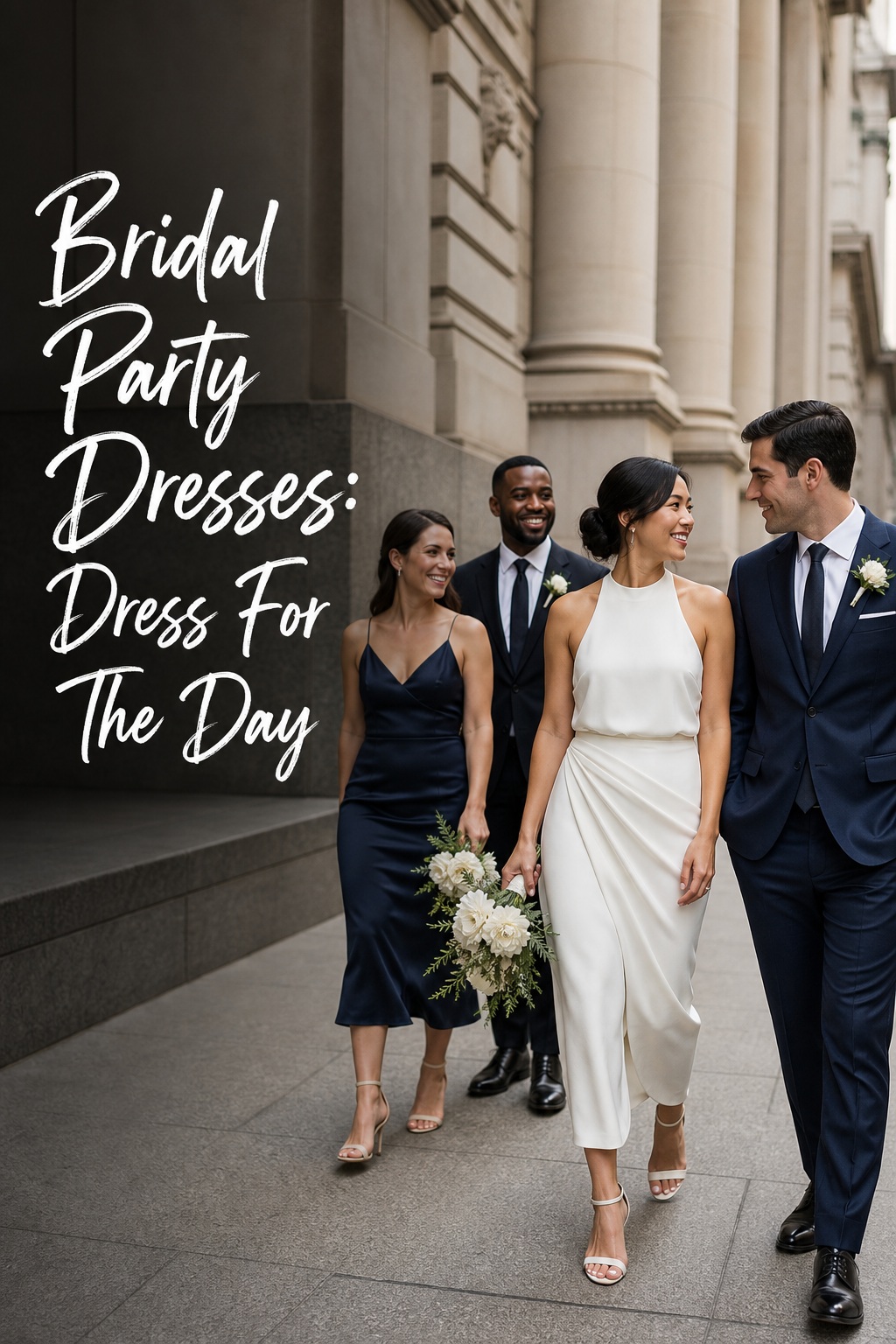
City weddings can support shorter hemlines, tailoring, jumpsuits, modern crepe, or dresses that would be easy to wear again. A coordinated black, navy, gray, or tonal neutral group feels sharp without competing with the architecture. If the couple is moving between a courthouse, restaurant, and portraits, prioritize shoes and outerwear that can keep up.
This is also a good setting for a mixed-gender wedding party. The anchor can be a color family, a suit fabric, a tie or pocket-square color, or a shared accessory rather than identical dresses. Coordination should include every person standing in the wedding party photos, not only the attendants in dresses.
For a seasonal wedding
Season should guide fabric, coverage, and color, but it does not have to dictate a narrow trend. Spring can handle soft color and floral texture, summer can benefit from breathable construction, fall can support rust, wine, moss, navy, and warm neutrals, and winter can carry satin, velvet details, long sleeves, and richer tones. Choose what will still look good when your photos are viewed years later.
Plan the complete outfit. A cold-weather wedding may require wraps or coats that cover the dress, so decide whether those layers should match, coordinate, or simply stay neutral. For a warm wedding, test undergarments and lining in the actual climate. Sweat, transparency, and chafing are styling issues, not minor details.
Manage fit, budget, timing, and rewear without losing the look
A beautiful plan can still fail if it arrives late, costs more than expected, or makes attendants feel ignored. Treat the practical details as part of the design brief from the beginning.
Ask for preferences before choosing the final dress
You do not need to hand over every decision, but you should know the boundaries that affect comfort. Ask about necklines, sleeve preferences, length, shapewear, mobility, religious or cultural considerations, maternity needs, and colors someone strongly dislikes. A short private form can be easier than asking people to announce personal fit concerns in a group chat.
Then separate non-negotiables from preferences. For example, “floor length” might be fixed for the ceremony, while “sleeveless or short sleeve” might be flexible. The more clearly you distinguish the two, the easier it is to offer real choice without losing the overall look.
Set a complete cost expectation
The dress price is only one part of the outfit. Include alterations, shoes, undergarments, jewelry, wraps, shipping, rush fees, and professional pressing. Tell the group the expected total before they commit. If the budget is tight, choose a retailer with predictable shipping and a good return or fit policy, or let attendants use dresses they already own if they fit the brief.
A coordinated system can make budgeting fairer because it does not require every person to buy the same price point. You can set a ceiling, give several approved retailers, and allow a rental or existing-dress option. The visual result matters, but participation should not depend on someone quietly absorbing an unplanned expense.
Build a realistic ordering and alteration calendar
- Six to nine months out: choose the system, order swatches, and confirm the budget.
- Five to seven months out: collect measurements, select dresses, and place orders.
- Two to three months out: check deliveries and schedule alterations.
- Four to six weeks out: try on the full outfit, including shoes and undergarments.
- One to two weeks out: complete the final hem, steam or press the dresses, and confirm transport.
Use the earliest realistic deadline, not the date a retailer promises under perfect conditions. International shipping, custom sizing, seasonal demand, and alteration appointments can all add time. Ask everyone to confirm when her dress is ordered so one missing purchase does not surprise you near the wedding.
Design for rewear when it fits your priorities
Rewear is not a requirement, but it is a helpful filter. Attendants are more likely to wear a dress again when it feels like their style, fits well, and works with ordinary accessories. Midi lengths, simple necklines, removable straps, solid colors, and non-bridal fabrics often make a dress more versatile. A dramatic floor-length gown can still be a good choice if the person loves it and has a realistic occasion for it.
Ask whether you are optimizing for repeat wear, photographs, comfort, or a particular formal mood. All four can matter, but one may need to lead. Naming the priority prevents endless comparisons between dresses that are solving different problems.
Use accessories and flowers as the final bridge
When silhouettes or colors vary, a repeated accessory can make the group feel intentional. Choose one element such as earrings, a hair ribbon, a belt, a shoe color, or a wrap. Do not add every possible matching detail. One strong repetition is usually more modern than a full set of identical accessories.
Flowers can connect the party to the wider wedding palette. They do not need to match each dress exactly. If dresses move from blush to berry, bouquets can repeat those tones with green and neutral flowers. If the dresses are all different colors, a consistent bouquet shape or ribbon can bring the photographs back to one visual language.
Final approval checklist for bridal party dresses
Before you approve the final look, review the whole group rather than judging each dress alone. Save a screenshot of every selected dress beside the others, including the swatch, fabric, length, and accessories. Look at the board in natural light and in a black-and-white view. The second test shows whether the group has a useful balance of light and dark values even when colors are not visible.
- Does every dress meet the ceremony and reception dress code?
- Is there one obvious anchor: color, fabric, silhouette, length, or accessory?
- Are the colors approved from physical swatches or real dress photos?
- Are hemlines and fabric weights balanced across the group?
- Can each person move, sit, walk, dance, and use the restroom comfortably?
- Has everyone received the full expected cost and ordering deadline?
- Are alterations, shoes, undergarments, outer layers, and jewelry included?
- Do the bouquets and wedding-party suits support the dress palette?
- Has each dress been photographed as a complete outfit before the wedding?
The most successful bridal party dresses are not necessarily identical. They are connected by decisions that the couple made on purpose, while each person can still recognize herself in what she is wearing. Choose the amount of control your wedding needs, define the anchor clearly, and leave the remaining space for comfort and personality.
FAQ
Do bridal party dresses have to match exactly?
No. They can match exactly, share a color in different silhouettes, use several colors from one palette, or follow a shared fabric and formality rule. The important part is choosing the system before people shop and communicating what is fixed.
How many colors should a bridal party wear?
For most parties, two or three related colors are easier to balance than many unrelated colors. A larger party can repeat shades or create a gradient, but keep the colors inside one clear family unless the wedding intentionally calls for a rainbow effect.
Can bridesmaids choose their own dress styles?
Yes. Give them a clear palette, length, fabric, and formality brief, then require approval before ordering. Same-color, different-silhouette dressing is one of the simplest ways to support different bodies and comfort preferences.
Should every bridal party dress come from the same designer?
Using one designer can make color, fabric, sizing, and shipping more predictable, especially for a coordinated look. It is not essential if you are intentionally allowing different dresses, but you should then approve physical samples or full-dress photos to check the result.
When should the wedding party order their dresses?
Begin the process about six to nine months before the wedding when dresses are made to order or require alterations. Earlier is safer for destination weddings, custom sizing, large parties, peak seasons, or anyone whose measurements may change.
How can bridal party dresses be more comfortable?
Ask about comfort limits before choosing, offer more than one silhouette when possible, check lining and support, allow practical shoes, and schedule a full outfit fitting. Comfort also includes weather, walking surfaces, bathroom access, and the ability to sit and dance.