Winter Wedding Ideas That Feel Warm, Personal, and Beautiful
A winter wedding can be the most atmospheric celebration of the year, but the magic does not come from covering every surface in snowflakes. It comes from contrast: a dark sky outside, warm light inside, a velvet ribbon beside crisp stationery, and guests who feel genuinely looked after. The best winter wedding ideas create a mood that belongs to the couple first and the season second.
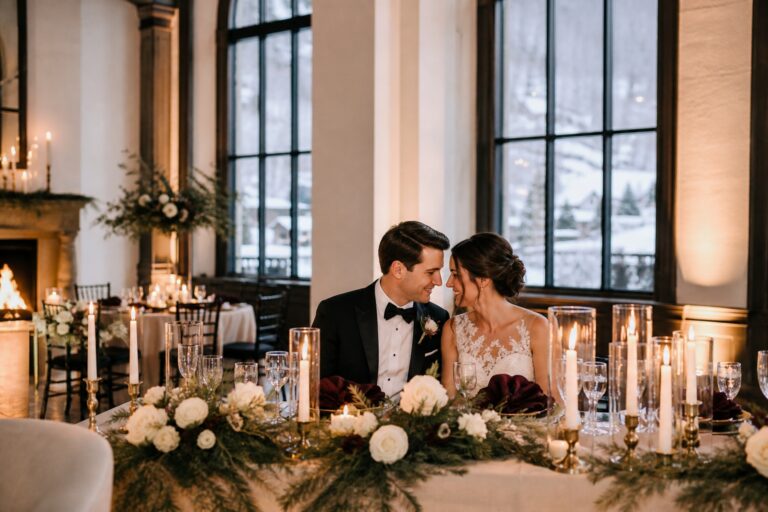
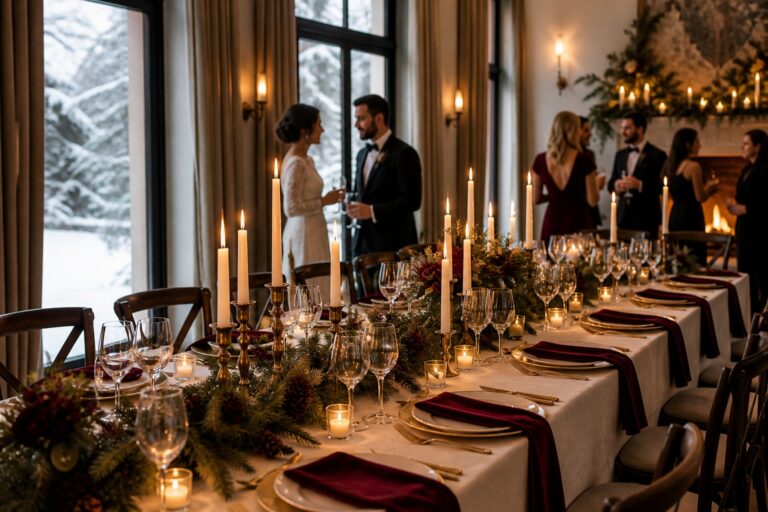
Picture the moment guests arrive. Their coats are hung, their hands close around something warm, and the room glows with candlelight before the ceremony begins. Evergreen branches frame the entrance, but the palette is not automatically red and green. Perhaps it is ink blue, ivory, and brushed silver. Perhaps it is espresso brown, candle cream, and dusty rose. The point is not to copy a winter scene. The point is to make winter do useful design work for your wedding.
The winter wedding idea is a mood system, not a pile of snowflakes
Before you choose favors, flowers, or a signature drink, decide what kind of winter you want your guests to feel. A winter wedding can be glacial and modern, candlelit and romantic, rustic and outdoorsy, glamorous and theatrical, or quietly seasonal with almost no literal snow imagery. This choice gives every later decision a filter. If a detail does not support the mood, it does not need to make the final plan.
Start by choosing your seasonal intensity. At the subtle end, winter appears through texture, light, early darkness, and a cool or deep palette. In the middle, you can add evergreen, pine cones, berries, velvet, frosted stationery, and a warming menu. At the most expressive end, the wedding may include a snowy ceremony backdrop, a ski-lodge setting, ornaments, dramatic faux snow, or a full winter wonderland concept. None of these levels is more correct than another. The strongest result is the one that matches your venue and your personality.
Turn wedding inspiration into a plan you can actually follow.
Zarellea brings your guest list, budget, vendors, and day-of details into one shared space — so no beautiful idea gets lost in the shuffle.
Choose one emotional promise
A useful design exercise is to finish this sentence: “We want our guests to remember the wedding as…” The answer might be intimate and candlelit, elegant and snowy, playful and festive, or calm and deeply cozy. Use that phrase as your creative brief. It is more helpful than beginning with a Pinterest board full of unrelated images because it describes the experience rather than only the objects.
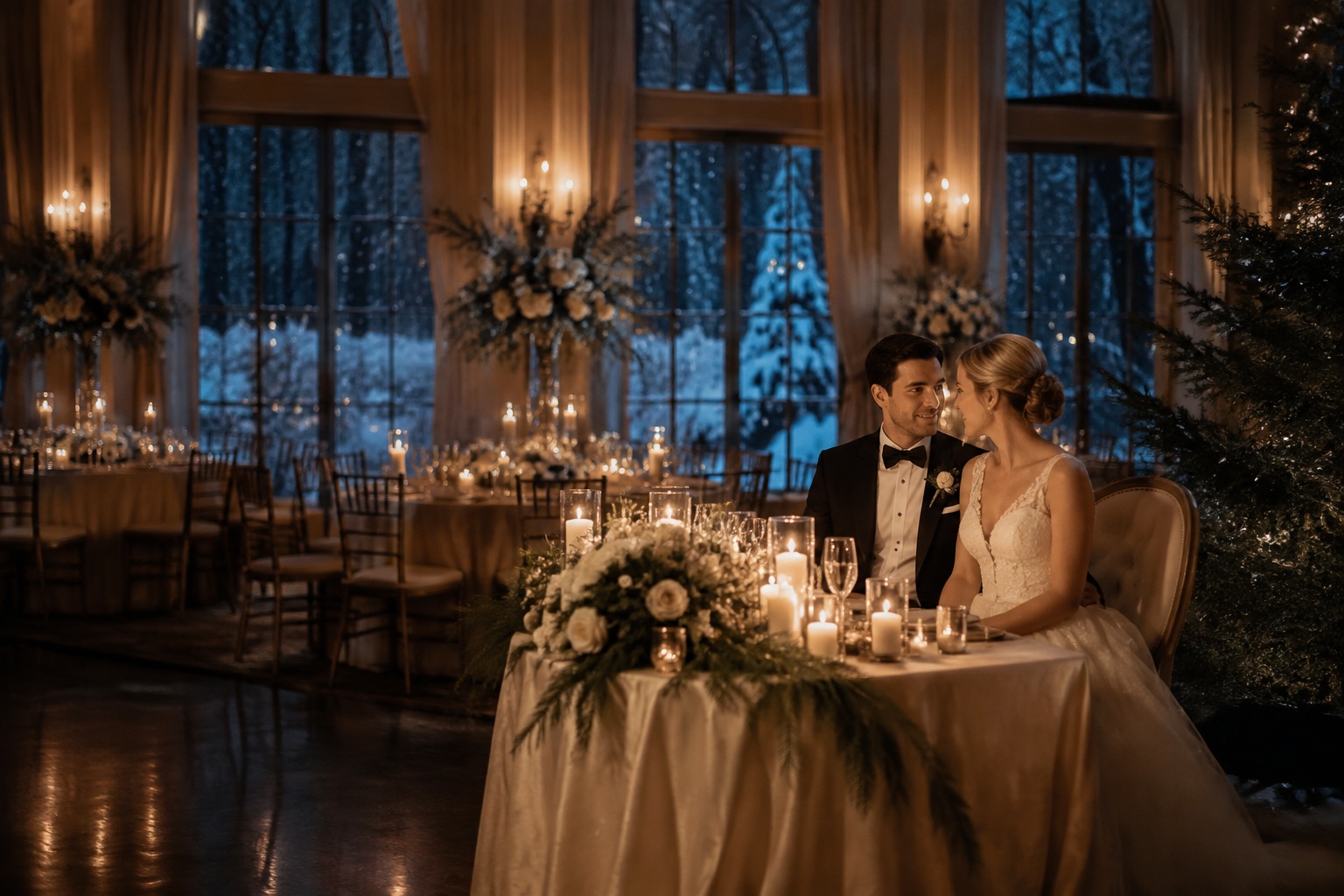
For example, “quietly glamorous” could lead to a black, ivory, and champagne palette, satin napkins, tall taper candles, sculptural white flowers, and a formal coat check. “Mountain-house warmth” could lead to a stone fireplace, wool textures, pine, soup served in small cups, and handwritten escort cards. Both are winter wedding ideas, but they tell very different stories.
Let the venue set the first layer
Winter is unusually generous to venues because the setting can become part of the decoration. A room with tall windows can frame bare branches or snow. A historic estate can carry candlelight, velvet, and rich jewel tones. A greenhouse can make winter greenery feel lush without pretending it is summer. A modern loft can support silver, glass, sculptural branches, and directional lighting. A barn can feel beautiful and intimate, but confirm insulation, heating, restroom access, and coat storage before falling in love with the photographs.
- For a modern winter mood: choose clean lines, icy blue, charcoal, white, chrome, and a restrained floral plan.
- For a romantic winter mood: choose candle clusters, soft fabrics, ivory flowers, berry accents, and warm metallics.
- For a rustic winter mood: choose wood, pine, wool, lanterns, evergreen, and simple paper goods.
- For a glamorous winter mood: choose velvet, crystal, deep color, reflective surfaces, and dramatic evening lighting.
Build the visual language through light, color, texture, and nature
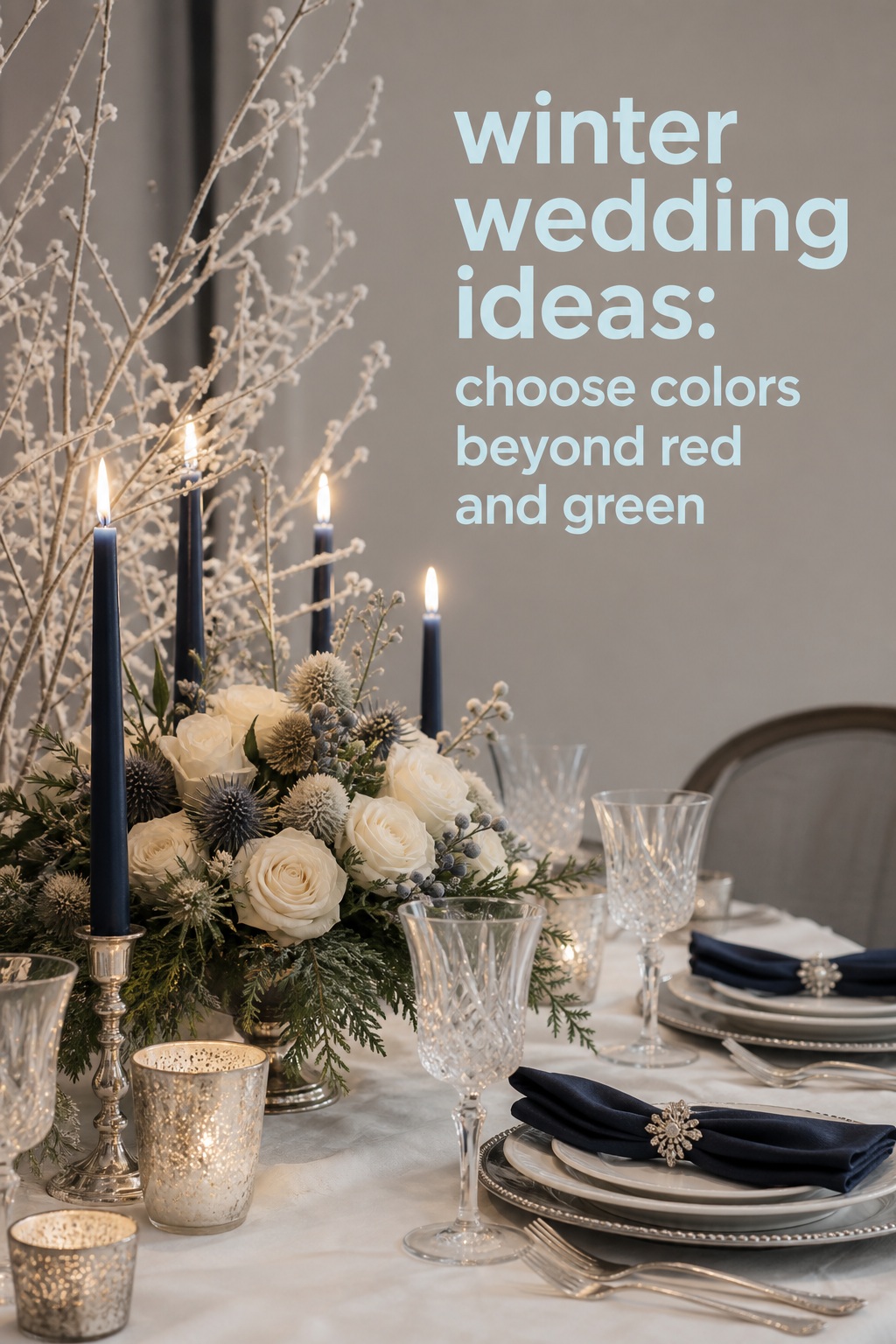
The most convincing winter wedding designs usually rely on four connected ingredients: light, color, texture, and natural material. You do not need all four in equal measure, but they should agree. A pale blue palette can feel cold if the room is brightly lit and every surface is smooth. Add amber candlelight, velvet, or natural branches and the same palette becomes inviting. A deep burgundy palette can feel holiday-heavy if it is paired with too many ornaments. Balance it with ivory, stone, or restrained greenery.
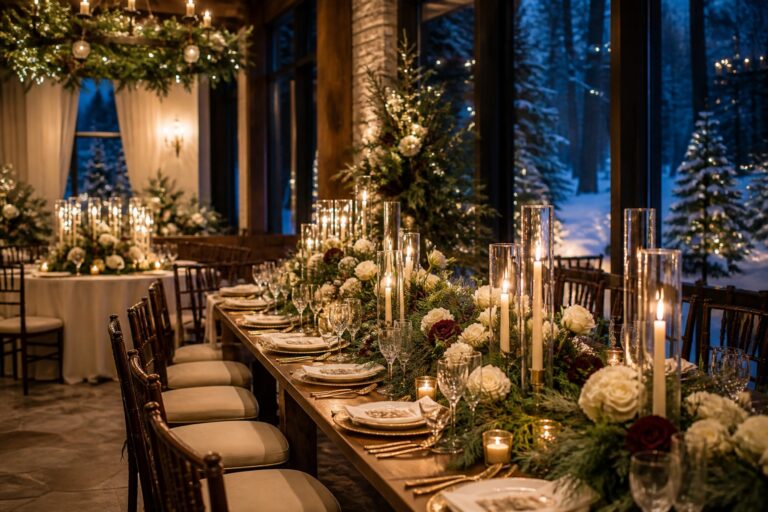
Lighting is often the highest-impact winter decision because the season gives you darkness earlier in the day. Use that advantage intentionally. Candlelit aisles, taper candles at dinner, pin lights over the dance floor, and a warm wash on the bar can make a room feel layered instead of dim. String lights are especially effective in a greenhouse, barn, courtyard, or room with visible beams. Ask the venue what lighting is already included and whether open flame, hanging installations, or candles in certain holders are permitted.
Use a winter palette that does not look borrowed
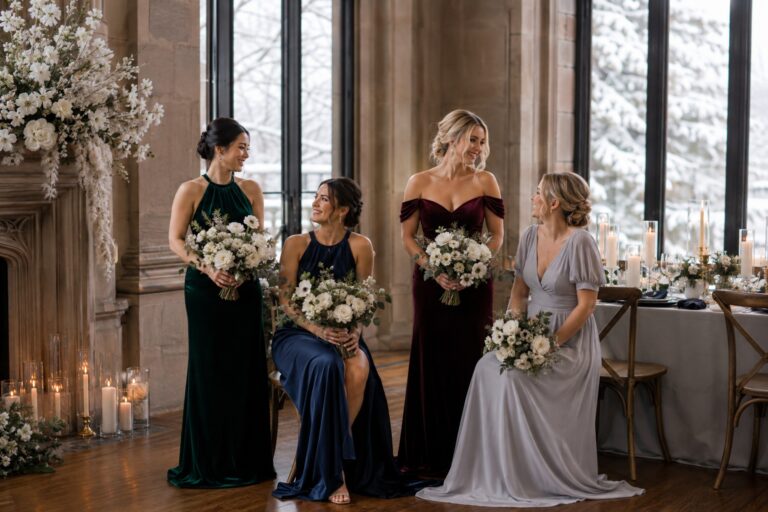
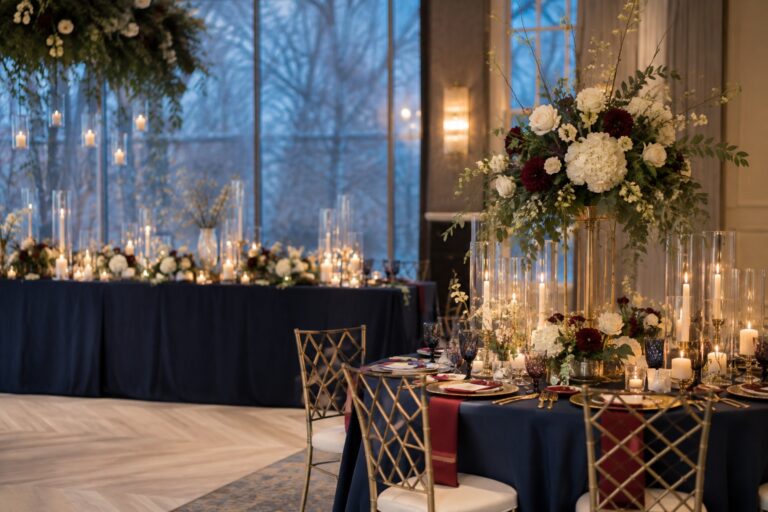
Classic winter colors are useful starting points, not rules. Try ivory with sapphire and soft gray for an icy but polished look. Pair forest green with warm white and antique gold for a natural, collected feeling. Use plum, clay, and pale pink if you want romance without a Christmas association. Black, winter white, and a single metallic can feel architectural and sophisticated. Even a brighter palette can work: frosted blue with coral, magenta with evergreen, or pale blue with warm gold.
Repeat the palette in small, deliberate places rather than forcing every item to match. A blue envelope liner, a velvet ribbon on the bouquet, a colored taper candle, and a small accent in the menu can be enough. If the room already has strong holiday decoration, ask whether some elements can be removed or visually softened. Your wedding should not feel like a generic seasonal installation unless that is exactly what you want.
Layer texture where guests can feel it
Winter gives you permission to use materials that might feel too heavy in July. Velvet table runners, wool wraps, satin ribbons, textured paper, brushed metal, raw wood, stone, and faux fur can all add depth. Use texture at points guests touch: napkins, lounge furniture, menus, escort cards, wraps, and welcome bags. A small number of tactile details often feels more luxurious than a room filled with decorative objects.
Natural elements keep the palette from becoming overly polished. Evergreen, eucalyptus, bare branches, pine cones, berries, dried grasses, and seasonal flowers can move from ceremony to reception without looking repetitive. A florist can also use branches as structure, then add flowers selectively. This approach is practical for winter because greenery and texture carry visual weight even when certain summer blooms are unavailable or expensive.
Give the eye one winter “moment”
Choose one feature that creates the photograph everyone remembers. It could be a candlelit aisle, a staircase installation, a fireplace with asymmetric greenery, a tablescape under hanging branches, a snowy portrait path, or a hot beverage bar styled like a small apothecary. Keep the rest of the room supportive. A single strong moment gives the wedding a point of view, while too many competing focal points make the design feel like a seasonal market.
Carry the idea through the guest experience
A winter wedding becomes memorable when the seasonal idea helps people move through the day comfortably. Think beyond centerpieces. The invitation can prepare guests for the setting, the arrival can solve the cold-weather problem, the menu can create warmth, and the portraits can use the early darkness rather than fight it. Each touch should feel like part of the same welcome.
Begin with the invitation and wedding website. A textured paper, deep ink, subtle metallic foil, evergreen line drawing, or frosted border can signal winter without promising a Christmas theme. Add useful information for guests: expected temperatures, whether they will walk outdoors, transportation timing, and the formality of the venue. Practical information is part of the aesthetic because it lets guests arrive prepared and relaxed.
Design a warm arrival
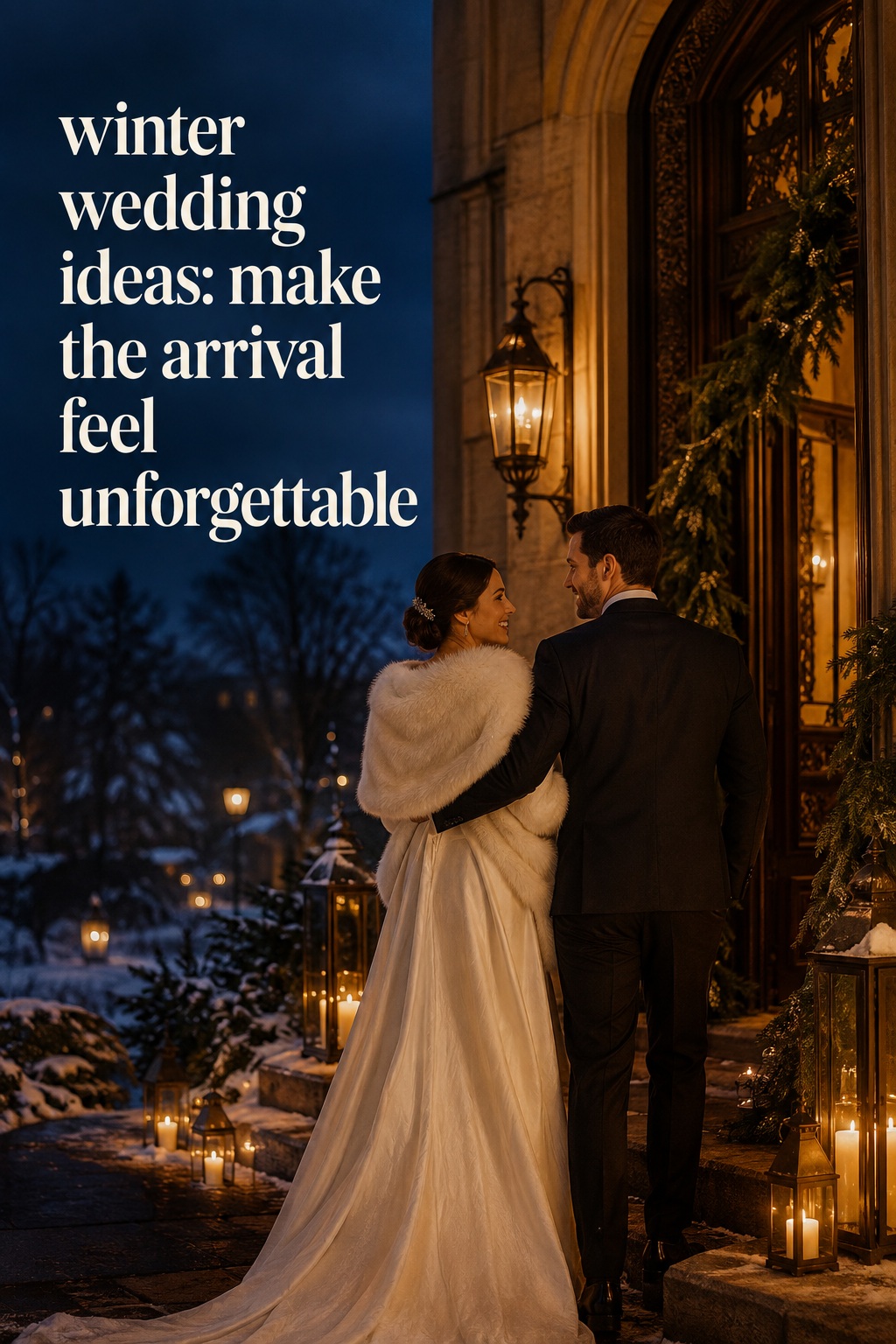
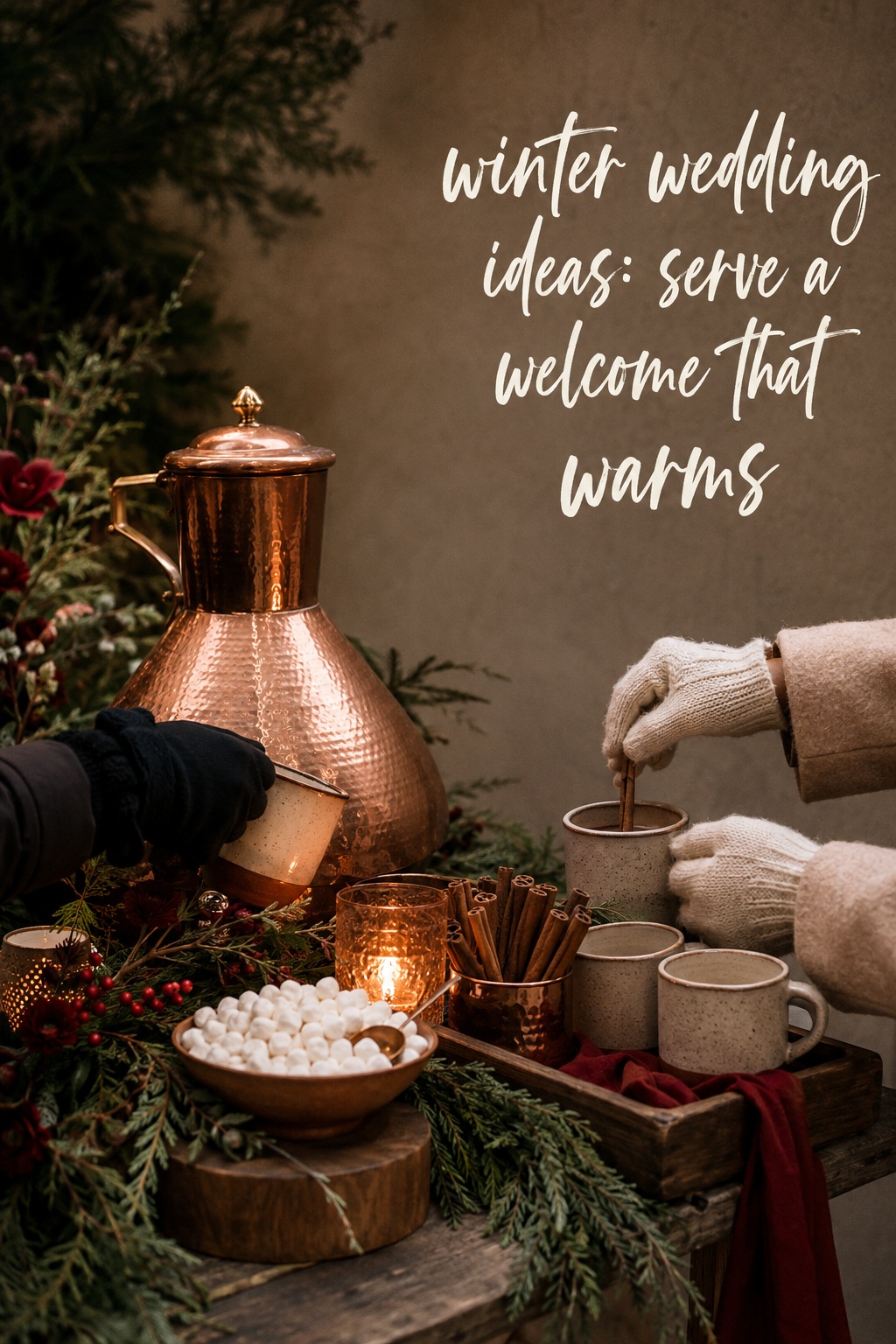
The first five minutes matter. Create a clear coat check with enough staff or labeled space, and keep umbrellas, boot trays, and a mirror nearby if weather is wet. Offer a welcome drink that works for the season, such as spiced cider, hot chocolate, coffee, tea, or a nonalcoholic cranberry and rosemary spritz. If an outdoor ceremony is planned, provide blankets or elegant wraps before guests take their seats. These details solve real friction and make the wedding feel generous.
A hot beverage bar can be both useful and beautiful. Keep the menu focused rather than offering every possible topping. Consider hot chocolate with whipped cream and peppermint, coffee with flavored syrups, or mulled cider with orange and cinnamon. Label allergens and provide a non-dairy option. Personalized mugs can double as favors, but simple compostable cups with a beautiful sign may be the more practical choice for a large guest list.
Make the menu feel warming, not heavy
Winter food does not have to mean a formal roast or a menu built around beige comfort food. Think about temperature, aroma, and texture. A small soup course, warm bread, roasted vegetables, braised dishes, spiced grains, or a late-night grilled cheese station can create comfort. Balance richer courses with bright citrus, bitter greens, pickled elements, or crisp herbs so the meal still feels fresh.
Dessert can extend the visual story through dark chocolate, pear, citrus, ginger, cinnamon, maple, or pomegranate. A winter wedding cake might use textured buttercream, a simple sugar branch, white flowers, metallic detail, or a velvet-colored ribbon around the base. Avoid adding snowflake decorations simply because the season allows them. Choose a detail that supports the emotional promise you made at the beginning.
Plan portraits around the best light
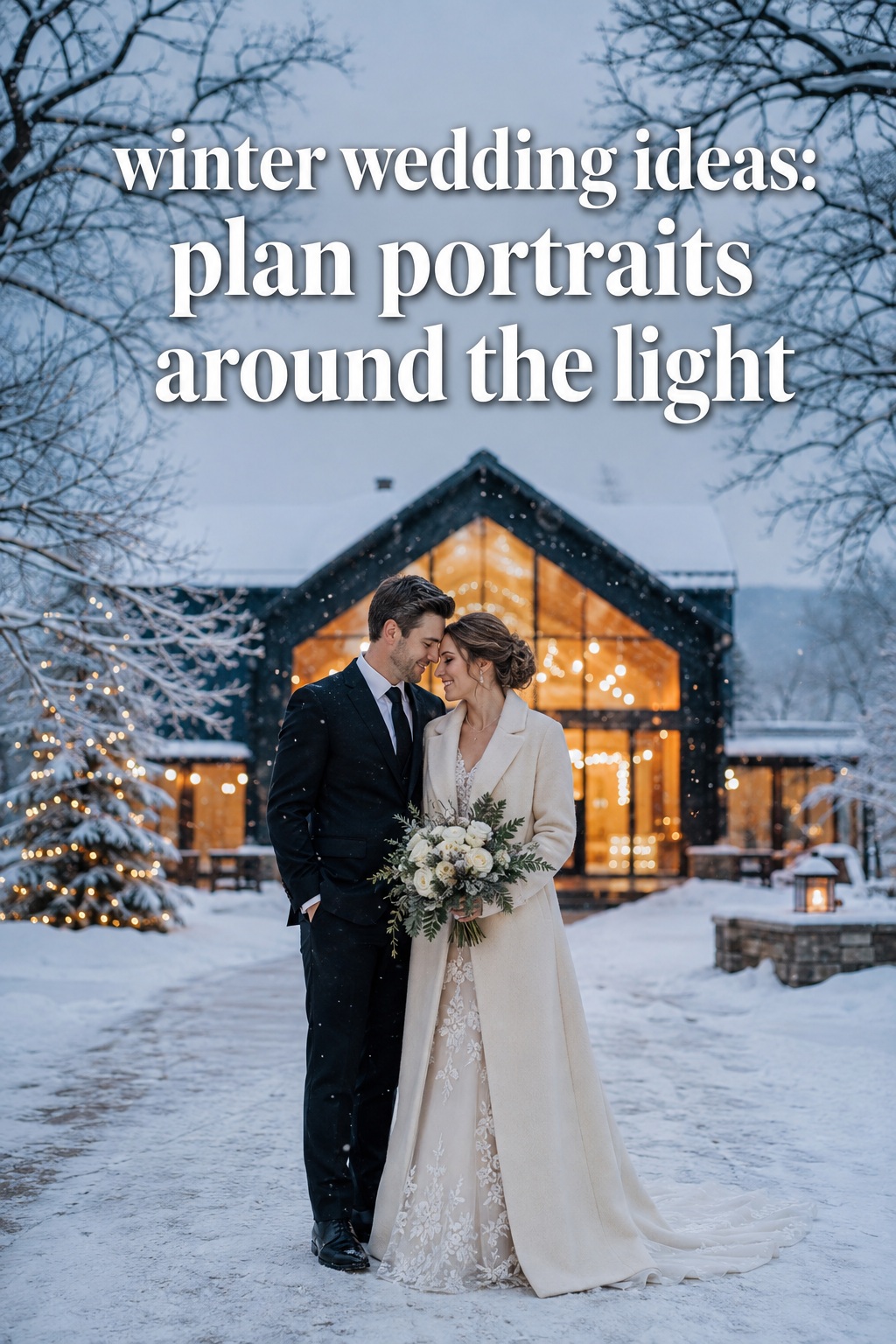
Shorter winter daylight can produce beautiful portraits, but only when the timeline respects it. Ask your photographer when the last useful natural light will be and schedule couple or wedding-party portraits before the ceremony if necessary. Build in a warm indoor location for family photos. If you want snowy or outdoor images, keep the session focused and provide a warm coat, hand warmers, or a nearby vehicle. The goal is a few meaningful frames, not a long period of shivering.
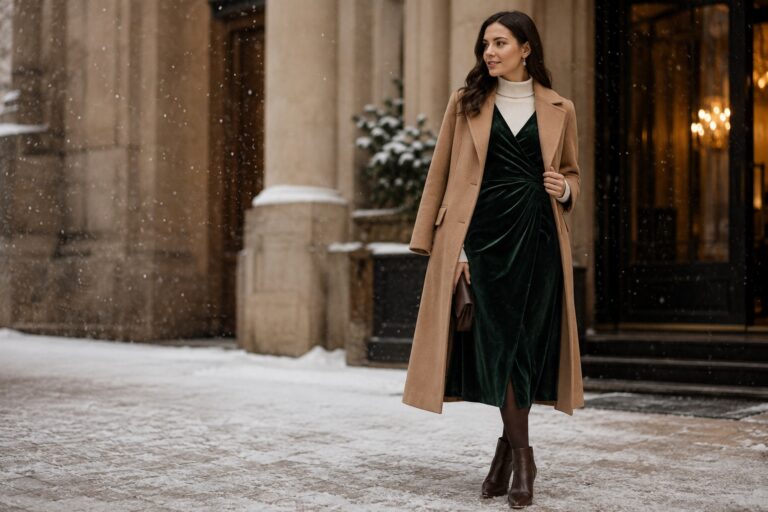
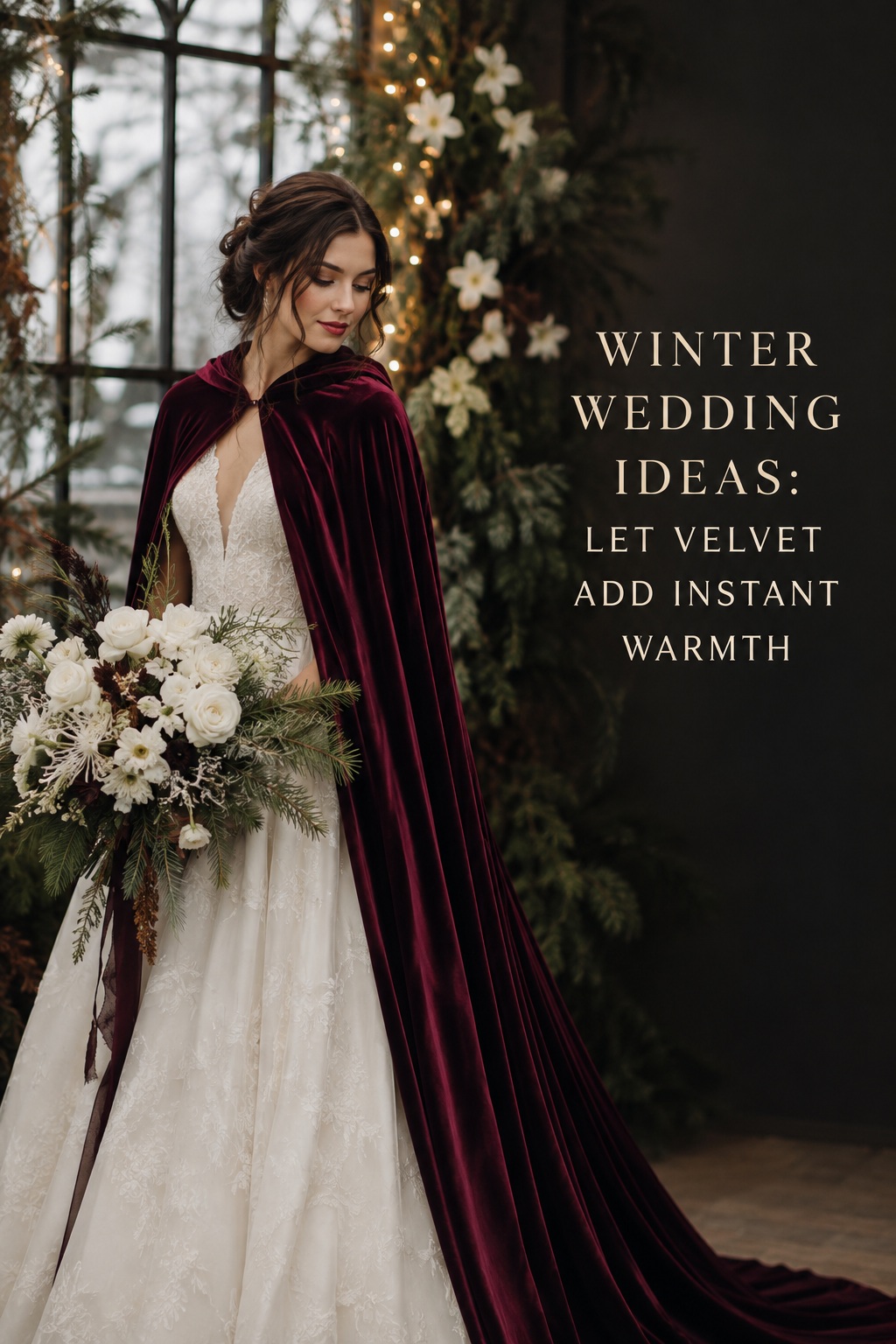
Style winter portraits with movement and contrast. A cape, tailored coat, velvet shoes, a wool scarf, gloves, or a dramatic bouquet can create visual interest without hiding the outfit. Let the background stay simple if the weather is already doing the work. Bare trees, stone, snow, fog, or an illuminated doorway can be more powerful than a crowded prop setup.
Make the plan work in real winter conditions
The most beautiful winter wedding ideas are still plans, and plans need contingencies. Start with the weather realities of your location, not an imagined snow day. Rain, ice, wind, early darkness, and travel delays can affect different regions in different ways. Ask the venue what has happened during previous winter events and what is included in the backup plan. Get specific about heating, generators, parking, snow removal, covered walkways, and indoor ceremony capacity.
Transportation deserves more attention than it often receives. If guests are traveling from out of town, recommend hotels with reliable access and share transportation details early. For a destination wedding, consider whether guests can stay on-site or reach every event without driving. Build buffer time into the schedule and decide who has authority to make a weather call. A calm, early decision is usually kinder than asking guests and vendors to improvise at the last minute.
Spend first on comfort and light
If the budget is limited, prioritize what guests experience directly. Heating, transportation, lighting, and a reliable coat check may matter more than elaborate favors. Then choose one visual focal point and let simple materials support it. Evergreen branches, candles in approved holders, paper stationery, and one beautiful fabric can often create more atmosphere than a large collection of small themed purchases.
- Confirm venue heating, power, indoor capacity, and candle rules before booking design elements.
- Ask your florist which flowers and greenery are reliably available in your region and date.
- Schedule natural-light portraits early and reserve an indoor alternative.
- Give guests weather, footwear, transportation, and coat-check information in advance.
- Choose a palette that works without holiday symbols if you want a more timeless result.
- Use one repeated signature detail, such as a ribbon, branch, candle shape, or metallic finish.
Keep the winter theme personal
The easiest way to avoid a generic winter wedding is to connect the season to your own history. Maybe you met during a snowstorm, spend every December in the mountains, love old hotels, or simply prefer the quiet of the off-season. Use that story to choose the details. A vintage postcard invitation, a family soup recipe, a favorite winter flower, or a signature cocktail named after a meaningful place will feel more specific than a room full of snowflake motifs.
Think of your design as a sequence rather than a shopping list. Guests should sense the same story in the invitation, the entrance, the ceremony, the table, the food, and the final dance. When the elements agree, even a modest wedding can feel cinematic. When they do not, an expensive installation can still feel scattered. Winter gives you a strong atmosphere for free. Your job is to edit it into something that feels like you.
FAQ
What are the best winter wedding colors?
Strong winter wedding colors include ivory, winter white, sapphire, icy blue, forest green, burgundy, plum, charcoal, champagne, silver, and antique gold. You do not need to use a traditional red and green palette. Choose two or three main colors and one accent, then repeat them through stationery, textiles, flowers, candles, and small table details.
How can I have a winter wedding without making it Christmas-themed?
Focus on winter qualities rather than holiday symbols. Use candlelight, bare branches, velvet, stone, evergreen, frosted or textured paper, cool colors, and seasonal food. Skip ornaments, Santa references, candy-cane colors, and obvious Christmas motifs unless they are genuinely part of your story. A restrained palette and one repeated texture can make the wedding feel seasonal but timeless.
What venue works best for a winter wedding?
The best venue is one that gives guests reliable warmth, easy access, and a visual feature you can build around. Historic estates, mountain lodges, hotels, greenhouses, restaurants, barns with dependable heating, and modern lofts can all work. Before booking, confirm heating, indoor ceremony capacity, coat storage, parking, weather access, power, and whether the venue already has seasonal decorations.
Which flowers are good for winter wedding arrangements?
Winter arrangements can include evergreen branches, eucalyptus, berries, pine cones, anemones, ranunculus, amaryllis, roses, hellebore, and other flowers your florist can source locally in season. The exact selection depends on your region, date, and budget. Ask your florist to create a plan with dependable greenery and texture first, then add focal blooms that support your palette.
How do you keep guests comfortable at a winter wedding?
Provide reliable heating, a well-organized coat check, clear transportation information, covered routes where possible, and warm drinks during arrival or cocktail hour. If guests will spend time outside, tell them in advance and consider blankets, wraps, hand warmers, or a shorter outdoor ceremony. Comfort also means adding buffer time so nobody is rushed through weather-related transitions.
Are winter weddings less expensive?
Winter can be an off-season period in some locations, which may bring more venue availability or different pricing, but savings are not automatic. Holiday dates, destination locations, popular ski areas, and in-demand weekends can still be expensive. Compare full proposals, including heating, transportation, lighting, seasonal flowers, and weather contingencies, before assuming the date is a bargain.
Can we take outdoor wedding photos in winter?
Yes, as long as the plan is brief, flexible, and based on the actual weather. Schedule outdoor portraits during the best available daylight, choose a nearby location, and keep a warm indoor alternative ready. A coat, cape, gloves, hand warmers, and footwear that can handle the ground will help. Tell your photographer what matters most so the session produces a few strong images without making anyone miserable.