Elegant Winter Wedding: Warm, Refined Ideas That Work
An elegant winter wedding can look extraordinary in photographs, but it can also become difficult to plan. Too much white makes a room feel flat, too many holiday references make the celebration feel borrowed, and beautiful outdoor ideas can become uncomfortable the moment the temperature drops. The solution is not more decoration. It is a clearer point of view that connects the way the wedding looks with the way guests move through it.
Start by naming the friction you want to solve. Maybe your ballroom feels cold, your palette looks too much like Christmas, your dress does not work with a coat, or your ceremony plan depends on weather that cannot be trusted. This guide turns those problems into practical choices. You will find ways to build warmth, coordinate attire and flowers, make lighting do more work, and create a winter celebration that feels polished rather than overdone.
Diagnose the look before you buy anything
The first planning mistake is collecting individual ideas before deciding what the wedding should feel like. A candle photo, a velvet tablecloth, a crystal arch, a fur wrap, and a snowy bouquet can all be beautiful on their own. Together, they may create a room with too many competing messages. An elegant winter wedding needs a short design brief before it needs a shopping list.
Turn wedding inspiration into a plan you can actually follow.
Zarellea brings your guest list, budget, vendors, and day-of details into one shared space — so no beautiful idea gets lost in the shuffle.
When the room feels cold instead of elegant
Coldness is usually a lighting and texture problem, not simply a color problem. An all-white room under bright overhead lights will look clinical even when the flowers are expensive. Begin with the light that already exists in the venue. Ask whether it can be dimmed, whether amber uplighting is permitted, and whether candlelight or quality LED candles are allowed. Then add materials that absorb and reflect light in different ways, such as velvet, brushed metal, glass, wool, satin, and matte paper.
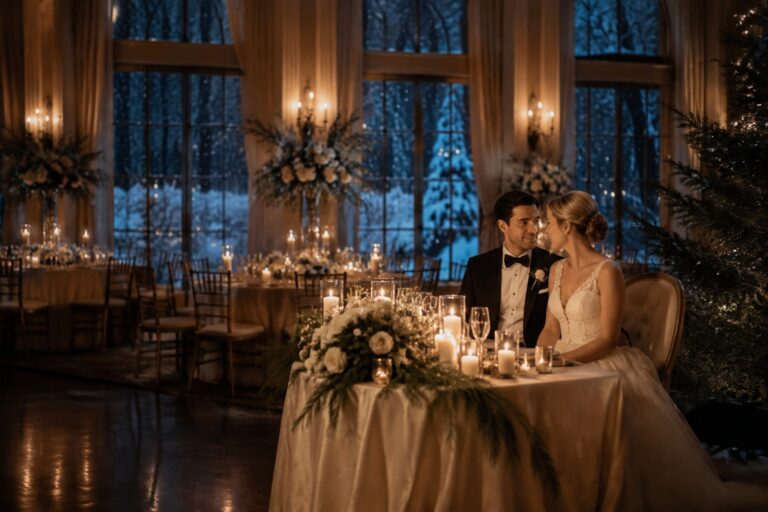
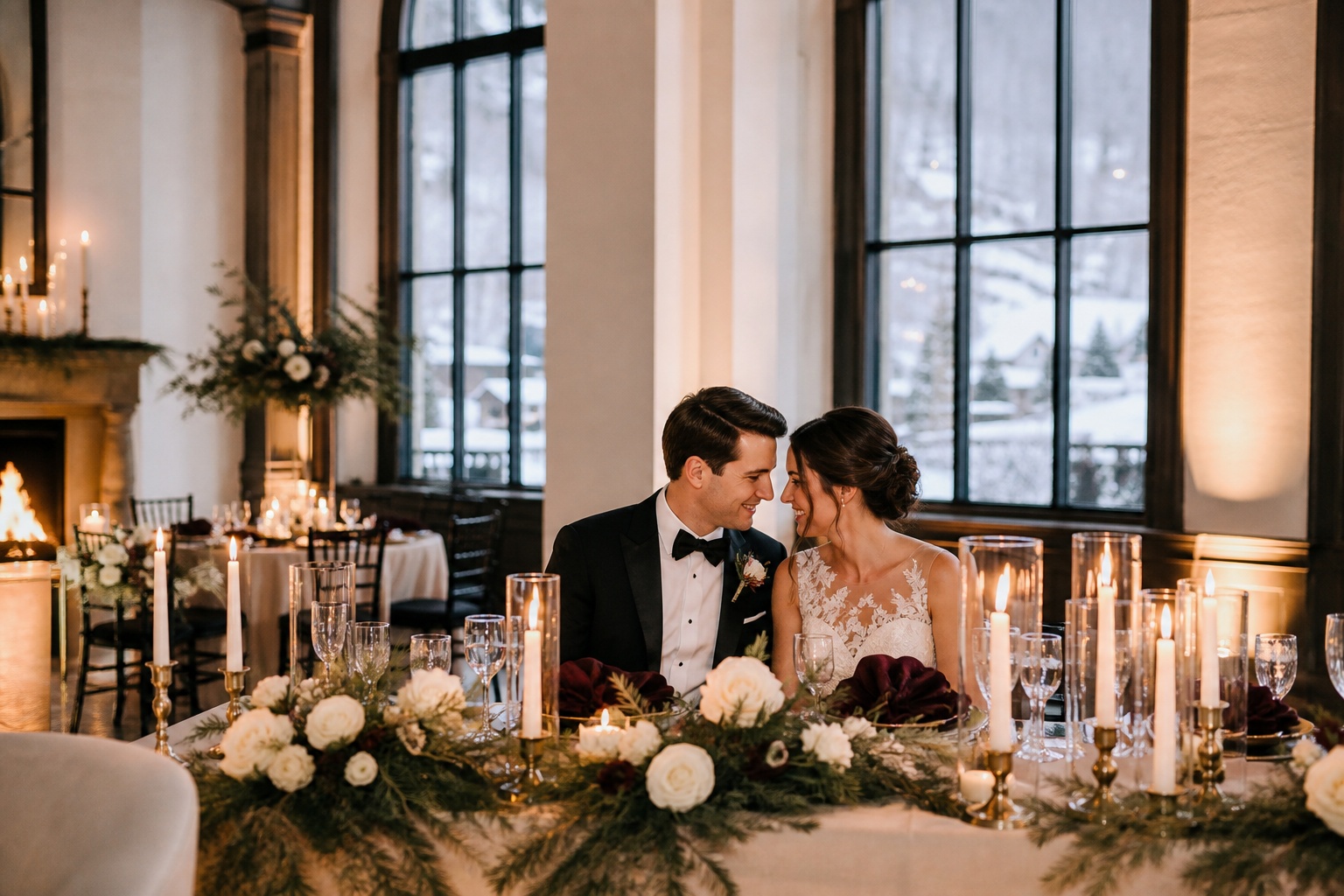
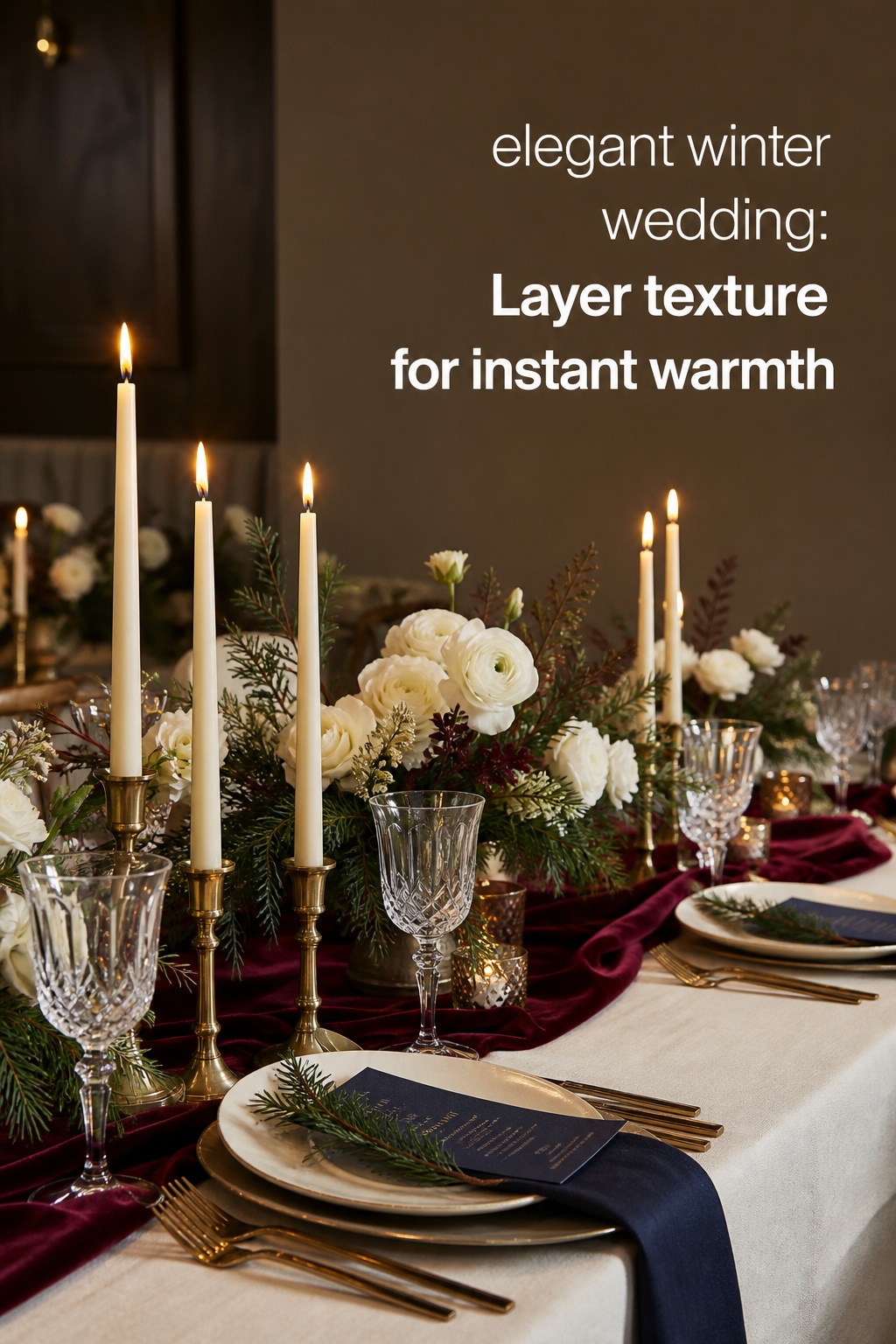
Use one warm element on every major visual plane. A candle at the ceremony, a textured runner at the reception, a soft wrap at the welcome table, and amber glass at the bar create continuity without making the entire wedding rustic. If the venue has polished floors and tall ceilings, low candle groupings and fuller fabric can make the space feel intimate. If the venue is already ornate, reduce the number of materials and let the architecture lead.
When the palette looks too much like Christmas
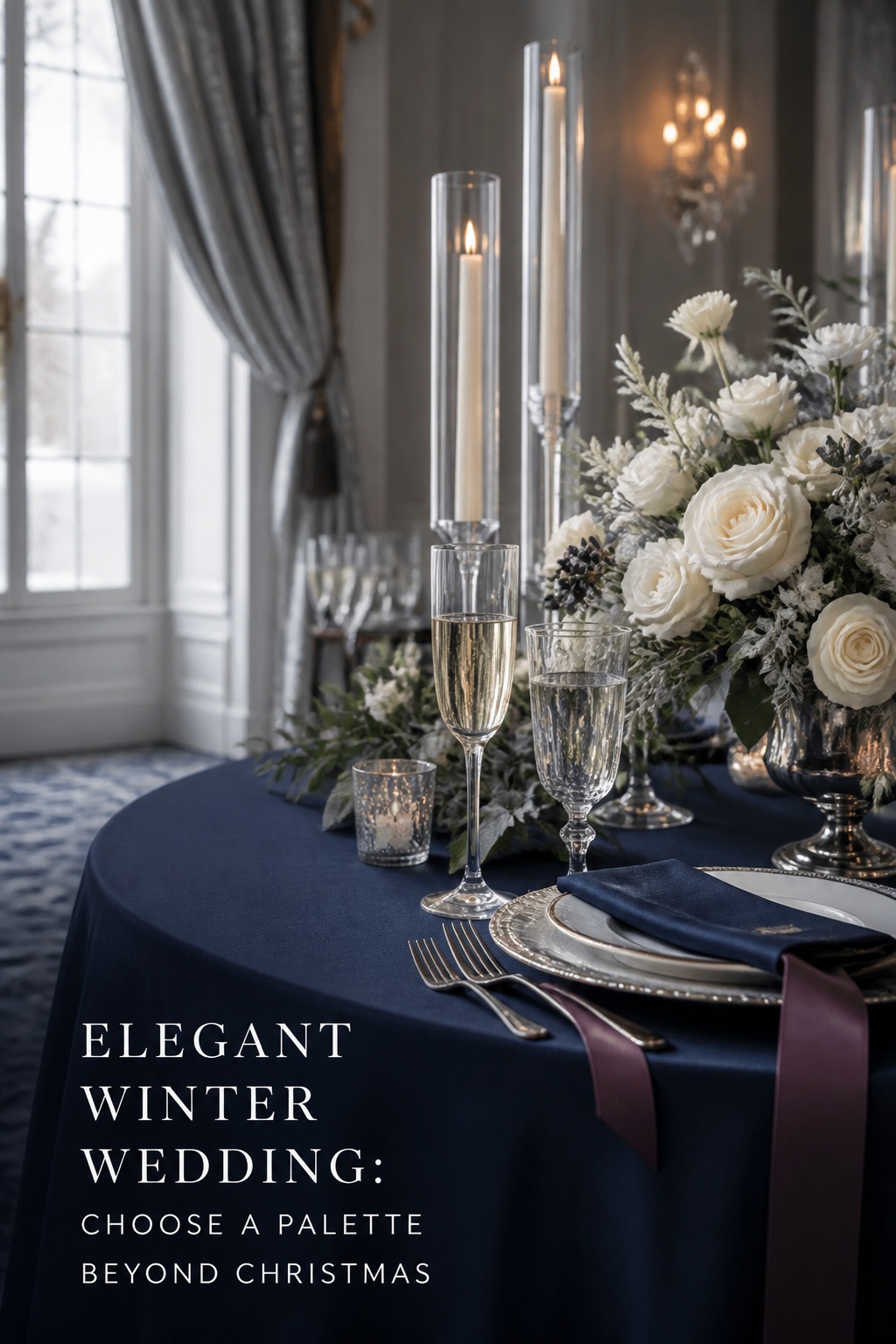
Red and green are not the problem by themselves. The problem is using a familiar holiday combination without a wedding-specific point of view. Replace one of the expected colors with a more nuanced neutral or metal. Burgundy, ivory, and brass feel richer and more editorial than bright red, white, and green. Navy, silver, and soft gray create a formal winter-night mood. Plum, dusty rose, and charcoal feel romantic without pointing to a particular holiday.
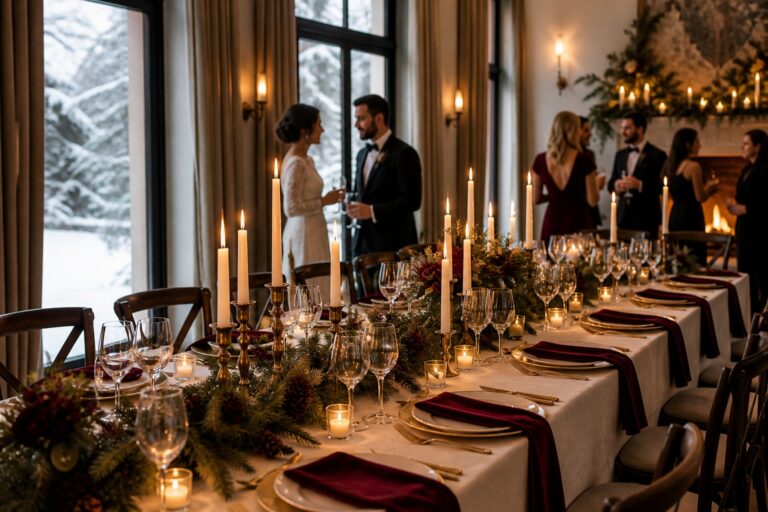
- Warm classic: ivory, burgundy, and brass with velvet, taper candles, and creamy flowers.
- Winter night: navy, silver, and white with crystal, satin, and cool blue-gray paper.
- Modern botanical: charcoal, evergreen, and pale blush with branches, matte ceramics, and restrained florals.
- Soft formal: champagne, dove gray, and muted plum with silk ribbon, candlelight, and gold details.
Choose one base, one seasonal color, and one accent. Let the base appear on the largest surfaces, the seasonal color appear in flowers or attire, and the accent appear in small details. This three-part formula is easier to communicate to vendors and easier to adjust when a particular flower, linen, or dress shade is unavailable.
When inspiration looks beautiful but does not fit your venue
A ski lodge, art museum, historic hotel, greenhouse, restaurant, and city loft each provide a different starting point. Do not force a snowy wonderland into a venue whose strongest feature is dark wood, or a rustic evergreen plan into a clean modern gallery. Photograph the ceremony and reception spaces at the time your event will take place. Note the ceiling height, existing colors, window light, floor surface, entry path, heating, coat storage, and places where guests may wait.
Then choose a design that solves the venue’s actual weakness. A high-ceilinged ballroom may need a lower focal point and warmer pools of light. A small restaurant may need fewer centerpieces and a stronger menu or stationery moment. A historic space may need only candles and flowers that respect its lines. Elegant planning often means editing the reference image until it works for your building, guest count, and season.
Build warmth through palette, texture, and lighting
Once the problem is clear, build the atmosphere in layers. Think of warmth as something guests see, feel, and understand. They see a controlled palette. They feel comfortable fabrics and sensible transitions. They understand the event through lighting, signage, and a layout that does not make them search for the coat check or the heated room.
Use lighting as the main architectural tool
Lighting usually changes a winter reception more dramatically than another decorative object. Layer ambient, focused, and atmospheric light. Ambient light lets guests navigate. Focused light helps them read menus, see the bar, and notice the floral design. Atmospheric light comes from candles, lamps, lanterns, string lights, or a warm glow behind the ceremony focal point.
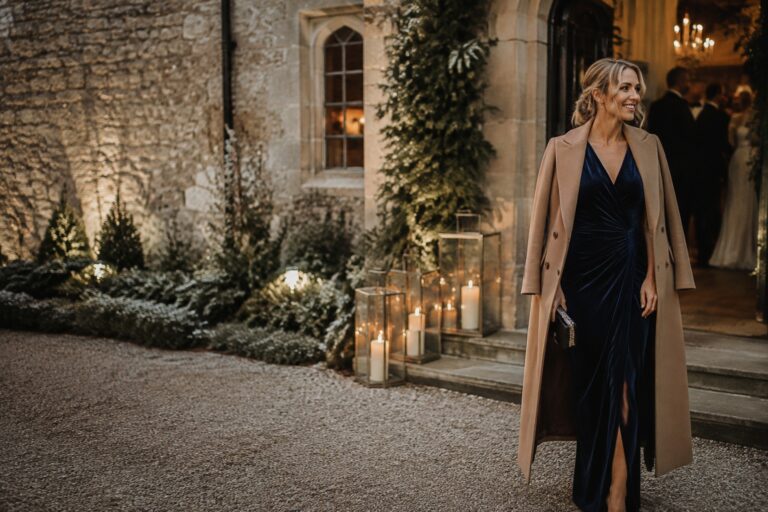
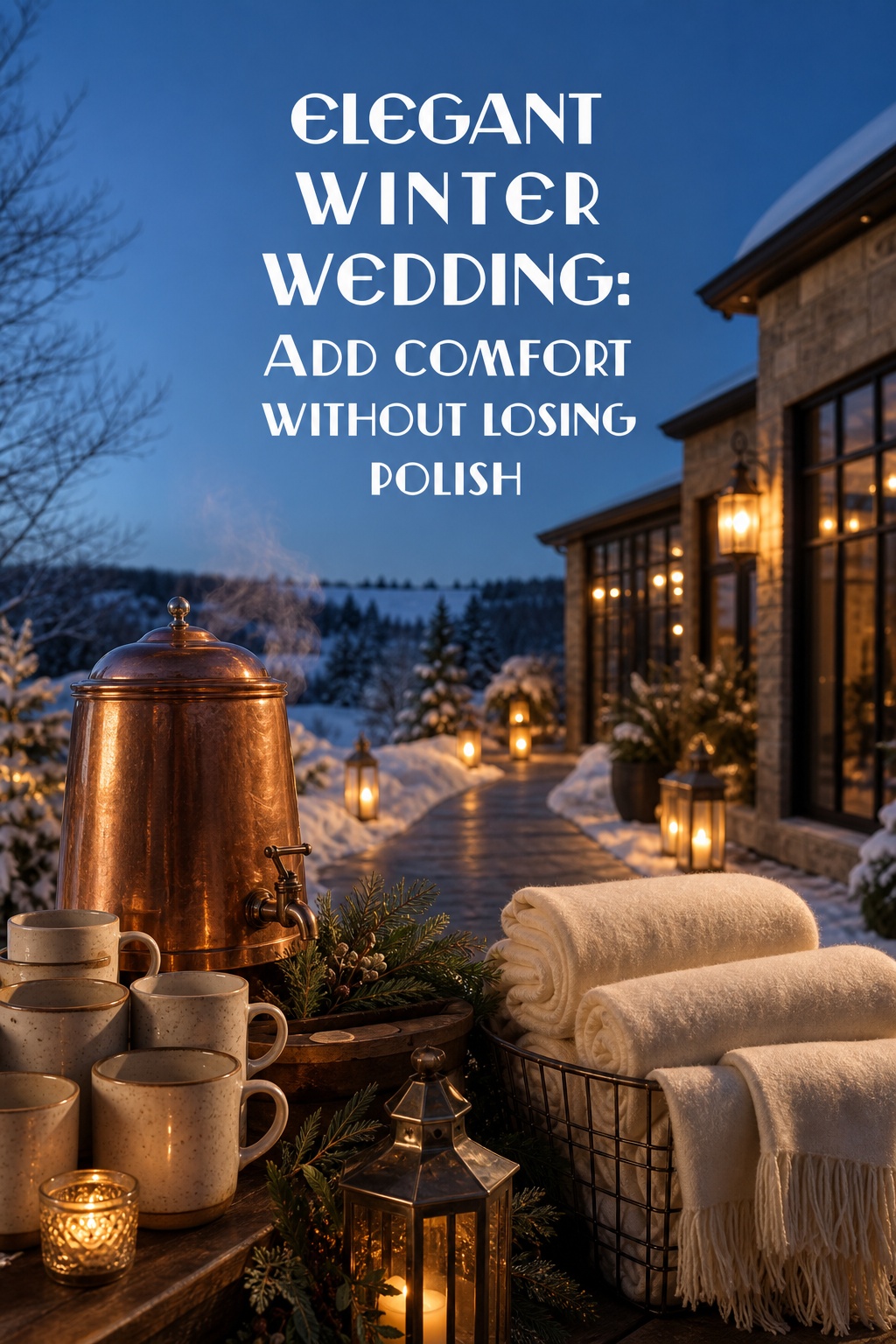
Start with the parts of the room that matter most in photographs and guest experience. A line of protected lanterns can define the aisle. A few tall candles can give a reception table rhythm. A warm lamp can make the welcome table feel intentional. If open flame is prohibited, use realistic LED candles in glass and vary the height. Keep every light away from loose foliage, fabric, and crowded walkways, and assign setup responsibility before the wedding day.
Let texture make a simple palette feel expensive
Texture creates depth when color is restrained. Pair matte paper with glossy glass, a smooth satin ribbon with a nubby linen, velvet with polished metal, or pale flowers with dark vessels. You do not need every texture in one room. Select two or three and repeat them. For example, velvet can appear in the table runner and invitations, while brass appears in the candleholders and place-card edging.
Use fabric where it improves the guest experience or the photograph. A velvet runner can anchor a long table. A wool wrap can make an outdoor portrait plan more realistic. A soft drape can warm an otherwise empty ceremony wall. Avoid adding texture only because a mood board includes it. Each material should either soften a surface, support the palette, guide the eye, or make guests more comfortable.
Keep winter florals seasonal without making them predictable
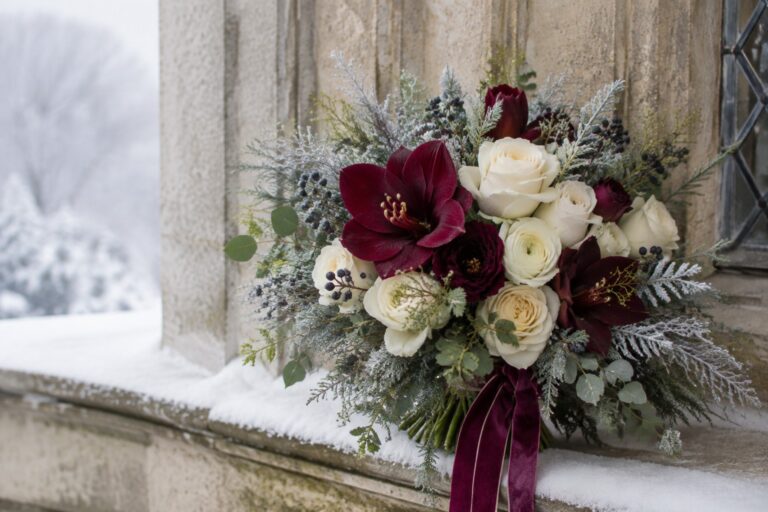
Winter flowers do not have to be limited to white roses and pine. Depending on your location and date, ask your florist about anemones, ranunculus, hellebores, amaryllis, garden roses, orchids, berries, eucalyptus, cedar, magnolia, bare branches, dried grasses, and reliable greenhouse blooms. The right mix depends on availability, but the design principle is consistent: combine a clear focal flower with shape, foliage, and a little negative space.
Choose flowers by visual role. Architectural blooms such as amaryllis or orchids can make a modern arrangement feel deliberate. Anemones add contrast through their dark centers. Hellebores and berries bring a quieter seasonal reference. Evergreen branches provide volume and scent, but they should not hide every flower or make the table difficult to see across. A sparse, sculptural arrangement may be more elegant than a full mound when the venue already has strong details.
Coordinate attire, flowers, and ceremony details
Winter style works best when clothing is treated as part of the design rather than a separate decision. The bride, wedding party, and guests will move between cars, entrances, portraits, ceremony seating, and the reception. A look that is perfect indoors may need a coat, cape, wrap, or change of shoes for the rest of the day.
Build a bridal layer that looks intentional
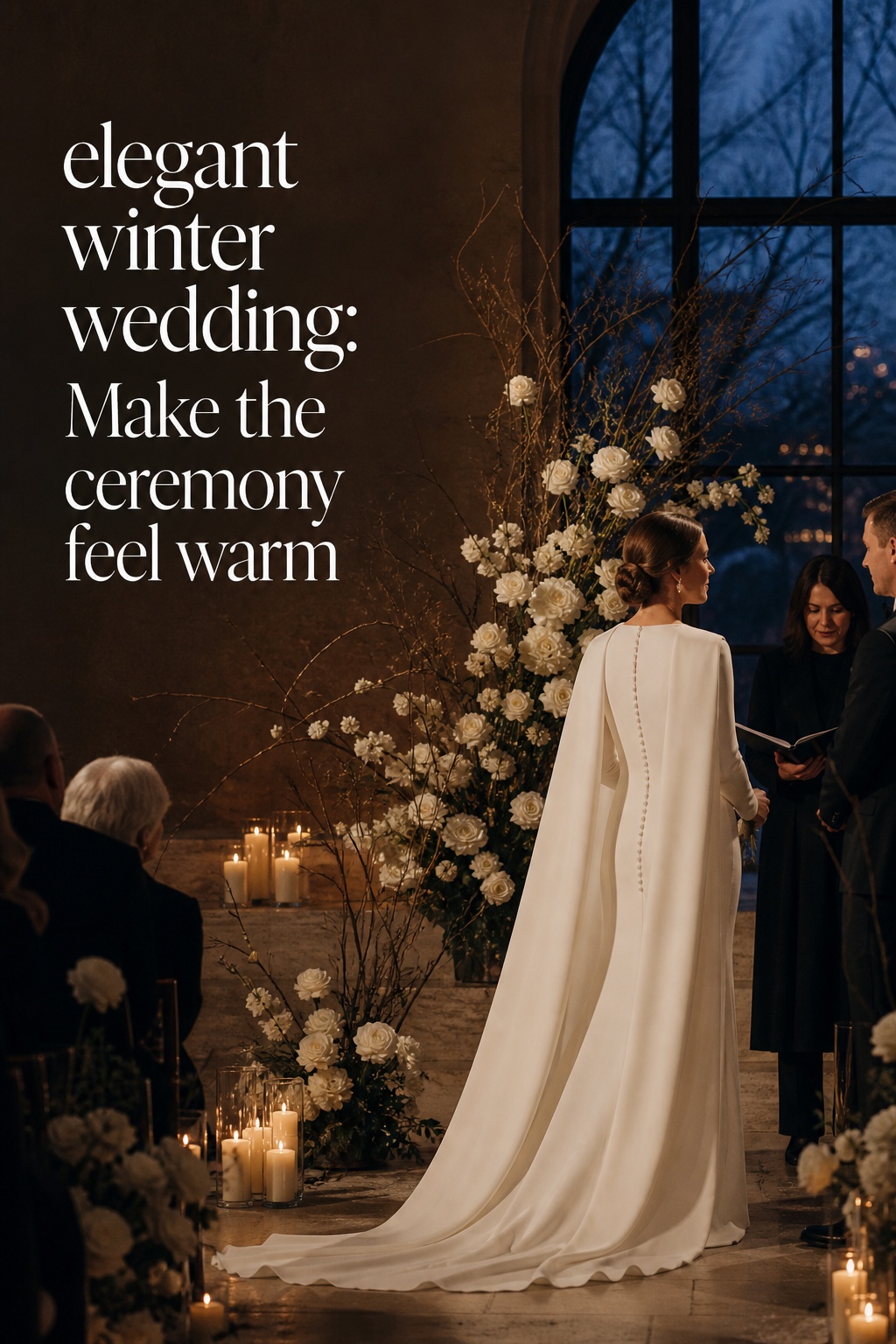
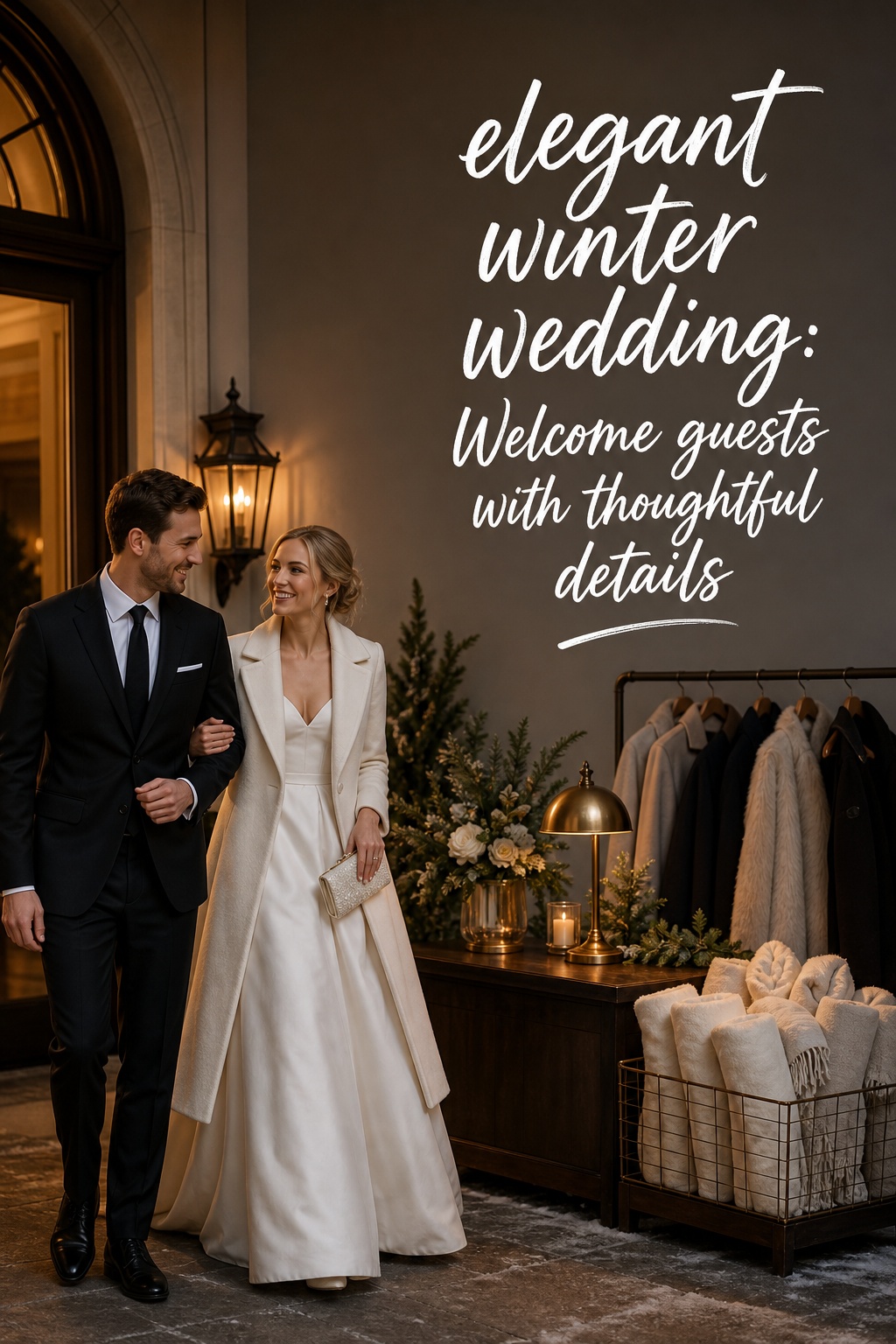
A removable layer can change the mood of the dress and solve the cold-weather transition. Consider a tailored wool coat, cape, bolero, beaded topper, satin jacket, cashmere wrap, or long-sleeved overshirt, depending on the formality of the gown. Match the layer to the dress in finish and proportion. A structured dress usually benefits from a clean coat or sculptural cape, while a softer gown may work with a lighter wrap or textured shawl.
Test the layer while walking, sitting, hugging, and holding the bouquet. Check whether it catches on jewelry, hides the neckline in photographs, or makes it difficult to move through a narrow aisle. If an outdoor portrait is important, schedule it in a short window, identify a nearby heated location, and keep a dry pair of shoes available. Warmth should protect the mood, not interrupt it.
Dress the wedding party for the actual weather
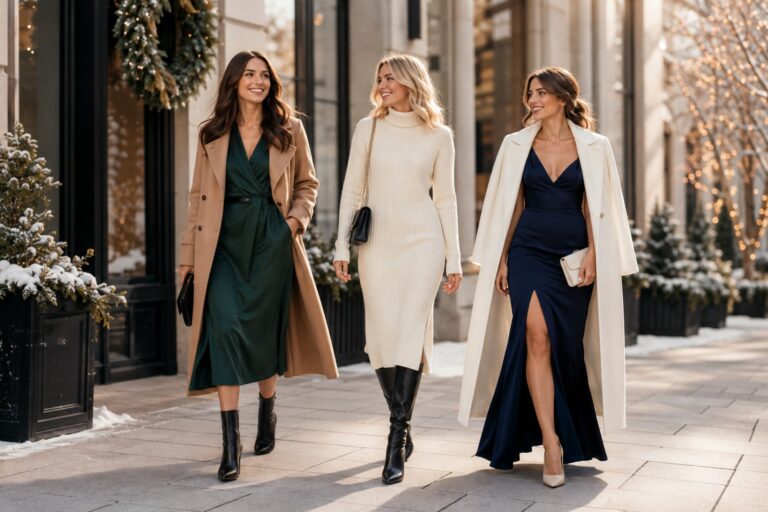
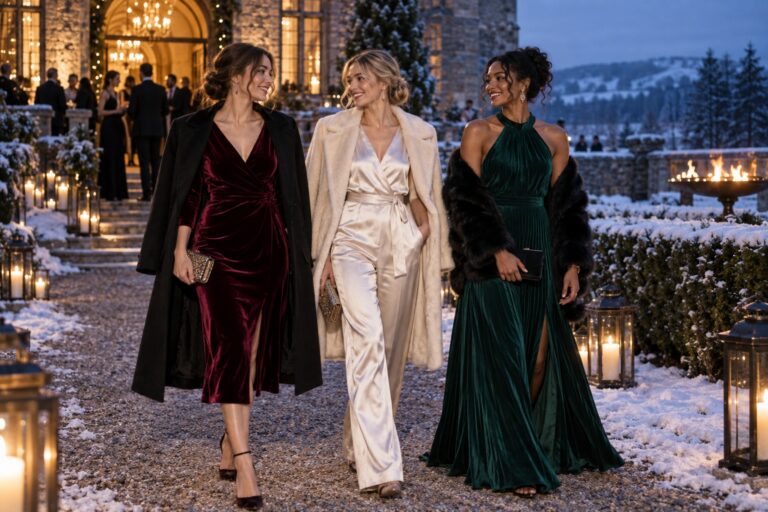
Velvet, satin, heavy crepe, lined lace, wool blends, and substantial suiting can look more seasonally appropriate than light summer fabrics. For attendants, choose a color that works across skin tones and lets each person select a silhouette they can move in. Emerald, navy, burgundy, charcoal, champagne, and deep teal photograph well under winter light. If the event is formal, a coordinated coat, shawl, or wrap can keep the group looking polished as they arrive.
Explain the conditions clearly rather than assuming everyone will understand the dress code. A wedding website can say that the ceremony is heated, outdoor portraits are brief, a coat check is available, or guests should expect a snowy path. For a winter wedding guest outfit, formal boots or a lower block heel may be more useful than delicate shoes. Practical information is part of hospitality, and hospitality is part of elegance.
Make the ceremony focal point do one job well
Choose one emotional center for the ceremony. It might be an asymmetrical floral installation, a candlelit mantel, a view through tall windows, a fabric backdrop, or a simple arrangement of bare branches. Avoid competing arches, signs, aisle clusters, and hanging installations unless the space is large enough to support them. One strong sightline is easier to photograph and easier for guests to remember.
If flowers or lanterns will be reused at the reception, plan that move before the wedding day. Ask the florist to design pieces that can be safely transferred, and assign a person to manage the transition. This saves money, reduces visual clutter, and makes the ceremony and reception feel like two chapters of the same story.
Make guest comfort part of the elegant design
The most memorable winter weddings are not only attractive. They anticipate what people need. Guests may arrive carrying coats, umbrellas, gifts, or a change of shoes. They may drive in low light, cross ice, wait outside for portraits, or struggle to hear directions in an unfamiliar venue. Solve those friction points visibly and beautifully.
Design the arrival from the parking lot inward
Confirm how guests reach the entrance, where they can safely walk, and whether the route is lit. If the ceremony is outdoors, provide a dry surface, heaters where allowed, wraps or blankets, and a clear timeline. If roads may be icy, include transportation information and nearby lodging on the website. A shuttle, rideshare note, or walking route can prevent stress before guests even see the decor.
Inside, make coat storage obvious. A coat check, labeled rack, or dedicated room is more elegant than asking guests to pile heavy coats over chairs. Keep umbrellas and wet footwear away from the main traffic path. If the venue has no formal coat check, create a tidy solution with a sign, sturdy hangers, and a person responsible for keeping the area orderly.
Use food and drink to reinforce the season
A warm welcome drink can do more for the winter mood than a table full of themed accessories. Offer cider, spiced tea, hot chocolate, coffee, or a nonalcoholic citrus drink, depending on the event. A signature drink can have a winter ingredient without tasting like a holiday party. Rosemary, pear, cranberry, ginger, citrus, and toasted spice can all feel seasonal when used with restraint.
Ask the caterer how the menu performs in cold-weather timing. A soup course, baked dish, warm bread, roasted vegetables, or late-night snack can make guests feel cared for. Label allergens and provide a substantial nonalcoholic option. If an outdoor cocktail hour is planned, shorten the time outside and place warm drinks close to the transition point rather than requiring guests to cross the room.
Plan portraits that respect the season
Winter portraits can be striking because low afternoon light, bare trees, snow, and warm windows create natural contrast. They do not require a long outdoor session. Choose one nearby location, decide which layers and accessories will appear, and build in a warm-up break. A clear umbrella, elegant boots, a cape, or a bouquet with winter branches can look intentional while also solving a practical problem.
Tell the photographer which visual details matter most. If the dress has a back detail, photograph it before adding a coat. If the tablescape is important, schedule room photos before guests enter. If snow is possible, prepare a rain or indoor version that still matches the design brief. A flexible plan protects the experience and keeps the final gallery cohesive.
Quick fixes, budget priorities, and mistakes to avoid
When the plan feels scattered, return to the elements guests notice most: light, the ceremony sightline, the table surface, the couple’s attire, and the arrival experience. You rarely need to upgrade every detail. A few high-impact choices can make an ordinary room feel considered.
- If the room feels empty: improve the lighting plan and add one large focal installation instead of filling every surface.
- If the room feels busy: remove one color, one material, and half of the small decorative objects.
- If the palette feels seasonal but generic: replace bright holiday colors with a nuanced neutral, muted jewel tone, or one distinctive metal.
- If the tables look flat: layer one textured linen, varied candle heights, and a simple flower shape before adding more blooms.
- If the ceremony feels disconnected from the reception: reuse a floral arrangement, candle style, ribbon, or paper detail in both spaces.
- If the budget is tight: prioritize lighting, the ceremony focal point, guest comfort, and the table where most photos will happen.
- If guests may travel in bad weather: spend on communication and transportation before buying another decorative accent.
Common mistakes are easy to recognize. Do not use a faux fur layer that covers the bride’s face or neckline in every portrait. Do not put tall centerpieces where guests cannot see one another. Do not assume a venue’s heating, coat check, parking, or outdoor permissions without confirming them. Do not make a QR code the only way to find weather or travel information. Do not commit to one flower without asking your florist for a seasonal substitute.
Before final approval, ask five questions. Does the plan look good in the venue’s real light? Can guests move safely and stay warm? Does every major element support the same point of view? Can the ceremony pieces be reused? What changes if snow, rain, or wind affects the outdoor plan? If the answers are clear, the wedding will feel elegant because it is coherent, not because it contains the most expensive details.
FAQ
What colors are best for an elegant winter wedding?
Ivory, navy, burgundy, emerald, plum, charcoal, dove gray, champagne, silver, gold, and brass all work well. Choose one base, one seasonal shade, and one accent so the palette stays intentional. Your venue’s existing colors and lighting should guide the final combination.
How can I plan an elegant winter wedding without making it look like Christmas?
Use winter references such as candlelight, velvet, bare branches, berries, evergreen, metallics, and deep color instead of relying on ornaments or a bright red-and-green scheme. A restrained palette and one strong material detail will feel more personal than several holiday symbols.
What should a bride wear over her dress in winter?
A tailored coat, cape, bolero, beaded topper, satin jacket, cashmere wrap, or shawl can work depending on the dress and formality. Test the layer while walking, sitting, hugging, and holding the bouquet so it stays comfortable and photographs well.
Which flowers are available for an elegant winter wedding?
Depending on location and date, florists may recommend anemones, ranunculus, hellebores, amaryllis, roses, orchids, berries, eucalyptus, cedar, magnolia, bare branches, dried grasses, and greenhouse blooms. Ask for a primary choice and a visually similar substitute before finalizing the design.
How do I make a winter wedding reception feel warm?
Layer warm ambient light, candles or realistic LED candles, textured linens, comfortable seating, and a seasonal welcome drink. Use a small number of repeated materials instead of many unrelated decorations. Confirm that the venue is heated and that guests can store coats easily.
How can guests stay comfortable at an outdoor winter ceremony?
Provide a safe, dry route, clear timing, heaters where permitted, blankets or wraps, warm drinks, and a nearby heated space. Explain the plan on the wedding website, including footwear, parking, transportation, and what happens if the weather changes.
Where should I spend first when planning a winter wedding on a budget?
Prioritize lighting, the ceremony focal point, the main table surfaces, attire layers, and guest comfort. These elements affect both the experience and the photographs. Reuse flowers, candles, fabric, and signage between ceremony and reception whenever the venue and timing allow.