Winter Wedding Guest Dress Ideas That Feel Current
A winter wedding invitation changes the question from “What looks pretty?” to “What looks right, feels warm, and still feels like me?” The strongest winter wedding guest dress choices answer all three at once. They use richer fabric, thoughtful coverage, and a level of polish that matches the celebration without turning the outfit into a costume.
The current shift is away from treating winter as a narrow palette of red velvet and sparkle. Velvet, satin, crepe, brocade, moody florals, soft metallics, dramatic sleeves, and elegant outer layers are all useful, but the best result comes from interpreting the season rather than copying it literally. Here is how to make that idea work for a formal ballroom, a daytime ceremony, a snowy destination, or a relaxed dinner reception.
Read the invitation before you read the trend report
The dress code is the first filter. A winter wedding guest dress is not one universal category because a black-tie evening and a casual afternoon ceremony ask for different levels of formality. Start with the words on the invitation, then add the venue, time, and weather. A fashionable dress that ignores those clues will feel wrong even if the silhouette is beautiful.
Black tie and formal
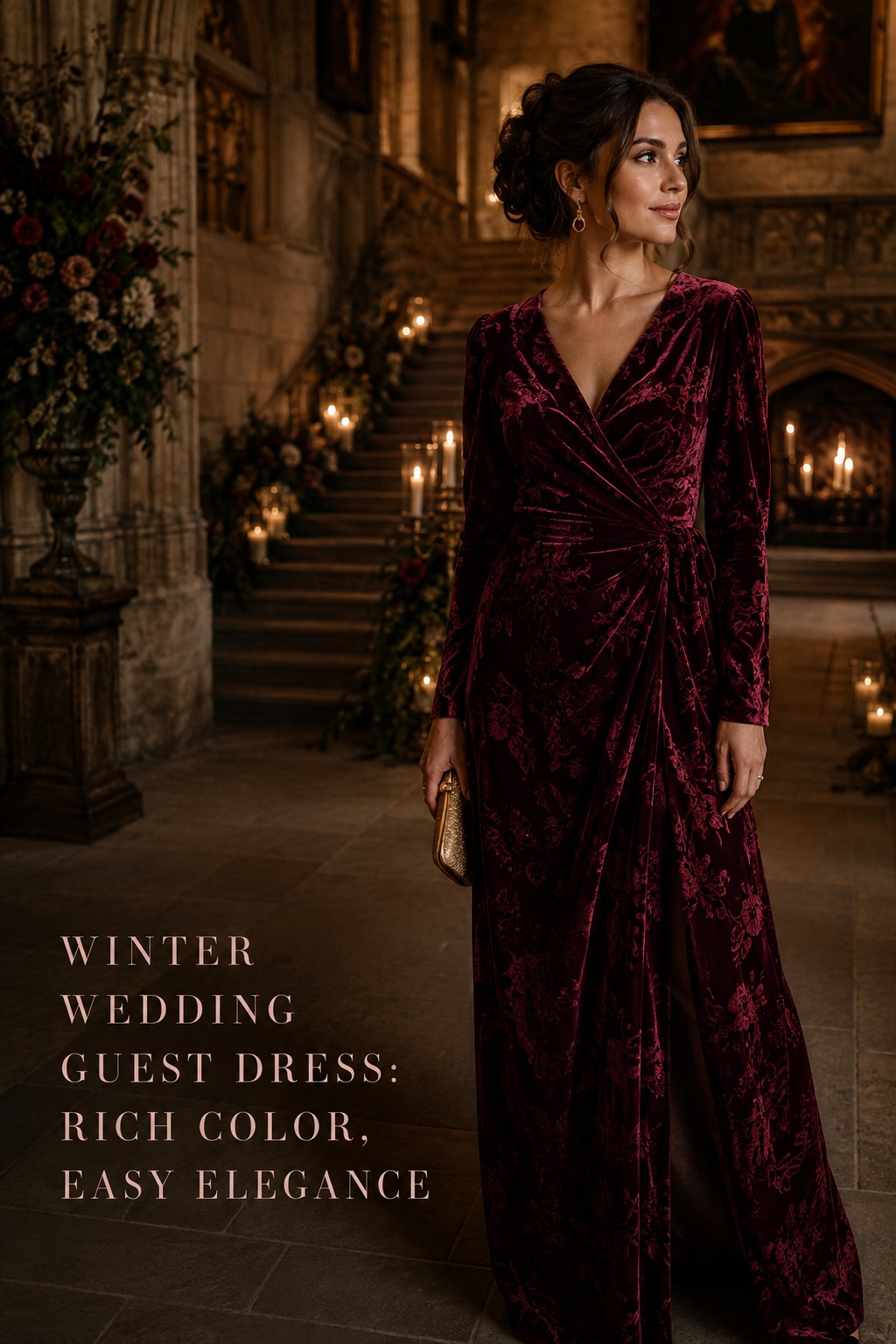
For black tie, a floor-length gown is the most dependable choice. Look for a long velvet column, a satin gown with controlled draping, a high-neck crepe style, or a dress with a cape or sleeves built into the design. Deep navy, emerald, garnet, plum, charcoal, and black are naturally suited to an evening setting. Metallic fabric can work too, especially when the finish is refined rather than costume-like.
Turn wedding inspiration into a plan you can actually follow.
Zarellea brings your guest list, budget, vendors, and day-of details into one shared space — so no beautiful idea gets lost in the shuffle.
Cocktail and semi-formal
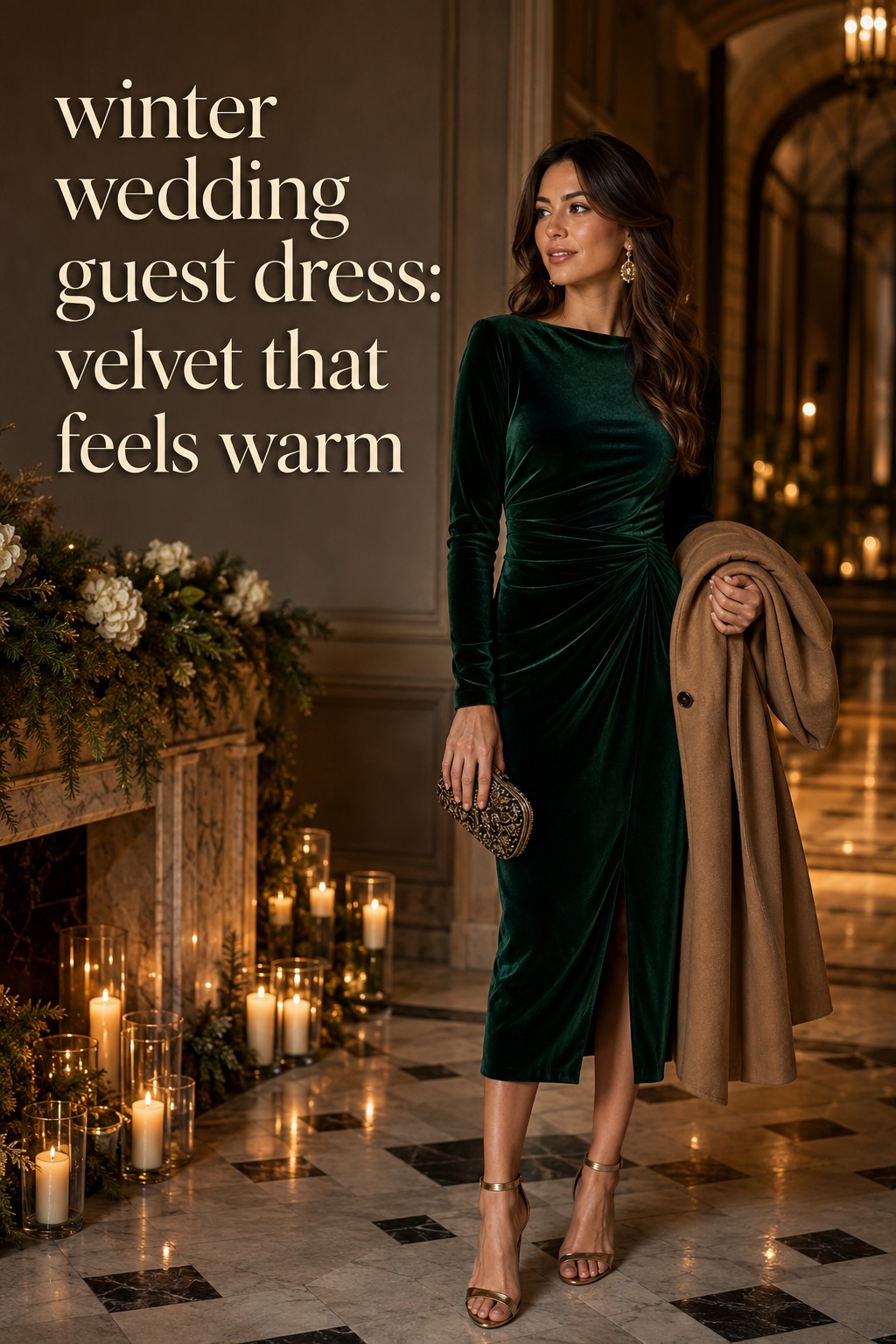
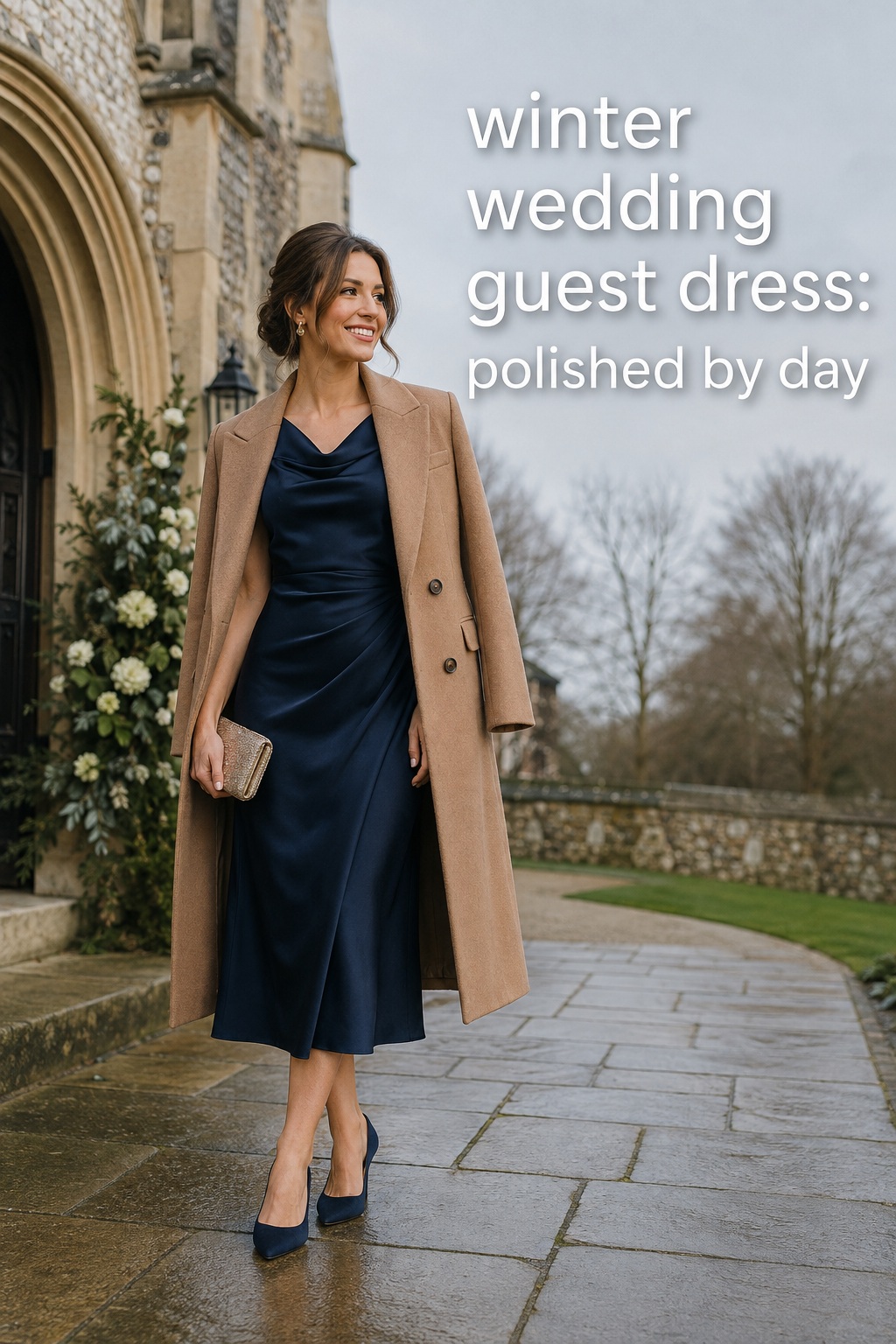
A polished midi is often the most flexible answer for cocktail or semi-formal dress codes. Choose velvet, satin, crepe, jacquard, or a substantial chiffon with sleeves or a planned wrap. A shorter hem can still feel seasonal when paired with sheer or opaque tights, closed-toe pumps, heeled boots, or a tailored coat. The goal is balance: one special texture or detail, supported by simple accessories.
Casual or daytime
For a casual winter wedding, a refined knit dress, wrap dress, long-sleeve fit-and-flare style, or simple A-line silhouette can be appropriate. Keep the fabric elevated and the styling intentional. A soft sweater dress can look too everyday with casual boots and a large tote, but it can look wedding-ready with polished ankle boots, delicate earrings, and a compact bag. Daylight usually favors softer color and less shine than an evening reception.
What is changing in winter wedding guest dressing
The most useful winter trend is a stronger focus on tactile depth. Instead of relying on a complicated print, one substantial fabric can make the whole outfit feel considered. Velvet absorbs and reflects low light in a way that feels luxurious. Satin gives a simple cut movement and glow. Crepe creates a clean line. Brocade and jacquard bring pattern without needing sequins.
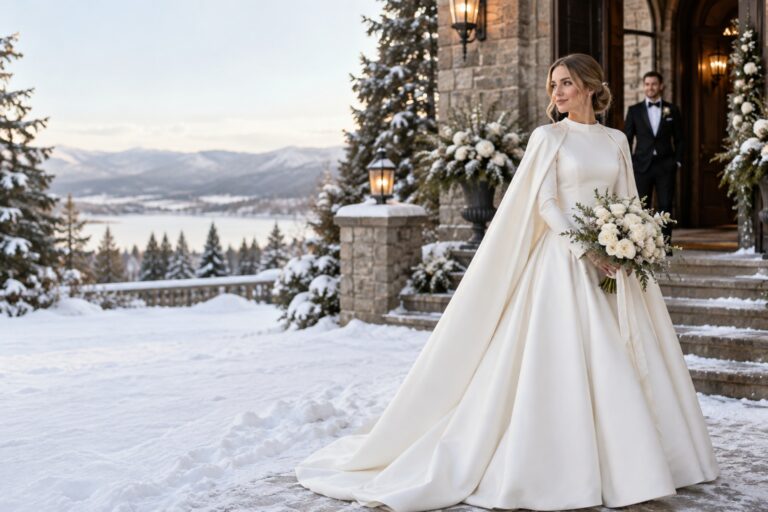
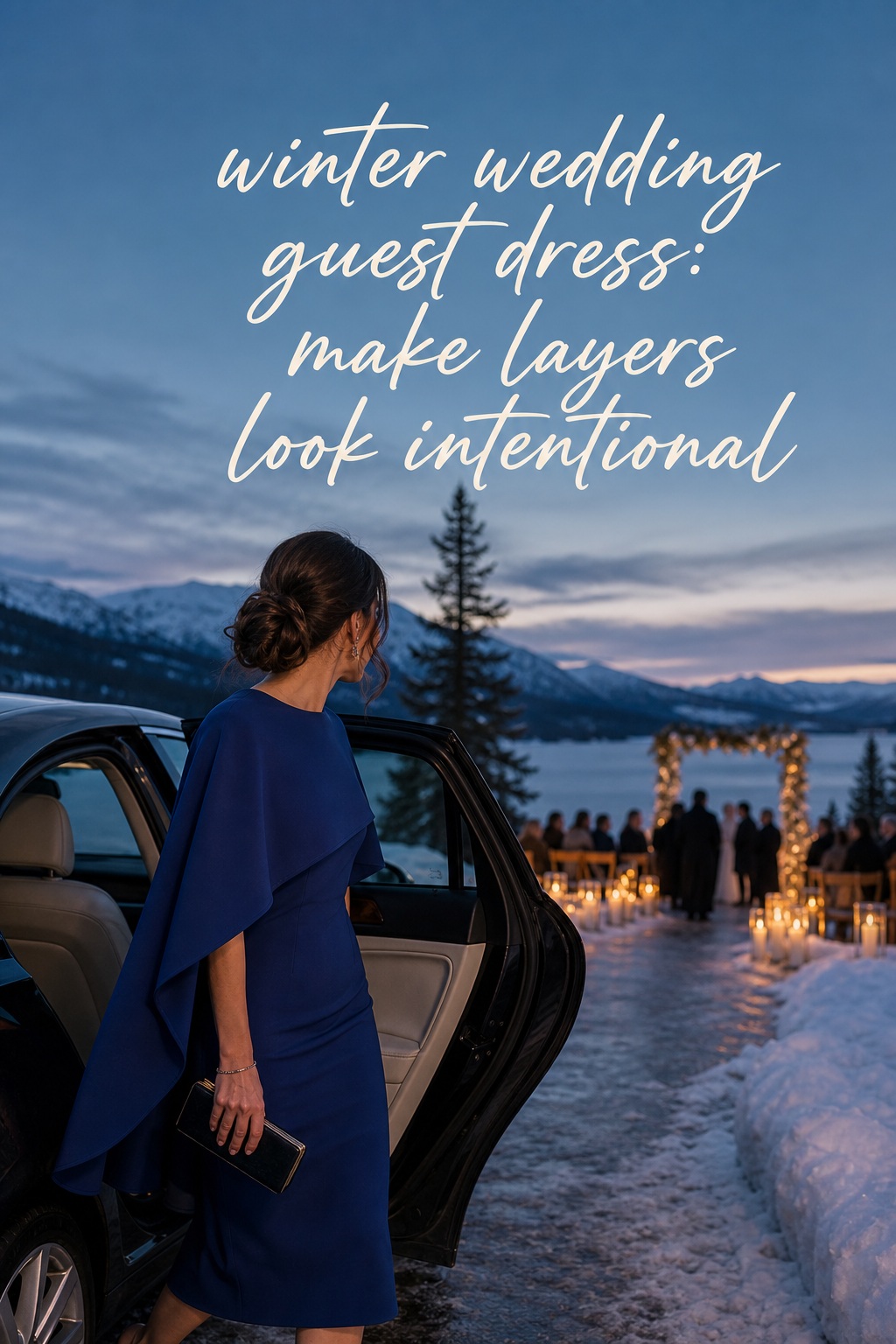
Coverage is also becoming more expressive. A long sleeve does not have to mean a conservative dress. Look for a sculpted sleeve, an asymmetric neckline, a low back, a soft drape, or an interesting cuff. High necklines are particularly effective in winter because they feel elegant and practical, while a cape sleeve can give a simpler gown a memorable finish.
Velvet is a foundation, not a theme
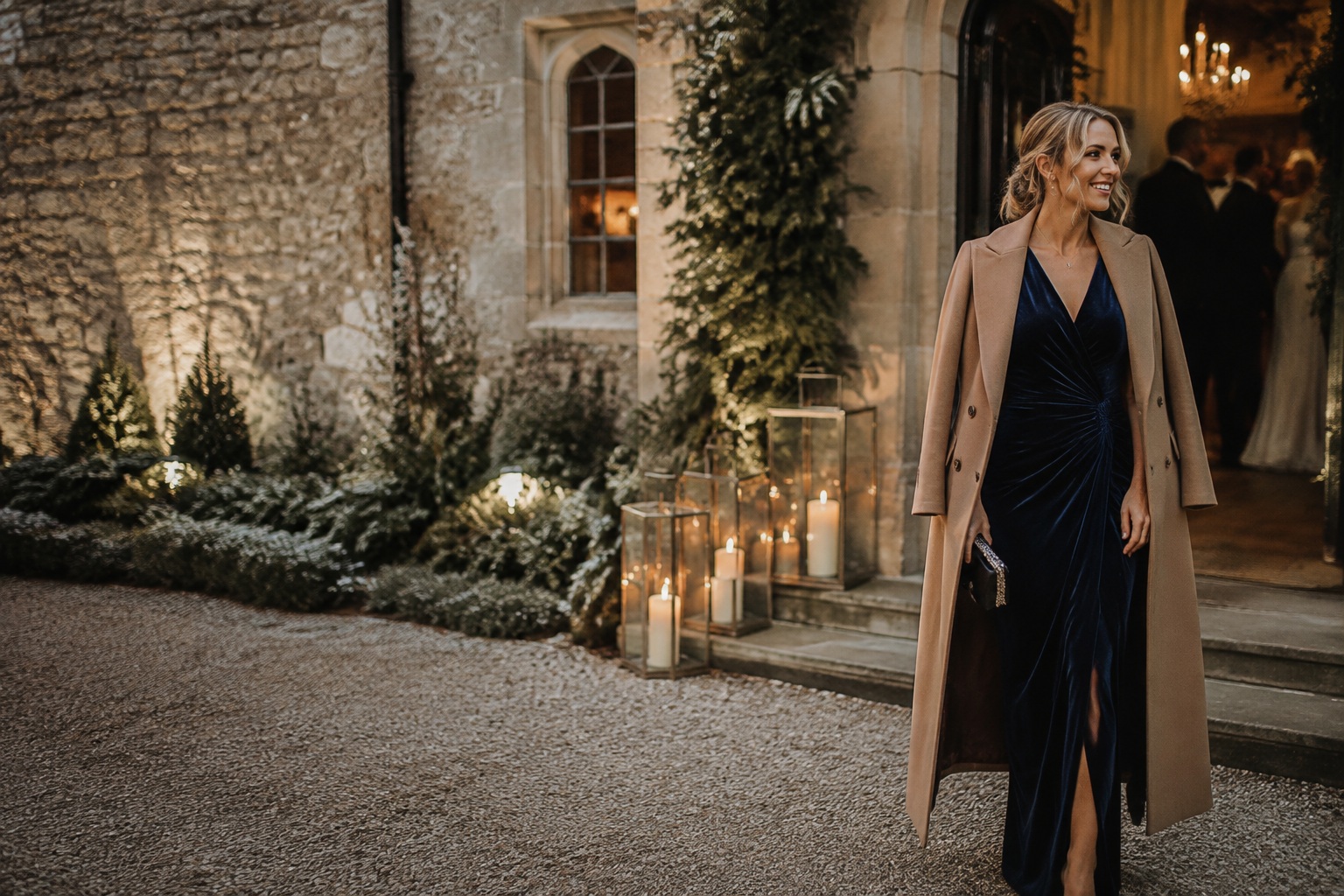
Velvet is one of the easiest fabrics to use for a winter wedding because it adds warmth, depth, and formal texture at the same time. A velvet midi works for cocktail attire, while a floor-length velvet gown can suit black tie. The way to keep it current is to choose a clean silhouette. A column, softly draped wrap, or simple long-sleeve shape allows the fabric to do the work.
Satin is softer when the rest of the look is quiet
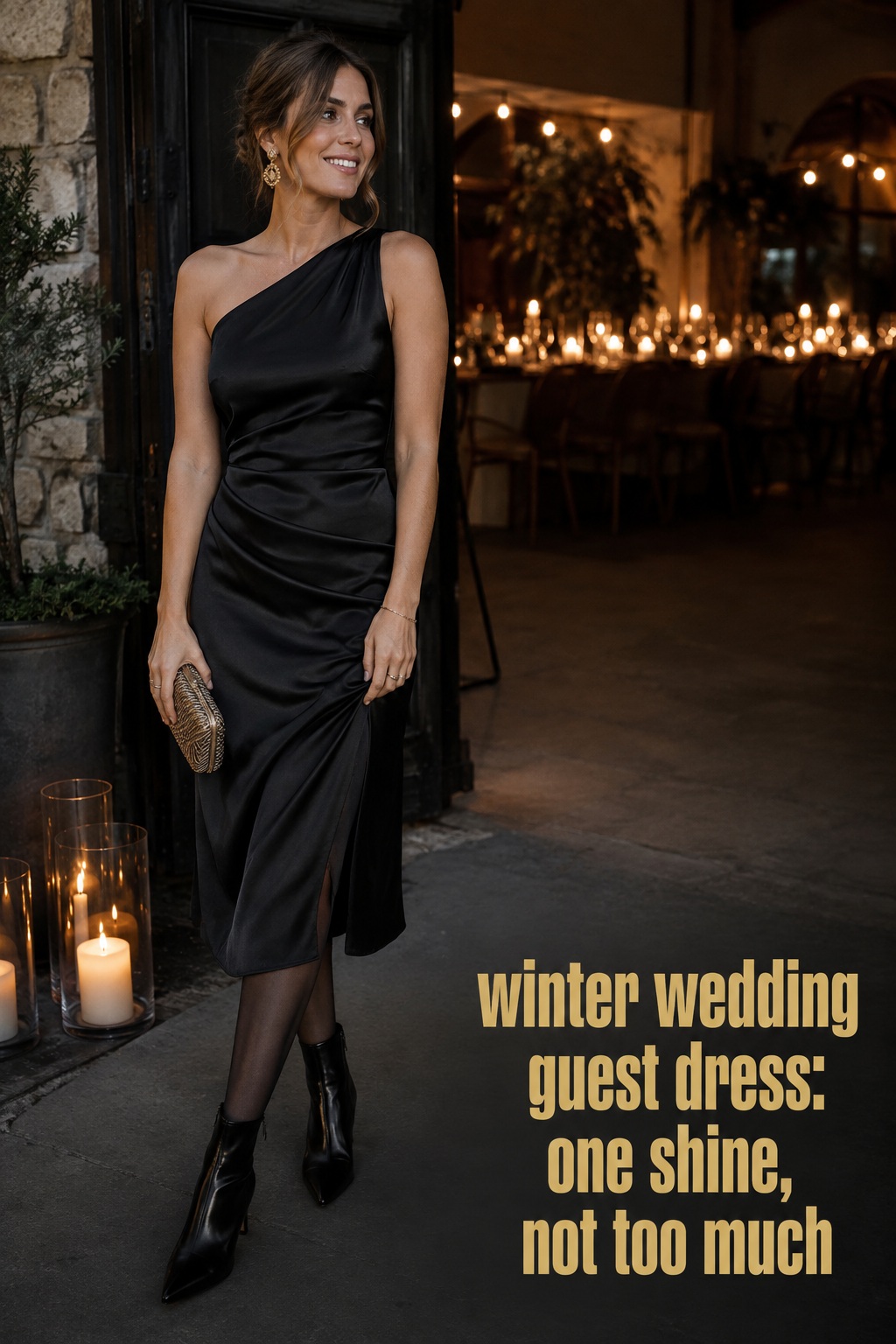
Satin can look festive without looking like a holiday costume. Choose a weighty satin with a fluid drape, then limit the number of competing shine points. If the dress is glossy, matte shoes and a small velvet or leather bag can make it feel more sophisticated. A satin slip dress also becomes more winter-ready with a tailored coat, a fine wrap, or a high-quality shawl for the ceremony.
Controlled sparkle beats head-to-toe shine
Sequins, metallic threads, and crystal details make sense for evening weddings, especially in December and around New Year’s Eve. The current approach is more selective. A black, oxblood, bronze, or midnight-blue shimmer is easier to wear than a bright silver mini covered in sparkle. If the dress already catches the light, keep the jewelry restrained and let the fabric remain the focal point.
Choose the right winter wedding guest dress by situation
The same trend can look completely different depending on where and when the wedding takes place. Before buying, imagine the entire day rather than only the ceremony photo. Will you walk across snow, sit in a chilly church, wait outside for portraits, or travel between a hotel and a reception? A successful outfit is comfortable through those transitions and still looks polished when the coat comes off.
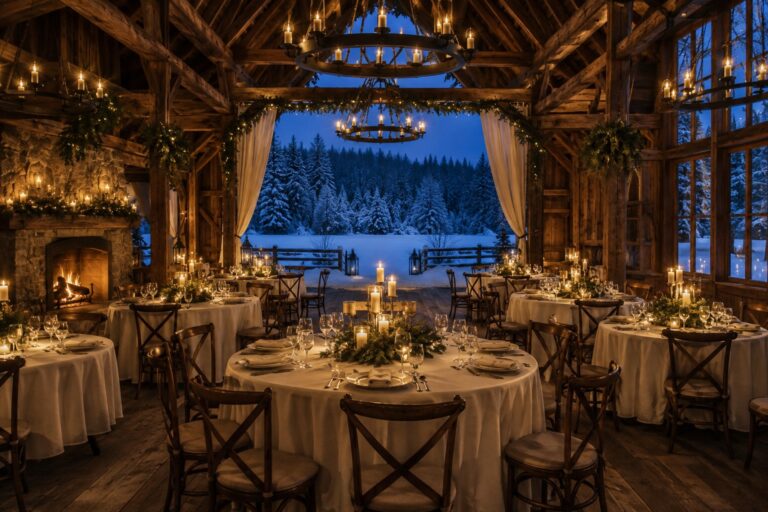
For a candlelit hotel or ballroom wedding
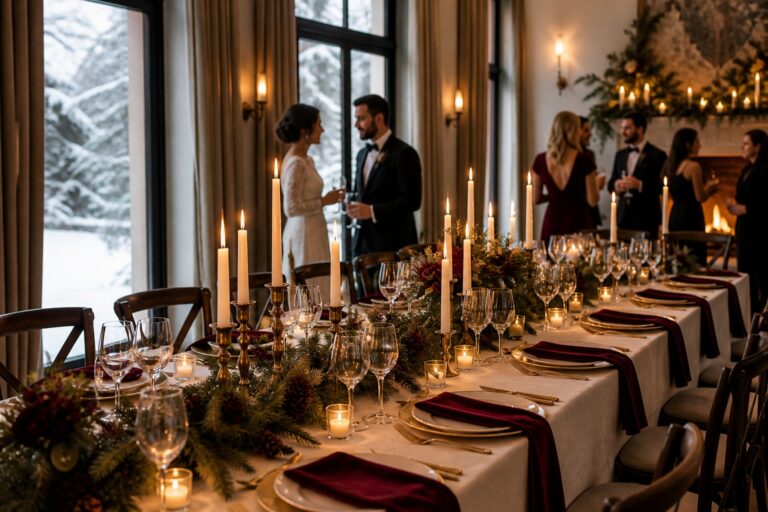
This is the natural home for a rich evening dress. Try a jewel-tone velvet gown, a dark floral jacquard maxi, a satin dress with a draped neckline, or a black dress with one architectural detail. Warm lighting rewards texture, so a matte black dress can be just as effective as a brighter color when the fabric has depth. Add one intentional accessory such as crystal earrings, a satin clutch, or a sculptural bracelet.
For a daytime church or historic venue
A long-sleeve midi, high-neck dress, or elegant printed style usually feels more natural than a fully sequined gown. Dark florals are especially useful because they keep a wedding connection while working with winter colors. Pair a dress with a polished coat that covers the shoulders and a shoe you can walk in. If the venue is traditional, avoid making every element dramatic. One beautiful sleeve or neckline is enough.
For an outdoor ceremony with an indoor reception
Plan the outer layer before you fall in love with the dress. A tailored wool coat, velvet wrap, faux-fur stole, or cashmere pashmina should coordinate with the dress and look presentable in photographs. Closed-toe shoes are often more practical than delicate sandals, and a low block heel is easier on uneven ground. If the dress is short or midi, tights provide warmth without changing the overall formality.
For a destination wedding
“Winter wedding” does not always mean snow. A destination event may have a winter date but a warm climate, so read the location before choosing velvet or heavy layers. A tropical destination can call for silk, a lighter satin, a bright print, or a breathable long dress. A cold mountain destination needs a different plan, including warm tights, weather-friendly shoes, and an outer layer that can handle the walk from ceremony to reception.
Build the complete look around warmth and proportion
The dress is only one part of a winter wedding guest outfit. The coat, shoes, tights, bag, and jewelry determine whether the look feels finished. Think of those elements as a small styling system. They should support the dress, solve a practical problem, and remain appropriate when the weather changes.
Outerwear should belong to the outfit
A puffer jacket may be useful for the drive, but it is rarely the best visible layer for arrival photos. A long wool coat is the most versatile option because it works with both a midi and a gown. A velvet wrap adds texture without hiding the dress completely. Faux fur can feel glamorous for evening, while a cashmere shawl is ideal when you want something easy to carry. Match the level of formality, not necessarily the exact color.
Make the shoes weather-aware
For a maxi dress, choose a stable heel that will not catch in the hem. For a midi, closed-toe pumps or polished ankle boots can keep the line elegant while protecting your feet. A knee-high boot can work under a shorter dress when the boot is sleek and the dress is clearly occasionwear. Consider the distance between the car, ceremony, photographs, and reception. Bring a practical pair for travel if necessary, but avoid waiting until the last minute to test the full outfit.
Use tights and accessories as quiet support
Sheer tights create a polished line, while opaque tights add more warmth and work especially well with velvet or heavier fabrics. The right choice depends on the dress and the formality of the event. Jewelry should respond to the neckline and fabric. Pearl or gold earrings can soften a high-neck dress, while a crystal drop can echo evening sparkle. A compact clutch keeps the look formal and avoids competing with the silhouette.
Make the choice last beyond one wedding
The best winter wedding guest dress is not necessarily the one with the most obvious seasonal details. It is the one you can wear again to a winter gala, anniversary dinner, holiday event, or formal birthday. Before buying, ask whether the color works outside December, whether the fabric can travel, whether the hem can be altered, and whether the dress still looks good with more than one coat.
Use a simple test: remove one trend element in your imagination. If the dress has a bow, imagine it without the bow. If it has sequins, imagine a quieter accessory. If it is a strong holiday red, picture it styled with neutral jewelry in February. A good purchase should still have a clear silhouette and a confident point of view after the seasonal styling is edited down.
Common mistakes and quick fixes
- Choosing color before fabric: begin with the venue, weather, and texture, then select the shade.
- Buying a sleeveless dress without a layer: decide whether a coat, wrap, or cape works before ordering.
- Overdoing holiday sparkle: balance sequins with simple shoes and jewelry.
- Wearing a casual coat over a formal dress: select outerwear that looks intentional in photographs.
- Ignoring the hem and shoes: test walking, sitting, stairs, and outdoor surfaces before the event.
- Treating white, ivory, or cream as automatically safe because it is winter: choose silver, icy blue, or pale taupe when you want a light look.
FAQ
What color winter wedding guest dress should you wear?
Emerald, navy, garnet, burgundy, plum, chocolate, charcoal, and black are reliable winter choices. Metallic gold, bronze, silver, and icy blue can also work when matched to the venue and time of day. Avoid shades that may photograph as bridal white, ivory, or cream unless the couple has specifically requested them.
Can you wear velvet to a winter wedding?
Yes. Velvet is one of the most useful winter fabrics because it feels warm, looks rich in low light, and works across dress codes. Choose a velvet midi for cocktail or semi-formal attire and a clean velvet gown for a formal or black-tie celebration.
Can a short dress work for a winter wedding?
A knee-length or midi dress can work for casual, semi-formal, and cocktail weddings when it is made from an elevated fabric and styled with tights, closed-toe shoes, and a proper coat. For black tie, a floor-length silhouette is usually the safer choice.
What should you wear over a winter wedding guest dress?
Choose a tailored wool coat, velvet wrap, faux-fur stole, cashmere shawl, or elegant cape that matches the formality of the dress. The layer should be warm enough for arrival and polished enough for photographs, because it will be visible before and after the ceremony.
Are sequins appropriate for a winter wedding?
Sequins are appropriate for many evening and holiday-season weddings. A dark metallic, black shimmer, or restrained sequin detail is usually easier to style than a fully bright look. Keep the accessories simple so the dress feels celebratory rather than distracting.
What shoes go with a winter wedding guest dress?
Closed-toe pumps, stable block heels, polished ankle boots, and sleek knee-high boots can all work depending on the hem and dress code. Choose a shoe that suits the venue and lets you walk safely. A block heel is often the best compromise when outdoor photographs or uneven ground are involved.
How can you make a winter wedding guest dress feel current?
Start with a clean silhouette, then add one current detail such as a scarf neckline, cape sleeve, sculptural bow, rich velvet, controlled shine, or modern drape. Avoid stacking every trend in one outfit. A single strong choice supported by excellent fit and thoughtful accessories will look more current and more personal.
When comparing options, remove anything that fails the dress code or cannot work with the venue and weather. Then compare the remaining dresses by fabric, fit, and repeat wear. This keeps one dramatic detail from distracting you from a practical problem, such as a hem that drags through snow or a neckline that needs constant adjustment.
Create a three-part plan before you buy: the dress, the visible arrival layer, and the movement plan with shoes, tights, and a compact bag. Deciding those pieces together makes winter dressing calmer because you are not solving warmth and elegance at the venue entrance.
Finally, check the care label and the travel plan. Delicate satin may be perfect for a nearby hotel wedding but inconvenient for a flight, while velvet may be too warm in a heavily heated venue. The right winter wedding guest dress supports the actual day, not an imagined photograph disconnected from the experience.