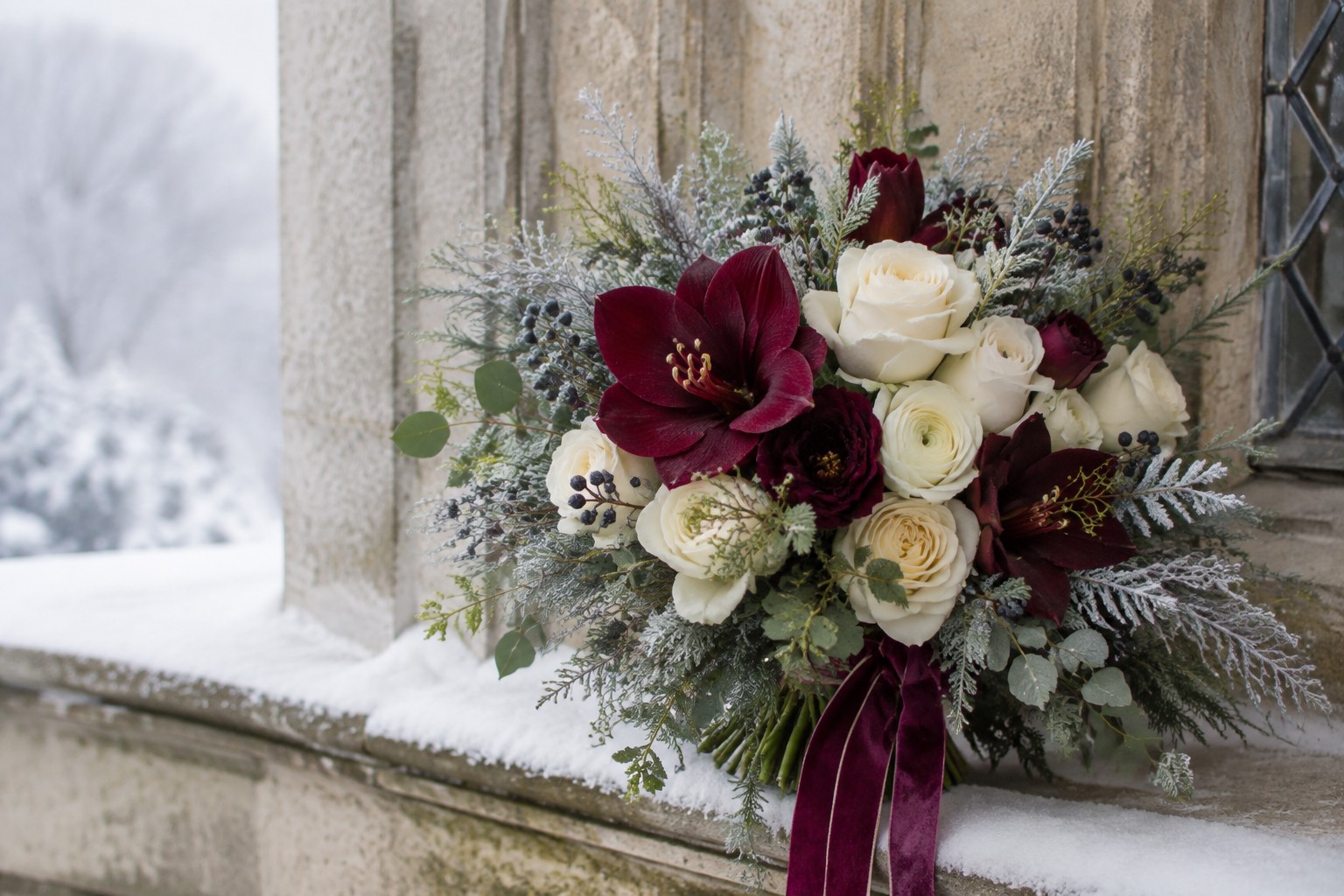
Winter Wedding Bouquet Ideas for Common Floral Problems
A winter wedding bouquet can look extraordinary in a photograph and still be the wrong choice for your actual wedding. A bouquet that feels perfect in a snowy editorial may overwhelm a narrow ceremony aisle. A red-and-green arrangement may look festive in December but too much like holiday decor for a January celebration. A loose bouquet may suit a garden venue yet disappear against a heavy coat during outdoor portraits. The problem is not a lack of beautiful winter wedding bouquet ideas. The problem is knowing which idea solves your particular floral challenge.
The most useful way to choose is to start with the friction you need to remove. Do you want flowers that look full even when seasonal availability is limited? Do you need a design that can handle a short walk outside? Are you trying to use blush, peach, or blue without making the bouquet feel like spring? Or do you want winter character without pinecones, holly, and an obvious Christmas palette? This guide turns those questions into florist-ready decisions.
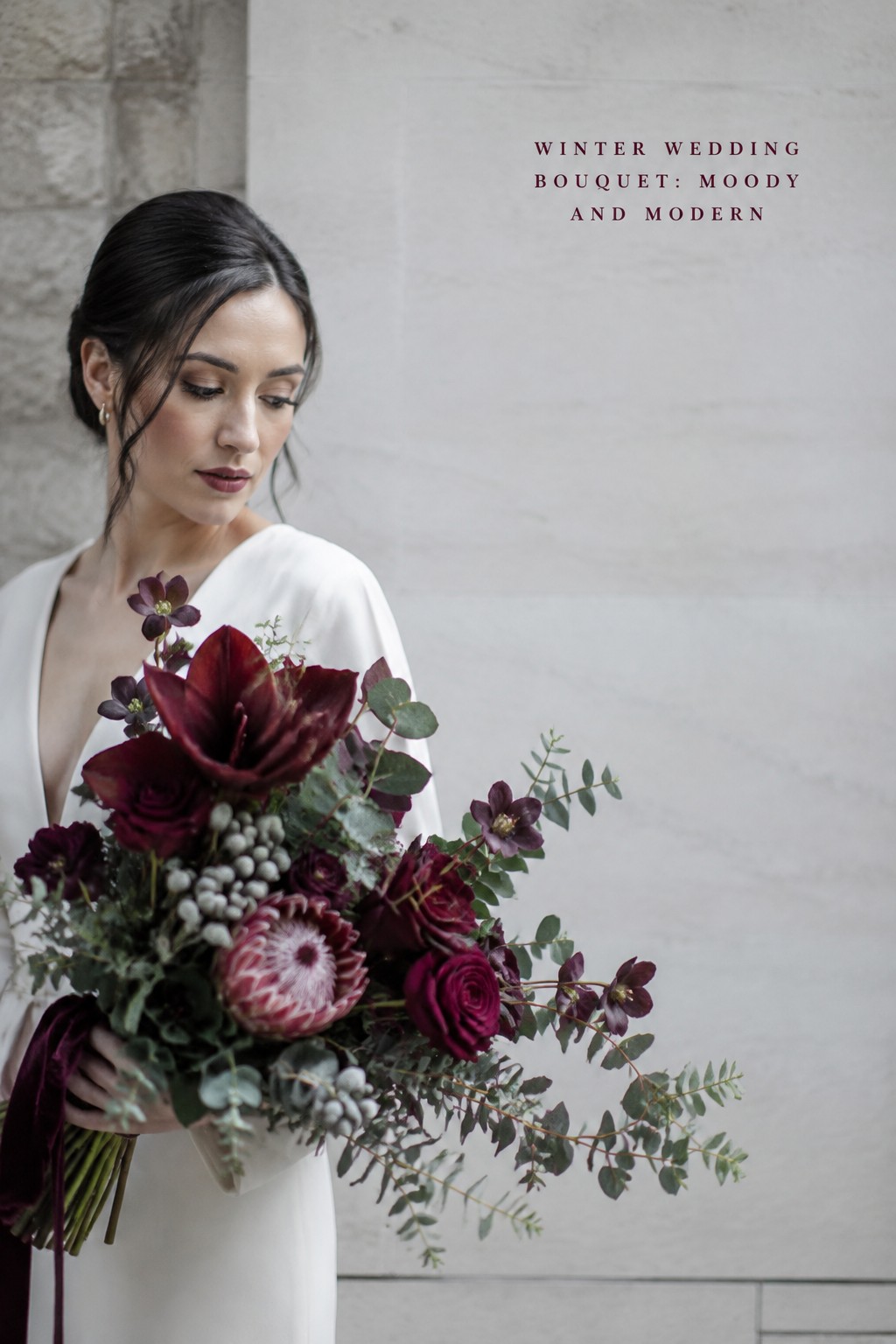
Think of the bouquet as a small design system. Pick a silhouette, a dominant color family, one or two focal blooms, supporting texture, and a practical finish. Roses, ranunculus, anemones, amaryllis, paperwhites, hellebores, carnations, orchids, eucalyptus, juniper, Dusty Miller, berries, thistle, and evergreen branches can all contribute to a winter look. The best combination depends on your venue, dress, date, photography plan, and tolerance for maintenance.
Diagnose the winter bouquet problem before choosing flowers
Before sending a florist a folder of inspiration, name the result you need. A strong brief sounds less like “I want something wintery” and more like “I need a compact bouquet that photographs clearly against an ivory dress, feels elegant rather than festive, and can tolerate a ten-minute outdoor portrait session.” That sentence gives your florist useful constraints while leaving room for substitutions.
Turn wedding inspiration into a plan you can actually follow.
Zarellea brings your guest list, budget, vendors, and day-of details into one shared space — so no beautiful idea gets lost in the shuffle.
Winter floral design often works through texture and tone rather than a long list of rare flowers. Cool air can make some blooms hold their shape well, but freezing temperatures, heated rooms, wind, and long transport are separate stresses. A bouquet can be seasonally appropriate and still need a careful handoff plan. Treat flower availability as regional and date-specific. A flower listed as a winter option may be imported, greenhouse-grown, or unavailable in your market during the week of your wedding.
Problem: the bouquet looks like Christmas decor
The fastest way to avoid a holiday-only look is to separate winter cues from Christmas symbols. Evergreen, red berries, and pinecones are not mandatory. You can create a winter impression with ivory, smoke blue, muted plum, silver-green foliage, bare branches, hellebores, anemones, or a satin ribbon in a quiet neutral. If you do use red, let the flower shape and proportion make it romantic rather than decorative. One deep red amaryllis or a few burgundy ranunculus can feel intentional when surrounded by soft neutrals.
Problem: the design feels too sparse for a cold-season wedding
Winter flowers do not have to imitate a crowded summer garden. Instead, build visual fullness with layers. Use a few focal blooms, then add a soft mass flower, a branching line, a textural accent, and foliage that creates width. Roses and ranunculus can give the center a generous appearance. Eucalyptus, cedar, juniper, or Dusty Miller can create volume around the edges. Berries, thistle, brunia, seed heads, or a small pinecone can supply detail without requiring dozens of flower varieties.
Problem: the bouquet disappears against the dress or venue
Contrast matters more in winter because many settings rely on pale walls, candlelight, snow, ivory fabric, or dark formalwear. An all-white bouquet can be beautiful, but it needs differences in surface and value. Pair matte Dusty Miller with glossy leaves, ruffled ranunculus with smooth roses, or creamy petals with a slightly deeper ribbon. If your dress has lace or beading, keep the bouquet outline readable by avoiding a completely pale, equally textured mass.
Problem: the inspiration photo cannot become a clear florist brief
Describe the photo in design language. Note whether the bouquet is rounded, asymmetrical, cascading, compact, or hand-tied. Identify the visual priority, such as burgundy color, silver foliage, a large protea, trailing ribbon, or a snowy white effect. Then add what you do not want. “I love the deep red focal color, but I do not want bright green holly or a Christmas tree shape” is more useful than naming every stem in an image that may have been photographed in another country or season.
Solutions for the most common winter wedding bouquet situations
Once you know the problem, choose a formula that supports your day. The following combinations are starting points, not rigid recipes. Your florist can replace a flower with a similar form, color, or texture based on local availability. Ask for the same visual job, not necessarily the exact stem.
For an elegant ballroom or black-tie celebration
Choose a refined, rounded bouquet with ivory garden roses, white ranunculus, a small amount of anemone, and restrained silver-green foliage. Dusty Miller, seeded eucalyptus, or a few silvery accents can provide winter atmosphere without making the arrangement rustic. Finish the stems with satin, velvet, or a clean silk ribbon in ivory, champagne, charcoal, or deep plum. Keep the outline intentional and avoid too many twiggy elements if your venue is formal.
This approach is especially effective when the room already supplies drama through chandeliers, dark wood, velvet seating, or candlelight. The bouquet should not compete with the architecture. A compact design also makes it easier to hold comfortably during a long ceremony and keeps the floral details visible in close portraits.
For a snowy outdoor ceremony or mountain venue
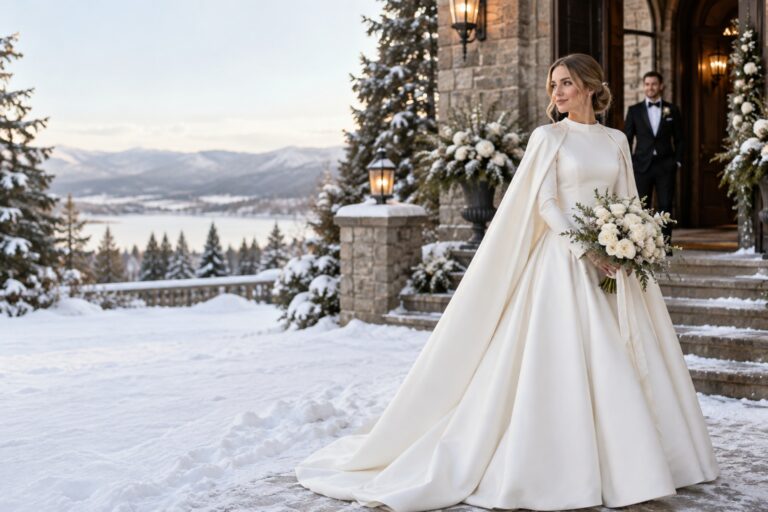
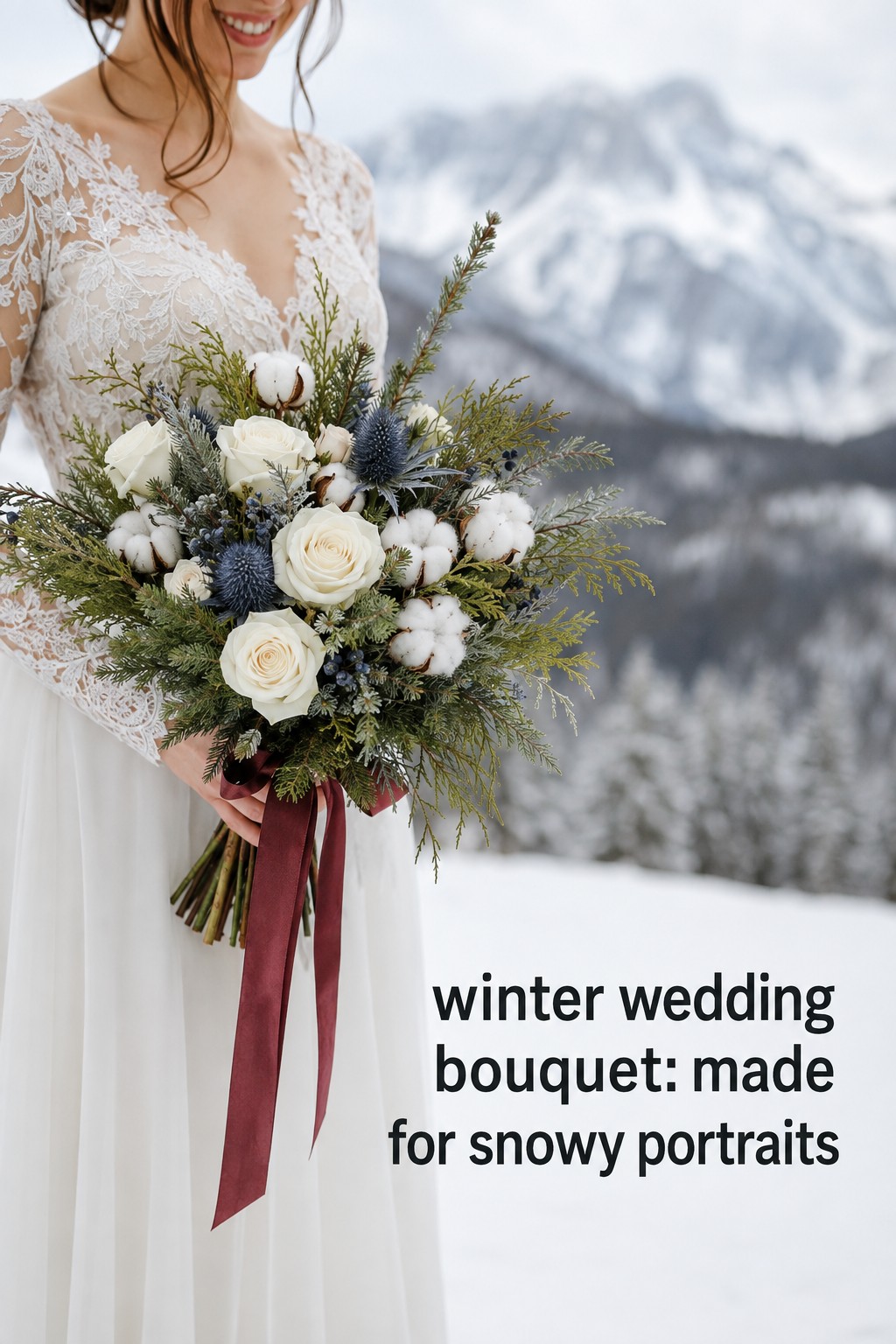
Use a stronger silhouette and a warmer layer of texture. White roses or ranunculus can sit beside cedar, pine, juniper, eucalyptus, cotton pods, dried elements, or blue-gray thistle. Add a small amount of burgundy, rust, or muted blue if the landscape is mostly white. A hand-tied bouquet with a generous stem wrap is easier to manage than a delicate arrangement with thin exposed stems.
Plan for the time outside rather than assuming winter air is automatically safe. Keep the bouquet hydrated until the last practical moment, limit direct wind exposure, and ask your florist which flowers should be protected from freezing temperatures. For portraits, your planner or photographer can help you alternate the bouquet between the bride and a nearby assistant so it is not held in the cold for every frame.
For a modern wedding that avoids rustic styling
Start with a limited palette and one sculptural element. A pale green arrangement with a King Protea, white orchids, anemones, silver brunia, or a few linear branches can feel architectural rather than woodland-inspired. Another option is a monochromatic bouquet in burgundy, plum, or wine, using different flower shapes to create depth. Keep the foliage edited and use one long ribbon in a matching or deliberately contrasting shade.
Modern winter wedding bouquet ideas benefit from negative space. Do not fill every gap simply because the season feels dramatic. Let one branch, protea, or ribbon lead the eye. The result should look designed, not assembled from every winter reference at once.
For a romantic January or February celebration
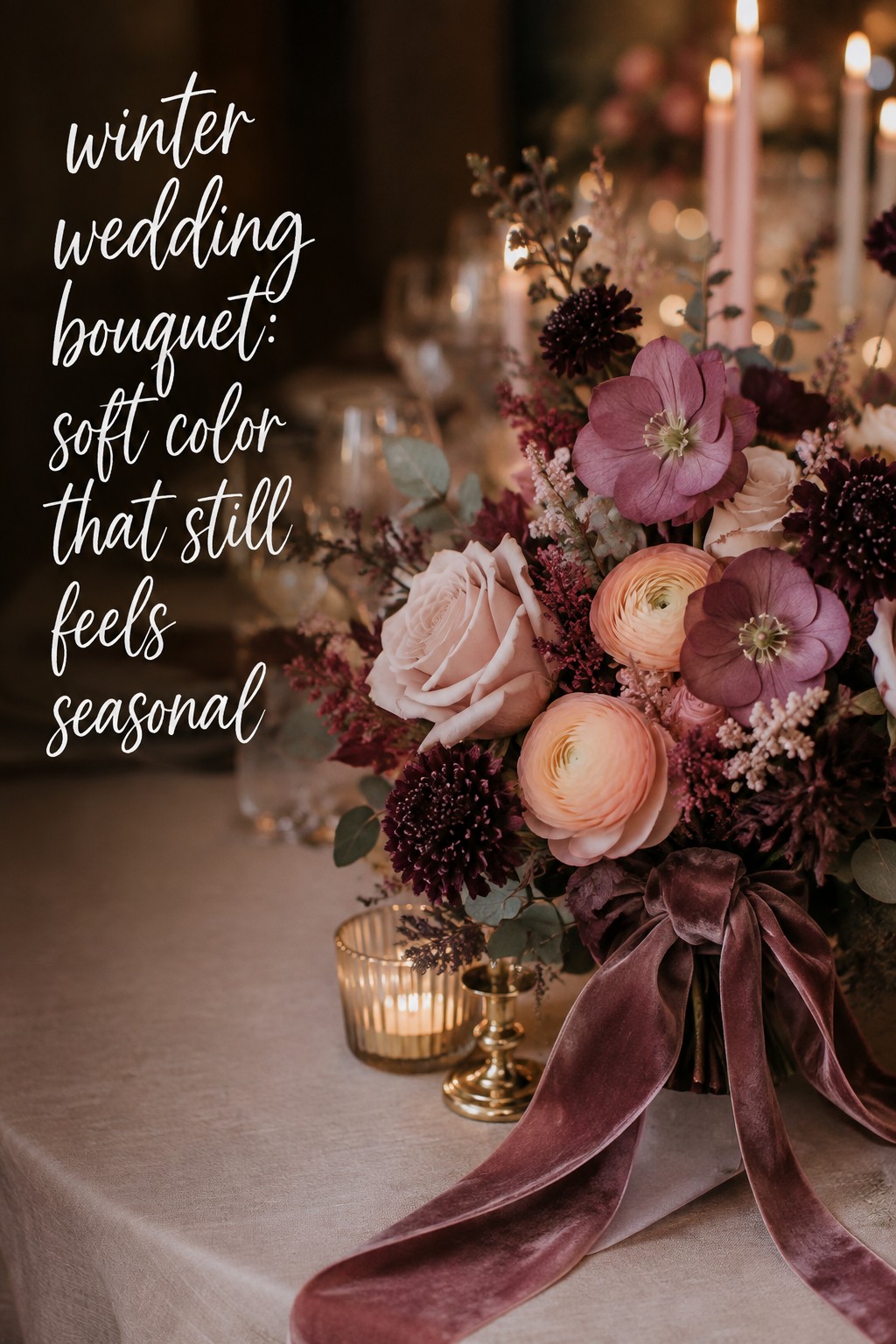
Move beyond the predictable red-and-green combination with blush, dusty rose, mauve, plum, soft peach, or muted lavender. Pair blush ranunculus or roses with hellebores, astrantia, dusty foliage, and a darker berry or ribbon accent. The winter feeling comes from the depth of the palette and the inclusion of textural elements, not from forcing a holiday color scheme.
If you love pink but worry it will feel too spring-like, ask for a winter anchor. That could be a smoky foliage color, a plum flower, a warm brown branch, a velvet wrap, or a candlelit venue palette. Two or three winter anchors are usually enough. The bouquet can remain soft while still belonging to the date.
For a small ceremony, elopement, or courthouse wedding
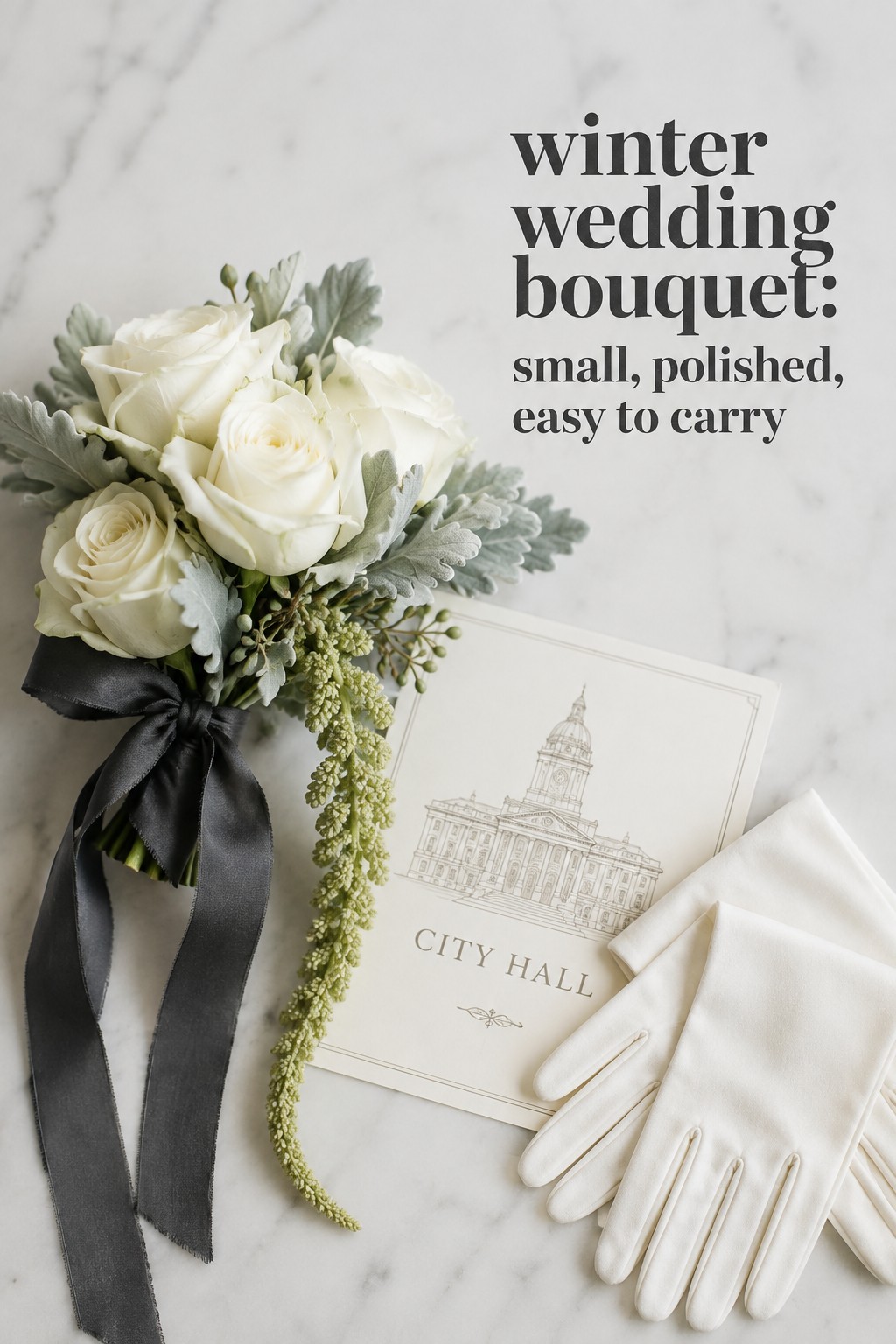
A small posy can be more intentional than a scaled-down version of a large bridal bouquet. Choose three visual ingredients and let each one show clearly. For example, combine white anemones, silver-green foliage, and a narrow velvet ribbon. Or use burgundy roses, dusty miller, and one trailing amaranthus stem. A compact bouquet photographs well at a courthouse, travels easily, and can be placed in a vase during dinner.
Ask for a design that is light enough to carry with one hand if you will be navigating stairs, public spaces, or a short portrait route. A smaller bouquet also gives you room in the budget for a boutonniere, a few ceremony flowers, or a meaningful keepsake such as a charm tied into the handle.
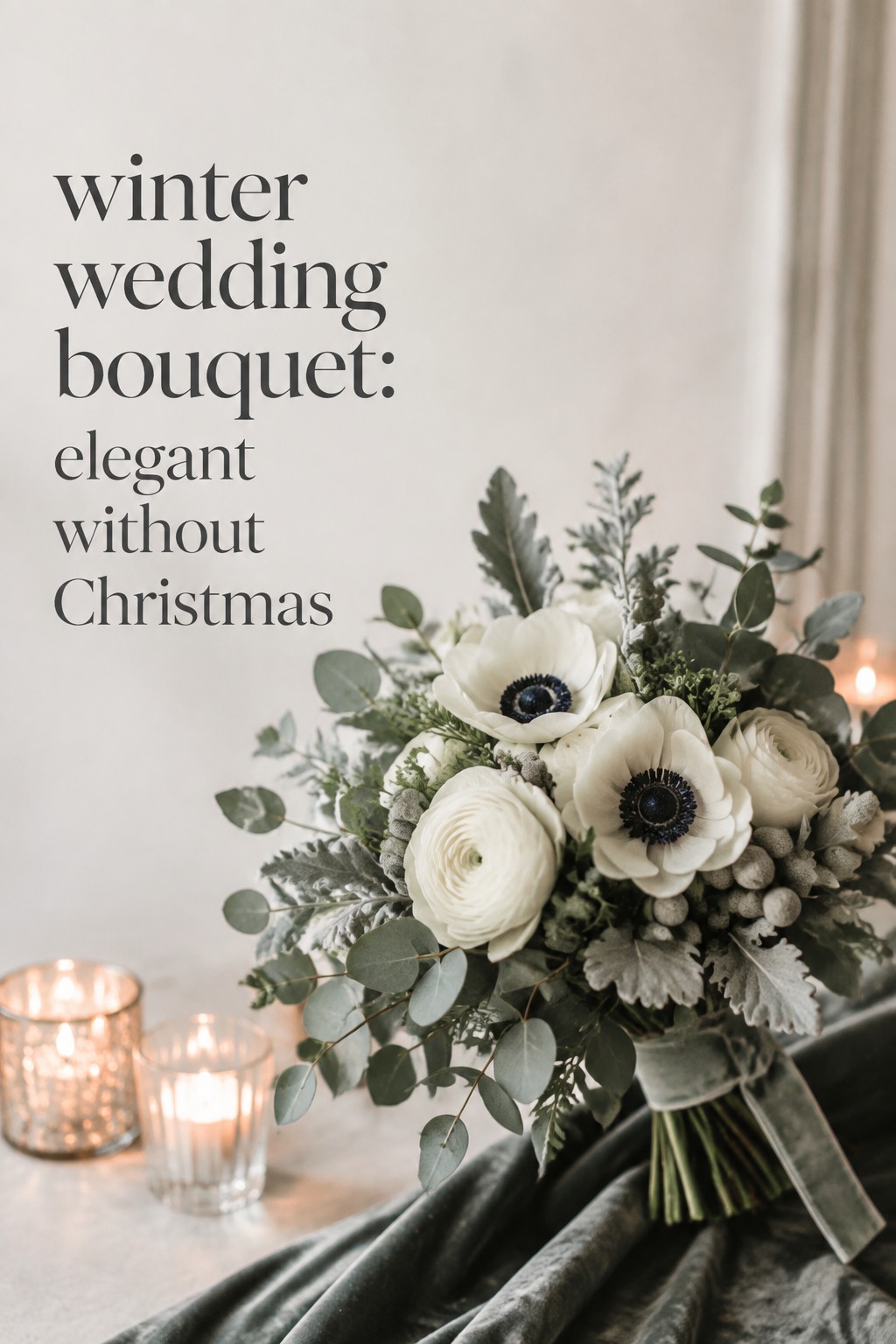
Build a florist-ready winter wedding bouquet formula
When your florist asks what you want, organize the answer from largest decision to smallest detail. This helps you stay focused when a specific flower is unavailable and prevents the consultation from turning into a long list of disconnected images.
- Silhouette: Choose rounded, asymmetrical, cascading, compact, airy, or structured. Consider how the shape will sit beside your dress and whether you need one free hand.
- Primary mood: Pick two or three words such as polished and icy, warm and romantic, moody and modern, or natural and textural.
- Color hierarchy: Name the dominant shade, the supporting neutral, and the accent. This is more flexible than requesting an exact flower color.
- Focal bloom: Select the flower or shape that should be noticed first, such as amaryllis, anemone, protea, rose, orchid, or ranunculus.
- Seasonal texture: Decide whether the winter cue should come from evergreen, juniper, berries, thistle, Dusty Miller, bare branches, dried elements, cotton, brunia, or ribbon.
- Finish: Specify the stem wrap, ribbon width, trailing length, and whether you want a charm, family fabric, or heirloom detail.
Then show your florist the dress, venue, ceremony location, and any outerwear you will wear for portraits. A bouquet that works with a sleeveless silk gown may need a different scale beside a long-sleeved crepe dress and wool coat. Your florist can also judge whether the arrangement will be visible from the ceremony seats and whether the colors will separate from your background.
Choose flowers by role, not by a fixed shopping list
Use focal flowers for shape and personality. Amaryllis can create a bold, elegant line, while anemones add a graphic center. Roses bring dependable volume, ranunculus add layered movement, and orchids introduce a sleek modern note. Hellebores and paperwhites can add a more unusual seasonal feeling when your florist can source them in good condition.
Use foliage to define the season and outline. Eucalyptus is softer and more familiar, while cedar, pine, juniper, and arborvitae create a clearer winter association. Dusty Miller and lamb’s ear offer a velvety silver effect. Add berries, thistle, brunia, seed heads, pinecones, or dried material only when they support the mood. One strong textural accent is often more sophisticated than six competing ones.
Make substitutions without losing the original idea
If your inspiration calls for a flower that is unavailable, describe what you liked about it. Was it the cup shape, the ruffled edge, the deep color, the large scale, or the airy stem? A florist may replace a seasonal hellebore with an anemone for a dark center, a particular ranunculus with a garden rose for layered petals, or a rare berry with another durable accent in the same value range.
Ask whether a substitution changes the care plan. Some flowers tolerate transport better than others, and some delicate stems may need to be added later in the process. The best bouquet is not the one with the most exact ingredients. It is the one that preserves your intended shape, color, texture, and emotional tone under real wedding conditions.
Use ribbon to connect the bouquet to the whole wedding
Ribbon can make a winter bouquet feel finished and can quietly repeat a color used elsewhere. Velvet adds warmth and depth. Satin feels formal and catches candlelight. Silk creates a softer, less glossy finish. A long trailing ribbon emphasizes a cascading design, while a neat wrap keeps a compact posy clean. Choose a material that will not snag on your dress or become difficult to control in wind.
Do not use ribbon to rescue a confused palette. First make sure the flowers already have a clear hierarchy. Then use the wrap as the final connection to your invitations, bridesmaid dresses, table linens, or groom’s attire. A small repeated detail often feels more cohesive than matching every element exactly.
Quick fixes for color, cold, budget, and holiday-overload problems
Most bouquet concerns can be solved with one controlled adjustment. Before removing an entire idea, ask which element is causing the problem. The answer may be the proportion of red, the amount of foliage, the bouquet width, the exposed stem length, or the timing of your outdoor photographs.
If red and green feel too seasonal
Keep one of the two colors and soften the other. Pair burgundy with blush, ivory, plum, or dusty blue instead of bright green. Or keep evergreen foliage but replace red berries with white flowers, brown branches, or silver accents. You can also reduce the holiday association by choosing a rounded romantic shape rather than a wreath-like or heavily coniferous design.
If an all-white bouquet looks flat
Ask for several whites rather than one stark white. Cream, ivory, antique white, and very pale blush create gentle depth. Add contrasting surfaces such as glossy leaves, matte Dusty Miller, ruffled ranunculus, smooth roses, or a darker stem wrap. Silver-green foliage can make the arrangement feel frosty while keeping the palette neutral.
If the bouquet is outside in freezing weather
Tell the florist exactly how long the bouquet will be outdoors and whether it will be exposed to wind, snow, or a heated vehicle. Keep it in water until the last possible moment, avoid leaving it in a freezing car, and give delicate flowers a protected place between photos. Have someone carry it when you are walking between locations so you can keep your hands warm and your dress clear.
If the budget cannot support every inspiration flower
Protect the focal point first. Use one premium or distinctive bloom as an accent, then let reliable roses, carnations, eucalyptus, or seasonal greenery provide volume. A thoughtful silhouette and a controlled color palette often look more expensive than a crowded arrangement made from many costly varieties. Ask for a “designer’s choice within this palette” option if you trust your florist to make substitutions.
If the bouquet feels too heavy or difficult to hold
Reduce the width, shorten the foliage, and ask for a comfortable stem wrap. A bouquet should support the ceremony, not become another physical task. If you love a large cascading arrangement, consider carrying it for portraits and using a more manageable version for the ceremony. Your florist can also create a smaller bridesmaid-scale bouquet for the moments when you need to move through a crowded space.
Final review before you approve the design
Review the proposal with four questions. Does the shape suit the dress and venue? Will the dominant color contrast with the background? Does the seasonal texture feel intentional rather than themed? And does the care plan match the time you will spend outside? If the answer to one question is no, make one targeted change instead of starting over.
Bring your final bouquet notes to the florist meeting, including your wedding month, city, ceremony and portrait locations, dress photos, preferred shape, colors you love, colors you do not want, and your maximum budget. Ask the florist to explain which parts are fixed and which can change. That conversation is what turns winter wedding bouquet inspiration into a design that can actually be made, transported, carried, photographed, and enjoyed.
FAQ
What flowers are best for a winter wedding bouquet?
Roses, ranunculus, anemones, amaryllis, carnations, orchids, paperwhites, hellebores, and camellias can all work beautifully, depending on your region and wedding date. Add seasonal character with eucalyptus, juniper, cedar, Dusty Miller, berries, thistle, brunia, or other durable textural elements. Ask your florist which varieties are available locally and will tolerate your transport and portrait plan.
How can I make a winter bouquet look less like Christmas?
Use winter texture without relying on a red-and-green palette. Ivory, blush, plum, blue-gray, silver-green, taupe, and muted peach can feel distinctly wintry. Keep holiday-specific elements such as holly, pinecones, or berries limited, and let the bouquet’s shape, ribbon, foliage, or candlelit setting create the seasonal mood.
Can I use pink or peach flowers for a winter wedding?
Yes. Give pink or peach a winter anchor such as plum flowers, smoky foliage, hellebores, silver accents, bare branches, velvet ribbon, or a deeper neutral. Blush roses and ranunculus can look sophisticated in winter when the rest of the palette has enough depth and the arrangement avoids an overly airy spring-garden effect.
How do I protect my bouquet in cold weather?
Keep it hydrated until the last practical moment, avoid freezing vehicles and unheated entryways, and limit direct wind exposure. Tell your florist how long you expect to be outside so the design can be chosen and handled accordingly. During portraits, have an assistant carry or shelter the bouquet between shots when possible.
How can I save money on a winter wedding bouquet?
Choose a clear silhouette, protect one focal bloom, and use reliable flowers and greenery for volume. Ask for seasonal substitutions, a limited palette, or a designer’s-choice arrangement within your colors. Fewer varieties can look more intentional, and a well-designed compact bouquet may give you more value than a large arrangement filled with premium stems.
Which bouquet shape works best with a winter coat?
A medium rounded, compact, or gently asymmetrical bouquet usually stays visible beside a coat without becoming difficult to carry. A larger cascading design can work for portraits, but make sure its width and trailing elements will not catch on sleeves or obscure your face. Show your florist the coat, wrap, or cape you plan to wear outdoors.
What should I bring to a florist consultation?
Bring your wedding date and location, dress and outerwear photos, venue images, ceremony and portrait plans, color references, preferred bouquet shape, disliked flowers or colors, and your budget range. Explain what you like in each inspiration image. This lets the florist preserve the important design qualities even when a particular flower is unavailable.