Layering Dresses for Winter: A Capsule System That Works
Layering dresses for winter is easiest when you stop treating warmth as a pile of extra clothes and start building a small system. A dress can be the anchor, while a thin base layer, useful hosiery, one controlled knit, practical shoes, and a proper coat handle the weather around it. The result feels intentional instead of bulky, and the same pieces can move from weekday errands to the office, travel days, dinner, or a winter wedding.
This capsule guide gives you a repeatable way to shop and get dressed. You will learn which dress shapes are easiest to layer, how to choose layers by fabric and temperature, which outfit formulas deserve a place in your rotation, and how to fix the common problems that make a layered outfit bunch, pull, or lose its shape.
Build a winter dress layering capsule
A useful capsule does not require a closet full of winter dresses. Start with two or three dresses that have different jobs, then add supporting layers that can work with all of them. The goal is not to make every outfit look identical. It is to make your warmest and most polished choices easy to repeat.
Choose three anchor dresses
Begin with one knit or ponte midi, one fluid shirt or slip dress, and one dressier style for dinners or events. A knit midi gives you a naturally warm base and works with ankle or knee-high boots. A shirt dress in cotton, corduroy, wool blend, or substantial viscose can take a thin turtleneck underneath or a sweater over the top. A satin, velvet, crepe, or printed dress gives the capsule a reason to exist beyond casual days.
Turn wedding inspiration into a plan you can actually follow.
Zarellea brings your guest list, budget, vendors, and day-of details into one shared space — so no beautiful idea gets lost in the shuffle.
Look for a clean neckline, enough room for a thin underlayer, and a hem that works with at least two shoes. Dresses that cling tightly to the body can be beautiful, but they are difficult to combine with anything underneath. Very wide sleeves can fight with a coat. A medium-weight fabric with a defined shoulder, a little movement at the skirt, and a comfortable armhole will usually give you more options.
Add a thin base layer before a bulky one
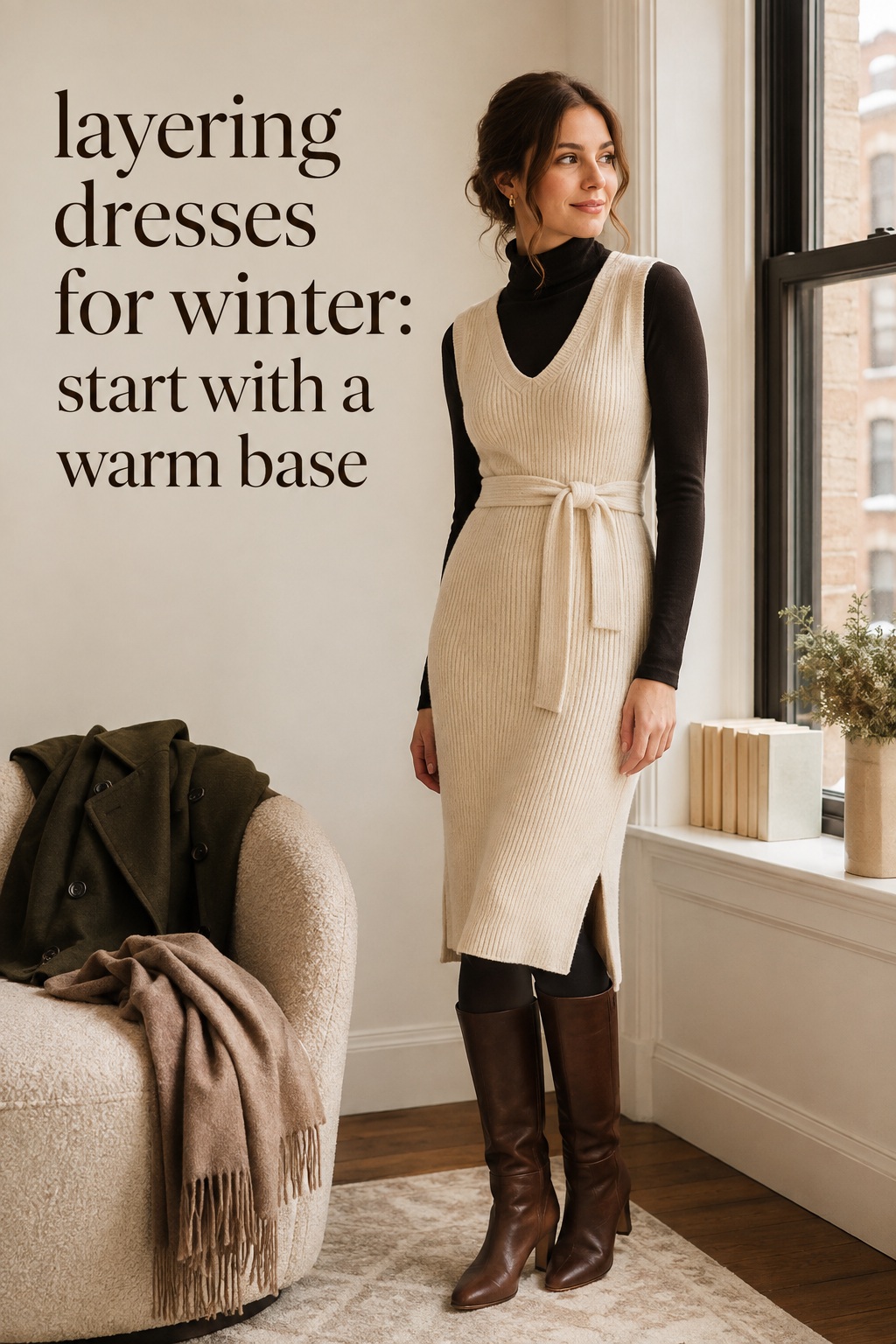
The most valuable base layer is one you barely see. Try a fitted long-sleeve crew neck, fine merino top, silk blend, or lightweight thermal under a sleeveless, square-neck, or short-sleeve dress. A black base layer works under dark prints, while ivory, taupe, or a color that repeats in the dress creates a softer line. A mock neck or slim turtleneck can turn a summer dress into a graphic winter look, but keep the knit fine so the neckline does not fight the dress.
Pay attention to seams. A base layer with smooth, flat seams is less likely to show through satin or jersey. If the dress has a low armhole, choose a sleeve that ends cleanly rather than one that gathers at the wrist. If you need extra warmth on a very cold day, put it under the dress first. Adding a thin, close layer usually keeps the silhouette clearer than placing several thick sweaters on top.
Use hosiery as a foundation, not an afterthought
Opaque tights are the fastest way to make a dress feel winter-ready. Black is dependable, but charcoal, espresso, navy, burgundy, and deep olive can connect the dress to your shoes without making the outfit look overly matched. Fleece-lined tights are helpful when the temperature drops, especially under midi dresses, but test their thickness with the dress before wearing them to an event. Some linings can create visible lines or make a fitted skirt cling.
- Choose a denier and color that visually balance the weight of the dress and shoes.
- Use footless thermal leggings under a long dress when the ankle and shoe line will be hidden.
- Check the waistband under fitted or bias-cut dresses before leaving home.
- Keep a spare pair in your travel bag because hosiery is a small item with a large outfit impact.
- Match the finish to the occasion: matte for day, subtle sheen for evening, and texture only when it supports the dress.
Keep one knit layer and one outer layer ready
A fine cardigan, cropped crew-neck sweater, relaxed blazer, or slim vest can change the personality of a dress without hiding it. A long coat then becomes the final weather layer. This order matters. The mid-layer defines the outfit indoors, while the coat handles the trip between home, transportation, and destination.
For the most flexible capsule, choose one cropped layer that meets the waist, one longer layer that reaches the hip, and one coat that is at least as long as the dress or clearly shorter. A mid-calf dress under a coat that ends at the widest part of the thigh can look accidental. Either create a deliberate long column or use a shorter jacket with a defined waist.
Match layers to the dress silhouette and fabric
The same sweater will not work equally well over a slip dress, a full-sleeve shirt dress, and a fitted knit. Layering dresses for winter becomes much simpler when you identify what the dress is already doing. Is it light and fluid, structured and tailored, close to the body, or full through the skirt? Choose the next layer to support that shape instead of covering it randomly.
Fluid slip and satin dresses
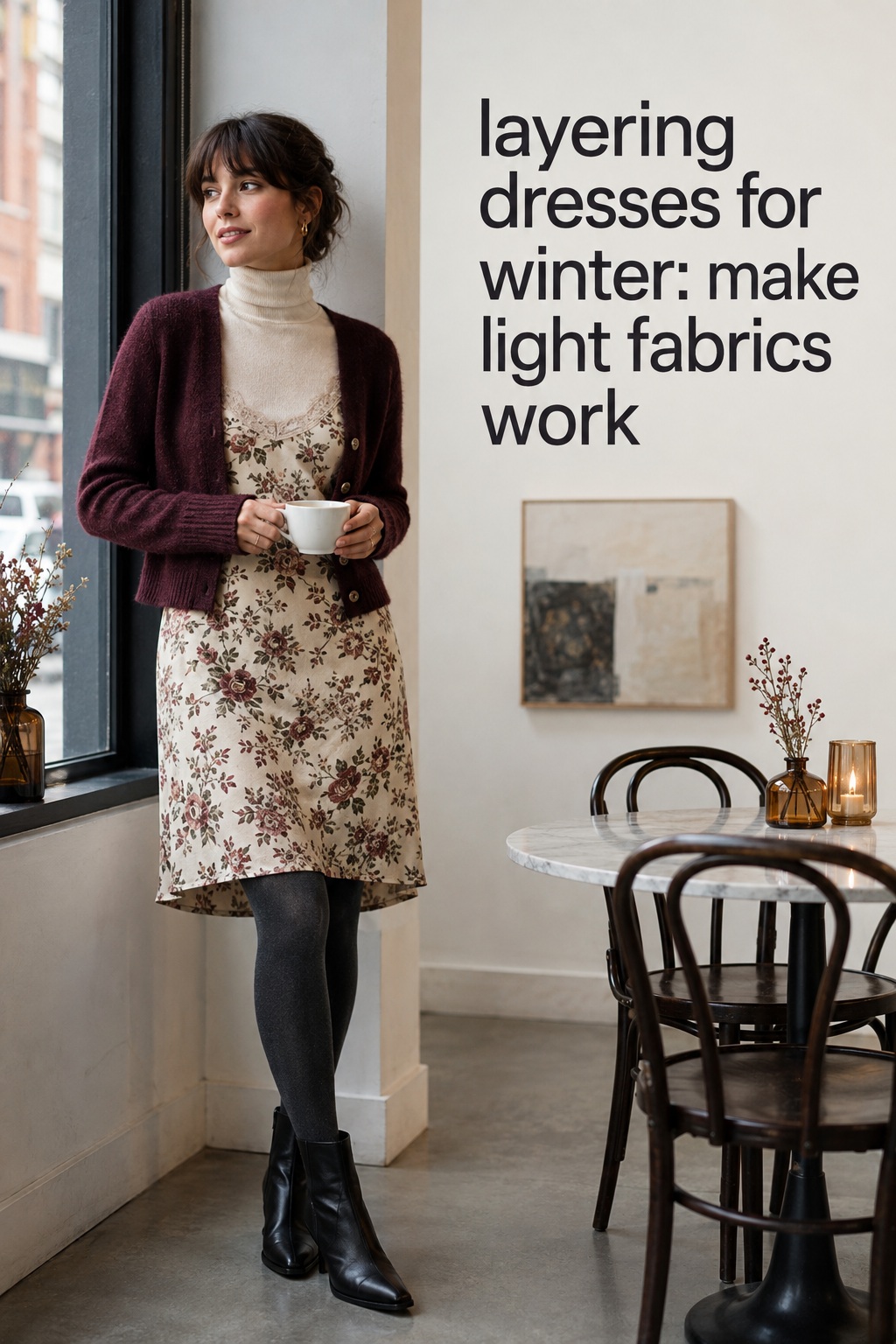
Lightweight slip dresses benefit from a fine turtleneck, fitted long-sleeve top, or lace-trimmed camisole underneath. A short cardigan or neat blazer can supply structure at the top, while opaque tights and boots ground the thin fabric. If you want to wear a sweater over the dress, choose one with a smooth surface and use a narrow belt at the natural waist. Blouse only a small amount of fabric over the belt so the outfit looks shaped rather than swallowed.
Keep the coat simple. A tailored wool coat, long leather coat, or clean wrap coat lets the satin remain the interesting texture. Avoid combining a shiny dress, sparkly cardigan, textured scarf, and glossy boots all at once. One reflective element is usually enough for a polished winter evening outfit.
Shirt dresses and sweater-friendly dresses
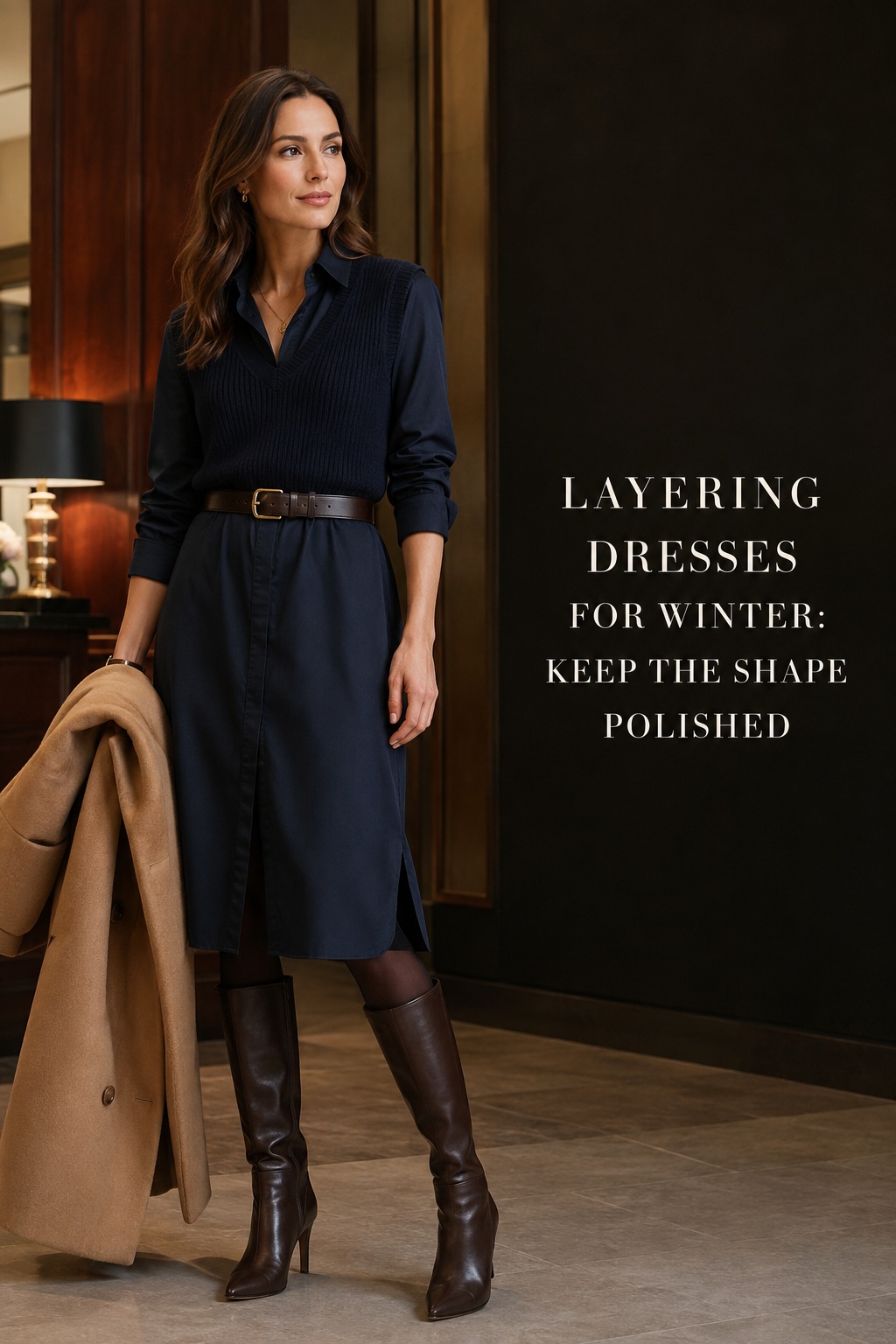
Shirt dresses are excellent capsule pieces because they already have a collar, a button front, and a visible vertical line. Wear a thin turtleneck underneath for warmth, or place a sleeveless sweater vest over the dress so the collar and cuffs remain visible. A belt can clarify the waist if the fabric is soft. With a fuller shirt dress, a cropped cardigan often works better than a long, loose sweater that adds volume across the hips.
If the dress has a bold stripe or print, use the underlayer to pick up one quiet color. Do not add a second loud pattern unless the scale is clearly different. Brown boots and a camel coat soften a strong print; black tights and a charcoal coat make it feel more graphic. The dress should remain the focal point, while the layers explain how to wear it in the season.
Fitted knit, ponte, and ribbed dresses
A fitted knit or ponte dress usually needs fewer layers because the fabric already provides visual weight. Add thermal hosiery, knee-high boots, and a long coat for a streamlined outfit. If you need more warmth, use a thin base layer underneath rather than a bulky sweater over the dress. A belt can work, but place it only where the dress has enough stretch to lie flat.
Ribbed texture can look modern with smooth leather boots and a structured coat. It can look overly busy with a chunky scarf, fuzzy jacket, and large textured bag. When the dress has a strong surface, keep at least two surrounding pieces quiet. This creates contrast and helps the outfit read as considered rather than simply warm.
Mini, midi, and maxi lengths
A mini dress gives you room to add opaque tights, tall boots, and a substantial coat. The visible leg line is short, so a knee-high or over-the-knee boot can keep the outfit warm and balanced. A midi works with ankle boots, knee-high boots, loafers with thick socks, or sleek sneakers depending on the setting. Watch the small gap between hem and boot because exposed ankle can make a winter outfit feel colder than it looks.
A maxi dress can hide thermal leggings and thicker socks, but the hem should not drag through wet streets. Choose a boot with a practical sole and enough shaft height to prevent a cold gap. If the skirt is very full, keep the upper layers shorter or more fitted. If the dress is narrow and column-like, a long coat can create an elegant continuous line.
Create reliable formulas for every winter setting
Once you know your capsule pieces, stop starting from scratch. Use a few formulas as a base, then adjust color, accessories, and warmth. A formula is not a uniform. It is a dependable sequence that leaves you more energy for the details that make the outfit personal.
Everyday formula: knit midi, tights, and boots
Pair a knit midi with opaque tights, ankle or knee-high boots, and a long coat. Add a small crossbody bag and a scarf that introduces one color from the dress. For a softer look, combine cream, camel, chocolate, or olive. For a sharper look, use a dark dress, black tights, and a coat with a defined shoulder. This formula works for errands, casual lunches, museum visits, and relaxed dinners.
If the dress is sleeveless, place a fitted base layer underneath. If it has long sleeves, let the coat and boots do more of the visual work. A simple belt can stop a loose knit from becoming shapeless, but do not force one onto a dress that is designed to skim.
Work formula: shirt dress, slim knit, and tailored coat
Use a shirt dress over a fine mock neck or under a slim sweater vest. Add a leather belt if the proportions need definition, then finish with a tailored coat and practical ankle boots. Keep the palette restrained, especially if the dress has a print. A structured tote and small earrings can make the look office-ready without making it formal.
For a conservative workplace, choose a dress hem near the knee or below, opaque tights, and a boot with a stable heel. For a creative office, a visible collar, colored tights, or a textured vest can add personality. Make sure you can remove the coat and still have a complete outfit. The indoor version matters just as much as the commute.
Travel formula: soft dress, thermal base, and walkable boots
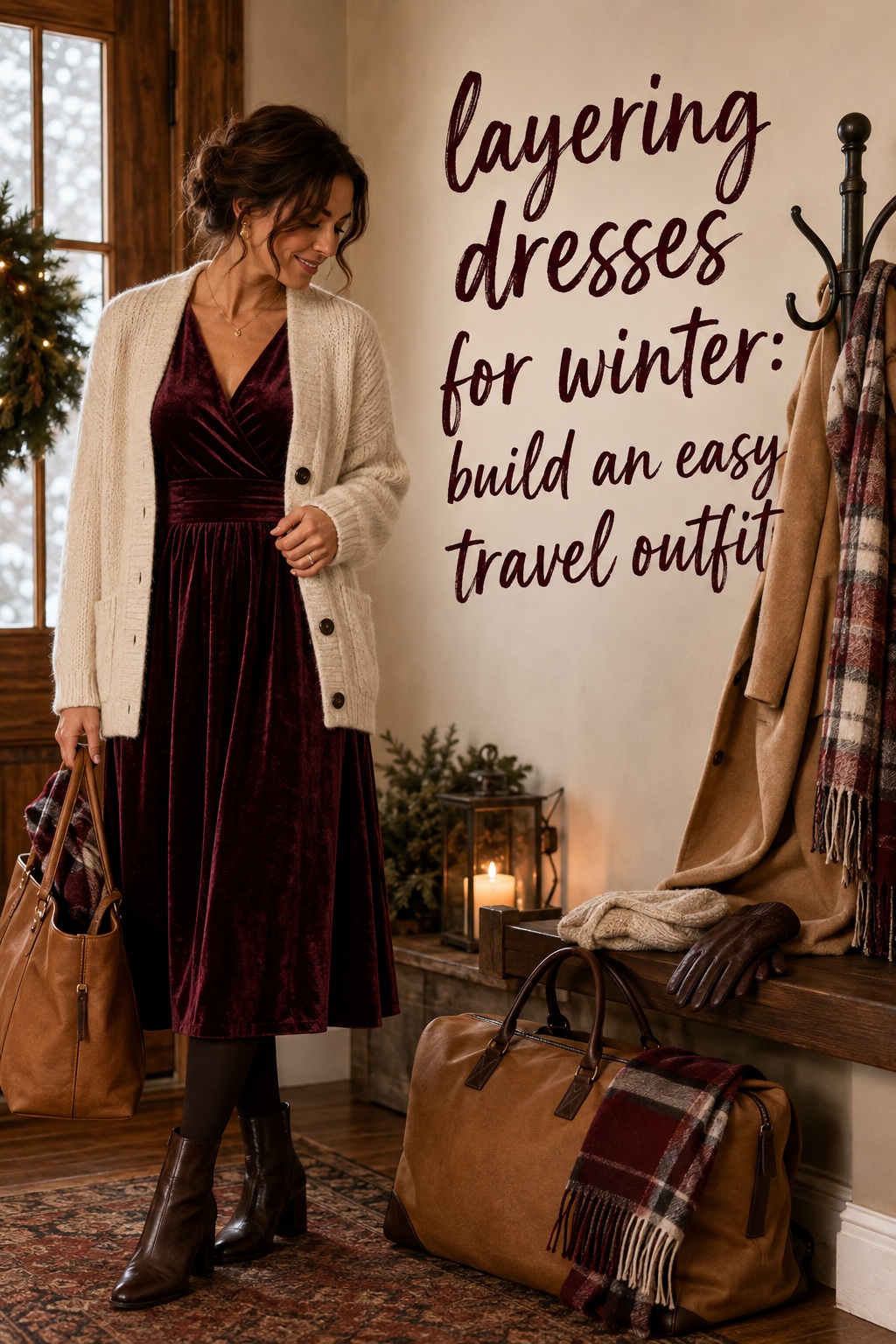
For travel, choose a wrinkle-forgiving jersey, ponte, sweater, or knit dress. Add a thin thermal top if needed, tights or leggings, and boots that can handle walking and weather. A long cardigan or soft blazer is useful on the plane, while a packable coat handles the outdoors. Keep the dress color dark or patterned enough to disguise small marks during a long day.
Pack the outfit in layers rather than as one look. Put an extra base layer, tights, and a thin belt in your bag. That gives you a fresh indoor combination if your first layer becomes uncomfortable or the temperature changes. Avoid a boot that is difficult to remove at security or too delicate for wet sidewalks.
Winter wedding formula: dressy dress, elegant warmth
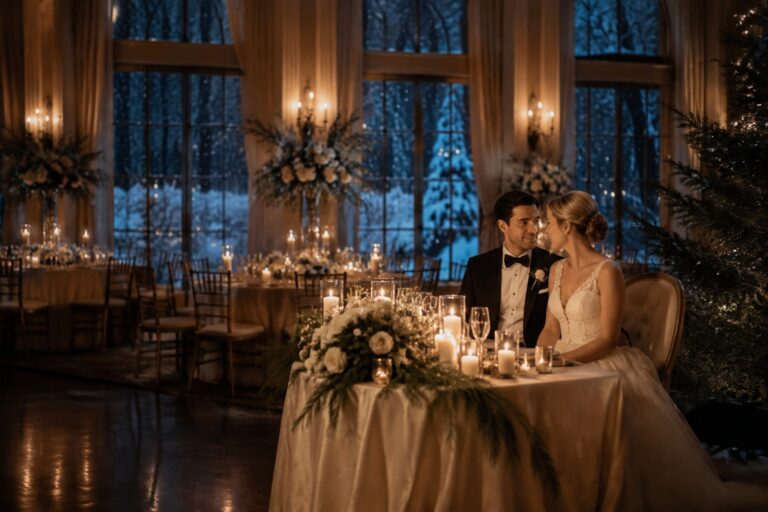
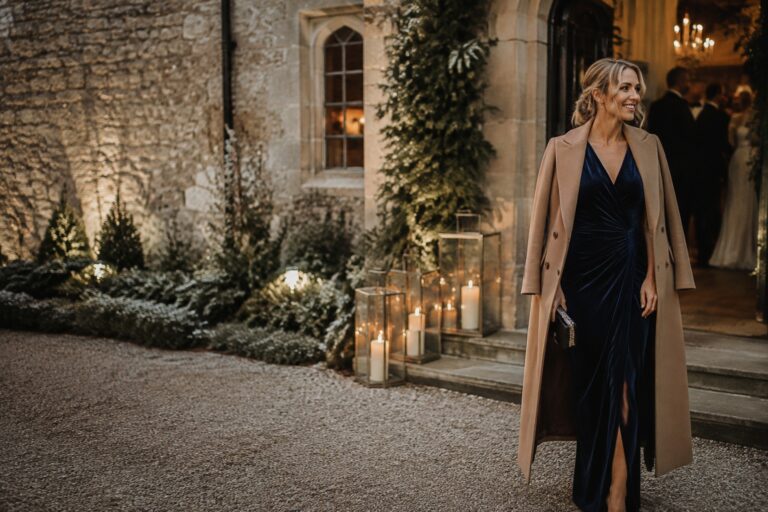
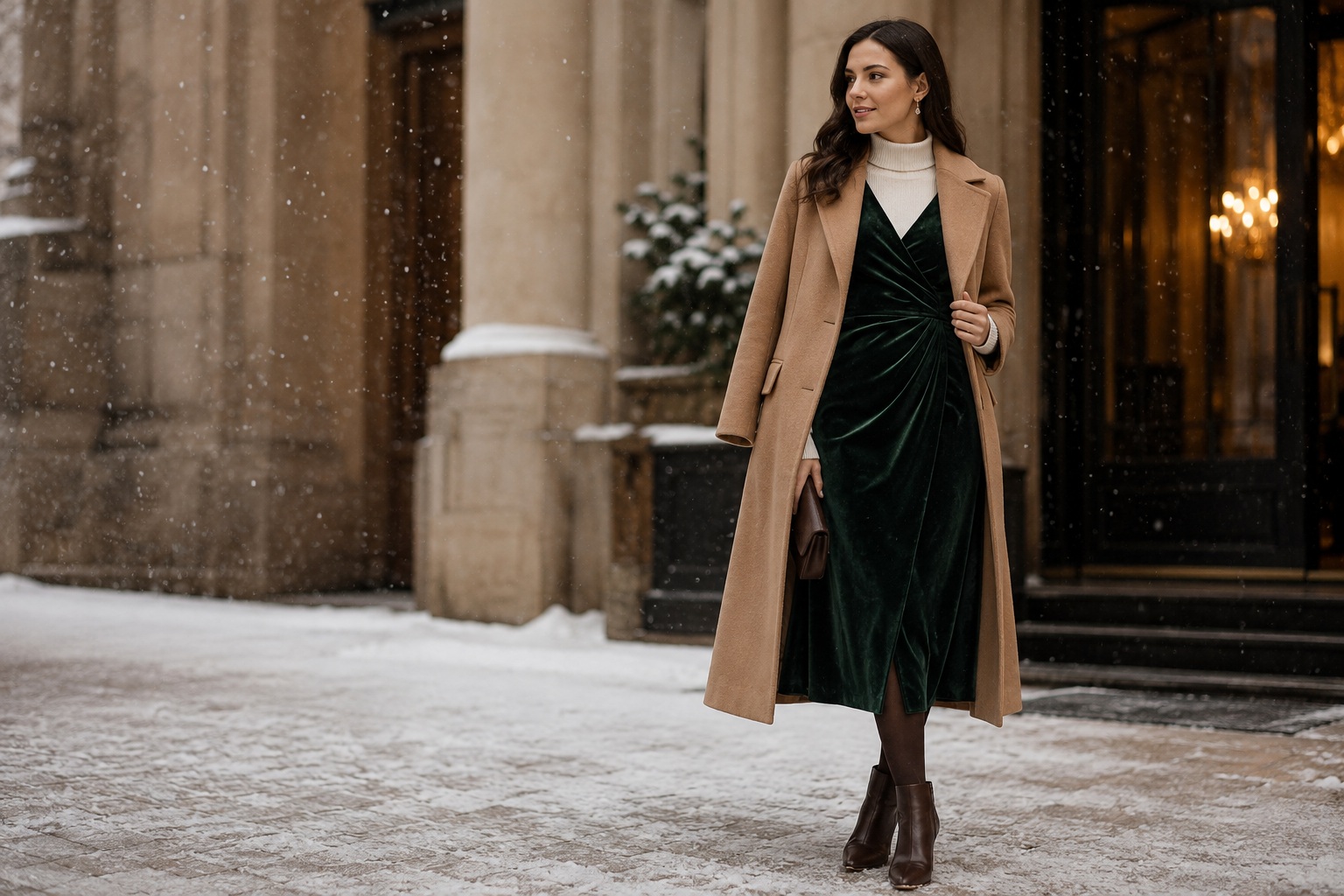
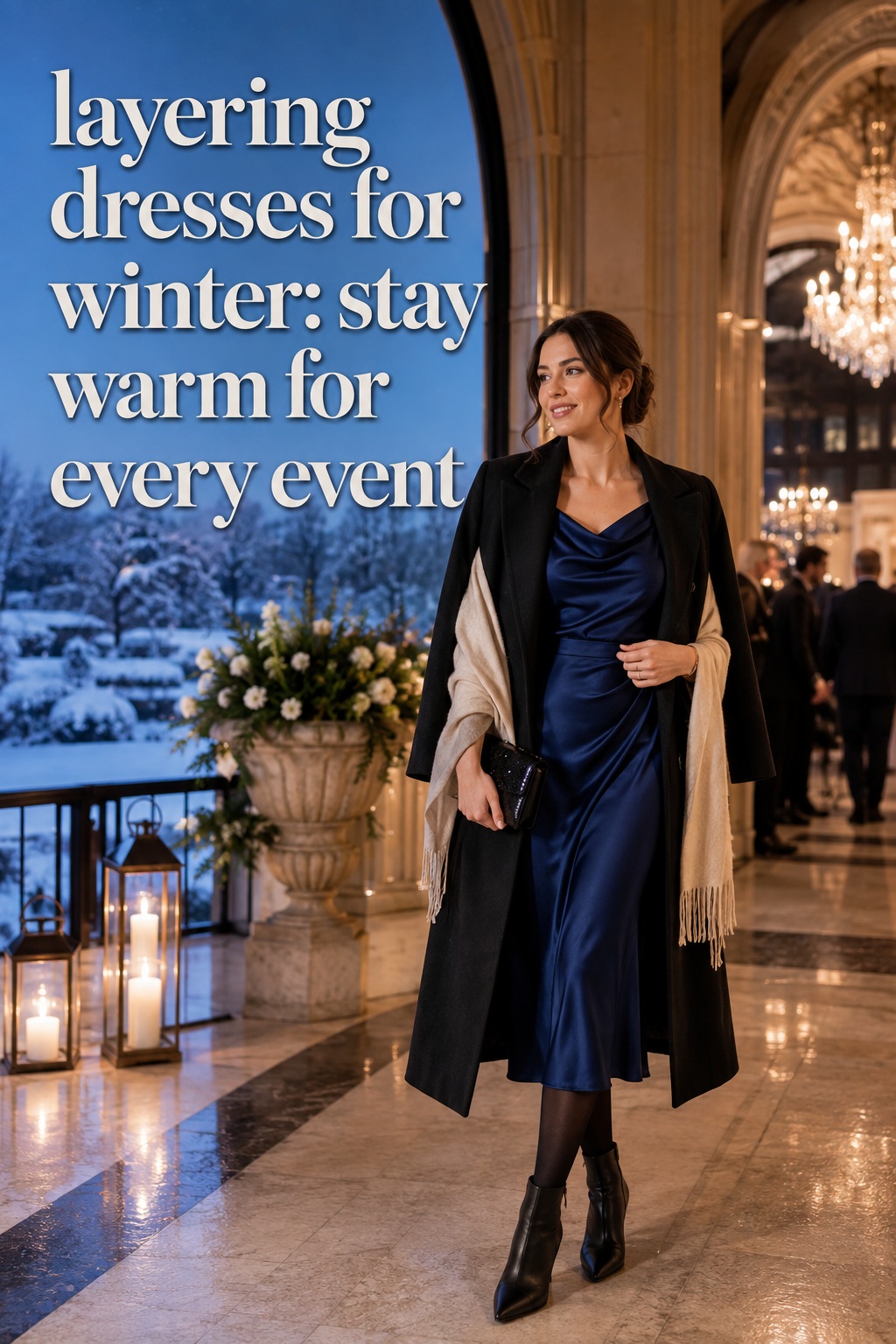
For a winter wedding, start with velvet, satin, crepe, brocade, or a substantial knit in a jewel tone or refined neutral. Add sheer or opaque hosiery according to the dress code, then use a tailored coat, wrap, cape, or cropped jacket that looks intentional in arrival photos. A cape or matching stole can solve the layering question without hiding the dress all evening.
Choose shoes based on the distance you will actually walk outside. A low block heel, polished boot, or dressy closed-toe shoe can be more useful than a delicate sandal. Keep a practical pair for transportation if the ceremony and reception are separated. The warm layer should complement the dress, not resemble a last-minute coat borrowed from another outfit.
Casual evening formula: lighter dress, sweater, and tall boots
Extend a summer or transitional dress into winter by adding a fine turtleneck underneath or a cropped sweater over it, then use dark tights and tall boots to ground the look. This is a good place for contrast: a floral dress with a charcoal knit, a pale dress with chocolate boots, or a printed dress with a burgundy cardigan. Keep the coat in the same visual family as the boots to make the layers feel connected.
Shop in the right order and fix common problems
When a winter dress wardrobe feels difficult, the solution is often not another statement dress. Buy the missing support piece first. The right tights, boot, base layer, or coat can create more outfits than one new seasonal purchase.
Prioritize the pieces that multiply outfits
- First, buy two reliable hosiery options: one dark opaque pair and one warmer pair for severe weather.
- Next, add a smooth fitted base layer in a neutral that works under multiple necklines.
- Then choose one walkable boot and one dressier boot or shoe that share a color family.
- After that, invest in a coat with enough room for the layers you actually wear.
- Only then add a special cardigan, vest, belt, or event layer that solves a specific gap.
Before buying, make a quick outfit grid. Write the names of your three dresses across the top and the proposed layers down the side. If a piece works with only one dress, ask whether it is a deliberate occasion purchase. If a coat works with all three, it deserves more of the budget because you will see it often and rely on it in real weather.
Fix bunching, bulk, and static
Bunching usually happens when two fabrics have equal friction or when the underlayer is too large. Smooth the base layer before putting on the dress, choose a shorter layer under a narrow skirt, and avoid placing a very thick sweater under a fitted coat. If a dress rides up over tights, test an anti-static solution suitable for the fabric or add a thin slip designed to reduce friction.
Bulk is often a proportion issue, not a number-of-layers issue. Replace one thick layer with two thin ones, keep only one oversized piece in the outfit, and create a visible waist or long vertical line. If the coat is roomy but the dress is loose, add a structured boot, bag, or shoulder line to restore shape.
Keep the outfit polished after the coat comes off
Winter outfits often fail indoors because the coat is doing all the work. Before leaving, remove the coat and check the dress, base layer, mid-layer, tights, and shoes together. A cardigan should not pull across the bust. A sweater should not hide every useful detail of the dress. A turtleneck should look like a planned neckline, not an emergency garment.
Take a quick photo from the front and side. Look for the hem-to-boot gap, the coat line, and the place where the eye lands first. If everything is the same dark color, add contrast through texture or one lighter accessory. If every piece is textured, remove one busy element. This small review is more reliable than judging an outfit only in a mirror under bright bathroom lighting.
Make the capsule work across changing winter temperatures
Winter is not one temperature. A mild afternoon, a freezing commute, a heated office, and a wet evening may all happen on the same day. The best capsule lets you add or remove warmth without losing the outfit’s shape. Think in three settings: mild, cold, and severe.
For mild winter days
Use a dress with a fine long-sleeve base or cardigan, regular tights, ankle boots, and a lighter coat. Let the dress show more of its neckline and sleeve. A scarf can remain an accessory rather than a major layer. This is the right moment for lighter cotton, viscose, denim, or satin dresses that would feel too cool without support but do not require full thermal dressing.
For cold winter days
Add a thermal or merino base layer, warmer tights, a knit vest or cardigan, and a coat with enough room through the shoulders. Choose boots with a closed upper and a sole that separates your feet from cold pavement. Gloves, a hat, and a practical scarf matter because exposed extremities can make an otherwise warm outfit feel unfinished.
For severe weather and long outdoor periods
Prioritize insulation and weather protection over a delicate silhouette. Add a close thermal layer, fleece-lined hosiery or leggings under a long dress, warm socks, and a coat that blocks wind and moisture. Keep the most fragile shoes and hems for the destination. If you will be outside for an extended time, plan a practical boot and carry a change of shoes if the occasion requires something dressier.
Do not let a social invitation pressure you into ignoring the route between locations. A refined wool coat, polished weatherproof boot, and elegant scarf can still look special. The most successful winter dress outfit respects the full day, not only the few minutes spent indoors taking photos.
FAQ
Can you wear a dress in winter without feeling cold?
Yes. Use a thin thermal or merino base layer, opaque or fleece-lined tights, closed boots, and a coat that blocks wind. The dress fabric also matters: knit, ponte, wool blend, corduroy, velvet, and substantial jersey generally feel warmer than very thin cotton or satin. Add a scarf, gloves, and hat for time spent outdoors.
What do you wear under a dress in winter?
Good options include a fitted long-sleeve top, fine turtleneck, merino shirt, silk blend, or lightweight thermal layer. Choose a smooth, close-fitting fabric so it does not bunch under the dress. For your legs, use opaque tights, thermal leggings, or fleece-lined tights depending on the temperature and hem length.
What kind of sweater looks best over a dress?
A fine cropped sweater is usually easiest because it defines the waist and preserves the dress shape. A relaxed sweater can work over a fluid dress when you add a narrow belt and keep the volume controlled. Avoid putting a thick sweater over a full-sleeve dress or combining several oversized pieces unless the intentionally relaxed silhouette is the point.
Do boots look good with winter dresses?
Boots are one of the most useful partners for winter dresses. Ankle boots work with midi and maxi lengths, while knee-high boots add warmth and a strong visual line to mini and midi dresses. Match the boot weight to the dress. A delicate satin dress can take a sleek boot, while a chunky knit dress usually looks better with a substantial sole and simpler accessories.
How do you layer a sleeveless dress for winter?
Wear a fitted long-sleeve top, mock neck, or fine turtleneck underneath, then add tights, boots, and a coat. If the armhole is narrow, choose the thinnest base layer possible. You can also wear a cropped cardigan or blazer over the dress, but make sure the underlayer is smooth enough to keep the waist and shoulders neat.
How can I layer a dress for a winter wedding?
Choose a dress in velvet, crepe, brocade, satin, or another substantial fabric, then add hosiery and a polished outer layer such as a tailored coat, wrap, cape, or elegant cropped jacket. Consider the arrival and travel route, not only the reception. A dressy closed-toe shoe or refined boot can be more practical than a sandal, and the warm layer should look intentional in photos.