Winter Bridesmaid Dresses: A Practical Style Checklist
Choosing winter bridesmaid dresses becomes much easier when you treat the decision as a set of practical choices instead of one big style question. The dresses need to support the wedding palette, suit the formality of the day, photograph well in low winter light, and keep your bridal party comfortable during every transition. That may include a heated getting-ready room, a cold walk to the ceremony, outdoor portraits, dinner, and a crowded dance floor.
This checklist gives you a clear order for making those decisions. Start with the venue and weather, then choose the palette, fabric, sleeve strategy, silhouette, accessories, and ordering timeline. You can use one dress for everyone, a coordinated collection of cuts, or a mix-and-match plan within one color family. The goal is a lineup that feels intentional while still allowing each bridesmaid to feel like herself.
Preparation: Define the winter conditions before you shop
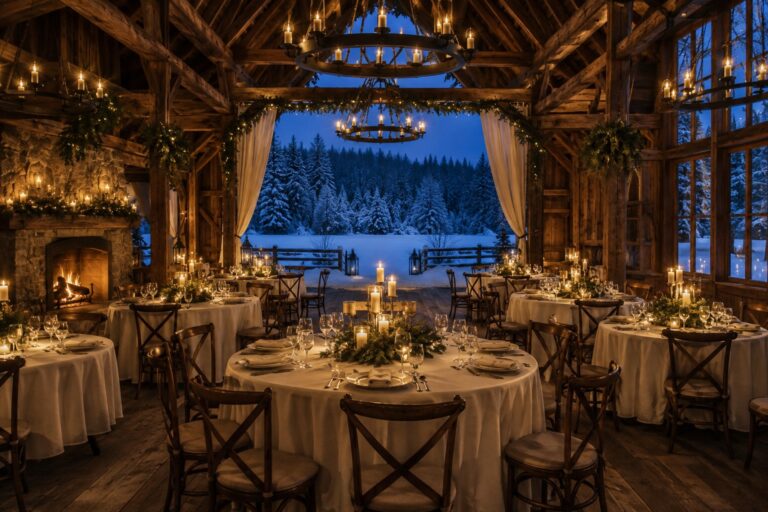
The most useful winter bridesmaid dresses are chosen for the actual day, not for a generic winter mood board. Begin by writing down where the attendants will spend time and how long they may be outside. A ballroom wedding with a heated coat check allows more flexibility than a mountain ceremony with a long path between the hotel and the venue. A city wedding may involve cold sidewalks, while a country venue may require shoes and hems that can handle gravel or damp ground.
Separate the indoor temperature from the outdoor temperature. Many winter celebrations are warm inside, so a heavy velvet gown can feel luxurious during portraits but uncomfortable after several hours of dancing. The opposite is also true: a thin spaghetti-strap dress may be fine for dinner and difficult during a receiving line beside an open door. Decide whether attendants will wear wraps, coats, shawls, or removable layers, and make that choice part of the outfit plan rather than an emergency addition.
Turn wedding inspiration into a plan you can actually follow.
Zarellea brings your guest list, budget, vendors, and day-of details into one shared space — so no beautiful idea gets lost in the shuffle.
Confirm the dress code and the wedding schedule
A winter wedding can be black tie, formal, cocktail, semi-formal, or relaxed. Season alone does not determine the dress code. Read the invitation language, ask the venue about the room, and look at the bride’s gown before deciding whether the bridesmaid dresses should be floor length, midi, or somewhere between. Full-length gowns are a natural formal choice, but a polished midi can be right for a daytime celebration or an informal dinner.
Map the schedule in plain language. Note the time of the first outdoor photo, the length of the ceremony, whether the bridal party will travel between locations, and when the reception begins. If the group will be outside at dusk, the dresses need to work with wraps and footwear in that specific light. If there is only a five-minute outdoor portrait session, you may not need to require long sleeves for everyone. A short exposure can be handled with a beautiful layer that comes off indoors.
Collect the non-negotiables early
Ask each bridesmaid about the factors that affect a successful dress before you show her a final choice. Record preferred coverage, bra requirements, mobility concerns, sizing needs, pregnancy plans if relevant, budget limits, and whether she expects to reuse the dress. Keep the conversation focused and private. The purpose is not to make every decision by committee. It is to identify problems early enough to solve them without last-minute alterations or embarrassment.
- Confirm the maximum personal budget, including alterations and shipping.
- Ask whether anyone needs petite, tall, plus, maternity, or extended cup options.
- Check whether the neckline works with the undergarments each person needs.
- Identify anyone who will be outside for portraits or a long transportation transfer.
- Decide whether matching shoes, jewelry, wraps, or bags are required.
- Set a date for ordering, a fitting window, and a final alteration deadline.
Use these answers to set boundaries, not to eliminate personality. A bridesmaid may prefer sleeves while another feels more comfortable in a sleeveless cut. A coordinated lineup can accommodate both when the palette, fabric weight, and level of formality remain consistent. The more clearly you define the shared rules, the more freedom you can give within them.
Decision checklist: Build the look from color, fabric, and shape
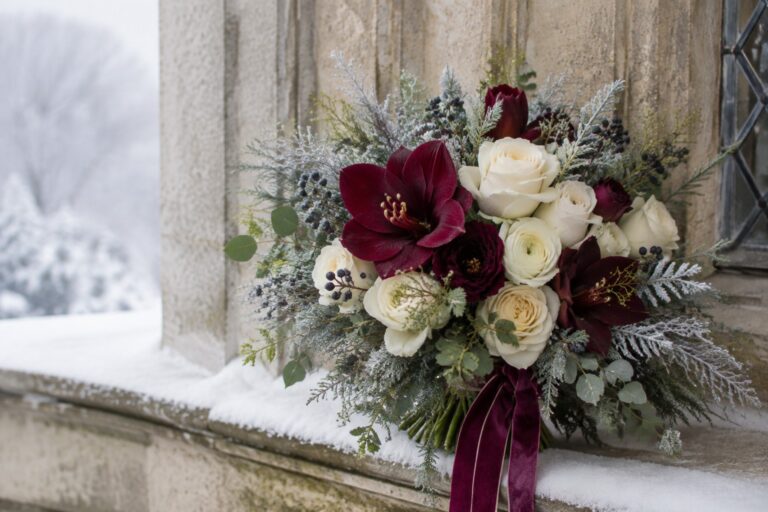
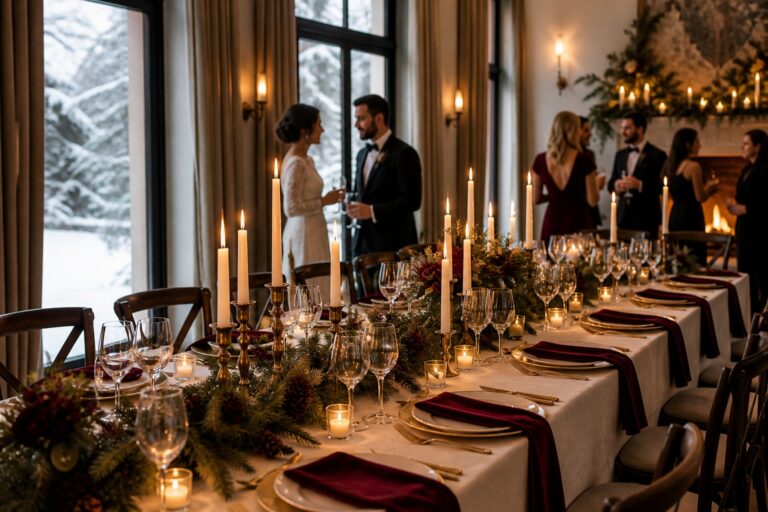
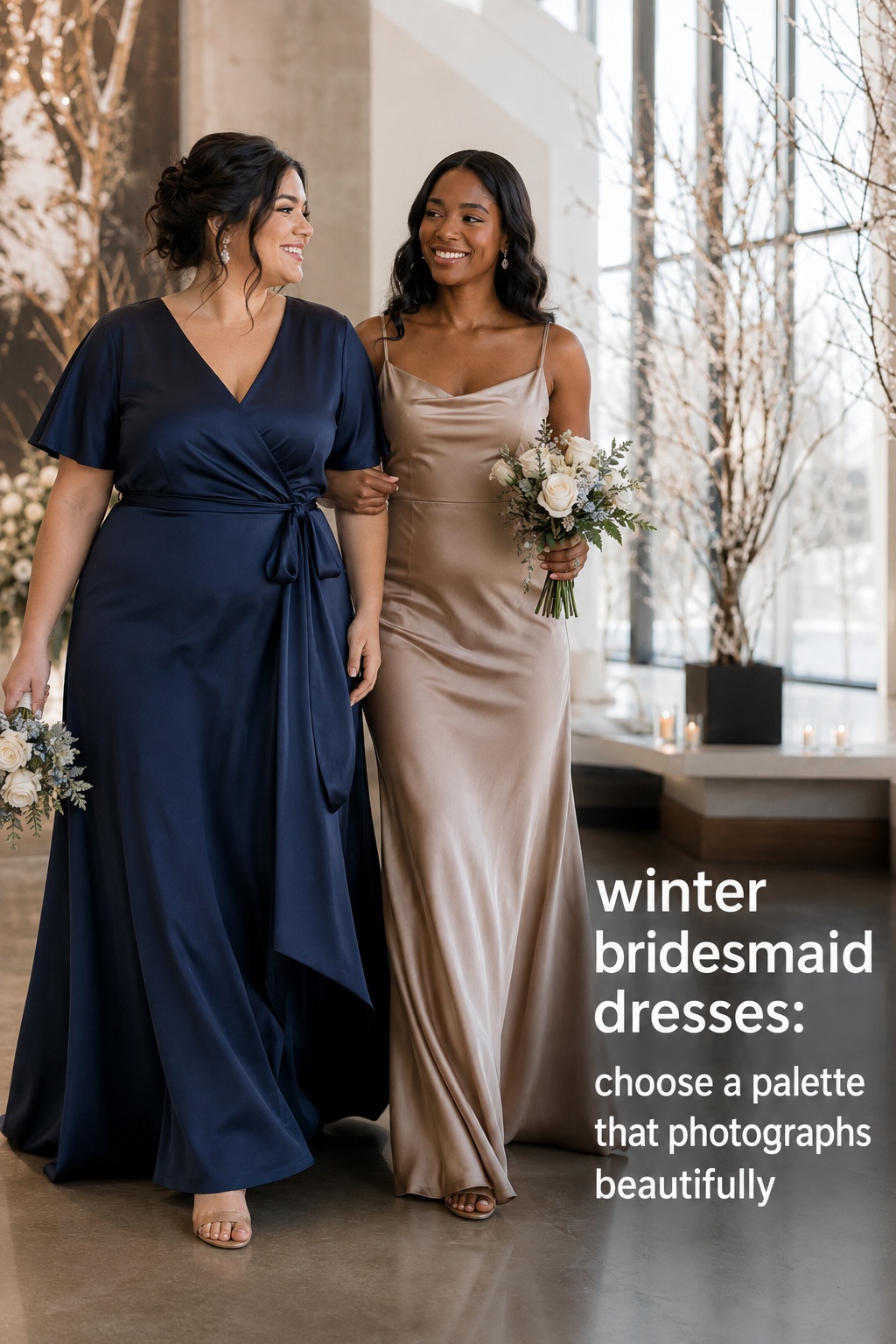
Once the conditions are clear, choose the visual foundation. A winter palette does not have to be dark, saturated, or covered in sparkle. Deep colors such as emerald, burgundy, navy, plum, and espresso create a traditional cold-weather feeling. Black can look sharp and modern. Soft blue, dusty sage, mauve, champagne, oyster, and warm taupe can feel wintery when paired with the right texture and lighting. The best color is the one that connects the venue, flowers, stationery, and the bride’s look without making the attendants disappear.
Choose one palette rule before choosing individual shades
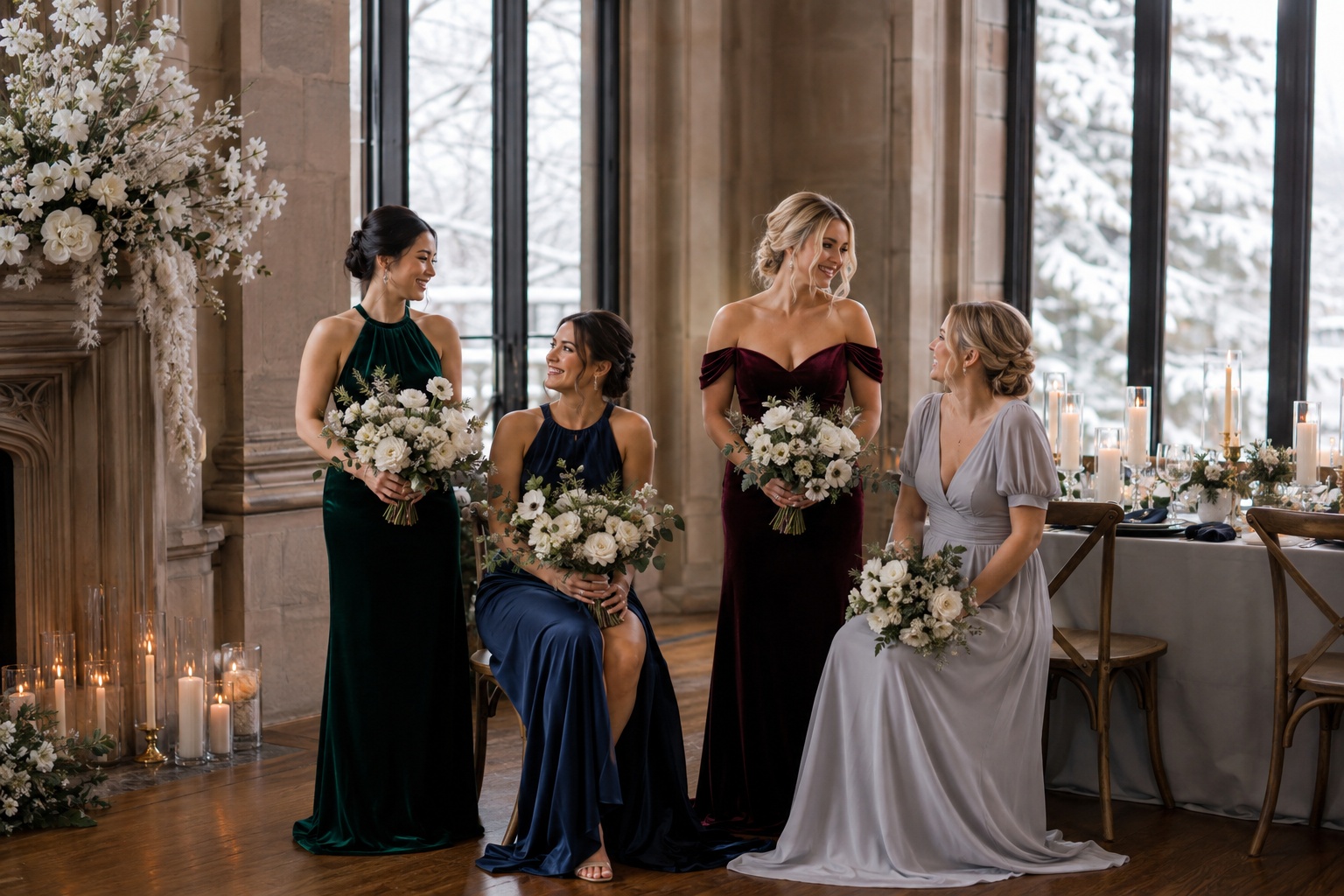
For a unified lineup, start with one of four simple rules. The first is one color in different cuts, which gives you a clean visual line while allowing personal fit. The second is one color family, such as wine, merlot, berry, and muted rose. The third is a shared fabric with different colors, useful when you want texture to connect the group. The fourth is a controlled neutral palette, such as black, charcoal, oyster, and champagne, with flowers providing the stronger color.
Lay real swatches beside the bride’s dress, the floral plan, and the venue materials. Online color names are not reliable enough by themselves. A shade called sage may look gray, yellow, or blue depending on the fabric. Satin reflects light differently from chiffon, and velvet can make a color appear deeper. View the swatches in daylight and in the venue’s likely indoor light before approving a combination.
Match the fabric to warmth, movement, and formality
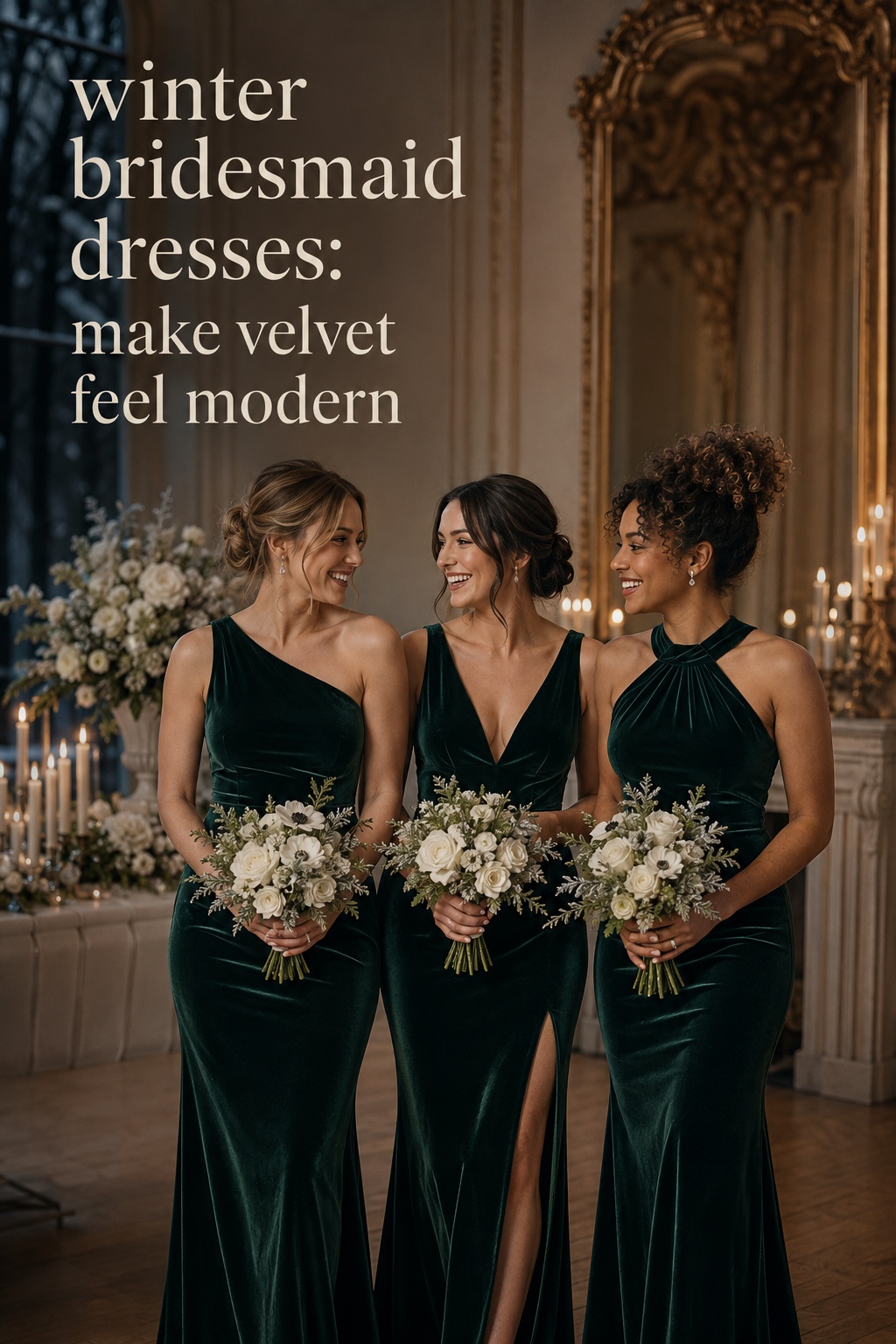
Velvet is an obvious winter choice because its pile adds depth, softness, and visual warmth. It works especially well for formal evening weddings and rich palettes. Test it for weight and stretch before ordering, since some velvet dresses feel restrictive through the shoulders or warm in heated rooms. Satin creates shine and a fluid silhouette, but it can show wrinkles and cling. Look for a lining and ask how it behaves when sitting, walking, and dancing.
Chiffon and georgette are lighter choices that can still feel seasonal in a deeper color or with a long sleeve, cape, gathered waist, or textured bodice. Tulle adds movement and softness, while crepe gives a more streamlined, modern surface. Sequins can be beautiful for an evening celebration, but use them intentionally. One sparkly dress among matte dresses can look accidental unless the contrast is part of the plan. A subtle shimmer across the group is often easier to coordinate.
Use sleeves as a comfort option, not a winter uniform
Long sleeves can offer coverage and a polished seasonal line, but they are not automatically warmer or more comfortable. A fitted sleeve may limit movement, while a sheer sleeve can provide the visual effect without adding much insulation. Flutter sleeves, cape sleeves, removable sleeves, and a matching wrap can create different levels of coverage within the same overall look. If the venue is well heated, a sleeveless or short-sleeve dress with a beautiful layer may be the more considerate choice.
Check the sleeve construction at a fitting. Ask each bridesmaid to lift her arms, hug someone, hold a bouquet, sit, and dance. Look for pulling across the upper back, tight cuffs, slipping shoulder seams, and fabric that catches on jewelry. A sleeve that looks elegant while standing can become frustrating during photos and dinner. Build in enough time for a tailor to adjust the fit without changing the intended line.
Select lengths and silhouettes for movement
Floor-length dresses are dependable for formal winter weddings, but they need the right hem for each person’s shoes. A narrow column or fitted mermaid style can look sophisticated, yet it should allow a normal stride and easy sitting. A-line shapes are forgiving for movement and create a balanced group photograph. Wrap dresses can adjust to different bodies and offer a useful waist definition, while empire lines may feel comfortable when the day involves travel or a long ceremony.
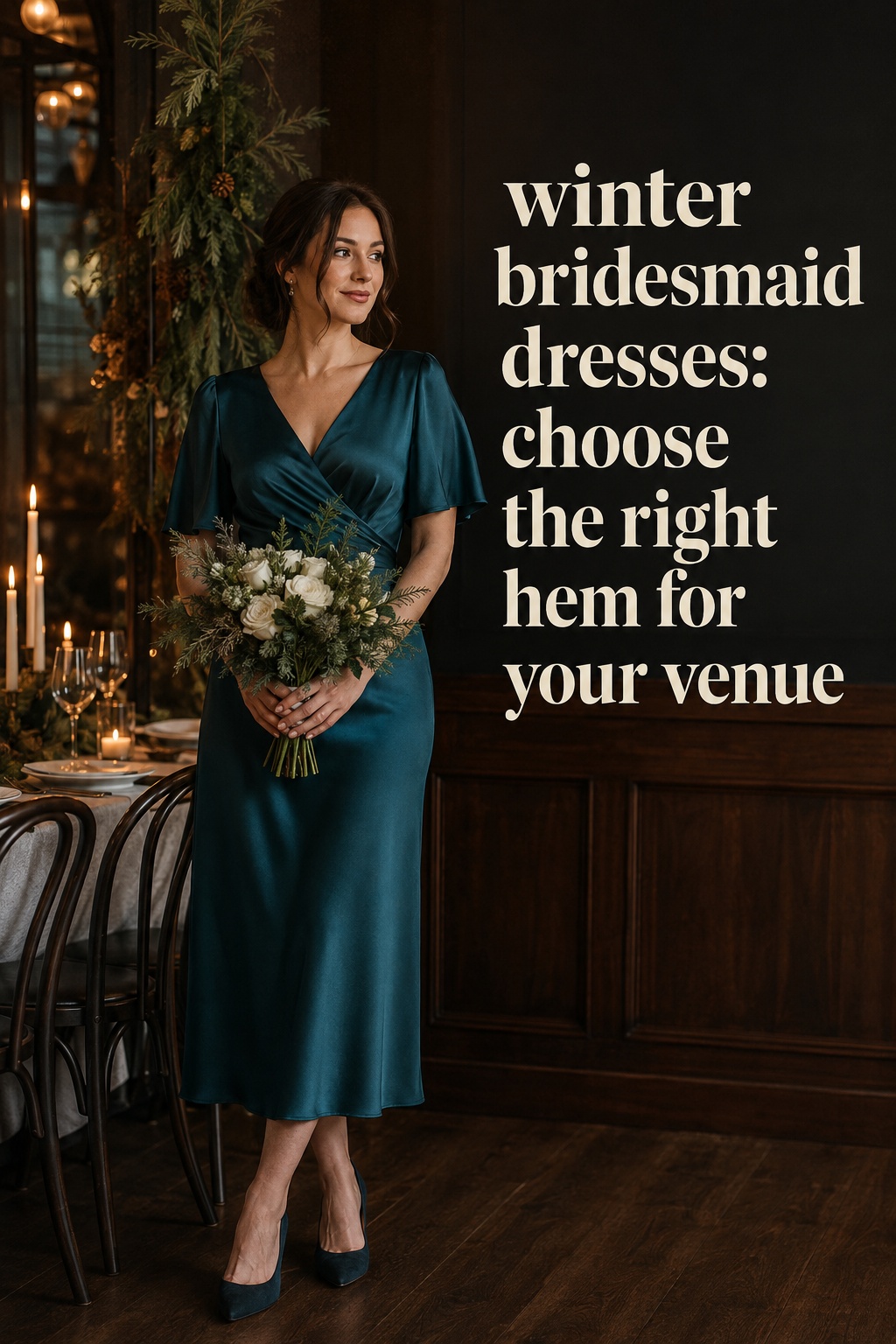
Midi and tea-length dresses can be excellent for daytime weddings, restaurant receptions, and attendants who want a rewearable option. They also make boots or embellished shoes part of the styling. If the wedding has snow, wet pavement, or uneven paths, do not make the hem so long that everyone must lift the skirt. Decide whether the group will wear heels, flats, boots, or a mix, then alter the dresses for those real shoes.
Decision checklist: Use a formula for a cohesive bridal party
When a mood board is full of beautiful individual dresses, a formula keeps the final selection from becoming random. Choose the shared elements first, then allow one or two variables. For example, you might require floor length and a wine palette while allowing each bridesmaid to choose her neckline. Or you might choose one velvet shade for a formal ceremony and let attendants vary the sleeve and back details. The formula should be easy to explain in one sentence.
Formula one: Jewel-tone velvet for formal evenings
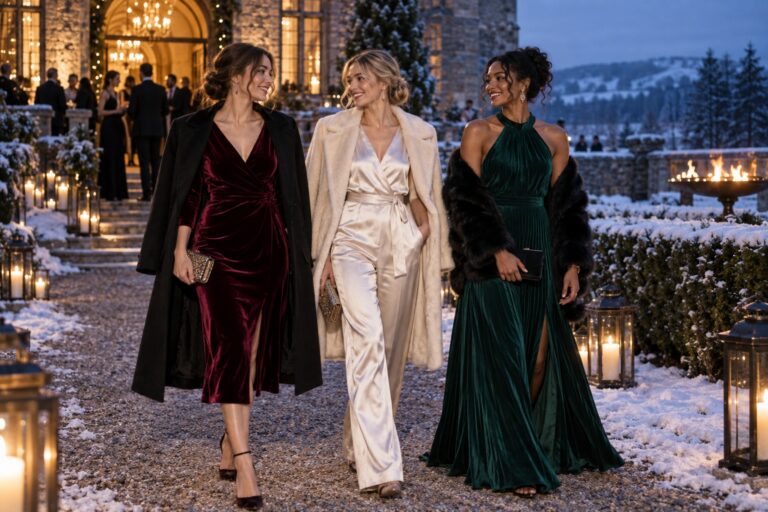
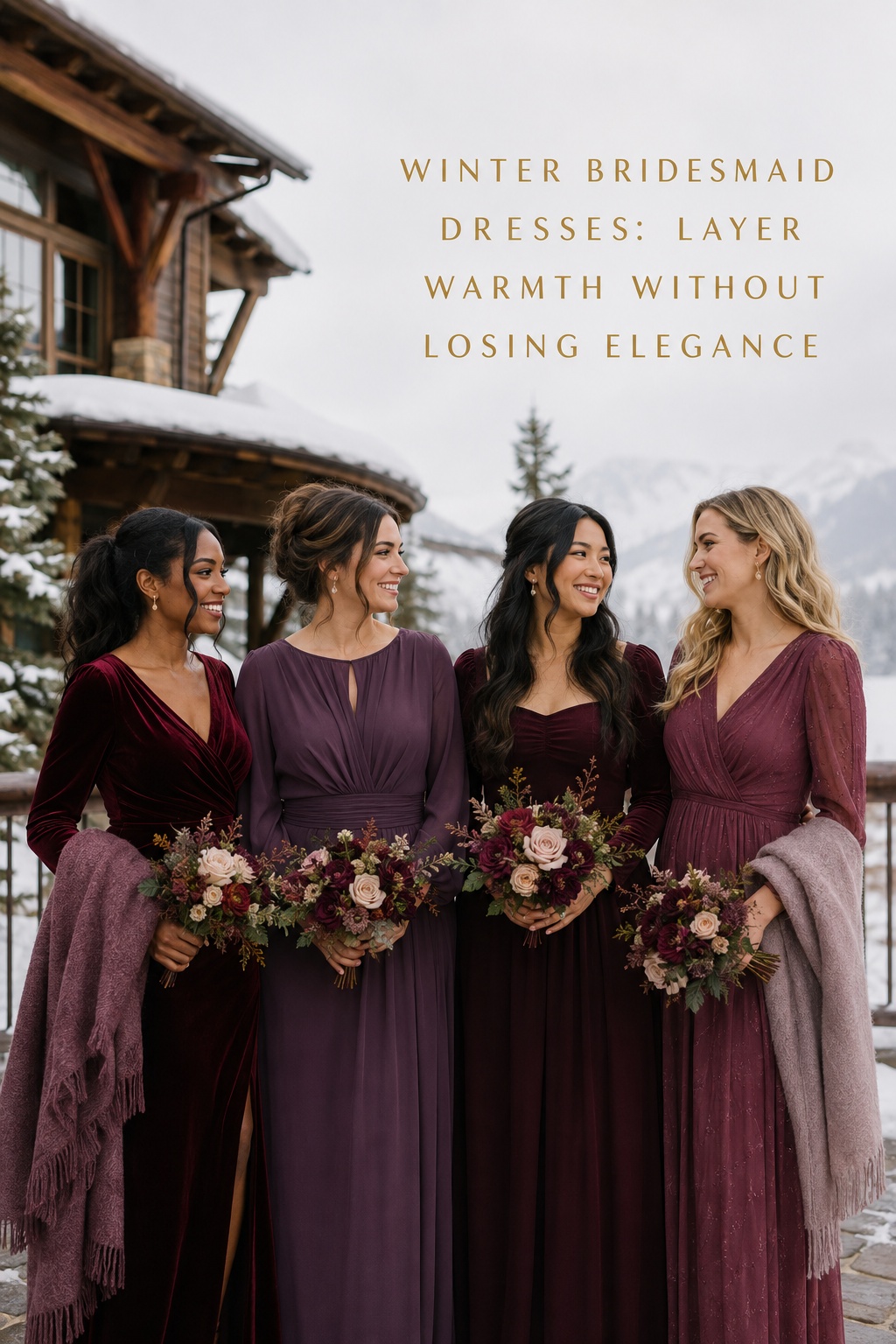
Use emerald, merlot, navy, plum, or deep teal in velvet when the wedding is formal and the reception takes place in the evening. Keep the accessories quiet so the fabric remains the focus. Gold jewelry warms green and burgundy, while silver or crystal can sharpen navy and plum. If the dresses have different necklines, repeat the same hem length and a similar degree of coverage. Add a compact wrap for outdoor photos, but test whether its texture competes with the velvet.
Formula two: Satin with controlled sparkle
Choose satin when you want a fluid, glamorous lineup that moves under reception lighting. A midnight blue, black, copper, champagne, or muted berry palette can look sophisticated without becoming overly themed. Add sparkle through earrings, shoes, a beaded belt, or one statement neckline rather than putting sequins on every surface. Confirm that the satin photographs well under flash and that the lining prevents static or visible cling.
Formula three: Soft winter neutrals for a modern room
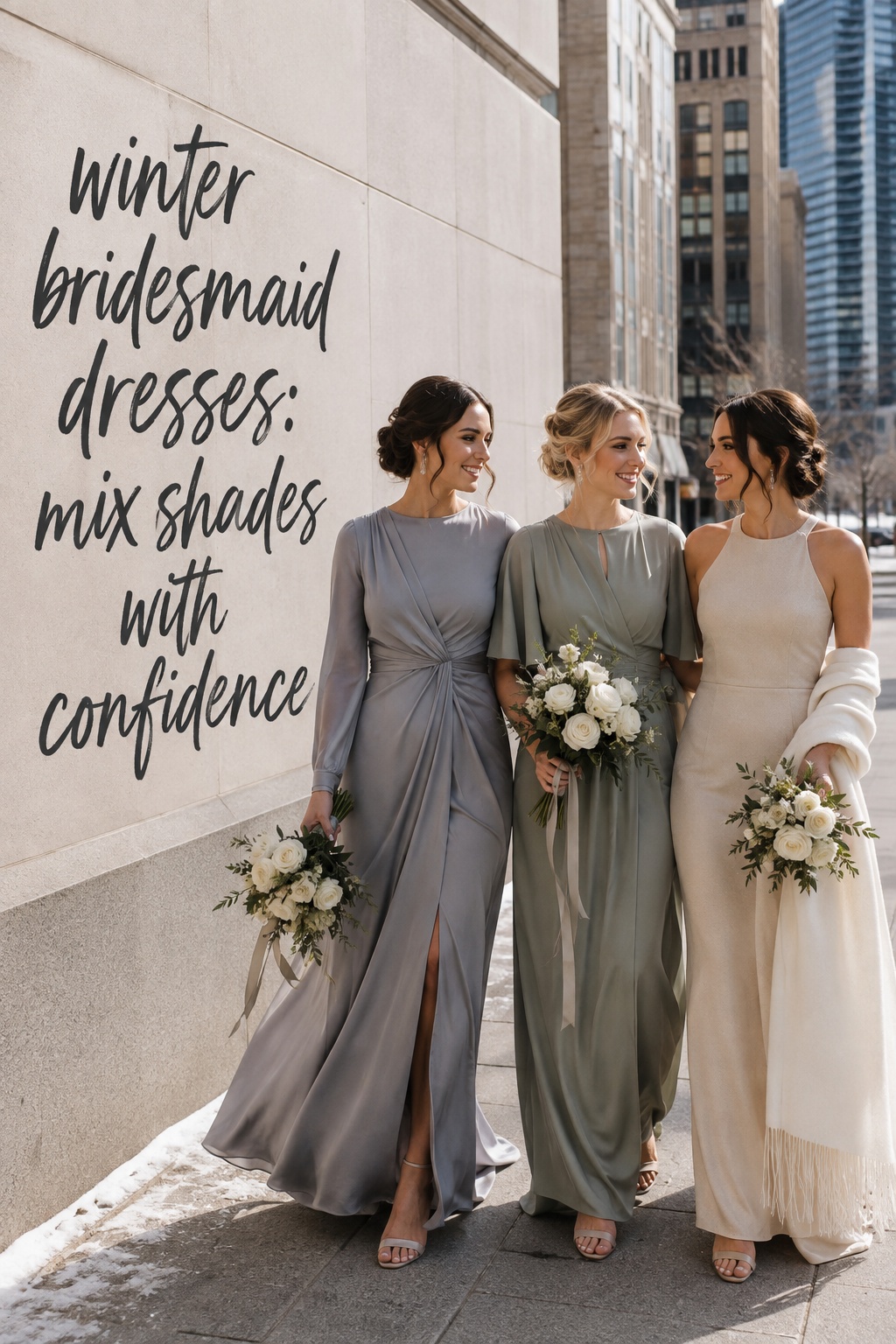
Oyster, taupe, smoky blue, soft gray, dusty sage, and muted mauve can feel quietly wintery in a modern venue. This approach works well when the bride’s gown, architecture, or floral design is the visual anchor. Add interest through different textures, a subtle tonal print, a draped neckline, or a sculptural shoulder. Keep the neutrals within a similar saturation range so one dress does not look bright and summery beside the rest.
Formula four: Mix and match within one color family
A mix-and-match plan is successful when the rules are more specific than “choose something in blue.” Give attendants a defined palette, approved fabric families, a length range, and a date by which you must see the selected styles together. Ask for links or screenshots before anyone orders. If the colors vary, keep the fabric or silhouette similar. If the silhouettes vary, keep the color and finish consistent. This prevents a group of individually attractive dresses from looking disconnected.
Formula five: Lighter indoor dresses with intentional layers
For a heated indoor wedding with only brief outdoor photos, choose a lighter chiffon, crepe, or satin dress and add a coordinated layer. A faux-fur wrap suits a glamorous portrait, a wool shawl feels relaxed, and a tailored coat can look polished for a city ceremony. Use the same layer for everyone only if it is comfortable and easy to remove. A removable option gives attendants more control once they are indoors.
Final review: Order, fit, accessories, and day-of comfort
Place the order only after checking the complete timeline. Dresses that are made to order, shipped across several states, or altered after delivery require more time than a simple online purchase. Save the product page, fabric name, color code, size chart, return policy, and order confirmation in one shared folder. Assign one person to track deliveries and one person to answer fitting questions so information does not become scattered across group messages.
- Order fabric swatches before approving a palette.
- Confirm each person’s measurements against the current size chart.
- Schedule the first fitting soon after delivery.
- Bring the actual shoes and undergarments to the fitting.
- Check the hem, bust, waist, straps, sleeves, zipper, and bustle if needed.
- Schedule the final fitting close enough to the wedding for accuracy but early enough for repairs.
- Pack fashion tape, safety pins, a small sewing kit, stain remover, blister protection, and hand warmers if the group will be outside.
Accessories should solve a real styling or comfort need. A wrap protects against a short outdoor exposure, but it should not hide the neckline in every portrait. Closed-toe shoes can make sense for snow or wet pavement, while elegant flats may be more useful than thin heels on uneven ground. If the group will wear boots, decide whether they should match, share a color, or simply follow a formality rule. Photograph the full outfit before the wedding so you can catch a clash in scale or color.
Remember that winter comfort is not only about cold. Heavy fabric, tight sleeves, scratchy sequins, slippery satin, and shoes that cannot handle standing can all make a long day harder. Invite the bridesmaids to tell you about a problem while there is still time to fix it. A comfortable attendant stands naturally, moves confidently, and looks better in photographs than someone who is constantly managing her clothing.
The final lineup should look connected when the group stands together, but it should not erase the people wearing it. Use the season as a design direction through color, texture, length, or layering. Then make the practical decisions visible in the details: a hem that works with the venue, a neckline that supports movement, a fabric that suits the room, and a schedule that leaves time for alterations. That is how winter bridesmaid dresses become part of a beautiful day rather than another source of wedding stress.
FAQ
What colors work best for winter bridesmaid dresses?
Emerald, burgundy, navy, plum, deep teal, black, espresso, and charcoal are reliable winter choices. Soft blue, sage, mauve, oyster, champagne, and taupe can also work when their fabric and styling support the season. Choose a palette that complements the venue, flowers, and bride’s dress rather than choosing a shade only because it is labeled winter.
Are velvet bridesmaid dresses too warm for an indoor winter wedding?
They can be warm in a heavily heated room, especially when the velvet is thick or fully lined. Ask attendants to try the dress in a warm indoor setting and check its stretch and weight. If the venue runs warm, use velvet for part of the lineup, choose a lighter velvet, or select satin or crepe with a winter color.
Do winter bridesmaid dresses need long sleeves?
No. Long sleeves are one useful option, not a requirement. Sleeveless dresses with wraps, capes, shawls, or coats can be more comfortable for a heated venue. Choose sleeves when they support the dress code and the real outdoor exposure, and check that they allow each bridesmaid to move, sit, hold a bouquet, and dance.
How can I mix and match winter bridesmaid dresses without losing cohesion?
Set clear shared rules for color family, length, fabric weight, and formality. Allow variation in neckline or sleeve only after those rules are fixed. Ask to see all choices together before ordering and compare real swatches rather than relying on online color names. Repeating one element, such as velvet texture or satin finish, helps the group feel intentional.
What should bridesmaids wear for outdoor winter portraits?
Plan a coordinated wrap, shawl, cape, coat, or faux-fur layer that can be removed for some photos. Closed-toe shoes, discreet hand warmers, and a short portrait schedule also help. Tell the photographer and coordinator how long the group will be outside, then choose layers that protect comfort without hiding the most important dress details.
Which fabrics are practical for winter bridesmaid dresses?
Velvet, satin, crepe, chiffon, georgette, and tulle can all work when matched to the venue and level of formality. Velvet adds depth and warmth, satin adds shine, crepe looks streamlined, and chiffon or georgette keep movement light. Check lining, stretch, wrinkles, static, and comfort instead of choosing by fabric name alone.
When should I order winter bridesmaid dresses?
Order according to the supplier’s current production and shipping timeline, then add time for delivery, fitting, alterations, and unexpected delays. Start earlier for made-to-order styles, a large group, destination weddings, or a wedding near the holidays. Set a final fitting date before the last few weeks so there is still time to correct a hem or closure.
What accessories make winter bridesmaid dresses more comfortable?
Useful choices include wraps, shawls, capes, tailored coats, closed-toe shoes, comfortable insoles, and discreet hand warmers for short outdoor periods. Choose accessories that fit the formality and do not obscure every neckline or bouquet. Keep an emergency kit with fashion tape, pins, stain remover, blister protection, and a small sewing kit.