Wedding Dress Ideas: Six Looks to Try With a Purpose
Useful wedding dress ideas give you something specific to try. You might want to compare a skirt that holds its shape with one that falls closer to the body, or find out whether you enjoy wearing a removable layer. I would start with a small set of contrasting designs before saving more versions of the same gown. That makes your first appointment a chance to answer questions about what you enjoy wearing.
For bridal gowns, including short dresses and separate pieces, a shortlist with a reason behind each choice will help you explain what you want. Gowns are one option within a much wider range of wedding clothing. You can like several styles and still leave the appointment knowing what to try next.
Why a small dress shortlist works
A saved image contains more than a dress. The lighting, pose, bouquet and setting can all be part of its appeal. Before adding another image to your folder, name the feature you would want if the gown were photographed against a plain wall. You might be drawn to the low waist seam, the space around the legs or the straight line across the shoulders.
Turn wedding inspiration into a plan you can actually follow.
Zarellea brings your guest list, budget, vendors, and day-of details into one shared space — so no beautiful idea gets lost in the shuffle.
Write that observation beside the image. Use ordinary language if you do not know the bridal term: “skirt starts lower on the body” gives a stylist more information than “romantic but different.” The consultant can help you name the feature once you have explained what attracts you to it.
Then give each picture a question. A photograph of a narrow dress might become, “Do I like a skirt that follows my hips when I sit?” A full skirt might become, “How much space do I want around my legs?” Those are useful comparisons even when the dresses in the pictures are outside your budget or unavailable locally.
I recommend choosing one familiar direction and one that changes a major feature. If every saved gown has a strapless bodice and a wide skirt, include a strapped gown with a straighter line. You are checking whether the preference holds up on your body. You do not have to keep trying that alternative once you have a clear answer.
Remove a picture once you have learned from it if it no longer belongs in your shortlist. You can arrive at the salon with a few useful references and still be unsure how to name your bridal style.
Separate shape, surface and support
Look at the outline first
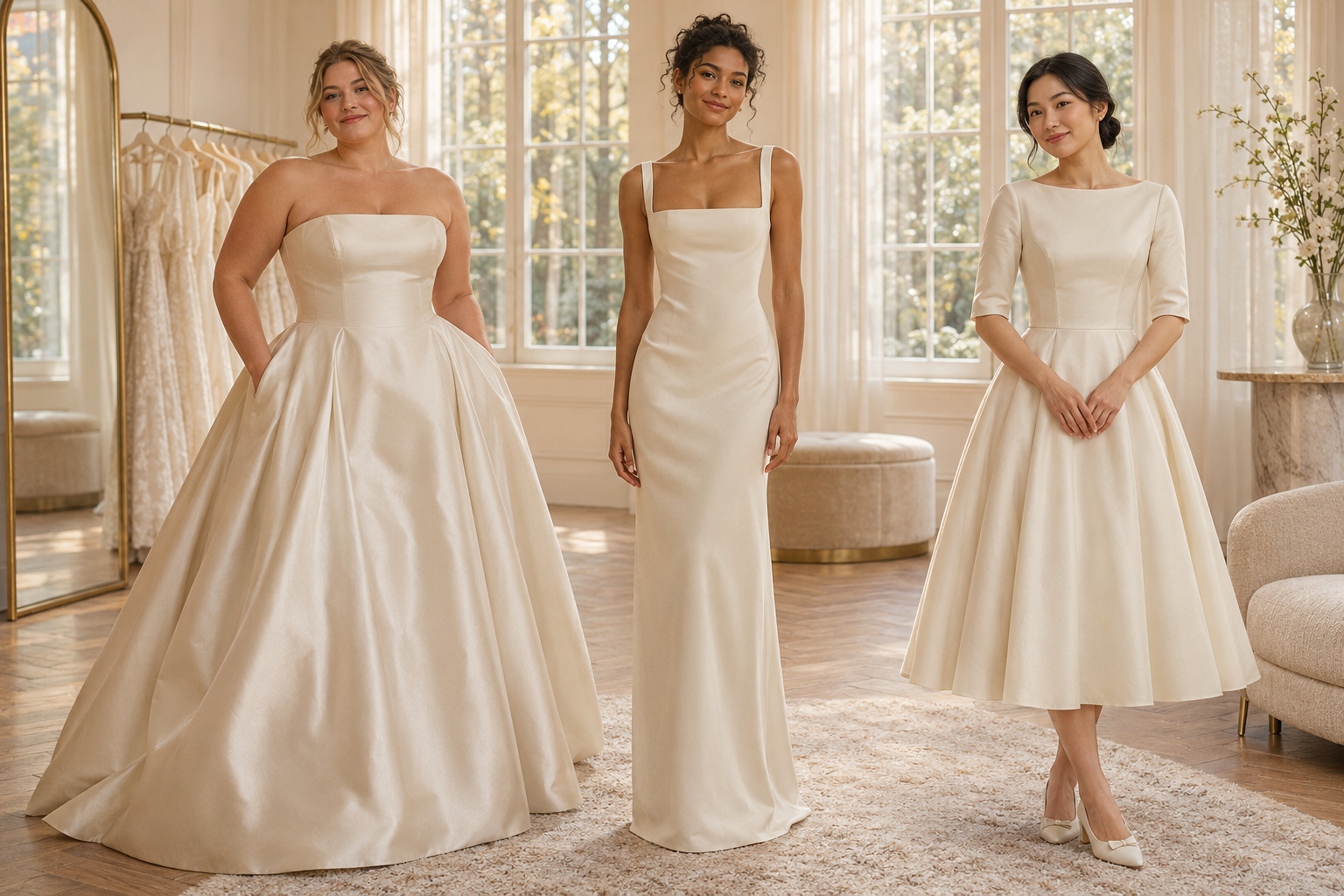
The silhouette is the overall outline of a gown. An A-line widens from the waist toward the hem; a ball gown has a fuller skirt. A sheath follows a relatively narrow line, while fitted-and-flared designs open out farther down the body. Designers use somewhat different labels, so ask to see where the actual skirt begins to widen. The Maggie Sottero dress directory separates silhouette from style and detail filters, which is a useful distinction when browsing.
For your first comparison, imagine each dress without its lace or beading. Would you still want its proportions? If you love a bodice but dislike the skirt, save it as a bodice reference. You can ask about a different design with that feature without assuming the original dress can be rebuilt.
Avoid eliminating a silhouette because a body-shape chart assigns it to someone else. Your preference for a defined waist, a loose skirt or a fitted hip is worth investigating directly. A sample that is too small or heavily clipped also gives incomplete information about the fit of the correct size.
Compare the surface without assuming how it feels
Compare the matte surface of crepe with the shine of satin, then look at how a lace pattern changes a similar outline. Maggie Sottero’s fabric guide describes those visual differences and the structure associated with Mikado. Use fabric names to ask better questions, then inspect the specific gown’s label, lining and layers.
Do not decide comfort from a photograph or a fabric name. Hold the skirt, walk in it and ask what is underneath. A visually airy outer layer may sit over a substantial lining. A smooth-looking gown may have more construction than you expected. Your response to that particular dress matters more than a general description.
With two similar outlines in front of you, notice whether you prefer the uninterrupted surface or the pattern. When every variable changes at once, it becomes harder to identify why one dress feels closer to your taste.
Ask where the support comes from
A neckline tells you little about how secure a gown will feel on you. Ask the consultant to explain the bodice construction and how the sample differs from your intended fit. If you are considering a low back or a sheer panel, ask what undergarment options the design allows before treating the photograph as a finished outfit.
I would settle a support concern before choosing earrings or a veil. If the plan depends on a major alteration, speak with the person who would do it. “We can probably add that” is a prompt for a technical conversation, especially when the proposed change affects the neckline or back.
Six wedding dress ideas to try with a purpose
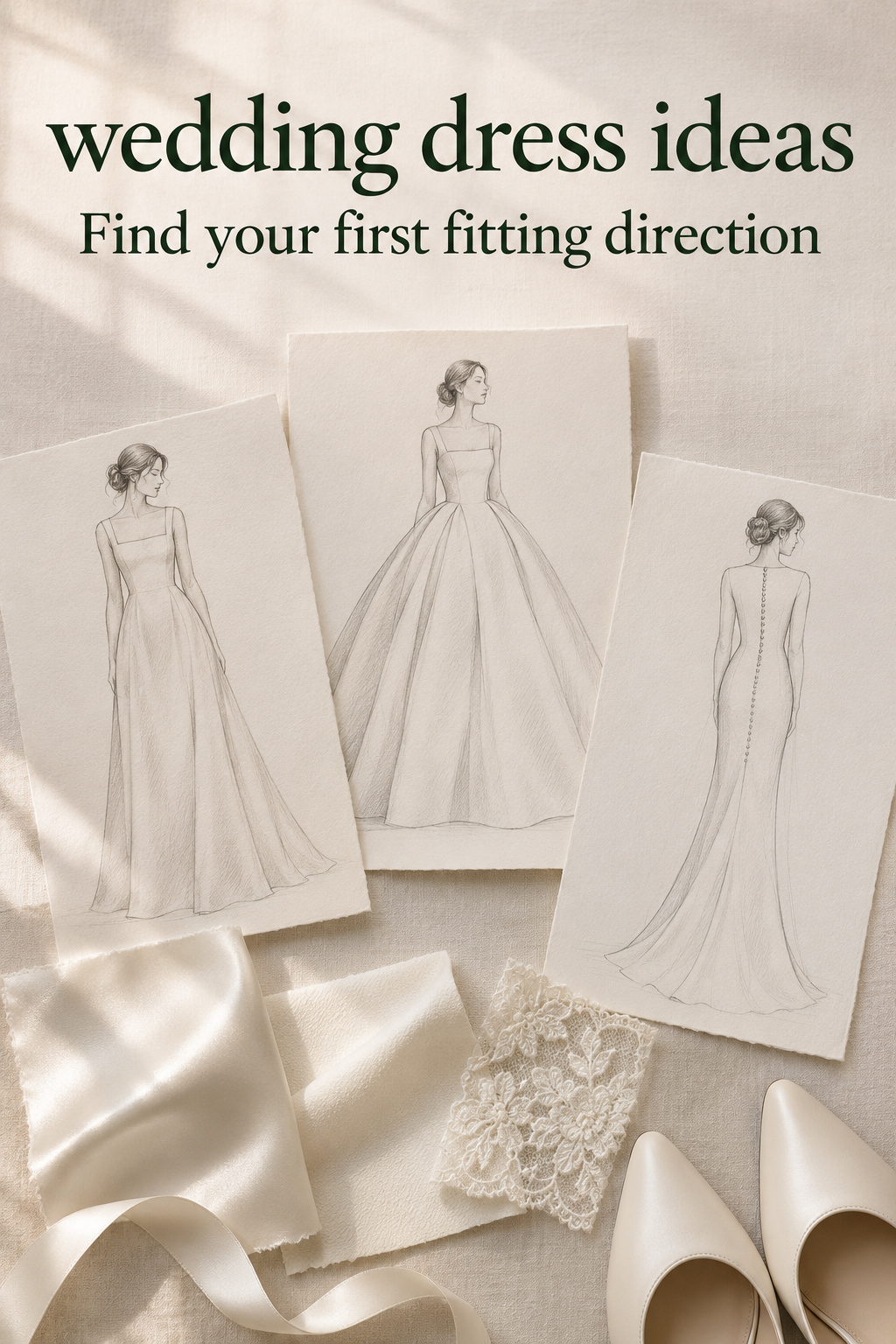
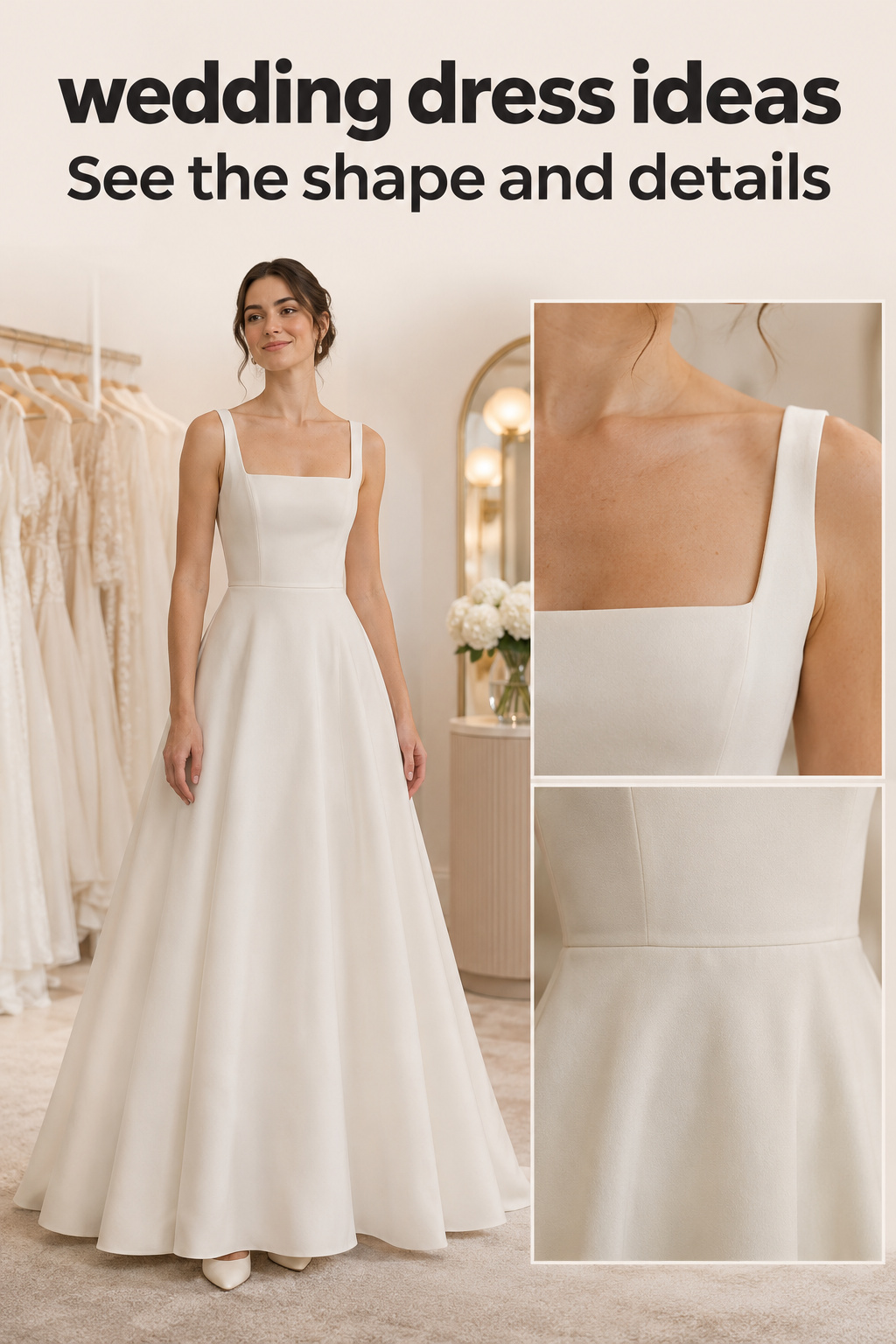
A square neckline with a softly widening skirt
Try a square neckline and a skirt with enough room to move away from the hips. Keep the decoration restrained during this trial so you can see whether the neckline and waist placement are the features you want. A simple ribbon-edged veil could be an accessory option later, after you have assessed the dress itself.
The fitting question is whether you like the relationship between the open neckline and the skirt volume. Sit down and look at the bodice again. Raise your arms as you would for a hug. If you keep adjusting a strap or pulling at the neckline, ask what can be corrected in the intended size and what belongs to the design.
A sculpted ball gown with an undecorated bodice
Choose a full skirt with a relatively plain upper half when you want to explore volume. This gives you a clear view of the waist seam and the shape around your body. You can decide later whether a bow, lace or embroidery belongs in that outline.
Walk off the platform before judging it. Ask to try the skirt in the space available around the fitting room and sit in an ordinary chair if the salon permits. Imagine the actual route from your ceremony entrance to your seat. I would keep a dramatic skirt on the shortlist when you enjoy handling it as well as seeing it in the mirror.
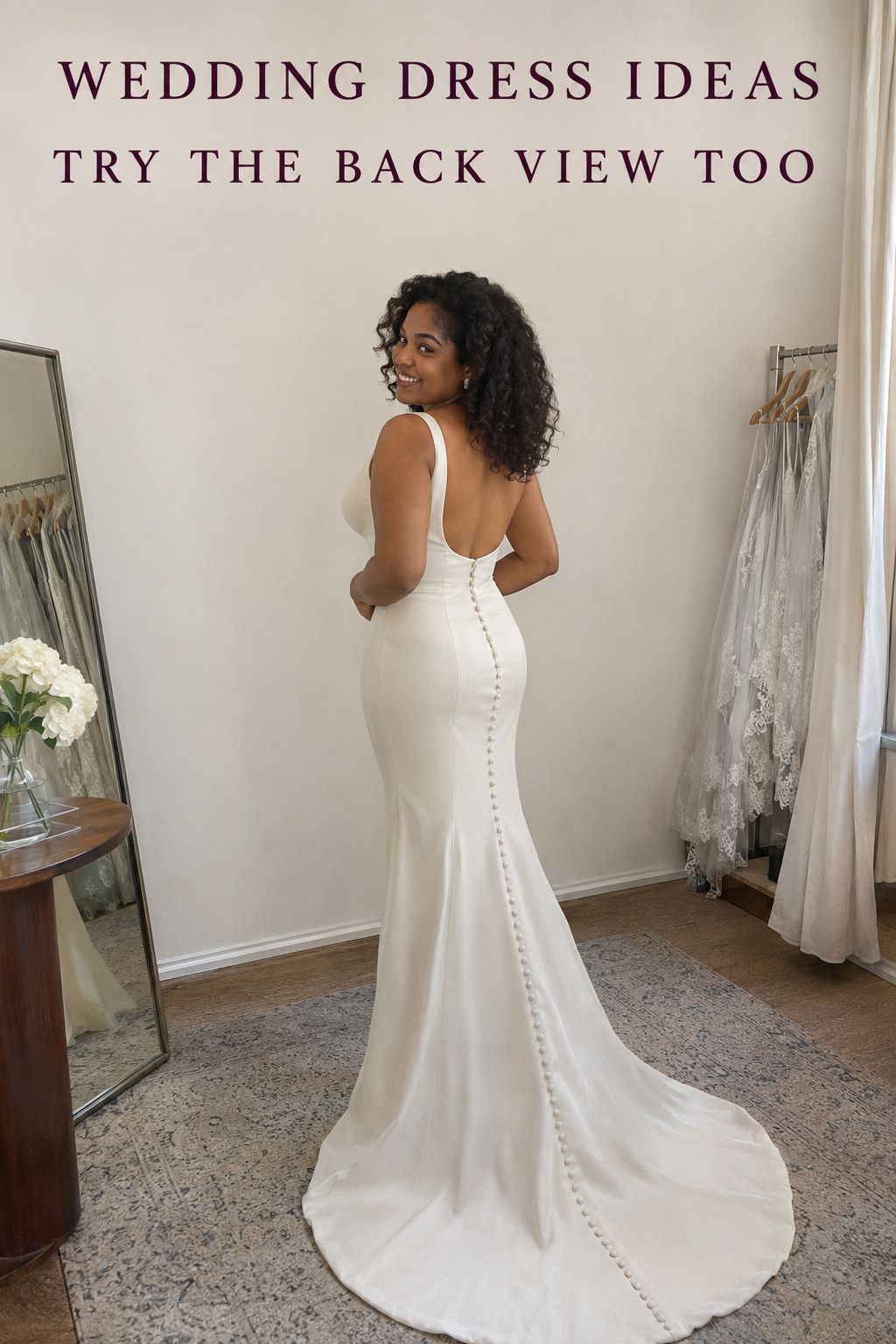
A narrow gown with a strong back detail
A relatively straight skirt with a defined back detail gives you another way to create interest. The detail might be a row of buttons, an open shape or a bow. Choose the element you like and photograph the front separately so the back does not make the whole decision for you.
Ask what happens to that detail when the train is gathered for the reception. Then turn, sit and walk normally. If the front feels too plain to you, try another neckline before adding accessories. Keep a separate note about the front so you remember whether it needs another comparison.
A lace gown with deliberate lining coverage
If lace is what attracts you, compare the pattern and the coverage as separate choices. Look at the spaces between motifs, the scale of the pattern and where the lining ends. Ask to see the available lining options for the actual design. Avoid assuming that a different shade or coverage level is offered because you saw it on another gown.
For this trial, leave the veil aside at first. Check whether you prefer the lace against a lining close to the lace color or a more visible contrast, if both are available. Then add the veil and see whether the combined patterns still let you appreciate the dress. I would keep the gown’s lace easy to see unless you specifically prefer the denser effect of the two patterns together.
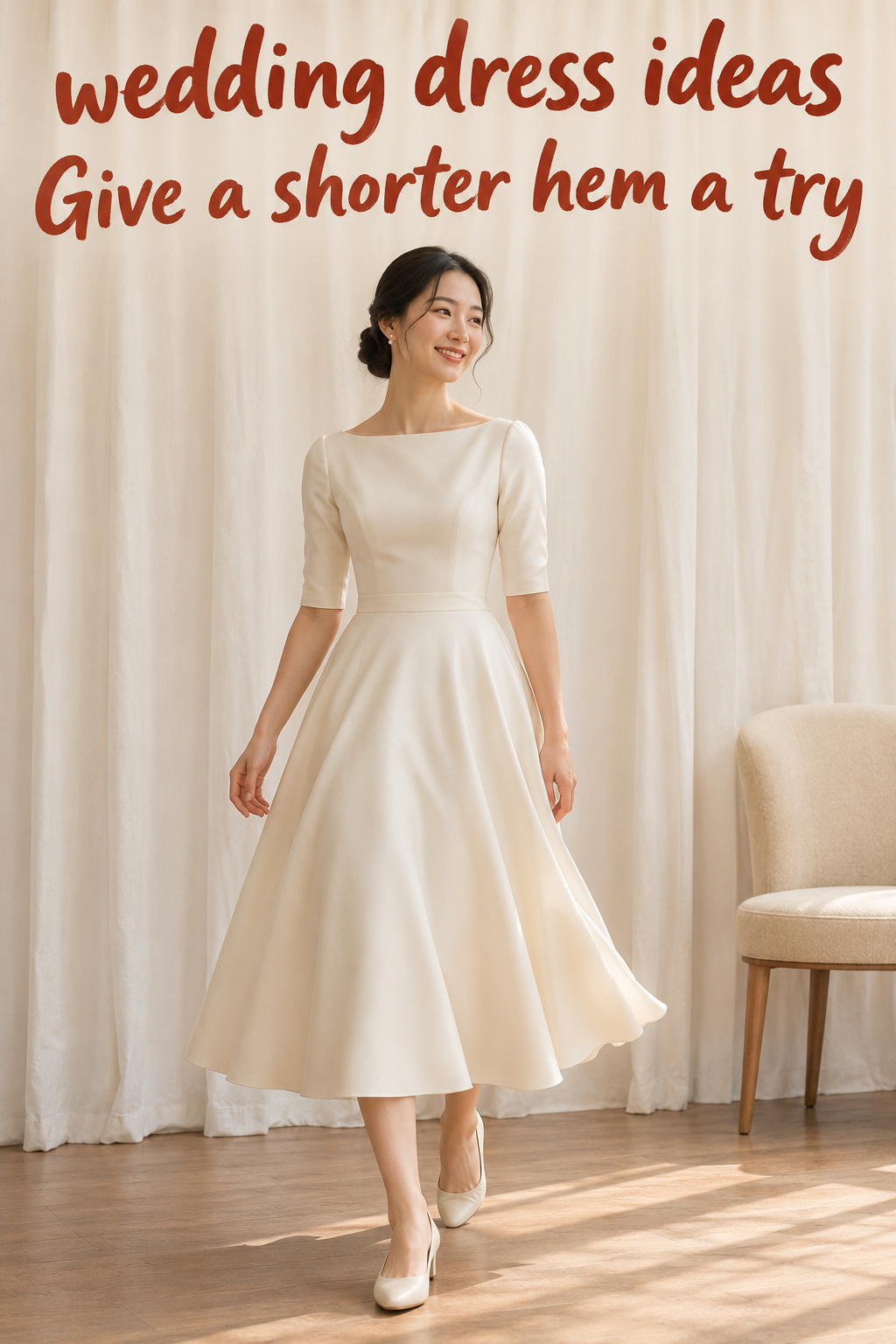
A tea-length dress with a defined hem
A shorter dress gives the hem and shoes more visual attention. Try a dress that finishes below the knee or around the calf, then look at the length from several angles. The useful question is where you want the skirt to end on you, regardless of the length label on the tag.
Bring shoes with a heel height close to the one you plan to wear, or ask what the salon can provide. Walk and sit before deciding whether you like the skirt’s shape. A short dress can be your main wedding outfit. You do not need to explain it as a reception change if you want to wear it throughout the day.
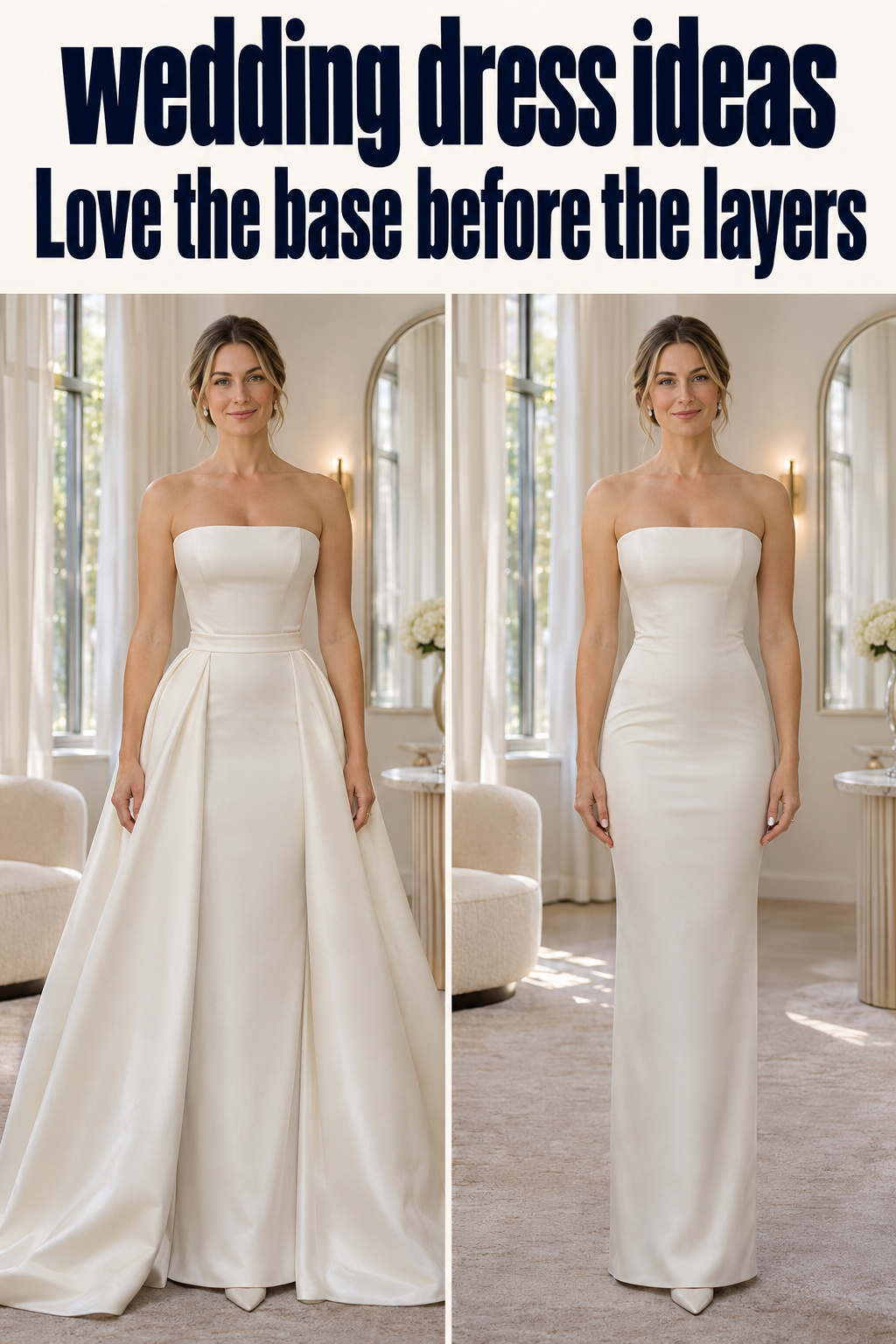
A simple base with a removable statement piece
Try a base gown with a removable overskirt or separate topper when you want a change in outline during the day. Evaluate the base first. You should enjoy the dress you will have after the extra piece comes off, including any visible attachment points.
Next, ask to see the transition. Where does the removed piece go? Who helps with it? Does the fastening feel comfortable when you sit? I would choose this route when the change serves a specific preference, such as wanting a full ceremony skirt and a narrower dinner outfit. If you prefer the layered version at every stage, there may be little reason to remove it.
Turn inspiration into a useful appointment
Give the consultant a comparison to make
Bring a short explanation of what you want to learn. For example: “I like the low waist in this picture, but I have only tried dresses with a natural waist. Can I compare those placements in gowns with similar skirts?” That request gives the appointment a direction without requiring the exact photographed dress.
Another useful brief is: “I like lace, but I am unsure about visible contrast underneath it. Could I see different lining effects?” If the store cannot provide that comparison, you have learned what to ask another salon. There is no need to buy a sample to resolve a question it cannot answer.
Tell the salon your spending limit before the appointment and ask which costs are included in a quoted amount. Keep any alterations, accessories or removable pieces you want within the same overall plan. Ask the store about its ordering and fitting schedule for your date; a general online timeline cannot confirm that a particular gown will arrive in time.
Record your response before hearing every opinion
After a promising dress, make a brief note in your own words. “I like the waist when standing, but the top presses when seated” is more useful than a score out of ten. It separates a design preference from a fit problem that needs a professional answer.
With permission, take a front view and a back view from a similar distance for each finalist. Add a close view only when a detail matters to your decision. Save the style name with the pictures, and note whether the sample was clipped or a different size. You will have a fairer comparison later than a folder of mixed angles.
Ask companions to describe a specific observation after you have said what you think. A companion may notice that you keep touching a sleeve or that your favorite waist detail disappears when you sit. Use the observation to ask another question, while keeping the final choice yours.
End with one unresolved question
Before leaving, identify what you still need to know about each serious option. That might be a lining choice, the feasibility of a sleeve change or how the train will be managed. Request an answer from the appropriate person and record it with the dress details.
If two dresses remain close, choose the next appointment around the difference between them. A session focused on waist placement will teach you more than another round of nearly identical lace gowns. You can also decide that neither finalist answers your needs and start a narrower search from what you learned.
Mistakes that hide the right dress
Confusing sample problems with design preferences
A sample can help you assess an idea without showing the final fit. Ask the consultant to explain what the clips are changing and what they cannot simulate. If a hem is pooled on the floor, avoid judging your walking comfort as though it were already altered to your height.
At the same time, keep track of discomfort. Do not dismiss every concern as something alterations will solve. Ask which change is proposed, who would assess it and whether it affects another part of the gown. If the proposed change cannot do what you need, keep the photograph as a reference and try another gown.
Buying accessories to rescue an uncertain gown
A veil or statement necklace can help you picture the wedding outfit. It can also make it harder to see whether you like the dress underneath. View a finalist without those additions once more before deciding. If your concern is the neckline, compare necklines while the view is clear.
I would pause when the proposed solution requires several purchases and an unconfirmed alteration. Ask for an answer to the unresolved concern before buying the accessories. You may still want them once you know whether the dress can work for you.
Treating a removable feature as a free change
A separate overskirt, topper or bow needs its own fit and handling plan. Ask whether it is included with the gown, ordered separately or shown only as a styling example. Confirm the exact version on the order paperwork.
Also check whether you enjoy both versions. If the base gown feels unfinished to you, a removable layer may leave you with a reception outfit you would not have chosen. Keep looking for a base you like, or wear the complete design for as long as you want it.
Editor’s take: choose the next useful comparison
I would book the first appointment to resolve your biggest design uncertainty. Bring one image that represents your current favorite and another that changes the feature you are unsure about. If you love both a full skirt and a narrow gown, that is a useful starting point for a comparison. Reserve judgment until you have moved and sat in each. The condition is that any essential fit change needs confirmation from the person responsible for it before you commit. These recommendations come from research and editorial judgment; they do not reflect first-hand gown testing or wedding-planning experience. Start by adding a sentence to each saved image that explains exactly what you want to try.
Sources and methodology
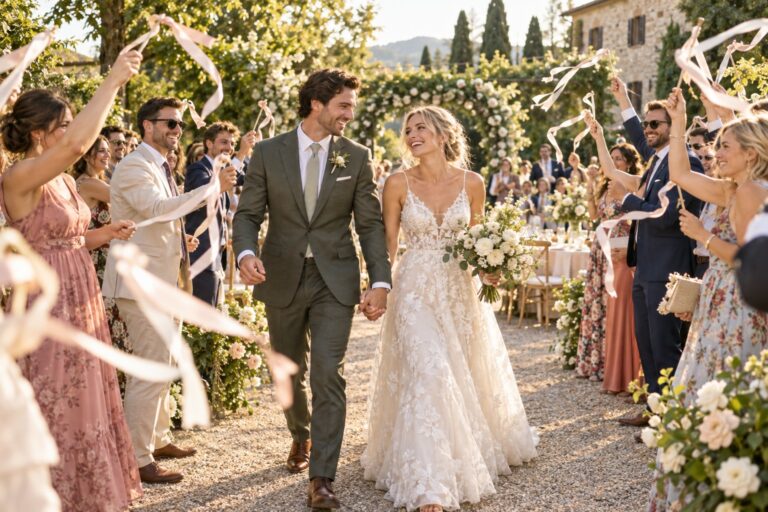
Research included Google US results for wedding dress ideas, designer and retailer catalogs, editorial bridal pages and inspiration boards. The linked Maggie Sottero resources provide the silhouette categories and fabric vocabulary used here. Catalogs and boards helped identify different design directions; their photographs do not establish fit, comfort or alteration feasibility. The trial combinations are original editorial suggestions. Illustrations are generated artwork rather than photographs of actual fittings, customers or identifiable products.
FAQ
How do I choose between very different wedding dress ideas?
Identify the feature you like in each image, then compare it in person. You may discover that two apparently different dresses share a waist placement or neckline. Keep the question narrow enough that the next gown teaches you something. You can decide on decoration after you understand which outline you prefer.
Should I know my wedding dress silhouette before shopping?
You can arrive with a preference, but it is fine to use the appointment to form one. Tell the consultant which images appeal to you and what you want to compare. Ask to try a meaningful alternative if you have only seen one outline on yourself. Stop exploring that alternative when you have your answer.
Can I combine details from several inspiration pictures?
Use the pictures to explain your preferences, then ask which existing designs come closest. If you want a custom gown or an alteration, have the maker assess the proposed combination. A neckline, back and bodice depend on the construction underneath. Do not assume details from unrelated dresses can be joined without changing their appearance or support.
What if I like a dress in photographs but dislike wearing it?
Record what you still like about the image and what you dislike in person. You might keep the neckline as inspiration while moving to a different skirt. Ask whether the wearing problem comes from sample fit or the design. If the answer remains uncertain, leave the dress as a reference while you try an option that addresses the concern.
How can I decide whether I need a second dress?
Name the change you want first. If it is a different skirt volume or more room for dancing, compare a separate outfit with a removable layer or a different main gown. Include the changing time and storage plan in the decision. A second dress is useful when you want to wear it and can make the transition work.
What should I write down after a bridal appointment?
Save the style name, your favorite design feature and any question still awaiting confirmation. Note the sample size or clipping if that affected your impression. Keep the store’s quoted costs and ordering information with the same record. This makes the next conversation about the specific gown easier and helps you avoid comparing photographs without their fitting context.