Wedding Arch Ideas for Your Venue Layout
The best wedding arch ideas start with a practical question: what should the ceremony focal point do in your actual space? A freestanding frame can define an open lawn, a canopy can shelter a wider group, a low floral crescent can keep a landscape in view, and an existing doorway may already provide the frame you need. The right answer depends on the footprint, guest layout, sightlines, and what your venue allows before you choose flowers or fabric.
This comparison guide helps you choose among four useful formats, then style the one that fits. It is not a ranking of the prettiest arches. Instead, use the table and venue examples to narrow your options, send a clear brief to your florist or rental team, and confirm setup details with the people responsible for the site.
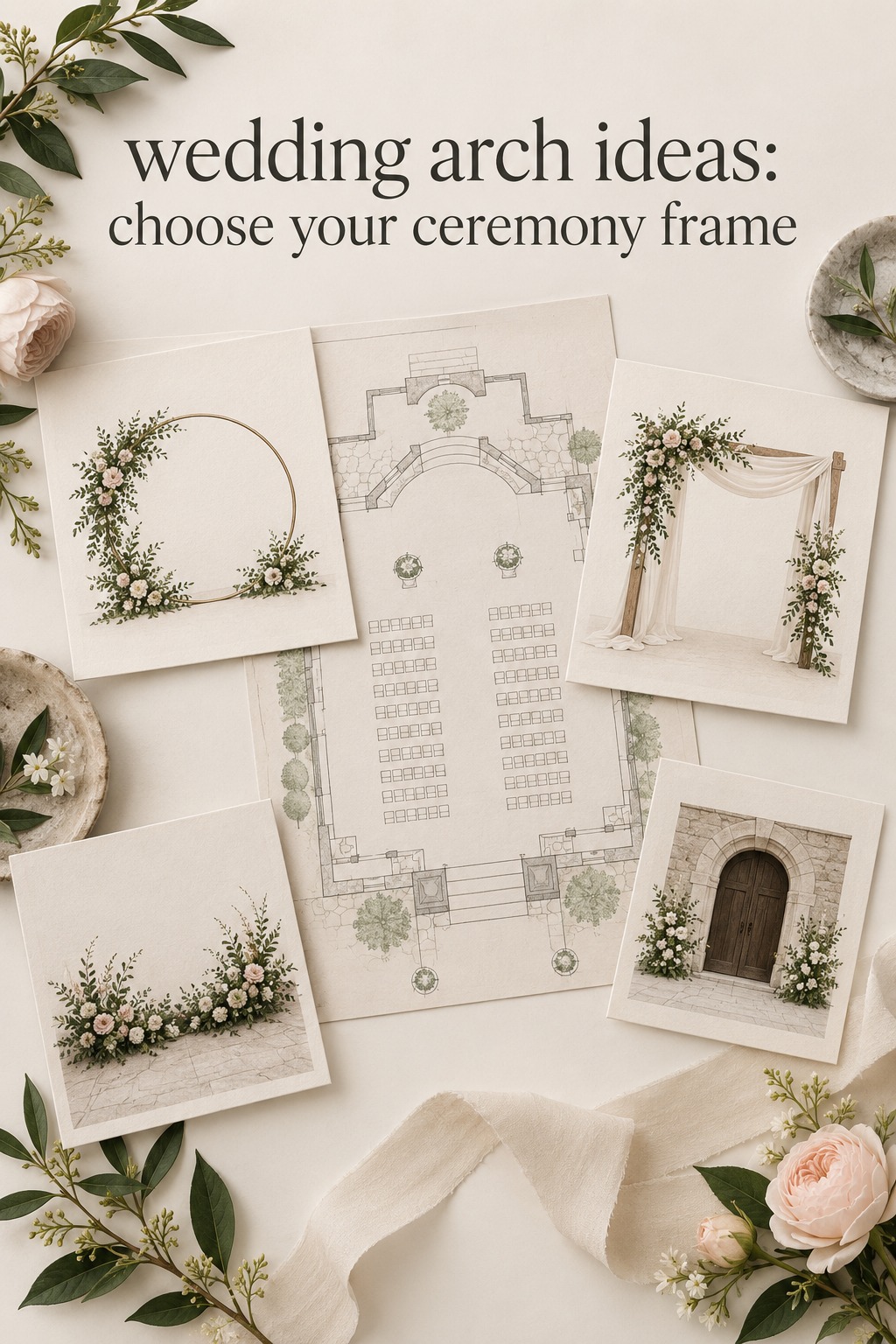
Start With the Ceremony Layout, Not the Arch Shape
Save inspiration images only after you know what needs framing. A ceremony on a broad lawn has different needs from a narrow indoor room, a beach with a prized horizon, or a garden that already has a doorway of greenery. In each space, the focal point should help guests understand where to look without making the couple, officiant, or setting feel crowded.
Begin with four questions. First, how much clear floor or ground space is available behind the ceremony party? Second, should guests see through the structure to a landscape, window, or architectural feature? Third, will the couple stand beneath it, in front of it, or between separate arrangements? Finally, who will deliver, assemble, decorate, and remove it, and what does the venue permit?

Turn wedding inspiration into a plan you can actually follow.
Zarellea brings your guest list, budget, vendors, and day-of details into one shared space — so no beautiful idea gets lost in the shuffle.
These questions separate structure from styling. A circular metal frame can be dressed with a small floral cluster, left bare, or softened with fabric. A square arbor can carry a canopy, while a pair of grounded arrangements can create a visual frame without a structure overhead. The flowers do not determine whether the format works. The footprint and composition do.
It also helps to distinguish common names. An arch usually describes a two-sided frame, while an arbor can be a larger structure with room beneath it; a chuppah is a canopy used in Jewish wedding ceremonies. Terminology varies among rental companies and designers, so compare a photo, dimensions, and intended use rather than assuming a label means the same thing everywhere. The Knot’s arbor guide describes this distinction and includes examples of both structures.
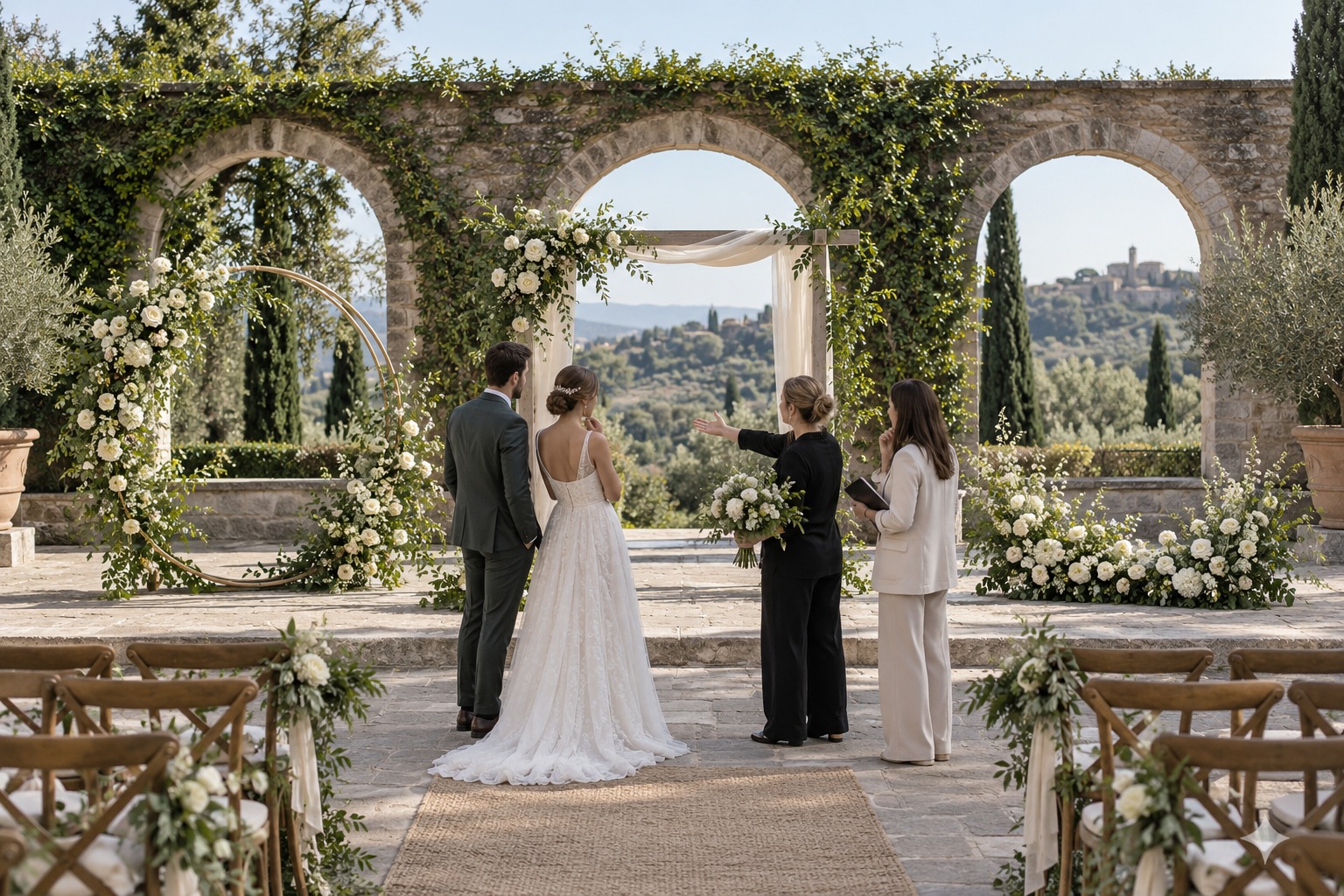
Make a quick site sketch before you choose. Draw the couple and officiant, first row of guests, aisle, nearby wall or view, and the route vendors will use to bring the structure in. Add approximate measurements supplied by the venue. This is not a construction plan. It is a way to spot whether a wide base, four posts, overhead fabric, or a low installation could compete with a doorway, block a seat, or crowd a narrow aisle.
Finally, identify the visual priority. If the venue has a dramatic landscape, you may want an open frame or a low composition. If a plain room needs a focal point, a fuller silhouette may do more work. If guests need to see the ceremony from several angles, consider how much material sits at eye level. A good wedding focal point gives the scene shape while leaving the important people and place visible.
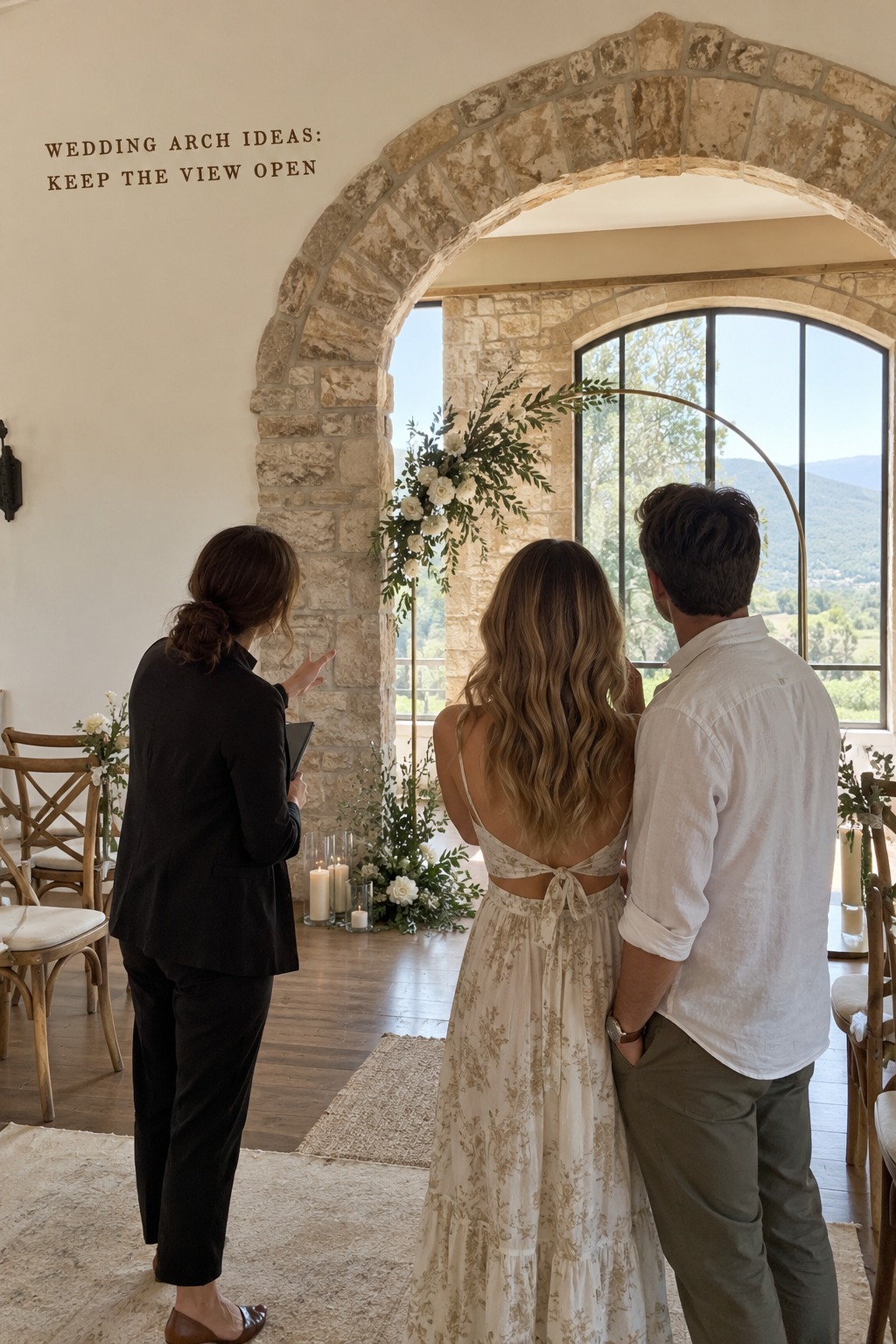
Compare Four Wedding Arch Ideas by Footprint and Framing
Compare the formats below by the space they occupy and the view they create. Each can feel formal, relaxed, modern, or romantic through material and decoration. Start with the structure’s job, then choose the finish.
1. Freestanding arch: a clear frame for a compact focal point
A freestanding arch is usually the most direct way to mark the vow location. A simple rounded, square, triangular, or circular frame can make an open lawn feel intentional without requiring a full canopy. It suits couples who want a recognizable outline around the ceremony and a structure that can work with a restrained floral accent.
Its main advantage is visual clarity. Guests can read the focal point from a distance, and the open center can preserve a view through the structure. Its trade-off is that the base and feet still need room, even when the frame looks visually light. Ask for the complete footprint, including any weighted supports, floral pieces, or fabric that extends beyond the frame. A narrow aisle or a tight indoor room may not have space for those parts.
For styling, concentrate the flowers or greenery in one corner or on one side so the shape remains visible. A fabric panel can soften a plain frame, but a long train of fabric changes the amount of space and setup involved. If the ceremony is outside, ask the rental provider and venue who is responsible for installation and stability. Do not treat a photograph of a frame as proof that the same setup is allowed at your location.
2. Arbor or canopy: a wider frame for a group beneath it
An arbor or canopy makes sense when the ceremony needs a larger overhead presence. It can define a broad outdoor altar, provide a visual home for a group standing beneath it, or support a ceremonial canopy with personal or cultural meaning. Unlike a narrow frame, a four-post form introduces a larger footprint and a top plane that affects how the setup reads from the side and the back.
Use this format when the ceremony party needs room to stand together or when a more substantial structure suits the scale of the site. It can also help give an expansive area a defined center. The trade-off is visual and logistical: posts may sit closer to guests, and the canopy can compete with a view or a low ceiling. Compare the top dimensions, post placement, and intended positions of the couple and officiant with the floor plan before reserving it.
Some structures carry religious or cultural meaning, so the design should follow the couple’s practice and the guidance of the people leading the ceremony. Do not treat a chuppah or mandap as a generic decor prop. Confirm the intended form, who participates beneath it, and which textiles or symbols belong in the design. A simple arrangement of flowers can be secondary to the structure’s purpose.
For a lighter look, leave portions of the frame open and decorate the corners rather than enclosing every side. For a more intimate composition, fabric can define the canopy, while small floral groupings preserve sightlines. Ask the venue about ceiling clearance, attachment rules, access, and timing before choosing a design that involves hanging elements.
3. Ground-level installation: a low frame that keeps the view open
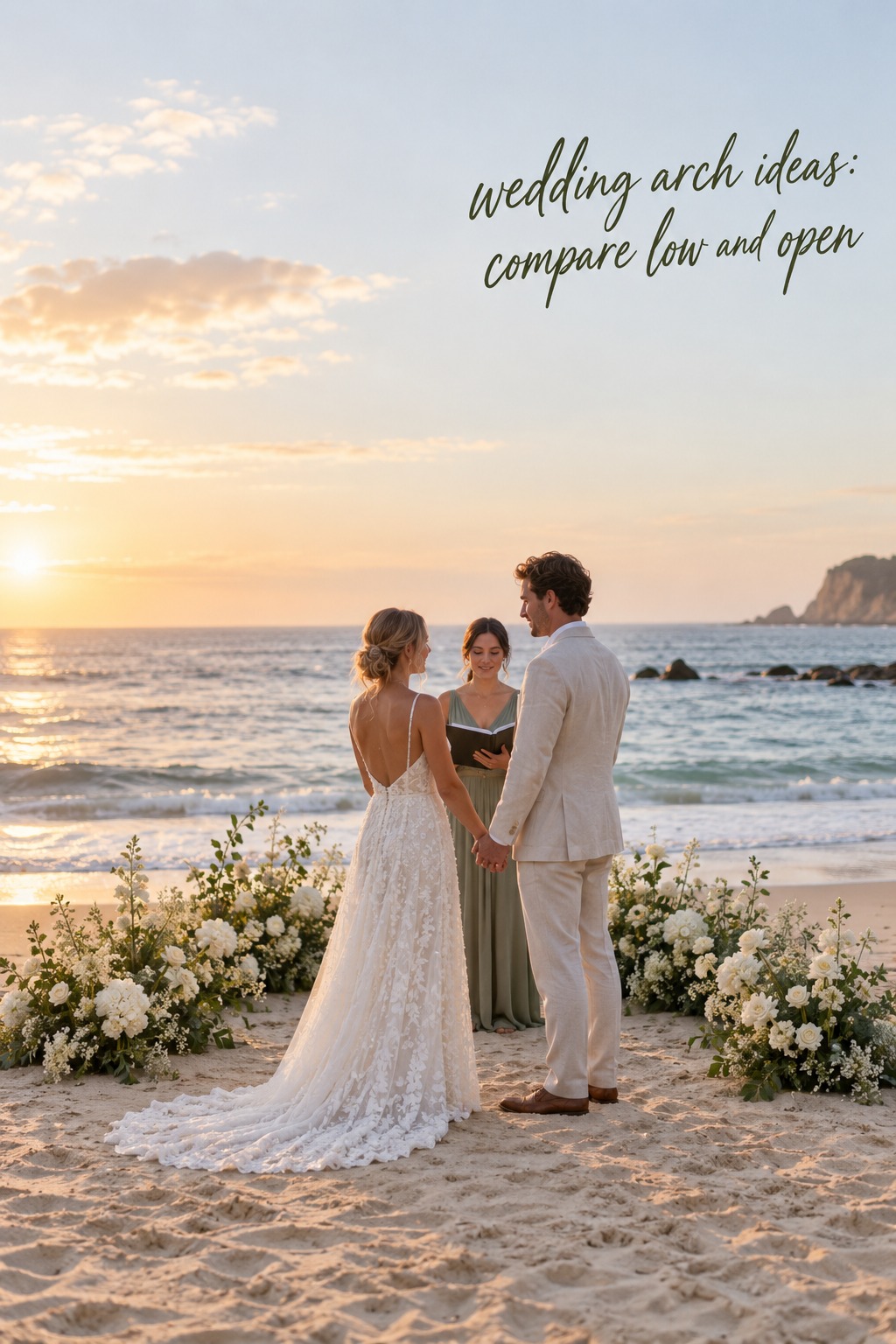
A ground-level crescent, broken circle, or pair of low arrangements frames the couple from below rather than above. This can be a useful alternative when an overhead arch would interrupt a mountain, ocean, lake, or garden view. It also gives you a clear focal point without placing a tall structure between guests and the setting.
The format works best when guests can see the couple above the flowers and when the ceremony position is clearly marked. Keep the center open enough for the couple and officiant to stand comfortably, and check the composition from seated eye level. A low installation may disappear behind the front row if it is too small, while a very broad arrangement can spread into the aisle. Use the site sketch to estimate width before asking a florist to design it.
The trade-off is that a low shape may not create as strong a silhouette in a wide scene. It may need thoughtfully placed height at the edges or a distinct color contrast to read in photographs. A beach-ceremony example from Here Comes the Guide uses a ground-level ceremony circle to keep the ocean visible. Treat that as a composition idea, then confirm local venue rules and the installation plan.
Grounded arrangements can also be easier to move after the ceremony if the florist has planned them as separate pieces. That is a design possibility, not an assumption: ask whether the pieces can be transported, where they will go, who will move them, and whether a second arrangement is needed for the next setting.
4. Built-in architectural frame: use a doorway, pergola, or existing opening
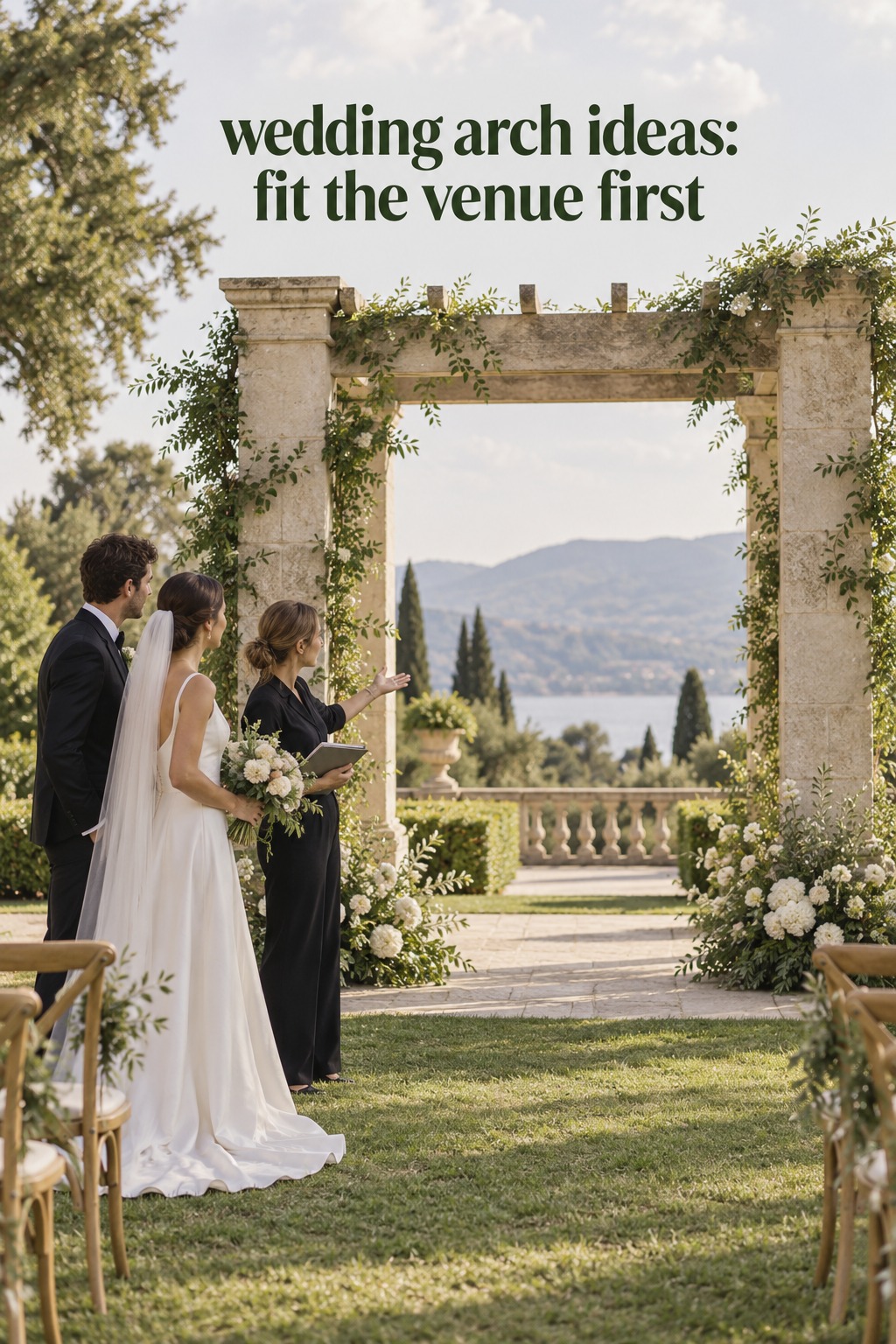
A venue may already have a doorway, stone opening, pergola, garden gate, or a pair of columns that frames the ceremony. In that case, the strongest wedding arch idea may be to decorate the existing architecture lightly instead of bringing in another freestanding object. This option can preserve floor space and make the setting feel connected to the ceremony.
It suits a venue where a built-in feature is visible from the guest seating and large enough to frame the couple. The trade-off is reduced flexibility. You may not be able to move the structure, attach decor, cover a surface, or change the position of the ceremony. Ask what the venue permits and whether the feature is available at your chosen time. A beautiful doorway is not useful if the aisle or seating plan points guests away from it.
Style the architecture with pieces that clarify rather than disguise it. Small arrangements at the base, a pair of floor pieces, or restrained greenery can connect the feature to the rest of the ceremony. If attachments are not allowed, use freestanding accents approved by the site. This format can be especially effective in a historic or modern interior where the lines of the room already provide a strong backdrop.
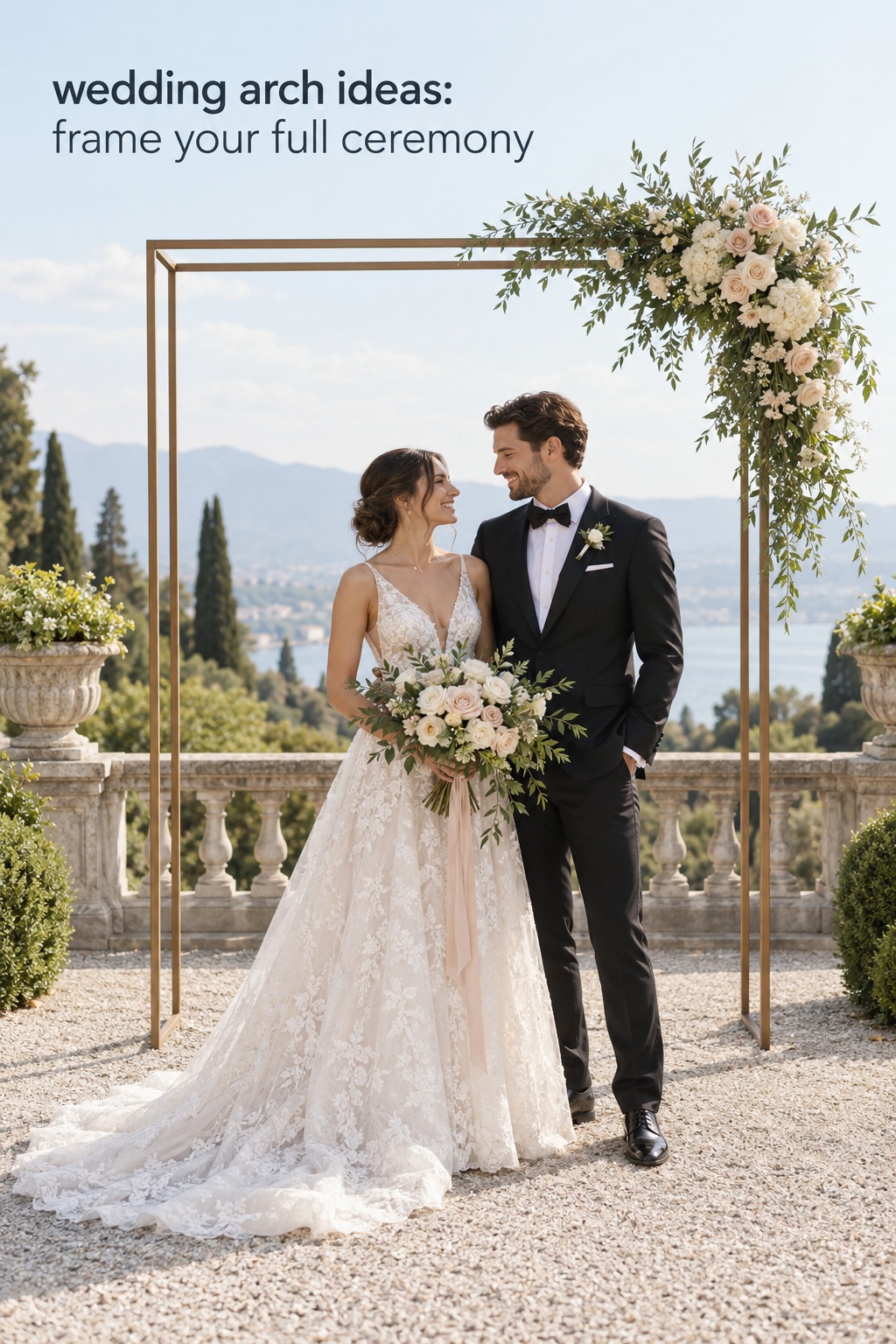
Match the Structure to Your Venue and Guest Setup
Once you understand the formats, apply them to the ceremony you are planning. These examples are starting points, not rules. If a venue coordinator, florist, or rental professional identifies a site-specific restriction, let that information shape the choice.
For a narrow indoor room
Compare a slim freestanding frame with an existing doorway or a pair of floor arrangements. A four-post arbor may take more of the room than the ceremony needs, particularly if guests are seated close to the aisle. Measure the clear area behind the couple and check the route from the entrance to the vow location. If a frame is chosen, keep its supports and decor within that area and leave a comfortable path for the processional.
For a short room with a prominent window, a light frame can preserve the view while marking the center. If the wall itself is attractive, use the architecture as the backdrop and add low floral pieces. A circle may look balanced in a photograph, but compare how its width relates to the room and whether its sides would overlap the aisle or first row from the guests’ perspective.
For a broad lawn or open landscape
An open lawn gives you more choice, but it also means the focal point must be legible against a large background. A freestanding arch can make a clean frame. A wider arbor can suit a larger ceremony party or a site that needs a more substantial center. If the view is the main attraction, a low floral crescent or two side arrangements can define the vow location without covering the horizon.
Look at the scene from the guest seats, not only from the front where the couple will stand. Note trees, windows, hills, buildings, and bright patches behind the structure. A frame may visually intersect with a tree trunk or roofline from one camera angle. Ask your photographer or planner to review the intended position if photographs are an important priority.
For a beach with a view worth keeping
Decide whether the structure should frame the water or sit low enough to leave it unobstructed. A small open frame, paired grounded arrangements, or a low circle can keep the composition airy. Driftwood, bamboo, or a simple metal form may echo the setting, but the materials should be approved by the venue and supplied by a team that understands the site conditions. Do not assume a style image tells you how a real setup will be secured.
Ask whether the ceremony surface, access path, and setup window affect the choices. Some beach locations have rules about stakes, movement of sand, installation timing, or leaving materials behind. The venue or local coordinator should confirm the details. If the site does not allow a freestanding frame, a low arrangement or an approved built-in backdrop may still give the ceremony a sense of place.
For a garden that already feels like a destination
Choose whether you want to add a frame or let the landscape do more of the work. A light arbor can mark the vow point among trees. An existing pergola or gate can be styled with a few compatible details. If flowers are already visible behind the couple, a pair of arrangements or an open structure may provide enough definition. A dense floral backdrop can compete with a garden that is already full of color and texture.
For a small guest list, make sure the structure feels proportional to the number of people gathered around it. A substantial canopy may work when several participants stand beneath it, while an intimate ceremony could be framed by a narrow arch or low arrangements. Look at the overall scene from a few steps back so you can see whether the focal point belongs to the space rather than overpowering it.
Review Setup, Sightlines, and What Happens After the Vows
Before booking a rental or requesting a floral proposal, write down the choice you are comparing. Include a venue photograph, the approximate footprint, where the couple and officiant will stand, and what guests should see behind them. A visual brief is more useful than sending a dozen unrelated inspiration pictures because it tells the supplier what the structure has to accomplish.
Use this short review to compare your finalist options:
- Footprint: What is the full width and depth, including feet, weights, flowers, and draping?
- People: Who stands under or in front of it, and can everyone fit without crowding the aisle?
- Sightlines: Can seated guests see the couple, and does the backdrop preserve the view you chose?
- Permissions: Does the venue allow this structure, attachments, floor coverage, and the proposed placement?
- Setup: Who delivers, assembles, stabilizes, decorates, and removes each piece, and when can they access the site?
- Transition: Can the structure or its separate arrangements be moved after the ceremony, and who is responsible?
Pay special attention to anything overhead or freestanding. This article is design guidance, not a structural specification. Ask the venue and the supplier responsible for the installation to confirm permitted anchoring, rigging, load, clearance, and other site requirements. Do not hang decor from venue property or improvise a support plan based on a photo online.
Next, review the composition at the time and angle guests will experience it. Check a standing view and a seated view. Look from the aisle entrance and from the sides of the seating area. If the ceremony is being photographed, share the planned layout with the photographer so they can identify any visual obstruction or background collision. Small changes to position can matter more than adding another floral cluster.
Finally, decide what should happen to the design after the ceremony. A freestanding frame might move to the reception only if the schedule, labor, transport, and venue rules allow it. Floral pieces could be divided among other displays if the florist plans them that way. An existing architectural feature may stay exactly where it is. Confirm the transition in advance rather than counting on a last-minute move.
Your final selection can be simple: name the format, describe its role, set the footprint, identify the visual priority, and list the site questions still awaiting an answer. Then choose one or two styling references that fit those criteria. That keeps the conversation focused and gives your suppliers room to recommend a workable version of the idea.
Sources and Methodology
This guide compares ceremony focal-point formats based on their visible footprint, framing role, and fit with a venue layout. Structure terminology and outdoor setup considerations were reviewed against The Knot’s wedding arbor guide. The low-profile beach composition example was reviewed against Here Comes the Guide’s beach arch gallery. Recommendations about composition are planning guidance, not engineering or venue policy; confirm site-specific requirements with the venue and responsible suppliers.
FAQ
What is the difference between a wedding arch and an arbor?
Usage varies, but an arch often means a two-sided frame while an arbor may describe a larger structure with room beneath it. Ask the supplier for a photo, dimensions, footprint, and setup plan so you know what is included.
Do we need a wedding arch for the ceremony?
No. A doorway, pergola, pair of floral arrangements, low installation, or the venue landscape can create a focal point. Choose an arch only if its shape and function improve the ceremony setup you have planned.
What is a good arch alternative if we want to keep a view open?
Consider a low floral crescent, grounded arrangements on either side, or a light open frame. Review the result from the guest seats to confirm the couple and the view remain visible.
How do we choose a ceremony arch for a small indoor space?
Measure the clear area behind the ceremony party, including the aisle and any support feet. A slim frame or existing architectural feature may use less room than a canopy, but compare actual dimensions before booking.
Can a wedding arch be used at the reception afterward?
Sometimes. Confirm whether the structure can be moved, who will handle it, how much time the transition needs, and whether the venue permits the second placement. Separate floral pieces may be easier to reuse if the design team plans for that in advance.
What should we ask before renting a wedding arch?
Ask for the complete dimensions, included decor, delivery and setup timing, removal plan, and responsibility for installation and stability. Confirm attachment, anchoring, access, and placement rules with the venue before signing off on the design.