Wedding Nails for Bride: 4 Ways to Choose Your Look
Choosing wedding nails for a bride can feel strangely difficult because the manicure has to do several jobs at once. It should look beautiful in ring photos, feel comfortable while you greet guests, complement the dress without disappearing beside it, and still feel like your hands. The most useful way to decide is not to collect hundreds of saved pictures. Compare a few workable manicure families, then choose the one that suits your priorities.
This guide compares four strong directions: sheer nude or milky pink, French tips, pearl or chrome finishes, and restrained color or nail art. Each can be elegant. The best choice depends on your nail length, your outfit, the amount of visual detail already in your look, how much maintenance you want, and whether you prefer a barely-there finish or a small personal statement.
Start with the decision that matters: what should your manicure do?
Before choosing polish, decide what you want to notice when you look at your hands. Some brides want a clean background for the ring. Others want the manicure to echo lace, pearls, a colored shoe, or a modern reception outfit. Neither approach is more bridal. They simply create different visual jobs.
- For a quiet, timeless finish: choose sheer nude, blush, or milky pink. These shades keep the hand soft and let the ring and bouquet lead.
- For a defined, polished outline: choose a French tip. It gives the nail a clear shape and can be adjusted from classic white to a softer ivory or a personal color.
- For light-catching detail: choose pearl, glazed, or chrome accents. They add dimension without requiring a busy pattern.
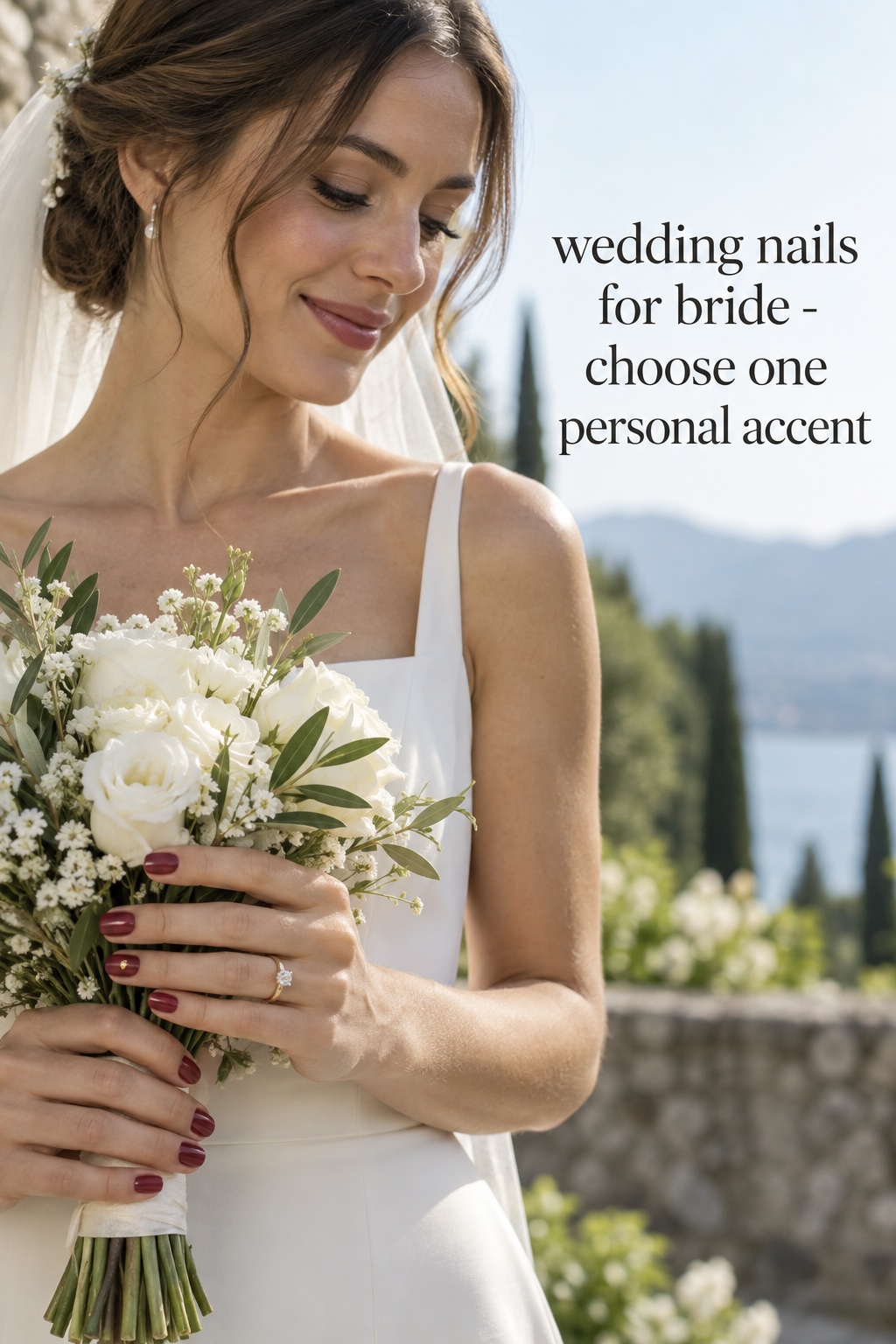
- For a personal point of view: choose restrained color or art. One accent nail, a colored tip, a tiny flower, or a fine metallic line can connect the manicure to the rest of the day.
Next, look at the whole outfit. A heavily beaded gown usually benefits from a calm base and one precise detail. A simple crepe or slip-style gown can support a stronger tip, a reflective finish, or a richer shade. If your jewelry is very sparkly, a glossy nude may create better balance than additional crystals. If your accessories are minimal, a pearl sheen or delicate art can supply a little interest close to the hands.
Turn wedding inspiration into a plan you can actually follow.
Zarellea brings your guest list, budget, vendors, and day-of details into one shared space — so no beautiful idea gets lost in the shuffle.
Photographs are another useful test. Your hands may appear with the bouquet, invitation, rings, champagne, place settings, and your partner’s hand. A manicure does not need to be dramatic to read in those images. It needs a clean shape, even color, tidy cuticles, and enough contrast to separate the fingers from the background. Save inspiration that shows the full hand, not only a tightly cropped nail close-up, so you can judge the whole effect.
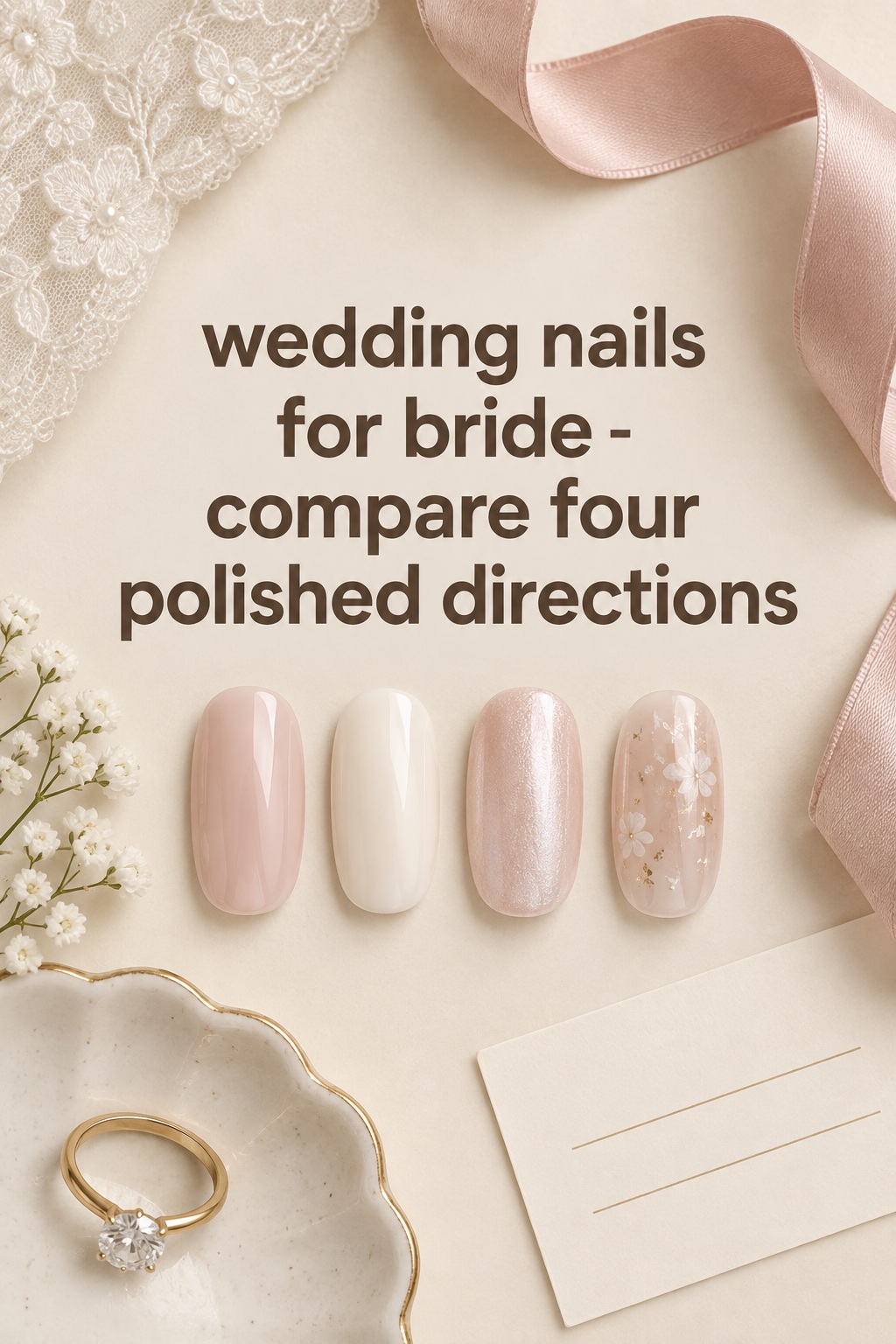
Compare four wedding nails for bride styles side by side
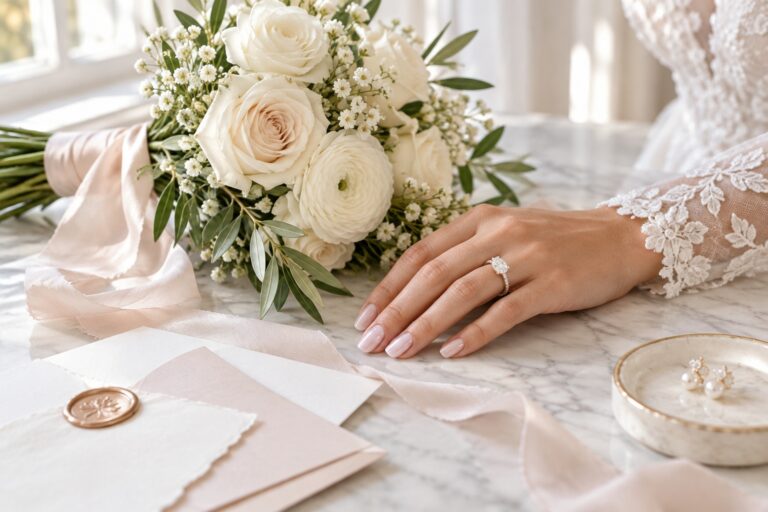
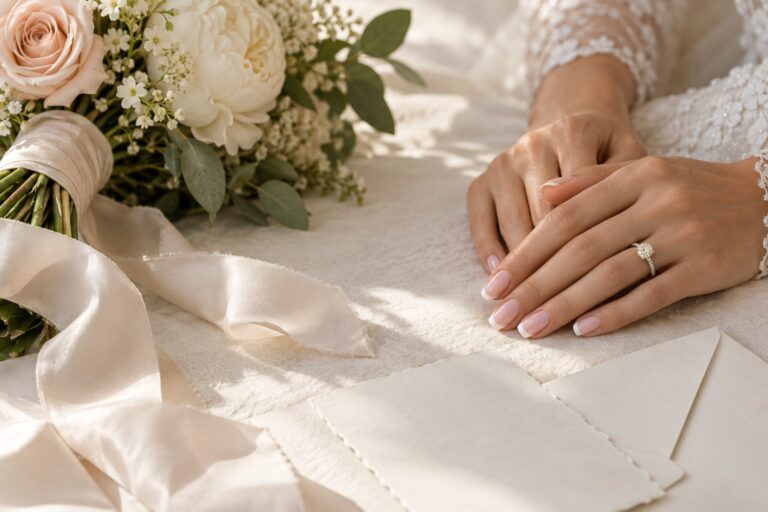
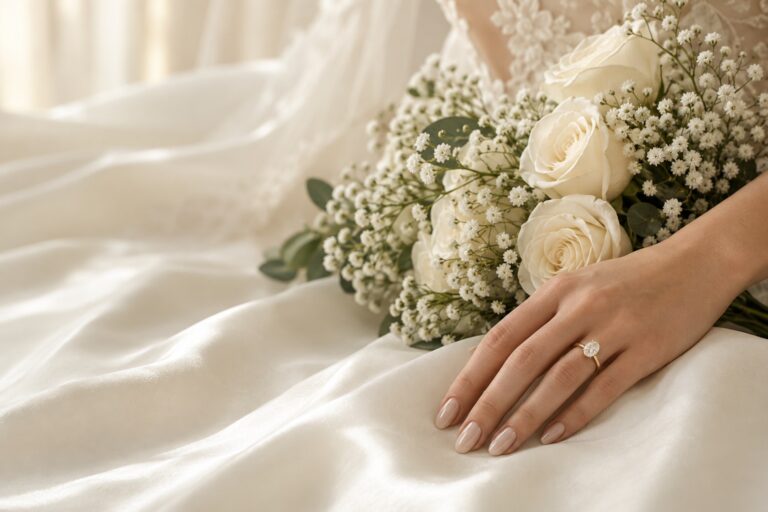
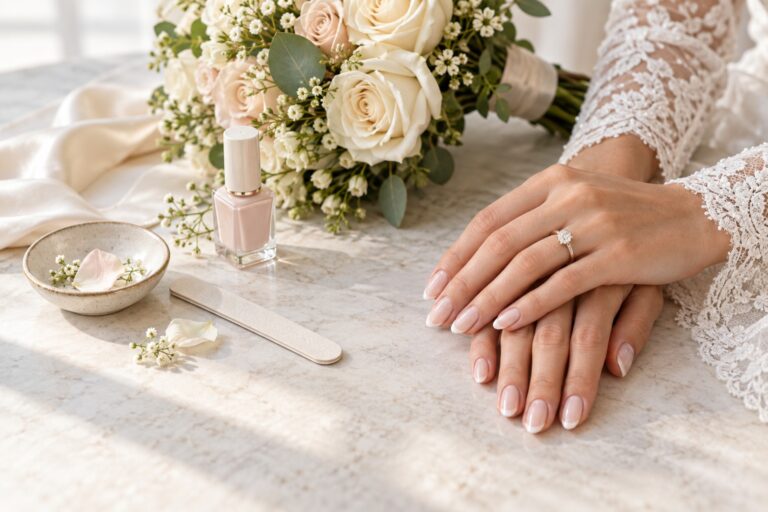
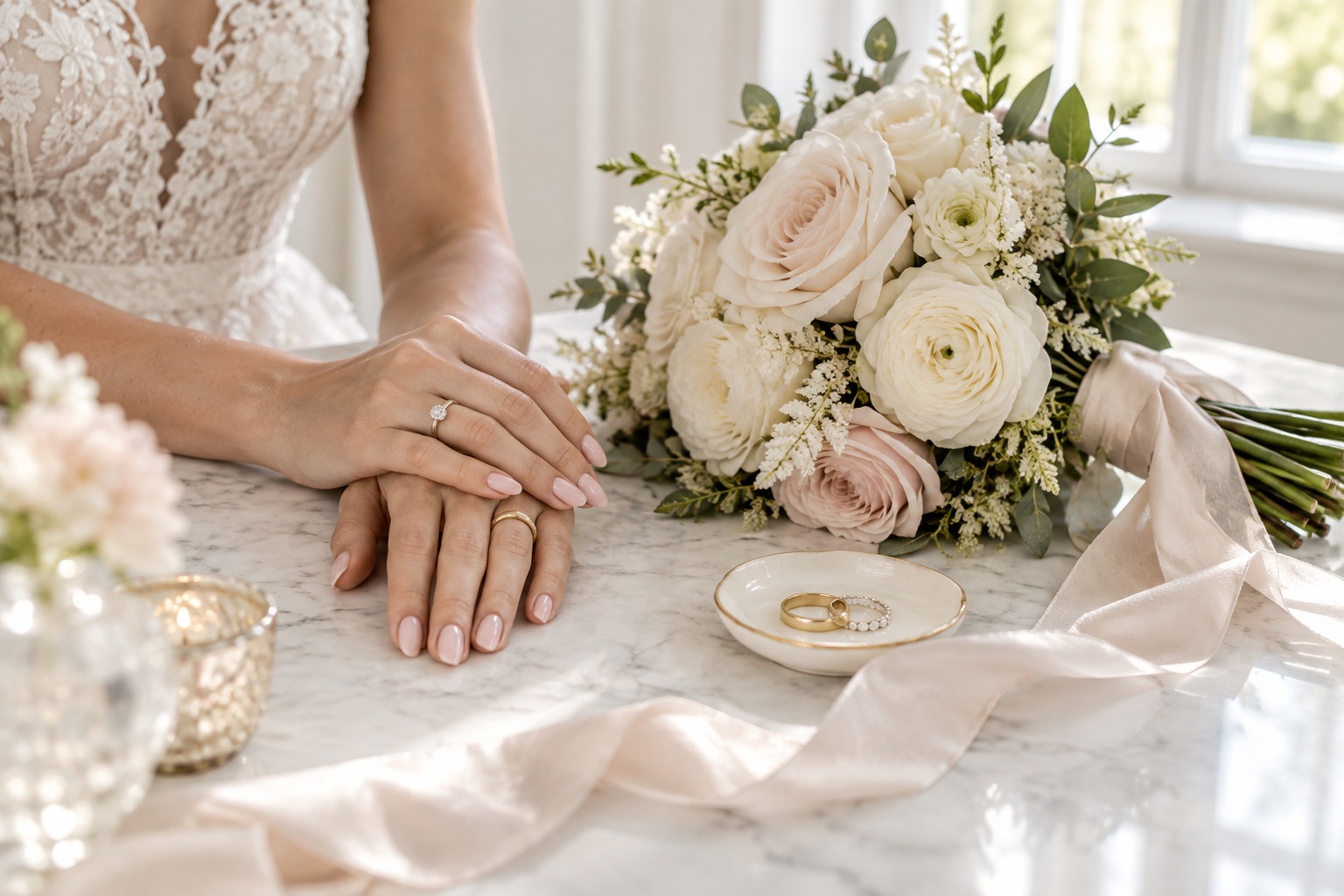
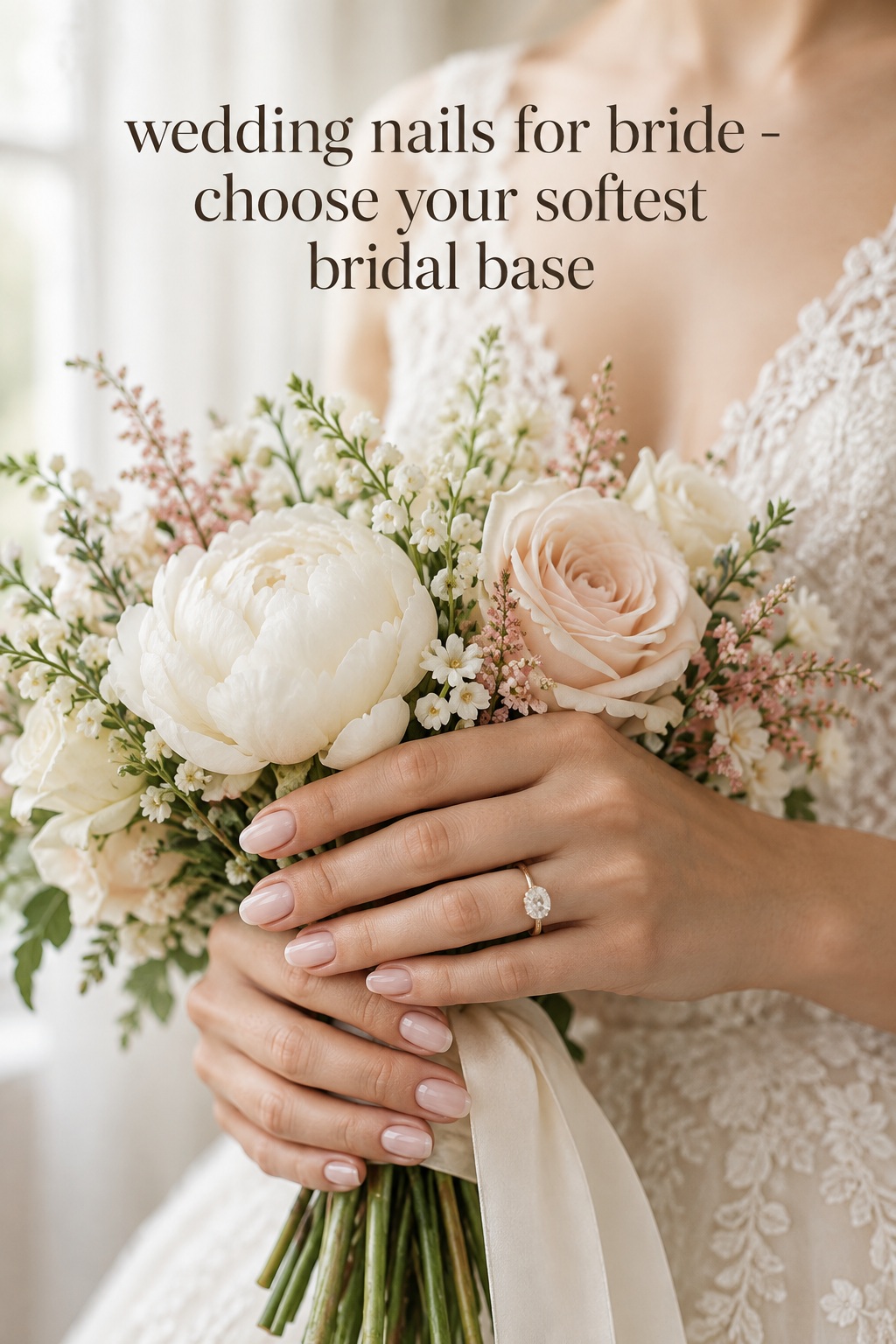
Sheer nude or milky pink is the easiest family to adapt. A sheer blush layer keeps the natural nail visible, while a milky pink creates a more softly blurred finish. This direction works especially well when you want the ring to be the hero or when your dress has lace, embroidery, sparkle, or a strong neckline. It also gives you room to add a very fine pearl or gold detail without making the hand feel busy.
The trade-off is that subtle polish shows preparation. Uneven length, dry skin, staining, or visible chips can stand out because there is no graphic tip to distract the eye. If you choose this route, make the shape and surface the focus. Ask for a shade that works with your skin undertone instead of choosing a pink because its name sounds bridal. A short squoval, soft almond, or rounded shape can all work, depending on the natural nail and the look of the ring.
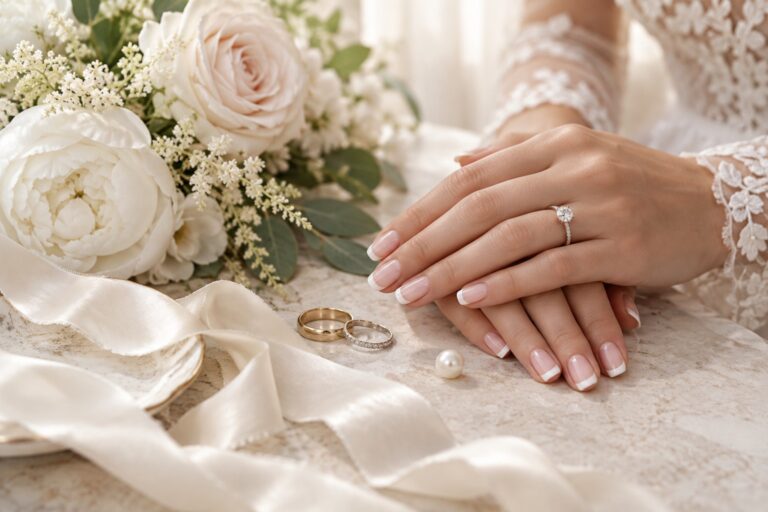
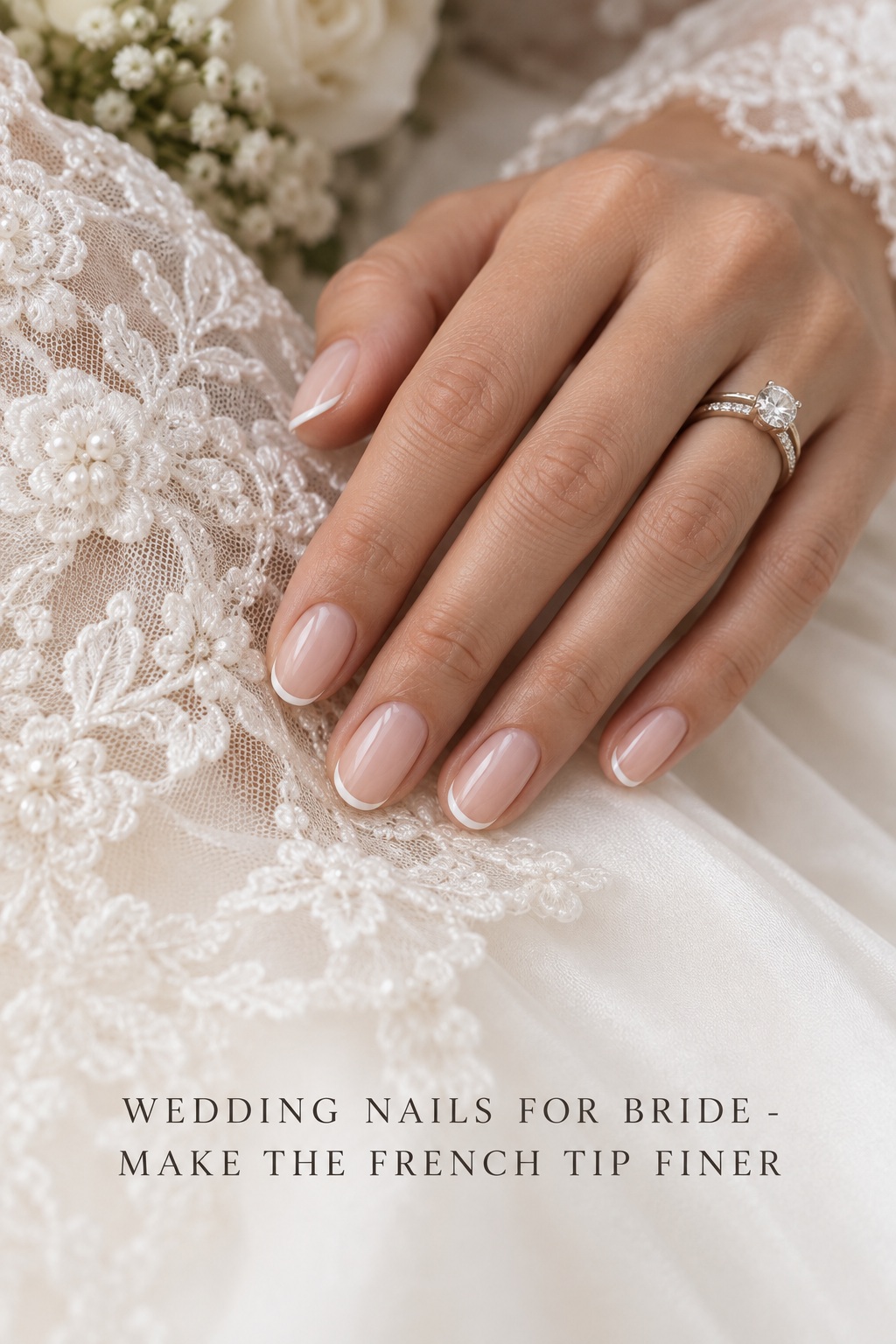
French tips create more structure. A classic white tip feels crisp and traditional, while a micro-French looks lighter and more modern. An ivory tip can blend with a warm gown, and a muted blue, rose, or champagne tip can add personality without taking over. French is a good choice if you want the manicure to look finished from a distance and still show detail in a close-up.
The trade-off is proportion. A thick tip can make short nails look crowded, while an ultra-thin tip may not balance a very long extension. The curve should follow the shape of the nail rather than fight it. Bring a photo of the tip width you like and ask your nail artist to show one sample before committing to the full set. If your gown already has a strong horizontal detail, a narrow tip may be more harmonious than a bold one.
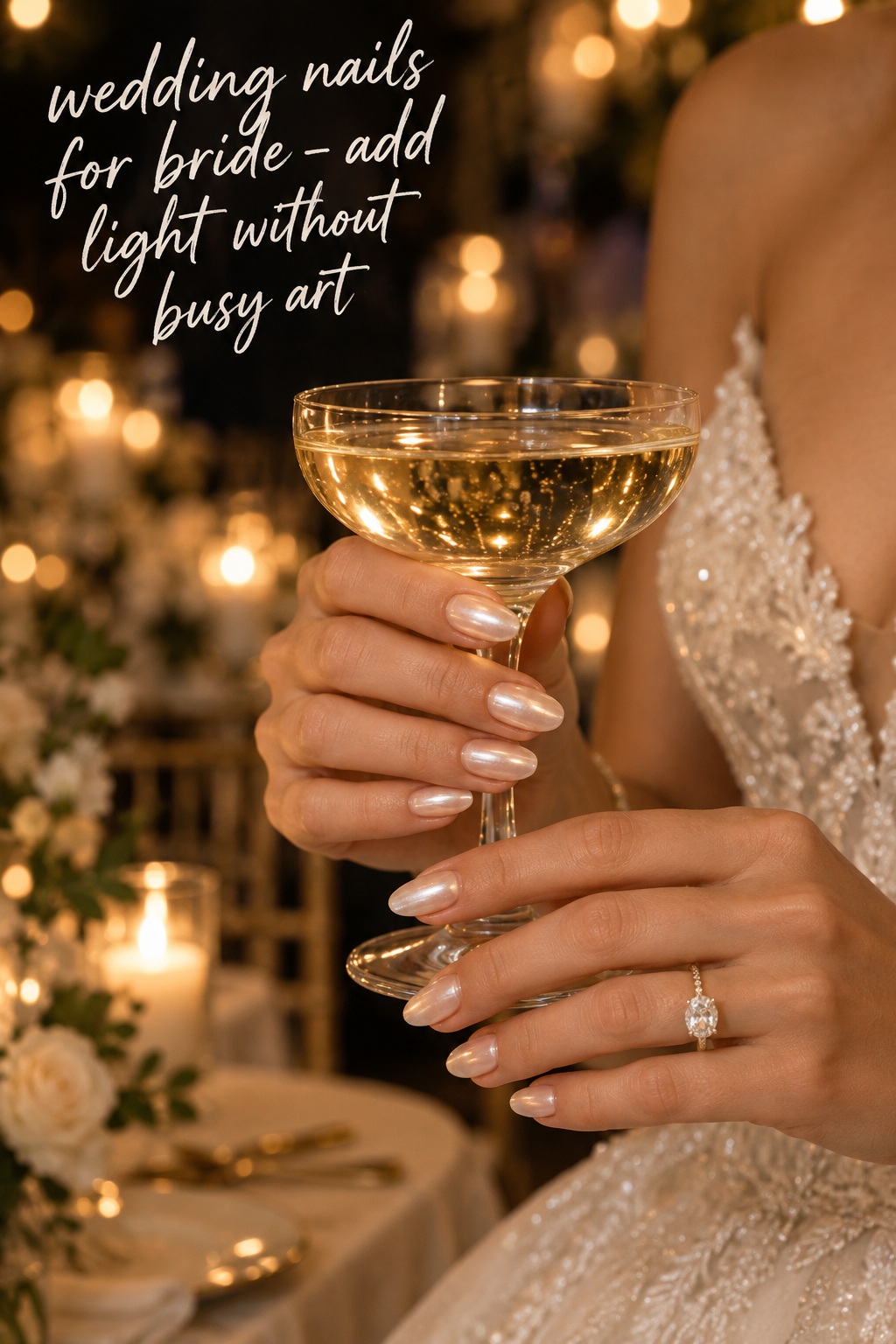
Pearl, glazed, or chrome finishes are useful when you want light without obvious nail art. A pearly veil over blush or milky polish can echo earrings, beading, or satin. A soft glazed finish gives movement as your hands turn, which can be lovely in photos. A restrained chrome line or chrome tip makes the look more directional while keeping the base calm.
The trade-off is that reflective finishes change under different lighting. A result that looks delicate in the salon may look stronger in direct sun or flash. Test the finish near a window and take a phone photo with your ring on. If you love the glow but not the intensity, use it on the tips or on one or two accent nails rather than across every finger.
Restrained color or nail art is the most personal direction. A deep berry, soft red, muted blue, or warm neutral can look remarkably bridal when it connects to the flowers, stationery, shoes, or reception styling. Tiny flowers, a single pearl, a fine line, or a small detail on the ring finger can also carry meaning without turning the manicure into a theme.
The trade-off is visual competition. If your bouquet, veil, jewelry, or dress already has several focal points, a full set of art can make the hands feel disconnected. Keep the palette narrow and repeat one detail at most. A color that you already wear and love is usually safer than a shade chosen only because it is popular in saved inspiration.
Choose the best manicure for your actual wedding situation
If your natural nails are short, prioritize a clean base, balanced shape, and a finish that does not crowd the nail bed. Sheer blush, milky pink, short squoval nails, or a narrow micro-French can look polished without pretending to create length. If you want extra length, discuss a short extension that you can comfortably wear during the rehearsal and getting-ready time. You should be able to fasten clothing, hold a bouquet, and use your hands normally.
If you are planning extensions, choose the length before you choose detailed art. A longer almond or soft coffin shape changes the proportion of every design. Wear the proposed length for a trial if possible, especially if you do not usually have extensions. Ask how the product will be removed and what maintenance is needed. The goal is not simply a dramatic photograph. It is a set that feels secure from the first getting-ready image through the last dance.
If your dress is detailed, let the manicure provide calm. A sheer base, soft French, pearl veil, or one small metallic detail can pick up the dress without copying every element. Matching lace with detailed nail art is not necessary. Often the better result comes from repeating the mood rather than the literal pattern.
If your dress is simple, you have more freedom to use a visible finish. A glazed surface, colored French, deep red, or delicate art can make the hands feel considered. Keep the shape clean so the added interest looks intentional. A simple outfit does not require a simple manicure, but both should share a level of polish.
If you are having an outdoor ceremony, look at your chosen shade in daylight. Warm sun can make pinks look brighter and reflective finishes more noticeable. Dust, wind, and frequent hand movement also make practical comfort important. Choose a finish that still looks good when the hand is not posed perfectly.
If you are having an evening reception, consider how the manicure behaves under warm indoor light and flash. A soft pearl, fine chrome, or deep color can show beautifully at night, while a very pale shade may need a little more contrast to remain visible. Take a quick test photo in lighting similar to your venue if you can.
If you want the lowest-maintenance choice, choose a short shape and a forgiving finish. A sheer base or softly blended shade makes small growth less obvious than a highly contrasted tip. If you prefer gel, ask about removal and plan enough time for a professional appointment rather than peeling it away later.
Build a salon brief and avoid the mistakes that create wedding-day stress
A good salon brief is short, visual, and specific. Bring one full-hand reference, one close-up detail reference, and a photo of your dress or accessories. Then write down the decisions that matter: desired length, shape, base color, tip or finish, accent placement, and what you do not want. This prevents a saved image from being interpreted as a request for every element at once.
- Do not test a completely new length at the last minute. Trial the shape and length early enough to make a calm change.
- Do not judge color under only salon lighting. Check it beside your ring, dress fabric, and a daylight window.
- Do not bring ten unrelated inspiration images. They can contain different shapes, undertones, tip widths, and finishes that cannot be combined cleanly.
- Do not ignore comfort. A beautiful set that catches on clothing or makes it hard to handle the bouquet will distract you.
- Do not leave the appointment timing vague. Confirm how long the service takes and schedule the final manicure close enough to the wedding for freshness, with enough buffer for travel and unexpected changes.
- Do not forget hand care. Use the routine recommended by your nail professional, keep cuticles comfortable, and avoid aggressive changes before the final appointment.
For the final appointment, repeat the exact shape and length from the trial unless you have a clear reason to change. Ask to see the completed set from a normal distance, not only with your fingers held directly under the lamp. Check the ring finger, the side profile, and both hands together. If a small detail feels too strong, it is easier to remove one accent before you leave than to spend the wedding morning worrying about it.
One final practical step is to create a one-sentence brief. For example: “I want short soft-almond wedding nails for a bride with a sheer blush base, a very fine ivory French tip, and one subtle pearl accent, polished enough for ring photos but easy to wear.” That sentence gives your nail artist the hierarchy of the look. You can replace the details with your own choices, but keep the priorities in the same order.
Sources and methodology
This comparison was developed from a US-focused review of ten current bridal manicure guides and galleries, including Vogue’s professional-led wedding nail guide and Allure’s photo-focused wedding nail guide. The article uses those sources for broad design categories, photo context, timing considerations, and professional-care themes. The recommendations and decision framework are editorial guidance, not claims of personal testing.
Wedding nails for bride FAQ
What are the most timeless wedding nails for a bride?
Sheer blush, milky pink, a fine French tip, and a soft pearl finish are dependable timeless directions. Choose the one that fits your undertone, nail shape, dress, and personal style rather than selecting a shade only because it is labeled bridal.
Should a bride choose French tips or a milky manicure?
Choose French tips when you want more definition and a visible outline. Choose milky polish when you want a softer background for the ring and outfit. A micro-French over a milky base can combine both effects.
What nail shape works best for wedding photos?
The best shape is balanced, comfortable, and consistent across both hands. Short squoval, rounded, soft almond, and carefully proportioned extensions can all photograph beautifully when the length suits your fingers and daily movement.
Can a bride wear colored wedding nails?
Yes. A muted red, berry, blue, warm neutral, or colored French can look bridal when it connects to the overall palette and feels intentional. Keep the rest of the design controlled if the color is the main statement.
How should I choose wedding nails for a detailed dress?
Use the dress as a guide for mood and texture rather than copying every detail. A calm base, soft French, pearl sheen, or one precise metallic accent usually complements lace, beading, or embroidery more easily than a full set of competing art.
When should a bride have her final manicure?
Plan the final appointment close enough to the wedding for a fresh finish, while leaving practical time for travel and adjustments. Your nail professional can recommend the exact schedule based on the service, product, and your nails. Always trial the shape and finish before the final appointment.
What should I tell my nail technician?
Share the desired length, shape, base color, tip or finish, accent placement, maintenance preference, and what you do not want. Bring a full-hand reference, a detail reference, and a dress or accessory photo so the brief communicates the whole look.
FAQ
What are the most timeless wedding nails for a bride?
Sheer blush, milky pink, a fine French tip, and a soft pearl finish are dependable timeless directions. Choose the one that fits your undertone, nail shape, dress, and personal style rather than selecting a shade only because it is labeled bridal.
Should a bride choose French tips or a milky manicure?
Choose French tips when you want more definition and a visible outline. Choose milky polish when you want a softer background for the ring and outfit. A micro-French over a milky base can combine both effects.
What nail shape works best for wedding photos?
The best shape is balanced, comfortable, and consistent across both hands. Short squoval, rounded, soft almond, and carefully proportioned extensions can all photograph beautifully when the length suits your fingers and daily movement.
Can a bride wear colored wedding nails?
Yes. A muted red, berry, blue, warm neutral, or colored French can look bridal when it connects to the overall palette and feels intentional. Keep the rest of the design controlled if the color is the main statement.
How should I choose wedding nails for a detailed dress?
Use the dress as a guide for mood and texture rather than copying every detail. A calm base, soft French, pearl sheen, or one precise metallic accent usually complements lace, beading, or embroidery more easily than a full set of competing art.
When should a bride have her final manicure?
Plan the final appointment close enough to the wedding for a fresh finish, while leaving practical time for travel and adjustments. Your nail professional can recommend the exact schedule based on the service, product, and your nails. Always trial the shape and finish before the final appointment.
What should I tell my nail technician?
Share the desired length, shape, base color, tip or finish, accent placement, maintenance preference, and what you do not want. Bring a full-hand reference, a detail reference, and a dress or accessory photo so the brief communicates the whole look.