Wedding Nails for Bridesmaids: A Shared Style Guide
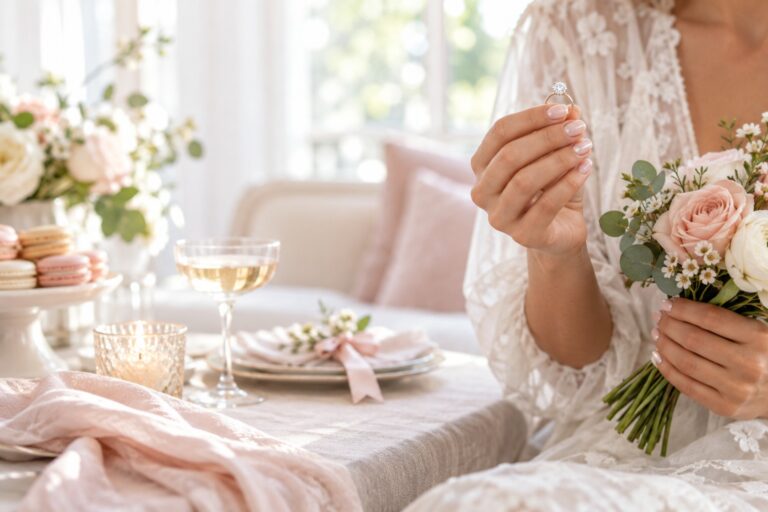
The first close-up is rarely planned. A bridesmaid reaches for the bouquet, steadies the bride’s veil, signs a card, lifts a champagne glass, or takes a friend’s hand during the recessional. Suddenly, her hands are part of the wedding story. That is why choosing wedding nails for bridesmaids is more interesting than picking a pretty polish from a long list. The manicure has to live beside the dresses, flowers, rings, lighting, schedule, and the different preferences of the people wearing it.
Picture the bridal party gathered in a getting-ready room. One person loves a short natural nail, another usually wears almond extensions, and a third wants one small detail that feels like her. The bride wants harmony, but not a row of identical hands that makes everyone feel managed. The most successful plan gives the group a shared visual language and leaves room for personal comfort. In this guide, the language comes from color, finish, scale, and timing. Use it to choose a look that photographs beautifully without turning the manicure into another source of wedding-day pressure.
The hands in the room: why bridesmaid nails matter in real wedding moments
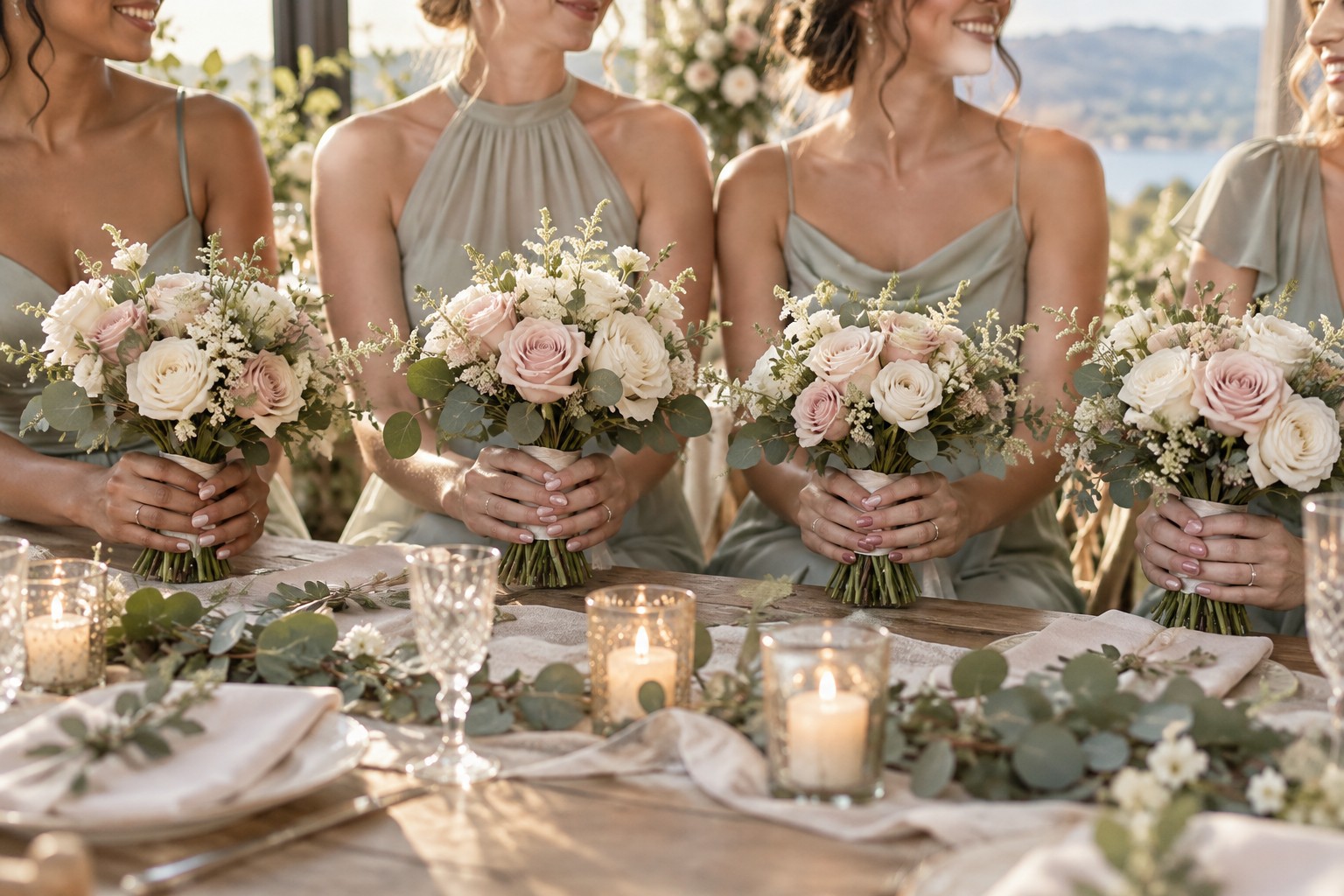
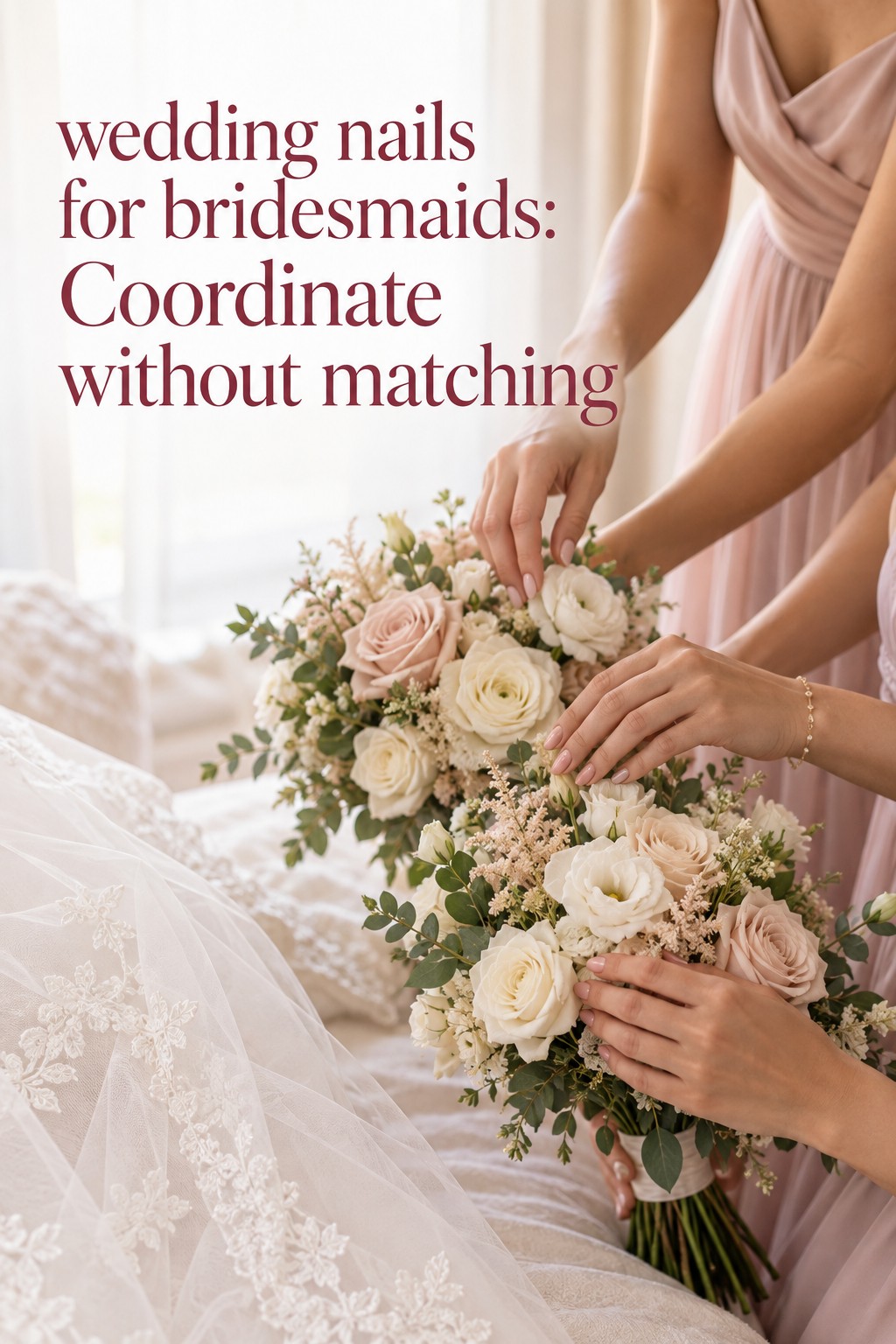
Bridesmaid nails appear in more images than you may expect. Hands hold bouquets at waist level, smooth a skirt, fasten a necklace, pass a note, and gather around the bride for group portraits. They also appear in casual images that are not carefully styled. A manicure that feels comfortable and considered will look natural in those moments. A shape that is too long, a charm that catches on fabric, or a color that makes someone self-conscious can change the way she moves.
Turn wedding inspiration into a plan you can actually follow.
Zarellea brings your guest list, budget, vendors, and day-of details into one shared space — so no beautiful idea gets lost in the shuffle.
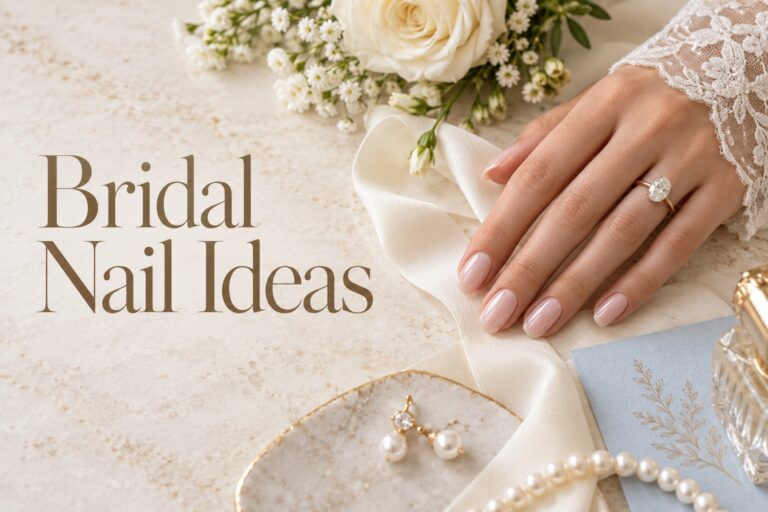
Start by treating the manicure as part of the wedding’s visual rhythm, not as a miniature version of the bride’s look. The bride may have a pearl finish, elaborate art, or a highly reflective chrome manicure. Bridesmaids can echo one element while keeping the scale quieter. If the bride wears a classic French manicure, the group might choose a micro-French or a sheer pink. If her nails include a blue accent, the attendants might repeat the blue only as a thin line or on one approved accent nail. This creates connection and keeps the couple visually central.
Let the bride set the level of boldness
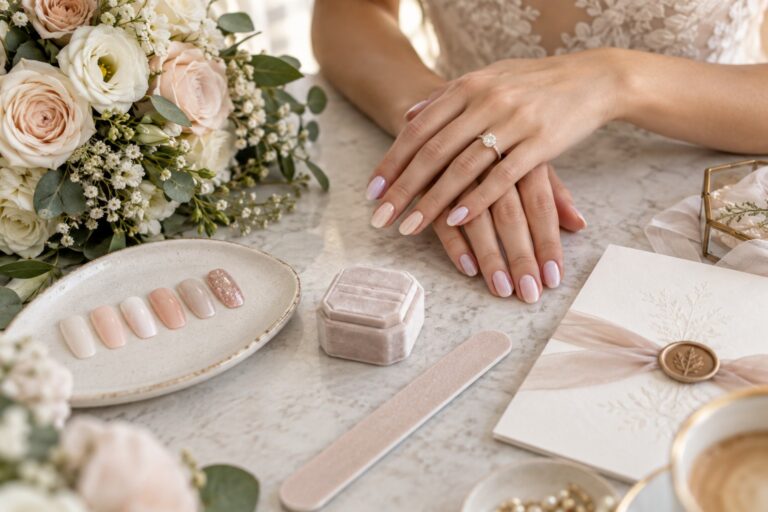
The bride does not need to approve every individual nail, but she should set the boundaries when the wedding party is expected to look coordinated. Ask a simple question: should the manicure feel nearly invisible, softly decorative, or intentionally expressive? Those three answers lead to very different briefs. Nearly invisible means sheer nude, blush, milky white, or a clean natural shine. Softly decorative allows a refined French line, pearl detail, glazed finish, or one muted color. Expressive can include colored tips, florals, chrome, or a deeper shade, as long as the couple is comfortable with the visual effect.
Keep the conversation practical. Send a small group of references, explain what must stay consistent, and name what can vary. For example, everyone may use a milky base and a short-to-medium length, while each person chooses between a white micro-tip, a champagne shimmer, or no art. A clear brief is kinder than saying “do whatever you want” and then feeling disappointed when the results look unrelated.
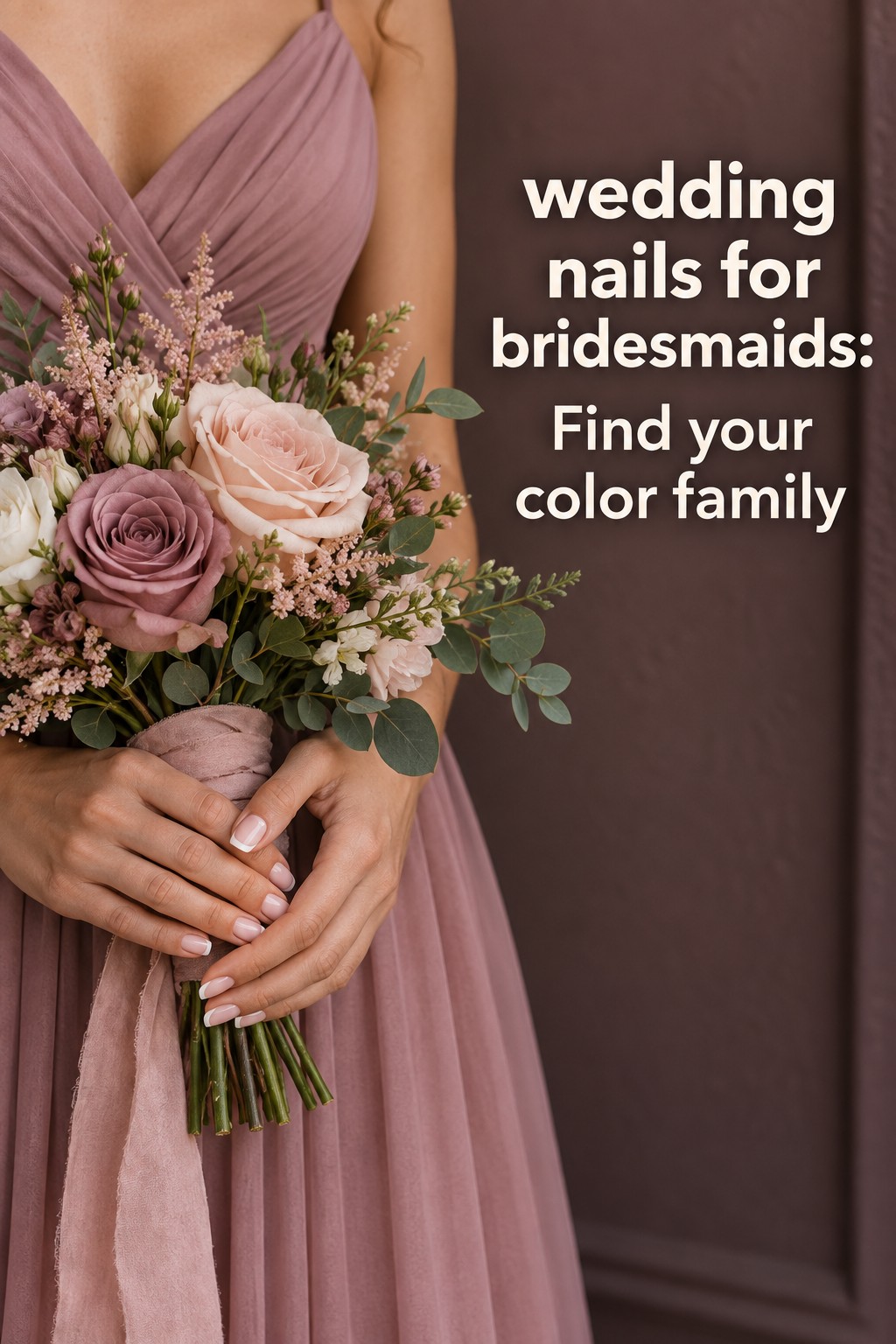
Let the wedding palette speak first: three ways to coordinate without identical sets
Color is usually the easiest way to connect several manicures, but matching the dresses exactly is not always the best answer. Fabric changes how a shade reads, and the same color can look different in satin, chiffon, velvet, or matte crepe. Instead, decide how much of the palette the nails should carry. A wedding with soft blue dresses may need only a blue-gray accent. A garden celebration with sage bouquets may look more intentional with a gentle green French tip. A black-tie room may support a deeper neutral or a controlled metallic.
System one: match one shared base
Choose one base shade for everyone, then allow small differences above it. A sheer blush, neutral beige, milky white, or translucent pink is useful when the dresses are already colorful. The shared base makes the hands feel related in group photos, while the top layer gives each bridesmaid a choice. One person might add a white tip, another a barely visible pearl shimmer, and another a single tiny floral. This system works especially well when the bride wants a calm, classic result.
- Use the same base family, not necessarily the exact brand or bottle.
- Keep decorative details at the same scale across the group.
- Set a maximum of one or two accent nails if the dresses are detailed.
- Ask the salon to test the base against the bridesmaid dress fabric.
System two: match two visual ingredients
When the bridal party has different skin tones or stronger individual preferences, match two ingredients instead of one color. The ingredients might be a soft finish and a short length, a French shape and a muted palette, or a pearl detail and a rounded silhouette. This approach creates cohesion through construction. It also prevents the common problem of asking every person to wear a shade that does not feel flattering or comfortable.
Imagine a lineup in dusty rose, mauve, and warm beige. The shades vary, but every set has a glossy finish and a thin metallic line near the tip. Or picture different neutrals with the same short squoval shape and no large embellishment. In both cases, the eye sees a pattern. The pattern is enough to make the group feel styled without requiring identical color.
System three: stay inside one color family
A color family gives the bride more freedom to work with a mixed dress palette. Blush, rose, mauve, berry, and dusty plum can share a romantic direction. Pale blue, slate, soft teal, and gray-blue can connect a cooler wedding design. Champagne, caramel, taupe, and chocolate can make a warm neutral lineup feel deliberate. Ask everyone to send a photo in daylight before the appointment, because names such as nude, sage, or pink cover a wide range of undertones.
Use the strongest color sparingly if the bride’s gown is white or ivory and the flowers are delicate. A saturated red or dark berry can be beautiful, especially for an evening event, but it becomes a central styling element. If that is the intention, repeat the color somewhere else in the wedding design. If it is not, soften the color into a tip, a sheer wash, or one small detail. The goal is not to ban personality. It is to make the personality feel placed.
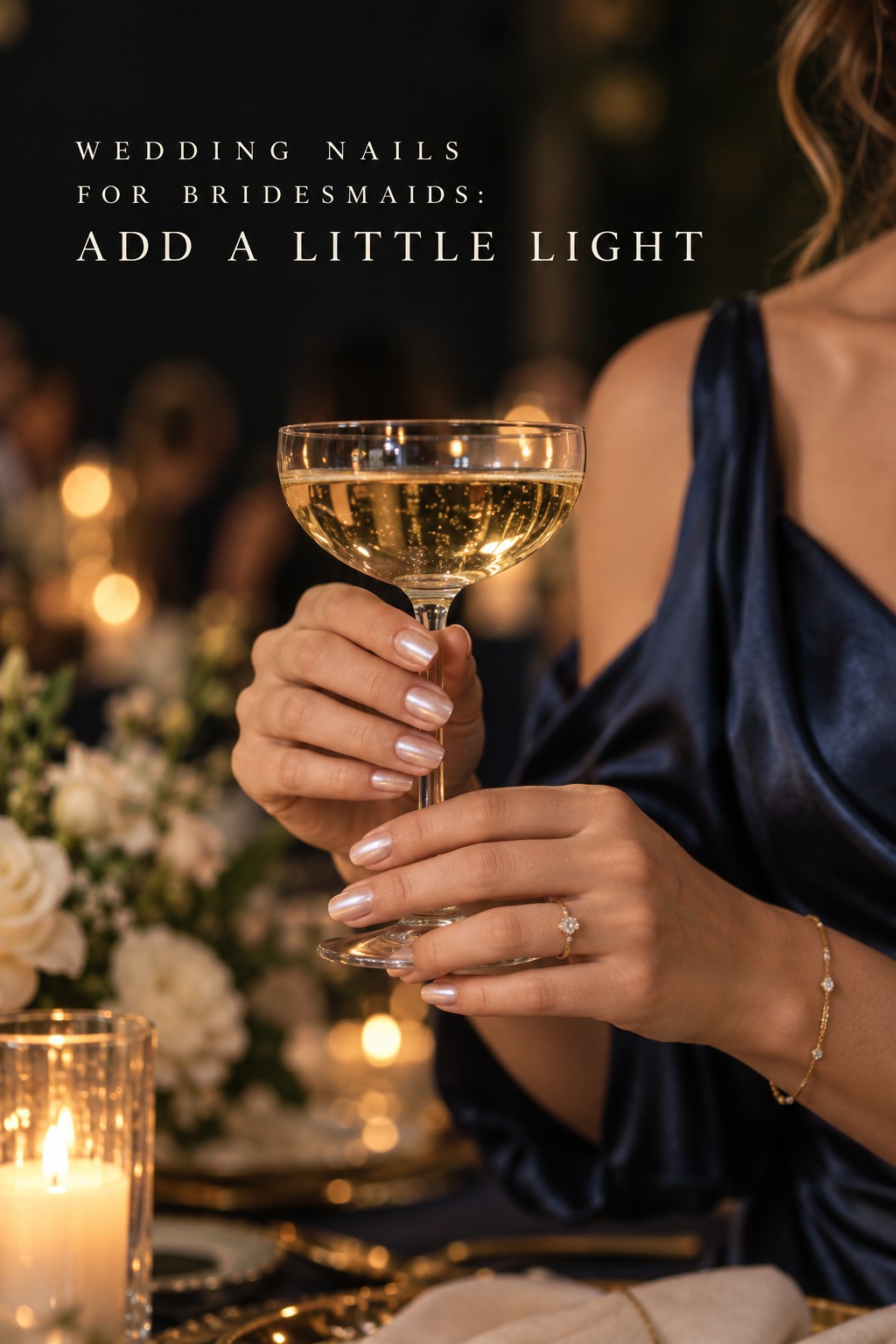
Choose the finish by the dress and light: sheer, French, chrome, pearl, color and art
A manicure can look quiet in a salon and bright in a reception photograph. Before choosing a finish, consider the surface of the dress and the light around the ceremony. Matte crepe and simple chiffon can handle a little shine. Sequins, satin, beading, or a reflective venue may need a calmer nail. Outdoor daylight reveals undertones and tiny art. Candlelight warms beige, gold, peach, and berry. Flash can emphasize contrast, so an ultra-bright white tip may read more graphic than expected.
Sheer and milky finishes for a quiet group
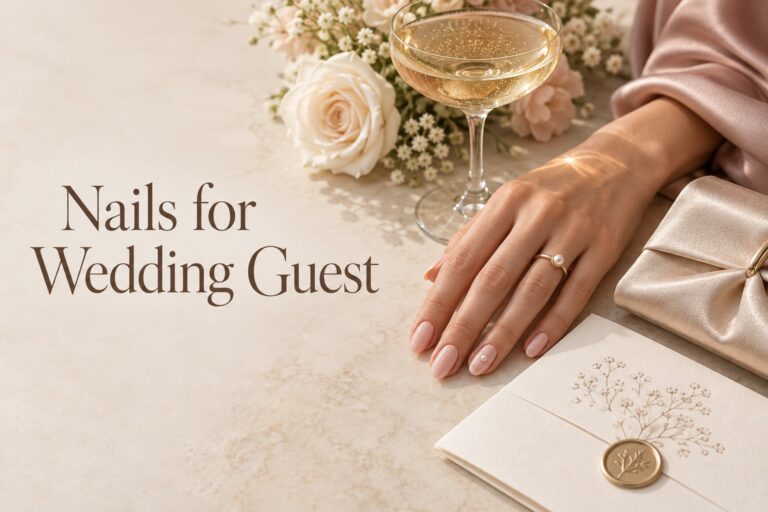
Sheer pink, translucent nude, milky white, and soft beige are the easiest foundations when the bridal party’s dresses already carry color or texture. They allow the bouquet, ring, and fabric to remain the first things the camera notices. They also make a useful compromise when attendants have different personal styles. One can wear the base alone, another can add a fine tip, and another can request a subtle shimmer without breaking the overall mood.
French variations that feel connected, not predictable
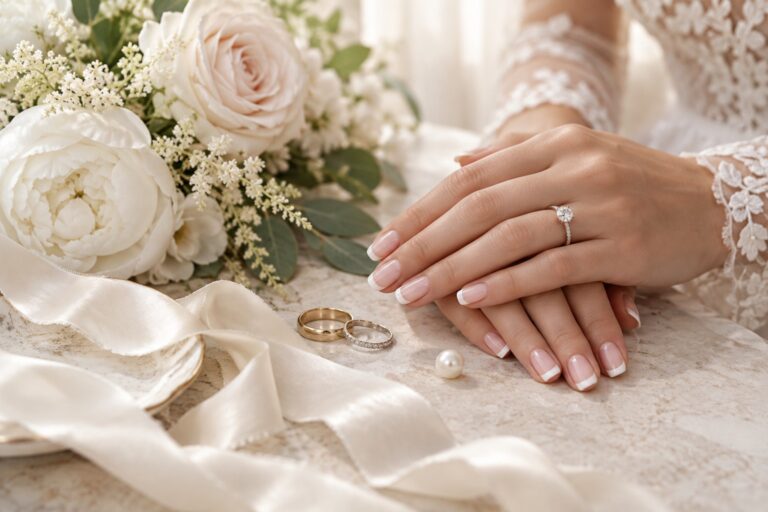
A classic French tip is a safe choice because it gives the hands definition while remaining easy to coordinate. A micro-French makes the look more delicate and often suits shorter natural nails. An ombré French softens the line from base to tip and feels romantic beside lace or flowing fabric. A colored French can pick up a wedding shade without covering the whole nail. Brown, rose, blue-gray, sage, or champagne tips can feel more personal than stark white while still reading polished.
Shape changes the mood. A soft square looks clean and modern. A rounded short nail feels practical and understated. Almond creates a longer visual line, but it should not be forced on someone who works with her hands or dislikes extensions. Ask the nail artist to keep the French line proportional to the nail length. A heavy tip on a very short nail can make the fingers look crowded, while a tiny line on a long extension may disappear in a group image.
Chrome and pearl when the room needs a little light
Chrome, pearly glaze, and fine metallic details add light without requiring complicated art. They are especially effective for evening receptions, modern venues, and dresses with a clean silhouette. Keep the surface controlled if the bride is wearing a high-shine manicure or the room already has crystal and sequins. Champagne or soft gold warms blush and taupe. Silver and pearl sharpen cool pink, gray, pale blue, and icy lavender. A glazed finish over a neutral base can be the shared ingredient for a group with different colors.
Florals, dots, and tiny motifs with a reason
Small art is most successful when it repeats something already present. A tiny blue flower can echo the bouquet. A thin gold curve can connect to jewelry or candleholders. A pearl accent can reflect a beaded bodice. A delicate swirl can soften a minimalist dress. Keep motifs small enough to read as a detail rather than a competing pattern. If the group chooses art, use the same placement or scale even when the colors vary. One accent nail per hand may be enough for a formal wedding.
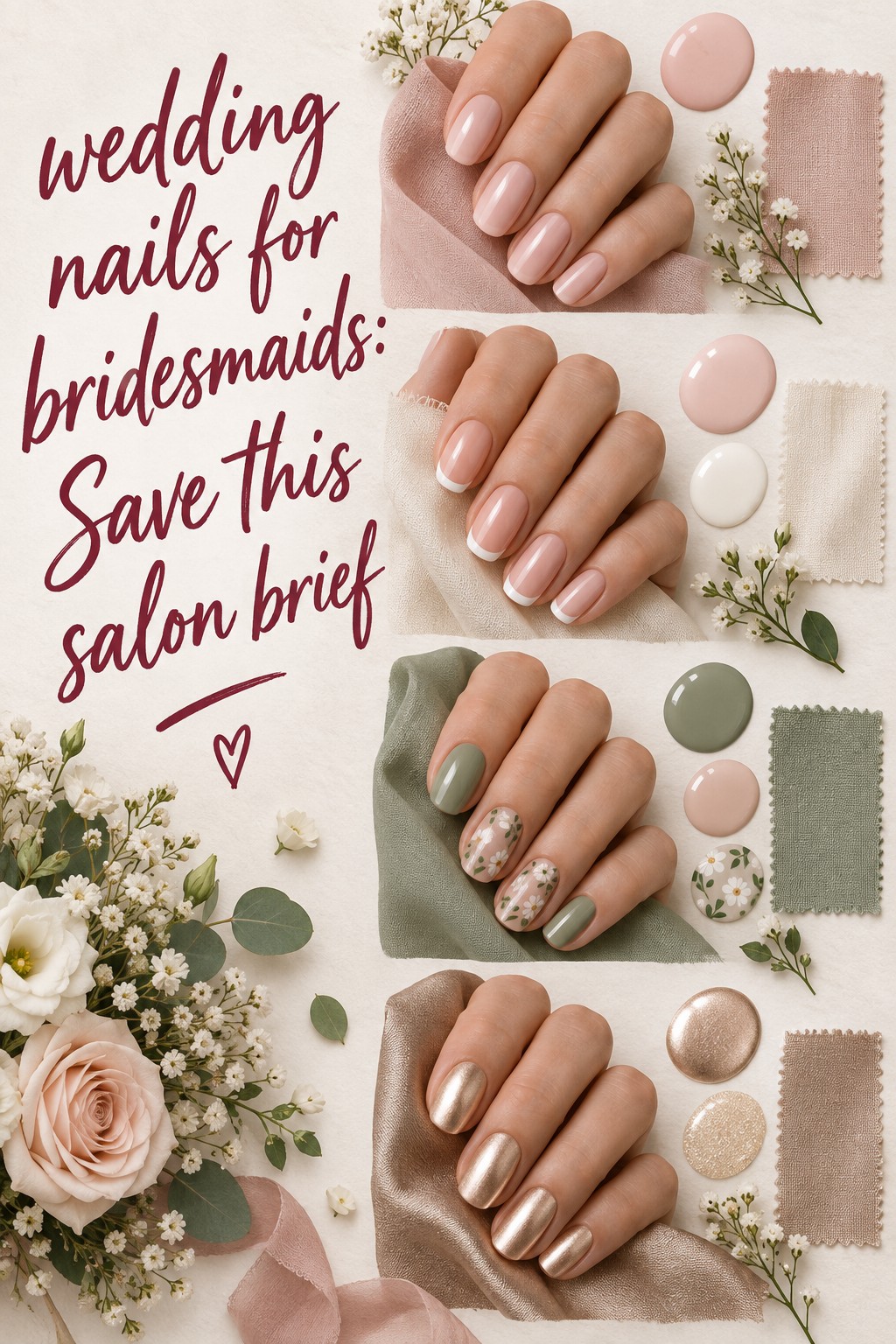
Build a shared manicure brief that still respects each bridesmaid
The best group manicure plan can be explained in a few sentences. Write it before anyone books an appointment. Include the wedding mood, the preferred color family, the maximum length, the finishes that are welcome, and the elements that need approval. Then name the personal choices each bridesmaid can make. This turns a vague aesthetic into a useful salon brief and gives everyone the same information.
Decide what must match
Usually, two or three shared rules are enough. The group might match length and finish, or base color and decorative scale. If the dresses are all different, a common shape can do more work. If the dresses match, different shapes may be perfectly fine as long as the colors stay close. Avoid trying to control every variable. Too many rules make the manicure feel like a uniform, and they create more opportunities for a last-minute mismatch.
Write down practical boundaries as well. Decide whether extensions are optional, whether gel or regular polish is preferred, and who pays for the service and any required removal. If one person cannot wear a certain product or needs a shorter shape, solve that within the shared palette. A cohesive group is not one in which every hand is treated identically. It is one in which the differences look intentional and the people feel at ease.
Use the dress as a styling test, not a strict color target
Place a fabric swatch, jewelry sample, flower reference, and nail color card together in daylight. Look at them again under the venue’s likely lighting if you can. A cool pink may make warm champagne dresses look yellow. A bright white may feel harsh beside ivory. A muted metallic can be more elegant than a perfect color match because it connects through light rather than pigment. Take a photo of the group of references, not only the polish bottle, and send it to the nail artist.
Plan for hands that have different jobs
Not every bridesmaid will have the same wedding-day routine. Someone may be holding a toddler, carrying an emergency kit, helping with place cards, or working with a microphone. Someone else may have a quiet portrait schedule. A practical short shape and secure finish may be the best choice for the person who will be moving constantly. A longer almond set may suit another person who wants more drama. Let the shared color and finish carry the visual connection while the shape reflects real life.
Make the appointment work: shape, timing, budget, repairs and day-of kit
Beautiful inspiration is only useful when it survives the calendar. Book the group appointment close enough to the wedding for the finish to look fresh, but leave room for a repair or adjustment. The exact timing depends on the service, the travel schedule, and how quickly each person’s nails grow. A salon may also need extra time for removal, extensions, detailed art, or several people who need different services. Ask for a realistic appointment length instead of assuming a group booking is simply one long manicure.
Set a cost boundary before the booking is confirmed. Basic polish, gel, extensions, removal, repairs, art, and tips may be priced separately. If the bride requests a specific design, she should make the budget and payment plan clear. If attendants are choosing their own services, tell them the maximum amount and what it includes. This keeps an aesthetic decision from becoming an awkward financial surprise.
- Send the shared manicure brief and reference image before the appointment.
- Bring the actual dress color or a reliable fabric swatch.
- Confirm removal, extension, art and repair fees in advance.
- Choose the nail length after considering bouquets, zippers, children and travel.
- Ask each person to bring the shoes and jewelry she will wear if scale matters.
- Assign one person to carry the small day-of repair kit.
The emergency kit can be modest. Include the polish or gel color name, a small file, nail glue if extensions are involved, a few adhesive tabs, hand cream, cuticle oil, bandages, and a clean cloth. Keep the kit away from the bride’s dress and do not attempt a complicated repair in a crowded getting-ready room. If a nail chips, the goal is to stabilize it and keep the hands comfortable until a professional can help.
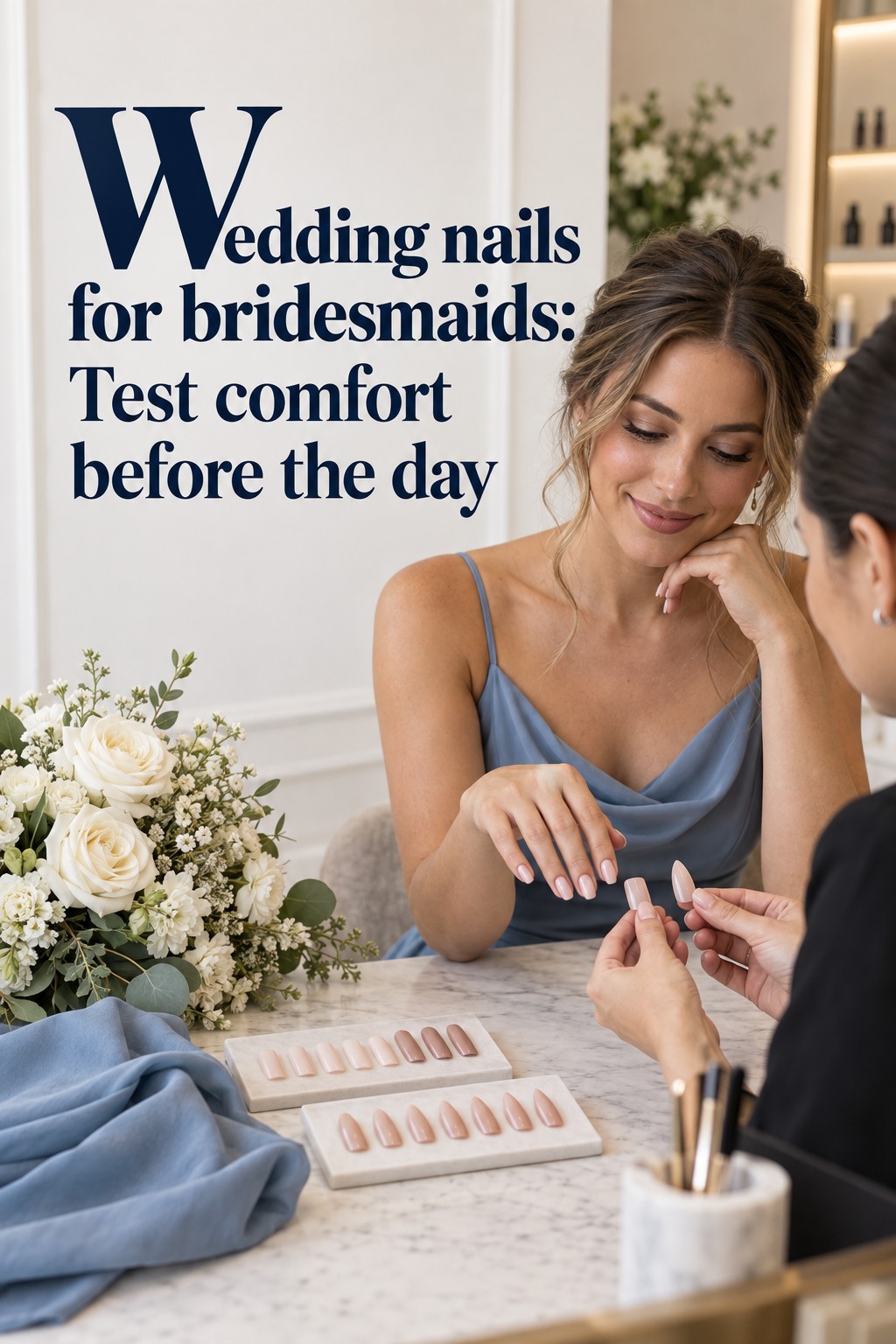
Finally, schedule a shape check for movement. Ask each bridesmaid to hold a bouquet, pick up a phone, fasten a clasp, lift her arms, and rest her hands naturally. If she keeps adjusting the nails, they are too long, too sharp, or too unfamiliar. The best wedding nails for bridesmaids disappear into confident movement while adding just enough polish to make every close-up feel finished.
FAQ
Should all bridesmaids have the same wedding nails?
No. A shared base, color family, finish, length range, or decorative scale can create a coordinated look without identical sets. Let the bride decide which two or three elements matter most, then allow each bridesmaid to choose a comfortable shape or small personal variation.
What colors are safest for wedding nails for bridesmaids?
Sheer pink, soft nude, milky white, blush, beige, gentle mauve, and a refined French tip are reliable starting points. If the wedding palette is stronger, a muted version of the dress or bouquet color can work. Test the undertone beside the fabric instead of relying only on the polish name.
Can bridesmaids wear chrome or pearl nails?
Yes, especially when the finish is used as a shared light-catching detail rather than a large statement. Soft pearl, champagne chrome, or a glazed neutral can complement evening light and clean dresses. Keep the level of shine quieter than the bride’s if the couple wants a clear visual hierarchy.
Are short nails appropriate for a bridesmaid manicure?
Absolutely. Short rounded, squoval, or soft-square nails can look elegant and are often easier for bouquets, travel, childcare, and practical wedding tasks. A micro-French, milky color, fine shimmer, or tiny accent can add detail without requiring extra length.
How close to the wedding should bridesmaids get their nails done?
Plan the appointment close enough that the finish is fresh for portraits, while leaving a little time for a repair if needed. Consider travel, removal, extensions, detailed art, and the salon’s group schedule. Confirm the timing with the nail artist rather than treating one universal day as a rule.
What should a bride tell her bridesmaids before they book?
Share the wedding mood, approved color family, maximum length, preferred finish, any design limits, appointment timing, and expected cost. Also explain what can vary, such as nail shape or one small accent. Clear boundaries make the process easier and help every bridesmaid arrive feeling prepared rather than judged.