Bridesmaid Hairstyles With Bangs: A Style Guide
Choosing wedding hair is easier when you start with the detail that frames your face every day. If you already wear bangs, you do not have to hide them for a formal event or build the entire look around a single inspiration photo. You can decide whether the fringe should stay forward, sweep to one side, or join the rest of your hair, then choose a back shape that makes that choice feel intentional.
The most useful bridesmaid hairstyles with bangs are a small, flexible system: one plan for the front, one silhouette for the back, and a few practical checks for the dress, texture, comfort, and schedule. That approach helps you arrive with a clear idea while leaving room for a stylist to adapt it to your actual hair. It also makes group coordination easier. Bridesmaids can share a level of polish or one accessory detail without wearing identical styles.
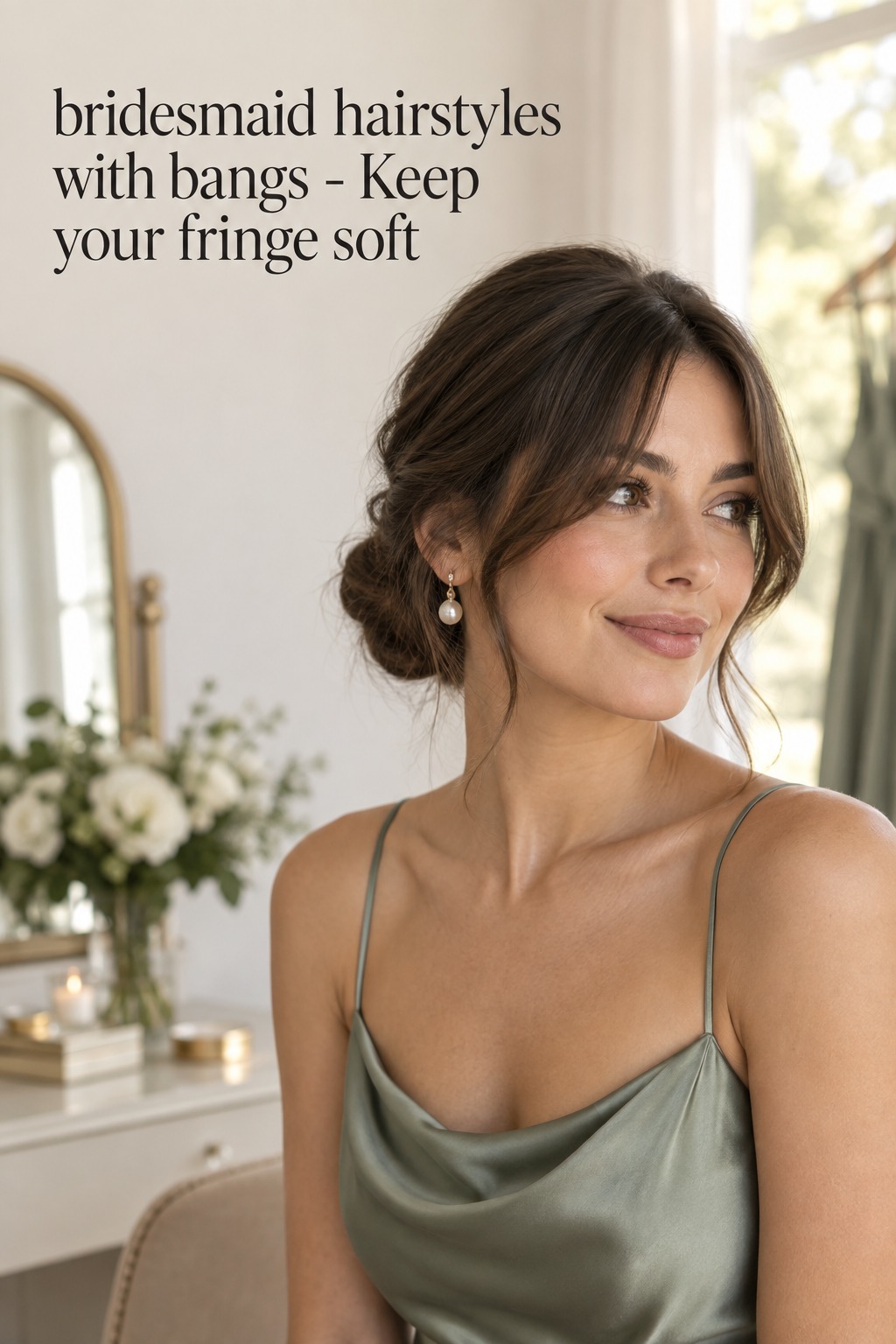
Start with the bangs, then build the hairstyle around them
Before you choose a bun, braid, or wave pattern, decide what you want the fringe to do in the finished look. There are three useful directions: leave it forward, sweep it to one side, or pin it back. Think of these as the foundation of your hair capsule. Once you settle on one, the rest of the style becomes easier to compare.
Turn wedding inspiration into a plan you can actually follow.
Zarellea brings your guest list, budget, vendors, and day-of details into one shared space — so no beautiful idea gets lost in the shuffle.
Wear the bangs forward when they are part of your signature
Curtain, wispy, and blunt bangs can all remain visible with a wedding hairstyle. Forward does not have to mean untouched or casual. It means the fringe keeps its familiar direction and becomes a deliberate part of the silhouette. A low chignon or half-up style can give the back a formal finish while leaving the front recognizable.
Bring a photo of your everyday bangs when you meet your stylist. Include a photo from the front and one from the side, because the length at the temples may be different from the center. Ask how the fringe can be shaped to match its usual part and bend without shortening or changing the cut on the wedding morning. A stylist can make a polished version of the way your hair already falls, instead of forcing it into a direction it does not naturally hold.
This is often the most comfortable option for someone who feels unlike herself when her forehead is fully exposed. It also works well when the bangs are a defining feature of a short cut or bob. The main planning question is how they will sit after the rest of the hair has been pinned. Ask for the fringe to be styled near the end, once the back shape is secure, so it can be balanced with the finished volume.
Sweep the fringe when you want an open, angled frame
Side-swept bangs can connect a formal updo to soft face-framing pieces. They are a useful middle ground if you want the hair lifted but do not want every strand pulled away from the face. The sweep can be smooth and defined or softly curved, depending on the texture and formality of the rest of the look.
Agree on the part before the trial. A deep side part creates a stronger line, while a gentler shift keeps more of the original shape. Show the stylist which side you prefer and how the bangs behave when you tuck them behind your ear. If one side falls forward again, a discreet pin may be more comfortable than repeated touchups. Keep any pin placement away from a spot where it will rub against a hair accessory or the arm of your glasses.
When bangs are swept across the forehead, the balance of the back matters. A soft low bun, a rolled style, or a half-up twist can echo that curve. A very sleek, tightly pulled-back shape creates a sharper contrast. Neither is wrong, but it helps to decide whether you want the look to feel soft throughout or intentionally polished in the back and relaxed in front.
Pin bangs back when the neckline or activity calls for less hair forward
Some bridesmaids prefer an open face for photos, dancing, or a detailed neckline. Bangs can be pinned back, blended into a twist, or secured beneath another section. The aim is not necessarily to make them disappear. A small lift, a shallow side sweep, or a soft twist can keep the front from looking abruptly bare.
Try this option during the hair trial rather than deciding on the day. The stylist can test whether the length reaches a secure anchor point and whether the pins feel comfortable. If the fringe is short or blunt, it may be better to preserve a slight curve than to pull it straight back. If it is longer, it can often be directed into a side section or incorporated into a braid. Ask the stylist to show you how the pins are placed so a bridesmaid can make a small adjustment if needed.
A wedding tutorial from Hair.com demonstrates setting the fringe aside while building an updo, then returning to style it as its own section. That sequence is a useful conversation starter: secure the overall shape first, then decide how much lift, curve, or hold the bangs need. Product choice should be based on the hair and the stylist’s method, not on copying a product list from a tutorial.
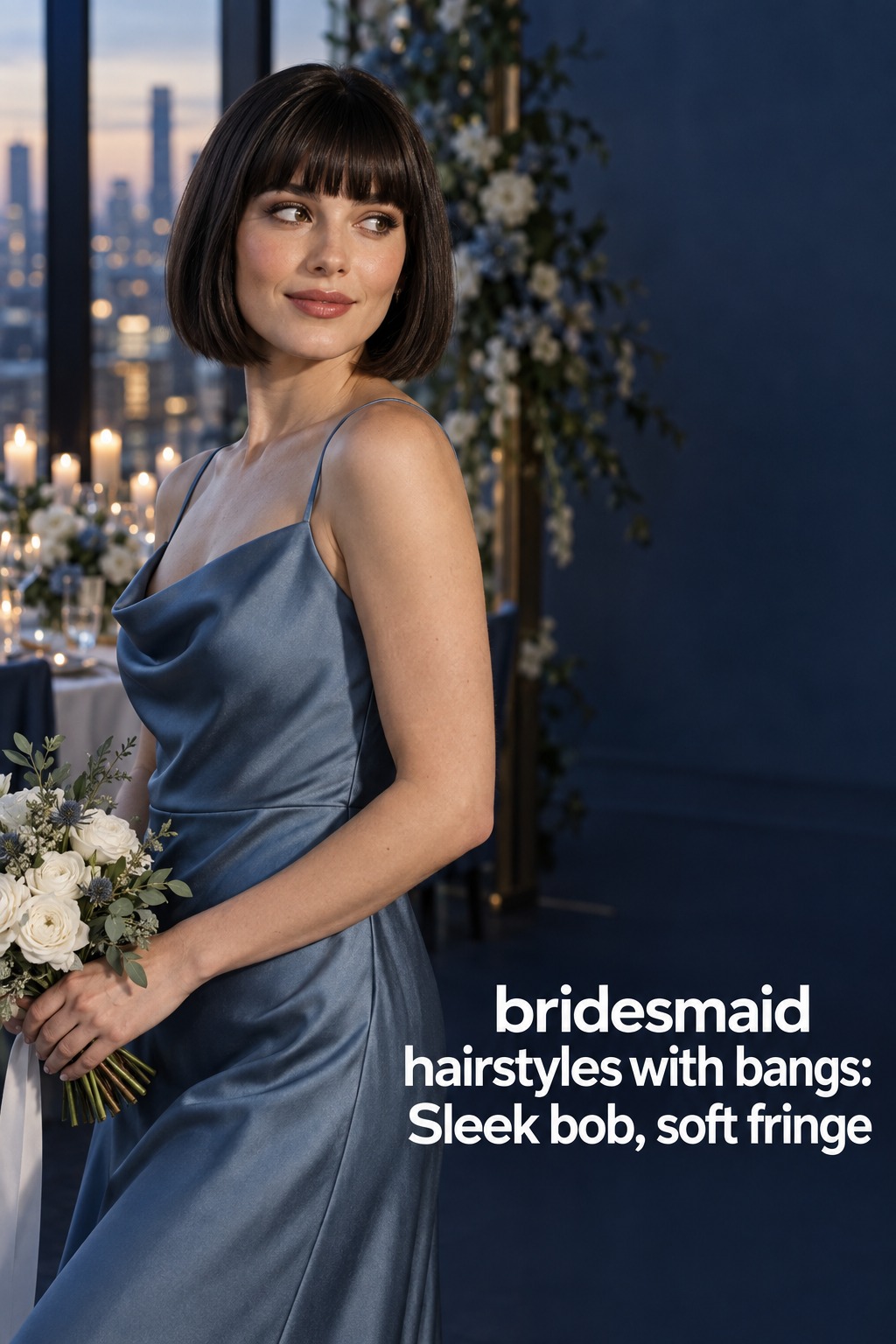
Choose a back shape that works with your fringe and dress
Once the front has a job, choose the back. Use the dress neckline, your hair length, and how much movement you want as filters. A hairstyle should feel complete from the front and back, but it should also let you sit, hug, carry a bouquet, and move without needing to guard it all day.
Low updos pair easily with forward or swept bangs
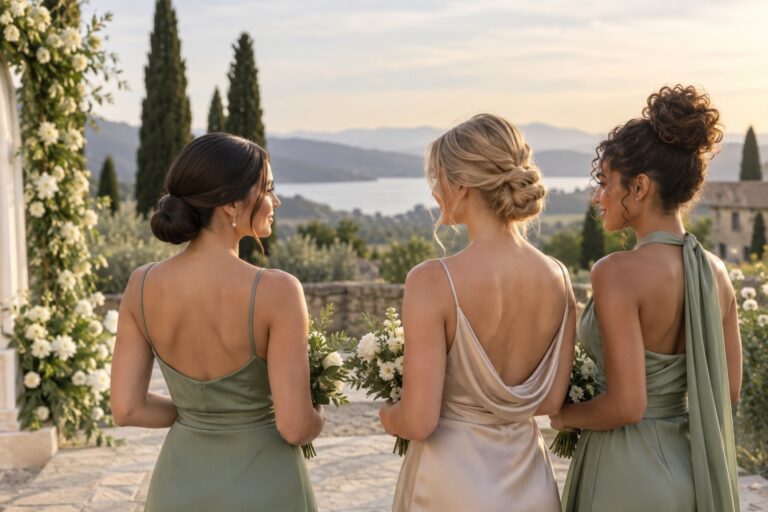
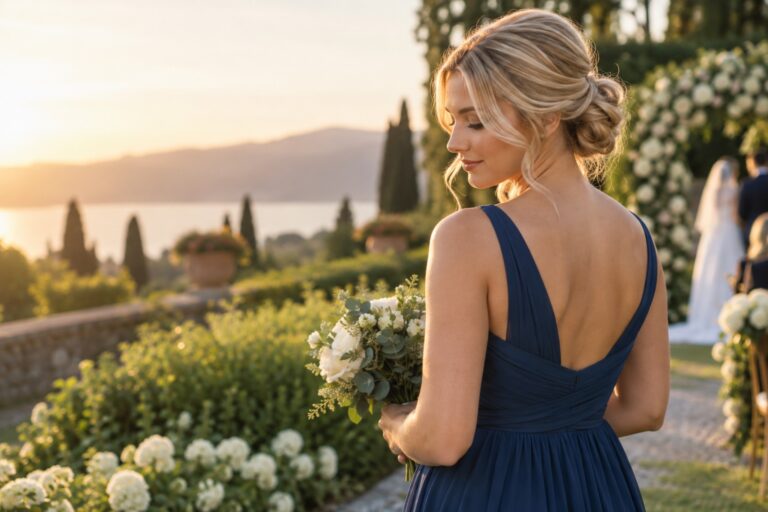
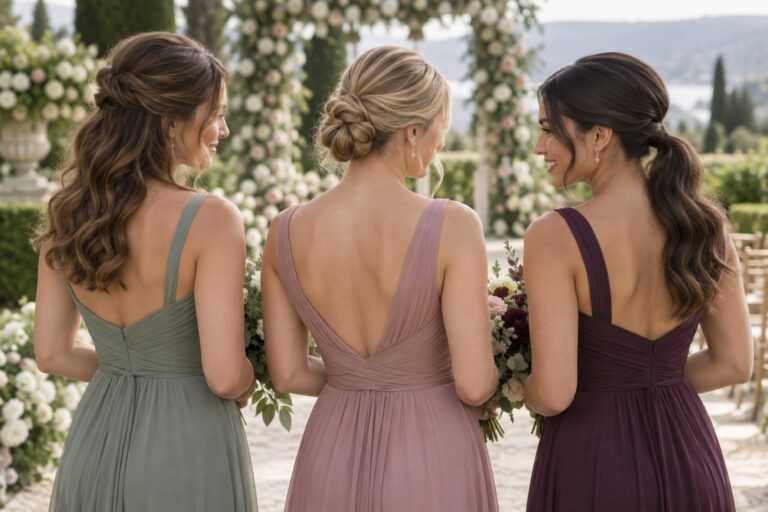
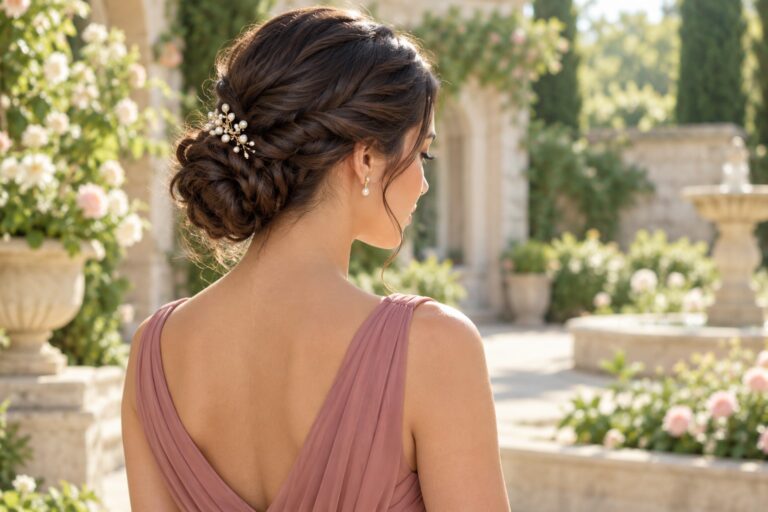
A low bun, chignon, or tucked twist keeps the visual weight below the crown. It can complement a high neckline or an open back, depending on where the bun sits. With curtain bangs, a low shape leaves the face soft and connected. With side bangs, the diagonal line can lead naturally toward a twist or side-parted bun.
For short or medium hair, ask whether the desired shape can be built from the length you have, rather than assuming a large bun is possible. Sections can be rolled or pinned into a compact shape. If an accessory is part of the look, agree on its position before adding more volume. The accessory should not compete with the fringe for attention at the temples.
High updos give the neck room and keep more hair off the shoulders
A higher bun or twist can feel useful with a detailed back, a strapless neckline, or a reception where you expect to dance. It shifts the hair away from the neck and can create a more lifted outline. Bangs make this shape feel less severe when they are left forward or softened at the sides. If the front is pinned back too, ask to see the profile so the height does not make the overall look feel unexpectedly formal.
High placement is not a requirement for warm weather or active celebrations. Comfort and personal preference still matter. The Knot’s bridesmaid updo guide suggests considering the bride’s preferences, season, venue, and dance-floor plans when choosing an updo. Use those details as prompts for your own decision, then choose the shape that feels good on your head and works with your outfit.
Half-up hair is a flexible bridge between pinned and loose
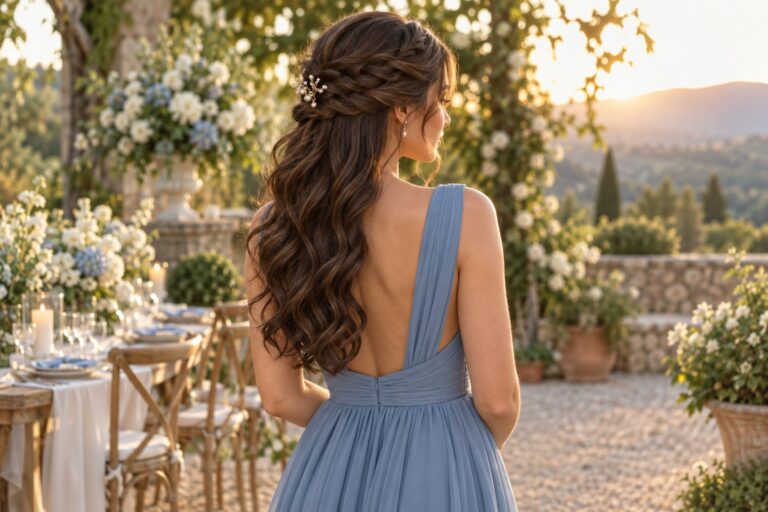
A half-up style can be a strong choice if you want the back detail of an updo but still like the movement of hair down. It also creates an anchor for curtain bangs or long side fringe, while the loose sections keep the look from feeling too structured. On shoulder-length hair, a small twist or barrette may provide enough shape without asking the hair to form a full bun.
Consider how the loose section will meet the dress. Hair can rest over a simple strap, but it may cover beadwork or catch on a textured neckline. Take a photo of the dress to the trial and ask the stylist to check the hair from the back and side. Decide whether the loose portion should sit behind one shoulder, fall evenly, or be pinned for portraits and then released later.
Worn-down styles let a fringe and cut work together
Not every bridesmaid needs an updo. A smooth bob, brushed waves, or defined natural texture can look occasion-ready when the finish relates to the rest of the group. Bangs can remain forward, blend into a side wave, or be styled to echo the curve of the ends. A barrette or small comb can add a shared detail without changing the basic shape.
Think through the day, not just the first photograph. If you wear your hair down, will you want it behind your shoulder during the ceremony? Does the style stay comfortable against your dress? Can you move it out of the way without disturbing the fringe? These practical questions help you choose the amount of hold and the best time for a touchup.
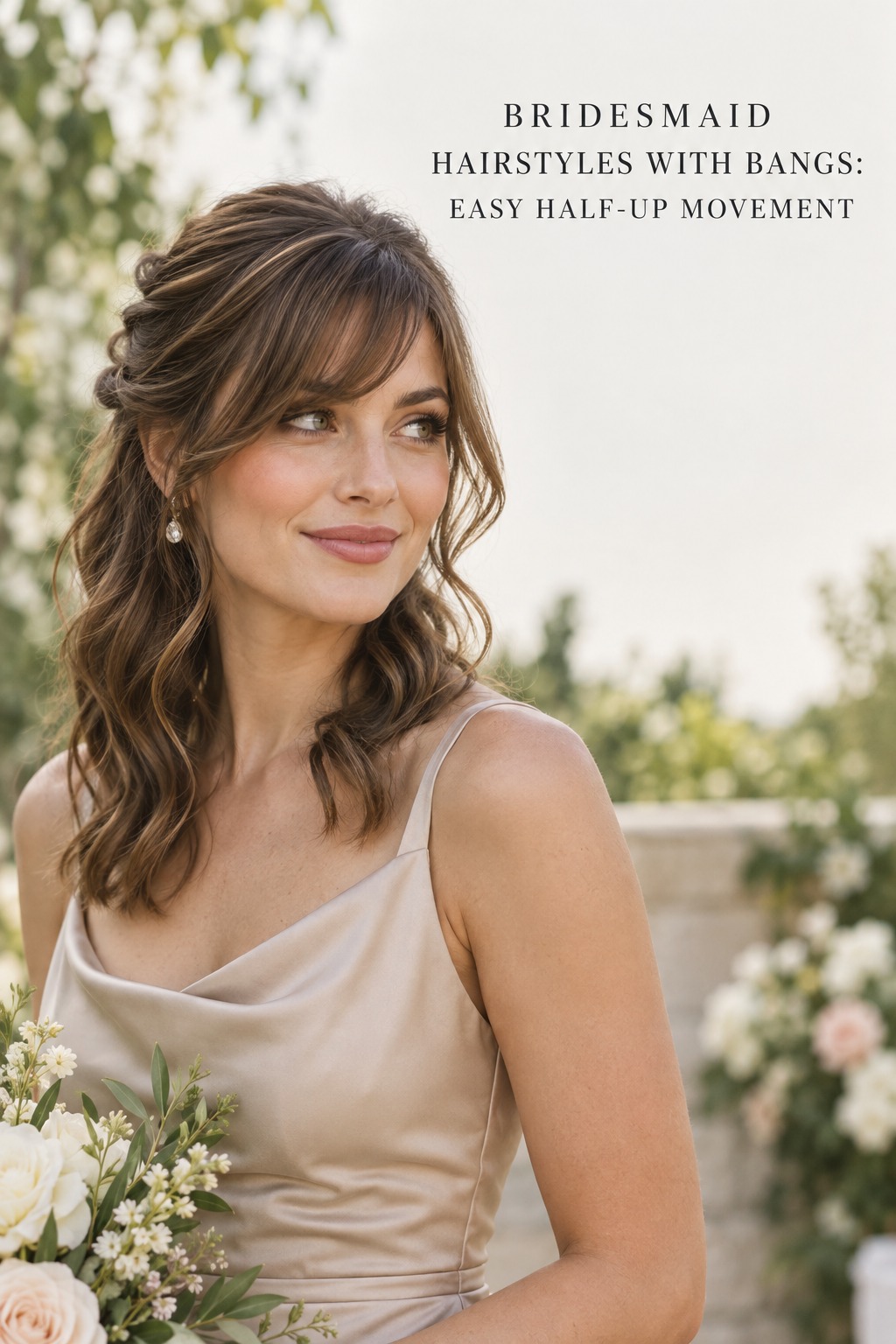
Adapt the plan to your hair texture and bang type
Two people can choose the same reference photo and need different styling plans. Bang length, density, growth pattern, curl, and the amount of time available all change how the front behaves. A picture is best used to show shape and mood. The stylist can translate it into a version that works with the hair in the chair.
Curtain bangs need a clear center part and balanced sides
Curtain bangs usually open around a part and angle toward the temples. Decide whether you want that center opening visible or a looser sweep across the forehead. If the rest of the hair is gathered, ask how the shorter sides will connect to the pinned sections. A light face-framing piece may help the transition, but it should not be so long that it becomes a stray strand during photos.
For a half-up look, the bangs can mirror the movement of the loose hair. For a low bun, keep the side sections deliberate, with a curve that looks intentional from the front and three-quarter angle. If your part shifts during the day, bring that up at the trial. A style designed around your natural part is usually easier to maintain than one that relies on repeatedly redirecting the roots.
Wispy bangs can keep softness without losing their outline
Wispy fringe can be styled with a small amount of separation so it reads clearly rather than disappearing into the forehead. If you are wearing a high updo, soft pieces at the temples can keep the profile gentle. If the wedding is outdoors, ask the stylist to show how the fringe looks when it moves slightly, not only when it is perfectly still.
Use inspiration photos that have similar density and length. A very full fringe in a reference image will not translate exactly to a lighter bang, and adding product will not create the same shape in every texture. Your stylist can show whether a soft bend, a side sweep, or a small amount of root lift best matches the hair you have.
Blunt bangs benefit from a clean shape and an intentional contrast
Blunt bangs can look striking with a low ponytail, a sleek bun, or a smooth bob. Their strong horizontal line can balance a clean dress shape, or contrast with a softer, textured updo. Choose which direction you like. If the back is loose and romantic, a crisp fringe can become the defined detail that makes the look feel considered.
Ask for the ends to be styled so they sit evenly and naturally, without pressing them flat against the forehead. A round brush or other tool may be part of the stylist’s approach, but the exact technique depends on the person’s hair. Avoid a last-minute haircut to alter the fringe for one event. If a trim is part of your plan, schedule it with enough time to live with the shape before the wedding.
Side bangs and natural curls deserve a texture-aware plan
Side bangs can be swept into an updo or left to frame one side of the face. Their direction can complement a side part, a side braid, or an asymmetrical accessory. If the hair has a natural bend or curl, bring a photo of it air-dried as well as styled. That gives the stylist a better starting point than a reference image with a different texture.
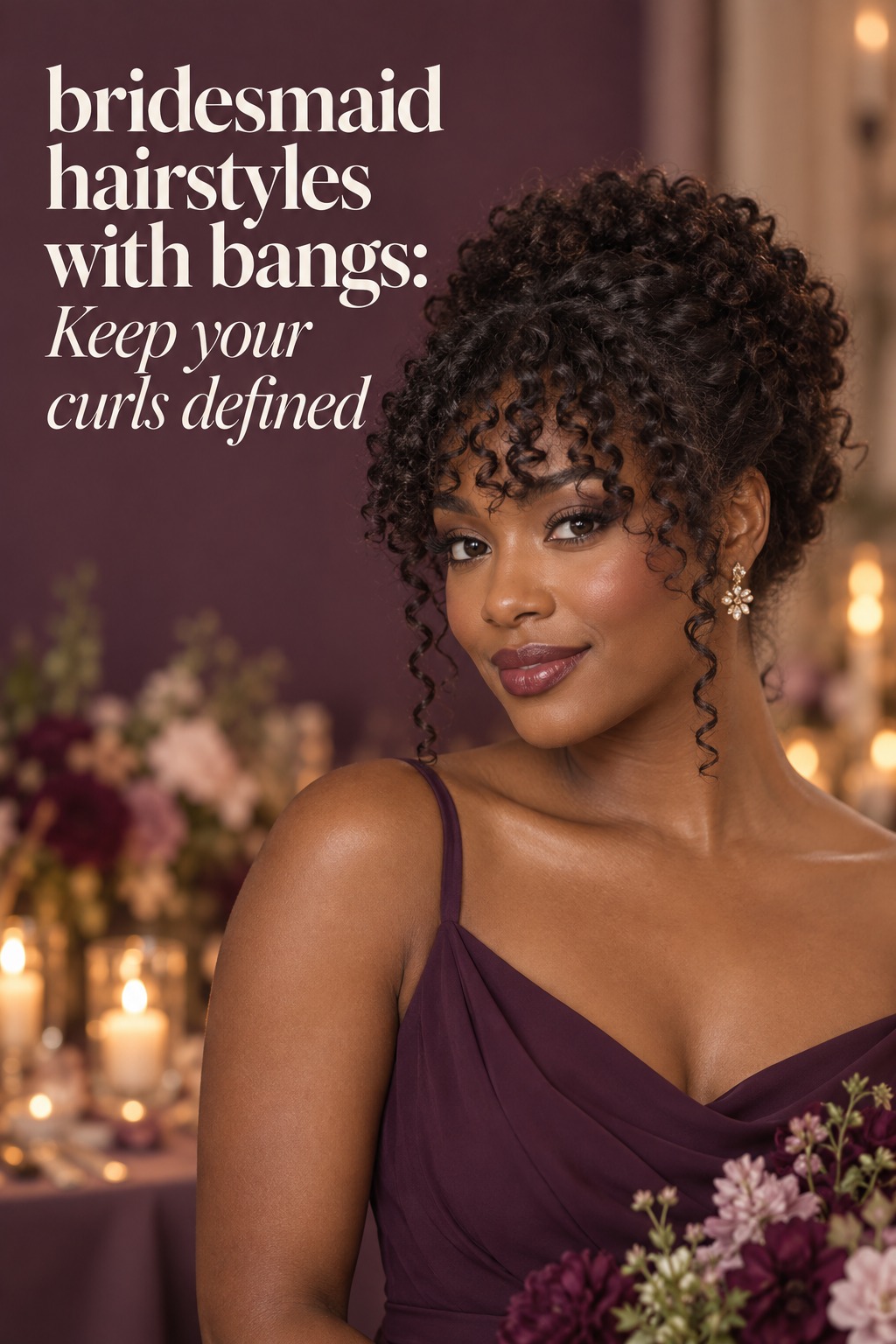
For curly and coily hair, plan around the natural pattern and the desired amount of shrinkage and volume. You might wear curls forward, define a few face-framing pieces, or pin the front back while leaving the texture visible through the updo. The Knot’s bridesmaid inspiration includes a coily updo with loose pieces around the face, a useful reminder that an updo can secure the hair without removing its texture. Discuss the products and handling that your own stylist recommends rather than applying a one-size-fits-all routine.
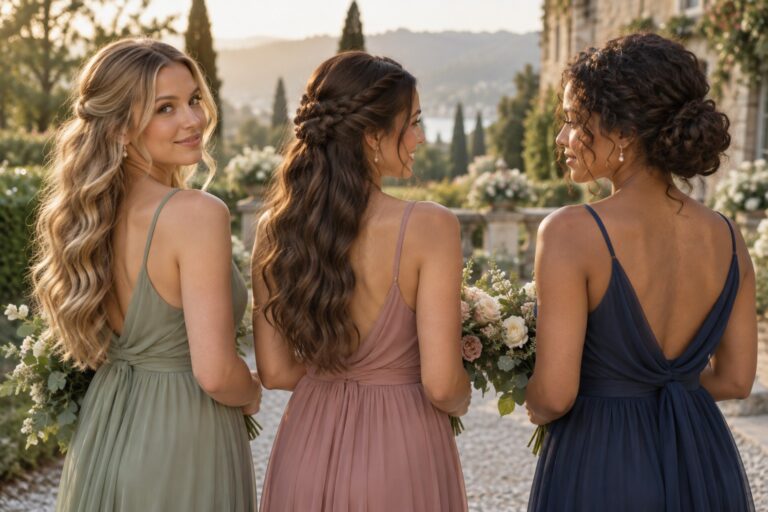
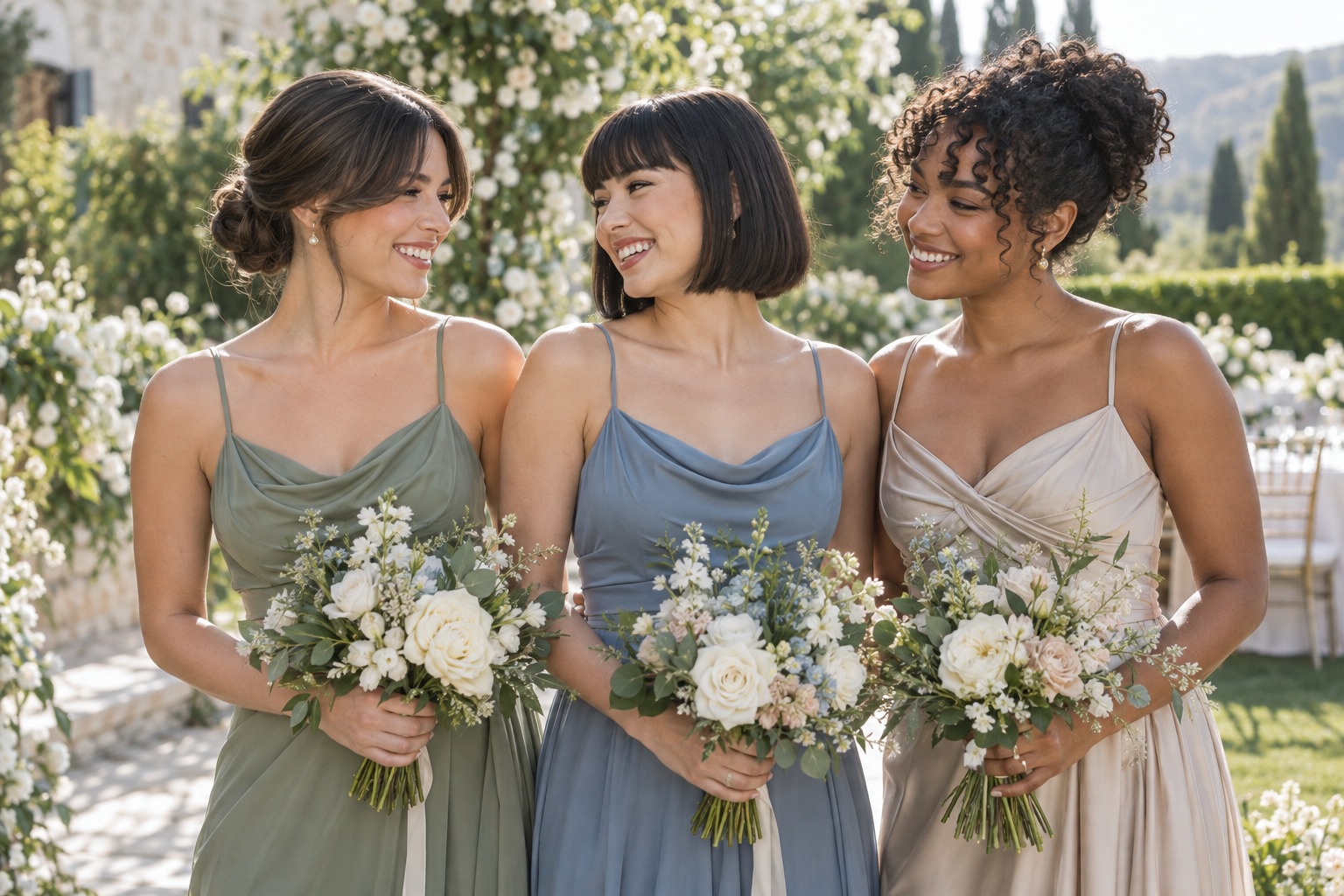
Group styling works best when the shared element is simple. You might agree on low placement, a softly polished finish, or one type of pin, while allowing each bridesmaid to adapt her bangs and texture. That can make the photos feel related without asking someone to straighten curls, hide a signature fringe, or wear a shape that feels unfamiliar.
Build a small wedding-day kit and stylist brief
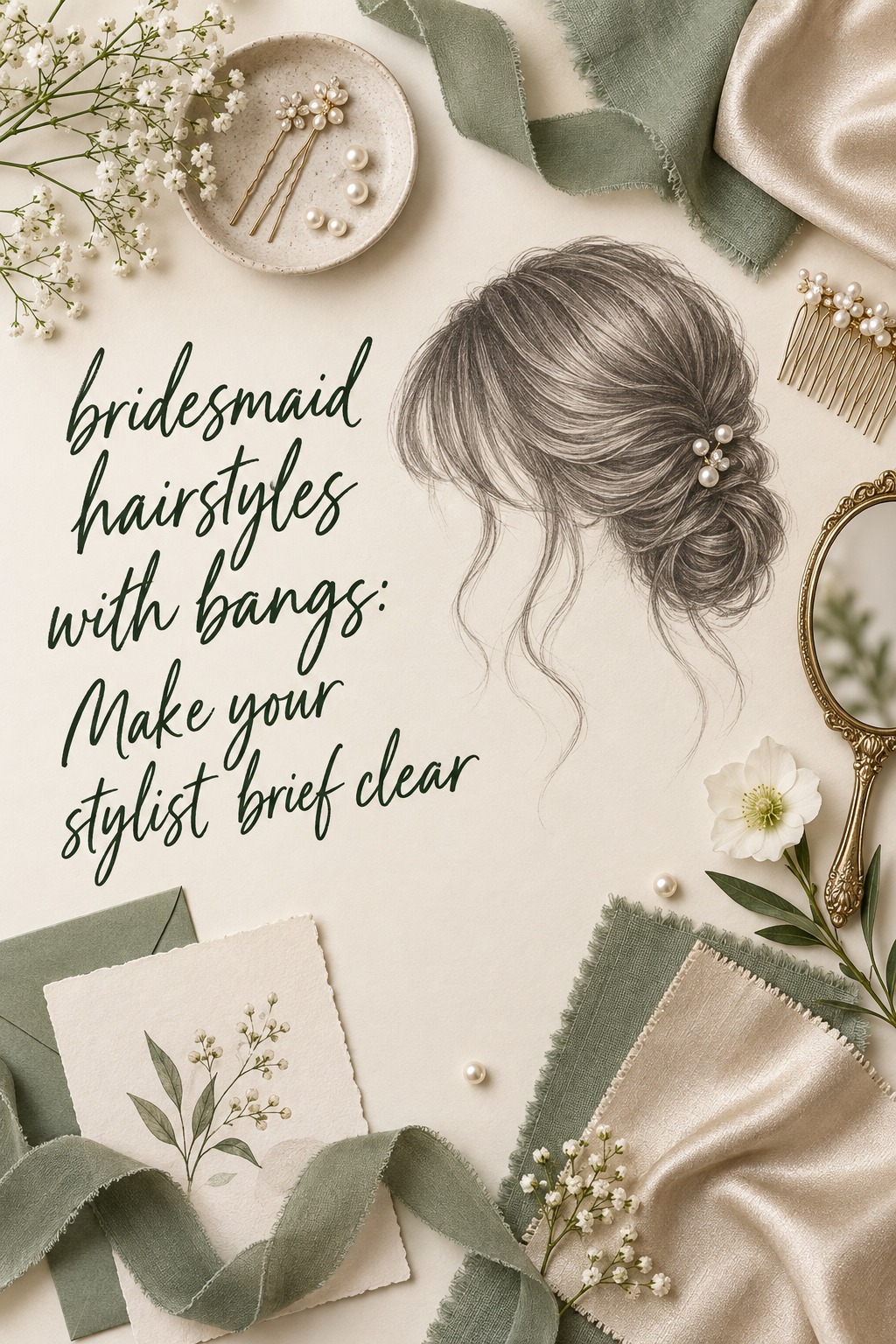
A clear brief prevents a beautiful idea from becoming a rushed guess. Collect two or three photos: one showing the bangs you like, one showing the back shape, and one showing the dress neckline or overall formality. Add a photo of your current hair from the front and side. Then describe the result in a sentence, such as: “Keep my curtain bangs visible, gather the back into a soft low twist, and leave the sides comfortable around my ears.”
Use the trial to test shape, comfort, and the transition from front to back
Take the outfit details and any hair accessory you expect to wear. During the trial, look at the style in normal room light and take pictures from the front, side, and back. Notice whether the bangs separate in a way you like, whether pins pull, and whether the back shape competes with the neckline. Move your head, smile, and turn as you would during a conversation. A style can look polished in a still image and still feel uncomfortable after an hour.
Ask the stylist to explain what should happen first and last. A practical order might be to establish the base, secure the back, fit the accessory, and finish the bangs once the overall balance is visible. That keeps the fringe from being flattened or disturbed while sections are pinned. If the look includes a change from ceremony to reception, agree on exactly which pins or accessory should be removed and who will do it.
Preparation preferences vary by hair and service. One licensed stylist quoted by Latest-Hairstyles recommends arriving with clean, fully dry hair within about 24 hours for the styling approach described there. Treat that as a point to confirm with your own stylist, since products, texture, and the salon’s process can change the instruction. The useful takeaway is to ask early, rather than guessing about washing or applying heavy conditioner on the wedding morning.
Pack only the touchup items that solve a real problem
A small pouch can hold a few pins that match the hair, a compact comb, tissues or blotting paper, and the specific finishing item your stylist recommends. If your bangs tend to split, ask whether a small brush or a clean fingertip is enough for resetting them. If they tend to flatten, ask what touchup is appropriate and how to apply it without disturbing the rest of the style. Avoid packing several new products to experiment with on the day.
For an outdoor event, consider how wind or humidity might change the plan, but do not assume a stronger hold is automatically better. Test any product at the trial. Ask where the fringe can be tucked if the weather changes, and whether there is a comfortable option that preserves the style’s outline. If the bangs are already familiar to you, the goal is a reliable version of your routine, not a completely new method.
Coordinate the bridal party through one shared detail
If the bride has a preference, discuss it before the appointment. The group can align on an overall direction such as polished and swept back, soft and face-framing, or a shared accessory finish. Within that direction, one bridesmaid can wear curtain bangs forward, another can pin a short fringe softly back, and another can wear curls with a few defined pieces at the temples.
Send the stylist a short message with each person’s length, texture, and fringe direction before the wedding day. Confirm the appointment order, expected service time, and who has the accessory. A simple list helps the stylist plan without making everyone look interchangeable. If someone will style her own hair, agree on the shared detail and give her the same dress and accessory information in advance.
Common mistakes are choosing a reference that does not match your hair, deciding the fringe last, trying an unfamiliar cut too close to the wedding, and asking every member of the party to wear one identical shape. Another is choosing a style based only on the back view. Your bangs frame almost every close photograph, so check the full look from the front and side. A short trial and a clear description are usually more helpful than adding more inspiration images.
FAQ
Should bridesmaids with bangs wear an updo?
No. An updo, half-up style, or worn-down look can all work. Choose based on the dress, your hair length and texture, the wedding setting, and how you want your bangs to frame your face.
Can I keep curtain bangs with a low bun?
Yes. A low bun can leave curtain bangs visible and create a soft frame around the face. Ask your stylist to balance the side sections with the bun and to style the fringe after the back is secure.
How can short bangs work with a wedding updo?
Short bangs can stay forward, be shaped with a slight curve, or be pinned with a small, comfortable anchor if their length allows. Test the option at a trial so the stylist can check the profile and avoid a last-minute change.
What bridesmaid hairstyles with bangs work for curly or coily hair?
Many shapes can work, including a textured updo, half-up style, defined curls, or a low pinned shape. Let the natural pattern guide the plan, and discuss how much shrinkage, volume, and face-framing you want with a stylist familiar with your texture.
Should I pin my bangs back for wedding photos?
Only if you like that look and it feels secure. You can also leave them forward or sweep them to one side. Try the photo angles during your trial and decide which version still feels like you.
When should I wash my hair before a bridesmaid appointment?
Ask the stylist who will do your hair, because the preferred preparation depends on your texture, products, and planned style. Confirm whether to arrive clean and fully dry, and whether to avoid conditioner or styling products near the roots.
How can the bridal party coordinate without matching hairstyles?
Agree on one shared detail, such as a polished finish, a general placement, or a small accessory. Let each bridesmaid adapt the front and back to her own bangs, length, texture, and comfort.