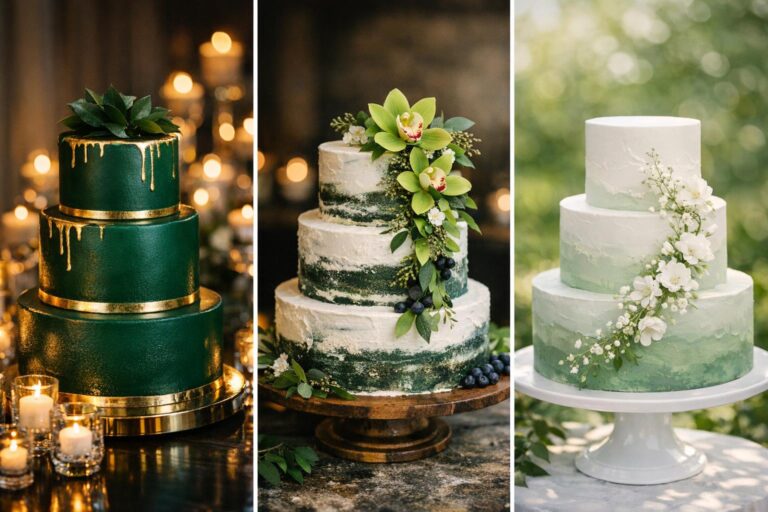
Wedding Cake Flowers: Editorial Styling That Photographs Well
Wedding cake flowers: the detail guests remember when the music fades
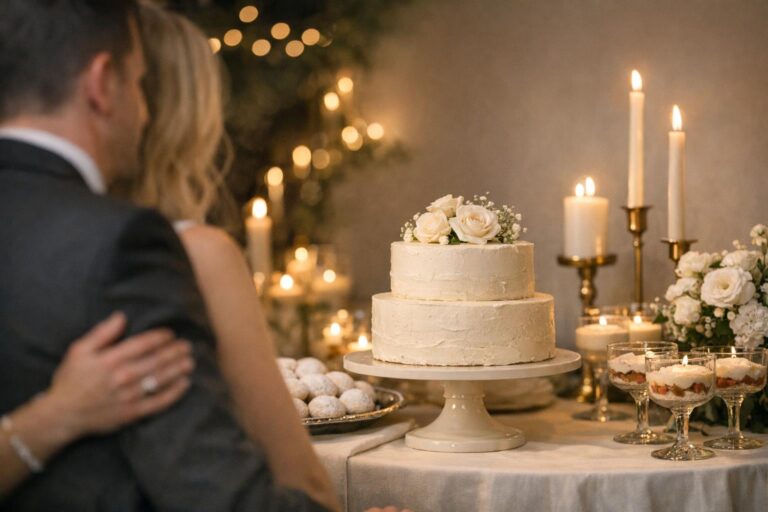
There’s a moment, usually right after the ceremony, when the day exhales. You’ve said the vows, hands still a little shaky, and suddenly you’re surrounded by toasts, laughter, and the soft clink of forks. Then the cake appears—quietly dramatic, impossibly photogenic—and the flowers on it do what bouquets and centerpieces can’t always do: they pull the entire wedding story into one focal point. Wedding cake flowers aren’t just decoration; they’re a visual promise of the mood you’re creating, whether that’s garden romance, modern minimalism, coastal ease, or candlelit luxury.
Because the cake is both a tradition and a centerpiece, floral choices have to work harder than “pretty.” They need to make sense with your venue, your season, your color palette, and even the way you’ll slice and serve. They also need to be practical—especially if you’re considering wedding cake real flowers, or if you want a wedding cake simple flowers approach that still feels intentional. This guide walks you through the decisions like a calm stylist would: not just what looks lovely, but why it works, when it doesn’t, and how to translate cake wedding ideas into something that feels like you.
Start with the feeling: matching flowers to your wedding style
Before you choose specific blooms, name the feeling you want when your cake is wheeled into the reception. This step saves couples from the most common mismatch: a cake that feels like it belongs to a different wedding than the one you’re actually hosting. Think of wedding cakes flowers as a “style bridge” between the ceremony and the celebration—something that ties your bouquet, your tablescape, and your venue details into one cohesive moment.
Garden-romantic weddings: soft movement and natural placement
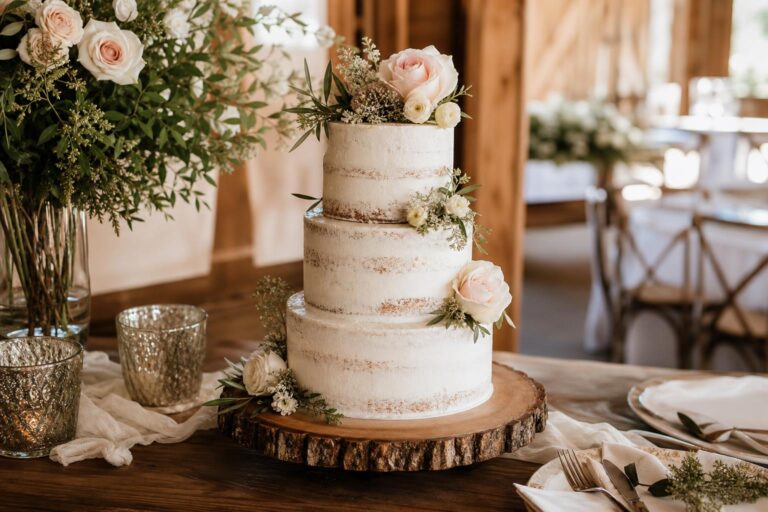
If your day is built around greenery, airy linens, and that slightly untamed “picked from the garden” feeling, your cake flowers should look effortless rather than engineered. Instead of perfectly symmetrical placements, consider blooms that appear to trail, climb, or nestle into the frosting. This is where wedding cake real flowers often shine—because their natural shape creates the kind of organic movement that fondant replicas can’t always replicate.
Turn wedding inspiration into a plan you can actually follow.
Zarellea brings your guest list, budget, vendors, and day-of details into one shared space — so no beautiful idea gets lost in the shuffle.
Modern and minimalist: one statement flower, clean lines
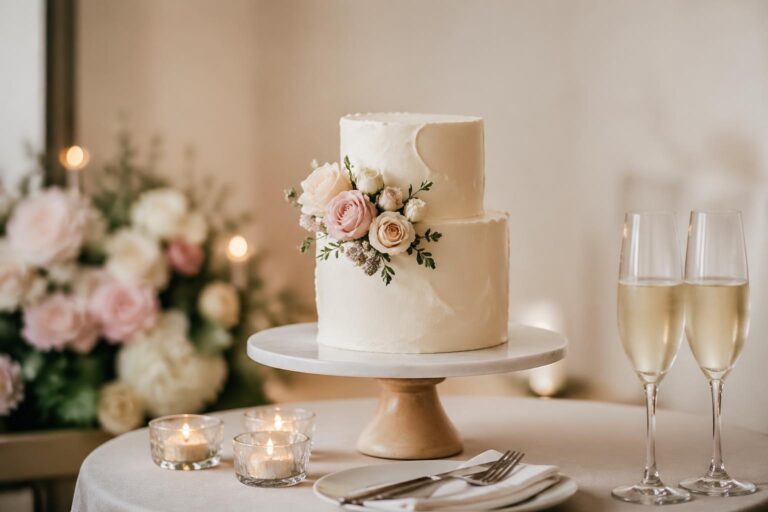
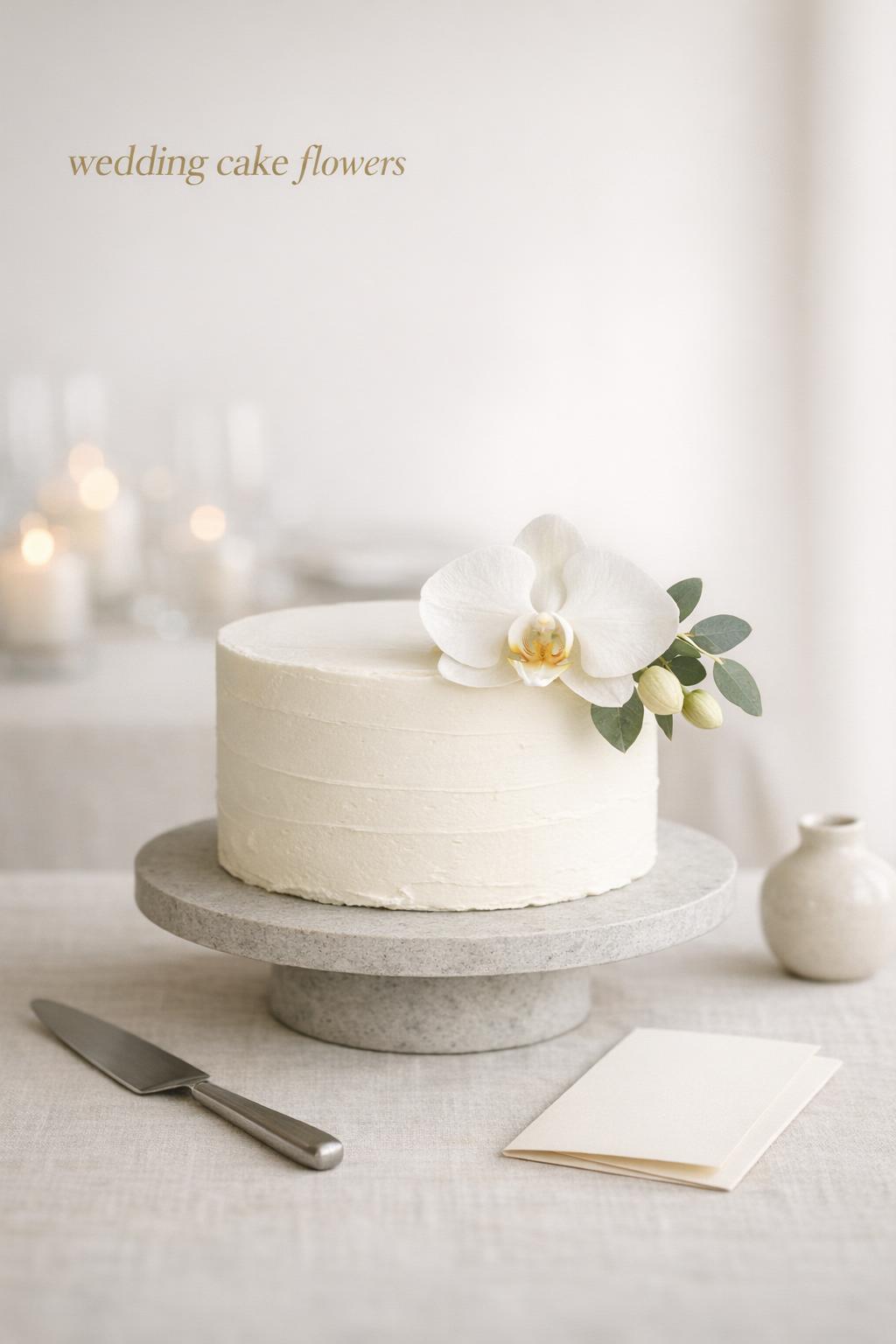
Minimalist doesn’t mean bare; it means edited. A modern cake often looks strongest with a restrained floral moment—one bloom, one cluster, or a single “line” of flowers placed with intention. A wedding cake simple flowers design is especially powerful when the cake itself has a strong silhouette, such as sharp edges, smooth buttercream, or a streamlined tier shape. The goal is to create contrast: clean frosting, soft petals.
Luxury and formal receptions: structured florals with a tailored finish
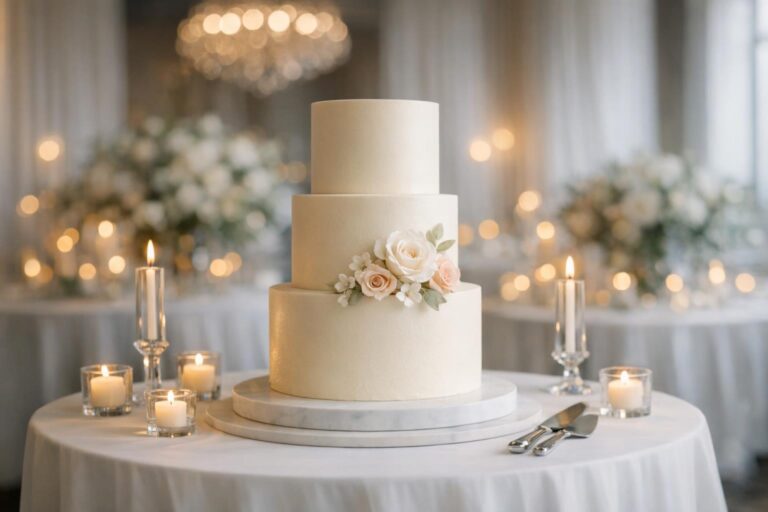
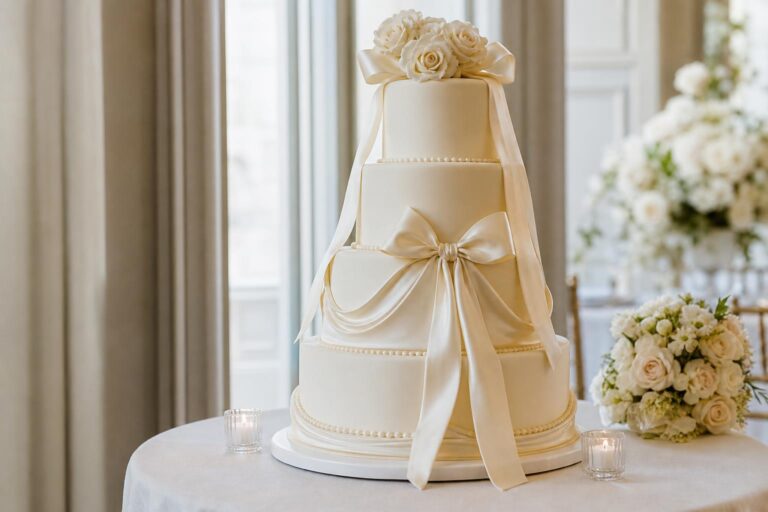
For black-tie or ballroom-style receptions, the cake is part of the “grand reveal” experience—like the first dance or the entrance. Flowers here tend to look more intentional: fuller clusters, balanced placement, and a finish that feels polished from every angle. If you’re planning a three tier wedding cake with flowers, this is where you can use flowers to emphasize the architecture of the tiers—guiding the eye upward without overwhelming the design.
Boho, coastal, or destination vibes: texture and a sense of place
When your wedding mood is relaxed—think open-air venues, warm breezes, and sunsets—cake flowers should feel textural and natural, not overly formal. You can lean into airy placement, smaller clusters, or designs that echo your surroundings. The best cake wedding ideas in this category don’t try to “out-luxe” the setting; they harmonize with it, letting the environment be part of the styling.
Real flowers or faux flowers on the cake? How to choose with confidence
This is one of those decisions that sounds simple until you’re actually the person responsible for serving dessert to a room full of people. Wedding cake real flowers can be breathtaking, but they bring logistical considerations. Faux flowers can be easier to manage, but they require a careful eye so they don’t read as costume. The best choice is the one that fits your aesthetic and your comfort level with the practical details.
When wedding cake real flowers make sense
Real blooms are perfect when your wedding is already flower-forward—lush bouquets, floral installations, and centerpieces that set a romantic tone. Real flowers also photograph beautifully because they catch light naturally and reflect the real texture of the day. If you love the idea of wedding cakes flowers that match your bouquet exactly, real stems make that coordination feel seamless.
When faux or non-perishable florals are the smarter call
If your venue is warm, your timeline is long, or your cake will sit out during cocktail hour and beyond, faux florals can reduce stress. They’re also useful when you need the flowers to hold a specific shape—like a cascading arrangement that must look identical for hours. Faux options can be especially helpful for intricate tiered designs where placement has to be stable and predictable.
A balanced approach: using florals where they matter most
Many couples find their sweet spot with a mixed strategy: real flowers where guests will see them up close (like the front-facing cluster or top tier), and more stable decorative elements elsewhere. This can keep the cake looking fresh and romantic while giving your baker and florist more control over how everything holds up through the reception.
Wedding cake simple flowers: the art of making “minimal” feel intentional
A simple floral cake is often the most difficult to get right—because there’s nowhere for the design to hide. In minimalist styling, every choice becomes louder: the type of flower, the color, the scale, and the placement. The goal isn’t to add “more,” but to ensure what you do add feels like part of the design, not an afterthought.
Three minimal floral placements that always feel elevated
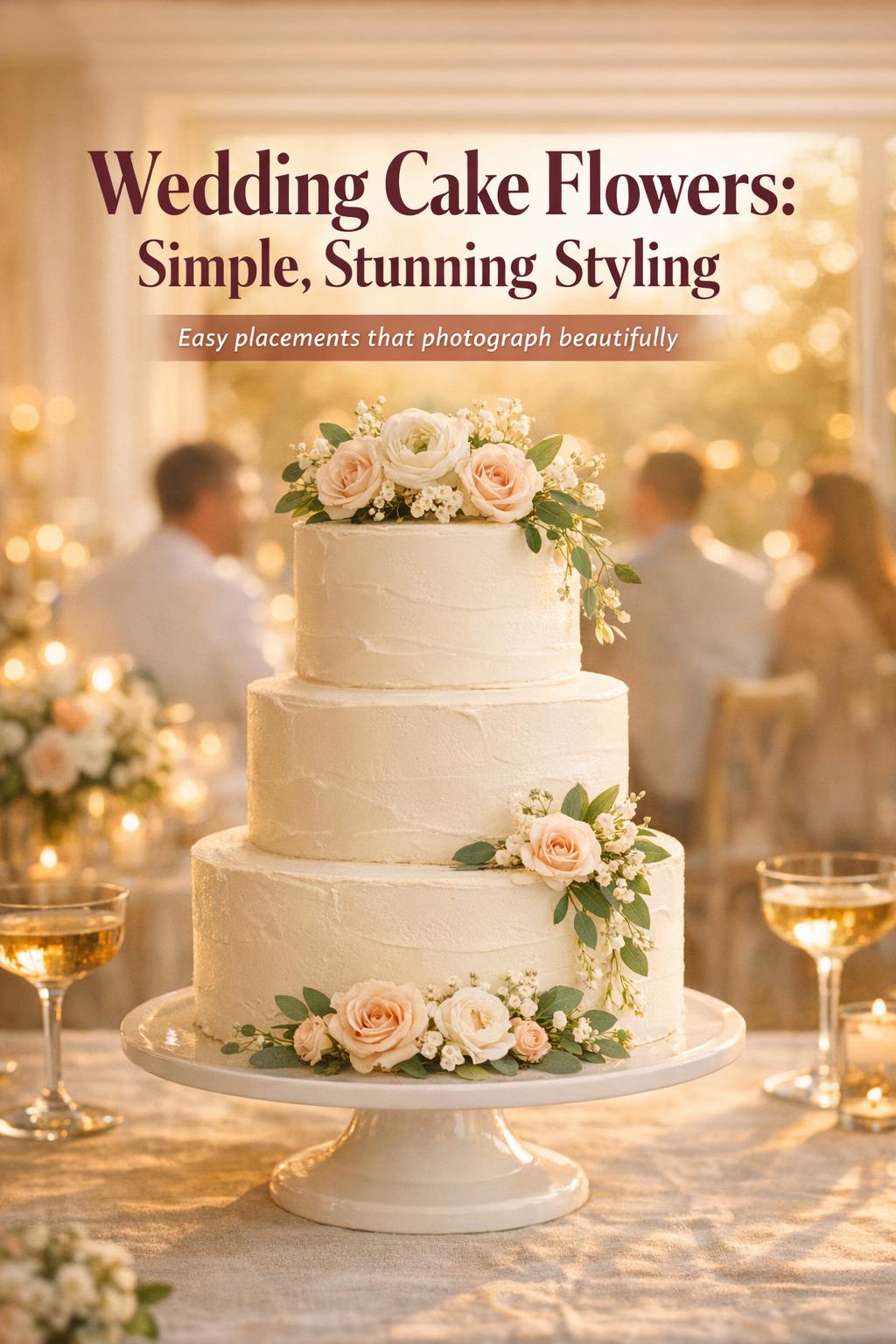
- The top-tier crown: a small ring or cluster that frames the cake topper area without covering it.
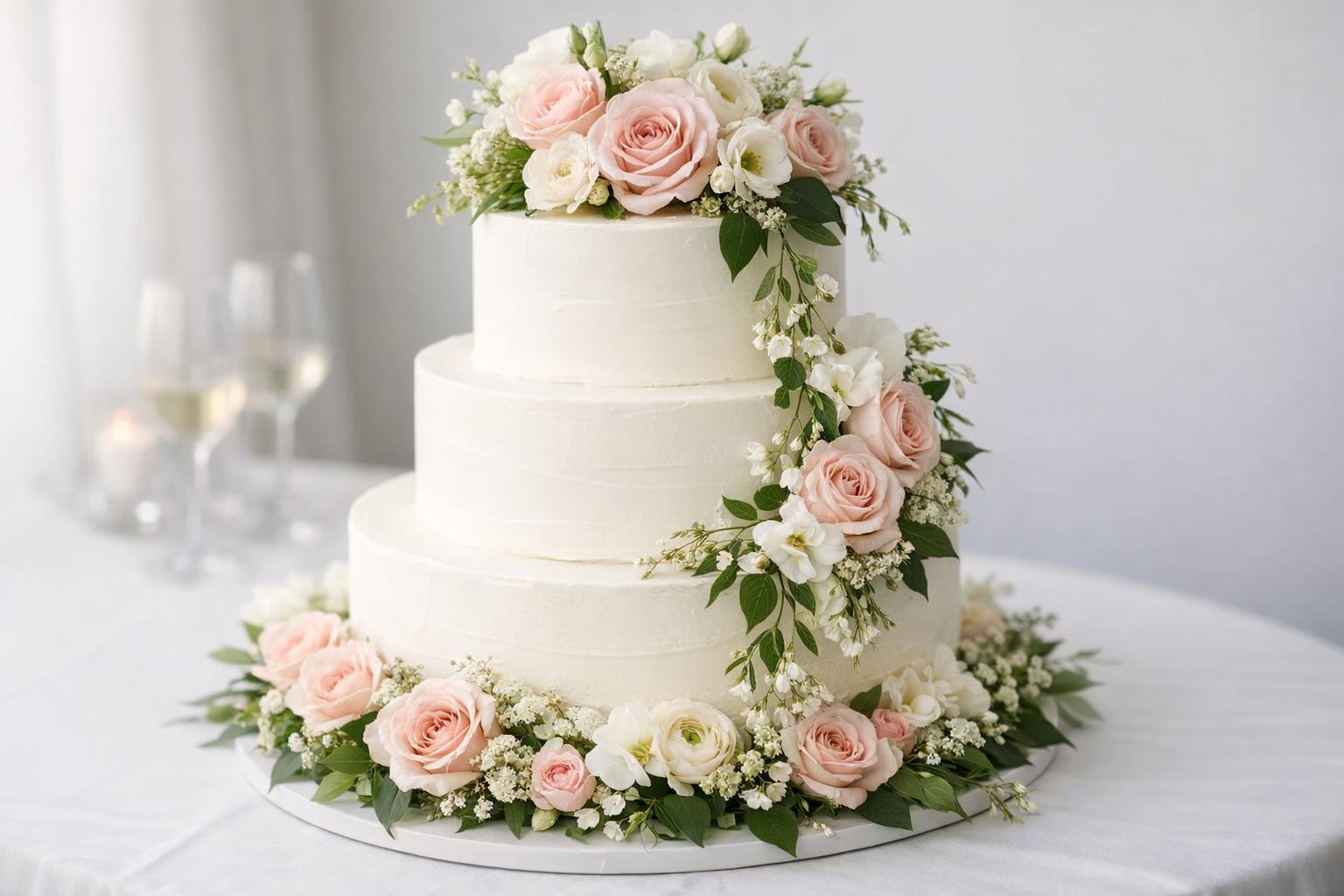
- The side-sweep: a single diagonal cluster that starts at one tier and gently crosses to another, keeping negative space intact.
- The base meadow: flowers gathered at the bottom tier, grounding the cake and connecting it visually to the table styling.
Each of these placements works beautifully for wedding cake simple flowers because they create a deliberate focal point. They also let the frosting finish—smooth buttercream, textured swirls, or clean edges—be part of the visual story rather than just a background for florals.
Tips: how to keep “simple” from looking unfinished
Decide early whether the cake is meant to feel airy and modern or softly romantic. In practice, that means choosing either one statement bloom in a defined spot, or a small cluster with varying sizes for natural dimension. Avoid scattering tiny flowers randomly across tiers unless the rest of your wedding design is intentionally whimsical—random placement can read as accidental in photos.
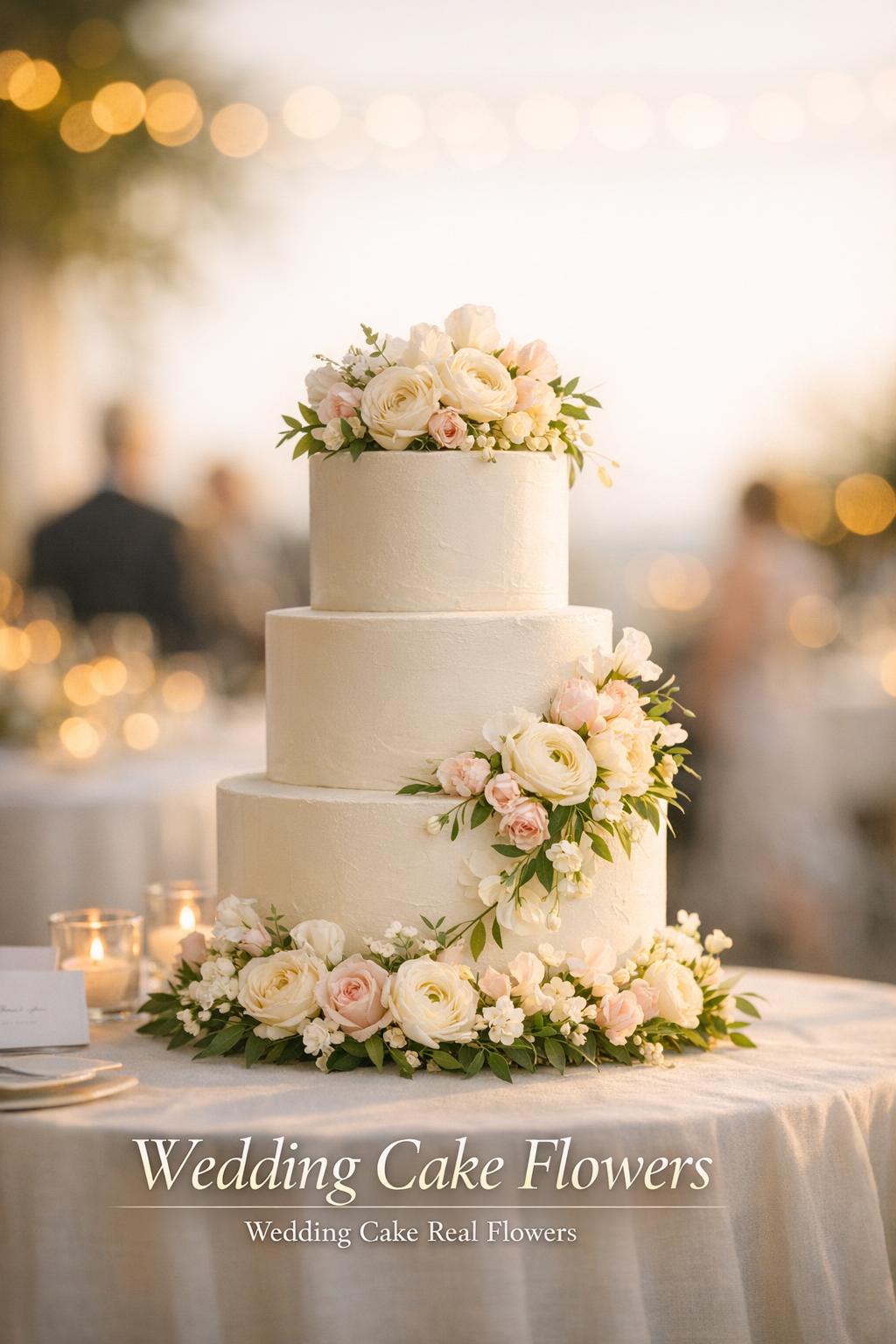
Three tier wedding cake with flowers: designing the floral “path” from bottom to top
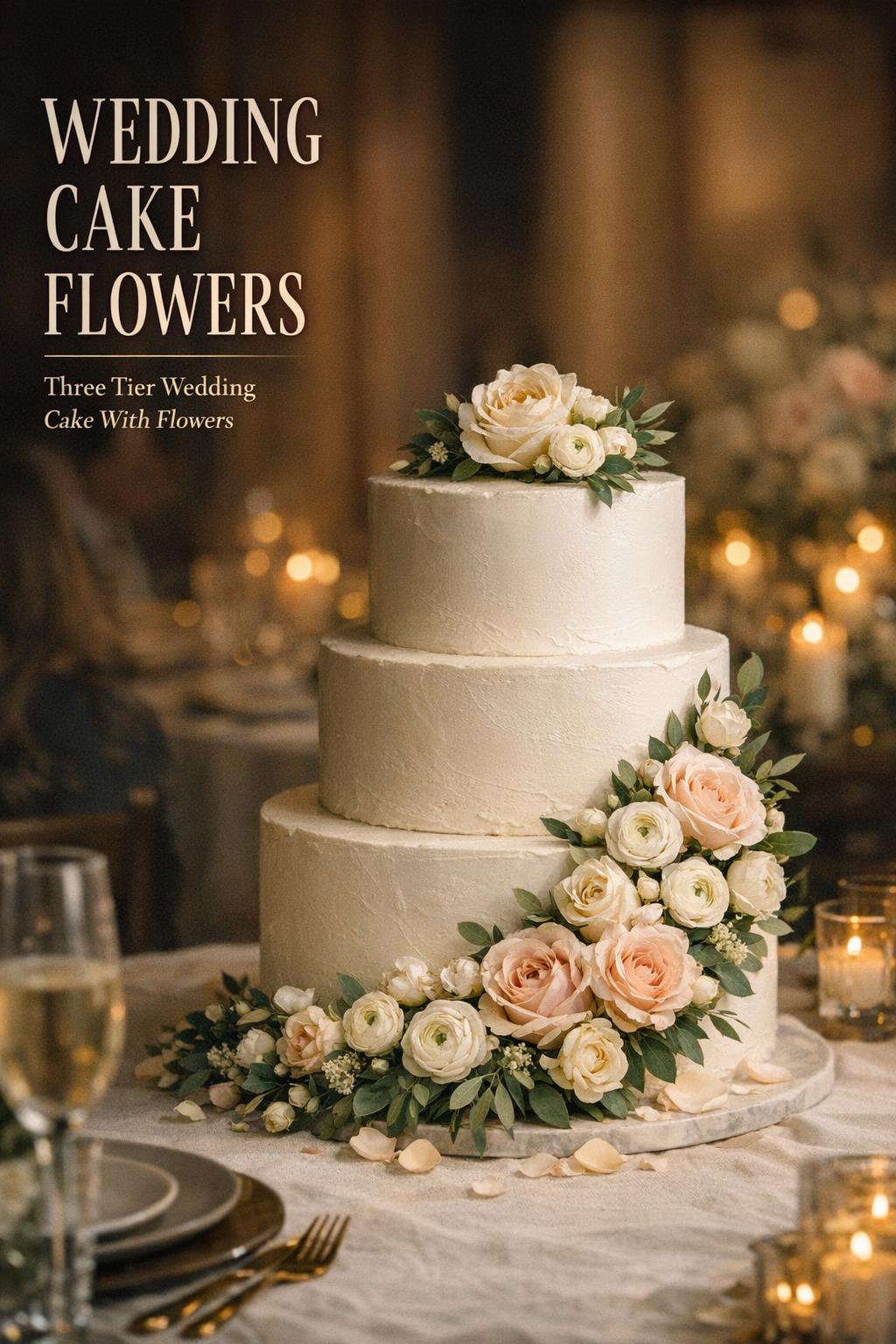
A three tier wedding cake with flowers gives you something styling experts love: structure. Those tiers act like levels in a story—beginning, middle, and final moment. Flowers can either emphasize that architecture (making the cake feel taller and more sculptural) or soften it (making it feel romantic and approachable). The best designs choose one direction and commit to it.
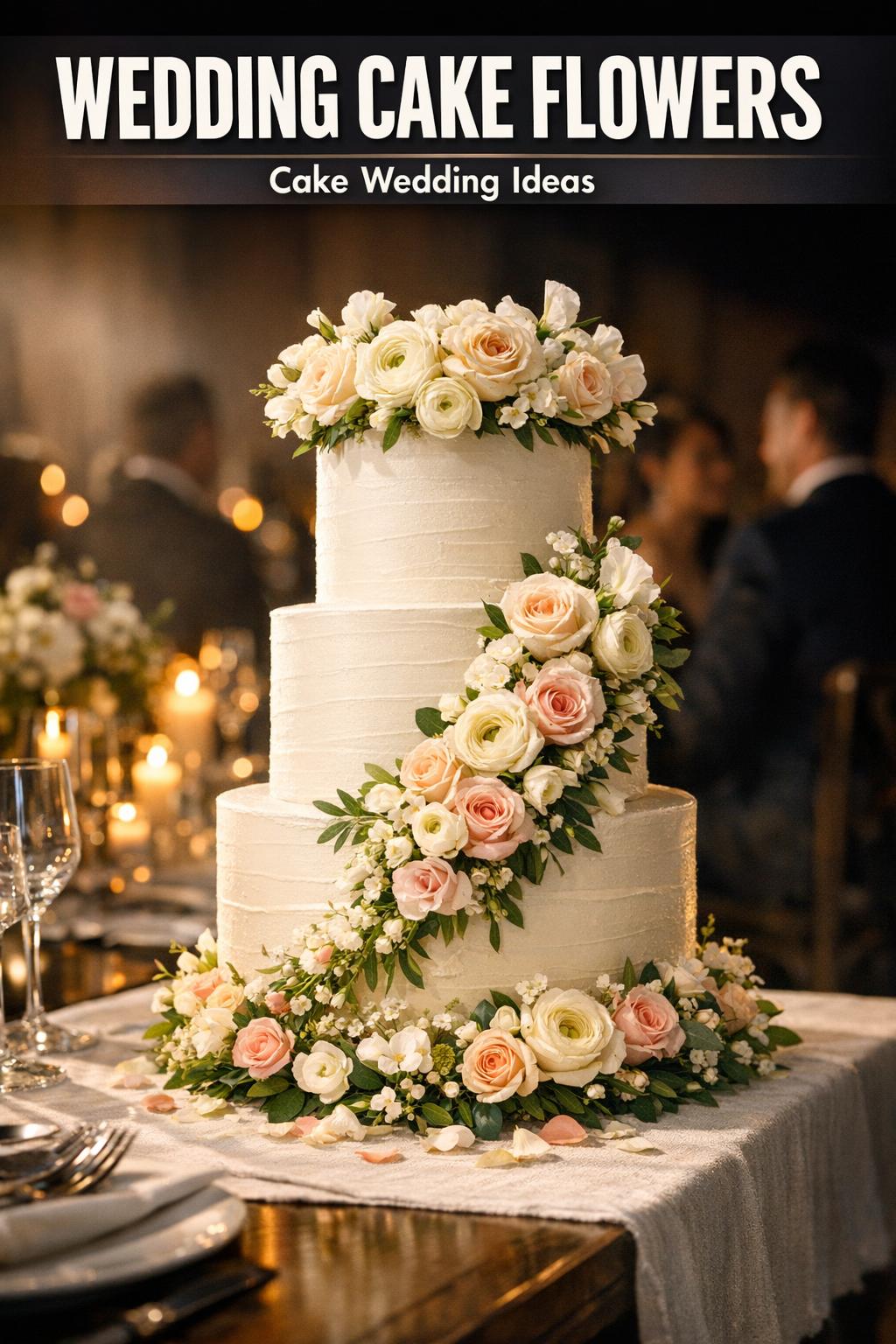
Option 1: a cascading floral line for drama
A cascade draws the eye and instantly creates a “wow” moment, especially at larger receptions where the cake needs presence. The trick is proportion: the cascade should feel connected to the cake’s shape, not like flowers were placed as a separate object. Couples who love bold cake wedding ideas often choose this because it becomes a signature detail in photos.
Option 2: tier-by-tier clusters for balance
Cluster styling is a classic for a reason: it looks intentional from multiple angles and works with many themes. You might place one cluster on the bottom tier and a smaller echo on the middle or top, creating a visual rhythm. This is also a practical choice if you’re serving from the back and want the front of the cake to stay picture-perfect longer.
Option 3: a floral crown on the top tier for a refined finish
A top-tier floral crown keeps the design clean and elegant, especially when the rest of the cake has detail—like textured buttercream or subtle piping. This approach pairs beautifully with wedding cake simple flowers styling because it concentrates the florals into one refined, editorial-looking statement.
Color, scale, and contrast: what makes wedding cakes flowers photograph beautifully
Wedding cake flowers live in a high-stakes environment: bright daylight, warm reception lighting, flash photography, and close-up phone videos. A design that looks lovely in person can photograph flat if the colors blend too closely into the frosting, or if the flower scale is mismatched to the tier size. Thinking like a photographer—even just a little—can save you from disappointment later.
Choose a color story that complements frosting, not competes with it
If your cake is bright white, flowers with gentle color variation can add depth—soft tones, layered petals, or greenery that creates shadow. If your cake has an ivory or warmer buttercream, ultra-cool whites can sometimes look harsh in photos. Aim for harmony: you want the floral tones to feel like they belong in the same light as your cake.
Scale matters more than couples expect
One large bloom can look modern and sculptural on a single-tier cake, but it can also feel underpowered on a tall, three-tier design unless it’s paired with supporting flowers. Conversely, very tiny blooms can disappear from a distance, especially in a large venue. When planning wedding cakes flowers, think about the viewing distance: close-up at the cake table, and far away across the room.
Contrast creates dimension (even with simple flowers)
Contrast can come from color, shape, or texture. Smooth buttercream plus soft petals is a natural contrast; so is structured floral placement against an organic frosting finish. Even a wedding cake simple flowers design benefits from at least one element that “pops” in photos—whether that’s a slightly deeper tone, a stronger silhouette, or greenery that frames the flowers.
Coordinating your cake flowers with bouquets and reception florals without overmatching
Couples often feel pressure to make everything match perfectly: bouquet to centerpiece to cake. In reality, the most elegant weddings coordinate rather than duplicate. Your cake can echo your florals through shape, color family, or a single repeated bloom—without looking like a copy-paste of your bouquet.
Use “echo elements” instead of identical arrangements
If your bouquet is lush and varied, your cake can feel cohesive by borrowing just one or two elements: a key flower type, a signature color tone, or a familiar greenery shape. This keeps the cake from looking too busy while still tying into the overall wedding design. It’s a subtle strategy, but it reads beautifully in photos because the eye recognizes the connection without feeling overwhelmed.
Let the venue influence the floral finish
Your venue is part of the palette. A garden venue can support a softer, more organic floral placement; a modern venue often looks best with cleaner lines and restrained clusters. When you’re collecting cake wedding ideas, consider where the cake will sit—against a wall, near a window, in a dim ballroom—and make sure your florals feel at home in that setting.
Timing and handling: how to keep flowers looking fresh from first photo to last slice
Floral cakes are as much about timing as they are about taste. Even the most beautiful wedding cake real flowers can lose their charm if they wilt before the cake cutting, or if placement shifts during transport. This is where planning becomes a kind of romance of its own—the care that ensures the day unfolds smoothly.
Talk through responsibilities early (baker, florist, planner)
One of the biggest behind-the-scenes stressors is not knowing who will place the flowers on the cake. Some bakers prefer to handle placement; others want the florist to do it, especially if the design is floral-heavy. Confirm the plan in advance so the cake arrives as intended, not as a “DIY moment” five minutes before guests enter the reception.
Tips: create a simple flower-placement plan that anyone can follow
If flowers are being added on-site, ask for a quick placement guide—something as simple as a photo mockup or a short list describing which blooms go where. It’s a small step that prevents rushed decisions and ensures your wedding cakes flowers look deliberate, not improvised.
Consider the environment: heat, sun, and long receptions
Outdoor ceremonies, warm climates, and long cocktail hours can challenge fresh florals. If your timeline includes hours before the cake cutting, a more controlled approach—like concentrating real flowers on the top tier or using sturdier decorative elements elsewhere—can reduce the risk of drooping blooms. This is one of the most practical reasons couples choose a wedding cake simple flowers design: it’s easier to keep a few perfect blooms looking pristine than an entire cascade.
Making the cake table feel like a scene, not a surface
Even the most stunning cake can feel underwhelming if it’s placed on a bare table with harsh lighting. Your cake table is a mini “set” inside your wedding—a moment guests approach, photograph, and remember. When the flowers on the cake connect to the styling around it, the entire display feels intentional, like it belongs in the same story as your vows.
Frame the cake so the flowers become the star
Think in layers: the cake stand height, a backdrop if your venue needs one, and subtle accents that don’t compete with the cake. If your cake features wedding cake real flowers, keep the surrounding décor slightly quieter so the fresh blooms remain the focal point. If your design is more minimalist, the table styling can add softness—just enough to make the moment feel romantic.
Tips: small styling choices that elevate cake wedding ideas
- Choose lighting that flatters: avoid placing the cake under a harsh spotlight that flattens color and texture.
- Give it breathing room: leave space around the cake so guests can photograph it from different angles.
- Echo one element: a single floral accent near the base can connect the cake to the rest of your reception design without overdoing it.
This is where wedding cakes flowers become more than a detail—they become part of the atmosphere. It’s not just dessert; it’s a scene your guests step into, even for a moment.
Common mistakes with wedding cake flowers (and how to avoid them)
Most floral cake regrets come from perfectly understandable planning pressure: too many decisions, too many opinions, and not enough time to step back and see the whole picture. Avoiding a few common pitfalls helps your cake look polished and feel aligned with your day.
Mistake: choosing flowers that don’t match the cake’s scale
A large venue and tall cake often need bolder floral placement to read from a distance, while intimate weddings can handle smaller, delicate accents. If you’re planning a three tier wedding cake with flowers, consider how the floral design will guide the eye across multiple tiers rather than sitting as a small detail that disappears in the room.
Mistake: overdecorating when the cake is already detailed
If your cake has strong texture, piping, or a dramatic silhouette, florals should support the design rather than compete with it. This is where wedding cake simple flowers can feel especially luxurious: restraint lets the craftsmanship show. The most timeless cake wedding ideas usually have one clear focal point, not five.
Mistake: leaving flower placement to the last minute
Even if you’re using a minimal floral moment, placement affects everything—balance, symmetry, and how the cake photographs. Confirm who is responsible for placement and when it will happen. A calm plan keeps your wedding cake real flowers looking fresh, secure, and intentional right through the cake cutting.
Bringing it all together: a calm planning checklist for cake flowers
When you’re deep in planning, the cake can feel like “one more decision.” But it’s also one of the easiest places to create a wow moment without changing your whole budget or design plan. A simple checklist brings clarity and helps you communicate cleanly with your baker, florist, and planner.
- Define the mood: romantic garden, modern minimalist, formal luxury, or relaxed destination.
- Decide on materials: wedding cake real flowers, faux florals, or a mixed approach.
- Choose a placement style: cascade, clusters, top crown, side sweep, or base meadow.
- Confirm scale: single-tier vs. a three tier wedding cake with flowers and how bold the florals need to be.
- Coordinate, don’t duplicate: echo bouquet elements instead of copying the full arrangement.
- Finalize logistics: who places flowers, when, and where the cake will be displayed.
If you keep these choices grounded in your venue and your timeline, wedding cakes flowers stop being a “Pinterest decision” and start becoming a confident design move—one that feels like it belongs to your day.
A final note on choosing flowers that feel like you
Your cake will be photographed, admired, and—most importantly—shared. The flowers on it are a quiet symbol of the care you put into the day, from the first planning conversations to the last dance. Whether you choose wedding cake simple flowers or a dramatic three tier wedding cake with flowers, aim for a design that feels emotionally true: aligned with your venue, your style, and the way you want your wedding to feel when you look back.
When you get it right, the cake doesn’t just sit at the edge of the reception. It becomes part of the memory—one of those details guests mention later, describing the beauty of the room and the warmth of the celebration, as if they’re still there.
FAQ
Are real flowers safe to use on a wedding cake?
Wedding cake real flowers can be used successfully, but they require coordination and careful handling so the design stays clean and intentional; confirm in advance who will place the flowers (baker or florist) and when placement will happen to protect both the look and the serving process.
How do I choose wedding cake flowers that match my wedding style?
Start by naming the overall mood—garden-romantic, modern minimalist, formal luxury, or relaxed destination—then choose flowers and placement that reinforce that feeling, such as organic trailing placement for romantic styles or a single statement cluster for a modern wedding cake simple flowers look.
What’s the easiest way to make a simple floral cake look expensive?
Keep the floral design focused and intentional: choose one strong placement (top-tier crown, side-sweep, or base meadow), use scale that suits the cake, and avoid scattered random blooms that can look accidental in photos.
How should flowers be arranged on a three tier wedding cake with flowers?
Think of the flowers as a visual path across the tiers: a cascade for drama, tier-by-tier clusters for balanced structure, or a top-tier floral crown for a refined, minimalist finish that still reads clearly from across the room.
How do I coordinate cake flowers with my bouquet without overmatching?
Use “echo elements” rather than copying the whole bouquet: repeat one bloom type, a color tone, or a greenery shape so the cake feels connected to the rest of your florals while still looking like its own designed moment.
What flower placement photographs best on wedding cakes?
Placements with clear intention tend to photograph best—like a defined cluster, a diagonal sweep, or a top-tier focal point—because they create contrast and dimension against the frosting and remain readable both up close and from across the reception space.
How far in advance should cake flower placement be planned?
Plan it early enough that responsibilities are clear and not left to last-minute improvisation; even a quick photo mockup or a short placement guide helps ensure wedding cakes flowers look consistent with your vision on the day.
What are the most common mistakes couples make with wedding cake flowers?
The biggest mistakes are choosing flowers that don’t fit the cake’s scale, overdecorating a cake that already has strong detail, and leaving flower placement and timing unresolved—issues that can be avoided by committing to one focal idea and confirming logistics with your vendor team.