Modest Bridal Dresses That Feel Entirely Your Own
The first thing you notice is not the neckline. It is the feeling of relief when a dress finally looks like the version of a bride you have been imagining: covered where you want coverage, graceful without being fussy, and unmistakably yours. For some brides, modest bridal dresses honor faith or family tradition. For others, they express personal taste, comfort, or the wish to feel quietly confident throughout a long wedding day.
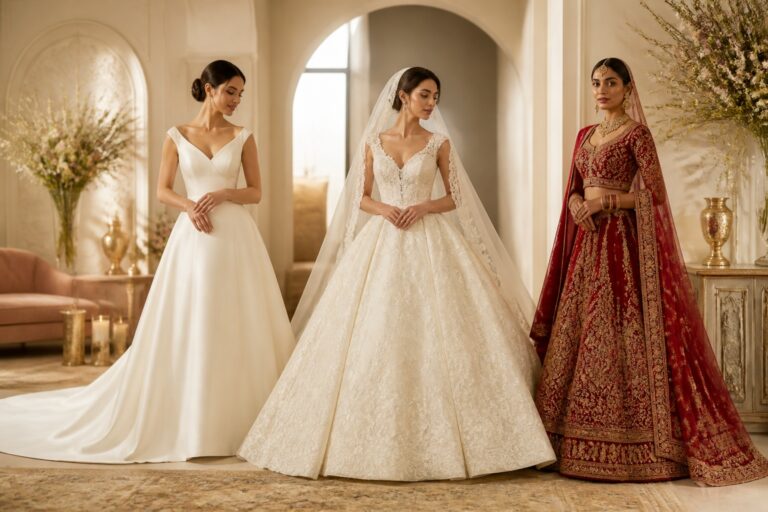
The best modest gown is not defined by one silhouette. It may be an architectural crepe column, a lace A-line, a full ball gown, a tea-length vintage shape, or a fitted dress balanced with a high neckline and long sleeves. The useful question is not whether a dress is modest enough in the abstract. It is whether its coverage, construction, movement and styling work for your ceremony, your body and the atmosphere you want to create.
Begin with the kind of coverage that feels like you
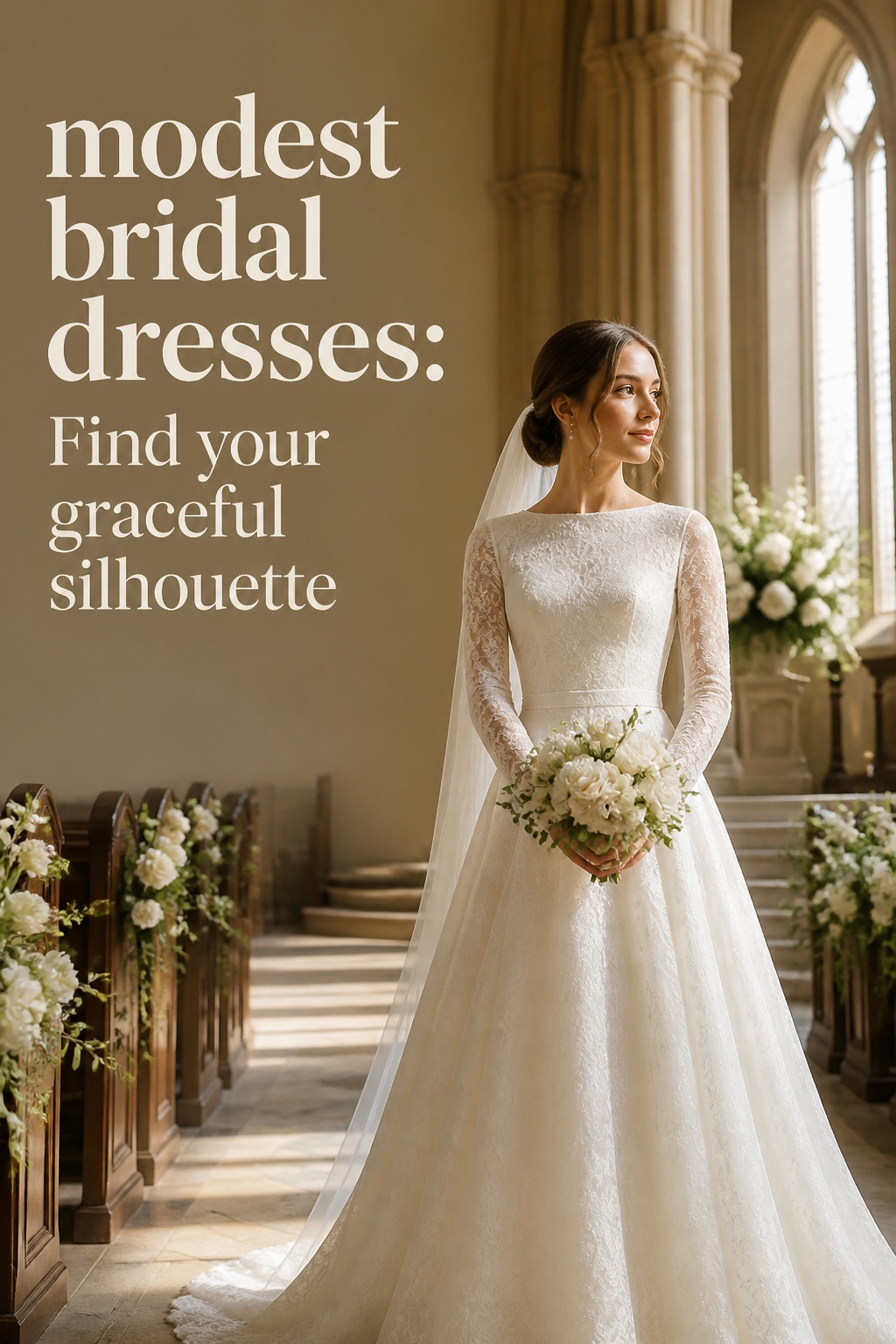
“Modest” is a design brief, not a universal measurement. Before saving hundreds of images, describe what the word means for your wedding. You might want covered shoulders, a higher neckline, an opaque bodice, a closed back, wrist-length sleeves, a floor-length hem, or simply a clean line without a plunging cut. Writing these preferences down prevents a beautiful photograph from pulling you toward a dress that would not feel comfortable in real life.
Turn wedding inspiration into a plan you can actually follow.
Zarellea brings your guest list, budget, vendors, and day-of details into one shared space — so no beautiful idea gets lost in the shuffle.
Separate non-negotiables from flexible details. A bride attending a religious ceremony may need a specific shoulder, back or sleeve standard. Another bride may care most about a covered bust and comfortable arm movement. Someone planning a courthouse wedding may prefer a high neck and tea-length skirt, while a winter cathedral ceremony may invite a long sleeve and substantial train. Your list can be personal without needing to justify itself.
Think in lines, not only in areas of skin
Coverage changes the visual rhythm of a gown. A high neckline draws attention toward the face and can look especially elegant with an updo or a simple veil. A boatneck creates a wide, calm line across the collarbone. A square neckline feels more graphic, while a modest V-neck adds length without requiring a low cut. An illusion panel can preserve openness while giving you the security of a lined bodice.
Back coverage deserves equal attention. A completely closed back can look polished in satin or crepe. Covered buttons can make a high back feel romantic rather than severe. A low back balanced by a high front may suit one bride perfectly, while another may prefer a lace overlay or a detachable cape. Decide how you want the dress to read from the aisle, the altar and the reception rather than judging only the front mirror view.
Choose sleeves for movement as well as appearance
Long sleeves can be sleek, romantic, dramatic or almost weightless. Fitted lace sleeves bring texture and continuity to a traditional gown. Chiffon or bishop sleeves create movement for a garden or outdoor celebration. Clean crepe sleeves suit a modern city venue, while a sheer lace sleeve can offer visual coverage without making the dress feel heavy. Cap and three-quarter sleeves are useful when full-length coverage is not necessary.
Try raising your arms, hugging someone and sitting down. A sleeve that looks beautiful while your arms are still may pull at the underarm when you move. Ask whether the fabric has stretch, whether the cuff can be adjusted, and whether the lining will feel warm. If a sleeve is part of a religious or cultural requirement, test the exact finished design rather than assuming a sample will behave the same way.
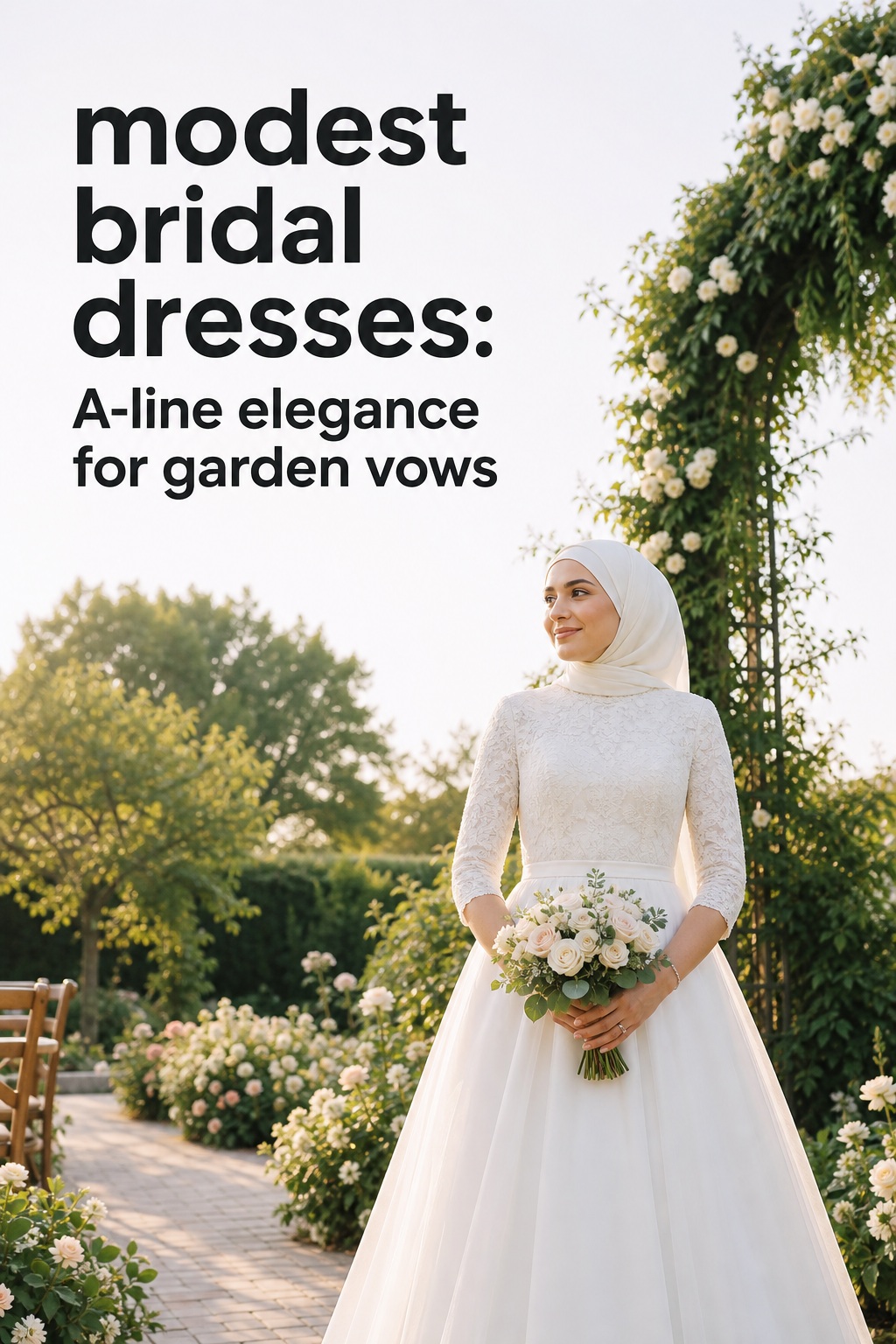
Let the silhouette carry the mood of the wedding
Once your coverage priorities are clear, use the silhouette to tell the larger story. Retailers and inspiration pages often show modest bridal dresses as a single category, but an A-line and a column gown make very different promises. One suggests gentle movement and classic versatility. The other suggests precision, simplicity and a strong architectural line. Neither is more modest by default.
A-line: adaptable, graceful and easy to personalize
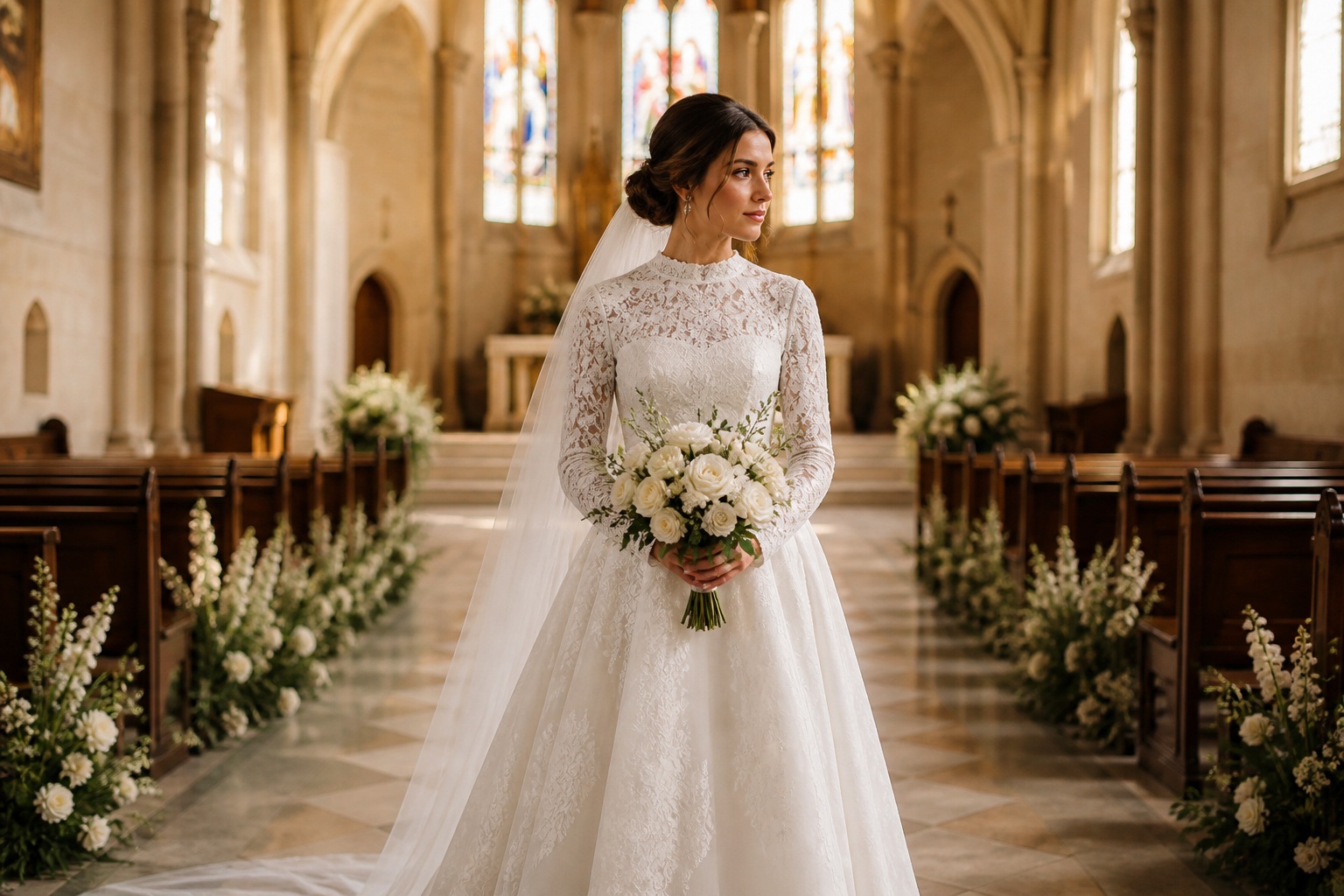
An A-line skirt widens from the waist and can support many kinds of coverage. It works with a lace bodice, a high neck, long sleeves, a simple crepe top or a more decorative train. The shape gives you room to walk and sit without the visual volume of a ball gown. It is a particularly useful starting point when the ceremony and reception have different levels of formality.
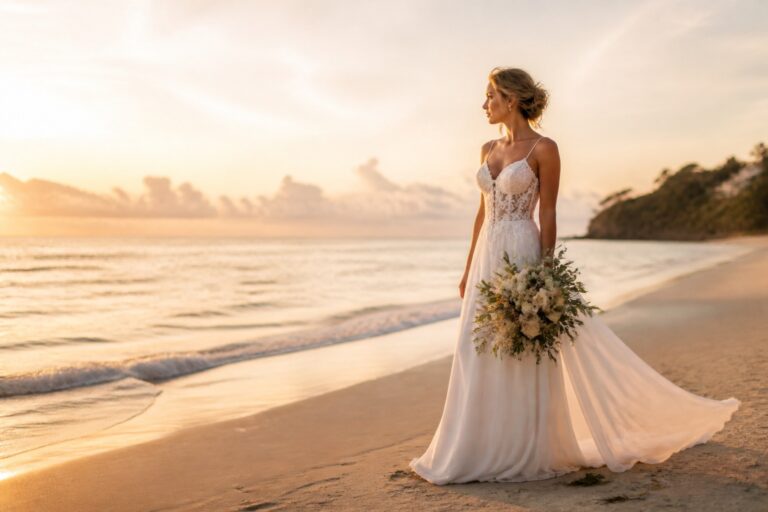
For a garden wedding, consider an A-line in light lace or chiffon with a chapel train and sleeves that move in the breeze. For a formal ballroom, a structured satin or Mikado version can create a cleaner, more dramatic outline. If you want to change the look after the ceremony, ask about a removable overskirt, train or sleeve. The base gown can remain modest while the reception styling becomes lighter.
Ball gown: full coverage with an unmistakable entrance
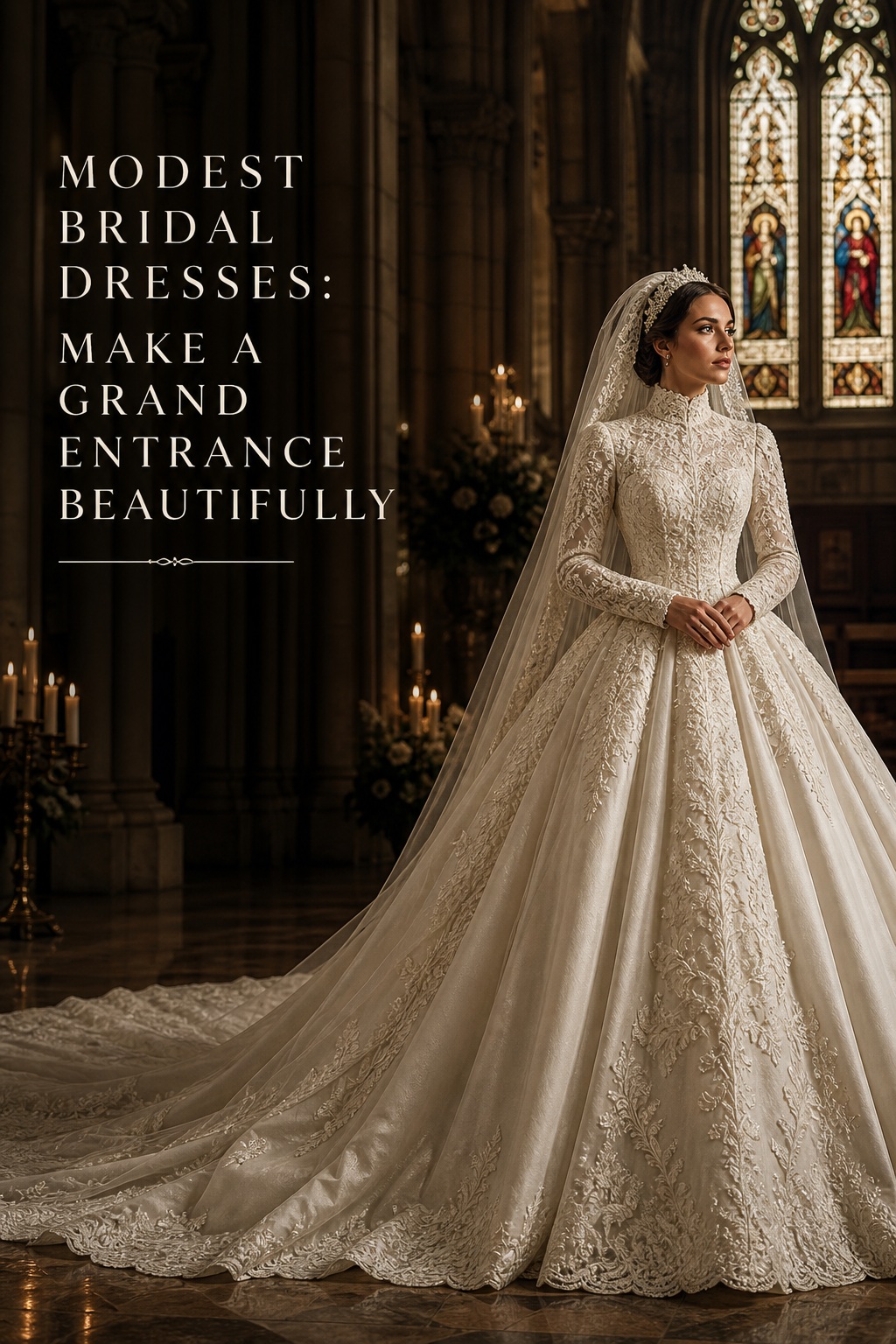
A ball gown creates a strong shape through volume, so it can make a higher neckline or long sleeve feel intentional and balanced. Lace, embroidery, covered buttons and a substantial train can give the dress a ceremonial quality. If your venue has a grand aisle, a ball gown may match the architecture beautifully. If the venue has narrow stairs or a small dance floor, investigate the practical side before committing.
Ask how heavy the skirt is, where the bustle sits, and whether you can walk without lifting several layers. A petticoat may change the effect, but it also changes the amount of space you need. Practice turning, sitting and moving through a doorway. The drama should make you feel present in the room, not trapped inside the dress.
Column and fit-and-flare: modern shape, considered coverage
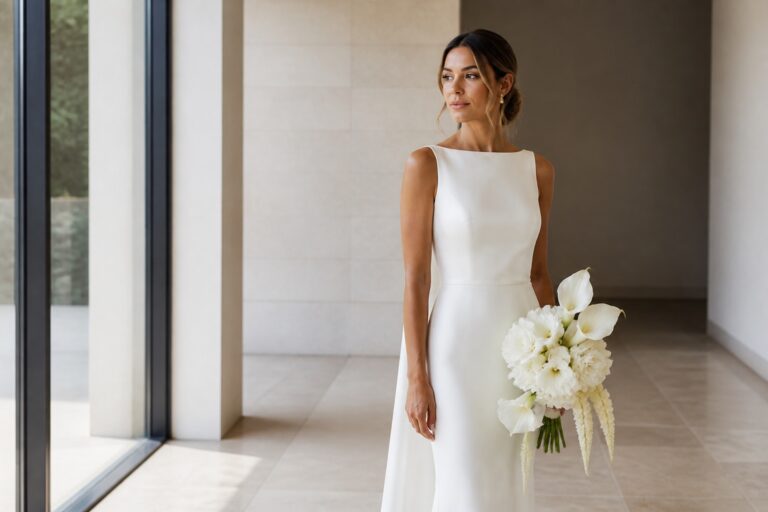
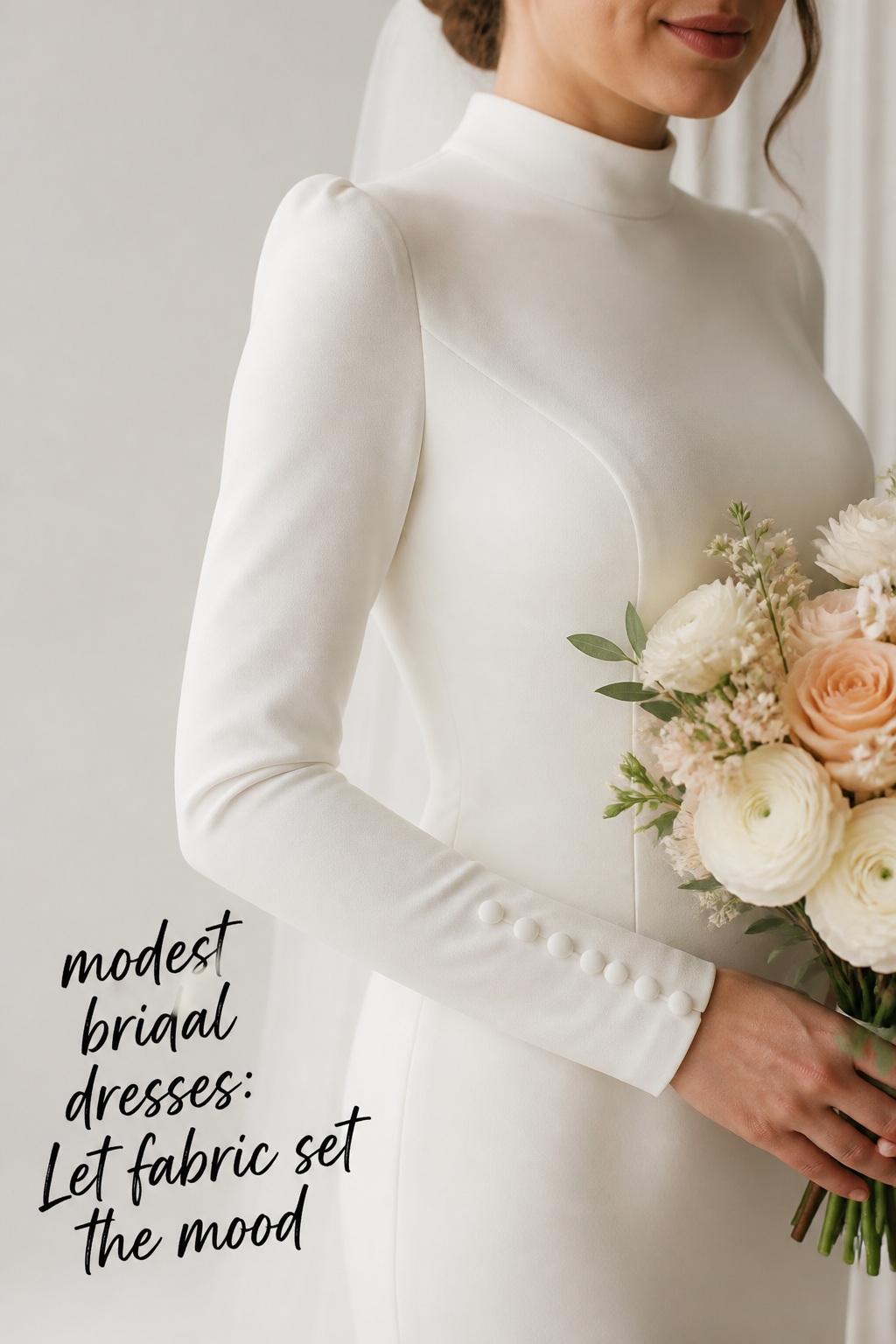
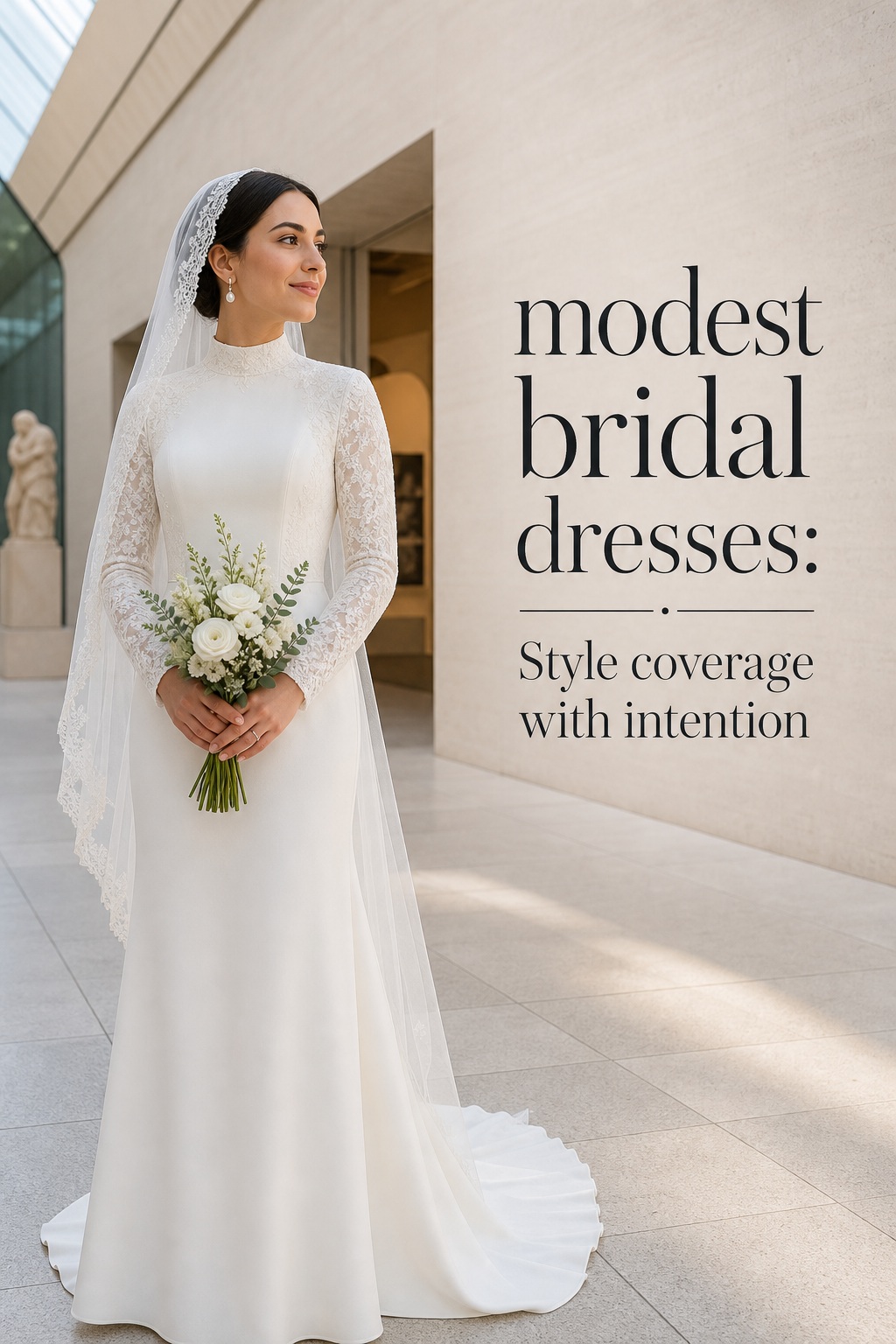
A column gown can make modest bridal style feel exceptionally modern. A high bateau neckline, long sleeve, matte crepe and covered back create a clean silhouette with very little ornament. The result can be ideal for a courthouse, museum, restaurant or contemporary gallery. Look closely at lining, stretch and seam placement because a straight skirt must allow you to sit and take a comfortable stride.
Fit-and-flare and trumpet shapes offer a closer line through the bodice and hips before opening lower on the leg. Pairing that shape with a high neckline or sleeves creates contrast: the coverage feels refined, while the silhouette retains energy. Test the flare by walking, stepping up and dancing. If the dress restricts your stride, ask whether a slit, stretch lining or a slightly later flare would solve the issue while keeping the same mood.
Tea-length and short options: modest can be lighter
A tea-length dress can feel vintage, playful and entirely appropriate for a civil ceremony or daytime celebration. A high neck, sleeves, opaque fabric and a carefully finished hem can provide coverage while showing the shoes. A short dress can also work for a second look, rehearsal dinner or reception change. The important details are proportion, fabric quality and the way the hem relates to the venue.
Make the coverage look designed, not added on
One of the most useful ideas in current modest bridal advice is intentionality. A gown looks more elevated when the neckline, sleeve, lining, seam and skirt were designed as one composition. A last-minute panel or bolero can sometimes be the perfect solution, but it should connect visually with the original dress. Matching lace, repeating buttons, consistent opacity and a deliberate sleeve line help the finished look feel complete.
Use fabric to control the atmosphere
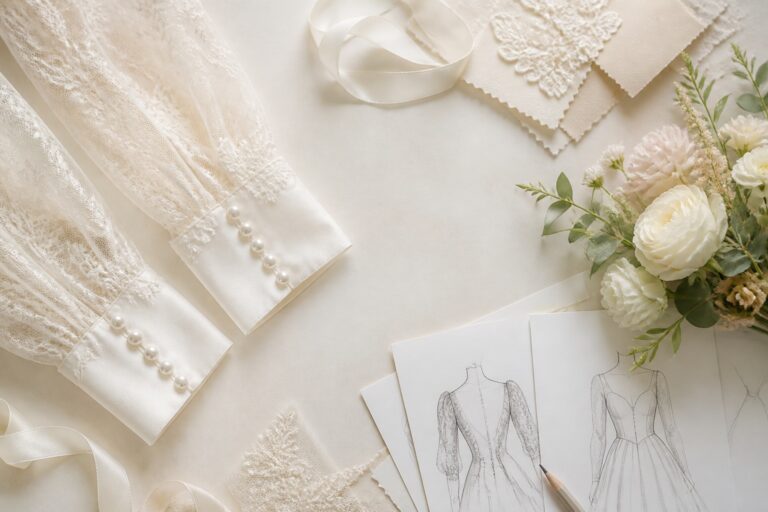
Lace gives coverage through texture and can range from airy and botanical to formal and richly beaded. Crepe creates a smooth, sculptural effect and suits minimalist styling. Satin catches light and can make a high-neck gown feel luxurious. Mikado has more body and can support a crisp ball gown or modern A-line. Chiffon is soft and mobile, while tulle can add volume without the weight of a dense skirt.
Ask what is visible and what is lined. A sleeve may look opaque online but be sheer in daylight. A lace bodice may need a specific underlayer for the ceremony. A satin gown may feel warm under strong lights. Request photographs in more than one setting, or try the dress near a window. Comfort and opacity are easier to evaluate before an order than after it arrives.
Repeat one detail so the look feels cohesive
A modest dress does not need many accessories. Instead, repeat a detail with restraint. Covered buttons can echo pearl earrings. Lace on the sleeves can reappear in the veil edge. A clean high neckline can be framed by a simple updo and no necklace. If the gown is sleek, a textured bouquet or sculptural earrings can provide interest. If the gown is ornate, keep the accessories quiet enough for the construction to remain visible.
Veils and capes are especially useful because they can change the feeling without changing the base gown. A cathedral veil adds ceremony to a simple column. A fingertip veil can keep an A-line light. A detachable cape offers shoulder coverage for the ceremony and can be removed later. Check how each piece attaches, how it behaves in wind, and whether it competes with sleeves or a train.
Balance coverage with scale and proportion
More fabric does not automatically mean a heavier look. Proportion matters. A full sleeve may be balanced by a simple skirt. A high neck can work with an open, clean back if that suits your boundaries. A substantial train may need a quieter bodice. A short hem can support a more traditional neckline. Try to view the gown as a complete outline instead of judging each covered area separately.
Shop with a plan for fittings, timing and real life
The most elegant modest bridal dresses still need to function. They will be worn while you walk, greet guests, sit, eat, take photographs and dance. Bring that reality into the appointment. Start by telling the stylist your coverage requirements and the setting. Ask for options designed with those details from the beginning, not only gowns that can be modified later.
Prepare a focused appointment brief
Write a short brief with your ceremony requirements, preferred sleeve and neckline, venue, season, desired train length, budget and wedding date. Bring photographs that show details rather than only full looks. Note what you like in each image: the high neck, the matte fabric, the fitted cuff, the movement of the skirt. This gives a consultant useful information and keeps the appointment from becoming a parade of unrelated dresses.
Ask how many sample sizes are available and whether the salon regularly works with full-coverage gowns. A sample that does not close can make it hard to evaluate a neckline or sleeve. If a shop cannot provide a respectful, practical fitting experience, that is valuable information. You deserve advice about construction and options, not pressure to accept a dress that conflicts with your requirements.
Build alteration time into the decision
Alterations may include adjusting the length, refining the bust, moving straps, adding cups, changing a closure, repositioning lace, creating a bustle or adding a lining. Significant changes to sleeves, neckline or back coverage can be more complex. Ask for an estimate before ordering and confirm whether the seamstress has worked with the dress fabric and construction.
Made-to-order retailers commonly publish production windows, and rush options may be limited. Treat those timelines as part of the purchase decision. Leave room for shipping, the first fitting and at least one correction. Bring your wedding shoes and intended undergarments to fittings. If you plan to wear a veil, cape, gloves or supportive garment, test the complete combination before the final hem is approved.
Use a simple final test before saying yes
Stand in the dress, then sit. Walk at a normal pace, turn, raise your arms, hug someone and take several dance steps. Check the neckline, sleeve cuffs, back coverage, closure and train. Imagine a warm room, a cool church, a windy portrait location or a long dinner depending on your venue. If you feel secure and comfortable while doing ordinary things, the gown is supporting your wedding rather than asking the wedding to support it.
Finally, check the financial and policy details. Confirm the total cost, alterations, shipping, rush fees, deposit, return rules and care instructions. Product pages show why this matters: some gowns are made to order and non-returnable, while samples or ready-to-wear pieces may follow different policies. A calm purchase is part of feeling beautiful in the finished dress.
FAQ
What makes a bridal dress modest?
Modesty depends on the bride’s boundaries and ceremony requirements. Common features include a higher neckline, covered shoulders, sleeves, an opaque bodice, a covered back and a floor-length or longer hem. The most important test is whether the dress provides the coverage you want while still feeling intentional and comfortable.
Are modest bridal dresses only available with long sleeves?
No. Modest bridal dresses can include cap sleeves, three-quarter sleeves, sleeveless gowns with a higher neckline, a covered back, a detachable jacket or a cape. Requirements vary, so begin with your own definition of coverage and then choose the sleeve treatment that fits the season, venue and movement you need.
Which fabrics work well for modest wedding dresses?
Lace, crepe, satin, Mikado, chiffon and tulle can all work well. Lace and sleeves add texture, crepe creates a clean modern line, satin and Mikado feel formal, and chiffon or lighter tulle can suit warm-weather movement. Check the lining, opacity, stretch and weight in person whenever possible.
How can I make a dress more modest without losing its style?
Ask an experienced bridal seamstress about a matching lining, lace panel, higher neckline, sleeves, covered back, altered straps or detachable topper. The best additions repeat an existing fabric, texture or fastening so they look planned. Discuss the change before ordering because some alterations are much easier than others.
Are modest bridal dresses suitable for summer weddings?
Yes, but prioritize breathable fabrics, light linings, movable sleeves and a manageable number of layers. Lightweight lace, chiffon, stretch crepe and airy tulle may feel easier than dense satin or heavily lined construction. Schedule a realistic movement test and ask how the dress will feel outdoors, under photography lights and during the reception.
What should I ask about alterations for a modest gown?
Ask whether the neckline, sleeves, back, lining, length and closure can be adjusted, how lace will be repositioned, and whether the changes affect support or the bustle. Confirm the estimated cost and timing. Bring your ceremony requirements in writing so the final fitting matches what you actually need.
How early should I order a modest wedding dress?
Order according to the retailer’s production window, then add time for shipping, fittings and corrections. Made-to-order or customized modest gowns may need extra planning, especially when sleeves, lining or neckline changes are involved. Ask about rush availability before placing a deposit, and avoid relying on a best-case delivery estimate.