Simple Bridal Dresses That Make Less Feel More
In the fitting room, the most memorable dress is not always the one with the most going on. Sometimes it is the gown that makes a bride pause, turn toward the mirror, and notice her posture before she notices the details. A clean neckline, a beautifully weighted skirt, or the way satin catches the light can create a stronger first impression than a layer of embellishment. That is the quiet power of simple bridal dresses.
Simple does not mean unfinished, casual, or automatically inexpensive. It means the dress has fewer visual distractions, so the silhouette, fabric, fit, and the person wearing it carry more of the story. The right choice can feel polished at city hall, soft in a garden, relaxed at the coast, or formal in a grand venue. The key is to choose simplicity as a complete point of view, then support it with thoughtful proportions and accessories.
Why simple bridal dresses can feel so distinctive
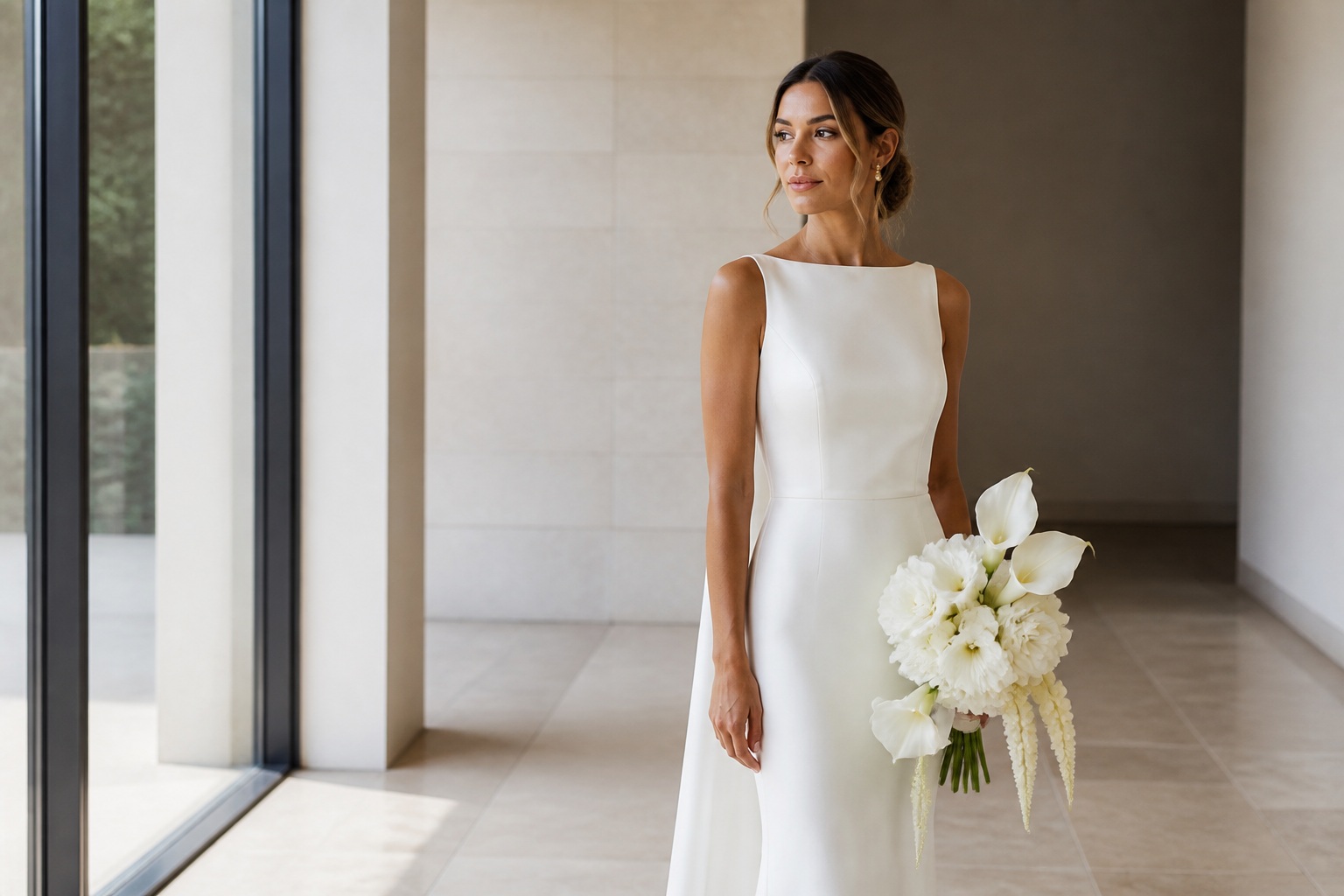
A decorated gown announces its details immediately. A simple gown invites the eye to stay longer. You notice the line from shoulder to waist, the shape of the back, the movement of the hem, and the way the fabric responds when the bride walks. This is why a minimalist dress can look incredibly luxurious even when its construction is visually quiet. Nothing is competing with the cut.
That clarity also makes a simple bridal dress more personal. A long veil can introduce ceremony without changing the gown. Sculptural earrings can create a modern mood. A bouquet can bring softness, color, or movement. The dress becomes a calm foundation rather than a fixed theme, which is useful if your wedding day moves through several settings or if you want an outfit you can re-style for a reception.
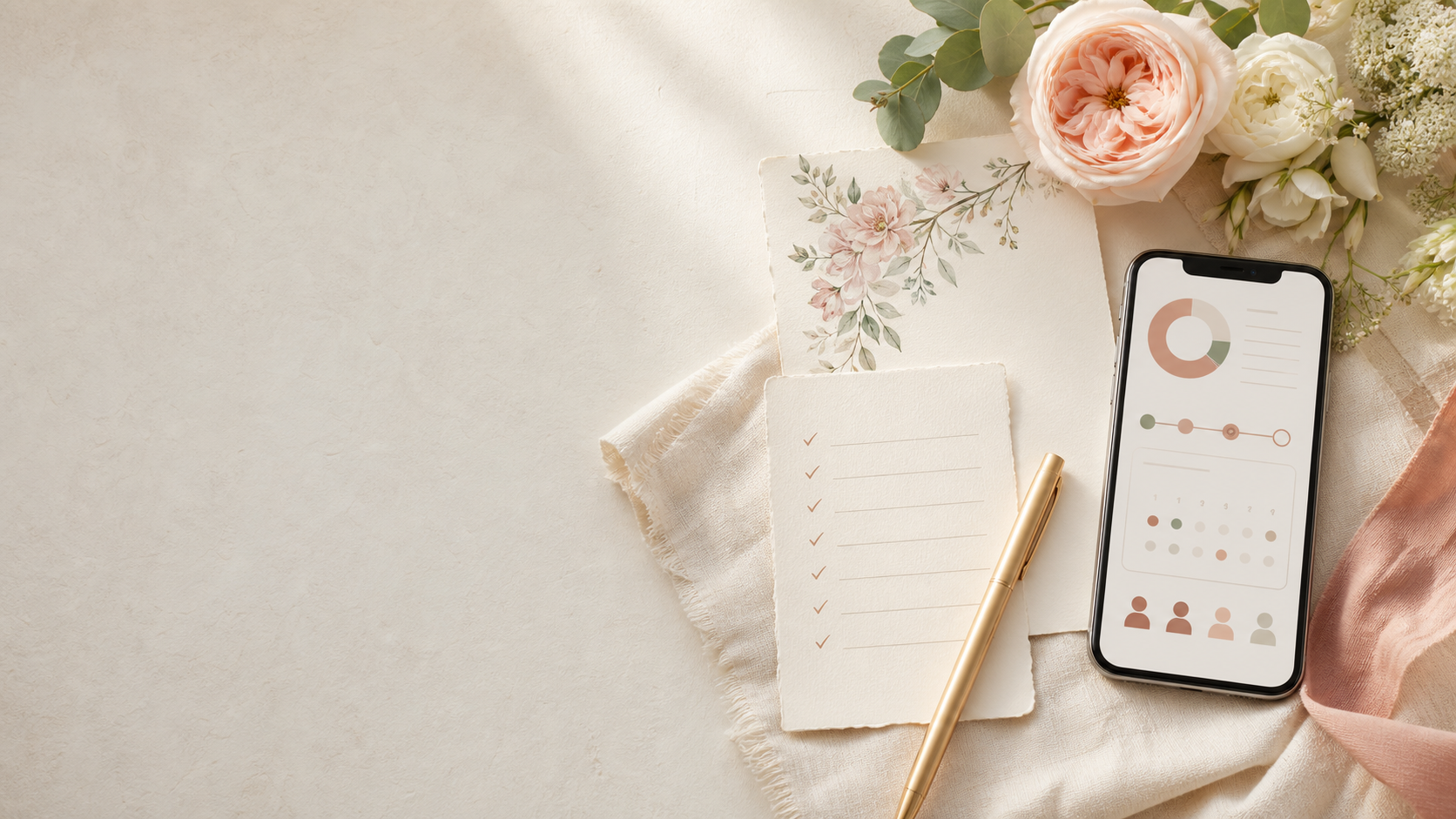
Turn wedding inspiration into a plan you can actually follow.
Zarellea brings your guest list, budget, vendors, and day-of details into one shared space — so no beautiful idea gets lost in the shuffle.
There is a practical benefit too. Fewer appliqués and layers can make a dress easier to steam, pack, sit in, and alter, although the actual care depends on the fabric and construction. A clean crepe sheath may travel differently from a structured Mikado A-line. A bias-cut silk slip can be light but unforgiving of fit issues. Simplicity removes visual noise, but it does not remove the need for expert alterations.
- Silhouette: the outline should feel intentional from every angle.
- Fabric: surface, weight, drape, and shine create much of the visual interest.
- Construction: seams, lining, support, closures, and finishing become easier to see.
- Proportion: neckline, waist placement, hem, and train determine the mood.
- Styling: accessories can add ceremony without overwhelming the dress.
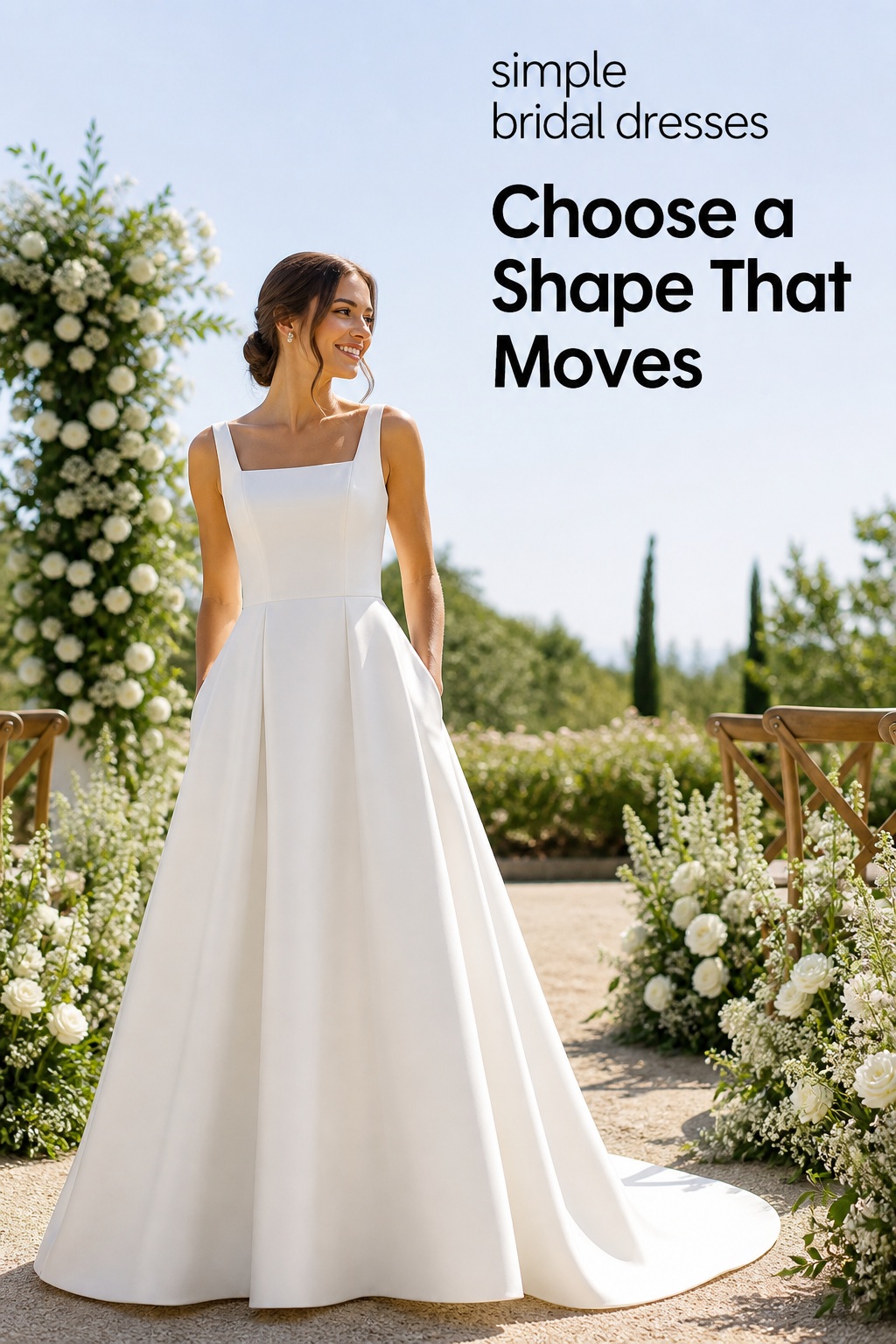
Choose the silhouette and fabric before the accessories
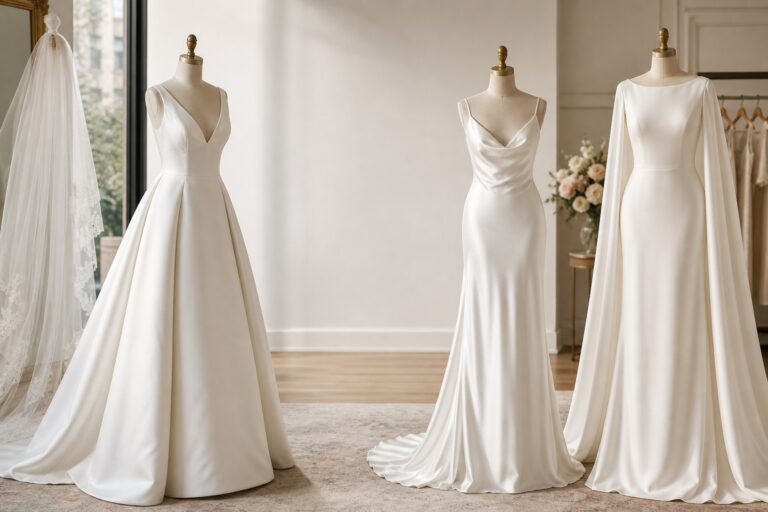
The fastest way to narrow simple bridal dresses is to decide how you want to move and what you want the dress to communicate. A sheath or slip feels elongated and modern. An A-line offers ease through the hip and a gentle sense of occasion. A fit-and-flare or mermaid silhouette follows the body more closely and makes the seam work part of the design. An empire waist can feel light and romantic, while a clean ball gown proves that a simple dress can still be grand.
Crepe for a smooth, quietly modern look
Crepe is a strong choice when you want a dress that looks matte, fluid, and refined. It can skim the body without appearing overly glossy, which makes it useful for a city ceremony, a contemporary venue, or a bride who prefers understated photographs. Stretch crepe may offer comfort, but test the thickness and lining carefully. Very thin fabric can reveal more than expected, while a heavier crepe can create a beautifully controlled line.
Satin for light, structure, and ceremony
Satin gives simple bridal dresses an immediate sense of occasion because its surface reflects light. Charmeuse and silk satin can feel fluid and romantic, while crepe-back satin offers a more restrained finish on one side. Mikado is firmer and more sculptural, making it excellent for an A-line, architectural neckline, or clean ball gown. Remember that shine also highlights folds and fit, so order enough time for alterations and a careful press.
Silk, chiffon, and subtle texture
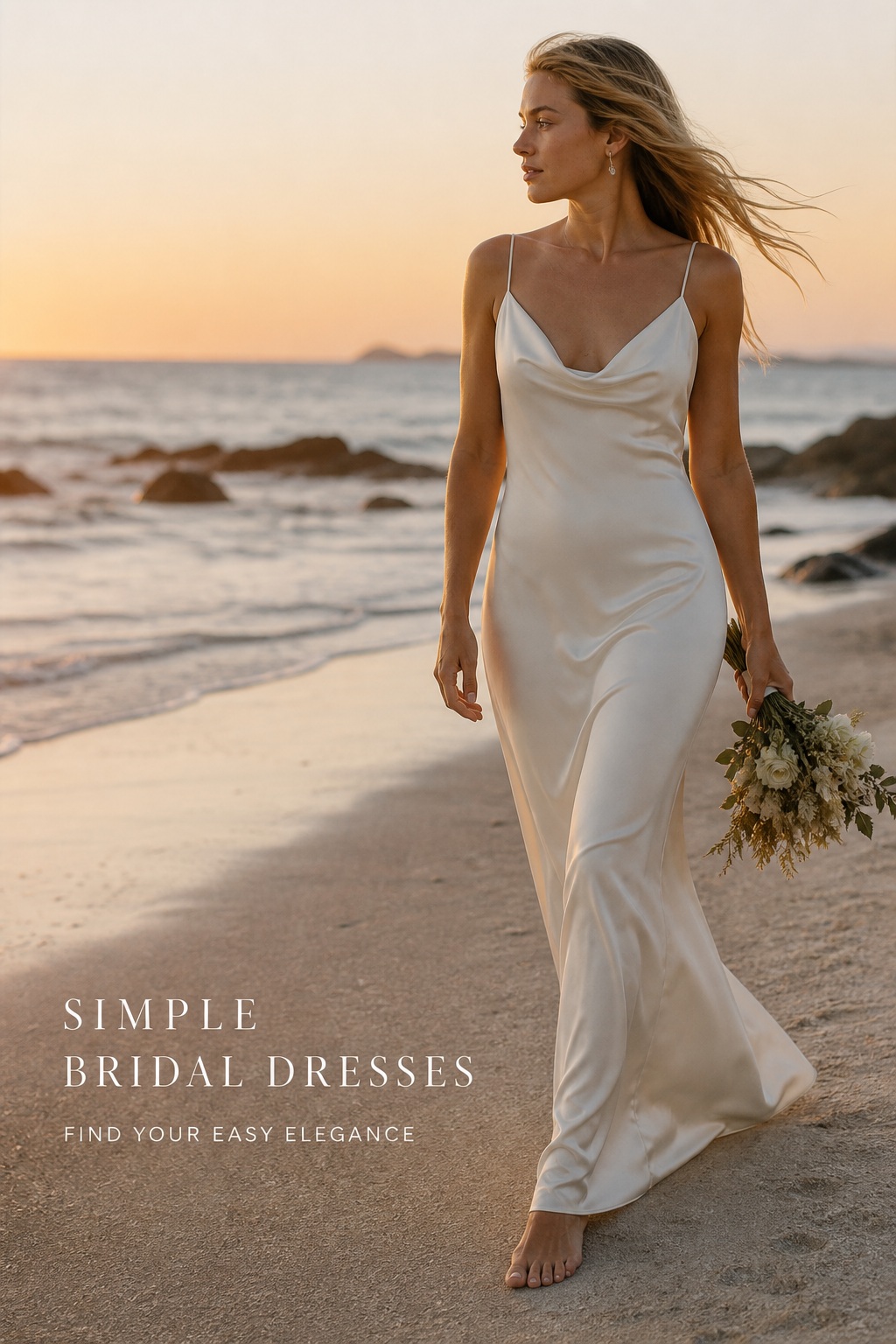
Silk can make a simple slip dress feel intimate and editorial, especially with a cowl neckline, low back, or narrow straps. Chiffon creates airiness and works beautifully for outdoor ceremonies or an easy A-line. If you like the idea of texture but do not want heavy decoration, look for pleats, draping, a softly gathered waist, a distinctive sleeve, or a low-back detail. These choices give the eye somewhere to pause while keeping the overall dress clean.
Match the dress to the setting and the way you will spend the day
The most successful simple bridal dresses do not just suit a mood board. They suit the actual day. Start with the ground under your shoes, the amount of walking involved, the temperature, the photography locations, and the formality of the ceremony. A dress that is perfect for a candlelit ballroom may feel overly heavy on a beach, while a delicate slip may need a thoughtful layer for a cool outdoor evening.
City hall, courthouse, or civil ceremony
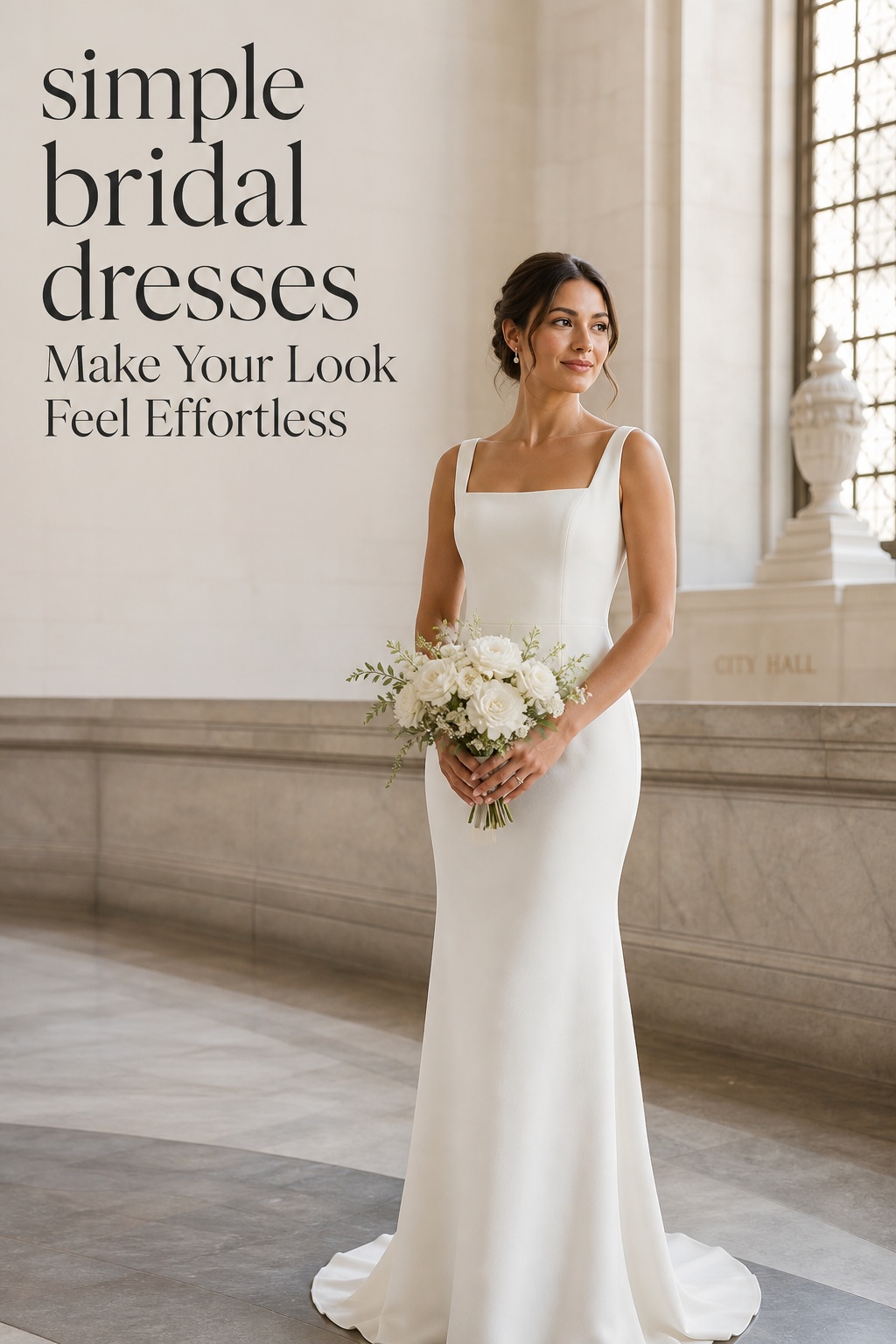
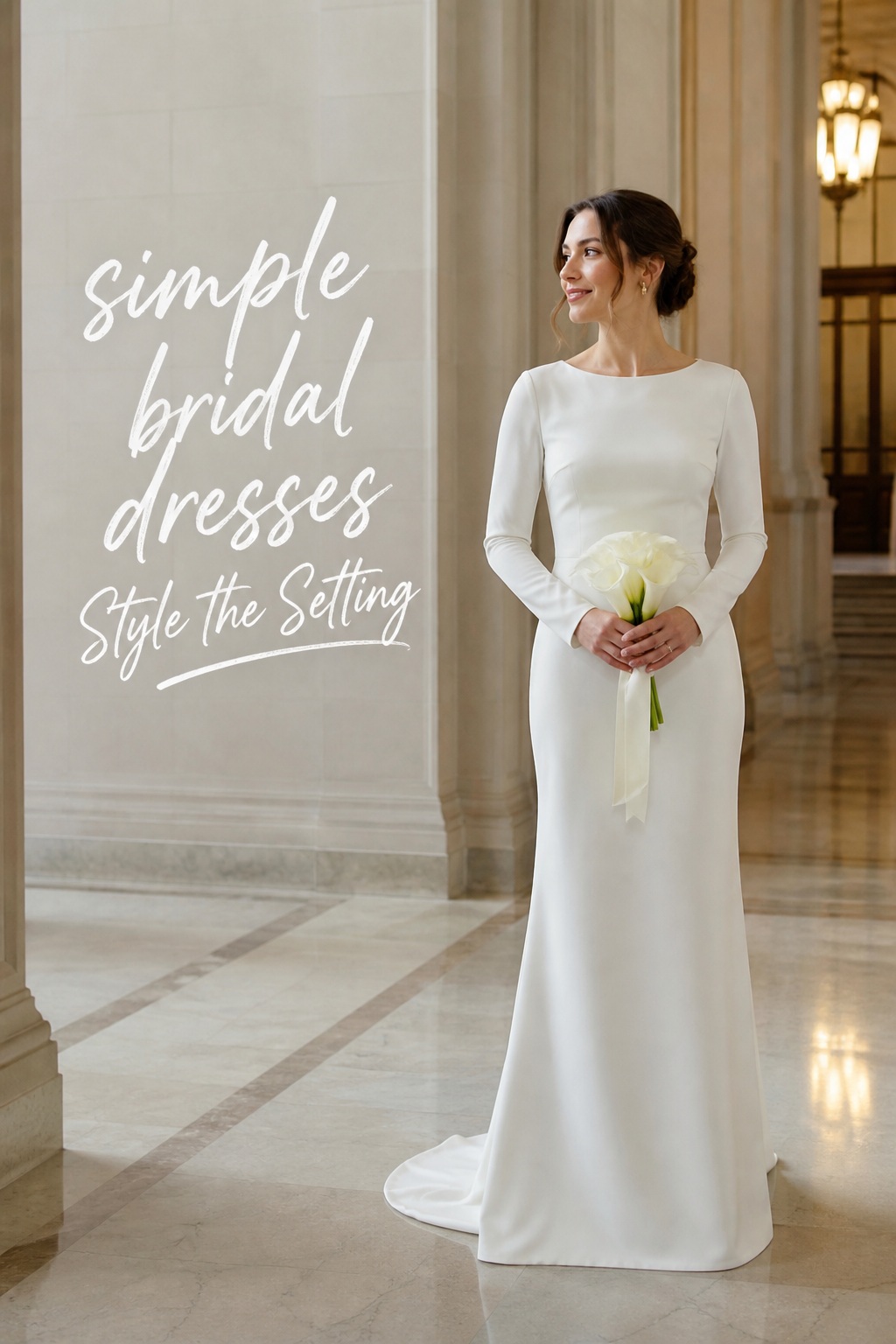
A tea-length, midi, tailored mini, sleek sheath, or short train can feel especially natural for a civil ceremony. Choose a hem that works with stairs, sidewalks, car rides, and close-up photographs. A square neck, bateau neckline, or clean halter can make a shorter dress feel considered. If you want more ceremony, add a fingertip veil, opera gloves, a bow, or a tailored blazer for portraits, then remove the layer for dinner.
Garden or outdoor wedding
For a garden setting, look for movement and manageable weight. An airy A-line, soft sheath, or chiffon gown can echo the surroundings without becoming costume-like. A sweep train is often more practical than a long cathedral train, particularly if the ceremony takes place on grass or a gravel path. Choose shoes that will not sink into the ground, and ask whether the hem can be bustled securely before the reception.
Beach, destination, or elopement
At the coast, a simple bridal dress should let you walk, sit, and handle wind. A relaxed slip, bias-cut gown, light chiffon, or shorter hem can be beautiful, but ask how the fabric behaves in sea air and how easily it wrinkles in transit. A low-back dress may look striking against the horizon, while a fitted bodice can offer security when the breeze picks up. Keep the accessories deliberate: a veil that moves, flat sandals, or one strong pair of earrings is often enough.
Formal ballroom or evening reception
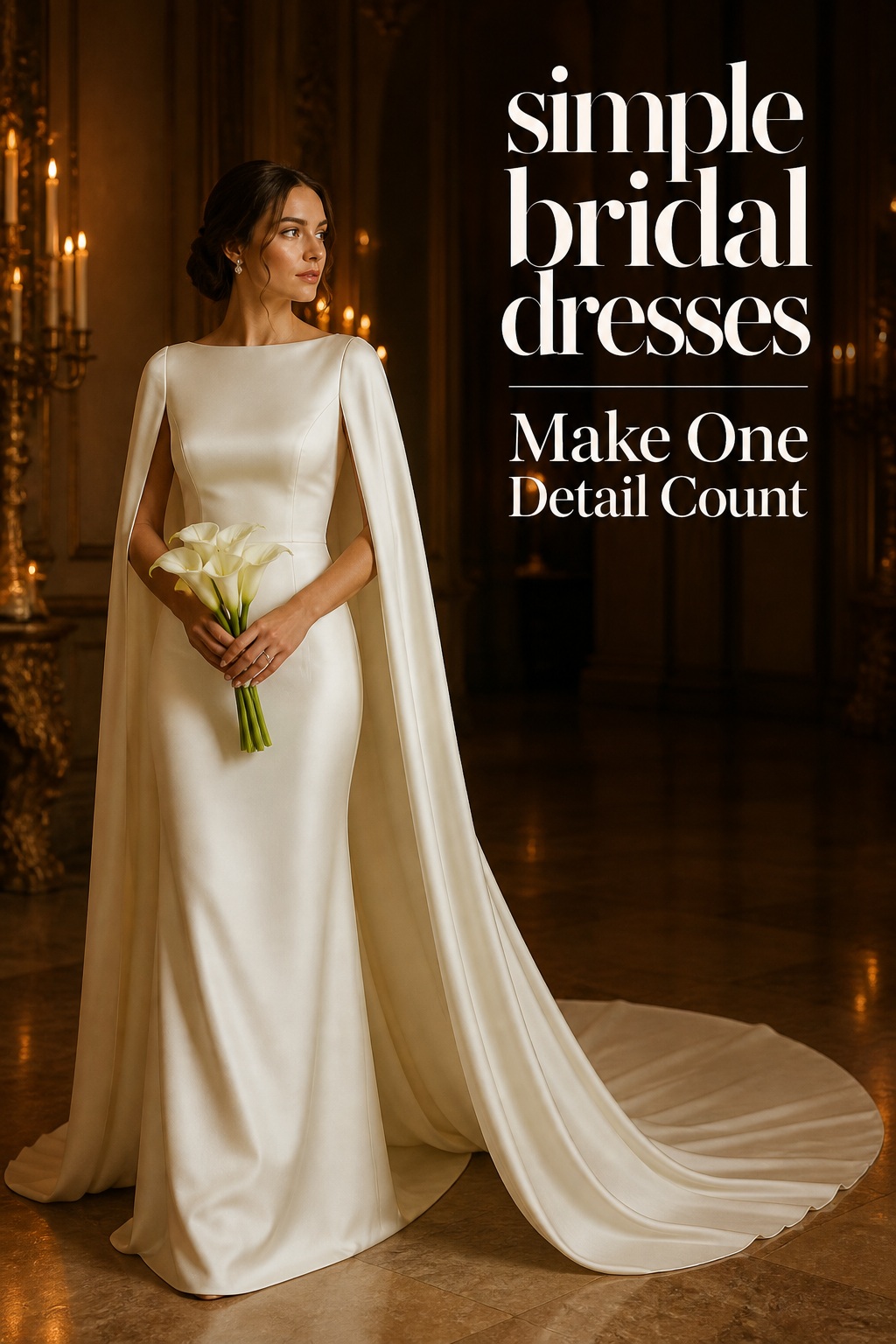
Formal does not require beading. A structured Mikado gown, a satin dress with a chapel train, a sculpted neckline, or a dramatic cape can create a powerful entrance while keeping the surface clean. Proportion matters here. A longer train, elevated fabric, or precise architectural detail can supply the visual weight that embellishment would otherwise provide. For an evening ceremony, consider earrings or a veil with a subtle sheen rather than adding several competing accessories.
Build a bridal look around one clear styling idea
When the dress is simple, it is tempting to add accessories until the look feels finished. A better approach is to choose one styling idea and let the rest support it. The same crepe gown can become classic with a cathedral veil, fashion-forward with sculptural earrings, romantic with a floral hairpiece, or relaxed with a cropped jacket. Think in terms of balance, not decoration.
- Modern minimal: pair a clean neckline with sleek earrings, a smooth updo, and a structured bouquet.
- Soft romantic: add a fingertip veil, loose waves, delicate pearls, and flowers with natural movement.
- Old-world: use a long veil, heirloom jewelry, satin shoes, and a bouquet with classic blooms.
- Coastal: choose a light veil or no veil, simple sandals, brushed gold, and an unfussy bouquet.
- Editorial: emphasize an unusual neckline, a long glove, a cape, or a graphic bouquet, then keep everything else quiet.
Do not forget the back. A simple front can be balanced by buttons, a low back, a bow, a cowl, or an elegant seam detail behind you. Guests and photographers will see the back while you walk down the aisle, during the vows, and in many ceremony photographs. If the dress has a strong back, keep the veil placement and hairstyle from hiding it.
Accessories should also respect the fabric. Matte crepe often pairs well with satin, pearls, brushed metal, or textured silk. Glossy satin can handle sparkle, but the scale should feel intentional. A lace-edged veil can introduce softness to a plain gown, while a completely plain veil can make a detailed neckline feel more modern. Try the full combination in daylight and in the kind of indoor light you expect at the venue.
Use the fitting room as a final decision tool
Simple bridal dresses reveal fit immediately, so a fitting should be active rather than purely visual. Walk at different speeds, sit in a chair, raise your arms, hug someone, turn around, and practice holding a bouquet. Check whether straps stay in place, whether the neckline gaps, whether the lining twists, and whether the dress pulls across the hips or bust. Ask for a video from the side and back if the boutique allows it.
- Bring the undergarments and shoes you expect to wear, or use close substitutes.
- Test the dress under bright light, soft indoor light, and with a phone camera.
- Ask where the bustle will sit and whether you can fasten it without help.
- Check the care instructions before committing to delicate silk or heavily polished satin.
- Confirm the size chart, made-to-order terms, return policy, delivery date, and alteration window.
- Order early enough to allow at least one fitting, a hem adjustment, and a final movement check.
The most common mistake is choosing a dress because it looks simple in a product photo, then discovering that the simplicity depends on perfect styling, studio lighting, or a model’s exact proportions. Look beyond the front image. Inspect seams, lining, closures, fabric weight, support, and the way the hem falls when you move. The dress should still feel like you when the veil is removed and the bouquet is set down.
Another mistake is assuming that simple means you cannot make a statement. A long train, an unexpected sleeve, a strong shoulder, a dramatic bow, a square neckline, or a sculptural fabric can be memorable without being busy. Choose one element with conviction. Restraint becomes powerful when it is specific.
FAQ
What makes a bridal dress simple?
A simple bridal dress usually relies on a clean silhouette, limited embellishment, refined fabric, and intentional construction. It can still be formal, dramatic, or luxurious. The focus moves from lace and beading to proportion, drape, neckline, train, and fit.
Can simple bridal dresses be formal enough for a ballroom wedding?
Yes. Choose a substantial fabric such as Mikado, duchess satin, or high-quality crepe, then use silhouette and length to add ceremony. A chapel train, sculpted bodice, elegant cape, or polished veil can make an unembellished gown feel completely formal.
Which fabric is best for a simple bridal dress?
Crepe is useful for a smooth matte look, satin adds light and ceremony, Mikado creates structure, silk brings fluid movement, and chiffon feels airy. The best fabric depends on the silhouette, season, venue, support needs, and how much wrinkling you can comfortably manage.
Are simple bridal dresses good for a courthouse wedding?
They are especially practical for a courthouse or civil ceremony. Consider a midi, tea-length, mini, tailored sheath, or short train that works with stairs, sidewalks, and a quick change of locations. A veil, blazer, gloves, or statement earrings can add a ceremonial finish.
How can I make a simple dress look more bridal?
Use one clear bridal accent, such as a veil, cape, gloves, heirloom jewelry, a dramatic bouquet, or a train. Hair and makeup also help set the mood. Keep the rest of the look edited so the accessory feels intentional rather than added as an afterthought.
Do simple wedding dresses work for outdoor weddings?
Yes, especially when the fabric and hem suit the conditions. Light chiffon, crepe, a relaxed A-line, or a sweep train can work well for gardens and beaches. Consider wind, grass, gravel, heat, walking distance, and the possibility of a secure bustle.
How early should I order a simple bridal dress?
Plan to order several months before the wedding, with extra time for made-to-order production and alterations. Four to six months is a useful starting point for many gowns, but always confirm the designer’s current lead time and leave room for a final fitting.
Can a simple bridal dress have pockets?
Yes. Pockets are available in some A-line, ball gown, and fuller-skirted designs. Ask whether they are built into the pattern, whether they change the skirt’s drape, and whether they are large enough for what you actually need to carry.
What should I prioritize when comparing simple bridal dresses?
Prioritize fit, fabric behavior, movement, support, and the way the dress works with your venue before comparing decorative details. A gown that feels comfortable and holds its shape through walking, sitting, photographs, and dancing will serve you better than one that looks impressive for five minutes. Once those basics are right, choose the neckline, back, train, veil, and accessories that express your personal style.