Cute Bridesmaid Hairstyles: Five Pretty Details to Try
The getting-ready room is finally quiet enough to hear the last curls fall into place. A bridesmaid looks in the mirror and likes the shape, but it still feels a little too much like her regular hair. The fix does not have to be a more complicated updo. Often, one thoughtful detail is enough to make a familiar style feel special for the wedding.
These cute bridesmaid hairstyles start with that small shift in perspective. Instead of choosing a dramatic silhouette first, choose the detail you want to notice: a narrow ribbon, a little braid, a pearl comb, a tucked knot, or a loose piece beside the face. Then build a comfortable base around it. The result can feel pretty and occasion-ready without asking the wearer to look like someone else.
The Little Detail Is the Look
A wedding hairstyle is not automatically charming because it took an hour to create. A tight, intricate updo can look beautiful, but so can a low ponytail with a ribbon tied neatly over the elastic. What gives the simpler option its personality is the relationship between the base shape and the finishing detail. One should make the other feel more intentional.
Think about the mood you want before you pick the accessory. A slim satin ribbon reads soft and polished. A small braid feels playful and a little relaxed. A pearl comb can make loose waves look more dressed up, while a few airy tendrils keep a pinned style from feeling severe. These details are small enough to leave the hairstyle recognizable, yet clear enough to show in close photographs.
Turn wedding inspiration into a plan you can actually follow.
Zarellea brings your guest list, budget, vendors, and day-of details into one shared space — so no beautiful idea gets lost in the shuffle.
The word cute can mean many things. It might mean a bow, a tiny twist, an unexpected part, or a shape that feels light rather than formal. It does not have to mean childish, overly decorated, or covered in accessories. The most successful version usually has one focal point. If a ribbon is the focal point, let the rest of the style stay clean. If the hair itself has a braid or twist, keep the accessory quiet.
That is why a saved image is more useful when you can name what you like about it. “I like the ponytail” is a starting point. “I like the low placement and the narrow bow covering the elastic” tells a stylist what makes the reference work for you. It also leaves room to adapt the base shape to the length, texture, and movement of your own hair.
Five Cute Bridesmaid Hairstyles Built Around One Detail
Use these looks as starting points, not strict instructions. Each one pairs a familiar base with a single detail that changes its mood. A stylist can keep the idea while adjusting the placement, texture, and amount of hair gathered to suit the person wearing it.
1. A ribbon-wrapped low ponytail
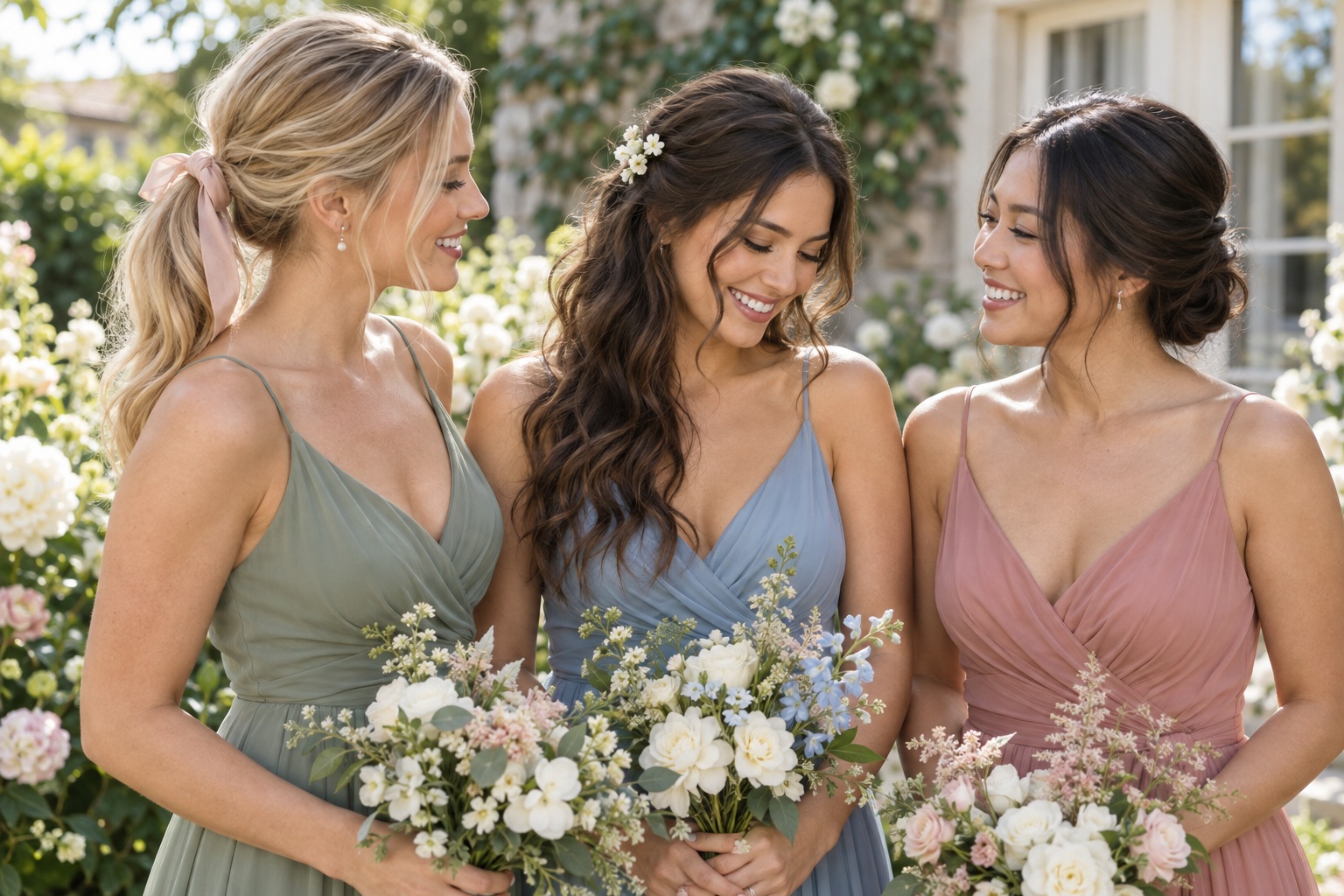
A low ponytail is an easy shape to picture: hair gathered at the nape, with the length left to move. The pretty detail is a narrow ribbon wrapped once around the elastic and tied into a small bow, or left with two short tails. It gives the back of the hairstyle a finished point without needing a large accessory or a complicated curl pattern.
Choose the ribbon for its finish as much as its color. Matte grosgrain feels crisp, velvet looks richer, and a soft satin ribbon catches more light. A narrow width keeps the bow delicate; a wider ribbon makes it a more noticeable part of the look. For a clean result, ask the stylist to secure the ponytail first, cover the elastic, and keep the bow centered or slightly to one side.
This idea is especially sweet when the hair has a little bend through the length, but it can also look polished and simple when worn smooth. If the outfit already has a strong print, shine, or statement neckline, keep the ribbon close to the hair color or choose a quiet shade from the dress. The point is a small flourish, not a second focal point competing with the rest of the look.
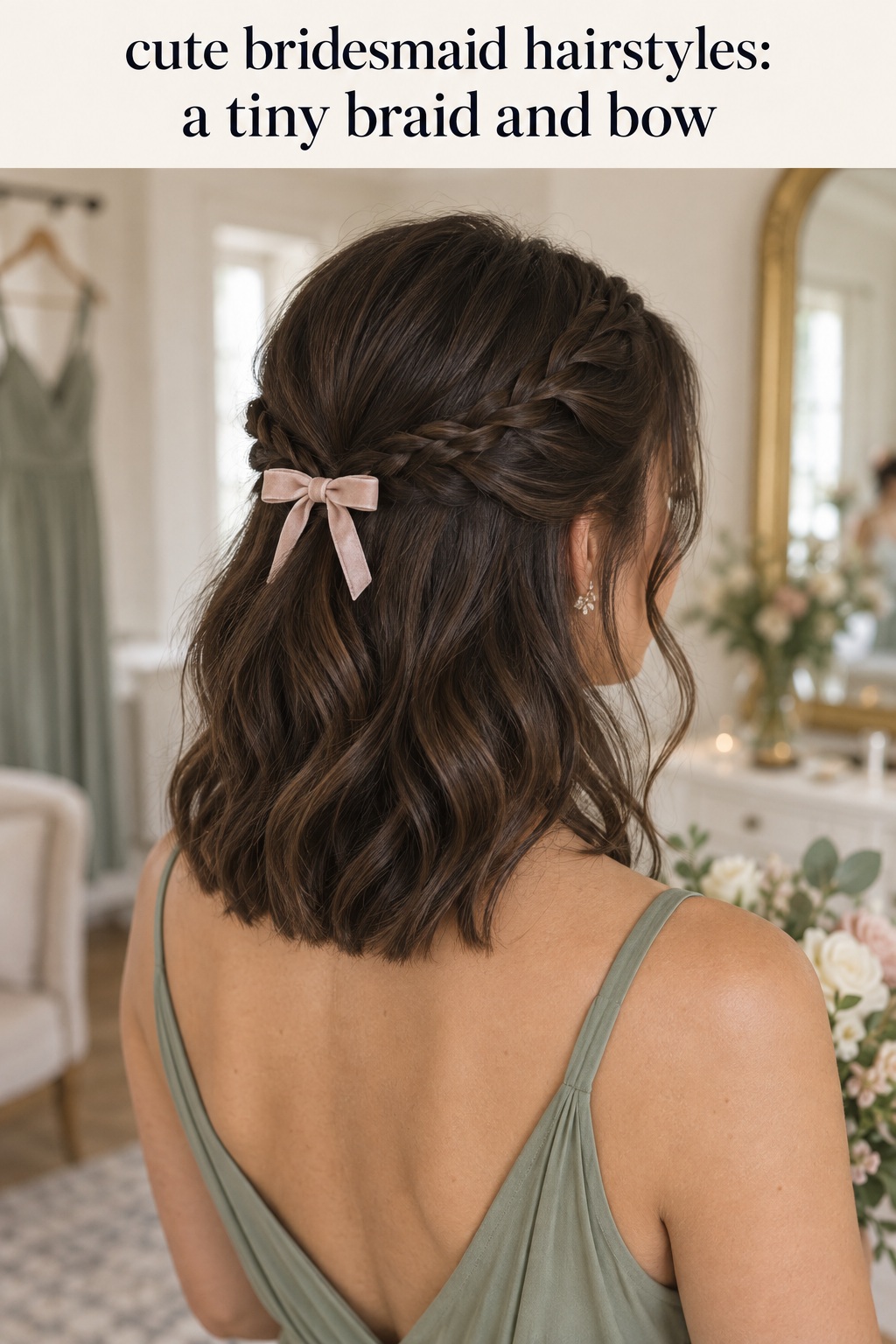
2. A braided half-up with a tiny bow
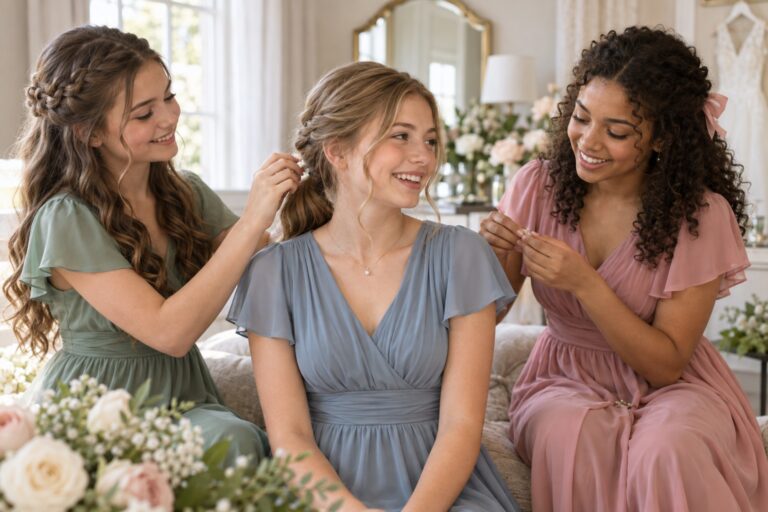
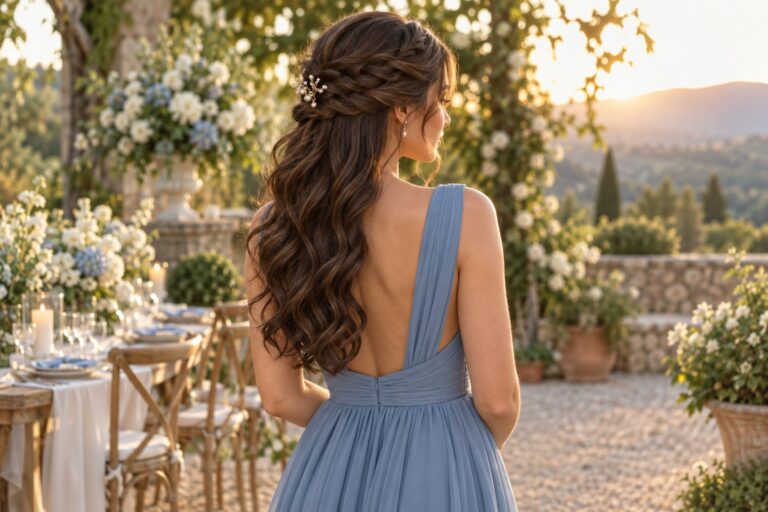
A half-up style leaves some hair around the shoulders while drawing the front sections away from the face. To make it feel more personal, braid or gently twist one small section from each temple and meet them at the back. A tiny bow, slim barrette, or discreet pin can sit where the sections join. The detail looks considered from the back and gives the hairstyle a clear finish from the side.
The braid does not need to be thick or perfectly uniform. A fine braid tucked into a half-up shape can feel more like a detail discovered in the hair than a major feature. For a softer mood, the rest of the length can keep its natural movement. For a more polished mood, ask for a smoother crown and a bow with neat, short tails. Either way, the joining point is the part to show in the reference picture.
A tiny bow works best when it has enough contrast to be visible but does not dominate the head. If bows are not your style, the same half-up braid can finish with a small pearl pin or an unadorned twist. The detail is flexible; the gentle pattern at the back is what makes this version different from simply clipping the sides away.
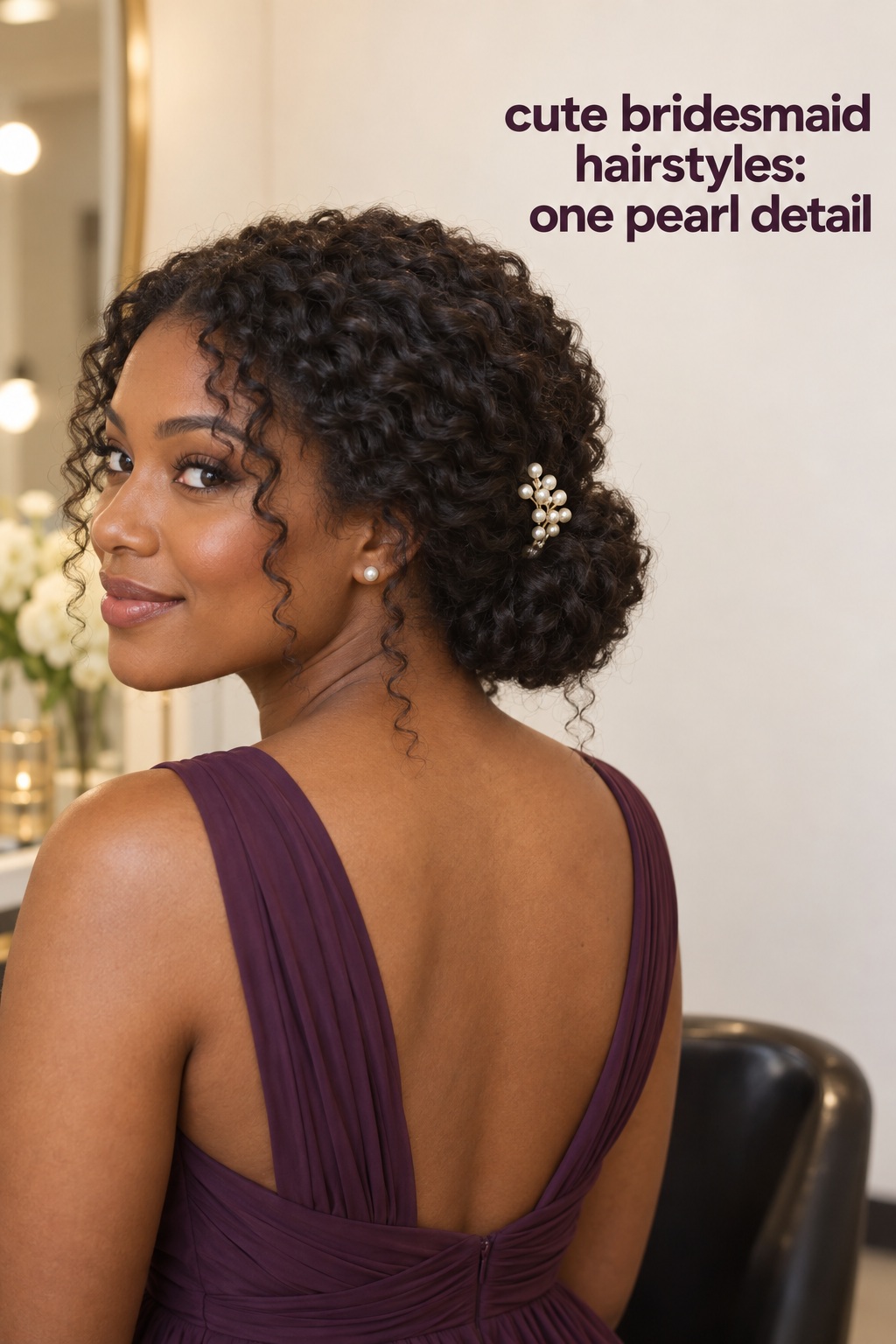
3. A soft tucked knot with one pearl comb
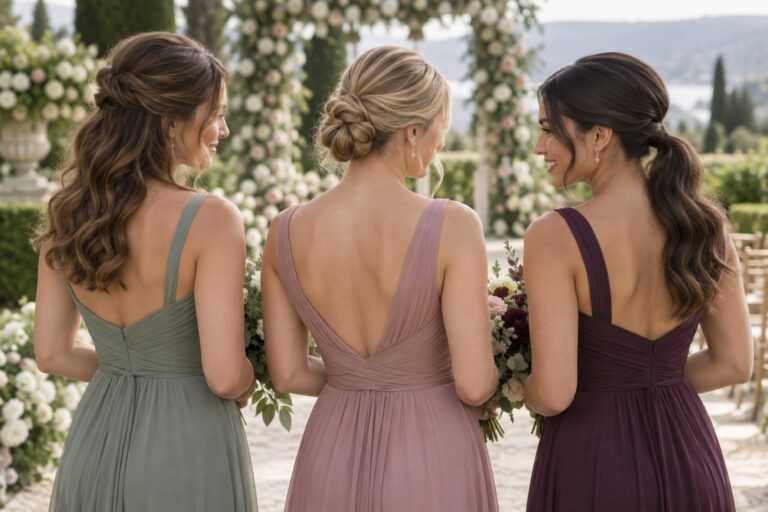
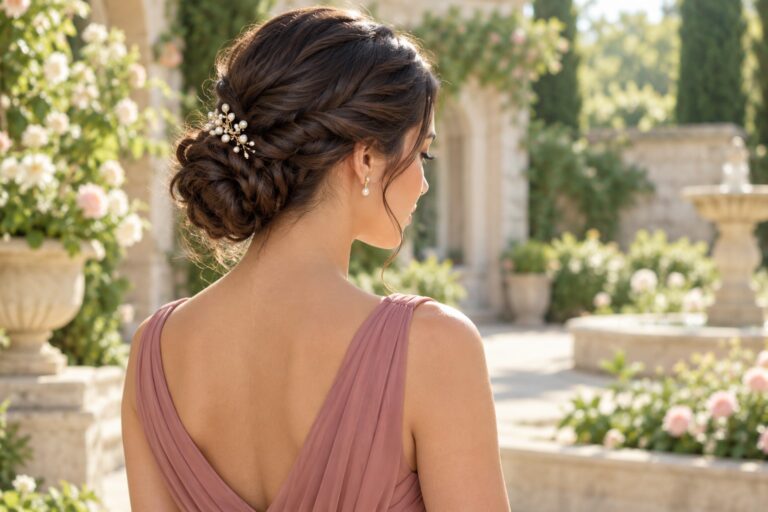
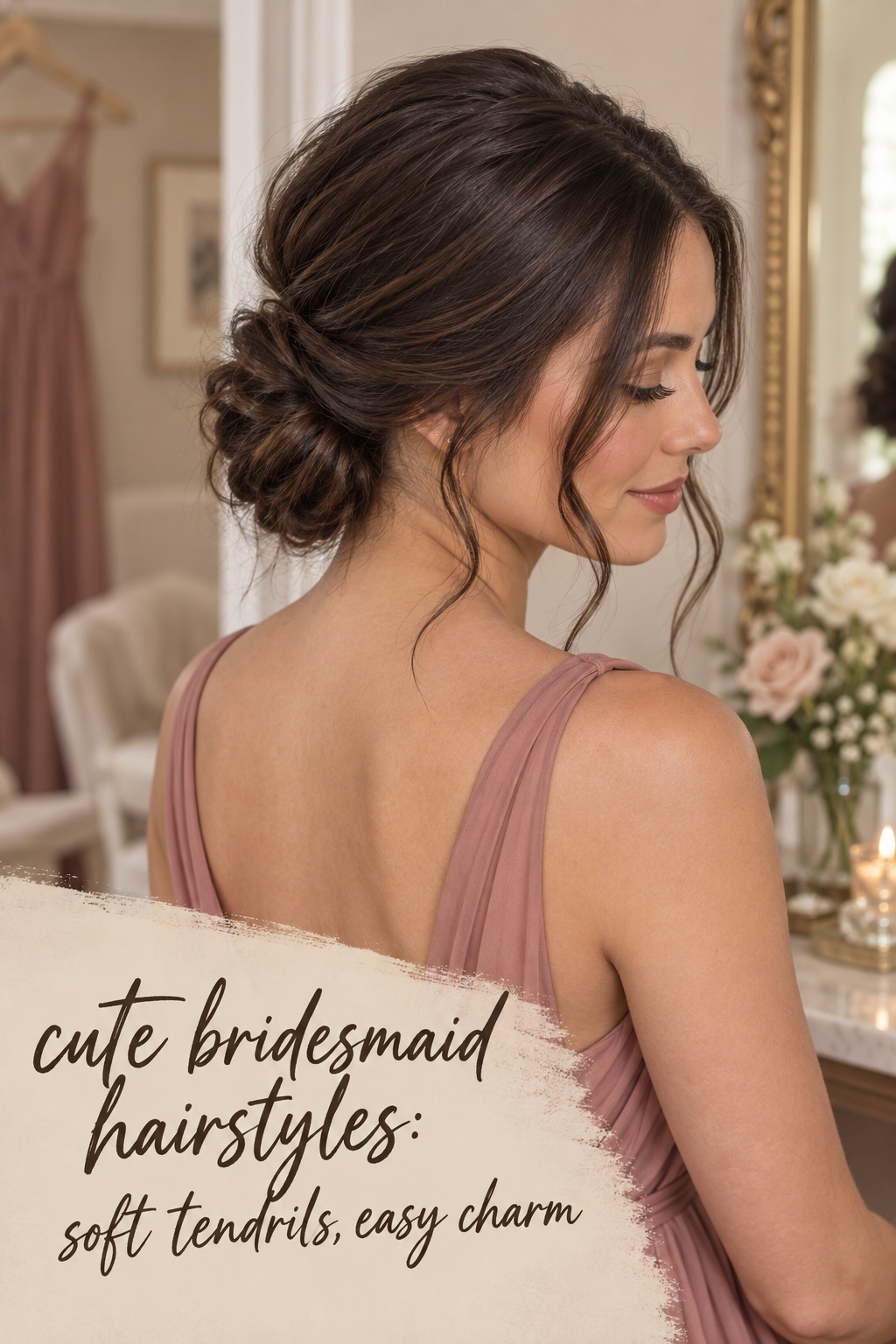
For a gathered look that still feels relaxed, think of a low knot with a little texture rather than a perfectly smooth bun. The hair can be folded or twisted into a compact shape at the nape, with a few soft pieces left near the face if the wearer likes that finish. A pearl comb placed just above the knot adds a small point of light and makes the simple shape feel occasion-ready.
The scale of the comb matters. A petite piece with a few pearls looks delicate beside a narrow knot. A large comb can become the main event, which may be exactly right for a minimal dress but can feel busy beside prominent earrings or beading. Ask the stylist to position the accessory where it can be seen from the side without covering the texture that makes the knot interesting.
This is a useful inspiration picture when the wearer wants hair up but does not want a rigid, highly sculpted shape. A soft knot offers a clear outline, while the accessory supplies the charm. The reference should show the back and side of the finished hair. A front-only picture will not tell the stylist where the knot sits or how the comb is attached.
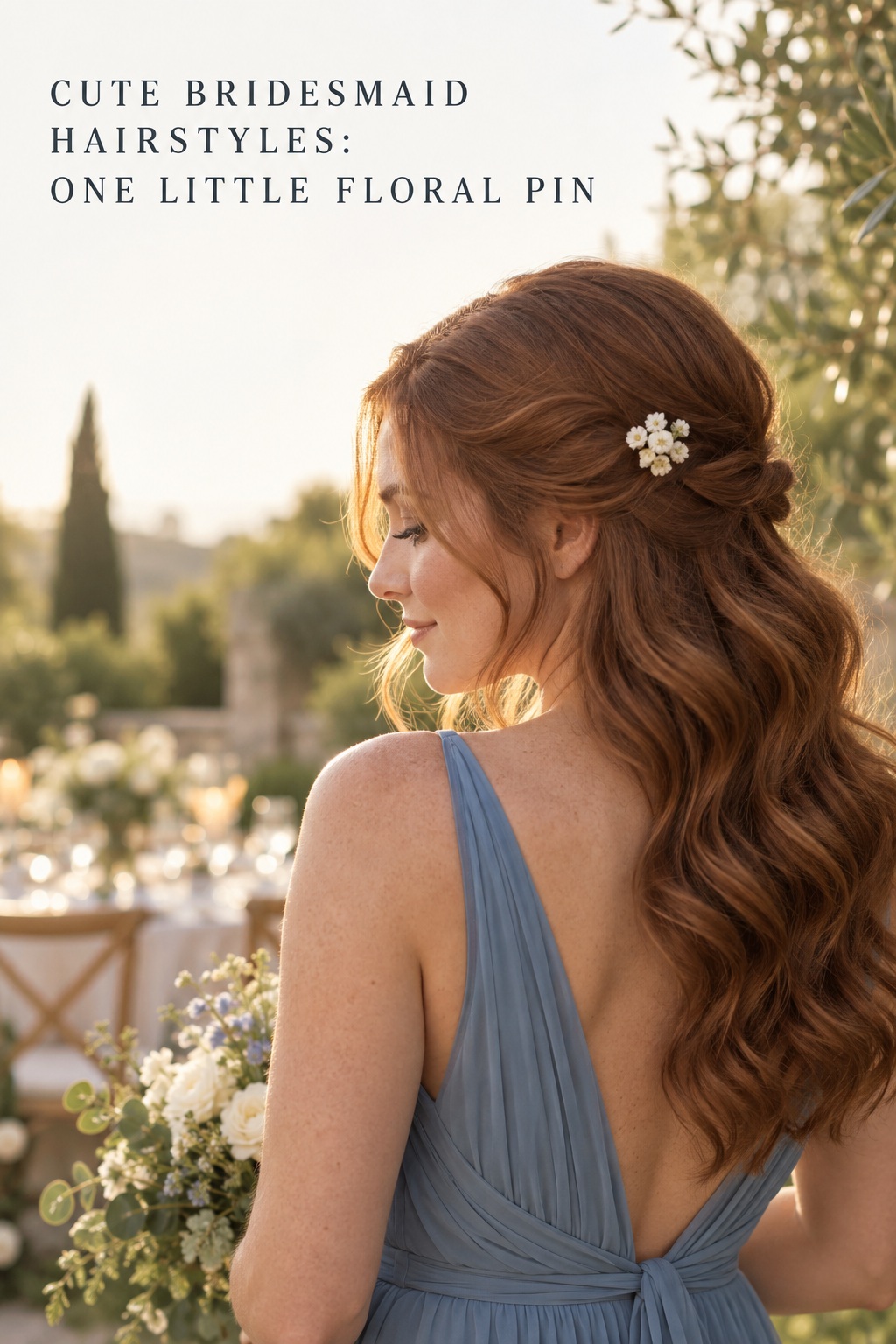
4. Loose waves with one floral pin
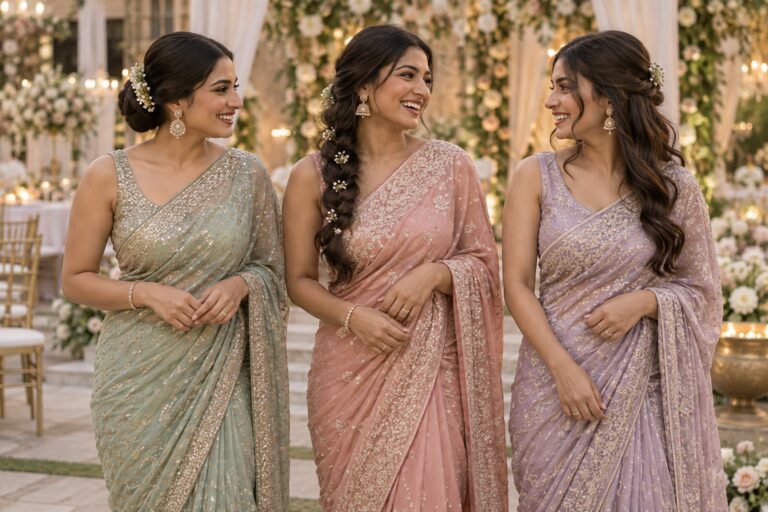
Loose waves can feel wedding-ready without being pinned into a formal shape. Add one small floral pin above the ear or just behind a tucked side. The flower creates a focal point and makes a simple down style feel chosen for the occasion. A single pin can be enough; a trail of several blooms changes the mood and should be treated as a separate, more decorative direction.
Let the flower relate to the overall look in a quiet way. It might repeat the shape of a bouquet bloom, echo a color in the dress, or contrast gently with the hair. Keep its size in proportion to the hairstyle. A fine pin can sit comfortably in a soft wave, while a heavier piece may need a small hidden anchor. The stylist can advise on the best placement for a secure feel.
If the wearer prefers her natural texture, the same idea can work with the hair as it naturally falls. The flower is an accent, not a reason to change the texture into something unfamiliar. Tell the stylist whether you want the hair brushed into waves, left more defined, or simply shaped around the pin. Those words make the inspiration easier to adapt.
5. A low twist with face-framing pieces
A low twist gathers the hair back while leaving the outline softer than a tight bun. A couple of face-framing pieces can make the style feel warm and unforced. The detail is not an accessory; it is the contrast between the gathered back and the light movement near the face. That contrast can make a classic shape feel more relaxed and individual.
Be specific about the pieces you want. “Some tendrils” can lead to a range of results, from barely-there wisps to longer curls. A clear reference can show whether you like one small section on each side, a longer piece on one side, or a softly curved fringe. Ask that the pieces sit comfortably and do not fall where they will be distracting to the wearer.
The back of the twist can stay simple, or it can include a tiny pin tucked near the base. If you add the pin, let the loose front pieces remain the softer counterpoint rather than adding a second large decoration. The idea works because the shape has a little polish, while the edges do not feel overly fixed.
Make the Detail Belong to the Dress and the Hair
A cute detail should feel connected to the person wearing it. Start with the hairstyle the bridesmaid would feel comfortable in, then check how the dress, neckline, and accessories change what is visible. The same bow can feel playful on a loose ponytail and more formal on a smooth half-up shape. The same pearl comb can be barely noticeable against a detailed dress or become a focal point beside a plain fabric.
Look at the neckline and the back of the dress
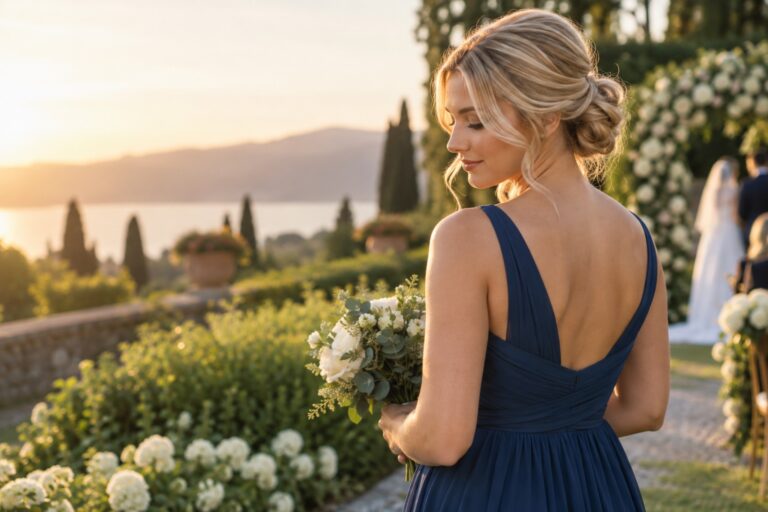
If the dress has a high or decorated neckline, an up style or a lifted half-up shape can leave that detail visible. An open back may look lovely with hair gathered low or swept to one side, while a strapless or off-the-shoulder shape can pair with hair that moves around the shoulders. These are visual starting points rather than rules. The wearer’s preference comes first, and a stylist can adjust the height or direction of the style.
When choosing an accessory, check it beside the dress rather than judging it on its own. A satin bow may echo a fabric finish; a pearl pin can repeat buttons or jewelry; a flower can connect with a bouquet. If those elements already appear elsewhere, use a smaller version in the hair. Repeating one detail subtly can make the look feel intentional without turning every part of the outfit into a matching set.
Choose the amount of polish that feels like you
Some bridesmaids feel best with a smooth finish and a clean part. Others like visible texture and movement. Decide which one feels familiar before asking for a wedding version of the style. A polished ponytail can still have softness at the ends; natural texture can still be shaped neatly around a clip. The details do not need to erase the everyday character of the hair.
Think about the event as a whole, too. A garden ceremony might invite a lighter finish, while an evening celebration may call for a little more shine or a more defined shape. That does not mean every outdoor style must be loose or every formal look must be sleek. It simply helps you describe the mood. “Soft and airy with a secure low shape” is more useful than naming a trend without explaining what you want it to look like.
Keep comfort in the picture
Comfort is part of the look because the wearer will be moving, greeting people, sitting for photographs, and spending hours in the style. A comb should feel secure rather than sharp or heavy. A bow should not pull the hair. Face-framing pieces should not need constant adjustment. If the wearer usually keeps hair down, a dramatic pinned-up style may feel unfamiliar even if it looks beautiful in a reference.
There is no need to solve every possible wedding-day condition in advance. Share the basic plan with the stylist, mention anything that tends to bother the wearer, and ask which parts can be adjusted during styling. A small test with the accessory can reveal whether it catches, slips, or feels too prominent. The goal is a pretty look that remains pleasant to wear.
A Small Reference Board That Gets the Point Across
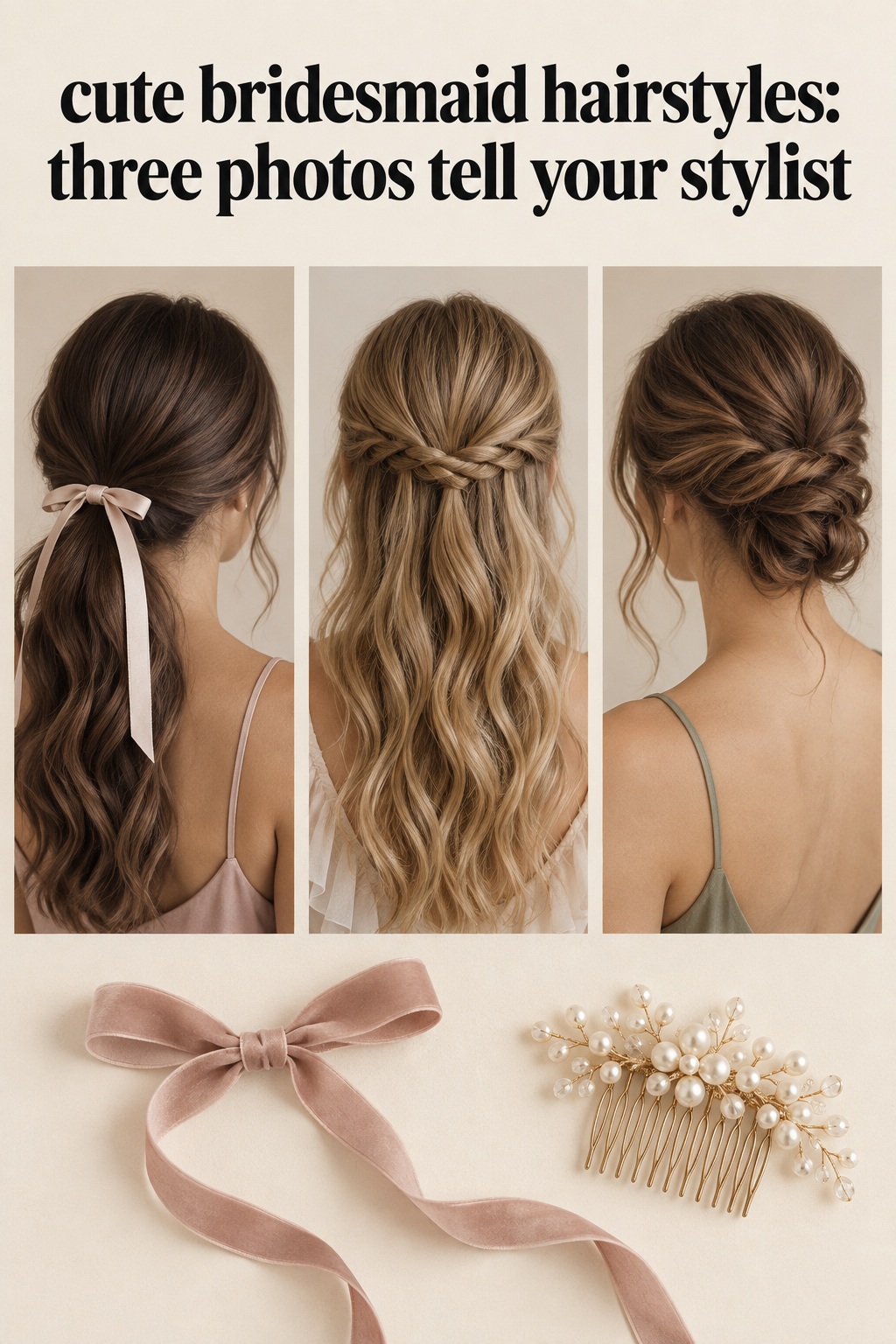
Once you have a favorite detail, make a tiny reference board instead of sending a long scroll of unrelated screenshots. Three images are often enough to show the stylist what you mean: one for the detail, one for the base shape, and one current photo of the wearer’s own hair. Together they explain the idea and give the stylist realistic context.
The detail image might show the exact ribbon width, braid placement, pearl comb, floral pin, or face-framing pieces you like. The base-shape image shows whether you want a low ponytail, half-up hair, a knot, waves, or a twist. The personal photo does not have to be professionally taken. It should simply show the current length and texture in ordinary light, so the stylist can see what the reference might need to become.
Add a short note below the images with three parts: what to keep, what to change, and what matters most. For example: “Keep the low pony and slim ribbon. Use my natural wave rather than tight curls. Please keep the bow small.” This turns an inspiration board into a useful conversation rather than a demand for an exact copy.
If a detail is important, show it clearly. A cropped image of the back may reveal the braid or bow better than a full-length picture. A side view can show the placement of a comb. If you like the softness of a style but not its exact shape, say so. The stylist can then borrow the mood while building something that suits the wearer.
For a trial or practice session, bring the accessory itself if you already have it. This gives the stylist a chance to see its size, weight, and fastening. If you are still deciding, bring two options and ask which one sits best in the chosen shape. You do not need a large kit of pins, ribbons, and flowers to make the decision. One or two relevant pieces are easier to compare.
Let the Finished Style Stay Personal
The best cute bridesmaid hairstyles are often easy to recognize: a ponytail, a half-up shape, a soft knot, loose waves, or a low twist. The charm comes from the choice that makes the style feel specific to the wearer. It may be one ribbon in a favorite color, a braid hidden at the back, a petite comb, or a few loose pieces near the face.
That small choice can also make an inspiration photo more useful. Rather than asking for a whole look to be copied, point out the part that matters and let the stylist interpret it. The hair can stay comfortable, recognizable, and suited to the outfit while still feeling a little more special than an everyday style.
Before the appointment, settle on one focal detail, choose a base shape, and save a clear image of each. Bring the accessory if you have it, explain what you want to keep, and share any comfort preference plainly. Then leave room for the stylist to adapt the idea. A lovely bridesmaid look does not need a complicated formula; a thoughtful detail can be enough.
FAQ
What makes a bridesmaid hairstyle look cute?
A small, intentional detail can make a familiar hairstyle feel charming: a slim ribbon, a tiny braid, a pearl comb, a floral pin, or soft face-framing pieces. Choose one focal point and let the rest of the style support it.
Can a simple ponytail work as a bridesmaid hairstyle?
Yes. A low ponytail can feel wedding-ready with a neat wrap over the elastic, a small ribbon, or a little movement through the length. The finish can be smooth or softly textured to suit the wearer and the outfit.
Are bows a good choice for bridesmaid hair?
A bow can be a pretty accent on a ponytail or half-up style. Consider its width, fabric, and color next to the dress and jewelry. A smaller bow keeps the detail subtle, while a wider one makes it a more visible part of the look.
Which cute bridesmaid hairstyles work for short hair?
Short hair can still use small details such as a side braid, a tucked section, a slim barrette, a floral pin, or a ribbon headband. Choose a reference at a similar length and ask the stylist where the accessory can sit securely.
Can bridesmaids wear their hair down?
Absolutely. Loose waves, natural texture, or a smooth finish can all feel appropriate. A single pin, tucked side, or small braid can add a wedding detail without requiring the hair to be gathered up.
Should bridesmaid hair match the bride’s hairstyle?
It does not need to match exactly. Bridesmaids can choose a style that feels comfortable and fits the wedding’s overall mood. If the bride has a preference, clarify whether she has a specific shape in mind or simply wants a similar level of polish.
What should I show a stylist for a bridesmaid hairstyle?
Bring one image of the detail you like, one image showing the base shape, and a current picture of your own hair. Point out what you want to keep, what should change, and any comfort preferences. Bring the accessory too if it is available.