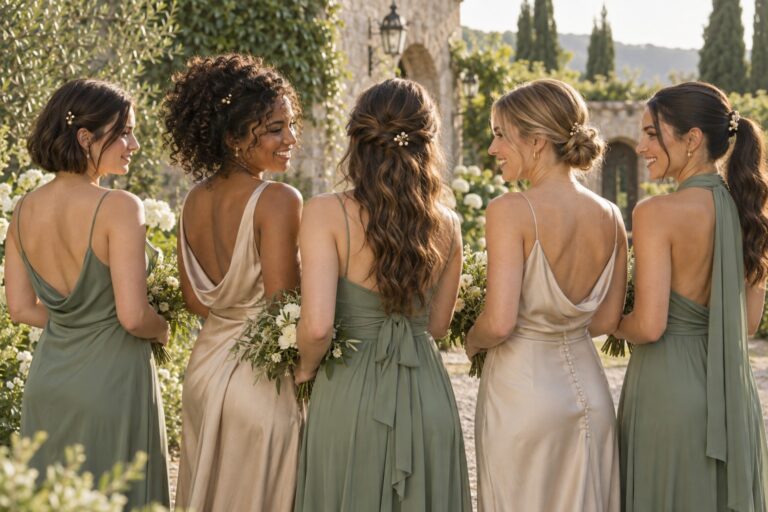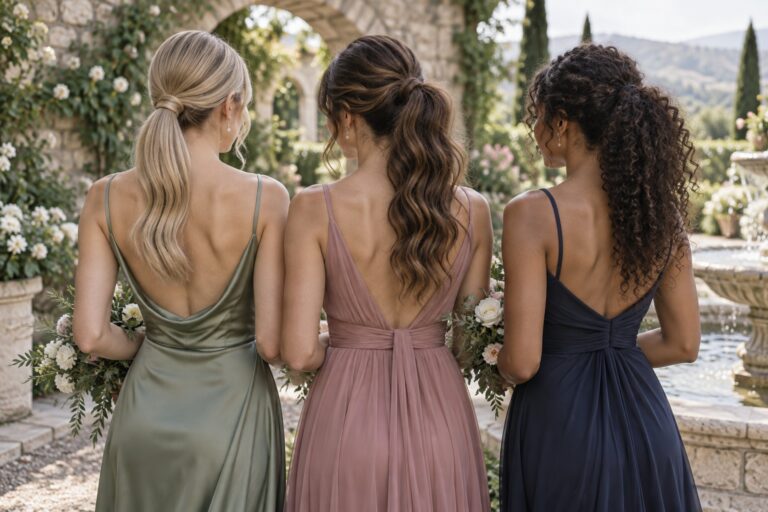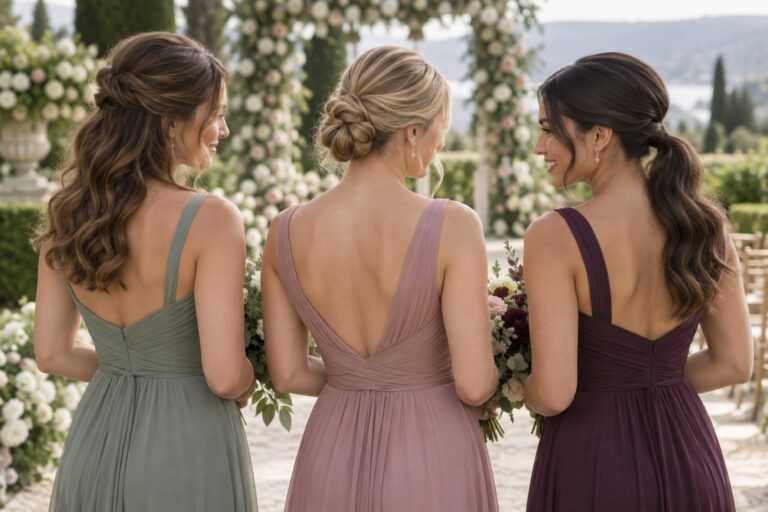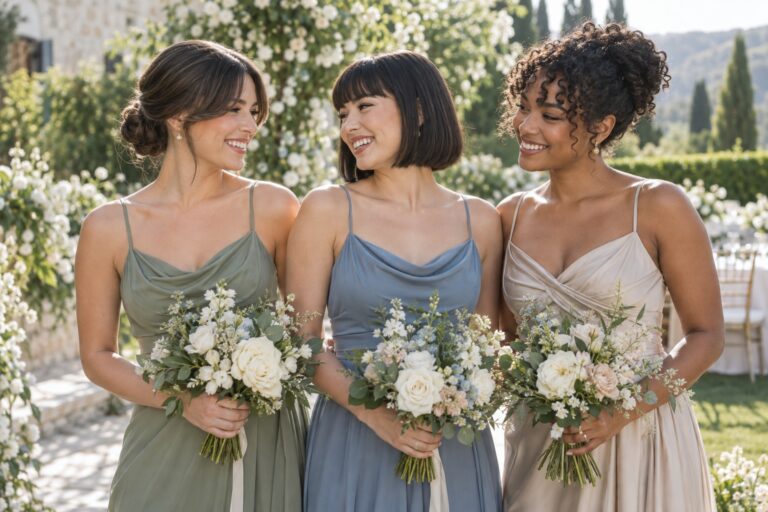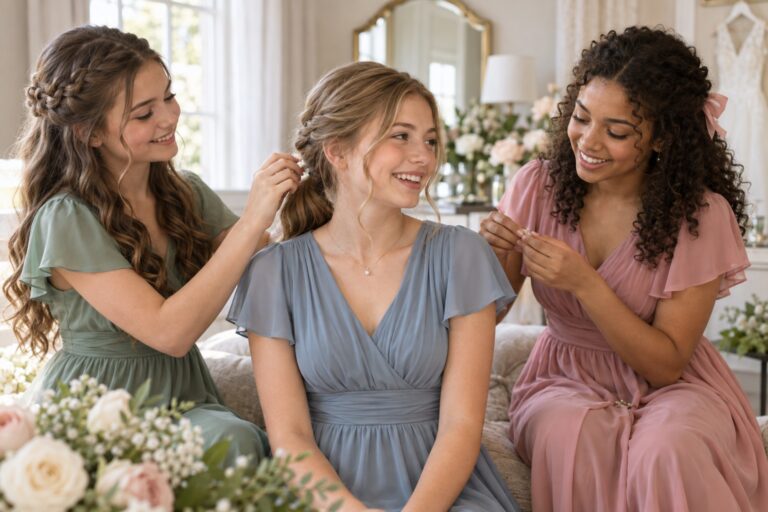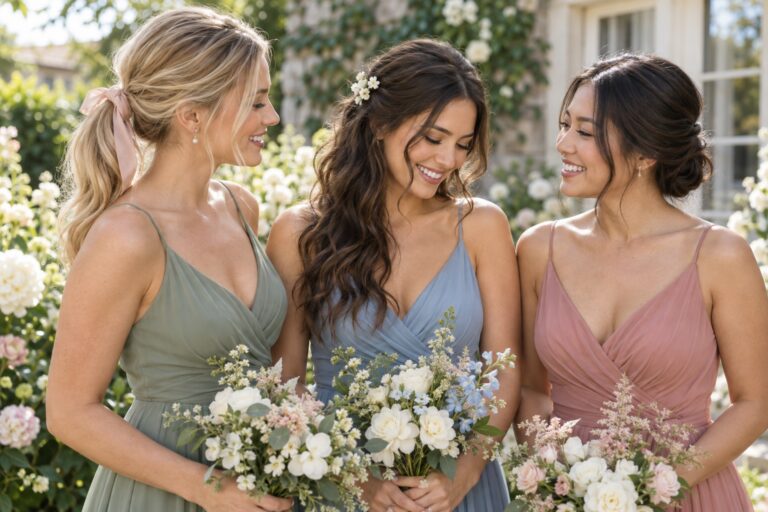
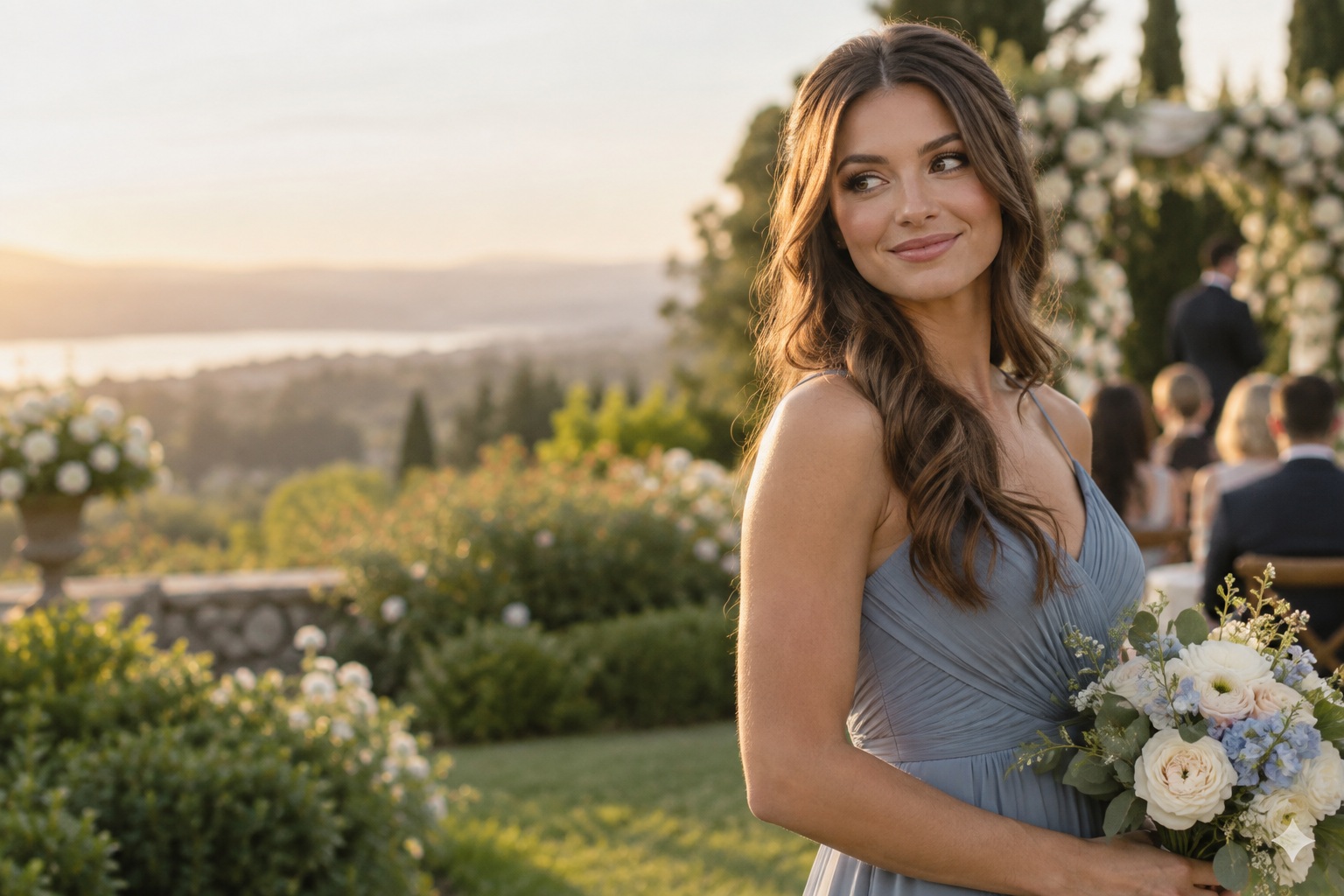
Bridesmaid hairstyles down: 7 fixes for all-day wear
A down hairstyle can feel like the most natural choice for a bridesmaid. It lets you recognize yourself in the mirror, shows off your length, and can soften a structured dress. But loose hair also moves with the weather, catches on collars, and can lose its shape before the reception. The best look is not simply the prettiest reference photo. It is the one that still feels like you after the ceremony, hugs, portraits, and a few hours on the dance floor.
This guide treats those frustrations as design clues. If curls fall, choose a finish that works with your natural pattern and build in a realistic refresh plan. If hair gets in your face, adjust the front without giving up a fully down silhouette. If a neckline or back detail disappears, shift the part or tuck one side. You will find practical ways to choose bridesmaid hairstyles down for different lengths, textures, dresses, and settings, along with clear notes about when a style needs a trial or stylist.
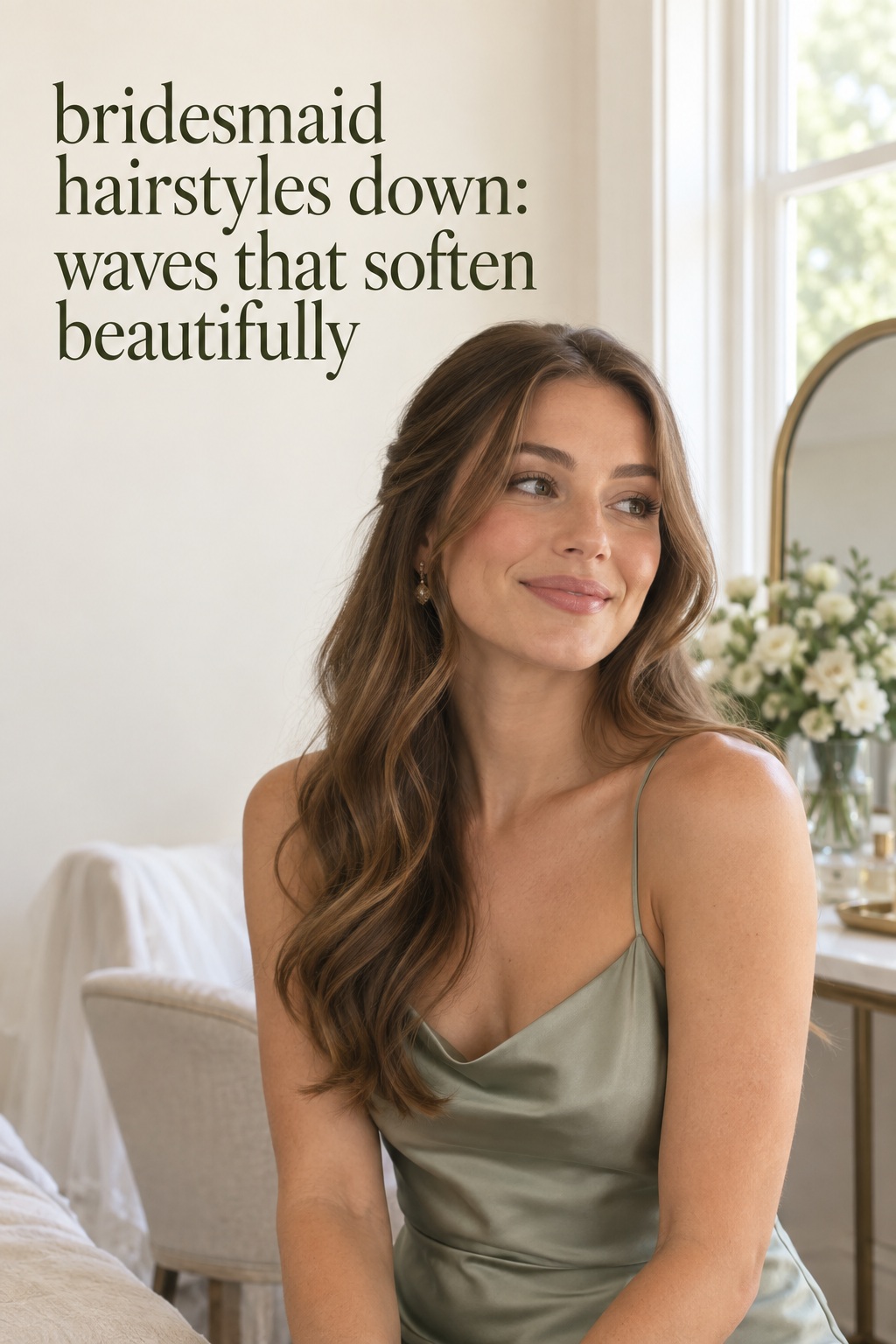
Start with the problem you want your down style to solve
A mood board often starts with a picture, but a useful appointment starts with a sentence. Try: “I want my hair down because I like seeing its length, but the front falls into my eyes.” Or: “My curls drop quickly, and I want a shape that still looks intentional when they soften.” These statements tell a stylist what matters more than a label like romantic waves. They also keep the solution tied to your comfort rather than someone else’s hair.
Name one priority and one limit. Priorities might include showing length, keeping hair off a bare shoulder, making natural curls the focus, or framing the face. Limits could be heat sensitivity, a short morning appointment, a strapless neckline that makes hair cling, or a style that must work without extensions. The limit is not a reason to abandon wearing your hair down. It helps narrow the finish to something your actual hair can support.
Turn wedding inspiration into a plan you can actually follow.
Zarellea brings your guest list, budget, vendors, and day-of details into one shared space — so no beautiful idea gets lost in the shuffle.
Take a photo of the dress from the front and back, and include the neckline, straps, embellishment, and any open-back detail. Bring a photo of your hair on an ordinary day when it is behaving normally, not only a freshly styled picture. If you are choosing among bridesmaid hairstyles down for a group, share the same visual cue or level of polish while letting each person adapt the technique to their own texture and length.
When curls fall before the reception
Curls relax for many reasons: humidity, hair that is very clean or very soft, heavy length, product buildup, or a curl pattern that does not hold heat-set shapes for long. A reference image cannot tell you which factor is at work. If your hair usually loses a curl, tell the stylist before the trial and ask for a test that lasts several hours. Take a quick photo at the start and later in the day. The goal is a finish that softens attractively, not a promise that every coil will stay exactly as it began.
Consider a brushed wave or a polished blowout when tight curls reliably drop. A brushed wave can look graceful as it opens, because its shape is already broad and connected. A blowout with bend at the ends may be more realistic than defined curls if your hair resists a hot tool. For naturally wavy hair, enhancing the wave you already have can need less reshaping than turning it into a very different pattern. Ask the stylist to explain how the final look changes as it settles.
For a trial, arrive with the hair prepared exactly as instructed. Do not add a new oil or leave-in product unless the stylist requests it, since too much slip can make some finishes harder to hold. Ask what to do if the hair relaxes: whether to brush it, separate it with fingers, or leave it alone. A discreet flexible-hold spray may help, but more product does not automatically mean more longevity. The stylist should choose a formula and amount for your texture, the venue, and the finish.
If you will be outside, treat wind and humidity as styling conditions rather than surprises. A soft, expanded wave can look more natural than a crisp curl that is expected to remain untouched. Ask for shape through the mid-lengths and ends, with enough movement that individual pieces can shift without spoiling the silhouette. On a very humid day, a sleek flat-ironed look may become harder to maintain than a texture that welcomes a little expansion. A good plan has a graceful second act.
When hair keeps falling into your face
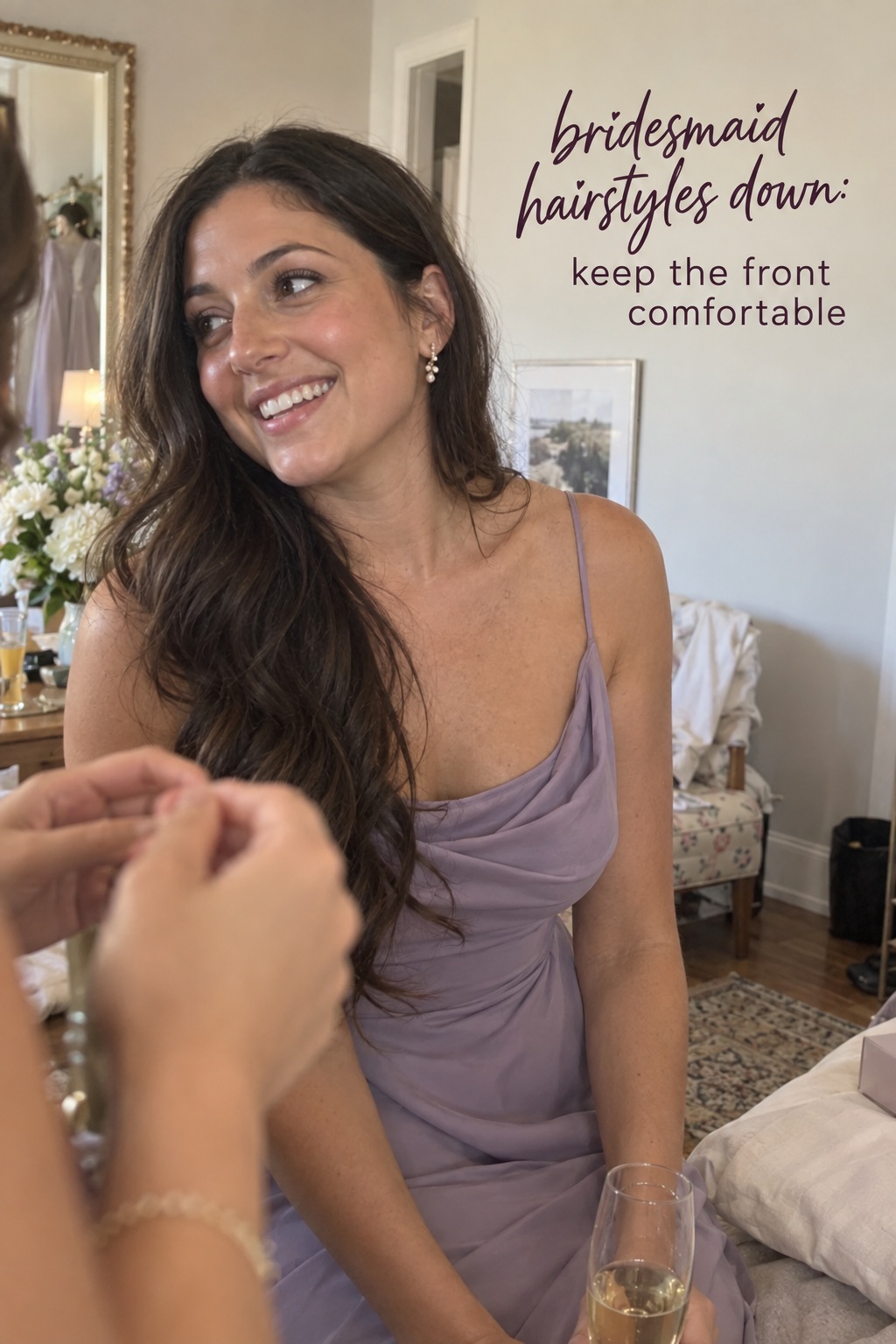
You can keep your hair down and still make the front more comfortable. A stylist can create a soft side sweep, a small twist, or a narrow pinned section that blends back into the length. The detail should feel like part of the hairstyle, not a rescue operation. Decide how much hair you want off your face: just the fringe, both temples, or one side. A photo from the front helps the stylist see where the section should begin and how visible the pin may be.
A deep side part can move a heavy front section away from one eye, but it is not a reliable fix for every cowlick. If your part usually returns to its natural position, test the new part at a trial. A center part may be more stable for some hairlines, especially when paired with a delicate bend around the cheekbones. The most flattering option is not always the one with the strongest sweep. It should stay comfortable when you turn your head and look down.
For fringe or face-framing layers, ask the stylist to style those pieces separately from the rest of the hair. A short front layer may need a little bend and a light pin hidden near the temple, while longer layers may tuck behind the ear. If you dislike the feeling of pins, say so in advance and try a tiny clear elastic or a softer twist. Bring the accessory you will wear, since a comb or clip can help secure the section while connecting it to the dress.
Test your chosen front detail with ordinary movements. Smile, hug someone, look over each shoulder, and tilt your head as if speaking to a seated guest. If the section slips immediately, it probably needs a different anchor or a slightly wider section. Avoid repeatedly touching the front during the event, because fingers can separate a smooth finish and transfer oils. A compact mirror is useful, but the hairstyle should not require constant checking to feel wearable.
When the dress and your hair compete
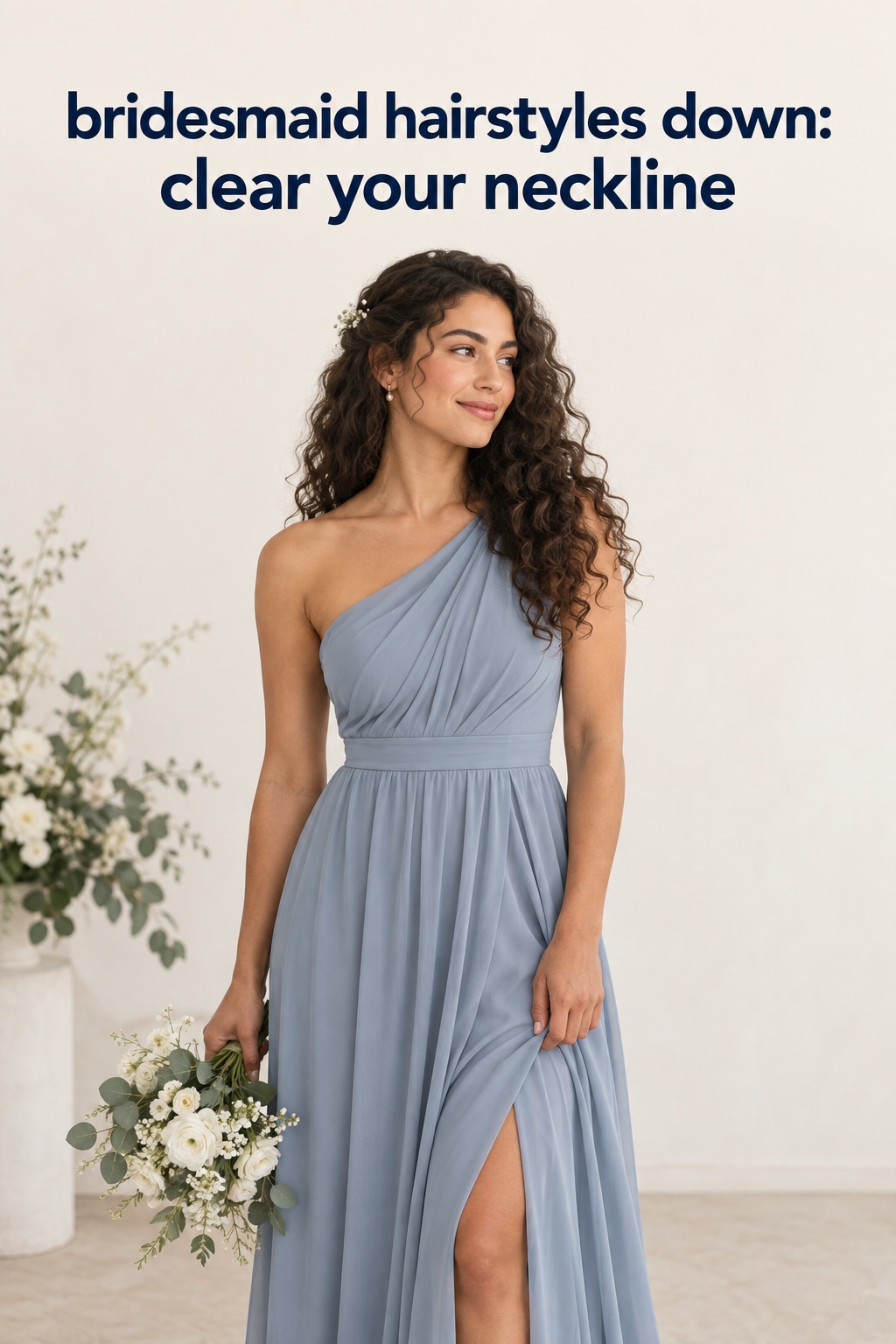
A high neckline, wide straps, or a statement collar can make loose hair feel crowded around the shoulders. That does not mean you must wear an updo. Ask for the hair to be directed behind the shoulders for portraits, or choose a side part that leaves one shoulder and the neckline visible. A soft tuck on one side can open the frame while the rest stays down. Check the look from the front and the back, since a neckline that reads clearly in a mirror may disappear in a straight-on photo.
Open-back dresses create a different choice: hair worn entirely behind you may cover the feature you chose the dress for. You can sweep hair forward over one shoulder, pin a small section away from the back, or plan a quick portrait adjustment. Ask the photographer or stylist which view matters most for the planned photos. The answer can be as simple as bringing the hair over one shoulder for the ceremony and letting it fall naturally later. You do not need a complicated second hairstyle to show the detail.
A strapless dress exposes the shoulders, where long hair can catch, stick, or feel warm. If that is likely to bother you, keep a light bend rather than a dense mass of curls, and ask for clean movement through the ends. A few face-framing pieces may soften the look without creating too much hair around the neckline. If you know you are sensitive to hair touching your skin, try the dress and hairstyle together at home. A small test can reveal friction that a standalone salon picture will not show.
For a heavily embellished bodice or dramatic earrings, simpler hair can create balance. Smooth lengths, soft waves, or a restrained side tuck can let the dress remain the focal point. If the dress is minimal, texture or a discreet accessory may provide the detail you want. Think about where visual weight sits: near the face, across the shoulders, or at the back. Your hairstyle can echo one of those elements, but it does not have to compete with all of them at once.
When your hair is fine, layered, curly, or shorter
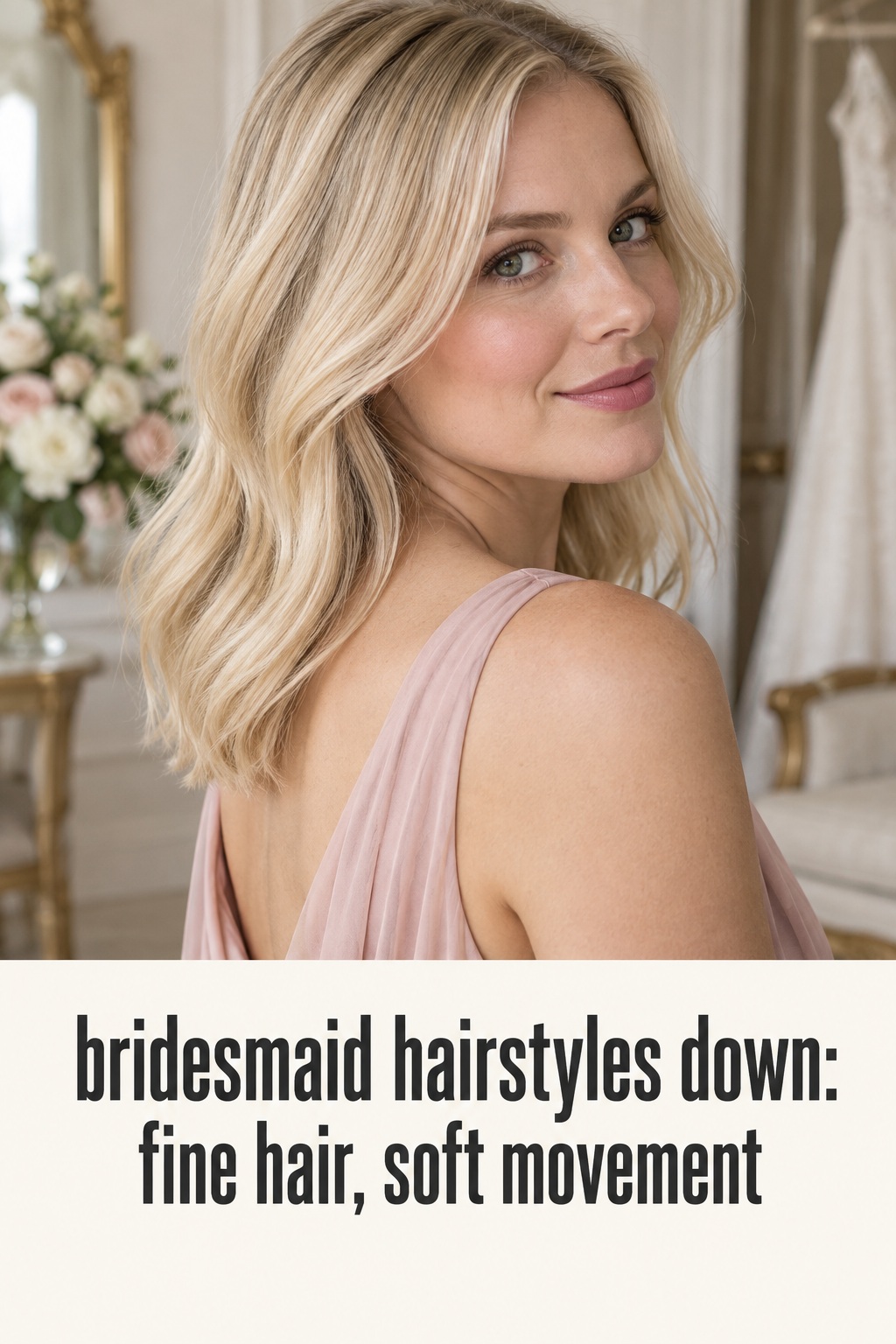
Fine hair can look beautiful down without being teased into a shape that does not feel like you. A root lift, a gentle bend, and a clean part may provide enough dimension. Ask the stylist to show how the style looks from the back and in a phone photo, because fine hair can appear fuller in a mirror than it does on camera. Avoid promising yourself extra volume from extensions unless you have tried them before and know you are comfortable wearing them for several hours.
Layers can help movement, but very short layers may spring out of a polished wave or fall across the face. The stylist can adjust the curl size and direction so pieces connect instead of appearing disconnected. Bring an everyday photo that shows how your layers move when air-dried. If you recently cut your hair or changed your color, tell the stylist; altered texture can affect both the trial result and how the finish behaves.
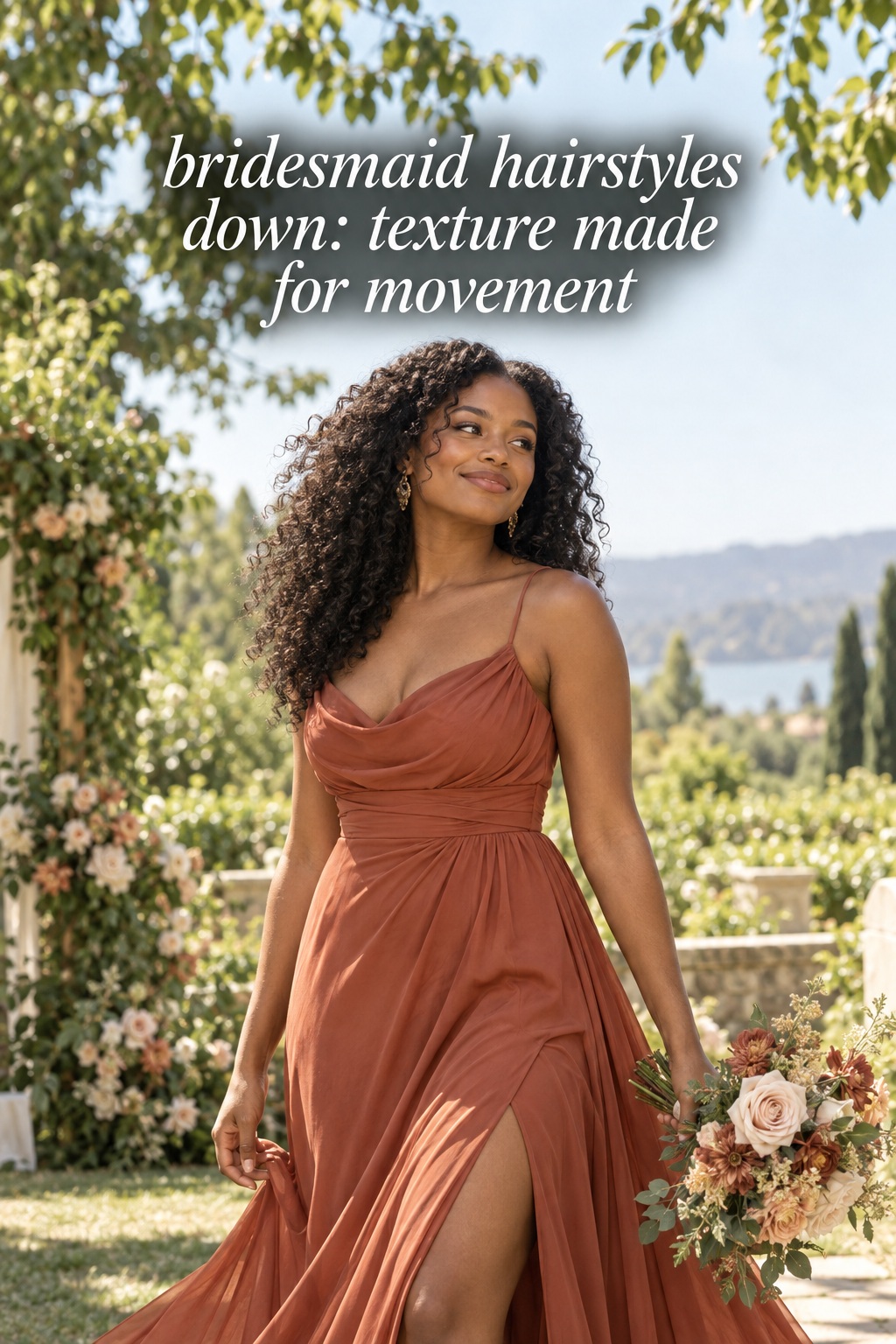
Naturally curly and coily hair should be styled with its pattern in mind, not treated as a problem to smooth away. If you want to wear your curls down, ask for a shape that defines the pattern you already have and works with your wash-day routine. Clarify whether the stylist plans to diffuse, stretch, or use heat, and mention any products or methods you prefer. A trial is particularly helpful if you are working with a stylist who has not handled your texture before. You deserve to see the method as well as the finished look.
Short hair can also be worn down. A bob or shoulder-skimming cut may need only a polished bend, tucked side, or a small accessory. Do not assume that a long-hair reference will translate to a short cut by using more pins. Instead, look for the element you like: a side part, soft texture, shine, or a decorative clip. Ask the stylist to adapt that detail to your length so the result feels deliberate from every angle.
Choose a finish that suits the setting
For a warm outdoor ceremony, first consider how you feel wearing hair against your neck and shoulders. A looser shape, one-side tuck, or lightweight front twist can improve comfort while preserving the down look. If there is a breeze, individual pieces will move. That can look lovely in photos, but a style that depends on perfectly placed strands may be frustrating. Choose a finish with movement and make sure the front can be reset quickly with fingers or one discreet pin.
For a formal indoor venue, a smooth blowout or defined Hollywood-inspired wave may suit a more tailored dress. Ask whether the finish can keep its shape in a warm room, especially if the reception will be crowded. Heavy perfume, smoke, and repeated hugs can make freshly styled hair feel less pristine, so a little natural movement is practical. If the event includes a long gap between ceremony and reception, ask the stylist how to refresh without restarting the whole style.
For a garden, beach, or destination wedding, plan around the actual conditions rather than the theme alone. Salt air, wind, and humidity can alter a style, while a long drive or flight can flatten the crown. A quick trial in similar weather may not be possible, but you can still tell the stylist about the forecast, venue surface, and travel. Pack only the touch-up items they recommend, and keep them with the person who will have them when needed.
The most useful reference is often a set of three images: one showing the texture you like, one showing the front detail, and one showing the dress shape. Add a note about what you do not want, such as tight ringlets, excessive volume, or hair across your earrings. This keeps the conversation concrete without insisting that your stylist reproduce someone else’s face, hair density, or lighting. The Knot’s long-hair inspiration and Hitched’s hairstyle gallery can help you collect visual references, but use them as starting points rather than guarantees.
Make the trial answer practical questions
A trial is a chance to test comfort, not only beauty. Wear a top with a neckline close to your dress, bring earrings or a veil if relevant, and take front, side, and back pictures in natural light. Wear the style long enough to learn whether the front slips, the ends tangle, or the crown goes flat. Note how the hair feels when you sit, turn your head, and move your shoulders. If something irritates you, mention it while the stylist can still adjust the technique.
Ask what parts of the style are doing the holding. Is there a hidden pin? A small elastic? A product layer? Knowing this helps you understand what can be changed if you want a softer finish. It also helps you avoid tugging at a section that is meant to anchor the rest. If the look depends on a particular accessory, test that accessory at the trial instead of hoping a similar item will behave the same way later.
Take a photo of the finished look from several distances, not only a close-up. A close-up shows texture, but a full-frame photo shows whether the hairstyle balances the dress and your proportions. Review the pictures after a few hours as well. You might discover that you prefer the softened wave to the initial curl, or that the front looks better when it is tucked. Share those notes with the stylist before the wedding morning.
Keep a simple, realistic touch-up plan
A down style usually needs less intervention when it is allowed to move. Ask one person to carry a few pins that match your hair color and any product the stylist specifically recommends. If your hair becomes tangled, separate it gently from the ends upward rather than brushing aggressively from the roots. If a curl loosens, try finger-combing it into the surrounding shape instead of re-curling every strand. Small adjustments preserve texture and reduce the chance of turning a soft style into a stiff one.
Do not add a new spray, oil, or hot tool on the day simply because it worked for someone else. Product can weigh down fine hair, increase shine unevenly, or change the way curls group together. Follow the stylist’s trial instructions and keep the touch-up kit small. If there is no professional stylist onsite, arrange a five-minute check after the ceremony with someone who knows where the pins are and what the style is supposed to look like.
If you are choosing bridesmaid hairstyles down for several people, communicate the shared idea rather than imposing a single identical curl pattern. One person might wear a natural curl, another a smooth wave, and another a straight finish with a tucked side. They can still look cohesive through a similar level of polish, a shared part direction, or matching accessories. This approach respects differences in length and density while creating a thoughtful wedding-party look.
Mistakes that make a down hairstyle harder to wear
Choosing a photo with a different hair density is a common source of disappointment. The same curl size can look soft and full on one person, but compact or sparse on another. Use the reference to describe an effect, then ask how the stylist would translate it to your own length and texture. A good consultation will include what may change, not just reassurance that the picture can be copied exactly.
Waiting until the wedding morning to reveal a major comfort issue can limit options. If you dislike hair on your neck, say that before the trial. If you never wear a center part, explain why before the stylist begins shaping the look. If an accessory feels heavy, test it early. The earlier the stylist knows the boundary, the easier it is to preserve your preferred silhouette while changing the details.
Overloading the style with product in an attempt to make it last can create the opposite effect. A tacky surface may catch on itself, feel unpleasant, or separate into pieces. Longevity depends on preparation, technique, product choice, and the way the hair naturally responds. Ask for a hold plan based on your hair rather than a blanket promise that a certain spray works for everyone.
Finally, do not judge the style only in a salon mirror. Look at a full-length photo, try the dress, and move around. You are choosing something to wear through a real day, not a stationary portrait. A slightly relaxed shape that lets you enjoy the ceremony can be a better result than a perfect curl you are afraid to touch.
FAQ
Can bridesmaids wear their hair all the way down?
Yes. Fully down hair can suit a wedding party when it feels comfortable and complements the dress. Agree on a general level of formality if needed, then let each person adapt the finish for their own length and texture.
Which down hairstyle lasts longest for a bridesmaid?
There is no single finish that lasts longest on every head of hair. A shape close to your natural texture often needs less reshaping. Ask for a trial and assess how the style looks after several hours, rather than judging only the first photo.
How can I keep down hair out of my face without an updo?
Try a soft side sweep, a narrow twist, or a small pinned section that blends into the lengths. Test the detail with the dress and move your head during the trial to make sure it stays comfortable.
Are loose curls a good choice for an outdoor wedding?
They can be, especially if you are comfortable with them softening in wind or humidity. Ask for a shape that still looks intentional as it moves, and discuss a simple refresh plan with your stylist.
Should bridesmaid hairstyles match exactly?
They can share a direction without being identical. Similar polish, an accessory, or a parting idea can make the group feel coordinated while allowing different textures and lengths to look their best.
What should I bring to a bridesmaid hair trial?
Bring front and back photos of your dress, an everyday picture of your hair, and any veil, earrings, or clip you plan to wear. Explain what you want the style to do and what tends to bother you.
Can short hair be styled down for a wedding?
Absolutely. A bob or short cut can be polished with a bend, texture, a side tuck, or a small accessory. Use references for the detail you like, then ask the stylist to adapt it to your actual length.
What should I do if my curls fall during the reception?
Use the method tested at your trial. Gently blend loose pieces with your fingers, or ask a helper to reset a hidden pin. Avoid adding unfamiliar products or applying heat unless your stylist advised it.
Final thought
The most successful bridesmaid hairstyles down begin with a real preference and a clear plan for the parts that usually go wrong. Show the stylist your dress, describe how your hair behaves, and test the front, neckline, and finish in a trial. Then choose the version that lets you recognize yourself and enjoy the wedding day, even as a few strands move.