Bridesmaid Hair Ideas: A Guide to a Cohesive Bridal Party
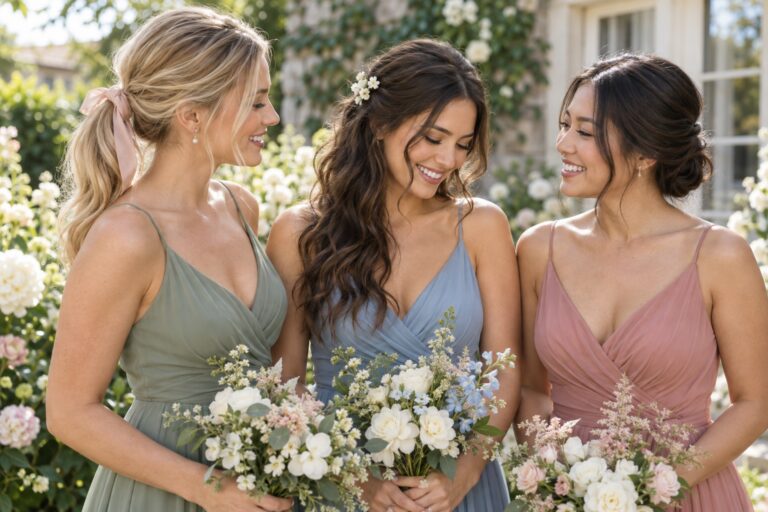
Choosing bridesmaid hair is easier when the group agrees on a feeling before anyone chooses a finished style. One person may love a low bun, another may want her curls down, and someone else may feel most like herself with a short bob left softly shaped. Those preferences can live together in wedding photos when the shared direction is clear and the individual choices are thoughtful.
Use these bridesmaid hair ideas as a planning guide for the whole party. You will decide what should feel connected, what each person can choose for herself, and how to turn a handful of inspiration pictures into a useful stylist brief. The goal is a bridal party that looks considered as a group while every person still recognizes herself.
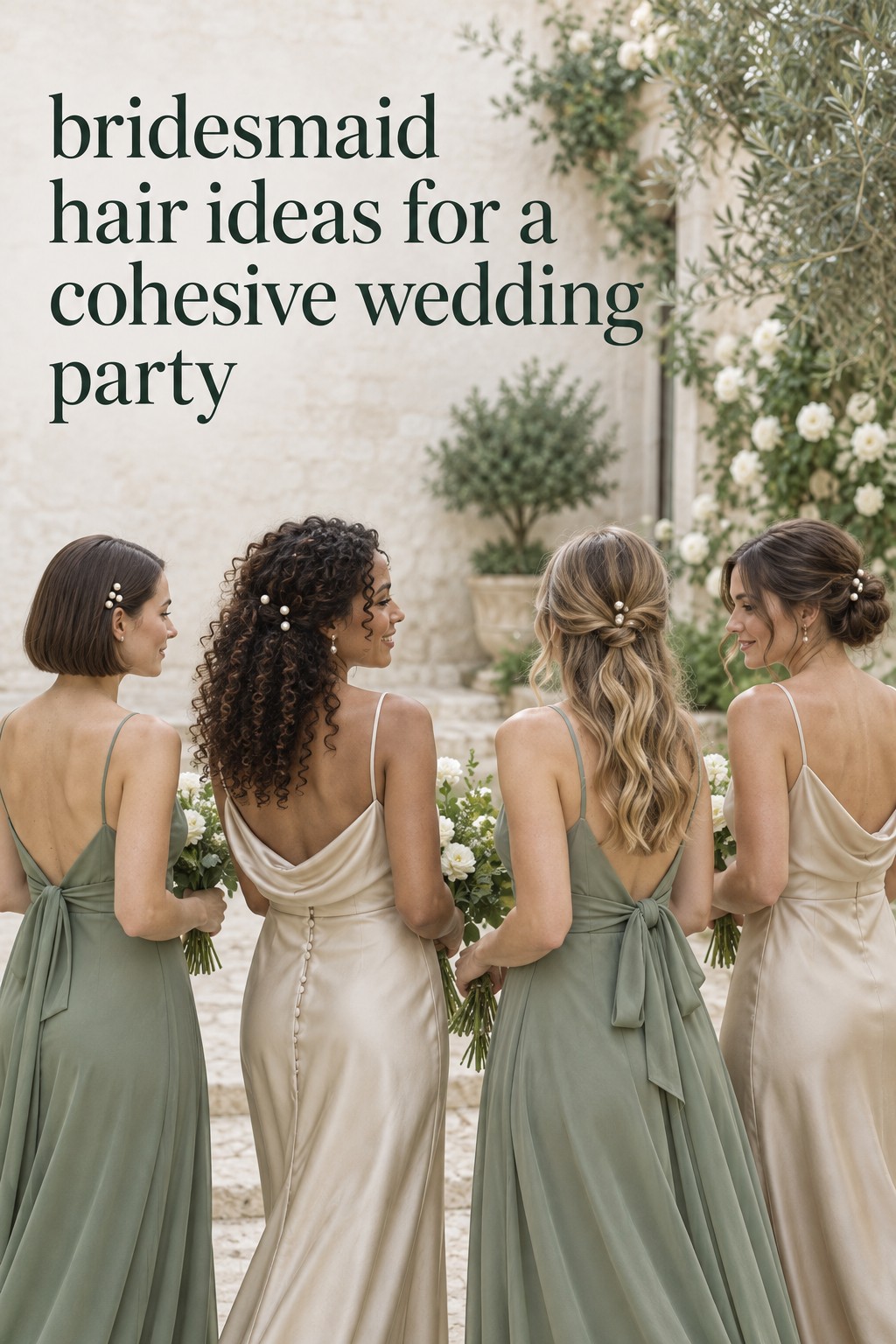
Start With One Shared Direction, Not One Identical Hairstyle
A shared direction gives the group a visual thread. An identical hairstyle gives everyone the same instructions. The first can create a polished effect while leaving room for different lengths, textures, comfort levels, and personal style. The second can be difficult to reproduce across a mixed group and may ask some bridesmaids to work against the hair they actually have.
Begin with three words for the overall finish. Examples include soft, polished, and natural; sculpted, sleek, and formal; or relaxed, textured, and garden-inspired. Keep the words visual. “Romantic” can mean many things, so add a clue such as loose movement, a low placement, or a delicate accessory. A short direction is easier to remember than a collage of unrelated reference photos.
Turn wedding inspiration into a plan you can actually follow.
Zarellea brings your guest list, budget, vendors, and day-of details into one shared space — so no beautiful idea gets lost in the shuffle.
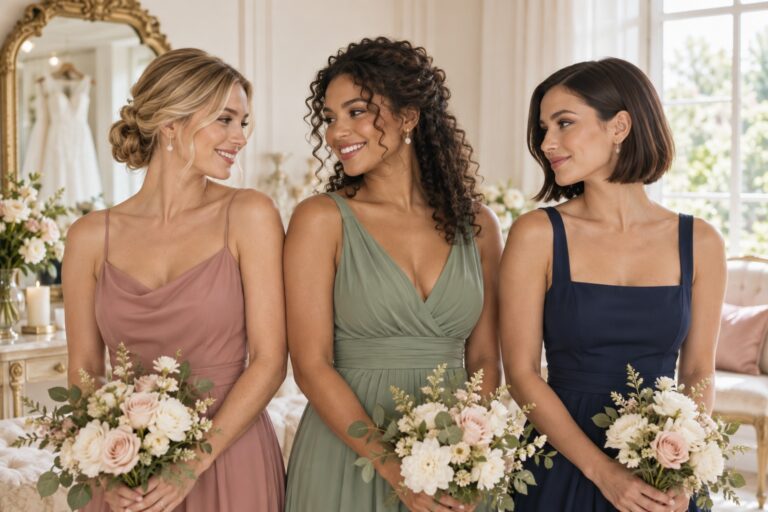
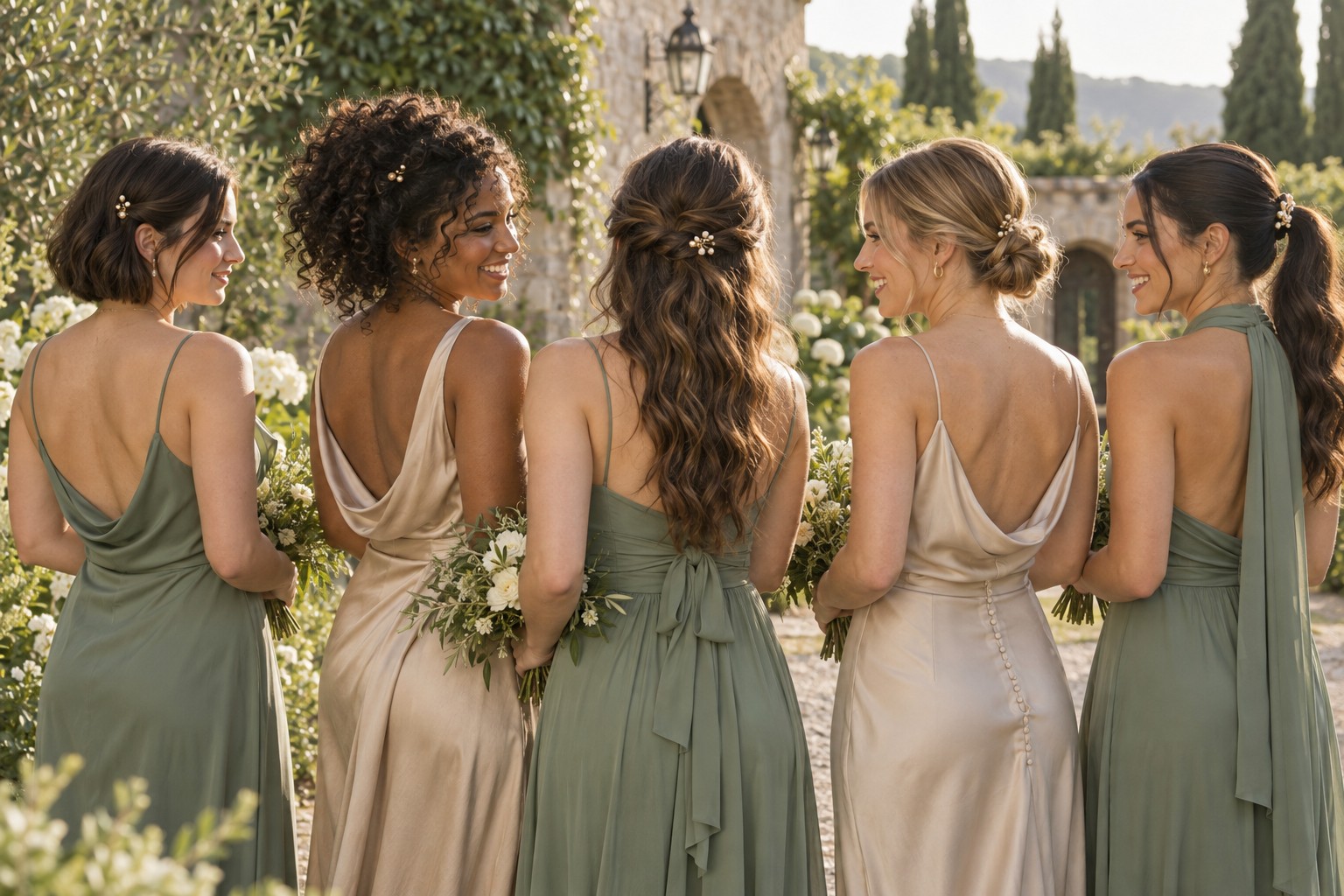
Next, choose one broad family that can translate across different hair. It might be hair away from the face, a soft shape around the shoulders, a low gathered look, or a clean finish with minimal accessories. These are starting points, not rules. A bridesmaid with a chin-length cut may create a tucked shape, while someone with long hair may wear a loose low bun. Both can answer the same visual brief.
Give the group a clear choice boundary. For example: “Please choose an up style or a half-up style, with some softness around the face if you like it.” Or: “Wear your hair down or partly back, and keep the finish touchable rather than slick.” This helps the pictures feel connected without naming an exact curl pattern or requiring every person to wear the same part.
Before settling on a direction, ask the bride what matters most in the photographs. She may care about a consistent accessory, a neckline that stays visible, or an overall relaxed feeling. A useful brief captures that preference in one sentence. If the bride has no specific preference, agree on a broad level of formality and let each bridesmaid bring forward a style she would be happy to wear.
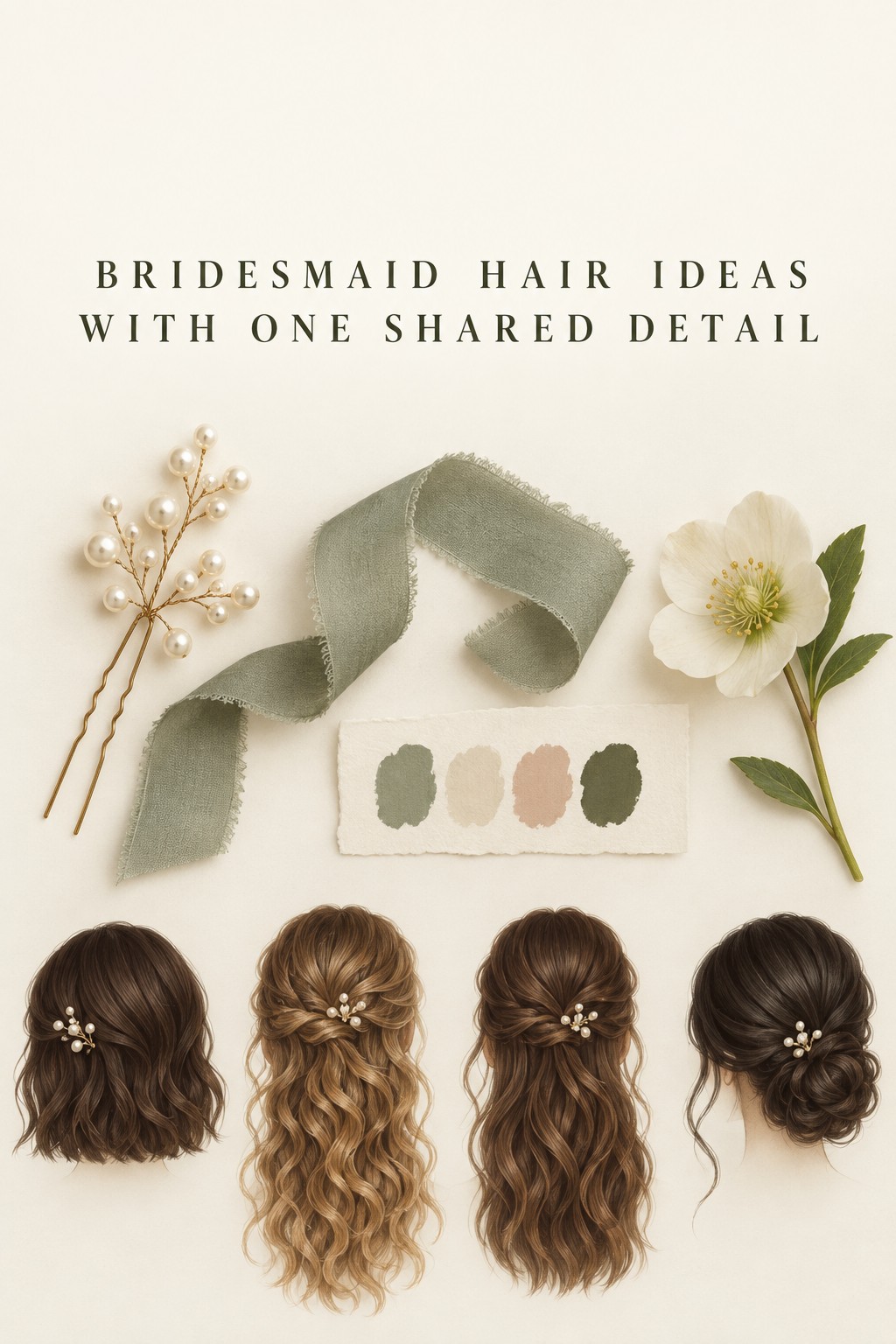
Choose the Shared Details That Will Show in Photos
When exact hairstyles vary, a few repeated details can make the group look intentional. Pick one or two coordination points rather than trying to match everything. The best details are visible enough to connect the looks but flexible enough to work with different hair shapes.
Coordinate the finish
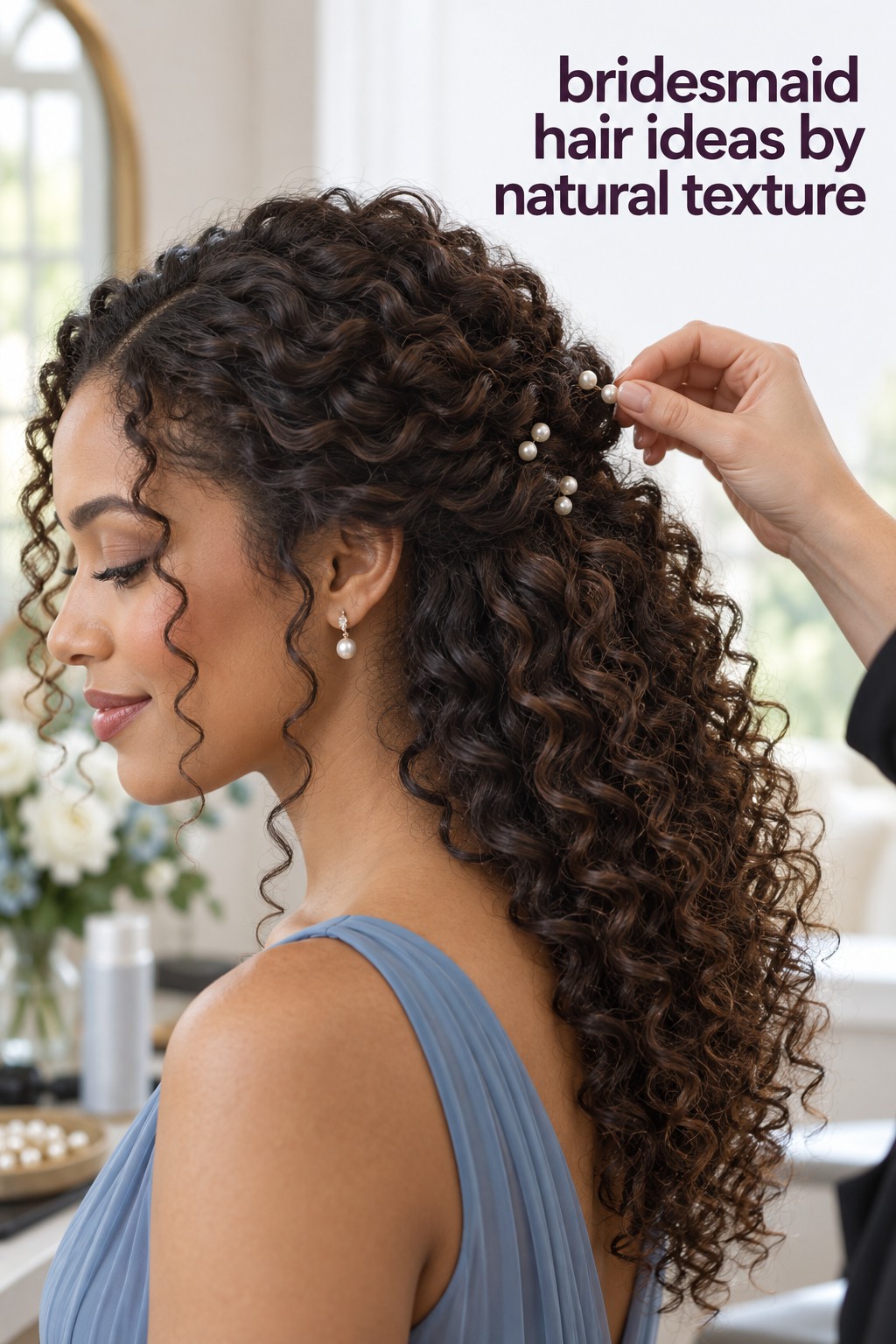
Decide whether the hair should read sleek, softly waved, defined, or naturally textured. A shared finish can work across a braid, ponytail, bun, or bob. It also gives a stylist more room to make individual adjustments. If one bridesmaid wears a defined natural texture, for instance, the common direction could be a polished shape with visible texture rather than a request to make every head of hair look alike.
Repeat an accessory with room to adapt
A small shared accessory can carry the palette or theme into each look. Think of matching metal hair pins, a similar ribbon color, or one floral detail selected to suit the wedding flowers. Agree on the material, color, or scale, then let each person choose the placement. A pin at the side of a bob and the same pin securing a low twist can feel related without being duplicates.
Check that the accessory works with the chosen hairstyle and the person’s comfort. A comb that needs a large section of hair may not suit a short cut. A delicate piece placed where it catches on a veil, earrings, or a dress strap may be distracting. Share a photo of the accessory early so the stylist can suggest workable placements.
Keep one placement or proportion in common
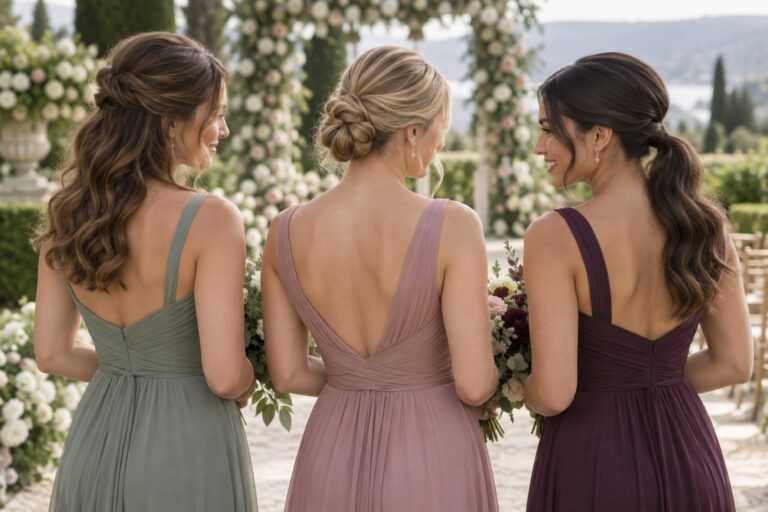
The group can share a low placement, a side part, a face-framing shape, or an open neckline, even if each hairstyle is different. Choose only a feature that makes sense for everyone. If the bridesmaids have varied cuts, “hair gathered low where possible” is more practical than insisting on a particular bun. If they prefer their hair down, agree on whether the front pieces should stay away from the face or fall naturally.
Match formality to the dress, then let the hair breathe
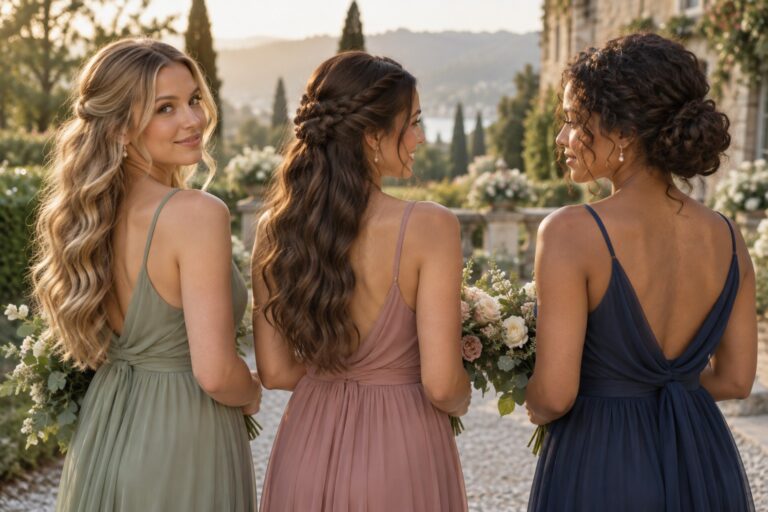
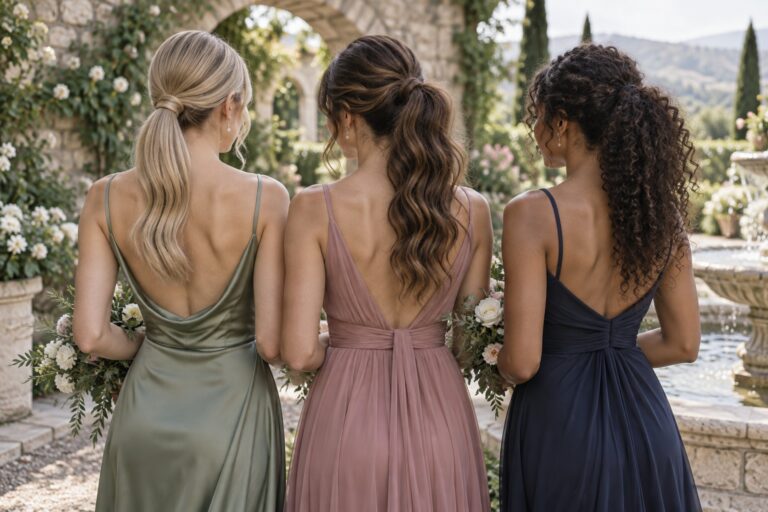
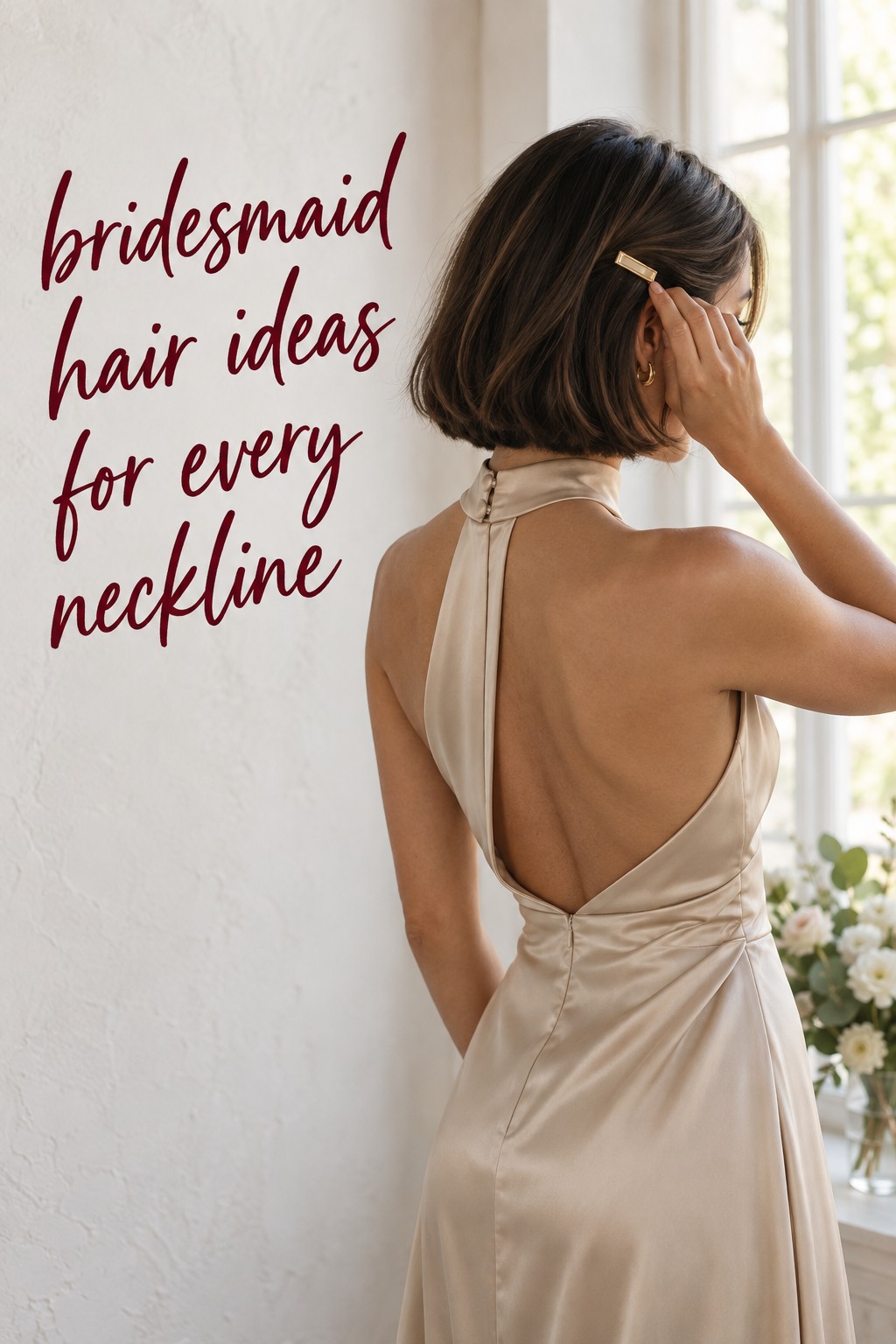
Use the dress neckline, fabric, and overall formality as context. A high or detailed neckline may inspire a gathered style, while a simpler neckline may leave room for visible length or movement. These are pairing ideas, not strict rules. Ask each bridesmaid what she likes to wear and bring a front and back photo of the dress to the consultation. The stylist can then suggest a shape that complements the outfit without making the group uniform.
Match Each Idea to the Person Wearing It
A reference photo shows a finished look, but it does not show every decision that made the look possible. Before saving an image, consider who would wear it, what the stylist would need to recreate it, and whether the result suits that person’s preferences. A strong bridesmaid hair idea begins with the wearer’s own starting point.
Start with comfort and personal style
Ask each bridesmaid to name one thing she wants and one thing she wants to avoid. She might want her hair off her neck, want to keep her natural curl pattern visible, or prefer not to have pieces pinned tightly near her temples. A clear preference is more useful than asking everyone to “pick something pretty.” It also helps the stylist use appointment time well.
Comfort includes how the style feels after several hours. If someone rarely wears her hair up, she may not enjoy a tightly secured updo through dinner and dancing. If she dislikes loose hair around her face, a down style with pinned sides may not solve the problem. There is no benefit in choosing a look that appears right in one photograph but makes the wearer self-conscious all day.
Describe the hair accurately
When the group is planning a shared appointment, describe length, texture, density, and any details that affect the style. A short cut, a layered shape, a protective style, curls, locs, or a hairpiece can all change what a reference means in practice. These are not problems to correct. They are useful information for choosing an approach that respects the person’s hair and gives the stylist a fair picture of the work involved.
Choose reference photos with a similar starting point when possible. Look for a comparable length or texture, and save a second image that shows the back or side of the hairstyle. If the inspiration image relies on a detail that will not translate, keep the overall direction and ask the stylist for a version that does. For example, the goal may be a clean, gathered silhouette rather than the exact braid shown in a photo.
Use the outfit as a filter, not a command
Think about the dress straps, neckline, earrings, veil or headpiece, and how the outfit moves. These details can help narrow the options. They should not dictate a style that the bridesmaid dislikes. If the dress has a decorative back, someone may choose an updo because she wants to show it. Another may prefer a half-up shape that leaves some hair visible. Both can be appropriate if the shared direction accounts for the outfit.
Consider the day’s activities
Ask what each person will be doing and where the hair needs to stay out of the way. A bridesmaid carrying a bouquet, helping with younger attendants, or taking part in an outdoor ceremony may value a different level of security than someone who expects to keep her hair down. The useful question is not “Which style lasts longest for everyone?” It is “What needs to stay comfortable and in place for this person?” Share the ceremony and reception schedule with the stylist if the group has one.
Turn Your Bridesmaid Hair Ideas Into a Stylist Brief
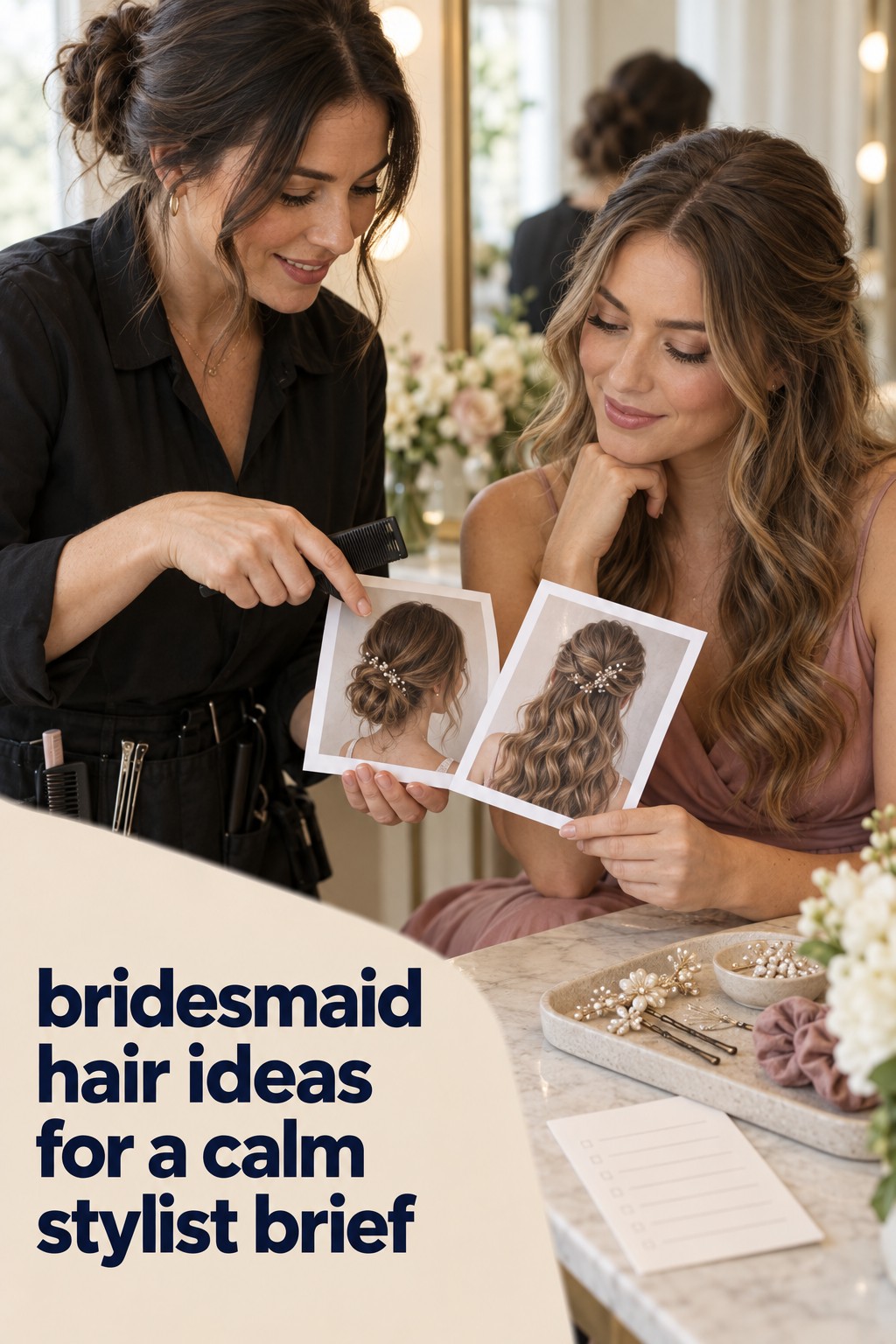
A short brief makes a collection of images usable. Send it to the stylist before the wedding morning, then let the stylist flag ideas that need a different technique or more appointment time. A brief is not a demand to copy a reference exactly. It is a way to explain the look, the boundaries, and the differences the group needs to accommodate.
Build the brief in four parts:
- Shared direction: Write the three finish words and the broad style family the group agreed on.
- Flexible details: Identify what may vary, such as exact updo shape, part, amount of volume, or face-framing pieces.
- Individual notes: List each person’s preferred look, hair starting point, comfort requests, and accessory choice.
- Wedding context: Include dress photos, accessories, ceremony timing, venue notes, and any change between ceremony and reception.
Keep the reference board selective. One image for the overall mood and one or two relevant images per person are usually easier to discuss than a long scroll of saved looks. Add a short caption to each image: “This is the low placement I like,” “Keep my curls defined,” or “I like the shape, but I want less height.” A caption tells the stylist what to notice and what can change.
Ask practical questions before the appointment is finalized. How much time should each person plan for? Does the stylist need a photo of the hair as it is usually worn? Should anyone bring an accessory or extension piece? What should each person do before arriving? Does the stylist want clean, fully dry hair or have a different preparation preference? Hair instructions can vary by service and stylist, so follow the professional’s guidance instead of a generic rule from a social post.
For a reference point on what to discuss, The Knot’s bridesmaid hairstyle Q&A with professional stylists covers wedding vision, dress neckline, hair texture, and appointment preparation. Use those prompts to start a conversation, then let the stylist tailor the plan to the people in your group.
If there is a trial, treat it as a decision meeting rather than a pass-or-fail test. Take clear photos from the front, side, and back in natural light. Notice whether the style feels comfortable, whether the accessory stays in place, and whether the person can move her head easily. If a change is needed, write down one specific adjustment. “Looser around the hairline” is easier to use than “make it more romantic.”
Keep the Getting-Ready Plan Simple
Once the direction is agreed, avoid reopening every hairstyle choice in the group chat. Make one person responsible for sending the final brief and confirming the schedule. Each bridesmaid can still communicate directly with the stylist about her own hair. This keeps the group aligned without making the bride interpret five separate photo boards.
Work backward from the ceremony. Confirm when the stylist will arrive, how many people will be styled, and how much time each service needs. Ask whether a specific order works better for the group. Build in a small buffer for dressing, photos, and unexpected adjustments. The stylist can provide a realistic schedule after seeing the number of people and the requested looks.
Share the practical details with every bridesmaid in one message: arrival time, location, agreed preparation instructions, accessory plan, and whether she should bring reference pictures. If someone is doing her own hair, explain the shared direction and the flexible details in the same note. She should not have to guess whether “soft waves” means a loose bend, a defined curl, or simply a natural finish.
Let the final look have small differences. One person may wear a braid detail, another a tucked front, and another a polished natural shape. If the finish, accessory palette, or general level of formality connects them, those distinctions can make the group look more personal. The photographs record a bridal party, not a row of identical mannequins.
Mistakes to Avoid When Coordinating Wedding-Party Hair
Choosing a photo before agreeing on the goal. A group may save several attractive looks without noticing that one is sleek and formal while another is undone and beachy. Pick the overall direction first, then collect images that fit it.
Requiring identical results on different hair. An exact-style instruction can create stress when lengths, textures, or cuts differ. Share the visual element that matters most, then let the stylist adapt the shape for each person.
Assuming every bridesmaid wants professional styling. Ask about preferences and costs early. If someone would rather style her own hair, include her in the direction and give her the same reference details. Clarify any group expectations before appointments are booked.
Sending inspiration without context. A close crop may hide the hair length, the back of the style, or the accessory placement. Pair the image with a short note about what you like and share a photo of the dress or accessory when it affects the choice.
Changing the plan on the wedding morning. A last-minute group message can leave the stylist guessing which version to follow. Gather preferences ahead of time, send one final brief, and route individual changes through the person whose hair is being styled.
Treating the bride’s preference as a full styling specification. A request for a polished look can be honored in several ways. Ask whether the priority is a shared accessory, a certain level of formality, or hair away from the face. Clear priorities make room for solutions that suit the group.
FAQ
Do all bridesmaids need to wear the same hairstyle?
No. A shared finish, accessory, or broad style direction can connect the group while each bridesmaid chooses a shape that works for her hair and preferences. Ask the bride which details matter most, then keep the rest flexible.
How can bridesmaids with different hair textures look cohesive?
Agree on a visual thread such as a soft finish, low placement, or matching accessory. Let each person keep the texture and shape that suit her hair. Share accurate hair descriptions and reference photos with the stylist so the adaptation is planned in advance.
What are good bridesmaid hair ideas for short hair?
A polished bob, a softly shaped crop, tucked sides, a small twist, or a barrette can all fit a wedding-party direction. Choose images with a similar length and bring front, side, and back references to the stylist. The goal is to work with the cut rather than imply that short hair needs to look longer.
Can each bridesmaid choose her own hairstyle?
Yes, if the bride is comfortable with that approach. It helps to agree on a simple boundary first, such as a shared level of formality or one accessory color. Then each bridesmaid can choose a look she likes within that direction.
Should bridesmaids use matching hair accessories?
Matching accessories are one option, but they do not need to be identical. The group can coordinate a metal, ribbon color, floral detail, or general scale while choosing different placements. Check that each piece works with the hairstyle, outfit, and the wearer’s comfort.
When should the group decide on wedding hair?
Set the direction early enough for the stylist to review the number of people, hair needs, accessories, and appointment timing. The right lead time depends on the vendor and wedding schedule. Ask the stylist when they need the brief and whether a trial is useful for the looks being considered.
What should I bring to a bridesmaid hair appointment?
Bring a small set of reference photos, a photo of the dress if the neckline or back affects the style, and any accessory the stylist needs to place. Follow the stylist’s hair preparation instructions and share any comfort requests before styling begins.
Can some bridesmaids do their own hair?
They can if the bride and wedding plan allow it. Share the common direction, accessory details, and timing so a self-styled look can sit comfortably beside the salon styles. Be clear about any must-have details and leave the exact technique to the person wearing the hair.