Bridesmaid Hairstyles Medium Length: Style Checklist
When you are choosing bridesmaid hairstyles for medium length hair, begin with one practical question: where do your ends fall when your hair is worn naturally? A collarbone cut with long layers behaves differently from a shoulder-skimming bob, even if both are described as medium. That small distinction can change whether a ponytail has a visible tail, whether a bun needs extra support, or whether a half-up shape feels balanced. Use this checklist to move from a saved photo to a style that suits your own hair, the dress, and the way you want to feel during the wedding.
You do not need to arrive with one perfect answer. Start with a preferred result: hair off your face, your ends visible, a clear neckline, or a soft frame around your cheeks. Then shortlist a couple of silhouettes and take them to a stylist. The goal is a polished direction that can be adjusted for each bridesmaid, not an exact copy of a reference photo or a demand that everyone wear the same shape.
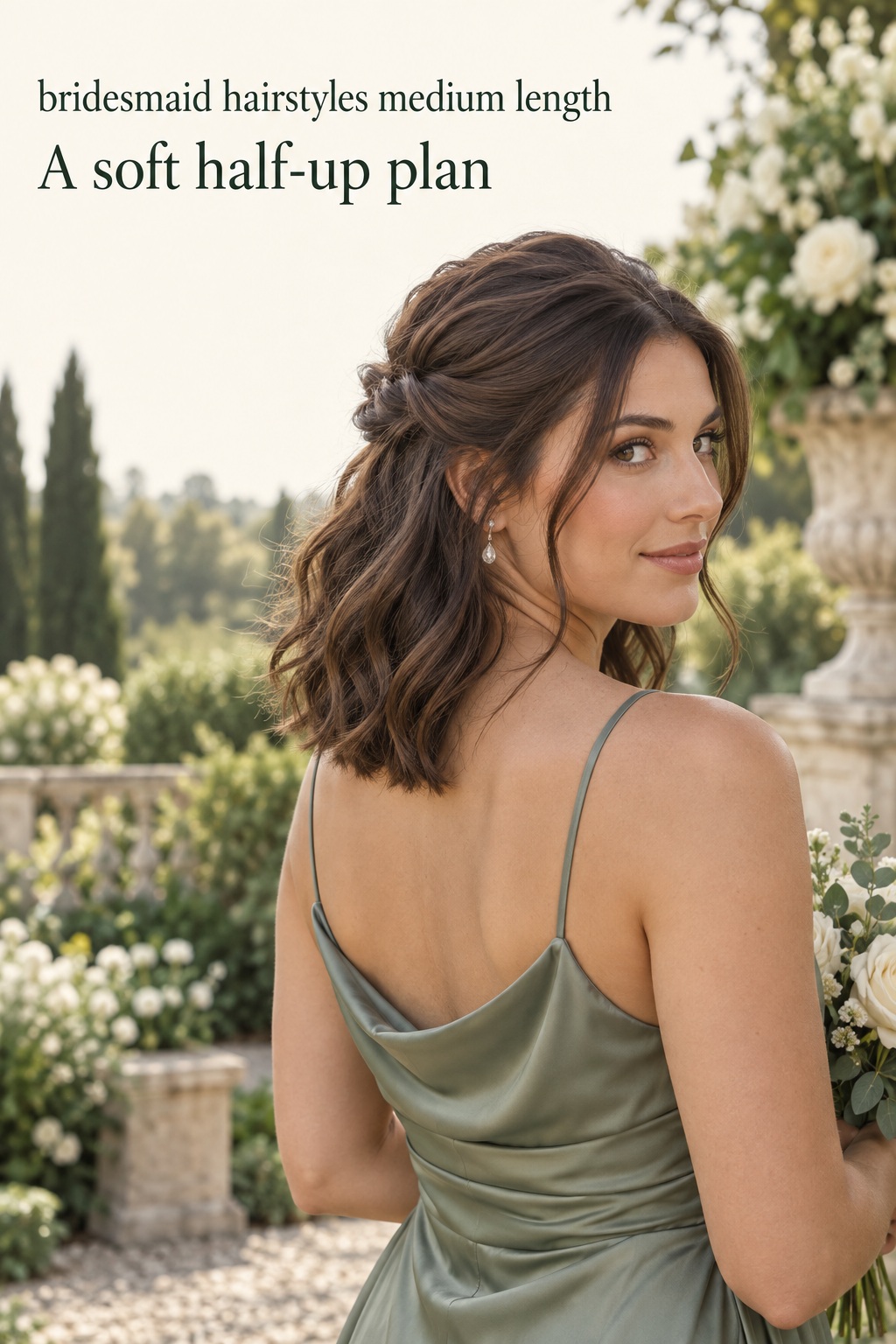
Start With the Ends, Not the Inspiration Photo
Stand in front of a mirror with your hair dry and in its usual texture. Note whether the longest pieces reach your shoulders, sit near your collarbone, or extend below it. Look at the sides and back separately: a layered cut may have a longer back but shorter front pieces, while a blunt bob can have a compact outline all around. Write down the shortest pieces that you would want included in an updo. This is more useful than relying on a label such as “medium,” because the same label can describe several very different shapes.
Next, identify what your hair does without a special occasion routine. Is it straight, wavy, curly, coily, or a mix? Does it hold a bend, spring back after brushing, or lose volume quickly? You are not trying to rate your hair or change its texture. You are collecting information that helps a stylist decide how to create the shape you like while keeping your natural pattern recognizable. If you already know that a particular finish feels unlike you, add that to your notes before you browse more inspiration.
Turn wedding inspiration into a plan you can actually follow.
Zarellea brings your guest list, budget, vendors, and day-of details into one shared space — so no beautiful idea gets lost in the shuffle.
Layers deserve their own check. Face-framing pieces, curtain bangs, a shaggy perimeter, or a heavily layered crown may not reach the tie point of a ponytail or the pinning area of a bun. That does not rule out those styles. It means the reference should be adapted: a half-up twist can use a smaller section, a ponytail can leave soft pieces around the face, and a compact bun can be shaped with pins that catch shorter layers. Take a photo of your hair from the front, side, and back so the stylist can see those differences.
Finally, describe your comfort preferences in plain language. Do you like hair touching your neck? Do you want your ears covered? Does a tight pull at the temples bother you? Are you comfortable with visible pins or a small accessory? The answers affect the style just as much as length does. A picture can show the silhouette, but it cannot tell a stylist whether you will enjoy wearing it for a full day. Name the feeling you want, such as “secure but not tight” or “soft around my face,” and use that as a selection filter.
For inspiration, broad galleries from The Knot’s bridesmaid updo guide show how buns, knots, and pinned shapes can be adapted across hair lengths. Treat each image as a starting point. Before saving it, ask what the photo is actually demonstrating: the overall outline, the part, the texture, the accessory, or the way the hair is kept away from the face. Choosing one or two details is usually more helpful than asking a stylist to reproduce every feature at once.
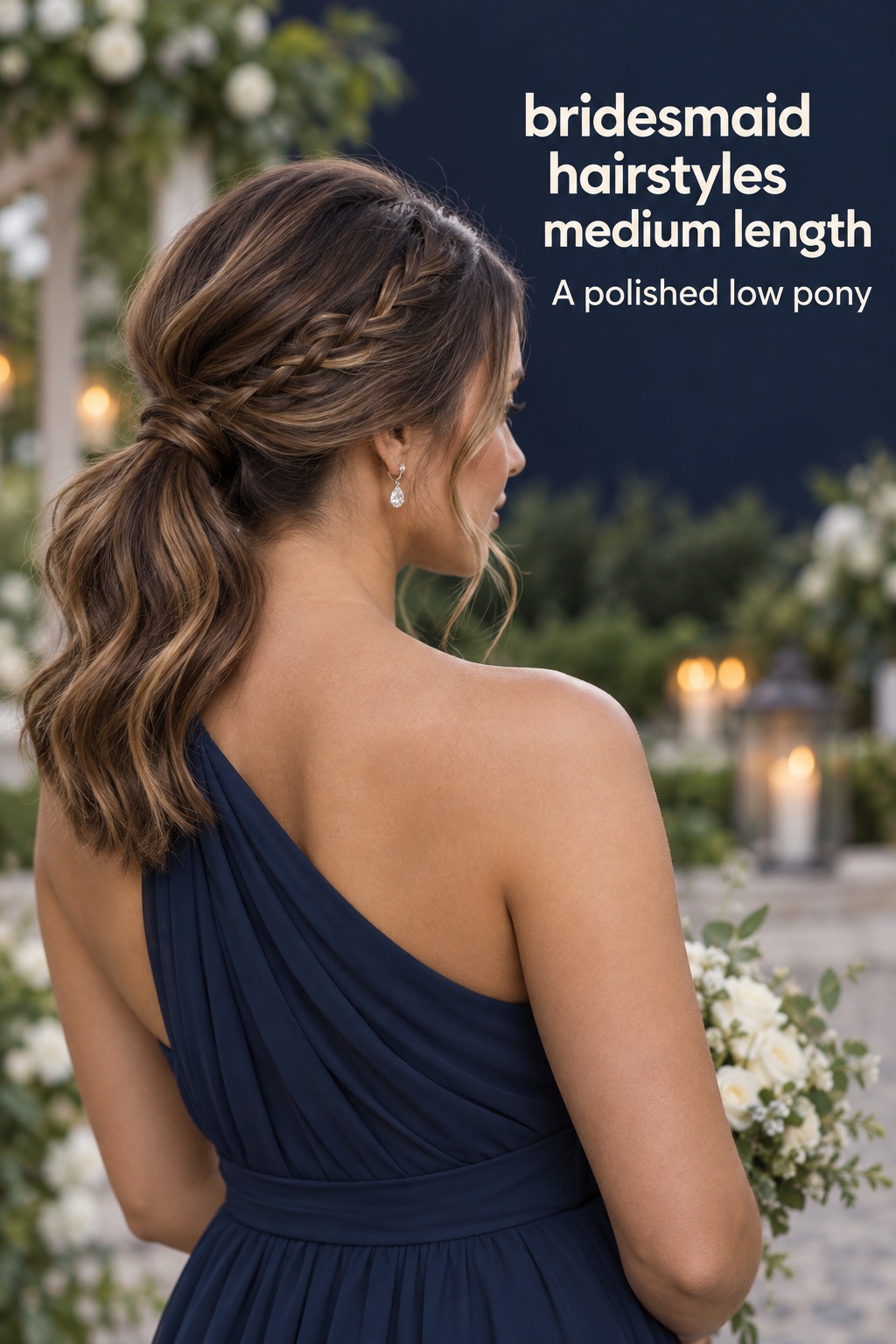
A Decision Checklist for the Shape You Want
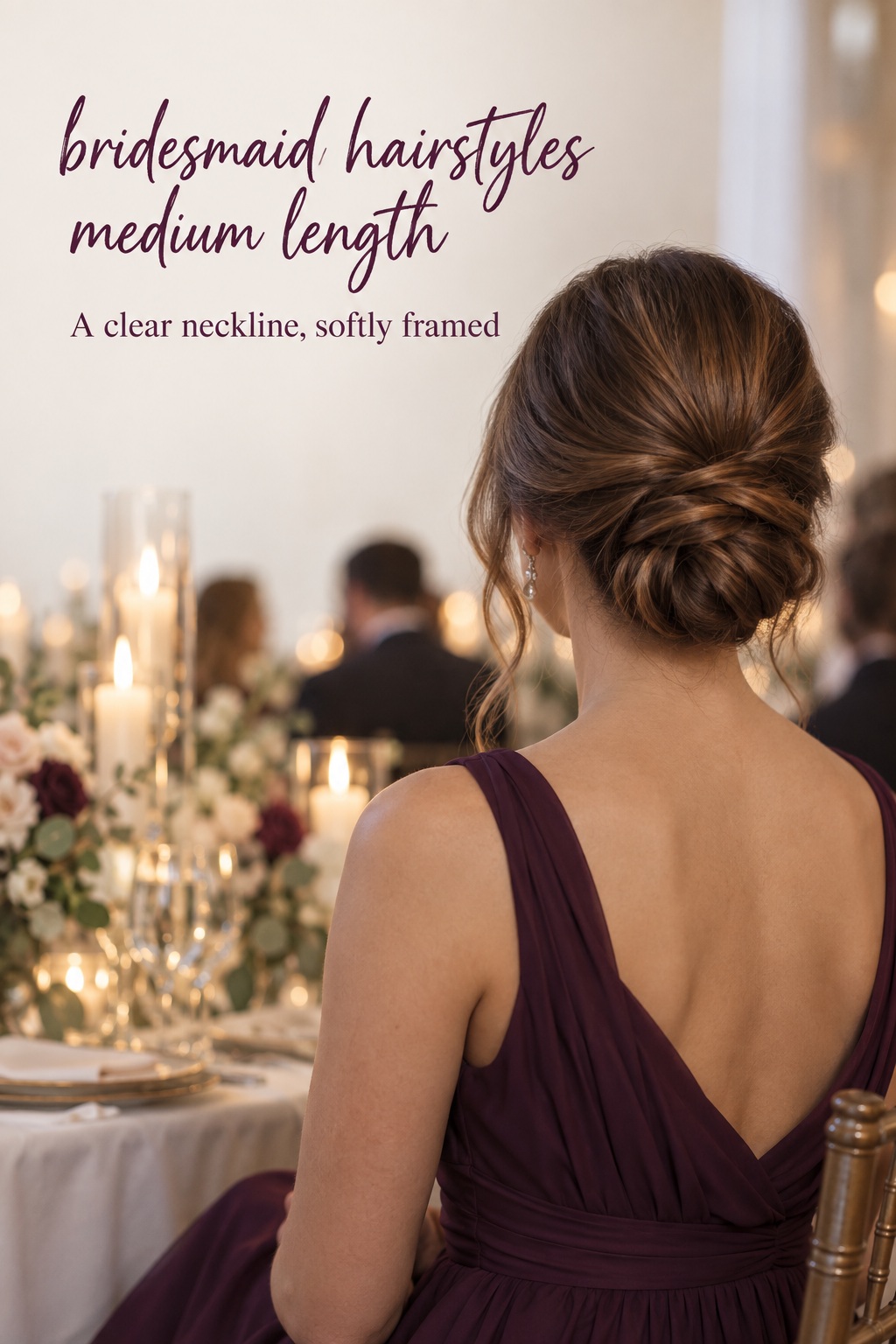
Use the result you want as the first branch of your decision. If you want the ends and natural movement to remain visible, start with hair down or a half-up style. If you want the neckline or back of the dress to show, consider a low bun, compact twist, or ponytail. If you mainly want hair away from your face, a partial pullback may be enough; you do not have to choose a full updo just because the event is formal. Then check whether your length and layers can support the silhouette without forcing the hair into a shape it does not naturally make.
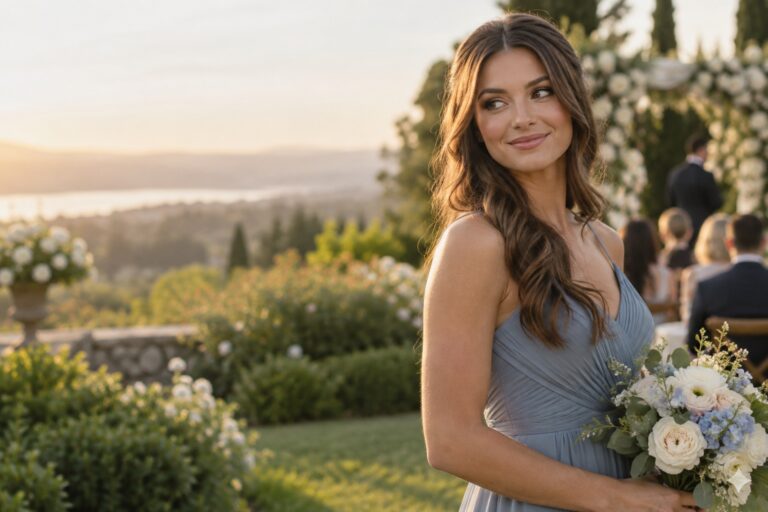
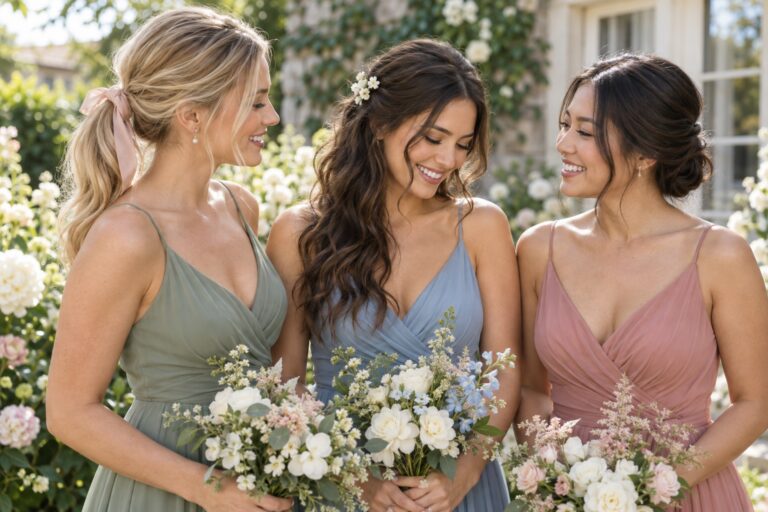
Choose hair down when movement and visible length are priorities. Soft waves, a smooth blowout, or a defined natural pattern can all look intentional with a simple part or one small pin. This route can suit someone who feels most like herself with her hair loose. Check whether the front pieces stay where you want them when you turn your head, and consider how the style will sit against the dress. If hair resting on your shoulders bothers you, a fully down look may not be the comfortable choice even if you like it in photographs.
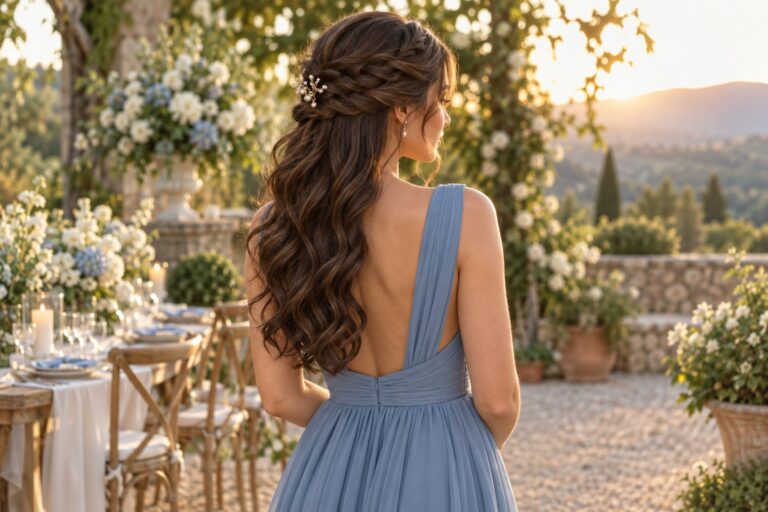
Choose half-up when you want some hair secured while keeping the ends visible. Twisted sides, a small braid, a knotted section, or a low half-up ponytail can use less length than a full gathered style. This is often a useful middle ground for medium hair with layers, since the upper section can be secured while the lower portion remains free. Ask the stylist to show how the fastening looks from the back and side. If your layers are short near the crown, a smaller and softer pullback may feel more natural than a large, tight section.
Choose a ponytail when you want a clear face and a defined tail. Medium-length hair can make a refined low or mid-height ponytail, especially when the hair is prepared with texture or the base is wrapped. Look at the ends in a reference: a dramatic, long ponytail may depend on extra length that your own cut does not have. If the tail would be short, you can lean into that proportion with a polished base and soft movement, or consider a half-up ponytail that leaves more hair loose. Ask the stylist to secure shorter layers without making the hairline feel pulled.
Choose a compact updo when you want the hair contained and the neckline visible. A low twist, small chignon, tucked bun, or softly pinned shape can work with medium hair, but the result depends on the length and density available at the nape. Some references use hidden padding or added hair to create a larger bun; others make a smaller shape part of the design. Ask which approach is needed for your preferred photo, whether it will feel comfortable, and how the stylist will keep short pieces in place. The Hitched medium-length roundup includes examples of low buns and half-up looks that can help you name a direction.
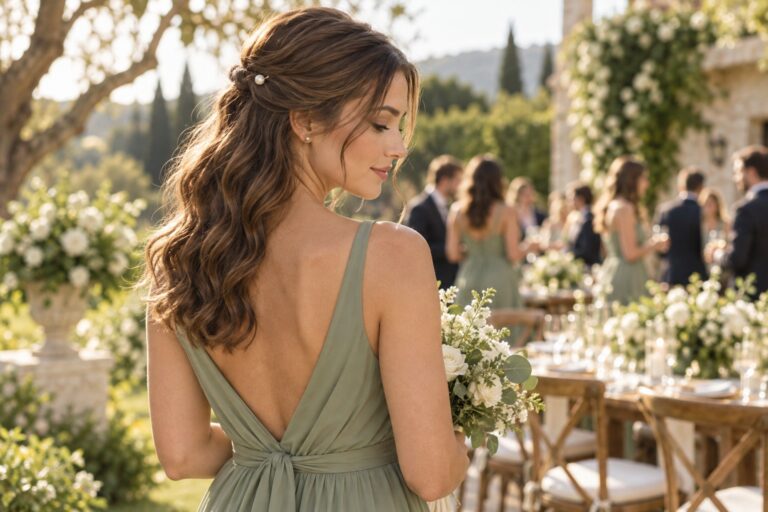
Now compare your shortlist with the dress. A high or detailed neckline may look clearer when hair is gathered or swept to one side; an open neckline can pair with either loose hair or a pinned style. This is a visual choice, not a rule. Put on the dress or a similar neckline, hold your hair in the proposed position, and check whether the detail you care about is visible. If the dress has an open back, try a quick low twist or side placement before ruling out wearing your hair down.
Finish the checklist with movement. Turn your head, look down, lift your arms, and imagine hugging people or dancing. If a style feels too tight, heavy, exposed, or fussy during this quick test, keep looking. Bridesmaid hair does not need to survive a dramatic stress test; it should simply make sense for the way you want to move and the amount of adjustment you are comfortable doing. Use your notes to rank the two styles that feel most promising, then let a stylist confirm what is achievable with your actual hair.
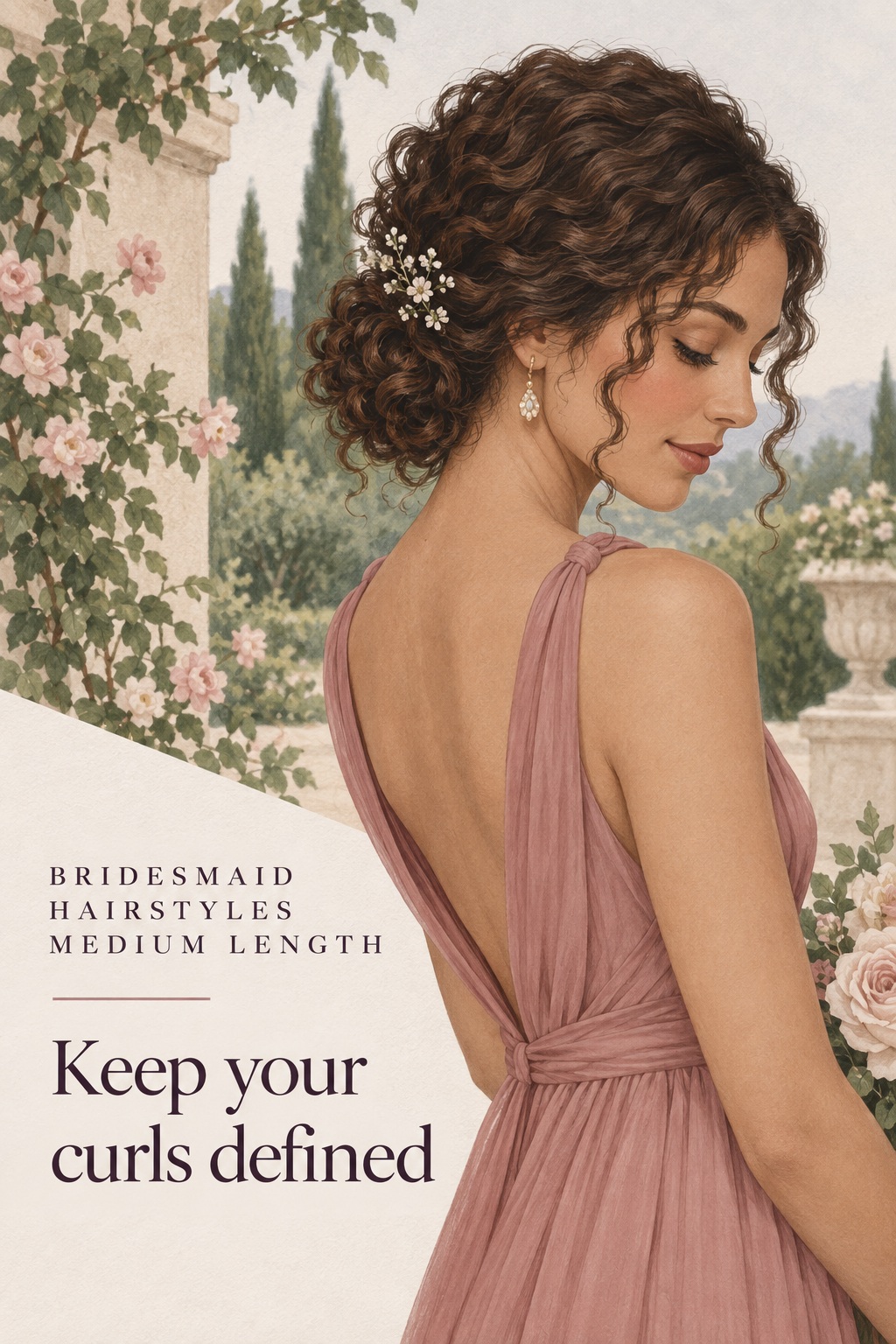
Five Worked Examples for Medium-Length Hair
1. Collarbone layers with short front pieces. You like a high ponytail reference, but the shortest layers fall out when you gather your hair. Keep the idea of a lifted, open face while changing the construction: ask about a half-up ponytail, a low ponytail with deliberately soft pieces, or a twist that secures only the front. Bring a front and side photo of your cut. The stylist can decide whether the short pieces should be pinned, waved, or left loose. This keeps the feature you liked without asking every layer to reach the same elastic.
2. Fine hair that loses its shape. You want a bun because you prefer your neck clear, but you are concerned that a large reference bun will feel sparse or need a lot of added structure. Save a photo of a compact low twist as well as the larger bun. Ask which outline is possible with your hair and how the pins will be placed. A smaller, intentional shape can read as polished without trying to imitate volume that belongs to another person’s hair. If you want visible fullness, let the stylist explain the available options and decide whether any added support feels right for you.
3. Natural curls you want to keep recognizable. Your preferred look is half-up, but you do not want the curl pattern brushed into loose waves. Show a reference with a similar curl pattern and ask how the stylist will preserve definition while securing the top section. Decide whether you want the curls left loose, gathered into a low puff, or shaped into a textured updo. The important detail may be the amount of hair pulled back rather than the exact braid or accessory in the image. Agree on that priority before discussing embellishments.
4. A dress with a high neckline and a short nape. You want the dress detail to remain visible, but your hair barely reaches the nape. Try a side-swept half-up shape or a low twist that uses the available length instead of assuming a full bun is necessary. Ask the stylist to show the back view and check whether loose pieces will fall onto the neckline. If a compact updo needs extra support, compare it with a simple gathered shape and choose the one that feels comfortable and looks balanced with the dress.
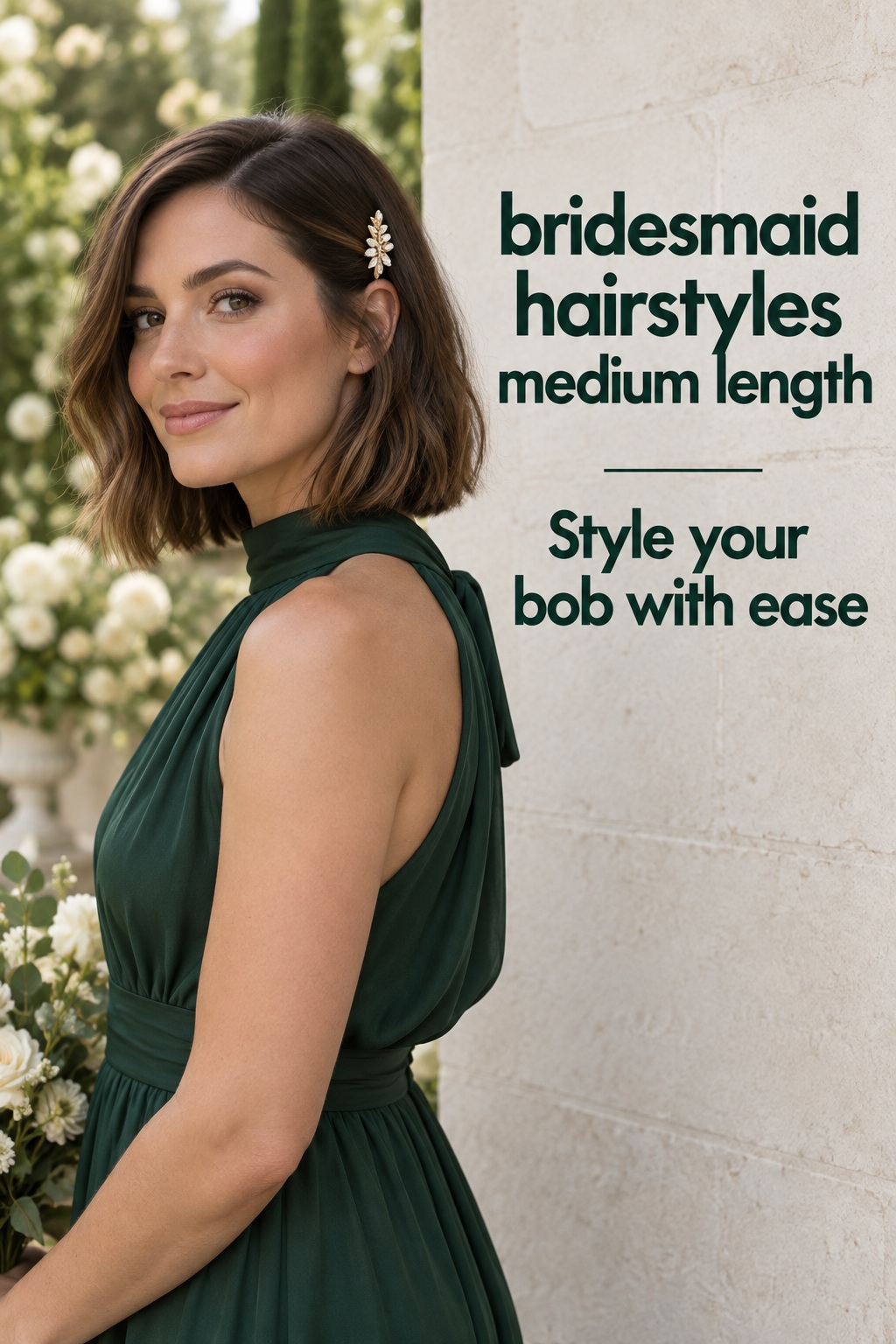
5. A bob that does not make a ponytail tail you love. You saved sleek ponytails but the end looks shorter than expected when tied. You can keep the sleek feeling with a side part and a small barrette, tuck one side behind the ear, or test a half-up knot that leaves most of the bob visible. If you still want a ponytail, ask whether a lower placement creates a proportion you like. The question is not whether your hair is long enough to copy the photo; it is which feature of the photo you want to carry into a style made for your cut.
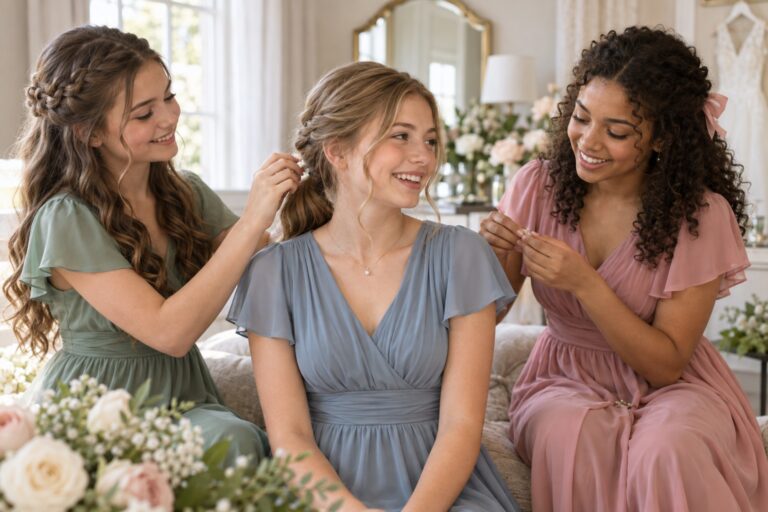
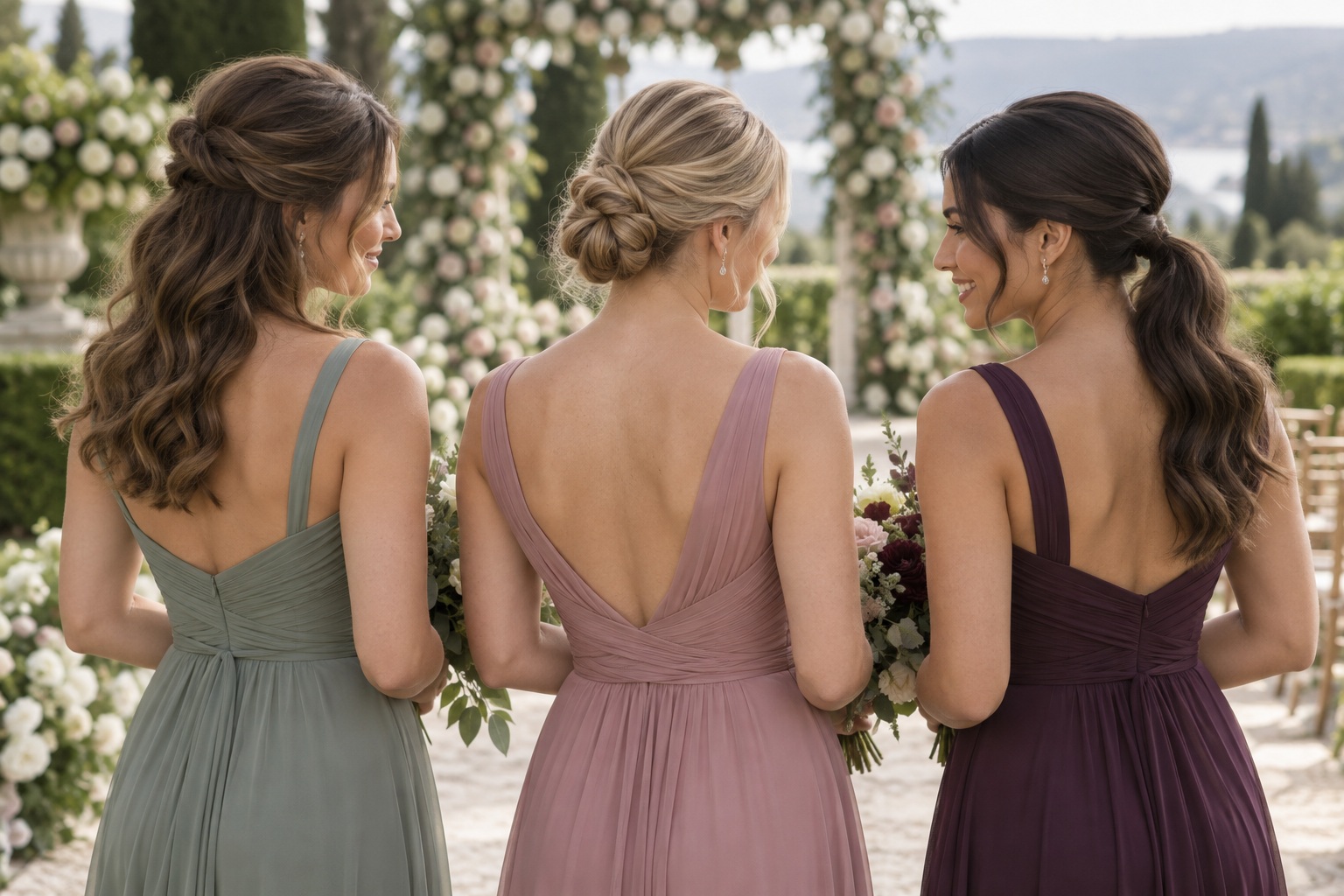
These examples also show why two bridesmaids do not need identical hair to look coordinated. You might share a general finish, such as soft texture, a polished part, or a small hair accessory, while choosing different silhouettes. A bride can set a preference for the overall mood, and each person can adapt the detail to her own length and comfort. If the group is booking one stylist, gather the preferences early and ask what can be shared across the party without requiring everyone to wear the same style.
The Final Trial and Wedding-Morning Checklist
Before the trial, narrow your references to two or three images. Choose pictures that show the back and side as well as the front, if possible. Label what you like in each one: “the low placement,” “the loose pieces,” or “the clean neckline.” Also label what you do not want. A short written note can prevent a stylist from assuming that you want every part of a photo, including a different hair length, texture, accessory, or dress. Bring a photo of your hairstyle as it usually looks, and wear or show the neckline you plan to have.
During the trial, ask the stylist to explain the shape before finishing the details. Check the back, side, and front in a mirror or phone photo. Move your head and arms, sit down, and see how the style feels when you touch the dress neckline or put on an accessory. Tell the stylist if anything pulls, pokes, feels heavy, or makes you keep reaching for your hair. Those are useful observations, not complaints. A small adjustment during a trial is easier than discovering on the wedding morning that you cannot relax in the style.
Make a simple note of what worked: where the pins were placed, which pieces were left loose, how the part was set, and what accessory was used. If you liked the direction but not one detail, record the change you want next time. Ask whether the stylist needs your hair in a particular condition when you arrive, and follow that person’s guidance for your own hair. Avoid assuming that every hair type needs the same preparation. Confirm the appointment time and the amount of styling time reserved for you, especially if several people are getting ready together.
For the wedding morning, pack only the items the stylist asks you to bring, such as a specific accessory or veil. If you will be dressing after your hair is finished, ask whether the top can pass through the dress opening or whether the dress should be put on first. Keep a small reference photo available so another person can help with a loose pin if needed. You do not need to carry a full styling kit unless the stylist recommends it. The aim is to arrive with a clear plan and enough time for the chosen look to be finished calmly.
Use this short brief when you book or meet your stylist: “My hair reaches [length] and has [layers or texture]. I want [the result I care about], and I feel comfortable with [preferred amount of hair up or down]. The dress has [neckline or back detail]. I like [one or two reference details], but I want to avoid [specific discomfort or feature]. Can you show me a version that works with my actual length?” This gives the stylist the context needed to adapt the look, while leaving room for professional judgment and your own preferences.
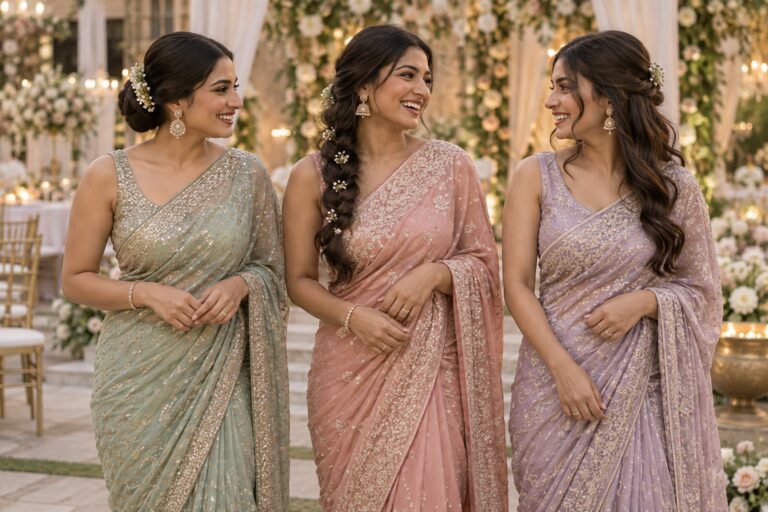
When a bridal party has a shared visual direction, decide what truly needs to match. It might be a soft finish, a similar part, a simple pin, or a general up-or-down preference. Let the exact shape respond to each bridesmaid’s hair and comfort. That approach keeps the photographs cohesive while allowing each person to recognize herself. For medium-length hair in particular, it also prevents a reference designed for long hair from becoming a frustrating standard that no one asked you to meet.
FAQ
What are the best bridesmaid hairstyles for medium length hair?
Good options include hair-down waves or a natural finish, a half-up twist or braid, a low or mid-height ponytail, and a compact low updo. The best choice depends on where your ends fall, your layers and texture, the neckline, and how you want your hair to feel.
Can medium-length hair go into a bun?
Often it can be shaped into a compact twist, tucked bun, or chignon, but the exact result depends on length, density, and layers around the nape. Bring a photo of your current cut and ask a stylist what construction will work comfortably for you.
Is half-up hair a good choice for shoulder-length bridesmaids?
It can be a useful middle ground because the top section is secured while the rest of the hair stays visible. A smaller twist or braid may suit layered hair better than a large pulled-back section. Try the shape with your dress neckline during a trial.
How do I choose a bridesmaid hairstyle for a high neckline?
If you want the neckline to remain visible, test a low updo, side-swept shape, or partial pullback. Loose hair can still work if that is your preference. Hold your hair in each position with the dress on and choose the view you like best.
What should I bring to a bridesmaid hair trial?
Bring two or three reference photos, a picture of your current hair from several angles, details about the dress neckline, and any accessory you plan to wear. Explain which features you like and what feels uncomfortable so the stylist can adapt the look.
Do all bridesmaids need to wear the same hairstyle?
No. The group can coordinate through a shared finish, part, accessory, or general mood while each person chooses a shape that works for her hair and comfort. Agree on the detail that matters most, then allow room for individual adaptations.
How can I tell if a hairstyle will stay comfortable?
At the trial, turn your head, lift your arms, sit down, and notice whether pins poke or the base feels tight. Tell the stylist about pulling, weight, or pieces that fall where you do not want them. Ask for an adjustment before choosing the final version.