Junior Bridesmaid Hair: Fresh, Comfortable Wedding Ideas
The best junior bridesmaid hair is the style she feels good wearing, not a smaller copy of an adult bridesmaid look. A soft braid, a simple half-up twist, natural curls with one small accent, or a tidy ponytail can all feel special when the finish suits her and the wedding. Start by asking what she likes. Then check how long she will wear it, what her hair does naturally, and how much styling she is comfortable with.
That order makes the choice easier for everyone. The young attendant has a real say, the stylist knows which details matter, and the wedding party can still feel connected. The current direction is relaxed polish: a clear shape, comfortable hold, and one intentional detail rather than a complicated style that asks her to sit still or feel unlike herself.
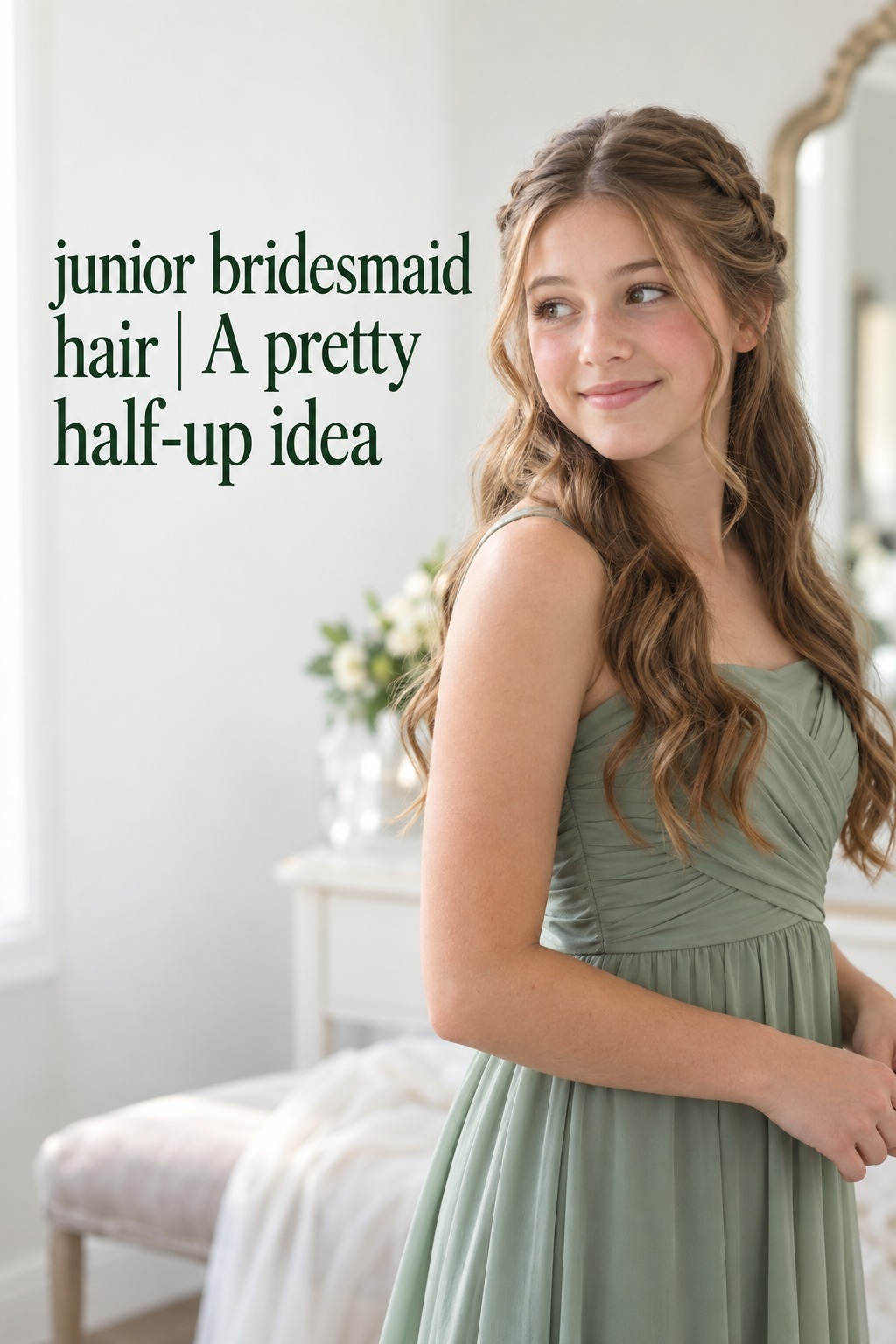
The Current Direction: Polished Hair That Still Feels Like Her
Wedding hair can look finished without looking overly formal. For a junior bridesmaid, that often means choosing one focal point and leaving the rest uncomplicated. A braid can be the feature while the remaining hair stays loose. A low bun can be softly shaped rather than tightly slicked. A short bob may need only a side part and one clip. The goal is not to make a young attendant look older. It is to give the hairstyle a little ceremony while preserving her familiar appearance.
Think of polish as a few practical choices: hair is gently detangled, the outline feels intentional, and accessories stay secure. A small ribbon can connect to the dress color. A simple clip can echo a flower in the bouquet. A smooth section at the crown can make a half-up look feel neat, while curls or waves keep their natural movement. These details can make a style feel wedding-ready without adding a long list of steps.
Turn wedding inspiration into a plan you can actually follow.
Zarellea brings your guest list, budget, vendors, and day-of details into one shared space — so no beautiful idea gets lost in the shuffle.
Make the attendant part of the decision
Show her a short set of references rather than an endless feed. Ask which one she would enjoy wearing and what she would change. Does she prefer her hair away from her face? Does she like a braid, or would she rather keep her usual part? Is there a clip or headband she already reaches for? The answers are more useful than choosing a look because it matches a theme board.
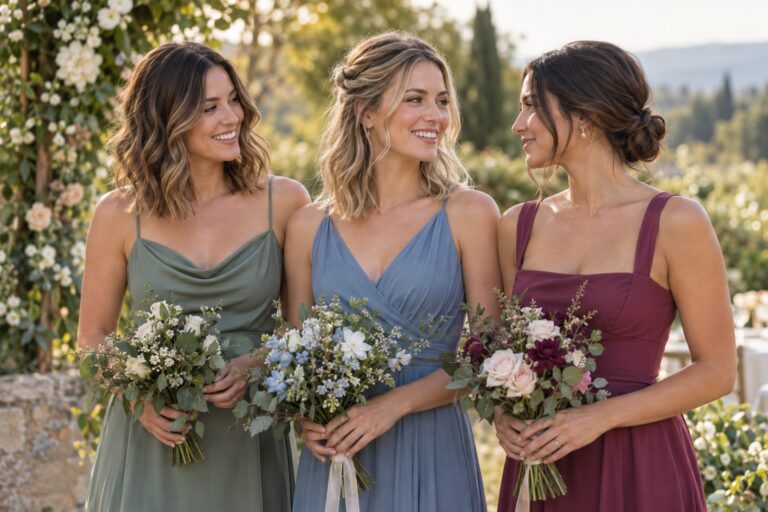
It also helps to distinguish a preference from a requirement. If the couple wants a coordinated party, explain the shared idea, such as a blue ribbon or a soft finish, and let the junior bridesmaid choose how to wear it. She might choose a braid while an older attendant wears a ponytail. They can still look connected through color and care, without using identical silhouettes.
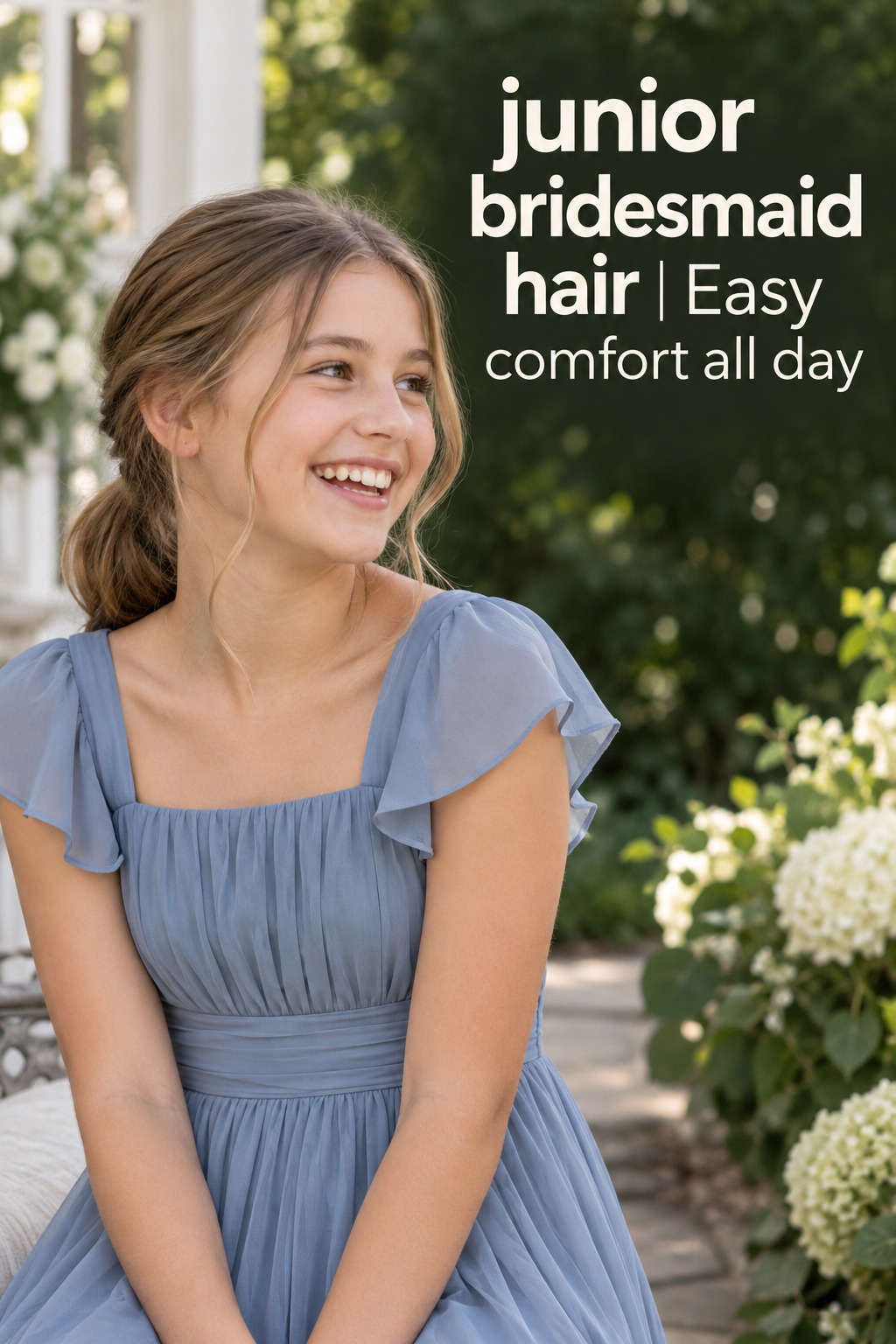
Choose the Hairstyle by Comfort, Preference, and Time
Before comparing pictures, settle four questions: how does she like her hair to feel, what will she be doing during the day, how much time is available, and which parts of her look should remain visible? A junior bridesmaid who will walk, greet guests, and dance may want strands kept away from her face. Someone who dislikes pins may prefer a low ponytail or a simple braid. A very short getting-ready window favors a shape that can be completed without many steps.
Comfort is personal, so do not assume that a neat updo is automatically easier. Some attendants like hair off the neck; others find clips or bobby pins distracting. Ask her to try the proposed accessories and move her head naturally. She can turn, look down, smile, and sit for a few minutes. If she notices pressure, pulling, or a piece that keeps falling forward, adjust the plan before the wedding morning.
Match the effort to the schedule
A hairstyle with several braids, curls, and pins needs more time than a brushed ponytail with a wrapped base. Decide whether the junior bridesmaid will sit with the adult bridal party or get ready separately. If several people are sharing one stylist, agree on a realistic order and allow enough time for transitions. The style should fit the morning, not make her responsible for a schedule she cannot control.
For a family member or parent styling the hair, choose a familiar technique. A wedding is not the best time to learn a complex braid from a video. Practice once with the accessory and dress neckline, then make a short list of what worked. A calm, repeatable style often looks more natural than a complicated design that has to be rushed.
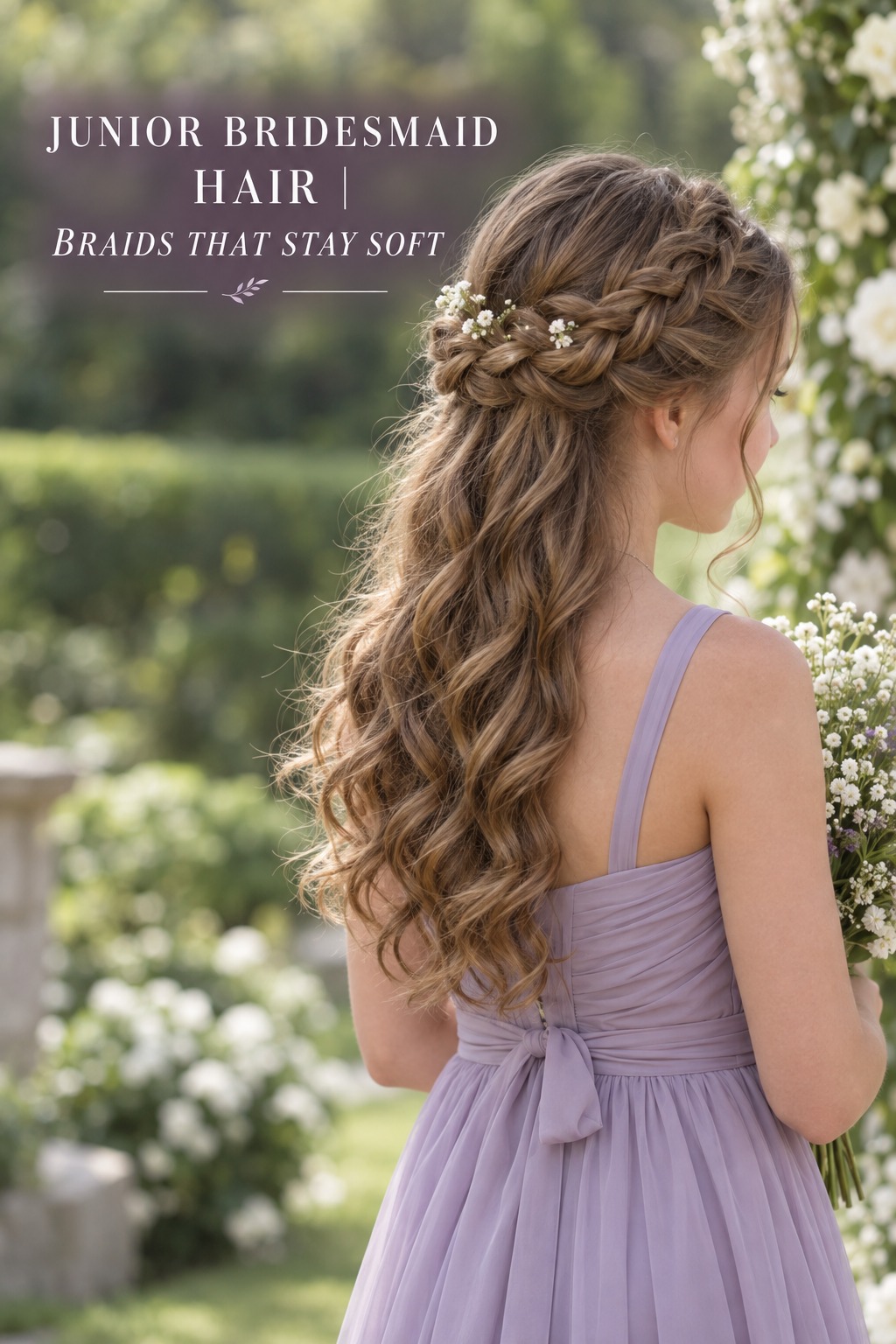
Four Junior Bridesmaid Hair Shapes, Compared
Most inspiration photos can be sorted into four shapes: hair down, half-up, braid-led, and an up style. Each can be adapted, and none is right for every attendant. Use the comparison to narrow the options, then let her preference decide between the styles that meet the practical needs.
Hair down: familiar and expressive
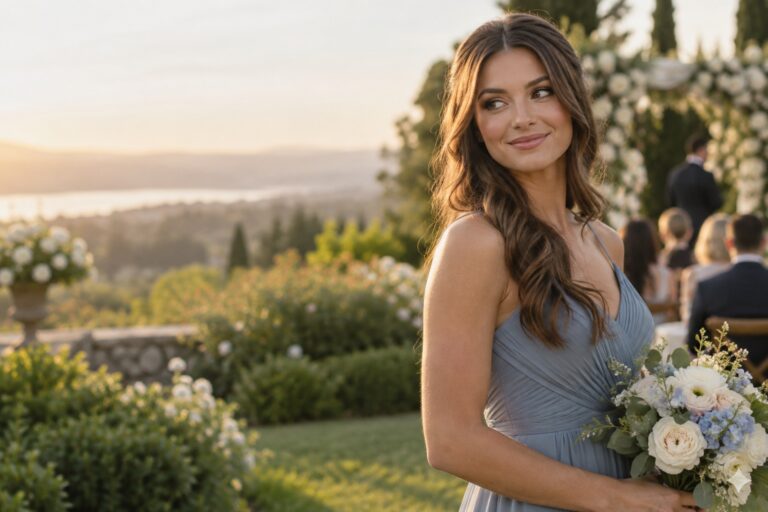
Loose hair keeps the natural length visible and may feel most like her everyday look. Brushed waves, defined curls, or a smooth bob can be enough on their own. Add a small clip at one side if she likes the detail. This shape is a good fit when she is comfortable with hair around her shoulders and the outfit does not make loose strands feel distracting.
The trade-off is that loose lengths may fall forward during photos or activities. A small section pinned behind the ear can preserve the down style while clearing her face. Ask her to wear it briefly before deciding whether she wants more of the hair gathered back.
Half-up: a flexible middle ground
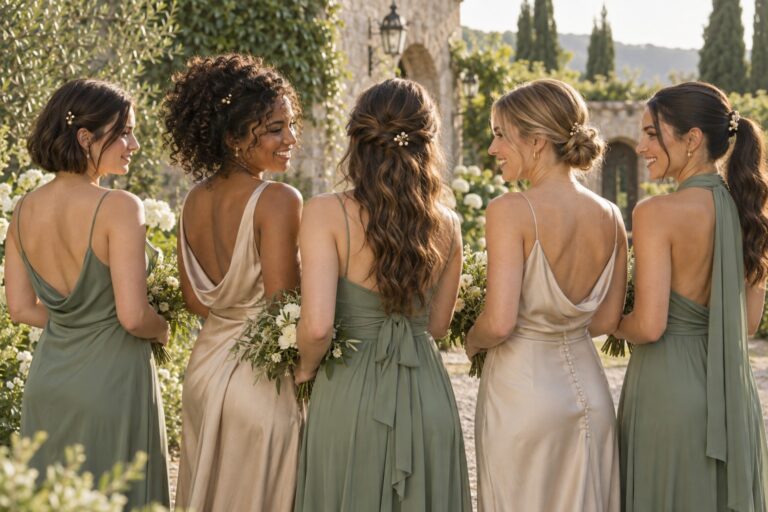
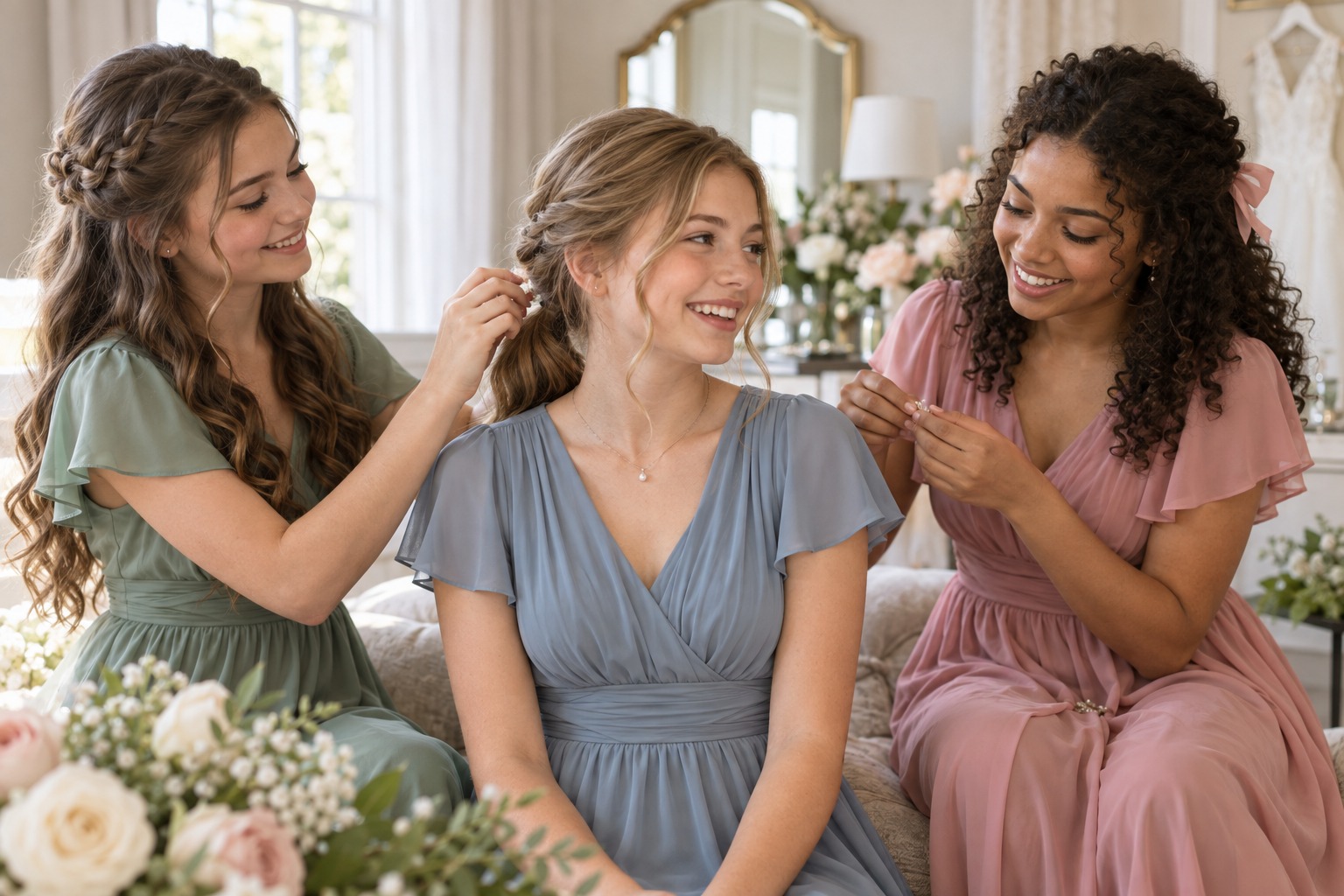
A half-up style gathers the front or crown while leaving length visible. Two small twists, a simple braid, or a barrette can create the shape. It works across many lengths and can feel tidy without turning into a full updo. Keep the gathered section loose enough that the scalp does not feel pulled, then let the remaining texture stay as it naturally falls.
This is often a useful first option when the family wants something formal but the attendant wants her hair down. The small gathered area can be adjusted during a trial, and the accessory can be removed if it becomes uncomfortable. A half-up style also leaves room for one shared bridal-party detail, such as a narrow ribbon in the wedding color.
Braid-led: detail with a secure outline
A side braid, crown braid, or braid woven into a ponytail adds a clear detail without requiring a large accessory. The braid can hold shorter pieces near the face and make the back of the style interesting in photographs. For a softer effect, keep the braid relaxed and avoid pulling it too tightly. A ribbon can be woven through if she likes the extra color and the added texture does not snag on the outfit.
Braids vary in how much time and practice they require. A simple three-strand detail may be familiar at home, while a full crown braid may be better left to a stylist. Choose the simplest version that gives the look she wants. If her hair is very layered or short, a partial braid or two small twists can create a similar feeling without forcing every strand into place.
Up style: clear shoulders and a tidy finish
A low bun, tucked twist, or ponytail gathered into a small knot keeps most of the length off the neck and shoulders. It may suit a high neckline or an attendant who prefers hair contained. Keep the shape light and comfortable. A few soft pieces can remain near the face if she likes them, and a small clip at the side can be enough decoration.
An up style usually needs more pins and may take longer than a ponytail or half-up shape. During the trial, check where the pins sit and whether the bun presses against a chair or headrest. The best version is one she can wear without monitoring it constantly. For an example of how galleries describe low buns and braid details, browse this junior bridesmaid hairstyle overview, then adapt the idea to her own hair and comfort.
Adapt the Idea to Her Hair Length and Texture
Reference photos are starting points, not instructions to change someone’s hair. The same silhouette can look different on a bob, fine straight hair, dense curls, or a long braid. Tell the stylist what her hair normally does and which parts she wants to keep familiar. A style that works with the existing length and texture is usually easier to explain, practice, and maintain.
Short and medium hair
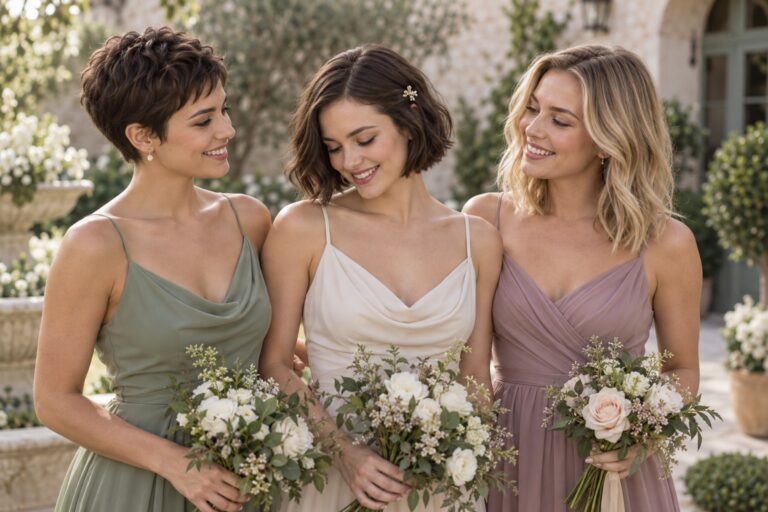
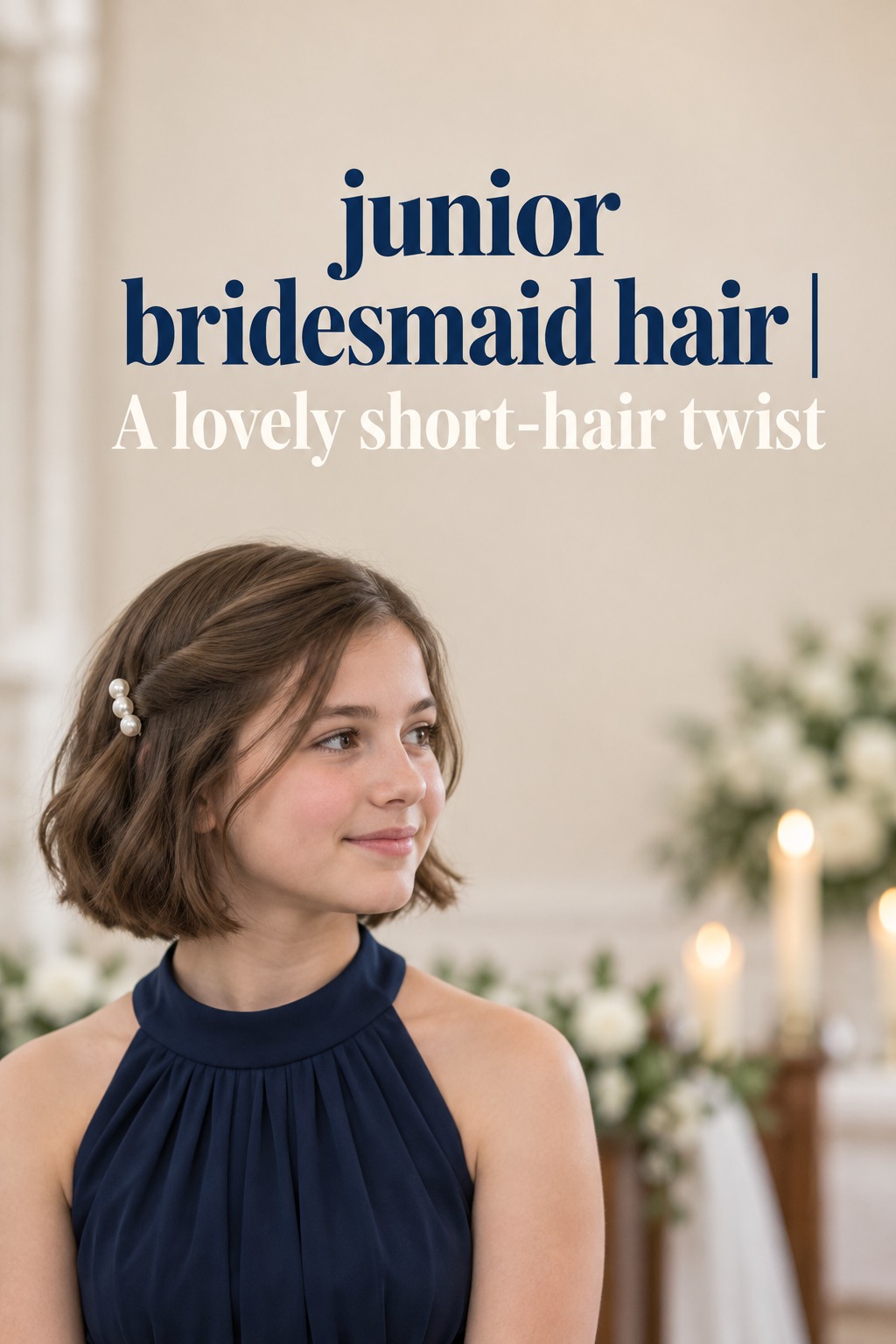
Short hair can feel special with a defined side part, a soft bend, a small side twist, or a decorative clip. If a bob does not reach a ponytail, do not force it into a style that keeps slipping. Pin back only the section she wants away from her face, or let the haircut itself provide the shape. Medium hair can support a half-up twist, a small braid, or a low ponytail, depending on how it falls and what she finds comfortable.
Bring the actual clip or headband to a trial. Check that it stays in place when she turns her head and that it does not sit where a collar, bow, or veil touches. One secure accessory is often easier to manage than several small pieces that need repeated attention.
Long, fine, or thick hair
Long hair offers room for braids, ponytails, buns, and half-up shapes, but length alone should not decide the style. Ask whether she wants the weight gathered or prefers it loose. If the hair is thick, a lower or simpler shape may feel easier to wear than a tall arrangement with many pins. If it is fine or slippery, the stylist can choose a suitable grip and a design that does not depend on a single small clip holding everything.
Avoid promising that any one technique will hold all day for every head of hair. Hair texture, the chosen style, and the person’s comfort all differ. A stylist can suggest ways to secure the specific look, while the attendant can say if it feels too tight or heavy. Use that feedback to simplify the shape where possible.
Curly and coily hair
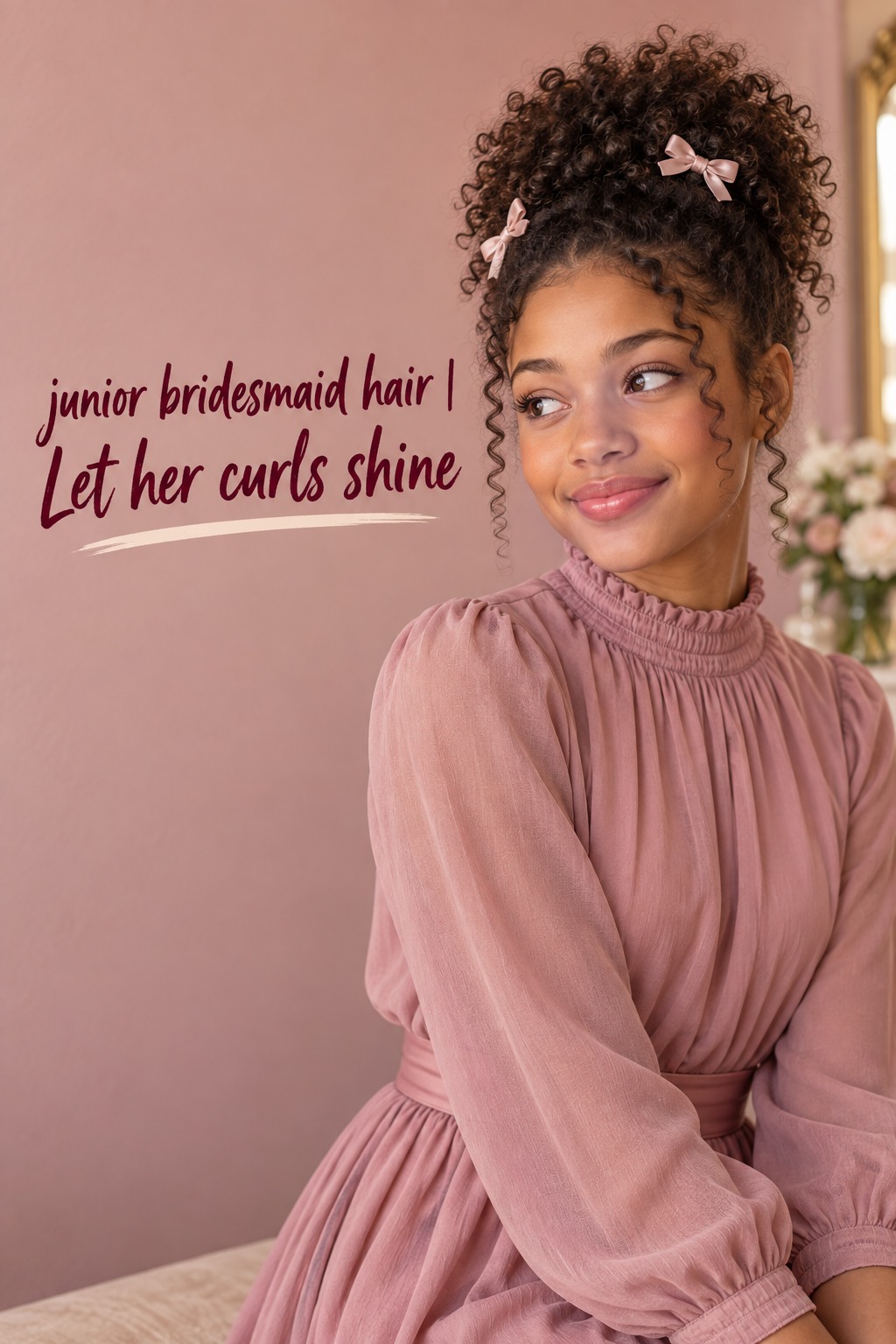
Natural curls and coils can be the main feature of the hairstyle. A defined wash-and-go shape, a half-up puff, a soft pinned section, or a braid detail can all work, depending on her preference and usual routine. Share a reference with a similar texture and length when speaking with the stylist. If she has a trusted way of preparing her hair, ask what should stay consistent rather than assuming a new routine is needed for the wedding.
For a young attendant who would rather not have her hair manipulated much, a small bow or clip may be the only finishing touch she wants. If she enjoys braids or twists, choose a familiar pattern and agree on the amount of time she is willing to spend. Her normal comfort matters more than making her texture look like someone else’s photograph.
Coordinate With the Wedding Party Without Matching Everyone
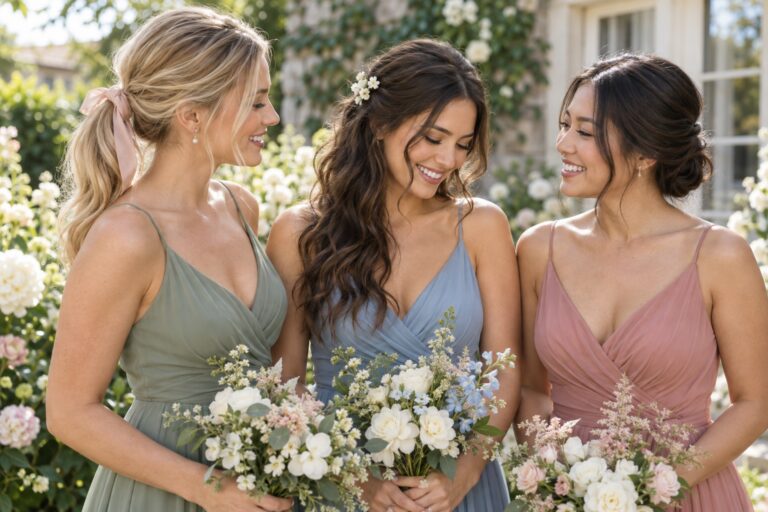
Coordination can come from one shared element rather than one identical hairstyle. The group might use the same ribbon color, a similar level of softness, or small accessories from the same family. Adult attendants can wear low buns while the junior bridesmaid chooses a half-up braid. A shared detail gives photographs a sense of connection, while different shapes let each person wear hair that suits her.
Start with the outfit and the rest of the bridal-party plan. If the dresses already have a strong color or a prominent bow, keep the hair accessory quiet. If the clothing is simple, a small flower or ribbon may provide the connection. Choose one place for the accent, such as at the end of a braid or above a ponytail, and keep its size comfortable for the wearer.
Ask the junior bridesmaid what kind of coordination feels fun to her. She may like having the same ribbon as an older sister or cousin, but prefer to wear it in a different style. She might choose a clip in the shared color instead. Those small choices make the role feel personal and help the wedding party avoid treating the youngest attendant as a prop for matching photographs.
Make the Trial and Wedding Morning Easier
A useful trial is short and specific. Bring a photo of the outfit, the accessory, and one or two hairstyle references. Tell the stylist what the junior bridesmaid likes, what she dislikes, and how much time the morning allows. Try the chosen outline, then let her wear it for a few minutes while sitting, standing, and turning her head. Ask directly whether anything pulls, pokes, feels heavy, or gets in her way.
Take a front, side, and back photo in ordinary light. The pictures help the family remember the placement and show the stylist what to repeat. They are also a chance to notice details such as a clip hidden by the hair or a loose piece that falls across the eyes. Make one adjustment at a time so the attendant can tell which version feels better.
Agree on a simple day-of plan
Before the wedding, confirm who will help with the style, where she will get ready, and which accessories need to be brought. Put the chosen reference and accessory together so they are easy to find. If she will change outfits between events, decide whether the hair should stay the same or whether a simple clip can be added later. Keep the plan clear enough that she does not need to make styling decisions while everyone is rushing.
Let her know what to do if a piece loosens. Depending on the chosen style, that may mean asking a parent or stylist for help rather than trying to fix pins herself. A small brush or a spare ribbon can be useful, but only bring items that suit the hair plan. Avoid packing a large kit that suggests the style must be constantly repaired.
For more broad examples of braids and softer junior-attendant looks, this junior bridesmaid hairstyle gallery can help the family find a starting image. Treat it as inspiration, then adapt the silhouette to her own hair and the amount of styling she wants.
Sources and Methodology
This guide was shaped by a review of ten Google US organic results about junior bridesmaid and children’s wedding hairstyles. Those pages commonly show braids, half-up styles, ponytails, loose hair, and buns. The advice here organizes those options around the young attendant’s preference, comfort, hair texture, and getting-ready time. Recommendations are styling considerations, not guarantees about hold or suitability; ask the attendant and stylist to adapt the plan to her hair.
FAQ
What is the best hairstyle for a junior bridesmaid?
The best choice is the one she likes and can comfortably wear for the event. A half-up style is a flexible starting point, while braids, a low ponytail, loose curls, or a small bun may suit different preferences and hair lengths. Ask what feels good before choosing a reference.
Should a junior bridesmaid wear the same hairstyle as the adult bridesmaids?
No. The group can share a ribbon color, accessory style, or soft finish while allowing each person to choose a silhouette that suits her hair and comfort. A coordinated detail can connect the photographs without requiring everyone to wear identical hair.
Can junior bridesmaid hair be simple?
Yes. A brushed bob with a clip, a low ponytail, a simple braid, or a half-up twist can feel occasion-ready with one thoughtful detail. A simple style can also be easier to fit into a busy wedding morning.
What if the junior bridesmaid has short hair?
Work with the shape she already has. A side part, soft waves, a small twist, or a comfortable decorative clip may be enough. Bring the accessory to a trial to check that it stays in place and does not catch on the outfit.
How do I choose a hairstyle for curly or coily hair?
Start with the attendant’s usual routine and a reference with a similar texture and length. Natural curls or coils can remain loose, be gathered into a puff, or include a braid or twist detail. Ask a stylist familiar with her hair what is comfortable and avoid changing a routine she prefers just for the wedding.
How can we make wedding hair comfortable?
Try the style and accessories before the wedding. Let her move her head, sit, and wear the style briefly, then ask about pulling, pressure, pins, or pieces in her face. Adjust or simplify anything that bothers her, and make sure she knows who can help if the style shifts.
How do we coordinate junior bridesmaid hair with the wedding colors?
Choose one small accent, such as a ribbon or clip in a wedding color, and let the rest of the style reflect her preference. If her dress already has a strong detail, keep the accessory simple. Coordination does not require a matching hairstyle or multiple decorations.