Bridesmaid Hair Styles: Up, Down, or Half-Up?
The easiest way to choose among bridesmaid hair styles is to start with the detail you want people to notice. A low back, an ornate neckline, statement earrings, or your natural curls may each call for a different silhouette. Once you know what should stay visible, comparing an updo, a down style, and a half-up look becomes much simpler.
This guide is a decision tool rather than another long gallery. It compares what each shape reveals, what it covers, and where an accessory can fit without competing with the dress. The goal is not to make every bridesmaid look the same. It is to find a polished direction each person can adapt to her own hair and comfort.
Start with the detail you want to keep visible
Look at the dress from the front and back, then name the feature that matters most. It might be a high collar, an open back, a pair of special earrings, or a textured shoulder. Choose one priority before collecting hairstyle screenshots. Without that step, a beautiful reference can be a poor match for the actual outfit.
A useful order is dress detail first, jewelry second, hair ornament third. If the gown already has beading at the neckline, for example, the hair does not also need several sparkling clips. If the dress is simple and the earrings are the focal point, an updo can frame them clearly. This is a styling framework, not a strict rule: the wearer may prefer a different detail to lead.
Turn wedding inspiration into a plan you can actually follow.
Zarellea brings your guest list, budget, vendors, and day-of details into one shared space — so no beautiful idea gets lost in the shuffle.
Read the neckline and the back separately
A neckline is most visible from the front, while a low or detailed back matters in side views and photographs taken from behind. Decide which view is more important for the event. A bridesmaid wearing a high neckline may want the hair lifted away from the collar. Someone in a backless dress may prefer the same result at the nape, even if she keeps some length loose at the crown.
When the dress has a dramatic shoulder or sleeve, look at how hair falls over that area. Loose lengths can soften the outline, but they can also cover the construction that makes the dress distinctive. A pinned side, a tucked section, or a half-up shape can preserve movement while uncovering one shoulder. The best reference is the one that shows the dress and hair together, not hair in isolation.
Choose the focal point before choosing the ornament
Think of the hair, earrings, neckline, and hair accessory as neighboring details. They do not all need equal emphasis. If the earrings are large, a small pin or no ornament may be enough. If the jewelry is minimal, a comb can add a point of interest. If the dress has its own sparkle, a smooth shape can provide visual breathing room.
Bring the actual earrings and hairpiece to a trial when possible. Their scale and placement can look different beside a real hairstyle than they do in a product photo. A stylist can also check whether a clip is secure in the chosen texture and whether it sits comfortably. The Knot’s bridesmaid hairstyle guide includes expert advice and examples across different hair types; use reference photos to communicate a direction, then adapt the detail to the person wearing it.
Compare up, down, and half-up by what they reveal
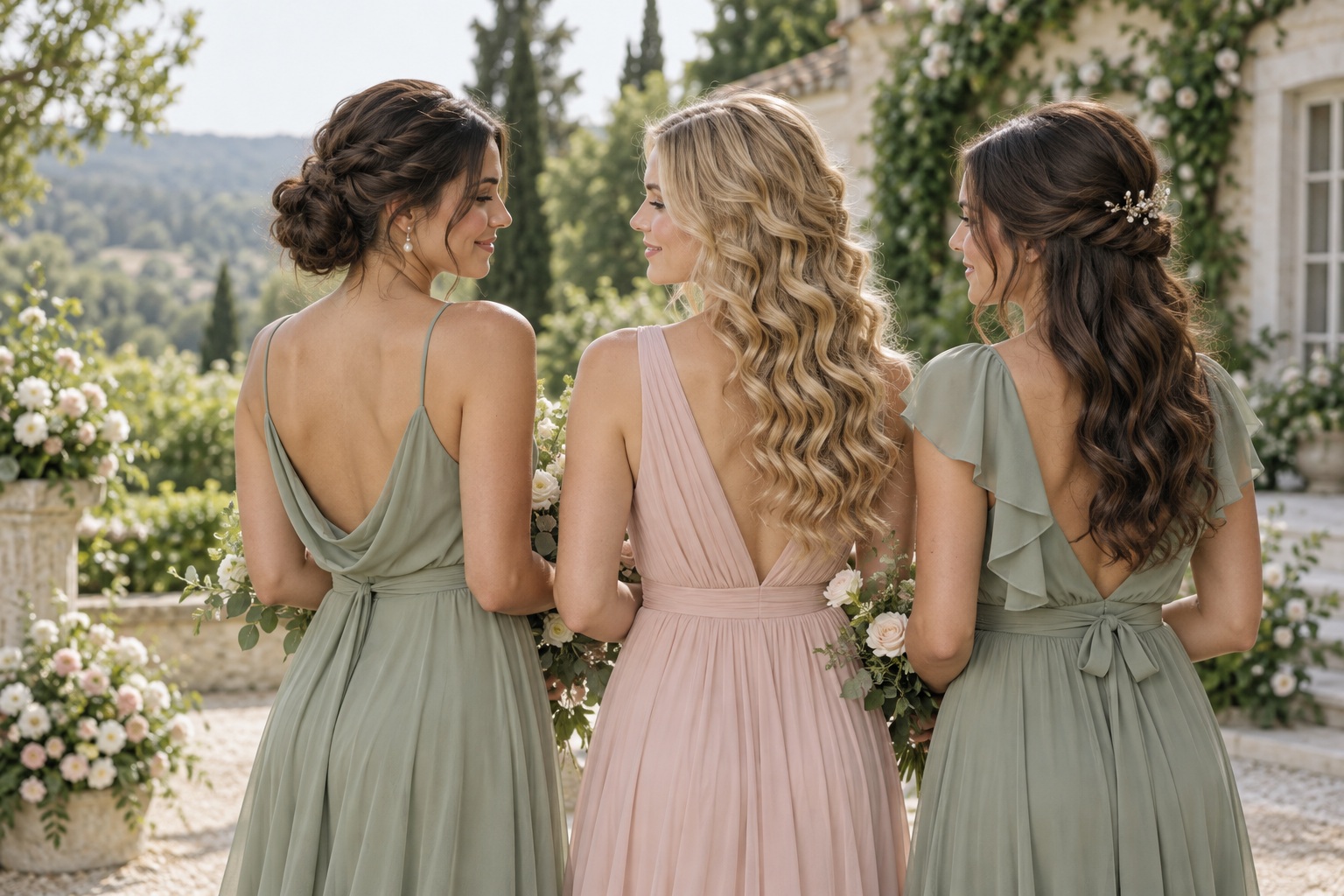
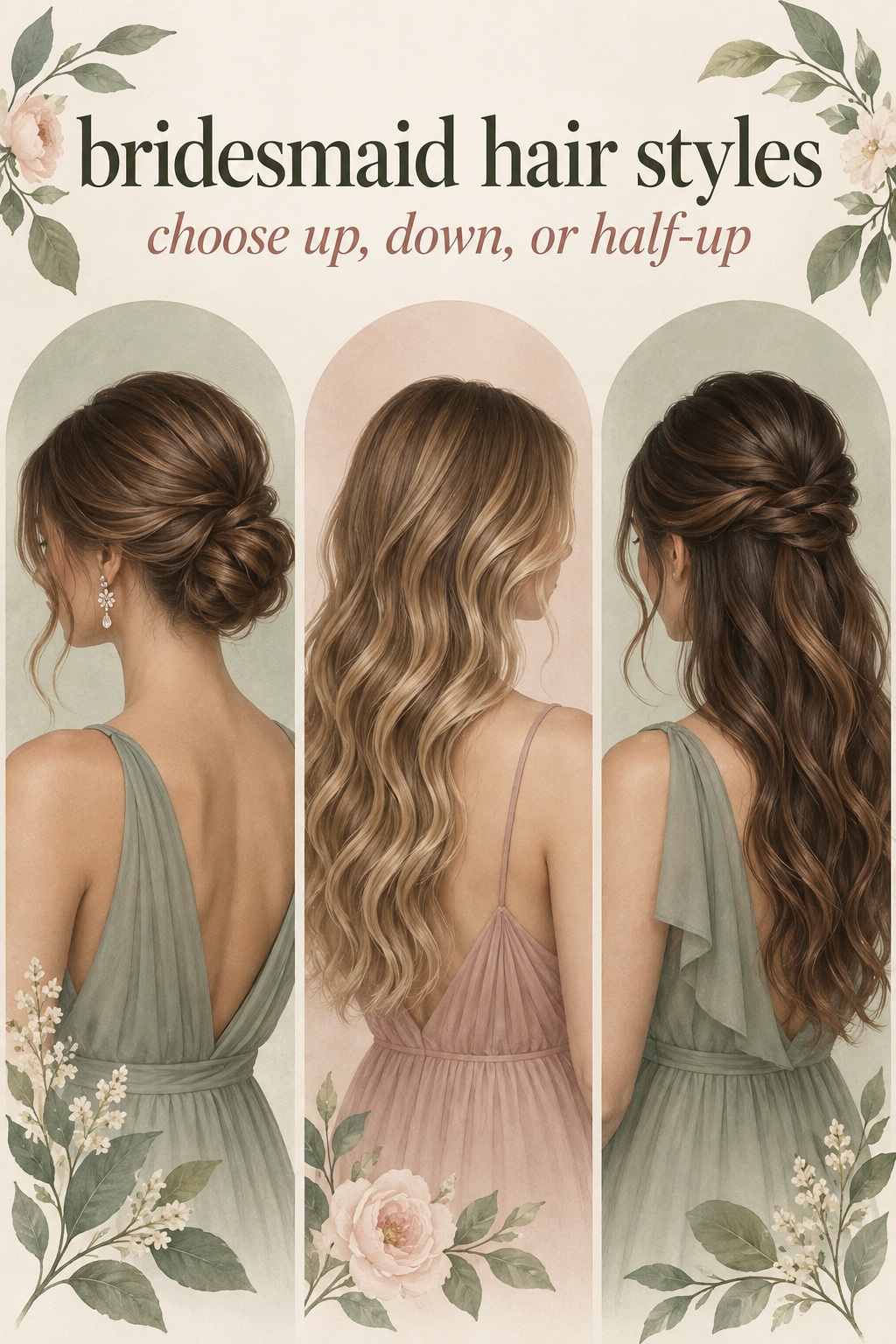
These three families cover most first decisions. They are not a ranking from formal to casual. Each can be polished or relaxed depending on finish, placement, and accessory. Compare them by visibility, movement, and how much of the hair remains part of the look.
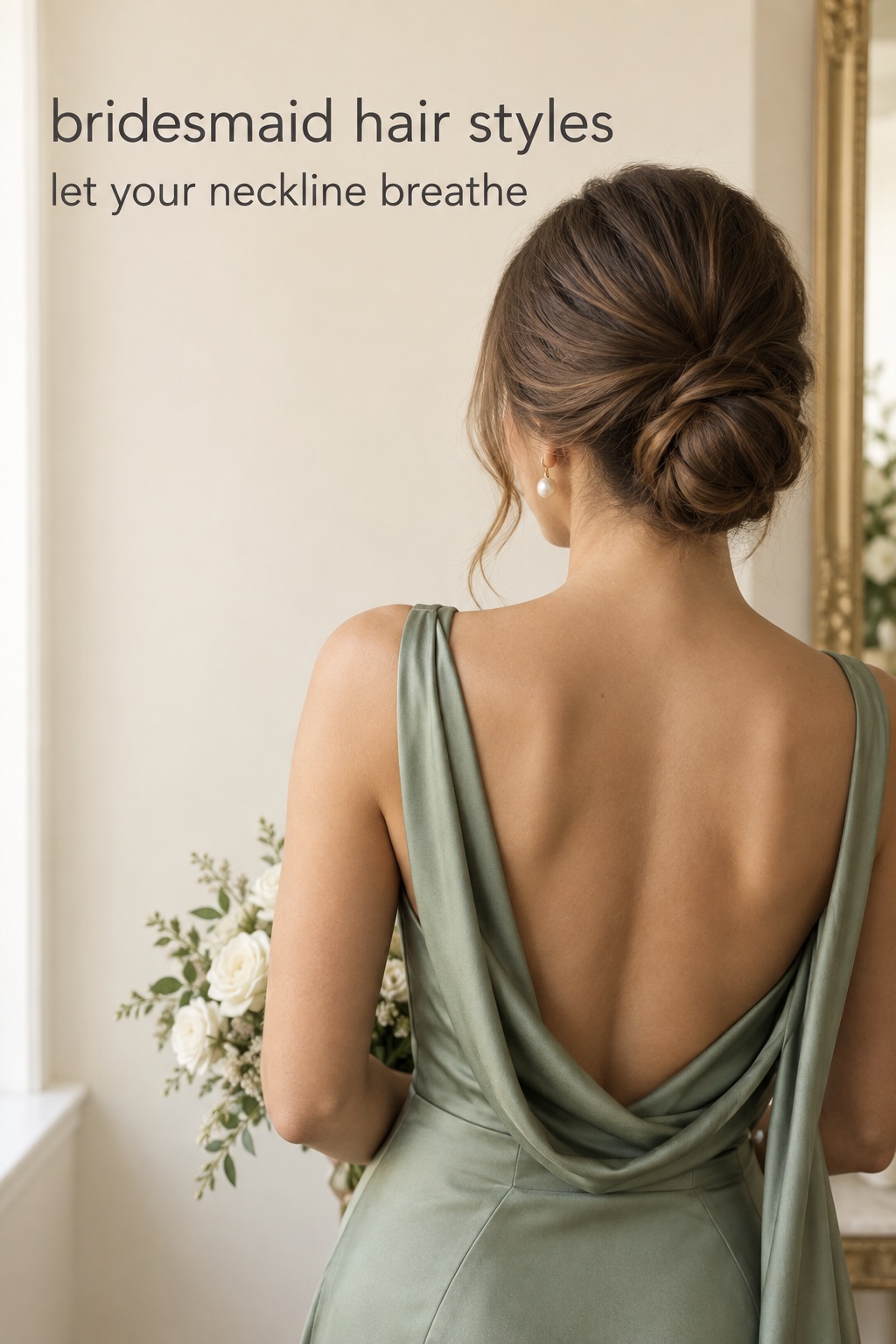
- Up: Opens the neck, earrings, and back of the dress. It keeps the length gathered, but the outline of the updo becomes a main visual feature.
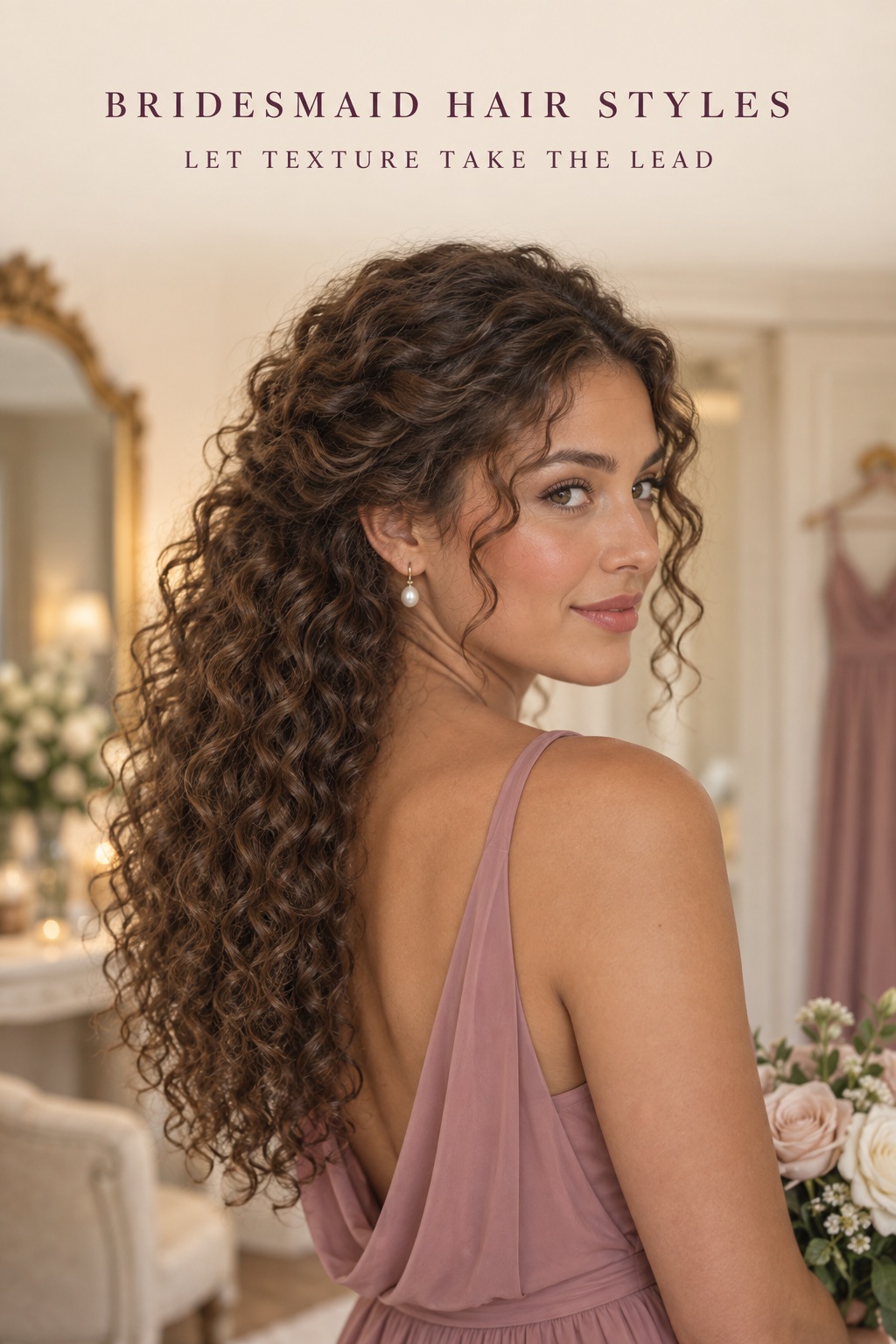
- Down: Shows the hair’s length and texture. It can soften a structured dress, but may cover a neckline or back detail and can shift across the shoulders.
- Half-up: Clears part of the face and neckline while leaving visible length. It balances an open, romantic feel with some control, though the pinned section and loose lengths both need to work together.
Use the list as a first filter, not a promise about how long a style will last. Hold, movement, and comfort depend on the person’s hair, the styling method, and the day’s activities. Ask a stylist how a proposed look will be secured and what small adjustments may be needed later. An image can suggest a shape, but a trial is the practical check that it behaves well on the wearer.
Choose an updo when the outfit needs open space
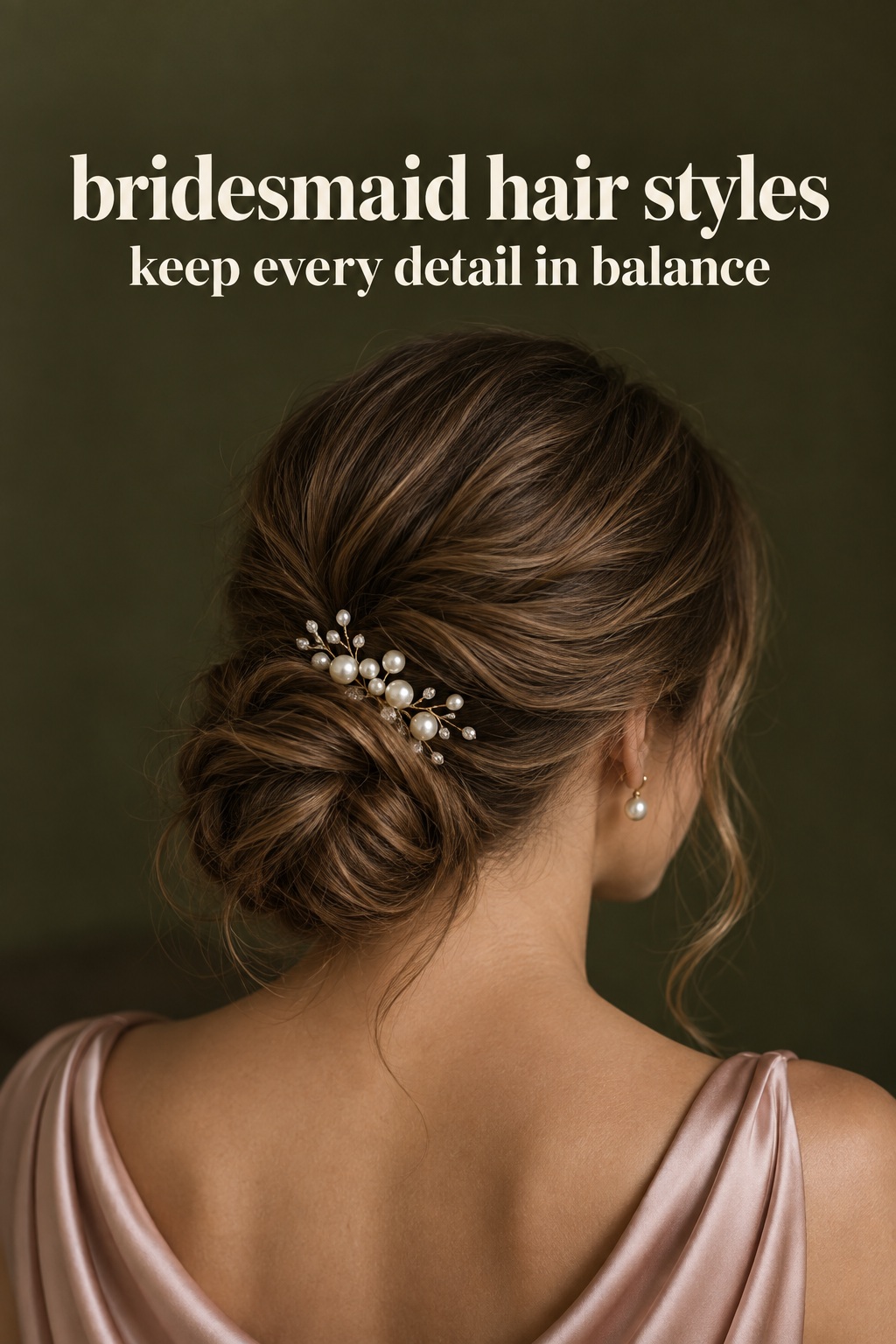
A low bun, chignon, or tucked twist can give a clean view of earrings and the back of a dress. A higher bun moves the focal point upward and may suit a simple neckline that needs a little shape near the head. A braided updo adds texture of its own, so it can be enough detail even without a hair ornament.
Updos vary widely in finish. A sleek bun reads more defined; a soft bun with a few loose pieces feels less formal; a braided chignon creates visible pattern. Decide which impression fits the dress before selecting a named style. For a heavily detailed bodice, a simpler outline can prevent too many competing textures. With a plain dress and simple jewelry, a twist or braid can provide the detail.
Choose a down style when texture is part of the look
Waves, curls, and a smooth blowout let the hair itself remain visible. This direction can work especially well when the dress has a simple front or when the wearer wants familiar movement around the face. Try placing one side behind the ear if earrings matter. That small change can connect a down style to jewelry without asking the wearer to pin away all of her length.
Consider where the ends land. Hair that falls directly over a strap, shoulder embellishment, or back panel may hide that feature in photographs. A side part, a tucked section, or a gentle sweep over one shoulder can redirect the length. If the style is meant to stay loose, ask the stylist how it can be refreshed and whether the wearer is comfortable with hair touching her neck or shoulders.
Choose half-up when you want both a clear face and visible length
Half-up styles range from a small twist at the crown to a braided section secured at the back. The amount gathered changes how the look reads. A narrow section preserves more loose texture; a wider section creates a more defined top shape and opens more space around the face. A comb or bow can sit at the join, but it should be scaled to the rest of the outfit.
This option can be a useful middle ground when some bridesmaids want hair up and others prefer it down. A shared half-up direction does not require an identical twist or curl pattern. Each person can keep her own texture and vary the placement, while the group still has a similar amount of hair gathered away from the face.
Match the hair accessory to the silhouette, not only the palette
Color can make an accessory feel connected to the wedding, but shape and scale determine how it sits with the hair. A comb needs a place to anchor. A headband creates a line across the top of the head. A pin adds a small point of sparkle or texture. A ribbon changes the finish and can soften a simple ponytail or half-up style. Start with the silhouette, then select the accessory that supports it.
Use a simple balance check: if the dress, earrings, and hair ornament all catch the eye at once, remove or reduce one element. The goal is not a perfectly matched set. It is one clear focal point, with the other details supporting it. WeddingWire’s gallery shows accessories used with up, half-up, and loose styles; the more useful step is to ask where an accessory belongs in your chosen shape and whether it will be comfortable to wear.
Use a comb or pin to finish a gathered shape
A comb often works best where hair is already held in place, such as above a bun or at the side of a twist. A small pin can be placed into a braid or used as a quiet accent in a textured updo. Ask the stylist to show the intended placement during the trial. If the piece slides, catches, or feels heavy, a different attachment or a simpler ornament may be a better choice.
Let a headband or bow lead a simpler hairstyle
A headband can become the main accessory rather than one detail among several. Pair it with a clean outline and keep earrings modest if both pieces sit close to the face. A bow can work as a finishing point on a ponytail or half-up section. Its fabric, width, and position affect whether the look feels playful, classic, or more formal, so bring a reference that shows its size on hair.
Leave the hair bare when the dress already has enough detail
An accessory is optional. If the dress has a beaded neckline, the earrings are distinctive, or the hairstyle has a braid with visible texture, adding another ornament may not improve the result. A clean finish can make the other details easier to see. The choice should still feel complete to the wearer, so check whether she wants a small pin or prefers no extra piece at all.
Make one shared direction work across different people
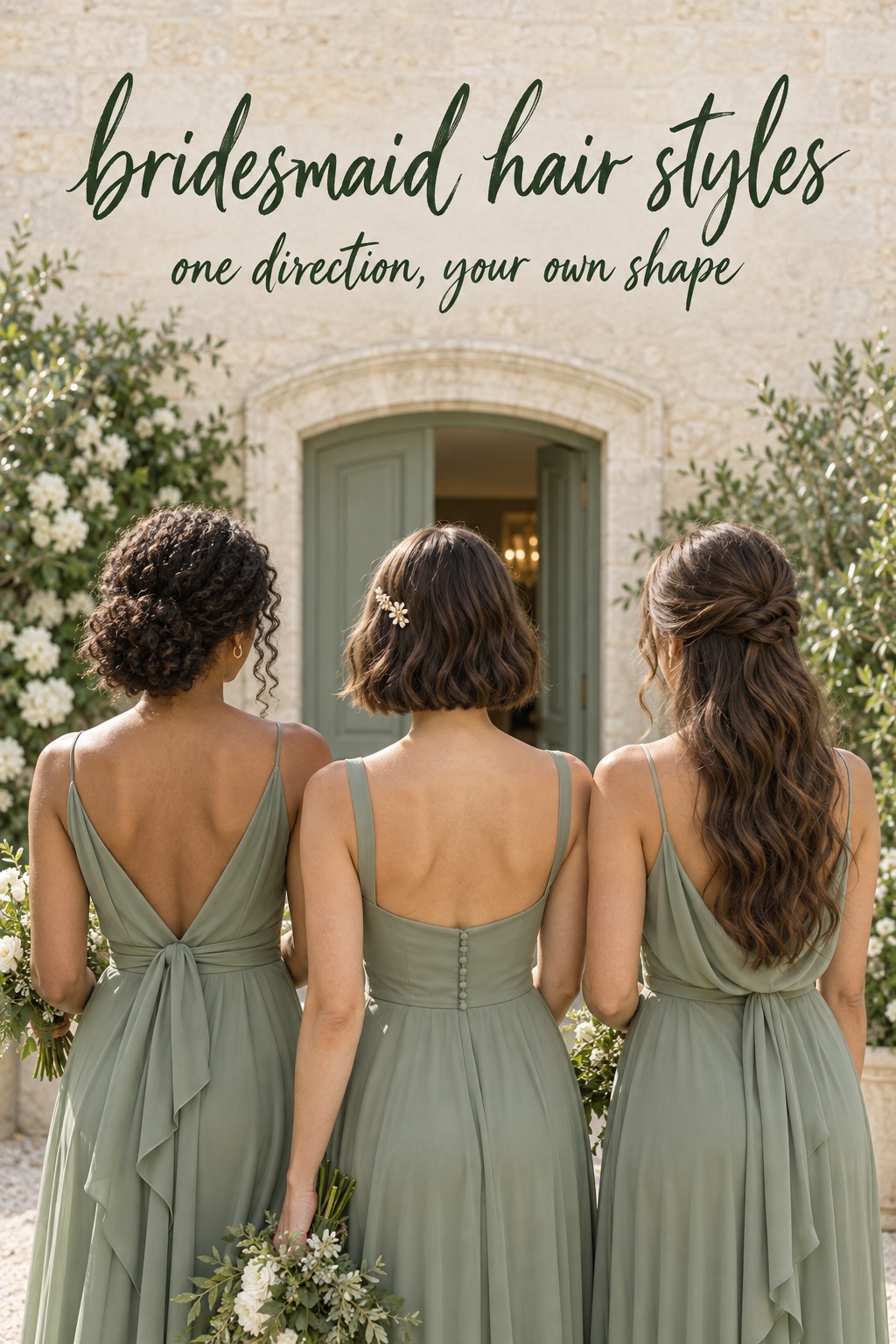
A bridal party can look connected through formality, finish, or one repeated detail. It does not need to share one exact hairstyle. Start by agreeing on a broad direction such as polished, soft, or textured. Then let each bridesmaid choose the silhouette that works with her dress and hair. A low twist, a tucked bob, and a short natural style can all feel related if they share a similar finish and level of formality.
For a group decision, ask each person what she wants visible and what she does not want to wear. The conversation can stay simple: agree on an overall finish, set any accessory guidance, and allow individual shape choices. A Practical Wedding recommends clear communication about expectations and personal preferences; that matters here because a style can look coordinated in a picture but feel wrong to the person wearing it.
Build a small brief for the stylist
A useful brief fits in a few lines and gives the stylist the decisions that affect the finished look. Include a photo of the dress front and back, one reference for the hair shape, and any accessory the wearer plans to bring. Add the preferred focal point, such as open earrings or a visible back, plus one comfort note such as keeping hair off the neck or leaving natural texture visible.
- Shared direction: for example, soft and polished or sleek and simple.
- Personal priority: neckline, earrings, back detail, natural texture, or another feature.
- Preferred silhouette: up, down, half-up, or a style adapted to a short cut.
- Accessory plan: the exact item, no ornament, or a backup option.
- One non-negotiable comfort preference and one detail the stylist can adjust.
This keeps a reference board from becoming a collection of unrelated pictures. Junebug Weddings frames hairstyle images as material to take to a stylist; make each image useful by labeling what you want from it. One photo may show the bun shape, while another only shows a braid detail. Say which feature matters so the stylist is not expected to recreate every element in every reference.
Choose a backup before the wedding morning
A backup does not need to be a second full hairstyle. It can be a simpler version of the first choice: remove a comb, loosen a gathered section, tuck one side, or switch from a detailed braid to a clean twist. The point is to have a decision ready if the preferred accessory does not sit securely or the final shape covers the feature you meant to show.
At the end of a trial, take front, side, and back photos in the dress if available, then check the priorities you named at the beginning. Is the neckline visible? Can you see the earrings? Does the hair cover a back detail? Does the accessory stay in place when the wearer turns her head? If the answer to the main priority is no, adjust the shape before saving the reference.
FAQ
Should bridesmaids wear the same hairstyle?
Not necessarily. A shared finish, level of formality, or small accessory detail can create a cohesive look while each person chooses a shape that suits her dress and hair. Agree on the direction first, then allow practical differences.
What hairstyle works with a high-neck bridesmaid dress?
An updo or a partially gathered style can leave more of the neckline visible. If the wearer prefers her hair down, try a side tuck or place the length behind the shoulders so it does not cover the dress detail she wants to show.
How should I choose between an updo and hair down?
Choose an updo if an open neck, visible earrings, or the back of the dress is a priority. Choose a down style if the hair’s length or texture is central to the look and the outfit leaves room for it. A half-up shape offers a compromise.
Can bridesmaids wear different hairstyles with the same dress?
Yes. A common finish or accessory guideline can connect different shapes. For example, everyone might choose a soft finish while one person wears a low bun, another a tucked short style, and another a half-up look.
Do bridesmaids need hair accessories?
No. Use a hair accessory when it supports the silhouette or connects to the overall look. If the dress, earrings, or hairstyle already provides the detail, leaving the hair bare can make the complete look feel more balanced.
What should I bring to a bridesmaid hair trial?
Bring a photo of the dress, the earrings and hairpiece you plan to wear, and a small number of hairstyle references. Explain what each reference shows and name the detail you want to keep visible. That gives the stylist a clear direction without asking for a copy of several different looks.