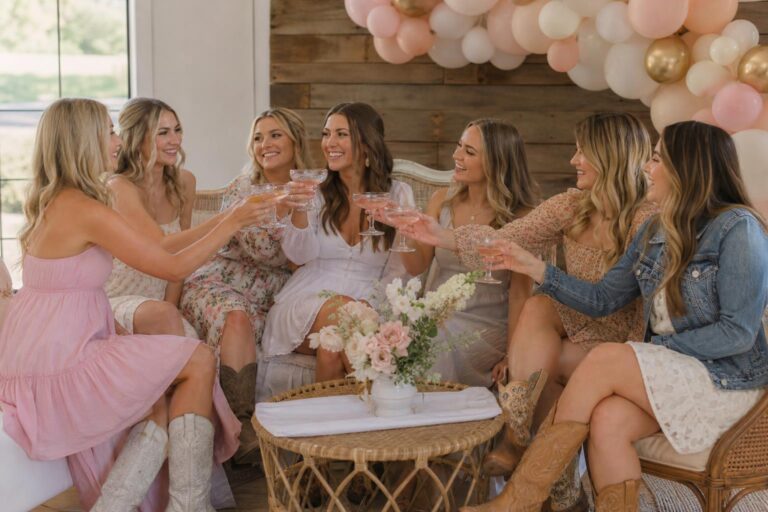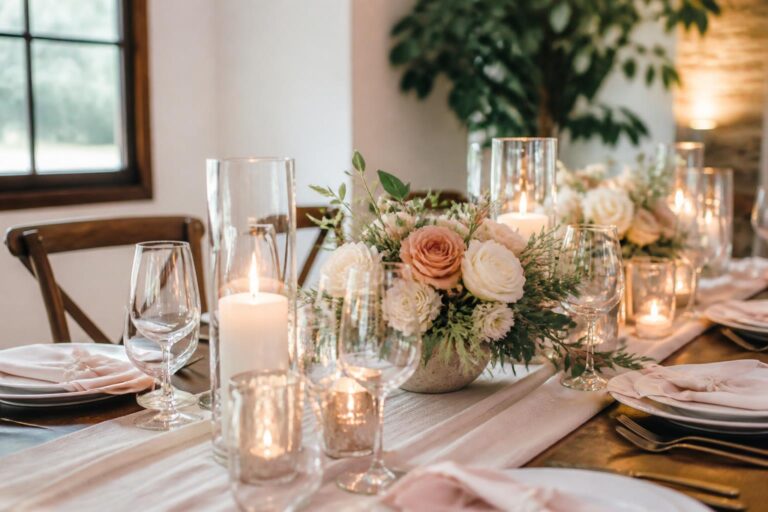
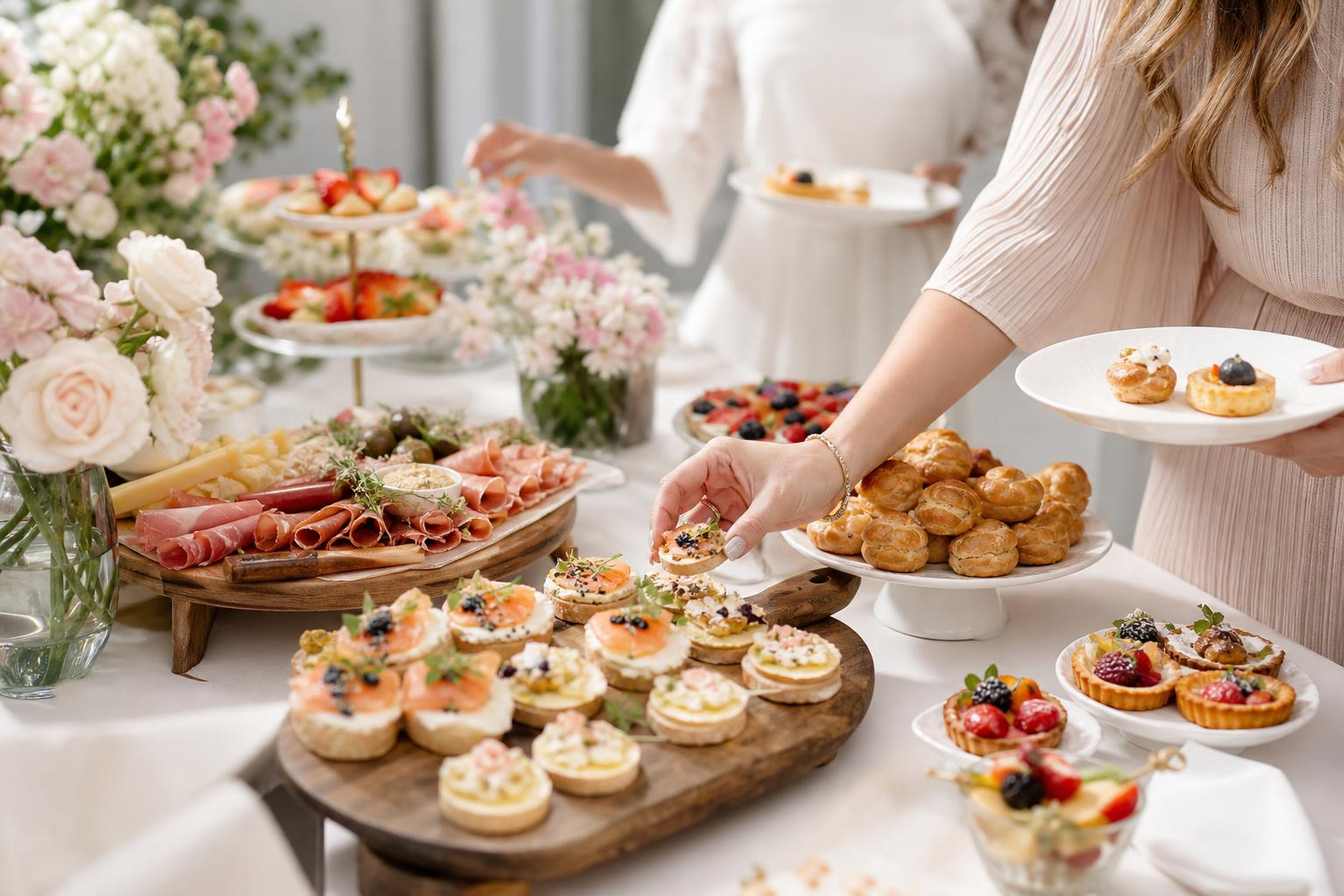
Spring Bridal Shower Food Ideas for a Chic Brunch Table
Some bridal showers are remembered for the flowers, some for the toasts, and some for the effortless feeling that every detail belonged together. Food is often the quiet force behind that atmosphere. The right bridal shower food ideas do more than fill a table; they shape the pace of the gathering, the level of formality, and the way guests move through the celebration.
That is why hosts are often torn between two very different menu directions: the soft, social abundance of grazing tables and finger foods, or the more styled, theme-forward world of brunch menus, tea party spreads, sushi bars, and other statement stations. Both can be beautiful. Both can feel celebratory. But they create very different bridal shower experiences, and choosing the wrong one for the venue, budget, or time of day can make the event feel visually scattered.
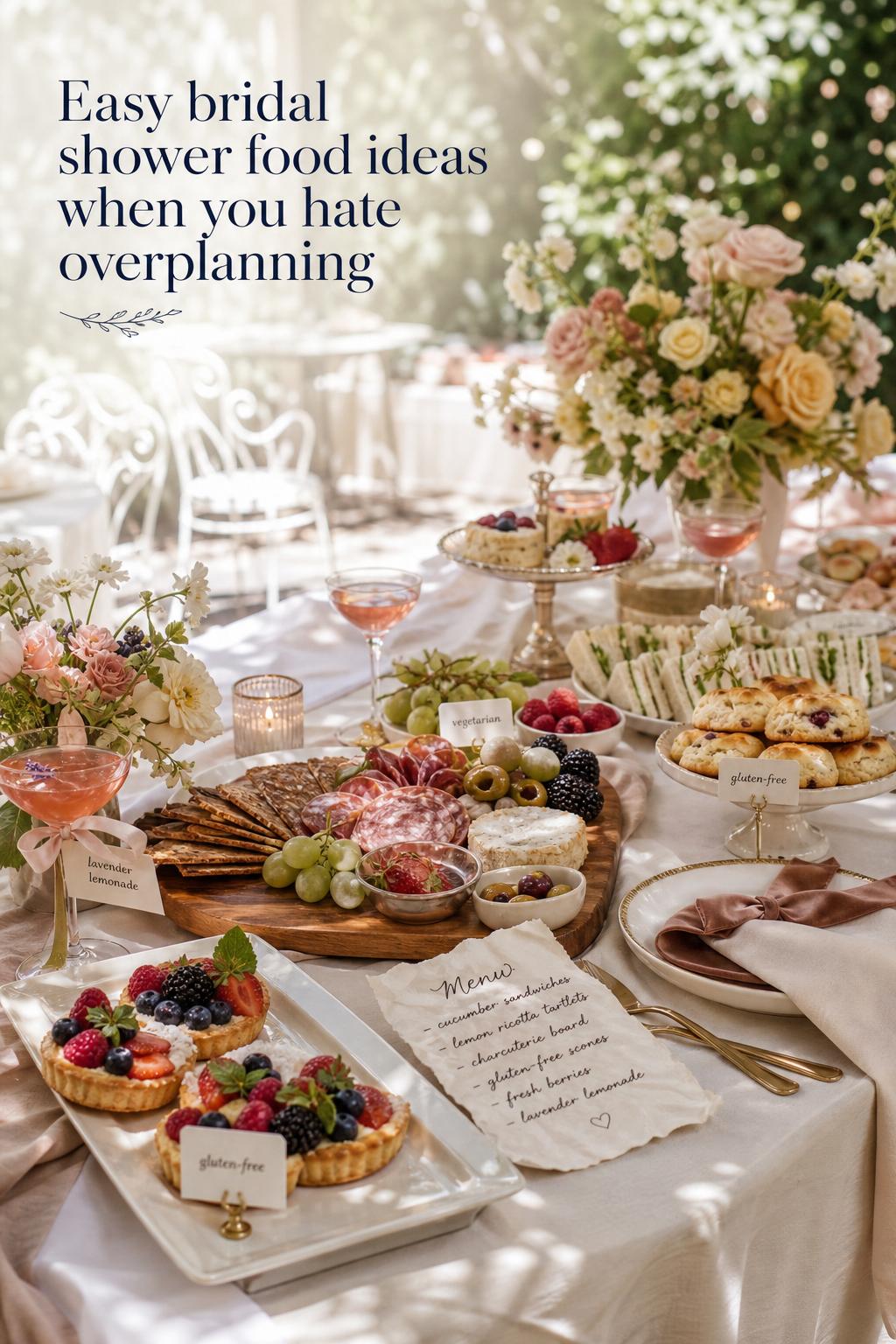
This guide breaks down the most popular bridal shower menu styles with the same care you would give a wedding aesthetic. You will see how each approach feels, how it behaves in a real party setting, which ideas suit a backyard brunch versus a polished venue hall, and how to build a menu that feels romantic, practical, and cohesive from the first welcome bite to the last dessert.
Style overview: grazing tables and finger-food bridal showers
A grazing-table bridal shower is social at heart. It invites movement, conversation, and a sense of relaxed abundance. Instead of asking guests to sit down to one formal meal, it creates a softer rhythm: guests arrive, gather around a charcuterie board or display of mini bites, refill their plates casually, and settle into an atmosphere that feels welcoming rather than structured.

Turn wedding inspiration into a plan you can actually follow.
Zarellea brings your guest list, budget, vendors, and day-of details into one shared space — so no beautiful idea gets lost in the shuffle.
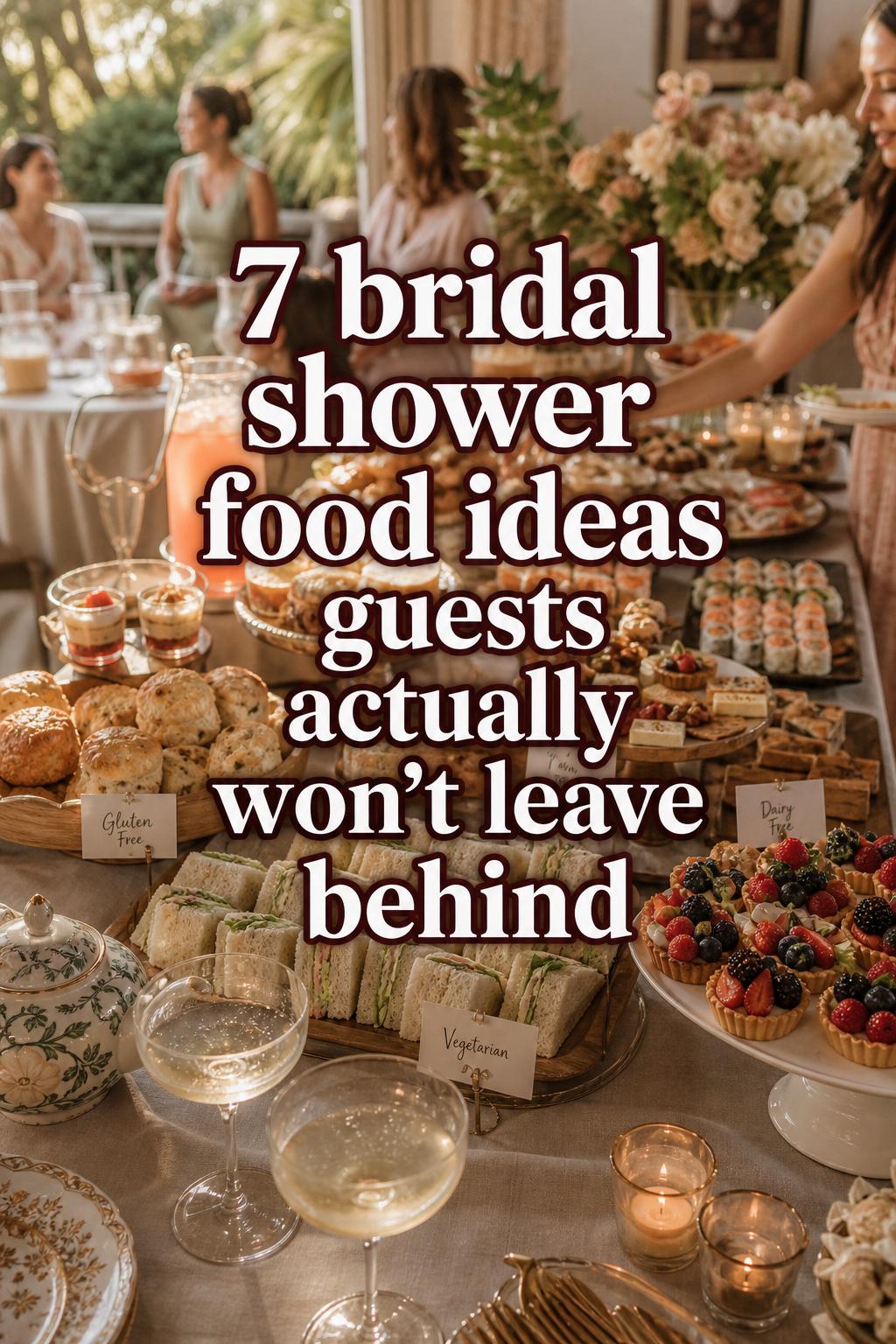
Visually, this style leans on layered presentation. Grazing tables, charcuterie skewers, fruit displays, crab cakes, mini sandwiches, veggie platters, and chicken skewers all support the same idea: food should be easy to enjoy while standing, chatting, opening gifts, or moving between party moments. In a garden setting, a backyard shower, or a venue with an open layout, this style feels especially natural.
The color palette often comes from the food itself. Cheeses, pastries, berries, herbs, fruit tarts, and bite-sized desserts create visual variety without requiring heavy decor. Photography tends to feel lively and textural because the table has movement and detail. This is also one of the most forgiving styles for mixed guest groups, especially when the shower includes mingling rather than a seated lunch.
In practical terms, this style can be adapted up or down. WeddingWire, Zola, and Yeah Weddings all lean into crowd-pleasing bites for good reason: they are familiar, flexible, and relatively easy to portion across different guest counts. A grazing-style menu can feel elevated or budget-conscious depending on what you include, which makes it one of the most versatile bridal shower food directions.
Style overview: brunch and themed-station bridal showers
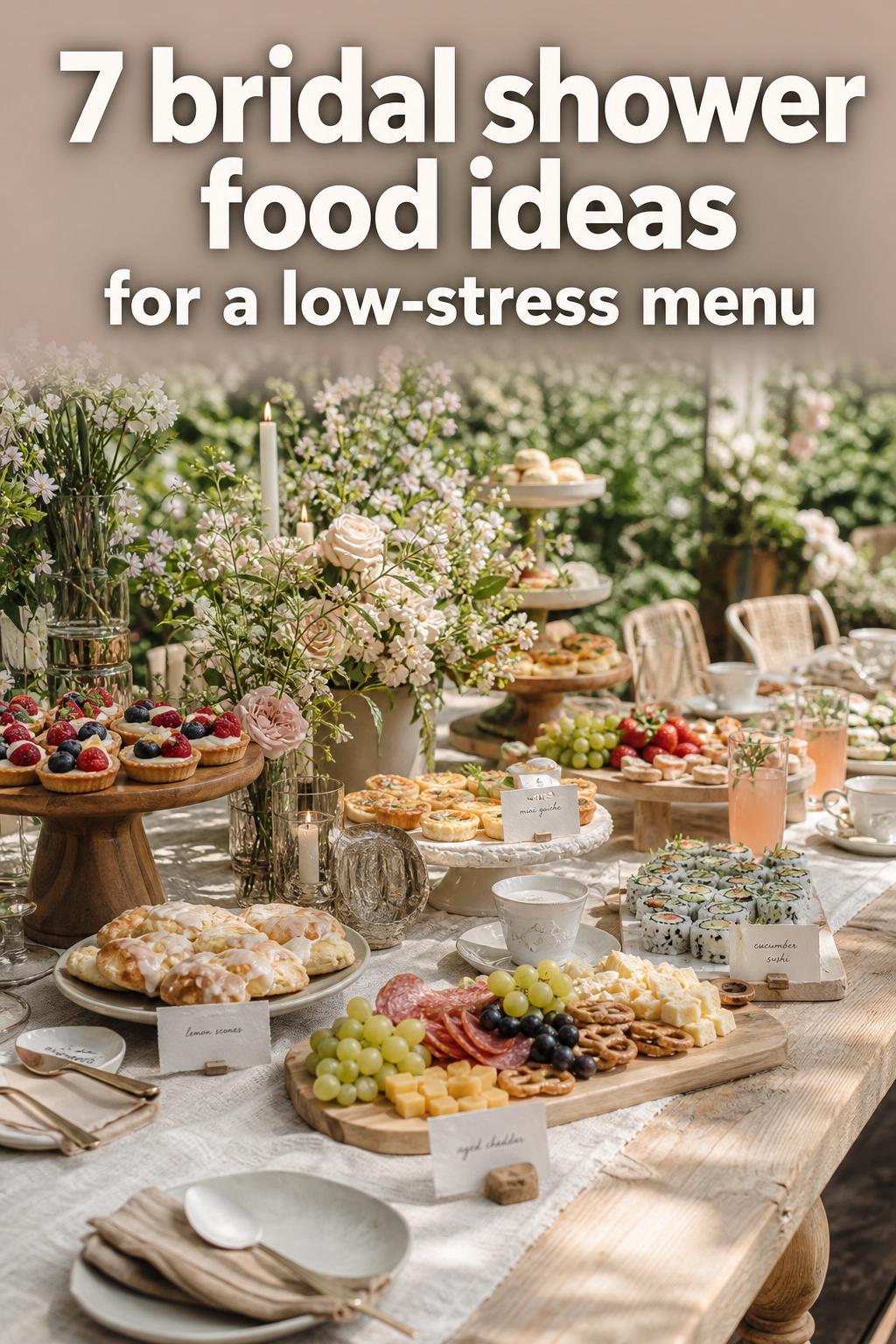
Brunch and themed stations create a more curated mood. Instead of letting the menu simply support the event, this style turns food into part of the bridal shower’s identity. An açai bowl bar, scones with pastries, mini pancakes, an afternoon tea table, a sushi bar, tacos and tequila, lobster rolls, or even a raw seafood bar all signal a stronger point of view.
Emotionally, this menu style feels more intentional and often more memorable because guests can immediately read the concept. A tea-party shower has a different softness than a modern station-based celebration. A coastal menu with lobster rolls and crab cakes suggests something entirely different from a brunch menu built around scones, fruit, and pastries. The food becomes part of the storytelling.
This style works especially well when the shower already has a clear theme, time of day, or venue identity. A brunch shower naturally supports açai bowls, pastry displays, and self-serve beverage pairings. A coastal venue or warm-weather celebration can carry seafood-forward ideas more comfortably. A polished indoor space may be a better fit for a sushi bar or carefully styled tea service.
Compared with casual finger foods, this approach is usually less forgiving if the vision is unclear. Because the menu makes a stronger statement, it needs better alignment with the decor, the service style, and the guest experience. The result can be stunning, but the planning has to be more deliberate.
The emotional difference between these bridal shower food styles
A finger-food or grazing-table shower feels open, easy, and socially fluid. Guests tend to circulate more. The atmosphere is less about ceremony and more about conversation. If the bride wants something warm, relaxed, and visually generous, this direction supports that mood naturally.
A brunch or themed-station shower feels more defined. It can read as elegant, playful, trend-forward, or refined depending on the concept. Guests remember not only that the food was good, but that the shower had a specific personality. That can be a major advantage if the event is meant to feel highly styled or photo-conscious.
Photography also shifts between the two. Grazing tables and charcuterie boards photograph as texture and abundance. Themed menus photograph as editorial moments. An afternoon tea setup, a sushi station, or a display of fruit tarts and scones tends to create cleaner visual storytelling because the concept is immediately legible in the images.
Neither mood is automatically better. The real difference is emotional pacing. One says, stay and snack and mingle. The other says, welcome to a bridal shower with a point of view.
Where the biggest menu differences show up
Service style and guest flow
Grazing tables, platters, and finger foods support free movement. They suit showers where guests may arrive at slightly different times or where gift opening and socializing happen gradually. Stations and themed menus create more destination points within the event, which can feel exciting but may need more space and clearer setup.
Visual density
Charcuterie boards, grazing spreads, skewers, and pastry platters create a layered, abundant look. Brunch bars and themed stations can be visually cleaner and more directional. This matters because a small room with too many bold stations can feel busy, while a larger venue may benefit from those stronger anchors.
Budget behavior
Budget-friendly bridal shower menu ideas often fit more naturally into finger-food formats. It is easier to scale mini sandwiches, pastries, veggie platters, and simple appetizers than it is to build multiple specialty stations. The Knot’s budget-focused approach reflects a practical reality: some of the most attractive bridal shower foods are the ones that can be repeated beautifully and served simply.
Theme clarity
If the event has a strong personality, a themed menu usually feels more cohesive. Tea party styling pairs naturally with scones and pastries. A coastal celebration can carry lobster rolls or crab cakes. Without that context, highly specific foods may feel disconnected from the bridal shower itself.
Formality level
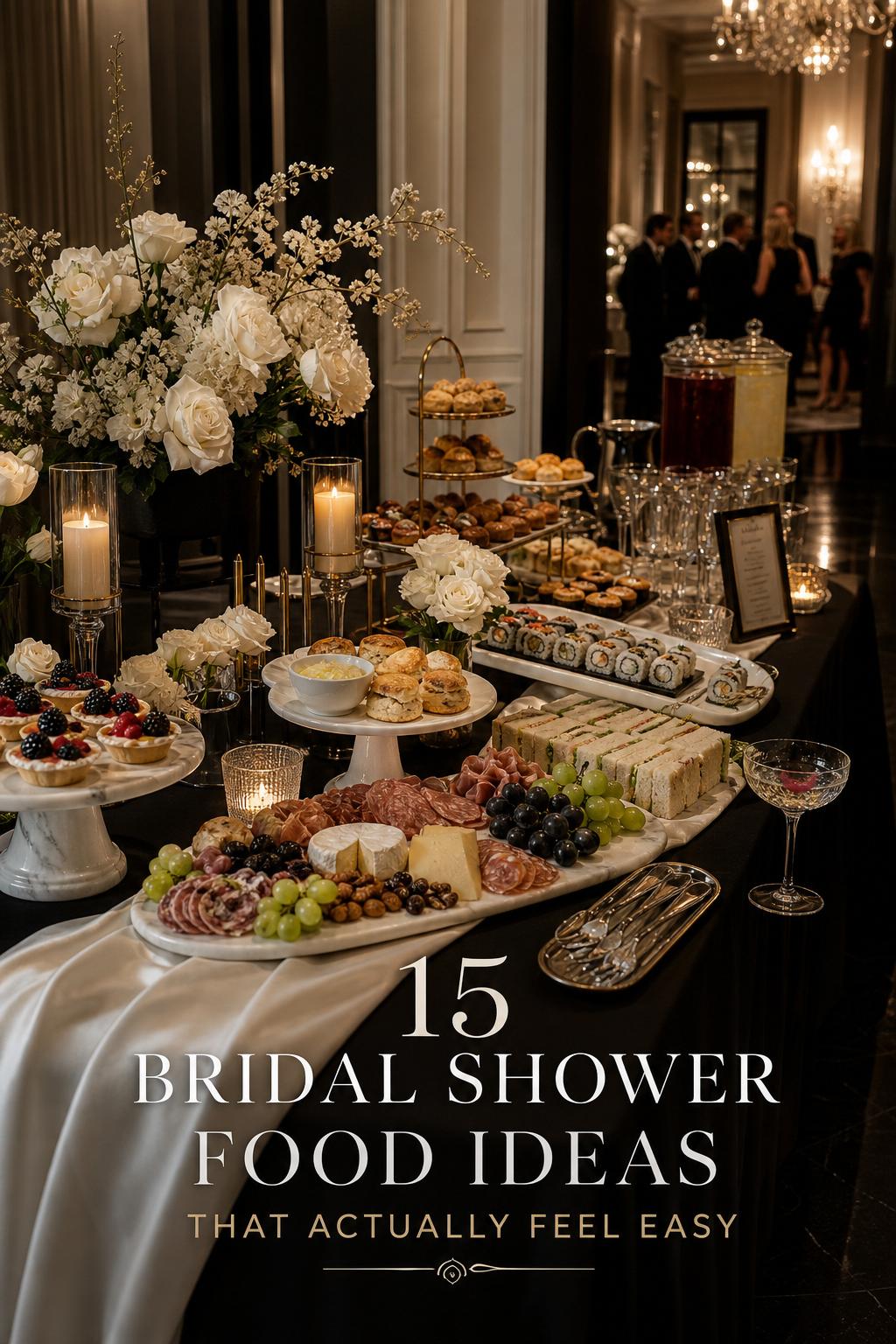
Bite-sized foods can feel either casual or polished depending on presentation. A station-centered menu tends to feel more styled and, in some cases, more formal. Full-service catering also changes the tone. LA Creative Catering’s focus on elegant, easy, crowd-pleasing bridal shower catering ideas speaks to this exact difference: service style can elevate even familiar foods.
Core menu frameworks that work in almost every bridal shower
Before choosing individual dishes, it helps to understand the framework behind the menu. The strongest bridal shower menus are usually built around one main format rather than a random mix of ideas. That framework gives the event visual consistency and makes planning easier.
- Grazing table: best for mingling, open layouts, and hosts who want one visual focal point.
- Charcuterie boards and skewers: ideal for easy serving and polished presentation with minimal complexity.
- Brunch spread: suits morning or early afternoon showers with pastries, scones, açai bowls, and lighter bites.
- Tea-party menu: works for refined, romantic showers built around small pastries and finger sandwiches.
- Station-based menu: a stronger style move for sushi bars, tacos and tequila, or self-serve concepts.
- Dessert-and-beverage pairing table: useful when food is intentionally light and the social mood is more delicate than meal-focused.
The framework should come first because it decides everything else: quantity planning, layout, staffing, and how guests experience the shower. This is often the difference between a table that looks pretty and a menu that genuinely works.
Grazing tables and charcuterie as the visual focal point
Few bridal shower food ideas feel as immediately celebratory as a well-built grazing table. It solves two problems at once: it gives guests something beautiful to gather around, and it reduces the stiffness that sometimes happens at showers with too much structure. Guests can graze before games, between gift moments, or while waiting for everyone to arrive.
Charcuterie boards and charcuterie skewers are especially useful because they offer portion control without losing visual appeal. Skewers feel cleaner and easier to serve, while boards and grazing tables feel richer and more abundant. If the host wants a social, contemporary atmosphere, this style usually delivers it with very little explanation.
What makes this style feel expensive is not necessarily rare ingredients. It is cohesion. Repeating shapes, grouping colors thoughtfully, and balancing savory items with fruit or pastry elements creates a stronger impression than simply adding more food. Delicious Table’s image-driven approach to bridal shower food reflects this truth well: guests respond to arrangement just as much as the dishes themselves.
Tips for making a grazing menu feel polished
- Choose one visual direction, such as rustic abundance or cleaner modern layout, and stay consistent.
- Mix easy bites with one or two more memorable elements, like fruit tarts or crab cakes.
- Use finger foods that are easy to pick up in one motion.
- Do not crowd the table with too many unrelated items; abundance should still feel edited.
- If the bridal shower is indoors, make sure traffic can flow around the table comfortably.
Brunch-forward bridal shower menus: soft, festive, and easy to love
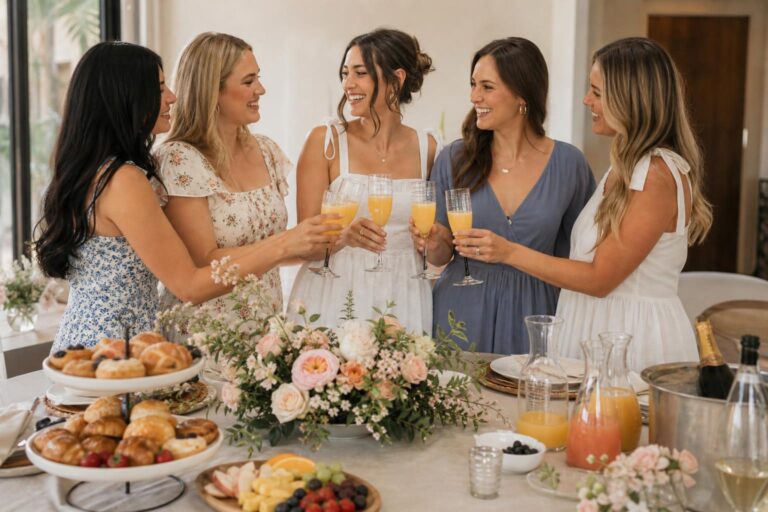
Brunch remains one of the most natural bridal shower formats because the event itself often carries a gentle, daytime energy. A brunch menu supports that mood without trying too hard. It feels fresh, feminine, and inviting, especially for showers held in a garden, backyard, or bright indoor venue.
Açai bowls, scones, mini pancakes, pastry displays, fruit, and lighter brunch bites create a menu that feels celebratory without becoming too heavy. Instacart’s practical, shopping-friendly approach and the brunch-leaning menus across several wedding and recipe platforms all point to the same reason brunch works so well: it is familiar, customizable, and easy to pair with self-serve beverages.
This style also photographs beautifully in natural light. A brunch table tends to look airy rather than dense. That matters for daytime celebrations because food, florals, and place settings often share the same visual field in photos. A heavy savory menu can fight that softness. Brunch foods usually support it.
Best mood for a brunch menu
Choose brunch when the shower should feel light, social, and pretty rather than formal. It is a strong match for hosts who want the event to feel easy but still styled. It also adapts well to both catered and DIY execution, which makes it one of the most realistic options for many families.
Themed showstoppers: when food becomes part of the bridal shower identity
Some showers call for more than a general menu. They need one memorable food moment that anchors the event. That is where themed showstoppers come in. Sushi bars, afternoon tea tables, tacos and tequila, raw seafood bars, lobster rolls, mini donuts, popcorn bars, and cotton candy stations all create stronger personality than a standard mixed buffet.
The key is choosing a concept that fits the setting. A raw seafood bar or lobster rolls can feel right in a coastal-inspired venue but out of place in a casual indoor shower with no broader theme. Afternoon tea works best when the decor, timing, and service style echo that gentleness. A bold station can absolutely be beautiful, but it should never feel like an isolated trend choice dropped into the room.
Zola’s emphasis on service style and guest experience is especially useful here. A themed station is not just a food decision. It changes how guests interact with the event. It may require more signage, more replenishment, or more support from caterers or venue staff. It can feel magical when executed well, but less flexible than a broad grazing format.
What often goes wrong with themed food ideas
The most common issue is overcommitting to a concept without adjusting the rest of the menu. A sushi bar alone may not be enough for all guests. A sweets-only station may look lovely but leave the shower feeling incomplete. If one showpiece food idea leads the menu, the supporting bites should still make guests feel fully hosted.
Budget reality: which bridal shower food style is easier to manage
Hosts often assume that more casual food automatically means lower cost, but bridal shower budgeting is usually about format rather than image. A grazing table with simple repetition can be more manageable than several specialty stations. A beautiful brunch built around pastries, fruit, scones, and mini bites can also go further than a menu centered on high-cost seafood or heavily staffed service.
Budget-friendly bridal shower food ideas usually share three traits: they scale well, they hold up during service, and they do not require complicated on-site preparation. This is why easy appetizers, platters, mini sandwiches, and pastry-forward brunch elements appear so often across leading bridal shower guides. They are practical, not just popular.
Summer & Cinnamon’s quantity-focused planning logic also matters here. Cost problems often start not with the menu itself, but with poor portion planning. Buying too many different items in small quantities can cost more than committing to a clear, repeatable menu structure. A shorter, more cohesive menu usually feels more luxurious than a scattered one.
Tips for keeping the menu elegant on a budget
- Choose one hero format, such as brunch or grazing, instead of trying to do everything.
- Use visually appealing repeats like skewers, scones, mini sandwiches, or pastries.
- Pair a few creative dishes with dependable crowd-pleasers.
- If using caterers, compare DIY versus full-service based on the event vibe, not just headline cost.
- Let presentation carry some of the luxury instead of relying only on premium ingredients.
Dietary inclusivity changes the tone of the entire event
One of the most underappreciated bridal shower hosting decisions is whether guests feel considered when they approach the food table. Dietary inclusivity is not only a logistical detail. It affects comfort, ease, and trust. A guest who cannot safely eat much from the menu experiences the shower differently from someone who can graze freely.
That is why allergy-friendly bridal shower menus deserve intentional planning. Gluten-free, dairy-free, nut-free, vegan, and keto-friendly options should not feel like afterthoughts if the guest list calls for them. The most elegant way to handle this is through clear labeling and smart menu design, not by creating one isolated plate that reads as separate or lesser.
Brunch and grazing formats are especially adaptable here because they allow for variety without changing the entire event style. A host can build inclusive choices into the menu naturally. This is one of the strongest practical advantages of finger foods and stations over a narrowly fixed meal.
Style personality match: inclusive menus work best with these formats
If your bridal shower includes mixed dietary needs, choose a menu style that allows guests to compose their own plates. Self-serve stations, grazing tables, and broad brunch layouts usually handle this more gracefully than a rigid themed menu with few alternatives. The goal is for inclusivity to feel built in, not announced.
Beverage pairings and mocktail culture
Beverages often decide whether a bridal shower menu feels complete. A beautiful food display can still feel unfinished if drinks are treated as an afterthought. On the other hand, a modest menu can feel elevated when the beverage station is thoughtful and aligned with the event mood.
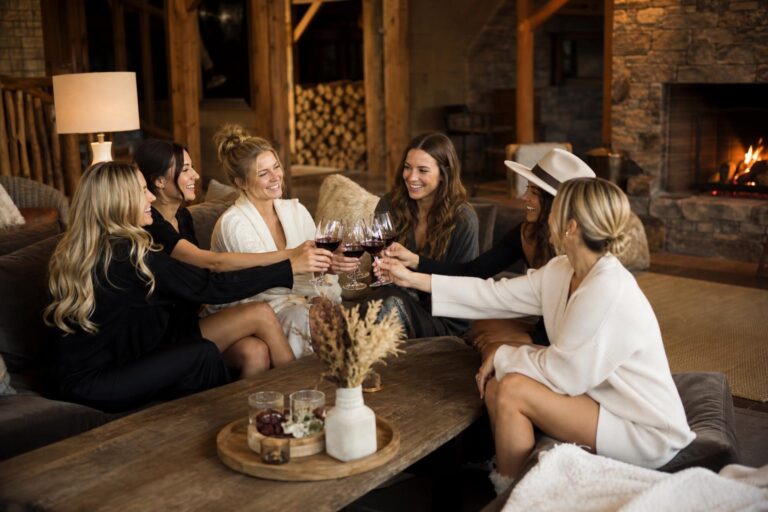
Mocktail bars, tea service, coffee pairings, and wine pairings all create different atmospheres. Tea-only menus reinforce a refined daytime feeling. Coffee stations pair naturally with brunch pastries and mini desserts. Mocktail bars support a modern, social shower and work particularly well with grazing tables or lighter finger foods. The main rule is consistency: the drink station should echo the food style, not compete with it.
For hosts choosing between styles, beverages can also help bridge the gap. A simple brunch menu becomes more memorable with a styled beverage station. A theme-heavy menu can feel more balanced if drinks remain approachable and guest-friendly. This is especially useful when the food concept is already bold.
Regional and venue-based thinking makes the menu feel more natural
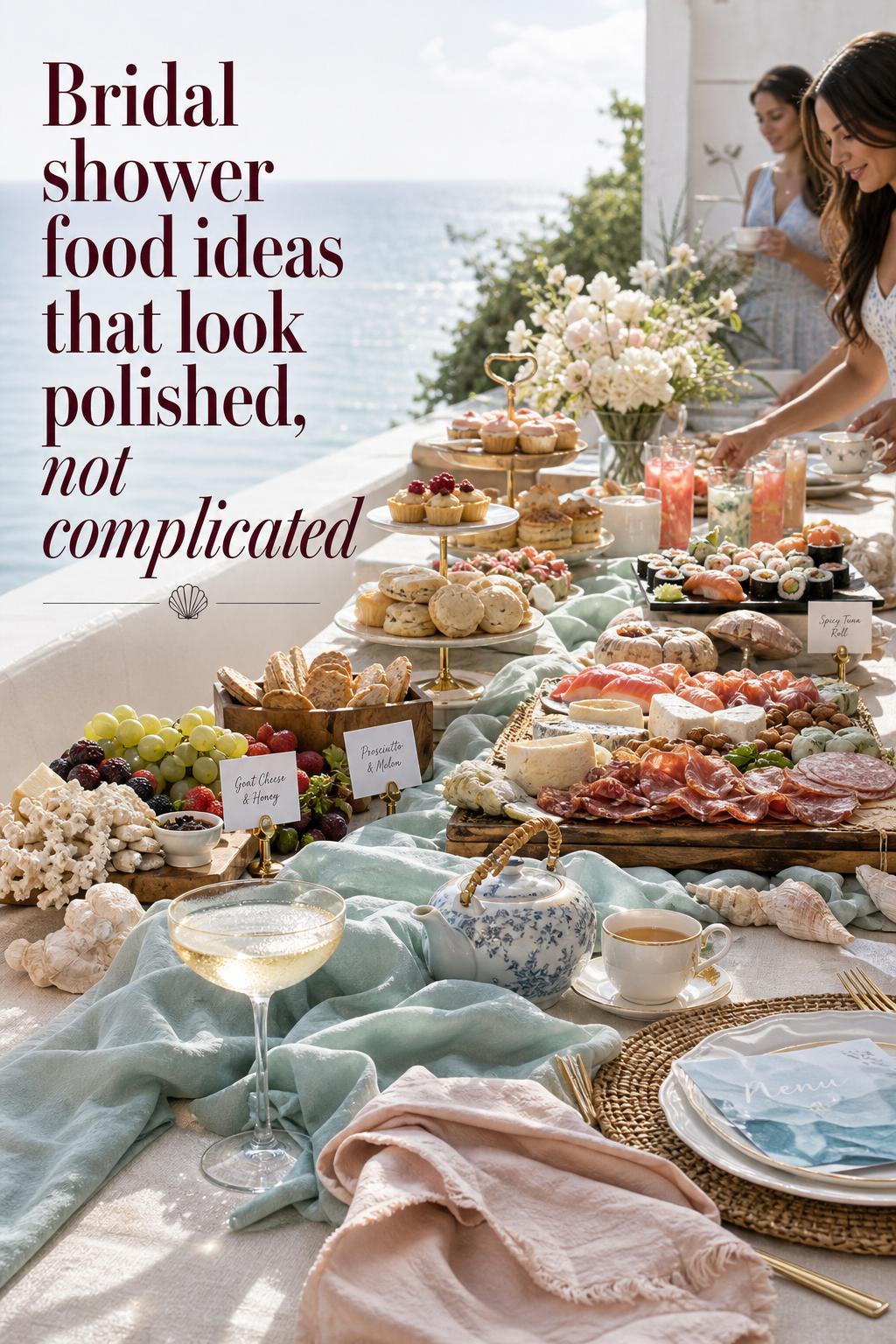
The most convincing bridal shower menus often feel tied to place, even subtly. A Gulf Coast or coastal-inspired shower can carry seafood-forward ideas such as lobster rolls or a raw seafood bar more naturally. A Los Angeles or Southern California context, like the one reflected by LA Creative Catering, may support elegant DIY stations and modern presentation styles. A garden-party shower in a softer climate may lean more comfortably into brunch, tea service, and fruit-forward displays.
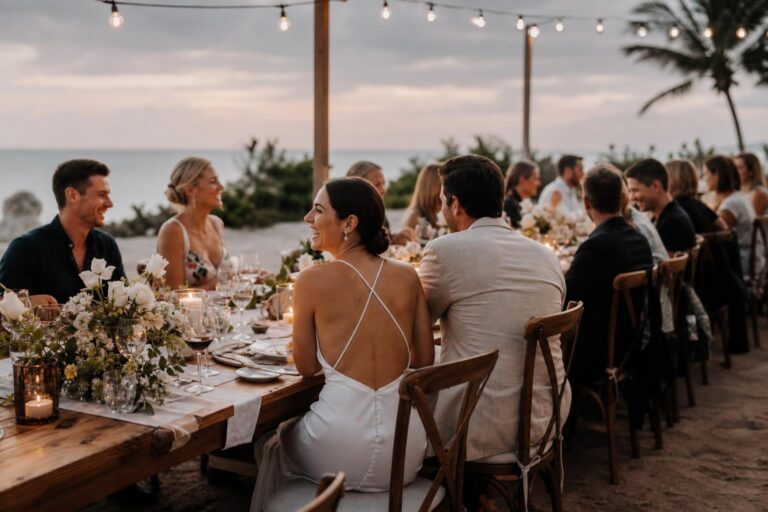
Regional thinking does not mean the menu has to become heavily themed. It simply means the food should make sense in the world of the event. The same is true for venue type. Backyard and garden spaces often welcome grazing tables and brunch layouts. Venue halls may suit more structured catering. Coastal settings can support seafood and lighter station-based service in a way that feels intuitive rather than staged.
This is also where local caterers, private chefs, local farms, and beverage curators become useful. If the host wants the menu to feel seasonally grounded or regionally appropriate, local professionals often make that easier to execute. The result is a shower that feels considered rather than generic.
Visual style breakdown: how the menu changes the whole bridal shower look
Food styling influences far more than the buffet table. It affects decor density, tabletop composition, how florals are arranged, and even how much empty space the room needs. A grazing table asks for room to breathe. It becomes part of the decor. A station-based shower may need several smaller visual moments instead of one dramatic centerpiece.
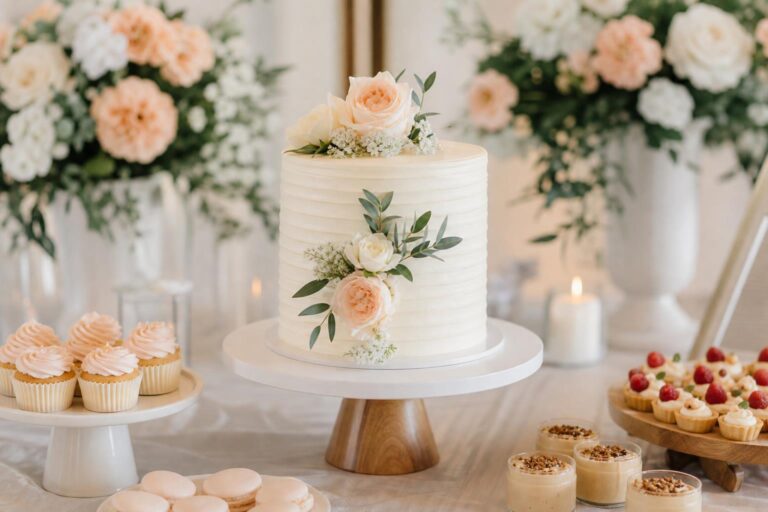
Brunch menus tend to work beautifully with lighter palettes and airy floral styling because the food itself often has softness in color and shape. Tea-party menus reward delicate presentation and smaller-scale details. A bolder concept like tacos and tequila or sushi bars can handle cleaner lines and more modern styling because the food already carries strong visual identity.
Even guest dress code can be shaped by the menu atmosphere. A soft daytime brunch suggests something easy and polished. A more dramatic station-centered shower can feel more event-like. This may seem subtle, but guests often read the formality of a celebration through the menu as much as through the invitation.
What makes bridal shower food look expensive in photos
Not abundance alone, and not novelty alone. What reads as expensive is visual harmony. Repetition of serving pieces, thoughtful spacing, consistent color rhythm, and one clear style direction photograph better than an overcrowded spread. Whether the menu includes simple pastries or elaborate seafood, cohesion is what guests and cameras notice first.
Example comparison: ceremony-like moments at the shower
Bridal showers do not have formal ceremonies in the wedding sense, but they do have focal moments: arrivals, gift opening, toasts, and group photos. A grazing-style menu supports these moments quietly. Guests can step in and out of the food experience without interrupting the flow. It is ideal when the event’s emotional center is conversation and connection.
A themed station or brunch concept, by contrast, can become part of the event sequence. Guests may begin by visiting the açai bowl table, return later for pastries, and finish with dessert pairings. The menu creates more punctuation. This feels especially effective when the host wants the shower to unfold in curated stages rather than remain open-ended.
Example comparison: reception atmosphere for a bridal shower luncheon
If the shower is closer to a luncheon, the difference between these styles becomes even clearer. Finger foods and platters keep the mood lighter and more conversational. Guests are less anchored to one place, which can make the event feel youthful and modern. WeddingWire’s crowd-friendly platter logic fits well here because it supports ease.
A brunch or station-driven luncheon feels more hosted and more directional. It can read as polished and intentional, especially in a venue hall or a refined indoor setting. Zola’s buffet-versus-stations perspective is useful in this context: the format should reflect how much structure the host wants the event to have.
Example comparison: intimate shower versus larger guest count
For an intimate bridal shower, a themed menu often shines because it can feel personal rather than logistically heavy. A tea-party table with scones and pastries, or a thoughtfully arranged brunch spread, can create a memorable atmosphere without needing a large footprint. Smaller events also make it easier to support specialty items and maintain presentation.
For a larger guest count, grazing tables, charcuterie-style service, and repeatable finger foods usually become more practical. They scale more comfortably and reduce pressure on timing. This is where quantity planning matters most. The larger the event, the more important it becomes to choose foods that replenish smoothly and remain consistent in appearance.
Wedding style logic: how to decide which menu direction suits your shower
Choosing between bridal shower menu styles is rarely just about taste. It is about atmosphere, execution, and what the bride should feel at the center of the room. A host planning in a backyard with mixed generations and lots of mingling may be happiest with finger foods, platters, and one beautiful grazing focal point. A host planning around a stronger theme, polished venue, or brunch hour may want the clarity of a more editorial menu concept.
There is also a practicality question. Which style is more forgiving if guests arrive late? Which one can tolerate weather changes in an outdoor setting? Which one still looks good after an hour of socializing? These are not minor details. They are often what determine whether the shower feels easy or stressful in real time.
As a general rule, the more open and social the event, the better casual elegant bites tend to perform. The more styled and concept-led the shower, the more appropriate a brunch or statement-station menu becomes. The food should support the emotional goal of the gathering, not compete with it.
Best venue pairings
- Backyard or garden: brunch menus, grazing tables, charcuterie boards, pastries, fruit-forward displays.
- Venue hall: buffet layouts, structured luncheon service, station-based catering.
- Coastal setting: lobster rolls, crab cakes, raw seafood bar, lighter beverage pairings.
- Urban modern space: sushi bar, polished finger foods, self-serve stations with clean presentation.
Can you combine these bridal shower food styles?
Yes, but the blend works best when one style leads and the other supports. A brunch shower can absolutely include a small grazing section. A grazing-heavy event can include one themed dessert or beverage station. The problem begins when every part of the menu tries to be the main character.
The simplest way to combine styles is to choose one emotional identity first. If the shower is primarily brunch-forward, let pastries, scones, fruit, and lighter daytime bites set the tone, then add one complementary station. If the shower is built around social grazing, keep the menu broad and easy, then introduce one small showpiece such as fruit tarts or a tea-and-dessert corner.
To avoid inconsistency, keep presentation language unified. The serving style, color direction, and level of formality should still feel like they belong to one event. Variety is lovely. Visual conflict is not.
Practical planning toolkit for a bridal shower menu that actually works
Beautiful food ideas matter, but execution determines whether guests experience them well. The strongest hosts think about quantity, timing, and service at the same moment they think about aesthetics. This is where the menu moves from inspiration to real planning.
- Match the food to the time of day first; brunch foods feel right at brunch for a reason.
- Build around one service format before selecting individual dishes.
- Scale the number of menu items to the guest count instead of offering too many scattered choices.
- If using caterers, decide early whether the shower should feel DIY, partially serviced, or fully catered.
- Label dietary-inclusive options clearly so guests can serve themselves confidently.
- Use desserts and beverages to complete the atmosphere, not just as add-ons.
Brands such as The Knot, WeddingWire, and Zola often pair food inspiration with broader planning guidance for a reason. Bridal shower menus are not only about ideas. They are about fit: fit for the venue, fit for the budget, fit for the host’s capacity, and fit for the bride’s style.
The most timeless bridal shower food choices
Some menu ideas are memorable because they are surprising. Others last in photos and memory because they feel effortlessly right. The most timeless bridal shower foods are usually those that balance beauty with familiarity: finger sandwiches, pastries, scones, fruit tarts, well-styled charcuterie, mini bites, and elegant brunch foods.
Trend-driven items can still be wonderful, especially if they genuinely reflect the bride or the venue. But timelessness usually comes from restraint. A menu with one clear mood and a few special touches often ages better in photos than one built around too many novelty moments. This is especially true for showers meant to feel romantic and enduring rather than highly themed.
If your goal is a menu that will still look beautiful years from now, focus on atmosphere, quality of presentation, and coherence. Those are the details guests remember longest.
FAQ
What are the best bridal shower food ideas for a daytime event?
Daytime bridal showers are especially well suited to brunch-style menus with pastries, scones, fruit, açai bowls, mini pancakes, finger sandwiches, and lighter appetizers because these foods feel festive without becoming too heavy.
How much food should I serve at a bridal shower?
The amount depends on guest count, time of day, and whether the menu is brunch, lunch, grazing, or a fuller catered format, so it is best to calculate portions based on the number of dishes and how substantial each item is rather than guessing from appearance alone.
What are good bridal shower food ideas on a budget?
Budget-friendly options usually include repeatable, crowd-pleasing foods such as mini sandwiches, pastries, veggie platters, finger foods, charcuterie-style bites, and brunch items that can be scaled easily without requiring multiple specialty stations.
Is a grazing table a good idea for a bridal shower?
Yes, a grazing table is one of the most versatile bridal shower formats because it acts as a visual centerpiece, encourages mingling, and works well for events where guests will be eating casually throughout the celebration.
Should I choose a buffet, finger foods, or food stations?
Finger foods and grazing formats are best for relaxed, social showers, while buffets and themed stations suit events with more structure or a stronger aesthetic point of view, so the right choice depends on the venue, guest flow, and the overall mood you want.
What bridal shower menu works best for a garden or backyard venue?
Garden and backyard bridal showers usually pair beautifully with brunch spreads, tea-party menus, grazing tables, pastries, fruit tarts, and other lighter foods that feel easy, airy, and natural in an outdoor or semi-outdoor setting.
How do I include dietary restrictions in a bridal shower menu?
Choose a flexible menu style like grazing, brunch, or self-serve stations, then include clearly labeled gluten-free, dairy-free, nut-free, vegan, or other appropriate options so guests can serve themselves comfortably and confidently.
Are themed food stations a good fit for bridal showers?
Themed stations such as sushi bars, afternoon tea, tacos and tequila, or seafood-forward displays can work beautifully when the shower has a clear theme or venue identity, but they are strongest when supported by enough complementary food to keep guests fully satisfied.
Do I need a caterer for bridal shower food?
Not always, because many bridal shower menus can be handled as DIY or partially serviced events, but a caterer becomes more useful when the guest count is larger, the menu is station-based, or the host wants a more polished full-service experience.
What makes a bridal shower menu feel cohesive?
A cohesive menu starts with one clear format, such as brunch, grazing, or stations, and then carries that direction through the food choices, beverage pairings, presentation style, and level of formality so the entire shower feels intentional.