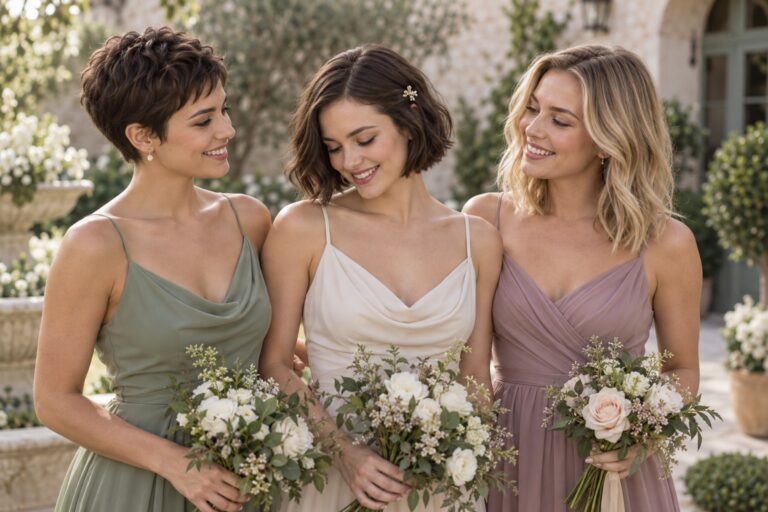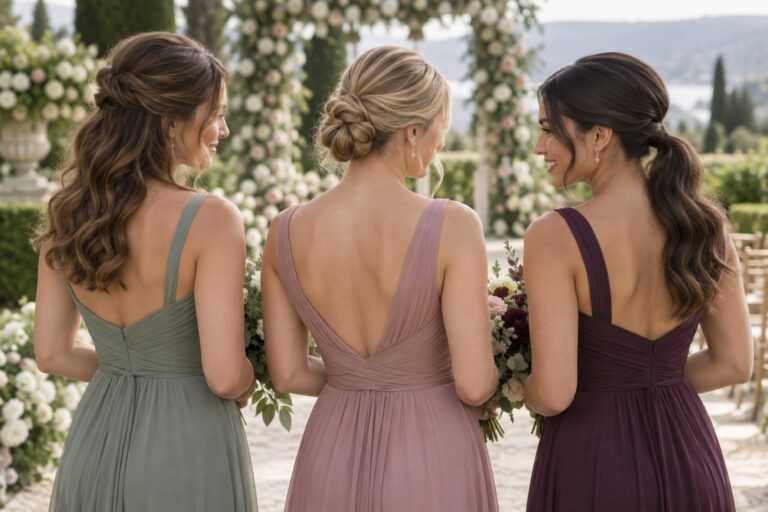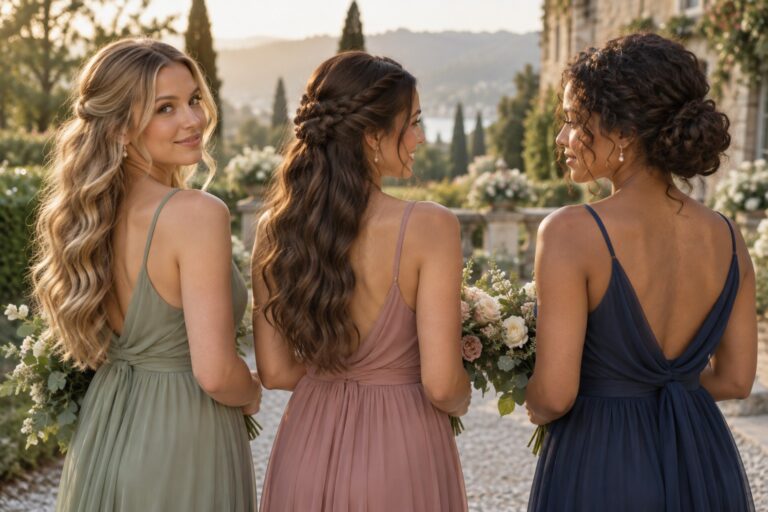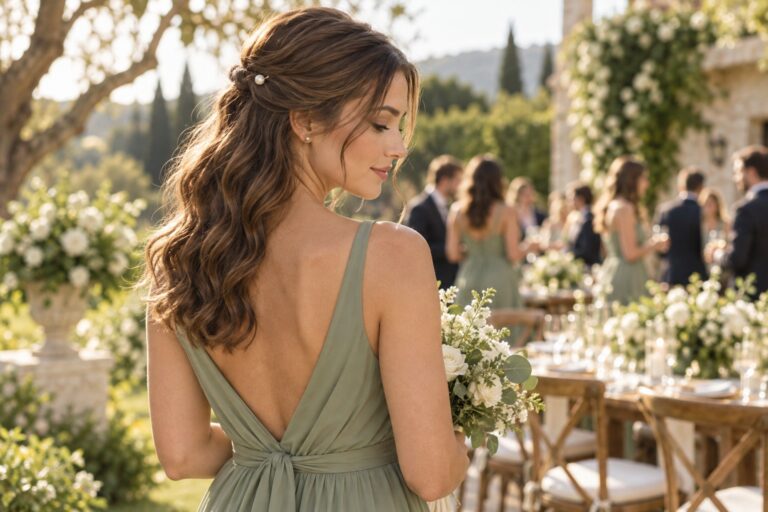
Bridesmaid Ponytail Hairstyles for Every Hair Type
A bridesmaid ponytail can feel polished, romantic, relaxed, or quietly modern without turning into a complicated updo. The easiest way to choose one is to build it from a few separate decisions: where the base sits, what texture the length carries, and which detail finishes it.
That small system makes inspiration photos more useful. Instead of asking a stylist to copy every curl and pin, bring a clear foundation and choose one supporting feature that suits your hair and dress. The result still feels special, but it also feels like something you can wear comfortably from portraits through the last dance.
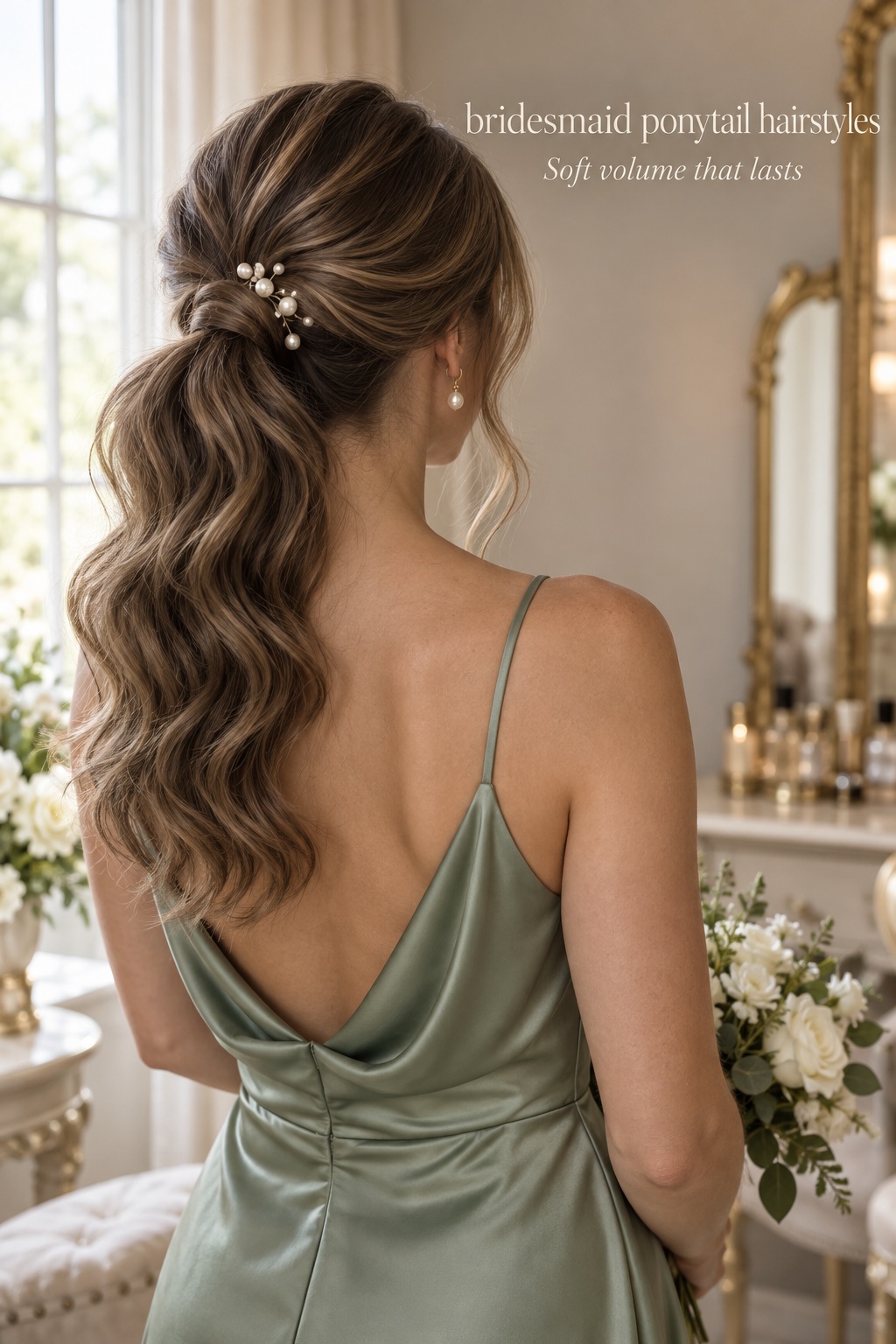
Build a ponytail from three simple building blocks
Think of the ponytail as a small wardrobe capsule. Its foundation is the placement, its texture gives it personality, and its finish supplies the wedding polish. If you decide those elements one at a time, you can make a look feel formal without piling on accessories or asking your hair to behave in a way it never does.
Choose the placement before the curl
A low pony sits near the nape and creates a calm, elongated line. It leaves the neck open and works well when the dress has an open back, a delicate strap, or a neckline you want to keep visible. A middle placement feels versatile: it gives the tail movement while keeping the crown from looking too severe. A high pony creates lift and energy, especially when the length has a smooth wave or a curled-out end. It can also show off earrings and the shoulders.
Turn wedding inspiration into a plan you can actually follow.
Zarellea brings your guest list, budget, vendors, and day-of details into one shared space — so no beautiful idea gets lost in the shuffle.
The best height is the one that feels balanced from the front, side, and back. Ask the stylist to test the elastic position before committing to a full finish. A ponytail that looks lovely from behind can pull at the temples, press uncomfortably under a headpiece, or compete with a high neckline from the front. A small change of an inch or two can make the shape feel softer while keeping its original idea.
Let your natural texture set the foundation
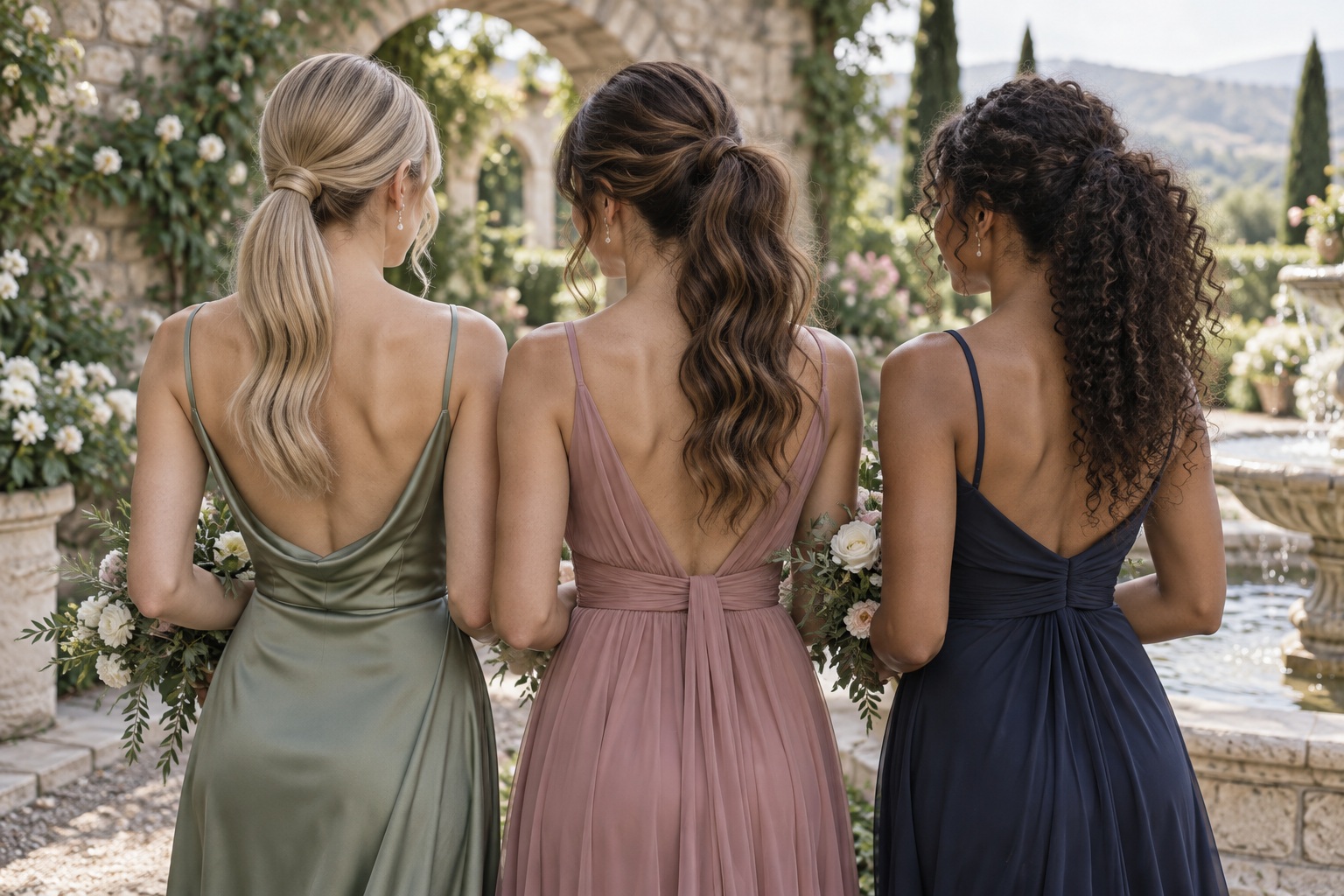
A sleek ponytail depends on a smooth surface and a clean part. A soft-wave ponytail keeps visible movement through the length. A curly ponytail can preserve defined natural curls instead of brushing them into a different pattern. These are different foundations, not levels of effort or formality. A glossy finish can look elegant on straight hair, while a carefully shaped natural texture can look equally intentional in a formal setting.
Be candid about what your hair usually does. If curls loosen quickly, bring a photo of your hair after a few hours rather than showing only a fresh salon picture. If your curls or coils need a particular prep routine, tell the stylist before the appointment. A reference image should help translate your own texture, not create an expectation that depends on changing it. The Knot’s [bridesmaid hair advice](https://www.theknot.com/content/bridesmaid-hair-ideas) likewise recommends choosing references that reflect the wearer’s actual hair and considering the dress neckline.
Give the finish one clear job
A wrapped base hides the elastic and makes a simple ponytail look finished. A braid near the crown adds structure and a line that reads clearly in photographs. A few face-framing pieces soften the outline. A polished curl through the tail adds movement, while a straighter end gives a cleaner, more modern effect. Decide what you want the finish to do before adding a second or third detail.
An easy check is to take a phone photo from the front and back after the base is secured. If the ponytail already has a strong silhouette, the finishing detail can stay subtle. If the base feels plain, add one intentional element. This avoids the common mood-board problem where the final request includes a braid, two kinds of curl, a wrapped elastic, several pins, and loose tendrils that all compete for attention.
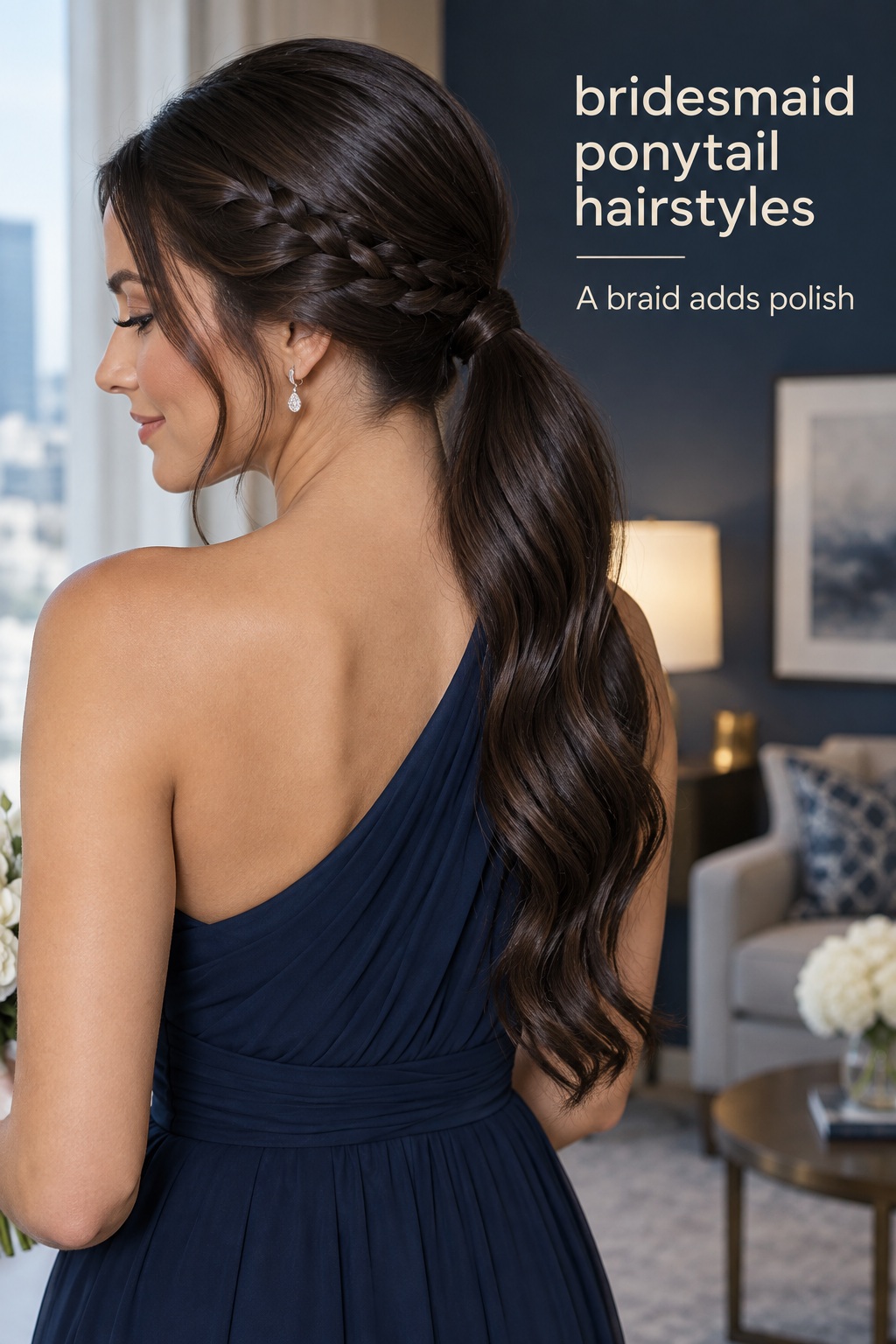
Five ponytail combinations that work like a small capsule
A useful capsule does not need five completely different hairstyles. It can use familiar ponytail foundations and change one feature at a time. The options below move from understated to more expressive, so you can identify the version that suits your ceremony, your dress, and how you like to see yourself in photos.
The soft low pony with a wrapped base
Start with a low ponytail, then decide between smooth roots and gentle movement at the crown. Wrap a slim section of hair around the elastic and keep the length softly waved or close to its natural pattern. This combination reads refined without looking stiff. It is a strong option for an open-back gown, a one-shoulder dress, or any outfit with detail around the collarbone that you do not want hidden behind hair.
For a softer version, ask for a clean part and a little looseness at the temples rather than a deliberately messy crown. The distinction matters in close portraits: controlled softness looks finished, while random flyaways can look accidental. Keep jewelry simple if the base is the focal detail. Small drop earrings or a fine hairpin can complete the look without drawing attention away from the neckline.
The mid-height pony with a side braid
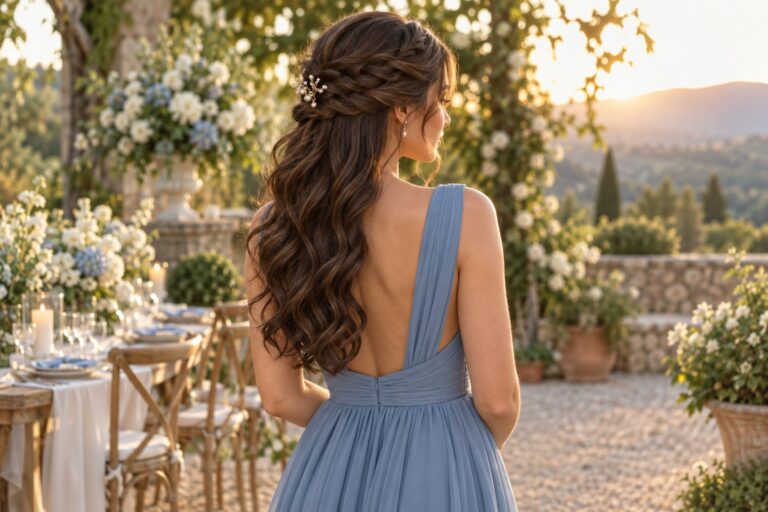
A mid-height ponytail offers a clear view of the braid while keeping the shape easy to wear. A narrow side braid can begin near the part and join the base, or a small section can be braided beside the ponytail and pinned discreetly. Either approach adds dimension without turning the whole style into a full braided updo. It suits a romantic or garden-inspired dress when you want visible detail that still feels light.
Keep the braid proportional to the amount of hair gathered into the ponytail. A very wide braid can become the main event, while a fine braid acts more like a line of texture. If you are wearing a statement earring, choose one braid placement and leave the area around the ear clear. Ask the stylist to photograph the braid from the side so you can see whether it appears intentional in a full-length image.
The lifted pony with a smooth crown
A higher ponytail can feel clean and confident when the crown is smooth and the length has controlled movement. A gentle bend through the ends keeps it from looking like an everyday gym pony. If you like more height, ask the stylist to build it gradually and check how it feels when you turn your head. Tension should be discussed during the trial, especially if you are not used to wearing your hair pulled up.
This shape works with a simple neckline, a strapless bodice, or a dress with a strong shoulder line. It can make the outfit feel more graphic because the hairline is open and the ponytail becomes a visible vertical shape. Keep the base detail neat and choose one accent, such as a narrow wrap or a single comb. If the hair has plenty of volume, skip extensions unless you specifically want more length or fullness.
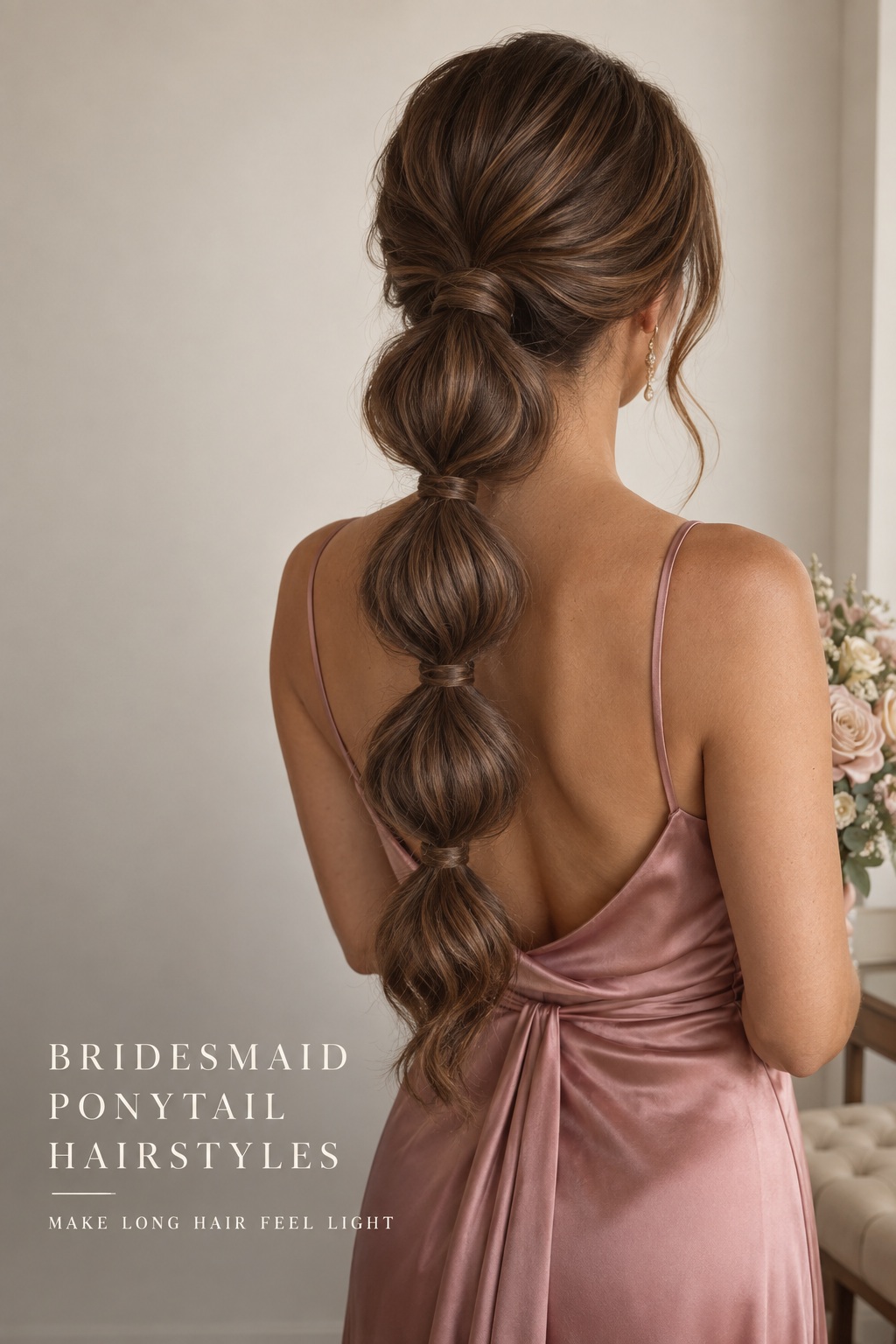
The long bubble pony with soft sections
A bubble ponytail changes the length rather than the crown. The hair is secured at intervals and gently widened between elastics, creating rounded sections that feel playful but still polished. It works best when the spacing is even and the sections are full enough to read as intentional. A thin ribbon or hidden elastic can tie the look to a wedding palette, but the silhouette is already detailed, so additional pins may be unnecessary.
The style is easiest to plan when the ponytail has enough length to show several bubbles. If your hair is medium length, your stylist can test a shorter version with two or three larger sections instead of forcing a long cascading shape. Ask to see the profile as well as the back. From the side, the bubbles should look rounded rather than pulled flat against the dress.
The natural-curl pony with a defined base
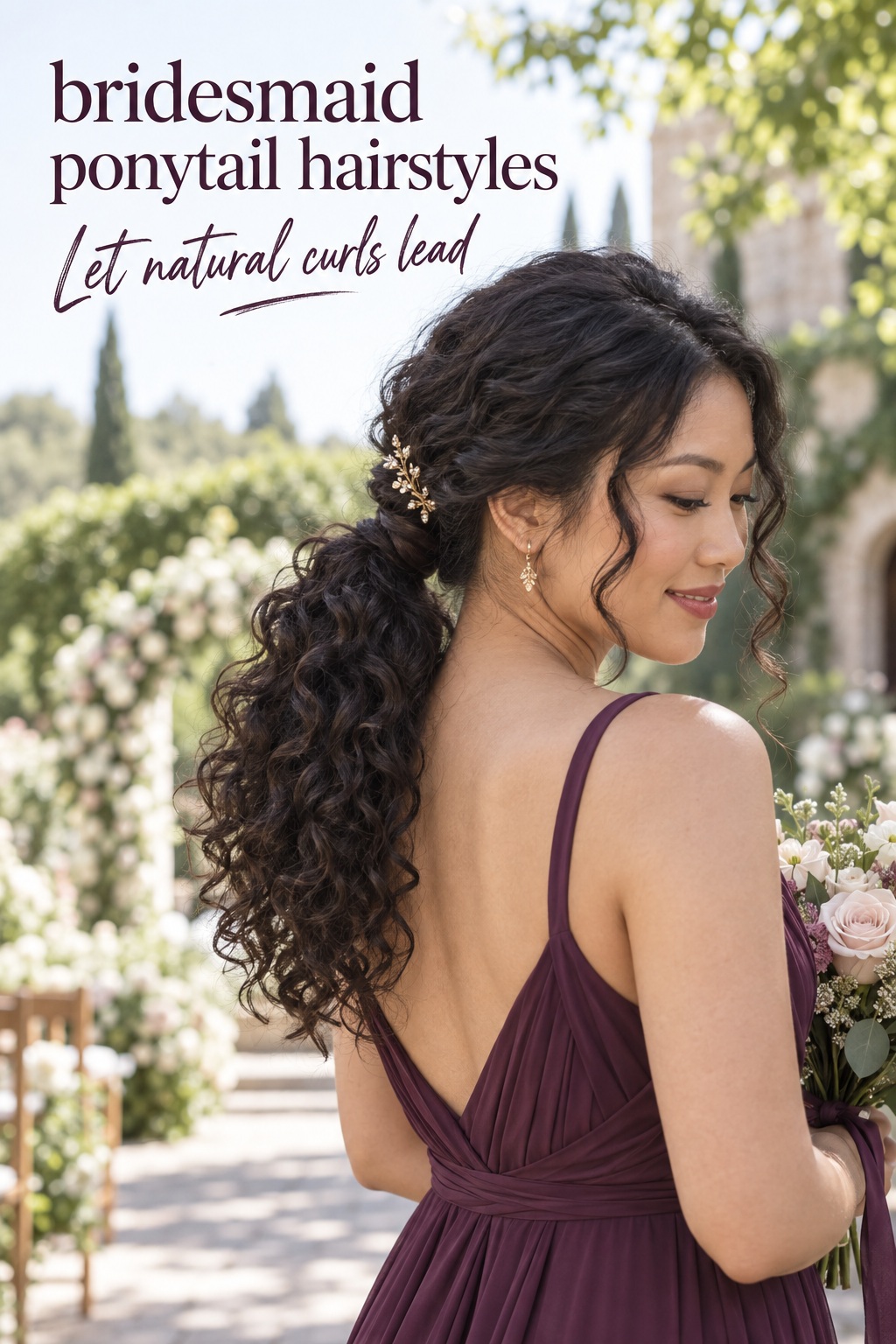
A curly ponytail can keep the texture visible while changing only where the hair is gathered. A low base may feel soft and classic; a higher base gives the curls more lift and movement. Preserve the curl shape through the length and use the base to create the wedding finish, perhaps with a wrapped section, a small braid, or one accessory. This lets texture remain the feature instead of making it a problem to solve.
If you prefer a polished outline, ask for definition around the base and let the curls retain their own shape below it. If you want a more relaxed result, keep a few intentional pieces near the face and avoid brushing the curl pattern apart. A stylist can help decide where to anchor the ponytail so the curls fall in a flattering direction. The goal is a clear shape, not identical curls from one bridesmaid to another.
Choose the details by hair length, neckline, and formality
Once the foundation is clear, edit the details to suit the wearer. A ponytail can be dressed up through finish and proportion, so there is no need to use every accessory available. A simple decision sequence keeps the look coherent: check what the dress already says, check what the hair can comfortably support, and add only the detail that completes the picture.
Use length to decide how much shape the tail can carry
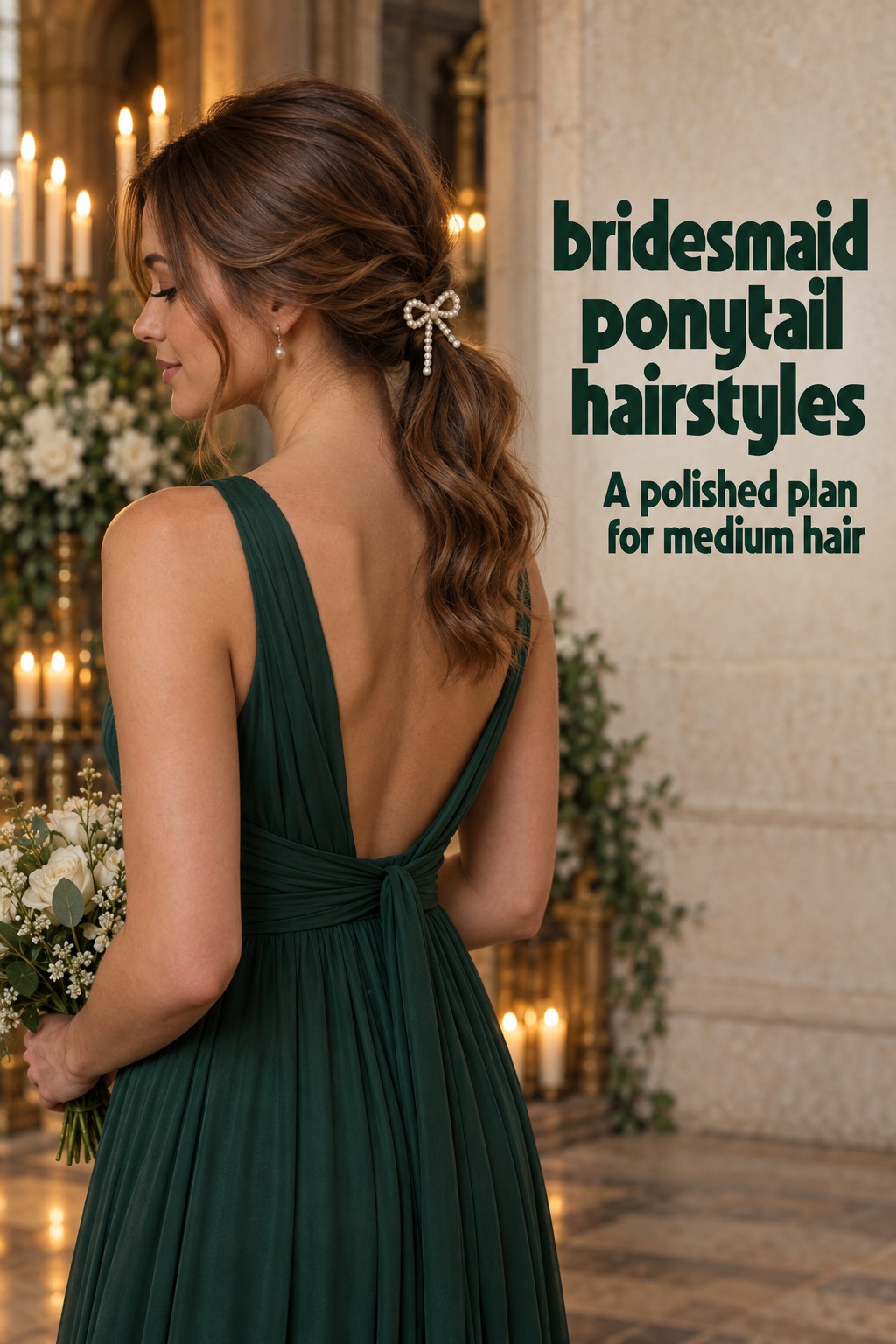
Long hair gives a ponytail room for waves, braids, bubbles, or a pronounced curl at the ends. Medium hair can look especially neat in a mid or low ponytail with a wrapped base, a compact braid, or a shorter curl pattern. Shoulder-length hair may need a smaller tail, a higher anchor, or a discreet amount of added hair if the wearer wants a fuller silhouette. None of those choices is a flaw; they simply change the scale of the result.
Ask for the intended shape to be tested with the actual hair length and density. If the ponytail will use extensions, agree on the length and color match before the wedding morning. If not, make the reference realistic by selecting images with a similar cut and texture. Bringing one close-up and one full-back photo helps the stylist understand both the detail and its overall proportion.
Let the neckline and back of the dress guide placement
A high or embellished neckline often looks less crowded when the hair is raised or gathered cleanly away from it. An open back can be shown by a low ponytail swept to one side or a mid-height ponytail that does not cover the dress detail. A one-shoulder neckline creates an asymmetrical line, so the ponytail can balance it by falling toward the opposite side or staying centered. These are starting points, not rules; try the hairstyle with the dress if possible.
Consider where straps, bows, buttons, or embroidery sit. A low ponytail that lands directly over a row of back buttons may obscure the detail you want to show. A high ponytail can leave a dramatic back clear but may make a halter neckline feel crowded at the nape. The Knot’s neckline guidance notes that a ponytail can be adjusted to keep a one-shoulder look visible, including concealing the band for a clean finish. Bring a photo of the back of your dress to the trial.
Keep accessories in proportion to the base
A ponytail with a braid or bubble sections already has texture, so a single pin or slim ribbon is usually enough. A very sleek base has more room for a pearl comb, cuff, or decorative wrap. Choose metal color and scale with the rest of your jewelry, and check whether the piece catches on the veil, hair, or dress fabric. Anything that shifts during movement should be secured before the ceremony rather than treated as a last-minute decoration.
If the bride has asked for a shared palette or a particular level of polish, translate that request into a small cue rather than an identical accessory. You might use the same pearl tone, ribbon color, or clean wrapped base while letting each wearer select a placement that suits her hair. Keep the discussion specific to what has been requested. The aim is to feel considered in the wedding party and still recognize yourself in the mirror.
Match the finish to the wedding’s formality
A black-tie setting often supports a smoother crown, a clean part, and an even curl pattern. A garden ceremony can carry more visible texture, a small floral piece, or an undone wave. A city celebration may suit a crisp middle part and a simple metallic cuff. These are style cues, not dress codes. The same base can move between moods when you change one finishing element and keep the rest of the look restrained.
Think about the outfit as a whole instead of deciding from the hair alone. Satin, sequins, lace, and heavily beaded fabric already bring different amounts of shine and texture. If the dress is ornate, a clean ponytail can create balance. If the dress is minimal, a braid or sculpted wave may add the detail the look needs. The right edit gives the viewer a clear focal point rather than asking the hair, jewelry, and gown to compete.
Adapt the same ponytail capsule across the wedding season
A capsule is useful because its foundation can stay steady while a detail changes. You can keep the same comfortable placement and adjust texture, accessory, or level of polish for the ceremony, photographs, and reception. Seasonal styling can work the same way: the ponytail remains recognizable while the supporting details respond to the mood, materials, and schedule of the celebration.
For spring and summer celebrations, keep the outline light
A low or mid ponytail with a wrapped base, soft texture, and one small floral or pearl accent can feel fresh without becoming overly decorative. For an outdoor ceremony, consider whether the ponytail will touch the back of the gown or sit beneath a veil. A clear reference photo should show the hairstyle from the back and side, because these views reveal where the length lands when you move.
If the ceremony and reception use different settings, decide what can be changed quickly. A comb that clips in securely, a ribbon that can be removed, or a few face-framing pieces that can be pinned back gives you options without rebuilding the style. Discuss the order of the day with the stylist so the finish is planned around the actual schedule, not an imagined all-day photo pose.
For fall and winter celebrations, adjust texture rather than adding clutter
Richer fabrics and darker palettes can make a ponytail feel more formal when the crown is neat and the length has a defined shape. A slim velvet ribbon, a small metal cuff, or a tidy braid can echo the season through material and texture. Choose one accent that connects to the outfit rather than layering several seasonal accessories into the hair.
Indoor events still involve movement, greetings, and time between photos. Bring the same practical brief you would use for any wedding: where the ponytail sits, how much volume you want, which pieces should frame your face, and how the base is secured. If you are adding a wrap or accessory, test it while wearing the dress so it does not catch on a collar, scarf, veil, or embellished shoulder.
Plan the switch from portraits to the dance floor
A wedding ponytail should feel like a finished hairstyle while you are standing still and remain manageable once you start moving. Ask the stylist to check the base after you turn your head, look down, and lift your arms. If the ponytail pulls or the accessory moves, solve that during the trial. A small amount of planned looseness can be comfortable; a style that needs constant fixing is likely to distract you.
Marie Claire’s wedding hair examples include low ponytails with waves and face-framing tendrils, and its stylist advice makes the finish part of the full look rather than a separate trend to copy. Use that idea to make a practical trial note: what should stay smooth, what can move, and which detail must remain visible in photos. Pack only the touch-up items your stylist recommends, such as the accessory’s spare pin or a small comb.
A useful capsule card can fit in a phone note: base placement, texture, finish, accessory, dress neckline, and one photo from the back. Add a short sentence about comfort, such as “not too tight at the temples” or “keep the natural curl shape.” That is enough direction for a stylist to understand the look without turning the appointment into a list of contradictory instructions.
FAQ
Which ponytail is most flattering for a bridesmaid?
The most flattering option is the one that balances your hair, dress, and preferred level of polish. A low ponytail can leave the neckline open, a mid ponytail is versatile, and a high ponytail adds lift. Try the placement with the dress before deciding.
Can a ponytail look formal enough for a wedding?
Yes. A clean part, wrapped base, controlled curl, braid, or carefully chosen accessory can make a ponytail feel occasion-ready. Keep the finish intentional and coordinate its level of detail with the dress and jewelry.
What ponytail works best for medium-length hair?
A low or mid ponytail with a wrapped base, compact braid, or softly curled ends often suits medium hair. Ask the stylist to test the scale with your real length so the tail looks balanced rather than stretched.
How can I wear a ponytail with naturally curly hair?
Keep your curl pattern as part of the design. Choose the height and base first, then ask for definition around the gathered section while allowing the length to keep its natural shape. Share your usual prep routine at the trial.
Should bridesmaids wear matching ponytails?
They can share a general direction, such as low placement or a wrapped base, while adapting the details to different hair lengths and textures. Follow the bride’s preference and keep any shared feature simple enough to work for everyone.
What should I bring to a bridesmaid hair trial?
Bring photos of the front, side, and back of the look you like, a photo showing your own hair texture, and a picture of the dress neckline and back. Note what you want to keep and what you want to change.
How do I keep a ponytail comfortable through the reception?
Test the tension during the trial and tell the stylist if the base feels tight. Move your head and arms while checking the style, and secure accessories so they do not shift. Ask the stylist which small touch-up items are useful for your specific look.