Wedding Sheet Cake Ideas With an Editorial, Photo-Ready Finish
Wedding sheet cake ideas that feel intentional (not like an afterthought)
The moment a wedding dessert table has to serve a real crowd, the conversation gets practical fast: portions, timing, transport, and a plan for slicing that won’t stall the reception. This is exactly where wedding sheet cake ideas shine. A sheet cake for wedding celebrations can be scaled for large guest counts, styled to match everything from modern minimalism to rustic romance, and presented in a way that still feels ceremonial—especially when you treat the rectangle cake format as a design canvas, not just a convenience.
Below, you’ll find wedding sheet cakes and sheet cake designs organized by aesthetic (geometric, watercolor, rustic, bold color, classic florals) plus the real-world decisions that make those looks land: buttercream piping choices, edible florals (including fresh vs. sugar flowers), and venue logistics like delivery, refrigeration, and cutting. The goal is to help you choose a direction that looks beautiful in photos, serves smoothly during the event, and stays true to your wedding style.
First, what a sheet cake is—and why it works so well for weddings
A sheet cake is a cake baked in a large, flat pan and finished as a single surface—often rectangular—making it inherently suited to events and large gatherings. For weddings, that “big surface” is more than a serving solution: it’s a clean stage for frosting textures, piping, floral placement, and color palettes that read clearly across a room.
Couples often consider wedding sheet cakes for three overlapping reasons. First, serving efficiency: a large-format cake is designed for portioning. Second, presentation flexibility: sheet cake designs can be minimalist and modern, painterly and romantic, or richly maximalist depending on your decor. Third, production practicality: a rectangle cake is typically easier to transport and stage than tall, stacked structures, especially when the venue has tight load-in windows or limited refrigeration.
Turn wedding inspiration into a plan you can actually follow.
Zarellea brings your guest list, budget, vendors, and day-of details into one shared space — so no beautiful idea gets lost in the shuffle.
One of the most overlooked advantages is how a sheet cake changes the guest experience. Instead of waiting for a dramatic tiered cake to be cut in the middle of the dance floor, a long wedding sheet cake can be sliced with speed and consistency. That means guests actually get dessert while the party is still lively—and the couple gets a dessert moment that feels seamless instead of logistically stressful.
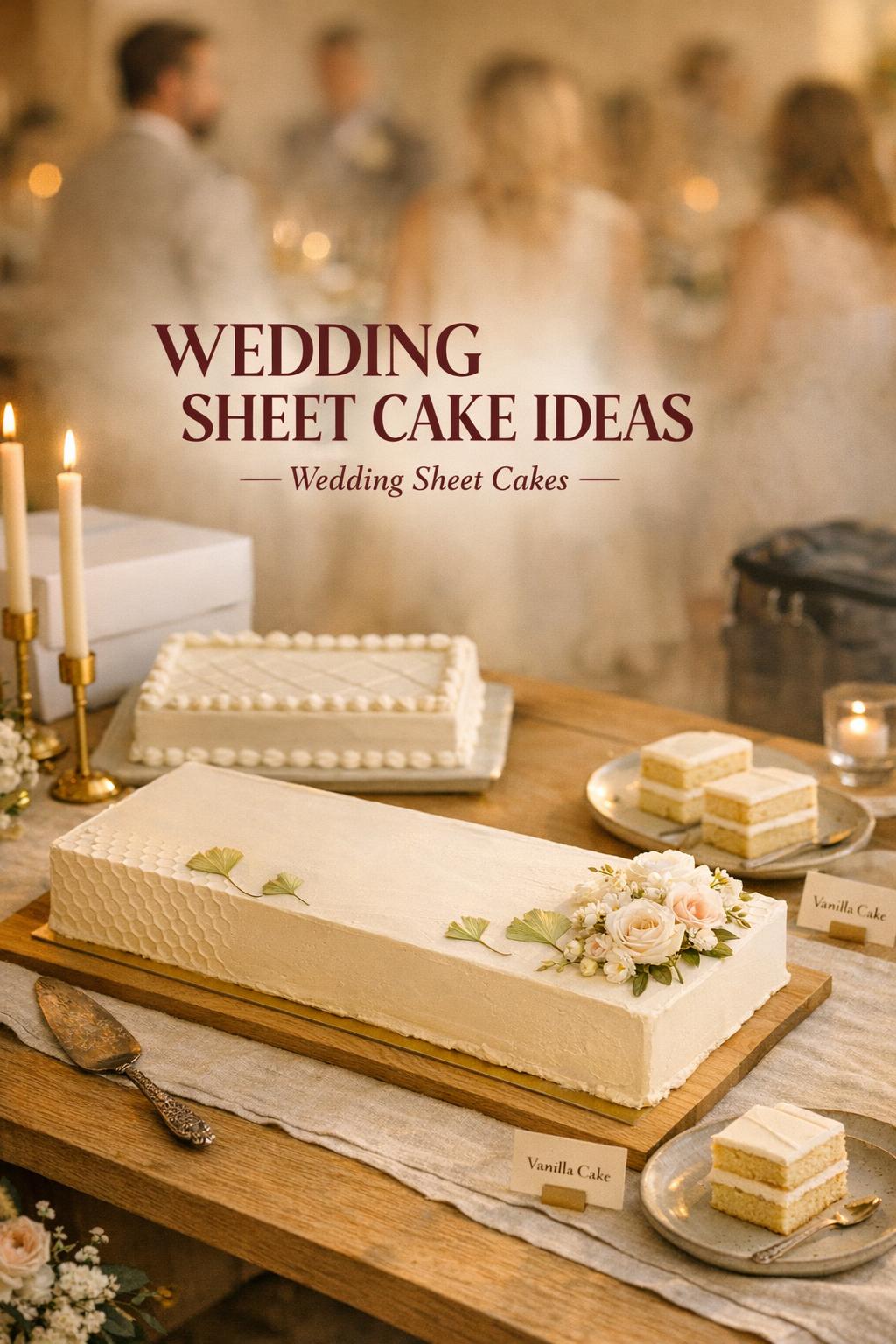
The design mindset: treating the rectangle cake like a runway, not a backup plan
The most striking sheet cake wedding cakes ideas start with a shift in how you picture “wedding cake.” A long or large-format sheet doesn’t need to imitate tiers to feel special. In fact, its strongest looks embrace what the format does best: long lines, negative space, and pattern repetition. Think of it like design for a tablescape—your cake becomes part of the visual rhythm alongside linens, florals, and candles.
Two design principles tend to matter most with wedding sheet cakes. The first is scale: bolder piping and larger floral groupings read better from a distance, while tiny details can disappear on a big surface. The second is flow: because the cake is long and rectangular, motifs like ginkgo branches, rosette trims, geometric linework, or watercolor washes can travel across the cake in a way that feels modern and editorial.
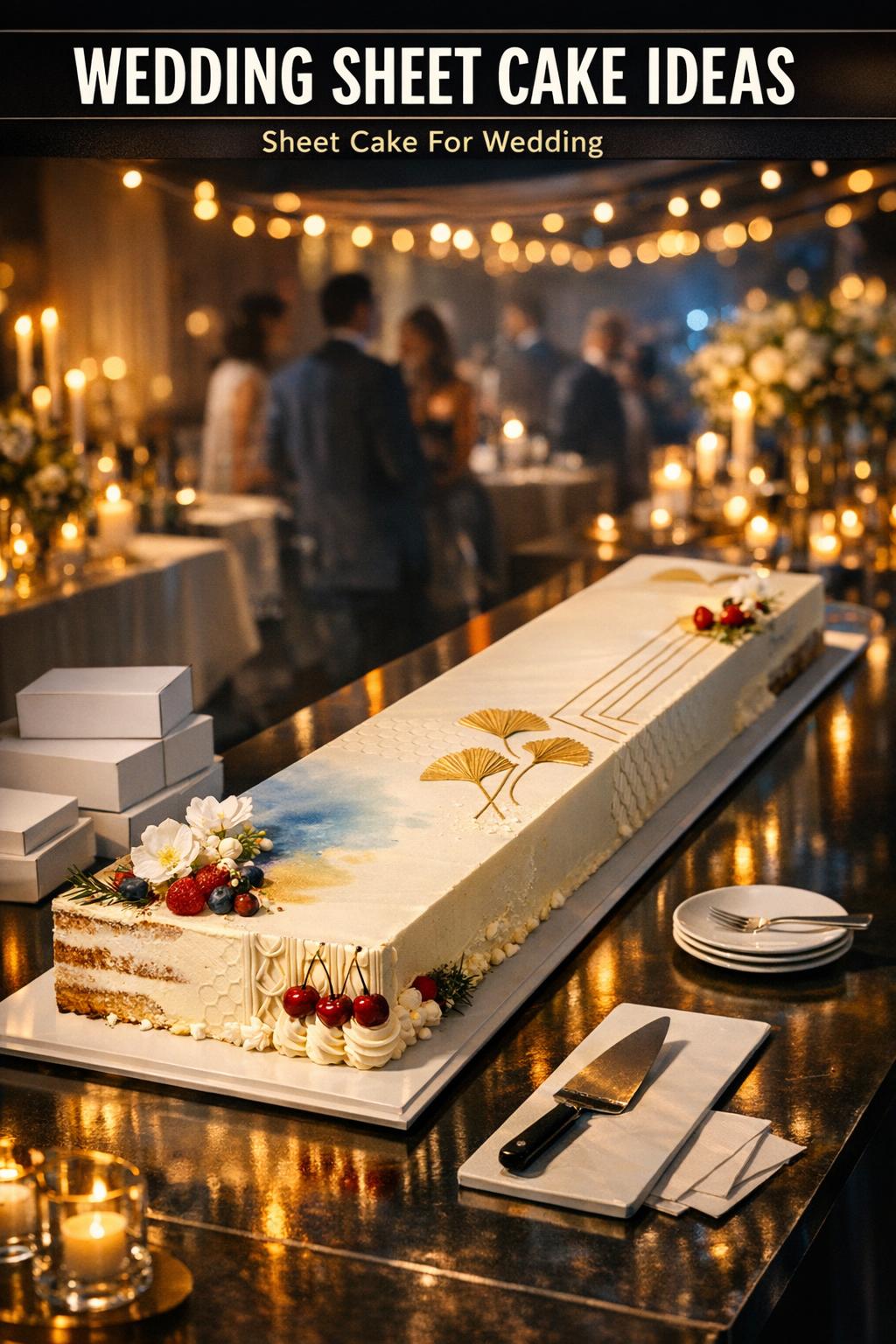
Modern minimalism with botanical details
Minimalism is one of the easiest aesthetics to translate into a sheet cake for wedding settings because the format naturally emphasizes clean edges and broad frosting surfaces. The key is to avoid “blank” and aim for “intentional”: a controlled palette, a confident piping choice, and a botanical element that feels curated rather than sprinkled on.
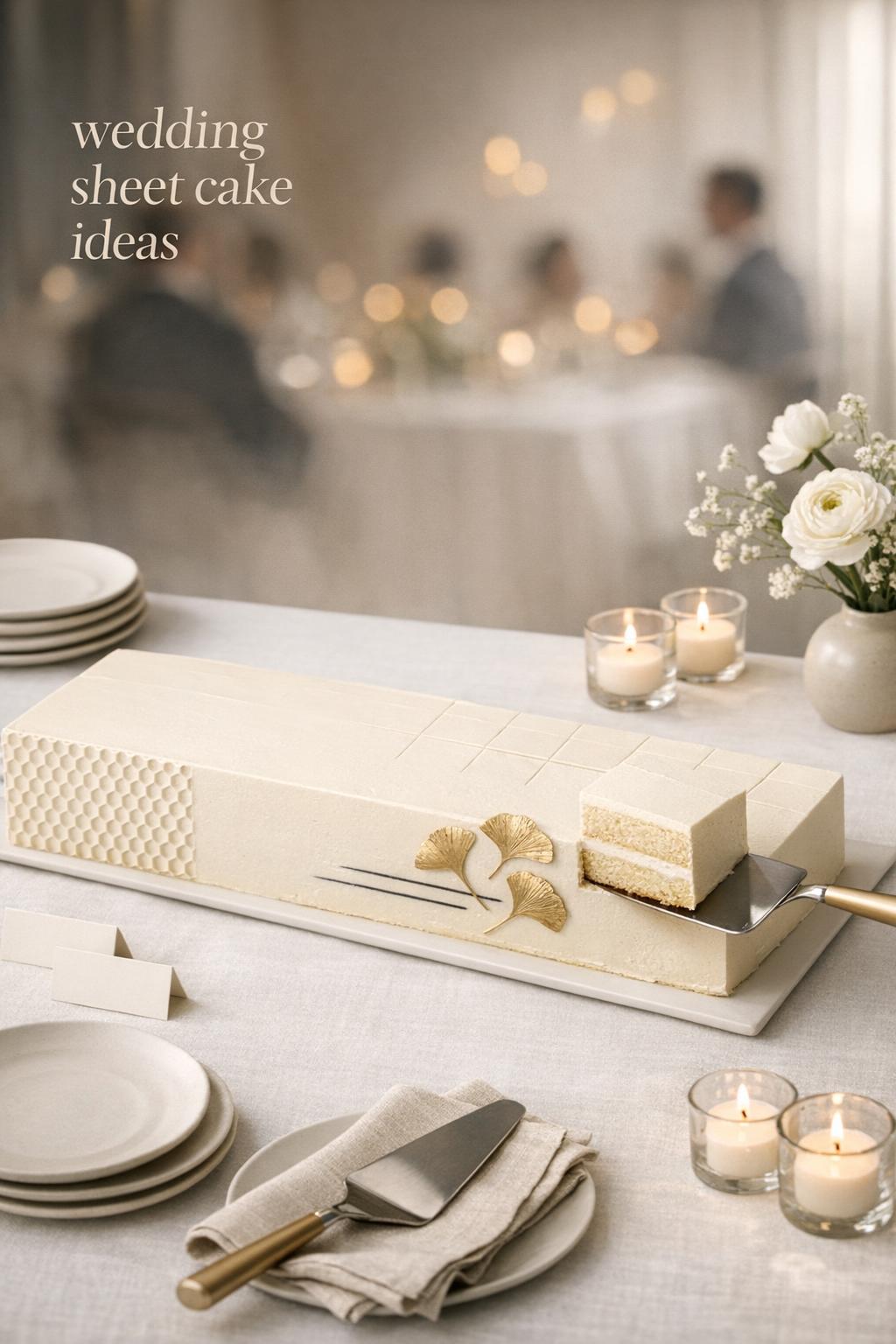
Botanical minimalism with ginkgo and honeycomb texture
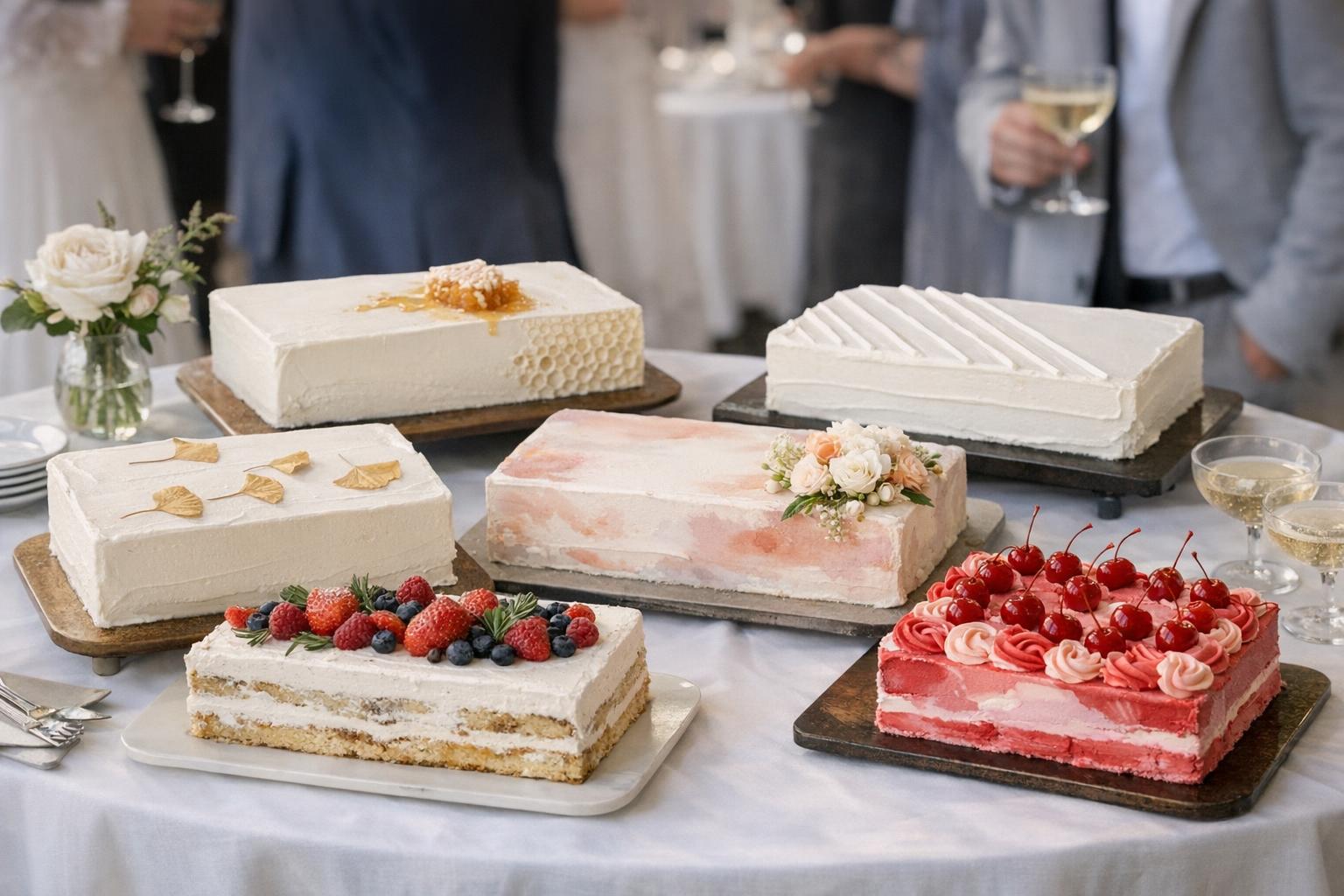
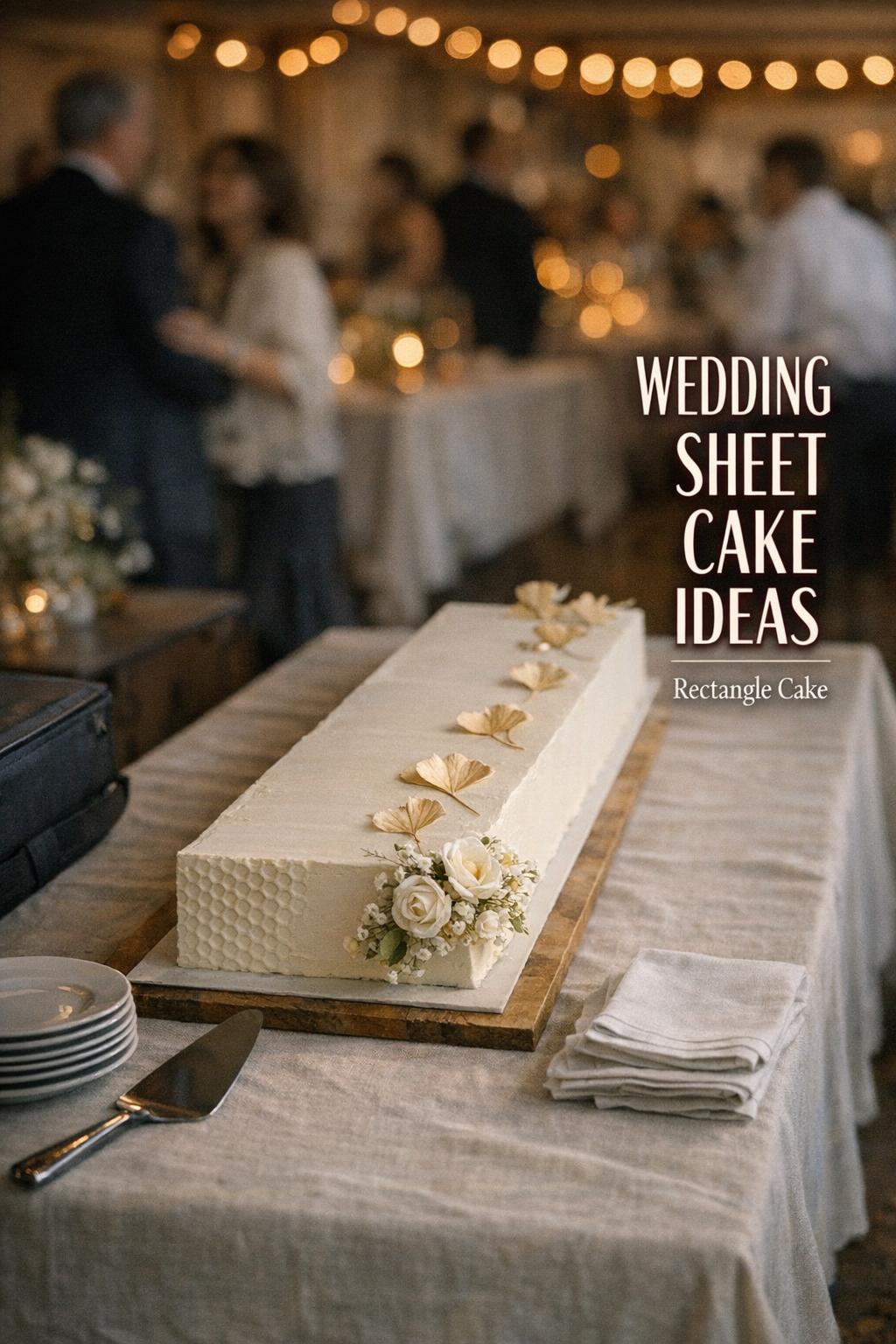
A botanical minimalist cake becomes memorable when it pairs a restrained layout with a texture that catches light. One elegant direction is a ginkgo motif combined with a honeycomb-style surface pattern. On a long wedding sheet cake, the honeycomb texture can create subtle depth across the frosting, while ginkgo-inspired placement gives the eye a focal path from one end of the rectangle cake to the other.
This style works particularly well for modern venues and pared-back decor because it doesn’t compete with the room. It also photographs cleanly: the pattern reads as craft, and the botanical element reads as design.
Rosette-trimmed minimalism (a quiet nod to tradition)
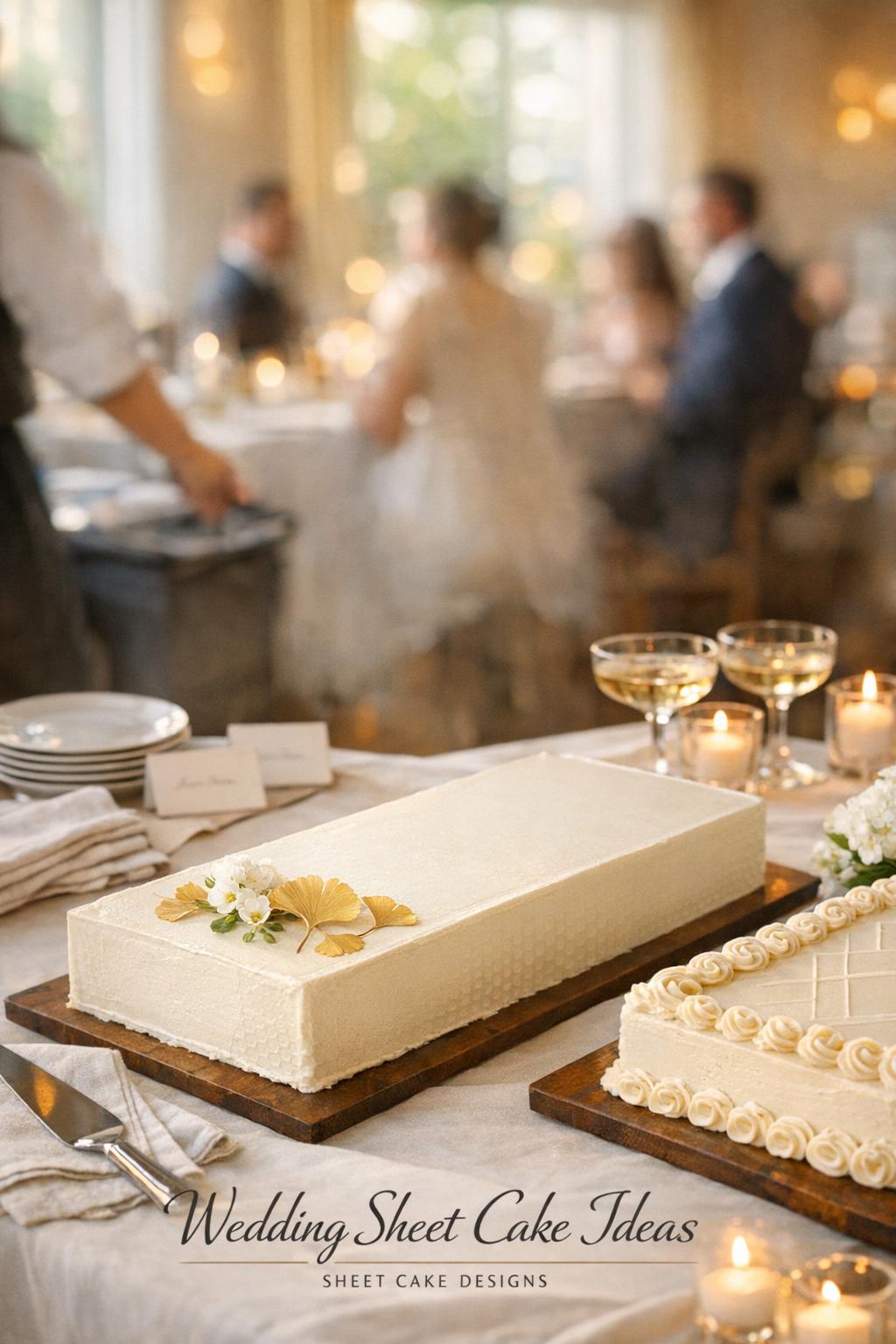
If you want a minimalist sheet cake that still feels “wedding,” a rosette-trimmed edge is a smart compromise. Rosette piping brings a classic signal—floral, romantic, familiar—without forcing the entire cake into a traditional look. On a rectangle cake, rosettes can frame the perimeter in a way that feels architectural, almost like a tailored hemline.
In practice, rosette trimming also helps with durability. Edges take the most wear during transport and setup, and a piped border can disguise tiny imperfections while making the finish look deliberate.
Geometric sheet cake designs for modern venues
Geometric sheet cake designs are ideal when your wedding style leans contemporary: clean lines, structured decor, and a palette that’s intentional rather than overly blended. Geometric design reads especially well on a sheet cake because the surface is flat and wide—perfect for linework, blocks of color, and repeated patterns that can extend along the cake’s length.
To keep geometric styling from feeling cold, consider pairing it with a soft frosting finish or a single floral moment. The point isn’t to add “more,” but to balance precision with a touch of warmth.
- Use clean piping styles to create lines, borders, or repeating shapes that look intentional on a large surface.
- Let negative space be part of the design; minimal geometric piping often looks more expensive than an overfilled layout.
- Keep the palette tight so the geometry stays crisp rather than visually noisy.
A practical note: geometric details are easiest to appreciate when the cake is displayed at a comfortable viewing height and lit well. If your venue lighting is dim, opt for higher-contrast shapes or slightly thicker linework so the design doesn’t disappear during the reception.
Watercolor and floral sheets: soft romance with a painterly finish
Watercolor sheet cake design is the answer when you want romance without the heaviness of dense piping. A watercolor wash can create atmosphere—think airy color transitions that echo your bouquet, bridesmaid dresses, or invitation suite—while still leaving plenty of room for a clean, modern presentation.
Watercolor washes that match your color palette
Watercolor styling is less about a perfect “picture” and more about a mood. The best results come from choosing one primary hue and letting it fade into lighter tones, rather than trying to force too many colors into the same area. On wedding sheet cakes, this approach keeps the surface looking spacious, which is part of the watercolor appeal.
Because watercolor designs are inherently soft, they pair well with minimal piping—just enough to frame the cake or define the edges—so the painterly effect stays the main character.
Edible florals: when to go fresh and when to choose sugar flowers
Florals can elevate a watercolor sheet from “pretty” to “wedding centerpiece,” but the choice between fresh flowers and sugar flowers matters. Fresh flowers bring realism and can echo your wedding florals closely, while sugar flowers offer control over size, color, and placement—especially helpful when the cake needs to be finished ahead of time or transported over a longer distance.
From an execution standpoint, sugar flowers can be placed with precision to complement the watercolor flow, while fresh flowers often create a more organic cluster. Either way, the most refined look tends to come from restraint: a few thoughtfully placed blooms (or floral groupings) rather than covering the entire rectangle cake surface.
Rustic and naked sheet cake wedding cakes ideas
Rustic sheet cake styling—especially naked or semi-naked finishes—works when your wedding leans warm, seasonal, and tactile. The appeal is that it feels relaxed while still curated: you can see hints of cake beneath the frosting, and the decoration style often leans into fruits, herbs, and natural tones.
A naked or semi-naked rectangle cake also feels at home in venues with wood, stone, or outdoor settings. But rustic doesn’t mean unplanned. Because the finish is intentionally less covered, the surface needs to look clean and confident. Smudged frosting can read as messy instead of rustic, so it’s worth being clear about the difference during a cake consultation.
Rustic styling with fruits, herbs, and seasonal cues
Rustic sheet cake designs often shine when they echo what guests see around them: the season, the venue, and the overall wedding decor. Fruit accents can add color and freshness, and herbs can give that understated, editorial “grown” look that pairs well with natural linens and candlelight.
One reason this style stays popular is that it’s forgiving in a good way. Small irregularities in texture look intentional, and the overall effect can feel abundant without relying on heavy piping.
Bold color and maximalist sheets that steal the spotlight
Not every wedding cake needs to whisper. Bold color sheet cake styling—think dramatic blues, saturated palettes, and statement motifs—turns the sheet format into a showpiece. This is where “large surface area” becomes a creative advantage: you can build an immersive look across the entire cake rather than stacking height.
Bold blue maximalism (high impact, high confidence)
A deep blue palette reads instantly dramatic, especially on a long wedding sheet cake displayed on a central dessert table. The trick is to keep the finish polished: bold color amplifies every texture and edge. Pair it with deliberate piping styles—clean borders, structured patterns, or confident swirls—so the maximalism feels designed rather than chaotic.
This look is particularly effective when your wedding design already includes strong color moments. Instead of trying to match everything, the cake can act as the anchor statement that ties the room together.
Funky piping with cherries (playful without losing elegance)
Funky piping introduces a modern, playful energy—especially when paired with a simple, recognizable garnish like cherries. On wedding sheet cakes, this combination can feel fresh because it’s not overly formal, yet it still reads as intentional when the piping has a consistent rhythm across the rectangle cake.
If you’re choosing this direction, the design decision is really about balance: let the piping do the visual work, and treat the cherries as punctuation rather than covering the cake. That keeps the look stylish instead of novelty.
Citrus and harvest-inspired ideas for seasonal weddings
Seasonal styling is one of the most natural ways to make a sheet cake for wedding events feel integrated with the day. When the cake’s flavors and visuals echo the season, it becomes part of the experience rather than a separate dessert moment.
Citrus chiffon with edible florals
A citrus chiffon direction suggests lightness—both in flavor and appearance. Paired with edible florals, it creates a bright, celebratory look that’s especially fitting for airy, daytime weddings or venues filled with natural light. Visually, citrus-inspired palettes can keep a sheet cake feeling fresh and modern, and edible florals reinforce the “garden” feeling without requiring heavy piping.
Design-wise, this idea benefits from restraint: a clean frosting base, a few floral accents, and perhaps a subtle texture that catches the light without overwhelming the citrus story.
Autumn harvest cake with homemade jam energy
An autumn harvest approach leans into warmth and comfort—exactly what guests crave at fall weddings. The “homemade jam” note reads as cozy and seasonal, and it pairs naturally with rustic or semi-naked finishes. Even when executed in a refined way, harvest styling tends to feel generous, which is a lovely match for weddings built around family-style dinners, candlelit receptions, and textured decor.
Because sheet cakes are often served to large guest lists, harvest-inspired flavors can feel especially appropriate: familiar, crowd-pleasing, and easy to portion without losing their appeal.
Flavor and frosting decisions that hold up in the real world
Inspiration photos can make any cake look effortless, but wedding service is a stress test: time out of refrigeration, movement during delivery, and the reality of slicing dozens (or hundreds) of portions quickly. When planning wedding sheet cake ideas, it helps to choose flavor pairings and frosting types with that day-of reality in mind.
Buttercream is a central player in many sheet cake designs because it supports piping styles, textures, and a wide range of finishes—from smooth minimalism to rustic swipes. Fondant, by contrast, tends to create a sleek surface that can suit geometric design, but it’s a different aesthetic and workflow. The best approach is the one that matches your desired look and the production plan your baker is comfortable executing at scale.
When you’re discussing flavors and fillings, consider how they’ll behave across a large-format sheet. The more a cake relies on delicate structure, the more important it is that transport and setup are coordinated. A sheet cake can absolutely be refined and elegant—it just benefits from choices that are stable enough for a full wedding timeline.
Decoration techniques: what actually creates the “wedding” finish
The detail that most clearly separates a casual sheet cake from a wedding-ready one is finishing: the edge work, the consistency of the frosting surface, and the confidence of the decorative motif. These techniques aren’t just aesthetic—they’re functional. A well-finished cake resists looking tired under warm lights and holds up visually after slicing begins.
Buttercream piping styles that read beautifully on a large surface
Piping is one of the most versatile tools for sheet cake designs because it scales. Rosettes can frame edges or create clustered moments. Lattice and ruffle-style piping can add movement and dimension without needing flowers at all. The key is repetition: on a rectangle cake, repeating a motif builds polish. Random piping can look unfinished, especially when the cake is long and guests see it from multiple angles.
- Use rosette piping when you want romance and structure at the same time (especially strong for borders).
- Choose lattice patterns for a tailored, graphic finish that complements geometric styling.
- Use ruffle textures when you want softness and movement without relying on florals.
If you’re planning a long wedding sheet cake, ask your baker how the design will be spaced across the length. A motif that looks perfect in the center can feel sparse at the ends unless it’s planned as a full composition.
Fresh flowers vs. sugar flowers: a practical decision disguised as a style choice
Fresh flowers can tie your cake into the rest of the wedding florals seamlessly, while sugar flowers can be engineered to look perfect from every angle and placed exactly where the design needs them. The most important factor is workflow: if the cake needs to be delivered early, sugar flowers can reduce last-minute handling. If a florist is already on-site for setup, fresh flower placement can be coordinated at the venue for a cohesive look.
Edible florals (when used) add another layer: they can keep the overall design feeling delicate and intentional, especially on watercolor or citrus-inspired cakes. The common thread is restraint and placement—using florals to guide the eye, not overwhelm the surface.
Luxury finishes: gold leaf, edible paper, and texture
For couples who want a more elevated look without piling on decoration, finishing elements like gold leaf, edible paper, and controlled textures can do a lot of work. These details tend to look best when they’re used to emphasize a design choice you’ve already made—highlighting geometric lines, adding shimmer to a minimalist surface, or giving a watercolor wash a more editorial edge.
Because sheet cakes are often viewed from a few feet away on a dessert table, reflective or dimensional accents can help the cake “read” as special in the room, not just up close.
Serving, delivery, and venue logistics: the part no one wants to talk about (but should)
Wedding sheet cakes are popular in part because they can simplify service—but only if you plan for the reality of a large, frosted rectangle cake moving through real spaces: venue doors, elevators, warm kitchens, and tight timelines. The earlier you align baker, venue, and whoever is coordinating setup, the smoother everything feels on the day.
Start with display. A long wedding sheet cake needs a stable table, enough clearance for slicing, and lighting that flatters the design. Then consider refrigeration. Even if your venue can refrigerate the cake, you’ll want clarity on when it comes out and where it sits before cutting. Lastly, plan cutting and serving. A sheet cake is often chosen for portion efficiency, but that only happens if the slicing plan is organized and the tools are ready.
Tips for smooth service with wedding sheet cakes
These are the small decisions that experienced teams make early—and that couples often wish they’d asked about sooner.
- Assign ownership: decide whether the venue staff, caterer, or another team member is responsible for cutting and serving.
- Protect the design: if the cake has fresh flowers, plan who places them and when, so the cake isn’t handled repeatedly.
- Choose a display plan that suits the style: minimalist and geometric cakes benefit from uncluttered tables; rustic styles can handle more surrounding decor.
- Build in time for setup: large-format cakes need careful placement to keep edges clean and surfaces unmarked.
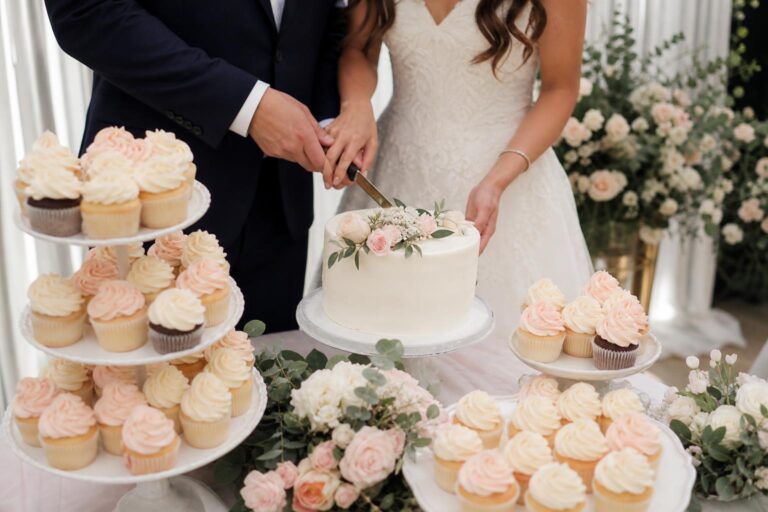
One more reality check: sheet cake for wedding service can be wonderfully efficient, but it still needs a moment. If a “cake cutting” photo matters to you, consider staging a small ceremonial cut at the display while the bulk of slices are served from the kitchen. You get the tradition, and guests get dessert on time.
Choosing your sheet cake team: what to ask in a consultation
Even when you’re not commissioning an elaborate tiered cake, you’re still hiring a cake designer and pastry team to execute a centerpiece dessert for a major event. The consultation is where you protect your vision and your timeline. It’s also where you confirm whether a particular sheet cake design is realistic at your guest count and within your venue constraints.
Bring visual references for the style category you want—geometric, watercolor, rustic/naked, bold maximalism, classic florals—and then talk through how it will be executed on a rectangle cake. A design that looks stunning on a small surface may need bolder piping, larger florals, or more negative space when scaled to a long wedding sheet cake.
- Ask how the cake will be transported and delivered, and what the venue needs to provide.
- Clarify decoration responsibilities, especially if fresh flowers are involved and a florist is coordinating the rest of the wedding florals.
- Discuss frosting choices (buttercream vs. other finishes) in relation to the look you want and the day-of setup conditions.
- Confirm the cutting plan: who cuts, where it happens, and how portions will be served efficiently.
If your wedding includes a photographer capturing detail shots, remember that sheet cake designs photograph best when the display area is styled intentionally—clean cake server, tidy table edges, and a few decor elements that echo your overall wedding aesthetic. It’s a small staging step that makes the cake look like a feature, not a catering item.
How to build a cohesive “cake moment” with a sheet cake
The most successful sheet cake wedding cakes ideas don’t treat the cake as a standalone object. They design the “cake moment”: where it sits, what surrounds it, and how guests approach it. This matters more with a rectangle cake because it’s often displayed horizontally, which invites guests to view it from different sides.
For minimalist and geometric cakes, keep the surroundings clean. Let the piping styles and negative space feel intentional. For watercolor and floral cakes, mirror the palette in nearby florals so the cake looks like part of the same visual story. For rustic and naked cakes, texture is your ally—layered linens and warm lighting can make the cake look even more inviting. For bold maximalism, give the cake breathing room; strong color needs space to look confident rather than crowded.
If you’re debating between a single long wedding sheet cake and multiple smaller sheets, think about guest flow. Multiple cakes can reduce lines at serving time, but a single long cake can look dramatic as a centerpiece. There’s no universal “right answer”—the best choice is the one that matches your venue layout and how you want dessert to feel in the timeline of the night.
Common mistakes that make wedding sheet cakes look less elevated
Wedding sheet cakes can look as refined as any traditional wedding cake, but a few predictable missteps tend to undermine the final effect. These aren’t about taste—they’re about planning and scale.
- Overcrowding the surface: too many motifs (piping, florals, textures, multiple colors) can make a large sheet look busy rather than designed.
- Choosing details that don’t scale: tiny piping patterns can vanish on a long sheet cake, especially in dim venue lighting.
- Last-minute floral placement without a plan: fresh flowers can look stunning, but only when placement is intentional and coordinated.
- Ignoring the cutting strategy: the best-looking cake can still create a service bottleneck if the slicing plan isn’t set.
The fix is usually simple: pick one primary design category (geometric, watercolor/floral, rustic/naked, bold/maximalist, classic florals), then choose supporting details that reinforce it—like rosette piping for romance, edible florals for softness, or a clean honeycomb texture for minimalist depth.
Tips for matching sheet cake designs to wedding settings
Sheet cake designs become more convincing when they respond to the setting. A few small adjustments—often in scale, palette, or finish—can make the cake feel like it belongs in the room.
Tips for modern indoor venues
Lean into geometric sheet cake styling or botanical minimalism. Clean piping styles and controlled textures (like honeycomb patterning) read crisp under indoor lighting and pair naturally with modern decor. If you want florals, keep them as a single, sculptural moment rather than scattered accents.
Tips for rustic spaces and outdoor-adjacent receptions
Rustic and naked or semi-naked sheet cakes tend to look most natural in these environments. Choose fruits, herbs, or a soft floral approach that mirrors the season. If the cake may sit out longer before cutting, favor finishes that still look attractive as the reception unfolds, and make sure the display table is stable and protected from heavy traffic.
Tips for bold, fashion-forward weddings
Consider bold blue maximalism or funky piping with cherries for a confident, editorial feel. In these settings, the cake can act like a design piece. Keep the surrounding decor simpler so the color and piping remain the focal point, and ensure the cake’s edges and finish are especially clean because bold palettes highlight imperfections.
FAQ
How many servings are in a sheet cake for a wedding?
Sheet cakes are commonly used for large gatherings because they’re designed to be portioned efficiently, but the exact serving count depends on the cake’s dimensions and how the venue or catering team slices it; your baker should confirm servings based on the specific sheet cake size you’re ordering and the portion style you want for your reception.
Can a wedding sheet cake look as elegant as a traditional wedding cake?
Yes—elegance comes from finish and design choices, not height; refined buttercream work, controlled piping styles (like rosette trims or clean geometric lines), intentional negative space, and well-planned floral or edible floral placement can make wedding sheet cakes look fully wedding-appropriate.
What are the most popular sheet cake designs for weddings?
Common categories include geometric sheet cake styling, watercolor sheet cake design with florals, rustic and naked or semi-naked finishes, bold color and maximalist looks (including dramatic blues), and classic elegant floral approaches built around buttercream piping and curated flower moments.
Is buttercream or fondant better for a wedding sheet cake?
Buttercream is often chosen for wedding sheet cake ideas because it supports a wide range of textures and piping styles, while fondant can create a sleek, smooth surface that suits certain modern looks like geometric designs; the better choice depends on the style you want and how your baker plans to execute and transport the cake.
Should I use fresh flowers, sugar flowers, or edible florals on wedding sheet cakes?
Fresh flowers can coordinate closely with your wedding florals, sugar flowers offer precise control and can be placed ahead of time, and edible florals can add a delicate, romantic finish—especially on watercolor or citrus-inspired cakes; the best option depends on your timeline, who will place the flowers (baker vs. florist), and how much on-site handling you want.
How do I keep a long wedding sheet cake from looking too plain?
Focus on one strong design element that carries across the rectangle cake—such as a honeycomb texture with botanical accents, a rosette-trimmed border, a watercolor wash with a small floral cluster, or confident geometric linework—because repetition and scale are what make large-format sheet cakes feel intentional rather than empty.
What should I plan for when it comes to delivery and setup at the venue?
Confirm who is delivering, where the cake will be stored (including refrigeration), when it will be placed on the display table, and who is responsible for any final decor like fresh flowers; large wedding sheet cakes benefit from a clear setup plan because the flat, finished surface can be marked if it’s moved or handled too many times.
How do we handle the cake-cutting moment with a sheet cake?
If you want a traditional photo moment, you can stage a ceremonial cut at the display while organizing the bulk of slicing and serving as a streamlined process elsewhere; this approach keeps the celebration feeling classic while still taking advantage of the sheet cake format’s efficiency for guests.