Modern Minimal vs. Ornate: The Classic Wedding Cake Edit
Classic wedding cake style, decoded: why “classic” can mean two very different looks
There’s a particular moment in wedding planning when a couple realizes the cake isn’t just dessert—it’s a visual anchor. It sits under warm reception lighting, appears in photos beside your florals, and becomes part of the rhythm of the evening when you cut the first slice. And yet the phrase classic wedding cake can be surprisingly slippery. Two couples can say they want “classic,” and one is picturing a pristine, elegant white wedding cake with smooth sides and restrained detail, while the other means a more ornate, tiered centerpiece with tradition-forward decoration.
That’s why “classic” is often discussed alongside “elegant,” “white,” and “timeless,” even though those words can describe different styling philosophies. In practice, classic wedding cakes tend to fall into at least two recognizable aesthetics: a clean, elegant minimal classic and a traditional ornate classic. They’re related, they overlap, and they’re easy to confuse—especially when you’re gathering wedding cake inspiration from photos that don’t show scale, texture, or the room the cake was designed to live in.
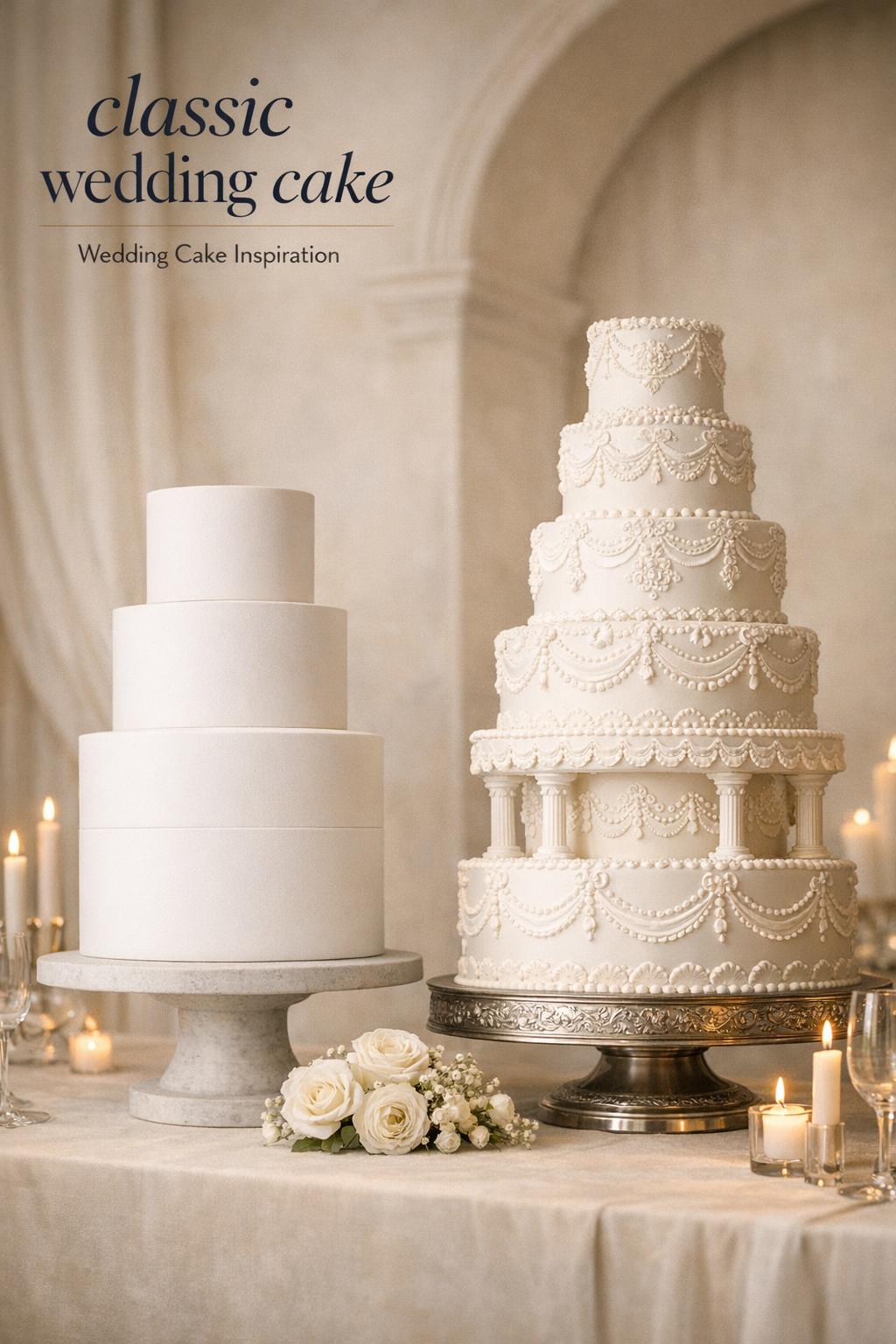
This style breakdown will help you see the distinction clearly. You’ll learn the visual cues that separate minimal classic from ornate classic, how each approach affects your wedding atmosphere, and how to choose a “classic cake wedding” look that feels harmonious with your venue, your dress, and the emotional tone you want to set when the cake is wheeled in and everyone turns to look.
Style overview: the elegant minimal classic (the modern “elegant white wedding cake”)
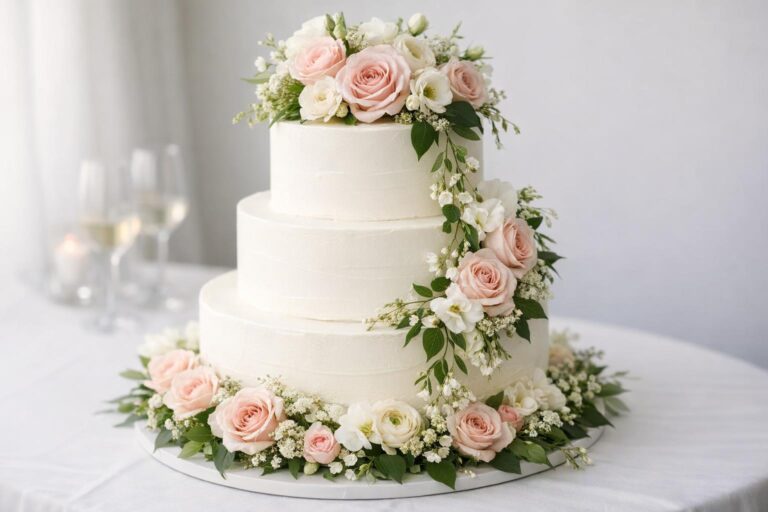
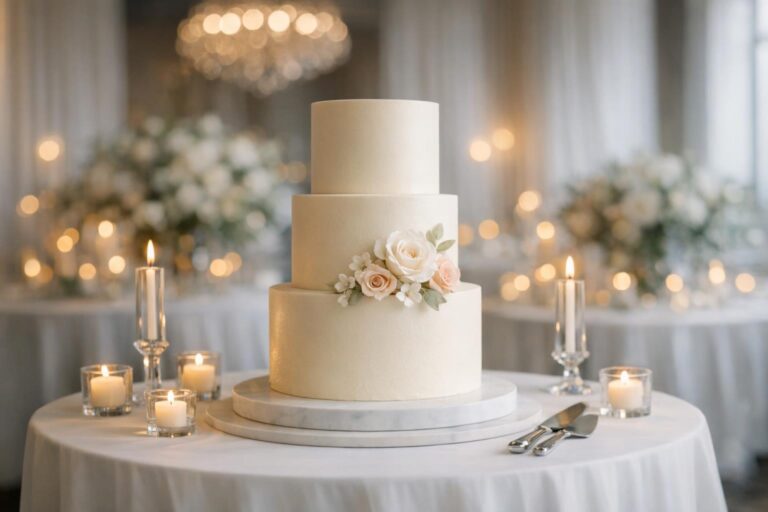
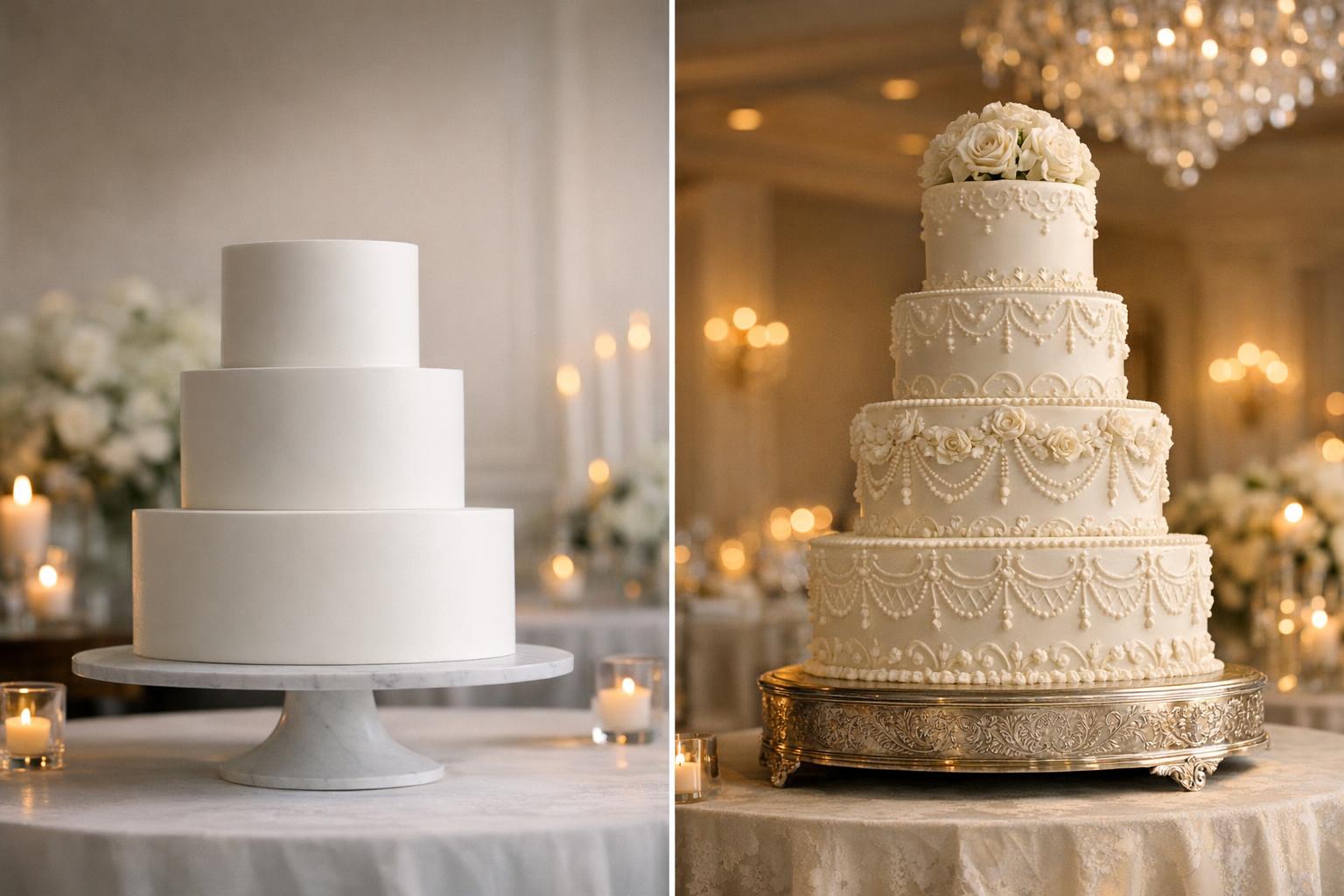
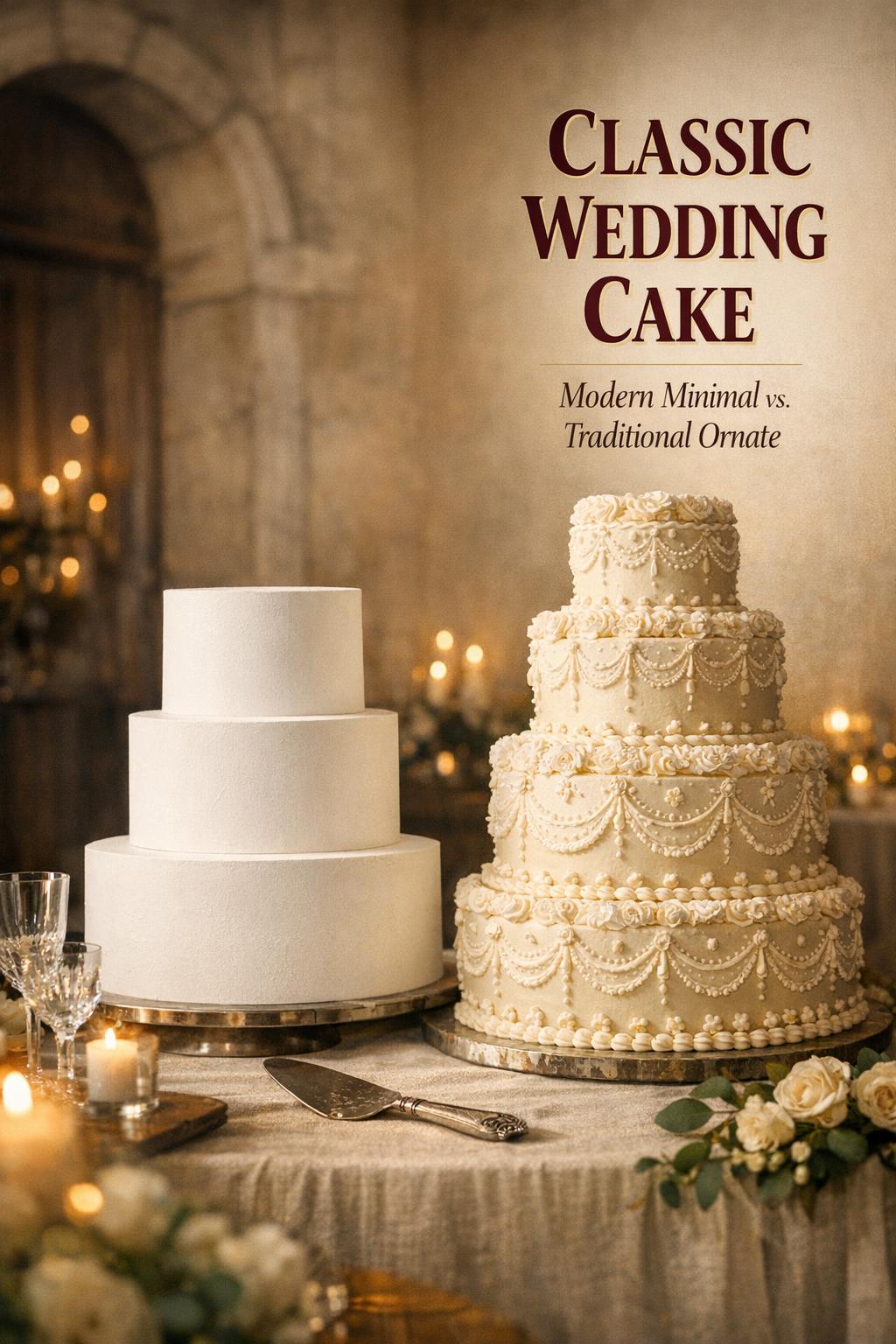
The elegant minimal classic is what many couples mean when they ask for wedding cake inspiration elegant: a refined, streamlined cake that reads luxurious through restraint. It’s still undeniably traditional—often tiered, often white—but it emphasizes clean surfaces, symmetry, and quiet detail rather than heavy decoration.
Turn wedding inspiration into a plan you can actually follow.
Zarellea brings your guest list, budget, vendors, and day-of details into one shared space — so no beautiful idea gets lost in the shuffle.
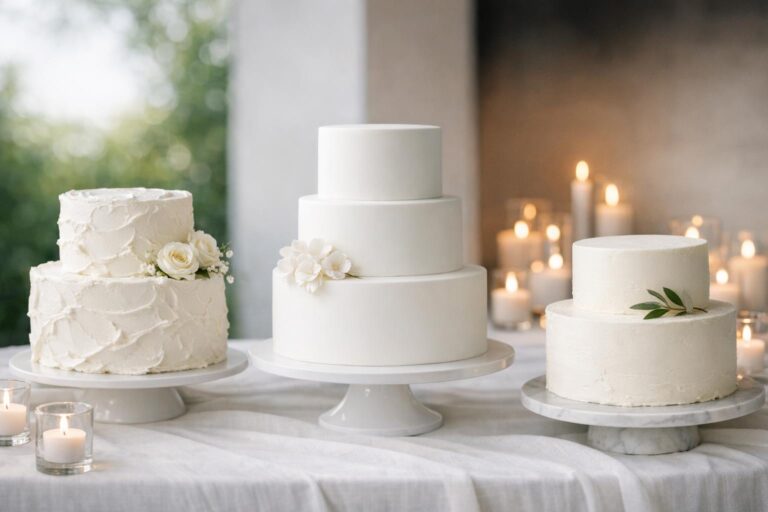
Defining characteristics tend to include smooth or subtly textured sides, a balanced tier progression, and decoration that feels intentional rather than abundant. This is the elegant white wedding cake that looks at home in a candlelit ballroom, a modern gallery space, or an intimate venue where every detail is curated and nothing competes for attention.
The mood is calm, polished, and “forever.” If your wedding day vision includes simple vows, unhurried portraits, and a reception that feels like an elevated dinner party, this version of classic usually fits naturally.
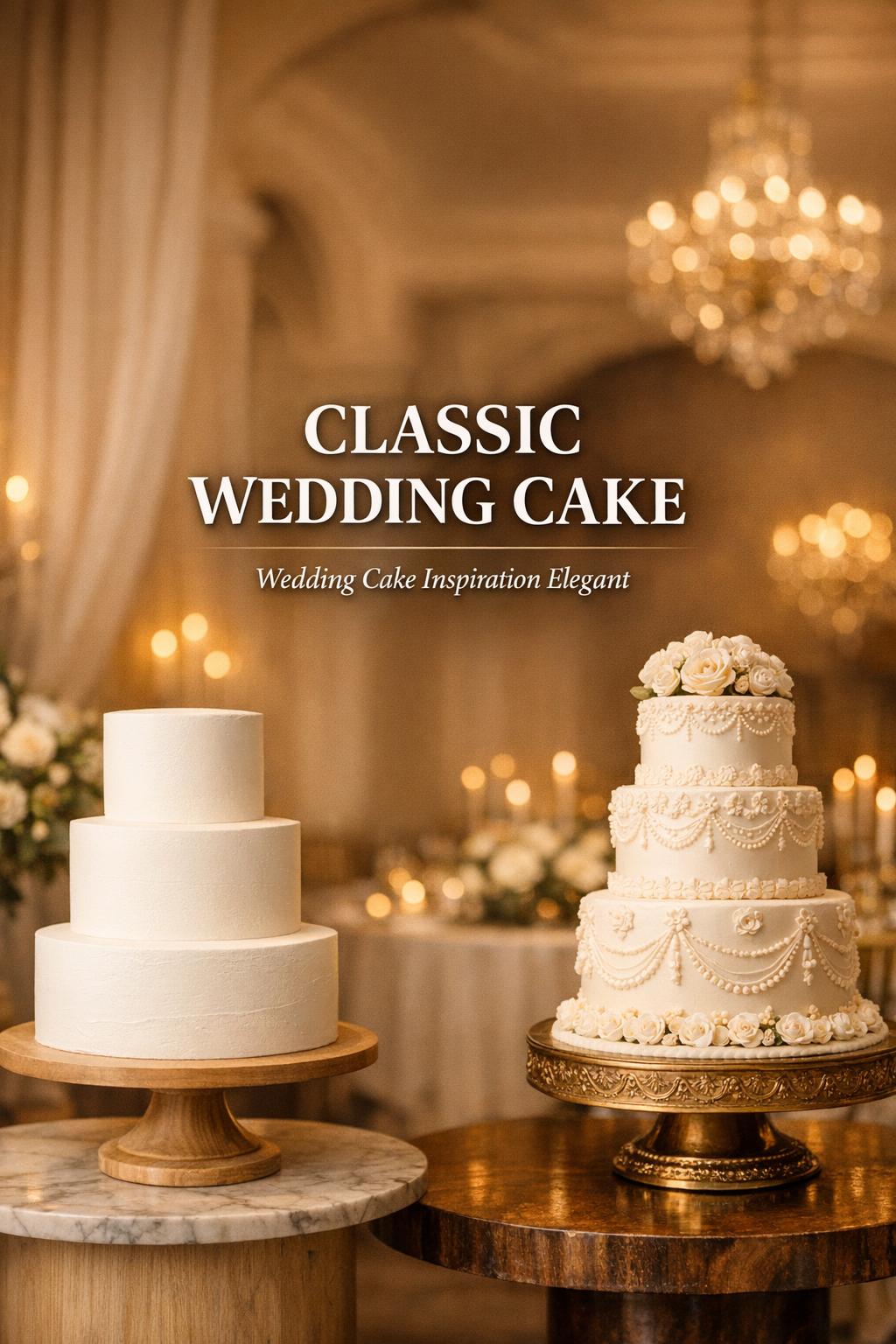
Style overview: the traditional ornate classic (the heritage “classic wedding cakes” look)
The traditional ornate classic leans into ceremony and celebration. This is the style people often associate with classic wedding cakes in the most literal sense: tiered grandeur, formal presence, and decorative detail that announces, “This is the wedding cake.”
Even when it stays within a white palette, it tends to be more visibly embellished—through piping-style effects, dimensional decoration, and a more pronounced sense of structure. Where the minimal classic whispers, the ornate classic makes a gentle, confident statement.
The mood is traditional, romantic, and formal. It suits weddings where guests expect a clear sense of occasion: a ceremony with classic rituals, a reception with a more formal timeline, and photographs that favor symmetrical compositions and grand interiors.
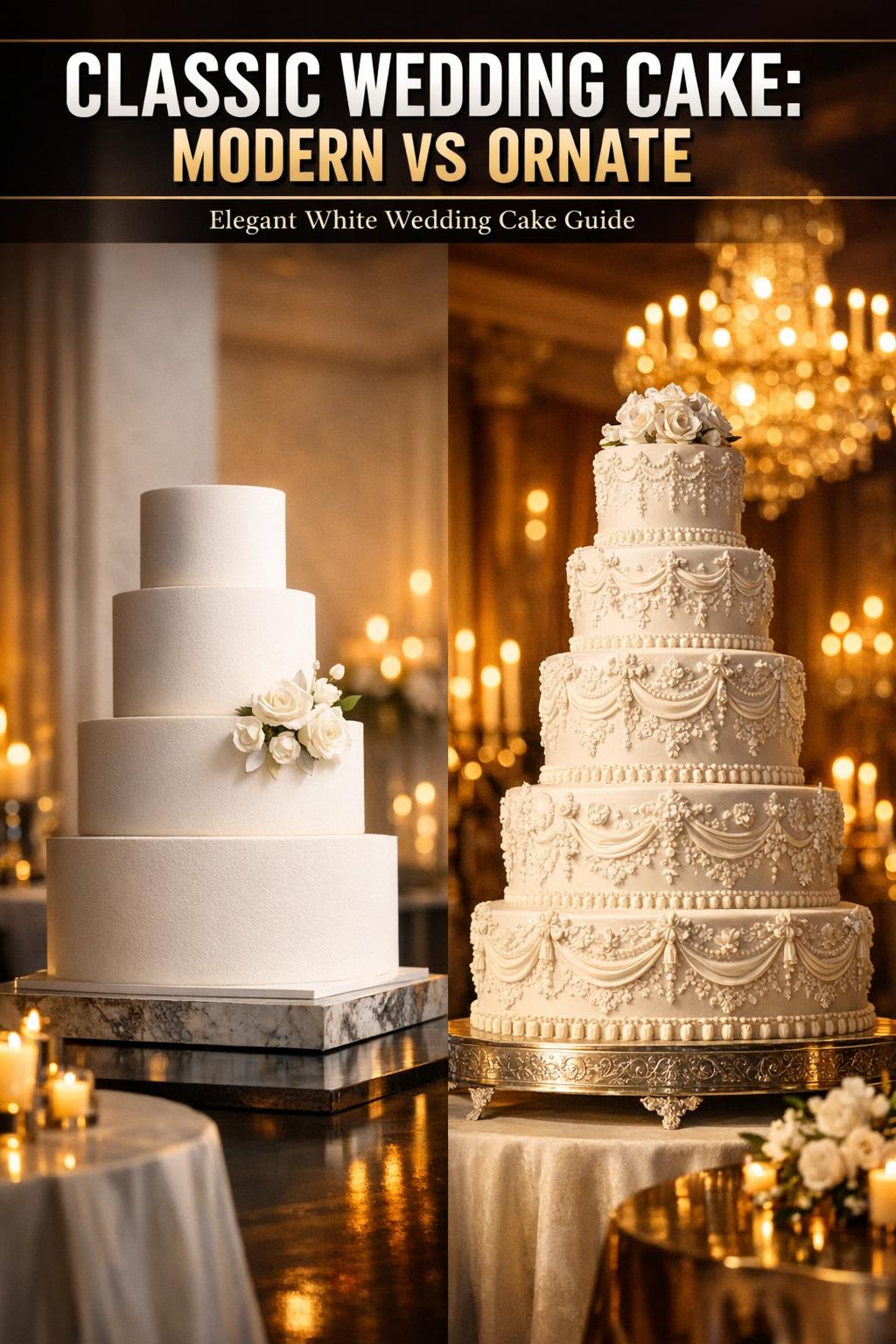
Why these two classics get mixed up in wedding cake inspiration
Both styles are often white or predominantly light-toned, both are typically tiered, and both aim for “timeless.” In photos, especially close-ups, the difference between restrained and ornate can blur—because you’re not seeing the cake’s relationship to the room, the height, or the overall décor density.
Another reason is language. Couples frequently use “classic,” “elegant,” and “traditional” interchangeably. But in design terms, elegant minimal classic is about editing, while traditional ornate classic is about embellishment. Neither is more correct; they simply create different emotional impressions.
If you’ve ever saved a mix of images and later realized they don’t belong to the same wedding, this is usually why. Your board isn’t wrong—you’re just collecting from two adjacent branches of the same style family.
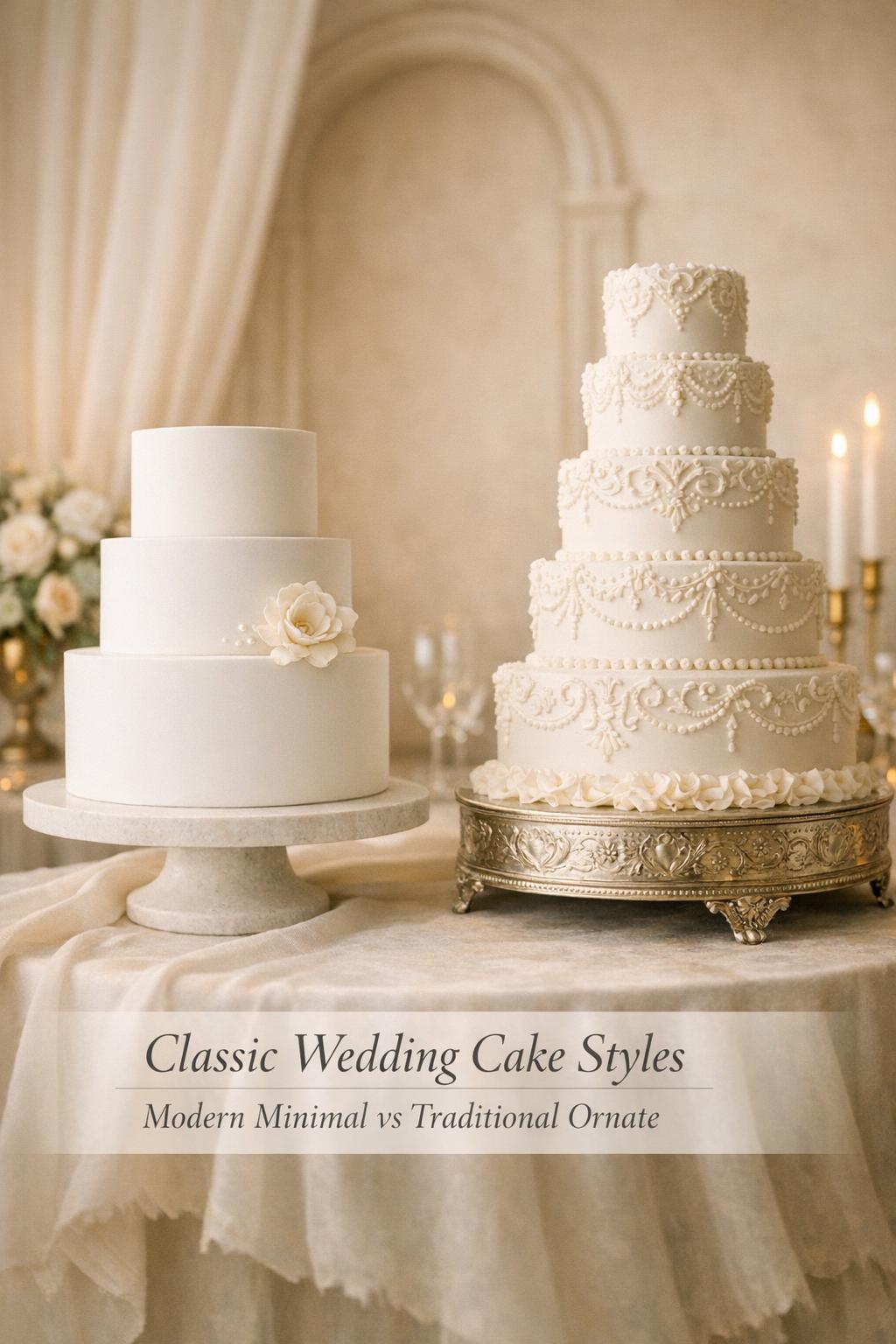
Key differences: silhouette, detail density, and the “room-read” effect
Silhouette and structure
Minimal classic tends to favor a clean tier stack that feels architectural—balanced and intentional, with edges and proportions that look crisp. Ornate classic often emphasizes tiering as a form of celebration: the height and structure can feel more ceremonial, with decoration that draws attention to each tier rather than letting the overall outline do the work.
Detail density: editing vs embellishing
Think of minimal classic as “one strong idea” executed beautifully—smooth sides, a subtle finish, and a limited number of decorative moments. Ornate classic is comfortable with more: repeated motifs, more visible patterning, and embellishment that reads from across a room.
Color palette: both can be white, but they use white differently
Both styles often live in a white or near-white palette, which is why the elegant white wedding cake can belong to either camp. The difference is how white is used: minimal classic treats white as a clean canvas, while ornate classic treats white as a formal backdrop for detail and dimension. In other words, one relies on negative space; the other fills space with pattern.
Level of formality and visual presence
Minimal classic can feel formal, but it often reads as contemporary formal—polished without being imposing. Ornate classic tends to read as traditional formal, with a more pronounced “centerpiece” identity. If your reception has many décor focal points, minimal classic can create calm; if your reception needs a single iconic focal point, ornate classic can deliver it.
Visual style breakdown: how each classic looks in a real wedding setting
Wedding cake inspiration becomes truly useful when you imagine the cake not as an isolated object, but as part of your reception composition: the table, the linens, the lighting, and the way guests move through the space. Here’s how these classics typically “read” in the room.
Elegant minimal classic: the quiet focal point
In person, minimal classic feels like a still moment—especially under soft lighting. The eye notices the height and symmetry first, then the finish. This style pairs naturally with uncluttered cake tables, simple backdrops, and a reception aesthetic that values negative space. It photographs beautifully in wide shots because it doesn’t fight the rest of the design; it completes it.
Traditional ornate classic: the ceremonial centerpiece
Ornate classic is designed to be seen. Across the room, guests register the decoration and structure quickly, which makes the cake-cutting feel like a planned highlight rather than a casual moment. This style often feels especially “wedding” in photos—because it signals tradition even before anyone knows the flavor.
Proportion and placement: the detail most couples overlook
One of the biggest practical differences is how sensitive each style is to placement. Minimal classic relies on clean lines; if the cake table is crowded or the backdrop is busy, the cake can visually disappear. Ornate classic holds its own against busy surroundings, but can feel heavy if the room is already richly decorated. Choosing between these classic wedding cakes is often less about personal taste and more about balance.
Wedding cake inspiration: elegant vs ornate classics, compared through the same wedding “scenes”
To make the comparison feel real, imagine the same couple in the same wedding day timeline—just with two different “classic cake wedding” decisions. Notice how the styling logic changes.
Scene comparison: intimate ceremony, candlelit dinner reception
With an elegant minimal classic, the cake becomes a refined extension of the evening—like a final course at a beautiful dinner. The smooth finish and restraint mirror the hush of candlelight and the closeness of conversation. With a traditional ornate classic, the cake adds a sense of ceremony to an intimate night; it introduces formality and makes the cake-cutting feel like a signature moment, even if the guest count is small.
Scene comparison: grand entrance and a packed dance floor
In a high-energy reception, an ornate classic naturally matches the scale of the celebration—it can hold attention even when the room is lively. A minimal classic can also work, but it’s most successful when it’s intentionally spotlighted (through thoughtful placement and a clear backdrop) so its elegance doesn’t get lost in the motion of the night.
Scene comparison: a photo-first timeline
If your timeline prioritizes detail photography, minimal classic rewards close-ups: clean edges, smooth surfaces, and a calm composition that frames your hands on the knife beautifully. Ornate classic creates a different kind of photo story—one that celebrates tradition, pattern, and the sense that this cake is a legacy element of the reception.
Choosing your classic: a decision guide that goes beyond “what’s pretty”
“Pretty” is a starting point, not a plan. The most satisfying classic wedding cake choice is the one that supports your day rather than stealing focus or fading away. Here are the decision points that tend to matter most in real planning.
- Your reception visual density: If you have abundant florals, patterned linens, or a richly styled room, minimal classic can bring calm; if your décor is understated, ornate classic can create a focal point.
- Your cake table setup: Minimal classic benefits from a clean table, intentional lighting, and space around it; ornate classic is more forgiving in a busy corner.
- Your definition of “timeless”: For some couples, timeless means restrained elegance; for others, it means visible tradition and formality.
- Your comfort with attention: An ornate cake invites a “moment.” A minimal cake blends into the evening more gracefully unless you intentionally spotlight it.
When couples feel stuck between two saved images, I often ask one question: do you want your cake to feel like part of the design, or like an event within the design? Your answer usually points directly to minimal classic or ornate classic.
How to blend both aesthetics without losing the “classic” clarity
Many weddings don’t live perfectly inside one aesthetic. You might want wedding cake inspiration elegant, but you also love the romance of tradition. The best blends keep one style as the lead and borrow small touches from the other, so the result still reads as classic rather than confused.
Blend strategy 1: minimal silhouette, traditional emphasis points
Start with a clean, tiered structure that feels minimal. Then choose one or two locations for classic emphasis—often the base of a tier or a single band-like detail. The goal is to let the silhouette stay calm while giving the eye a place to linger.
Blend strategy 2: traditional silhouette, edited decoration
If you love the presence of ornate classic, keep the tiering and grandeur but reduce repetition. Instead of decorating every tier equally, allow one tier to carry the most detail and let the others breathe. This keeps the cake ceremonial without becoming visually heavy.
Blend strategy 3: the elegant white wedding cake as a bridge
An elegant white wedding cake can comfortably bridge both worlds because white naturally signals “classic.” If you keep the palette restrained, you can make more daring decisions about texture or decoration while still landing in a classic place.
Tips: getting classic wedding cakes to look intentional in photos and in person
Classic is unforgiving in the best way: small details make a big difference. A minimal cake can look flat if it’s placed against a cluttered background; an ornate cake can look overwhelming if the table styling competes. These tips help the cake feel like a deliberate part of your design story.
- Give the cake breathing room: Even a small perimeter of open space around the cake table helps a classic wedding cake read as special.
- Choose a backdrop with intention: Clean backdrops favor minimal classic; ornate classic can handle more visual texture behind it.
- Think about lighting like a stylist: Soft, directional light flatters smooth finishes and highlights dimension; harsh overhead lighting can wash out subtle detail.
- Match the cake’s “volume” to the room: In a visually quiet room, ornate classic prevents the cake from feeling underwhelming; in a visually rich room, minimal classic can prevent overload.
One practical planning note: if your cake will be moved or displayed in more than one location during the day, a cleaner silhouette tends to travel visually better—it still looks “correct” even when the surroundings change. If the cake is staying in a single, designed corner, ornate classic can be a beautiful anchor because you can build the styling around it.
Common “classic cake wedding” mistakes (and how to avoid them)
Most cake regret doesn’t come from choosing the “wrong” style. It comes from choosing a style without supporting it. Classic wedding cakes—especially the elegant minimal kind—need context to shine.
Mistake: choosing minimal classic but styling the table like an afterthought
A minimal cake depends on composition. If the table is crowded, the linens are wrinkled, or the background is visually busy, the cake can look less special than it is. The fix is simple: keep the table clean, choose one supporting accent, and let the cake be the hero.
Mistake: choosing ornate classic in a room that’s already doing the most
Ornate classic is stunning, but it brings its own visual volume. If your reception design includes many focal points, the cake can start to feel like one detail too many. The solution isn’t abandoning ornate; it’s editing nearby elements so the cake has space to be appreciated.
Mistake: collecting wedding cake inspiration elegant photos without noting scale
A close-up can make a cake look grand when it’s actually modest in size, or make detail look delicate when it’s bold in person. When you save inspiration, try to include at least one image that shows the cake in the room, near people, or within a wider reception scene.
When to choose each style: matching classic wedding cake aesthetics to real wedding contexts
Choosing between these classic wedding cakes is easier when you tie the decision to your wedding’s lived reality: how the day moves, where guests gather, and what kind of atmosphere you’re building. Below are context-based cues that tend to make the choice feel obvious.
Choose elegant minimal classic when you want the cake to feel like part of a curated design
This style works beautifully when your wedding vision is refined and intentional—where every element has room to be seen. It’s especially fitting when you want a calm, elevated mood and you prefer your “wow” moments to feel soft rather than theatrical.
Choose traditional ornate classic when you want a clear, celebratory centerpiece
This is the choice for couples who love the theater of tradition: the ceremonial pause before the cut, the crowd gathering, the camera flashes, the sense that you’re participating in something timeless. If you want your cake to be unmistakably prominent, ornate classic makes that easy.
Choose a hybrid when your wedding story blends modern elegance with traditional romance
Many couples want the emotional comfort of tradition and the visual calm of modern elegance. A hybrid approach lets you keep a classic foundation while tailoring the level of decoration to your venue and your overall styling. The secret is deciding which aesthetic leads, then borrowing lightly from the other.
Wedding cake inspiration that stays classic: creating a cohesive “look story” around the cake
A classic wedding cake looks most “right” when it’s not isolated—when it echoes the choices you’ve made elsewhere. If your wedding style is romantic and traditional, an ornate classic cake can feel like a natural continuation of that story. If your style is elegant and edited, a minimal classic cake can feel like the finishing touch that makes everything look intentional.
For planning clarity, try describing your cake in one sentence that includes both the style and the mood. For example: “We want an elegant white wedding cake that feels calm and timeless,” or “We want classic wedding cakes that feel formal and celebratory.” That single sentence becomes a filter for every decision that follows—cake table styling, backdrop, and even how you schedule the cake-cutting.
Conclusion: how to recognize your classic and commit to it
The heart of the comparison is simple: elegant minimal classic is classic through restraint, while traditional ornate classic is classic through decoration. Both can be timeless, both can be romantic, and both can create that unforgettable reception pause when everyone leans in for the first slice.
You’ll recognize minimal classic by its edited surfaces and calm silhouette, and ornate classic by its ceremonial presence and richer detail. If you love pieces of both, choose a lead style and borrow thoughtfully—so your “classic cake wedding” still reads as confident, not conflicted.
However you define classic, let your cake support the feeling you want to remember: the warmth of hands linked under soft light, the quiet before applause, the sweetness that arrives not just on a fork, but in the atmosphere you created together.
FAQ
What makes a classic wedding cake “classic” instead of trendy?
A classic wedding cake reads as timeless because it prioritizes familiar wedding cues—often a tiered silhouette, a refined presentation, and a design that feels formal and intentional rather than novelty-driven. Within “classic,” the look can be minimal and elegant or more ornate and traditional, but the common thread is a sense of enduring celebration.
Is an elegant white wedding cake always considered classic?
An elegant white wedding cake is often classic because white naturally signals tradition and formality, but “classic” also depends on overall styling choices like silhouette and detail density. A white cake can look minimal-classic if it’s edited and clean, or ornate-classic if it uses white as a base for richer decoration.
How do I choose between wedding cake inspiration elegant and a more traditional ornate style?
Start by looking at your reception space and décor density: if your design is already visually rich, an elegant minimal classic can bring balance, while a simpler room may benefit from the centerpiece presence of an ornate classic. Then decide whether you want the cake to feel like part of the overall design or like a highlighted ceremonial moment.
Can classic wedding cakes still feel personal and not generic?
Yes—classic doesn’t have to mean cookie-cutter. The personalization comes from choosing a clear aesthetic direction (minimal classic, ornate classic, or a hybrid) and supporting it with thoughtful placement, a cohesive cake table setup, and a mood that matches your wedding’s tone.
What’s the biggest styling mistake couples make with a classic cake wedding look?
The most common mistake is treating the cake table as an afterthought. Minimal classic cakes need breathing room and a clean backdrop to look intentional, while ornate classic cakes need nearby décor edited so the cake doesn’t compete with everything else in the room.
How can I combine minimal and ornate elements without losing the classic feel?
Keep one style as the foundation and borrow lightly from the other: choose a minimal silhouette with a few traditional emphasis points, or keep a traditional tiered presence but reduce decoration so it’s not repeated everywhere. Staying within an elegant white wedding cake palette can also help the final look read as cohesive and classic.
Why do classic wedding cake photos sometimes look different in person?
Photos can hide scale, lighting, and background context, which are critical for how classic wedding cakes “read” in a room. A minimal cake may look striking in a close-up but disappear against a busy backdrop, while an ornate cake may feel balanced in a grand space but look heavy in a smaller, richly decorated corner.
How do I make sure my classic wedding cake stands out at the reception?
Give the cake visual space, choose a backdrop that complements the level of detail, and consider lighting so the finish and dimension are visible. Minimal classic styles often need cleaner surroundings to stand out, while ornate classic styles stand out more naturally but benefit from nearby décor that doesn’t compete.