The Dream Wedding Cake as Your Reception’s Signature Look
Introduction
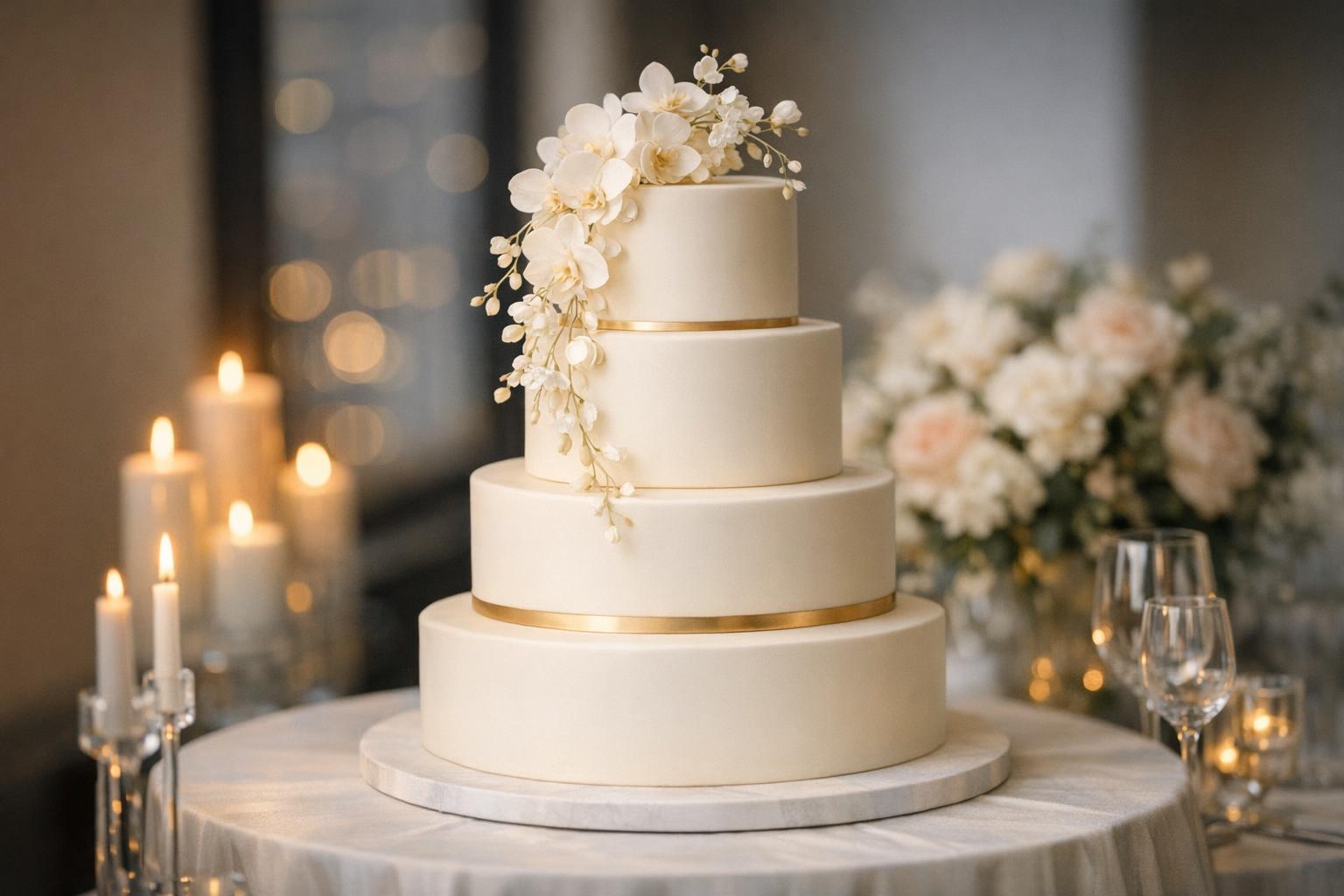
The wedding cake is one of the few design choices that doesn’t just sit in the background—it waits, beautifully, for its moment. You see it across the room like a centerpiece you can taste: a soft glow of buttercream, a sharp line of modern fondant, a cascade of flowers that echoes the bouquet. A dream wedding cake isn’t simply “pretty.” It’s a visual identity for your reception, translated into tiers and texture.
That’s why couples often talk about their cake the way they talk about fashion: silhouette, finish, palette, and mood. The best cakes for weddings don’t compete with your day; they complete it—tying together the ceremony atmosphere, the table styling, and the way the room feels at golden hour when the music shifts and the celebration turns intimate.
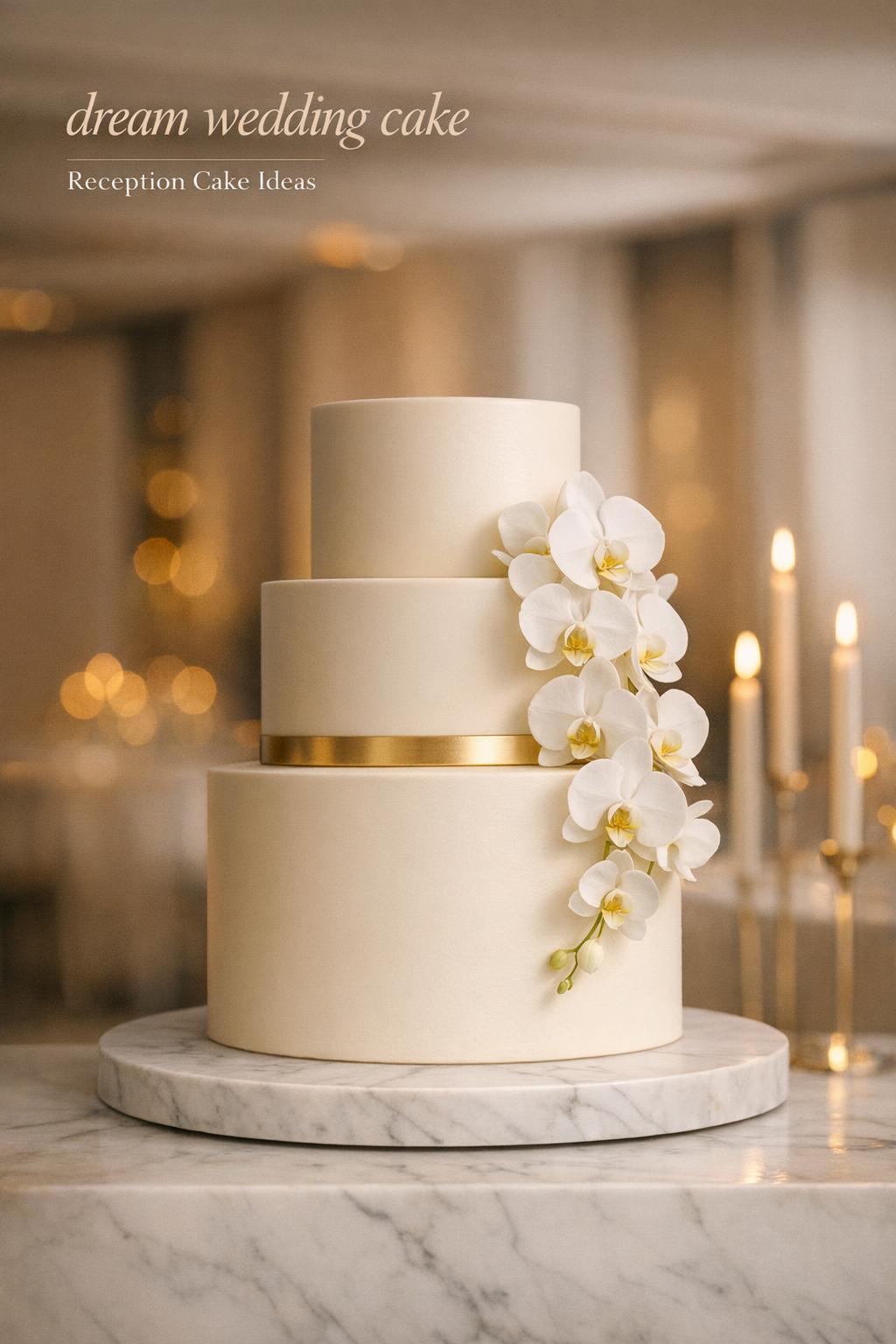
Below, you’ll find a curated set of “looks”—not a checklist—so you can explore reception cake ideas the way a stylist explores outfits: different interpretations of the same romantic intention, each designed for a particular kind of wedding moment. Along the way, you’ll get practical guidance for making cakes for wedding celebrations feel effortless, cohesive, and truly yours.
Before you pick a design: the “cake outfit” mindset
Think of your cake as the reception’s signature piece. Just as a bridal look balances fabric, shape, and detail, a cake balances form (the silhouette of tiers), texture (buttercream, fondant, or something intentionally imperfect), and styling (flowers, fruit, piping, or minimal structure). This mindset keeps you from choosing a design you love online but can’t actually picture in your venue.
Turn wedding inspiration into a plan you can actually follow.
Zarellea brings your guest list, budget, vendors, and day-of details into one shared space — so no beautiful idea gets lost in the shuffle.
When couples ask for the “latest wedding cakes,” what they’re usually craving is not a single trend—it’s a feeling: a cleaner finish, a more intentional palette, a more fashion-forward shape, or a more personal detail. The easiest way to decide is to match your cake to the same visual rules you’re already using for your wedding: the tone of the room, the softness or sharpness of your décor, and whether your overall styling leans classic, modern, garden-romantic, or minimalist.
- Silhouette: tall and statuesque, low and wide, perfectly stacked, or intentionally asymmetric
- Finish: smooth and crisp, softly textured, or painterly and organic
- Palette: monochrome, neutrals, soft pastels, or a single statement color
- Details: floral accents, refined piping, subtle sheen, or minimalist negative space
Look: Clean modern tiers for a city-chic reception
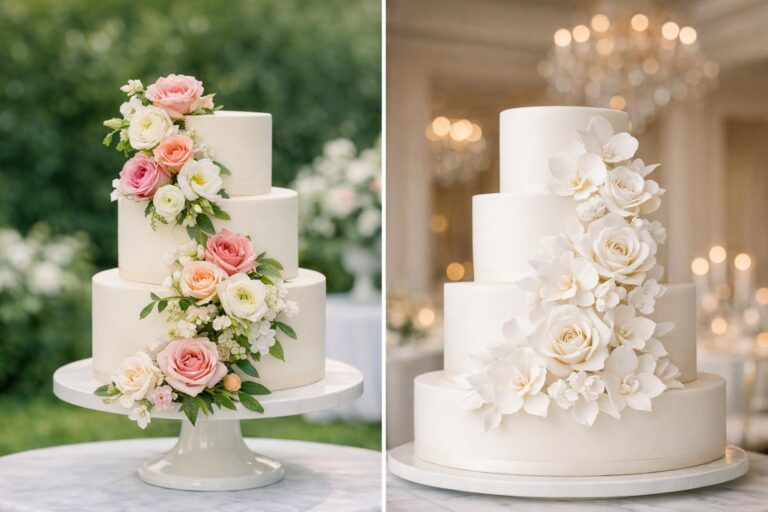
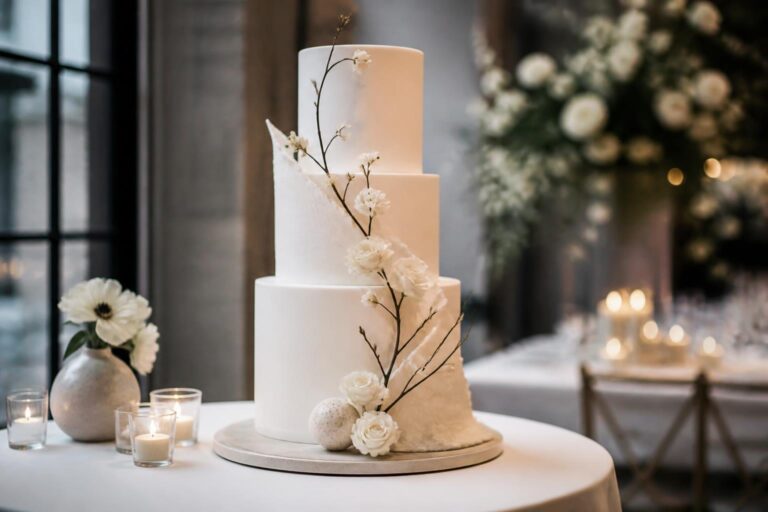
This look is about quiet confidence—an architectural cake that feels tailored, not fussy. The silhouette is sleek and vertical, designed to read clearly across a candlelit room. It photographs like a modern gown: smooth lines, intentional proportions, and a finish that looks immaculate from every angle.
Choose crisp stacked tiers with a smooth exterior that feels “pressed” and polished. Keep the palette restrained—creamy whites, soft ivories, or pale neutrals—then add one detail that acts like jewelry: a slim band, a subtle texture shift, or a single sculptural accent. This is one of those reception cake ideas that pairs beautifully with a minimalist tablescape and modern florals.
- Key styling notes: clean edges, consistent tier spacing, a refined topper or no topper at all
- Palette: monochrome whites and warm neutrals
- Vibe match: modern venues, gallery-like spaces, evening receptions
Why it works for a dream wedding cake: the simplicity makes your entire wedding feel more elevated. The cake doesn’t need to “shout” to be memorable; it becomes a calm, luxurious focal point that fits effortlessly into a contemporary wedding vision.
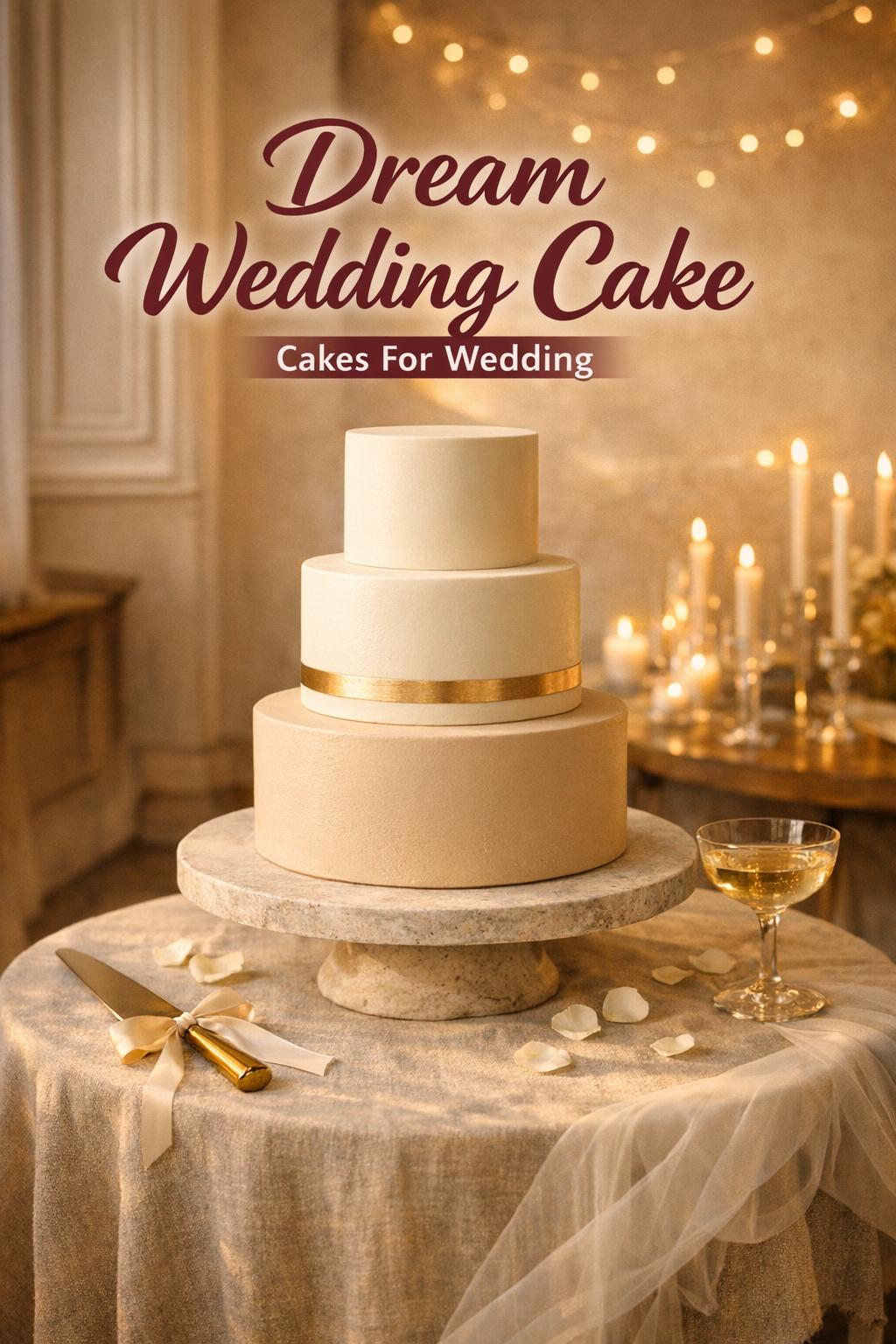
Look: Soft garden romance with floral movement
This look feels like the moment right after vows—when everything is tender, slightly dewy, and glowing. The silhouette is gentle rather than sharp, with a finish that reads romantic and tactile. It’s the cake equivalent of a flowing dress, the kind that moves when you walk.
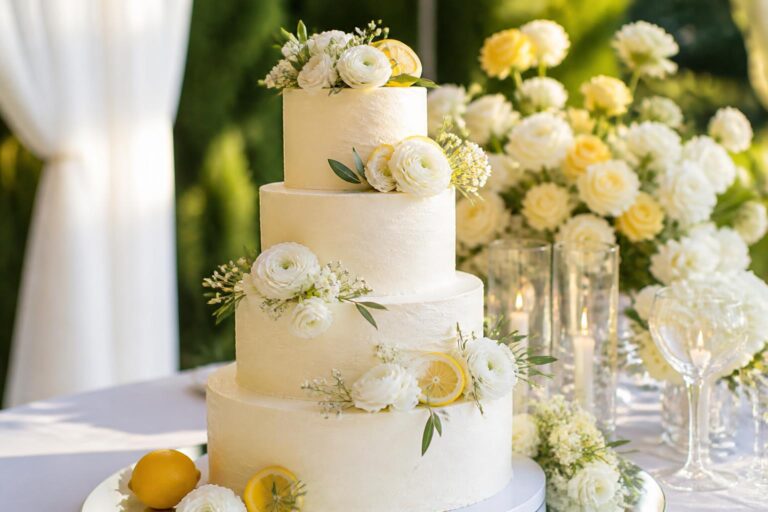
Lean into a softly textured exterior, then bring in florals in a way that feels intentional rather than crowded. Instead of covering every inch, consider a few placements that echo your bouquet: a partial cascade, a cluster at the base, or light accents that travel diagonally. It’s one of the most beloved cakes for weddings because it instantly harmonizes with floral-forward décor and outdoor ceremonies.
- Key styling notes: airy florals, delicate placement, soft texture over rigid symmetry
- Palette: warm whites, blush-leaning neutrals, gentle botanical tones
- Vibe match: garden venues, spring and summer receptions, romantic ceremony-to-reception flow
Why it works: it connects your cake to the living beauty of the day. When done with restraint, floral styling becomes a bridge between ceremony and reception—like carrying a piece of the aisle into the celebration.
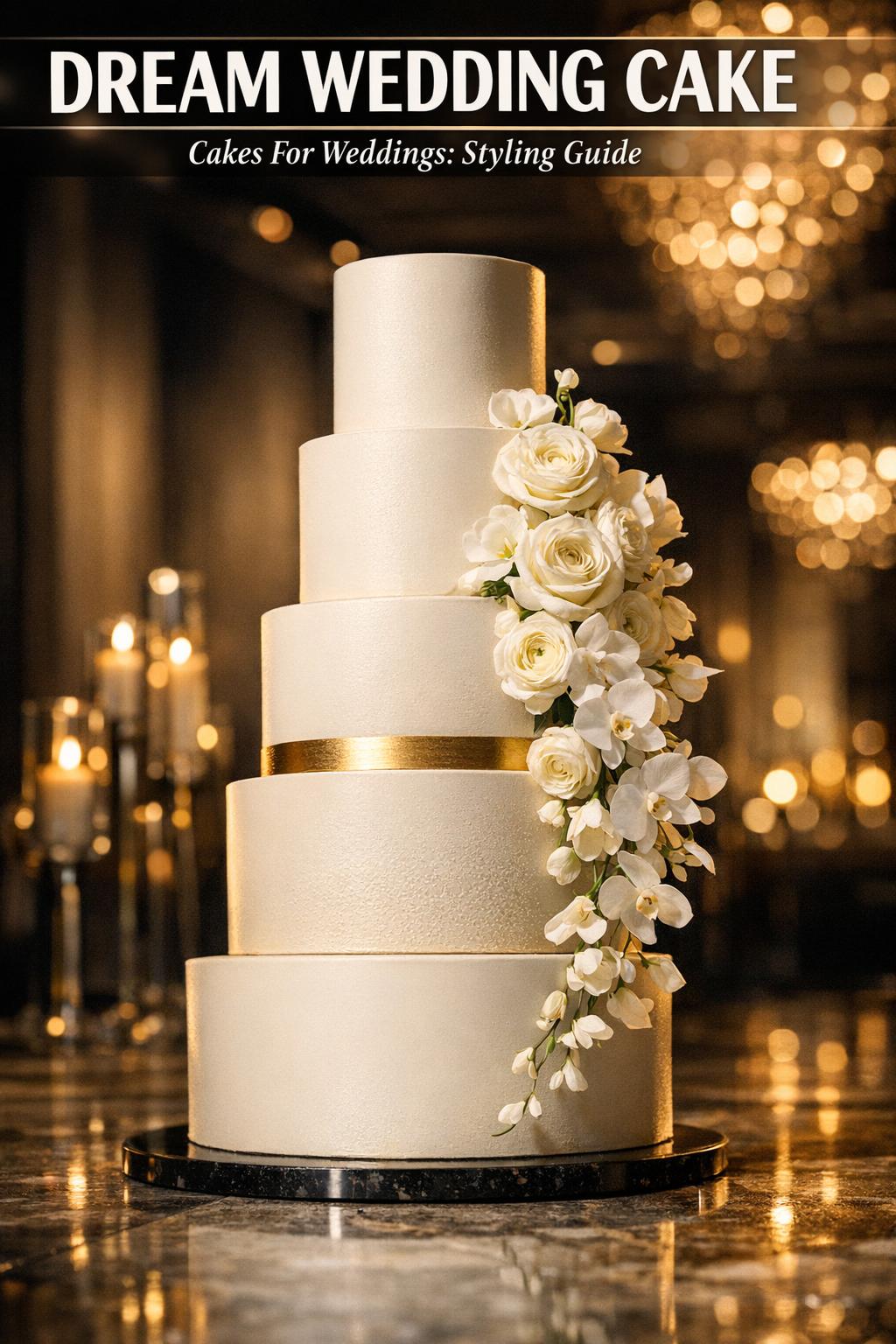
Look: Minimal texture, maximal emotion (the “quiet luxury” cake)
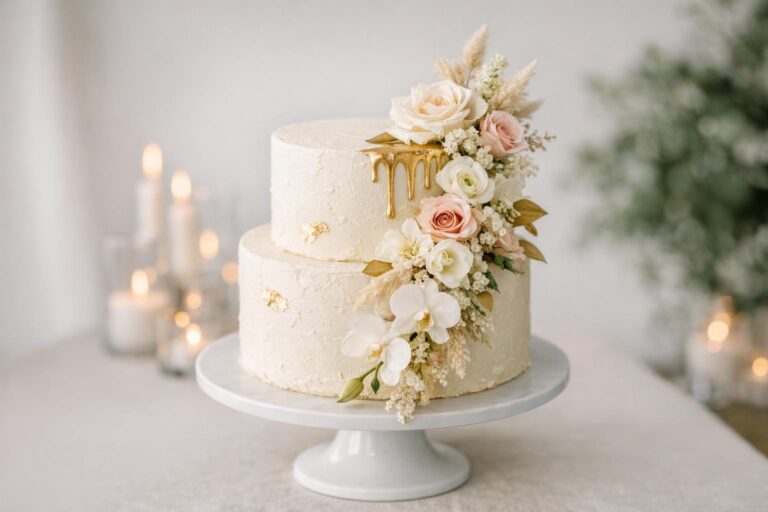
Some couples want their reception to feel intimate and refined—warm candlelight, soft linens, and a mood that’s more whispered than announced. This cake look embraces that same restraint. The silhouette stays classic, but the surface tells the story: subtle texture that catches the light as the night deepens.
Choose a finish with fine detail rather than loud decoration. Think understated texture that looks beautiful up close—something you notice when you’re standing beside it for the cake cutting photos. Keep the color close to neutral, then add dimension through tone-on-tone styling. In the world of latest wedding cakes, this is the kind of modern classic that feels timeless quickly.
Why it works for cakes for wedding celebrations: it reads expensive without feeling showy. The elegance comes from editing—fewer elements, chosen more carefully, so your cake feels like a deliberate design choice rather than an afterthought.
Look: Statement silhouette for couples who want a “wow” moment
If your reception is designed around drama—high ceilings, bold music, a grand entrance—your cake can match that energy. This look focuses on silhouette first: height, shape, and the way the tiers create presence in the room. It’s the equivalent of a fashion moment that turns heads, then stays elegant once the surprise settles.
To keep a statement cake from feeling overwhelming, let one element lead. That might be a taller build, a more sculptural profile, or a deliberate contrast between smooth areas and textured ones. Keep the palette controlled so the form can shine. Among reception cake ideas, this option is especially powerful when the cake table is styled like its own vignette—lighting, linens, and a little breathing space around the tiers.
- Key styling notes: one bold design choice, clean supporting details, intentional display area
- Palette: neutrals with one accent, or a tonal monochrome
- Vibe match: formal receptions, evening ballroom energy, dramatic modern venues
Why it works: a dream wedding cake doesn’t have to be subtle. When the silhouette is thoughtfully designed, drama can still feel romantic—like a love story told with confidence.
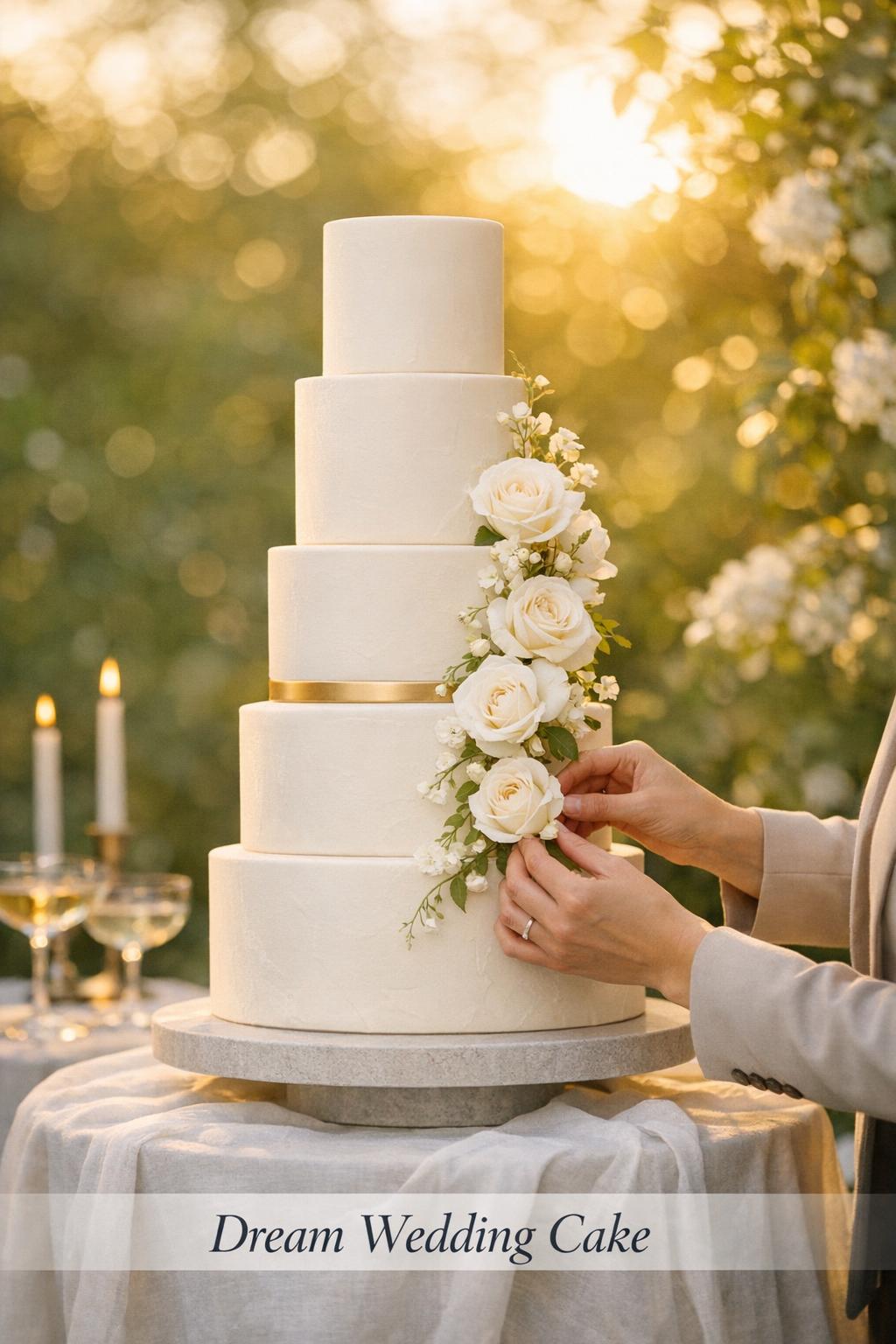
Look: The reception-friendly cake designed for real life
Not every wedding day runs like a styled shoot—and that’s exactly why this look exists. It’s for couples who want beauty and practicality in the same breath: a cake that looks polished at the start of the evening and still looks good after it’s been moved, photographed, and served in a lively room.
Visually, it’s balanced and approachable: classic tier proportions, a finish that isn’t so fragile it shows every mark, and styling that can handle a little movement. Choose details that hold up—clean lines, secure accents, and a display setup that won’t wobble as guests gather around. This is one of the most underrated ways to achieve cakes for weddings that feel “effortless,” because the behind-the-scenes planning is thoughtful.
Why it works: it respects the pace of a real reception. The cake becomes part of your celebration—not a delicate object everyone is afraid to stand near.
Key pieces that make any dream wedding cake feel intentional
Even the most beautiful design can feel slightly “off” if it doesn’t connect to the rest of your wedding. The easiest way to create harmony is to choose a small set of design anchors and repeat them across your styling—like you would with accessories in a fashion look. When couples say they want the latest wedding cakes, they often mean cakes that look cohesive with the entire event, not isolated from it.
- A single guiding finish: commit to one primary texture or surface style so the cake doesn’t look undecided
- A controlled palette: pull tones from your linens, stationery, or floral color story
- A signature detail: one memorable element (placement, shape, or accent) that guests will recall
- A considered display: the stand, table linen, and lighting matter as much as the cake itself
When these “key pieces” are aligned, reception cake ideas stop feeling like scattered inspiration and start feeling like a design plan.
Style tip: match the cake’s mood to your venue, not just your photos
Venue conditions shape how a cake looks and how it holds up through the event. A sleek, crisp finish feels natural in a modern interior space; a softer texture feels at home in a garden or outdoor setting. If you’re planning a warm-weather celebration, choose styling that still looks romantic even if the room gets lively and the schedule runs long.
The most common mismatch I see is a cake chosen purely for online inspiration, then placed into a venue with a completely different personality. If your reception space is rustic or highly ornate, a hyper-minimal cake can feel underdressed; if your venue is clean and modern, an overly busy cake can feel visually heavy. The goal isn’t to “blend in”—it’s to belong.
How to recreate the look you love without copying it exactly
It’s normal to fall in love with a single image and want it to be your cake. But the most satisfying dream wedding cake is usually a translation, not a duplicate—built around your guest count, your reception timeline, and your styling priorities. Think of it the way you’d recreate an outfit: you keep the silhouette and mood, then adjust the details to fit your own life.
- Start with the silhouette: pick stacked, sculptural, or softly romantic as your foundation
- Choose one texture: smooth, gently textured, or intentionally organic—then commit
- Align the palette: use your wedding’s neutrals and accents rather than forcing new colors
- Edit the details: if you add florals, keep placement intentional; if you add texture, keep the silhouette clean
This approach keeps cakes for wedding celebrations personal and practical while still honoring the inspiration that made your heart jump in the first place.
Reception cake ideas that photograph beautifully (and why)
Most couples don’t just want a cake; they want the photo moment. The cake-cutting images often end up framed, shared, and remembered because they capture a relaxed kind of intimacy—hands close together, laughter, a soft pause in the middle of the party. The designs that photograph best usually have clarity: a silhouette that reads instantly and details that don’t visually “buzz” in camera.
To create that clarity, keep contrast intentional. If the cake has heavy texture, keep the accents minimal. If the cake is ultra-smooth, one well-placed detail can keep it from feeling flat. And don’t underestimate lighting: a cake placed in a dark corner will never look as dreamy as one given a small spotlight or positioned near ambient glow.
Planning notes couples overlook with cakes for weddings
There’s a difference between choosing a design and planning for it. Many cake disappointments come from small logistical gaps: the cake arrives late, the display table is too small, the cake is placed under harsh overhead lighting, or the design elements don’t match the rest of the décor because no one shared the broader styling plan. A little coordination protects the magic.
- Confirm the cake table setup: size, linen choice, and location should be decided before the wedding day
- Think about the “approach” view: where guests will first see the cake, and what’s behind it in photos
- Plan the cutting moment: timing, lighting, and whether you want a private or public cut
- Keep styling cohesive: share your color palette and mood so the cake feels like part of the design story
These are the small, real-world decisions that make a dream wedding cake feel effortless rather than stressful.
A gentle reality check: “latest wedding cakes” vs. timeless choices
Trends can be wonderful when they align with your wedding’s identity—but they can feel dated quickly if chosen only because they’re popular. If you love browsing the latest wedding cakes, use them as a lens to refine what you already like. Ask yourself what you’re responding to: the clean silhouette, the romantic softness, the dramatic height, or the restrained palette.
A timeless cake isn’t boring. It’s simply a design built on proportion and coherence, with one or two details that feel personal. If you’re uncertain, choose classic structure and express your personality through subtle styling—because the most lasting kind of beauty is the kind that still looks like you ten years from now.
Common styling mistakes (and how to avoid them)
Most cake “mistakes” aren’t disasters—they’re small mismatches that keep the cake from feeling like it belongs to the day. The good news is that they’re easy to prevent once you know what to look for, especially when you’re balancing reception cake ideas with your overall design plan.
- Too many focal points: if the cake has bold texture, bold florals, and bold color, it can feel visually noisy
- Ignoring the room’s style: a cake should complement your venue’s mood rather than fight it
- Undersized display: a gorgeous cake can look underwhelming on a table that’s too large or poorly styled
- Overcommitting to a single photo: inspiration should guide you, not trap you
When you avoid these, cakes for wedding celebrations look intentional even when the day is busy, joyful, and beautifully imperfect.
Bringing it all together: choosing your dream wedding cake with confidence
By the time you’re ready to decide, you shouldn’t be choosing between ten unrelated designs—you should be choosing between two or three that all feel like the same wedding, just with different accents. That’s the styling sweet spot: clarity, cohesion, and a little romance.
If you want a simple decision framework, start with mood (modern, romantic, minimalist, dramatic), then select silhouette, then finalize details. This keeps the process calm and protects your budget and timeline. And if you’re still torn, choose the design that will feel most natural in the room when you imagine your guests arriving—because that is where the cake becomes more than décor. It becomes part of the memory.
FAQ
What makes a cake feel like a dream wedding cake instead of just a pretty cake?
A dream wedding cake feels connected to the entire celebration: it matches the wedding’s mood, repeats the palette and styling cues found in your florals and décor, and has a clear silhouette and finish that look intentional in your venue and photos.
How do I choose between modern and romantic reception cake ideas?
Look at your venue and décor first: modern cakes typically feel sleek, minimal, and architectural, while romantic cakes feel softer with gentle texture and floral movement; the right choice is the one that naturally “belongs” in the room you’re styling.
Do the latest wedding cakes always work for every wedding style?
Not always—trend-forward details are best when they align with your overall design identity; if your wedding is more classic, you can keep a timeless silhouette and add a subtle modern detail so the cake feels current without feeling mismatched later.
What’s the easiest way to make cakes for weddings look cohesive with the reception design?
Choose one primary finish, keep the palette controlled using tones already present in your wedding styling, and add one signature detail; then give the cake an intentional display moment with the right table size, linen, and lighting.
How can I make sure my cake-cutting photos look good?
Prioritize clarity and placement: select a design with a readable silhouette, avoid overly busy details, and place the cake where lighting is soft and flattering—then plan the timing so the moment feels unrushed and naturally romantic.
What’s a common mistake couples make when selecting cakes for wedding receptions?
A common mistake is choosing a cake from a single inspiration image without considering venue personality, display setup, and the wedding’s palette; this can make the cake feel disconnected even if it’s beautiful on its own.
How do I keep a statement cake from feeling overwhelming?
Let one element lead—either silhouette, texture, or a single accent—and keep everything else restrained; when the palette stays controlled and the display area has breathing room, the cake feels bold yet elegant.
What should I focus on first if I feel stuck choosing between different cakes for wedding options?
Start with mood, then decide on silhouette, then finalize finish and details; narrowing decisions in this order turns scattered inspiration into a cohesive plan and makes it easier to choose a design that fits your venue and reception flow.