Candlelit Romance, Centered on a Lambeth Wedding Cake
The moment you picture cutting your wedding cake, you’re usually picturing more than dessert. You’re picturing the way candlelight catches on frosting details, the hush right before the first slice, and the quiet thrill of seeing something “so you” sitting at the center of the reception. A lambeth wedding cake has a way of turning that moment into a scene—because it’s not just a cake, it’s a statement made in piping: ornate, romantic, and intentionally dramatic.
This style—rooted in vintage and Victorian-era-inspired motifs—has become a favorite for couples who want wedding cakes vintage in spirit, but still personal and current. Whether you want a vintage white wedding cake that feels timeless, a white piping wedding cake with delicate swags and pearls, or a tiered wedding cake finished with cherries for a playful wink, the Lambeth look can be tailored to your venue, your mood, and your budget conversations with a baker.
Below, you’ll find a complete, practical guide: what a Lambeth cake is, why it’s called Lambeth, the key piping motifs that define the look, design ideas you can use to brief a baker, and real-world sourcing inspiration—especially from California artisans like Léle Pâtisserie in Santa Barbara, CocoaBerry Cake Co. in Orange County, Nicole Bakes Cakes in Los Angeles, and Laura Marie Cakes in Temecula. We’ll also pull inspiration from a real wedding moment in Savannah, Georgia at Bellwether House, where a three-tier Lambeth cake with intricate piping and cherries delivered pure vintage romance.
What is a Lambeth wedding cake, really?
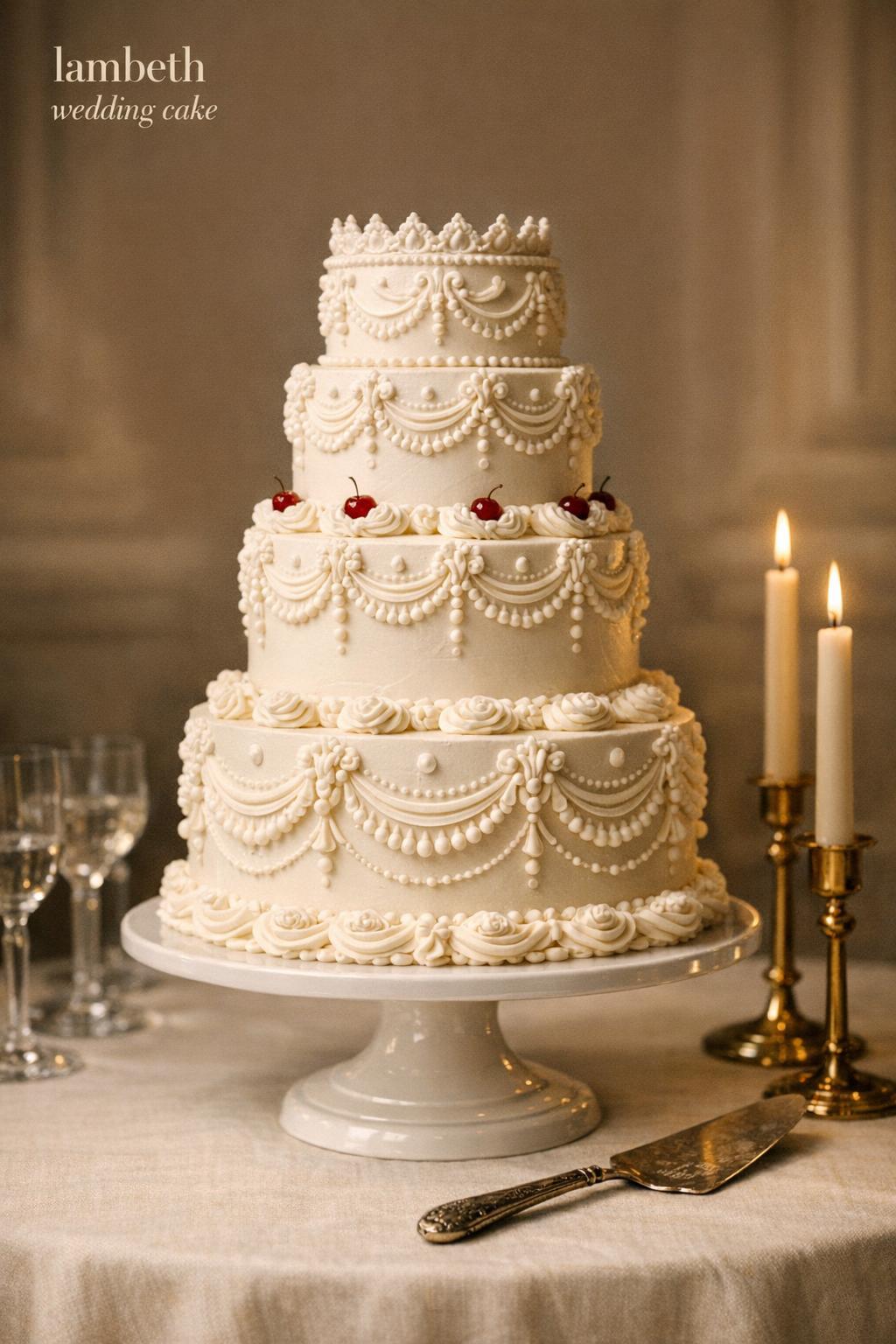
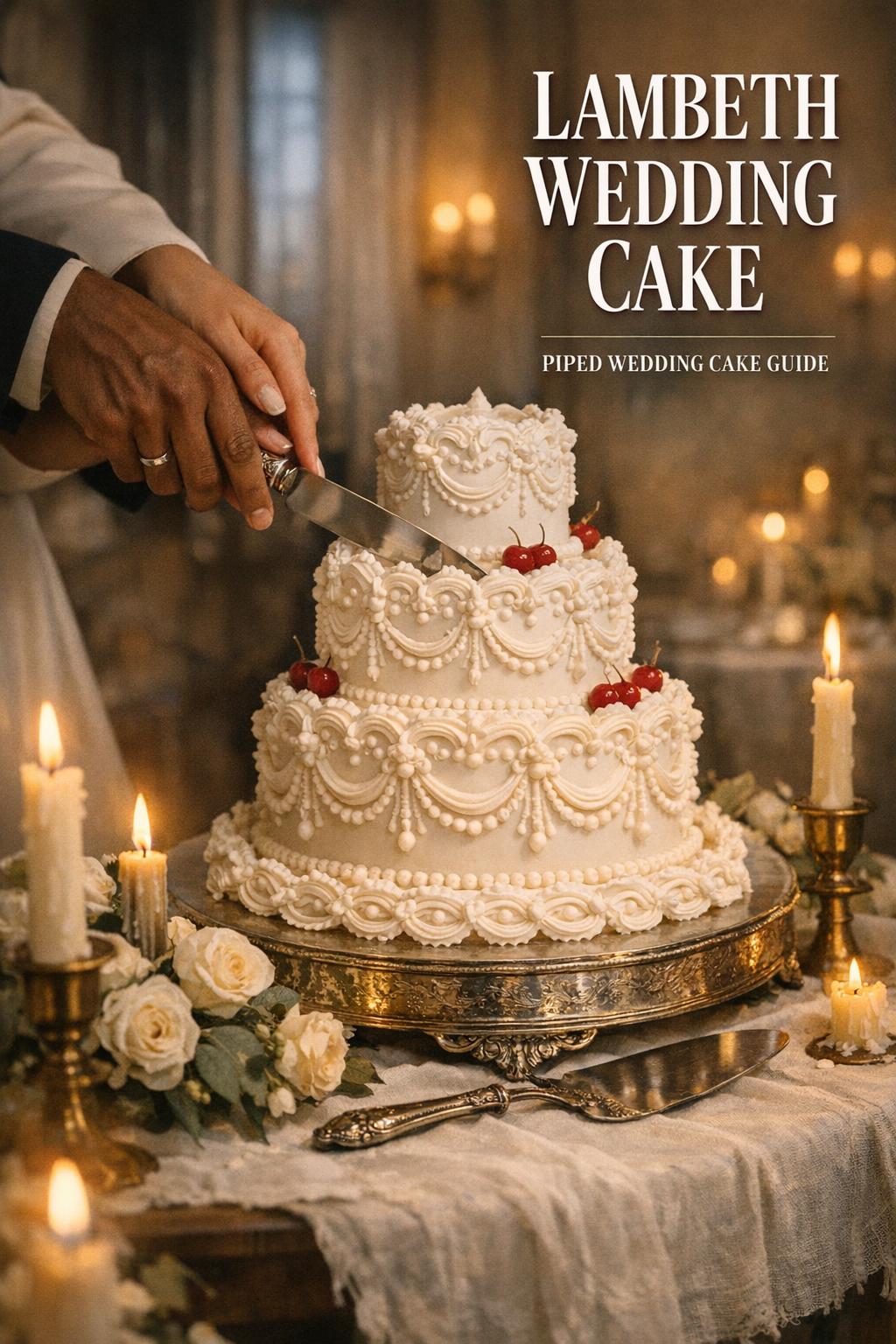
A Lambeth cake is defined by its signature, elaborate piping work—think layered borders, swoops, drapes, and ornamental details that feel almost like fabric or carved trim. In wedding form, a lambeth wedding cake is typically a piped wedding cake where the decoration is the main event: the texture, the dimension, and the artistry come from piping, not from minimalism.
Turn wedding inspiration into a plan you can actually follow.
Zarellea brings your guest list, budget, vendors, and day-of details into one shared space — so no beautiful idea gets lost in the shuffle.
While couples sometimes ask whether a Lambeth cake must be “vintage,” the better way to think about it is this: Lambeth is a piping style that can lean wedding cakes vintage, or it can be modern depending on shape, color palette, finishing textures, and accent choices (like cherries). That flexibility is part of why the style works for everything from candlelit ballroom receptions to intimate garden dinners.
Why it’s called “Lambeth”
The name ties back to Joseph Lambeth, the historical origin often referenced when people discuss Lambeth cakes. When you’re explaining the style to family or vendors, it can help to mention that it’s not a random trend name—it points to a recognizable piping tradition that has been reinterpreted by today’s bakers in both vintage and modern ways.
Buttercream, fondant, and that iconic piped look
Many Lambeth-inspired wedding cakes rely on piped detailing that shines in soft, creamy finishes. You’ll often hear couples and bakers talk about buttercream (including Swiss meringue buttercream) in this context because it supports the sculptural, dimensional piping that makes a Lambeth cake feel so luxurious. In practical planning terms, this is why your first conversation with a baker should include both the look you want and the finish you’re comfortable with—especially if you’re dreaming of a vintage white wedding cake where every shadow and ridge of white piping shows.
The Lambeth piping motifs that create the “romance”
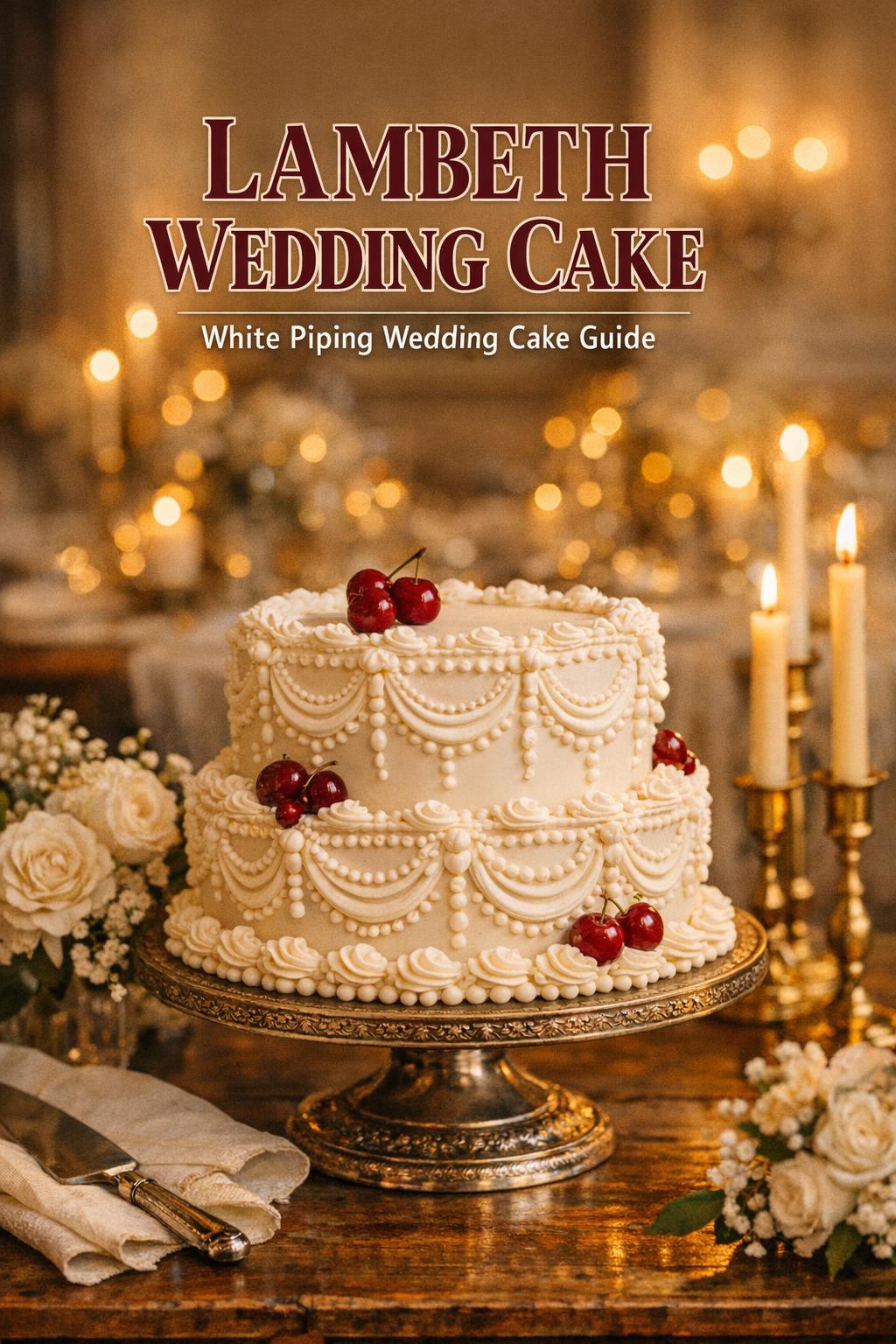
If you’ve ever wondered why a Lambeth cake feels more “bridal” than a typical frosted cake, it’s the motifs. The style draws from Victorian-inspired piping language—decorative elements that repeat, layer, and frame the tiers so the cake reads like architecture. Even on a simple round cake, the piping can create the feeling of a heirloom piece placed on the table.
These motifs aren’t just decoration; they’re a design system. The more you understand the pieces, the more confidently you can brief your baker, compare inspiration photos, and decide whether you want a refined white piping wedding cake or a more playful, modern reinterpretation.
- Scrolls: Curved, ornate lines that add movement and a “handcrafted” signature.
- Garlands: Draped piping that mimics fabric swags—especially romantic on a tiered wedding cake.
- Dots: Small piped dots that add texture and fill negative space without looking heavy.
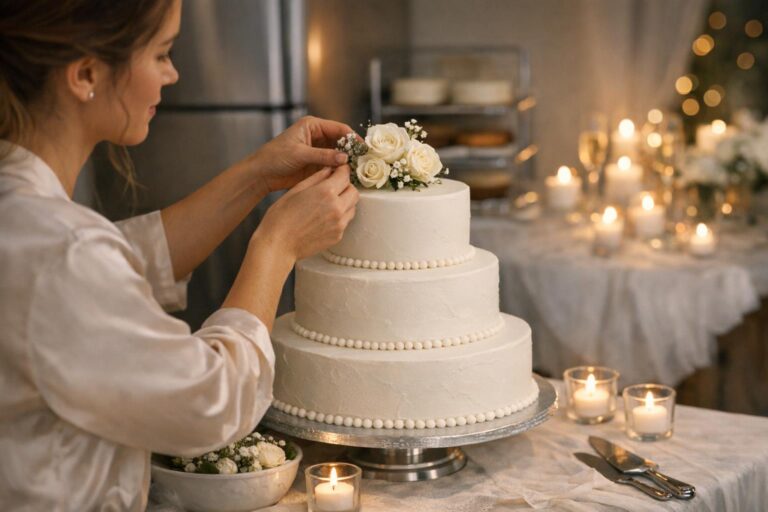
- Pearls: A beaded border effect that reads instantly bridal and suits a vintage white wedding cake.
Tip: When you save inspiration images, don’t just save “the whole cake.” Zoom in and note which motifs you’re responding to—pearls around every tier, mirrored piping, garlands only on the middle tier, or dots used as a delicate filler. Those small observations will make your consultation much more productive.
Choosing your base: shape, tiers, and silhouette
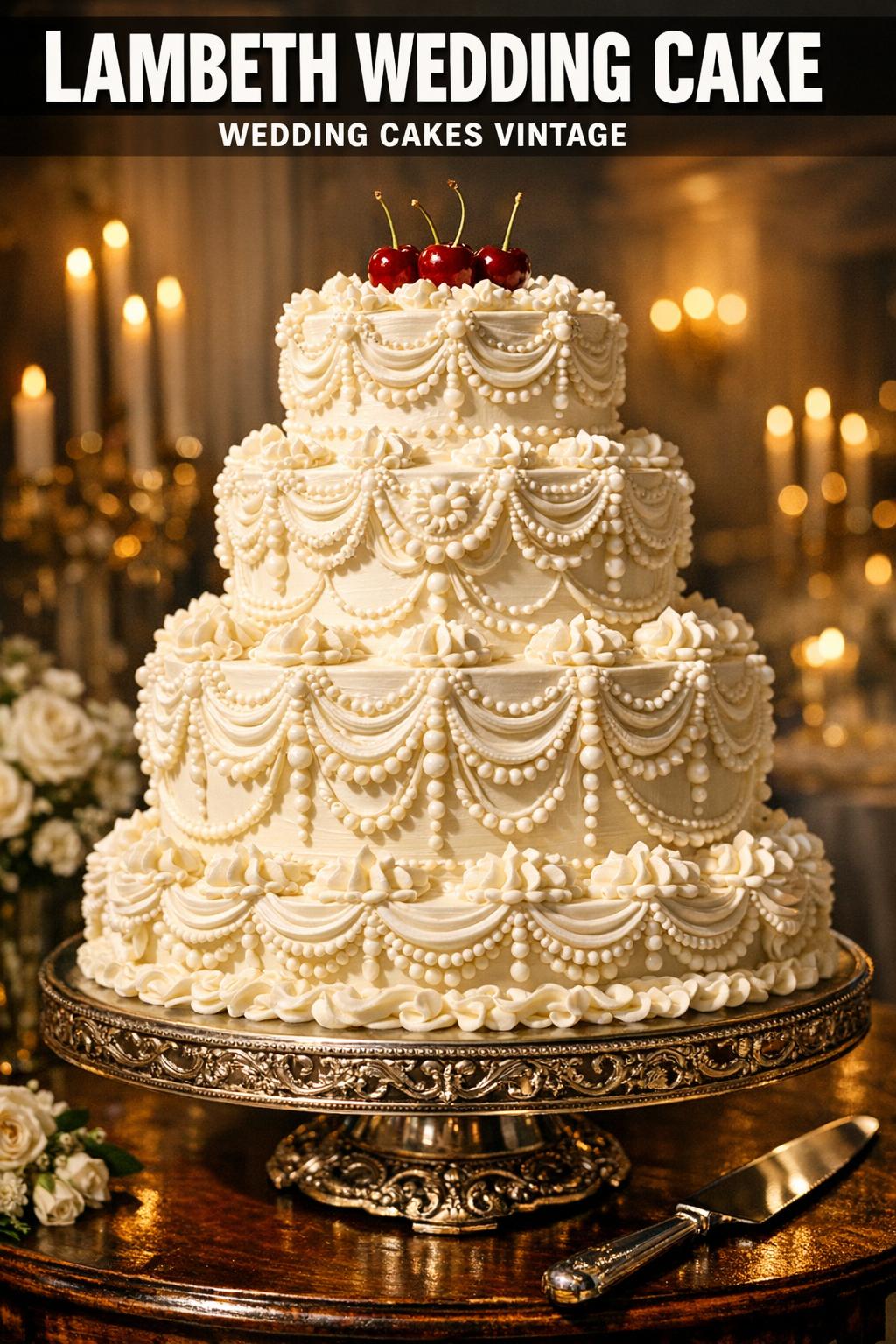
Before you decide on cherries, pillars, or heart shapes, choose the silhouette. A lambeth wedding cake can be dramatic because of piping alone, but shape and structure determine how “grand” it feels in a room—and how well it matches your venue.
Round tiers: the classic foundation
Many Lambeth cakes are built on round tiers because the piping naturally wraps, frames, and repeats. If you love the idea of wedding cakes vintage, round tiers support that heritage feeling—especially when you keep the palette soft and the piping dimensional. Round tiers also make it easy to create symmetry with mirrored piping patterns.
Heart-shaped Lambeth cake: a modern romantic twist
A heart-shaped Lambeth cake can feel more playful and contemporary, even when the piping is Victorian-inspired. It’s a strong choice for couples who want the craft of Lambeth piping but with a silhouette that reads youthful and bold. It also photographs beautifully during cake cutting because the shape is instantly recognizable, even from across the room.
Pillars: when you want height and ceremony
Pillars introduce a sense of theater—especially in a ballroom or formal venue. In Lambeth style, pillars can amplify the vintage mood and turn the cake into a centerpiece that feels almost like part of the venue décor. If you’re considering pillars, talk through logistics early: delivery, setup, and where the cake will sit so guests can appreciate the details without crowding it.
Design ideas for a lambeth wedding cake (with the “why” behind each)
Inspiration is easiest when it’s tied to atmosphere. Below are Lambeth wedding cake ideas you can adapt, each paired with the kind of wedding moment it supports—so you’re not just choosing a pretty design, you’re choosing a feeling.
The vintage white wedding cake that glows in candlelight
If your reception leans classic—soft florals, warm lighting, timeless music—lean into a vintage white wedding cake with layered piping motifs. White-on-white piping creates depth through shadows rather than color contrast, so it looks especially beautiful under candlelight and in evening photography. This is the version of Lambeth that feels like a love letter to tradition, without needing anything loud to make it memorable.
Tip: Ask your baker to show you examples of “dimension” in piping—how high the pearls sit, how crisp the garlands look—because the whole charm of a white piping wedding cake is that it reads sculptural, not flat.
The white piping wedding cake with modern restraint
Not every Lambeth cake needs maximal detail. A more restrained piped wedding cake can use fewer motifs placed intentionally: a pearl border here, a small garland there, leaving smooth sections of buttercream as visual rest. This option works well for minimalist-leaning couples who still want romance and craftsmanship, just edited.
Cherry accents: playful, nostalgic, and camera-ready
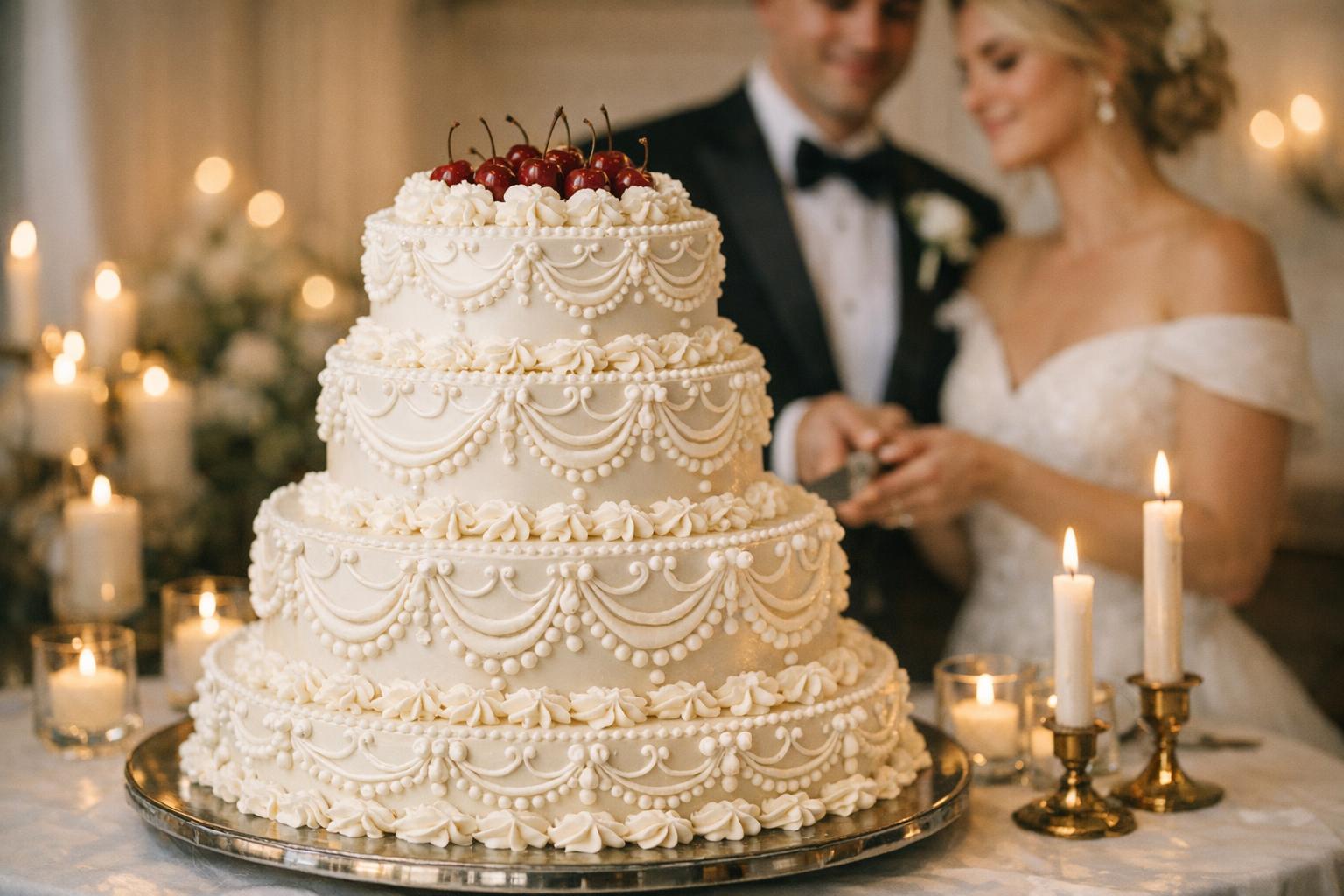
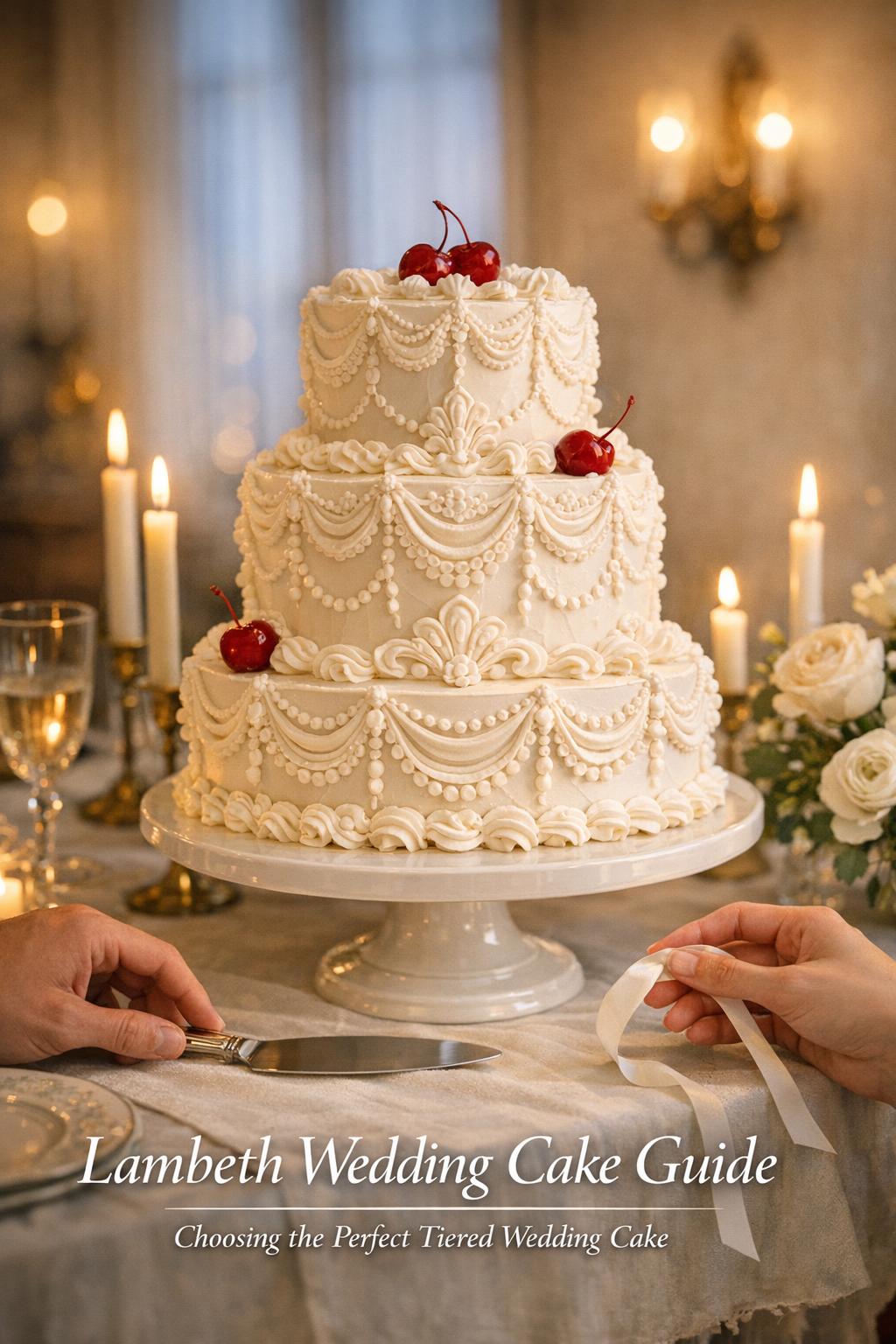
Cherries have become a recognizable accent in modern Lambeth interpretations, adding a wink of nostalgia that feels especially charming for vintage-themed celebrations. In a real wedding context, a three-tier Lambeth wedding cake with intricate piping and cherries stood out at Bellwether House in Savannah, Georgia, echoing a vintage vibe while still feeling joyful and fresh.
Cherries work best when the piping is already strong—because they’re an accent, not the whole story. If you love the idea, decide with your baker whether cherries appear on every tier or only as a finishing detail near the top, so the cake still feels balanced.
Mirrored piping for a tailored, fashion-like finish
Mirrored piping is exactly what it sounds like: motifs placed in symmetrical pairs so the cake feels tailored and intentional. This is an elegant way to make a tiered wedding cake feel polished—particularly if your wedding style is structured (think clean tablescapes, thoughtful stationery, and a venue with architectural details). The symmetry also photographs beautifully because every angle looks “complete.”
Textural buttercream with Lambeth framing
Some modern bakers play with buttercream textures under the piping—soft strokes, gentle ridges, or subtle movement that contrasts with crisp borders. This approach can feel contemporary while still honoring Lambeth tradition. It’s especially appealing when you want the cake to feel artistic and less formal, while still unmistakably bridal.
Modern meets vintage: how today’s bakers reinterpret Lambeth
Part of the Lambeth revival is that it gives bakers room to express personality. You’ll see the “vintage Lambeth style” described alongside “modern takes,” and the difference often comes down to color palettes, texture choices, and how densely the piping is applied.
California in particular has visible examples of this modern-meets-vintage approach, where artisans keep the Victorian-inspired piping language but make it feel airy, delicate, and wedding-ready for coastal and city celebrations alike.
California artisan spotlights (and what couples can learn from them)
If you’re planning on the West Coast—or simply collecting inspiration—these California-based bakers are frequently highlighted for Lambeth work, each connected to a specific region and style sensibility:
- Léle Pâtisserie (Santa Barbara): A romantic coastal setting pairs naturally with delicate piping and refined palettes, making Lambeth details feel light rather than heavy.
- CocoaBerry Cake Co. (Orange County): A studio known in this context for Lambeth interpretations that can feel polished and contemporary while still honoring vintage flair.
- Nicole Bakes Cakes (Los Angeles): A city where bold styling choices often shine; Lambeth piping can be pushed more modern through shape choices and statement accents.
- Laura Marie Cakes (Temecula): A region often associated with romantic celebrations; Lambeth can lean classic here, with soft textures and wedding-forward detailing.
What to take from these examples, even if you aren’t local: Lambeth style isn’t one rigid template. It’s a vocabulary your baker can speak in a way that matches your venue—Santa Barbara softness, Los Angeles edge, Orange County polish, Temecula romance—without losing the essence of piped craft.
A venue-specific lens: making Lambeth work from coastal California to Savannah
Cakes don’t exist in a vacuum; they sit in a room full of color, light, and motion. A Lambeth cake’s raised piping casts tiny shadows, so it changes character depending on where it’s displayed. Thinking about your location and venue style early helps you make choices you won’t second-guess later—especially when deciding between wedding cakes vintage and more modern interpretations.
Historic venues and vintage themes: why Lambeth feels “at home”
At a venue like Bellwether House in Savannah, Georgia—featured as the backdrop for a ‘60s-style Danish and American wedding—Lambeth piping looks especially natural. The ornate detailing on the cake echoes the romance of a historic setting, and cherries can add a playful vintage note without feeling out of place. If your venue has a sense of age, architecture, or story, Lambeth can feel like it belongs there.
Modern spaces: using piping as “soft architecture”
In a modern venue—clean lines, minimal décor—the cake can become the romantic focal point. A white piping wedding cake can act like soft architecture: it brings detail and tradition into an otherwise streamlined space. This is when restraint can be powerful: fewer motifs, impeccable execution, and a silhouette that feels intentional.
Tip: If your venue is bright and modern, ask your baker how the piping will photograph in strong, direct light. Lambeth texture is gorgeous, but you want the details to read clearly rather than disappear into glare.
How to find a Lambeth cake near you (and what to ask before you book)
Searching “Lambeth cake near you” or “Lambeth cake near me” is a great starting point, but booking the right baker depends on knowing what to evaluate. Because Lambeth is technique-driven, not every wedding cake portfolio will show the same level of piping complexity. Your goal is to confirm the baker can execute the motifs you love—cleanly, consistently, and at the size you need.
Portfolio proof: what to look for in photos
A Lambeth cake should look crisp, dimensional, and intentional. When you review images, look for consistency across tiers and the confidence of the piping work. A beautiful piped wedding cake doesn’t rely on a single pretty border; it’s the repetition and layering that create the signature effect.
- Even spacing in pearls and dots (no sagging or uneven lines)
- Clean edges where piping meets the cake surface
- Motifs that feel proportional to the tier size
- Clear examples of the specific details you want (garlands, scrolls, mirrored piping, cherries)
Your consultation checklist (bring this, even if you feel shy)
Couples often assume they need to speak in technical language. You don’t. But you do need clarity. Coming prepared helps you get accurate pricing guidance, realistic timing, and a design that feels aligned with your wedding style.
- Your venue name and location (for delivery and setup planning)
- Your wedding aesthetic: wedding cakes vintage, modern, or a mix
- Whether you want a tiered wedding cake, heart shape, or pillars
- Whether the look is buttercream-forward (including Swiss meringue buttercream) and how important texture is
- Your must-have motifs (pearls, garlands, dots, scrolls) and any accents like cherries
Tip: If you’re torn between two designs, ask your baker which one is most resilient for your venue conditions and timeline. This invites expertise, not just aesthetics, into the decision.
Budget, timing, and the reality of a highly detailed piped wedding cake
Lambeth cakes look like art because they are labor-intensive. The detail that makes the style so romantic also means you’ll want to think carefully about schedule and expectations—especially if you’re planning a large tiered wedding cake or want dense piping on every tier.
Why lead time matters with Lambeth piping
Because Lambeth is technique-first, your baker needs time not only to bake and assemble, but to execute piping motifs cleanly and consistently. If you’re working with a popular studio—especially in high-demand areas like Los Angeles, Orange County, Santa Barbara, or destination-like regions—reach out early so your date and design complexity can be accommodated.
What affects cost (without turning your cake into a math problem)
Even without quoting numbers, it helps to understand the pricing logic. Cost is influenced by structure (tiers, pillars), density of piping, complexity of motifs, and finishing choices. A simple white piping wedding cake with restrained borders may be more accessible than a fully covered Lambeth design with layered garlands, pearls, and mirrored piping across multiple tiers.
Tip: If your heart is set on an ornate look but your budget is tight, ask about concentrating Lambeth piping on the tiers most visible during cake cutting and photos, then simplifying less-visible areas. You still get the signature effect—just edited.
How to write a design brief your baker can actually execute
The best Lambeth cakes happen when the couple brings a clear vision and gives the baker room to translate it into structure and technique. A good design brief is not a long essay; it’s a confident snapshot that prevents misunderstandings.
Think of it as the emotional direction (“romantic vintage white wedding cake for an evening reception”) plus the technical anchors (“garlands and pearls, mirrored piping, cherries as accents”). Once those anchors are set, your baker can guide you on what will look balanced across tiers.
- Overall mood: vintage, Victorian-inspired, modern-vintage blend
- Color direction: classic white-on-white, or subtle palette shifts (if desired)
- Structure: tiered wedding cake, heart shape, pillars
- Signature details: scrolls, garlands, dots, pearls; cherries if you want a playful finish
- Priorities: what must be perfect in photos (often the front-facing piping and top tiers)
Tip: Bring one “non-negotiable” photo and two “reference” photos. Too many images can confuse the goal, especially with piping styles that vary subtly from baker to baker.
Common Lambeth cake mistakes (and how to avoid them gracefully)
Most wedding planning stress comes from small mismatches between expectation and execution. Lambeth cakes are no different. These are the quiet pitfalls I see couples run into—often because they fall in love with a photo and forget to translate it into their own venue, timeline, and comfort level.
Mistake: choosing detail density that doesn’t match your wedding’s “volume”
An extremely ornate piped wedding cake can feel overpowering at a very minimal, intimate event, while a too-simple design can feel underwhelming in a grand space. Match the piping density to your wedding’s overall volume: guest count, room size, and how decorated the reception already is.
Mistake: ignoring how the cake will be displayed
Lambeth details are meant to be seen. If the cake is tucked into a corner, the intricate scrolls and pearls lose their impact. Choose a location with breathing room and lighting that flatters texture, and talk about the display at the same time you discuss design.
Mistake: not clarifying the difference between “vintage” and “modern take”
Two cakes can both be “Lambeth” but feel totally different. One can lean wedding cakes vintage with dense garlands and classic piping, while another uses Swiss meringue buttercream texture and selective motifs for a modern finish. Use words like “ornate,” “restrained,” “symmetrical,” and “textural,” and point to specific motifs so your baker understands your version of Lambeth.
A mini gallery in words: Lambeth moments to imagine
Picture the cake table as its own little stage. The room softens for a second as guests look over, not because they’re evaluating dessert, but because the cake feels like a symbol—crafted, celebratory, almost ceremonial. This is where Lambeth style shines: it has presence.
In Santa Barbara, a delicate Lambeth cake from Léle Pâtisserie can feel like it belongs near ocean air and sunset toasts—refined piping details that echo coastal elegance. In Los Angeles, Nicole Bakes Cakes can lean into a more modern take, where bold structure and confident piping feel fashion-forward. In Orange County, CocoaBerry Cake Co. can translate vintage Lambeth styling into something polished and wedding-ready. And in Temecula, Laura Marie Cakes can bring a romantic softness that suits vineyards, warm evenings, and classic wedding storytelling.
Then there’s Savannah: a three-tier Lambeth wedding cake with intricate piping and cherries, set against the vintage mood of Bellwether House. It’s the kind of detail guests remember—not because it’s trendy, but because it fits the day’s story.
Making your final choice: the Lambeth decision that feels like you
The best Lambeth cake choice is the one you can describe in one breath. Not because it’s simple, but because it’s clear: “a vintage white wedding cake with pearl piping,” or “a heart-shaped Lambeth cake with mirrored piping,” or “a tiered wedding cake with intricate garlands and cherries.” When you can say it simply, you know you’ve found the design that matches your wedding’s emotional center.
Let your venue guide the scale, let your personal style guide the motif choices, and let your baker guide the execution details. Lambeth is a style built on craftsmanship; choosing it is choosing intention. And when the cake table becomes a gathering point—when guests lean in to admire scrolls and pearls, when the piping catches the light—you’ll feel it: you didn’t just pick a dessert. You curated a moment.
FAQ
What is a lambeth wedding cake?
A lambeth wedding cake is a wedding cake decorated in the Lambeth piping style, known for ornate, layered piping motifs that create a vintage or Victorian-inspired look, often using buttercream finishes that highlight dimension and texture.
Why is it called a Lambeth cake?
The name is associated with Joseph Lambeth, who is commonly referenced when discussing the origins of the Lambeth style and its distinctive decorative piping approach.
What piping details define the Lambeth style?
Lambeth style is defined by decorative piping motifs such as scrolls, garlands, dots, and pearl-like borders, often layered and repeated to create a sculptural, ornate finish across one or multiple tiers.
Can a Lambeth cake be a vintage white wedding cake?
Yes—one of the most classic interpretations is a vintage white wedding cake with white-on-white piping, where dimension comes from the shadows and relief created by pearls, garlands, and other raised motifs.
Are cherries common on Lambeth wedding cakes?
Cherries are a recognizable accent in some modern Lambeth designs, and they’ve been featured on a three-tier Lambeth cake with intricate piping in a real wedding setting, adding a playful, nostalgic detail to an otherwise ornate style.
How do I find a Lambeth cake near me?
Start by searching for Lambeth cake specialists and then evaluate portfolios specifically for crisp, consistent piping work; if you’re looking in California, examples of bakers associated with Lambeth styling include Léle Pâtisserie (Santa Barbara), CocoaBerry Cake Co. (Orange County), Nicole Bakes Cakes (Los Angeles), and Laura Marie Cakes (Temecula).
What’s the difference between vintage Lambeth and a modern take?
Vintage Lambeth typically leans more ornate and traditional in its motif density and overall feel, while modern takes often use more restraint, contemporary color palettes, or added buttercream texture while keeping the signature piping language intact.
Does a tiered wedding cake make Lambeth piping look better?
A tiered wedding cake gives Lambeth piping more “canvas” for repeating motifs and building visual rhythm across levels, but the style can still work beautifully on fewer tiers or alternative shapes like heart designs depending on your wedding’s scale and aesthetic.
What should I ask a baker before booking a Lambeth cake?
Ask to see clear examples of the exact piping motifs you want (pearls, garlands, scrolls, dots), discuss the structure you’re considering (tiers, pillars, heart shape), confirm how the finish will be achieved in buttercream (including Swiss meringue buttercream if relevant), and talk through delivery and display logistics for your venue.