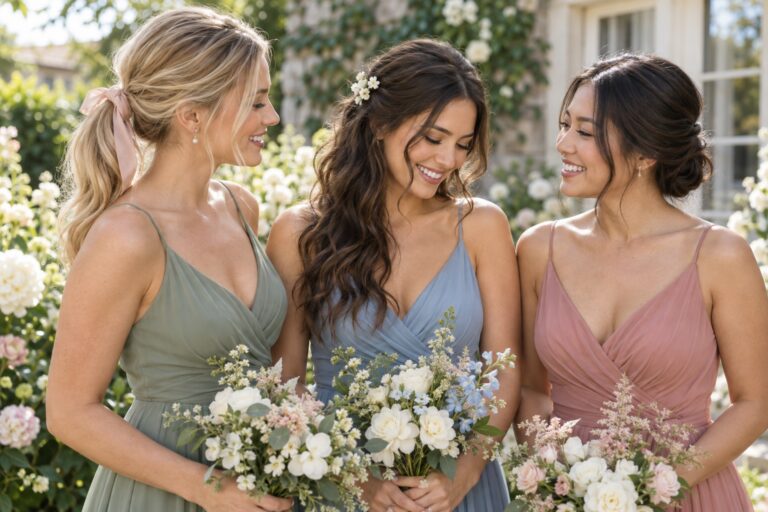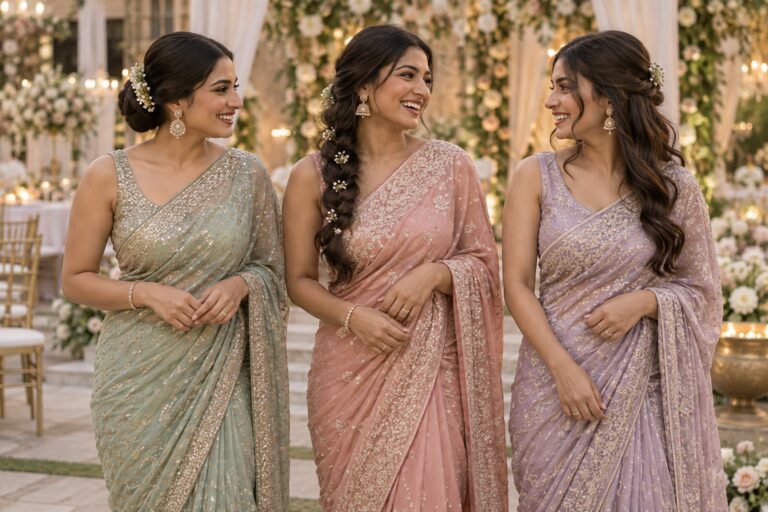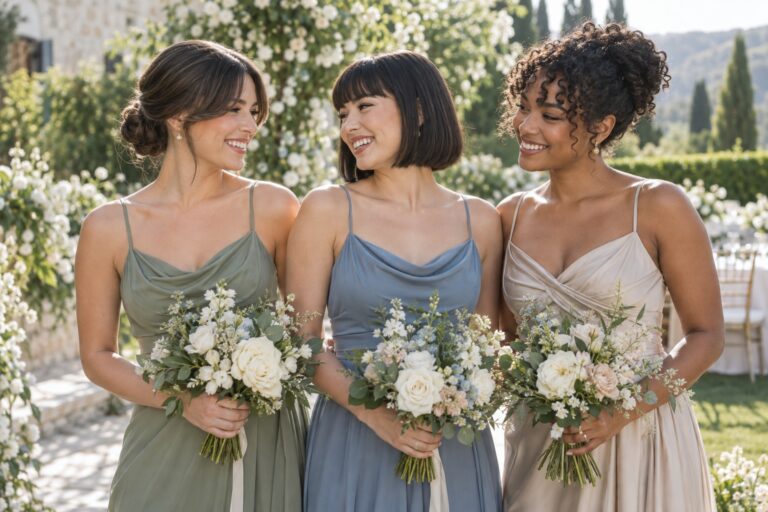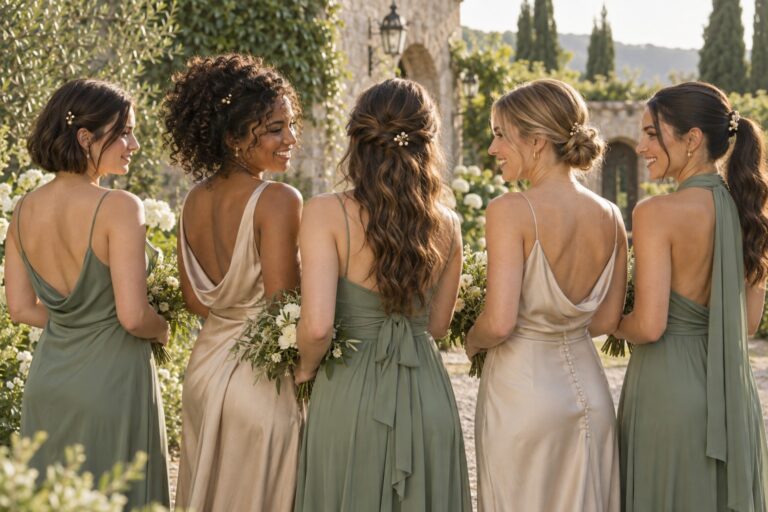
Bridesmaid Hairstyles Shoulder Length: A Comparison Guide
Shoulder-length hair gives bridesmaids plenty of wedding-day options, but it does not behave like long hair in every style. A lob that brushes the collarbone can usually support more loose length, while a cut that stops above the shoulders may need a smaller twist, a compact knot, or pins that keep short layers in place. The best choice depends on how much hair you want to see, how much you are comfortable pinning, and whether the shape feels like you.
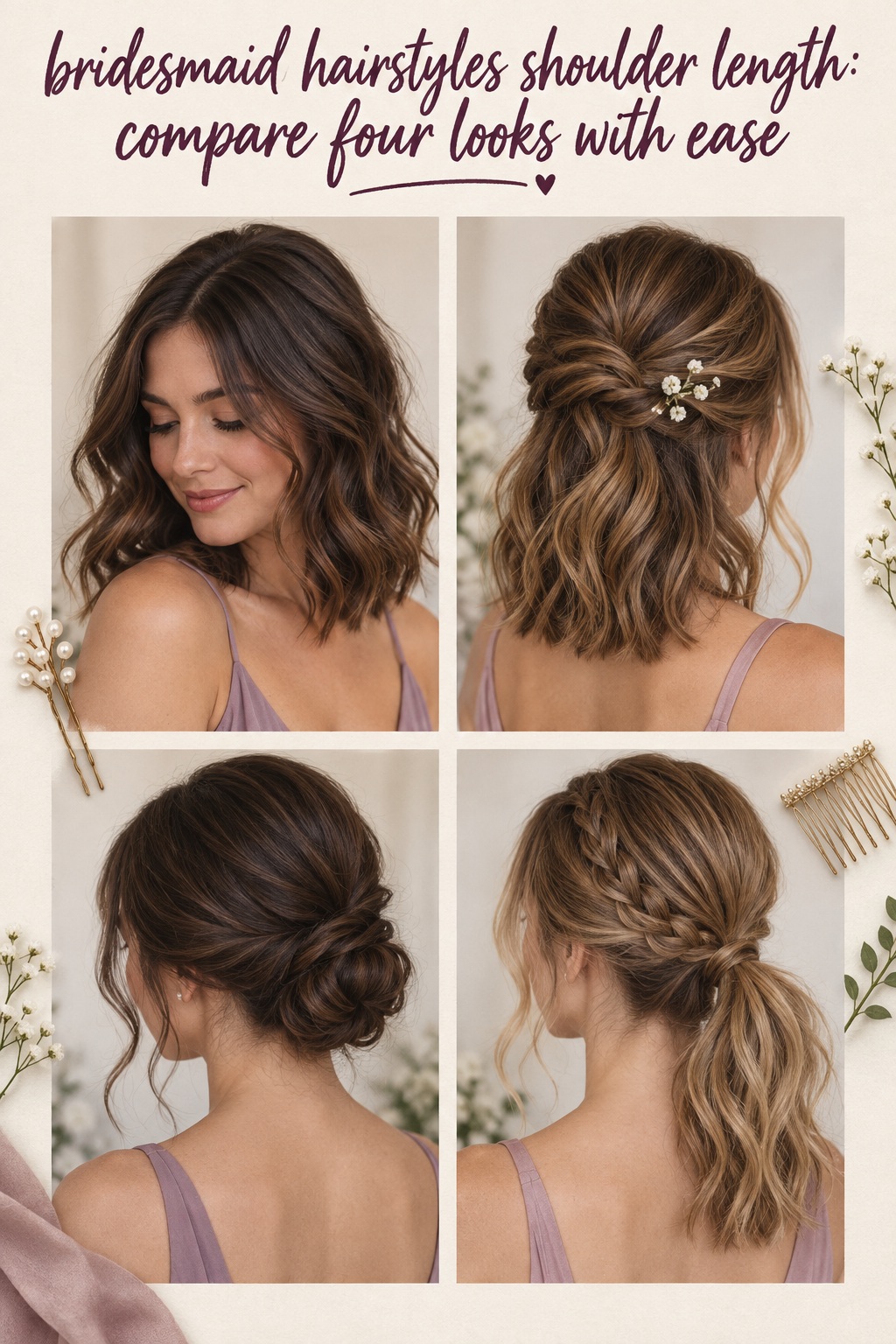
This comparison of bridesmaid hairstyles shoulder length hair can realistically support is organized by trade-offs, not by a ranking of prettiest looks. Compare down styles, half-up shapes, compact updos, and ponytail or braid hybrids by visible length, amount of pinning, cut compatibility, and styling effort. Then use the decision guide to narrow the choice to one shape you can explain to a stylist.
What Shoulder-Length Hair Can Actually Do
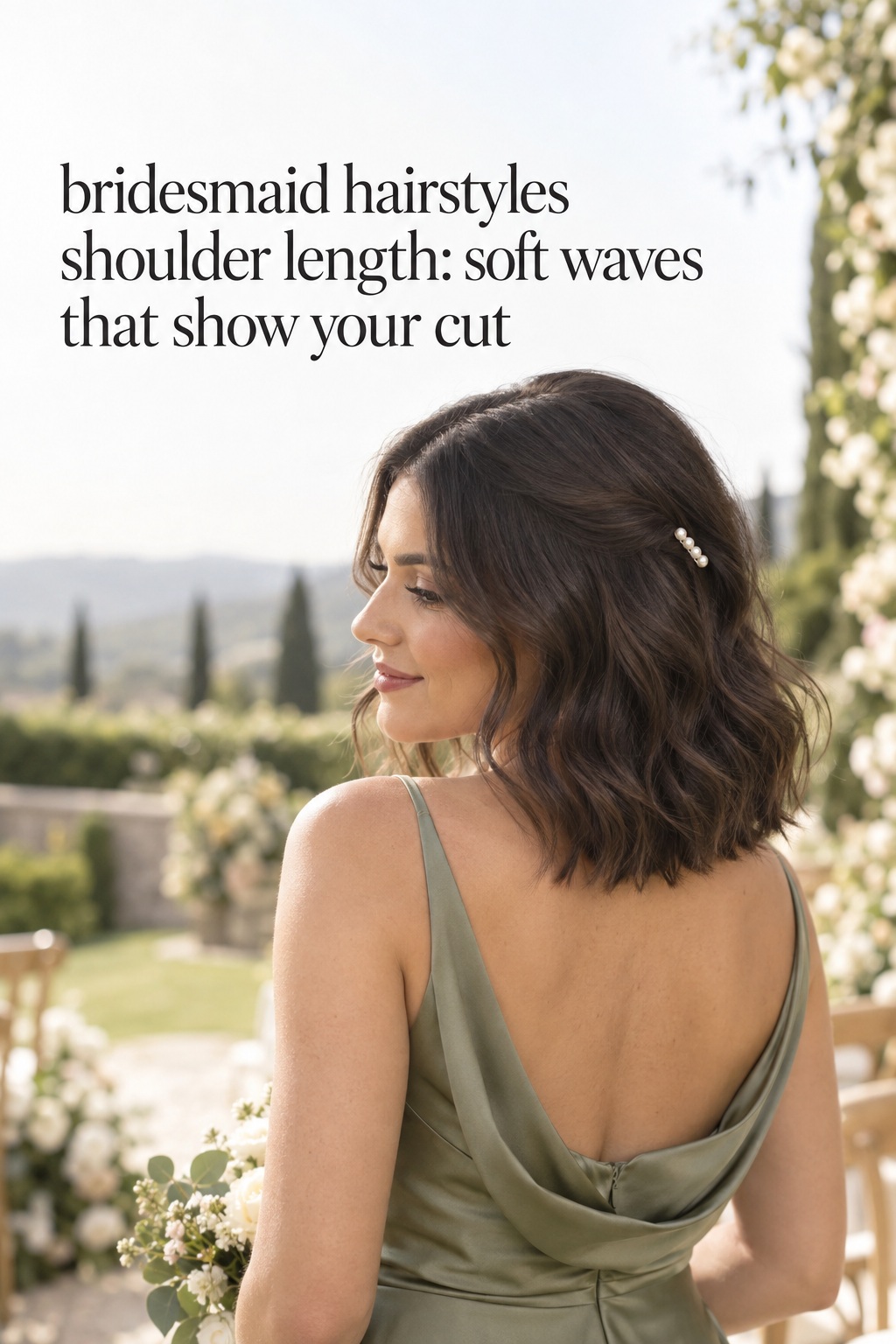
“Shoulder length” can describe quite different cuts. Some hair lands above the shoulders, some touches them, and some reaches the collarbone. For styling, that small difference matters. A low knot needs enough length to gather and tuck. A half-up twist uses only part of the hair, so the loose section can remain the main feature. A down style needs very little gathering, but it may leave the hair closer to the neckline and jewelry.
Think about usable length, meaning how much hair can reach the point where it will be secured without pulling. A blunt bob at the shoulder may have a different set of options from a layered lob of the same apparent length. Layers can make a soft, separated shape easier to build, yet the shortest pieces may slip free around the nape or crown. That is not automatically a problem. It simply means you should decide whether you like a deliberately soft finish or want a smoother, more contained shape.
Turn wedding inspiration into a plan you can actually follow.
Zarellea brings your guest list, budget, vendors, and day-of details into one shared space — so no beautiful idea gets lost in the shuffle.
It also helps to separate the look of an updo from the amount of hair it actually gathers. On shorter hair, a stylist may create a tucked or pinned shape that reads as an updo from the front while leaving some ends visible or securing them in small sections. A reference photograph with long hair wrapped into a full bun may not translate literally. Ask for the same overall outline or mood, and let the construction change to suit your cut.
Before deciding, answer three questions: Where does your shortest layer end? Do you want the ends to remain visible? How much pinning feels comfortable? If you are not sure, look at your hair from the front, side, and back on an ordinary day. You can also take a quick photo with your hair tucked behind one ear and gathered at the nape. Those views give a stylist more useful information than the label “medium hair” on a saved image.
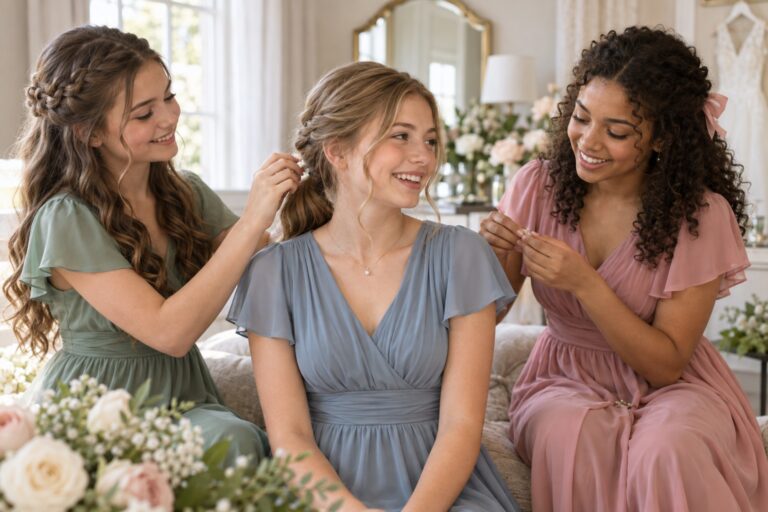
For bridal-party coordination, start with a shared direction rather than a single exact hairstyle. The group might agree on polished finishes, soft texture, or a small accessory in the same metal. Who What Wear’s bridesmaid hair advice recommends considering each person’s texture, thickness, length, and natural movement, then coordinating the overall feel. That leaves room for one attendant to wear a bob down, another to choose a half-up twist, and a third to prefer a compact updo.
Compare the Main Bridesmaid Hairstyles for Shoulder Length Hair
Use this as a quick decision matrix. It describes common outcomes, not guarantees: your exact cut, density, texture, accessory, and stylist’s approach will affect the final result.
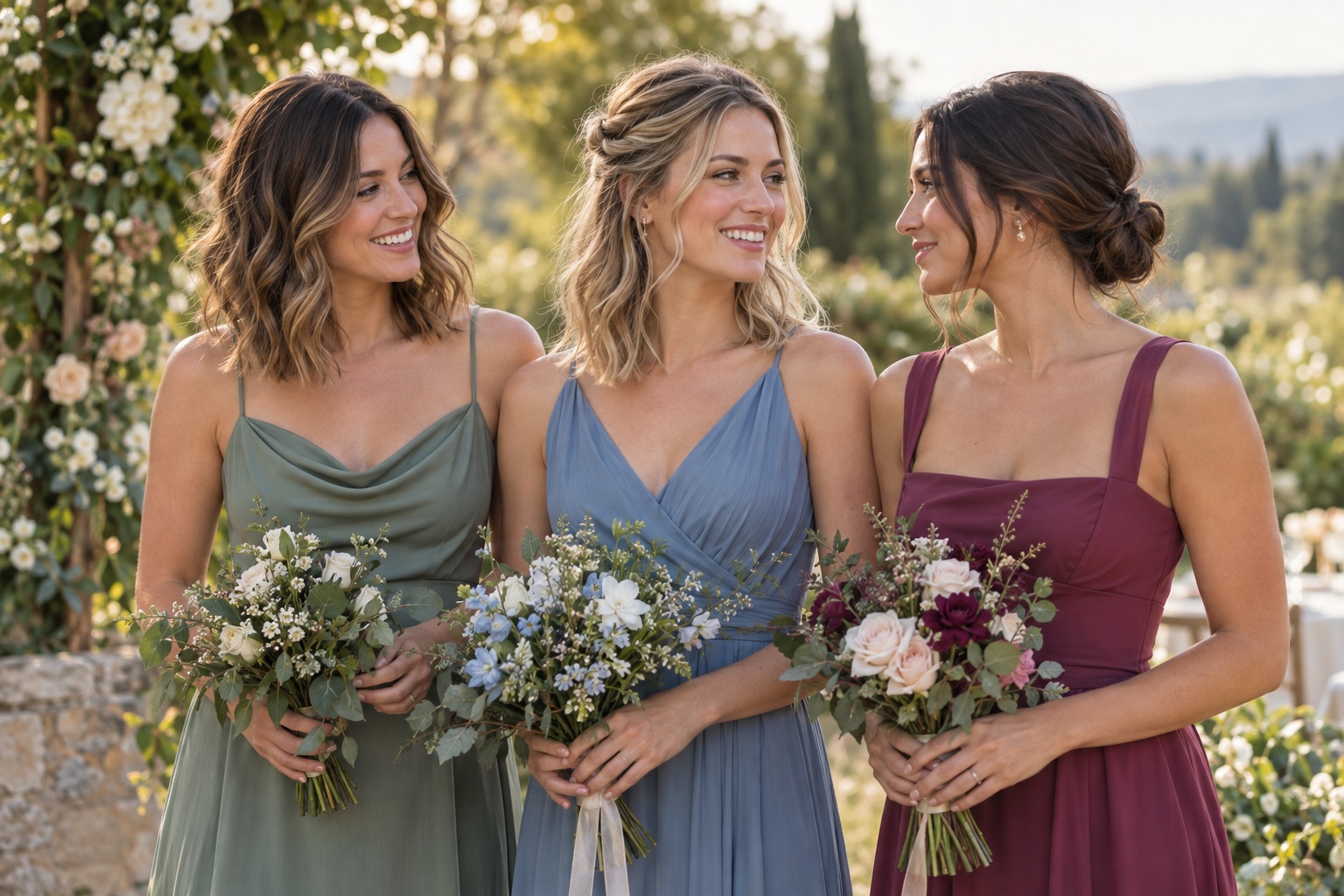
- Down with waves or a smooth finish: most length remains visible and little hair is secured. Often suits someone who likes her usual cut; hair stays near the neckline and may need a plan for face-framing pieces.
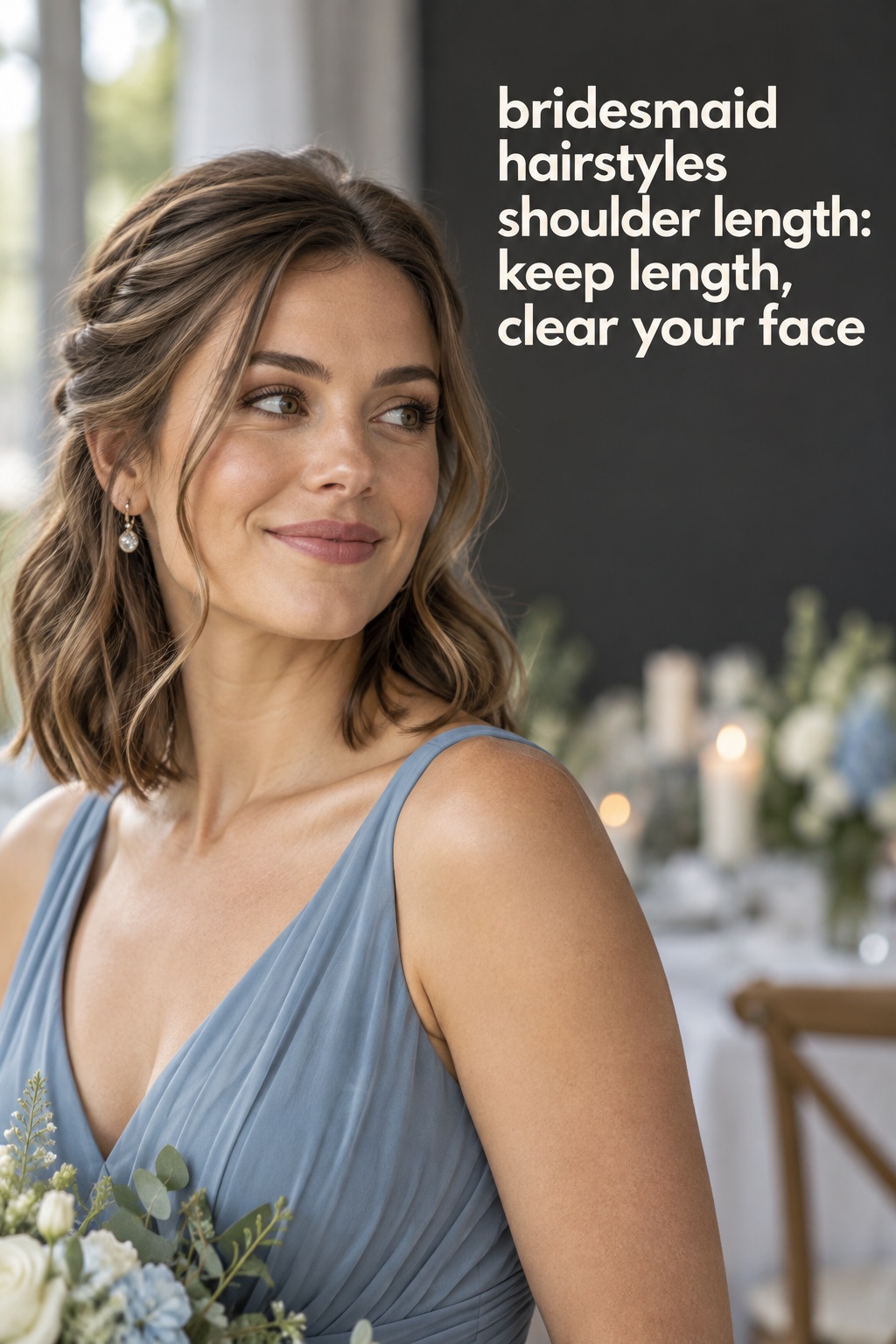
- Half-up twist, clip, or braid: most of the lower section remains visible while front or crown sections are secured. Often suits a lob with enough length to pin; short layers may escape and the pinned section can look small on a blunt bob.
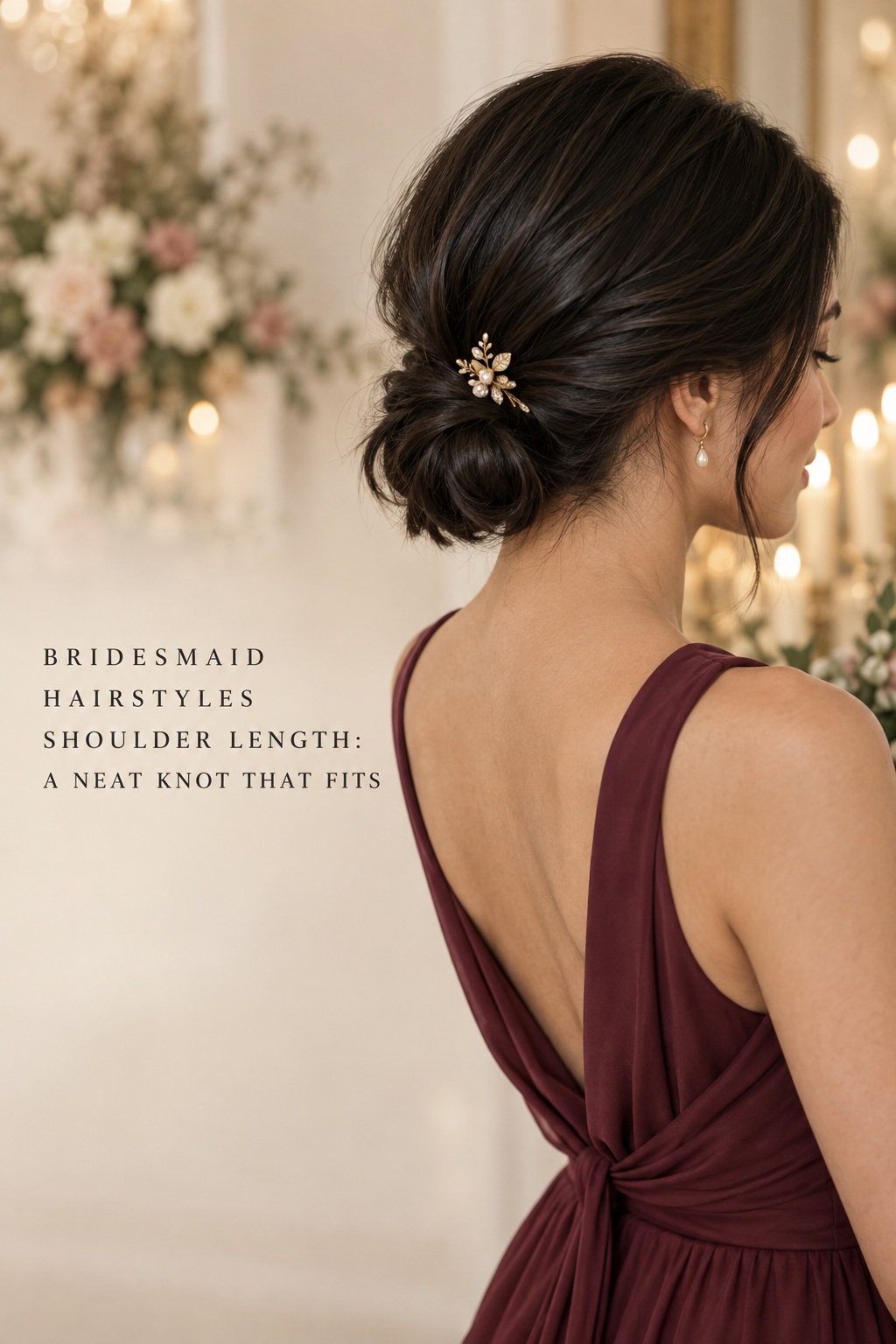
- Compact updo or tucked knot: little length remains visible, though ends may peek out, and most hair is secured. Often suits a more gathered outline; it may require careful sectioning and more pins than a long-hair reference suggests.
- Low ponytail or braid hybrid: some length remains in one gathered section while the front and sides are usually secured. Often suits someone who wants hair away from the face without a full updo; the tail or braid may be compact rather than long and flowing.
Down styles keep the cut visible
Soft waves, brushed-out curls, a polished bend at the ends, or a smooth finish make the haircut itself the main feature. This is the most direct choice if you like your current shape and do not want to pin much hair. A side part, one decorative clip, or a small section tucked behind an ear can add a wedding detail without changing the silhouette.
Look at where the ends sit against the dress. If they touch a collar, strap, or necklace, test the arrangement with the outfit before the wedding. Hair that catches on a beaded strap or lands over a statement neckline may feel distracting to you, even if it looks lovely in a standalone reference. A small front section pinned back can be a middle ground if you want your length visible but prefer a clearer face.
Half-up styles balance length and control
A half-up style secures some hair while leaving the rest down. Options include two small twists meeting at the back, a slim braid, a barrette over a gathered section, or a modest lift at the crown. It can suit a shoulder-grazing cut when the secured section reaches comfortably to the back. If the hair is just above the shoulders, the stylist may need to make the pinned portion narrower or use a clip rather than trying to create a large twist.
Choose half-up when you want some hair away from your face but still want the lower shape to show. It also makes a simple accessory easy to place at one focal point. The amount gathered changes the overall effect: a small section leaves the cut prominent, while a wider section gives more structure and can make the back look closer to a full updo. Ask to see the style from behind, not only from the front.
Compact updos create a gathered outline
A low knot, tucked chignon, or softly pinned shape can work on shoulder-length hair, but the result may be smaller than a long-hair bun. The stylist can coil or tuck sections at the nape and pin them in place, sometimes leaving a few ends or shorter layers softly visible. This can look intentional and elegant. It does not need to imitate a large, smooth bun to feel finished.
Consider a compact updo if you want more of your neckline visible or prefer most of the hair secured. Bring a photograph that shows a similar cut length and a similar amount of fullness. If the reference has extensions or much longer hair, tell the stylist what part you like: the low placement, the soft outline, the visible texture, or the accessory. This makes adaptation easier than asking for an exact copy.
Ponytail and braid hybrids are a middle option
A low ponytail, small bubble detail, or short braid can pull hair away from the face without hiding the whole cut. A wrapped base or narrow braid can make a simple gathered style feel more deliberate. At shoulder length, the tail may sit close to the nape and the braid may be short. That compact scale can look balanced with a clean dress or a minimal accessory.
Choose this family if a full updo feels too formal but completely loose hair feels impractical. Ask the stylist to show how the end will look when viewed from the side and back. If you want a long ponytail or a thick braid, discuss whether your cut has enough length and density for that effect. Avoid assuming that a style shown on waist-length hair will keep the same proportions on a lob.
For a fast shortlist, decide whether you want most, some, or very little hair to remain visible. “Most” points toward down or half-up. “Some” often suggests a low ponytail or braid hybrid. “Very little” points toward a compact updo. This first decision removes many mismatched references before you spend time comparing accessories or finishes.
Choose the Shape That Fits Your Dress and Priorities
Once you know the amount of hair you want to pin, use your dress and your comfort preferences as tie-breakers. A neckline can guide where you want the visual focus, but it should not dictate a hairstyle that feels unlike you. Marie Claire’s wedding hairstyle guidance notes that neckline, accessories, cut, and print can all help inform a style choice. Treat those as inputs for a conversation, then choose a shape you can wear comfortably.
If you want the haircut to show
Choose down styling or a very small half-up section. If your cut has a strong outline, such as a blunt bob or softly angled lob, keeping the lower lengths visible lets that shape do the work. A discreet clip can add a focal point without covering the haircut. Tell the stylist that visible length matters more to you than having every strand secured.
For example, a bridesmaid with a collarbone-length lob who likes her usual waves could wear a soft bend through the ends and pin only the front sections. Another attendant with a chin-to-shoulder bob might choose a smooth finish with one side tucked back. These are different looks, but a shared small barrette or finish can make them feel related.
If you want a clearer neckline
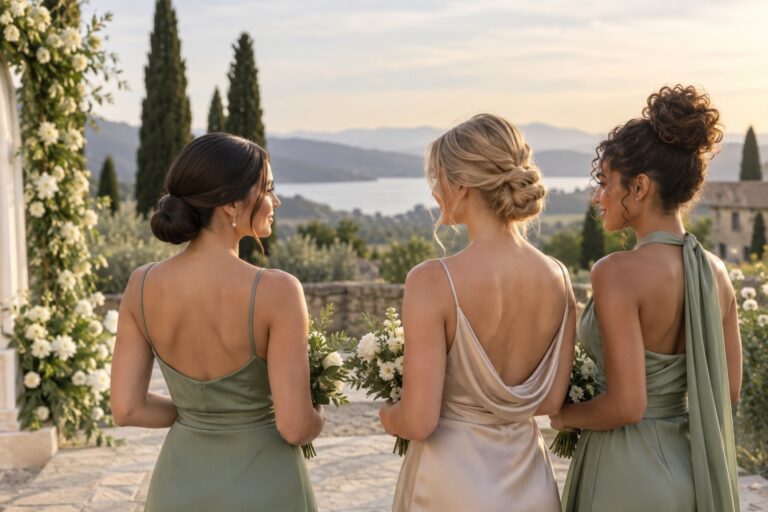
A low ponytail, compact knot, or tucked updo can move more hair away from the shoulders. If the dress has an open back, halter straps, or detailed neckline that you want to show, gather the hair only as much as your cut allows. A short updo can have a soft, textured outline rather than a large bun. The visual result is a cleaner neckline, even when the construction uses several smaller pinned sections.
Consider how earrings, necklaces, and hair accessories will sit together. If the dress neckline is already detailed, a single small comb may be enough. If the jewelry is minimal, a delicate pin can provide a focal point. Make the choice after trying the full outfit together, because the hairstyle and dress can compete for the same visual space when considered separately.
If you prefer low-fuss styling
A down style with a deliberate finish or a simple half-up clip may feel easier than a tightly constructed updo. “Low fuss” does not mean careless. It means choosing a shape with fewer moving parts and being realistic about whether you will want to adjust it. Tell the stylist what you do not want to manage, such as pins near your temples or a fringe that falls into your eyes.
Ask what small touch-up, if any, makes sense for the chosen shape. You may need nothing beyond a few spare pins, or you may want a friend to know how to reposition one clip. Keep the plan specific and modest. Avoid building a style around a long list of products, tools, and emergency fixes unless your own hair or schedule gives you a clear reason to do so.
If you want a more formal silhouette
Try a compact updo, a polished low ponytail, or a structured half-up shape with one refined accessory. Formality comes from the overall finish and the way the style works with the outfit, not from making a short cut look longer. A clear part, smooth sectioning, controlled waves, or a carefully placed comb can provide polish while preserving your natural length.
For a more relaxed wedding, the same style family can be softened with texture or a looser front section. You do not have to match the venue in a literal way. Instead, use the wedding mood to choose between a sleeker finish and a softer one, then keep the basic silhouette comfortable for you.
Avoid the Short-Hair Styling Mismatch
The most frustrating part of choosing a reference is discovering that the photographed hair has a different length, cut, or fullness from yours. You can avoid much of that mismatch by explaining the result you want instead of treating one picture as an instruction manual. A good reference shows direction; your own hair sets the construction limits.
Do not compare your cut with a much longer reference
If you love a long, full bun, identify what you like about it. Perhaps it sits low, has a soft rather than sleek outline, or shows a pearl comb at the side. Then look for a version on a similar shoulder-length cut. A stylist can often borrow the placement or mood, but the amount of hair and the scale of the bun may need to change.
Save two or three images that show similar lengths rather than a board of unrelated hair types and lengths. Label each with the feature you want to borrow, such as “leave the ends visible” or “pin only the front.” This gives the stylist useful choices and reduces the chance that the conversation turns into a debate over which photo is most beautiful.
Plan for layers and shorter pieces
Layers can create movement and shape, but shorter pieces may not reach a low gathering point. Decide whether you are comfortable with a few soft strands around the nape or temples, or whether you prefer a finish that keeps those areas contained. A stylist can show how different partings, smaller sections, or a clip alter the outline. Do not assume you need to change your haircut just to make one reference possible.
If your hair is fine or has a blunt shape, a small clip may be more comfortable than a heavy ornament. If it is dense or has a lot of layers, the stylist may use more than one pinning point to distribute the shape. These are questions to test with your own hair, not universal rules about what a particular texture can or cannot do.
Test the accessory with the hairstyle
Bring the accessory or a close stand-in to the trial. A comb that looks small in a product photo may feel heavy in a short pinned shape, while a barrette can change where the hair gathers. Ask the stylist to place it both where you imagine it and where the hair gives it a secure base. Check whether it pulls, slides, or presses against your head when you turn.
Choose one focal accessory unless the hairstyle is intentionally simple enough for several small details. On short hair, spreading pins across the whole shape can make the result feel busy. A single comb at the join of a twist, a slim barrette above one ear, or a small flower at the nape can give the style a clear finish without covering the haircut.
Use the trial to check movement and comfort
Wear the proposed style long enough to notice pressure points. Sit, stand, turn your head, hug someone, and put on the wrap or jacket you expect to wear. Check the front, side, and back. If a pin hurts, a section feels too tight, or hair falls into your face when you move, say so while the stylist can adjust the construction.
Ask what can be simplified if the morning schedule gets tight and which parts matter most to the finished look. You might keep the same silhouette and skip an extra braid, or keep the accessory but reduce the amount of crown shaping. A useful backup plan preserves the feature you care about instead of trying to reproduce every small detail under time pressure.
Sources and methodology: This comparison draws on a Google US review of shoulder-length bridesmaid hairstyle results and related hairstyle guidance. The two linked editorial sources above support the specific advice to consider individual hair characteristics and the relationship between the hairstyle, dress neckline, and accessories. Style descriptions here are decision prompts rather than promises about how a particular cut will hold. No first-hand salon testing is claimed.
FAQ
Can shoulder-length hair be put up for a wedding?
Often, yes. A stylist may use a compact knot, tucked shape, or several pinned sections instead of a large bun. The result depends on where your hair ends, how it is layered, and how much you want gathered. Bring a reference with a similar cut length and ask what construction will suit your hair.
What is the easiest bridesmaid style for shoulder-length hair?
A down style with a deliberate finish or a small half-up section is a straightforward starting point if you want minimal pinning. “Easy” depends on your own routine and the wedding schedule, so ask the stylist how much preparation and chair time the chosen version needs.
Is half-up hair a good choice for a shoulder-length bob?
It can be, especially when the back sections reach comfortably to the point where they will be pinned. A blunt bob may call for a smaller section or a clip, while a longer lob may allow a twist or short braid. Test the shape from the back as well as the front.
Can I wear a low bun if my hair only reaches my shoulders?
You may be able to wear a compact low bun or tucked knot, but its size and construction will differ from a long-hair bun. Ask the stylist to show a similar-length example and explain whether shorter pieces will be pinned separately or left softly visible.
Do layers make shoulder-length bridesmaid hairstyles harder?
Not necessarily. Layers can add movement, while short pieces may need extra attention in a gathered style. Decide whether you are comfortable with a soft, slightly undone outline or want more of the hair contained, then test the style with your current cut before the wedding.
What accessories work well with shoulder-length bridesmaid hair?
A small comb, barrette, clip, or a few discreet pins can suit many shoulder-length styles. Choose the accessory after deciding where the hair will be secured, and test its weight and placement with the hairstyle. One focal detail is often easier to read than several competing pieces.
What should I bring to a bridesmaid hairstyle trial?
Bring a few references with hair lengths similar to yours, your accessory or a close stand-in, and a photo of your cut from the front, side, and back. Explain how much hair you want visible, what feels uncomfortable, and which part of the reference matters most. Then move around in the finished style and check it with your outfit neckline.