Bridesmaid Bun Hairstyles That Feel Like You
The room is full of half-finished coffee, curling tools, garment bags, and people asking the same question in slightly different ways: what are we doing with our hair? The bride has saved a soft low bun. One bridesmaid has shoulder-length curls, another has long, straight hair, and someone else is wondering whether a high style will last through the dance floor.
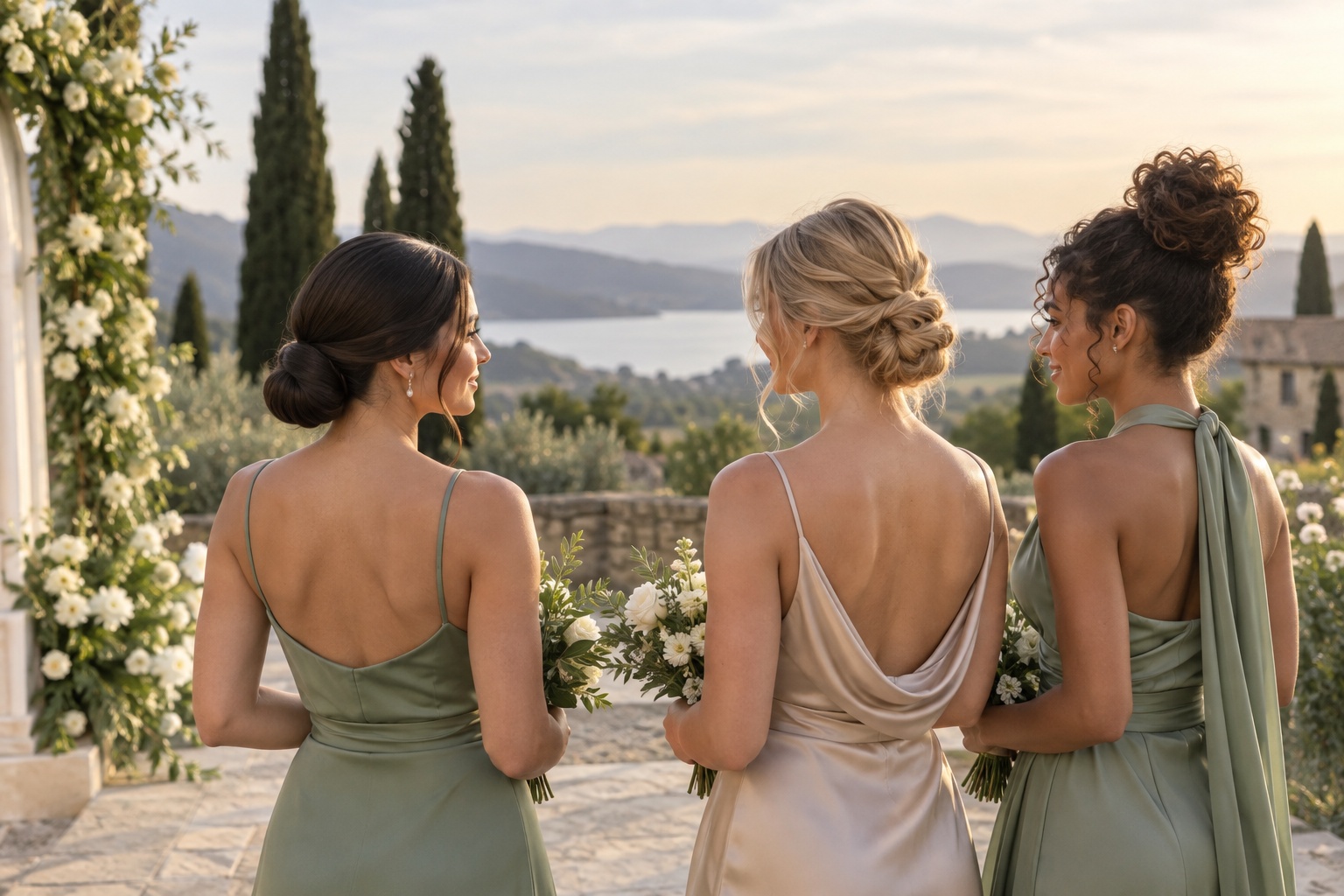
That is the real appeal of bridesmaid bun hairstyles. A bun can give the group a clear visual rhythm without requiring every person to wear an identical copy. The best version is a shared idea translated for the person wearing it: the same level of polish, a related placement, or one repeated detail, with enough freedom for texture and comfort.
The getting-ready room is where the bun decision becomes real
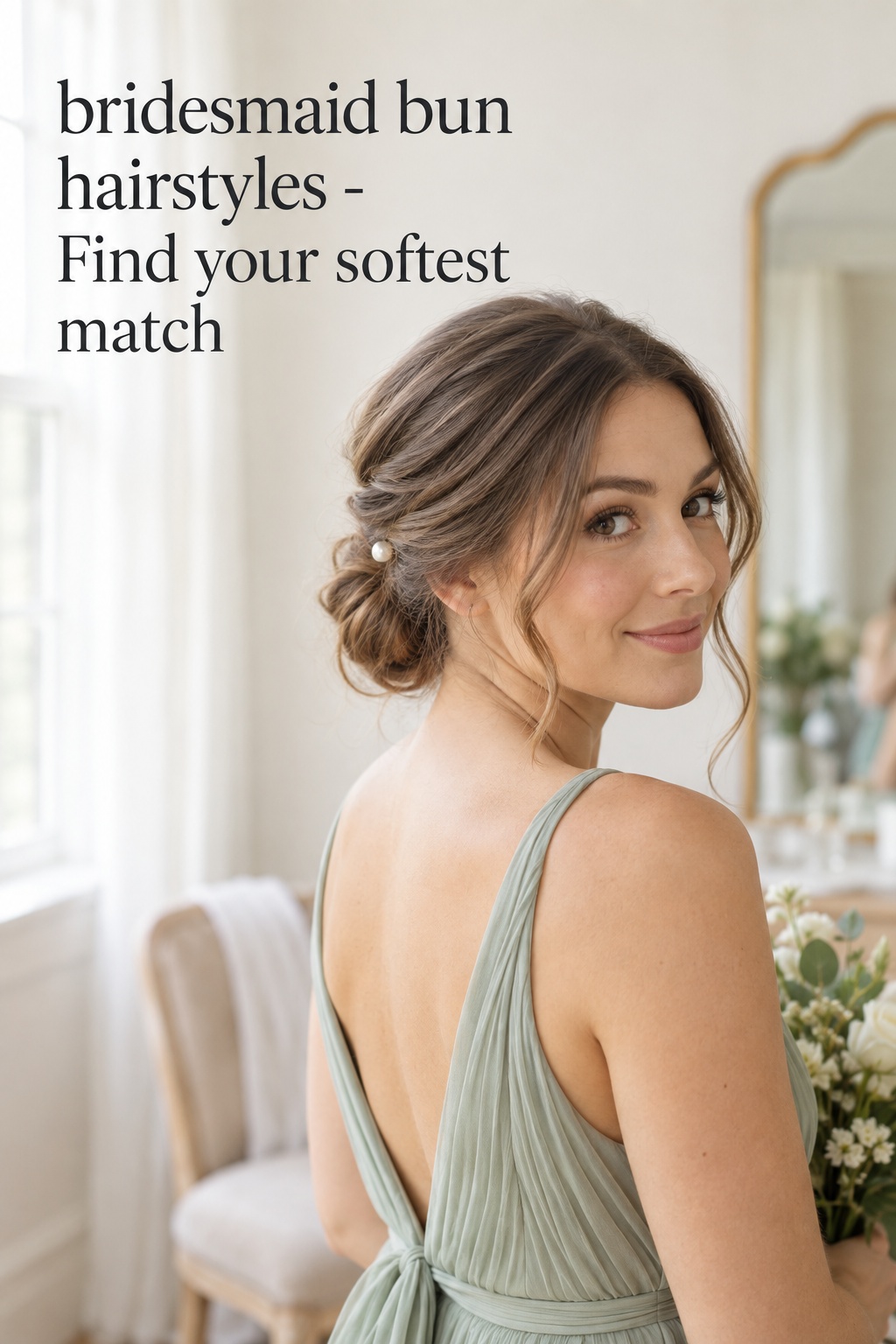
In a saved inspiration photo, a bun looks like a finished object. On a wedding morning, it is also a practical decision. It has to sit well with the dress, leave room for earrings or a veil, survive hugs, and feel secure without making the wearer tense before the ceremony has even started. A good reference image should start a conversation, not end it.
Begin by naming the feeling the bride wants the group to create. Is it clean and architectural, soft and romantic, relaxed and garden-ready, or polished with a little evening drama? This is more useful than asking every bridesmaid to find the same photograph. Once the mood is clear, the stylist can keep the group connected while adjusting the shape for each head of hair.
Turn wedding inspiration into a plan you can actually follow.
Zarellea brings your guest list, budget, vendors, and day-of details into one shared space — so no beautiful idea gets lost in the shuffle.
Think of the group as a sentence with related punctuation. One bridesmaid may wear a sleek low bun, another a low twisted chignon, and another a softly textured version. They still read together when the placement, finish, or accessory follows the same visual rule. This approach is especially helpful when the wedding party includes different lengths, densities, curl patterns, and comfort preferences.
Before choosing a direction, ask four quiet questions: what will the neckline show, where will the hair need to stay out of the way, how much movement feels natural, and what can the wearer comfortably keep in for eight or more hours? The answers usually narrow the choice faster than scrolling through another gallery.
Start with the shape: five bun directions that photograph differently
The bun’s architecture sets the mood before anyone notices the pins or flowers. Placement changes the line of the neck, texture changes the amount of softness, and height changes how the style relates to the dress. Use the following directions as a small decision map rather than a ranking.
1. The low bun for quiet polish
A low bun at the nape is a natural choice for a formal ceremony, a detailed neckline, or a bridal party that wants understated elegance. It keeps the back of the dress visible and gives earrings, a hairpin, or a soft side part room to register. A smooth version feels modern and precise. A gently loosened version feels more romantic while keeping the same basic silhouette.
Ask the stylist to decide whether the finish should be flat and glossy, softly brushed, or lightly lifted at the crown. That small distinction separates a minimal city-hall look from a garden or ballroom look without changing the bun’s location.
2. The high bun for an open neckline and lively energy
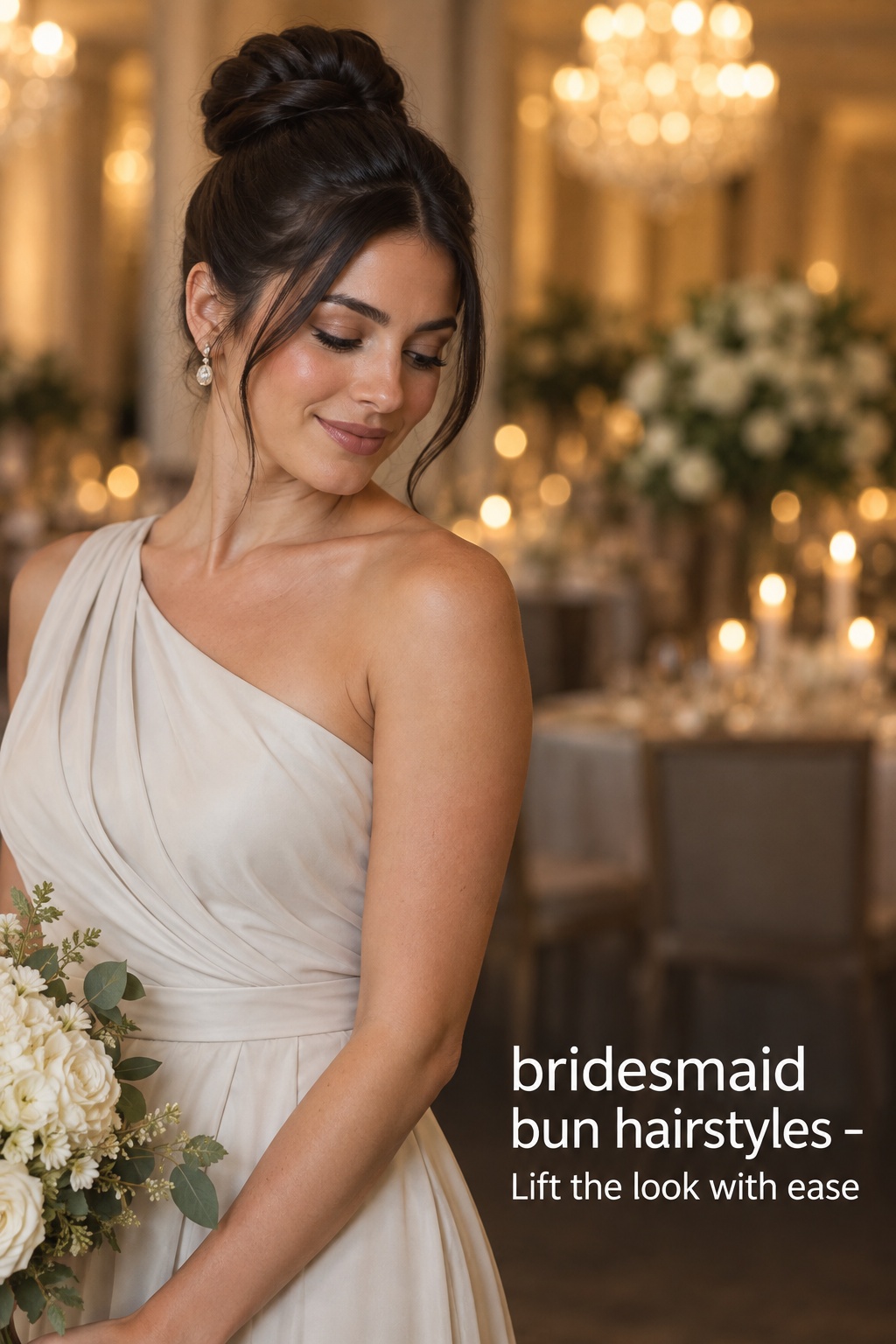
A high bun opens the neck and shoulders, which can work beautifully with a strapless, one-shoulder, or high-back dress that benefits from a clean outline. It also keeps hair away from the neck during a warm outdoor celebration. The height can be sleek and sculpted, rounded and soft, or gathered from curls for a fuller effect.
High does not have to mean severe. A few intentional face-framing pieces, a side fringe, or visible texture can keep the style friendly. The key is to choose the loose pieces before the pins go in, so they look designed rather than like strands that escaped during the reception.
3. The braided bun for visible detail
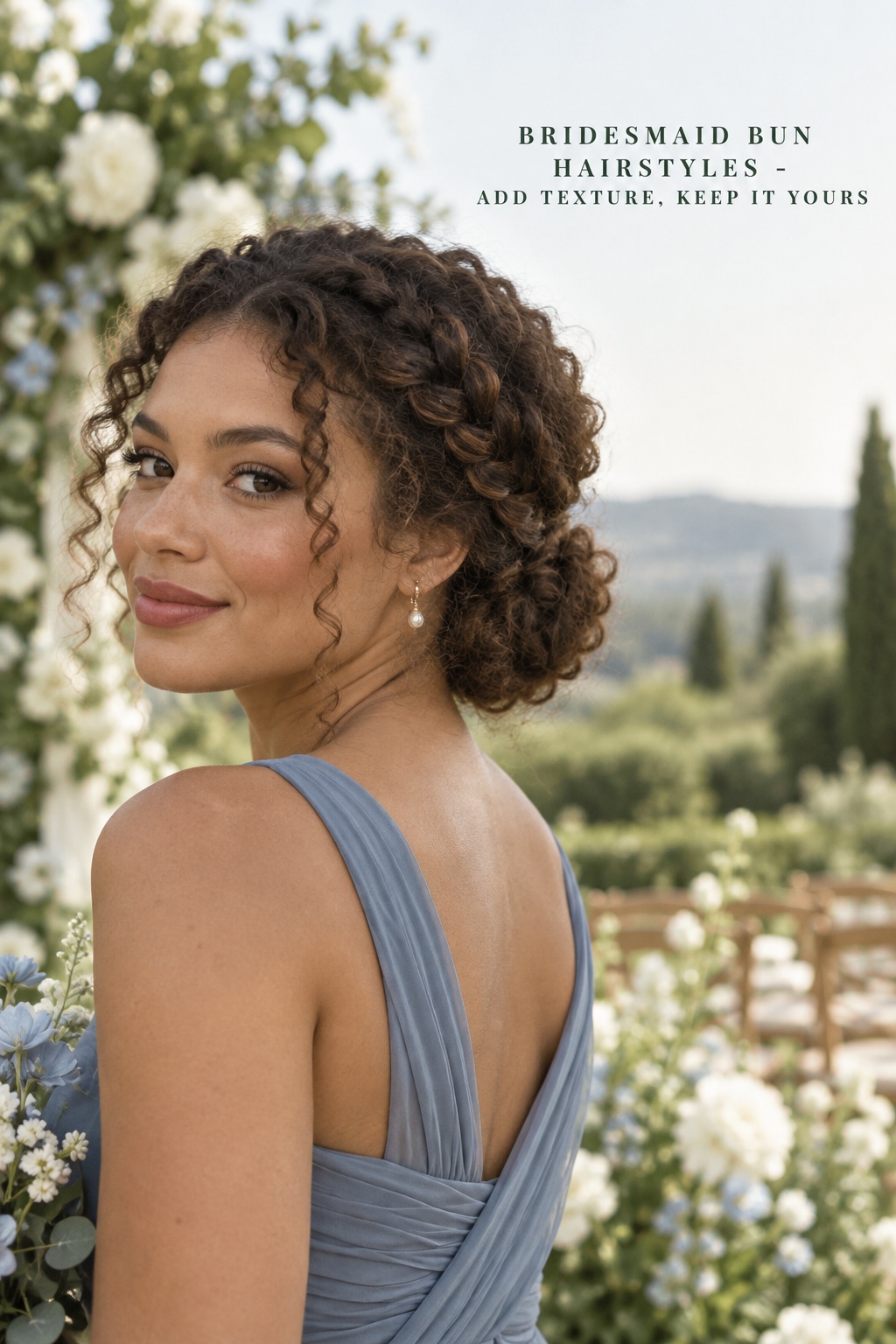
A braided bun gives the back of the hairstyle something to look at in photographs. The braid may wrap around the base, travel from one side, or become the texture inside the bun itself. This direction is useful for a boho setting, a dress with simple lines, or a group that wants one craft-like detail to connect the looks.
Do not assume that every braid needs to be large and elaborate. A narrow side braid can be enough, especially when the dresses already have lace, beading, or floral texture. For medium-length hair, a stylist may use a padded base or shaped sections to create the impression of fullness without requiring extra length.
4. The twisted bun for a clean line with movement
Twists sit between a sleek bun and a braid. They create a directional line that catches light, but they can remain smooth and controlled. A low twisted bun feels refined with a satin dress, while a looser version works with chiffon, silk, or a relaxed outdoor setting. It is also a useful way to make similar buns feel individual because the twist can be placed slightly differently for each person.
For a polished result, the twist should be deliberate from the part to the bun. For a softer result, the stylist can build volume first and then let the twist sit over it. Bring a photograph that shows the back and the side, because the most important feature of this style is its line.
5. The soft textured bun for movement and approachability
A soft textured bun begins with movement, often through waves, curls, or gently pulled sections. It feels less formal than a fully slick style while still keeping the hair up. This is a strong choice for a garden ceremony, a relaxed venue, or anyone who feels unlike herself in a rigid updo.
Texture should be supported, not confused with looseness. The bun still needs a secure foundation, especially if the hair is fine, slippery, or very heavy. Ask for a trial that includes sitting, turning the head, and a few minutes of natural movement. A style that looks beautiful while standing still should also feel believable in motion.
Match the bun to the dress, hair, and person wearing it
Once the group has a shape in mind, adapt it instead of forcing every person into the same construction. The goal is not to erase differences. It is to make those differences look considered. Start with the dress, then check what the hair can comfortably support.
Let the neckline decide how much hair should be visible
Detailed necklines and high backs often benefit from a bun that keeps the upper back visible. With a simple strapless dress, a little softness around the face or a wider bun can balance the open space. A one-shoulder dress may look especially polished with the bun placed to preserve the asymmetry rather than hiding it under a curtain of hair.
This is also where accessories need restraint. If the dress already has lace, crystal, or a strong shoulder detail, a tiny pearl or clean pin may be enough. If the dress is minimal, one floral accent, ribbon, or hair vine can give the bun a focal point without making the bridesmaid look like a second bride.
Use length as a design constraint, not a problem
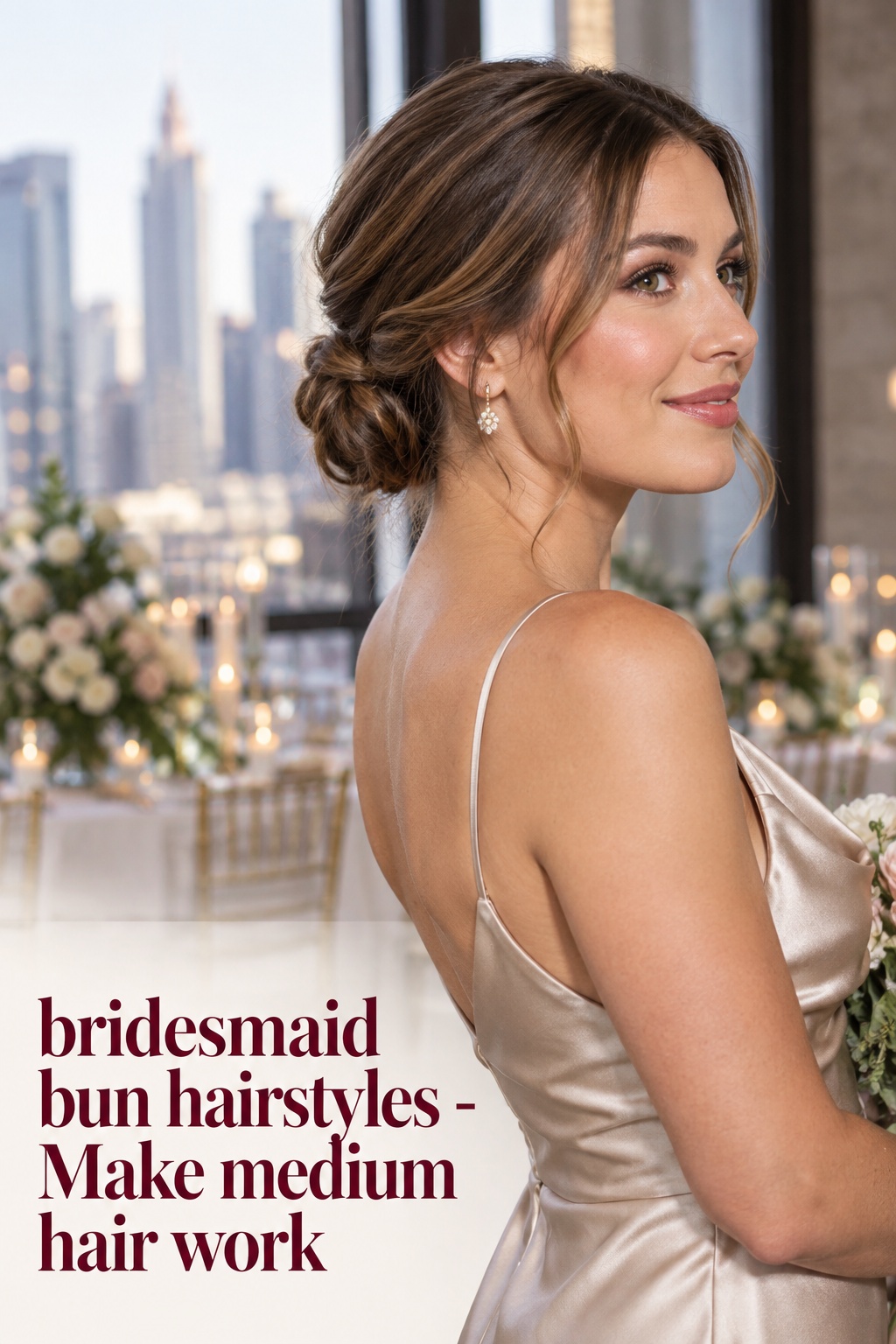
Long hair can support a large braided or folded bun, but too much length can also create weight. Medium hair can look elegant in a low chignon, a compact twist, or a bun built with carefully placed sections. Shorter hair may need a smaller shape, a padded base, or a style that combines a partial bun with visible texture.
Show the stylist the actual length and density during the trial, not only an inspiration photo. If extensions or padding are considered, test them before the wedding day. The aim is to add shape where needed, not to create a heavy construction that pulls at the scalp or changes how the wearer carries her head.
Respect texture from the first conversation
Straight, wavy, curly, coily, fine, dense, and highly textured hair can all support a bun, but they may need different preparation and pinning. A style should not require one bridesmaid to permanently alter her natural texture just to match the group. The shared element can be placement, finish, or accessory instead.
For curls and coils, the shape may be built through controlled volume and pinned sections rather than brushed smooth. For fine hair, texture spray, a smaller base, or strategic padding may help the bun read clearly. For very thick hair, the stylist may need to divide the weight so the pins support the style instead of fighting it.
Keep face-framing pieces intentional
Face-framing strands can make an updo feel softer, but they should work with the wearer’s existing haircut and movement. A bridesmaid with bangs may need only a polished shape around the fringe. Someone with layers may look best with a subtle bend rather than a curl that competes with the dress. Ask for the side view to be checked as carefully as the back.
Comfort matters here too. Pieces that fall across the eyes, tickle the cheek, or need constant repositioning will be distracting in photographs and conversation. The right amount is the amount the wearer can forget about once the ceremony begins.
Make the group feel intentional without making everyone identical
Coordination becomes easier when the bride chooses one shared rule and leaves the rest open. The rule might be that every bun sits low, that every look has a clean center or side part, or that each person wears one small metallic or floral detail. The construction can then respond to different hair and faces.
- Shared placement: all low, all high, or all around the same visual level.
- Shared finish: sleek, softly textured, braided, or deliberately undone.
- Shared accent: the same pearl tone, flower family, ribbon color, or metal.
- Shared scale: quiet details for a detailed dress, stronger details for a simple dress.
- Shared comfort standard: secure enough for movement, never painfully tight.
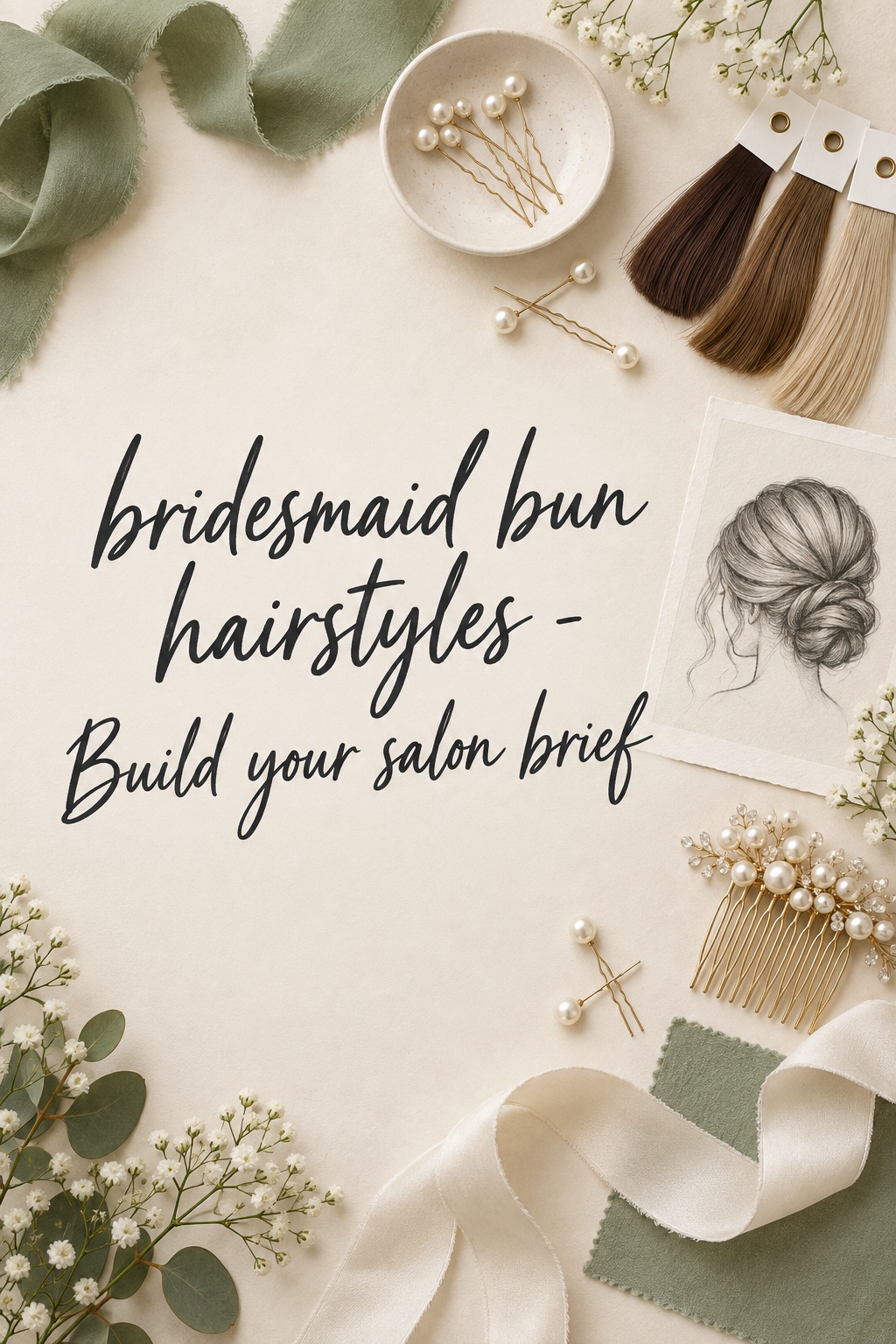
A useful salon brief can be only three sentences: “We want related bridesmaid bun hairstyles with a soft, polished finish. Keep each person’s natural texture and adapt the shape to her length and neckline. Use one small accessory family so the group photographs together without looking copied.” Add one reference for the front and one for the back.
Plan the appointment around the actual day. Hair should be fully dry and prepared according to the stylist’s instructions. Bring the earrings, hair accessory, and a photograph of the dress neckline if the stylist has not seen it. If the party is getting ready together, allow enough time for adjustments rather than scheduling the last bun five minutes before photographs.
Pack a small rescue kit with extra pins, a comb, a travel-size finishing product, and anything specific to the hair texture. The kit is not a sign that the style failed. It is a sensible way to handle humidity, hugs, dancing, and the simple fact that real hair continues to move.
Common mistakes to avoid
The first mistake is choosing a bun only because it looks impressive from the back. The wearer also needs to like the front, understand how it feels around the ears and neck, and feel comfortable with the level of polish. The second is treating every hair texture as if it needs the same preparation. The third is adding accessories before deciding whether the base shape already has enough detail.
Another mistake is leaving the decision until the wedding week. A trial gives the stylist time to solve problems with length, density, slippery strands, or accessory placement. It also gives the bridesmaid permission to say that a style is beautiful but not quite hers. That honesty is part of creating a group look that photographs naturally.
FAQ
Should all bridesmaids wear the same bun?
No. A shared placement, finish, or accessory can create visual unity while allowing each bridesmaid’s length, texture, face-framing, and comfort to guide the final shape.
Are low buns or high buns better for a wedding?
Neither is universally better. Low buns emphasize the neckline and feel quietly polished, while high buns open the neck and can feel lighter in warm conditions. Choose based on the dress, venue, hair weight, and the wearer’s preference.
Can medium-length hair work in bridesmaid bun hairstyles?
Yes. A stylist can use a compact chignon, shaped sections, gentle padding, or a twisted construction to create a finished bun. Bring the real length and density to the trial so the style is designed around what the hair can support.
How can a bun look soft without falling apart?
Build softness into the texture and face-framing pieces, but keep the foundation secure. The stylist should test the style through ordinary movement and use pins and preparation suited to the hair’s density and texture.
What accessories work with a bridesmaid bun?
Pearl pins, small flowers, a narrow ribbon, a delicate comb, or a hair vine can all work. Match the scale and finish to the dress, and repeat one accessory idea across the group rather than stacking several unrelated details.
When should bridesmaids have a bun trial?
Schedule a trial early enough to adjust the shape, test accessories, and solve any comfort or hold issues. Bring the dress details, jewelry, and the exact product or extension plan if one will be used on the wedding day.
