What to Wear: Fall Engagement Photo Outfit Ideas for Autumn
fall engagement photo outfit ideas that feel romantic, natural, and photo-ready
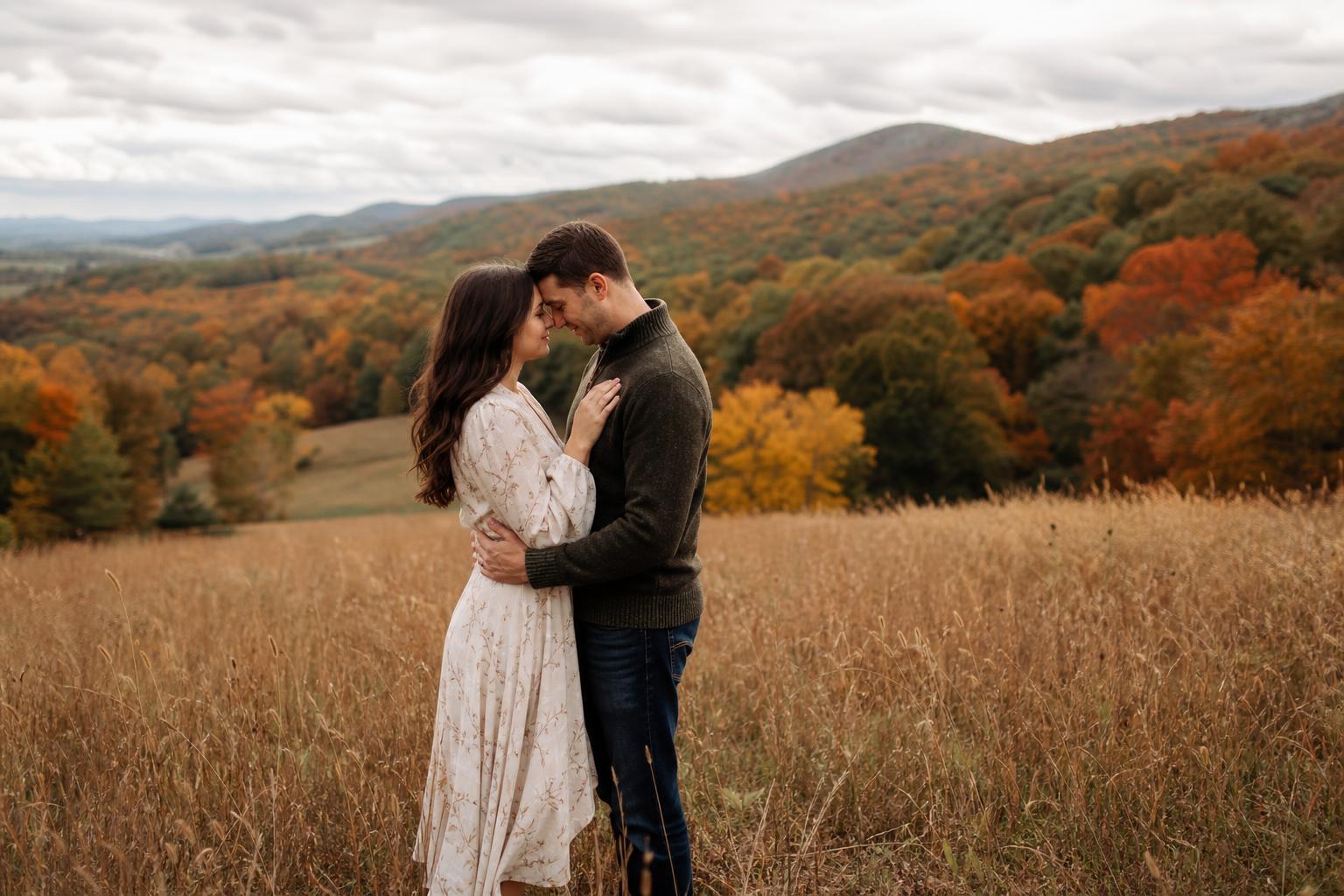
There is something especially cinematic about an autumn engagement session: the softened light, the shifting leaf colors, the quiet richness of olive, burgundy, cream, denim, and deep brown against an outdoor backdrop. The most beautiful fall engagement photo outfit ideas do not feel overdone. They feel warm, intentional, and connected to the landscape, whether your session is set in a forest, an orchard, a field, or an urban park.
For couples, that mood matters. Engagement photos are rarely just about clothing; they capture the in-between season before the wedding, when personal style, comfort, and the atmosphere of the day all need to work together. A look that feels effortless in motion, flattering in changing light, and cohesive beside your partner will always photograph more beautifully than something chosen only because it seemed trendy.
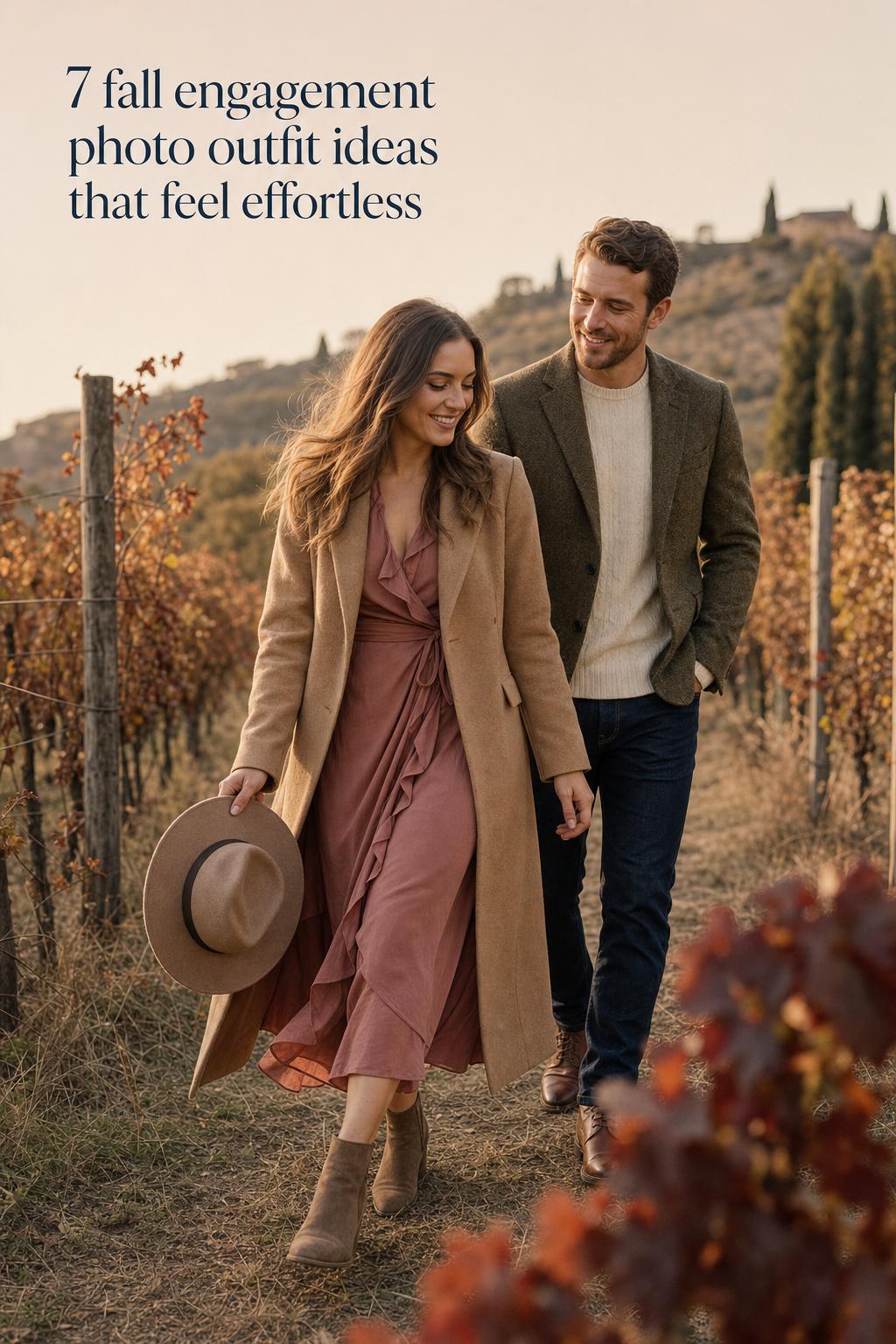
This guide approaches fall engagement style the way a wedding stylist and photographer would: through color, texture, setting, proportion, and practicality. You will find romantic outfit directions, advice on coordinating him-and-her looks without matching too literally, and styling details that make a session feel polished instead of forced.
What defines this aesthetic?
The visual identity of fall engagement dressing is grounded in seasonal color palettes, soft structure, and texture that catches light well. Earthy neutrals, olive and forest greens, burgundy and dusty rose, navy, chocolate brown, cream, and muted denim all belong naturally in this world because they harmonize with autumn leaves rather than competing with them. The overall mood is romantic and grounded, with enough depth to feel elevated but enough ease to still look authentic in a real couple’s photos.
Turn wedding inspiration into a plan you can actually follow.
Zarellea brings your guest list, budget, vendors, and day-of details into one shared space — so no beautiful idea gets lost in the shuffle.
Fabrics do much of the work. Knits, wool, suede, tweed, corduroy, denim, leather, boucle, and flowing materials bring dimension to a scene that is often full of visual texture already. Silhouettes usually feel best when one element is relaxed and another is refined: a flowing dress with structured boots, a blazer over a soft knit, a fitted layer under a longer coat, or clean trousers with a textured outer layer. That balance keeps the aesthetic intentional rather than costume-like.
Footwear and accessories should support the mood rather than dominate it. Boots are an obvious fall favorite because they photograph well in outdoor settings and work with uneven ground. Scarves, hats, jackets, and cardigans can add visual depth, but they should feel integrated into the outfit rather than thrown on at the last minute for warmth. The same logic applies to beauty styling: soft, natural grooming and polished details usually age better in engagement images than anything too dramatic.
Why autumn light changes what looks good on camera
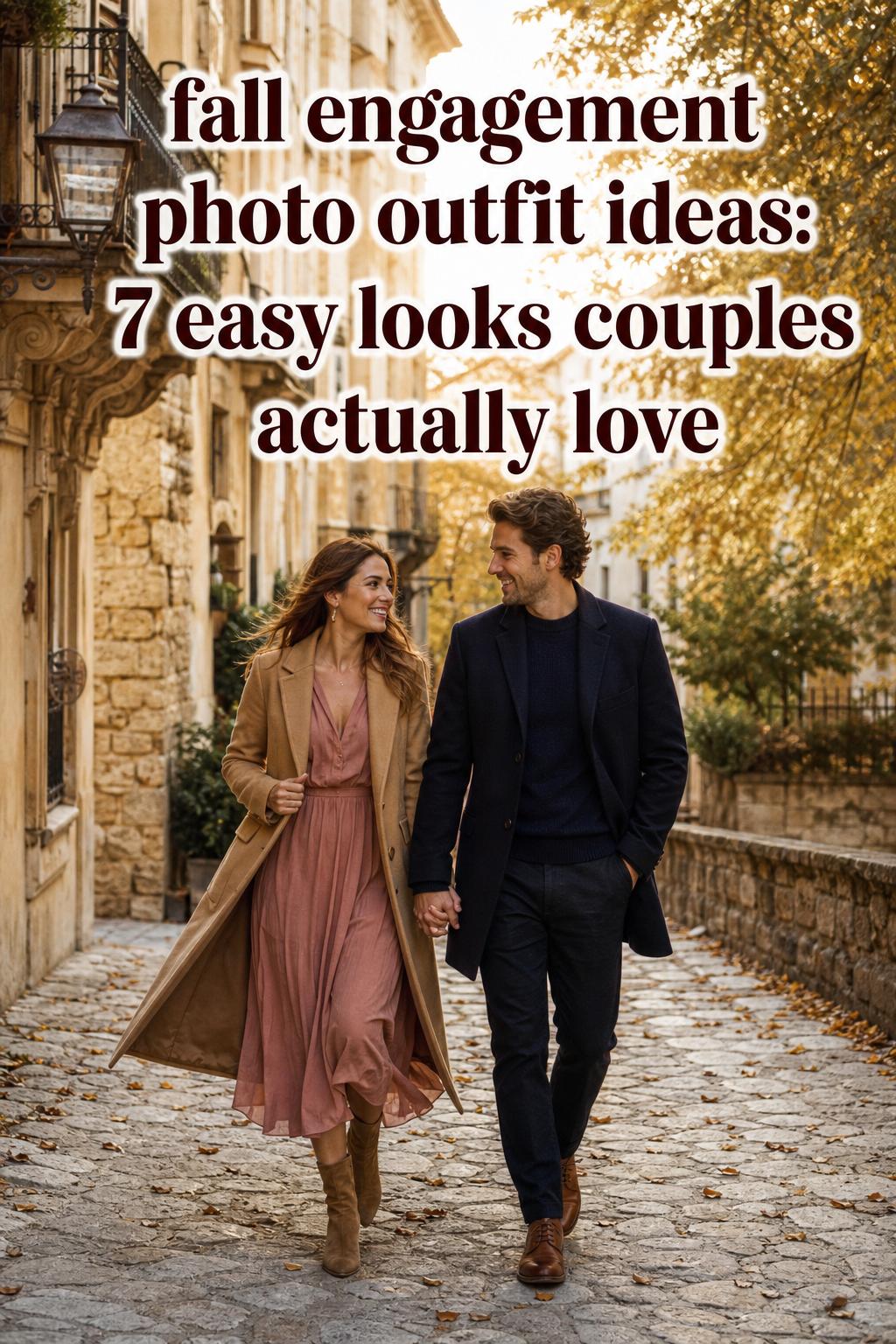
Fall has a distinct color environment. Leaves turn warm, grass often softens, and the light can be golden, diffused, or dappled depending on the location. That means your clothing is always in conversation with the backdrop. Cream, tan, olive, burgundy, and navy tend to photograph well because they hold their shape visually without fighting the scene. Neon shades, overly bright contrast, or tiny busy patterns can disrupt that softness.
This is also why so many photographers and wedding platforms emphasize backdrop-first outfit planning. A forest asks for different textures than a city park. A meadow can handle movement and softness, while a more urban location often looks strongest with cleaner lines. Even a product-driven lookbook from a retailer such as Revolve tends to rely on the same principle: materials and silhouettes should support the seasonal mood, not distract from it.
One practical detail many couples underestimate is how fall weather affects posture and expression. If you are too cold, you tense up. If your shoes sink into damp ground, you stop moving naturally. If your jacket feels bulky, the outfit can lose shape. The best engagement session wardrobe always respects both the image and the experience of wearing it.
Color palettes that consistently work for fall engagement photos
Earthy neutrals for a soft, timeless mood
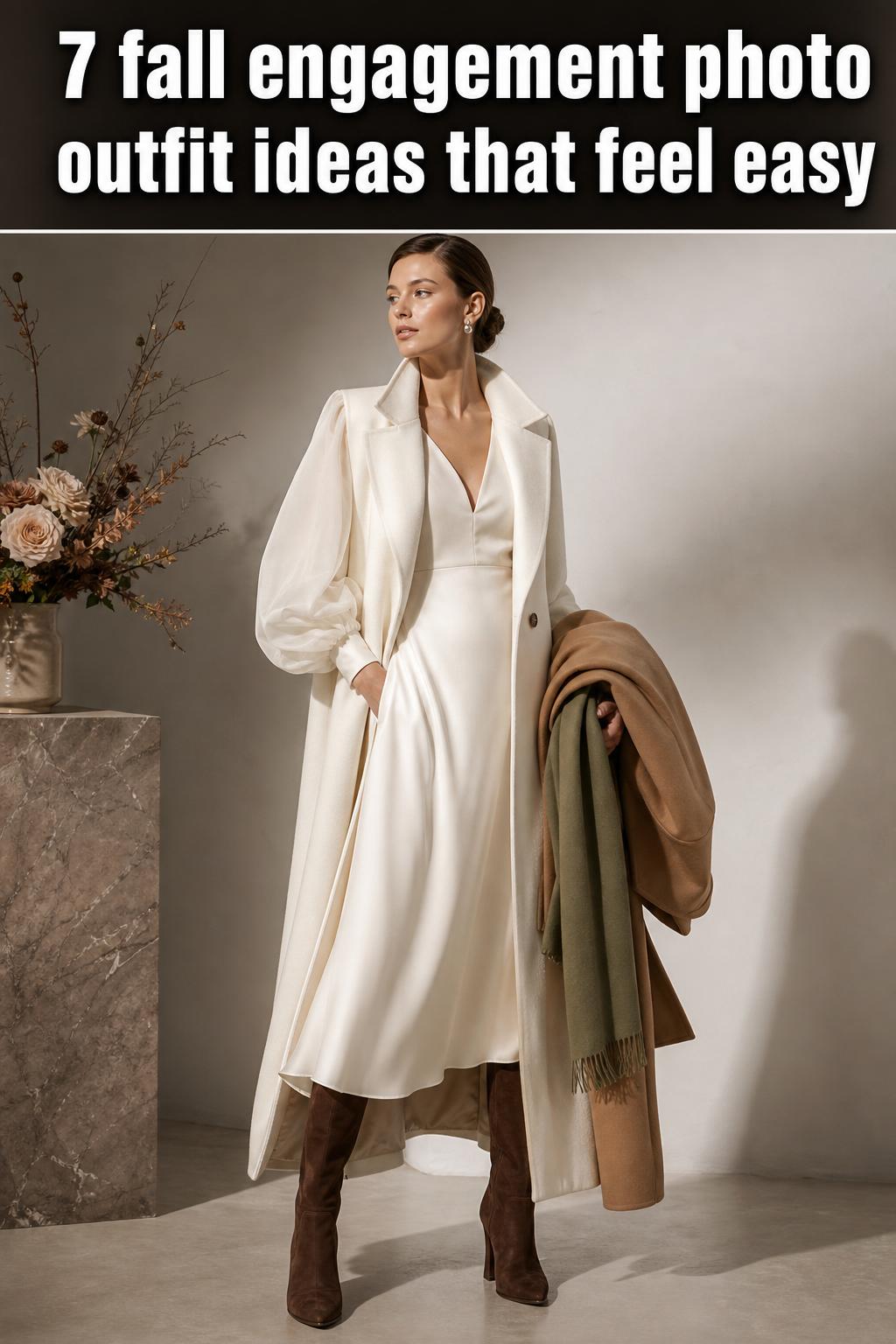
Tan, cream, camel, oatmeal, soft brown, and warm beige create one of the most forgiving and elegant palette families for autumn portraits. These shades feel calm against changing leaves and work especially well when texture is doing the visual work. Wool, suede, and ribbed knits keep the neutrals from looking flat, while leather boots or a tailored coat give the outfit enough structure for photographs.
This palette is especially useful for couples who want their images to feel timeless rather than trend-led. It also makes coordination easier because one partner can wear deeper neutrals like chocolate or camel while the other wears cream or soft beige, creating harmony without a matched set effect.
Olive and forest green for a natural, grounded look
Olive, khaki, and forest tones belong naturally in fall engagement styling because they echo foliage without disappearing into it. An olive dress, a green knit, or a structured jacket in muted green tends to feel thoughtful in woodland and park settings. These colors are especially effective when paired with cream, denim, soft brown, or black boots.
The appeal here is subtle depth. Green can read romantic or earthy depending on the cut and fabric, so it works for both more polished and more casual sessions. If you are trying to build a shopping-ready outfit with versatile pieces, this is one of the easiest palettes to rewear beyond the engagement shoot.
Burgundy and dusty rose for warmth and romance
Burgundy, maroon, and dusty rose create a richer, more overtly romantic interpretation of fall. These shades reflect autumn warmth beautifully and often flatter the softer mood many couples want for engagement photos. A flowing burgundy dress, a dusty rose knit layered under a jacket, or subtle accents in this family can create depth without overwhelming the frame.
The key is restraint. If both partners wear heavy jewel tones, the image can start to feel visually dense. Usually, one richer color paired with grounding neutrals gives a more refined result.
Navy and chocolate for classic contrast
Navy, dark denim, and chocolate brown offer a slightly sharper, more tailored fall palette. This combination works particularly well in urban settings or for couples who prefer cleaner lines over a softer bohemian mood. Navy anchors the look, while chocolate and tan keep it seasonally warm.
This palette is also useful for his-and-her coordination because it gives both partners room to interpret the same mood differently. One can wear structured navy layers, while the other introduces movement with softer fabrics in brown, cream, or muted rose.
Look: woodland layers with a quiet romantic mood
In a forest or wooded trail, the strongest outfits usually feel connected to the landscape rather than styled against it. The silhouette here should be soft but grounded: something with movement through the hem or sleeve, anchored by practical boots and a layer that adds warmth without bulk. The result is intimate and cinematic, especially in dappled light where texture becomes more important than sharp contrast.
An olive midi dress or a cream knit with a flowing skirt works beautifully in this setting, especially when paired with suede ankle boots and a wool or leather jacket. For a partner’s look, dark denim or tailored trousers with a flannel, knit, or textured overshirt keeps the styling coordinated without feeling too polished for the woods. Plaid can work here, but it should be used carefully and kept larger scale rather than tiny and busy.
Why it works: the outfit mirrors the setting through color and material. Forest backdrops already have visual complexity, so clothing needs to feel cohesive and legible from a distance. If every piece is highly detailed, the couple can get lost in the scene. Keeping the palette earthy and the textures tactile creates the right kind of visual presence.
Style tip for forest sessions
If your location includes uneven ground, leaves, or damp paths, choose footwear first and build upward. Boots are not just a seasonal detail; they influence how naturally you stand and walk, which directly affects the feeling of the final images.
Look: orchard softness with flowing movement
An orchard or meadow invites a lighter kind of fall styling. The mood is romantic, open, and a little more airy than a forest session, so the silhouette can lean softer and more fluid. Movement matters here. A dress that catches breeze, a cardigan with a gentle drape, or relaxed trousers with a clean knit all photograph beautifully when the setting has space and natural light.
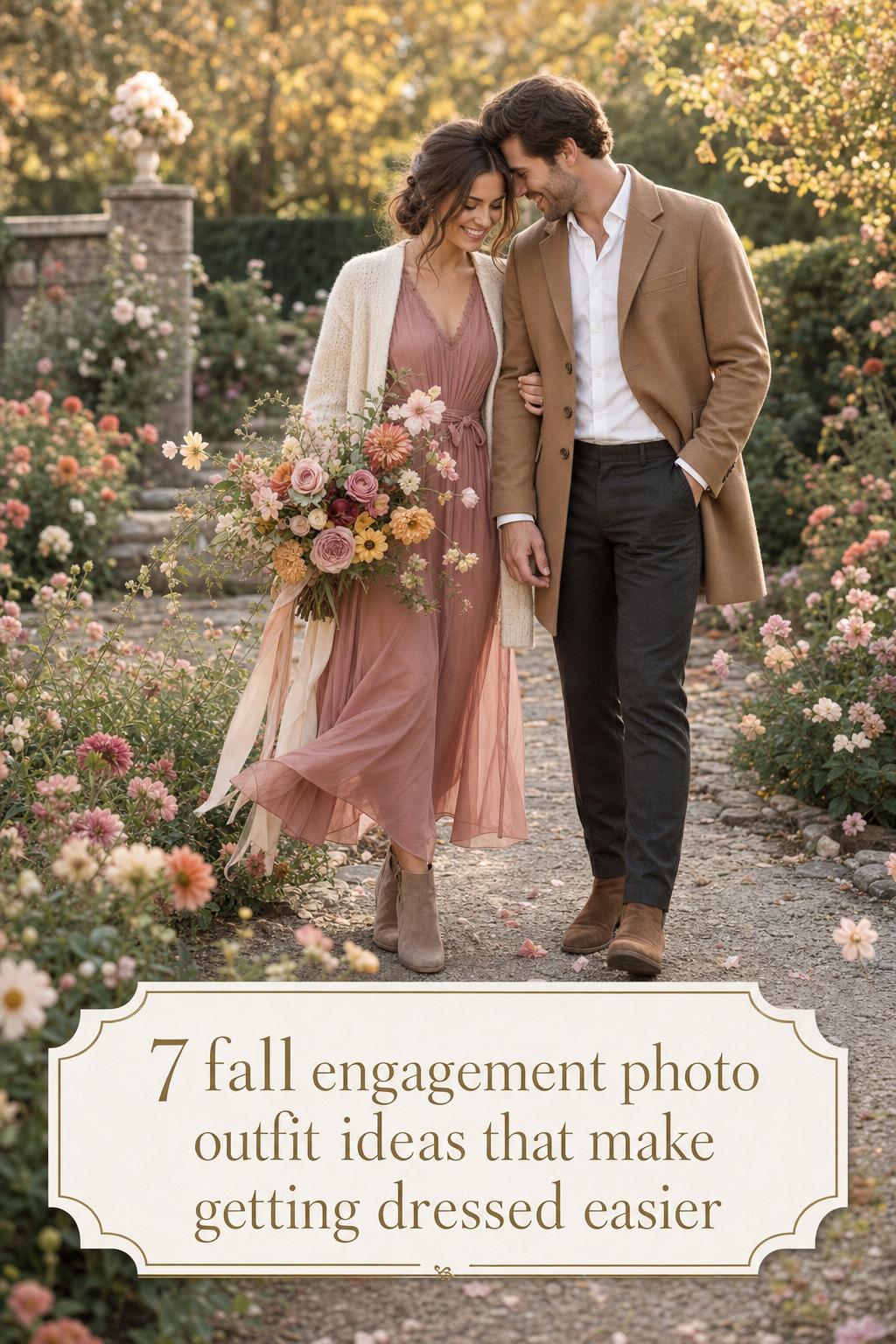
Dusty rose, cream, tan, soft floral tones, and muted green feel especially natural in this backdrop. For one partner, a flowing dress with a cardigan or light jacket keeps the look layered but not heavy. For the other, a knit, denim, or blazer in navy, olive, or camel grounds the styling. This is also a strong setting for lighter textures and subtle prints, as long as they do not become overly delicate or visually fussy.
The styling lesson here is about scale. Open landscapes allow a little more softness because the scene itself provides breathing room. That means you can incorporate more fluid fabric and still keep the image balanced. The easiest way to recreate this effect is to choose one piece with movement and pair it with simpler, steadier elements around it.
- Best colors: cream, dusty rose, olive, camel, warm beige
- Best fabrics: flowing materials, soft knits, suede, light wool
- Best footwear: ankle boots or refined boots with clean lines
Look: field and meadow dressing with rustic texture
Fields and meadow locations often call for a slightly more rustic interpretation of fall style. The mood can handle texture well, especially when the landscape has tall grass, muted greens, and warm late-season tones. This is where corduroy, denim, tweed, and chunky knits can feel especially at home, but the silhouette still benefits from some softness so the outfit does not become too heavy.
A cream sweater with a midi skirt, corduroy trousers with a fitted knit, or a textured jacket over a simple dress can all work beautifully here. For couples, this setting is ideal for mixing sturdy and soft fabrics: perhaps one person in knit and suede, the other in denim and wool. Brown boots, a camel coat, or a structured vest can add just enough shape without making the styling feel formal.
What to avoid is piling on every fall cliché at once. Plaid, flannel, boots, corduroy, and a hat can be lovely individually, but when too many overtly seasonal signals compete, the outfit loses elegance. The more textured the clothes become, the more restrained the palette should be.
Look: polished city park style for couples who want cleaner lines
Not every fall engagement session is rustic. An urban park, a city walkway, or a more architectural setting often looks strongest with a sleeker silhouette and a more refined color story. The mood here is still romantic, but it is sharper around the edges: less cottage softness, more quiet polish. Structured layers, darker tones, and clean proportions help the couple feel integrated with the environment.
Navy, chocolate, black, cream, and muted burgundy work particularly well in this setting. A tailored coat over a knit dress, a blazer with dark denim, or a fitted sweater with elegant trousers creates clarity in photographs where background lines and buildings already add structure. Leather footwear tends to make more sense here than very rustic boots, and accessories should stay minimal and intentional.
This look teaches an important principle: backdrop should influence formality. A city setting usually rewards cleaner lines and more tailored shapes. If the clothing is too casual or too bohemian, the couple can look visually disconnected from the scene. Even small choices, like a neater hemline or a coat with strong shoulders, can make the styling feel more coherent.
How to make city styling still feel warm
Use seasonal texture to soften the structure. A wool coat, suede boots, or a ribbed knit preserves the fall mood even when the silhouette is more tailored. Without that textural warmth, the outfit can drift away from autumn and feel too corporate.
Look: wine-country richness with boucle, leather, and depth
A rustic venue with a slightly elevated feel, such as an orchard with a wine-country atmosphere, suits a richer interpretation of fall. This is where boucle, leather, deeper neutrals, and refined layering create a romantic but confident mood. The silhouette is usually more composed than playful, with structured outerwear balanced by softer pieces underneath.
Think of a boucle jacket over a simple dress, chocolate boots, a burgundy knit, or sleek dark denim with a textured blazer. For couples, the most successful approach is often tonal coordination rather than identical color matching: one person wears cream and camel, the other dark brown and navy, with perhaps one shared accent such as olive or burgundy. This kind of styling feels elevated in photos and has the editorial quality many couples want.
The practical takeaway is that richer fabrics need clean styling. Boucle, leather, and wool already bring visual weight, so the rest of the look should stay edited. Too many accessories or competing statement details can make the image feel busy rather than luxurious.
Coordinating his-and-her looks without matching too literally
The strongest couple styling rarely involves wearing the exact same colors in the exact same intensity. Coordination works better when the two looks feel related through mood, palette, and level of formality. If one person is dressed for a forest walk and the other looks ready for an evening event, the disconnect shows immediately in photos. The goal is harmony, not duplication.
A useful way to think about this is color echoing. One partner might wear an olive dress while the other brings in olive subtly through a jacket or overshirt. A cream sweater can be balanced by tan or chocolate trousers. Burgundy can appear as a main color on one person and a secondary layer on the other. This creates visual conversation between the outfits without making them look overly planned.
- Match the mood before matching the color.
- Keep both looks at a similar level of polish.
- Use one shared color family, then vary the shade and texture.
- Let one outfit carry more movement and the other provide structure.
Fit matters just as much as color. Photographers and wedding stylists often return to the same advice: comfort and authenticity show on camera. If a blazer pulls, a dress feels too tight to walk in, or a jacket is constantly being adjusted, the final images lose ease. Clothing should allow natural movement, especially during walking shots, seated poses, and close-up interactions.
Fabric and texture notes that make fall outfits look intentional
Texture is one of the defining tools of fall engagement style because autumn backdrops respond beautifully to materials with depth. Knitwear softens the frame. Tweed and corduroy introduce visual grain. Wool adds structure. Leather sharpens a look and anchors softer fabrics. Denim brings familiarity and balance when the rest of the styling feels romantic. Suede often lands in the middle, offering softness with shape.
What makes these combinations successful is contrast. A soft knit next to leather boots feels more dimensional than soft-on-soft everything. A flowing dress under a structured coat creates visual balance. Denim paired with a refined outer layer keeps a session from becoming too formal. Texture pairings are often more important than adding extra colors, especially if you want the outfit to feel elevated and photograph well in changing light.
Key pieces worth prioritizing
A strong fall engagement wardrobe does not require an entirely new closet. Usually, a few pieces define the aesthetic more than anything else: a quality knit, a flattering pair of boots, one textured outer layer, and one main piece that establishes the mood, such as a dress, tailored trousers, or dark denim. Those pieces do more for the final look than a long list of accessories ever will.
- A knit sweater or cardigan for softness and depth
- Boots that suit the location and allow natural movement
- A wool, leather, boucle, or tweed layer for shape
- Dark denim, tailored trousers, or a flowing dress as the outfit anchor
A practical note on weather, region, and the reality of fall sessions
Fall does not look or feel the same everywhere, and this is one of the most overlooked outfit decisions. A session inspired by one set of images may not translate directly if your weather is dramatically different. Some couples need true cold-weather layering; others only need light texture and breathable pieces. Building in options is often wiser than committing to one fixed look.
For example, regional weather differences such as a cooler city day compared with a milder Pacific Northwest afternoon can change which fabrics make sense, how heavy your outer layer should be, and whether open footwear is realistic. The safest approach is to create a look that still feels complete if a jacket comes off, but polished if a jacket stays on for the entire session.
This is also where a second layer becomes practical rather than decorative. A cardigan, blazer, scarf, or coat can create variation in your gallery and help you adjust to temperature shifts. If your photographer is working through changing light, having one flexible layer can keep you comfortable without forcing a full outfit change.
Tips for weather-ready styling
- Bring one backup outer layer that belongs to the same palette.
- Choose fabrics that hold shape even if the temperature drops.
- Avoid footwear that only works on dry, flat ground.
- Make sure both partners can move, sit, and walk comfortably in every layer.
How to recreate the aesthetic without buying everything new
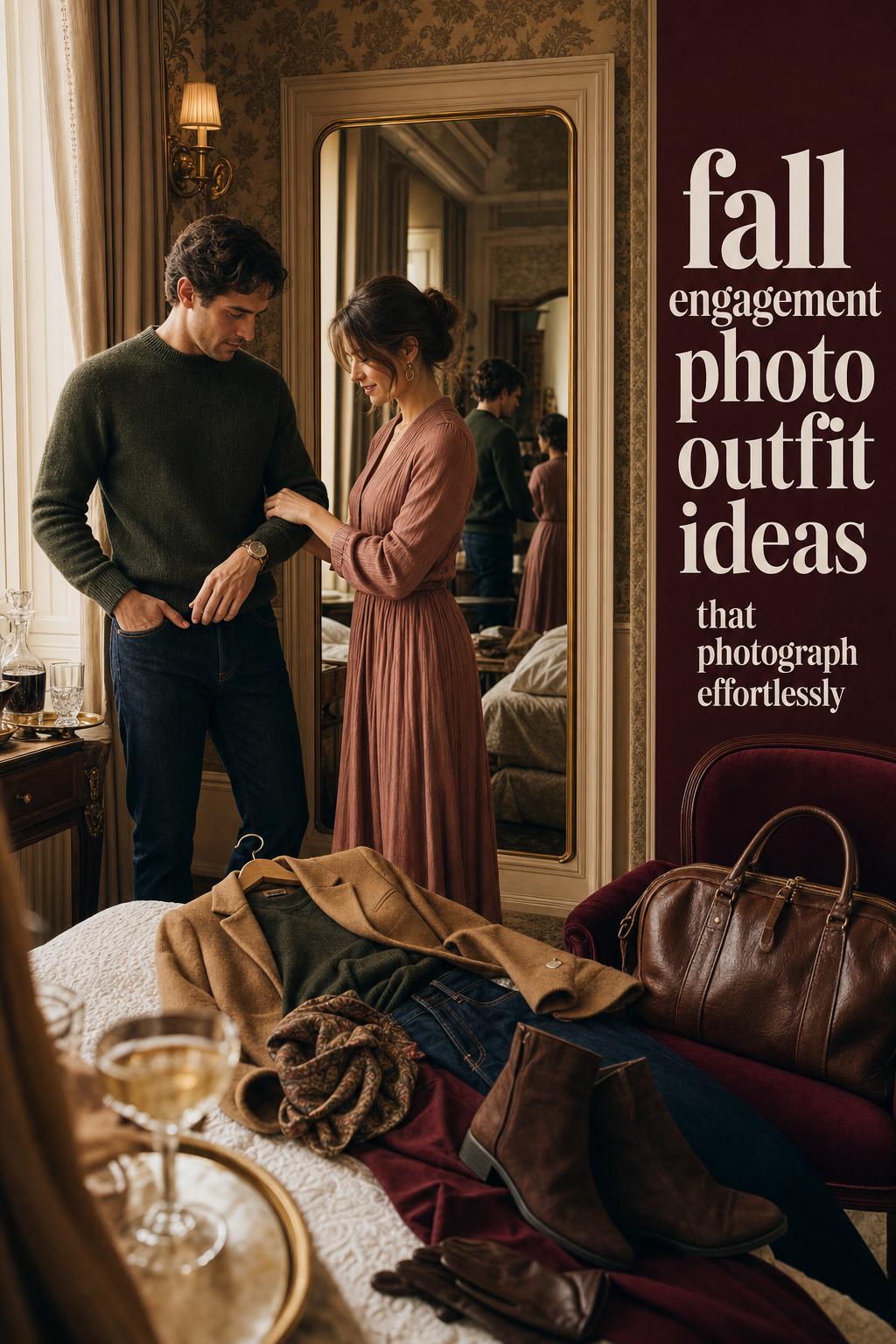
The easiest way to build this style from your own wardrobe is to begin with a palette, not a shopping list. Choose two or three related fall tones, then add texture before adding more color. A cream sweater, dark denim, and brown boots can become engagement-photo ready with the addition of a tailored coat or a softer scarf. An olive dress can feel newly intentional with suede boots and a cropped jacket already hanging in your closet.
If you are choosing between a highly specific statement piece and a strong layering piece, the layering piece usually offers more value. Engagement photos often involve movement, changing temperatures, and multiple backdrops, so a jacket, cardigan, or blazer that works across several moments is more useful than a garment that only looks good in one pose.
Retailers and editorial sources such as Revolve may be useful for visual direction, while wedding platforms like The Knot and Zola often reinforce the practical side: color harmony, comfort, fit, and authenticity matter just as much as having a beautiful outfit. The best version of this aesthetic is one that feels like you, only more refined.
Common styling mistakes that weaken the look
The most common problem in fall engagement styling is trying to force too many ideas into one outfit. Heavy plaid, bold jewelry, a hat, a scarf, textured boots, and a dramatic coat may all be beautiful separately, but together they can overwhelm the image. The camera often rewards editability. One strong texture, one clear silhouette, and a controlled palette usually create the most sophisticated result.
Another frequent issue is ignoring the relationship between light and color. Tiny patterns can flicker visually in photos. Neon or overly bright shades can dominate the frame. Clothing that is too formal for a casual outdoor session can feel stiff, while an overly casual outfit in a refined urban setting may read unfinished. Style works best when it reflects the backdrop, the couple’s personality, and the intended mood of the session.
Finally, do not mistake matching for coordination. The goal is not two copies of the same outfit formula. It is a shared visual language built through proportion, color, and texture.
Accessibility, inclusivity, and thoughtful shopping choices
Good engagement styling should feel available to more than one kind of body, comfort need, or wardrobe preference. Inclusive sizing and adaptive fashion considerations matter because confidence on camera often begins with feeling physically secure in what you are wearing. An outfit that aligns with the aesthetic but restricts movement, overheats quickly, or requires constant adjustment is not serving the moment well.
The same thoughtful approach applies to sustainability. Fall fabrics such as wool, denim, suede, leather, knits, and cashmere are often already present in a wardrobe, and reworking those pieces into a cohesive engagement look can be more practical than buying an entirely new outfit. The most beautiful results often come from editing familiar clothes into a stronger palette and more intentional silhouette.
When shopping, look for pieces that can live beyond the session: a coat you will wear again, boots that work through the season, a knit with enough structure to style multiple ways. That keeps the process grounded and helps the outfit feel like a natural extension of your style rather than a costume for one day.
FAQ
What colors photograph best for fall engagement photos?
Colors that usually photograph best in fall are earthy neutrals, olive and forest green, burgundy and maroon, dusty rose, navy, chocolate brown, cream, camel, and muted denim. These tones tend to complement autumn leaves and softer seasonal light instead of competing with them.
How should couples coordinate outfits for fall engagement photos?
The best approach is to coordinate rather than match. Choose a shared palette or mood, keep both looks at a similar level of formality, and let one outfit echo colors or textures from the other. Harmony usually looks more natural on camera than wearing identical shades.
What should I wear for a forest engagement photo session?
Forest sessions usually work best with earthy palettes, tactile fabrics, and practical footwear. Olive, cream, brown, and burgundy are strong options, while knits, wool, suede, flannel, and boots suit the setting well. The outfit should feel grounded enough for the location but still polished enough for portraits.
Are patterns okay for fall engagement pictures?
Patterns can work, but they are usually best when they are subtle and not too small or busy. Plaid and soft florals are commonly used in fall styling, especially for forest and meadow settings, but the overall outfit should still feel calm and balanced so the pattern does not dominate the image.
What fabrics look best in autumn light?
Knits, wool, tweed, corduroy, suede, leather, boucle, and denim are all strong choices because they add visible texture and depth. Fall light often flatters materials with some surface character, especially when the palette is soft or neutral.
Should engagement photo outfits be formal or casual?
They should match the setting and the mood you want. Outdoor fall sessions often look best with polished but approachable outfits rather than very formal clothing. Urban locations can support cleaner, more tailored looks, while orchards, forests, and fields usually suit softer and more relaxed styling.
What shoes are best for fall engagement photos?
Boots are often the most practical and visually cohesive choice because they work with uneven ground, cooler temperatures, and seasonal layering. In more urban settings, refined leather footwear can also work well. The best shoes are the ones that support the location and allow you to move comfortably.
How can I make my outfit look more expensive in engagement photos?
Focus on clean silhouettes, a controlled color palette, and strong texture rather than adding many accessories. A knit with structure, well-chosen boots, a coat that fits properly, and clothes that are steamed and comfortable will usually look more refined than trend-heavy pieces with too many competing details.
What should we avoid wearing for fall engagement photos?
Try to avoid neon shades, overly bright contrast, tiny busy patterns, pieces that feel too tight or hard to move in, and outfits that clash with the location. It is also wise to avoid over-accessorizing, since too many statement details can distract from the couple and the emotion of the session.
How do I build a fall engagement outfit from pieces I already own?
Start with a simple autumn palette such as cream, olive, brown, navy, or burgundy, then add one or two textured pieces like a knit, a wool coat, or suede boots. The goal is not to replace your wardrobe, but to edit it into a cohesive look that feels seasonal, comfortable, and true to your personal style.