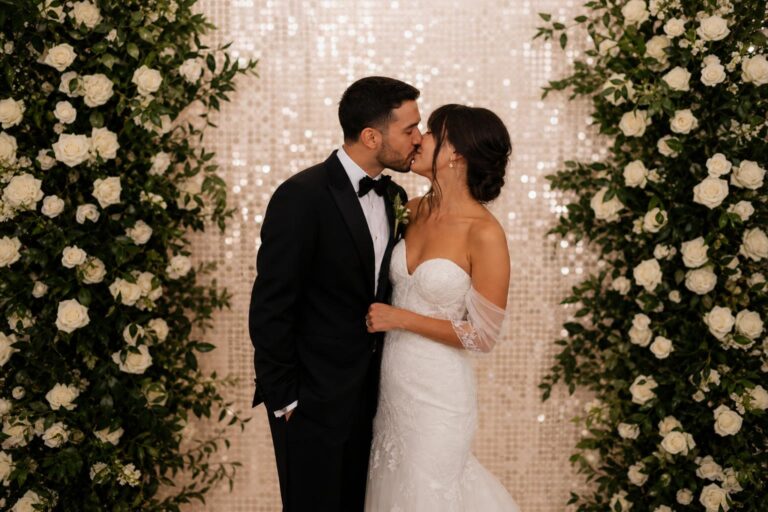
Romantic Photo Couple Voiture for a Modern Wedding Mood
There is a quiet cinematic quality to a photo couple voiture moment. A couple leaning against a car after the ceremony, seated together in the back seat, or framed through an open window can feel intimate, stylish, spontaneous, or deeply editorial depending on how the scene is designed. What makes this wedding image so compelling is also what makes it easy to misjudge: the same car can create either a timeless romantic portrait or a fashion-led modern statement, and those are not the same atmosphere at all.
Couples are often drawn to both directions because each carries romance, movement, and visual symbolism. One approach feels soft, nostalgic, and emotionally layered. The other feels cleaner, sharper, and more intentional. If the styling around the vehicle does not match the emotional tone of the wedding, the result can feel visually disconnected, even when the photograph itself is beautiful.
This guide breaks down two distinct wedding aesthetics for photo couple voiture inspiration: a romantic cinematic approach and a modern editorial approach. By the end, you will understand how each style behaves in real weddings, what kind of venues and fashion choices support it best, how it changes the guest experience and photography mood, and how to decide which direction truly fits your day.
Style overview: romantic cinematic car-photo wedding
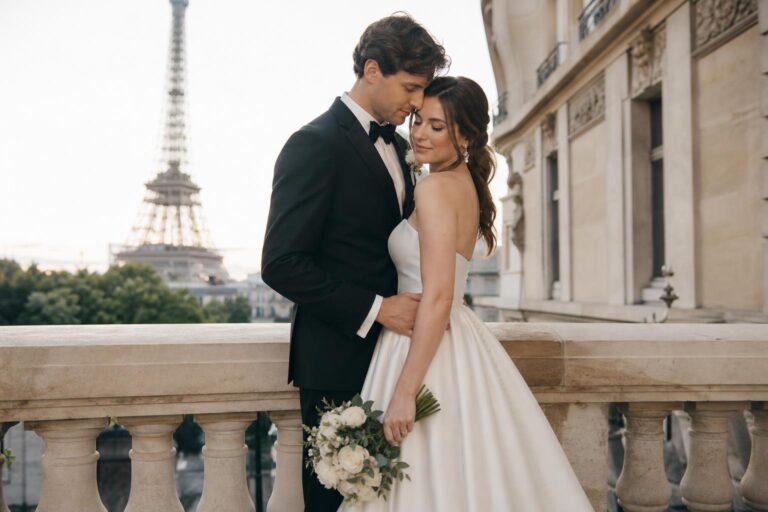
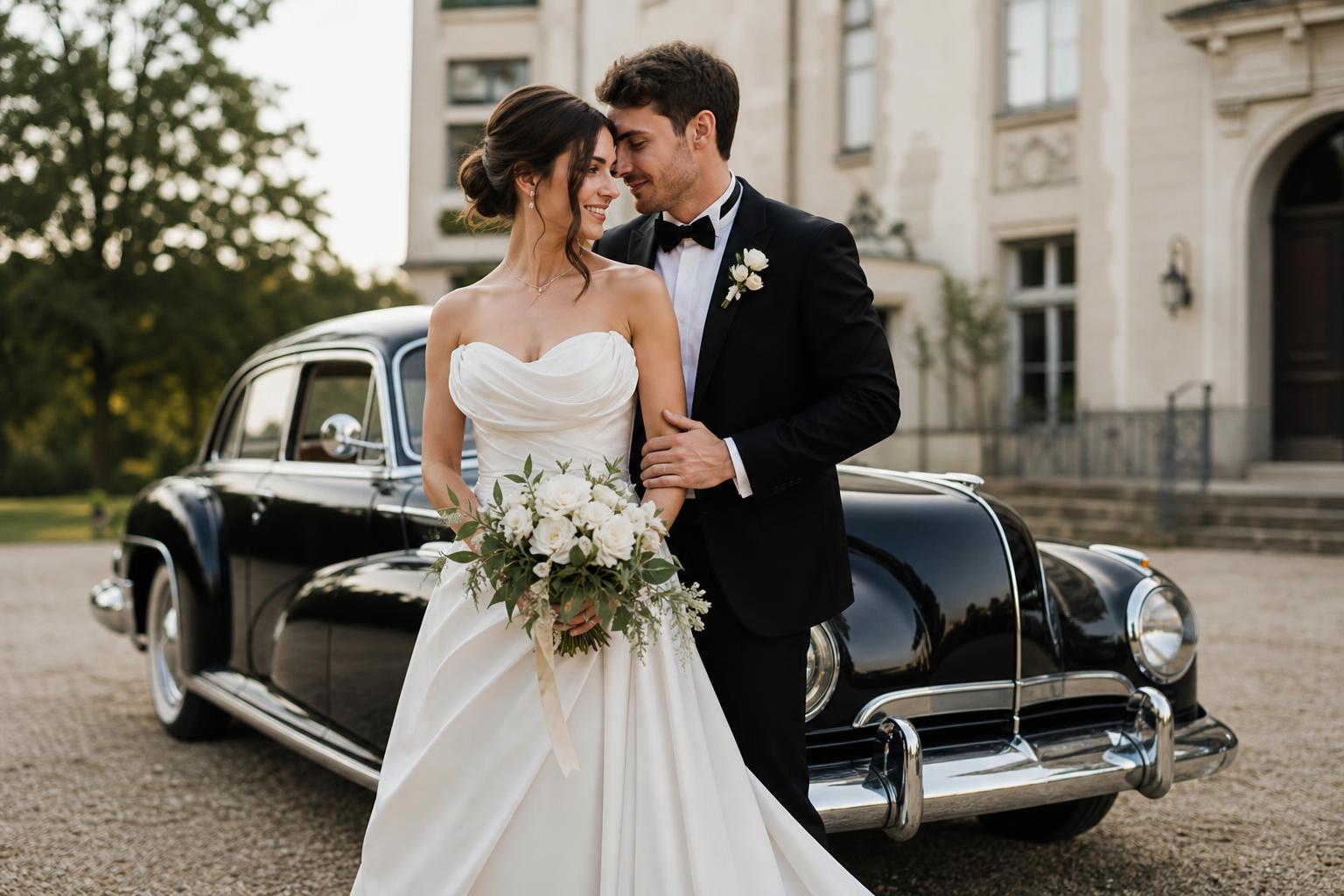
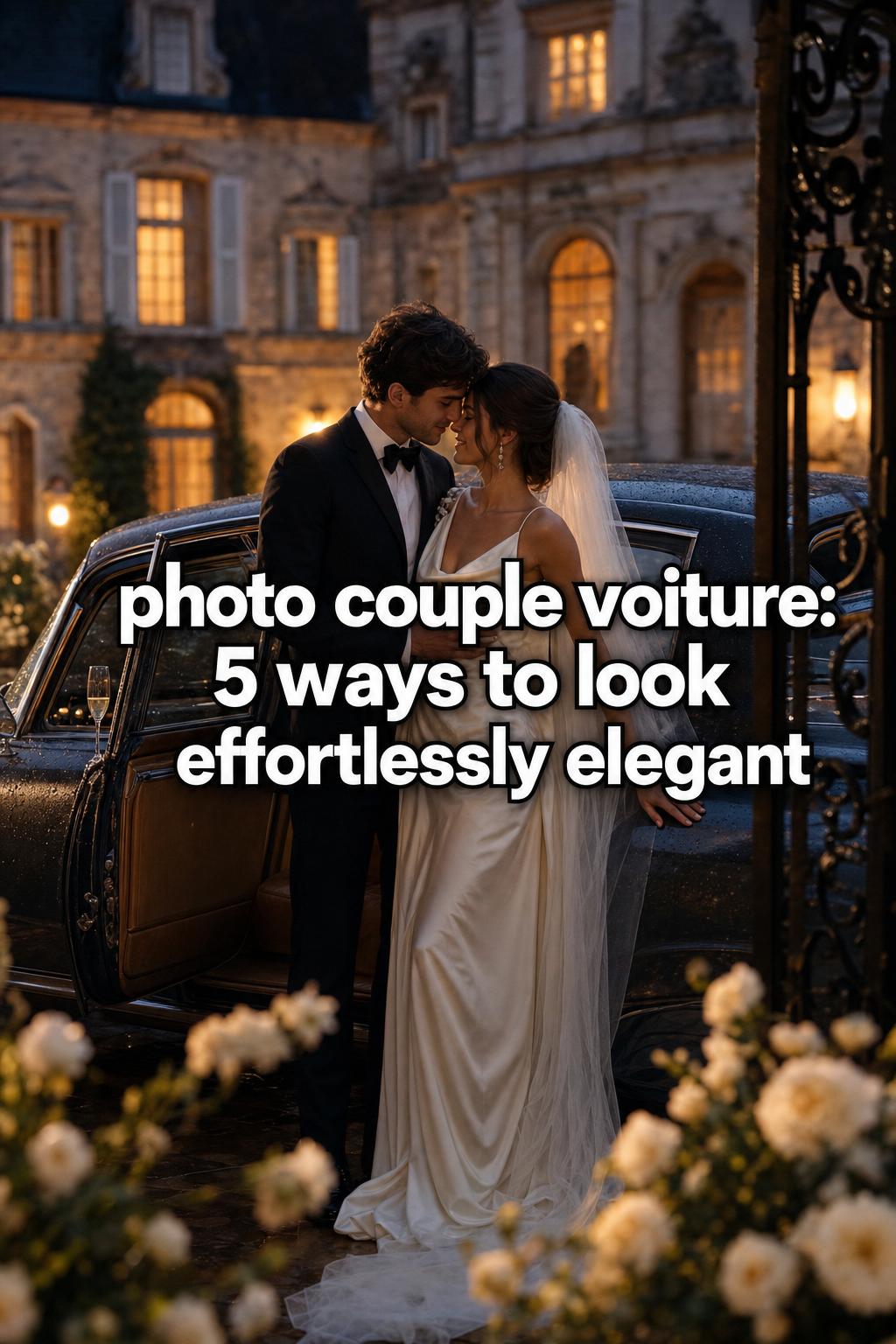
The romantic cinematic version of a couple-with-car wedding image is built on emotion first. The car is not just a prop here. It becomes part of the story, almost like a quiet witness to the transition between ceremony and celebration. This style tends to feel tender, nostalgic, and slightly unguarded, even when carefully planned. It works best when the image looks like a memory in motion rather than a posed fashion campaign.
Turn wedding inspiration into a plan you can actually follow.
Zarellea brings your guest list, budget, vendors, and day-of details into one shared space — so no beautiful idea gets lost in the shuffle.
Visually, this approach leans toward softness. The couple may be photographed sitting close together inside the voiture, standing beside the door with natural body language, or sharing a private glance as they pause between wedding moments. The overall atmosphere is less about precision and more about feeling. Details such as flowing fabric, gentle florals, natural light, and relaxed posture help support this mood.
Venue compatibility matters here. This style often feels most natural at outdoor weddings, estate settings, garden celebrations, countryside venues, and intimate destination-style events where the vehicle can blend into the environment rather than compete with it. A car parked near trees, stone architecture, gravel paths, or a softly lit drive creates a visual world that feels cohesive and romantic.
The color palette usually behaves in a restrained, harmonious way. Instead of hard contrast, this style benefits from tonal softness. Bridal fashion tends to move with the body, florals feel organic rather than structured, and textures matter more than sharp graphic design. The formality level can vary, but the emotional effect should still feel warm and personal rather than rigid.
How this style feels in real wedding photographs
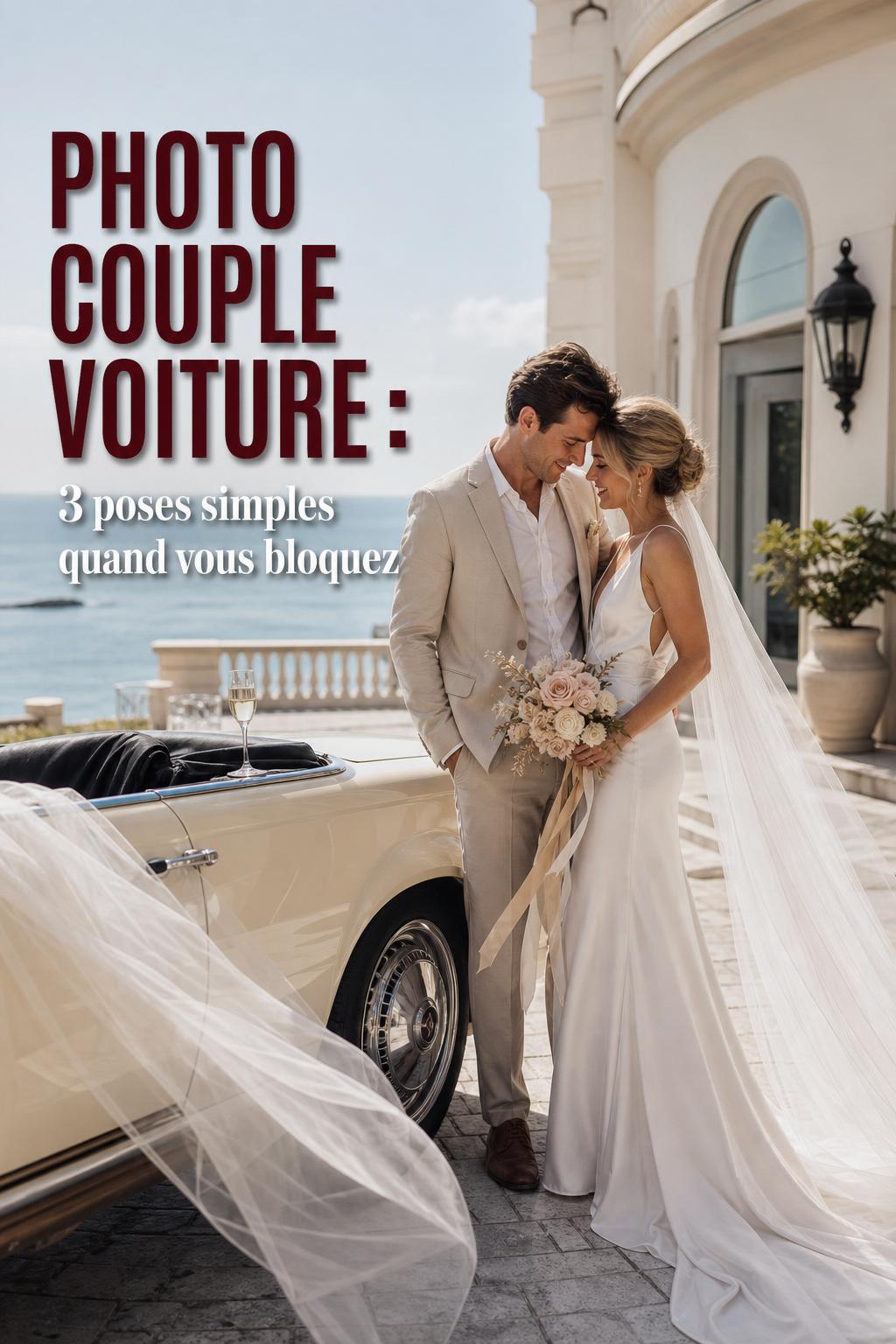
In photographs, the romantic cinematic look often reads as timeless because it prioritizes connection over spectacle. The car adds atmosphere, but the couple remains the emotional center. These images usually feel strongest when the styling does not look too controlled. A veil caught in movement, a hand resting on a car door, or a quiet seated moment can say more than an overly choreographed pose.
Best venue pairing notes
This direction is usually more convincing when the surroundings are textured and atmospheric. A voiture photographed in a natural landscape, on a private drive, beside an old building, or in a courtyard tends to enhance the romantic quality. If the venue is extremely stark or highly industrial, this softer aesthetic can lose some of its emotional coherence unless the rest of the design strongly reinforces it.
Style overview: modern editorial car-photo wedding
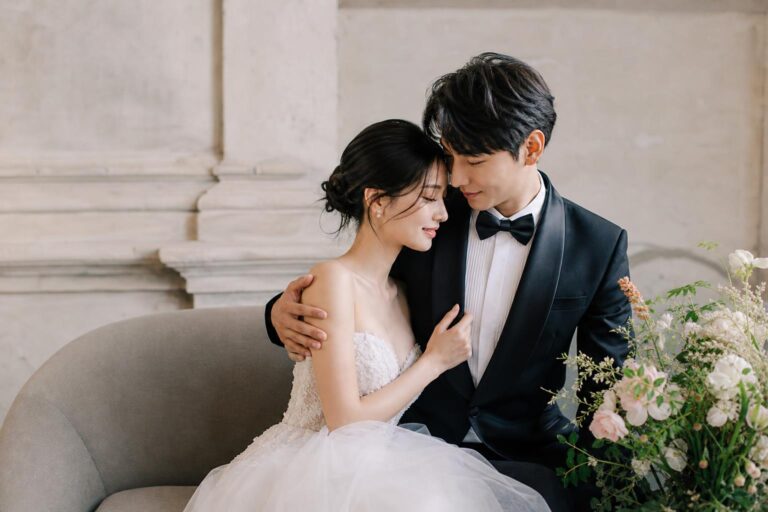
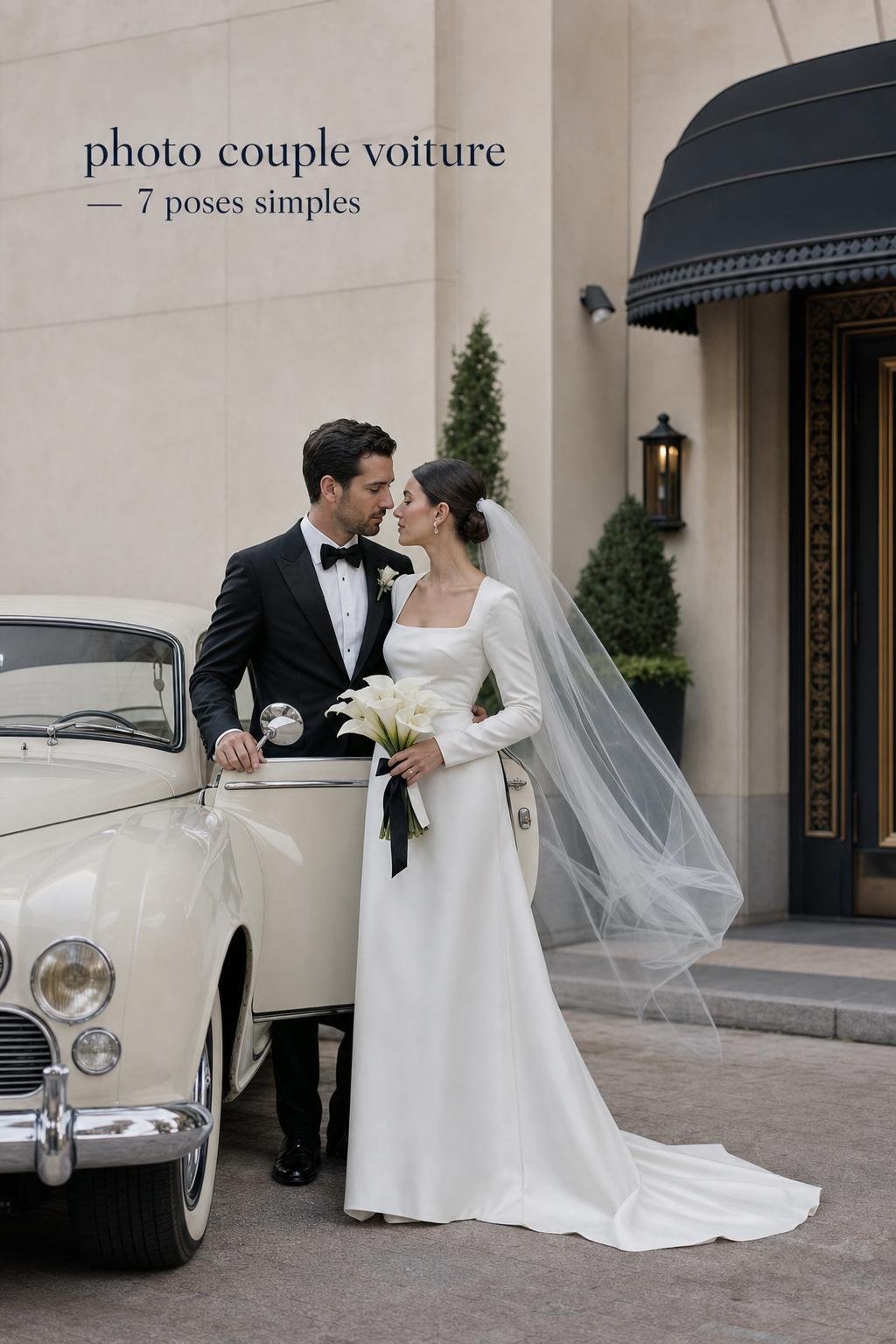
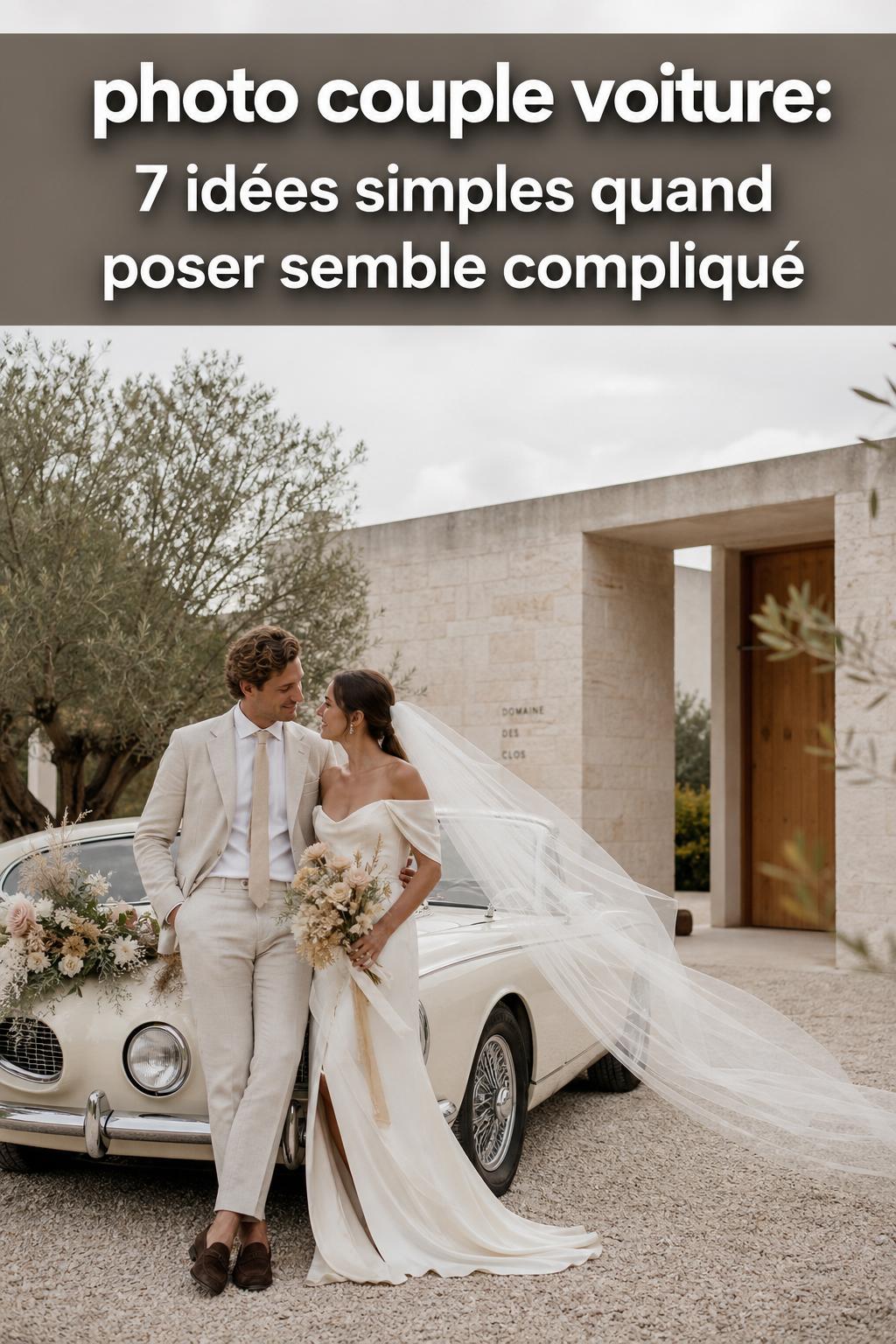
The modern editorial interpretation of photo couple voiture shifts the mood completely. Here, the car becomes a design element with visible intention. The image is still romantic, but the romance is expressed through restraint, composition, and confidence rather than softness. This style often feels elevated, fashion-aware, and highly composed.
Instead of leaning into nostalgia, this aesthetic relies on clarity and structure. The couple may be positioned with more deliberate spacing, cleaner posture, and stronger lines. The wedding fashion often plays a larger visual role, and the car is chosen or styled to contribute to a polished overall composition. The result can feel bold without becoming loud.
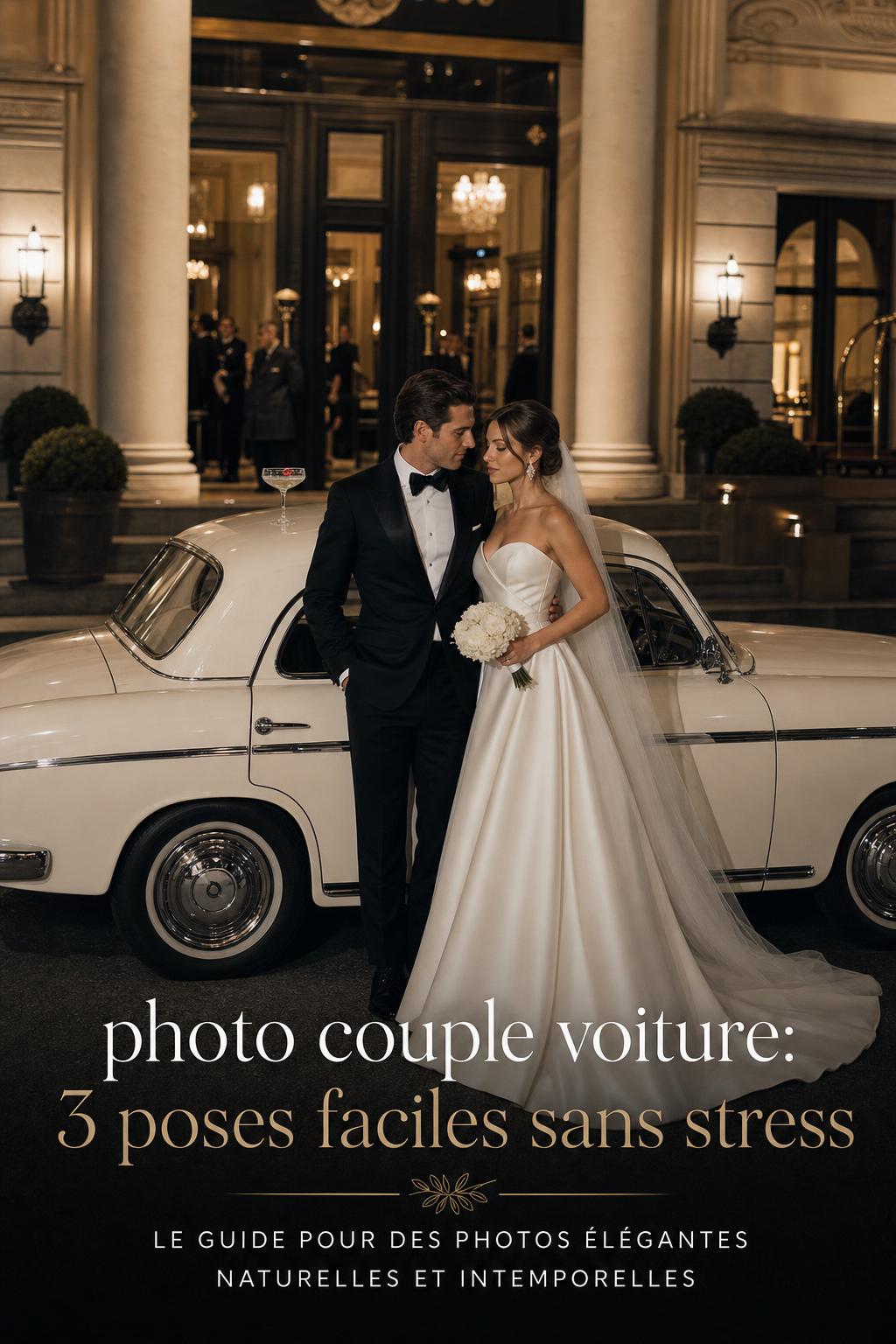
Modern editorial weddings generally work best in settings where architecture, symmetry, and negative space support the image. Think city venues, minimalist estates, refined hotel entrances, contemporary courtyards, or clean exterior backdrops where the voiture reads almost like a sculptural accent. The visual language here is less about softness and more about balance.
Color palettes tend to be narrower, more disciplined, and more graphic. Florals are often more restrained, silhouettes more defined, and decor more selective. The level of formality can feel slightly higher, even when the wedding itself is intimate, because this style depends on visual control. Every element is more visible, so inconsistency shows quickly.
What creates the atmosphere
This style feels expensive when the composition is calm. A clean dress shape, a refined bouquet, disciplined color use, and thoughtful placement of the couple around the vehicle all contribute to the mood. It is not abundance that makes this style successful. It is editing. When fewer elements are present, each one must look intentional.
Wedding photography mood
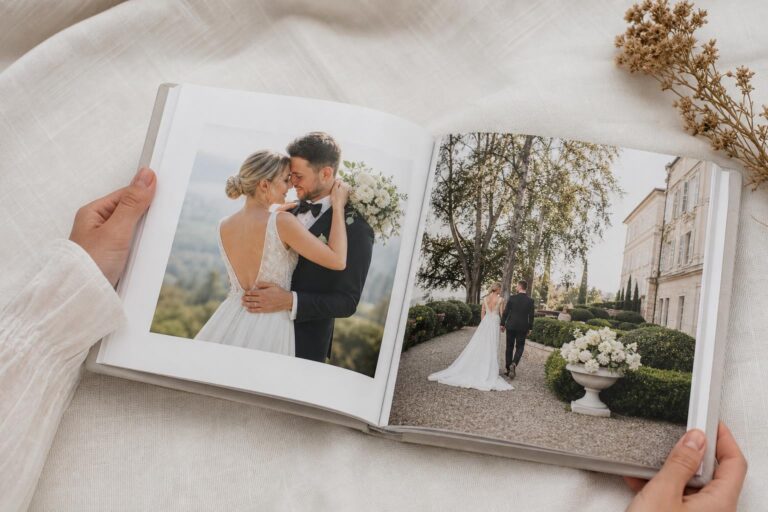
In photos, the modern editorial version often reads sharper and more current. It can feel striking in albums because the lines are strong and the visual hierarchy is clear. However, it also asks more from the venue, wardrobe, and styling discipline. If one piece feels out of place, the image loses cohesion faster than a softer romantic scene would.
The emotional difference between these styles
The easiest way to tell these two aesthetics apart is to ask what emotion the image is trying to leave behind. The romantic cinematic version invites tenderness. It feels like a private pause in the middle of the wedding day. Guests may experience that atmosphere as warm, relaxed, and emotionally immersive. The image often suggests movement, memory, and closeness.
The modern editorial version creates admiration through visual control. It still holds feeling, but it expresses that feeling through elegance and precision. Guests may experience the wedding as polished, elevated, and intentionally designed. The image often suggests confidence, style awareness, and contemporary romance rather than nostalgia.
This matters because wedding design is not only about individual beautiful objects. It is about how everything behaves together. A soft emotional wedding with a sharply fashion-driven car portrait can feel like two different events. A clean modern celebration with overly whimsical vehicle styling can feel equally disjointed. The emotional identity of the wedding should match the emotional identity of the photograph.
Where the differences show up most clearly
Silhouette and structure
Romantic cinematic styling usually benefits from movement. Dresses that soften the body line, veils that catch light, and styling that allows the couple to lean into one another all support the mood. Modern editorial styling tends to favor cleaner shape definition. If the outfit has stronger structure, it will usually photograph more convincingly in a controlled car-centered composition.
Floral direction
Organic florals suit the softer version because they echo natural emotion and help blur the line between styling and atmosphere. Restrained florals suit the editorial version because the image depends on visual discipline. An oversized, highly organic bouquet in a very clean modern scene can pull too much attention and disrupt the balance.
Color palette
Both styles can use neutral or soft tones, but they use them differently. Romantic styling layers tones to create depth and warmth. Editorial styling narrows tones to create impact through clarity. The practical consequence is important: romantic palettes are often more forgiving, while editorial palettes demand closer control across fashion, florals, and backdrop.
Venue compatibility
A romantic car-photo concept usually gains strength from an atmospheric setting. A modern editorial concept gains strength from clean architecture or refined simplicity. If the venue already has heavy visual character, the editorial version can become complicated unless the car and styling are carefully chosen. If the venue feels very bare, the romantic version may need additional softness to avoid looking incomplete.
Decor density
The cinematic approach can handle more layering because it is built around emotional richness. The editorial approach performs better with restraint. This has planning implications. Couples who love abundant details may naturally align with the romantic direction, while couples who prefer a cleaner wedding with fewer but stronger statements may feel more at home in the editorial one.
Guest dress code feel
Even if guests are never photographed with the voiture, their attire affects the atmosphere of the day. A softer romantic wedding tends to feel comfortable with fluid fabrics, classic shapes, and a warmer dress code mood. A modern editorial wedding often feels stronger when the guest wardrobe appears more refined and polished overall. This is less about strict rules and more about visual harmony.
Wedding style logic: the practical side of choosing between them
One of the most useful ways to choose between these aesthetics is to stop asking which is prettier and start asking which is easier to execute well for your specific wedding. Beautiful inspiration is not the same as a cohesive wedding day. A photo couple voiture concept only works when the logistics, light, styling, and venue all support it.
Budget reality
The romantic cinematic style can sometimes be more forgiving if the environment already provides atmosphere. Natural surroundings, soft light, and movement in the dress can do a lot of the visual work. The modern editorial style may look simple, but simple is rarely casual. Because there are fewer layers to hide inconsistency, the car choice, wardrobe finish, and setting quality become more important.
That does not mean one is automatically cheaper. It means they spend visual capital differently. Romantic styling may direct more budget toward florals, fabric movement, and location atmosphere. Editorial styling may require stronger investment in clean fashion choices, location precision, and the exact look of the vehicle.
Lighting changes everything
Soft natural light supports romantic imagery especially well because it flatters texture and emotion. The modern editorial version can also look beautiful in natural light, but it often depends more heavily on controlled angles and stronger contrast. A poorly lit voiture scene will weaken both styles, though the sharper editorial one usually reveals lighting problems faster.
What often goes wrong
- The car feels disconnected from the venue and wedding design.
- Bridal fashion and vehicle styling send different visual messages.
- The couple tries to blend softness and sharpness without choosing a dominant mood.
- The photograph is treated as a prop shot instead of part of the wedding story.
- Too many competing textures make the image feel busy rather than cinematic.
These mistakes usually happen when couples choose individual elements they love without checking whether those elements belong to the same visual language. Cohesion is what makes a wedding image feel elevated.
Visual style breakdown: how each wedding looks in motion
Bridal fashion
For a romantic cinematic scene, bridal fashion tends to look best when it responds to movement. A dress that softens when seated in the voiture, drapes elegantly over the seat, or gathers naturally at the door creates intimacy. For a modern editorial scene, the dress should maintain shape. Clean lines usually photograph better when the car image depends on structure and composition.
Bridesmaid styling and visual support
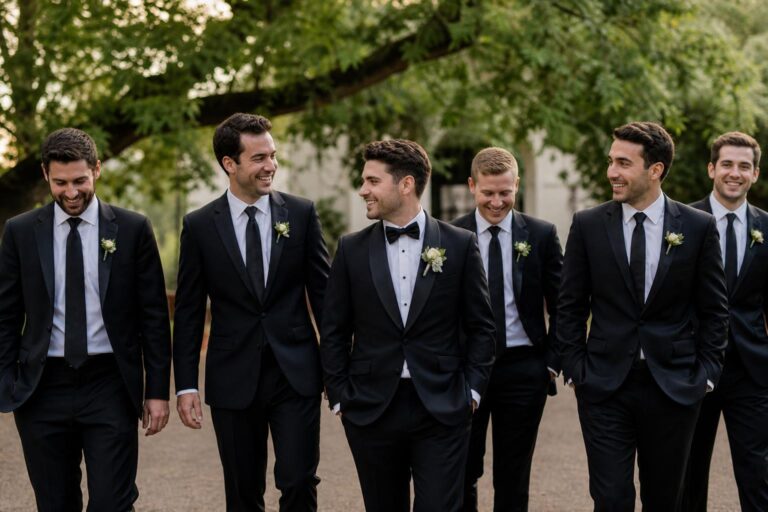
Even if the main image features only the couple, surrounding wedding styling affects how cohesive the car-photo concept feels in the full gallery. Romantic weddings tend to support mixed soft textures and gentle tonal variation. Modern editorial weddings usually benefit from more disciplined consistency, where the larger wedding party quietly reinforces the visual direction rather than adding personality in too many different ways.
Ceremony and reception relationship
The most successful voiture portraits rarely feel isolated from the rest of the day. A romantic ceremony with layered florals and a candlelit reception will support a soft emotional car portrait naturally. A minimalist ceremony with restrained florals and a refined tablescape will support a modern editorial one. The image should feel like a continuation of the wedding atmosphere, not a temporary styling detour.
Textures and materials
Romantic styling thrives on layered texture: fabric movement, natural floral shape, soft light, and environmental detail. Editorial styling depends on fewer textures used more intentionally. The reason this matters is simple: texture tells the viewer whether the image is meant to feel immersive or composed. If the texture language is confused, the final photograph will feel uncertain too.
Overall composition
In a romantic image, the eye tends to move gently between the couple, the car, and the surroundings. In an editorial image, the eye is guided more directly. That shift changes the way the photograph is experienced. One feels like entering a moment. The other feels like observing a statement.
Example comparison: ceremony styling
If the wedding is built around the romantic cinematic style, the ceremony often feels emotionally enveloping. The aisle, florals, and seating arrangement work together to create softness, so the later photo couple voiture moment feels like an extension of that same tenderness. The couple stepping away to the car reads as private and natural.
In a modern editorial wedding, ceremony styling tends to be more selective. The focus may be on shape, spacing, and architectural interaction rather than fullness. In that setting, the voiture portrait feels less like a hidden memory and more like a deliberate visual chapter in the day. The transition can be incredibly striking if the ceremony and vehicle styling share the same disciplined design language.
Example comparison: bridal fashion direction
A romantic couple-with-car image usually asks bridal fashion to soften the frame. Fabric that pools, moves, or catches air helps make the scene feel intimate. Accessories should support the emotion rather than dominate it. The vehicle becomes a backdrop for connection.
A modern editorial version asks bridal fashion to hold visual authority. The lines of the outfit should not disappear into the scene. Instead, they help define it. In practical terms, this means every decision becomes more visible: neckline, hem behavior when seated, bouquet scale, and whether the silhouette still looks intentional beside and inside the car.
Example comparison: reception atmosphere
When the wedding leans romantic, the reception usually continues the emotional layering. The voiture image belongs naturally in a gallery filled with movement, glow, and tactile detail. Guests experience the day as immersive and heartfelt, and the car photograph reinforces that feeling.
When the wedding leans modern editorial, the reception often feels more curated in its visual rhythm. Space is part of the design. Table density, decor restraint, and clean styling choices all matter. In this context, the car portrait reads as one refined visual statement among many. It does not need excess because the overall design is carrying sophistication through control.
Example comparison: destination or intimate wedding interpretation
At an intimate wedding, the romantic cinematic route can feel especially powerful because privacy already exists within the event. The couple slipping into or standing beside the voiture can look naturally emotional, almost documentary in spirit. Smaller guest counts often make this style feel even more personal.
At a destination-style or highly curated small wedding, the modern editorial route can also thrive, particularly when the setting offers strong architecture or clean visual lines. In a smaller event, details are more visible, and that can help this style succeed. But it also means inconsistency becomes easier to notice, so the editing of design choices matters more.
Style personality match
The romantic cinematic approach often suits couples who want their wedding to feel emotionally soft, immersive, and memory-led. They are usually drawn to atmosphere as much as design. They want the day to feel heartfelt in photos, not only beautiful. They tend to care about connection, movement, and warmth.
The modern editorial approach often suits couples who want a wedding that feels refined, composed, and visually confident. They are usually drawn to clarity, elevated simplicity, and a stronger sense of design authorship. They want the day to feel unmistakably intentional, with every frame contributing to a cohesive larger identity.
When to choose each style
- Choose the romantic cinematic direction if your venue already has atmosphere, your styling leans soft and layered, and you want your wedding gallery to feel intimate and emotionally textured.
- Choose the modern editorial direction if your venue supports clean composition, your fashion choices are more structured, and you want the car imagery to feel polished and striking.
- Choose romantic if outdoor light and natural surroundings are central to your wedding vision.
- Choose editorial if architectural framing, visual restraint, and highly intentional design are more important to you.
- Choose romantic if you want the car to feel like part of a lived-in wedding story.
- Choose editorial if you want the car to feel like a key aesthetic statement within the wedding design.
Neither style is better. The right choice depends on what you want your wedding to feel like, not only what you want it to look like.
Can you combine these styles?
Yes, but only if one remains dominant. The most successful blended approach usually starts with a romantic emotional base and introduces editorial discipline through composition, wardrobe refinement, or color restraint. That creates a wedding that still feels warm while looking elevated.
The harder blend is the opposite one: a strongly minimalist editorial wedding paired with very soft, highly abundant romantic car styling. That contrast can work in theory, but in practice it often feels like two aesthetics competing for control. If you blend the two, decide early what the wedding should feel like overall, then let the secondary style appear only in supporting details.
Tips for making a couple-with-car wedding image feel cohesive
- Choose the car only after clarifying the emotional tone of the wedding.
- Test whether the bridal look still works beautifully when seated inside the vehicle.
- Make sure the location around the voiture supports the style rather than distracting from it.
- Keep bouquet scale in proportion to the car, dress, and photography mood.
- Think about the full gallery, not only one hero image.
- Use the vehicle as part of the story of the day, not as an isolated prop moment.
These details seem small, but they are usually what separate a beautiful idea from a fully coherent wedding image.
What makes the style feel expensive
Luxury in wedding photography rarely comes from excess alone. In a romantic cinematic photo couple voiture scene, the image feels elevated when tones are harmonious, textures are intentional, and emotion is believable. In a modern editorial scene, it feels elevated when the composition is calm, the styling is edited, and every visible element belongs to the same visual world.
In both cases, cohesion matters more than quantity. A single well-styled voiture moment can feel far more refined than an elaborate setup with mixed visual signals. The wedding should not look like many good ideas gathered together. It should look like one idea fully understood.
What ages better in photos
Images built around authentic connection usually age well, which gives the romantic cinematic approach a natural advantage in emotional longevity. At the same time, the modern editorial approach can also remain timeless if it avoids being too trend-dependent and instead relies on clear, classic composition.
The strongest long-term results in either style come from restraint. Too many competing details can date a wedding image more quickly. Whether your choice is softer or sharper, the goal is the same: create a photograph that still feels like you when the moment becomes memory.
Final perspective: choosing the wedding mood, not just the image
The difference between a romantic cinematic car portrait and a modern editorial one is not simply visual. It is emotional, practical, and atmospheric. One wraps the wedding in softness and intimacy. The other sharpens it into elegance and intention. Both can be beautiful. Both can be deeply memorable. But they do not tell the same love story in the same language.
If you are deciding between them, pay attention to how you want the day to feel when you look back at your photographs. Do you want a photo couple voiture moment that feels like a private memory unfolding, or one that feels like a refined editorial frame within a carefully composed celebration? That answer will guide more decisions than the car itself ever could.
The most compelling weddings are not built from disconnected inspiration. They are built from emotional clarity. Once you know the feeling you want to preserve, every styling choice becomes easier, and the final images feel not only beautiful but undeniably yours.
FAQ
What does photo couple voiture mean in a wedding context?
It refers to wedding photographs of the couple with a car or inside a car, used as part of the visual storytelling of the day. The vehicle can create a romantic, cinematic, or editorial mood depending on the styling and setting.
Is a car photo better for a romantic wedding or a modern wedding?
It can work beautifully for either, but the styling logic changes. Romantic weddings usually use the car to create warmth and intimacy, while modern weddings use it to add structure and visual polish.
How do I make sure the car matches the wedding aesthetic?
Start by defining the emotional tone of the wedding first, then choose a vehicle that supports that atmosphere rather than competing with it. The surrounding location, bridal fashion, florals, and photography style should all feel aligned with the same overall mood.
Do couple-with-car wedding photos work for small weddings?
Yes, and they can be especially effective at intimate weddings because the moment often feels more personal and less performative. A smaller event can make the image feel naturally emotional, provided the styling remains cohesive.
Which style is more forgiving in photos: romantic or editorial?
The romantic style is usually more forgiving because softness, movement, and atmosphere can absorb small inconsistencies. The editorial style depends more heavily on precision, so mismatched details tend to stand out faster.
Can I combine soft florals with a modern car-photo look?
Yes, but the proportions and color control matter. Soft florals can work in a modern scene if they are edited carefully and do not overpower the clean composition of the image.
Does the venue matter for a photo couple voiture setup?
Very much. Romantic styles often need atmosphere from the environment, while editorial styles benefit from strong architecture or clean surroundings. The venue helps determine whether the image feels immersive or composed.
What is the biggest mistake couples make with wedding car photos?
The most common issue is treating the car as a separate visual idea instead of part of the wedding’s overall design. When the vehicle, wardrobe, and venue do not share the same mood, the image can feel beautiful on its own but disconnected from the rest of the celebration.
Will this kind of wedding photo feel timeless later?
It can, especially when the image is built around genuine connection and clear aesthetic cohesion. Timelessness usually comes from restraint, emotional honesty, and styling that feels intentional rather than trend-driven.