Romantic Same Height Couples Poses Photo Ideas for Editorials
Two people standing eye to eye can create some of the most quietly beautiful portraits in wedding and engagement photography. There is a natural symmetry to equal-height couples: the foreheads meet easily, the gaze feels balanced, and simple gestures like walking hand in hand or leaning into a hug often look effortless. That is exactly why same height couples poses photo ideas are so often discussed alongside height-difference posing. The goals overlap, but the styling logic is not always the same.
For couples planning engagement photos, wedding portraits, or even a relaxed pre-wedding session in a city park, on a boardwalk, by the water, or in a studio, the question is usually not just “What pose should we do?” It is also “What kind of feeling do we want?” Some poses celebrate balance and softness. Others use movement, seating, distance, or framing to create energy. Understanding those differences helps couples choose images that feel natural rather than overly directed.
This comparison-style guide looks at the main posing approaches for equal-height couples, how they differ visually, and when each one works best. Along the way, you will see how standing poses compare with seated poses, how movement changes the mood, how backdrops like beaches, murals, fountains, boats, and nature trails shape the image, and how wardrobe, lighting, and camera angle influence the final portrait.
Why equal-height posing feels different in photos
When partners are close in height, the frame often reads as visually calm. There is less automatic emphasis on one person towering over the other, so the connection itself becomes the main story. In practical terms, this means eye contact, hand placement, and posture become more important. A slight shoulder turn, a temple-to-temple pose, or a friendly hand hold can completely change the mood because the composition is already balanced.
Turn wedding inspiration into a plan you can actually follow.
Zarellea brings your guest list, budget, vendors, and day-of details into one shared space — so no beautiful idea gets lost in the shuffle.
This is one reason equal-height couples are often photographed in styles that highlight harmony: face-to-face portraits, forehead touches, side hugs, gentle walking shots, and seated images that keep both bodies on similar visual levels. At the same time, balance can become too static if every pose is symmetrical. That is where photographers and couples often borrow from broader couple poses ideas—adding a twirl, a backward hug, a kiss on the cheek, or a dramatic distance composition to introduce life into the frame.
For wedding planning, this matters because the posing style should match the atmosphere of the day. A formal portrait outside a classic venue may benefit from a level frame and stillness. A coastal engagement session with wind and open space may call for movement-based portraits instead. The choice is less about following a fixed formula and more about deciding whether you want tenderness, playfulness, drama, or a candid editorial feel.
Style overview: balanced standing poses
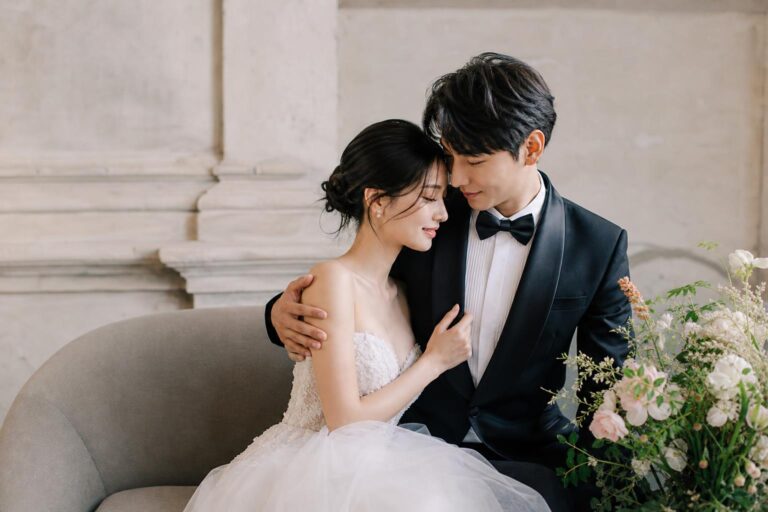
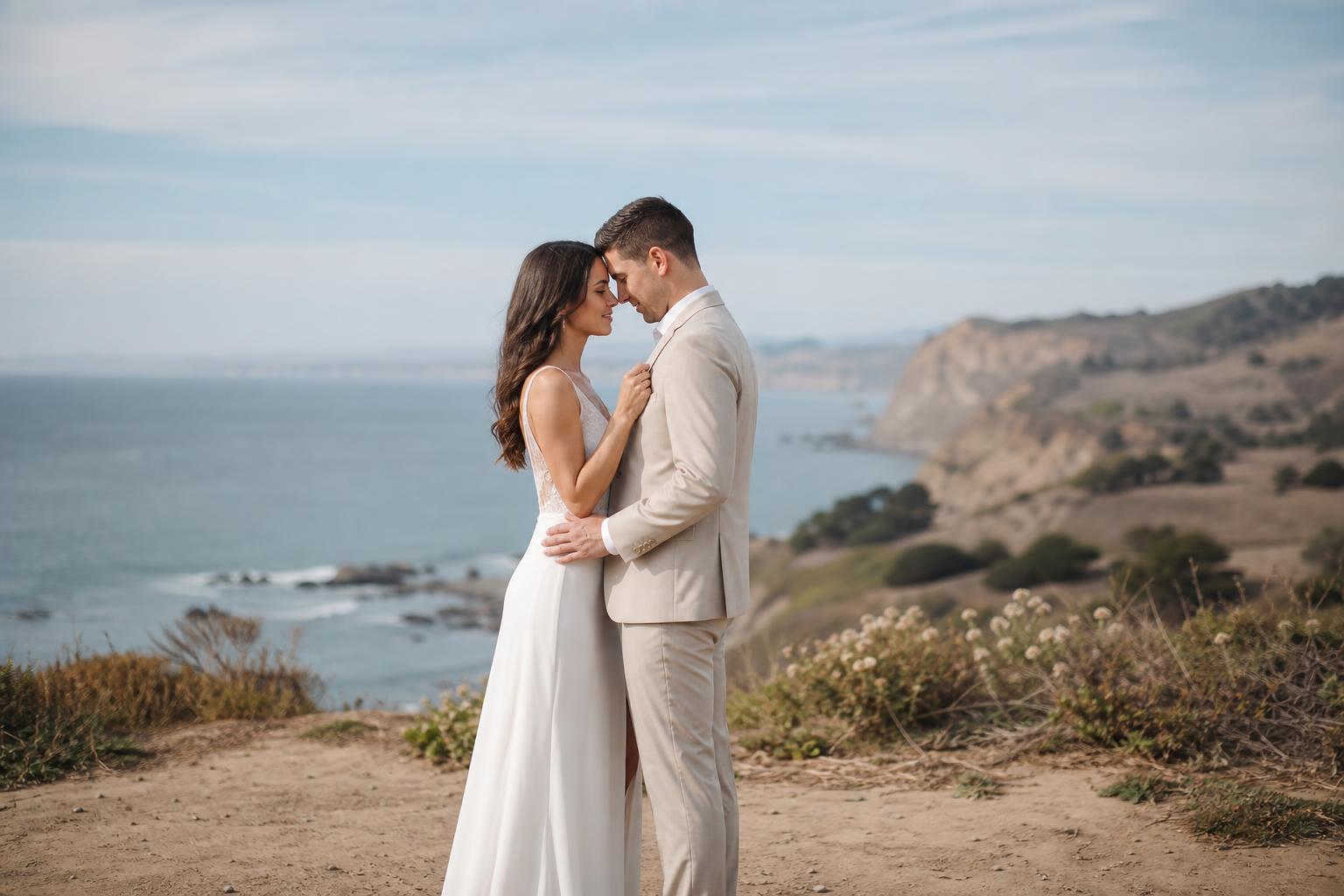
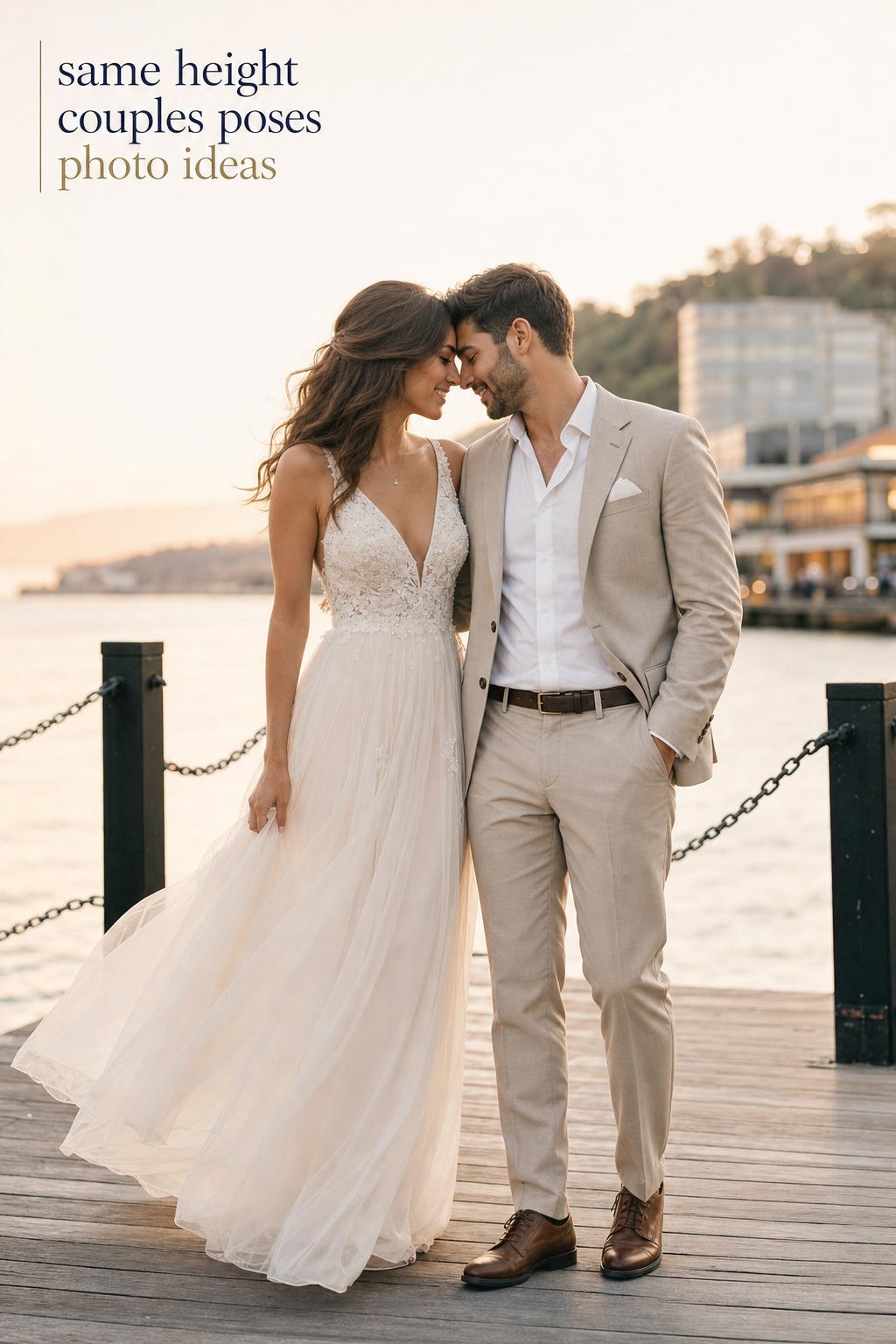
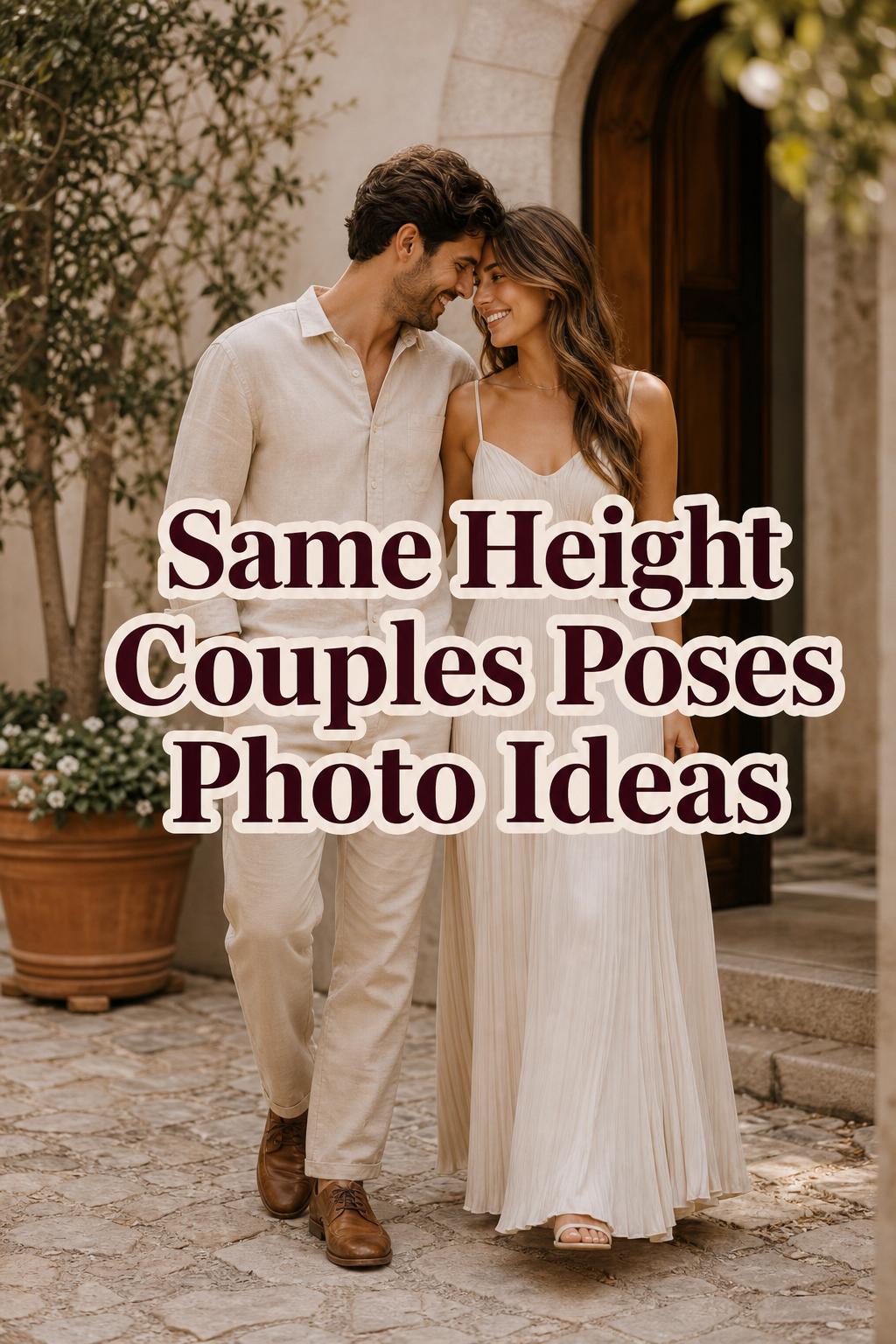
Balanced standing poses are the clearest expression of equal-height portraiture. These are the classic face-to-face, temple-to-temple, forehead-to-forehead, hand-holding, and shared-glance images that appear in engagement poses, wedding photos poses, and casual couple portraits alike. Their defining characteristic is level visual alignment. The silhouettes are usually upright, the heads sit near the same line, and the emotional tone is intimate and composed.
Visually, this style tends to feel refined and timeless. It works especially well against urban walls, murals, fountains, waterfronts, and open natural backdrops where the couple can stand still and let the setting frame them. The mood can range from romantic to quietly editorial depending on the hand placement and gaze direction. A direct look into each other’s eyes creates depth, while looking toward the camera can make the portrait feel more celebratory and public-facing, which suits save-the-dates and wedding announcements.
This approach also pairs easily with coordinated wardrobe choices. Tonal harmony, neutral palettes, or silhouettes that do not compete with the body lines help maintain the clean, balanced effect. Because there is less height contrast to distract the eye, outfit coordination becomes part of the composition.
Style overview: seated and level-changing poses
Seated and level-changing poses are often associated with height-difference couples, but they are just as useful for equal-height couples. The difference is in the intention. Instead of correcting an imbalance, seated poses introduce softness, asymmetry, and storytelling. A bench, staircase, low wall, stool, boat edge, or blanket on the ground changes the lines of the portrait and gives the hands and shoulders something natural to do.
These photos usually feel more relaxed and conversational than fully standing portraits. Think of the breakfast date mood, the sailboat sit, a quiet side hug on a park bench, or one partner seated while the other leans in. Because both people begin at a similar height, even a small shift in levels creates visual interest without making the image feel forced. This is especially effective for couples who say they feel stiff when simply told to stand and smile.
In wedding and engagement sessions, this style often works best when the setting contributes to the romance: a coastal boardwalk, a nature trail, a city staircase, a waterfront dock, or an indoor studio with soft lighting. The mood is less formal, more lived-in, and often more candid even when carefully directed.
Style overview: movement-based poses
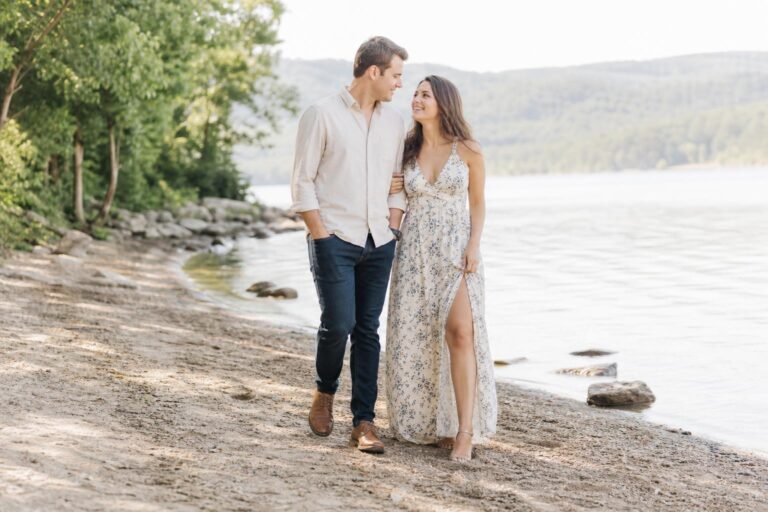
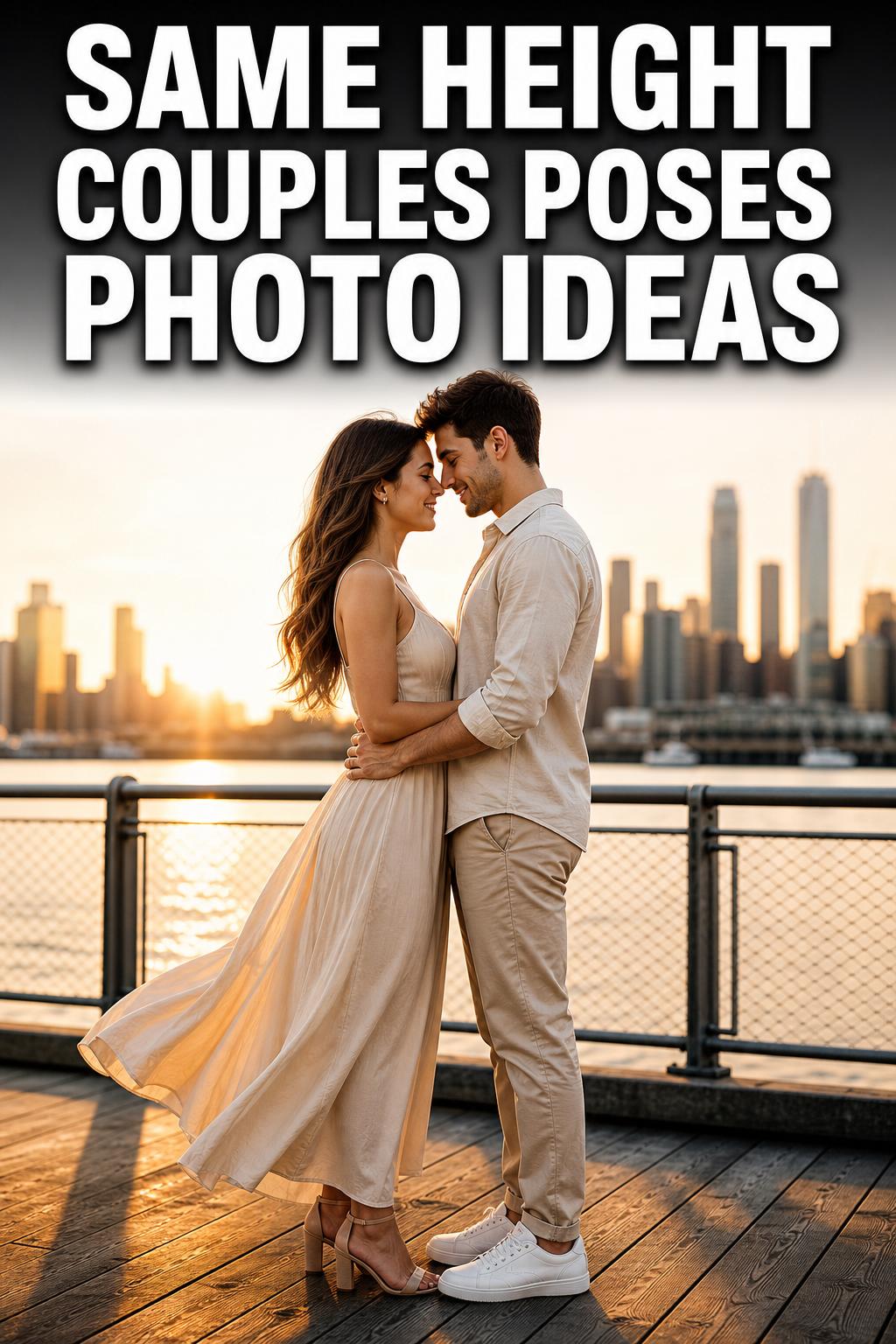
Movement-based poses are the answer when balanced height starts to look too still. Walking hand in hand, dancing, twirling, hugging from behind while in motion, a playful piggyback, a pool splash, or a spontaneous toast all shift the focus from symmetry to rhythm. In these images, equal height becomes an advantage because the motion reads evenly across the frame.
The overall aesthetic is lively, natural, and emotionally open. Compared with a classic level frame, movement introduces looseness through clothing, hair, arms, and stride length. That makes these poses a strong choice for couples who want photos of couples that feel candid rather than carefully posed. It also works beautifully in locations with room to move, such as beaches, nature paths, open urban streets, waterfronts, or dance-floor-inspired reception portraits.
This style is also forgiving. If a couple feels awkward with direct eye contact, asking them to walk, laugh, toast, or turn toward each other can produce a more genuine expression. The trade-off is that movement requires more attention to spacing, posture, and timing. Without that, hands can look disconnected and the frame can feel busy.
Style overview: creative framing and perspective poses
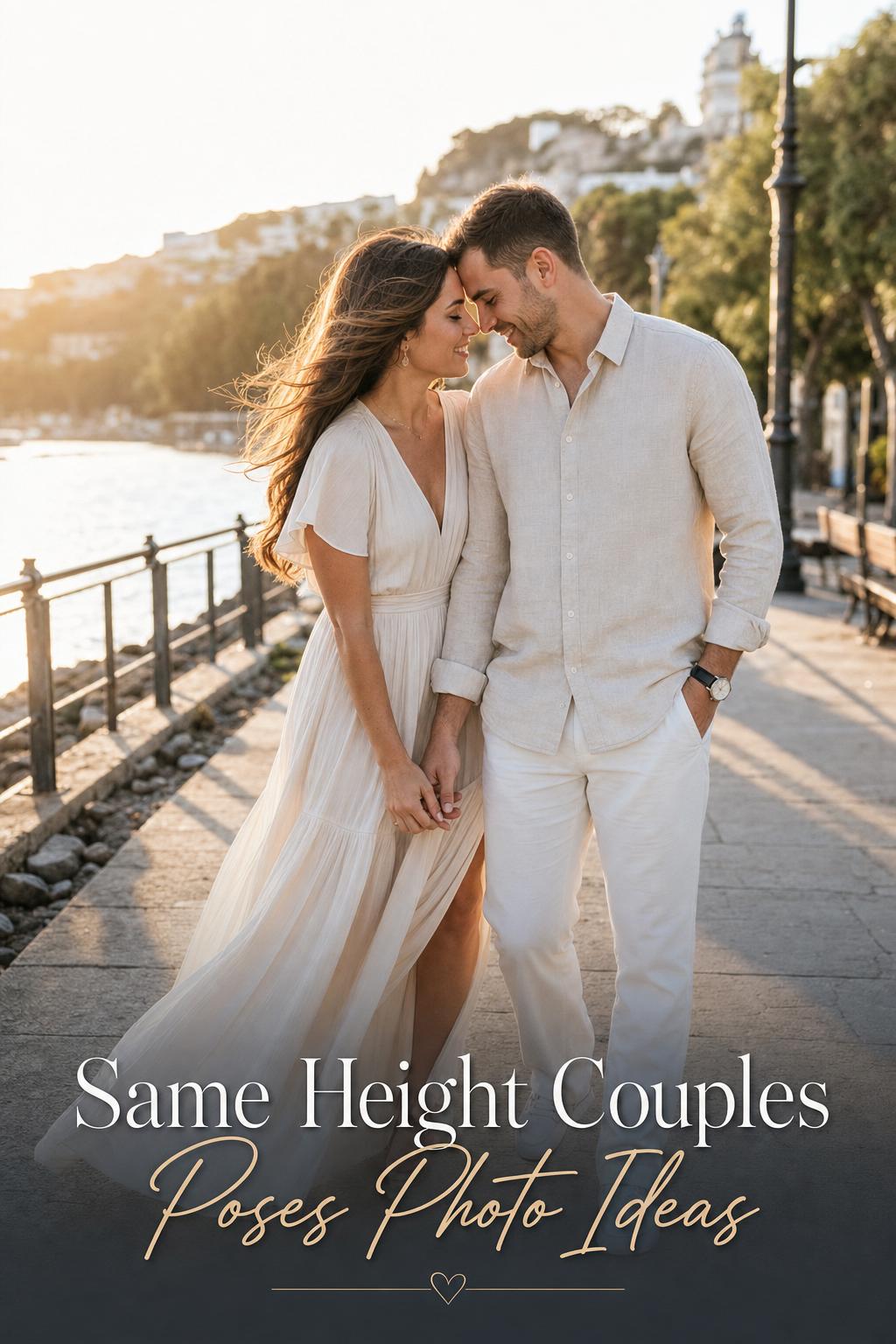
Creative framing uses the camera to shape how equal-height couples appear. This may include a cutoff kiss, a dramatic distance shot, over-the-shoulder framing, a mural composition, sun flare, low-angle emphasis, or a more top-down perspective that controls headroom and body spacing. These photos are less about the pose alone and more about how the pose interacts with the environment.
Compared with straightforward standing portraits, this style often feels more editorial or cinematic. A skyline stare against a city backdrop, a kiss by a fountain, or a couple framed by boats on a waterfront all depend on background, distance, and angle. Equal-height couples suit this approach because the visual line between them is easy to organize; the photographer can focus on framing rather than compensating for strong vertical differences.
These images are often the most memorable in an album, but they are usually strongest as supporting portraits rather than the full session. They rely more heavily on location, light, and direction, so they work best when paired with simpler poses that secure timeless shots first.
The key differences between these posing styles
Silhouette and structure
Balanced standing poses keep the body lines clean and level. Seated poses break those lines intentionally. Movement-based portraits soften the structure further by replacing stillness with rhythm. Creative framing can either simplify or dramatize the silhouette depending on crop and angle. If you want a portrait that feels formal and timeless, a standing pose usually leads. If you want warmth and personality, seated or movement-based options often feel more natural.
Emotional tone
Equal-height standing portraits often feel serene, romantic, and composed. Seated poses feel closer and more conversational. Movement tends to feel joyful, youthful, and candid. Creative framing can lean cinematic or artistic. None is inherently better; the best choice depends on whether the couple wants their album to feel classic, playful, dramatic, or gently intimate.
Use of location
Standing poses are versatile almost anywhere, from urban walls to forests. Seated poses need useful structures such as benches, steps, docks, or blankets. Movement requires open space. Creative framing benefits most from visually distinctive settings like murals, fountains, cityscapes, boats, beaches, and sunlit waterfronts. The backdrop is not just decorative; it shapes which pose family will feel effortless.
Practical ease for couples
Some couples feel most confident with direct guidance and still poses. Others relax only when they are given something to do. In real sessions, that difference matters more than trend. A pose can be beautiful on paper and still feel awkward if it does not suit the couple’s comfort level. Friendly hand holds, side hugs, walking shots, and temple-to-temple portraits usually succeed because they give enough structure without feeling theatrical.
A visual style breakdown for real wedding and engagement moments
Picture an engagement session in Golden Gate Park with a bench nearby, soft afternoon light, and a couple wearing coordinated neutral tones. A standing face-to-face portrait there would feel elegant and centered. Move them onto the bench, leaning shoulder to shoulder, and the mood becomes softer and more personal. Ask them to walk past the bench holding hands, and suddenly the same location feels relaxed and documentary-like. The setting has not changed, but the posing style has completely altered the emotional language of the images.
Now imagine a city session near a mural or staircase, similar to the urban backdrops often favored in modern engagement photos. A level standing pose in front of a mural creates graphic balance. A dramatic distance composition on the staircase introduces scale and architecture. A twirl or dance-party-style image in the same area adds movement and modern energy. This is why many strong couple galleries mix pose types instead of relying on one approach from start to finish.
At the beach or on a boardwalk, the comparison shifts again. A shared glance with wind and open sky can feel intimate without much direction. A sailboat sit or dock-edge pose creates relaxed storytelling. A walking portrait with arms linked lets the horizon and movement carry the frame. In waterfront settings, equal-height couples often benefit from simple poses because the scenery already provides atmosphere.
Pose comparisons: how equal-height couples can approach the same scene differently
Face to face versus temple to temple
Face to face is the cleaner, more formal choice. It emphasizes posture, eye contact, and balanced composition. Temple to temple feels softer and slightly less posed because the heads connect without requiring a full frontal stance. For wedding portraits outside a ceremony venue, face to face often suits a polished moment. For engagement shots in a park or on a trail, temple to temple can feel more intimate and less performative.
The big hug versus the side hug
The big hug creates emotional immediacy. Bodies overlap, hands have a clear purpose, and expressions often turn candid. The side hug is more open and relaxed, making it useful when you want the location, outfit, or ring display to remain visible. Equal-height couples usually carry both well; the choice depends on whether the portrait should feel enveloping or airy.
Walking hand in hand versus the level frame
Walking hand in hand gives momentum and often helps couples forget the camera. The level frame is more intentional, with both partners aligned and usually standing still. For save-the-date imagery or a wedding website hero image, the level frame can feel strong and classic. For a gallery that needs movement and warmth, the walk usually delivers more variety.
Seated bench portrait versus standing mural portrait
A bench portrait invites closeness, angled shoulders, and a calm narrative quality. A standing mural portrait feels more graphic and design-driven. If the couple wants the photos to center on emotion, the bench often wins. If they want a modern city aesthetic, the mural may be the better choice. Neither is more romantic by default; they simply express romance differently.
Classic kiss versus cutoff kiss
The classic kiss is timeless and complete. The cutoff kiss, where the frame intentionally crops part of the bodies, feels more editorial and stylized. Equal-height couples often photograph beautifully in both because the approach lines are naturally even. Choose the classic version for formal wedding albums and the cutoff version when you want visual variety and a little modern edge.
Named pose ideas for same-height couples, with the style logic behind each one
A strong set of same height couples poses photo ideas usually includes a mix of level portraits, seated moments, movement, and one or two dramatic compositions. The following pose ideas are especially useful because each one solves a different visual need.
- The seamless walk: best for couples who want natural expressions and easy movement. Works especially well on a beach, boardwalk, urban street, or nature trail.
- The equal embrace: a front-facing hug that highlights symmetry and closeness. Ideal for engagement poses and wedding portraits where the couple wants tenderness without too much motion.
- The shared glance: both partners angled slightly, looking at each other rather than standing flat to camera. This softens the frame and keeps the height balance feeling organic.
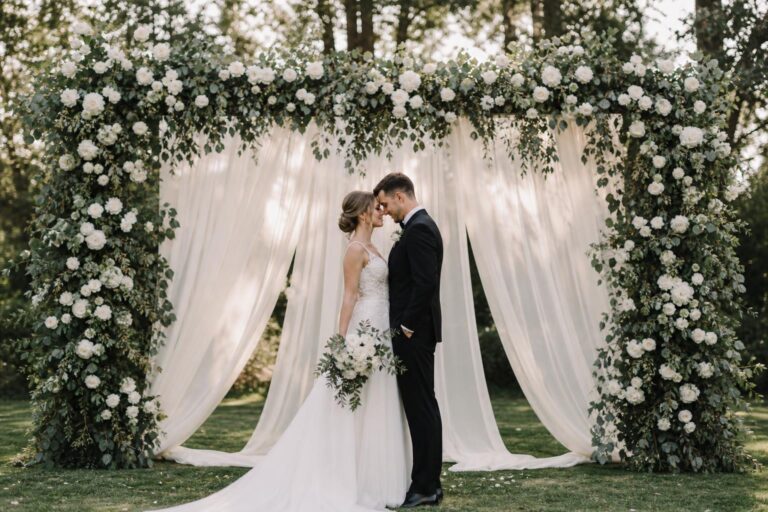
- The level frame: a still, centered portrait with clean posture. This is one of the strongest options for announcement photos, classic wedding albums, and formal locations.
- Temple to temple: quieter than a forehead press and often easier to sustain naturally. Good for romantic close-ups.
- The side hug: useful when the backdrop matters, such as a mural, fountain, or skyline. It keeps the couple connected while leaving space around them.
- The backwards hug: one partner wraps from behind while both stay mostly upright. This adds layering without disrupting the equal-height relationship too much.
- The bench lean: one of the most effective seated poses for relaxed storytelling, especially in parks, waterfronts, or city locations.
- The twirl: adds motion and celebration. Especially fitting for engagement photos and playful post-ceremony portraits.
- The dramatic distance: uses space between the couple and the backdrop to create mood. Best in large outdoor settings or architectural locations.
- The kiss on the cheek: a dependable option for couples who feel self-conscious about a direct kiss shot but still want affection in the gallery.
- The dance party: a lively choice that echoes reception energy and helps break stiffness during a shoot.
These pose names reflect a wider truth about couple portraiture: the “best” pose is rarely the most complex one. It is the one that matches the backdrop, the couple’s comfort, and the emotional tone of the day.
How backdrop changes the style of the pose
Coastal and waterfront settings
Beaches, docks, boardwalks, fountains, and boats create natural openness. In these settings, equal-height couples often look strongest in walking portraits, side-by-side embraces, sailboat sit compositions, and simple shared-glance images. Because the landscape already brings movement and atmosphere, the pose does not need to work as hard. A sun flare or horizon line can add softness, but only if the couple’s spacing remains clear.
Urban murals and city backdrops
Mural walls, city streets, and skyline views suit more graphic posing. The level frame, friendly hand hold, dramatic stare, cutoff kiss, and mural portrait all work well here. In urban environments, equal-height couples benefit from careful posture because straight lines in the background make slouching more obvious. The reward is a portrait that feels modern and intentional.
Nature trails and forest settings
Nature backdrops soften everything. Walking poses, forehead-to-forehead moments, outdoor snuggles, and side hugs tend to feel especially natural among trees and open paths. Since the background is less structured than a city wall or staircase, these locations can forgive slight asymmetry in the body and still look harmonious.
Indoor studio or controlled spaces
In a studio or minimal indoor setup, the couple becomes the entire visual focus. That makes standing level poses, seated portraits, and close embrace shots especially effective. Lighting and headroom matter more here because there is no dramatic location to distract from awkward spacing. For couples who want a clean and timeless look, studio portraits can be a beautiful contrast to more scenic wedding photos poses taken outdoors.
Wardrobe and styling: the quiet influence on equal-height portraits
Wardrobe does not need to be elaborate, but it does shape how balanced a portrait feels. Coordinated color families, tonal harmony, and silhouettes that complement each other usually photograph better than outfits competing for attention. When both partners are similar in height, visual imbalance from clothing can become more noticeable than physical imbalance.
For romantic engagement photos, softer neutral tones and silhouettes with gentle movement often work well because they support the connection rather than dominating it. For modern city sessions, more defined shapes can suit murals, staircases, and architectural backdrops. The important point is consistency. If one outfit feels dramatically more formal, more voluminous, or more visually heavy than the other, the pose may lose the calm equality that makes these portraits so appealing.
There is also a practical side. Outfits should allow walking, sitting, hugging, and turning without constant adjustment. The most beautiful pose ideas can fall flat if one person is worried about stiffness, wrinkling, or discomfort. Wedding photography always benefits from choices that hold up across a long shoot and different locations.
Lighting and camera choices that support height parity
Lighting and perspective influence equal-height portraits more than many couples expect. Eye-level framing often preserves the natural balance between partners. Low-angle shots can make the pose feel more dramatic, but they should be used thoughtfully so the frame does not become overly imposing. High-angle or slightly top-down compositions can be flattering in close embrace poses, especially when the goal is softness rather than grandeur.
Headroom is another small detail with a big effect. In level portraits, uneven cropping above the heads becomes distracting quickly because the eye expects symmetry. The same is true for distance. If the couple stands too close to the camera in a very tight frame, hand placement and shoulder tension become more obvious. If they stand too far away, the emotional connection can disappear into the background. The strongest images usually balance proximity with enough space for posture and touch to read clearly.
Lens suggestions are often discussed alongside couple portraits, with portrait-friendly choices like 50mm and 85mm commonly associated with flattering framing. What matters most in practice is not the number alone, but how the chosen framing supports the pose, the backdrop, and the feeling the couple wants.
Common mistakes couples make with equal-height poses
- Standing too square to each other in every shot, which can make the gallery feel repetitive.
- Letting arms hang without purpose, especially in still portraits.
- Using only symmetrical poses and losing visual variety.
- Ignoring the backdrop, so a bench, mural, staircase, or boat feels accidental instead of integrated.
- Choosing outfits that create more imbalance than the bodies do.
- Forcing a dramatic pose that does not match the couple’s personality.
The simplest correction is variety with intention. A session usually feels complete when it includes one polished standing portrait, one close affectionate pose, one seated or level-changing image, one walking or movement shot, and one location-driven frame such as a fountain, mural, skyline, or waterfront composition.
Tips for couples planning their own shoot
If you are preparing for engagement photos or wedding portraits and want a gallery that feels natural, think in categories rather than isolated poses. Start with a level standing shot to secure the timeless image. Then add a side hug or equal embrace for connection. Move into a seated setup if there is a bench, staircase, or dock. Finish with a walking portrait or twirl so the gallery has movement. This progression helps many couples warm up gradually.
It is also helpful to choose a location that gives you at least two visual options. A waterfront park with a bench, pathway, and open view is more flexible than a single flat wall. Likewise, a city area with a mural and nearby staircase allows both graphic and softer compositions in one session. These details make the shoot feel richer without requiring constant relocation.
One practical tip that experienced photographers often rely on is to direct connection before perfection. Ask for a hand hold, a gentle lean, a shoulder touch, or a shared glance first. Once the couple feels connected, small posture adjustments become much easier. That sequence matters because equal-height portraits are at their best when they feel emotionally grounded rather than mechanically aligned.
When each style works best in a wedding or engagement gallery
Choose balanced standing poses for formal keepsakes
If you want a portrait that could live in a frame for years, this is often the right choice. It suits ceremonies, classic venues, city architecture, and traditional engagement announcements. These are usually the anchor images of the gallery.
Choose seated poses for warmth and softness
Seated portraits work beautifully in parks, waterfront settings, and more intimate engagement sessions. They are especially helpful when a couple wants photos that feel close and conversational rather than formal.
Choose movement-based poses for candid energy
Walking, dancing, twirling, and playful poses are ideal for couples who laugh easily together and want their gallery to feel alive. These are often wonderful for beaches, trails, urban streets, and reception-inspired portraits.
Choose creative framing for editorial variety
Use dramatic distance, cutoff kisses, skyline compositions, or mural framing when the setting deserves attention and you want a few standout images. These should support the gallery, not replace the more emotionally direct portraits.
A wedding-minded way to mix these styles
The most memorable couple galleries rarely stay in one posing lane. A romantic wedding album might begin with a classic level frame outside the venue, shift into a temple-to-temple close-up under softer light, move to a bench or staircase portrait for intimacy, and end with a walk at sunset or a dance-party-style image that feels celebratory. Each pose family brings out a different part of the relationship.
That is why equal-height couples often photograph so beautifully across styles. The balance is already there. The real creative choice is deciding whether to present that balance as elegance, ease, playfulness, or cinematic atmosphere. Once that decision is clear, the right pose ideas usually follow naturally.
Whether you are planning engagement poses in Central Park, a waterfront session near boats and boardwalks, portraits by a mural in the city, or a quiet studio shoot with soft light, the best images are the ones that feel true to your relationship. The pose should support the moment, not overshadow it. That is what makes wedding photography feel lasting, personal, and full of heart.
FAQ
How should we pose if we are the same height?
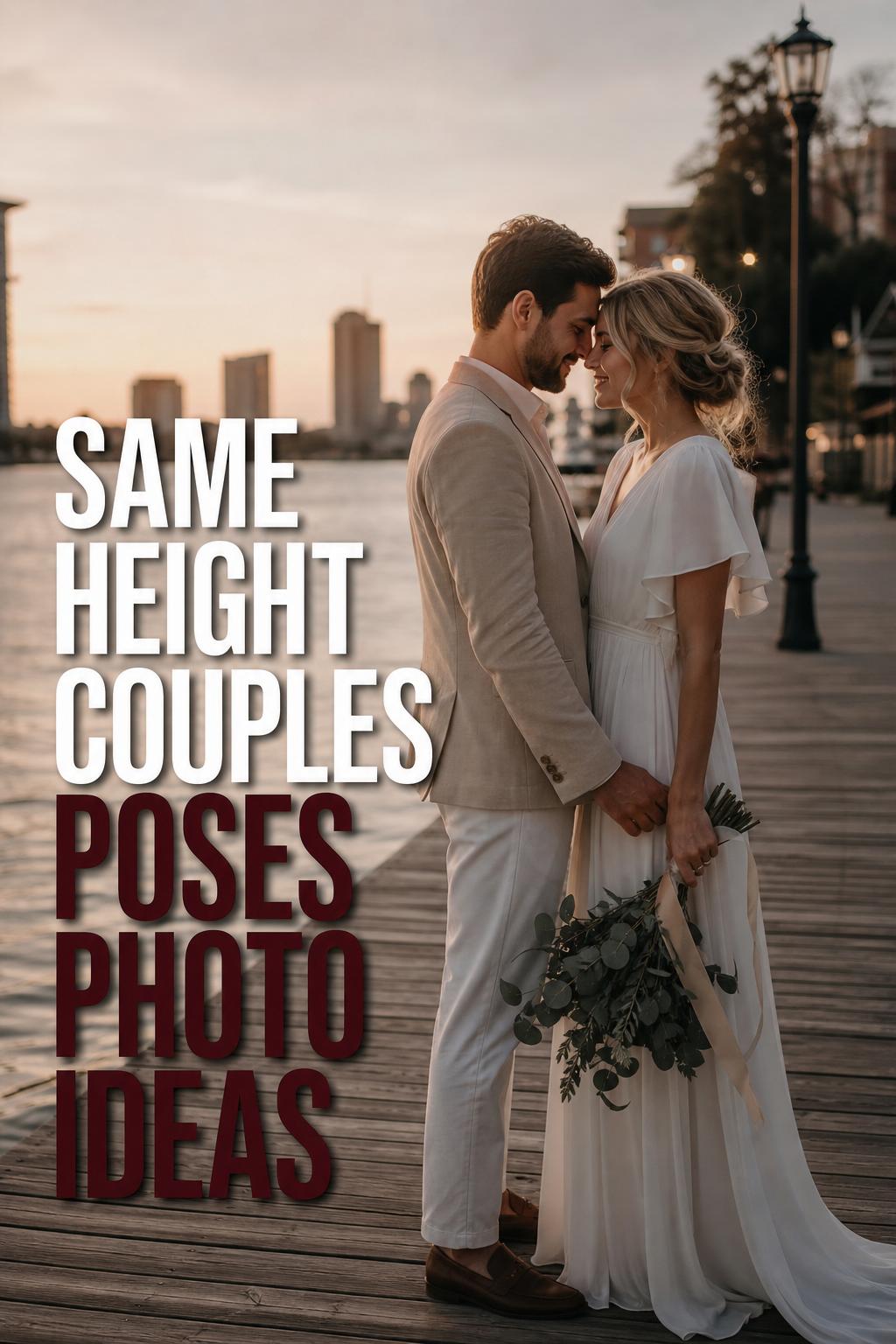
Equal-height couples usually look strongest in poses that emphasize connection and posture, such as face-to-face portraits, temple-to-temple poses, shared glances, side hugs, and walking hand in hand. Because the frame is naturally balanced, small details like shoulder angle, hand placement, and where you look matter more than dramatic adjustments.
What are the best same height couples poses photo ideas for engagement sessions?
Some of the most reliable choices are the seamless walk, the equal embrace, the shared glance, a bench lean, a kiss on the cheek, and a twirl. These give you a mix of classic, romantic, and candid images, which is especially useful for engagement galleries that need both polished portraits and relaxed moments.
Are seated poses a good idea if we are already the same height?
Yes, seated poses are still very helpful because they add variety, softness, and storytelling rather than simply solving a height issue. A bench, staircase, dock, or boat edge can create natural body angles and make the portrait feel more intimate and less formal.
How can we make our photos look less stiff?
Movement usually helps most. Walking, turning toward each other, sharing a toast, trying a side hug, or adding a gentle twirl often creates more natural expressions than asking a couple to hold a still pose immediately. Starting with connection and then refining posture tends to feel easier than trying to perfect everything at once.
Which locations work best for equal-height couple portraits?
Waterfronts, beaches, city murals, fountains, parks, nature trails, staircases, and indoor studios all work well, but each location suits a different pose style. Open settings favor walking and movement, benches and steps support seated portraits, and graphic city backdrops often suit clean standing poses and creative framing.
What should we wear for same-height couple photos?
Coordinated color families, balanced silhouettes, and clothing that allows comfortable movement usually photograph best. Since height is already visually balanced, wardrobe can have a strong impact on the final image, so it helps when both outfits feel consistent in formality and overall visual weight.
Can camera angle change how equal-height couples look in photos?
Yes, angle changes the mood and the sense of balance. Eye-level framing usually preserves natural symmetry, low angles can add drama, and slightly higher angles can soften close embrace portraits. Good headroom and comfortable spacing are especially important because small cropping issues stand out more in balanced portraits.
What if one of us feels awkward with kissing poses?
If a direct kiss feels uncomfortable, try a temple-to-temple pose, a shared glance, a forehead touch, or a kiss on the cheek instead. These often feel more relaxed while still giving the gallery the affectionate, romantic tone many couples want.
Should our gallery include both still and movement-based poses?
Usually yes, because the combination creates a fuller story. Still portraits provide timeless keepsakes, while movement-based images add warmth, spontaneity, and emotional variety. For most couples, that balance leads to a more satisfying wedding or engagement gallery.