Why Photo Display Wedding Decor Feels So Personal
Some of the most moving moments at a wedding are not always on the dance floor or at the altar. Often, they happen quietly beside a table of childhood snapshots, in front of a gallery wall that traces a couple’s story, or near a wedding photo wall where guests pause, smile, and remember. That is why planning a photo display wedding setup can feel more important than couples first expect. It is not only decor. It is atmosphere, storytelling, and a way to make a reception feel deeply personal.
The challenge is that beautiful ideas are easy to save, but harder to execute in a real venue. A display that looks charming in a studio image may feel too small in a ballroom, too fragile in a barn, or too busy beside florals and candles on a reception table. Couples often need help balancing sentiment with style, and creativity with practical details such as lighting, scale, mounting, and guest flow. This guide is designed to solve that problem with romantic inspiration and grounded planning advice you can actually use.
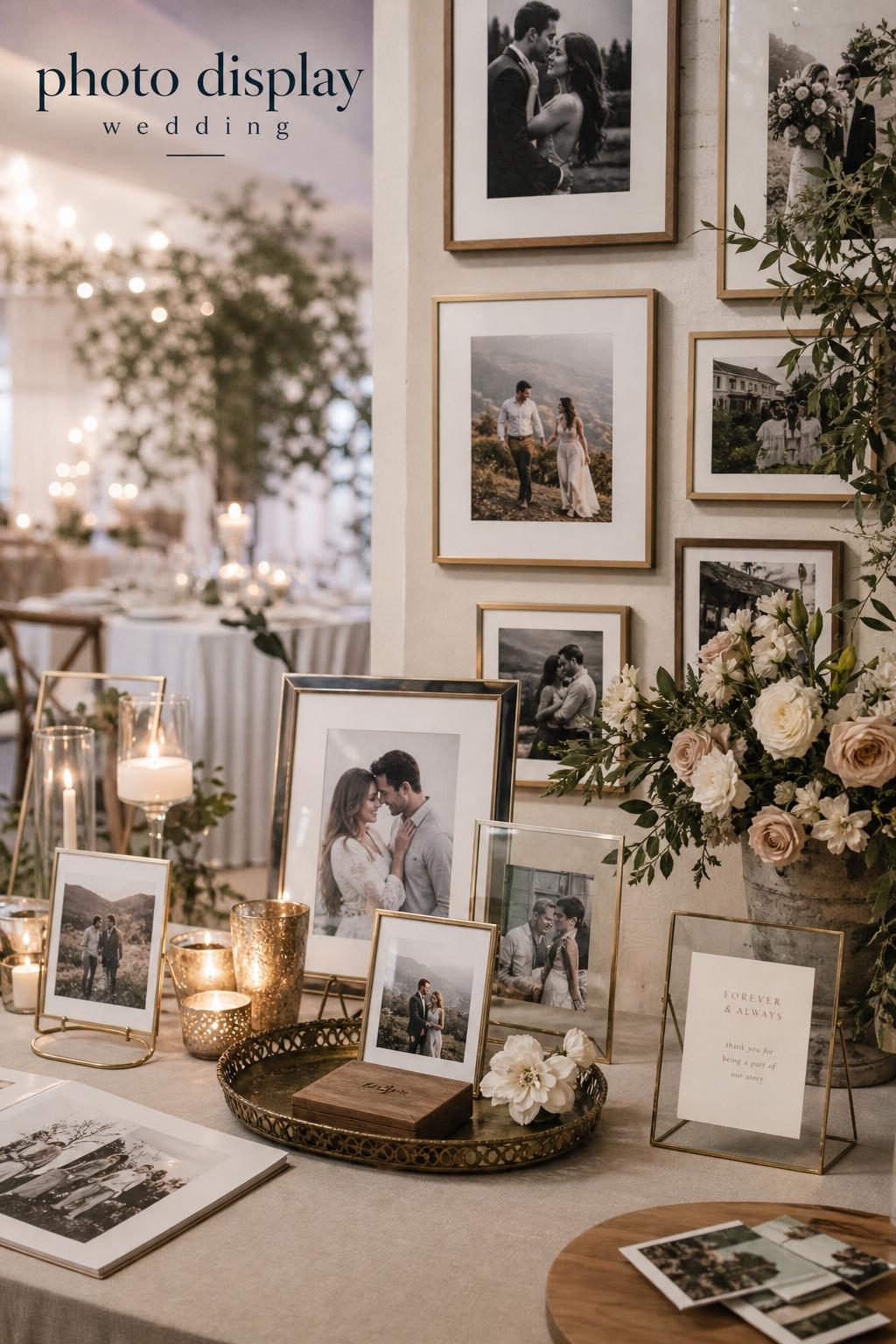
Why wedding photo displays matter more than couples expect
Wedding photo displays work because they connect decor to memory. A floral centerpiece may be beautiful, but a framed print of your grandparents on their wedding day or a gallery arrangement that follows your relationship from first date to engagement creates a different kind of emotional response. It invites guests into your story and gives the reception a layer of meaning that goes beyond color palette alone.
That emotional role is why so many wedding publishers, photographers, and brand-led guides return to the same core ideas: photo walls, memory tables, framed displays, and centerpiece integrations. Whether the inspiration comes from Artifact Uprising, The Knot, Persnickety Prints, Gleam Wedding, or a photographer such as Alaina Miller, the underlying principle is consistent. Photos are most effective when they feel woven into the event rather than added as an afterthought.
Turn wedding inspiration into a plan you can actually follow.
Zarellea brings your guest list, budget, vendors, and day-of details into one shared space — so no beautiful idea gets lost in the shuffle.
For many couples, the real difficulty lies in choosing the right display format for the venue, the wedding style, and the amount of effort they can realistically manage. A rustic barn may suit wood trays, vintage windows, and layered memory tables, while a modern ballroom may call for clean frames, structured gallery arrangements, and even a digital photo wall or themed upload experience like MemWall. The best choice is rarely the most elaborate one. It is the one that feels intentional and readable in your space.
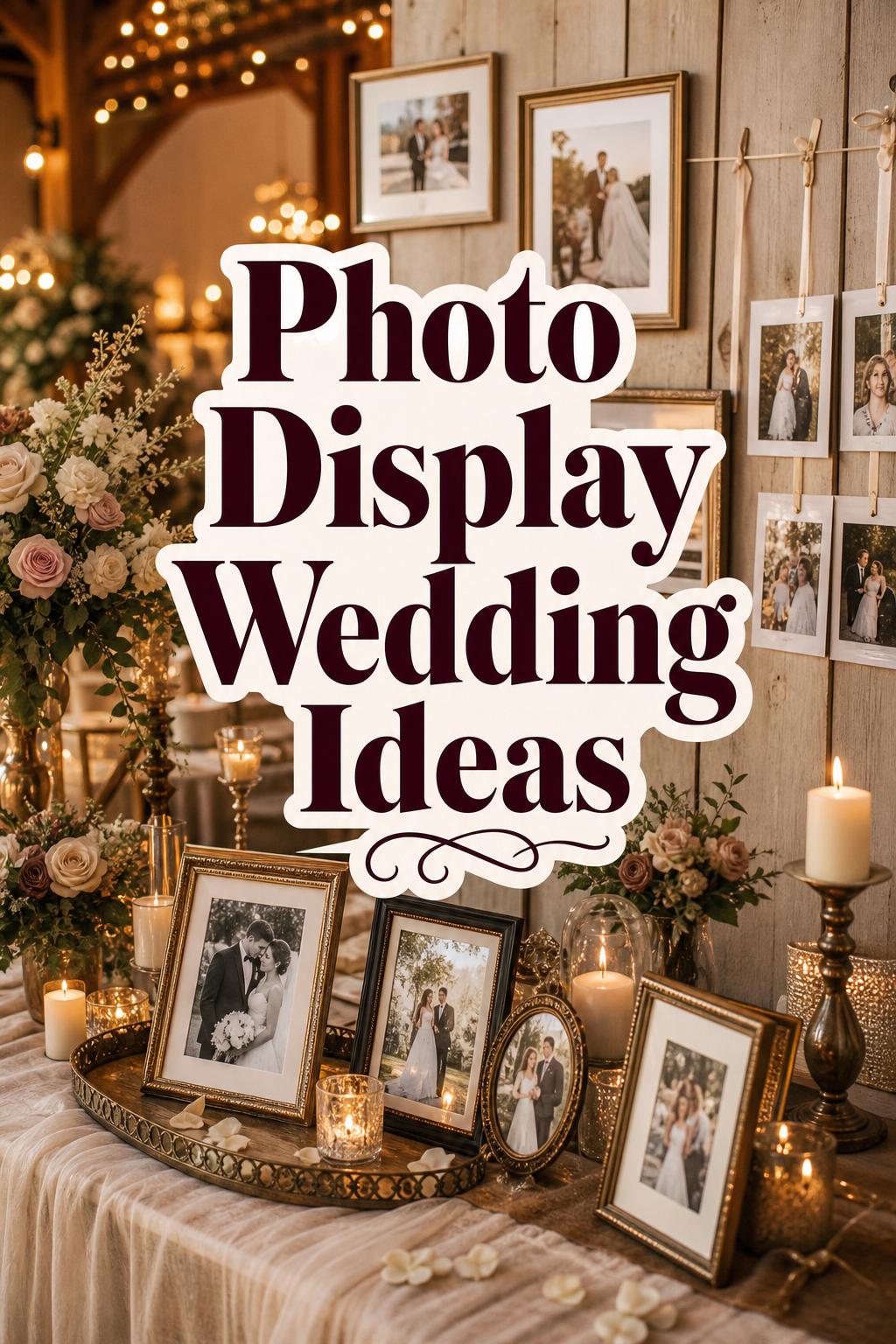
Understanding the real planning challenge behind a photo display wedding
Most couples are not struggling to find ideas. They are struggling to narrow them down. A wedding photo display has to do several jobs at once: match the decor, fit the venue, protect the prints, and still feel intimate rather than crowded. If you are planning for a reception, the display also has to coexist with centerpieces, guest movement, food service, and evening lighting.
Scale is one of the most common issues. Small prints can disappear in a large reception room, while oversized boards may overwhelm a more delicate aesthetic. Persnickety Prints highlights the importance of thinking in three dimensions, scale, and light, which is practical advice many couples overlook at first. A photo display should not only be pretty from close up. It should also hold visual presence from across the room.
Material choices create another layer of complexity. Timberelle leans into wood and rustic display materials, while other guides emphasize frames, stands, cords, ribbons, and hanging systems. These are not just style decisions. They affect setup time, durability, and how well the display fits a formal garden wedding, a cozy barn celebration, or a sleek ballroom reception.
Then there is the guest experience. A memory wall should be easy to approach. A wedding photo table should not block traffic. A live photo sharing concept should feel intuitive. The strongest wedding display ideas solve all of these issues at once by combining sentiment, clarity, and practical layout.
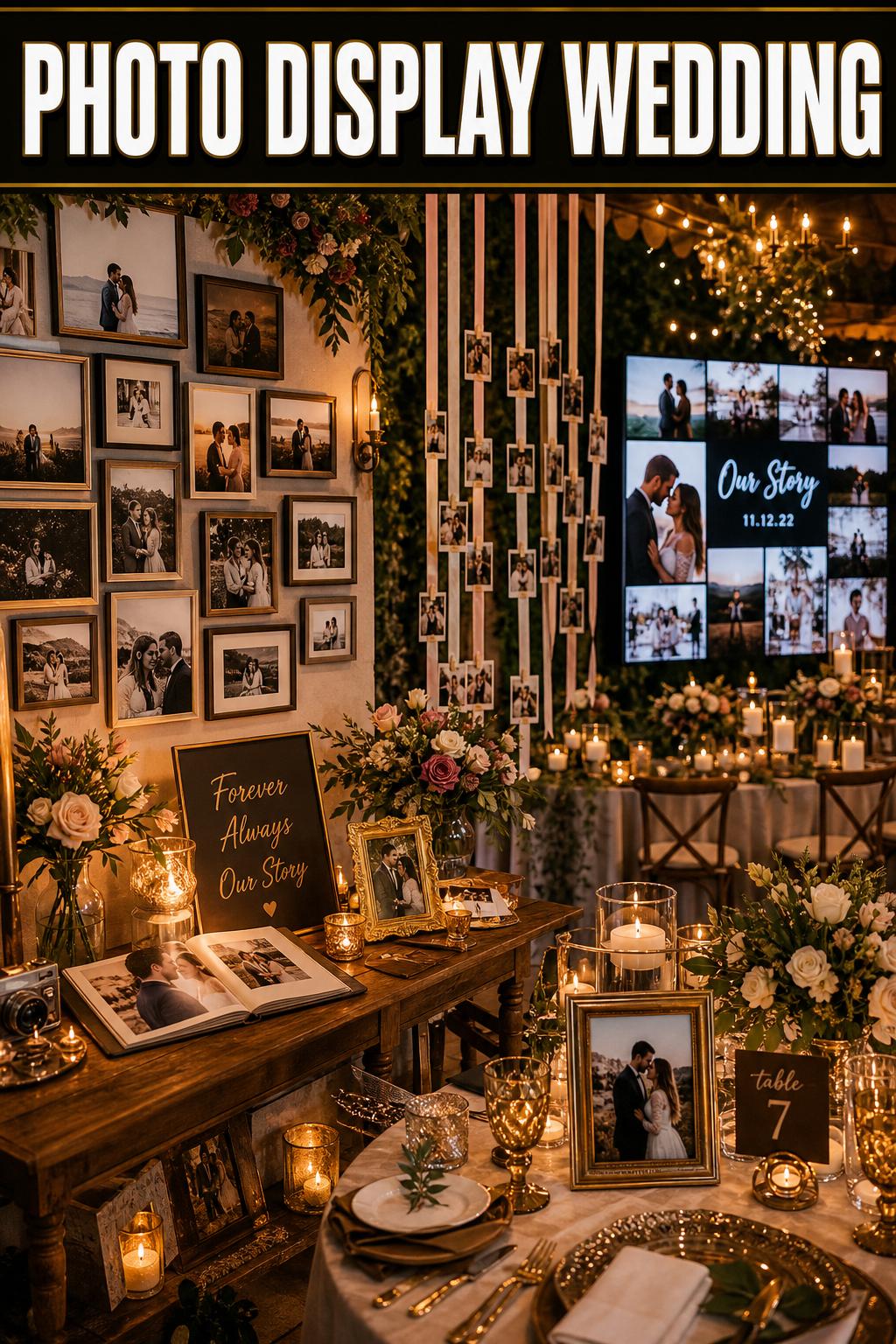
The styling principles that make wedding photo displays look polished
Before choosing individual ideas, it helps to understand the styling logic behind successful displays. This is where many wedding setups become more cohesive. Instead of collecting random props and frames, you build around a few clear principles.
- Match the display format to the venue type. Barns and rustic spaces often suit wood, resin trays, vintage-inspired frames, and layered textures. Ballrooms and modern venues usually benefit from cleaner lines, metal or acrylic accents, and more structured arrangements.
- Keep the story readable. A photo wall, memory table, or centerpiece works best when guests immediately understand what they are looking at, whether that is family history, your relationship timeline, or shared memories.
- Use decor integration rather than decor competition. Photos should work with candles, florals, table numbers, and drapery instead of fighting for attention.
- Plan for visibility. Lighting, frame finish, print size, and placement all influence whether guests actually stop and engage with the display.
- Choose a setup you can maintain. DIY projects can be beautiful, but they should still be realistic for your timeline, helpers, and venue rules.
These principles also help couples balance beauty and function. A hanging display with ribbons and strings may look airy and romantic, but it needs enough room around it to be appreciated. A tabletop arrangement can feel intimate, but only if it leaves enough space for other wedding table decorations. The most elegant choices often come from editing, not adding.
Where the display should live in your wedding story
One of the most helpful ways to decide on a wedding photo display is to think about the part of the day it belongs to. Photo decor is not one-size-fits-all. Different formats support different moments.
A welcome area benefits from a strong focal point such as a wedding photo wall or gallery arrangement. This creates an immediate emotional tone and gives guests something to engage with as they arrive. A reception space often suits memory tables, framed table displays, or centerpiece photo details because these can be enjoyed gradually throughout dinner and conversation.
If your goal is interaction, a live or updatable display becomes more relevant. MemWall’s themed gallery and guest upload experience point toward a more participatory approach, where the display continues evolving during the event. This suits couples who want guest involvement to become part of the visual experience rather than limiting the display to preselected prints.
Thinking this way also prevents a common planning mistake: trying to make one display do everything. A quiet memory table and an energetic guest photo wall serve different emotional purposes. If you know what role your display is meant to play, the styling decisions become much easier.
Outfit solution for your decor: the statement wedding photo wall
In wedding styling, there is often one element that acts like the statement piece in an outfit. In decor, that role is often played by the wedding photo wall. This is the option for couples who want their images to function as a visual anchor in the room rather than as a small sentimental detail tucked off to the side.
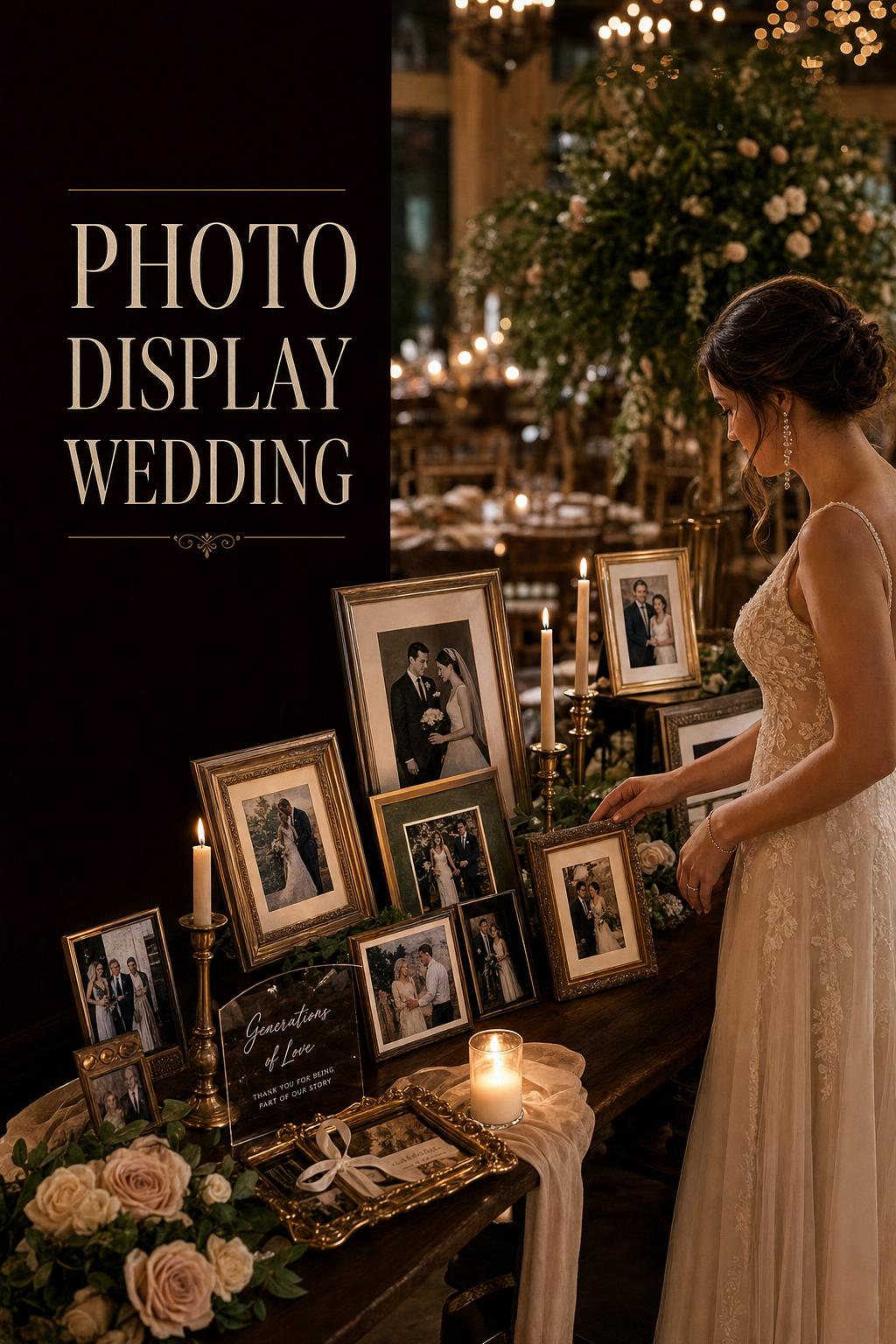
A gallery-style wall works especially well when you want to tell a fuller story. You might group engagement photos, family images, and snapshots from earlier years into a layout that feels layered but controlled. Artifact Uprising and Alaina Miller Photography both connect this format to storytelling, which is why it remains one of the strongest ideas for couples who want emotional impact without sacrificing design.
This solution works best when the wall has a clear visual rhythm. Frames can be consistent for a refined effect, or varied for a more collected, home-like feeling. What matters most is that the arrangement feels intentional. If the venue is modern, cleaner spacing and simpler frames often feel more elevated. If the wedding is rustic or vintage-inspired, mixing materials and sizes can create warmth.
Why this display works
A photo wall creates a focal point, supports larger-scale storytelling, and photographs beautifully in the reception space. It also solves the problem of prints feeling too scattered. Rather than placing small pictures in multiple areas, you concentrate the emotion into one strong visual moment.
Tips for a gallery-style setup
- Choose one narrative: relationship timeline, family legacy, or favorite shared memories.
- Keep frame finishes connected to the rest of the decor palette.
- Allow enough distance for guests to step back and view the full arrangement.
- Use the venue’s existing architecture to guide placement.
- If the room is dim, prioritize visibility and avoid placing glossy prints where reflections may distract.
A softer, more intimate answer: memory tables and wedding photo tables
Not every couple wants a bold wall installation. Some want a quieter, more intimate expression of memory. That is where the memory table becomes especially meaningful. Timberelle, ShunBridal, Gleam Wedding, and several other sources connect wedding photo displays to table-based arrangements because they feel naturally sentimental and easy to personalize.
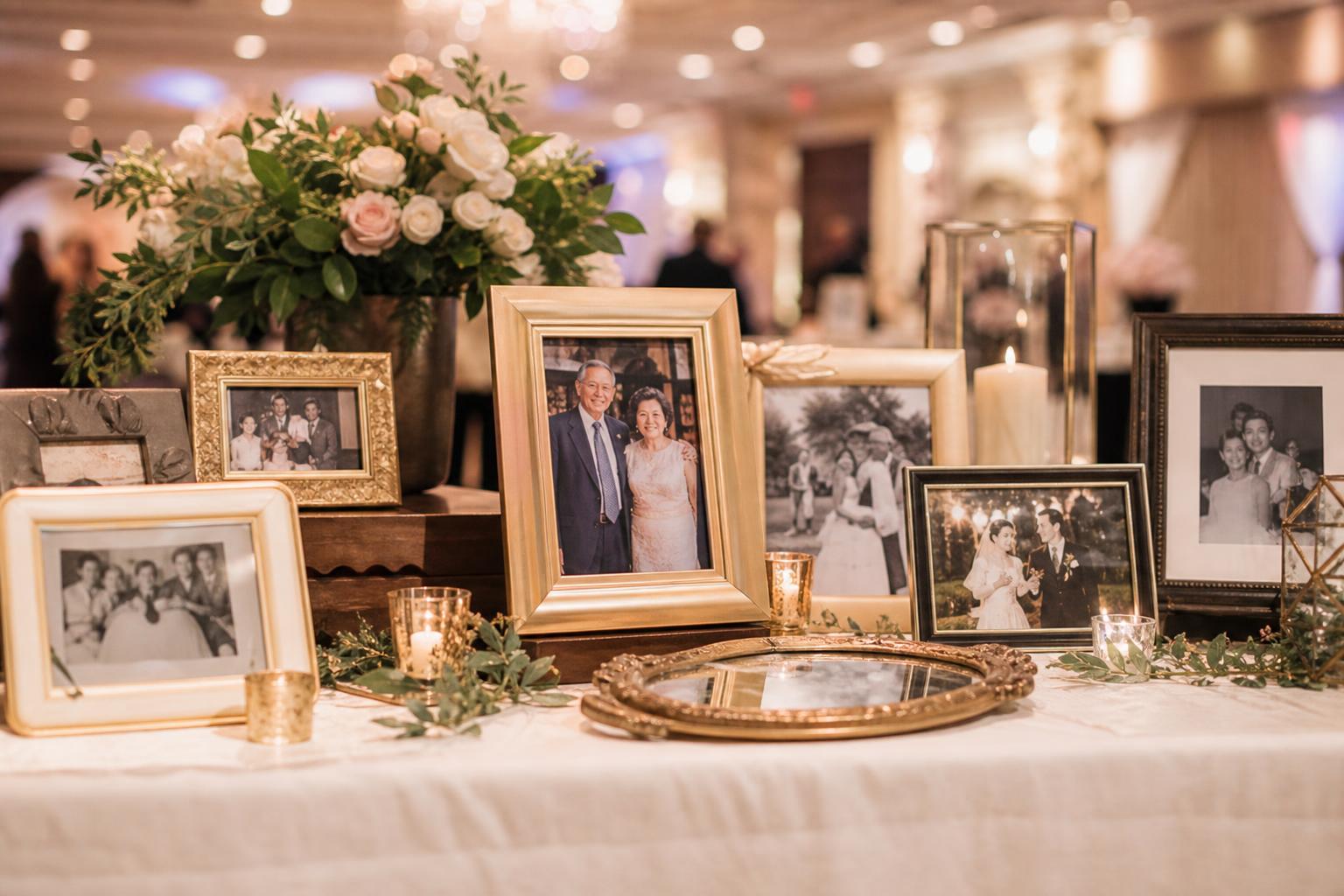
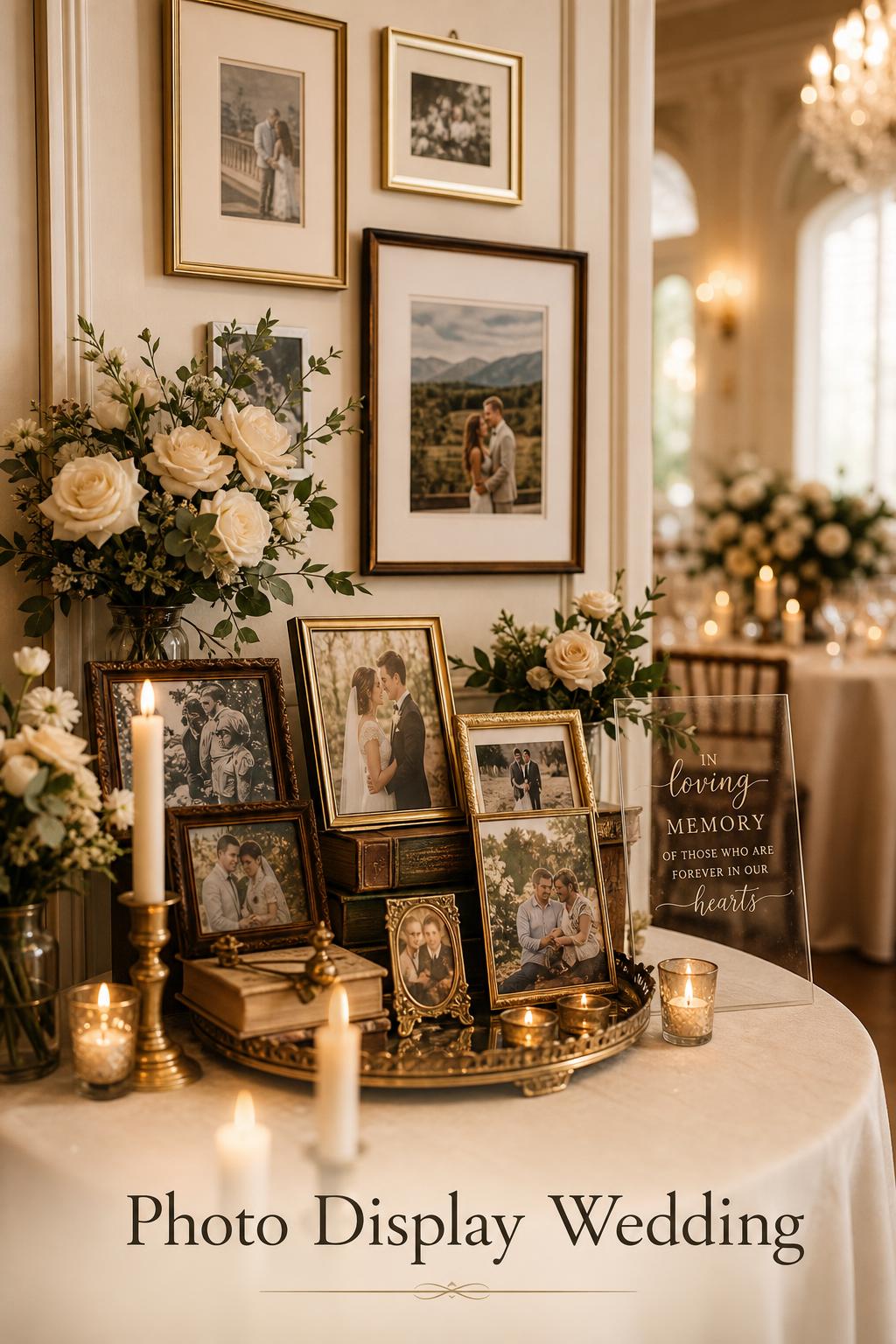
A wedding photo table can hold framed prints, mementos, keepsakes, small florals, candles, and table accents that reflect the couple’s history. It works especially well for family tributes or for displaying older images that guests may want to study more closely. The format invites a slower kind of attention.
There is also a practical advantage. Tables allow depth. Instead of relying only on flat framing, you can build a vignette with height variation using stands, trays, and layered objects. This is where rustic materials such as wood trays, resin pieces, or upcycled frames can feel especially at home, particularly in a barn or relaxed reception setting.
Why this display works
Memory tables solve the challenge of making a display feel personal without requiring a large wall or a more technical installation. They also blend naturally into reception decor and can be styled to match both casual and formal weddings.
Tips for styling a wedding photo table
Think in layers rather than rows. A completely flat arrangement often feels underwhelming, especially in a reception room with florals and candlelight. Mix taller frames with lower prints, vary the scale slightly, and leave enough negative space for each image to breathe. If you are using candles or florals, let them support the photos rather than dominate them. The images should still feel like the reason the table exists.
Color coordination matters here too. ShunBridal’s emphasis on theme and color schemes is useful because a wedding photo table can easily start to feel visually messy if every frame, ribbon, and vase is pulling in a different direction. A narrow palette almost always makes sentimental details feel more elegant.
Centerpieces with photo elements for couples who want subtle storytelling
Some weddings do not need a dedicated display zone. Sometimes the most graceful solution is to work photos directly into the centerpieces and table styling. The Knot’s broader table decoration approach supports this idea, showing how photo and visual display elements can live within the rhythm of reception tables rather than standing apart from them.
This approach works well for couples who want guests to discover the story gradually. A framed print beside florals, a small image integrated near table numbers, or a keepsake-style detail included in a centerpiece can make the room feel deeply personal without shifting the entire design around one installation. It is especially effective when the overall wedding style is romantic, intimate, or understated.
The trade-off is visibility. Photo centerpieces tend to be more delicate than dramatic. Guests at each table may appreciate them, but they will not command the room in the way a gallery wall does. That makes this option ideal for couples who want sentimental touches woven into the experience rather than a single central feature.
When this idea is strongest
Use photo centerpieces when your reception tables are a major visual priority and you want every guest to have a close-up connection with the photos. They are also a practical answer when wall placement is limited or when the venue favors tabletop styling over installations.
Hanging displays and suspended frames for a lighter visual feel
If a photo wall feels too solid and a memory table feels too traditional, a hanging display offers a middle ground. Gleam Wedding and Persnickety Prints both point toward ribbons, strings, drapery, and suspended framing as a way to create motion and softness. This style suits couples who want the display to feel airy, romantic, and a little less expected.
Hanging displays can be especially lovely in spaces with room height, visible beams, or a backdrop that benefits from vertical detail. Ribbons, leather strings, and cords all change the mood. Ribbon often feels romantic and delicate, while leather strings or more minimal hardware may feel slightly more modern or textural.
The reason this solution works is that it saves floor and table space while still creating a decorative moment. It also introduces movement, which can make the display feel more alive in the room. The caution is that the structure must still feel intentional and secure. This is not the kind of idea to improvise without considering how it will hang, where guests will walk, and how the surrounding decor will support it.
Digital and interactive directions for modern receptions
One of the most interesting shifts in wedding photo display ideas is the move toward digital participation. While many top ideas still focus on frames, walls, and printed keepsakes, digital photo wall concepts open another path for couples who want guest interaction to be part of the decor experience. MemWall’s wedding photo wall model is especially relevant here because it centers on themes, uploads, and live gallery management.
This style suits modern receptions, tech-comfortable guest lists, and couples who want the display to keep evolving throughout the event. Instead of showing only preselected prints, you create a space where shared photos contribute to the visual story in real time. It can make the celebration feel collaborative and immediate.
Digital does not have to replace printed decor. In many cases, the most thoughtful approach is hybrid. A couple might use a printed memory table for family history and a digital wedding photo wall for guest uploads during the reception. That combination balances permanence with participation, which can be especially effective in a modern ballroom or large U.S. venue where guests are spread across multiple areas.
This direction also helps address one of the underused opportunities in many wedding display ideas: guest experience beyond passive viewing. When people can contribute, the display becomes more than decoration. It becomes part of the evening’s rhythm.
Materials and finishes that shape the mood
Once you know the format, materials become the next important decision. Wood, metal, acrylic, resin, ribbons, and vintage elements all send different signals. These choices do more than hold the photos. They set the emotional tone around them.
Wood tends to feel warm, rustic, and rooted in memory, which is why Timberelle’s wood-forward ideas are so suited to barn weddings, rustic receptions, and DIY projects. Metal and cleaner frame profiles feel more structured and polished, making them easier to integrate into modern or minimalist decor. Acrylic can feel light and contemporary, especially when you want the photos to appear crisp without adding visual heaviness.
Vintage windows, upcycled trays, and collected frames can create charm, but they work best when the wedding style already supports that layered look. If the rest of the decor is very sleek, too many rustic or antique pieces can feel disconnected. The opposite is true as well. Ultra-modern frames may feel cold in a deeply nostalgic barn setting full of textured florals and candlelight.
Choosing materials by wedding style
- Rustic or barn weddings: wood trays, vintage windows, layered frames, resin accents.
- Modern ballroom weddings: clean metal frames, structured gallery layouts, minimal hanging systems, digital overlay options.
- Romantic receptions: soft ribbons, candlelit photo tables, framed prints mixed with florals.
- Story-driven family displays: classic frames, memory tables, keepsake groupings, chronological arrangements.
Lighting, scale, and visibility: the details that make or break the display
Many wedding photo displays fail for one simple reason: guests cannot see them well enough to engage with them. This is where practical styling becomes just as important as inspiration. Persnickety Prints places real emphasis on scale, lighting, and dimensionality, and that perspective is especially useful for wedding planning because reception environments change so much from daylight to evening.
A display that looks balanced during setup can feel visually lost once candles are lit and the room darkens. Smaller images need closer placement and better light. Larger rooms usually need more generous print sizing and stronger visual grouping. Even a beautiful photo wall can feel flat if it is pushed into a dim corner without enough contrast around it.
Lighting also changes mood. Soft light can make a memory table feel intimate, while brighter visibility may be better for a guest-upload wall or larger gallery area. The key is to think of your display as part of the reception environment rather than as an isolated object. How guests approach it, how long they linger, and what they notice first all depend on where the light falls.
DIY or professional installation: how to choose without regret
DIY wedding photo display ideas are appealing for good reason. They can feel personal, creative, and often more flexible in style. Timberelle, ShunBridal, and other wedding guides give plenty of room to DIY thinking, especially around upcycling, rustic materials, and table vignettes. For many couples, creating the display themselves also adds emotional value.
But DIY is not automatically the better choice. Large gallery walls, suspended installations, or any setup requiring more technical mounting may benefit from professional help or at least stronger vendor coordination. A display can be visually simple but still logistically demanding, especially if the venue has rules about wall types, placement, timing, or how items may be secured.
The best decision usually comes down to complexity and pressure. A tabletop display assembled in advance is often a strong DIY project. A large-scale wedding photo wall installed on a tight reception timeline may be better handled with professional support. The goal is not to prove you can do everything yourself. It is to create a beautiful result that feels calm on the day.
A practical decision check
- Choose DIY if the display is portable, table-based, or built from lightweight props you can test in advance.
- Choose professional help if the installation is large, suspended, venue-sensitive, or time-critical.
- Choose a hybrid approach if you want to style the elements yourself but need setup assistance on the wedding day.
Two real-world wedding directions couples can borrow from
Sometimes the easiest way to make a decision is to picture the display in a complete wedding setting rather than as a standalone idea. These scenarios reflect the kinds of pairings that repeatedly make sense across the most useful display guidance.
Rustic barn memory wall with layered tabletop details
Imagine a barn reception with warm wood, florals, candles, and soft evening light. In that setting, a wood-framed memory wall near the entrance can introduce the couple’s story, while a nearby wedding photo table holds family images, keepsakes, and resin or tray-based accents inspired by Timberelle’s rustic approach. The result feels collected and emotional rather than overly designed. This kind of pairing works because both displays speak the same visual language.
Modern ballroom gallery wall with digital guest participation
Now picture a modern ballroom with more formal lines and a broader guest footprint. Here, a clean gallery wall with structured frames can provide a polished focal point, while a MemWall-style digital experience adds live guest participation during the reception. This setup suits couples who want the display to feel stylish and current, but still emotionally rich. The printed wall offers permanence. The digital layer adds energy.
Tips for building a cohesive photo display narrative
The most memorable wedding displays do not just show photos. They tell a story with intention. That does not require a complicated concept, but it does require a little editing.
Start by choosing the emotional lens of the display. Is it about your journey as a couple, your families, your engagement season, or a broader memory book feeling? Once that theme is clear, each frame, table accent, and display prop becomes easier to evaluate. If it does not support the story, it probably does not need to be there.
It also helps to repeat one or two design details across formats. If you have a memory table and a gallery wall, use consistent frame finishes, shared ribbon tones, or similar print treatments. That repetition makes the overall wedding feel curated rather than pieced together.
Couples often underestimate how powerful restraint can be. A few larger, readable, emotionally chosen images usually create more impact than dozens of tiny prints competing for attention. Whether you are inspired by Artifact Uprising’s editorial product styling, The Knot’s decor curation, Photobarn’s keepsake-driven ideas, or Persnickety Prints’ design-minded advice, the strongest common thread is not excess. It is clarity.
Common mistakes that make wedding photo displays feel less effective
Even lovely ideas can lose their effect when practical details are missed. These are the mistakes that most often weaken a photo display wedding plan.
- Choosing a display that is too small for the venue. Intimate details need enough visual weight to hold their own in the room.
- Mixing too many frame styles without a clear aesthetic reason. Variety can be charming, but only when it feels intentional.
- Overcrowding photo tables with too many props, florals, or candles. The photos should remain the emotional focus.
- Ignoring guest movement. Displays should be easy to approach without creating traffic issues.
- Waiting too late to print or test the layout. Displays nearly always need small adjustments once you see them physically arranged.
- Treating lighting as an afterthought. Evening receptions can dramatically change how visible your display feels.
Most of these mistakes happen because couples are thinking only about inspiration images and not enough about the lived environment of the wedding day. A display has to work in motion, in changing light, and alongside the rest of the celebration.
A simple planning path from idea to setup
If you are feeling overwhelmed by options, simplify the process. Start with the format, then the story, then the styling details. This order keeps the planning grounded.
- Choose your main format: wall, table, centerpiece integration, hanging display, or digital gallery.
- Define the story: relationship timeline, family memories, guest participation, or a mix of these.
- Select materials that support the wedding style: wood, metal, acrylic, ribbon, vintage elements, or clean hardware.
- Plan the scale for the actual venue: ballroom, barn, garden, or reception table setting.
- Test the visibility: print size, grouping, and evening lighting conditions.
- Decide on DIY, professional setup, or a hybrid approach.
This kind of planning path makes the process feel calmer because you are making one clear decision at a time. It also reduces the temptation to copy multiple disconnected ideas that may not belong in the same space.
Closing thoughts for creating a wedding display that feels personal
The most beautiful wedding photo displays are not always the biggest or the trendiest. They are the ones that feel true to the couple and natural within the celebration around them. A softly lit memory table, a carefully framed gallery wall, hanging prints with ribbons, or a modern digital wedding photo wall can all be wonderful choices when they are aligned with the mood of the day.
As you plan your own photo display wedding design, return to the simplest question: how do you want your guests to feel when they see these images? If the answer is warm, connected, and drawn into your story, you are already making the right decisions. From there, style becomes much easier. The display stops being just another decor task and becomes part of the heart of the wedding itself.
FAQ
What is the best type of photo display for a wedding reception?
The best option depends on the role you want the display to play. A wedding photo wall works well as a focal point, a memory table suits a more intimate and sentimental setup, and photo centerpieces are ideal when you want images woven into the table decor. For modern receptions, a digital or guest-upload format can add interaction.
How do I display wedding photos without making the decor feel cluttered?
Choose one clear format, limit the number of props, and keep the palette consistent with the rest of the wedding. Frames, florals, candles, and ribbons should support the photos instead of competing with them. Larger, well-placed images usually create a cleaner effect than too many small prints.
Are memory tables and photo tables the same thing?
They are closely related, but a memory table usually emphasizes sentimental storytelling, often including family photos and keepsakes, while a wedding photo table can be broader and may focus on the couple’s relationship, engagement images, or decorative photo styling within the reception design.
Should I choose a DIY wedding photo display or hire professional help?
DIY is often a good fit for table displays, framed arrangements, and smaller rustic projects you can assemble ahead of time. Professional help becomes more useful for large gallery walls, suspended displays, or installations that depend on venue rules, time-sensitive setup, or more technical mounting.
How can I make a wedding photo wall feel more personal?
Build the display around a clear story, such as your relationship timeline, shared milestones, or family history. Personalization also comes from the way the photos are grouped and styled. Consistent frames, meaningful image selection, and decor details that match your wedding theme all make the wall feel more intentional.
What materials work best for wedding photo displays?
Wood works especially well for rustic or barn weddings, while metal and acrylic often suit modern or minimalist receptions. Ribbons, strings, trays, and vintage frames can add softness or texture depending on the wedding style. The best material is the one that supports both the venue and the atmosphere you want to create.
How do I decorate a wedding photo table so guests actually notice it?
Use varied height, clear spacing, and supportive lighting so the display reads from a distance as well as up close. Combine framed prints with candles, florals, or keepsakes carefully, but keep the images as the focal point. If the table feels visually flat or overly crowded, guests are less likely to stop and engage.
Can I combine printed photo displays with a digital wedding photo wall?
Yes, and it can be an especially strong approach. Printed displays bring permanence, warmth, and storytelling, while a digital wall introduces live guest participation and a more modern experience. Together, they can serve different parts of the reception without feeling repetitive.
How far in advance should I plan my wedding photo display?
It helps to plan the concept early enough that you can test layout, print sizes, and materials before the final setup period. Couples generally benefit from allowing enough time to gather images, choose frames or props, and make practical decisions about venue placement, visibility, and installation support.