Wedding Photo Wall Display Ideas for a Timeless Home
A wedding photo wall display often seems easy in theory: choose your favorite images, order prints or frames, and turn one blank wall into something meaningful. In real life, couples usually run into a different experience. The photos matter too much to feel casual, the room has its own limitations, and what looked romantic in inspiration images can quickly become cluttered, uneven, or emotionally flat when it is placed in an actual home.
The stress usually comes from trying to make one wall do several jobs at once. It needs to preserve memories, work with your decor, tell the story of the wedding, and still feel timeless months or years later. Many couples also have to choose between practical formats such as adhesive photo tiles, classic frames, floating frames, shelves, or a full gallery wall without knowing which option will look best in their space.
This guide is designed to solve that problem with calm, clear direction. Instead of offering only pretty ideas, it will help you choose a wedding photo wall display that fits your layout, supports your home style, and tells your love story with intention, whether you prefer a clean grid, a timeline wall, a heart collage, or a more personal heritage display.
Why this wedding challenge happens
The difficulty is not simply choosing beautiful wedding photos. It is creating a display that balances emotion with structure. Wedding images often include many different moments, from engagement portraits to ceremony scenes, vows, and the first dance. Without a clear plan, those images compete with one another instead of creating a visual flow. A wall that should feel intimate can start to feel busy or disconnected.
Turn wedding inspiration into a plan you can actually follow.
Zarellea brings your guest list, budget, vendors, and day-of details into one shared space — so no beautiful idea gets lost in the shuffle.
Home decor adds another layer of pressure. A living room, bedroom, entryway, or loft wall each asks for a different approach. A dramatic cluster might suit an urban loft, while a dreamy bedroom display may need softer spacing and more restrained framing. Couples are also making decisions around wall type, mounting methods, lighting, and how the photos will look at different times of day. This is where aesthetics and practicality often collide.
There is also an emotional reason this feels harder than decorating with ordinary family photos. Wedding images represent a milestone. They carry memory, identity, and sometimes family history. That is why choices like a timeline display, a hero image, or even including parents’ wedding photos or ancestor photos can feel deeply personal. The wall is not just decor. It becomes a visual record of the relationship, and that weight makes design decisions feel more high stakes.
The styling principles that make a photo wall feel intentional
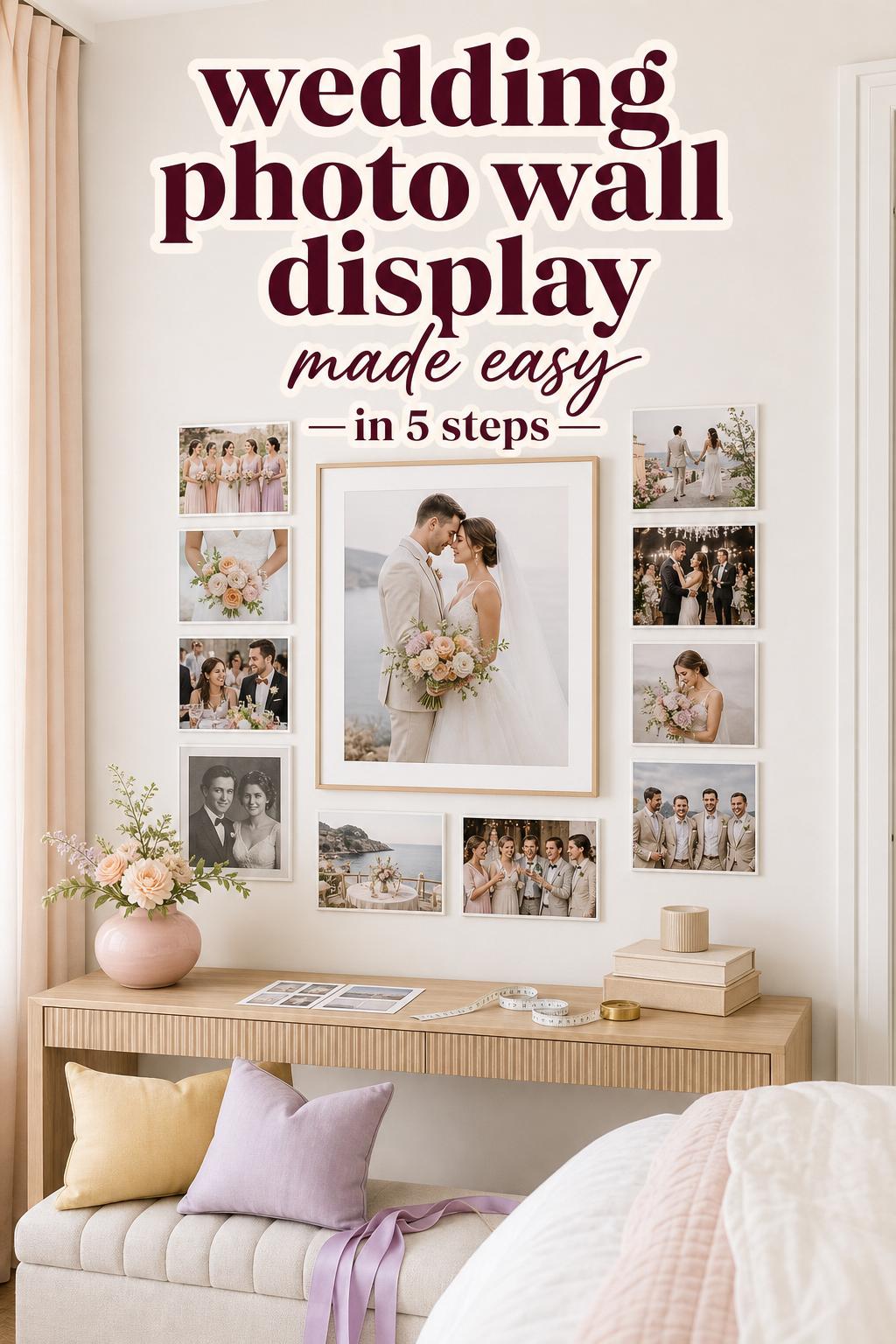
The strongest wedding photo walls usually succeed because they follow a few quiet design principles. First, they choose one main visual language. That might mean consistent frame styles, a unified edit across the images, or one dominant layout pattern such as a grid layout or linear set. Consistency is what makes multiple photographs feel curated rather than randomly assembled.
Second, the wall needs a focal point. This could be a large hero image from the ceremony, a romantic portrait, or the emotional anchor of a heart collage. Without a focal point, the eye does not know where to rest. Couples sometimes think more images automatically create more meaning, but in practice, clarity creates more impact than quantity.
Third, storytelling matters. A wedding gallery wall feels especially strong when the arrangement reflects a sequence or theme. A timeline wall works because it mirrors the emotional arc of the day, moving from engagement to ceremony to vows to first dance. A heritage display works because it places your story inside a larger family narrative. The reason these walls feel memorable is not only visual balance. It is narrative structure.
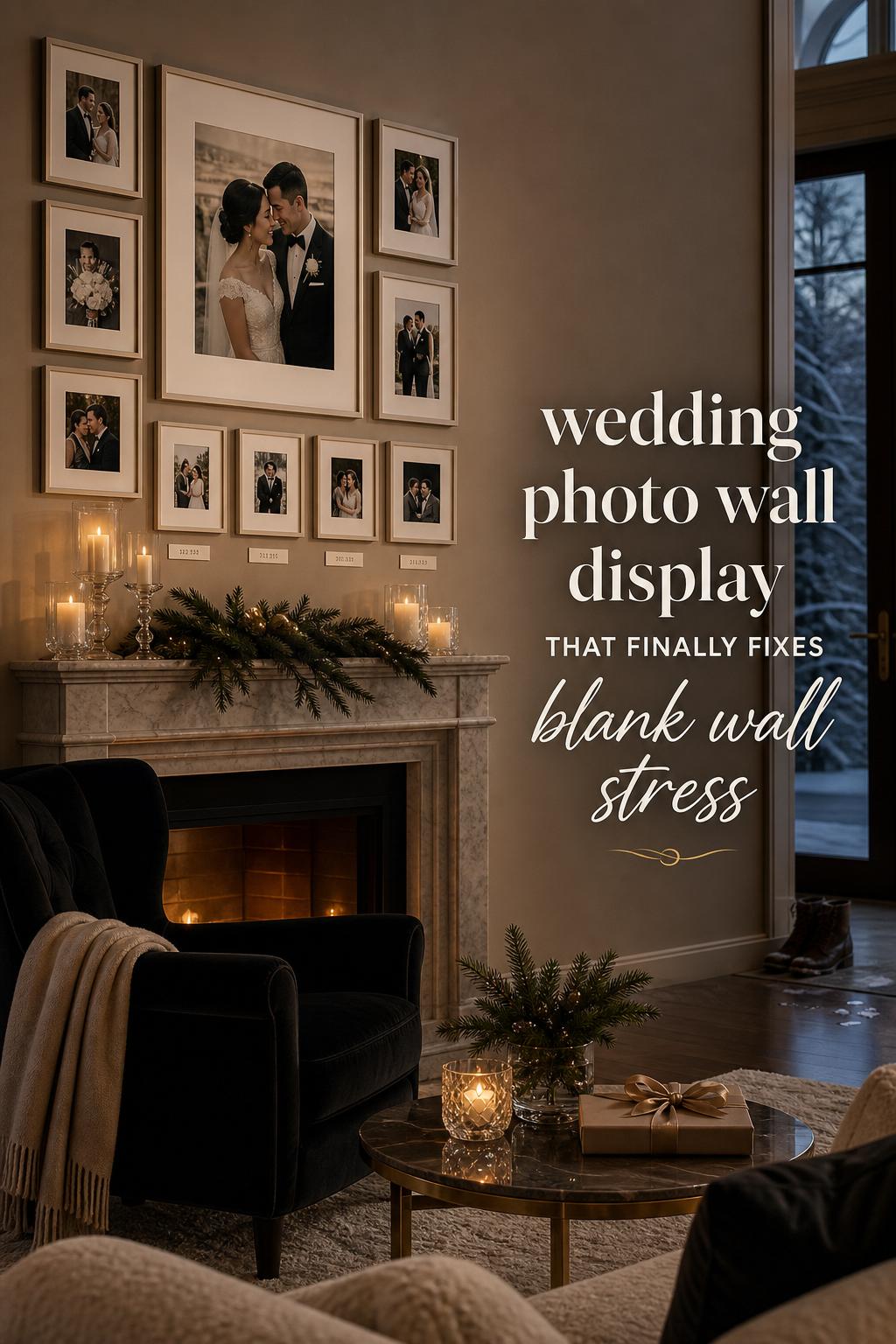
Finally, practical choices support the beauty of the display. Even spacing, wall-appropriate mounting, and thoughtful lighting all influence whether the wall feels polished. A beautiful print in the wrong place can still look awkward. Good styling is what happens when image selection, room design, and installation logic all work together.
Wedding solution: choose a wall format before you choose the prints
One of the most common mistakes is ordering prints first and hoping the display will sort itself out later. This usually leads to mismatched sizes, awkward spacing, and expensive reprints. Couples often fall in love with individual images and forget that a wedding photo wall needs a structure. The result is a collection of good photos that do not create one cohesive visual experience.
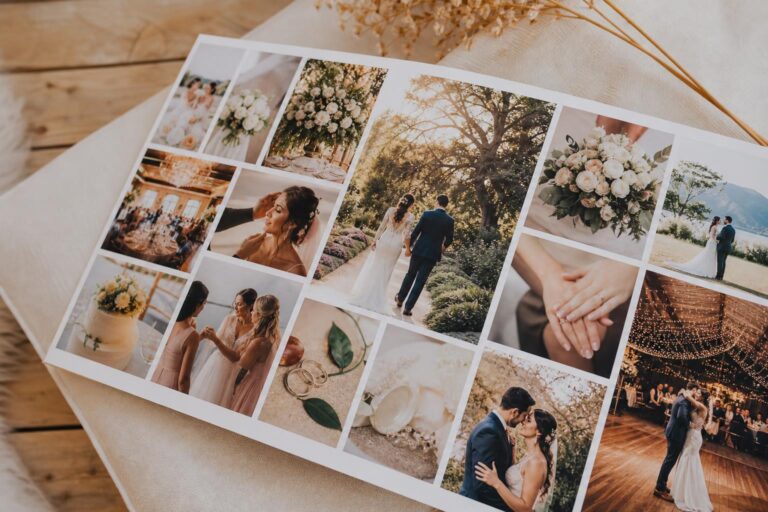
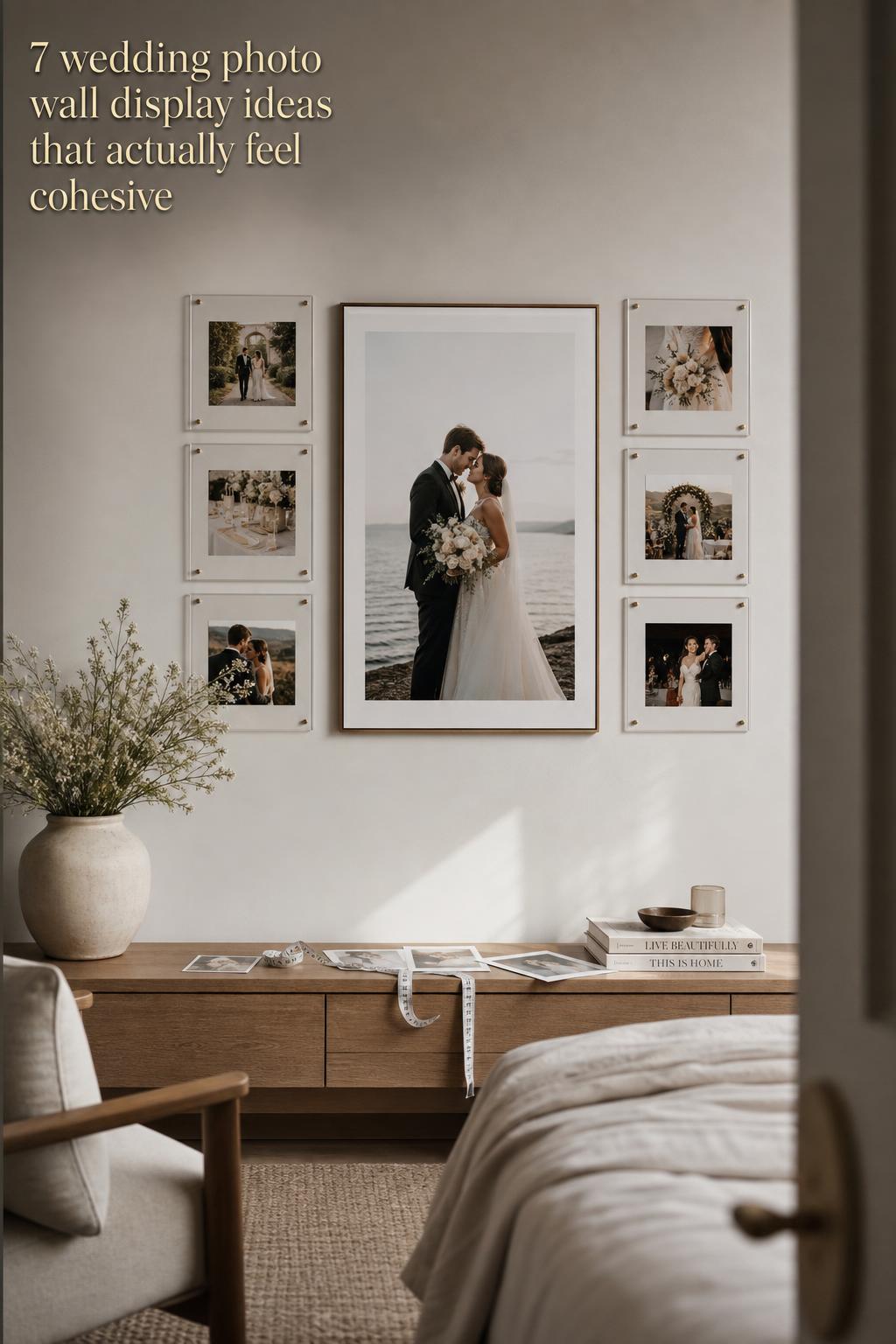
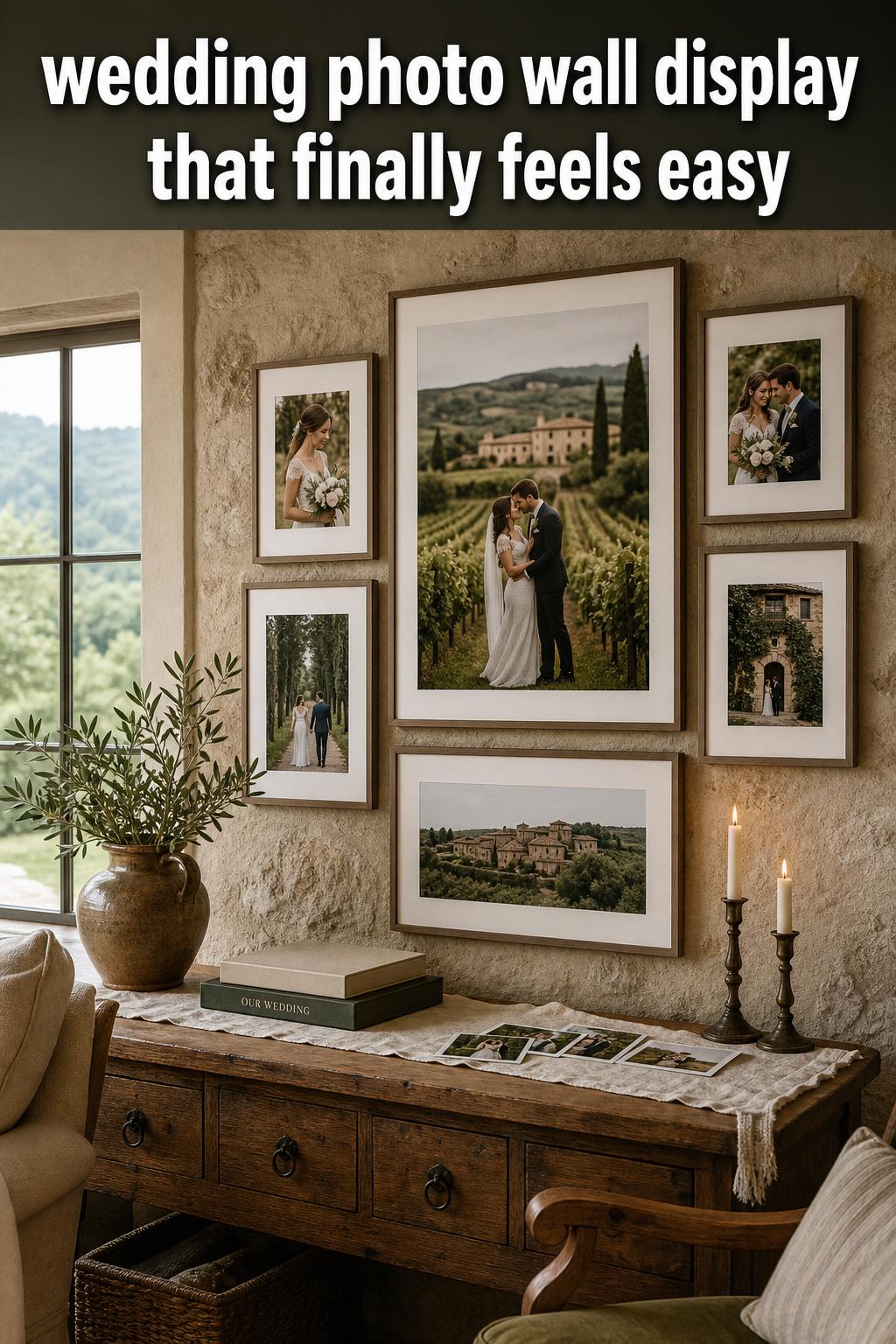
The practical solution is to start with the format. Decide whether your home and your story are best served by a classic gallery wall, a clean grid, a timeline display, a heart collage, or a mixed-material arrangement. A classic grid gallery suits couples who want order, symmetry, and consistent spacing. A timeline wall suits couples who want storytelling and movement across the wall. A heart collage feels romantic and expressive, especially when paired with one central hero image. A mixed media wall can combine framed prints, canvases, plaques, or heirloom family photos for a more layered result.
Once the format is clear, photo selection becomes easier and less emotional. You are no longer asking every image to carry equal weight. You are choosing which images best serve the design and the story. That makes the final wall feel calmer, more elegant, and much more personal. It also helps you avoid the quiet disappointment of a display that contains meaningful images but still feels visually unresolved.
Formats that solve different styling needs
- A grid layout works well for modern homes, minimalist decor, and couples who prefer visual consistency.
- A timeline wall is ideal when you want the engagement, ceremony, vows, and first dance to unfold naturally from left to right.
- A heart collage creates a romantic focal point and works especially well in bedrooms or intimate sitting areas.
- A linear set suits narrow walls, hallways, and spaces where you want a clean, understated display.
- A mixed materials and multi-generational wall is best for couples who want to include parents’ wedding photos, ancestors, or heirloom traditions.
Wedding solution: match the display style to the room, not just the photos
A display can fail even when the photos are lovely because the wall concept does not match the room. A heavily layered arrangement may overwhelm a quiet bedroom. A delicate floating frame composition may disappear in a large living room. Couples sometimes style the wall in isolation, without considering furniture lines, entry flow, or how the display will be seen from across the room.
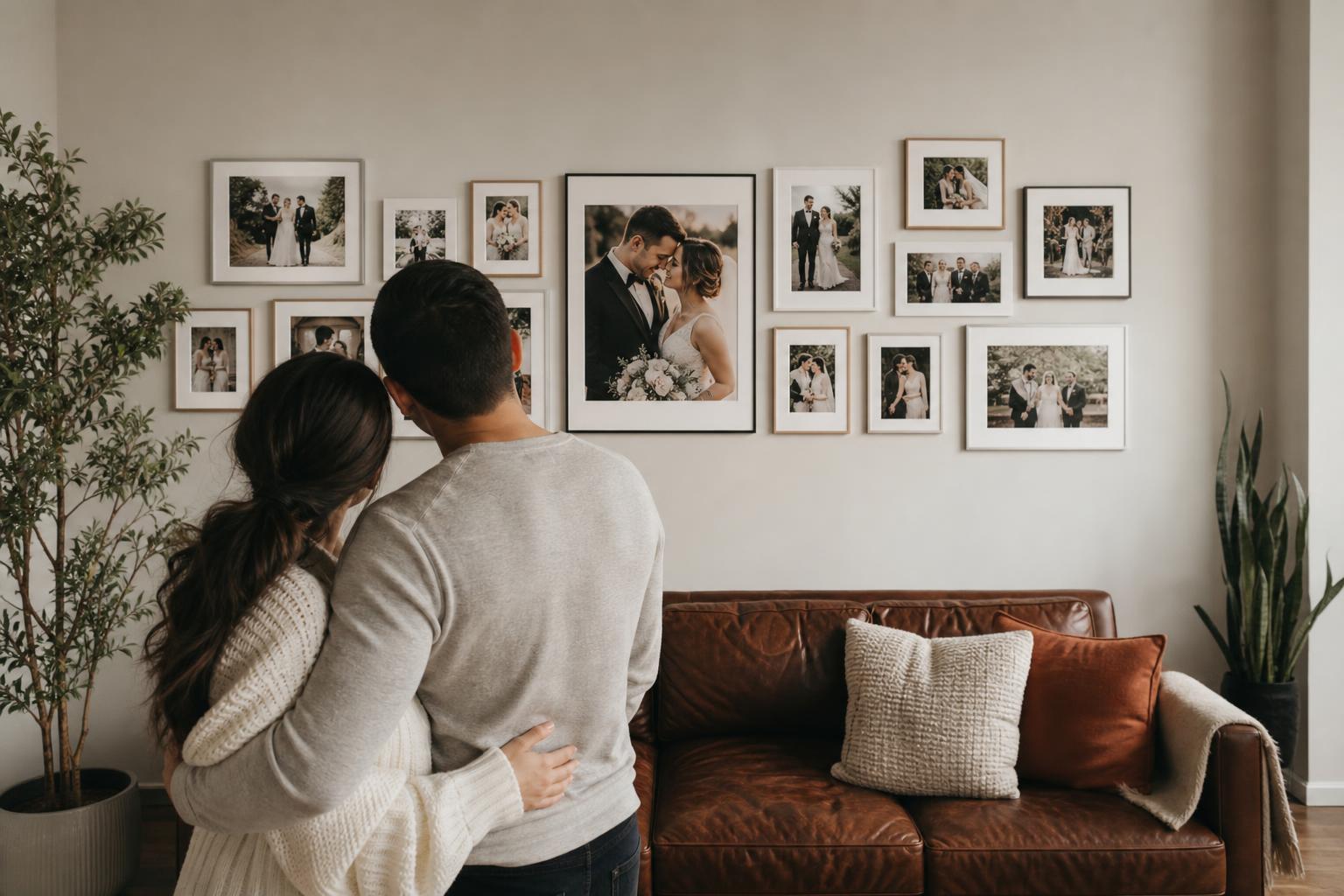
The better approach is to think like a stylist and a homeowner at the same time. In a living room, wedding photo display ideas often work best when the wall feels integrated with the seating area, shelves, or surrounding decor. In an entryway, a more edited arrangement can create a warm first impression without crowding the space. A dreamy bedroom display can handle softer imagery and a more romantic composition. If your home has a loft feel, a larger gallery wall with bolder spacing may feel more natural. If you prefer rustic decor, wood elements, quote cards, or floral accents can make the display feel connected to the rest of the room.
This room-based thinking creates a different emotional effect. Instead of feeling like wedding memories were added after the fact, the wall starts to look as though it truly belongs there. Guests notice that ease, even if they cannot name it. More importantly, you will continue enjoying the display long after the wedding because it supports daily life instead of interrupting it.
Venue compatibility notes for home display
If your goal is to carry the feeling of the wedding into your home, it helps to borrow the atmosphere rather than duplicate every detail. A floral-decorated photo wall can echo a garden wedding without recreating an entire floral installation. A rustic wooden backdrop can reference a barn or outdoor celebration without overwhelming an apartment wall. The most timeless displays translate the mood of the event into a form that suits the room.
Wedding solution: use sequencing to tell the story of the day
When couples choose photos purely by popularity or beauty, the wall can lose emotional rhythm. The ceremony image may sit beside a reception dance photo, then next to an engagement portrait, then a detail shot. Each picture may be strong on its own, but the wall does not create a journey. That usually leaves the display feeling decorative rather than meaningful.
A timeline wall solves this elegantly. Arrange the display in chronological order so the story unfolds naturally: engagement, getting ready, ceremony, vows, portraits, reception, and first dance. You can do this in a linear set across one wall or as a more structured gallery wall with the timeline moving row by row. If you want a softer approach, choose one hero image as the center and let supporting images radiate around it in sequence. This is one reason Mixtiles-style photo tiles often appeal to couples. They make it easier to test arrangement flow before committing to more permanent framing decisions.
The emotional result is immediate. The wall no longer feels like a collection of fragments. It feels like your love story has shape. That narrative quality is what makes guests pause and look more closely, and it is what often makes the wall continue to matter over time. You are not just displaying wedding photography. You are preserving a progression of moments.
What photographs best in a story-driven wall
- One clear hero image with strong emotional presence
- A balanced mix of portraits and wider scene-setting moments
- Images that show transition, such as engagement to ceremony
- At least one reception image to bring movement and warmth
- Consistent edits so the sequence feels unified
Wedding solution: decide between frames, floating frames, and photo tiles with honesty about your lifestyle
Many couples get stuck because they are choosing between products rather than between outcomes. Frames, floating frames, and adhesive photo tiles all promise a polished result, but they do not serve the same household or aesthetic. A display method that looks stunning in one home may feel frustrating in another, especially if you plan to refresh the wall on anniversaries or add future family photos.
Classic frames tend to suit couples who want a timeless gallery wall and are comfortable with a more permanent installation. Floating frames, often associated with an artful display approach like the one seen from Artifact Uprising, can create a refined and airy look that works beautifully in a bedroom, entryway, or minimalist space. Adhesive photo tiles, strongly associated with Mixtiles, solve a different problem: easy installation, flexible rearranging, and a lower-pressure way to create a wedding memory wall without committing to nails immediately. Wallpics also appears in this conversation through creative wall ideas that emphasize storytelling and easy composition.
The right decision depends on how you live. If you move often, like changing decor, or want to build the wall gradually from engagement through anniversary photos, adhesive options can feel realistic and freeing. If you want a finished, heirloom-like composition from the start, framed prints or floating frames often feel more grounded. There is no universally superior choice. The best option is the one that supports both your style and your habits.
The simplest way to elevate the look
Whichever display method you choose, keep the visual finish consistent. If the room is soft and romantic, avoid mixing too many contrasting frame colors. If the room is clean and modern, lean into uniformity. Cohesion is what makes even a modest budget display feel expensive.
Wedding solution: bring in personal details without creating visual clutter
Personalization is where many wedding photo walls either become meaningful or become crowded. Couples naturally want to include quote cards, floral accents, wood textures, old family photographs, and little decorative touches from the wedding. The challenge is that when all of those details compete with the photography, the wall can start to feel like a craft project rather than a composed display.
The practical solution is to choose one supporting language around the photos. If you love rustic styling, use wood elements as the main texture and let the photos stay clean. If you prefer floral romance, add florals lightly around the composition rather than between every frame. If family history matters deeply, create a dedicated heritage section that includes parents’ wedding photos or ancestor photos instead of scattering them randomly through the entire wall. The idea of a multi-generation wedding photo display works best when it feels intentional, not accidental.
This restraint makes the wall feel more sophisticated and more emotional at the same time. The personal touches still speak, but they do not interrupt the images. That is often what makes a display feel luxurious: not excess, but editing. Thoughtful details have far more impact when they are given space.
How to make the wedding feel more personal
- Include one quote card rather than several competing text pieces.
- Add one floral accent direction instead of multiple decor themes.
- Create a clearly defined family heritage cluster if ancestor or parents’ photos matter to you.
- Use one or two textures, such as wood or soft floral elements, to support the mood.
- Let at least some open wall space remain visible so the images can breathe.
Wedding solution: plan the installation before the wall becomes stressful
Installation is where many beautiful ideas begin to unravel. A couple may have strong images, matching prints, and a clear concept, but then rush the hanging process and end up with uneven spacing, a display that sits too high, or a layout that feels smaller than expected once it reaches the wall. The stress of getting it wrong can delay the project for months.
The smartest approach is to treat installation as its own design stage. Mock the layout first, either with templates, app-based planning, or a rough arrangement on the floor. This is one reason layout tools and brand planning systems can be helpful. They allow you to test a grid, timeline, or cluster before mounting anything. Then think practically about wall type and mounting method. Drywall, plaster, and brick do not all behave the same way, and even a nail-free approach needs to suit the surface. If you are using adhesive photo tiles, make sure the wall is appropriate for that format. If you are hanging heavier frames, the support method matters more.
Good installation reduces visual tension immediately. Even spacing creates calm. Proper placement helps the wall feel integrated with furniture and room lines. Most importantly, planning the process protects the emotional experience. You should not have to feel nervous every time you look at a frame and wonder whether it is slightly off. A little patience before hanging creates a result that feels confident and finished.
Tips for spacing and layout planning
- Mock the full arrangement before ordering or mounting final pieces.
- Choose spacing that is consistent across the display rather than adjusting each gap by eye.
- Use the furniture below the wall as a visual anchor so the gallery feels connected to the room.
- Keep one hero image or center line in mind so the whole arrangement does not drift upward or sideways.
- If the wall will evolve over time, leave room for future anniversary or family additions.
Wedding solution: use lighting to make the wall feel alive, not flat
Couples often focus on frames and prints but underestimate lighting. A wall that felt beautiful during installation can look dull in the evening or washed out during bright daytime hours. This is especially disappointing with wedding photography, because the emotional texture of the images depends so much on warmth, contrast, and visibility.
The practical answer is to think of lighting as part of the display rather than an afterthought. Soft, supportive lighting helps the images read clearly while preserving a romantic mood. If the room already has pendant lighting or adjustable lights, use them to support the wall rather than letting harsh overhead light flatten the images. If your display includes floating frames or a refined gallery wall, subtle lighting can emphasize the artful quality. If the wall includes florals or wood elements, good lighting also helps those supporting textures feel intentional rather than heavy.
When lighting is handled well, the wall becomes part of the room’s atmosphere instead of a static decoration. It draws the eye gently. It feels warm at night and polished during the day. This is one of the easiest ways to make a wedding memory wall feel finished without adding more objects or more complexity.
Photography perspective
If you ever plan to photograph your home or share the display socially, lighting will matter even more. A well-lit gallery wall reads as intentional and elegant on camera. Uneven light or glare can make even beautiful prints look inconsistent. Soft, balanced illumination supports both daily enjoyment and the visual quality of the wall itself.
Wedding solution: create a wall that can grow with your life
A frequent regret appears after the first rush of decorating is over: the display feels complete in a way that leaves no room for the future. Couples may later want to add anniversary images, family portraits, or more heritage pieces, but the original composition is so fixed that adding anything feels disruptive. This is especially common when the initial wall was designed only for immediate impact.
A more thoughtful approach is to build a wedding photo wall display with evolution in mind. A timeline wall can naturally continue beyond the wedding day. A gallery wall can reserve one section for future milestones. A multi-generation arrangement can begin with your wedding photos and later expand to include family heritage in a more layered way. This mindset is reflected in the idea of a wall that evolves from engagement to anniversary rather than freezing the story at one moment.
This future-friendly planning reduces pressure at the start. You do not need to force the wall to hold everything at once. You can create a beautiful first version now and let it grow with your life. That often leads to a more authentic display, because it reflects lived memory rather than a single styling moment.
What couples usually overlook
The most overlooked part of a wedding gallery wall is not the product choice. It is editing. Couples are often too close to the meaning of each image to choose with enough clarity. If every image feels essential, the wall loses hierarchy. The display needs variety in scale, rhythm, and emotion, but it also needs restraint.
Another overlooked element is how the display connects to the room’s color palette. Even if the images are beautiful, inconsistent edits can fight with the decor around them. A wedding wall generally looks stronger when the photography shares a similar tone and when the surrounding materials, whether wood, frame finishes, or floral accents, feel related rather than random.
Finally, many couples underestimate how much easier the decision becomes when they choose a clear reference style. Some prefer the peel-and-stick flexibility associated with Mixtiles. Others prefer the refined, artful direction associated with Artifact Uprising and floating frames. Others may enjoy the creative wall composition ideas seen from Wallpics, or the home-centered decor angle from Oh Loft and Homezille. Looking at these display styles can clarify your own priorities, even if you create a version that is fully personal.
Common mistakes that make this harder
- Choosing too many images before choosing a layout concept
- Mixing rustic, floral, minimalist, and heritage elements without one clear direction
- Ignoring the room and designing the wall as if it exists alone
- Using inconsistent print styles that make the display feel fragmented
- Rushing installation and ending up with uneven spacing
- Adding too many quote cards or decor pieces around the photographs
- Forgetting to leave room for future anniversary or family additions
These mistakes are common because the wall is emotional, and emotional projects tend to invite overthinking. If this is happening to you, it does not mean you lack taste. It usually means you care deeply and need a clearer structure. A wedding display becomes easier the moment you stop asking it to do everything at once.
Budget-conscious ways to keep the wall beautiful
A meaningful display does not require the largest wall or the most expensive arrangement. In many homes, a smaller composition with a strong focal point feels more elevated than an oversized wall filled too quickly. Couples can begin with a hero image and a few supporting pieces, then build out the gallery over time.
Adhesive photo tiles can be a practical entry point for couples who want flexibility and lower installation pressure. Framed pieces can be introduced gradually, especially in spaces where you want a more permanent heirloom look. A linear set may also be more affordable and easier to execute than a complex full-wall cluster. The key is not to confuse abundance with quality. A display feels expensive when it is cohesive, balanced, and well placed.
If you are deciding where to spend more, prioritize the pieces that carry the most visual weight: the hero image, the central frame style, and the overall layout planning. Those are the elements guests actually notice first. Thoughtful composition usually delivers more impact than simply adding more prints.
How to keep it timeless
Timelessness in a wedding photo wall display comes from discipline more than decoration. Use images that still feel emotionally true when the excitement of the wedding season has softened. Choose layouts that support the story without relying on novelty alone. A heart collage can be beautiful, but it works best when the image selection is strong and the shape is given enough space. A grid can be classic, but only if the editing and spacing remain consistent.
It also helps to let the wedding be present without making the wall feel trapped in one year of your life. A display that leaves room for anniversaries, family additions, or heritage storytelling often feels more enduring. The goal is not to preserve a trend. It is to preserve a chapter of life in a way that still feels at home as your life changes.
FAQ
What is the best layout for a wedding photo wall display?
The best layout depends on both your story and your space. A grid layout works well for a clean, modern look, a timeline wall is ideal for chronological storytelling from engagement to first dance, and a heart collage creates a romantic focal point. If you want a more layered and personal result, a mixed media or multi-generational gallery wall can be especially meaningful.
How do I display wedding photos at home without making the room feel cluttered?
Start by choosing one clear format and one visual language for the wall. Use consistent frames, edits, or photo tiles, limit decorative extras, and make sure the display suits the room rather than dominating it. Leaving some open wall space usually helps the photos feel more elegant and easier to enjoy.
Are photo tiles a good option for a wedding gallery wall?
Photo tiles can be a very good option if you want a nail-free or flexible display that is easy to rearrange. This is especially helpful for couples who are still refining the layout, want to add anniversary photos later, or prefer a lower-pressure installation process. They tend to work best when the wall surface suits adhesive mounting.
Should I use a timeline wall for wedding photos?
A timeline wall is an excellent choice if you want the display to feel narrative rather than purely decorative. It allows the relationship and wedding day to unfold naturally through engagement, ceremony, vows, portraits, and reception moments. This approach often creates a stronger emotional flow than selecting images without sequence.
What rooms work best for a wedding photo wall display?
Living rooms, bedrooms, entryways, and loft-style spaces can all work well, but each room benefits from a different approach. A living room can support a larger gallery wall, a bedroom often suits a softer and more romantic arrangement, and an entryway usually works best with a more edited display that feels welcoming without being overwhelming.
How can I include family heritage in my wedding photo wall?
You can include parents’ wedding photos or ancestor images as part of a dedicated heritage cluster or as one section of a larger multi-generational wall. This tends to work better than scattering old and new photos randomly. Grouping heritage images intentionally helps the wall feel personal, balanced, and emotionally rich.
What is the difference between a gallery wall and a floating frame display?
A gallery wall is the broader concept of arranging multiple photos together on one wall, while a floating frame display usually refers to a more artful, airy framing style that creates a lighter visual effect. Both can be beautiful for wedding photos, but floating frames often suit couples who want a refined, minimal look with a softer presence in the room.
How do I keep my wedding photo wall feeling timeless?
Choose a layout that matches your home, keep the edits and framing consistent, and avoid overdecorating the wall with too many trends at once. A timeless display usually has a clear focal point, enough breathing room, and a design that can evolve naturally with anniversaries or future family milestones.
Can I mix wedding photos with other display formats like canvases or plaques?
Yes, mixed materials can work beautifully when they are used with intention. Combining prints, canvases, plaques, or framed heirloom images can add dimension and personality, especially in a heritage display. The key is to keep the arrangement cohesive so the wall feels curated rather than crowded.