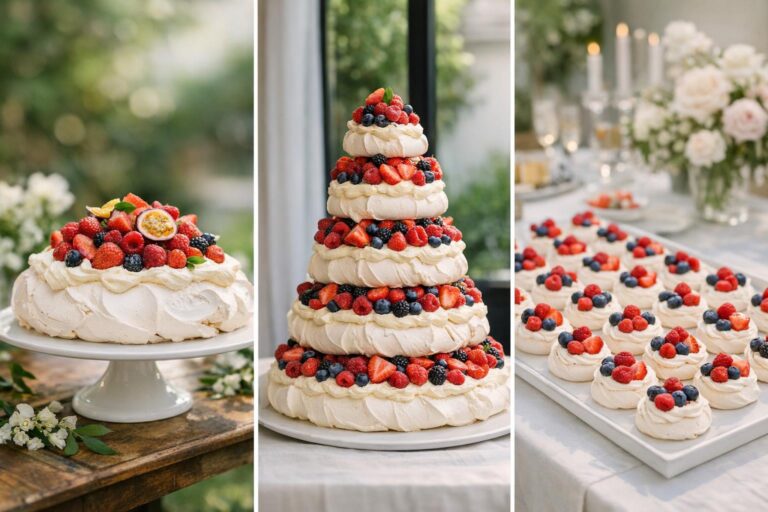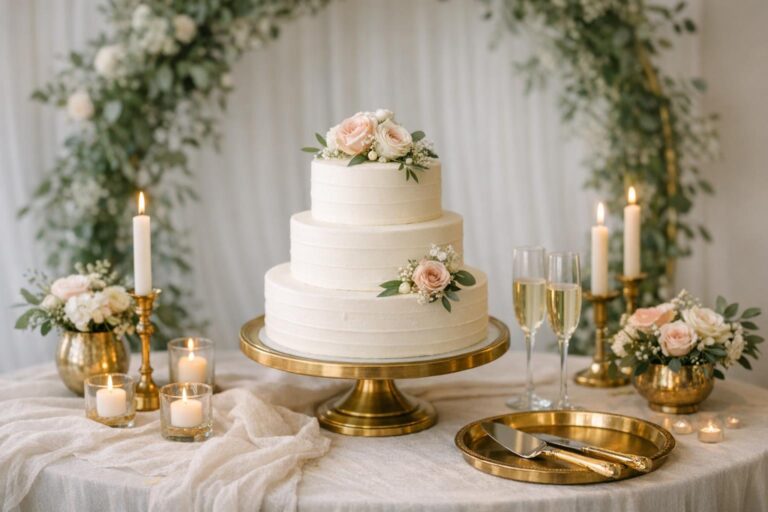
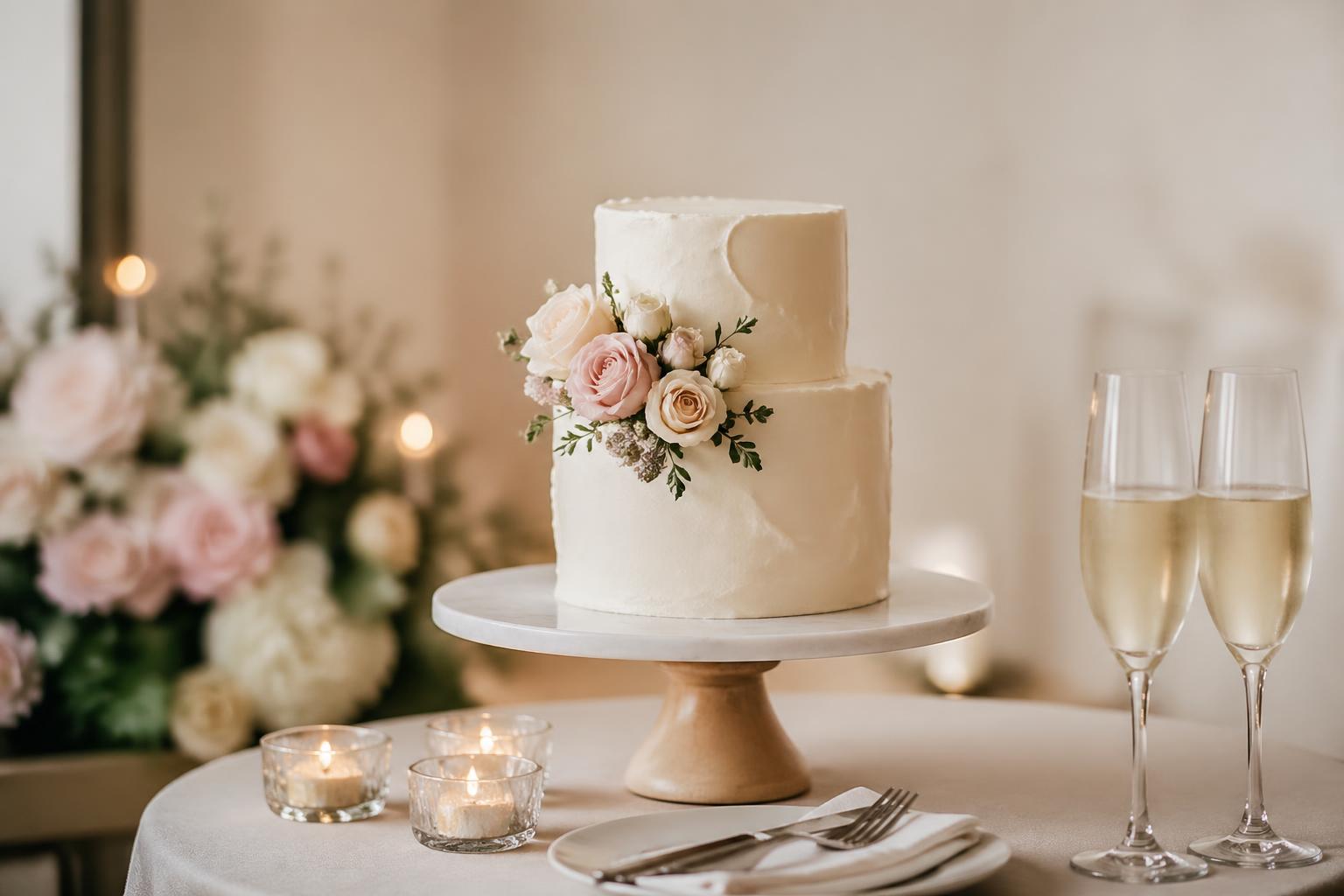
Why a Small Wedding Cake Feels So Chic Right Now
The sweetest wedding moments are often the smallest ones: a quiet cake-cutting after vows, a candlelit dinner with your closest people, a single-tier confection placed on a beautiful stand as if it were a piece of art. A small wedding cake fits that kind of celebration perfectly, yet choosing one can feel surprisingly complex. Couples often assume a smaller cake means fewer decisions, but scale changes everything from design balance to serving logic, flavor impact, and how the cake sits within the overall wedding style.
That is why many intimate wedding plans stall at the dessert table. A cake that is too plain can disappear beside thoughtful décor, while one that is too elaborate can feel out of proportion for a relaxed celebration. The right answer usually lies in understanding size, finish, theme, and logistics together. With the right approach, a petite wedding cake, mini wedding cake, or cutting cake for small weddings can feel every bit as memorable as a towering display.
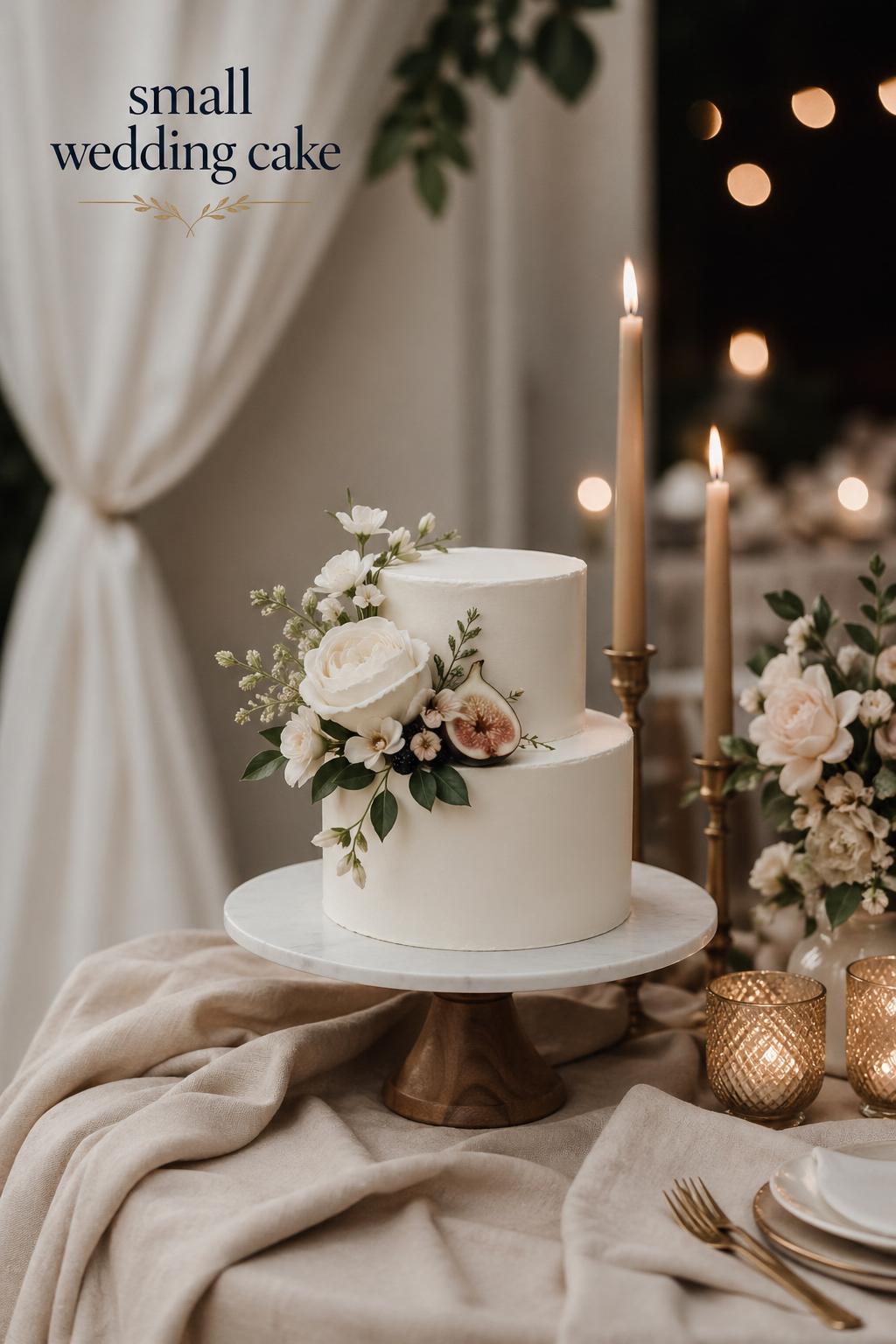
This guide is designed to solve that challenge with practical, romantic clarity. You will find design ideas, styling logic, flavor direction, vendor guidance, and realistic planning advice to help your cake feel intentional from the first sketch to the final slice.
Why a small wedding cake feels so right for intimate celebrations
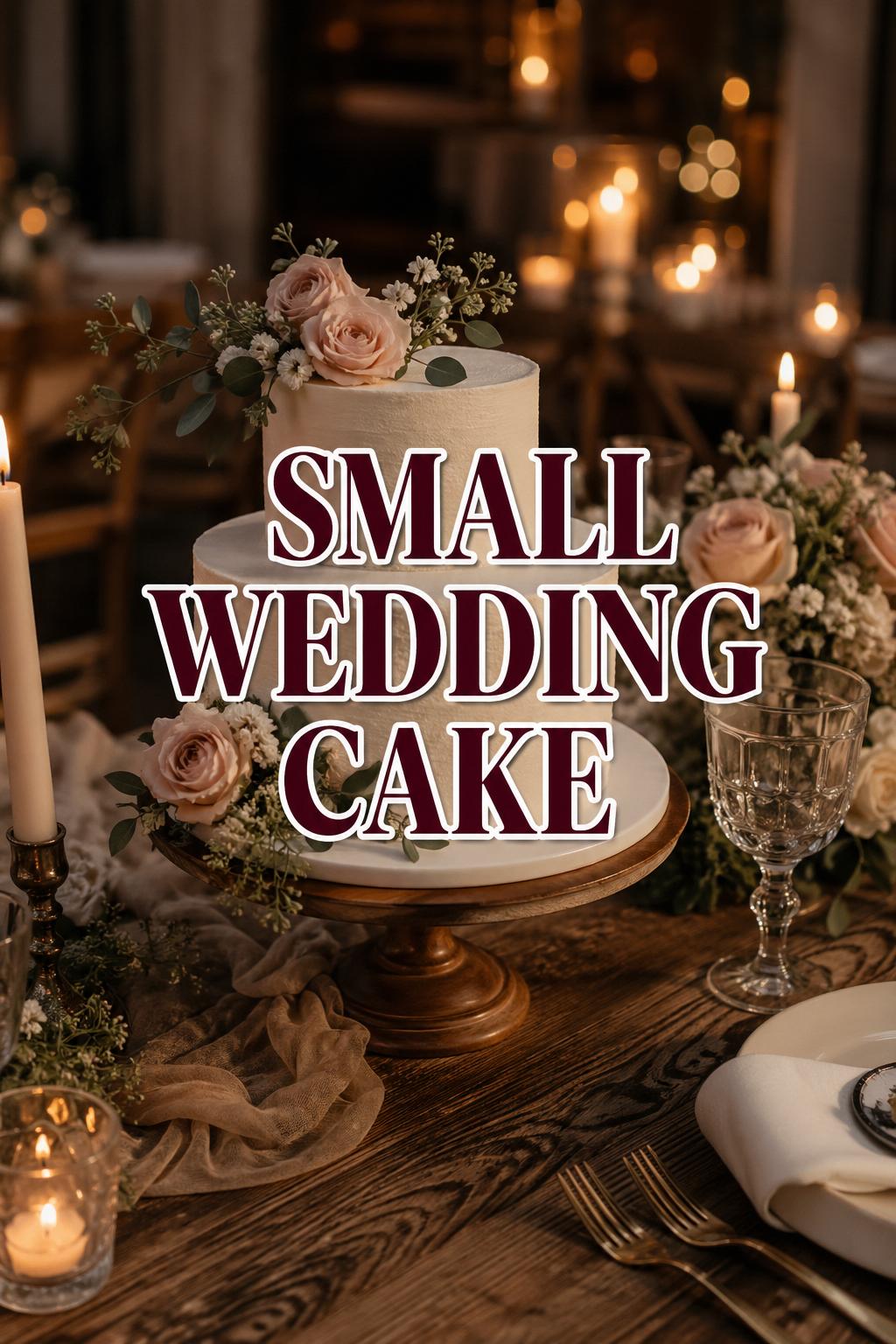
For intimate weddings, a smaller cake often creates a stronger visual and emotional effect than a large one. It draws attention to craftsmanship: the buttercream texture, the line of sugar florals, the softness of a matte finish, or the clean silhouette of a one-tier wedding cake. Instead of trying to fill space, it becomes a refined focal point that complements the table, the venue, and the couple’s style.
Turn wedding inspiration into a plan you can actually follow.
Zarellea brings your guest list, budget, vendors, and day-of details into one shared space — so no beautiful idea gets lost in the shuffle.
This is especially true when the wedding vision leans minimalist, modern, romantic, or rustic. A small cake naturally suits these aesthetics because it allows details to remain crisp and intentional. In a modern city venue, a clean fondant finish and color blocking can look sculptural. In a garden or countryside setting, buttercream with floral accents can feel organic and quietly elegant. For many couples, the appeal is not simply budget or scale. It is proportion.
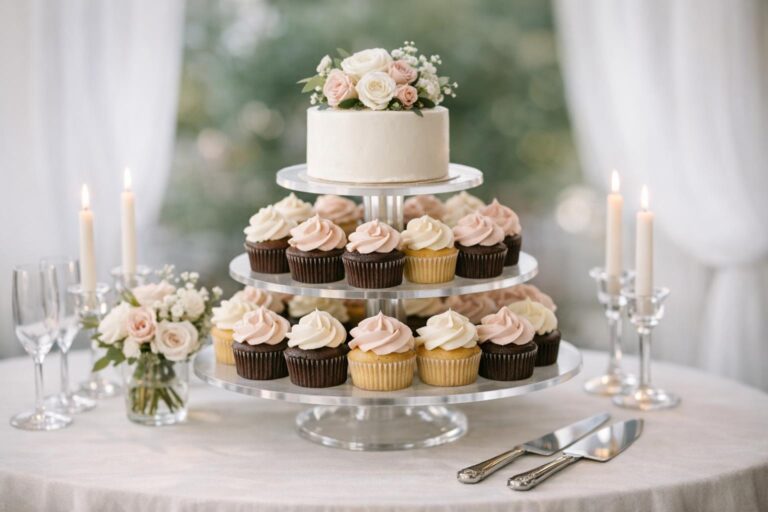
A small wedding cake also works beautifully when paired with other dessert options. If the ceremonial cake is meant to anchor the moment rather than serve every guest, it can function as a cutting cake while dessert boards, mini cakes, or a dessert table support the wider reception experience. That balance allows couples to keep the symbolism of a wedding cake without forcing the cake alone to do every job.
Understanding the real challenge: scale, style, and practicality must work together
The most common mistake with a small cake is treating it like a reduced version of a large one. In reality, smaller cakes need a different design mindset. Decorative elements that look subtle on a multi-tier cake can overwhelm a 4–6 inch format. A topper that feels playful in a photo can become visually heavy in person. Even floral placement needs more restraint, because one bloom too many can hide the shape of the cake.
There is also a practical side to the challenge. Small cakes are often used in intimate venues, restaurants, private homes, urban lofts, and micro wedding spaces where delivery timing, storage, display height, and cutting access matter. A cake can be stunning in a bakery sketch and still feel awkward if the venue has limited setup space or if the stand is too large for the table.
Comfort and functionality matter here just as much as aesthetics. Couples usually want a cake that photographs beautifully, cuts neatly, travels safely, and still feels connected to the wider reception design. That balancing act is why choosing a small wedding cake is not only about inspiration. It is about making styling decisions that serve the entire event.
The key principles that make a small cake look intentional
The strongest small wedding cake designs usually follow a few clear principles. First, keep proportion at the center of every decision. Size, height, floral accents, topper scale, and cake stand all need to feel balanced. Second, choose one dominant style direction rather than mixing too many. A romantic cake with soft buttercream texture and floral accents can feel muddy if sharp modern color blocking is added without purpose. Third, let finish and shape do more of the work. On a smaller canvas, texture, silhouette, and color palette are often more effective than excessive decoration.
Another helpful principle is to tie the cake directly to the wedding atmosphere. A rustic wedding usually benefits from a more natural finish, visible texture, and floral coordination. A chic or glam celebration may call for a cleaner surface, polished topper, or a more structured silhouette. A minimalist cake should not feel unfinished; it should feel deliberate. The difference is usually in refined details and thoughtful restraint.
- Match the cake’s scale to the guest experience, not only the guest count.
- Choose either texture, florals, or a topper as the lead decorative feature.
- Use color palettes that echo the venue and tablescape.
- Think about display from every angle, especially for ceremony-to-dinner transitions.
- Remember that a small cake often benefits from a beautiful stand or styled base.
Design framework: size, shape, and finish
The easiest way to solve small wedding cake decisions is to work through three layers: size, shape, and finish. This framework helps couples move from vague inspiration to a design brief that a bakery can actually use.
Size and serving logic for 4–6 inch wedding cake ideas
Across wedding inspiration and planning content, 4–6 inch formats appear repeatedly because they suit intimate celebrations and cutting cake needs well. A cake in this range can feel substantial enough for the ceremonial moment while still looking refined on a smaller table. For some couples, this is the entire dessert. For others, it is the visual centerpiece supported by mini cakes or additional sweets.
When deciding size, think beyond the numbers. Ask whether the cake is meant for shared dessert service, a symbolic cutting moment, or both. If the cake has to carry more responsibility during the reception, a two-tier concept may make more sense even when the overall scale stays small. If the role is mainly ceremonial, a one-tier wedding cake can be more elegant and easier to style.
Shape and silhouette by wedding theme
Shape influences mood immediately. Round cakes often feel classic, romantic, and soft. They work beautifully with florals, smooth buttercream, and timeless toppers. Square or clean-edged designs can lean more modern and architectural, especially when paired with fondant or sleek matte finishes. Taller single-tier cakes tend to look contemporary, while lower and softer silhouettes often feel rustic or garden-inspired.
For a modern wedding, a simple silhouette with restrained decoration usually feels strongest. For a romantic event, softness matters more: gentle piping, floral accents, or a delicate topper can create that emotional warmth. For a rustic celebration, a slightly more natural texture can make the cake feel connected to the setting rather than overly polished.
Buttercream or fondant: choosing the finish that fits
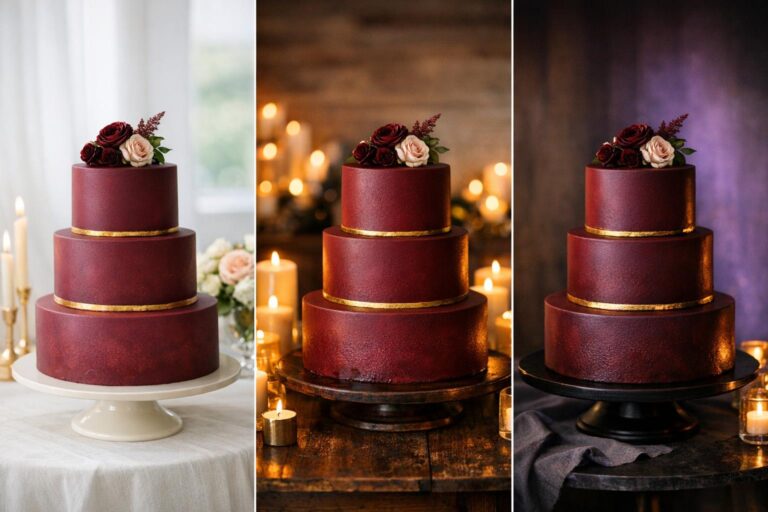
Finish is one of the most important styling choices because it determines how the cake catches light, supports decoration, and communicates formality. Buttercream often gives a softer, more tactile look. It suits rustic, minimalist, and romantic cakes especially well, and it can be left smooth or textured depending on the mood. Fondant creates a cleaner, more sculpted effect, which works beautifully for modern or chic designs and for cakes where color blocking or polished lines matter.
Neither is automatically better. Buttercream can feel warmer and more organic, while fondant can deliver sharper design control. The decision should depend on the wedding style, the design technique, and the visual role the cake plays in the room. If you want the finish itself to carry the beauty, buttercream texture can be enough. If you want a more precise canvas for a specific concept, fondant may be the stronger option.
Outfit-solution thinking for cake design: practical style directions that solve different wedding visions
Just as a wedding stylist matches clothing to setting, movement, and mood, your cake should be styled to solve a specific design need. The best small wedding cake ideas become much easier when you treat the cake like part of the overall visual wardrobe of the day.
Solution for minimalist weddings: the quiet statement cake
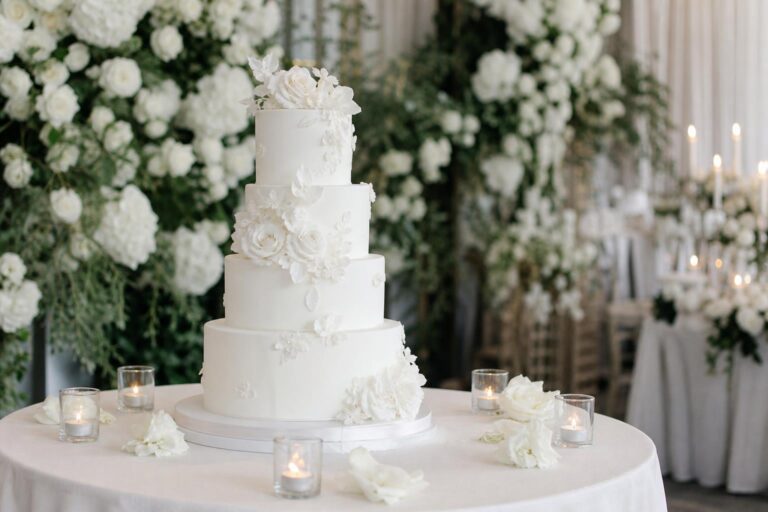
A minimalist wedding often benefits from a one-tier or single-tier wedding cake with a clean silhouette, restrained palette, and subtle finish detail. Think smooth buttercream or a matte fondant surface, with decoration limited to a small topper, a single floral gesture, or gentle textural movement. This works because minimalist styling depends on confidence in shape and spacing, not on abundance.
In an intimate venue, this kind of cake photographs beautifully because it allows the stand, linen, and surrounding candles or flowers to breathe. It also avoids one of the main issues with small cakes: looking overly busy. If your wedding style leans modern, chic, or softly editorial, this is often the most elegant route.
Solution for rustic celebrations: texture-led romance
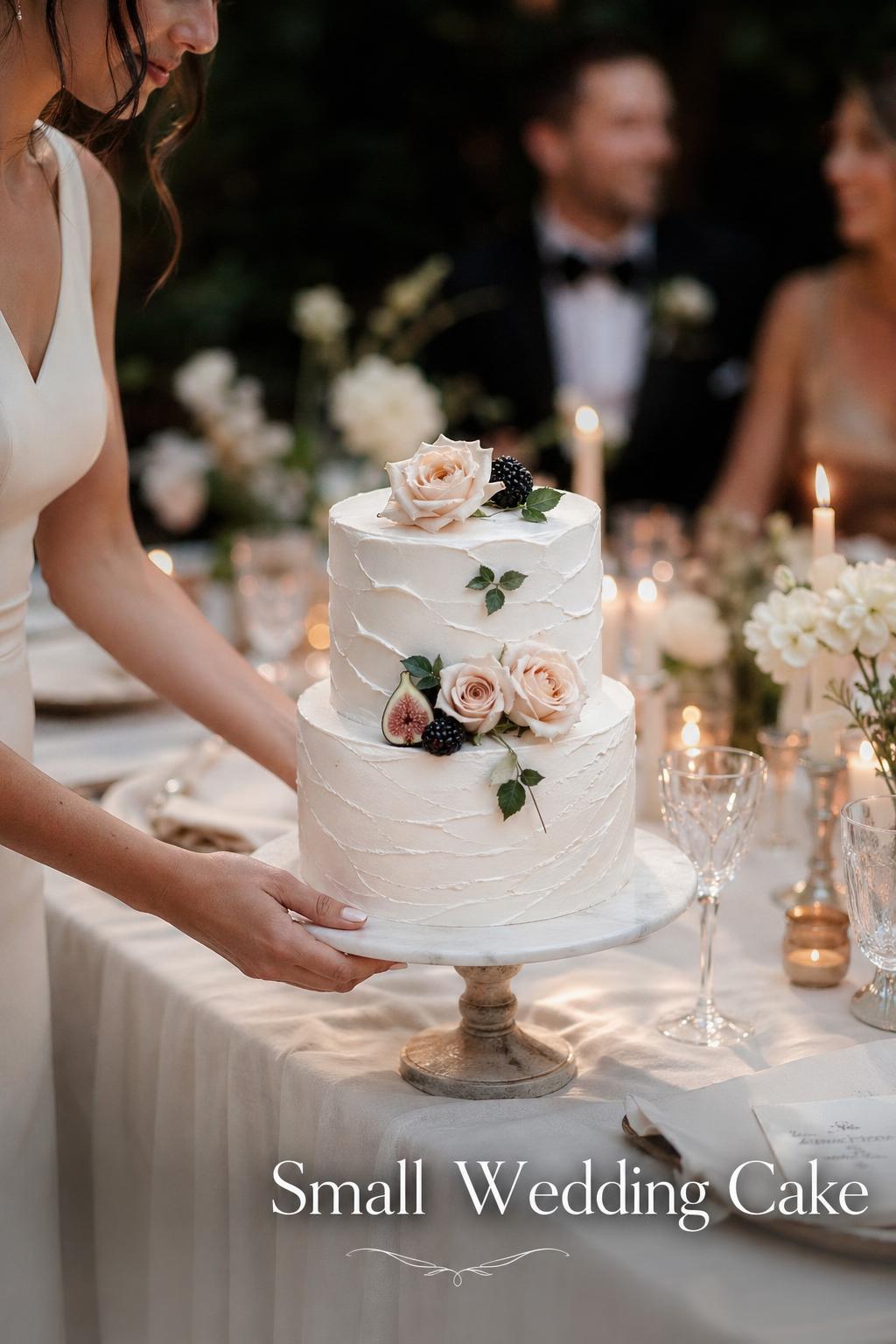
For rustic weddings, texture usually does more visual work than structure. A small cake with buttercream ridges, a natural finish, and floral accents can feel deeply connected to the venue, whether the setting is countryside, garden, or a warmly styled barn-inspired reception. Fresh fruit may also suit this direction when the overall tablescape feels organic and relaxed.
This approach solves the challenge of making a small cake feel inviting rather than under-scaled. Texture gives it presence. Floral accents make it feel celebratory. Because the style is naturally less rigid, a rustic small cake can look full of character without needing dramatic height or complicated detailing.
Solution for romantic weddings: soft florals and timeless proportions
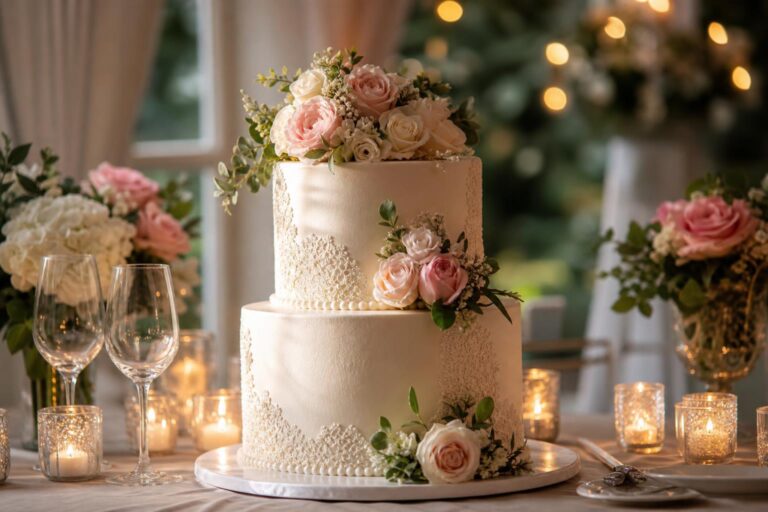
A romantic small wedding cake often looks best when it echoes the softness of the day. Round shape, smooth buttercream, sugar florals or carefully placed floral accents, and a classic topper can create a look that feels graceful and emotionally rich. This is the style many couples imagine for candlelit dinners, garden ceremonies, or elegant indoor receptions with a delicate color palette.
The key is not to crowd the cake. Romantic does not have to mean heavily decorated. On a smaller scale, one side cascade of florals or a refined floral cluster can deliver more beauty than covering every inch. This keeps the design visually light and prevents the cake from feeling dense.
Solution for modern celebrations: structure, contrast, and clean detail
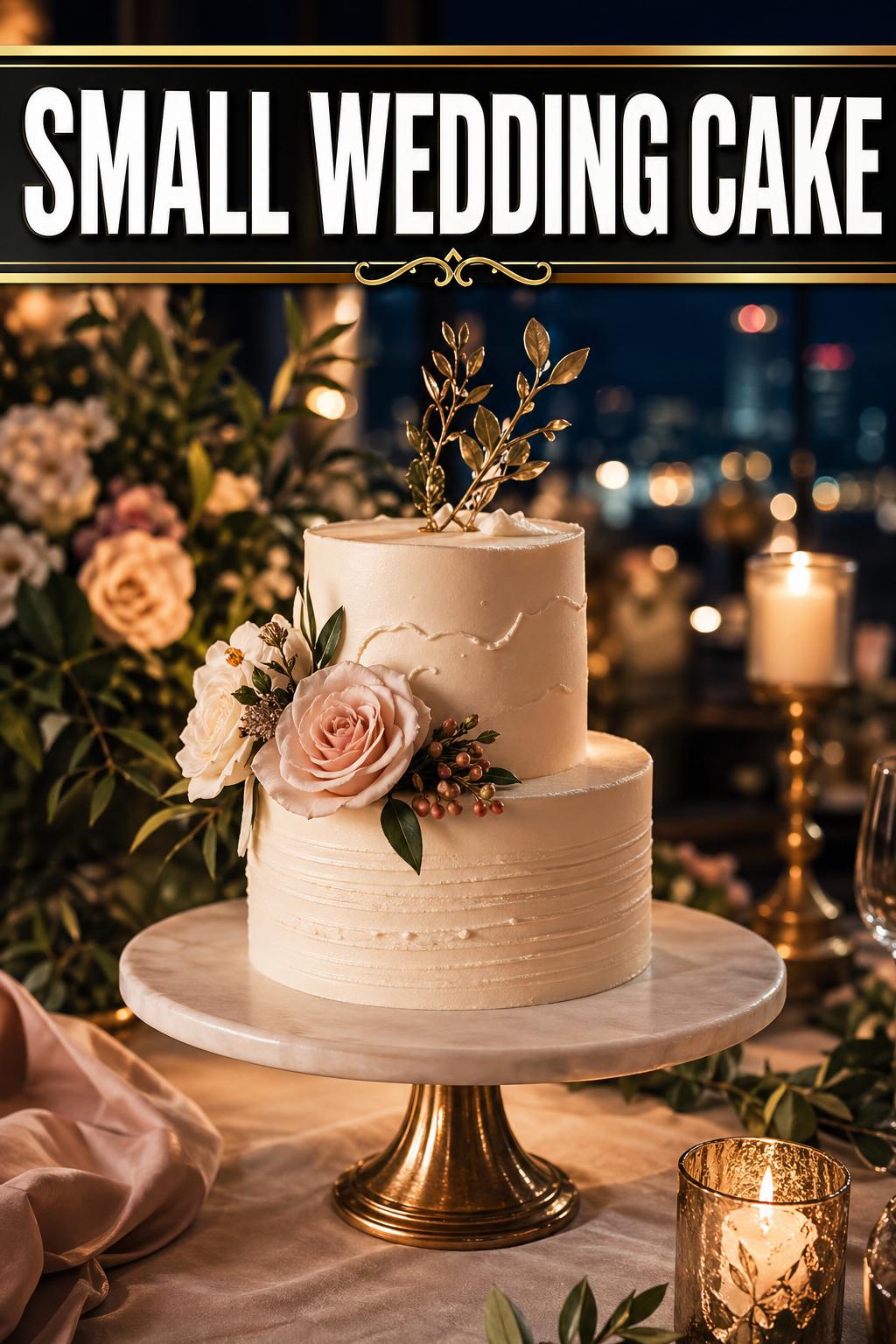
Modern weddings often call for sharper visual logic. A small cake can feel striking when it uses strong shape, polished finish, and controlled decorative contrast. Fondant, glossy or matte finish choices, restrained color pairings, or subtle color blocking all work here. A modern cake may also use a sleek topper or minimal floral placement rather than soft all-over decoration.
This style solves the problem of wanting a small cake to still feel statement-making. Instead of relying on size, it relies on precision. In urban venues or contemporary spaces, that discipline can make a petite wedding cake feel intentional, elevated, and highly memorable.
Flavor, fillings, and the decisions guests actually remember
Visual style draws people in, but flavor is what makes the cake moment linger. The most practical way to choose flavors is to connect them to the overall atmosphere of the wedding rather than treating them as an isolated bakery decision. Vanilla, chocolate, and lemon are recurring staples because they are familiar, versatile, and easy to style across different themes.
A classic or romantic wedding often suits vanilla-based profiles because they pair seamlessly with delicate decoration and broad guest appeal. Chocolate can bring richness to a more dramatic or evening-centered celebration. Lemon often feels fresh and light, especially when the wedding aesthetic is airy, seasonal, or garden-inspired. The exact filling matters, but the larger point is this: flavor should reinforce the emotional tone of the day.
Flavor pairings by theme
- Minimalist wedding: vanilla or lemon with a clean, light profile that matches the restrained aesthetic.
- Romantic wedding: vanilla or chocolate, depending on whether the mood is soft and airy or rich and evening-focused.
- Rustic wedding: flavors that feel warm, natural, or fruit-led often sit comfortably within the style direction.
- Modern wedding: strong, defined flavors pair well with polished finishes and structured design concepts.
If you are also serving a dessert table or mini wedding cake options, it helps to keep the central cake flavor distinct but approachable. The ceremonial cake should still feel like the hero, even when supported by other sweets.
Dietary considerations couples should address early
Dietary alternatives remain one of the least-discussed but most useful planning areas for small wedding cakes. If your guest list is intimate, dietary needs can feel even more personal because each person’s experience is more visible. Gluten-free almond cake and dairy-free buttercream are examples of accommodations worth discussing with your bakery early in the design process, especially if the cake itself needs to serve multiple roles.
These choices can affect finish, texture, and design feasibility, so they should not be left until the final stages. A dietary-friendly cake can still be beautiful and aligned with your theme, but the design brief needs to account for those requirements from the start. That is where a thoughtful bakery collaboration becomes especially valuable.
Decoration that works on a smaller canvas
Decorating a small wedding cake requires editing. On a larger cake, there is more room for multiple ideas to coexist. On a smaller cake, every decorative choice becomes louder. The goal is to let each element have a purpose rather than layering details simply because they are beautiful on their own.
Toppers and floral coordination
Cake toppers and floral accents are among the most common supporting details in wedding cake inspiration, and they can be especially effective on small cakes when used with restraint. A topper can introduce personality, initials, or a classic finishing note. Florals can tie the cake directly to the bouquet, ceremony arrangements, or reception centerpieces. Together, they can create a strong bridge between dessert and décor.
The trick is scale. A large topper can overpower a 4–6 inch cake, while too many florals can hide the finish and shape entirely. In most cases, it helps to choose one leading decorative feature and let the second play a supporting role. If the floral story is dramatic, keep the topper simple. If the topper is the focus, let florals remain understated.
Textures, matte finishes, and glossy accents
Texture gives a small cake dimension without demanding more space. Buttercream ridges, soft spatula movement, smooth matte surfaces, or a polished glossy finish each create a distinct mood. Matte often feels modern, soft, and refined. Glossy can bring formality or a more fashion-forward edge. Visible texture tends to feel romantic or rustic depending on how it is styled.
For couples who want a cake that reads well in photographs and in person, finish usually matters more than added ornament. A beautifully textured single-tier cake with subtle florals can be more striking than a heavily decorated design that loses clarity at small scale.
How to build a real-world cake concept with your bakery
One of the most helpful planning shifts is to stop asking a bakery for a “small cake” and start sharing a complete design direction. Bakers and design studios can translate style ideas much more effectively when they understand the wedding context: venue, guest experience, cake role, color palette, finish preferences, and whether the cake is paired with a dessert table or mini cakes.
This is where mood boards and design briefs become especially useful. They help couples move from scattered inspiration to a focused concept, and they give bakeries a clearer path toward recommending the right shape, finish, and decorative balance. In practical terms, collaboration often works best when the bakery is brought in early enough to guide both aesthetics and logistics.
What to include in a design brief
- Your wedding theme: minimalist, rustic, modern, romantic, classic, or chic.
- The cake’s role: full dessert service, cutting cake for small weddings, or centerpiece alongside a dessert table.
- Preferred size range, such as a 4–6 inch cake or a small two-tier concept.
- Finish preferences, including buttercream, fondant, matte, glossy, or visible texture.
- Decorative priorities like florals, toppers, fresh fruit, color palettes, or seasonal cues.
- Dietary needs such as gluten-free or dairy-free considerations.
- Venue details that affect transport, display, and setup.
When these details are shared early, the bakery can help you avoid common proportion mistakes and suggest a design that will actually work in the setting you have chosen.
The venue changes the cake more than most couples expect
A small wedding cake does not exist in isolation. It lives on a table, in a room, under certain lighting conditions, beside certain flowers, and within the rhythm of a wedding day. Venue type shapes which cakes feel natural. A modern rooftop dinner may favor cleaner lines and a polished fondant or matte finish. A countryside venue may call for buttercream texture, florals, and a softer silhouette. An urban restaurant reception may benefit from a compact cutting cake that looks elegant without dominating the space.
Even display surface matters. A small cake placed too low or on an oversized stand can disappear. The same cake elevated thoughtfully can feel sculptural and important. Couples planning intimate weddings should consider the cake table as part of the styling plan rather than an afterthought, because scale is always relative to surroundings.
Tips for venue-aware cake styling
Start by asking where the cake will sit during the reception and what will surround it. If your décor already includes abundant florals, the cake may need a simpler finish to avoid visual competition. If the venue is minimal or architectural, a cleaner cake with stronger shape can help the dessert moment feel integrated. For smaller restaurant or private-room weddings, compact presentation often looks more elevated than trying to mimic a ballroom-style display on a reduced scale.
Practical logistics couples should not leave until the last week
Logistics are one of the most under-discussed parts of choosing a small wedding cake, yet they influence whether the cake arrives looking as beautiful as it did in the bakery. Delivery versus pickup, storage conditions, display timing, and cutting ceremony planning all deserve attention. This is particularly important when the cake includes delicate florals, a topper, or a finish that needs careful handling.
Venue constraints can also shape the final design. Some locations have limited prep areas, restricted access times, or service rhythms that affect when the cake can be brought in and set out. A bakery may recommend certain finishes or decorative choices based not only on style but on what will hold up best within those conditions. That kind of recommendation is not a compromise. It is part of good wedding planning.
Timeline and milestone thinking
Couples usually feel calmer when cake planning follows a clear sequence: decide the cake’s role, gather visual inspiration, speak with bakeries, confirm dietary needs, refine the design brief, and then review display and delivery details with the venue. Working in that order prevents last-minute styling conflicts and makes it easier to keep the cake consistent with the overall wedding vision.
If the cake will share space with dessert boards or a dessert table, that should be finalized before design details are locked. The cake and supporting sweets should feel coordinated, not accidental.
Often-overlooked ideas that can make a small cake feel more personal
Couples often focus on design categories like rustic or minimalist and forget the smaller choices that make a cake feel truly theirs. Seasonal themes, cultural motifs, local sourcing, and sustainability considerations can all bring more meaning to the design without making it more complicated. A cake can remain visually simple while still reflecting a personal story through ingredients, florals, or styling cues.
Sustainability can also be part of the conversation. Eco-friendly packaging, local sourcing, and a bakery relationship rooted in regional ingredients may matter to couples planning a more intentional celebration. These decisions are not always visible at first glance, but they can shape how the cake fits the values of the wedding as a whole.
Another emerging practical idea is using digital mood boards or AI-assisted prompts to clarify motifs before meeting with a bakery. The value is not novelty for its own sake. It is that couples often communicate better when they can describe textures, color palettes, and style references with more precision. Used thoughtfully, that can make collaboration smoother and reduce design confusion.
Common mistakes that make a small wedding cake feel less polished
Most disappointing cake results come from imbalance rather than lack of beauty. The ingredients may be lovely and the decoration may be expensive, but the overall effect feels off because the design does not respect scale or context.
- Choosing decorations that are too large for the cake, especially oversized toppers or dense floral groupings.
- Mixing too many styles, such as rustic texture with highly formal structured detailing, without a clear concept.
- Ignoring the display environment, which can make a well-designed cake disappear or feel awkwardly placed.
- Leaving dietary needs until the end, when they may affect both flavor and finish choices.
- Treating the cake as separate from the rest of the wedding design rather than part of the visual story.
The best correction is almost always simplification. Small cakes reward clarity. A single strong concept, carried out with care, nearly always feels more luxurious than a crowded design.
A simple glossary for confident cake planning
Buttercream
A soft cake finish often used for smooth, textured, rustic, romantic, or minimalist designs. It can look polished or intentionally organic depending on how it is applied.
Fondant
A smooth exterior finish that creates a cleaner, more sculpted look. It is often chosen for modern, chic, or highly controlled decorative concepts.
Single-tier or one-tier wedding cake
A cake with one main layer structure, often used for intimate weddings, cutting cakes, or design-led dessert displays where proportion and finish matter more than height.
Topper
A decorative element placed on top of the cake, such as initials, figurines, or a simple statement detail. On a small cake, scale is especially important.
Sugar florals and floral accents
Decorative floral elements used to connect the cake with the wedding’s broader floral design. They may be dramatic or subtle, but on small cakes they are most effective when carefully edited.
Bringing the moment together
A small wedding cake is never just a smaller dessert. It is a design decision, a ceremonial object, and often one of the most photographed details of an intimate celebration. When it works, it feels deeply personal: scaled to the room, aligned with the venue, and expressive of the couple’s style without trying too hard.
Whether you are drawn to a minimalist one-tier wedding cake, a rustic buttercream design with floral accents, a polished modern fondant finish, or a romantic cutting cake surrounded by dessert boards, the strongest choice is the one that feels coherent. Let size guide proportion, let theme guide finish, and let practical planning support the beauty. That is how a small cake becomes one of the most memorable parts of the day.
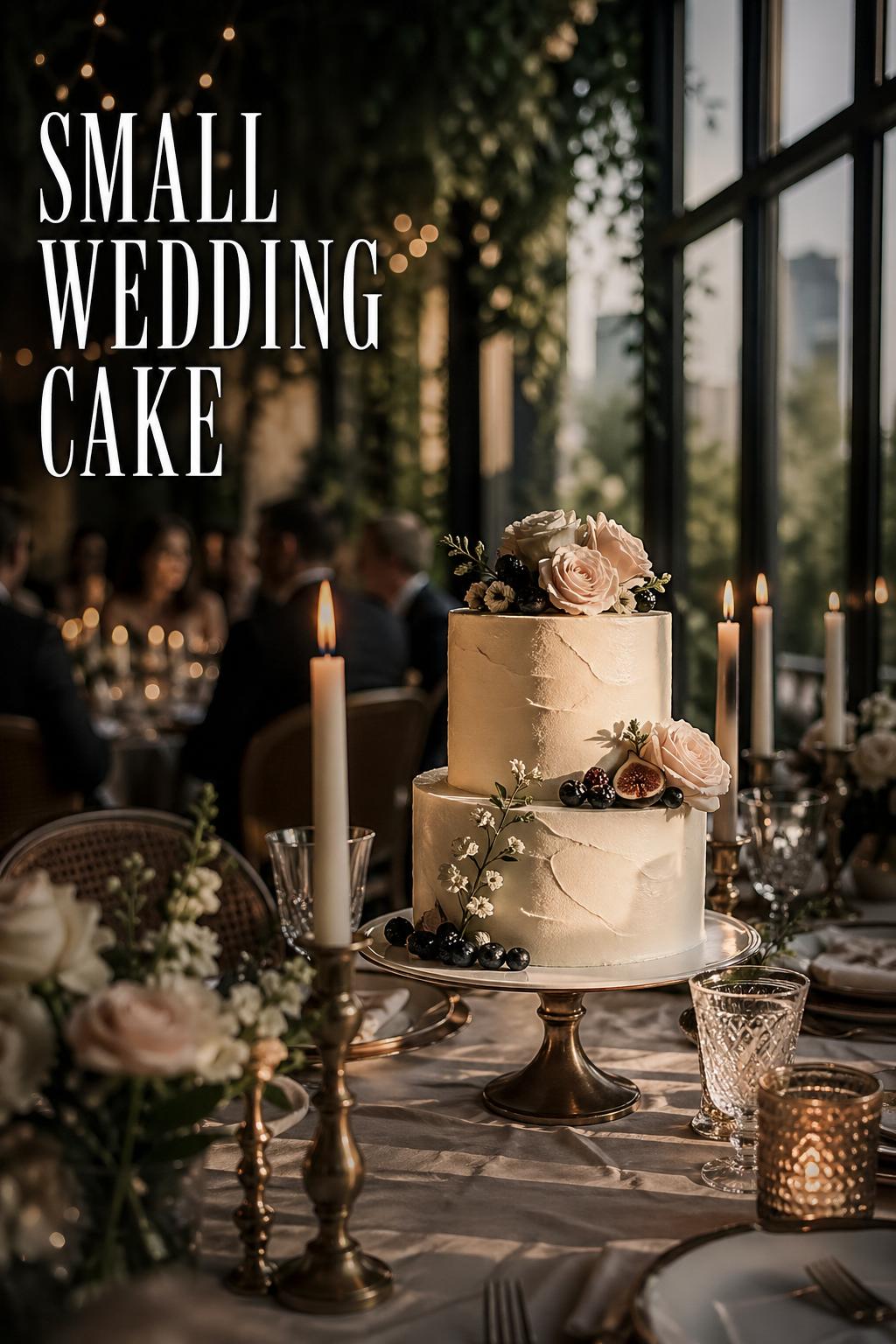
FAQ
what size is best for a small wedding cake?
A 4–6 inch format is a common starting point for intimate weddings and cutting cakes, but the best size depends on whether the cake will serve as the main dessert, a ceremonial cutting cake, or part of a larger dessert table.
is a one-tier wedding cake enough for a small wedding?
A one-tier wedding cake can be enough when the guest count is low or when the cake is paired with mini cakes, dessert boards, or other sweets, but couples should decide early whether the cake needs to serve everyone or mainly anchor the cake-cutting moment.
what finish looks best on a small wedding cake: buttercream or fondant?
Buttercream often suits romantic, rustic, and minimalist styles because it can feel soft and textured, while fondant usually works well for modern or chic designs that need clean lines and a more sculpted surface.
how do i keep a small cake from looking too plain?
The best way is to focus on one strong design element such as beautiful texture, carefully scaled florals, a refined topper, or a clear color palette, rather than adding too many details that crowd the cake.
can a small wedding cake still feel formal and elegant?
Yes, especially when proportion, finish, and display are handled thoughtfully, because elegance on a small cake usually comes from precision, styling, and cohesion with the wedding décor rather than from size alone.
should i pair a small wedding cake with other desserts?
That can be a very practical choice if you want the beauty of a ceremonial cake without relying on it to serve every guest, and it often works especially well for intimate receptions with dessert tables or mini sweets.
when should dietary needs be discussed with the bakery?
Dietary needs such as gluten-free or dairy-free options should be discussed at the beginning of the design process because they can affect flavor choices, finish, texture, and the bakery’s recommendations.
what should i bring when meeting a wedding cake baker?
Bring a focused mood board, your wedding theme, venue details, color palette, preferred finishes like buttercream or fondant, topper or floral ideas, and clarity about whether the cake is for serving, styling, or both.
how important are delivery and venue logistics for a small cake?
They are very important because transport timing, setup space, display placement, and venue access can influence which cake designs hold up best and how polished the cake looks when it is finally presented.
can a small wedding cake match different wedding themes?
Absolutely, because small cakes are highly adaptable and can be designed for minimalist, rustic, romantic, modern, chic, or classic weddings through the right combination of shape, finish, texture, florals, and toppers.